
Skiing in Japan asks two questions, and most writing on it answers only one. The easy question is whether the snow justifies a long-haul flight. Anyone who has stood at the top of a Hokkaido tree run has settled that already. The harder question is which mountain, and which week. Get that wrong and you spend a holiday queueing in rain. Get it right and you describe the week to friends for years. So this page is about the harder question.
Here is the short version. Choose Hokkaido for volume and reliability, and Honshu for steeper pitch and older villages. Late January suits both. Everything below is the long version, with sources named, because a page that says a resort has good snow tells you nothing the resort would not say itself. For the wider shape of a premium winter trip, the luxury adventure starter pack sets out the frame first.
When is the best time to go skiing in Japan?
Japanese resorts open between late November and December and run into April or early May. The deepest, driest snow falls through January and February, and late January balances snow depth against crowds. Niseko United’s 2026-27 season opens on 28 November 2026, and its Annupuri and Grand Hirafu areas stay open until 5 May 2027.
Why Skiing in Japan Feels Like a Different Sport
The answer is weather. Cold, dry air leaves Siberia and crosses the Sea of Japan, loading with moisture on the way. Then it meets the mountains and drops the lot. What falls holds very little water, so it does not pack under a ski. Instead it moves aside and closes behind you, and it arrives on more days than it skips.
Coastal resorts get the greater share of that snow. Inland resorts get less of it, but colder, which is why Furano’s snow behaves differently from Niseko’s. That contrast is the base of skiing in Japan. It is also why visibility is so often poor, because the best days are storm days.

So the days that produce the skiing people fly for are the days you can barely see through. That is a planning fact, not a complaint. It decides which lens belongs in your goggles, which resorts stay open in wind, and whether a week in the trees beats a week above the treeline. Japanese mountains also run differently from North American ones. Gondolas often rise straight from villages rather than car parks. Food on the hill is good. Crews groom the runs with real care, which is a gift on a beginner week. On a powder week, however, it can irritate, because the machines reach the good snow before you do.
Where to Go Skiing in Japan: Six Resorts by Skier
Read this as a sorting exercise rather than a ranking. Which resort tops the list depends on how well you ski and what you want from the evenings. A strong skier who wants a village will dislike the resort that suits a family who wants a hotel. Both are right, and skiing in Japan rewards that kind of sorting.
14Niseko, for a First Trip
Niseko is four linked ski areas on one mountain, and it is where a newcomer should start. Snow arrives almost daily, and the terrain forgives. Staff and signs work in English across the resort, which strips a whole category of small frictions out of a week. Niseko United’s published lift calendar gives the 2026-27 season as 28 November 2026 to 5 May 2027 at Annupuri and Grand Hirafu. Niseko Village closes on 4 April and Hanazono on 11 April. Peak season runs from 24 December to 28 February.

Niseko is also where the goggle question bites hardest. Trees, flat light and falling snow are the normal conditions here rather than the exception. So a goggle that ships with a low-light lens in the box is worth more than one that does not. Swapping lenses at a mid-mountain restaurant takes two minutes and changes an afternoon. Fogging is the other failure that ends a day early, and it usually starts at the seam between helmet and goggle. Humid storm air on Honshu makes it worse than in Hokkaido. Therefore matching both pieces from one maker is about venting, not brand loyalty.
Ships with a bright-light lens fitted and a low-light lens in the case, the swap that flat light in the trees demands.
View the 4D MAG Goggle →Carries ASTM and CE certification, and its AirEvac venting pairs with Smith goggles to keep humid storm air from fogging the lens.
View the Vantage 2 Helmet →A leather mitt with a removable liner, so a dry one can go in before the night session.
View the Heli Ski Mitt →13Hakuba Valley, for a Return Trip
Hakuba is not one resort. It is ten, strung along a valley below the Northern Alps and sold on one pass. The Hakuba Valley season-pass terms list Jigatake, Kashimayari, Hakuba Sanosaka, Goryu, Hakuba47, Happo-One, Iwatake, Tsugaike, Norikura and Cortina. Each has its own lifts, character and crowd, yet the pass treats them as one. The valley shuttle bus comes with the pass on the days you ski. Resorts open in December 2026 and run until around early May 2027, depending on snow, so check them again before booking. Note the exclusion that catches people out, though. The pass does not cover night skiing, which each mountain sells separately.

For lift names, snow reports and the bath that was worth the walk, kept on a chairlift.
6 × 9 in · 120 unlined pages · matte softcover
Shop This Journal →What the pass buys is choice. When wind shuts the top of one mountain, you move to another by bus. Cortina often catches snow that Happo-One misses, while Happo-One has pitch that Cortina lacks. This is why Hakuba rewards a return visit more than a debut. You need to know what you like before ten mountains become useful rather than paralyzing. Until then, ten mountains means ten ways to spend a morning deciding. On a second trip, however, the choice is the reason to come back. A bad-weather day on one aspect is often a good day on another. So keep the first morning loose, and let the forecast choose the mountain.
12Nozawa Onsen, for the Village
Nozawa Onsen is a working hot spring village with a large ski area attached, rather than the reverse. Around 3,000 people live there year-round. Nagano’s official tourism guide to the village counts thirteen public bath houses, which residents maintain and visitors may use, with a donation box at each door. Locals often take their daily bath there too. The village was also one of the hosts of the alpine events at the 1998 Winter Olympics. Walk the main street after dark and you smell sulfur, wet cedar and grilled food. Snow squeaks underfoot, and steam drifts across the lamps.
At Ogama the water surfaces at close to 100 degrees Celsius, far too hot to bathe in. Instead, villagers boil eggs and vegetables in its stone troughs. You can buy eggs at a nearby shop and try it yourself. Nobody staged that for visitors; it is simply how the village runs. Getting there is simpler than the map suggests. Iiyama Station sits on the Hokuriku Shinkansen, and the Nozawa Onsen Liner bus runs from there into the village. From Tokyo, that is a morning rather than a day. Families with small children often value the walkability above any lift statistic, because slopes, baths and dinner all sit close together.
Sort by the trip you want, not by reputation.
| Resort | Region | Best for | Standout fact |
|---|---|---|---|
| Niseko | Hokkaido | A first trip | Four linked ski areas on one mountain |
| Hakuba Valley | Nagano | A return trip | Ten resorts on one season pass |
| Nozawa Onsen | Nagano | Village evenings | Thirteen public bath houses |
| Zao Onsen | Yamagata | The frost trees | A ten-kilometer course from Jizo Sancho |
| Furano | Hokkaido | Mixed-ability groups | A 40/40/20 terrain split |
| Myoko Suginohara | Niigata | Long descents | An 8,500-meter run |
11Zao Onsen, for the Frost Trees
Zao sits in Yamagata, on the Tohoku side of Honshu, and it has a sight few resorts can match. Wind, cloud and sub-zero air plaster each summit tree with frost, layer on layer, until the forest looks like a crowd of hooded figures. The Japanese word is juhyo, often translated as snow monsters. The Zao Onsen tourism association’s course guide describes the Juhyogen course, which starts at Jizo Sancho Station and runs roughly ten kilometers down to the village.
Prefer to have the route built for you? A custom Japan itinerary can pair the right mountain with the right week, transfers included.
What to settle before your first trip, in the order it matters: documents, money, transport, then the first days.
Ten kilometers is a long way down on tired legs, so take the course early in the day. The compensations are real. The Utopia Slope usually holds snow until the beginning of May. Meanwhile, the Uwanodai Slope was Zao’s first ski slope, and its lift was the second ever built in Japan. Uwanodai and Yokokura are also the two areas open for night skiing.
10Furano, for the Cold
Furano sits inland in central Hokkaido, and inland means colder, which in turn means drier. The local tourism association puts the resort at over 950 vertical meters, with 24 runs, 10 lifts and over 25 kilometers of piste. More than eight meters of snow fall in a season. Terrain splits 40/40/20 across beginner, intermediate and advanced runs, the most even balance of any resort on this page. That balance makes it a sound choice for groups of mixed ability.
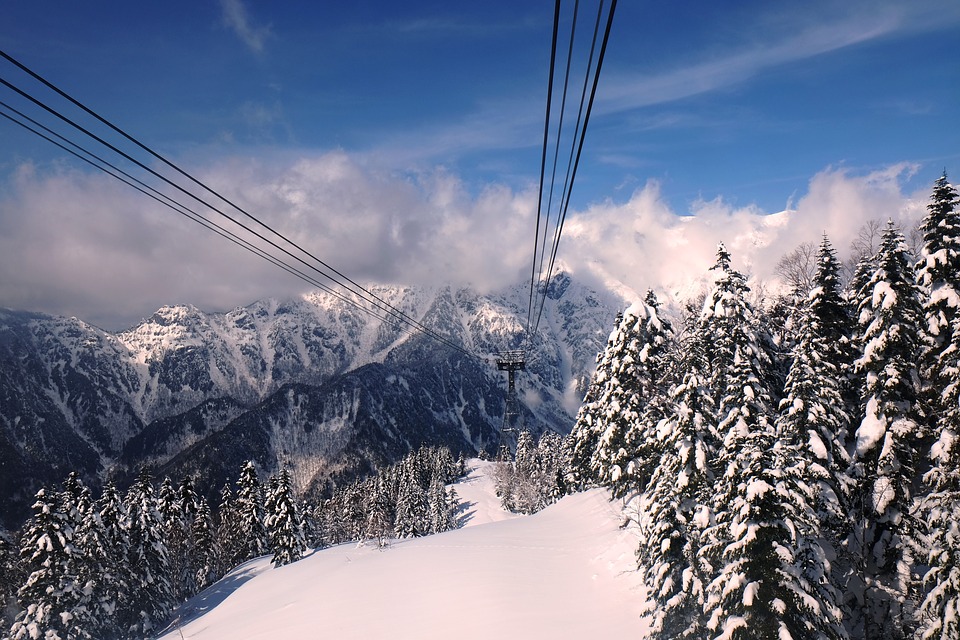
Two details give Furano its character. First, it has hosted the Ski and Snowboard World Cup 12 times, more than anywhere else in Japan, so the race pitch is real. Second, its cable car, the fastest in Japan, lifts 101 skiers at 10 meters per second. That specification means little until you stand in a queue in a blizzard. Lifts run from the end of November to the beginning of May. The cold is the point here, and it is also the drawback.
9Myoko, for the Length
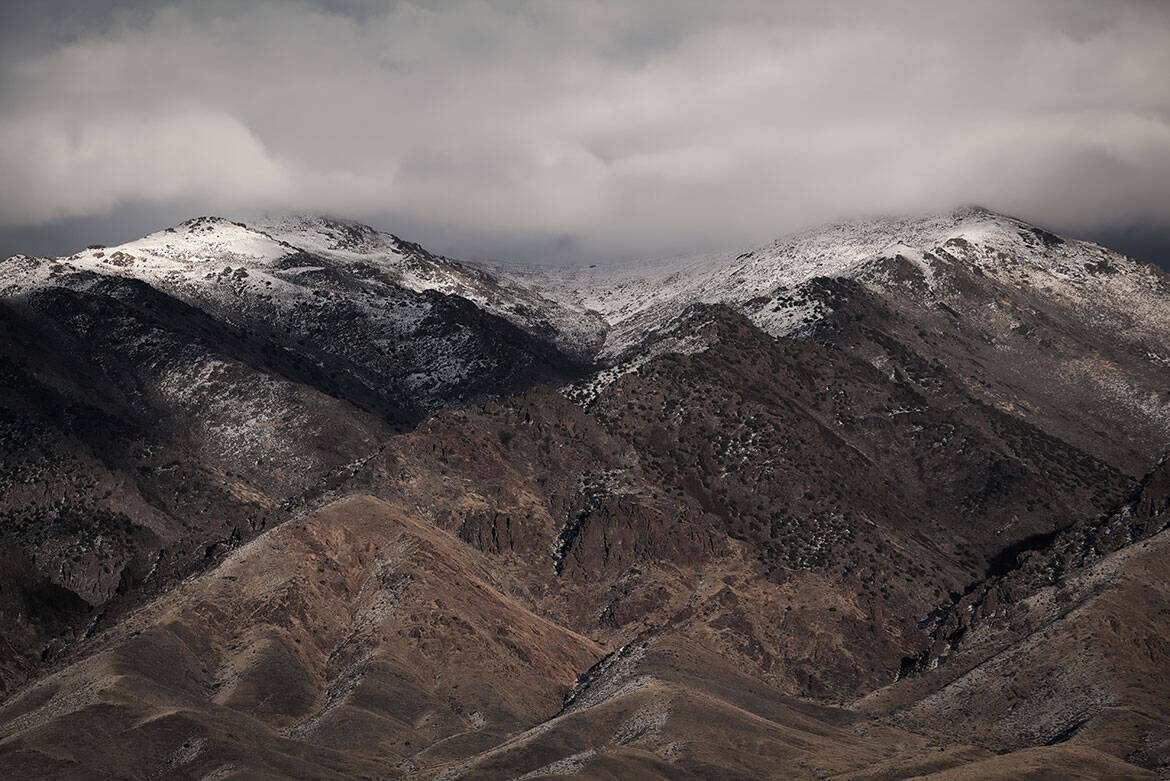
Myoko Kogen sits in Niigata, and Suginohara is the reason to go. According to Japan’s national tourism organization, Myoko Suginohara holds one of the country’s longest runs at 8,500 meters, on a vertical drop of 1,124 meters. Five lifts serve 17 trails there. Nine resorts share the wider Myoko area.
Shuttle buses run from Joetsumyoko Station, so the approach is straightforward. An 8,500-meter run, however, is a different physical proposition from a normal descent. You stop on the way down, not because you want to but because your legs insist. Do it early in the week, before fatigue builds. Then explore the rest of the area, because nine resorts make a week on their own. Wherever you ski in the trees, take a partner. Snow this deep hides tree wells, so agree where you will meet at the bottom. Overall, the area rewards a slower pace than its headline run suggests.
Recommended
Night Skiing in Japan and the Four O’Clock Problem
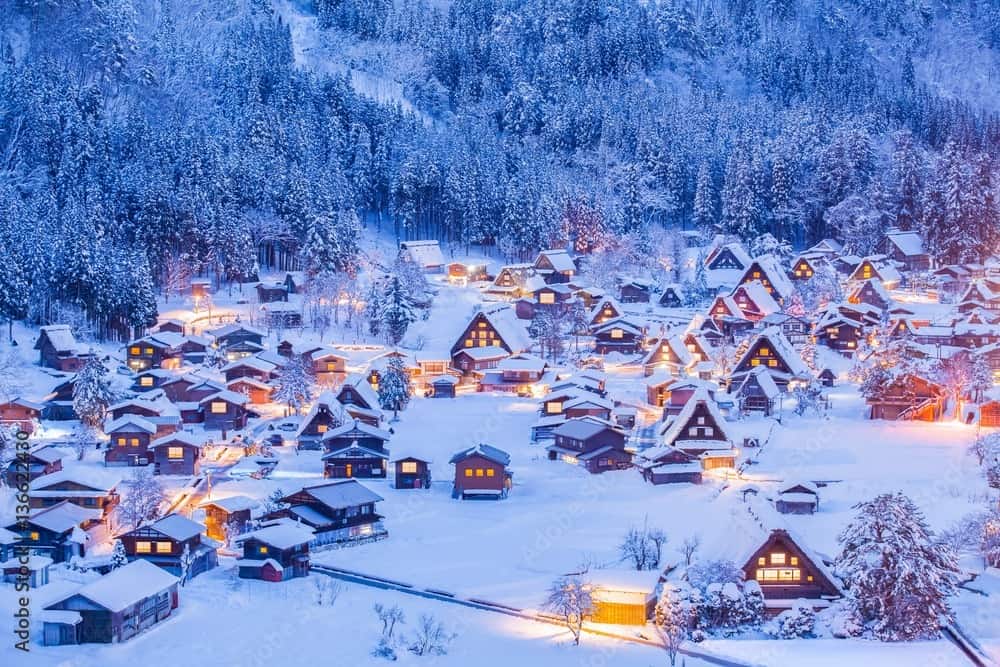
Here is the planning insight most guides treat as a footnote. Midwinter daylight in northern Japan is short, and it changes the arithmetic of a five-day trip. The National Astronomical Observatory of Japan’s tables for Sapporo put sunset at around 16:00 through December. Lifts close before that. So a day that starts at nine is a six-hour day, not an eight-hour one. Across five days, that adds up to ten lost hours, more than a full day of skiing. Against that backdrop, night skiing is no novelty. Instead, it is how you recover the missing hours, and skiing in Japan after dark has its own character.
Niseko runs night skiing from 12 December 2026 to 22 March 2027. At Zao, Uwanodai and Yokokura stay open after dark. On a busy day the snow is often better at night, because the crowds have gone and fresh cover has settled over the churn. Lift lines also shrink once the day crowds head to dinner. Plan two night sessions into five days, and the week grows by a day. Hands give out before legs do, though. A day of wet snow soaks a glove liner, so a mitt with a removable liner lets a dry one go in before the second session.
8What Short Days Do to a Ski Week
Resorts publish night hours separately from day hours, and the two rarely run straight through. There is usually a gap of an hour or more while the lifts stop. That gap is the natural place for a bath and an early dinner. In Hokkaido, dinner often means soup curry, Sapporo’s own dish. It is a thin, spiced broth with chicken on the bone and large pieces of vegetable, served with rice on the side. After a cold afternoon, it does the work of a meal and a hot drink at once. Order it at a spice level you can still ski on, then head back up for the evening.
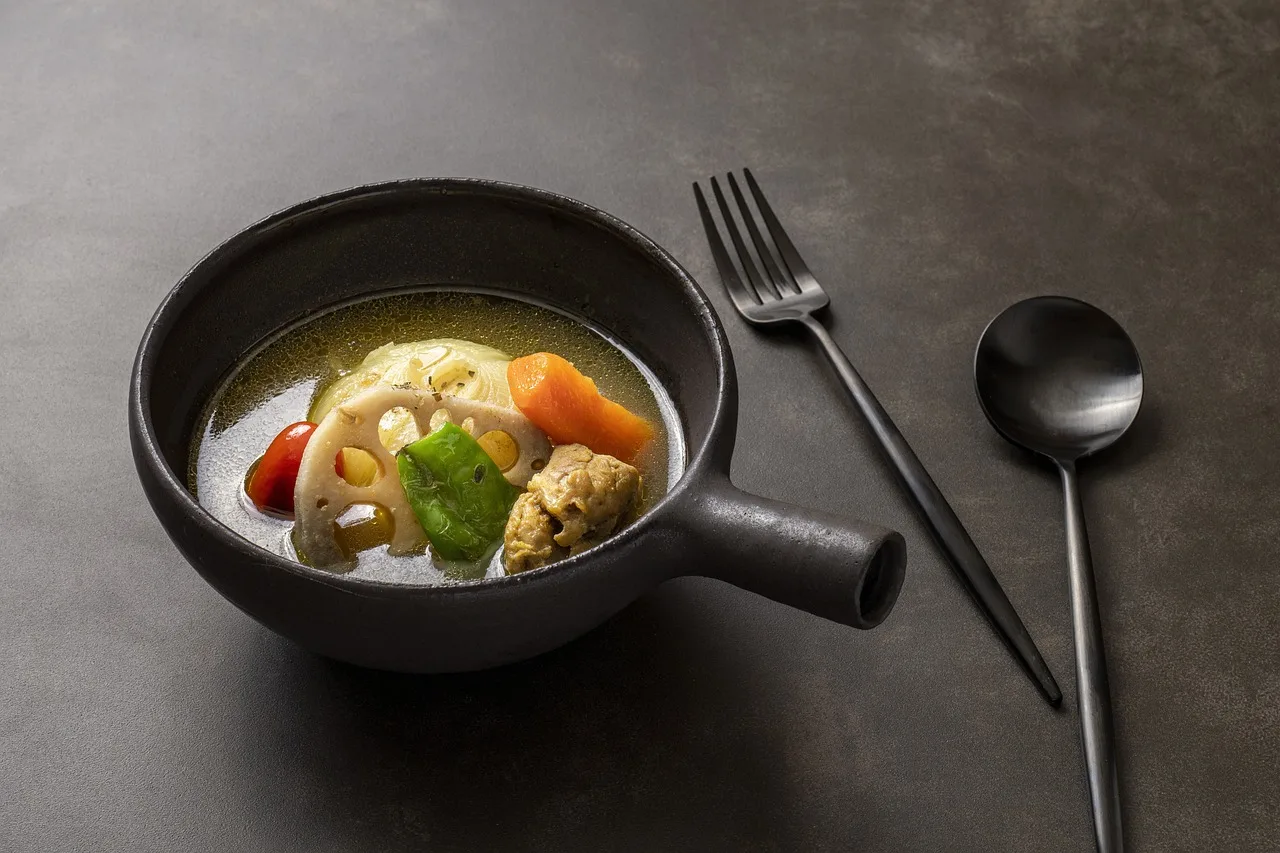
Soup curry is Sapporo's own dish, a thin and fragrant curry broth rather than the thick Japanese curry sauce. It arrives with chicken on the bone, large pieces of vegetable and rice served on the side.
- 2 bone-in chicken legs
- 1/2 teaspoon salt
- 2 tablespoons neutral oil
- 1 onion, grated
- 2 cloves garlic, grated
- 1 tablespoon grated fresh ginger
- 2 tablespoons curry powder
- 4 cups chicken stock
- 1 tablespoon soy sauce
- 1 teaspoon sugar
- 1 small wedge kabocha squash, cut into thick slices
- 1 small carrot, halved lengthwise
- 1 medium potato, halved
- 1 green bell pepper, quartered
- 2 soft-boiled eggs, halved
- 2 cups hot cooked Japanese short-grain rice
- Season the chicken with salt and brown it in 1 tablespoon of oil in a heavy pot over medium-high heat, about 5 minutes per side; set it aside.
- Lower the heat, add the onion, garlic and ginger, and cook for 8 minutes until soft and golden; stir in the curry powder for 1 minute.
- Pour in the stock, soy sauce and sugar, return the chicken, and simmer gently, covered, for 30 minutes.
- Meanwhile, roast or pan-fry the kabocha, carrot, potato and pepper in the remaining oil until browned and tender.
- Taste the broth and adjust with salt or soy sauce.
- Ladle the broth and chicken into deep bowls, arrange the vegetables and egg on top, and serve the rice on the side.
Wind, rather than temperature, is the real problem once the light goes. A half balaclava that turns into a neck gaiter seals the chin against wind without fogging goggles the way a full mask can. Pack one as a backup for the night session, and wear it up or down as the wind requires. The Tough Headwear Half Balaclava Neck Gaiter packs flat enough to carry in any pocket.
Onsen After a Day of Skiing in Japan
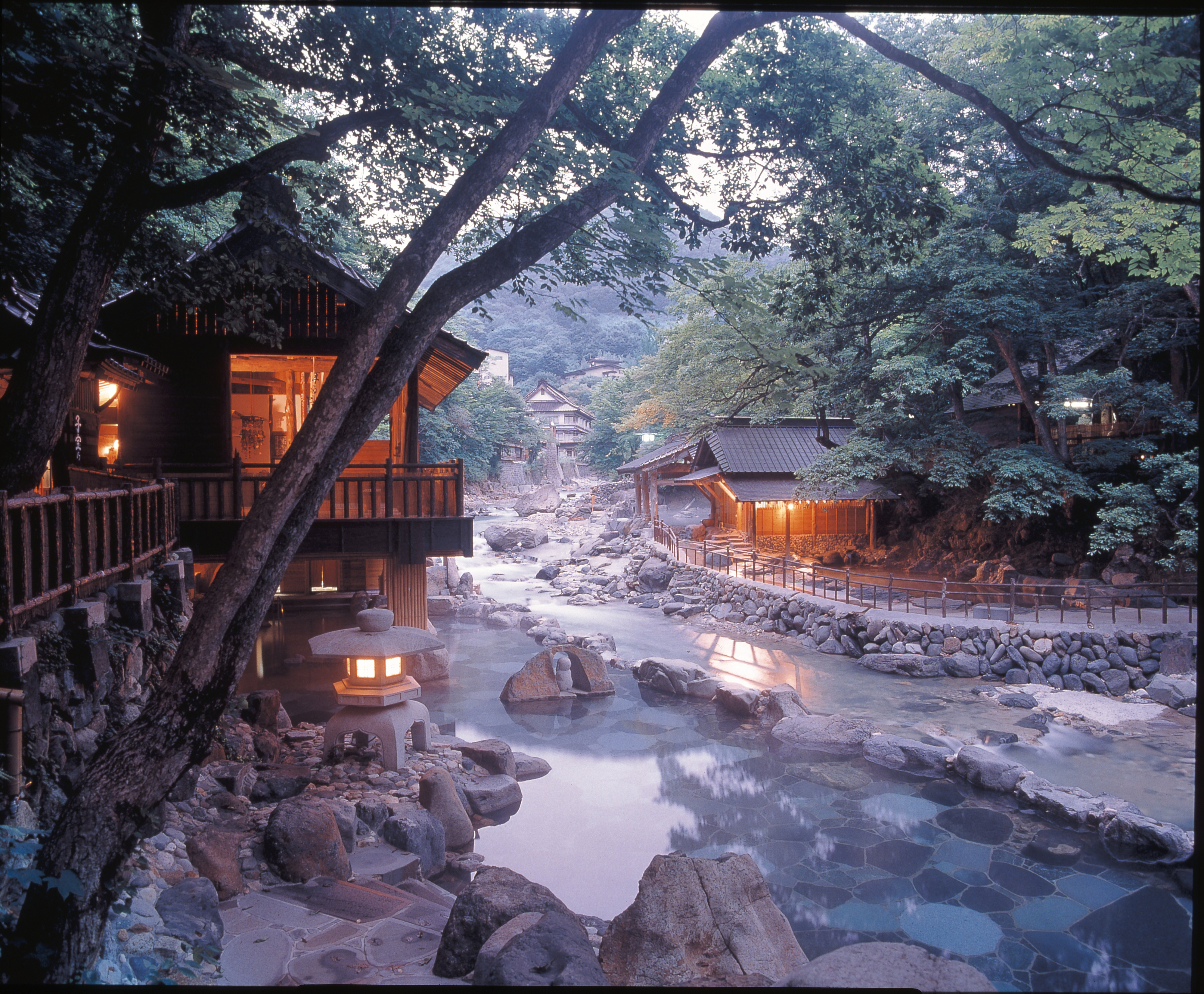
Bathing is not a bolt-on here. Many ski towns were hot spring settlements long before anybody strapped on skis, and the buildings sit around the water. In short, skiing in Japan ends in hot water more often than not. The bathing tradition behind Japan’s onsen towns goes further into how people observe the practice today.
Three-layer GORE-TEX ePE bibs that close the gap deep snow finds between jacket hem and waistband.
View the Untracked Bibs →A 100 percent merino thermal top that works as a ski layer by day and a dinner layer after the bath.
View the Merino Crewe →A hand-sized, quick-drying towel, the size onsen convention expects, packed in a small silicone case.
View the NanoDry Towel →The etiquette is simple and worth knowing before the door. Wash thoroughly at the seated shower first, then get in. Tie long hair up, and keep the small towel out of the water, on the rim or on your head. That towel is the detail visitors get wrong. The convention is hand-sized rather than bath-sheet-sized, and many people arrive without one. People bathe naked, and most baths separate men and women. A compact quick-dry towel solves it. For the walk back, a merino base layer goes from ski layer to dinner layer without a change, because nothing gets washed on a ski week.
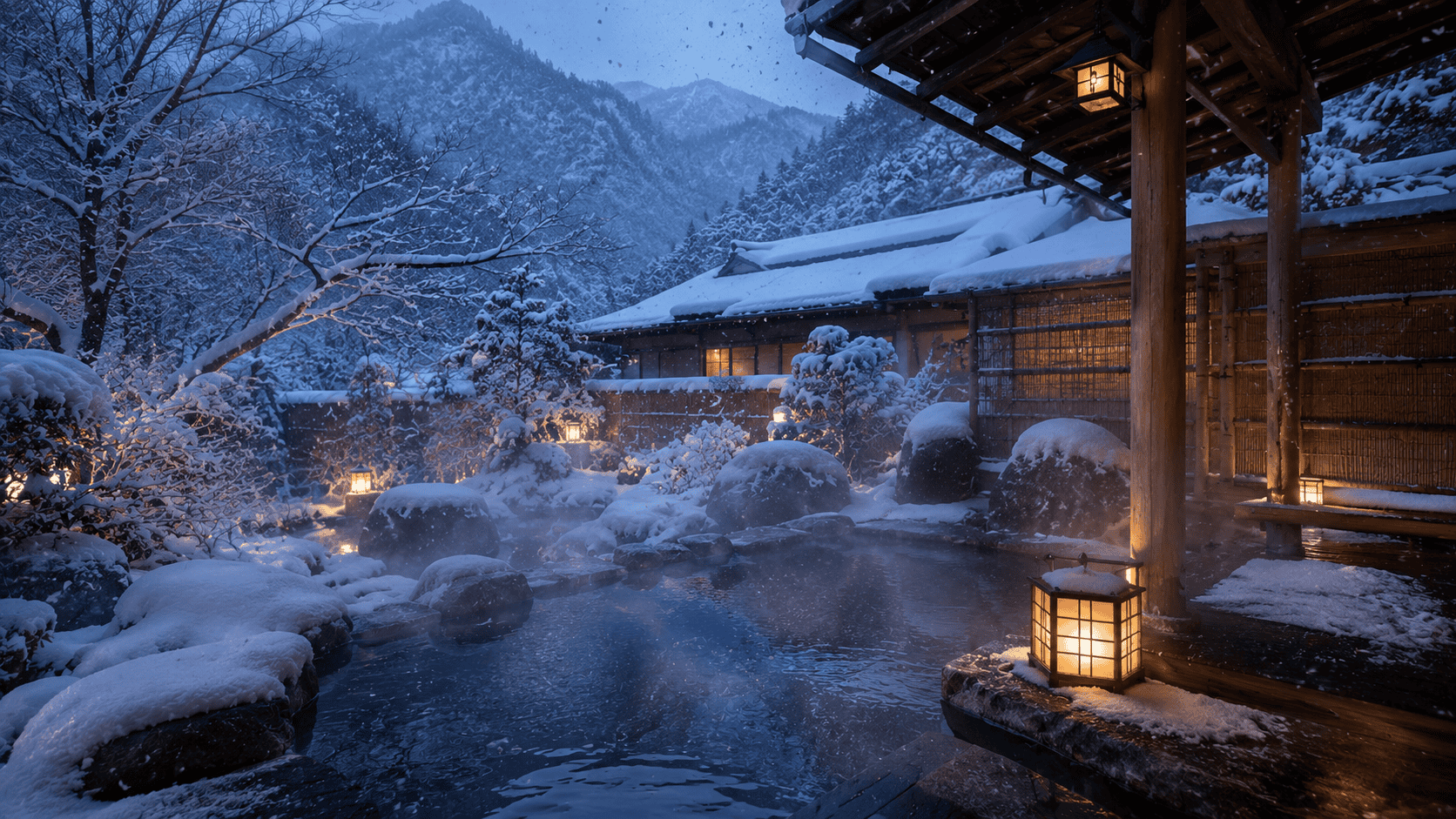
Outdoor baths in falling snow are the specific thing many skiers return to Japan for. Picture air well below freezing, water around forty degrees, and snow landing on your scalp and vanishing. It reads like a brochure sentence until you have done it after seven hours in a blizzard. Then it becomes entirely rational, even sensible. Stay in a little longer than feels sensible, but get out before you feel dizzy, and drink some water afterward. In a village like Nozawa Onsen, the next bath house is rarely far away, so you can easily try two or three in one evening.
Getting There: Skiing in Japan from Tokyo
The rule of thumb splits cleanly: Honshu resorts go by train, and Hokkaido resorts go by plane. For Hakuba and Nozawa Onsen, take the shinkansen to Nagano or Iiyama and a bus from there. Both trips take roughly a morning. From Tokyo, the Hokuriku Shinkansen reaches Nagano in well under two hours. Myoko runs shuttle buses from Joetsumyoko Station into the resort area. Before buying anything, check whether a Japan Rail Pass pays for your route. Ski transfers are usually buses, and those buses usually sit outside the pass. To travel light, send skis ahead by courier, a service Japanese travelers use routinely.
For Niseko or Furano, fly into New Chitose and transfer by coach. The flight from Haneda takes under two hours, and departures run all day, so there is rarely a need to plan around one flight. Coaches meet the arrivals hall and drive directly to resort accommodation. That removes the grimmest part of the journey, which is moving ski bags through a train station. Many visitors add a night in the city at either end, and Sapporo in winter is worth reading before you decide. New Chitose also serves the city, so a Sapporo night adds little travel time. Book the flights early, and everything else follows.
What to Pack
Japan exercises two features of a shell that buyers rarely think about. A hood that clears a helmet without strangling you, and a powder skirt that actually seals. The Patagonia Storm Shift has both, in a two-layer membrane. Beyond that, resist the urge to over-buy. Rental gear here is excellent and cheap, and skis tuned for this snow will beat the ones sitting in your garage at home.
Layers matter more than outerwear. Wool over synthetic on a week-long trip is a laundry calculation rather than a fabric preference, because nothing gets washed and merino does not announce that. The Icebreaker Merino 260 Oasis crewe is a heavyweight base that goes from ski layer to bath-to-dinner layer without a change. Two of those, one shell, one pair of bibs, and the bag is essentially packed. Leave room for what you buy, because every resort town sells something worth carrying home.
That is the end of the practical section. What remains are the questions readers send in, answered as briefly as the answers allow. Each one below has been checked against a resort source rather than repeated from another guide, which is a low bar and one that this subject clears unusually rarely. Where a date is stated, it is the operator’s own published date for the coming season.
Questions Worth Asking
7When does the ski season start in Japan?
Most Japanese resorts open between late November and December and run into April, with some holding snow into early May. The deepest, driest snow falls in January and February. Niseko United's 2026-27 season opens on 28 November 2026, and Annupuri and Grand Hirafu stay open until 5 May 2027.
6Which Japanese ski resort is best for a first visit?
Niseko suits a first visit best. Its four linked ski areas share one mountain, the terrain forgives, snow arrives almost daily and English is widely used. The coach transfer from New Chitose is simple. Hakuba suits a return trip better, because its ten resorts reward skiers who already know what they want.
5Is Niseko or Hakuba better for powder?
Niseko is the safer bet for volume and consistency, because it sits directly in the path of the cold Siberian airflow. Hakuba is higher, steeper and more varied, with ten resorts on one pass. It rewards strong skiers on a good week, but it punishes a bad week more sharply.
4Can you go skiing in Japan as a beginner?
Yes, and comfortably. Japanese resorts groom carefully and keep beginner terrain wide. Furano splits its runs 40/40/20 between beginner, intermediate and advanced ground, which suits mixed groups. Niseko adds English-speaking staff and gentle tree-lined slopes, so a first week on skis there carries few frictions.
3Do Japanese ski resorts have night skiing?
Many do, and it matters more here than elsewhere, because midwinter daylight is short. Niseko runs night skiing from 12 December 2026 to 22 March 2027. At Zao, the Uwanodai and Yokokura slopes open after dark. Note that the Hakuba Valley season pass does not cover night skiing.
2How do you get from Tokyo to the ski resorts?
Take the shinkansen for Honshu and a plane for Hokkaido. Nagano and Iiyama stations put you a bus ride from Hakuba and Nozawa Onsen, and Myoko runs shuttles from Joetsumyoko Station. For Niseko or Furano, fly from Haneda to New Chitose, then transfer by coach to the resort.
1What should you pack for skiing in Japan?
Pack for wet storm days rather than sunshine. Bibs keep deep snow out of a waistband, a goggle with a low-light lens handles flat light, and a mitt with a removable liner dries overnight. Add a merino base layer, a neck gaiter for night sessions and a small towel for the onsen.
Where a Week in the Snow Leaves You
Skiing in Japan tends to produce return visitors, and they come back differently. The first trip is about the snow. The next is about the village, the food, the bath and the particular mountain that suited them. That arc is familiar across the country. It is also why a week in the north often turns into a few days of Kyoto experiences on the way home, once the legs have recovered enough to walk.
The decision this page set out to help with was never whether to go. It was which mountain and which week. Choose Hokkaido if you want the snow to be certain, and Honshu if you want the evenings to be memorable. Late January gives you both. Early December gives you the mountain mostly to yourself, with thinner cover.
Ninety days of beginner's mind, the same open attention a first powder morning asks for.
View the Journal →Snow is the easiest part of a Japanese winter to plan and the hardest to guarantee. Transfers, bath towns, a city night at either end and a rest day placed before you need it: that is the part a good itinerary solves. Snow is weather. The rest is scheduling.
Tell us how you ski and when you can travel, and we will build the week around it: the resort that matches your level, the bath town worth the extra transfer, the night sessions that recover the daylight December takes away, and the city nights at either end.
Plan Your Custom Japan Itinerary