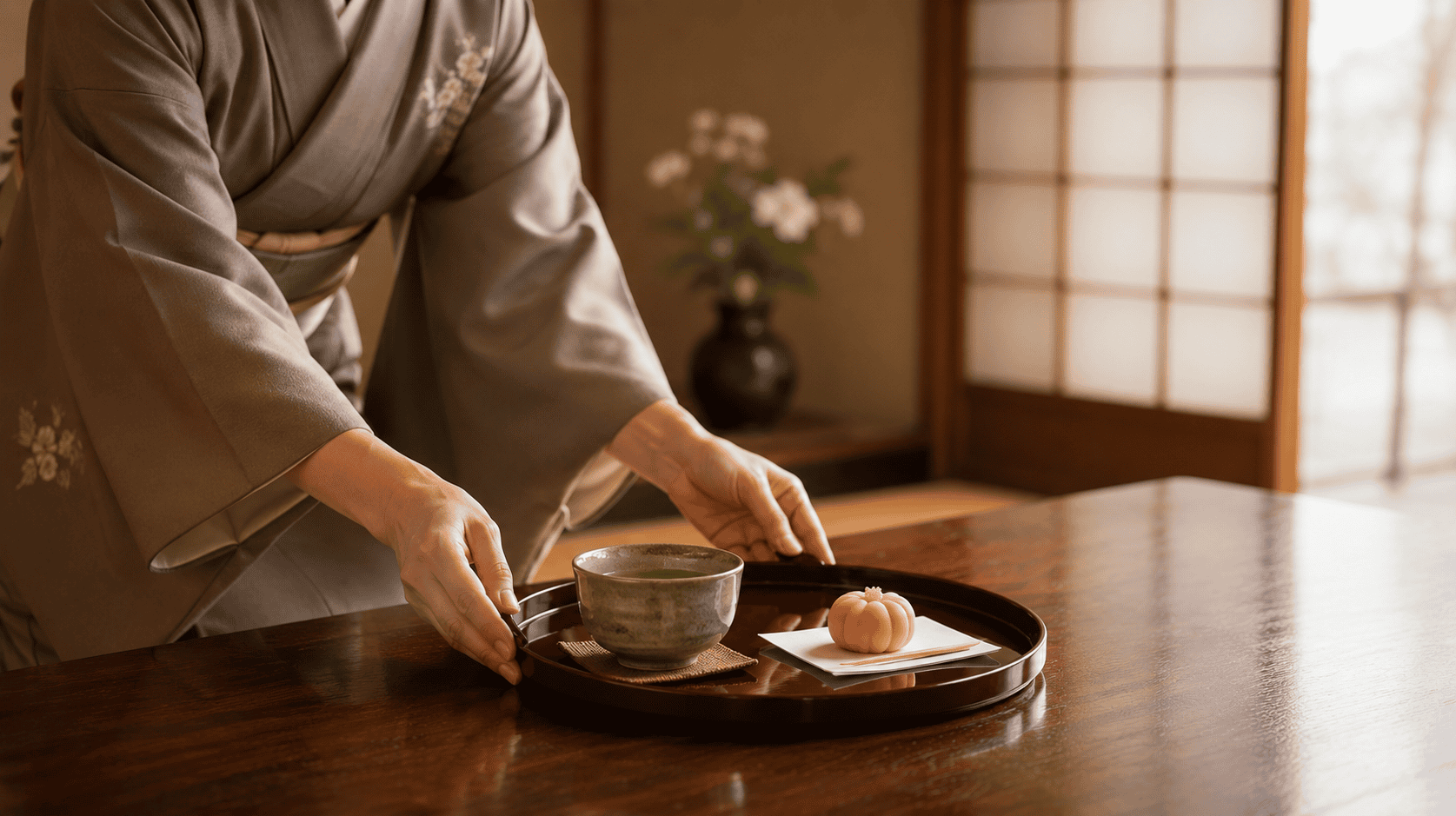
In a Kyoto tin workshop, a sixth-generation craftsman closes the lid of a chazutsu by hand. The lid descends slowly under its own weight, settles, and seals airtight by gravity alone. One hundred and thirty steps went into the tin before it reached this moment. The household receiving it will keep it on a shelf for thirty years, watching the tin develop a copper-rose patina from the oils on their hands. This is the kind of Japanese gift this list collects — not the everyday workhorses found on our Made in Japan: 50 Japanese Gifts pillar, but the deeper cut for the recipient who already has those.
The forty-four picks below are organised by category — tea, sake, knives, textiles, ceramics, stationery, calligraphy, wellness, anime, travel — with fourteen items marked as Editorial Picks. These are the merit-based selections where no affiliate commission applies. Kaikado, Postalco, PORTER, Bizen ware, Tadafusa, Kondo Hamono. The names a curator would recognise. The objects a recipient who has been receiving thoughtful gifts for years will still find new. Read the categories that matter to you, or read straight through.
Why This List Exists Beside the 50-Pillar
The Made in Japan 50 list covers the mainstream Japanese gifts every Anglophone buyer needs — mainstream Japanese matcha, kitchen knives, fountain pen ink, daily planners, cotton towels, and design-house wallets. This forty-four-pick list is the editorial companion. For the recipient who already has those things. Heirloom Kaikado tin canisters, Postalco notebooks, Yoshida PORTER bags, Musubi Kiln Bizen ware, single-master Tadafusa and Kondo Hamono knives. The next gift, not the first one.
Two registers govern Japanese gift-giving at scale. The first is the mainstream Made-in-Japan tier — the brands that have built international distribution, that ship within forty-eight hours from major US retailers, that the recipient recognises within seconds of unwrapping. Our 50-pillar covers that tier completely. The second register is the editorial one — single-workshop production, single-master craft, design houses whose distribution doesn’t reach mass retail. That is what this list covers.
The boundary between the two tiers is not price. A Postalco notebook costs about the same as a Hobonichi Techo. A JOC Goods curated sake set runs within a few dollars of a Mino-yaki Amazon set. What differentiates the editorial tier is the recipient’s recognition. The person who has already received ceremonial Uji matcha will recognise a Kaikado canister as the next step up. The person who has already received an everyday Japanese gyuto will recognise a Tadafusa Hocho Kobo as the upgrade. The pillar list is where you start. This list is where you arrive.
1. Tea at the Editorial Tier
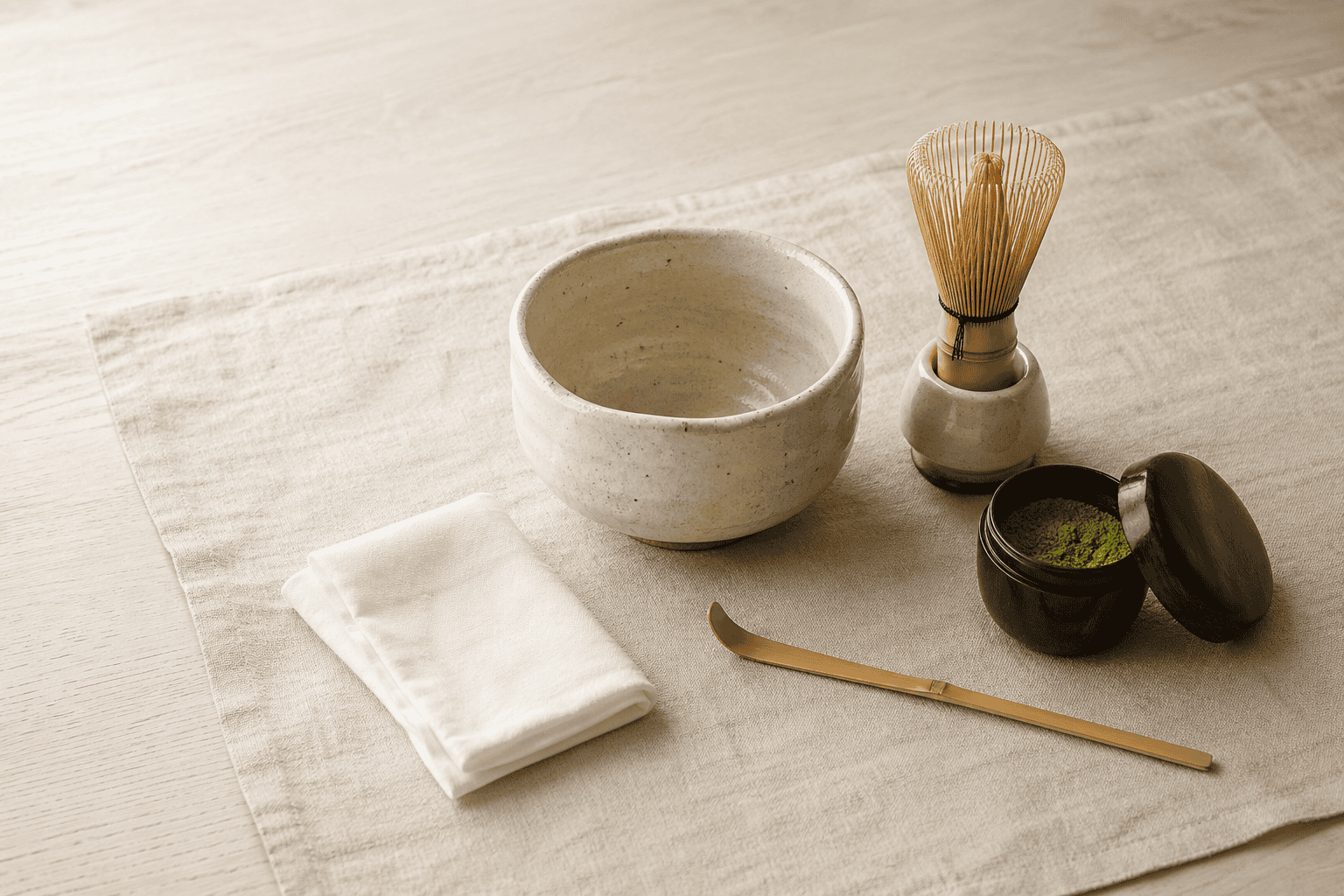
The 50-pillar covers the mainstream Japanese matcha brands, entry-tier glass teapots, and the chawan that introduce most Anglophone households to Japanese tea. This list picks up at the heirloom tier — at the makers whose pieces stay in the household for thirty years and develop their own patina from daily handling. Kaikado has produced tin chazutsu in one Kyoto workshop since 1875. Tomioka and Fujiki have wrapped cherry bark over wood as the kabazaiku tradition since the early nineteenth century. The pieces below are the next gift for the recipient who already pours matcha at the kitchen counter on weekday mornings.
Two practical notes. First, a Kaikado canister deepens in colour over three to five years of regular use — the oils from the recipient’s hands transfer to the tin and shift the patina from new copper-bronze to soft rose-amber. This is the point of the object. Second, the cherry-bark caddies from Kakunodate, Akita — where this craft has been practised since 1851 — use the bark’s natural oils to preserve tea leaves the way modern airtight containers cannot fully replicate.
1. Toyo Sasaki Edo Glass Teacup via Heath Ceramics

Toyo Sasaki has made glassware in Yachiyo since 1888 — they supply the Japanese Imperial Household Agency. Heath Ceramics, the Sausalito studio founded in 1948, curates the line for the US market. Featherweight, hand-blown, designed for daily use. The everyday upgrade for the recipient who already uses entry-tier Japanese glass teapots and wants something with provenance the matcha-grade tea ceremony recipient will recognise. View at Heath Ceramics directly for the current selection.
2. Medium Sakura Cherry Bark Tea Caddy
Made by Fujiki Denshiro Shoten of Kakunodate, Akita. The kabazaiku tradition — cherry bark wrapped over wood — has produced tea caddies in this region since 1851. The bark’s natural oils help preserve tea leaves. A piece that ages with the household for decades. Available through JOC Goods, curated by Nami Hirasawa Chen of Just One Cookbook.
3. Cherry Bark Tea Scoop, Sakura Gourd Design
The companion to the cherry bark caddy — Tomioka Shoten’s gourd-shaped scoop with layered cherry bark and sakura inlay. Pairs as a complete kabazaiku tea storage set without feeling like a marketed kit. The scoop has the practical function of measuring two grammes of leaf per cup; the form has the symbolic function of carrying spring into the household year-round. View at JOC Goods.
4. Kaikado Tea Canister Editorial Pick
Kaikado has made chazutsu in one Kyoto workshop since 1875, by one family, currently led by sixth-generation master Takahiro Yagi. Each canister takes more than 130 hand-finished steps. The lid descends on its own and seals airtight by gravity. The tin develops a copper-rose patina over three to five years. Editorial pick because no other tea canister in the world handles the relationship between the recipient and the object with this kind of intentionality. View at Tortoise General Store, the LA shop that distributes Kaikado in the US.
5. Kaikado Tea Scoop Editorial Pick
The companion to the canister at #4. Same sixth-generation Kyoto master, same hand-finishing, same patina aging across three to five years of regular use. Gift the canister and scoop together and the recipient receives a complete chanoyu storage system that will outlast almost everything else in their kitchen. View at Tortoise General Store.
How to wrap a furoshiki around a Kaikado canister
Lay an eighteen-inch furoshiki flat in a diamond orientation, pattern-side down. Set the Kaikado canister upright in the centre. Take the corner closest to you, lift it up and over the canister, tuck the tip under the far edge. Take the opposite corner, lift it up and over, overlap on top. Take the left and right corners, draw them up over the canister, tie a square knot at the top — left over right, then right over left, pull firm. The knot sits centred on the lid. The recipient unties the knot in one motion and keeps the cloth. The wrapping is the second gift inside the first.
2. Sake at the Editorial Tier

The 50-pillar covers mainstream Japanese sake sets and the entry-tier Edo Kiriko cup pair that introduce most Anglophone households to Japanese drinking ware. This list takes the recipient deeper — to the small-workshop Kutani-region kilns, the cherry-bark JOC Goods curations, and the premium junmai daiginjo bottles that elevate a single pour into the kind of ritual the recipient will want to repeat.
Two registers operate at the editorial sake tier. The first is the rare ceramic — Kutani’s five-colour palette and the Musubi Kiln Souraku-an collaboration are the pieces that pass for sculpture when not in use. The second is the rare bottle itself. A premium junmai daiginjo, polished to fifty percent of the original grain or below, is the gift the recipient enjoys and gone — but the gift that explains, in one pour, why Japan has more than twelve hundred active breweries and why sake culture is closer to wine than to whiskey.
6. Premium Junmai Daiginjo Sake
Sake itself is the gift the recipient enjoys instead of stores. A premium junmai daiginjo means rice polished to fifty percent or below — the bottom of the grain, where the cleanest flavours live. Look for brewers from Niigata (lean, dry), Hyogo (round, fruit-forward), or Yamagata (crisp, mineral). The pour itself is the gift. Browse premium junmai daiginjo for the current vintage selection.
7. Toyo Sasaki Sake Glassware via Heath Ceramics

Heath Ceramics carries Toyo Sasaki’s sake-specific glassware line — the same Yachiyo hand-blowing tradition, curated for the US market by a Bay Area design canon. Featherweight, gift-grade, the pieces that sit on the shelf as readily as in the hand. View at Heath Ceramics for current selection — they rotate seasonally.
8. JOC Goods Tokkuri or Guinomi Selection
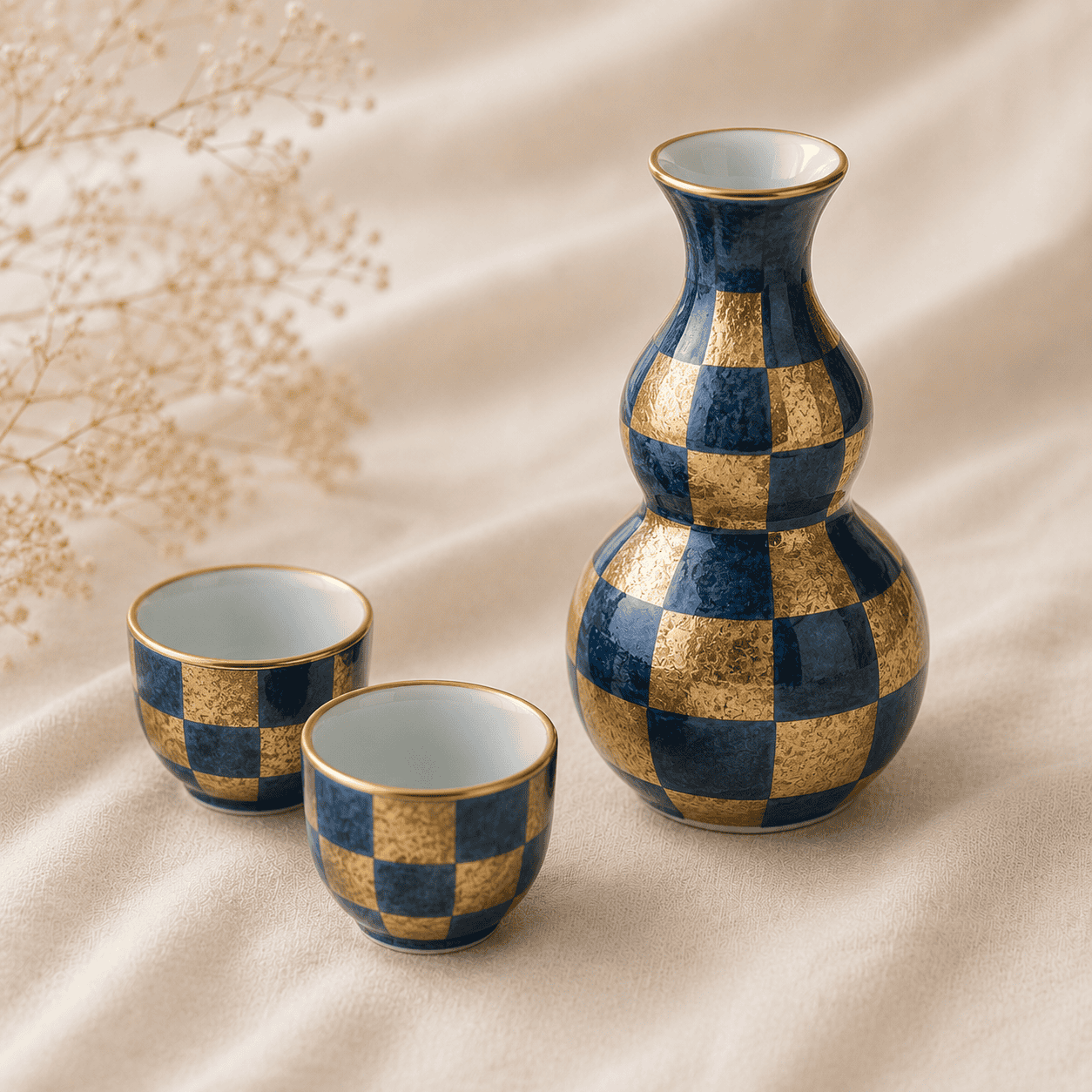
JOC Goods curates from Japanese workshops that don’t sell internationally on their own. Their sake and bar ware collection rotates pieces from Hasami, Mino, and Tokoname kilns — single-bowl pieces, small-batch tokkuri, the kind of ceramic the recipient will not find on Amazon. Browse the JOC Goods sake and bar ware collection.
9. Hanazume Kutani Sake Set Editorial Pick
Kutani ware from Ishikawa Prefecture has used its five-colour palette — navy, red, purple, green, yellow — since the seventeenth century. The hanazume style (“filled with flowers”) packs hand-painted blossoms across every surface, finished with gold trim. Arrives in the original paulownia wood presentation box. The piece the recipient brings out for the toast that matters. View at Musubi Kiln.
10. Sea Creatures in Blue Sake Set Editorial Pick
A Musubi Kiln × Souraku-an collaboration — hand-painted crabs, squid, and shrimp in blue-and-white sometsuke porcelain, finished with gold accents. Souraku-an is a small Kutani-region kiln that doesn’t sell to mass retailers. Editorial pick because the design is genuinely original — not a retread of safe motifs — and because Souraku-an’s distribution outside Japan runs entirely through curators like Musubi Kiln. View at Musubi Kiln.
How to pour sake for someone else
Pour for others first, never for yourself. Hold the tokkuri with both hands — right hand on the body, left hand supporting the base. The receiver lifts their cup with both hands, holding the cup in their right and supporting it underneath with their left. Pour slowly, three-quarters full, leaving room at the rim. When the cup is set down, the receiver should pour for you in return. The exchange is the ritual; the sake is what makes it possible. If you’re the host and the recipient hasn’t poured for you, set your tokkuri down and wait — the gesture will follow.
3. Knives at the Editorial Tier
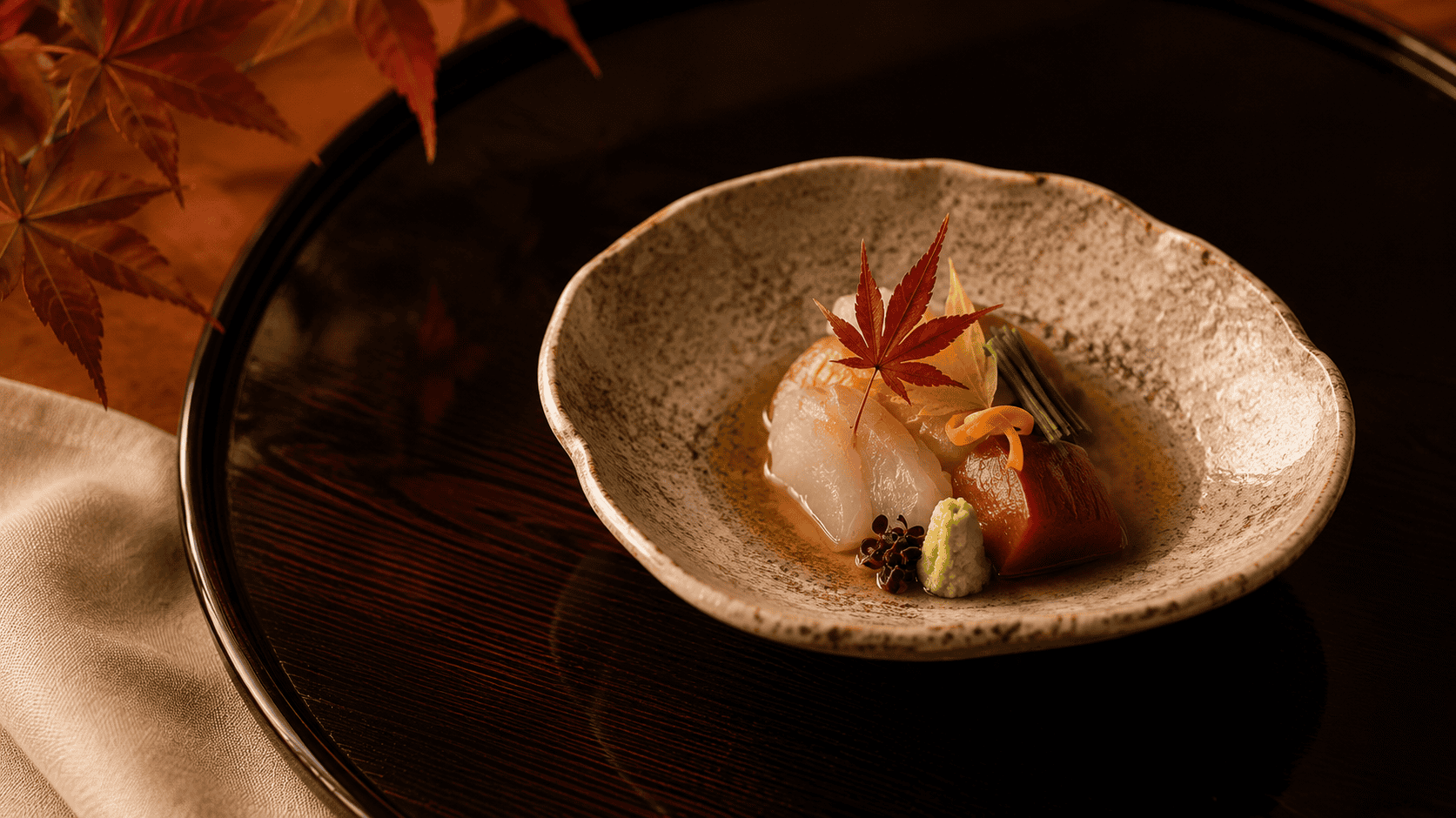
The 50-pillar covers the entry-tier Japanese gyuto, yanagi, whetstone, hinoki board, and cast iron pieces — the Anglophone-distributed Japanese kitchen kit. This list moves to the next tier. Tadafusa redesigns its line with female industrial designer Fumie Shibata for ergonomic balance. Kondo Hamono works in Sakai as a single-master cutler. The Zojirushi rice cooker is the appliance the recipient who eats rice four nights a week will recognise the moment they open the box. The picks below are for the home cook ready to invest in the upgrade.
One register-defining note. The difference between an entry-tier Japanese gyuto and a Tadafusa Hocho Kobo is not aggregate steel quality — both use high-grade VG10 or SLD steel cores. The difference is in handle ergonomics, blade balance, and the small details of finish. A Tadafusa knife sits in the hand differently. The carbonised chestnut wood handle is naturally antimicrobial. The blade transitions from spine to edge at a profile designed for the way a home cook actually moves a knife — not the way a sushi-counter chef moves one.
11. JOC Goods Japanese Knife
JOC Goods curates Japanese kitchen knives from independent workshops — gyuto, santoku, or nakiri styles, hand-forged in Sakai or Sanjō, with rosewood, magnolia, or carbonised chestnut handles. The pieces that don’t make it to mass-market retailers. Browse the JOC Goods knife collection.
12. Zojirushi Overseas-Supported Rice Cooker NS-YMH10
The Zojirushi is the rice cooker the rest of the world catches up to. The 220–230V overseas-supported model is built for export — the same micom fuzzy-logic controller, designed to ship home from Japan to the recipient who already wishes their rice was better. The “I went to Japan and brought back the right rice cooker” gift, deliverable without the flight. View at Discovery Japan.
13. Tadafusa Hocho Kobo SLD Gyuto, 210mm Editorial Pick
Tadafusa is the Sanjō workshop founded in 1948 in Niigata’s “town of blacksmiths.” The Hocho Kobo line was redesigned with female industrial designer Fumie Shibata for ergonomic balance. The carbonised chestnut wood handle is naturally antimicrobial and ages with the hand that holds it. Editorial pick because Tadafusa’s distribution reaches the editorial register — Cutlery and More carries the Hocho Kobo SLD line in the US, but most home cooks have never heard the name. View at Cutlery and More.
14. Kondo Hamono Sakai Single-Bevel Knife via Korin NYC Editorial Pick
Kondo Hamono works in Sakai, Osaka — Japan’s blade-forging capital since the fourteenth century. Single-master, hand-forged knives that pass through one workshop at one bench. Korin in NYC is the US dealer who carries Kondo’s work; the inventory rotates and rarely lasts more than a month per piece. Editorial pick because no affiliate-grade catalogue covers this tier of craftsmanship. View at Korin NYC.
Considered Japan, weekly
Editorial recommendations on Japanese travel, craft, and culture — for the curious adult traveller. One issue a week.
4. Textiles & Fashion at the Editorial Tier
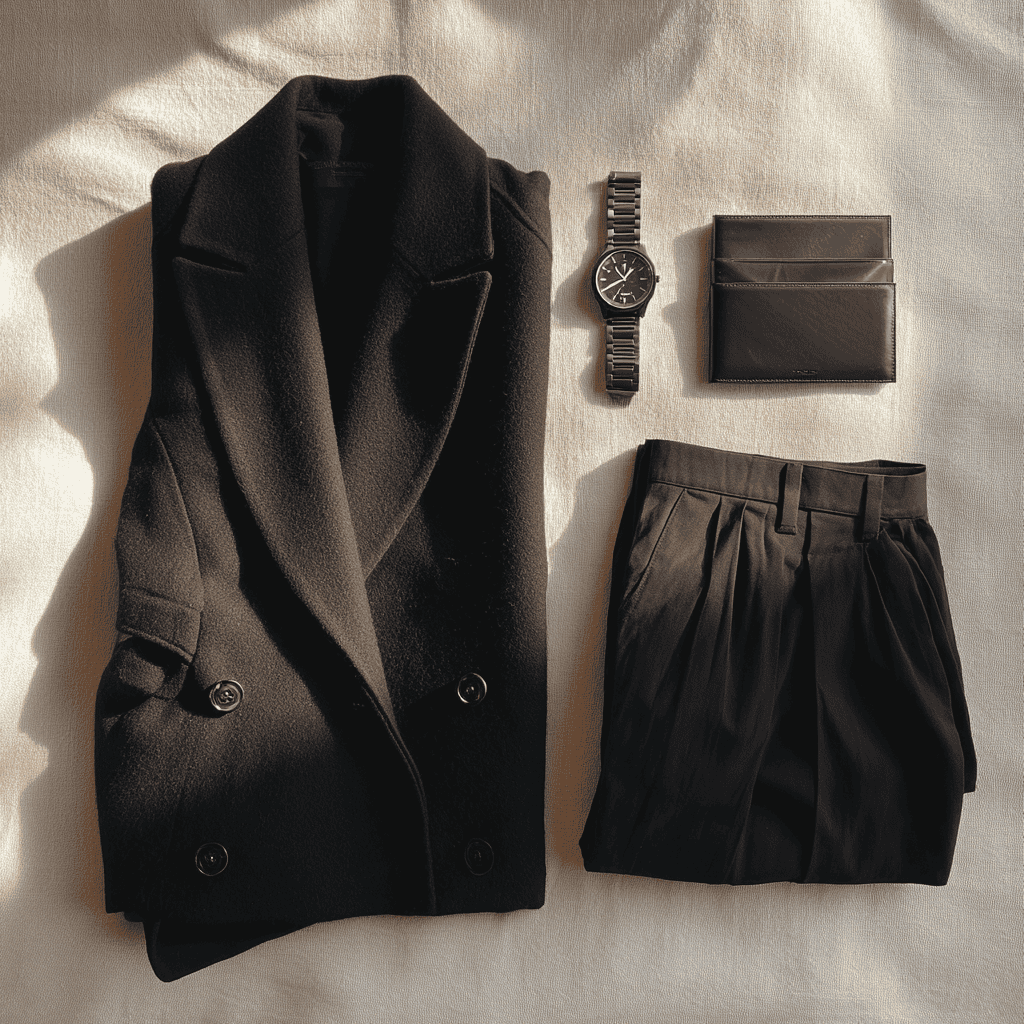
The 50-pillar covers the Tokyo fashion houses and entry-tier furoshiki cloths. This list picks up the Tokyo register at its third pole — Yohji Yamamoto — and adds the precision-watch tradition (Seiko Prospex) and the cult Tokyo leather house Yoshida & Co.’s PORTER line. The hand-printed Musubism furoshiki and the Kyoto cotton kimono robe handle the textile register at the home end.
The PORTER Tanker series deserves its own paragraph. Yoshida & Co. has made leather and nylon goods in Tokyo since 1935. Every PORTER bag passes through a single craftsperson — not assembly-line stages, single-person production. The Tanker line, originally designed for MA-1 flight jacket nylon, became the cult piece that defined Japanese functional design in the late 1980s. The bags don’t reach Amazon. Glasswing Shop in Seattle is one of the few US retailers carrying current-season PORTER.
15. Musubism Hand-Printed Furoshiki, Sakura Botanical
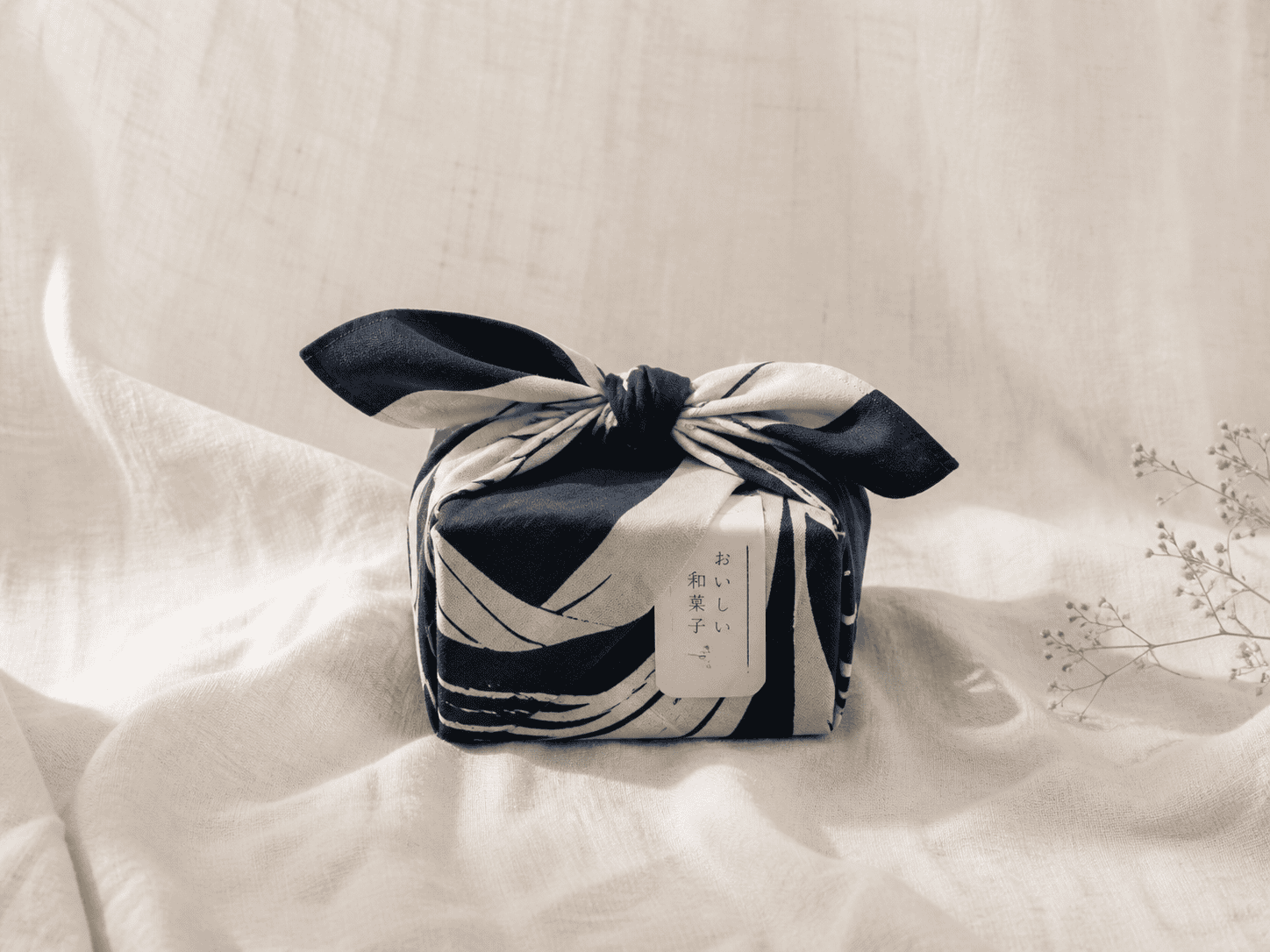
Hand-screen-printed in Japan on 100% Japanese cotton. The sakura motif is one of the few patterns that genuinely earns the season — most “sakura” prints are mass-produced; this is the small-workshop version. Large enough for a tablecloth, lap blanket, or wall tapestry once the recipient has used it as a wrapping cloth. View on Amazon.
16. Kyoto Cotton Kimono Robe
Cotton kimono robes are the everyday version of Japan’s most recognised garment — tied at the waist, no obi required, suitable for loungewear or as a layering piece. Look for Kyoto-made pieces. Kyoto is the kimono capital, and the cotton-house tradition there extends to the modern robe production that ships to the US. Browse Kyoto cotton kimono robes.
17. Yohji Yamamoto Small Leather Good or Accessory

Yohji Yamamoto’s Tokyo house, founded in 1972, defined the all-black, drape-forward Japanese aesthetic that influenced two generations of designers. A wallet, cardholder, or small accessory carries the architecture — the same restraint as the runway pieces at gift scale. The recipient who already has a Comme des Garçons wallet will recognise the Tokyo-house design vocabulary at first handling. View at SSENSE.
18. Seiko Prospex Speedtimer Solar Chronograph SBDL085 (Panda)
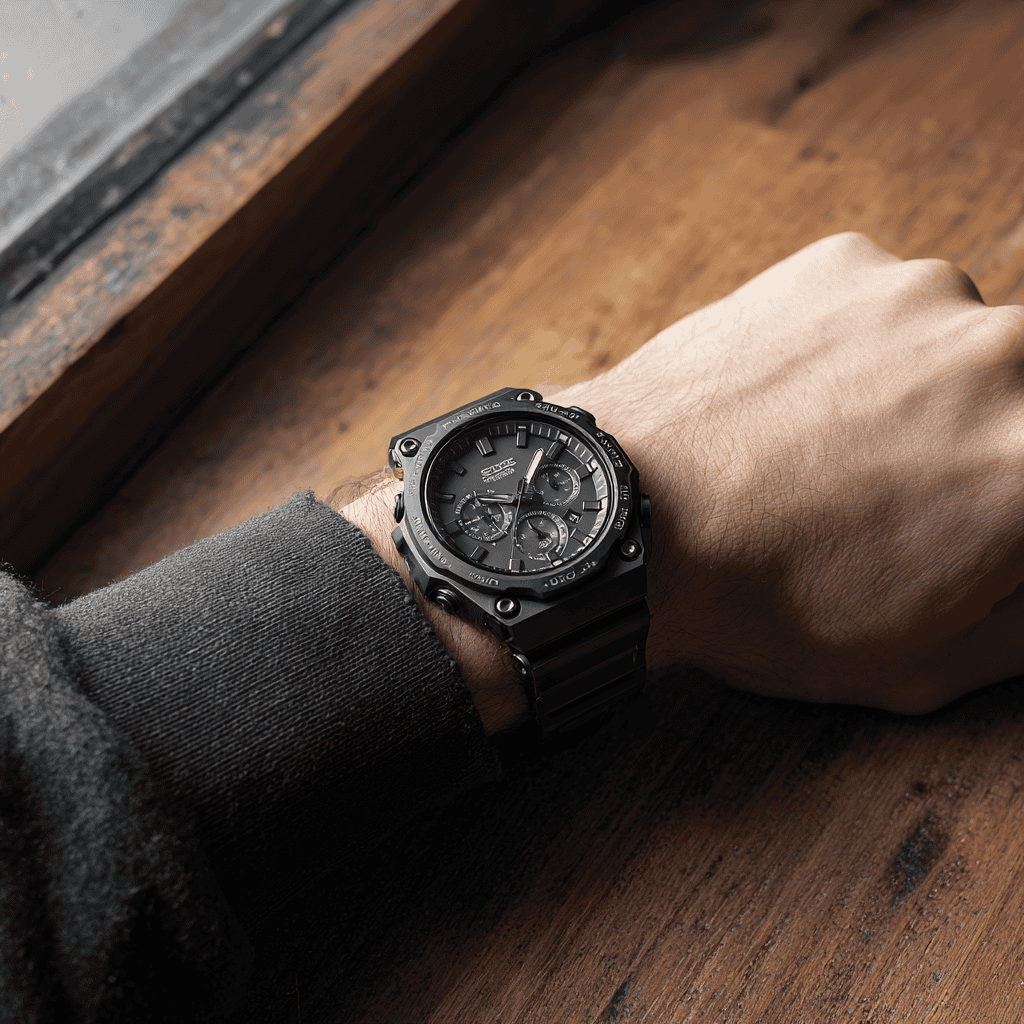
Seiko’s Prospex Speedtimer Solar Chronograph in the Panda dial — white face, black sub-dials, the silhouette every chronograph collector recognises. Solar movement means it never stops. Made in Japan, sold via the Japan-domestic market — the watch the recipient wears that nobody at home can find at a US retailer. View at Discovery Japan.
19. Yoshida PORTER Tanker Series Editorial Pick
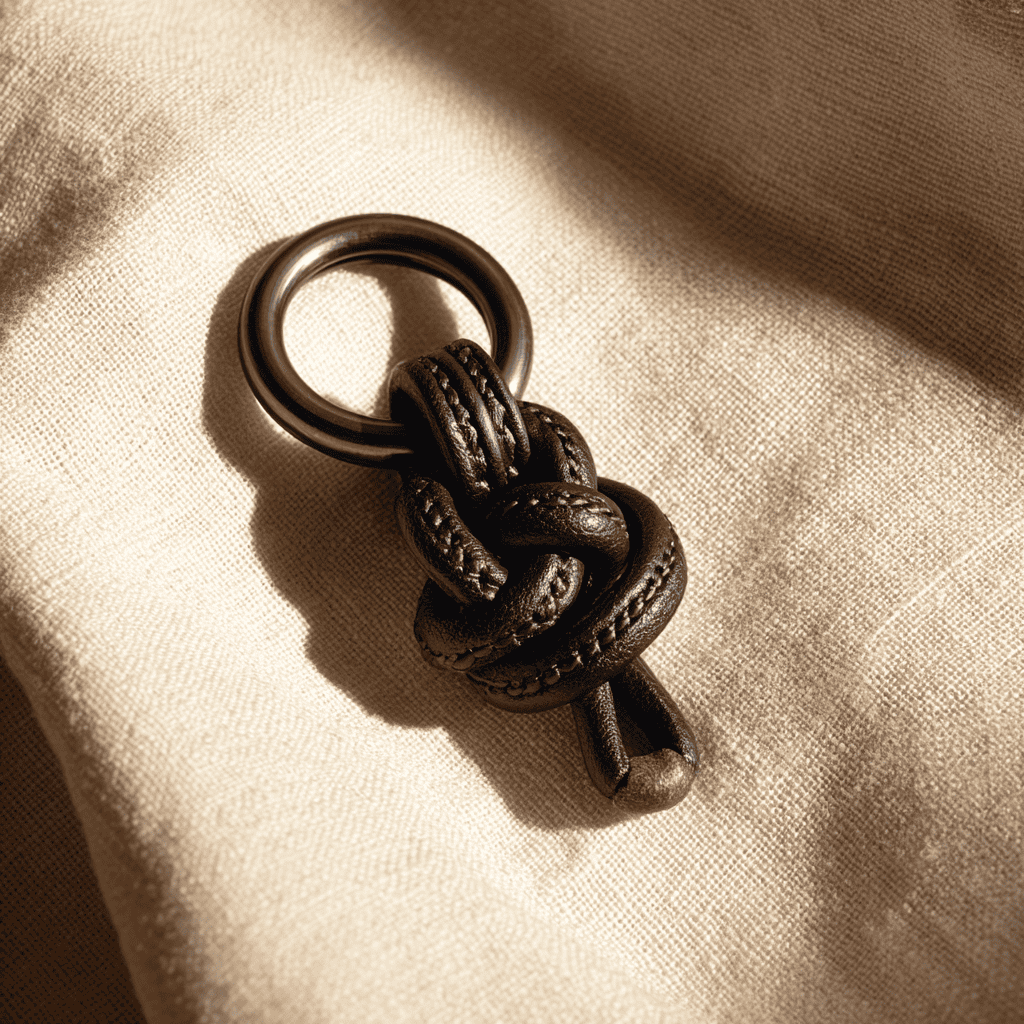
PORTER is the line from Yoshida & Co., Tokyo’s celebrated 1935 leather house. Made entirely in Japan — every bag passes through a single craftsperson. The Tanker is the cult piece, originally designed for MA-1 flight jacket nylon, with the signature flash of orange lining visible at the zip. Editorial pick because PORTER’s distribution doesn’t reach Amazon and most US retailers carry only fragments of the line. View at Glasswing Shop.
5. Home & Ceramics at the Editorial Tier
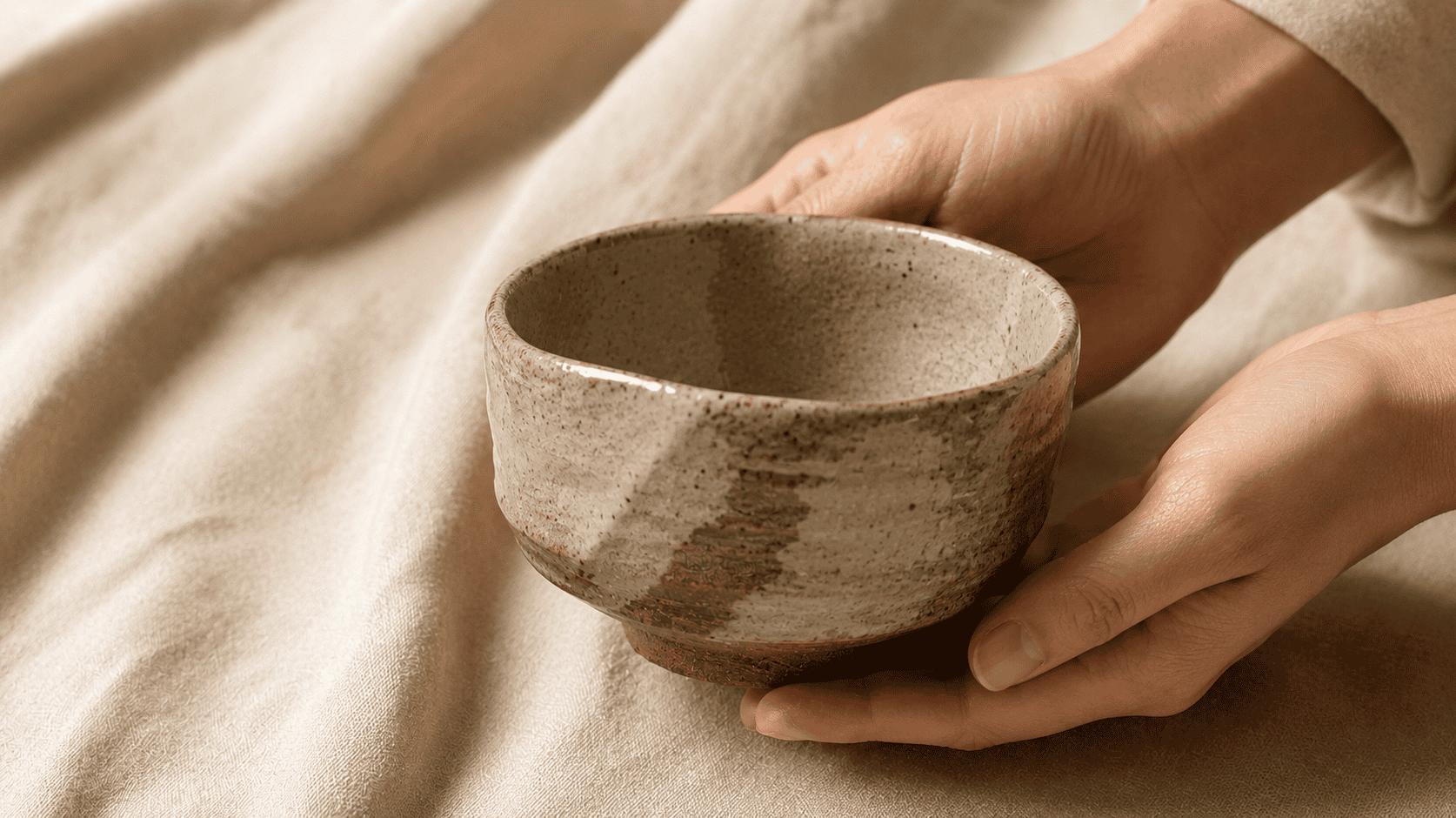
The 50-pillar covers Hasami Porcelain, Tokoname-yaki lucky-cat ceramics, Mino-yaki ramen bowls, Heath × Toyo Sasaki, and Iwachu cast iron furin. This list moves the home category up to the rarest tier — a Bergdorf Goodman department curation, a Musubi Kiln single-kiln Bizen piece, a hand-dyed Marubun indigo textile from Tokushima. Three picks, all editorial, all the kind of object that earns gallery placement in a curated adult home.
The Bizen ware deserves a paragraph. Bizen pottery from Okayama Prefecture has been fired without glaze for over a thousand years. The colour and texture come entirely from the kiln atmosphere — ash, fire, smoke, the position of the piece in the kiln — which means every Bizen piece is one of one. No two are the same. Musubi Kiln carries small-batch rotating selections from Bizen kilns most US buyers will never encounter directly.
20. Bergdorf Goodman Japanese Homeware Selection

Bergdorf Goodman’s home department rotates pieces from luxury Japanese ceramic and glassware houses — small inventories that don’t appear on the brand sites directly. The curation a Manhattan apartment is built around. Worth browsing for the gift that lands as architecture rather than as merchandise. Browse the Bergdorf Goodman home collection.
21. Musubi Kiln Bizen Ware Single Piece Editorial Pick

Bizen ware from Okayama Prefecture has been fired without glaze for over a thousand years — the colour and texture come entirely from kiln atmosphere and ash. Each piece is one of one. Editorial pick because Bizen is the antithesis of catalogue product: no two pieces match, no piece is reproducible, and Musubi Kiln’s rotating selection means the piece you order is the piece you receive — no substitutions, no variants. View at Musubi Kiln.
22. Marubun Indigo Hand-Dyed Textile Editorial Pick
Marubun has dyed indigo in Tokushima for generations using the natural fermentation method that produces Japan blue — the deep, mineral, multi-layered blue that synthetic dyes can approximate but never replicate. The shibori-tied piece you display rather than store. Editorial pick because indigo at this depth is hand-work that can’t be machined and because Tokushima’s indigo tradition runs entirely through small family workshops like Marubun. View at Aizen Kobo, the Kyoto distributor for Tokushima indigo.
6. Stationery & Books at the Editorial Tier
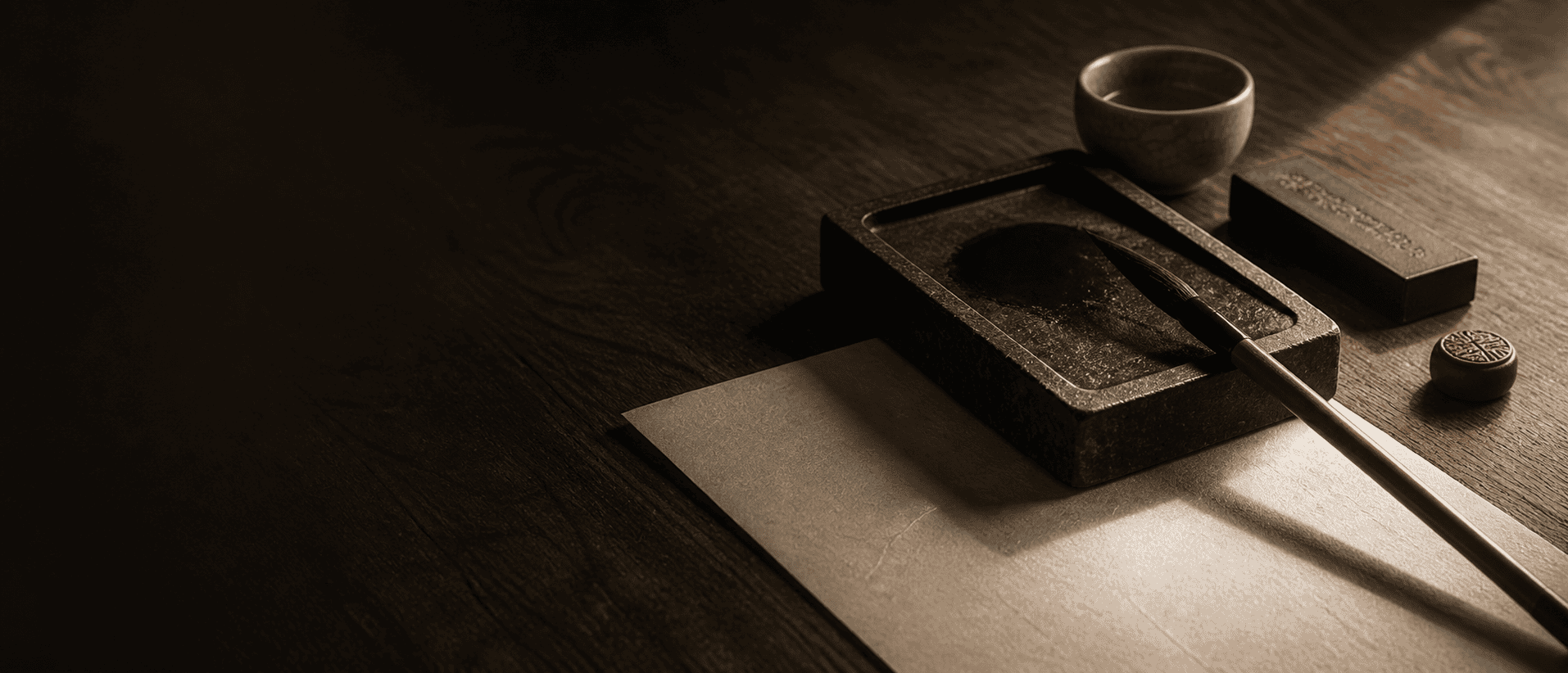
The 50-pillar covers the mainstream Japanese pen, planner, notebook, and washi-tape brands and the entry-level Ikigai book. This list picks up the literary depth and the small-studio stationery tradition the pillar doesn’t reach. Donald Keene’s translation work spans more than fifty volumes of Japanese literature in English — any Keene volume is the literary gift that earns shelf space rather than a single read. Postalco’s Tokyo studio builds stationery for the long quiet life of objects, in the phrase Mike Abelson uses to describe the studio’s design philosophy.
Two picks, both editorial-adjacent, both the next-step gift for the recipient who already journals daily.
23. Donald Keene Essential Japan Reading

Donald Keene was the American scholar who became a Japanese citizen and translated The Tale of Genji and Kenkō’s Essays in Idleness for English readers. Any Keene volume is the literary depth gift for the recipient who has already read the introductory Japanese philosophy books. Browse Donald Keene’s Japan literature.
24. Postalco Notebook Editorial Pick
Postalco is a Tokyo studio founded in 2000 by Mike Abelson — designing for the long quiet life of objects. Their starch-pressed cotton notebooks bond a cream-coloured fabric to the cover. Every piece in the Postalco collection commits to highlighting Japanese craft — the binding done in one Tokyo workshop, the paper sourced from one mill. Editorial pick because Postalco doesn’t sell on Amazon and the studio’s distribution runs through curators like Glasswing in Seattle and Native & Co. in London. View at Glasswing Shop.
How to present a Japanese gift with both hands
Hold the wrapped gift with both hands, the wrapping facing the recipient. Bow slightly from the waist — not deep, just an inclination of the head and shoulders. Extend the gift forward at chest height, not lower. Speak the phrase tsumaranai mono desu ga (“this is a trifle, but…”) or, in a more modern register, kokoro bakari desu (“just a token of my heart”). The recipient receives the gift with both hands. They will not open it in front of you — this is not rudeness but respect, sparing both parties any awkwardness if the gift is mismatched. The handover is the moment the relationship deepens.
7. Calligraphy & Brush at the Editorial Tier
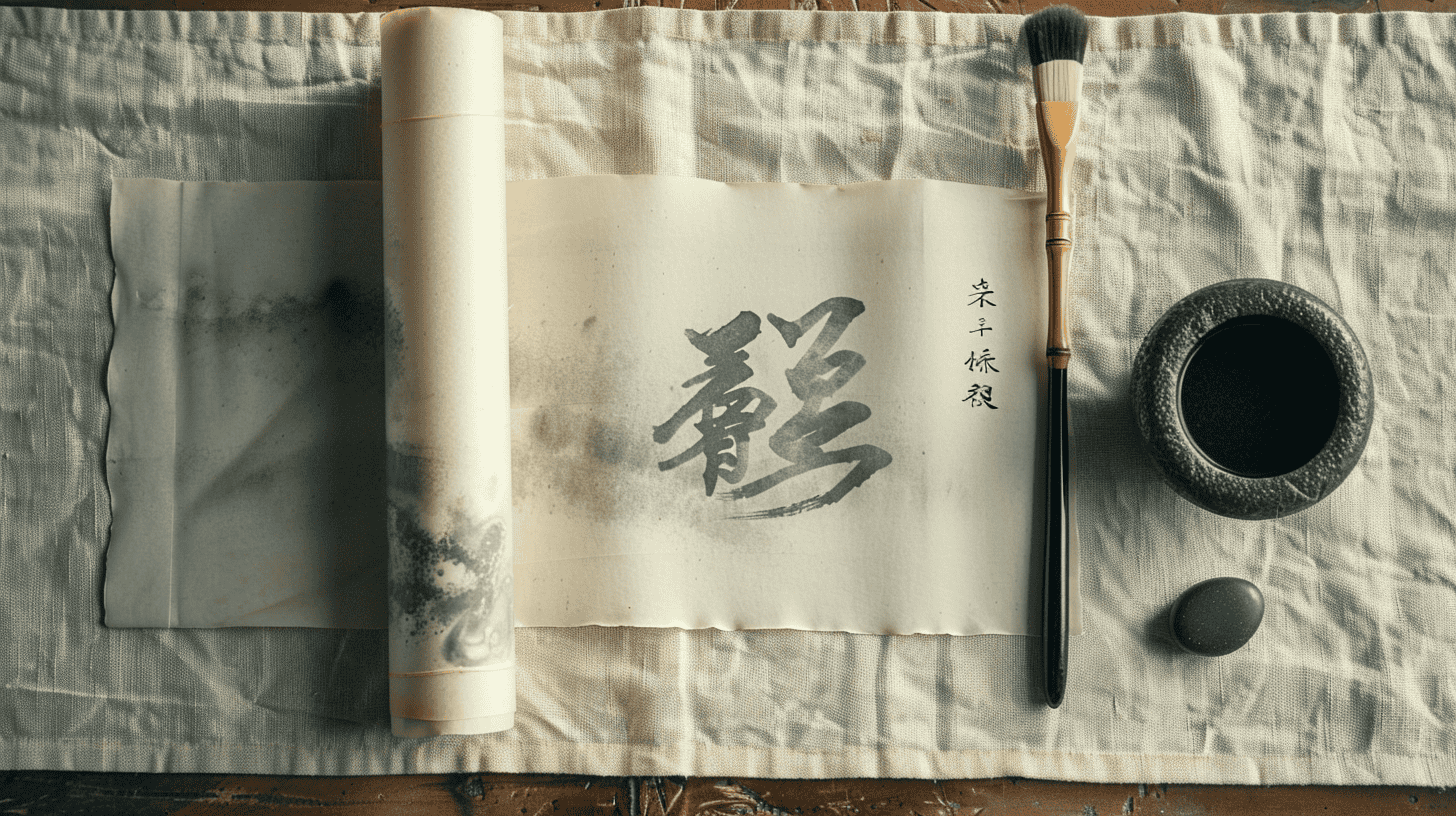
The 50-pillar covers Kuretake’s complete shodo starter kit, the Kuretake fude brush pen, watercolour brush pen sets, and Awagami washi paper — the entry-level calligraphy package. This list picks up the next four steps. Sumi-e painting opens the cross-over between calligraphy and ink-wash illustration. Boku Undo’s premium ink sticks are the upgrade for the practitioner who has worked through their first sumi block. Sailor Pro Gear is the fountain pen tier above entry-level Japanese ink. Hakuhodo Kumano brushes are the single-artisan workshop tradition from Hiroshima’s brush-making village.
For the practising calligrapher already working through the foundational kanji and hiragana, MJ’s free Japanese Calligraphy Practice Tool pairs naturally with any of these picks. The Hakuhodo Kumano brush at the bottom of the section is the gift that signals the recipient is taken seriously as a practitioner.
25. Sumi-e Painting Set
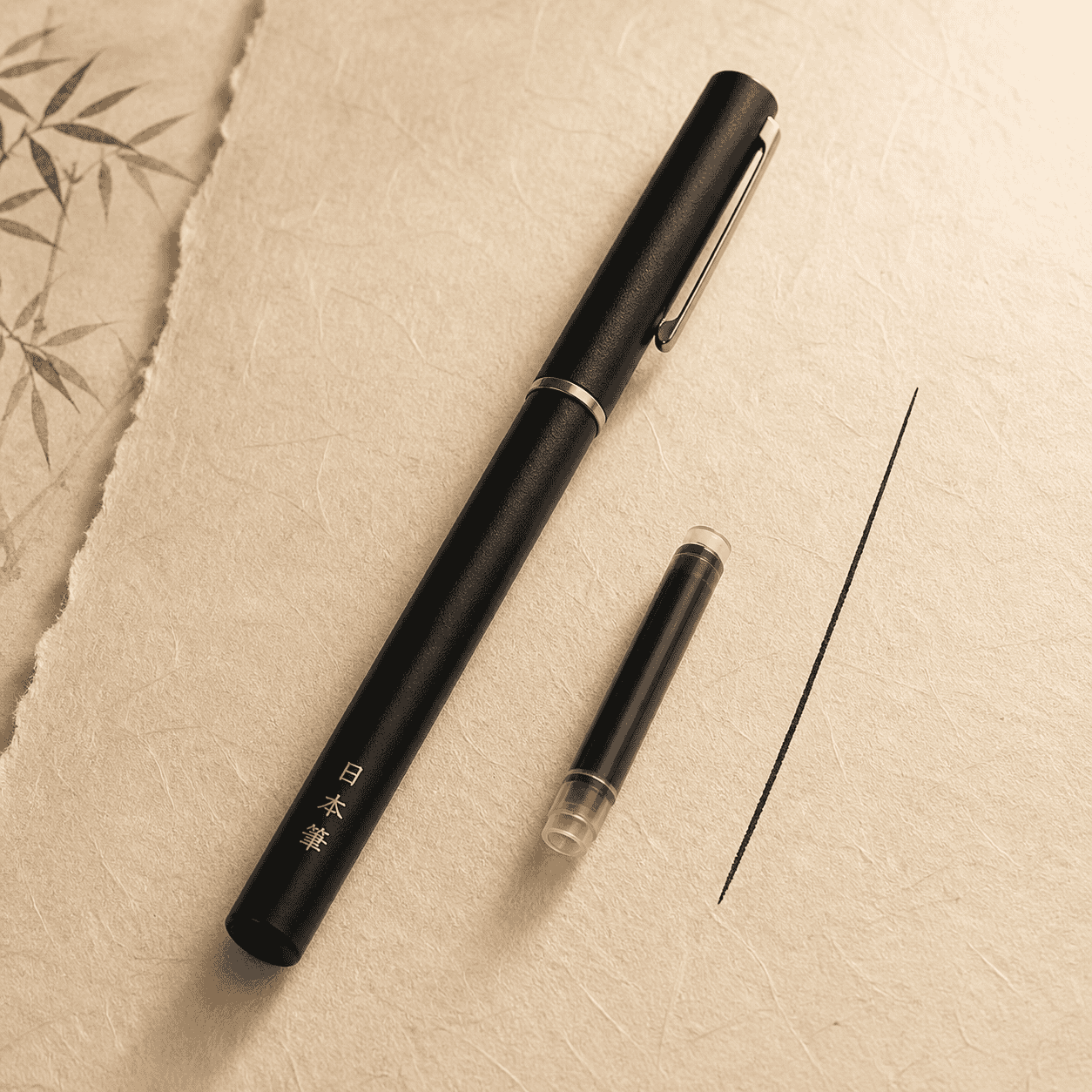
Sumi-e, Japanese ink-wash painting, uses the same sumi ink as calligraphy with rice paper and a wider brush. The set that introduces the painterly side of shodo practice — the recipient who already does calligraphy will appreciate the crossover into the looser, more atmospheric work of sumi-e composition. Browse sumi-e sets.
26. Boku Undo Premium Sumi Ink Stick
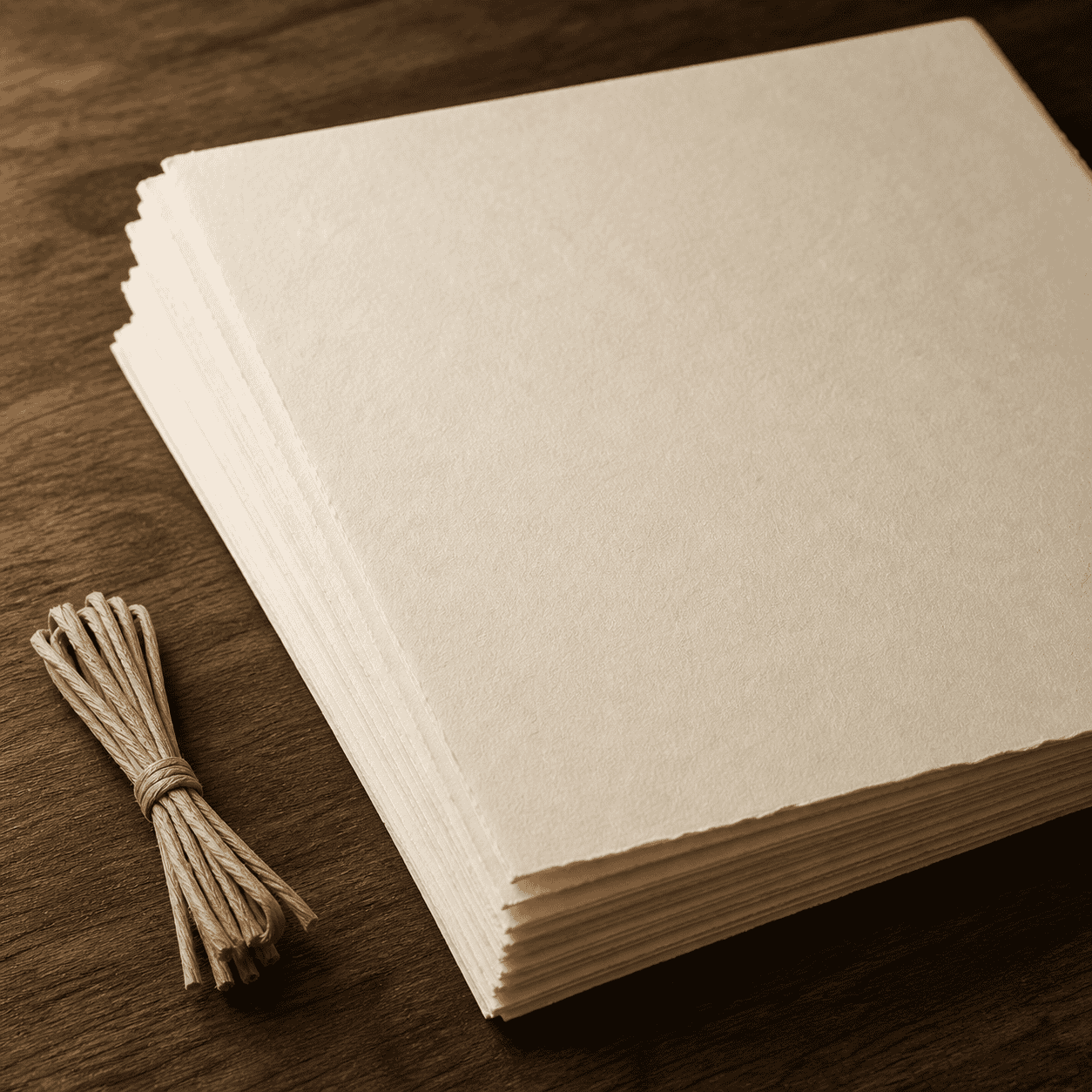
Boku Undo’s premium ink sticks come from Nara, the historic centre of Japanese ink production. The ink stick that grinds smooth on the inkstone, dries to a pure black, and lasts decades stored in its original paulownia box. The upgrade from the Kuretake starter ink stick that comes in most beginner kits. View at JOC Goods.
27. Sailor Pro Gear Fountain Pen, Made in Japan
Sailor has made fountain pens in Hiroshima since 1911 — Pro Gear is the line that built their international reputation. Made in Japan with their signature 21-karat gold nib. The pen that rewards twenty years of daily use, with the nib softening and developing its own writing character over time. The recipient who has been using entry-level Japanese fountain pen ink in a more entry-level pen will recognise the upgrade immediately. View Sailor Pro Gear at Bergdorf Goodman.
28. Hakuhodo Kumano Single-Artisan Calligraphy Brush Editorial Pick
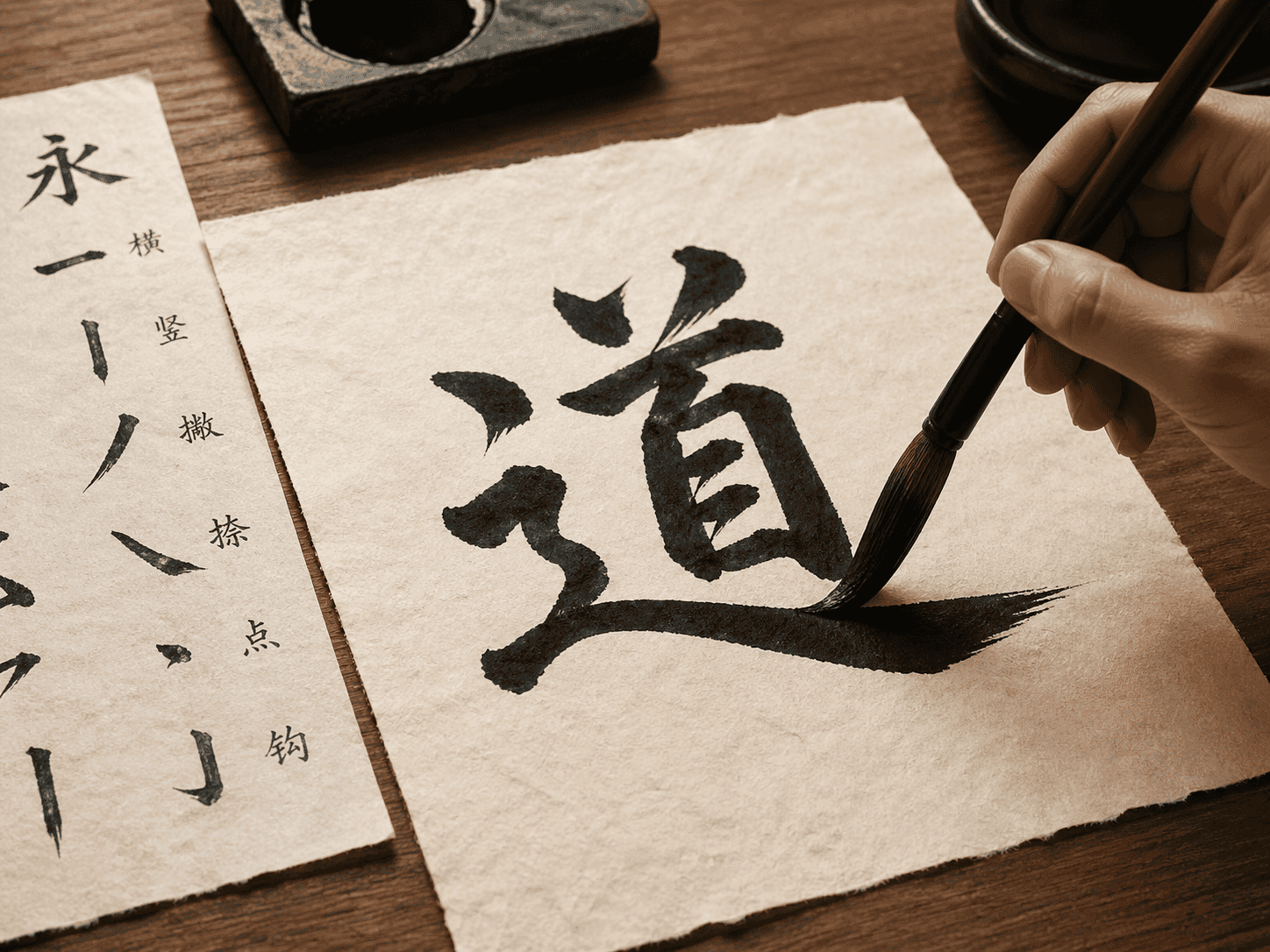
Kumano in Hiroshima is the Japanese village that produces eighty percent of the country’s brushes — calligraphy, makeup, and otherwise. Hakuhodo is one of the master workshops. A single Kumano-fude brush is the gift that signals the recipient already practises and is being taken seriously. The same village produces the brushes Suqqu and the other Japanese luxury makeup houses use — the geographic concentration of brush-making expertise in Kumano is one of Japan’s clearest examples of regional craft specialisation. View at Hakuhodo.
The first stroke — ichi, the number one
Sit straight, both feet flat on the floor, elbows free of the table. Hold the brush vertical between thumb and index finger, the wrist loose enough that you could roll the brush handle between your fingers without resistance. Dip the brush in sumi ink, pull off the excess against the inkstone edge — the brush should be saturated but not dripping. Place the tip on the paper, press for one breath, draw a single horizontal line from left to right with steady pressure. Lift the brush cleanly at the end. The stroke is called ichi. Practise ichi twenty times before attempting any character. The breath, the wrist, the pressure — these are what the practice teaches, not the kanji themselves.
8. Wellness & Beauty at the Editorial Tier

The 50-pillar covers the mainstream Japanese cotton-towel, bath-soak, citrus-bath, and luxury skincare picks — the mainstream J-beauty and bath register. This list moves into the editorial tier of Japanese makeup, the cleansing oil that founded the J-beauty category, the beauty-device segment Refa built, and the London-curated hinoki accessories from Native & Co. that the recipient with a curated bathroom will recognise immediately.
Two points to anchor the picks. First, Suqqu’s brushes are made by the same Kumano artisans who make the calligraphy brushes in the previous section — the same craft specialisation, the same regional expertise, applied to a different end. Second, Shu Uemura founded the cleansing oil category in 1965 in Tokyo. The Ultime8 Sublime Beauty Cleansing Oil is the cult original — the recipe the rest of the global beauty industry eventually caught up to.
29. Suqqu Foundation or Brush
Suqqu, founded in Tokyo in 2003, is the Japanese luxury makeup house favoured by editorial makeup artists worldwide. Their foundation brushes are made by the same Kumano artisans who make calligraphy brushes — the geographic concentration of brush-making in Kumano produces both at the same workshop level. View Suqqu at Bergdorf Goodman.
30. Shu Uemura Cleansing Oil
Shu Uemura, the Tokyo brand founded in 1965, invented the cleansing oil category that the rest of the world eventually caught up to. Their Ultime8 Sublime Beauty Cleansing Oil is the cult original — the skincare gift the recipient already wishes they used and didn’t know was Japanese in origin. View Shu Uemura at Saks.
31. Refa Japanese Beauty Device
Refa, from MTG in Aichi, makes the cult Japanese beauty rollers and microcurrent devices that built the J-beauty device category. The technology gift for the skincare enthusiast who has already integrated luxury Japanese skincare into their routine and wants the device tier. Browse Refa devices on Amazon.
32. Native & Co. Hinoki Bath Accessory Editorial Pick
Native & Co. is the London-based curator of Japanese craft — their hinoki bath accessories (stools, bath buckets, brushes) source from Japanese workshops most US buyers never find. Editorial pick because Native & Co. operates at the editorial register the recipient who has already received a hinoki bath soak from the 50-pillar will appreciate as a next step — the bath stool and bucket that turn the at-home soak into something closer to an onsen ritual. View at Native & Co.
9. Anime & Pop Culture at the Editorial Tier
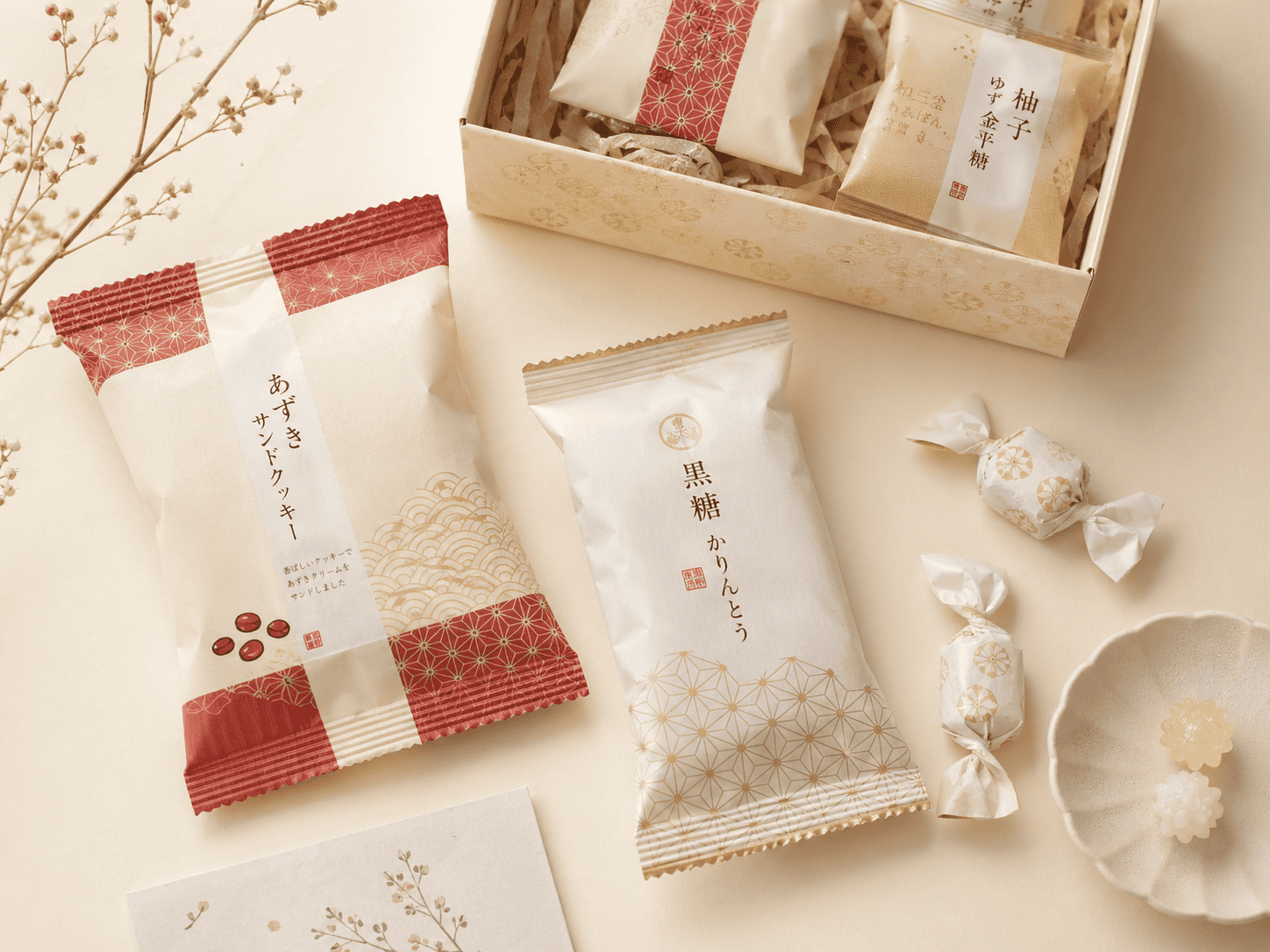
The 50-pillar covers the mainstream anime plush, Sanrio homeware, Pokémon Center exclusives, premium articulated figure tier, and the limited-edition G-Shock crossover. This list picks up the deeper-cut collector tier — the Ghibli art books that double as coffee-table objects, the Tomica Premium diecast for the 1980s sports car enthusiast, the SHFiguarts articulated figures, the kawaii-meets-camera Kenko × Sanrio crossover, and the single-artisan kokeshi folk dolls.
The kokeshi doll closes the category as the editorial pick. Kokeshi are the wood folk dolls from the Tōhoku region of northern Japan — slim cylindrical bodies, painted faces, traditional patterns that vary by family workshop and prefecture of origin. Mjölk, the Toronto curator of Japanese design, surfaces the makers worth collecting — single-artisan pieces from Naruko, Sakunami, and other Tōhoku kokeshi traditions that mainstream Japanese gift sites don’t carry.
33. Studio Ghibli Art Book

The official Ghibli art books — Spirited Away, Princess Mononoke, Castle in the Sky — published in English editions by Viz Media. Coffee table objects that double as anime studies, with concept art, storyboards, and the production process documented across more than two hundred pages per volume. The Ghibli gift for the recipient who already has the plush. Browse Studio Ghibli art books.
34. Takara Tomy Tomica Premium 40 Toyota MR2

Takara Tomy’s Tomica Premium line — the Tomica Premium Release Commemorative Edition Toyota MR2 in red. The diecast model that captures Japan’s 1980s sports car era. Built for the recipient who already has a shelf of cars and recognises the MR2 silhouette without needing the label. View at Discovery Japan.
35. SHFiguarts Dragon Ball Z Super Saiyan 4 Son Goku
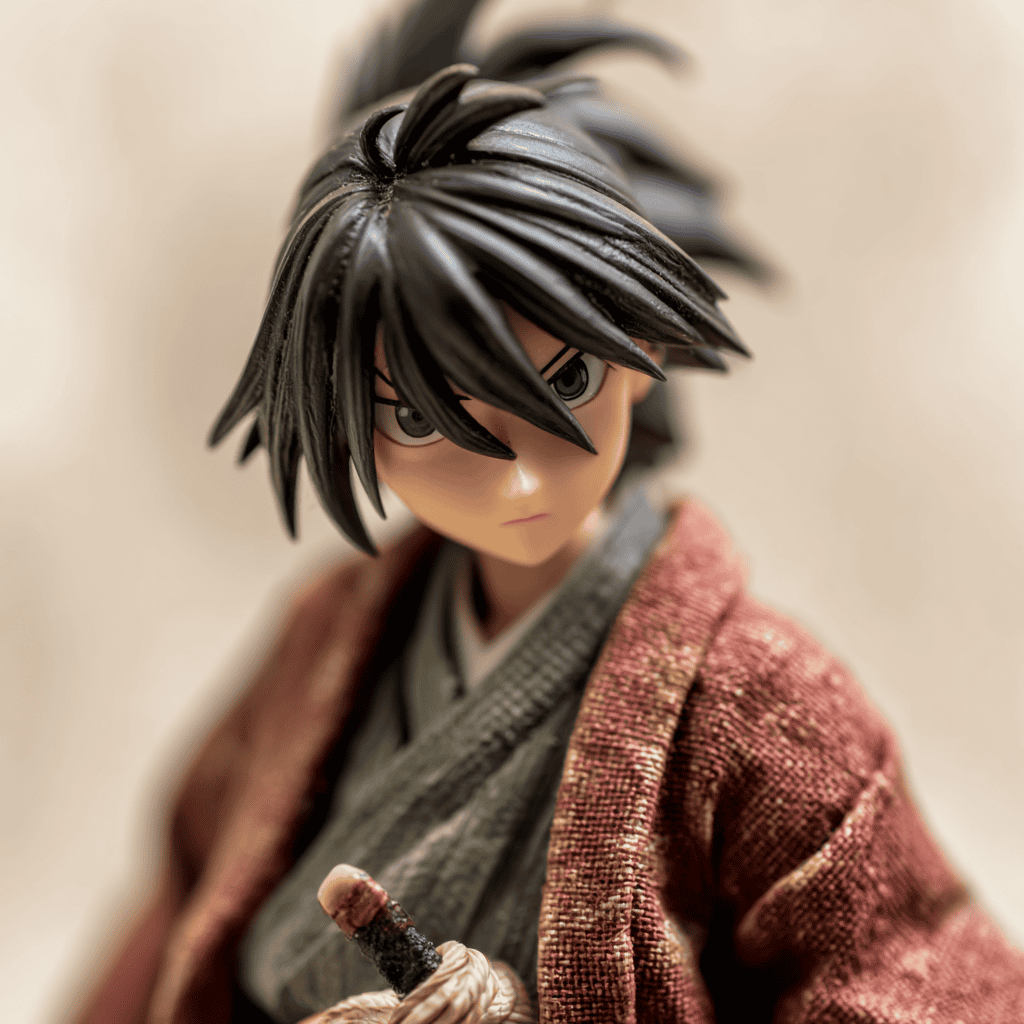
Bandai Spirits’ SHFiguarts line is the premium articulated tier for anime figures — the line above the standard articulated figures in the 50-pillar. The 150mm Super Saiyan 4 Son Goku is the crossover piece between collectible and sculpture. View at Discovery Japan.
36. Kenko Pieni Sanrio Pom Pom Purin Toy Digital Camera
The Kenko × Sanrio Pieni — an ultra-compact 1.3-megapixel toy digital camera designed in the Pom Pom Purin character model. Functional, kawaii, the gift that lands in the photography-and-Sanrio crossover audience the standard Sanrio merchandise tier misses. View at Discovery Japan.
37. Hakata Doll or Single-Artisan Kokeshi via Mjölk Editorial Pick

Hakata dolls and kokeshi — the wood folk dolls from Tōhoku — are the Japanese craft tradition that bridges the kawaii register with single-artisan craft. Mjölk, the Toronto curator of Japanese design, surfaces the makers worth collecting from Naruko, Sakunami, and other Tōhoku kokeshi traditions. View at Mjölk.
10. Travel as Gift & the Things That Travel With You

The 50-pillar covers JOC Goods miso, tea, and omiyage. This list adds the travel-gear tier — the guidebook that triggers the trip, the Tsuchiya Kaban leather travel goods that make the trip easier, the Suica IC card holder for the recipient already planning the visit, the Muji packing pieces, and the JOC Goods sake or specialty foods box that JOC carries beyond the pillar’s three picks. The Daiwa Certate SW spinning reel covers the angler who already has Japanese tackle in their kit. The MJ Customized Itinerary closes as the editorial pick — the gift that arrives without a box.
The Daiwa Certate deserves its own paragraph. Daiwa is one of Japan’s two pillar fishing tackle makers, the other being Shimano. The Certate SW is the saltwater flagship — designed to use in the natural ocean environment with refined functions, and the kind of considered piece an angler brings back from a Japan trip rather than orders from a US retailer. The recipient who fishes seriously will recognise the model number before they read the label.
38. Lonely Planet Japan or Wallpaper City Guide

The two ends of the Japan guidebook spectrum — Lonely Planet for the comprehensive trip planner, Wallpaper City Guides for the design-led short visit. Either is the gift that triggers the trip rather than the gift that decorates the bookshelf. Browse Japan guidebooks.
39. Tsuchiya Kaban Japanese Leather Travel Goods
Tsuchiya Kaban — the Tokyo leather house known for school satchels — also makes premium travel wallets, luggage tags, and small leather goods. The Made-in-Japan luggage tag the recipient uses for years; the school-satchel craft applied to the adult travel register. Browse Tsuchiya Kaban travel goods.
40. Suica Card Holder or Japan Travel Wallet
The Suica IC card holder — for the recipient already planning the trip. Holds the transit card, passport, and yen with Japan-design discipline. The gift that signals “you’re going” without saying so directly. Browse Suica card holders.
41. Muji Travel Pillow or Amenity Kit

Muji’s travel collection — neck pillow, amenity case, packing cubes — is built around the same restrained aesthetic that earned Muji its reputation. The travel gift that travels. The recipient who has used cheap packing cubes on previous trips will recognise the upgrade in the first packing session. Browse Muji travel pieces.
42. JOC Goods Sake or Specialty Foods Box

JOC Goods’ regional Japanese food and drink curation beyond the three picks in the pillar — sake from small breweries, regional condiments, specialty teas that JOC rotates seasonally. The box that arrives as a story rather than a parcel. Browse JOC Goods specialty selections.
43. Daiwa 24 Certate SW 5000-P Spinning Reel
Daiwa is one of Japan’s two pillar fishing tackle makers. The Certate SW is the saltwater flagship — designed to use in the natural ocean environment with refined functions, evolution to adapt to the ocean. The considered piece an angler brings back from a Japan trip rather than orders from a US retailer. View at Discovery Japan.
44. MJ Customized Itinerary or Luxury Adventure Starter Editorial Pick
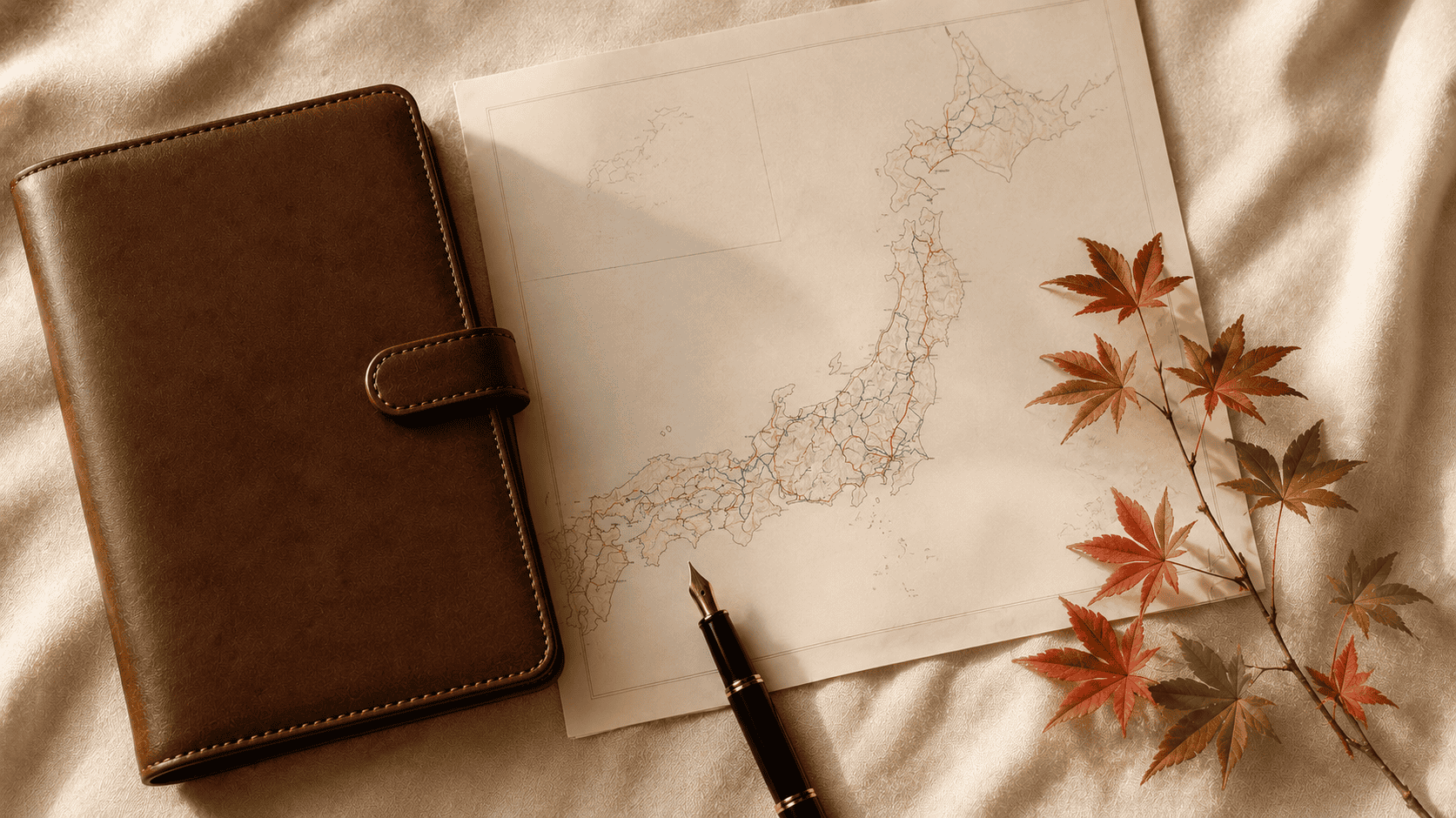
The trip itself is the most ambitious gift on this list. MJ’s Luxury Adventure Starter and Customized Itinerary services build trips for travellers who want depth over checklists. Editorial pick because the trip is the gift that arrives without a box, that earns the recipient’s full attention for two weeks, and that compounds into stories for the years that follow.
Where to Buy These Editorial Picks
Five sources cover almost everything on this list.
The first is the editorial curators — Tortoise General Store in Los Angeles for Kaikado, Mjölk in Toronto for folk-craft kokeshi and hakata dolls, Glasswing Shop for Postalco notebooks and PORTER bags, Native & Co. for hinoki bath accessories, Musubi Kiln for Bizen and Kutani ware, Heath Ceramics for the Toyo Sasaki collaboration. None receive affiliate commission on this list — they are the curators the Editorial Pick badges point to.
The second is the Japanese specialty curators — JOC Goods for the regional craft items from Hasami, Mino, and Tokoname kilns and the cherry-bark Akita pieces; Discovery Japan for the Japan-domestic export items — Zojirushi rice cookers, Seiko Prospex watches, the Daiwa Certate fishing reel, Tomica diecast. These pieces don’t reach US retail at all.
The third is the luxury department stores — Bergdorf Goodman for Sailor fountain pens, Suqqu, and curated Japanese homeware; Saks Fifth Avenue for Shu Uemura; SSENSE for Yohji Yamamoto. The Western retail register for the Japanese design houses.
The fourth is Amazon’s specialty inventory — Musubism furoshiki, Kyoto cotton kimono robes, sumi-e sets, the Refa beauty devices, the Tsuchiya Kaban travel goods, Muji packing pieces, premium junmai daiginjo bottles. The Amazon search-and-filter inventory is the route for the picks that don’t make it to the curated retailers.
The fifth is direct to the maker — Cutlery and More for Tadafusa, Korin NYC for Kondo Hamono single-bevel Sakai knives, Hakuhodo for Kumano calligraphy brushes, Aizen Kobo for Marubun indigo. These are the small distributors and direct-to-maker channels where the inventory rotates faster than the curators can catalogue it. If a piece appears available, order quickly.
And then there’s travel itself. If a trip to Japan is on your horizon, the in-person sourcing in Kyoto’s craft shops, Tokyo’s department stores, and the small Tōhoku workshops is its own register entirely. A custom itinerary can build the right shops into the trip.
Questions Worth Asking
What is the difference between this list and the 50 Made in Japan Gifts pillar?
The Made in Japan 50 list covers the mainstream workhorses — mainstream Japanese matcha, kitchen knives, fountain pen ink, daily planners, design-house wallets, and cotton towels. This list is the editorial companion: 44 picks for the recipient who already has the basics. Heirloom Kaikado tin canisters, Postalco notebooks, PORTER bags from Yoshida Tokyo, Musubi Kiln Bizen ware, Tadafusa and Kondo Hamono knives. The two lists are designed to read as complements, not duplicates.
What is an Editorial Pick on this list?
Editorial Picks are the 14 items chosen on merit — for craft lineage, single-workshop production, or design integrity — with no affiliate routing involved. Kaikado has made tin tea canisters in one Kyoto workshop since 1875. Musubi Kiln’s Bizen ware comes from a kiln tradition that has fired without glaze for more than a thousand years. Postalco is the Tokyo studio building objects for the long quiet life of things. The Editorial Pick badge marks the gifts that signal taste rather than convenience.
Where do I buy these editorial gifts in the US?
Five sources cover the list. Tortoise General Store in Los Angeles stocks Kaikado. Mjölk in Toronto carries folk-craft kokeshi and hakata dolls. Glasswing Shop ships Postalco notebooks and PORTER bags. Heath Ceramics in Sausalito curates the Toyo Sasaki collaboration. Native & Co. in London ships hinoki bath accessories internationally. Bergdorf Goodman and Saks carry the luxury skincare and stationery houses. For the items that don’t reach US retail at all — single-master Sakai knives, certain Musubi Kiln pieces — direct-from-Japan shipping via Discovery Japan or the maker’s own site is the route.
Are these gifts more expensive than the 50-pillar picks?
Some are, some aren’t. The editorial register isn’t about price — it’s about the recipient. A Postalco notebook costs about the same as a Hobonichi Techo. A Tadafusa gyuto costs more than an entry-tier Japanese gyuto. A JOC Goods sake set costs about the same as a Mino-yaki set on Amazon. What you’re paying for at the editorial tier is the single-workshop provenance, the craft lineage, and the design integrity that the recipient who already has good things will recognise the moment they unbox the gift.
What if the recipient hasn’t received any of the 50 basics yet?
Start with the 50-pillar instead. The Made in Japan 50 list covers mainstream Japanese matcha, kitchen knives, fountain pen ink, daily planners, cotton towels, and design-house wallets, and the other mainstream Made-in-Japan picks. This editorial companion list is the next gift, not the first one. For first-time Japanese gift recipients, the pillar is the right starting point.
Do these editorial gifts ship internationally?
Most do. Amazon-routed picks ship to the US, Canada, Australia, and the UK at standard rates. Bergdorf, Saks, and SSENSE ship globally. Tortoise General Store, Mjölk, Heath Ceramics, and Glasswing Shop ship within North America at standard rates and internationally at higher tiers. The few Japan-domestic-only items — certain Sakai knives, single-bowl Bizen pieces — ship from Japan worldwide via Discovery Japan or the maker’s direct site, usually with seven-to-fourteen-day delivery and customs paperwork the buyer signs at delivery.
Forty-four picks, fourteen editorial, one trip
The forty-four picks above do not pretend to be comprehensive. They pretend the opposite — that the Japanese gift register is deep enough to support two complementary lists, and that the recipient who has already received the mainstream Made-in-Japan picks is the right audience for the editorial register that this list collects. Kaikado at the top of the tea category. Postalco at the top of stationery. Bizen at the top of home. PORTER at the top of textiles. Kondo Hamono at the top of knives. The trip itself at the close of the travel category. These are the gifts that signal the giver has been thinking about the recipient for longer than the order took to place.
Start with one. A small Kaikado canister for the matcha drinker. A Postalco notebook for the journaller. A PORTER Tanker for the traveller. The recipient will understand, on receipt, that the gift was chosen rather than bought. From there, the rest of the list builds itself across the seasons — ochūgen in summer, oseibo in winter, birthdays and anniversaries spaced through the year — as the relationship between sender and recipient deepens around the objects that pass between them.
For the cultural lineage these objects belong to, our Japan culture guide is the place to start. For the mainstream gift picks the recipient should receive first, our Made in Japan: 50 Japanese Gifts pillar is the companion to this list.
If the recipient on this list is the person you would give a trip to Japan if you could, MJ builds custom Japan itineraries for travellers who want depth over checklists.
Plan Your Custom Japan Itinerary