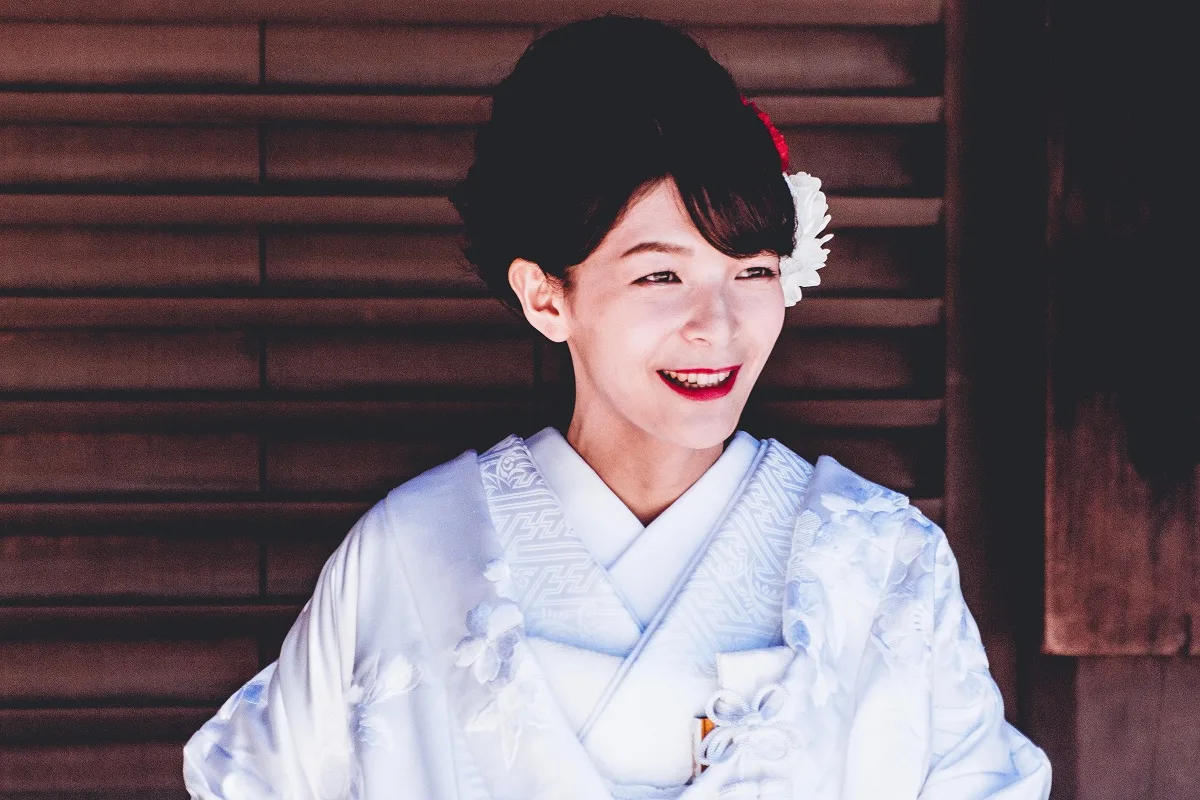
Japanese etiquette has a reputation for being strict, and visitors often arrive braced for a test. In practice, it is a set of small, sensible habits. Each one keeps a crowded country running gently. Once you see the reason behind a rule, you rarely forget it.
This guide covers the moments a traveler actually meets. You will bow, remove your shoes and share a table. You will ride trains, soak in hot springs and hand over gifts. For each, we explain what to do, what to avoid and why the custom exists.
Nobody expects a guest to be perfect. Effort is what people notice, and a sincere apology covers most slips. For the ideas that sit underneath these habits, start with our essay on Japanese concepts for life, then come back here for the practical side.
What is the most important rule of Japanese etiquette?
The most important rule is to avoid causing trouble for others. Most customs follow from it. You keep your voice low on trains, remove your shoes indoors, carry your trash and skip tipping. Each habit protects shared space. If you are unsure, watch the people around you and copy them.
Why Japanese Etiquette Works the Way It Does
Most of the rules make sense once you picture the setting. Greater Tokyo is the most populous metropolitan area on earth. Trains run to the minute, and streets stay clean without many bins. That only works when millions of strangers make the same small choices every day.
The idea behind those choices has a name. Meiwaku means trouble or nuisance caused to other people. Avoiding it is the steady engine of daily life. So a loud phone call, a blocked doorway or a dripping umbrella all count as meiwaku. None of them is dramatic. Together, though, they decide whether a shared space feels calm.
A second idea runs alongside it. Omotenashi is the Japanese word for wholehearted hospitality. A host anticipates what you need before you ask. In return, a good guest makes the host’s work easy. Etiquette is the meeting point of the two, which is why it feels mutual rather than one-sided.
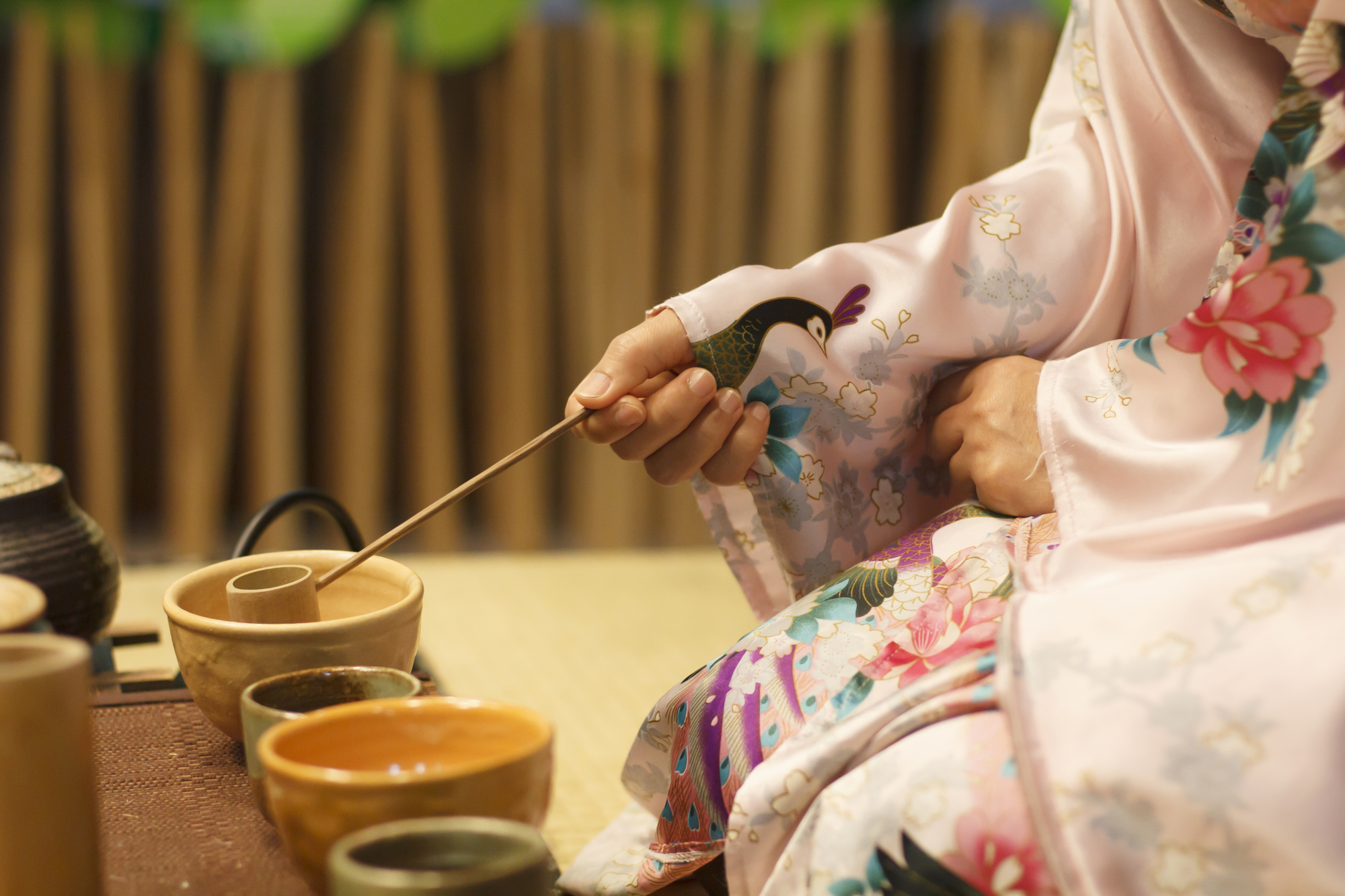
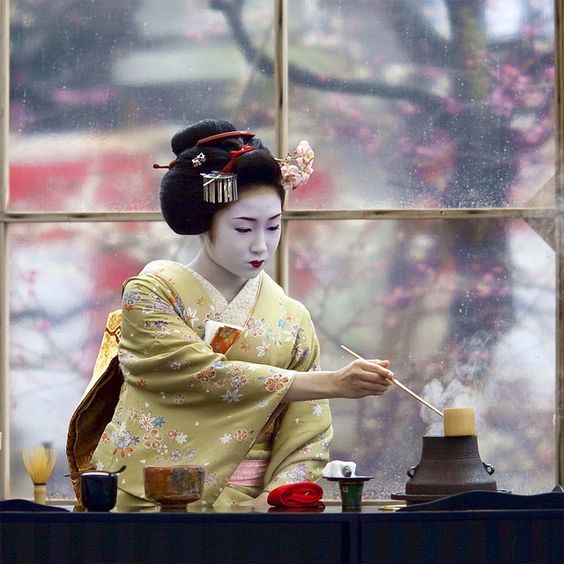
The clearest model of this exchange is the tea gathering. Every gesture, from how the bowl turns to how it is received, has been refined over centuries. You do not need to learn the full form for a trip. Still, an hour at a tea room teaches the logic faster than any list. Our guide to the Japanese tea ceremony explains what to expect as a guest.
Keep one thing in mind as you read. Japanese etiquette is generous to visitors. People know that customs differ, and most will smile at an honest mistake. The Japan Tourism Agency even publishes a responsible traveler guide for this reason. Its tone is welcoming, not scolding, and the same is true of most hosts.
Greetings, Bowing and Business Cards
How to bow as a visitor
The bow replaces the handshake in most settings. It signals greeting, thanks and apology, depending on depth and length. A deep, held bow carries more weight than a quick nod. For travelers, a small bow from the waist is always enough. Keep your back straight, your eyes lowered and your hands at your sides.
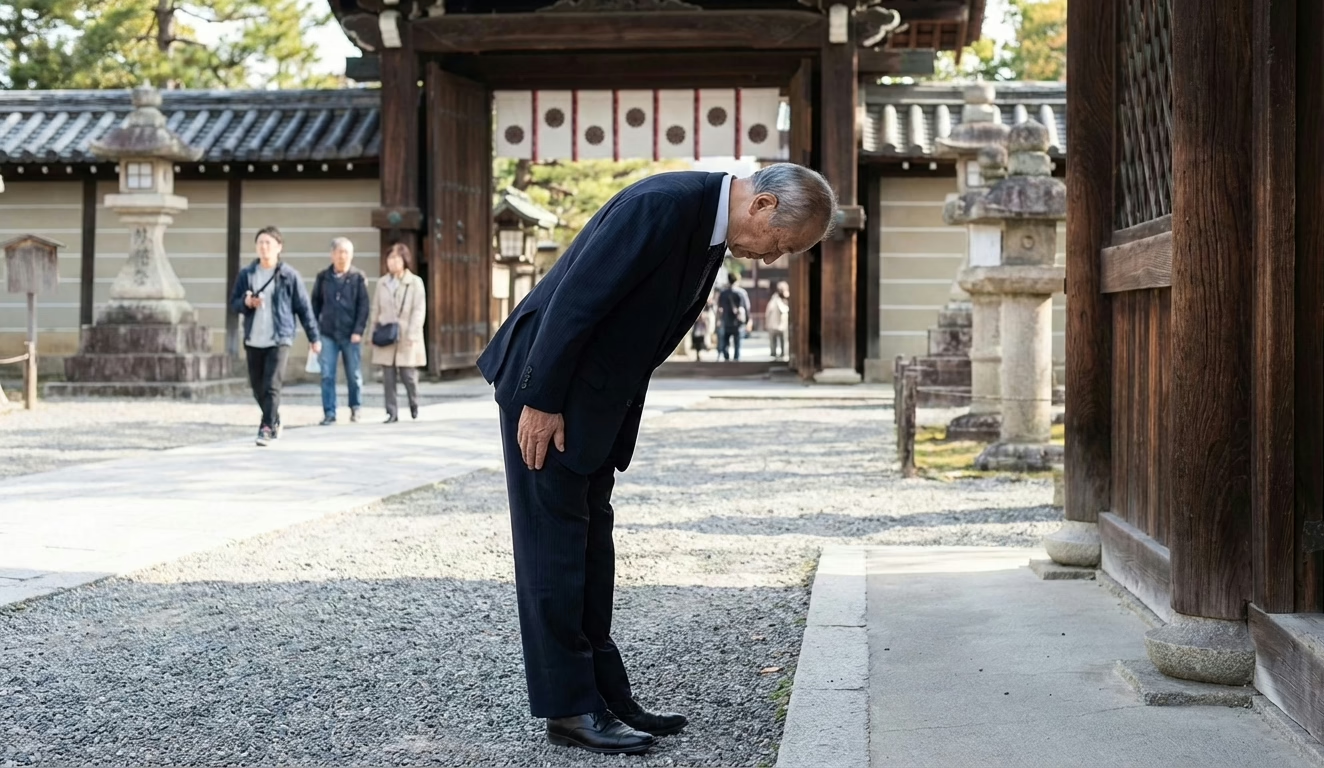
Match the bow you receive rather than outdoing it. If a hotel clerk bows lightly, return a light bow. When someone offers a handshake instead, take it gently and briefly. Many Japanese professionals combine the two with a short nod. Above all, do not overthink it, because sincerity reads clearly in any form.
Names, titles and small courtesies
Add san to a person’s family name when you address them. It works like Mr. or Ms. and suits almost everyone. However, never add it to your own name. First names are for close friends, so wait to be invited. Meanwhile, a simple arigato gozaimasu for thank you will open more doors than any phrase book.
Exchanging business cards
Business cards, or meishi, still matter in Japan. If you travel for work, bring plenty. Offer your card with both hands, text facing the receiver. Receive theirs the same way, then pause to read it. Place it on the table in front of you during the meeting. Writing on a card or pocketing it at once looks careless, so put it away only at the end.
You may also like
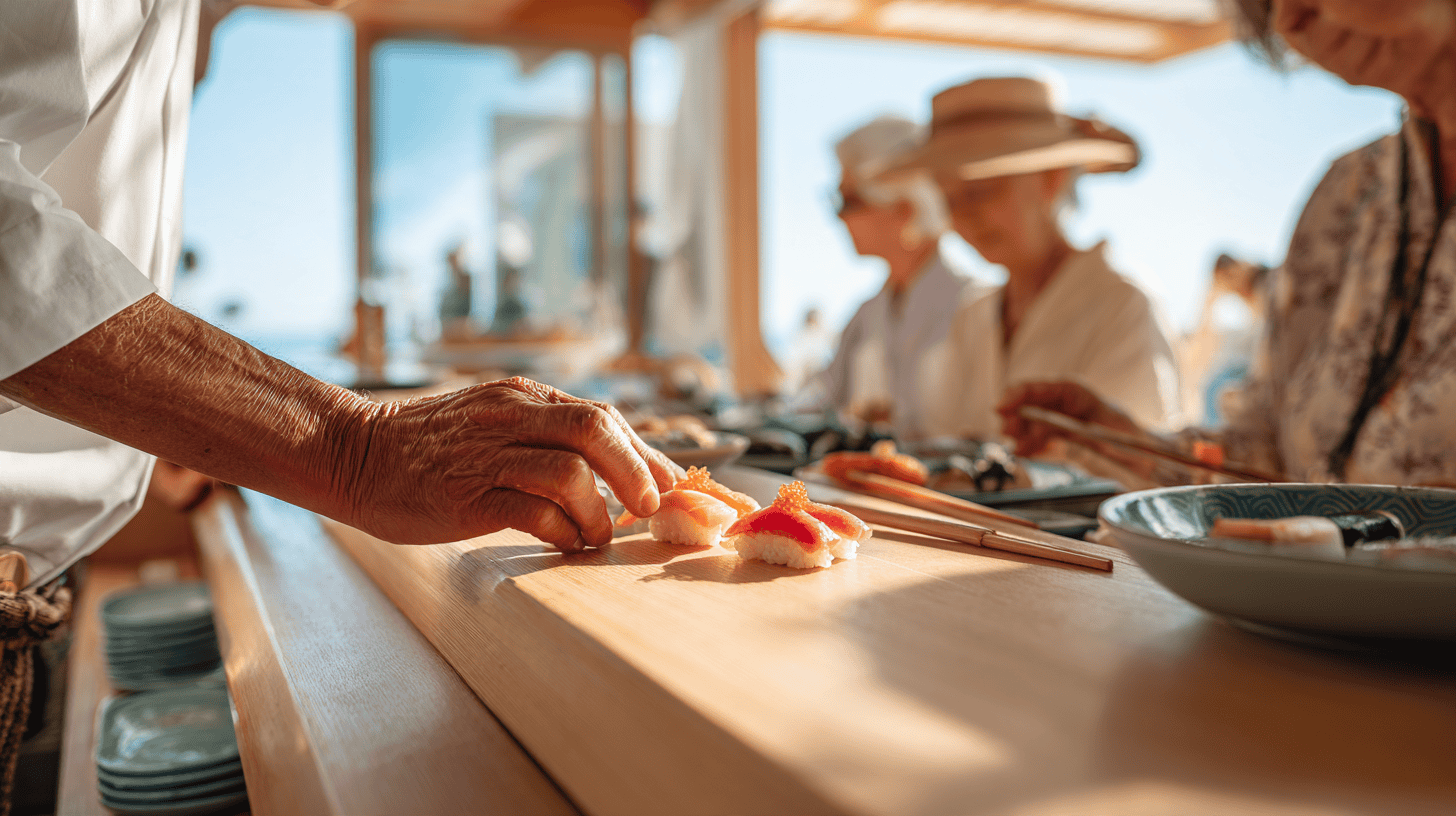
Greetings set the tone for everything that follows, so practice them before you fly. Try a small bow in a mirror and say the thank-you phrase aloud. Hosts notice the effort at once.
Shoes, Slippers and Tatami
When the shoes come off
Shoes come off at the entrance to homes, ryokan inns, some restaurants and many fitting rooms. The signal is a step up. Most entrances have a lower area, the genkan, where outdoor shoes stay. Step out of your shoes and onto the raised floor without touching the lower level in socks. Then turn your shoes to face the door, toes outward, ready for leaving.
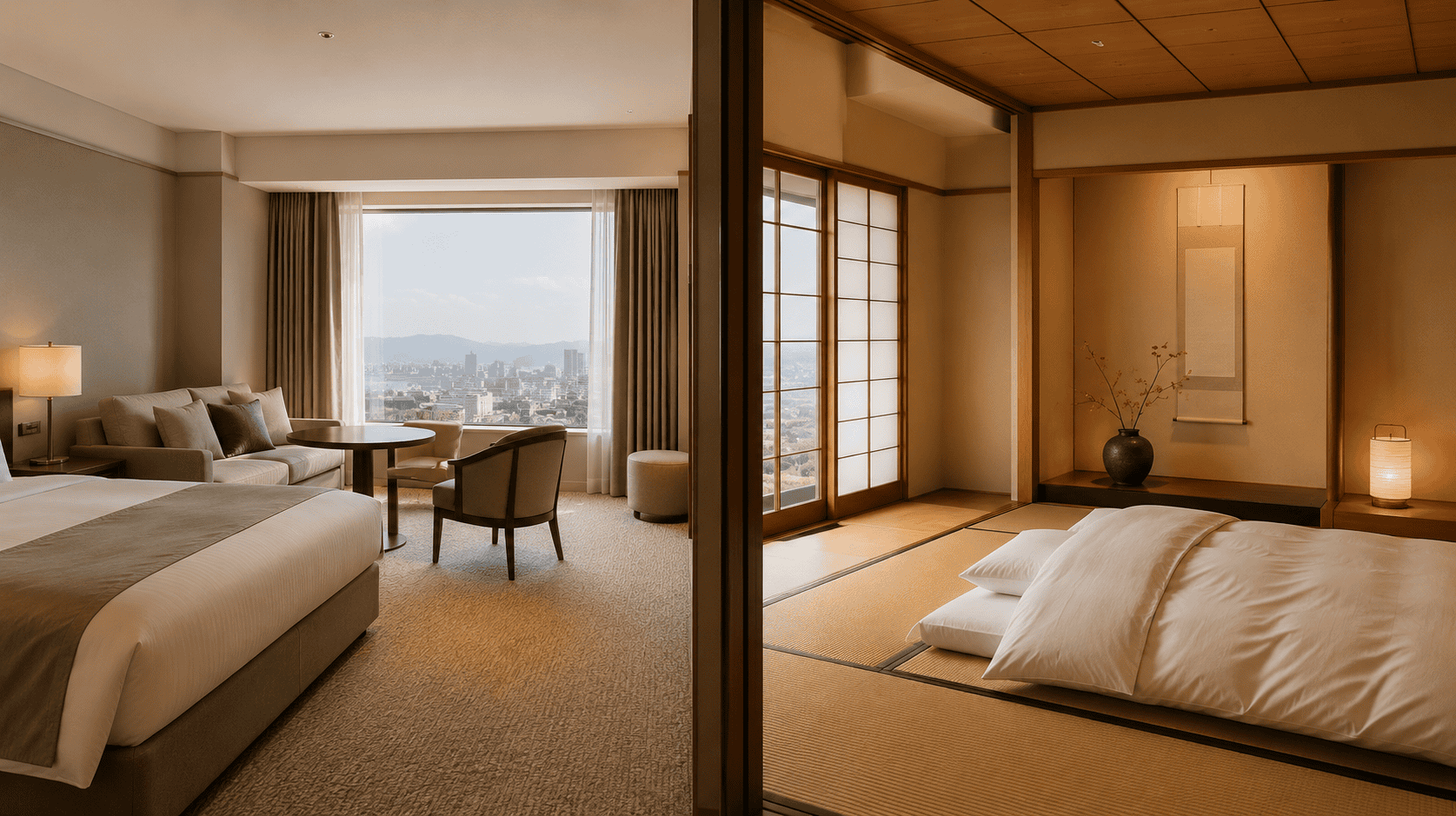
Look for clues when you are not sure. A rack of slippers, a shoe cabinet or a polished step all mean shoes off. Wear shoes that slip on and off easily, because you will change often. Clean socks without holes are also worth packing. A long day of gardens, galleries and dinners can involve a dozen shoe changes.
Slippers and the tatami rule
Slippers are for wooden floors and corridors. However, they never go on tatami, the woven straw mats. Leave them at the edge of the room and walk on the mats in socks or bare feet. Tatami is delicate and expensive, and in a ryokan it is also where you sleep. That is why the rule is firm.
Bathrooms have their own pair. In many homes and inns you will find toilet slippers waiting by the door. Change into them inside, then change back as you leave. Wandering into a dining room in toilet slippers is a classic visitor slip. It is harmless, and you will see the smiles, but you will not do it twice.
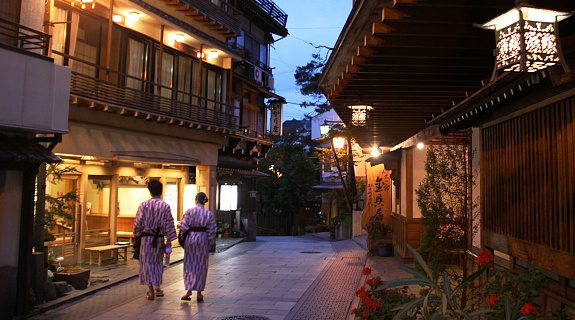
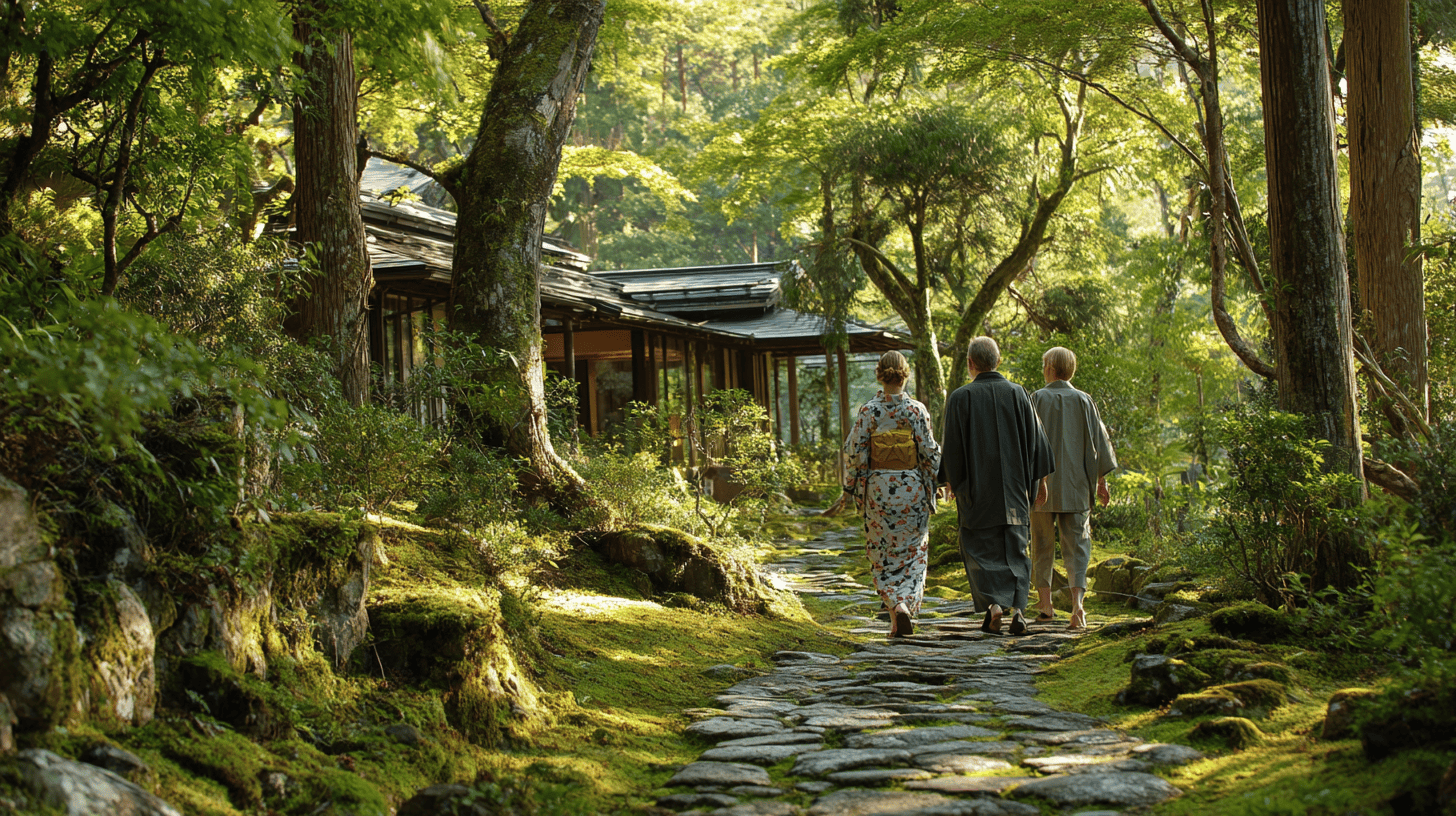
Yukata robes follow a simple rule too. Wrap the left side over the right, always. The reverse is used only for dressing the deceased, so staff will gently correct you. Inside the inn you may wear the yukata to dinner, to the bath and even into town. In a city hotel, keep it to your room.
Japanese Etiquette at the Table
Before and after the meal
Meals open and close with two short phrases. Say itadakimasu before the first bite. It means roughly “I humbly receive,” and it thanks everyone who brought the food to the table. After eating, say gochisosama deshita to the cook or server. Both phrases are easy, and staff love hearing them from visitors.
Chopstick rules that matter most
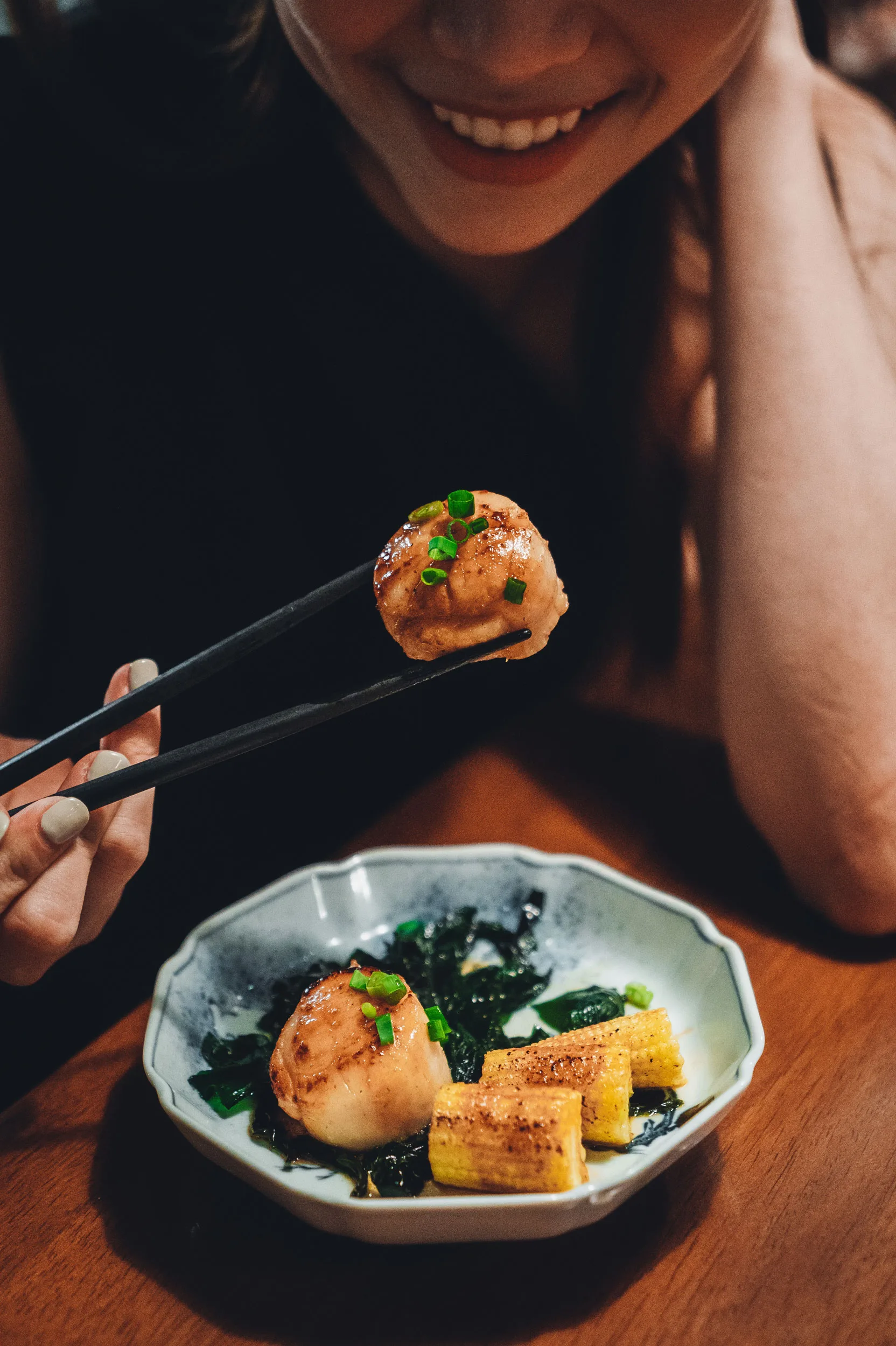
Two chopstick habits are linked to funeral customs, so they matter more than the rest. First, never stand chopsticks upright in a bowl of rice. Second, never pass food from your chopsticks to someone else’s. Instead, place the food on their plate. Beyond those two, avoid pointing with chopsticks, spearing food or waving them while you talk. When you pause, lay them on the rest.
Shared dishes often come with serving chopsticks. If they do not, turn your own pair around and use the clean ends. Small bowls of rice and soup can be lifted toward your mouth, which is polite rather than sloppy. Similarly, slurping noodles is welcome. It cools the broth and shows you are enjoying the bowl.
Drinks, soy sauce and the bill
At a shared table, pour for others and let them pour for you. Hold your glass up slightly as they do. Wait for the whole table to say kanpai before you drink. In an izakaya, the easygoing Japanese pub, this ritual repeats all evening. Our guide to izakaya culture and ordering covers the rhythm of a night out.
Use soy sauce sparingly. Pour a little into the dish, then dip the fish side of nigiri, not the rice. Drowning rice in soy sauce suggests the chef got the seasoning wrong. At the end, pay at the register by the door rather than at the table. Many restaurants use a small tray for cash, so place money there instead of handing it over.
Eating on the move is the other table rule visitors break most. In most of Japan, people do not eat while walking down the street. Instead, they stand beside the stall or vending machine, finish, and then move on. Market lanes and festival stalls are the exception, since standing to eat is part of the fun. Even there, step aside so others can pass. The habit keeps pavements clean and gives food the attention it deserves.
Trains, Phones and Queues
Lining up on the platform
Japanese trains are famously calm, and riders keep them that way. Platforms are marked with lines showing where doors will open. Queue in those lanes, and stand to the side while people get off. Then board in order. At rush hour, the crowd moves as one, so keep pace and avoid stopping in doorways.
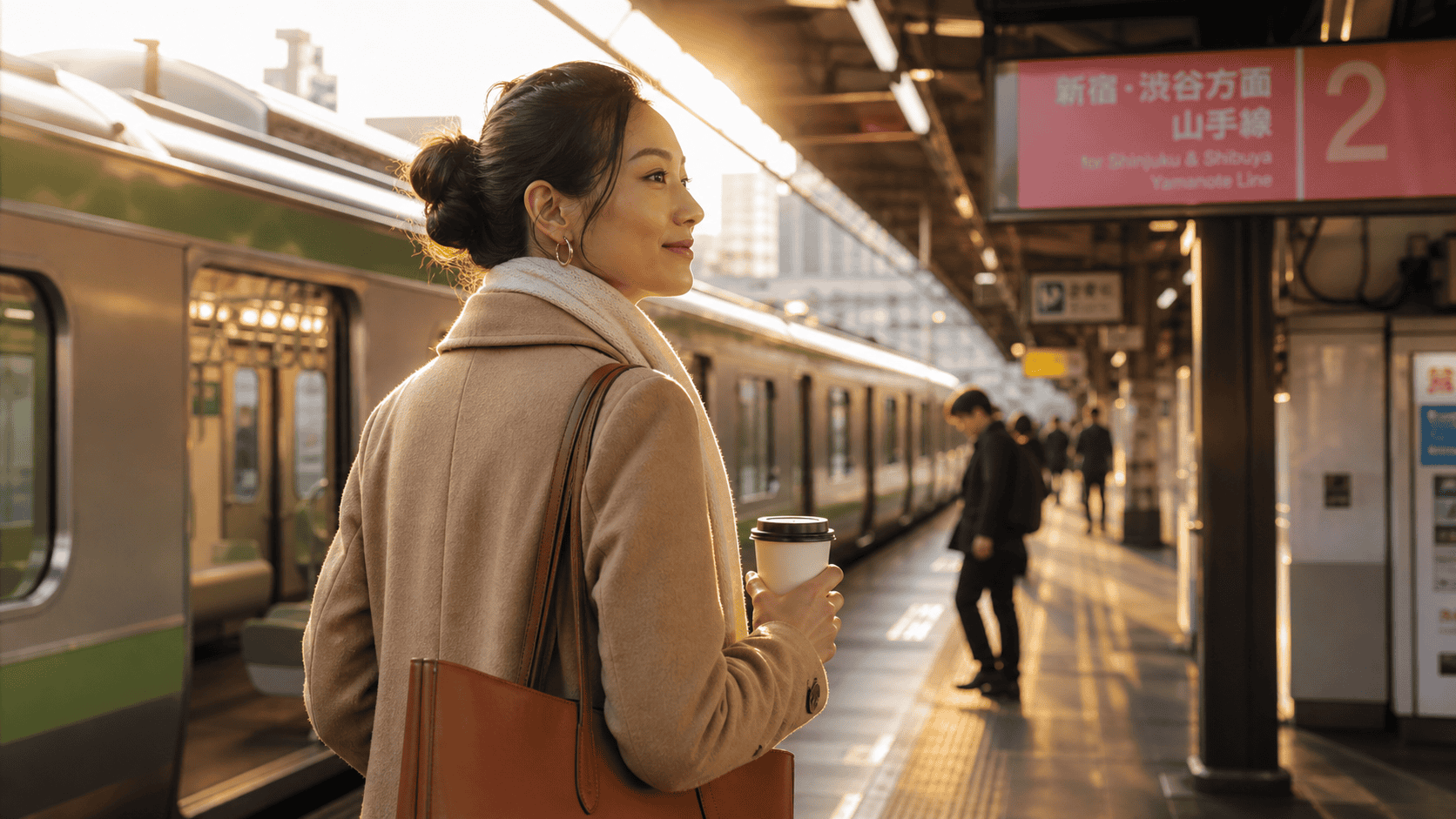
Escalators have a standing side and a walking side. In Tokyo, people usually stand on the left. In Osaka, they usually stand on the right. Follow whoever is in front of you, and you will be correct in either city.
Phones and voices on board
Set your phone to silent, which Japanese calls manner mode. Avoid calls on trains entirely, and text instead. Keep conversations low, especially on long-distance trains where people nap. Near the doors you will see priority seats for older riders, pregnant passengers and people with disabilities. Leave them open unless the carriage is nearly empty.
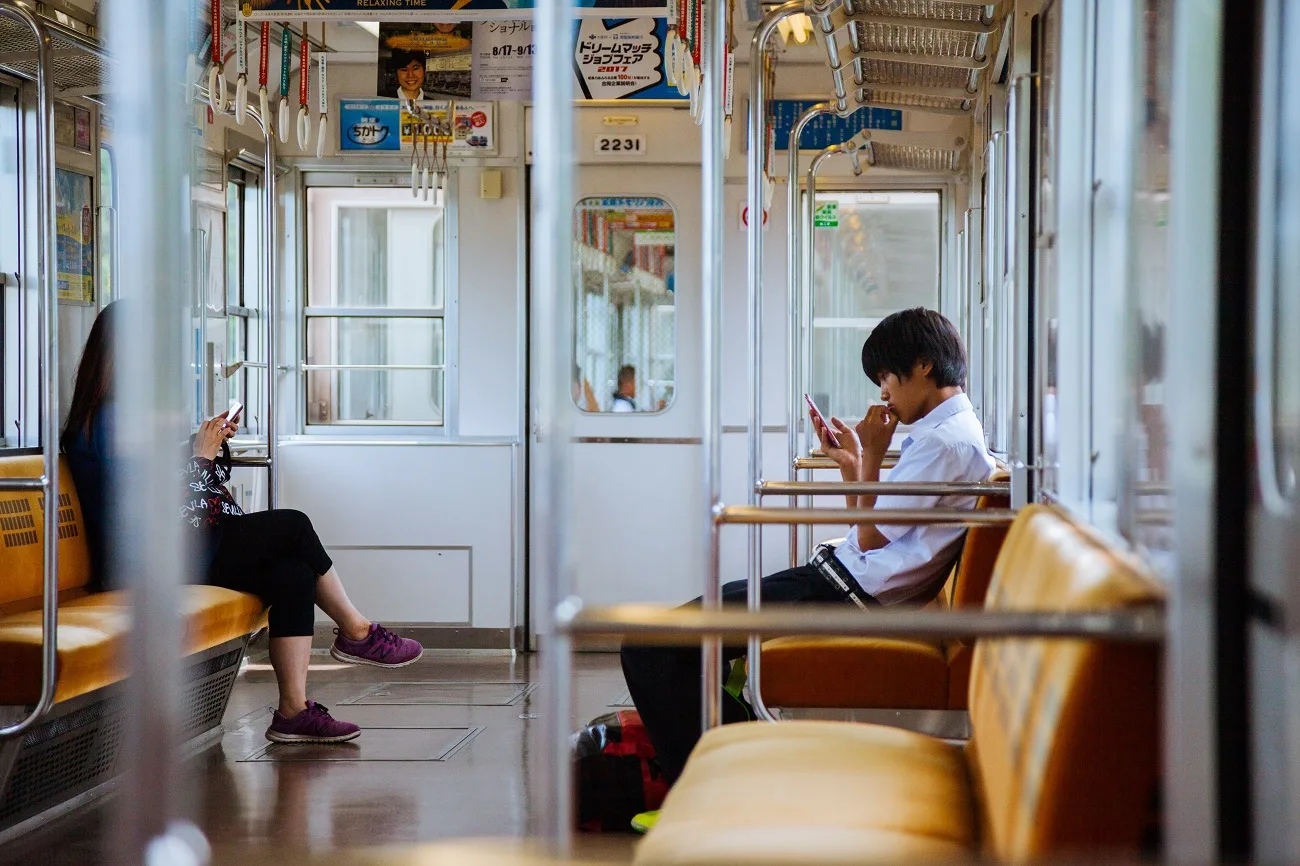
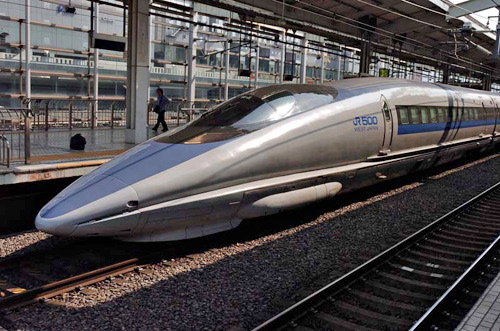
Large suitcases can be a problem on crowded lines. Many travelers forward luggage between hotels with a courier service called takkyubin. It arrives the next day, and you ride with a light bag. On the Tokaido Shinkansen, very large suitcases also need a reserved seat with oversized baggage space. These small choices make your own day easier too.
If you would rather have the rail reservations, luggage forwarding and timings arranged for you, our team can build them into a custom Japan itinerary around your pace.
Taxis carry a few customs of their own. The rear door opens and closes automatically, so let the driver handle it. Keep your hotel address written in Japanese on your phone. The fare on the meter is the full fare, and nothing extra is expected.
Ten Proverbs to Carry With You
A printable folio of ten Japanese proverbs, each with a line of context. Several speak to the courtesy behind these customs. Leave your email and the printable arrives in your inbox, followed by an occasional letter on Japanese culture.
One email with your printable. Occasional letters after that. Unsubscribe anytime.
Onsen and Ryokan Etiquette
Washing before you soak
The onsen, or hot-spring bath, is one of the great pleasures of Japan. It also carries the clearest rules in Japanese etiquette. Baths are usually separated by gender, with curtains marked in color and in kanji. Red often signals the women’s side and blue the men’s, but check the characters too. Undress fully in the changing room and leave your clothes in a basket. Swimsuits are not worn in traditional baths, so bring nothing but the small towel the inn provides.
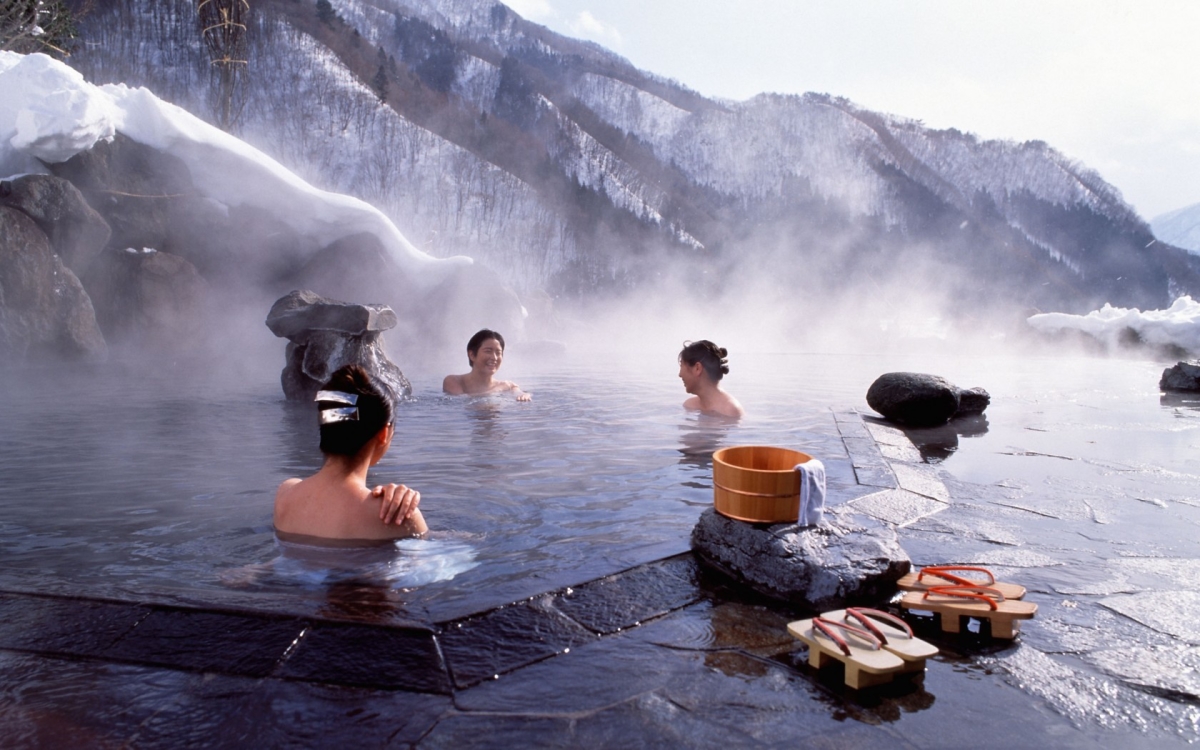
Next, wash thoroughly at the seated shower stations before you enter. Sit on the stool, soap up and rinse off completely. Only then step into the water. The bath is for soaking, not cleaning, so the water stays clear for everyone. Tie up long hair so it stays out of the pool.
The small towel and other rules
You will carry a small towel into the bathing area. Use it for modesty as you walk, but keep it out of the water. Many bathers fold it on their heads. Avoid swimming, splashing or long conversations. Before you return to the changing room, wipe yourself down so the floor stays dry.
Tattoos remain a sensitive point. Many onsen still decline guests with visible tattoos, though more now welcome them. Check the inn’s policy before you book. Alternatively, cover small designs with a skin-colored patch, or reserve a private bath. A kashikiri bath can be booked by the hour, and a luxury ryokan room may have its own.
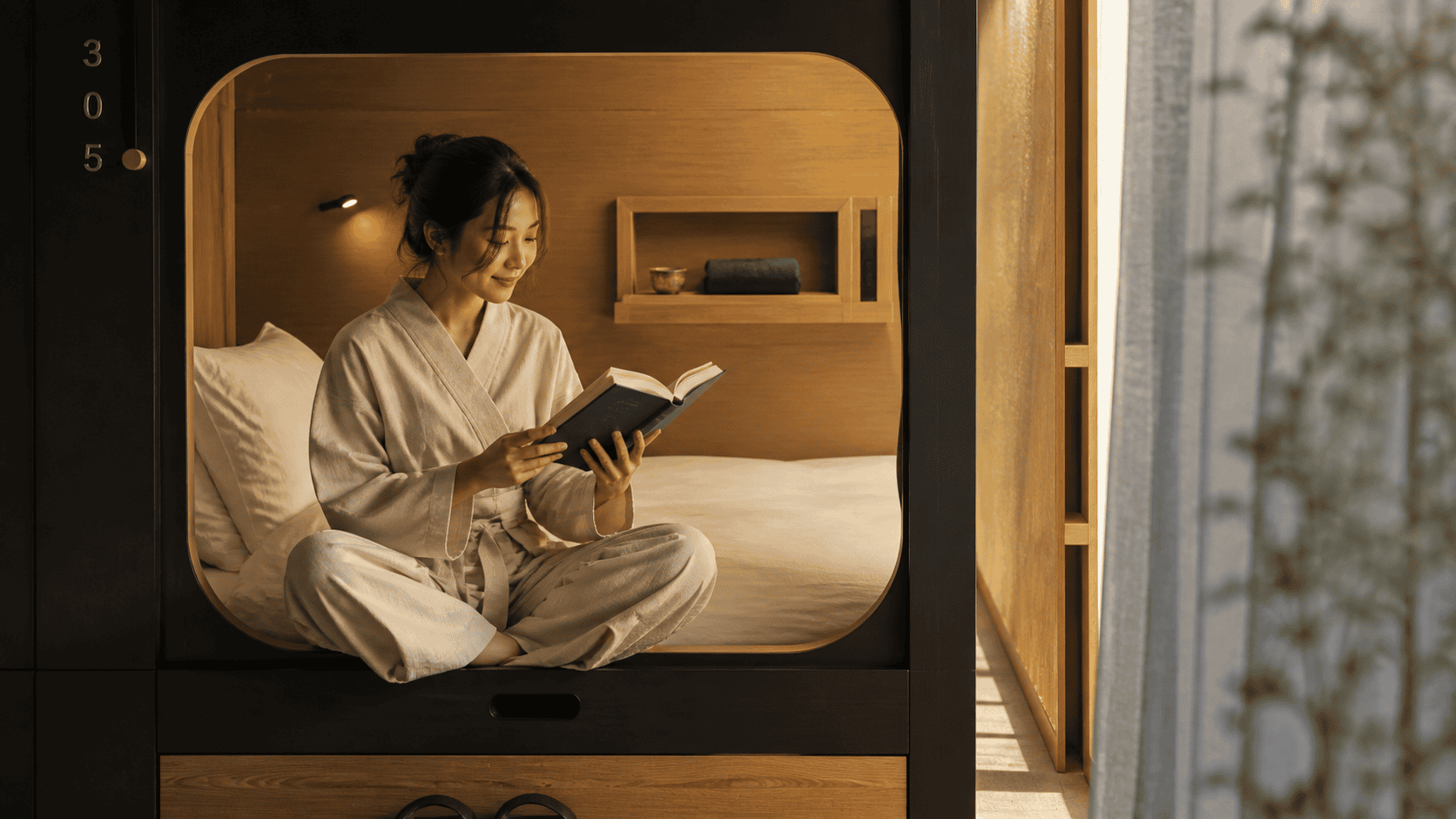
The ryokan stay has a rhythm worth knowing. Staff will often serve tea when you arrive and lay out futon bedding while you dine. Dinner times are set, so arrive on time. Our complete guide to the ryokan and onsen stay walks through a full evening and morning.
Both hands, every time
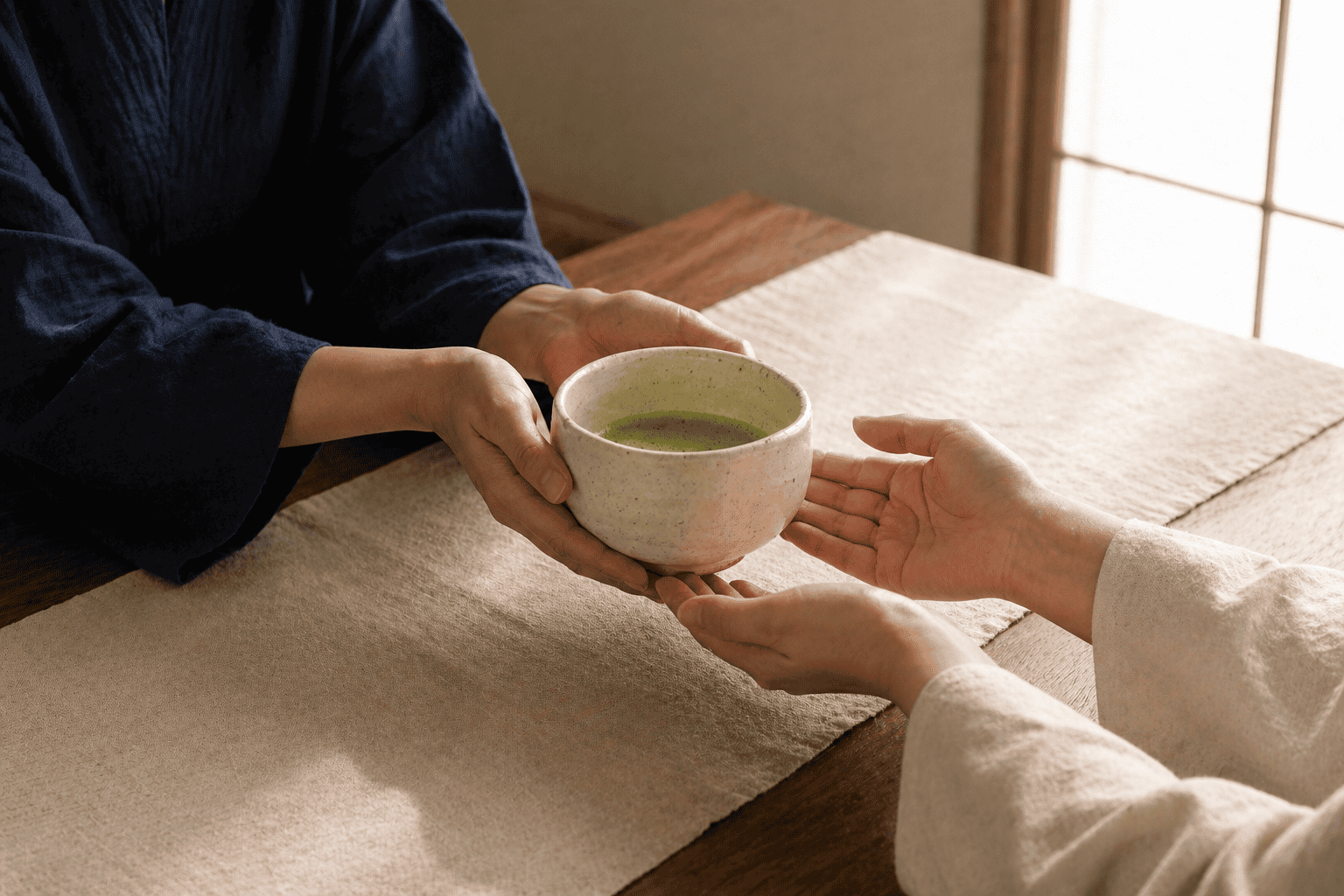
That two-handed gesture is the thread running through the whole stay. Staff will offer your room key, your tea and your bill with both hands. Respond the same way, and you will mirror their care without a word. It is a small motion, but it changes how an exchange feels. Hosts read it as attention, and attention is what Japanese hospitality values most. Practice it at your first check-in, and by the end of the trip it will feel natural rather than performed.
Recommended
Hospitality in Japan also extends to what you bring with you. A small gift is the easiest way to say thank you to a host, a guide or a colleague. It does not need to be costly. In fact, an expensive gift can create pressure to return the favor. What matters is thought, presentation and timing.
Gifts, Wrapping and Omiyage
How to give a gift
Present a gift with both hands and a modest phrase. Japanese hosts often say tsumaranai mono desu ga, meaning “it is only a small thing.” You can simply say it is a little something from home. Your host may set it aside to open later. That is courtesy, not indifference, so do not wait for them to unwrap it.
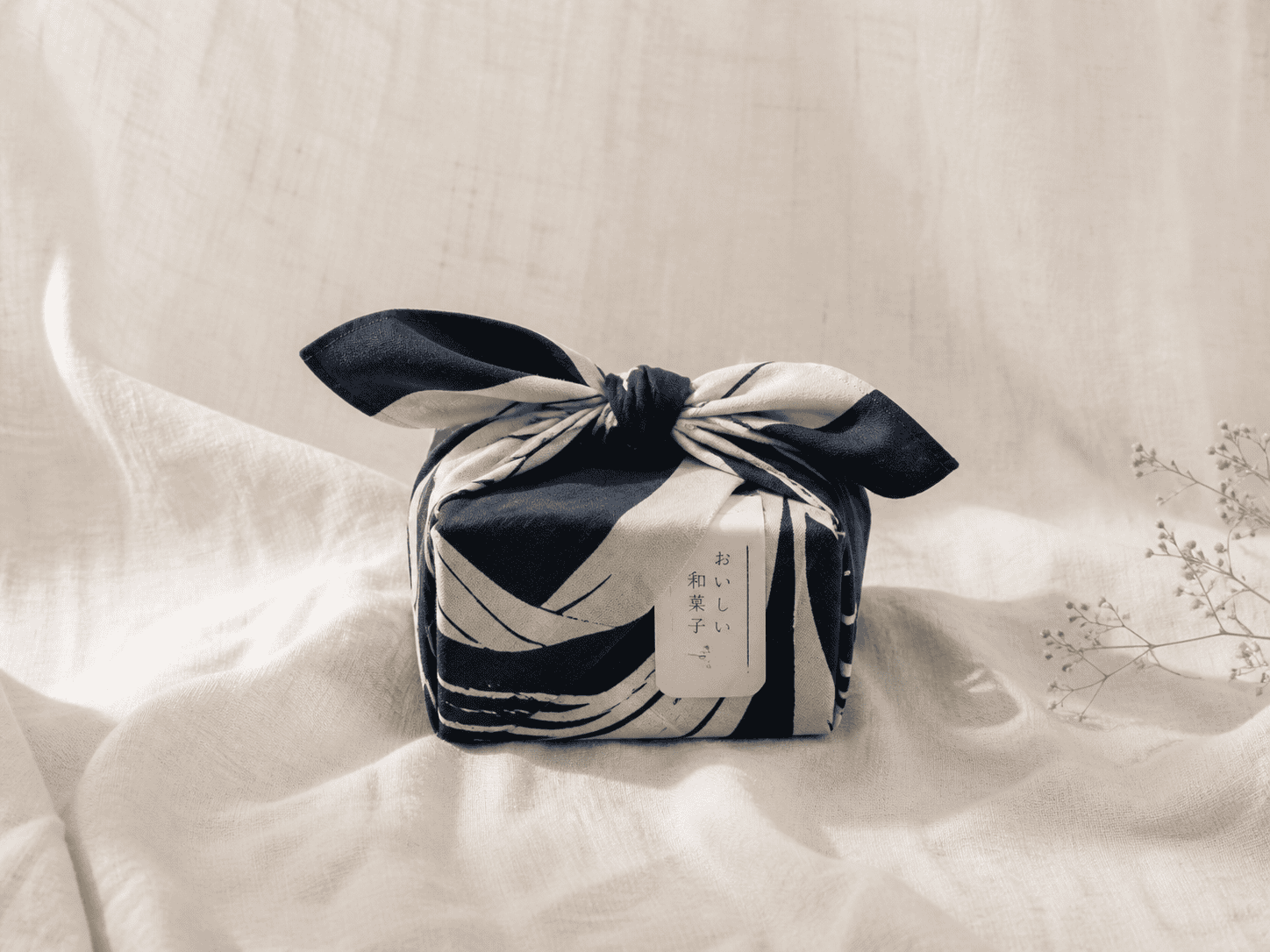
Wrapping counts as much as the contents. A furoshiki cloth is the elegant answer, and it is reusable. The Musubi cotton furoshiki with a Yumeji Takehisa camellia print comes from a Kyoto wrapping-cloth maker. For a lighter touch, a Made in Japan cotton tenugui set works as wrapping, towel and souvenir at once. It also doubles as your small onsen towel.
Numbers, colors and omiyage
Avoid sets of four or nine where you can. Four can be read as shi, a homophone for death, and nine as ku, which sounds like suffering. Sets of two, three or five are safe. Equally, very bright white wrapping without decoration can feel funereal, so choose a pattern or soft color instead.
Omiyage are the edible souvenirs Japanese travelers bring back for colleagues and friends. Every region has its specialties, sold in beautifully boxed, individually wrapped portions. If you stay with a family or visit an office, a box from your home city makes a thoughtful gift. Equally, buying omiyage on your way home lets you share your trip. For ideas that travel well, see our list of made-in-Japan gifts worth sending.
You may also like
Money is the other exchange where customs differ sharply from home. Americans in particular arrive with a tipping reflex that does not translate. The good news is that paying in Japan is simpler, not harder. Prices are complete, service is included and nobody expects a calculation at the end of a meal. Once you trust that, the whole system feels relaxing. The few exceptions are worth knowing, and they are covered below with the right way to handle each one.
Paying Without Tipping
Japan has no tipping custom. Restaurants, taxis, hotels and hair salons all include service in the price. Leave extra money on a table, and a server may run after you to return it. They are not offended so much as puzzled. Good service is simply part of the job, and pride in that work is the reward.
There are a few gentle exceptions. A private guide or driver after a long day may accept a thank-you. So may the attendant who looks after your room at a traditional ryokan. In both cases, never hand over loose bills. Place clean notes in a small envelope and offer it with both hands. A few words of thanks matter more than the amount.
Some upscale restaurants and hotels add a service charge to the bill. That charge settles everything, so nothing more is needed. Receive your change and receipt with both hands.
Streets, Photos and Trash
Carry your trash
Japanese streets are spotless, yet public bins are rare. The solution is simple: carry your trash until you find a bin, often at a convenience store or station. Sort it when you do. Bins are usually divided into burnables, plastic bottles and cans. A small bag in your daypack makes this painless.
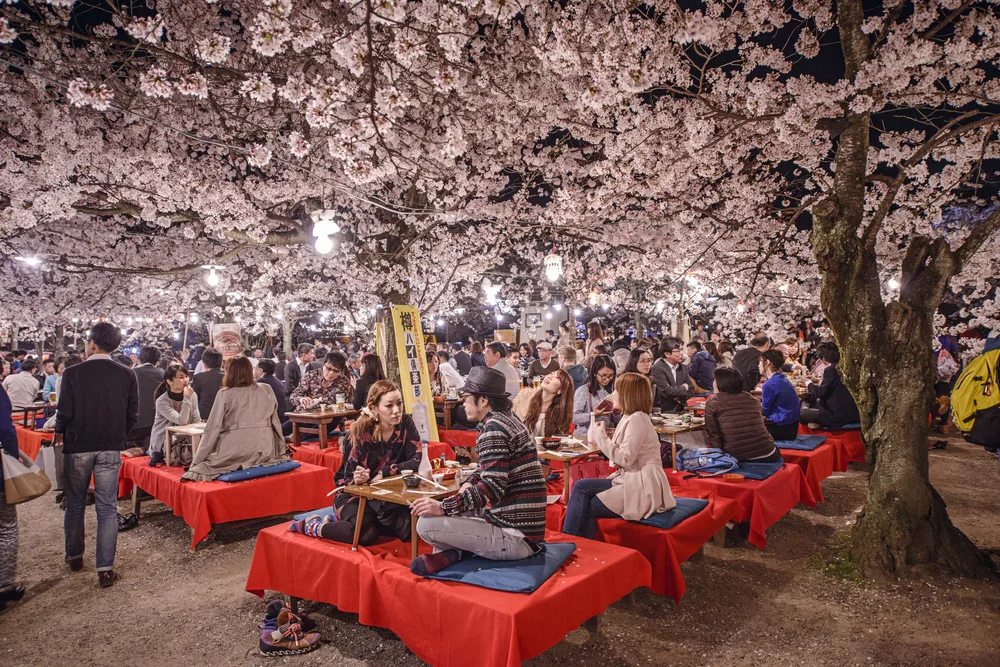
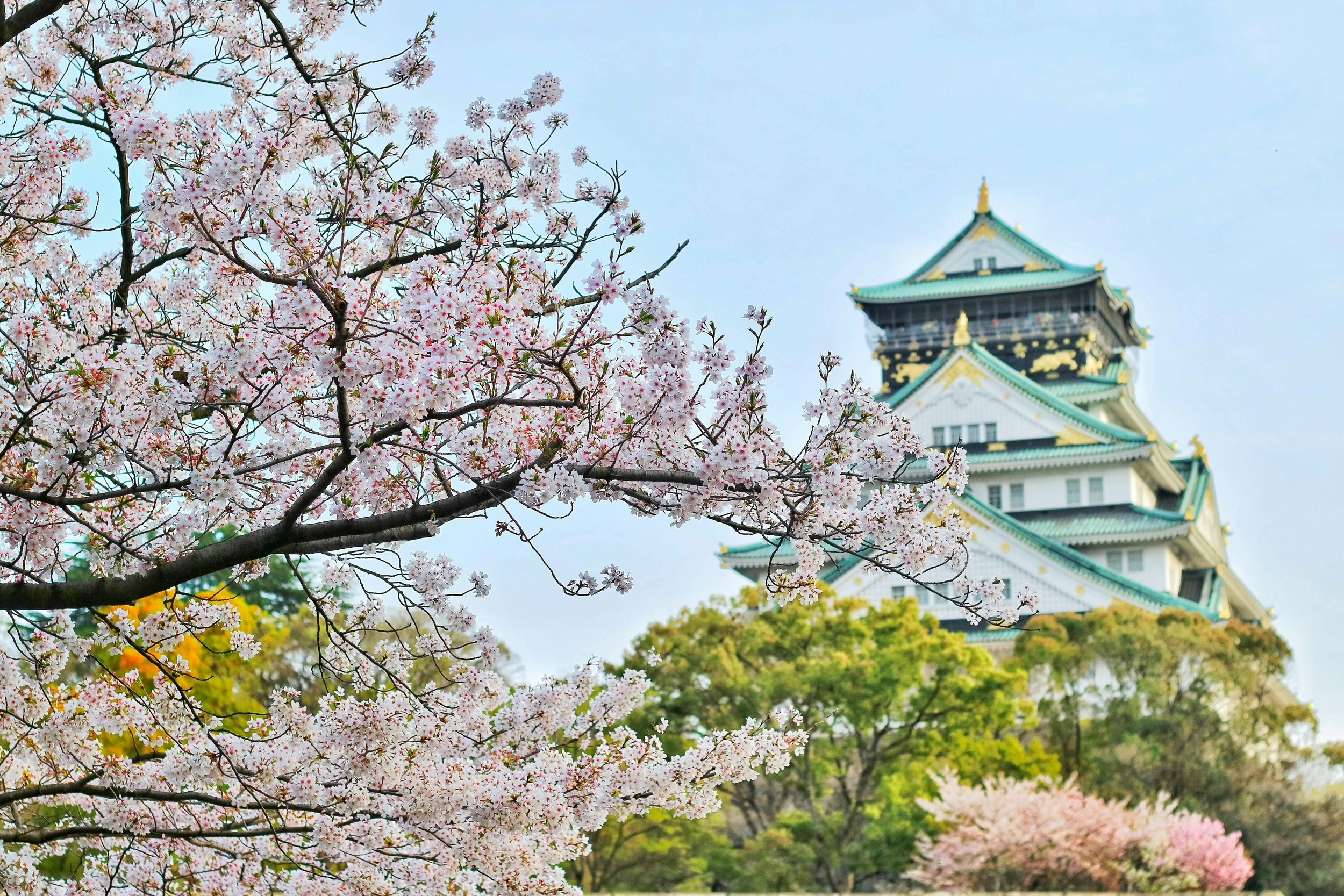
Cherry blossom season tests this habit and passes. Thousands of picnics fill the parks, then disappear without a trace. Join one if you are invited, and bring something to share. Spread your mat only where others have, and never shake branches or pick blossoms. Packing out your rubbish is the price of a beautiful afternoon.
Photos and personal space
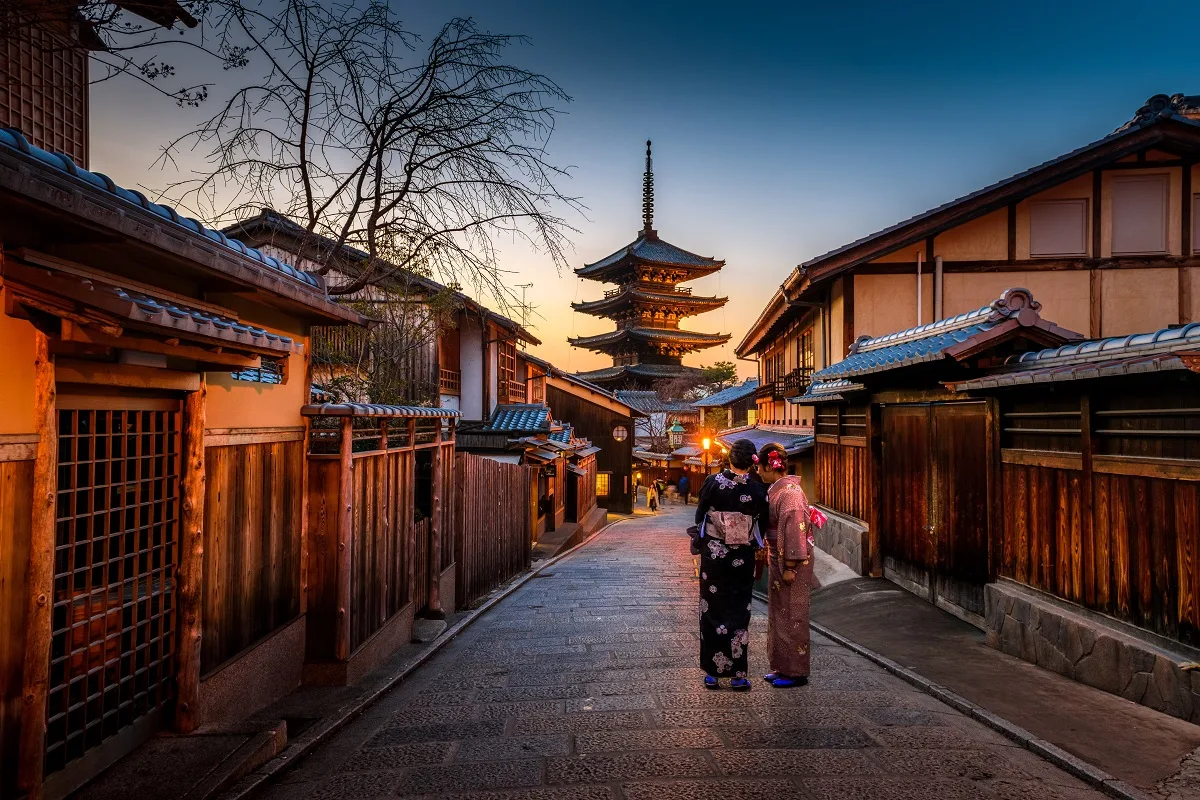
Ask before you photograph people, especially children, staff and anyone in traditional dress. In Kyoto, treat geiko and maiko as working professionals on the way to an appointment. Never block their path for a picture. A respectful distance is the rule everywhere.
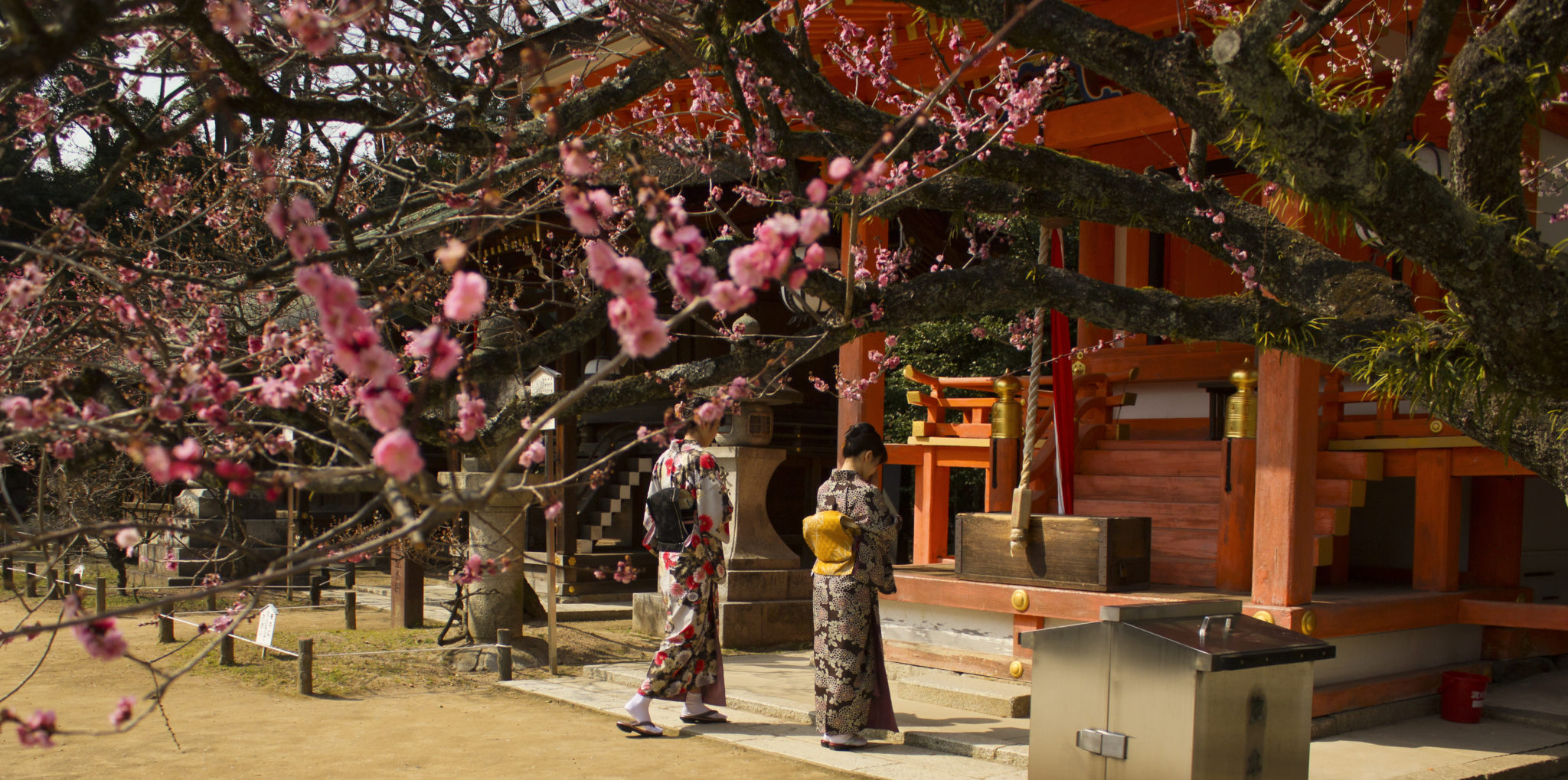
Kimono rental is popular, and Japanese hosts generally welcome it. Wear the robe left over right, as with yukata, and move a little more slowly. Moreover, choose a reputable rental shop that dresses you properly. Most visitors find that people react with delight rather than disapproval. Wearing the clothes well is itself a form of respect.
Japanese etiquette in the evening follows the same pattern. Neighborhood bars and Tokyo’s nightlife districts are friendly and safe, but voices drop once you leave the main street. Residential lanes near stations are home to families. For where to spend those nights, our guide to Tokyo’s nightlife districts maps the best neighborhoods.
You may also like
Customs are easier to follow when you understand the culture that produced them. That is why many travelers read a little before they go. A good book turns rules into reasons, and reasons stick far longer than lists. It also gives you something to think about on a long flight. The titles below are the ones we return to. Each one explains a different layer, from greetings and gifts to the values beneath everyday choices, and none of them requires any Japanese.
Books That Explain the Why
Two guides by De Mente
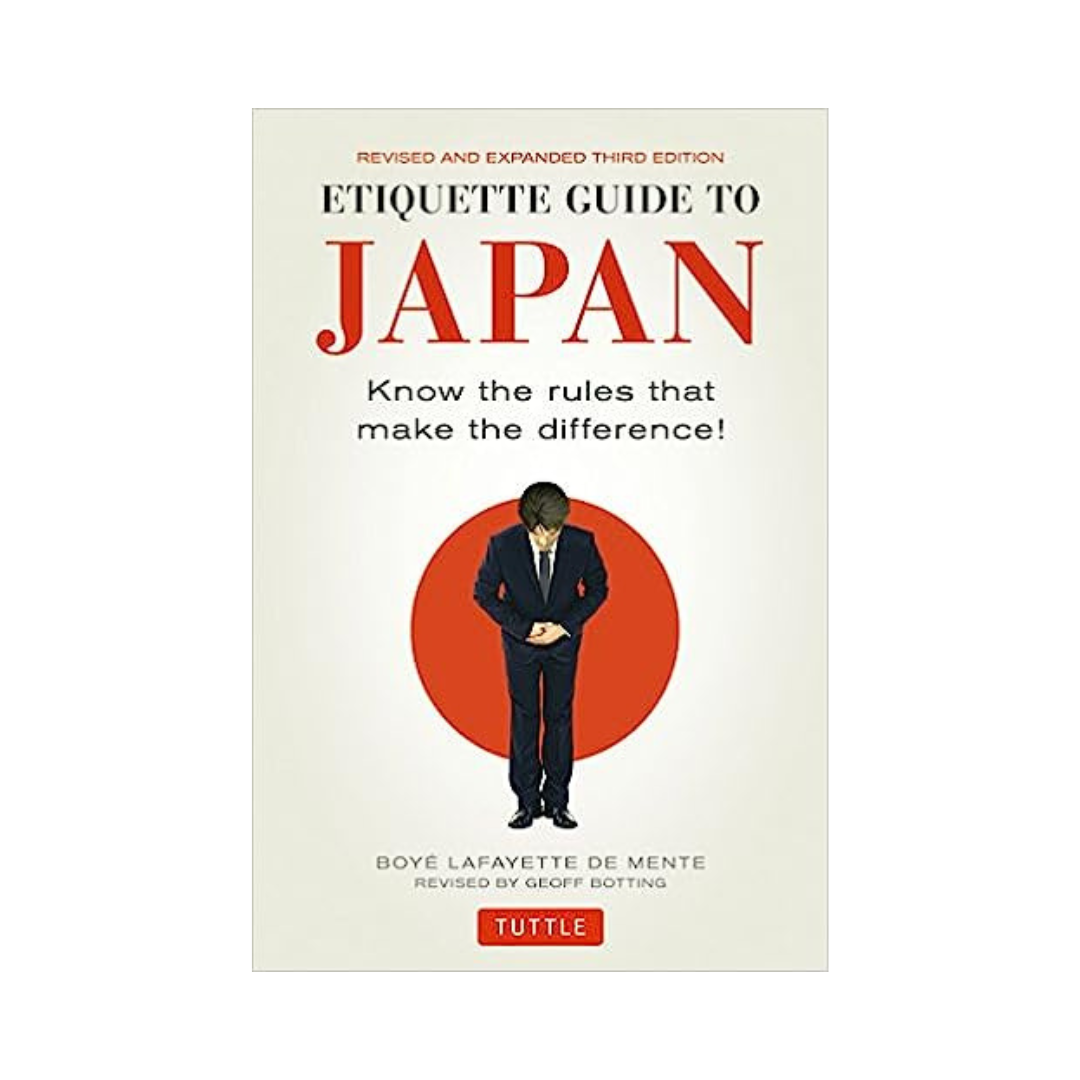
Boye Lafayette De Mente spent decades explaining Japan to Western readers. His Etiquette Guide to Japan is the compact version, ideal for a carry-on. It covers greetings, gifts, dining and business in short, practical chapters. Each chapter takes only a few minutes, so it suits a train ride between appointments. The revised edition, updated by Geoff Botting, also reflects how younger Japanese now greet and do business. For a first visit, it is the single most useful thing to pack after your passport.
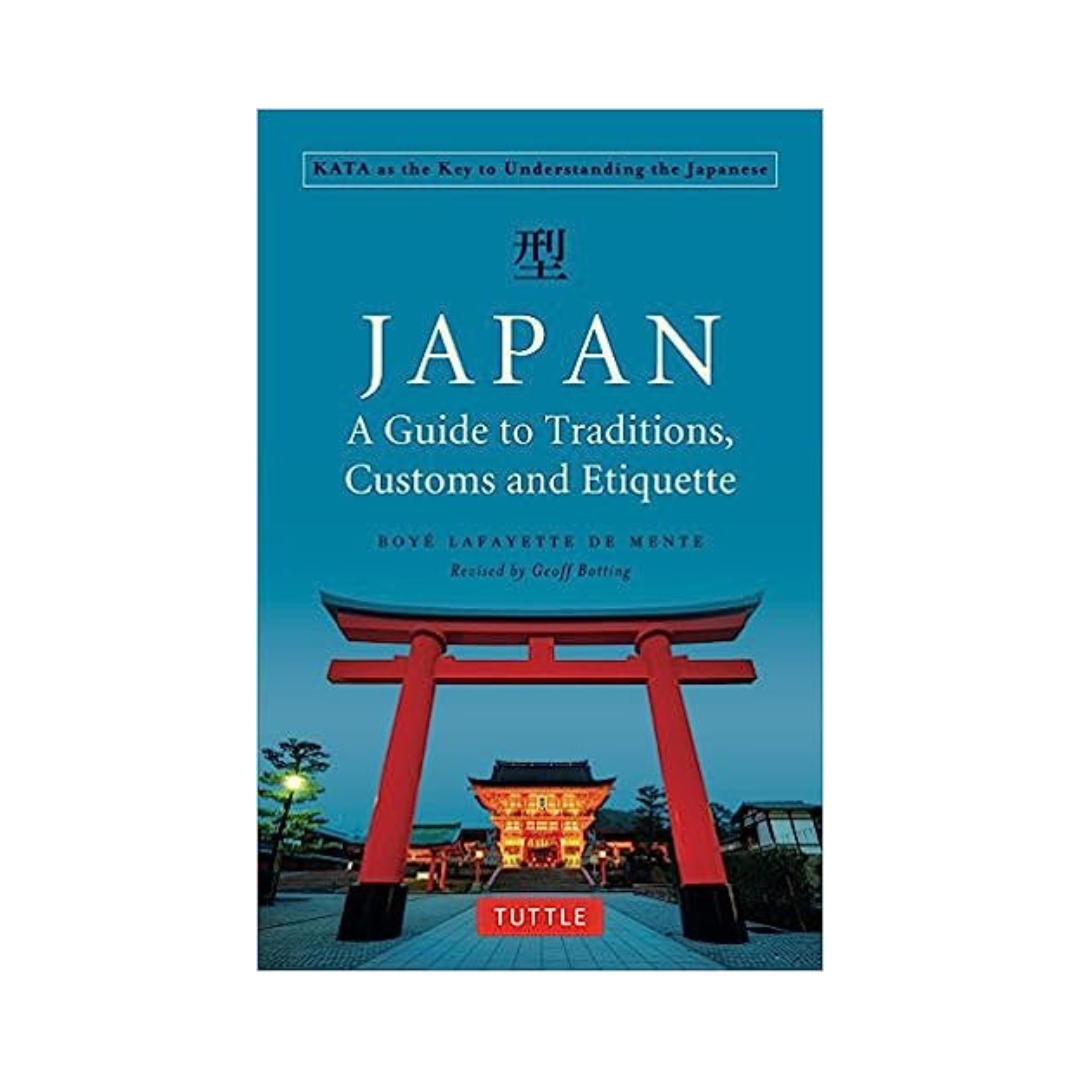
His longer work goes deeper. Japan: A Guide to Traditions, Customs and Etiquette explains kata, the idea of a correct form for each action. Once you grasp kata, Japanese etiquette stops looking like a list and starts looking like a system. The book traces kata through bowing, writing, cooking and business, and shows why form matters so much. It reads more slowly than the pocket guide. However, it rewards the effort, because you begin to predict customs before anyone explains them.
The values underneath
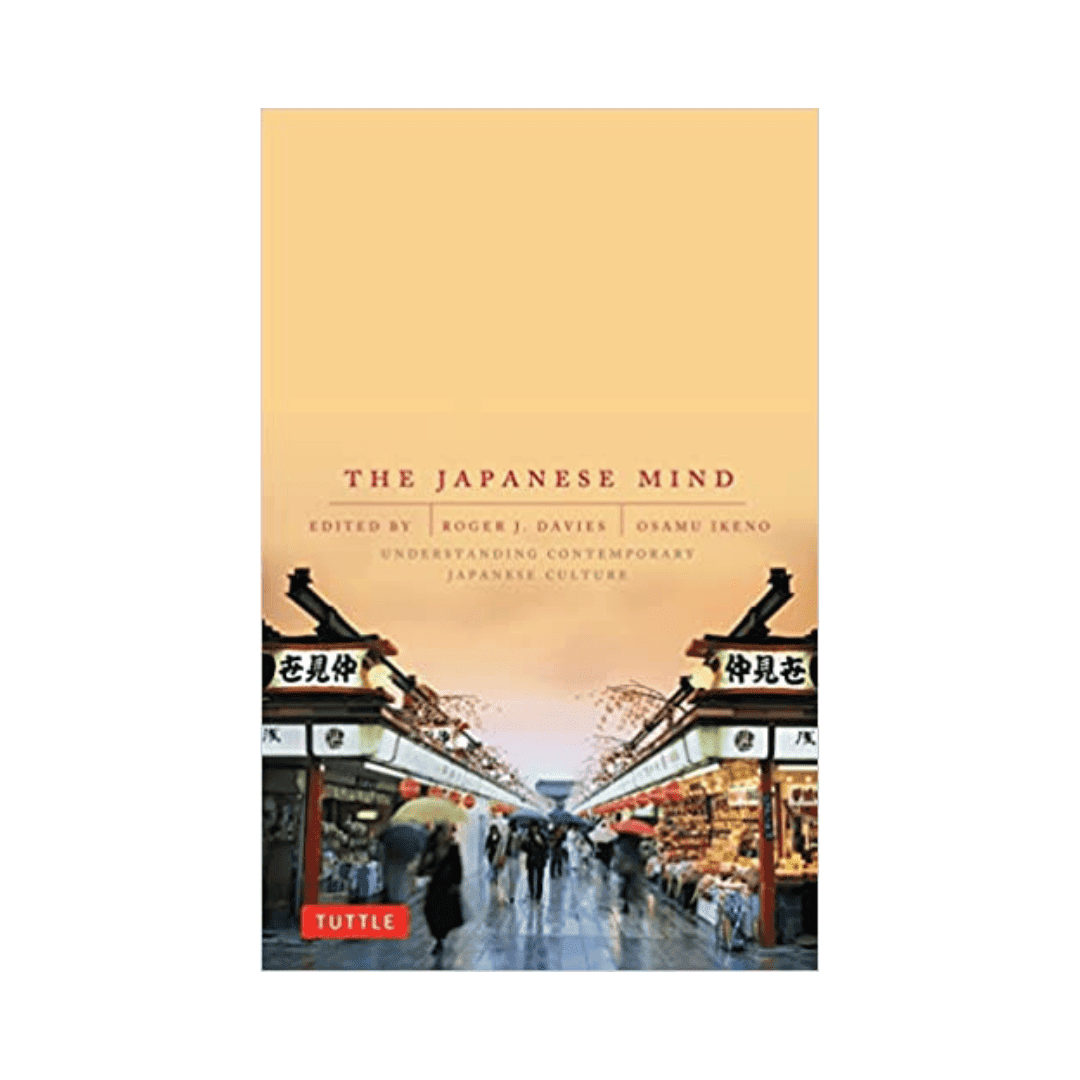
For the values underneath, The Japanese Mind by Roger J. Davies and Osamu Ikeno is a classic. Its short essays explain ideas such as amae, honne and tatemae. Honne is what a person truly feels, while tatemae is the face shown in public. That pair alone explains why a polite refusal can sound like a maybe. The essays are short and self-contained, so the book also works for a couple or a small group reading together before a trip.
For history and food culture
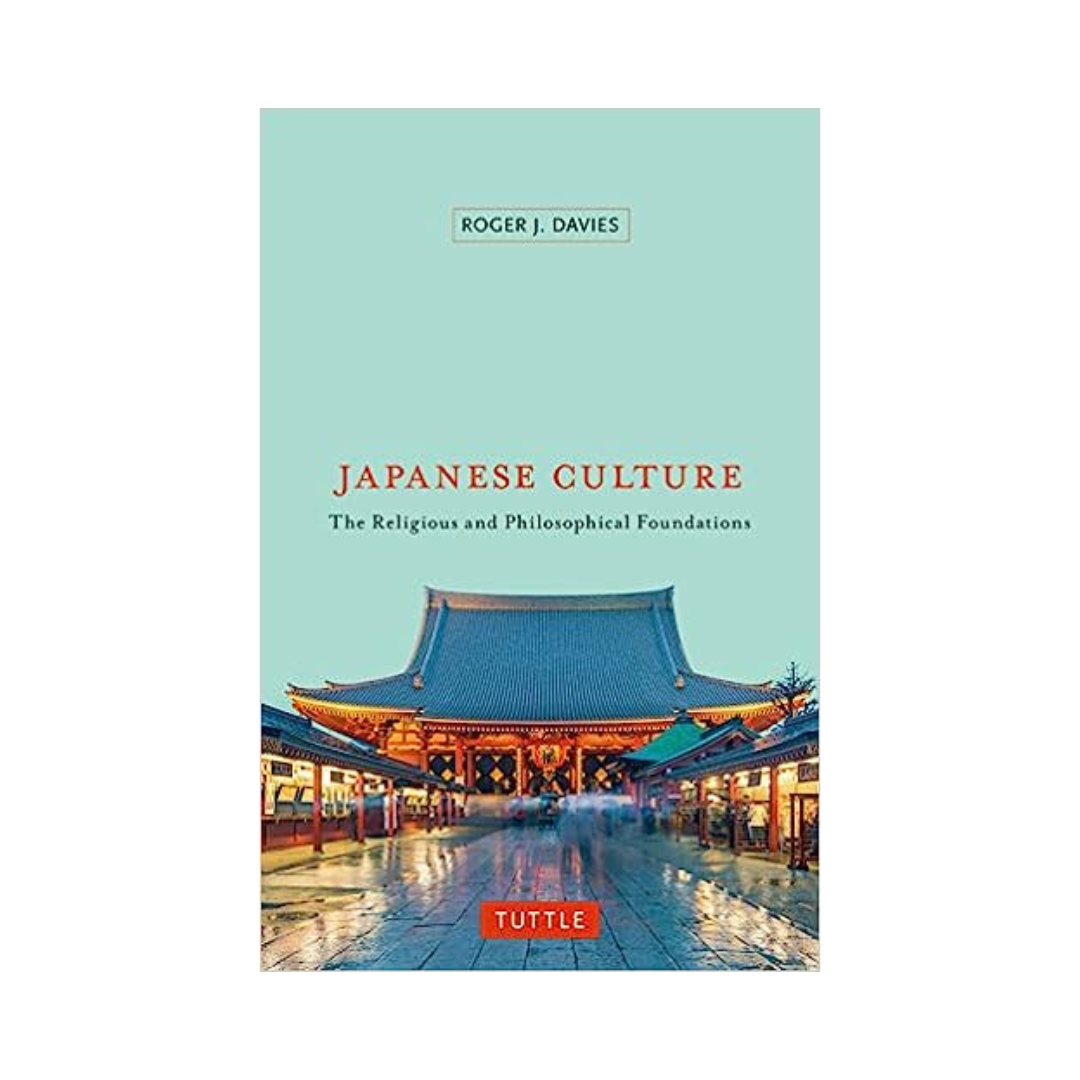
Davies also wrote a companion study that looks further back, and it pairs well with the essays. It traces the habits of mind behind everyday Japanese life back to their historical roots, one idea at a time, in plain and readable prose. It is denser than the essays above. Still, readers who enjoy history alongside practice will find it the most satisfying of the set. Read it after the trip, when the customs you met have faces and places attached to them.
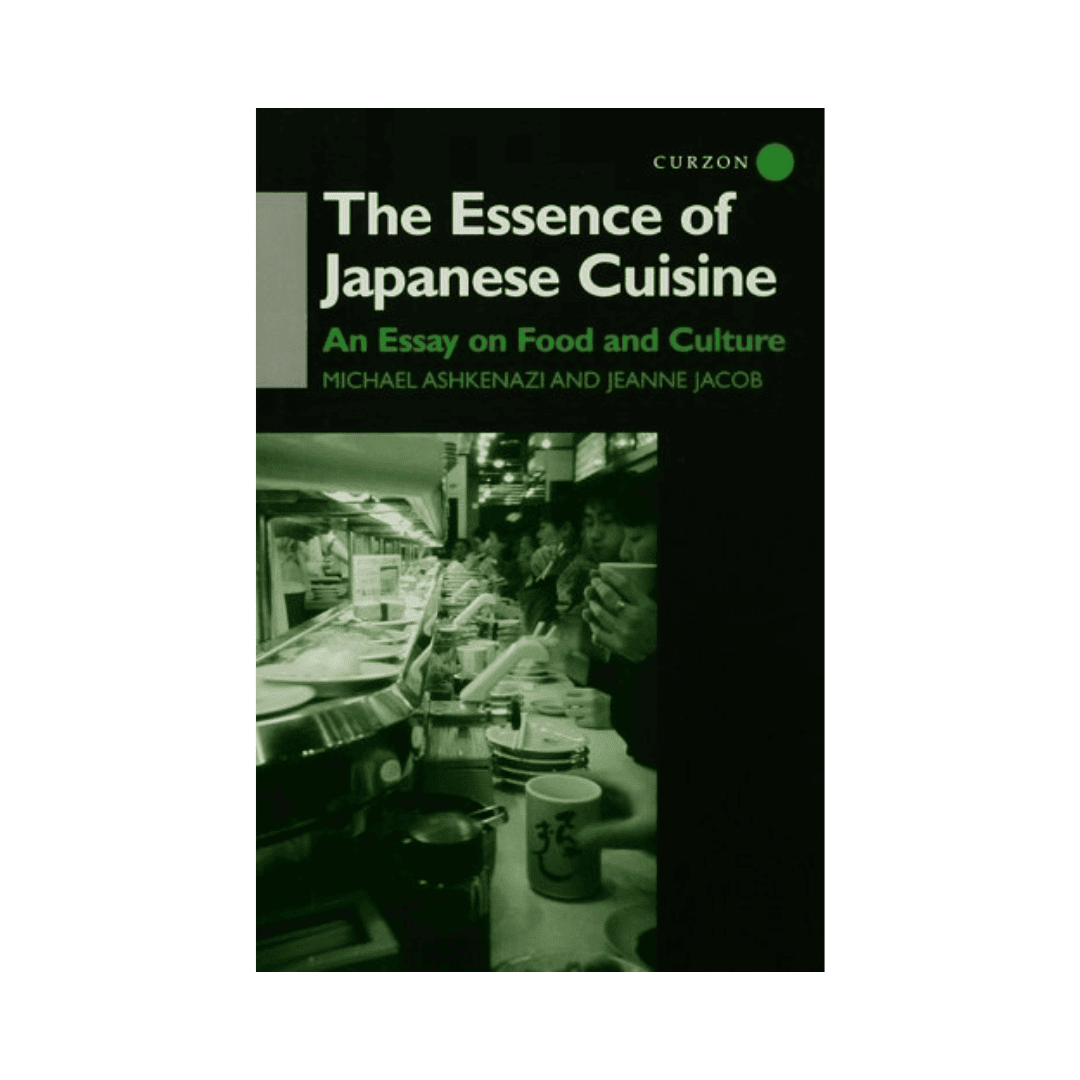
Food culture has its own study too. The Essence of Japanese Cuisine by Michael Ashkenazi and Jeanne Jacob treats the meal as a social act. It explains why the order, the vessels and the phrases at the table matter so much. The authors write as anthropologists, so everyday meals and formal dinners both become social events worth reading closely. As a result, the chopstick rules and drink-pouring customs in this guide gain their full context. It is the book to read before a kaiseki dinner or a long evening at an izakaya counter.
None of these books asks you to memorise anything. Instead, they help you notice. After a chapter or two, the bow at a hotel desk or the tray at a register looks different. You start to see small acts of care everywhere, which is the real reward of learning a culture’s manners. National Geographic’s short guide to Japanese greetings and onsen culture makes a good companion read for the flight. Read one book before you fly, and keep the others for the trip home, when everything you saw starts to make sense.
Questions Worth Asking
Is tipping rude in Japan?
Tipping is not rude, but it is not expected and often causes confusion. Service is included in every price. Staff may chase you to return money left on a table. If you want to thank a private guide or ryokan attendant, place clean notes in an envelope and offer it with both hands.
Do you have to bow in Japan?
No one expects a visitor to bow perfectly, but a small bow is appreciated. Bend slightly from the waist with a straight back and lowered eyes. Match the depth of the bow you receive. If someone offers a handshake, accept it lightly. Sincerity matters far more than precise angles.
When should you take your shoes off in Japan?
Take your shoes off wherever the floor steps up from an entrance area. That includes homes, ryokan inns, some restaurants and many fitting rooms. Look for slippers or a shoe rack as a signal. Never wear slippers on tatami mats, and switch to the separate toilet slippers in bathrooms.
Is it rude to eat while walking in Japan?
In most places it is frowned upon. People usually stand beside the stall or vending machine, finish eating and then move on. Festival stalls and food markets are more relaxed, though stepping aside is still polite. The habit keeps streets clean and lets you enjoy the food properly.
Can you go to an onsen with tattoos?
It depends on the bath. Many traditional onsen still refuse guests with visible tattoos, while a growing number welcome them. Check the policy before you book. Small tattoos can often be covered with a skin-colored patch. A private bath, booked by the hour or attached to your room, avoids the issue entirely.
What are the biggest chopstick mistakes in Japan?
The two serious mistakes are standing chopsticks upright in rice and passing food from one pair of chopsticks to another. Both echo funeral customs. Also avoid pointing with chopsticks, spearing food and waving them while you talk. Rest them on the holder when you pause between bites.
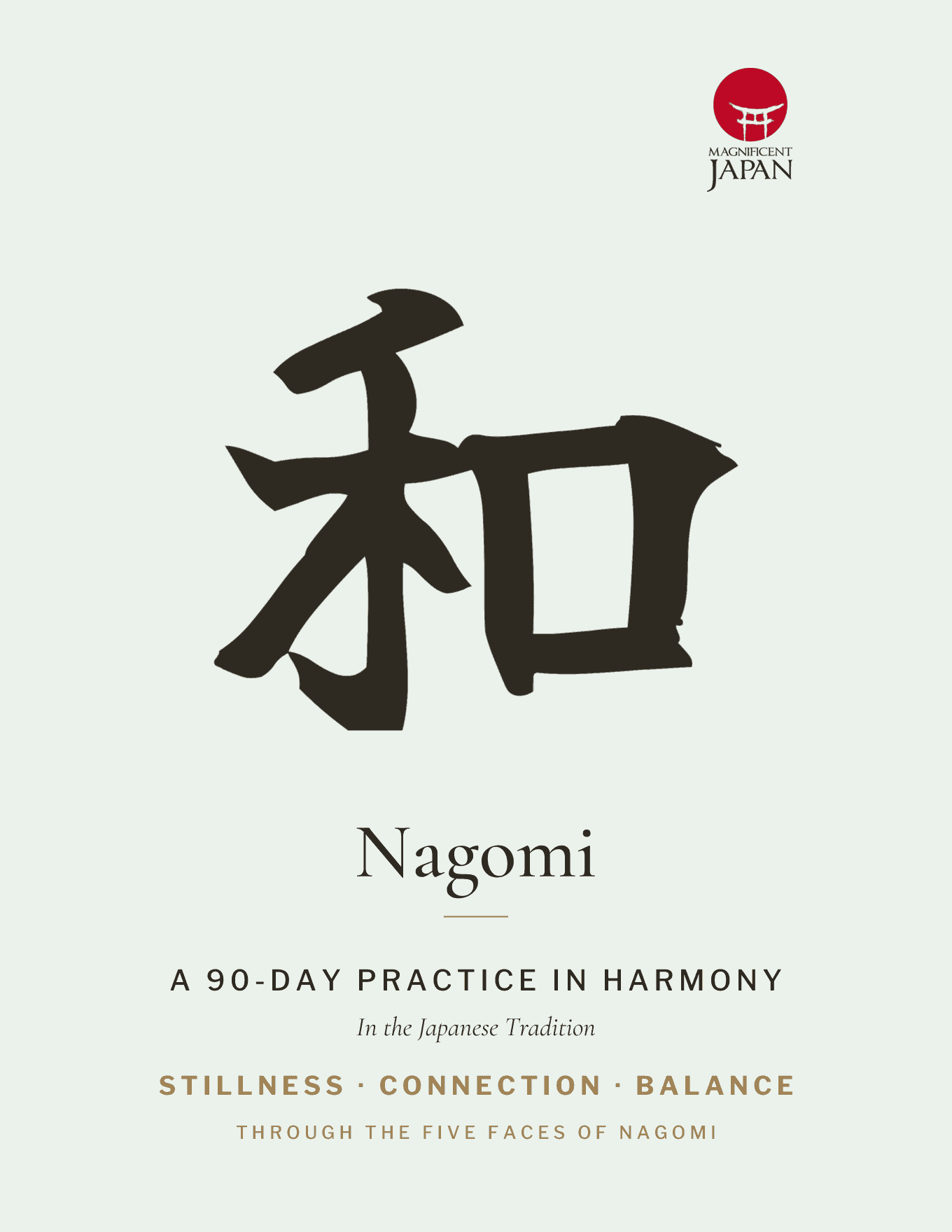
Nagomi is the Japanese idea of harmony, the same balance that good manners protect. This 90-day guided journal turns it into a short daily practice, one page at a time. It comes as a write-on digital edition and as a paperback edition, and it is one of eight journals in the Cultural Reflection Collection.
View The CollectionManners as a Form of Welcome
It is easy to read Japanese etiquette as a set of hurdles. Visitors who spend time in Japan usually come away with the opposite feeling. The customs exist to make shared life gentle, and you benefit from them every hour. Trains stay calm because riders keep them calm. Streets stay clean because everyone carries their own trash. Over a week or two, these small acts stop feeling like rules and start to feel like a shared language.
So pack slip-on shoes, a small towel and a few phrases. Bring a modest gift wrapped with care. Above all, bring curiosity and the willingness to watch before you act. Those three things carry a traveler further than any rulebook, and they are what hosts remember long after you have gone.
Planning is where good manners begin, long before the flight. A trip paced well leaves time to watch, to bow back and to linger over dinner rather than rush to the next train. Our travel designers build that breathing room into every route. They also handle the details that trip visitors up, from ryokan dinner times to luggage forwarding between cities. If you want a trip that feels easy from the first evening, the card below is where we start the conversation together.
For the traveler who wants to feel at ease from day one: a custom itinerary with a ryokan night and private bath, a tea gathering in Kyoto, reserved rail seats and luggage forwarded ahead, so every arrival is calm and every custom has room to be enjoyed.
Plan Your Custom Japan ItineraryThe Editors, Magnificent Japan