Most writing explains the psychology of travel in Japan with a statistic, and the statistic is usually loose. You have probably seen it. It claims a large share of visitors return, and it credits the figure to a tourism body. Yet few writers check whether that body publishes it, or what it measures. This page does something else. It shows where the data comes from, what memory research says, and how to use both to plan a sharper second trip.
That matters, because the pattern is real even when the number is sloppy. Japan produces return visitors at an unusual rate, and in a specific way. Travelers do not leave satisfied. Instead, they leave with a list. For the wider frame of a premium trip, our guide to luxury travel in Japan sets out the essentials.
Why do so many travelers return to Japan?
Because a first trip leaves a strong sense of something unfinished. Japan is dense, regional and seasonal, so a two-week route samples only a slice of it. Memory research also shows that we judge a trip by its sharpest moment and its ending. Travelers leave with a precise list of what they missed, and that list books the next flight.
How the Psychology of Travel in Japan Gets Measured
Start with the data, because it settles the argument quickly. The Japan Tourism Agency surveys departing visitors every quarter, and the Japan National Tourism Organization (JNTO) publishes the results. Two series matter here. One counts how many times people have visited. The other records whether they hope to come back. They answer different questions, so never swap them.
The JNTO statistics portal lists a breakdown by number of visits to Japan, by country and area. Next to it sits a separate series on intention to revisit. JNTO also asks anyone who uses the data to name the original source: the Japan Tourism Agency’s International Visitor Survey. So the claim that nobody publishes this is wrong. The data exists, and it has a named owner.

Inside the International Visitor Survey
The survey itself is more careful than the way people quote it. According to the Japan Tourism Agency’s survey notes, staff interview departing visitors in airport and seaport departure lobbies, on tablets or paper forms. The survey leaves out transit passengers, crew and anyone who has stayed a year or more. The national survey covers 17 air and sea ports. Across its three parts, the target is 32,910 responses a quarter, or 131,640 a year. Final annual totals arrive at the end of the following March.
So the honest position is simple. A repeat-visit share exists, and the agency collects it properly. It also carries a named source and a stated year. What circulates online is usually that figure stripped of both. For that reason, this page quotes no repeat-visit percentage at all. That is a choice rather than an omission. Accuracy costs nothing, and few pages on the subject bother with it.
Kahneman's own account of the research behind the peak-end rule. It explains why the last evening of a trip weighs so much.
View Thinking, Fast and Slow →A short book of essays on why we travel and what we bring home. Good company on a long flight back to Japan.
See The Art of Travel →Short observations from a writer who has lived in Japan for decades. It reads best after a first visit, when the questions start.
Read A Beginner's Guide to Japan →Why Rising Arrivals Do Not Explain Return Visits
Scale is easier to state cleanly. A JNTO release from April 2026 records 36.87 million foreign visitors in 2024 and 42.68 million in 2025, both record highs. The mix shifted too. Visitors from Asia made up 83 percent of inbound travelers before the pandemic, and 77 percent in 2025. In other words, more people now arrive from further away. Both shifts change what a returning visitor finds on landing. The same release launched a global campaign aimed at first-time visitors from Europe, the Americas and Oceania. Much older writing on this subject describes a country that no longer exists in quite that form.
Even so, none of that explains why anyone books a second flight. Arrivals rise in plenty of countries without the same return pattern. Something about the shape of a Japanese trip leaves people unfinished rather than satisfied. That is a question about memory, not tourism. The research on it is better than the travel writing, so the next section borrows from the research instead. It is also where the phrase psychology of travel in Japan stops being decorative and starts to explain something. The short version is this: a trip to Japan ends with more open questions than most trips do, and open questions are what people return to answer.

For the list a first trip leaves behind: the street, the dish, the town you meant to stay in.
6 × 9 in · 120 unlined pages · matte softcover
Shop This Journal →Memory and the Psychology of Travel in Japan
Memory does not record a holiday evenly, day by day. Instead, it compresses. Two ideas explain the compression, and researchers have tested both. The first is the peak-end rule. In a 1993 study in Psychological Science, Daniel Kahneman and colleagues found that people judge an episode mostly by its worst moment and its final moment. Length mattered far less. Most subjects even chose to repeat a longer trial because it ended better. In practice, that means the middle of a trip fades fast. What stays is the best hour and the last one, and that pair becomes the trip in memory.
The second idea gives memory a measurable shape. Kim, Ritchie and McCormick’s memorable tourism experience scale, published in the Journal of Travel Research, runs to 24 items across seven domains. They are hedonism, refreshment, local culture, meaningfulness, knowledge, involvement and novelty. That is a lot of surface for one country to cover. Yet a Japanese trip tends to score on several at once, which is part of why it sticks. A single day can hold a new food, a stranger’s help on a train platform and an hour in a garden. Each touches a different domain of the scale, often before lunch.
Why the First Trip Feels Unfinished
Those seven domains work well as a checklist. Novelty is obvious on a first visit. Involvement is less obvious and lasts longer. It means doing something rather than watching it. Local culture and meaningfulness are where a return trip gains ground, since both depend on context a newcomer has not yet built. That is the mechanism, stated plainly, and it is why the psychology of travel in Japan resists a one-line answer. A first trip mostly scores on novelty. A second trip scores on the rest.
There is also a factor the research handles less well, and travelers describe it all the time. Japan is legible but not transparent. Its systems are clear once you know them and opaque before you do. A first visit goes on learning the rules. A return visit uses them, which frees attention for everything the rules were hiding. That shift is the widest gap between one trip and the next.
The same country, planned two different ways.
| Decision | First trip | Return trip |
|---|---|---|
| Route | A circuit of headline cities | One region and its neighbor |
| Season | Spring or autumn | The season you missed |
| Where you stay | Near the sights | A building worth the trip |
| Meals | Recommendations | A counter you return to |
| Photographs | Wide landmark shots | Close detail and weather |
The Psychology of Travel in Japan on a Second Trip
Here is the part most writing on the subject skips. It explains why people return, then stops. Yet the reader of a page like this is often planning a return of their own. So this section is practical, and it applies the psychology of travel in Japan to a real plan. The peak-end rule has a blunt consequence first. The last day of a trip carries extra weight in what you remember, so build the final night with care. Choose a small town over an airport hotel, and leave the last morning almost empty.
Prefer to have the return route built around the trip you already took? A custom Japan itinerary starts from where you have been and which season you missed.
A typeset printable: ten Japanese proverbs with kanji, romaji and meaning. Signing up also brings occasional letters on Japan and word when a new journal reaches print.
One email with your printable. Occasional letters after that. Unsubscribe anytime.
Narrow the Route, Change the Season
First, narrow it. A first trip is a circuit, usually Tokyo, Kyoto and something in between. A return should be a region instead. Pick one prefecture and one next to it, then stay put for the week. The gain is not in seeing more. It is the difference between passing through a place and living in it for four days. A week built around ten experiences worth planning a Kyoto stay around shows how far one region can stretch. Two prefectures in ten days will teach you more than five cities in the same time, and you will remember more of each.

Second, change the season rather than the destination. A first visit usually lands in spring or autumn, because that is what the guidebooks recommend. Going back in February or August changes the food, the light, the crowds and the mood of a place. The same street in a different season is a different street. Few people believe that until they have stood on one twice. Later on this page, the season question gets a section of its own. For now, the rule is simple: if your first trip was in April, your second should not be. Pick the opposite end of the year.
Recommended
Pack Less, Book the Building
Third, pack differently, which sounds trivial and is not. Return travelers move less and carry less. Small logistics decide how a long trip feels by day nine. A packing cube that splits in two turns a suitcase into something you can find things in. It also survives repacking every second morning, at six, in an unfamiliar room. Return travelers also tend to buy more, so leave space in the bag for the ceramics and knives you skipped last time. A smaller, lighter bag makes the regional trains and buses far easier.
Fourth, book the building, not the location. On a first trip, a hotel is somewhere to sleep near the sights. On a return, it becomes one of the sights. A ryokan in a small bathing town is not a base for an itinerary. It is the itinerary. Then the town around it becomes the supporting cast, and the days slow down in a way that reads as luxury. Our comparison of luxurious ryokans with the strongest rooms is a good place to begin that search.
Who Comes Back to Japan, and What For
Return behavior is not uniform, and the differences follow flight time more than temperament. Nearby East Asian markets come back often and briefly, since a weekend in Japan is realistic from Seoul or Taipei. Long-haul markets return less often and stay far longer when they do. The JNTO breakdown by number of visits shows that split by country and by year. It also explains why traveling Japan alone suits a return visit so well, since the practical worries have already gone.
Food, Landscape and Craft
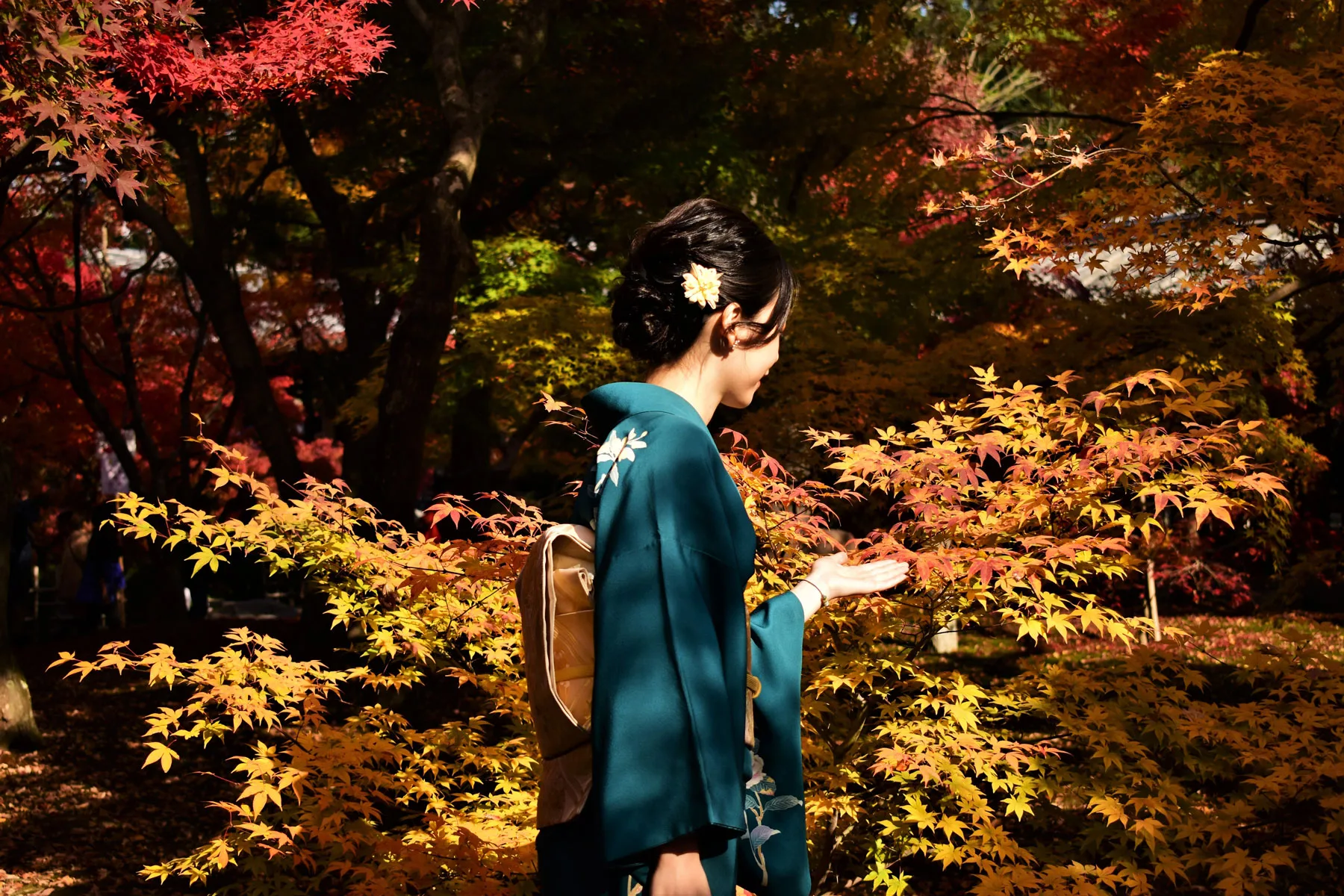
The other useful split is by what the return trip centers on. Food is one axis, and it can carry a whole route through one prefecture's cooking, from the morning market to the last counter of the night. Landscape is another, and it tends to send people north. Craft is the third. It is the slowest reward of the three and the hardest to notice on a first pass. Workshops, kilns, paper mills and knife makers sit away from stations, and they need a half-day and a booking. That rarely fits a first circuit. On a regional return, it becomes the reason for the day.
This is the involvement domain from the research, and a first trip tends to score low on it. Newcomers observe, because observing is what you can do without context. Returning travelers take part, because by then they know how. Cooking a dish beats eating it, and bathing beats photographing a bathhouse.
Eating on a Return Trip
Food deserves its own note, because it is where repeat visitors change most sharply. A first trip eats at recommendations. A return trip eats at whatever is open near where it is staying. That is how people end up with a regular order at a counter with no English menu. It is not romantic. It is what happens when you stop optimizing every meal and start repeating one. A counter you have sat at twice behaves differently on the third visit. Often the order is home cooking, such as a bowl of nikujaga with rice and miso soup. Nobody photographs it, and everybody remembers it.
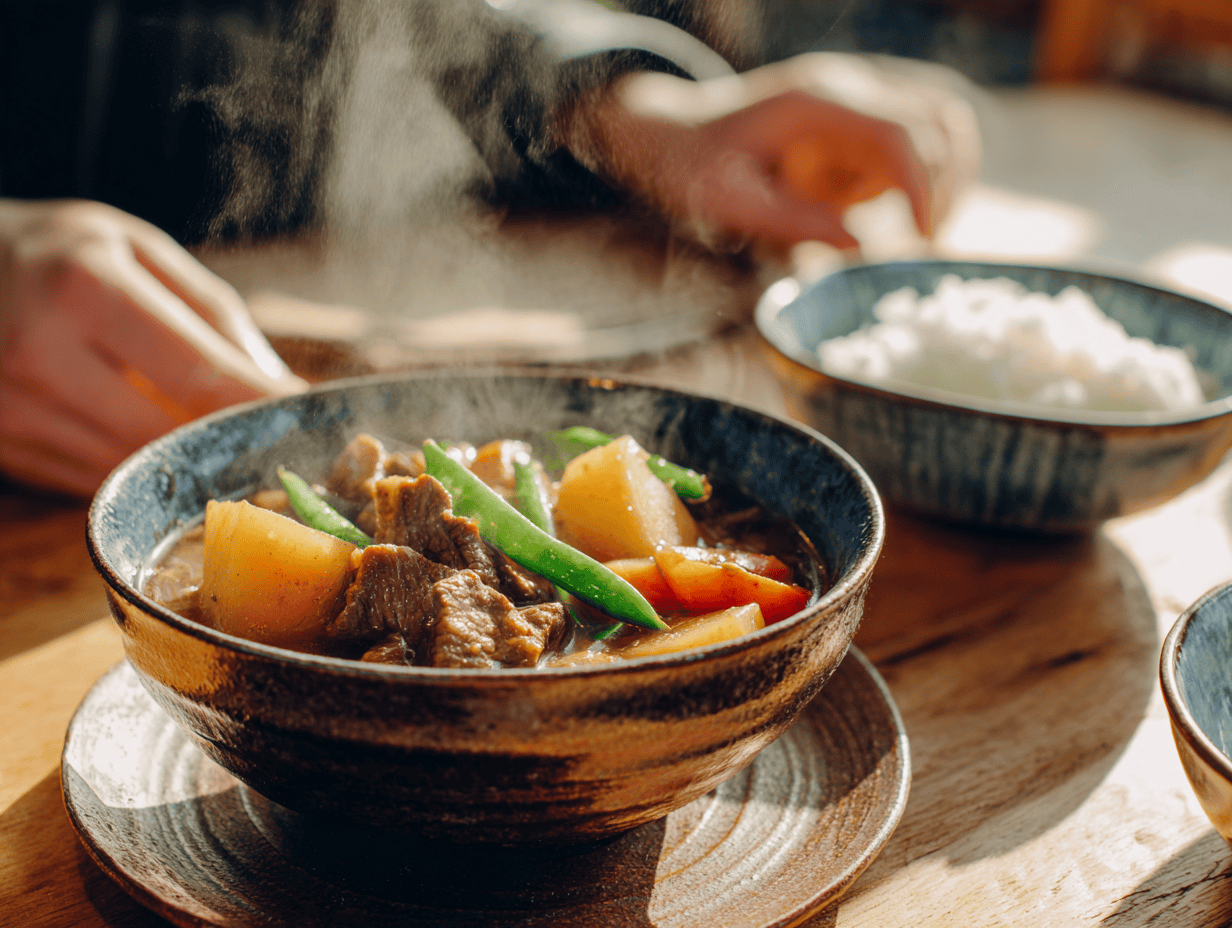
Nikujaga is a home-style dish of beef, potatoes and onion simmered in sweet soy and dashi. It appears on set-meal menus and at neighborhood counters across Japan.
- 8 ounces thinly sliced beef
- 4 medium potatoes, peeled and cut into large chunks
- 1 onion, cut into wedges
- 1 carrot, cut into chunks
- 1 tablespoon vegetable oil
- 1 1/2 cups dashi
- 3 tablespoons soy sauce
- 2 tablespoons mirin
- 2 tablespoons sake
- 1 1/2 tablespoons sugar
- A handful of snow peas, blanched
- Heat the oil in a wide pot and cook the beef over medium heat until it just changes color.
- Add the onion, carrot and potatoes and stir for two minutes to coat them in the fat.
- Pour in the dashi, sake, mirin and sugar, bring to a boil and skim off any foam.
- Add the soy sauce, cover with a drop lid or a sheet of foil and simmer for about twenty minutes, until the potatoes are tender.
- Turn off the heat and let the pot rest for ten minutes so the potatoes absorb the broth.
- Serve in bowls with the snow peas on top, alongside rice and miso soup.
Photography changes in a similar way, and for the same reason. Return travelers photograph at closer range, once the wide-angle landmark circuit is behind them. A pocketable fixed-lens camera often replaces the kit that went before. It goes in a coat pocket rather than a bag, and it changes what you point it at. You stop chasing the famous view and start noticing doorways, signs and steam. A food trip fills a phone with counters and hands. A landscape trip fills it with weather. In the end, what you bring home becomes most of what you remember a year later.
A pocketable fixed-lens camera with a 40mm-equivalent lens. It suits the closer, slower photographs of a second trip.
View the Ricoh GR IIIx →A leather cover with a refill of Japanese MD paper. It keeps the shop names and train lines that plan the next trip.
See the TRAVELER'S notebook →A compressible cube with an internal divider, in four sizes. It makes daily repacking between inns much faster.
View the Peak Design Packing Cube →Cities on a Second Visit
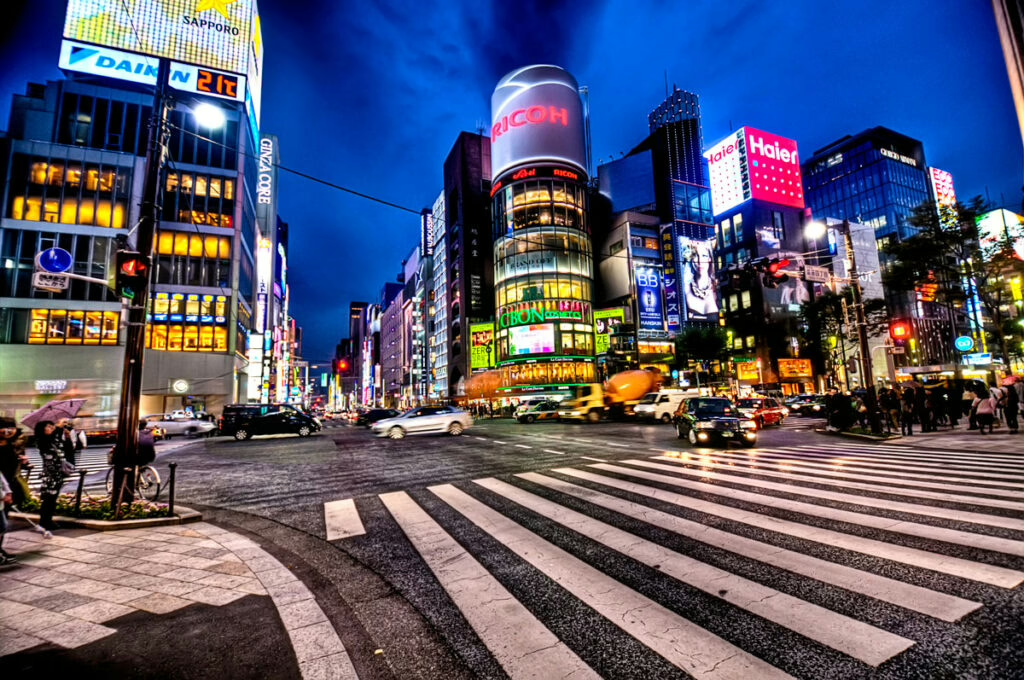
Cities also behave differently on a return visit, and the difference is practical rather than emotional. You stop reading every sign and every map. You know which station exit you want, and roughly what a district feels like before you reach it. That frees a great deal of attention. A returning visitor walks slower and sees more, because none of the walking goes on wayfinding. The city stops being a puzzle and starts being a place.
None of this is unique to Japan. What is unusual is how much the country rewards it. The regions differ in food, dialect, building style and weather, so a return trip rarely feels like a repeat. Tokyo on a second visit is less about landmarks and more about neighborhoods. You learn which side streets hold the good coffee, which station has the calmer exit, and which district suits an evening walk. Those small facts are what make a big city feel like yours.
Season and the Psychology of Travel in Japan
Season beats destination, almost every time. That is the sharpest scheduling rule on this page, and it follows from how memory encodes a place. Spring and autumn are the seasons people get sold, and they are excellent. They are also the seasons everyone else has chosen, from home and from abroad. Flights and rooms fill early, and the famous gardens fill by mid-morning. That sets the crowd density of every street you walk, and your memory records crowds whether you want it to or not. So the season you missed is often a better reason to return than the city you skipped.
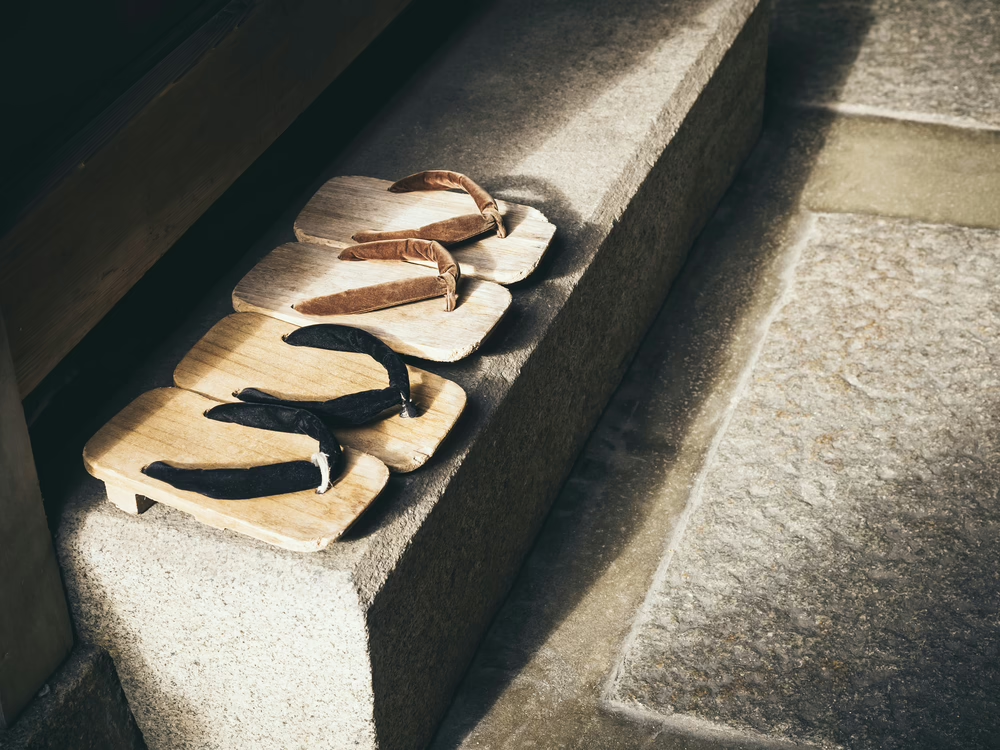
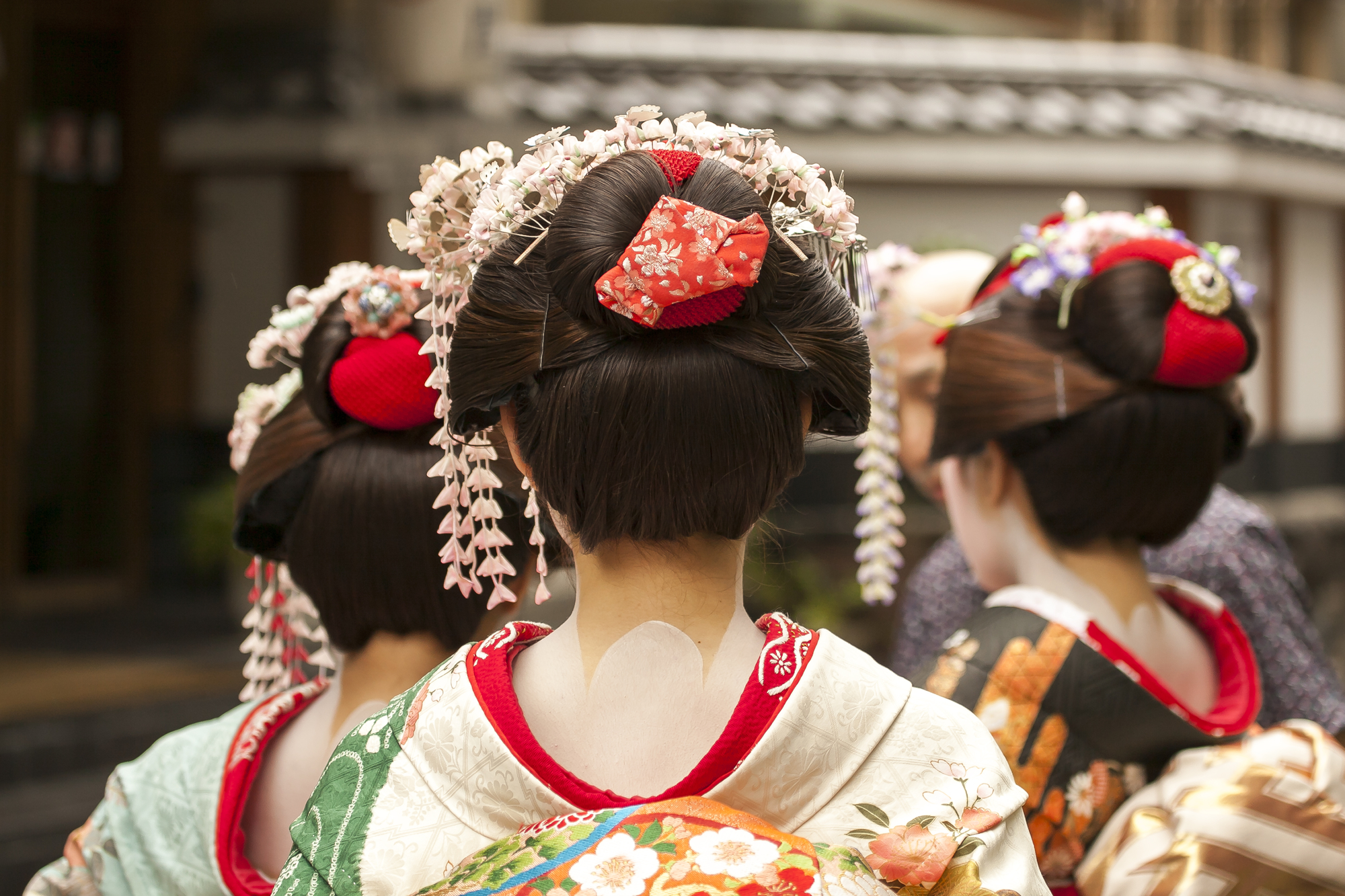
Winter changes the north entirely. It turns bathing from a pleasant afternoon into the main event of a day. Late summer is hot and humid, and many foreign visitors avoid it for that reason. Yet that is festival season, which repays the discomfort. Neither is a hardship, and neither needs special gear. Both are simply different countries from the one a spring visitor met, and the psychology of travel in Japan runs on exactly that kind of contrast. Cold air sharpens a town. Humidity softens it. Neither version is the real one, and seeing both is what makes a place feel known rather than visited.
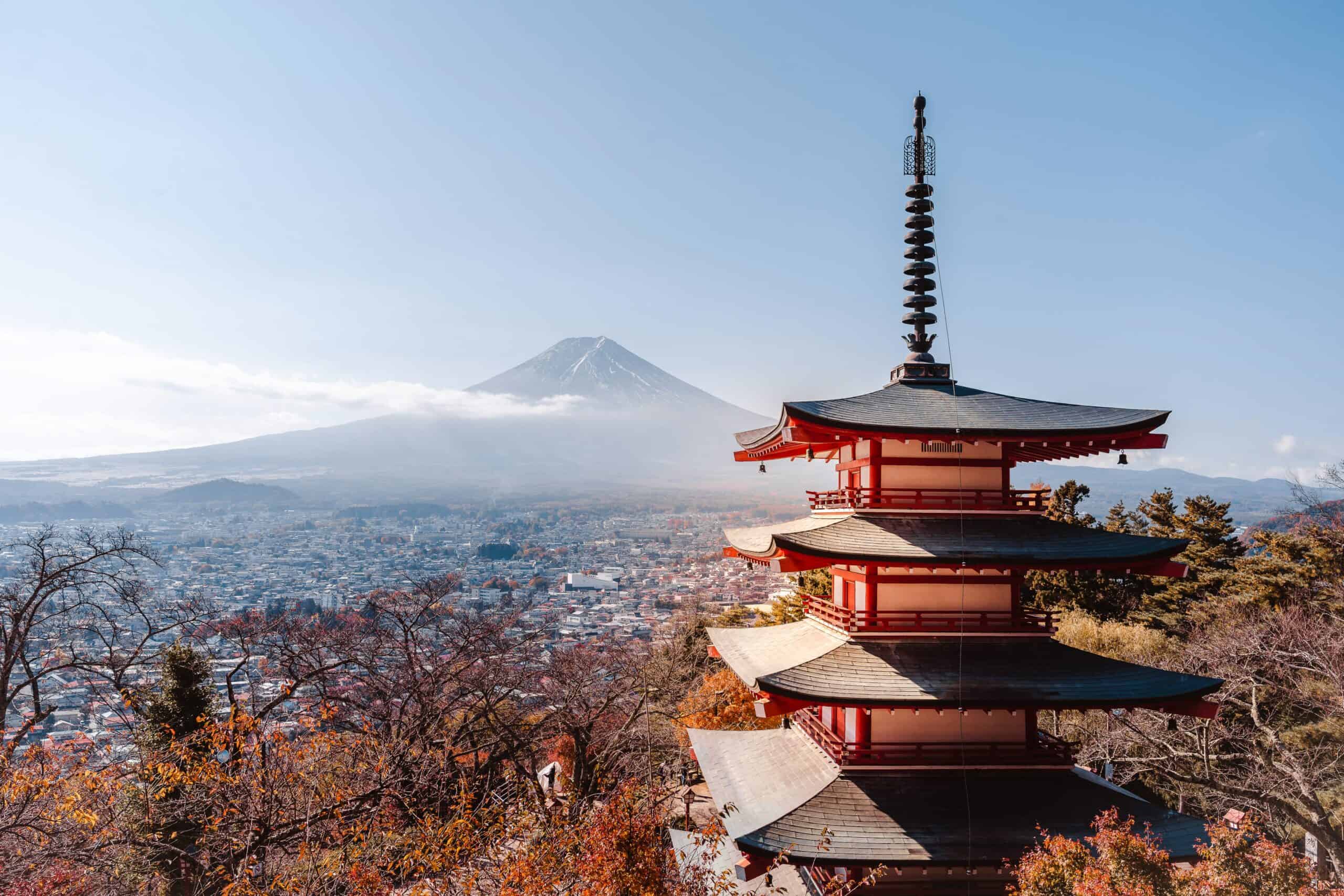
Same Town, Different Season
There is also a case for returning to the same town in a different season, rather than a new town in the same one. It sounds unambitious at first. Still, it gives the strongest results, because you already know the shape of the place: the station, the streets and the inn. All your attention goes to what has changed. That is the logic of a return visit, compressed into one decision. It also makes booking easier, since you already know which inn you liked. Getting between regions is its own puzzle, and the data on how the Japan Rail Pass shapes regional travel helps with that planning.
Written notes earn their keep here, because the details that pull people back are small and specific. A shop name. A train line. The name of the cook who remembered your order. The stretch of river walk that beat the sight at the end of it. Little of that survives six months in memory alone. A return trip often takes shape long after the first one has blurred. That is exactly when a page of notes, kept on the road, becomes the record you can rely on. Write down the counter, the inn and the street while they are fresh, because those are the details a second trip gets built on.
Questions Worth Asking
What percentage of visitors to Japan are repeat travelers?
The figure exists, but people rarely cite it correctly. The Japan Tourism Agency collects visit counts through its International Visitor Survey, and JNTO publishes a breakdown by number of visits. Treat any percentage quoted without naming that survey and its year as unsourced, and check the JNTO statistics portal for the current figure.
Why do so many people return to Japan?
Because a first trip leaves a strong sense of something unfinished. The country is dense, regional and seasonal, so a two-week route covers only a fraction of it. Travelers leave with a specific list of things they did not do, and that list turns vague interest into a second booking.
Which countries send the most repeat visitors to Japan?
Nearby East Asian markets come back most often, because the flight is short and a weekend trip is realistic. Long-haul markets return less often and stay longer when they do. JNTO's breakdown by number of visits publishes that split by country and by year, so check the latest figures there.
How is a second trip to Japan different from the first?
It narrows. A first trip is a circuit of headline cities. A return is usually one region, with fewer moves and longer stays. Travelers choose a place to stay for the building rather than the location, and they plan around a season instead of a landmark. Meals also become more repetitive, in a good way.
When is the best time to go back to Japan?
Go in the season you missed. A first trip usually lands in spring or autumn, which leaves winter and late summer unseen. Going back in a different season changes the food, the light and the crowds far more than changing the destination would. Winter suits the north, and summer brings festival season.
What is the peak-end rule in travel?
It is the finding that people judge an experience mostly by its most intense moment and by how it ended, not by its average. Daniel Kahneman and colleagues described it in 1993. For travel, it means the final evening of a trip carries extra weight, so plan it with care rather than rushing to the airport.
Is Japan worth visiting more than once?
For many travelers, yes. A return trip often gives back more than the first, because you have already learned how the trains, meals and etiquette work. That frees attention for the places themselves. The country is also regionally varied enough that a second trip rarely feels like a repeat of the first.
Why One Visit to Japan Is Rarely Enough
In the end, it comes down to a mismatch. The country is regionally deep and seasonally variable, and a standard two-week route samples a narrow slice of both. Travelers leave aware of the slice, and that awareness is useful. It is the difference between a holiday that ends and a holiday that starts the next one. People come back because they know precisely what they missed. They also come back because the return pays more, once they have learned how the country works. That is the psychology of travel in Japan in a single line: the first trip teaches, and the second one rewards.

So the useful question is not whether to return. It is what to make the return about. One region. One season you have not seen. A place to stay chosen for itself rather than its address. Enough days in one town that you stop counting them. Then leave the last evening open for the counter you liked best. For a slower lens on that same idea, read our essay on ma, the Japanese art of the pause, which explains why empty time matters. It is the same reason the best return trips leave a few afternoons with nothing planned at all.
Ninety days of guided pages for the question a return trip raises: what you want more of.
View the Journal →A return trip is easier to plan than a first one, and harder to plan well. The constraints are looser and the options wider. Order the days wrong and a strong route reads as a list of errands. Order them well, and the trip ends on the evening you will remember.
For the traveler who has done Tokyo and Kyoto once and wants more from the return: a custom itinerary built around one region and the season you missed, with a ryokan chosen for the building, fewer moves, and a final evening in a small town rather than an airport hotel.
Plan Your Custom Japan Itinerary