
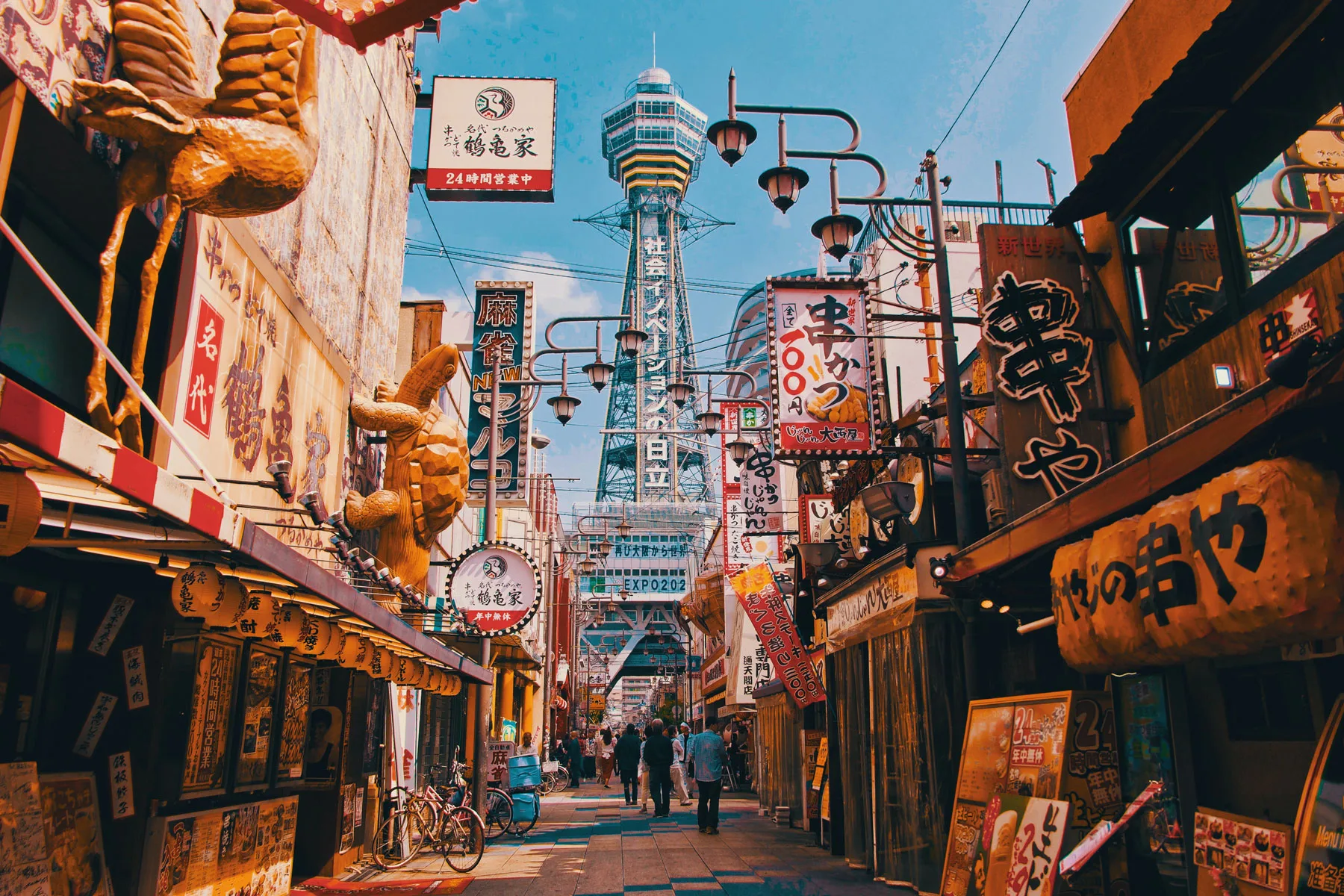
Ask someone from Tokyo to describe Osaka food and the answer comes fast: too much, too often, and proudly so. Kyoto has a name for restraint. Osaka built its name on appetite, and it has never apologized for the difference. Merchants once ran this port on goods gathered from across the country. Somewhere inside that trade, the city decided that eating well was worth eating too much.
This guide maps that habit, so a visit can follow the city’s own logic rather than a tour schedule. It covers the three dishes Osaka claims, the districts where they live, and the stock that sits under almost everything. It also names one counter worth a special trip. For the wider picture first, our list of traditional Japanese dishes worth trying sets Osaka in context.
What is Osaka food known for?
Osaka is Japan’s kitchen, and its food culture runs on kuidaore, the habit of eating without restraint. Its signature dishes are takoyaki, okonomiyaki and kushikatsu. The food is casual, quick and built on dashi stock, and it gathers in Dotonbori, Namba and Shinsekai.
What Kuidaore Means for Osaka Food
Kuidaore roughly means eating to your heart’s content, or eating yourself to ruin. It is the phrase Osaka uses for its own appetite. Say it to a resident and the reply is rarely defensive. Instead, it reads closer to a shrug: yes, and so what. That confidence is the real subject here.
It also explains why a city famous for volume food still gets discussed beside refinement. The phrase is not about waste. Rather, it describes a place where spending on a good meal was never foolish, only sensible. Over time that attitude became a civic identity rather than a slogan. You feel it the moment you walk into a busy arcade at dinner time.
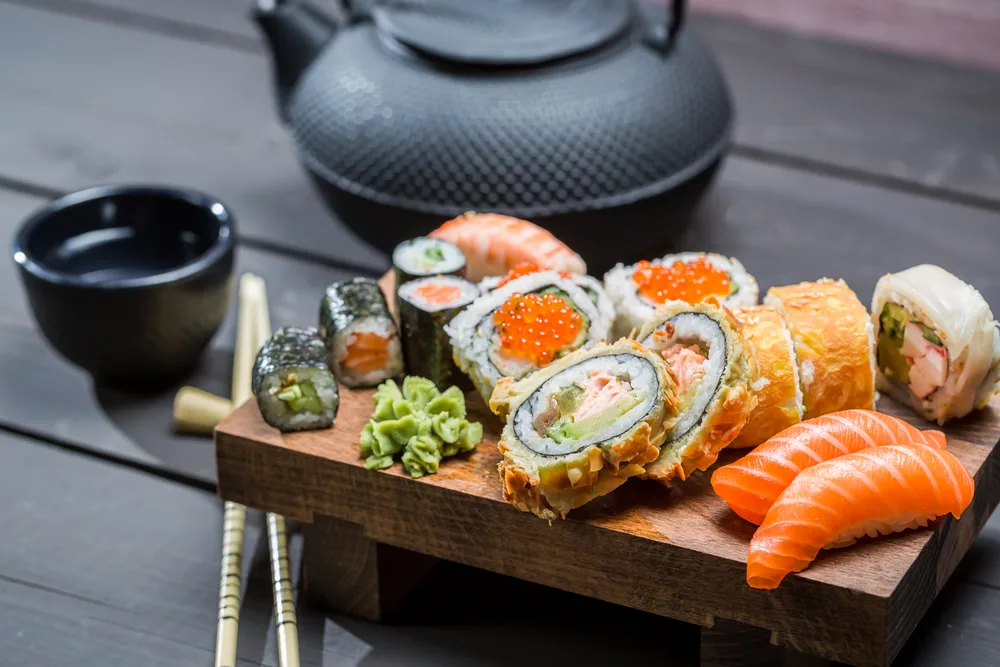
The history makes it clear. In the Edo period, people called Osaka the kitchen of the country, because ingredients from every region came through its port. Wealthy merchants often held business talks in restaurants, so cooks had every reason to improve. The Osaka Convention and Tourism Bureau adds a second reason. Sake from nearby Ikeda, Itami and Nada raised the standard of the food served beside it. That pairing still holds, and our beginner’s guide to Japanese sake is worth reading before you go.
The Osaka Food Classics: Takoyaki and Okonomiyaki
Takoyaki
Takoyaki has a founder, a shop and a year, which is rare for a street snack. In 1935, Tomokichi Endo of Aizuya was selling rajioyaki, a batter snack with beef and konnyaku. It did not sell well. Then a customer remarked that Akashi, the octopus town to the west, put octopus in its version. Endo tried it, kept it and called the result takoyaki.
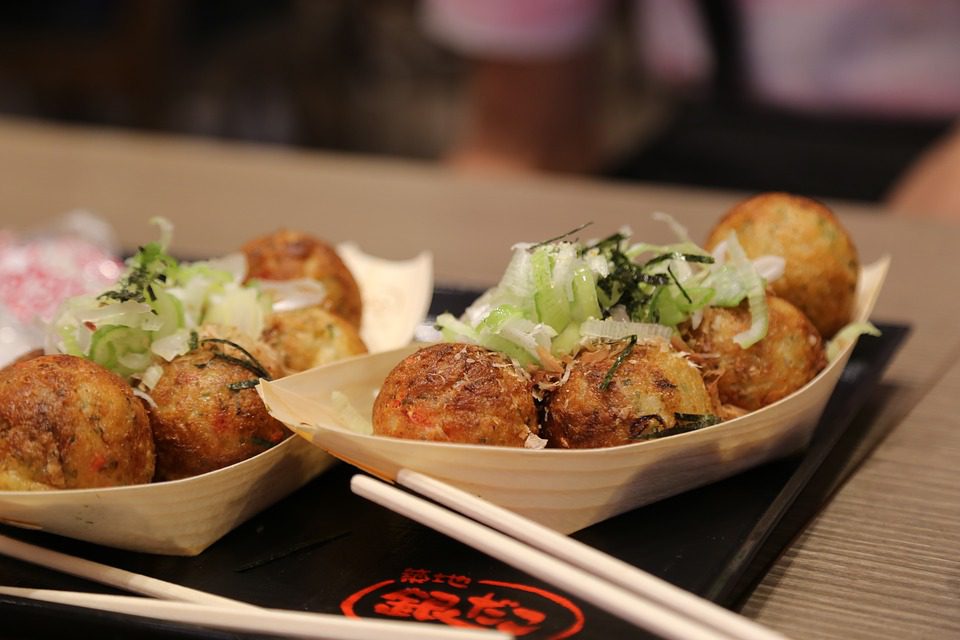
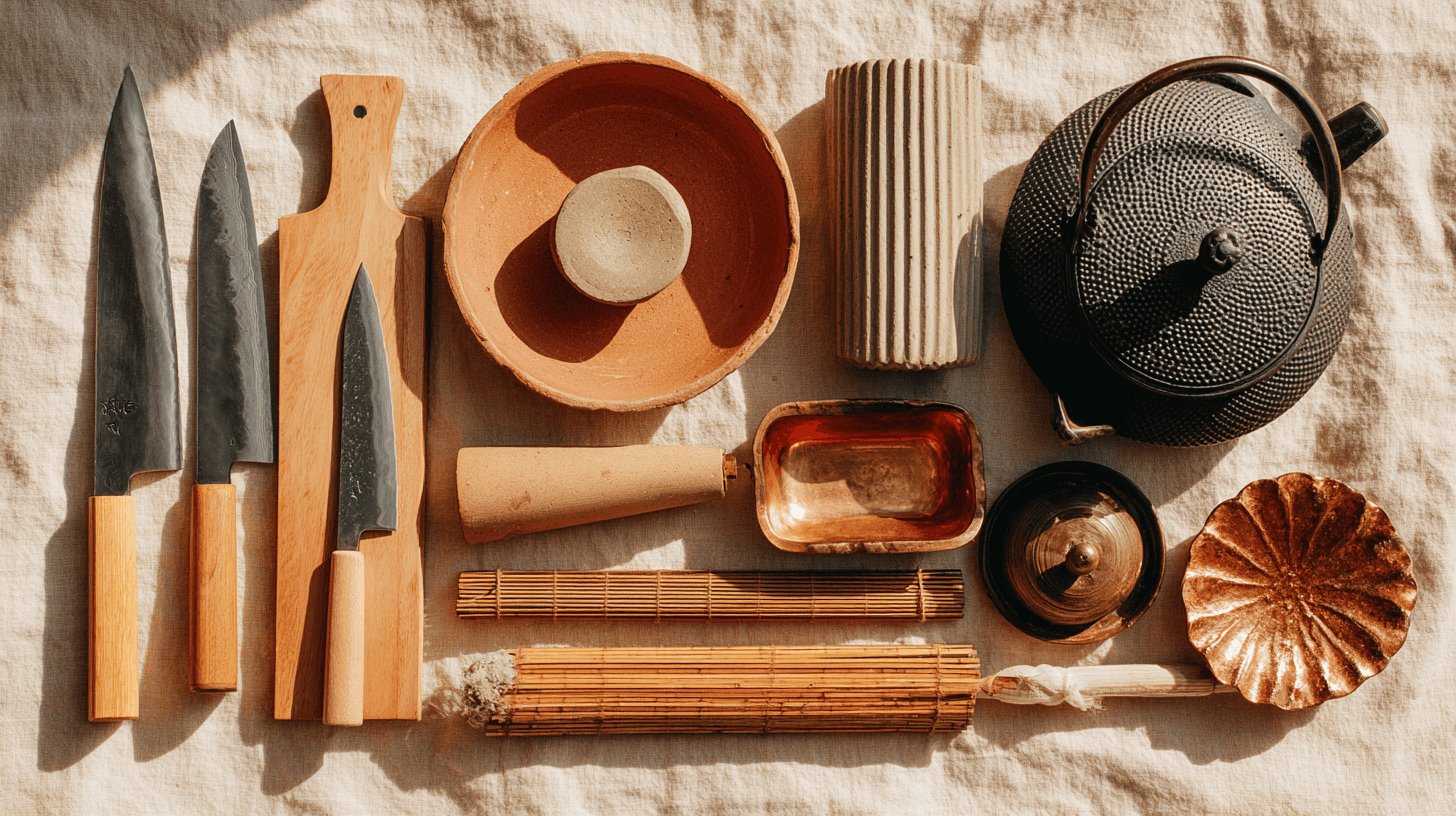
According to Aizuya’s own history of the dish, the first takoyaki used flour mixed with a soy-seasoned broth. The sauce, the salt versions and the toppings of seaweed and mayonnaise came from other vendors over time. So the version most visitors picture is a later layer, not the original. It is not wrong, only optional. Today you will find both styles on almost every corner of the city, often within a few steps of each other. If you want to make it at home, a molded cast-iron pan is the one tool that matters. No flat pan can produce that round shape, however careful the cook.
A heavy cast-iron pan with sixteen molded wells, made in Japan and induction compatible. It holds heat the way a stall griddle does.
View the Takoyaki Pan →The thick, sweet and tangy sauce that tops okonomiyaki and sauced takoyaki. It is sweetened with dates and blended from around twenty fruits, vegetables and spices.
See the Otafuku Sauce →Dried bonito flakes from a maker producing them since 1917. Use them for dashi and as the moving garnish on top of okonomiyaki.
View the Bonito Flakes →Okonomiyaki
Okonomiyaki tells a messier story, with no single founder to credit. The tourism bureau lists several theories, from monjayaki in Tokyo to dondonyaki at food stalls, and then issen yoshoku. The current style took shape after the war. Cooks added cabbage for volume, and a snack became a full meal. Then the 1970 Osaka Expo made it known nationwide as a local specialty. Today almost every neighborhood has a griddle shop, and many seat you right at the hot plate. Some shops cook it for you, while others hand over the bowl and let you try. Either way, the smell of browning cabbage reaches the street first.
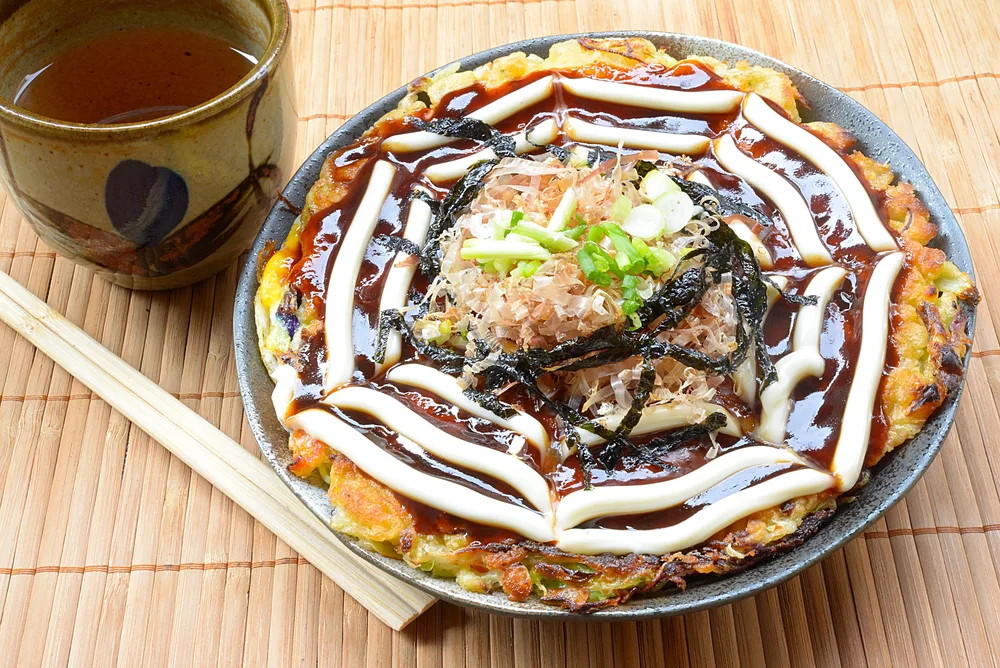
The Osaka version still mixes grated mountain yam into the batter. As a result, it cooks up fluffier than many versions found elsewhere. It comes to the table whole, and you cut it with a small spatula or chopsticks. In short, it is closer to a meal than a snack. That contrast is the useful part. Takoyaki rewards speed, eaten in a few bites while still hot. Okonomiyaki, by contrast, rewards patience, cooked slowly on a griddle and shared at the table. The city keeps both instincts alive at once, which is harder than it sounds. Try both on the same day, and the difference becomes obvious.
For the shop names, the stalls and the one plate that beat the rest.
6 × 9 in · 120 unlined pages · matte softcover
Shop This Journal →Kushikatsu and the One Rule of Osaka Food
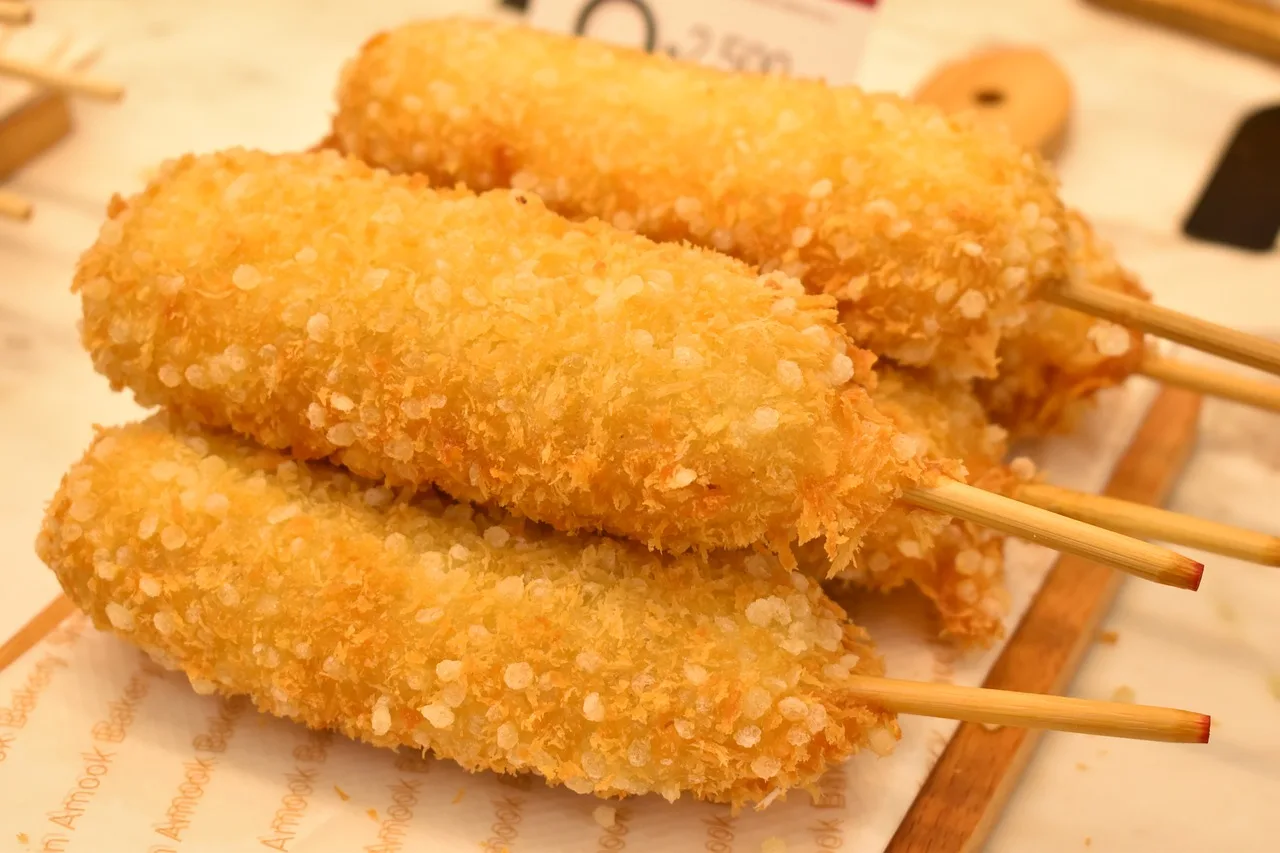
Kushikatsu is the third dish the city claims, and it runs on another instinct again. It is meat, seafood or vegetables on a skewer, coated in fine breadcrumbs and deep-fried. The outside sets crisp while the inside stays soft. It sounds simple, and it mostly is. Yet the setting feels more like a bar than a street stall, with a counter, a fryer and a shared pot of sauce. For many visitors, this is the Osaka food that turns a snack into a full evening. It is also the easiest of the three to share with a group. Everyone orders, everyone dips, and the plates keep coming.
Most visitors learn the etiquette in minutes, and nobody minds a slow start. You will pick it up by watching the person beside you. Order a few skewers at a time rather than a full plate. Beef, shrimp, lotus root and quail eggs are common first choices, and seasonal vegetables often join them. Each skewer arrives hot, and the cook keeps them coming as long as you keep asking. A cold beer or a highball usually sits beside it. The pace suits a long evening, because nobody expects you to finish fast. If you cannot read the menu, pointing at a neighbor’s skewer works well enough.
No Double-Dipping, Unlimited Cabbage
The rule is short. Do not double-dip. The whole counter shares the sauce pot, so each skewer gets one dip, and only before the first bite. The tourism bureau’s guide to kushikatsu names the rule first. It also notes the fix for a skewer that needs more sauce. Use the raw cabbage beside the pot as a scoop, because you can eat as much cabbage as you like. Locals enforce the rule themselves, more reliably than any sign. It sounds strict, but it keeps the pot clean for the next guest. After one round, it simply feels polite.
The best-known place to practice is Janjan Yokocho in Shinsekai, a lane of kushikatsu counters that opened soon after the war. Newer shops with long lines now sit beside them, and both kinds stay busy. When the counter closes, the evening often moves on to an izakaya, the heart of Japanese nightlife.
Each Osaka classic asks for a different kind of attention, and each has a home district.
| Dish | What it is | How it is eaten | Where to find it |
|---|---|---|---|
| Takoyaki | Batter balls with octopus, cooked in a molded pan | In a few bites, while hot | Aizuya in Nishinari; stalls citywide |
| Okonomiyaki | Cabbage pancake with mountain yam in the batter | Slowly, cut at the table | Dotonbori and Namba griddle shops |
| Kushikatsu | Breaded skewers, deep-fried | One dip in shared sauce, cabbage on the side | Janjan Yokocho, Shinsekai |
| Dashi | Stock of kelp, bonito flakes and sardines | Hidden in batter, broth and sauce | Every kitchen in the city |
Where Osaka Food Lives: Dotonbori, Namba and Shinsekai
Visitors use the three names almost as one, yet each feels different once you stand in it. Treating them as one long block wastes the best part of a day. Dotonbori performs for a crowd. Meanwhile, Namba connects everything, and Shinsekai repeats one dish for decades. They sit within walking distance of each other, linked by covered arcades. Dotonbori takes its name from Doton Yasui, who paid to dig its canal in 1612. It grew into a district of kabuki theaters and teahouses. Today restaurants line both sides of the street, and the crab restaurant Kani Doraku is among the best known.
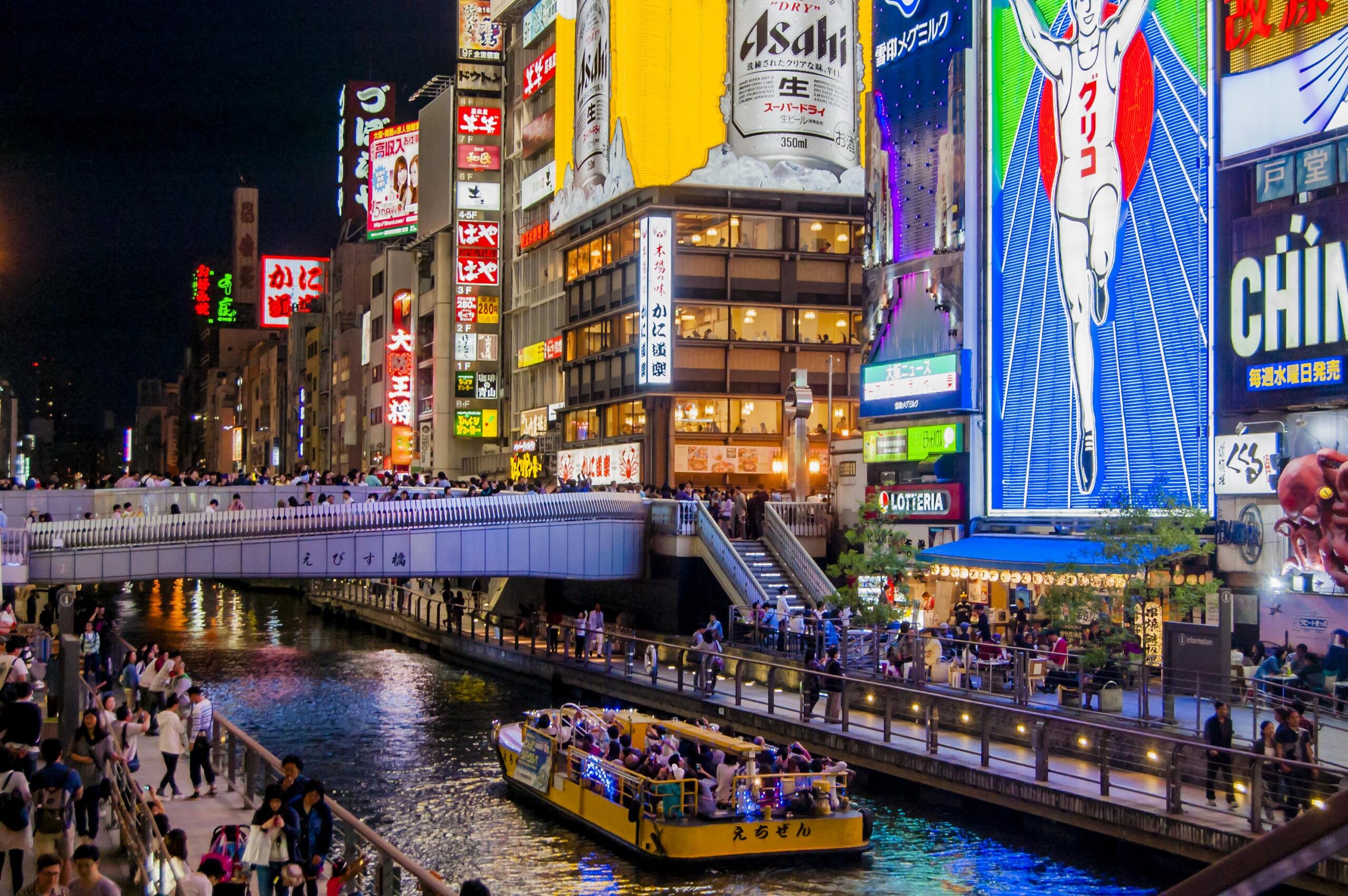
The density of choice here can flatten decisions fast. So pick a category before you arrive, such as noodles, skewers or seafood. Choosing once you are under the signs rarely goes well. Namba, which surrounds Dotonbori, does the connecting work, with stations and long covered arcades. It feels calmer at street level, because the crowd is moving somewhere rather than gathering to look. Small dessert counters draw their own short lines there, too. A fresh-baked cheesecake shop, founded in Osaka, is one of the best known.
Prefer to have the route built for you? A custom Japan itinerary can place a full Osaka food day where it fits the rest of the trip.
A typeset printable: ten Japanese proverbs with kanji, romaji and meaning. Signing up also brings occasional letters on Japan and word when a new journal reaches print.
One email with your printable. Occasional letters after that. Unsubscribe anytime.
Shinsekai and Janjan Yokocho
Shinsekai carries a different mood again, a short ride south of Namba. It feels like a stage set that never came down, with old signs and older counters. The district dates to 1903, when Tennoji hosted the 5th Domestic Industrial Exposition. Tsutenkaku Tower rose during that same burst of development, and it still marks the skyline here. The district is smaller than Dotonbori, and easy to walk end to end in under an hour. Even so, its few blocks feel crowded with counters, stalls and signs. Come with an appetite and an open evening, because the lane rewards slow wandering.
Janjan Yokocho is the core of the food here. The lane runs about 130 meters from north to south and holds roughly fifty shops. Kushikatsu counters sit beside doteyaki stalls, a stew of beef tendon in miso, and old go and shogi clubs. That narrowness is the point, and it makes the lane the clearest single lesson in Osaka food. A district this size holds this much of the city's reputation because it never tried to be anything else. Our list of ten unique experiences in Osaka covers what fills the hours between meals. Plan them around the meals, not the other way round, and the day runs well.
Recommended
Shinsekai is best in the early evening, when the counters fill and the tower lights come on. Go hungry, and plan to eat at two or three places rather than one. Most counters work well for a single round of skewers and a drink. Then you move on down the lane, the way locals do. By the third stop, the rule about the sauce pot will feel like your own.
Dashi, the Base Under Osaka Food
None of these dishes work without dashi, even when a diner never notices it. Dashi is the base stock of Japanese cooking. It has almost no smell until it meets heat. Then the whole room seems to know, before the pot is even uncovered. In Osaka, it shows up in batter, broth and sauce alike. Followed back far enough, Osaka food keeps arriving at the same pot.
The tourism bureau's page on dashi names its core: kelp from Hokkaido, bonito flakes from Tosa and dried sardines. Osaka Bay and the Seto Inland Sea supplied the sardines cheaply. Meanwhile, the city's role as a trading hub brought in kelp and bonito from far away. Their umami compounds reinforce each other, so the stock tastes deeper than its few ingredients suggest. That same care with simple things runs through the rest of the kitchen. Our guide to eating sushi and sashimi the Japanese way shows it at the raw end of the menu. Once you notice dashi, you will taste it everywhere.
Okonomiyaki at Home
Dashi is also the easiest way to bring the city home. Okonomiyaki batter uses it, so the stock does real work in the final dish. A home griddle or a heavy skillet is enough, and so is a weeknight. The recipe below follows the Osaka style, with grated mountain yam for a soft, fluffy center. It needs no special skill, only patience while each side browns. Make the dashi first, or use instant dashi granules if time is short. Shred the cabbage finely, because thin strands cook through before the outside burns. Pork belly is traditional, but shrimp or squid work just as well.
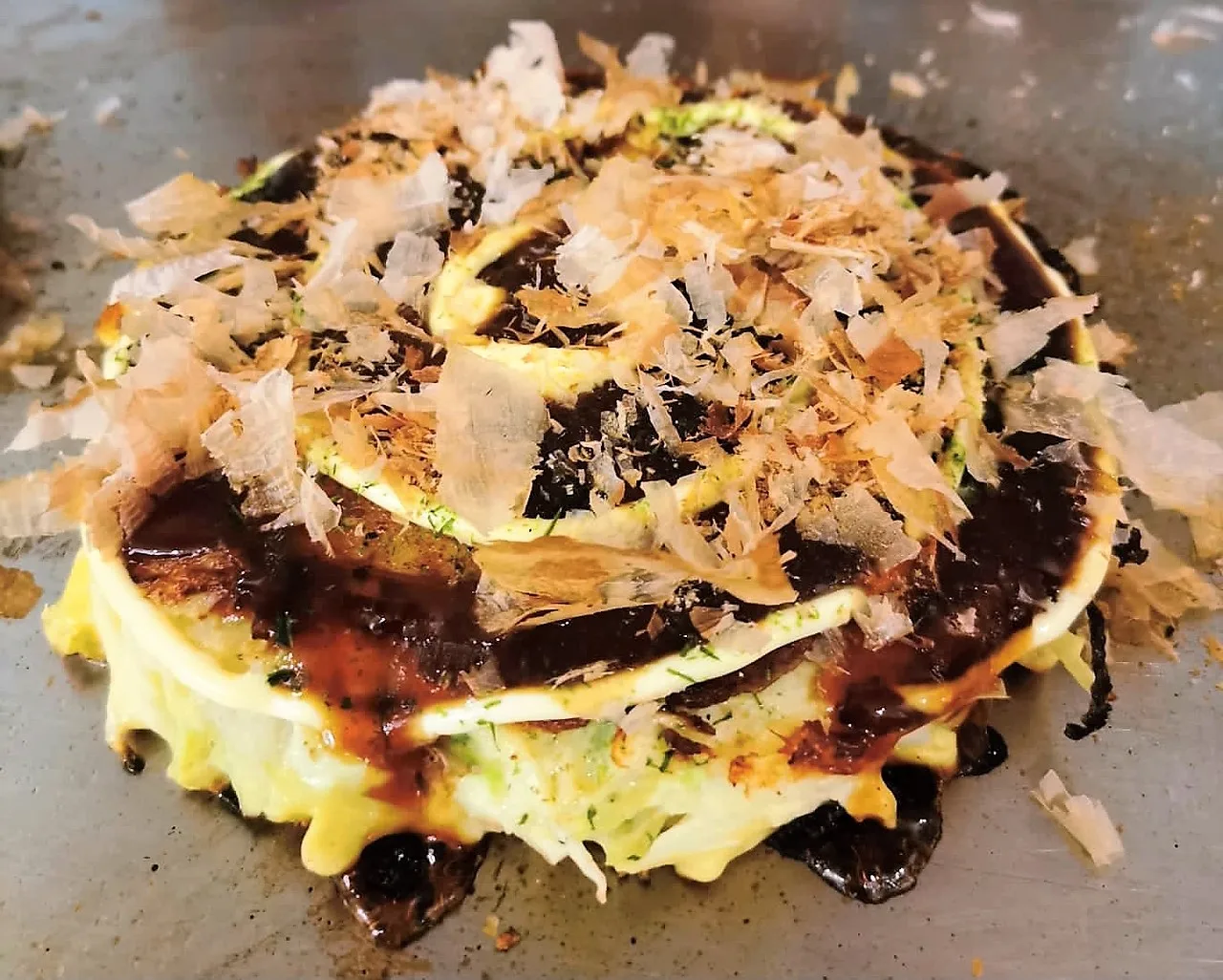
Okonomiyaki took its modern form in Osaka after the war, when cooks added cabbage to turn a snack into a meal. The Osaka style mixes grated mountain yam into the batter for a fluffy center.
- 3/4 cup all-purpose flour
- 1/2 cup dashi, cooled
- 2 ounces nagaimo (mountain yam), peeled and grated
- 2 eggs
- 4 cups green cabbage, finely shredded
- 2 green onions, thinly sliced
- 4 thin slices pork belly
- 1 tablespoon neutral oil
- Okonomiyaki sauce, Japanese mayonnaise, bonito flakes and aonori, to top
- Whisk the flour, dashi and grated mountain yam into a smooth batter, then beat in the eggs.
- Fold in the cabbage and green onions until every strand is coated.
- Heat the oil in a skillet over medium heat, spoon in half the batter and shape a round about an inch thick.
- Lay two slices of pork belly on top and cook for five minutes, until the underside is golden.
- Flip once, cook for another five minutes, then flip back and check that the center is set.
- Brush with sauce, add thin lines of mayonnaise and finish with bonito flakes and aonori.
The first pancake is usually the test. Keep the heat at medium, because high heat burns the outside before the cabbage softens. Flip once, with confidence, using two spatulas if you have them. Then press lightly, never hard, so the center stays airy. Brush on the sauce while the pancake is still hot, add mayonnaise in thin lines, and finish with bonito flakes and seaweed. Serve it whole at the table and cut it into wedges there, the way a griddle shop would. Leftover batter keeps for a day in the fridge, so a second round is easy. Next time, try adding cheese or mochi, two popular Osaka fillings.
Deep travels through Japan's food culture, with a full chapter on Osaka. A rewarding read before your first night of eating there.
Read Rice, Noodle, Fish →A compact guide that covers Dotonbori, Namba and Shinsekai alongside Kyoto. Useful for the logistics this page leaves out.
See Pocket Kyoto & Osaka →A small cast-iron fryer made in Japan for kushikatsu. Its lid has notches that rest the skewers across the rim.
View the Kushikatsu Fryer →A First-Hand Meal at the Takoyaki Original
The clearest way to taste takoyaki is to eat it as its inventor made it. That means going to Aizuya. The shop's own records say its current main branch moved to Tamade, in Nishinari Ward, in 1993. Walking in feels less like visiting a landmark and more like ordering from a neighborhood counter. Yet that counter is the reason the dish now exists everywhere else in Japan. Nothing about it has been staged for visitors, and that is the appeal. Go early, because the counter is small and the line moves at its own pace. Bring patience, and you will be eating within minutes.
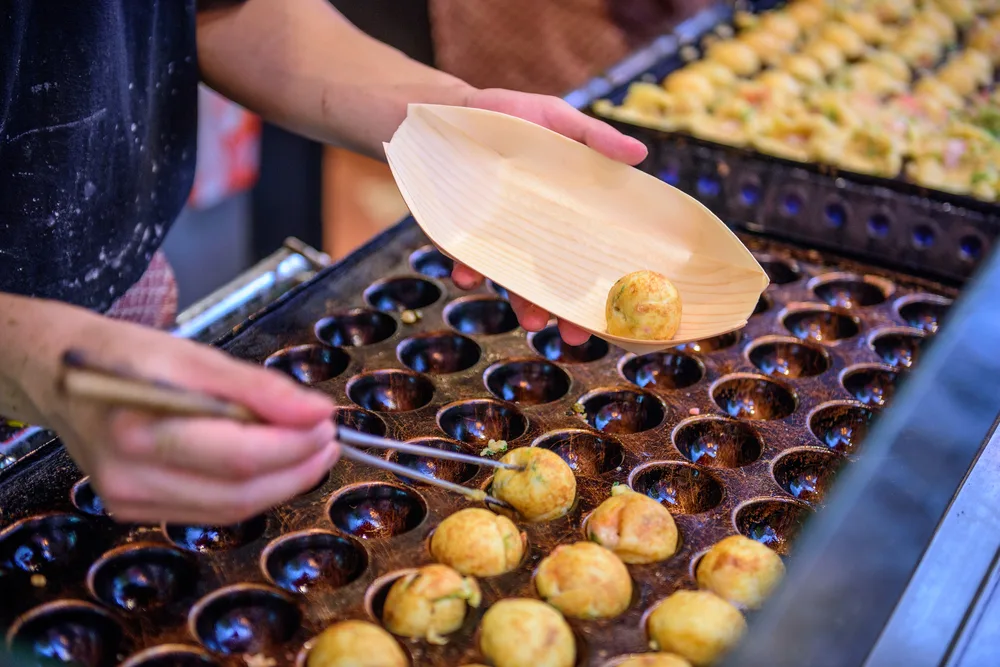
Order there and the takoyaki arrives plain, without sauce or mayonnaise. The shop says takoyaki was meant for eating without dirtying your hands, and it should taste good even when cool. So it still serves the simple, juicy balls as they are, the way the founder did. That absence of toppings is the detail worth noticing. Every other stall in the city is, in effect, a variation on it. Eating the original is less a novelty than a way of hearing the dish's first draft. Every later topping came after this plain version. Taste it first, and then judge the rest.
How to Eat There
A meal like this needs no reservation or introduction. It requires only showing up at a shop that has done the same thing for close to ninety years. Order what is on the menu, rather than asking for sauce. Eat the first ball slowly, because the center stays hot long after the shell cools. Then compare it, later that day, with a sauced version from Dotonbori. The difference teaches more about the dish than any guide can. It also shows how much the city has added since. Both versions have their fans, and both belong to the same story. Keep a note of which one you prefer.
Plan it as a morning or midday stop, before the evening crowds in the center. From there, the rest of the day can follow the city's logic. Take a market walk at Kuromon Ichiba, then the canal at Dotonbori, then skewers in Shinsekai at dusk. That order moves from raw seafood to batter to fryer. It also keeps you walking between meals, which helps more than it sounds. Leave room at every stop, because the next counter is rarely far away. In Osaka, the next snack is always closer than you think. Pace yourself, and the city will do the rest.
Questions Worth Asking
What is Osaka famous for eating?
Osaka is famous for takoyaki, okonomiyaki and kushikatsu. Takoyaki are octopus-filled batter balls, okonomiyaki is a cabbage pancake, and kushikatsu are breaded, deep-fried skewers. All three are casual, built for sharing and best eaten hot, often standing at a counter or sitting at a griddle table.
What does kuidaore mean?
Kuidaore roughly means eating to your heart's content, or eating yourself to ruin. Osaka uses it for its own food culture. The phrase reflects the city's Edo-period role as Japan's kitchen, where merchants did business over meals and spending on good food was never seen as wasteful.
What is the difference between takoyaki and okonomiyaki?
Takoyaki is a small, round batter ball with a piece of octopus at its center, cooked in a molded pan and eaten in a few bites. Okonomiyaki is a flat, cabbage-thickened pancake cooked on a griddle. It is cut at the table and is closer to a meal than a snack.
Where is the best street food in Osaka?
Janjan Yokocho in Shinsekai is the most concentrated stretch, a short lane of kushikatsu counters and stalls. Dotonbori has the widest range and the biggest crowds. Kuromon Ichiba trades street food for market food, mostly seafood, often eaten standing at the stall that prepared it.
What is the kushikatsu no double-dipping rule?
At a kushikatsu counter the sauce pot is shared, so each skewer gets one dip, before the first bite. If you want more sauce, use a piece of the raw cabbage beside the pot as a scoop. The cabbage is unlimited, and locals take the rule seriously.
Where was takoyaki invented?
Takoyaki was created in Osaka in 1935 by Tomokichi Endo of Aizuya. He added octopus to an earlier batter snack called rajioyaki after a customer mentioned that Akashi used octopus. Aizuya still serves takoyaki plain, without sauce, at its main shop in Nishinari Ward.
How many days do you need for Osaka food?
One full day covers the essentials if you plan it well. Start at Kuromon Ichiba, walk Dotonbori and Namba in the afternoon, and end with kushikatsu in Shinsekai. Two days let you add the takoyaki original at Aizuya and a slower okonomiyaki dinner.
Mastering Osaka Food: Eating Like the City
Osaka food resists the neat category most guides try to give it. It is not fine dining, and it is not fast food either. Instead, it is closer to a civic habit that happens to be edible. Dotonbori is theater, Shinsekai is one argument repeated in a single lane, and Namba holds them together. Underneath all three sits a stock older and more precise than the fried food suggests. For the philosophy behind it, our guide to washoku and the secrets of Japanese cuisine places Osaka inside the wider tradition. Read it before the trip, then let the city fill in the rest.
Ninety days of guided pages for the slower pleasures a good meal leaves behind.
View the Journal →A meal here rewards showing up hungry and ordering more than seems reasonable. That is the point kuidaore has been making all along. Let one district's specialty stand on its own, and come back for the next one tomorrow. The city will still be cooking.
For the traveler who wants to eat the city properly: a morning at Kuromon Ichiba, the takoyaki original at midday, an afternoon on the Dotonbori canal and skewers in Shinsekai at dusk, with the rest of Japan sequenced around it rather than squeezed beside it.
Plan Your Custom Japan Itinerary