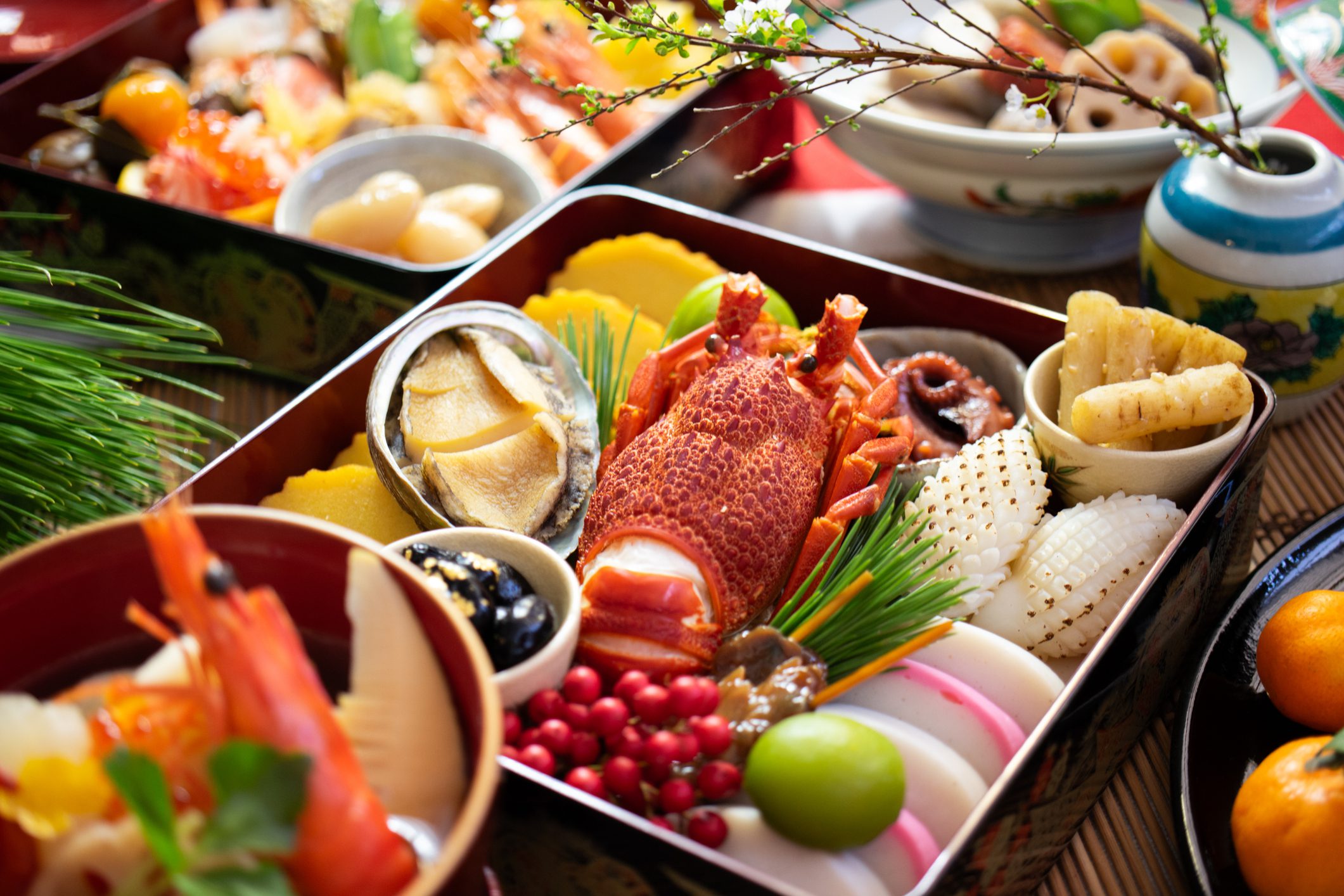
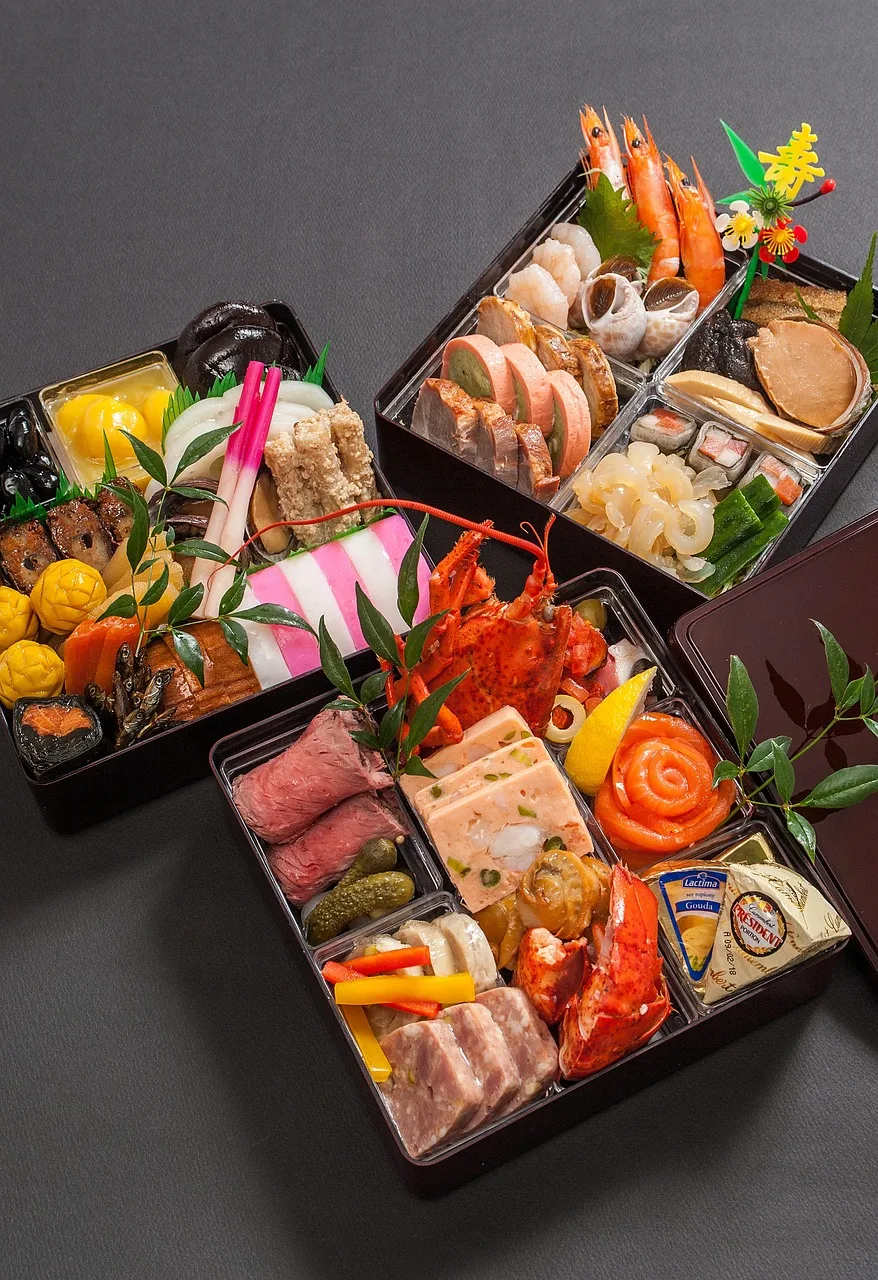
Osechi ryori is the food of the Japanese New Year. It arrives in stacked lacquer boxes, packed with small dishes that look like jewels. Each one carries a wish for the year ahead, often hidden in a pun. Black beans stand for good health. Herring roe stands for a large family. A golden mash of chestnuts stands for prosperity.
The boxes also solve a practical problem. The dishes are cooked before the holiday and keep for several days. So the household can rest during the first days of January, when shops close and nobody wants to cook. The meal is both a celebration and a pause.
This guide explains the tiers, the dishes and their meanings, and how to order a set in Japan. It also covers a small version you can make at home in the US, with one recipe to start. For the wider picture, begin with our guide to traditional Japanese food.
What is osechi ryori?
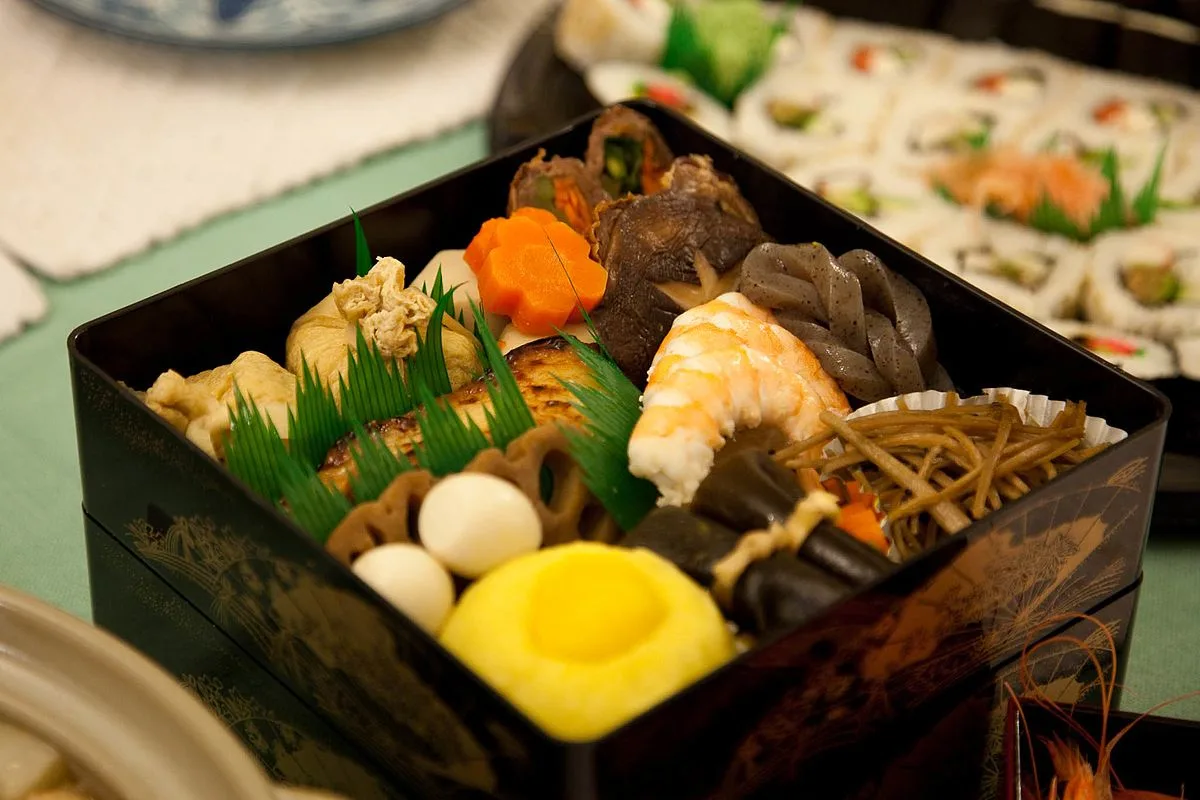
Osechi ryori is traditional Japanese New Year food. It is a set of small, symbolic dishes packed in tiered lacquer boxes called jubako. Typical dishes include sweet black beans, herring roe, rolled omelet and red-and-white fish cake. The dishes keep for days, and families share them from January 1, usually with a mochi soup called ozoni.
First, a note on how to read the dishes. Most osechi meanings are wordplay. A dish earns its place because its name sounds like a happy word. Sometimes its color or shape suggests one instead. So the menu reads a little like a poem written in food. Meanings also shift from region to region, and many families add their own favorites. Treat the list below as the common core rather than a fixed rule.
What Osechi Ryori Is, and Why It Keeps for Days
The name comes from sekku, the seasonal festival days of the old calendar. Shogatsu, the New Year, was the first and most important of them. Special foods for these days came to Japan from China. By the Heian period, the New Year food had taken the name osechi. The set most families know today settled around the eighteenth century.
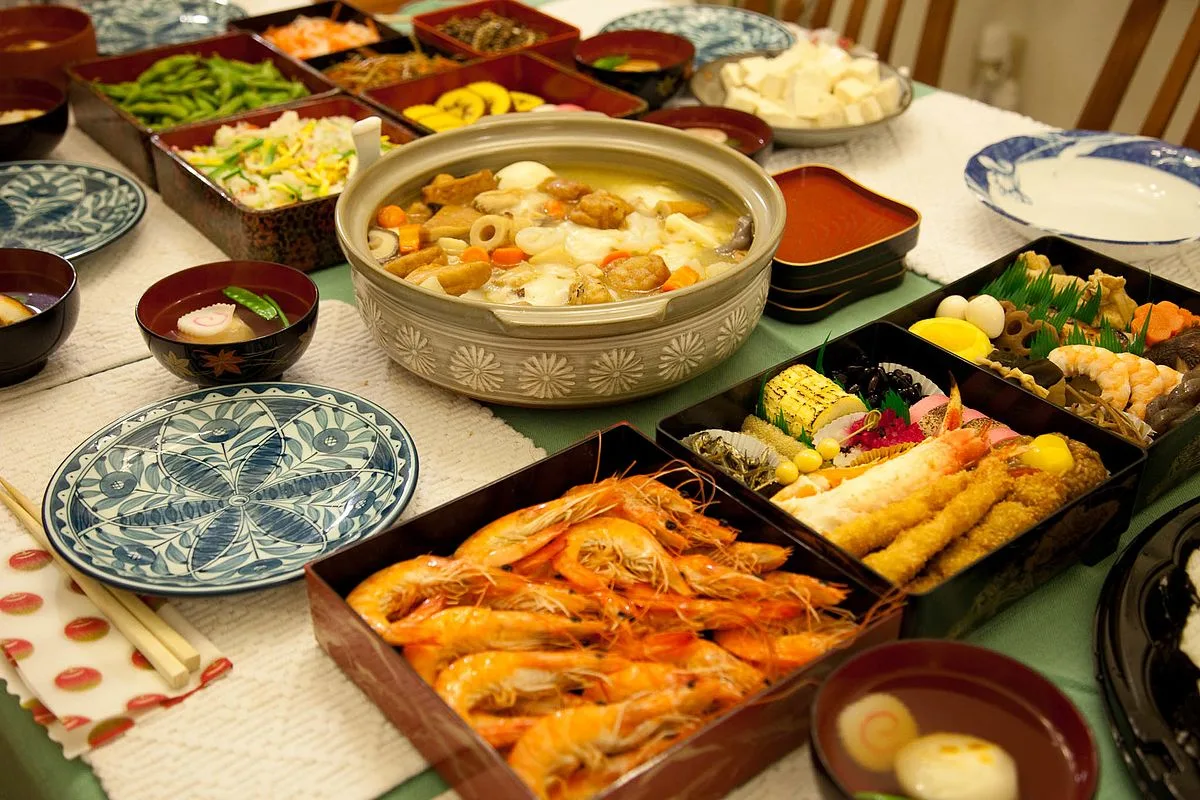
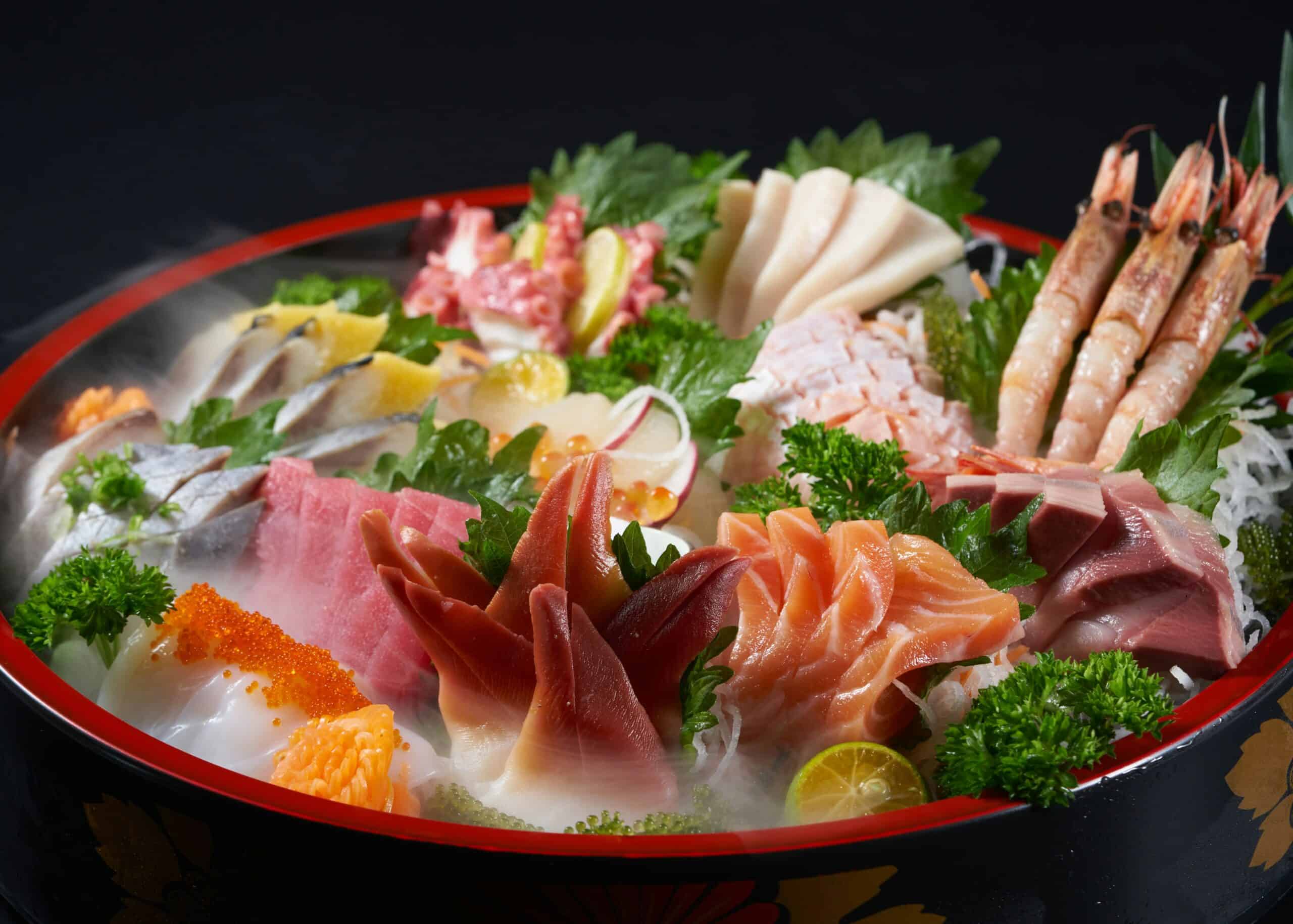
The cooking style follows from the calendar. Most dishes are simmered, sweetened, vinegared or dried, because those methods keep food safe without a refrigerator. Sugar and soy do the preserving. As a result, osechi tastes sweeter and saltier than everyday Japanese food. Expect a glossy, concentrated flavor rather than the fresh, light touch of sashimi.
Then there is the rest. Japan treats the first three days of January as a true holiday. In the past, cooking fires stayed cold, and the person who ran the kitchen finally got a break. Today, many families still lean on the boxes for those days. They eat from them at breakfast, again at lunch and once more with guests.
The meal also marks a fresh start. Families clean the house in late December, settle debts and send New Year cards. Then on the morning of January 1, everyone sits down to the boxes together. In short, osechi is the first shared meal of the year, and it sets the tone for the months ahead.
Inside the Jubako: How the Tiers Work
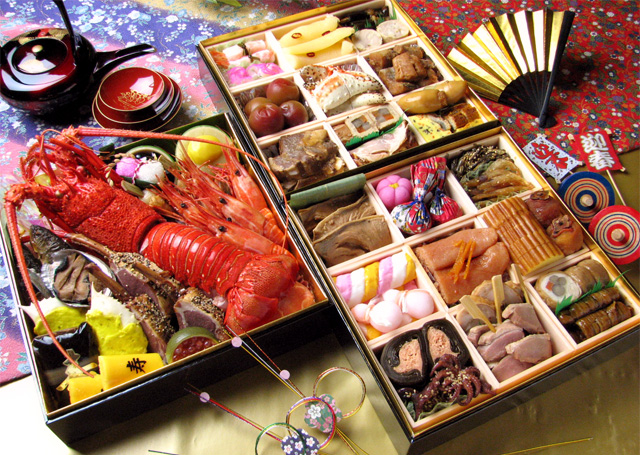
A jubako is a set of stacked boxes, usually lacquered black outside and red inside. Stacking is part of the meaning, because it suggests good fortune piling up, layer on layer. Most modern sets have three tiers, though the classic form has five. When the lid comes off, the first look at the packed top tier is the moment everyone waits for.
According to Nippon.com’s guide to New Year cuisine, a five-tier set follows a loose order. The top tier holds celebratory foods and small bites to go with drinks. Next, the second holds vinegared and grilled dishes, and the third holds more grilled food. Below that, the fourth holds simmered vegetables. Finally, the bottom tier stays empty, leaving room for the fortune still to come.
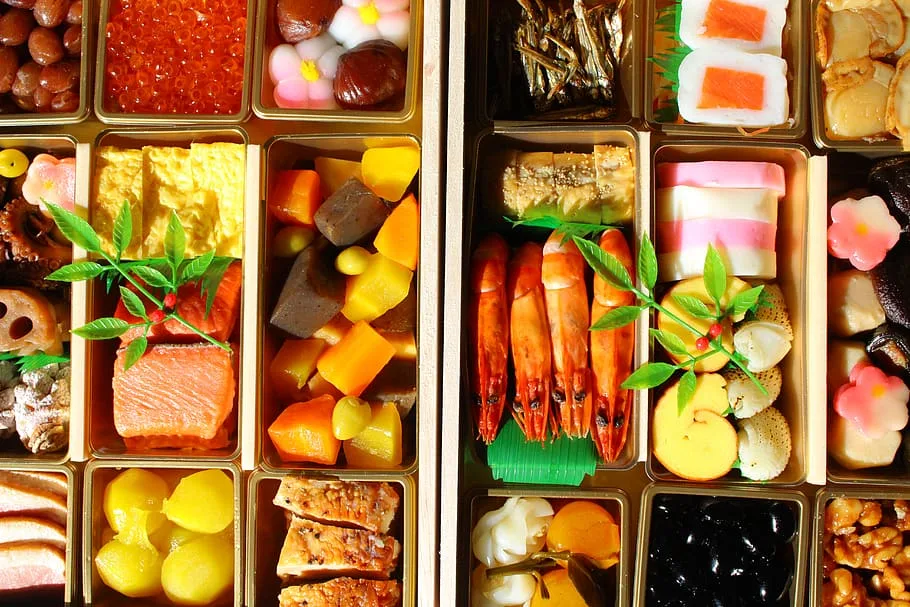
Within each tier, the packing follows an aesthetic. Colors alternate, so red sits beside green and gold beside black. Odd numbers of pieces are preferred. Leaves and paper dividers keep flavors apart. A good set also looks full from every angle, because an empty corner reads as a thin year. Department store sets are packed by hand, often by chefs who train for it.
IPPINKA Jyubako Box — a three-tier set made in Japan
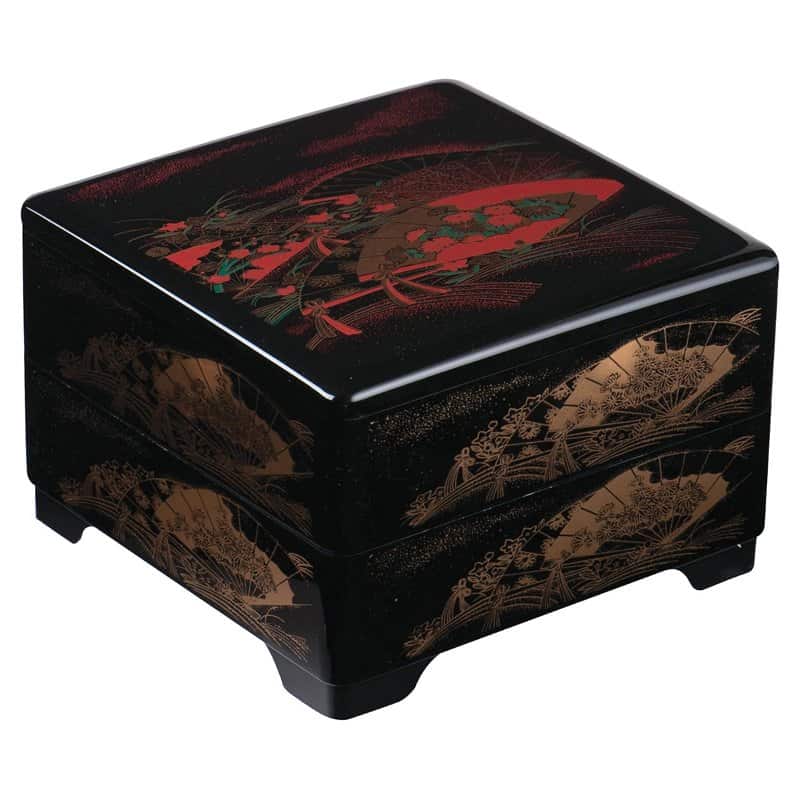
A real lacquer jubako can cost as much as a fine kimono, and it needs careful hand washing. For a first set at home, the IPPINKA jyubako box is a sensible start. It is made in Japan from resin and finished in lacquer paint with a gold fan design. Together, the tiers hold about three liters. That is enough for a small family set of five or six dishes. Because it is resin, it stays light and easy to store. However, keep it out of the microwave and the dishwasher. After the holiday, it doubles as a picnic box for cherry blossom season. So it earns its shelf space well beyond January.
You may also like
The Osechi Ryori Dishes and What They Wish For
Every family packs its boxes a little differently. Still, a core group of dishes appears in almost every set, from Hokkaido to Kyushu. Here they are in the order you are likely to meet them, with the wish behind each one. Most can be bought ready-made in Japan, and several are easy to make at home.
The three celebratory foods
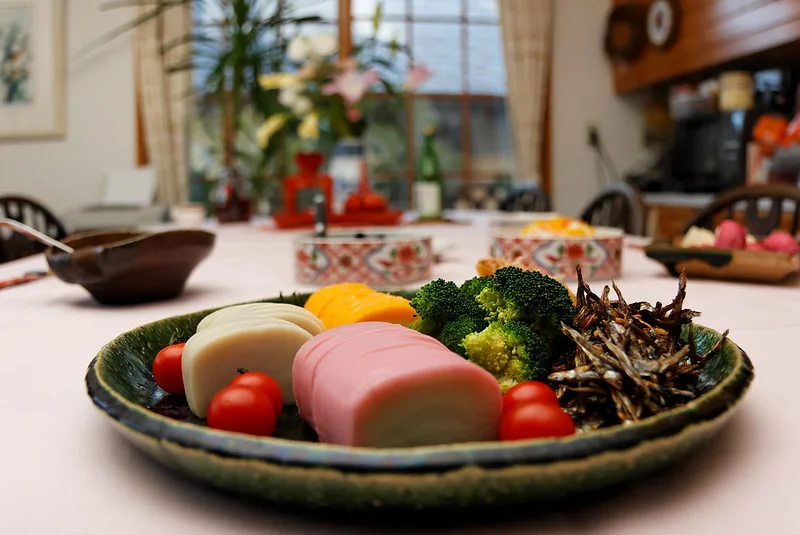
Three small dishes lead the top tier. In the Kanto region around Tokyo, they are kuromame, kazunoko and tazukuri. Kuromame are black soybeans simmered slowly in syrup until they turn glossy and soft. The word mame echoes a phrase for working hard and staying well. So the beans carry a wish for a healthy, diligent year.
Kazunoko is herring roe, cured in salt and then soaked in a light dashi. Its name sounds like many children, so it carries a wish for a growing family. Meanwhile, tazukuri are tiny dried sardines glazed with soy and sugar. In the Edo period, farmers spread sardines on rice paddies as fertilizer. The name means field-making, and the dish wishes for a good harvest.
Kansai does things differently. Around Kyoto and Osaka, tataki gobo often replaces the sardines. It is burdock root, pounded open and dressed with sesame. Burdock grows deep and straight, so it wishes for a family that stays rooted for generations. If you want to taste these regional styles in person, plan your days around the food halls of each city.
Shirakiku Kuromame Takarani — ready-made black beans from Japan
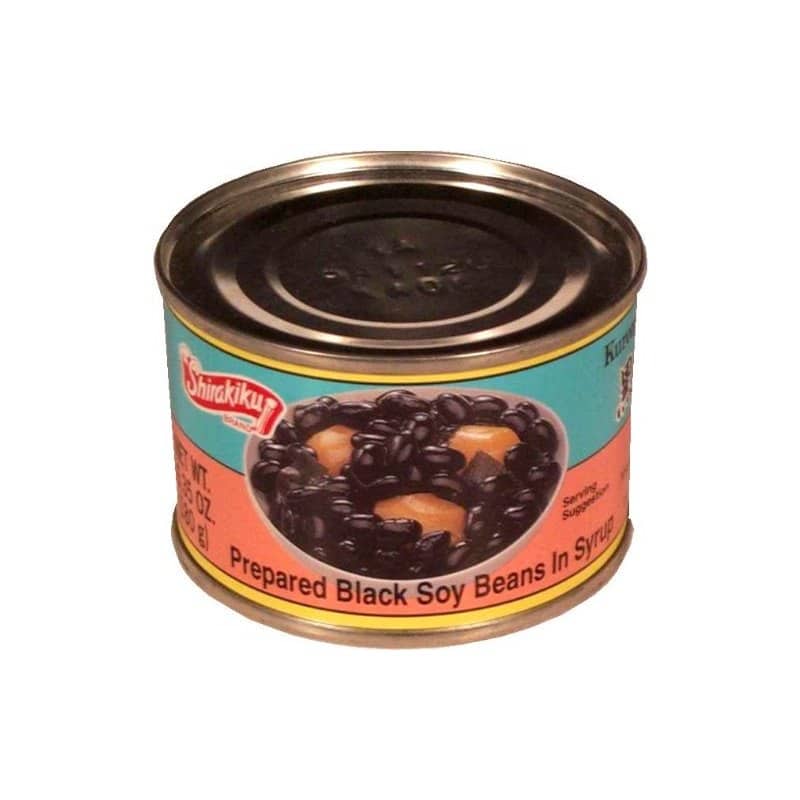
Proper kuromame takes most of a day. The beans soak overnight, then simmer for hours, and they wrinkle if the heat jumps. That is why many Japanese households buy them ready-made, and there is no shame in it. The Shirakiku Kuromame Takarani pack holds black soybeans already simmered in syrup. They are made in Japan and ready to spoon into a small dish. Warm them gently or serve them at room temperature. Then thread three onto a pine-needle skewer, the old way. Alternatively, set them beside the rolled omelet for color. One pack serves a small family across the first three days, which is exactly how osechi is meant to work.
Gold, red and white
Color carries meaning across the boxes. Kurikinton is a golden mash of sweet potato with candied chestnuts folded in. Its name hints at gold, and its color wishes for wealth in the coming year. Children tend to finish it first, so many families make a double batch. It is also the sweetest bite in the set.
Kamaboko is steamed fish cake, sliced and laid in alternating red and white pieces. Together, the two colors are a classic pairing for celebration. The red half-moon shape also recalls the first sunrise of the year. Next to it, you will often find kohaku namasu, thin strips of daikon and carrot in a sweet vinegar dressing. It brings the same red and white, plus a sharp, clean note between richer bites.
Rolled for learning
Two rolled dishes wish for study and success. Datemaki is a sweet omelet mixed with fish paste, baked or cooked slowly and rolled while warm. Its spiral recalls an old scroll, the shape of books and important papers. Kobumaki rolls kelp around a small piece of herring and ties it with gourd ribbon. Kobu echoes yorokobu, the word for joy, so the roll wishes for a happy year.
From the sea
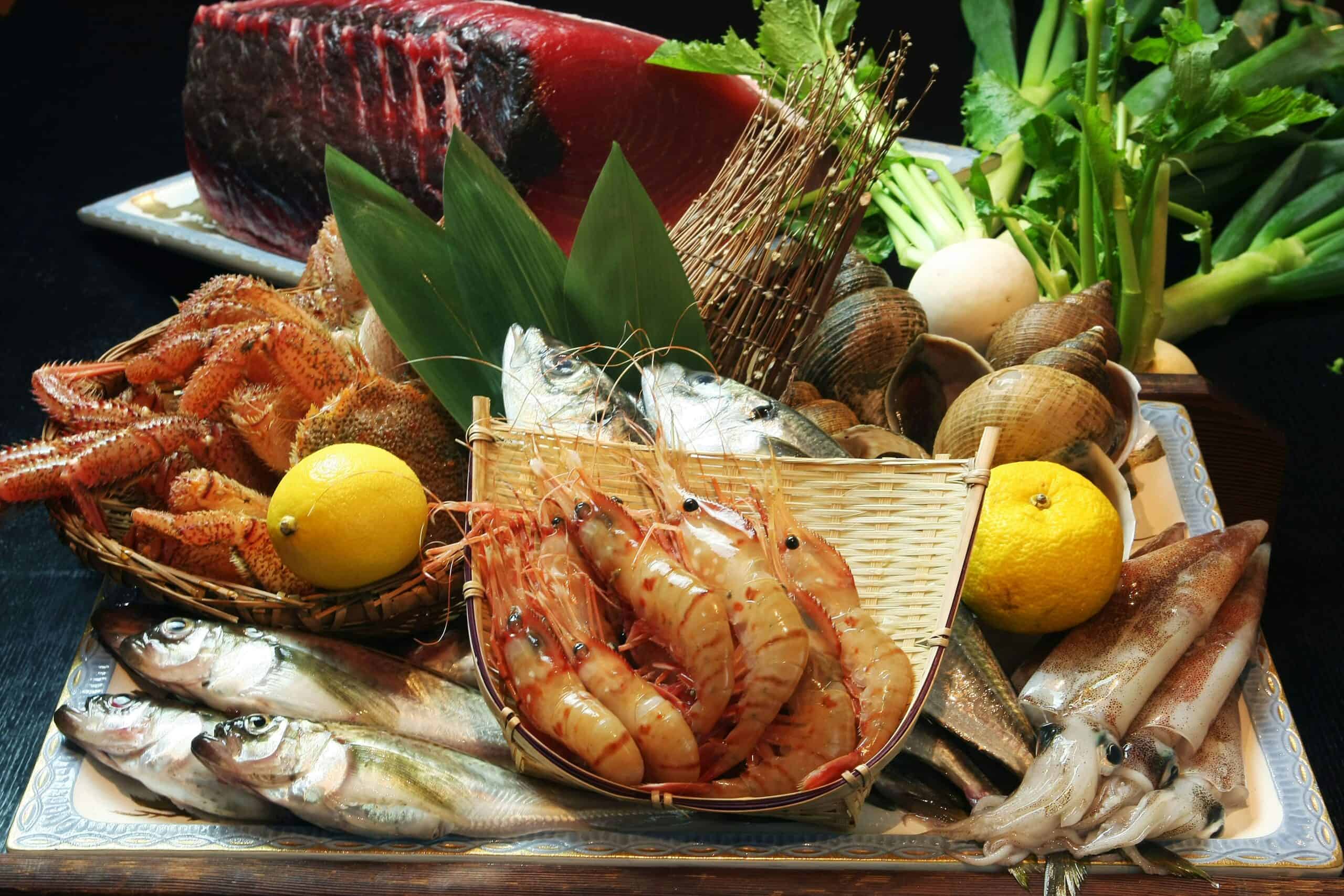
Shrimp appear in nearly every set. Their curved backs suggest old age, so they wish for a long life. A whole grilled sea bream, or tai, often crowns larger sets, because tai echoes medetai, the word for joyful. Finally, nishime gathers simmered vegetables in one tier. Lotus root, with its holes, is said to give a clear view of the future.
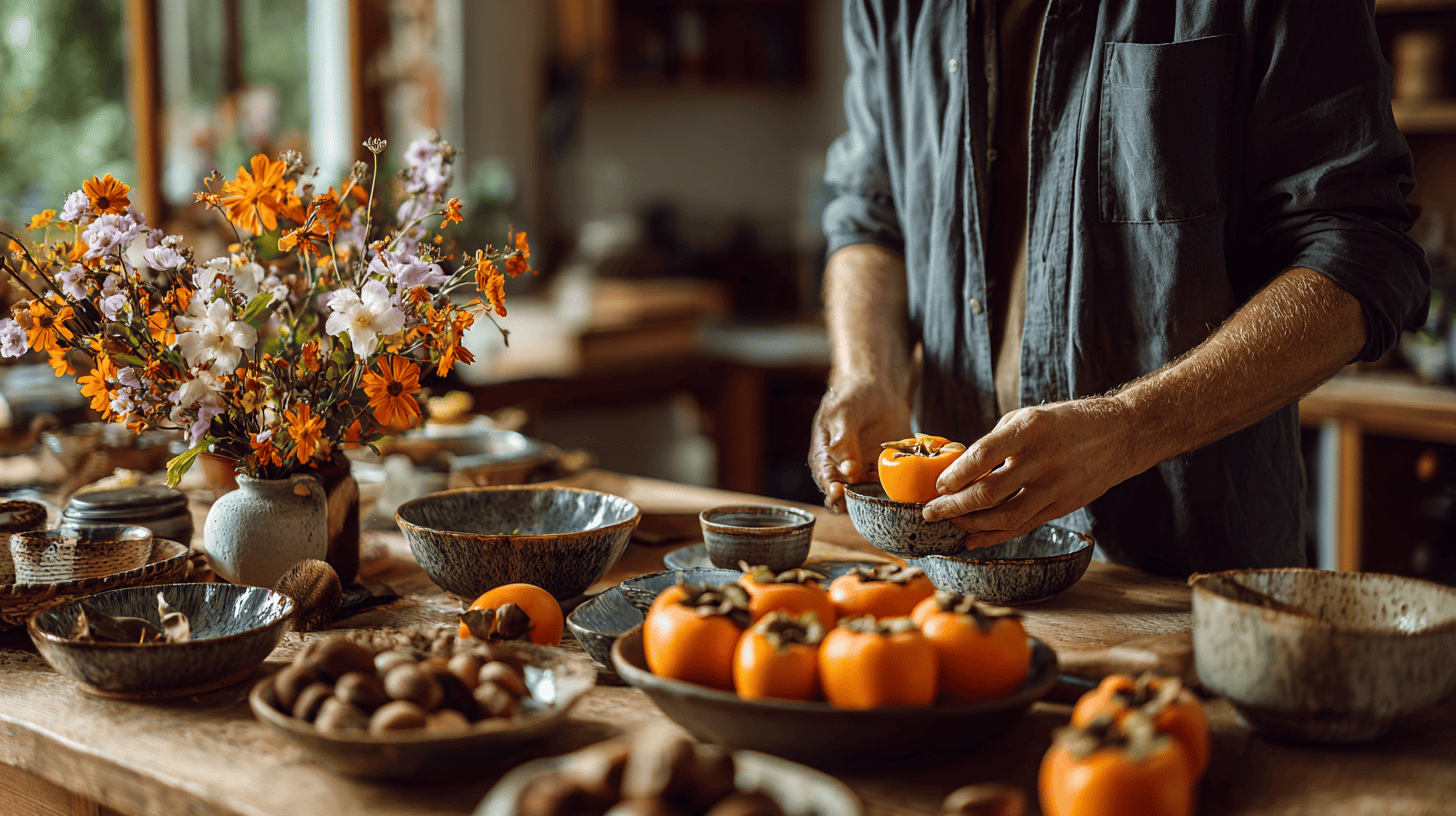
Before you cook, it helps to know where the effort goes. Kuromame and kobumaki take the longest, mostly in slow simmering. Kurikinton and namasu are quick. Kamaboko is almost always bought. Datemaki sits in the middle: one hour of work, and it looks like the most impressive piece in the box. That is why it is the dish we suggest making first, and why the recipe below focuses on it. With one homemade centerpiece, a few bought dishes look entirely at home beside it.
How to Make Datemaki at Home
Datemaki is the dish that convinces people they can make osechi. It needs eggs, a little hanpen, which is a soft, airy fish cake, and some patience on low heat. Japanese markets in the US stock hanpen in the freezer section. If you cannot find it, puréed white fish or shrimp works in its place.
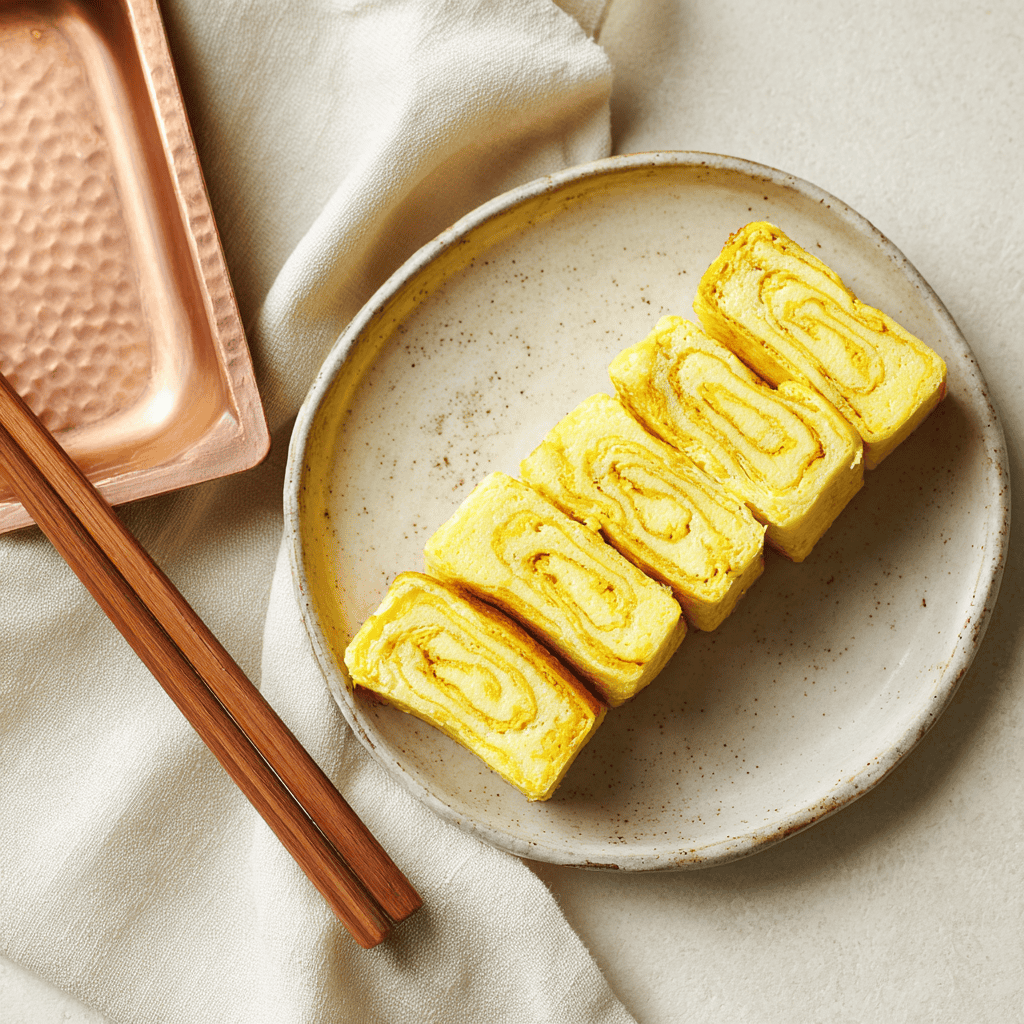
Datemaki — the sweet rolled omelet of the New Year box
Adapted from Kikkoman’s datemaki recipe, this serves two to four as part of a set. First, mash about two ounces of hanpen with a fork until smooth. Beat four eggs with three tablespoons of dashi, add the hanpen and strain once. Season with three tablespoons of sugar and half a tablespoon of soy sauce. Next, oil the pan, pour off the excess and cool it briefly on a damp towel. Pour in the egg, cover and cook over the lowest heat for about seven minutes. Flip it and cook one more minute. Then set the omelet on wax paper on your mat, browned side down. Roll it away from you, firmly, while it is still warm. Chill it in the wrapping, and slice thick rounds to show the spiral.
Two tools make the roll much easier. The first is a rolling mat, ideally a ridged one, which presses neat grooves into the outside of the omelet. The second is a pan that holds an even, gentle heat, so the base browns without burning. Neither is costly, and both earn their keep the rest of the year for sushi rolls and everyday omelets.
Hasegawa Makisu — a rolling mat that washes clean
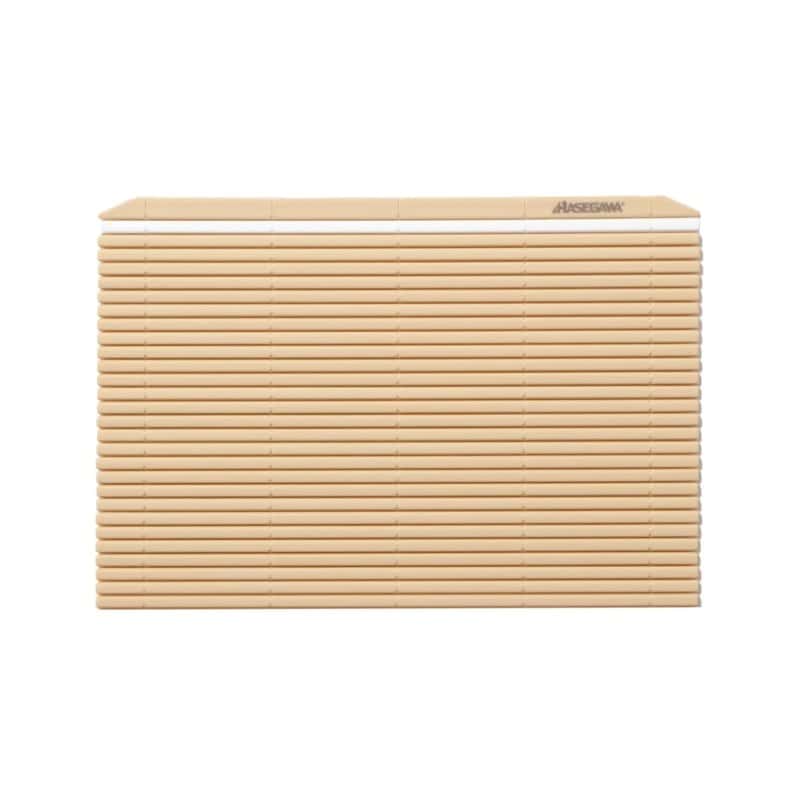
Bamboo mats are traditional, but they trap egg and oil in their strings, and they can crack. The Hasegawa makisu solves both problems. Hasegawa is a Japanese maker of professional kitchen tools. This mat is molded from food-safe plastic in the shape of bamboo slats. It measures about ten by six and a half inches, which suits a home-size datemaki. Because it has no string, you can scrub it in hot water after rolling a sticky omelet. The ridges still press a neat pattern into the surface. Better still, it works just as well for hosomaki, so it will not sit idle after the holiday.
TIKUSAN Copper Tamagoyaki Pan — even heat for a golden base
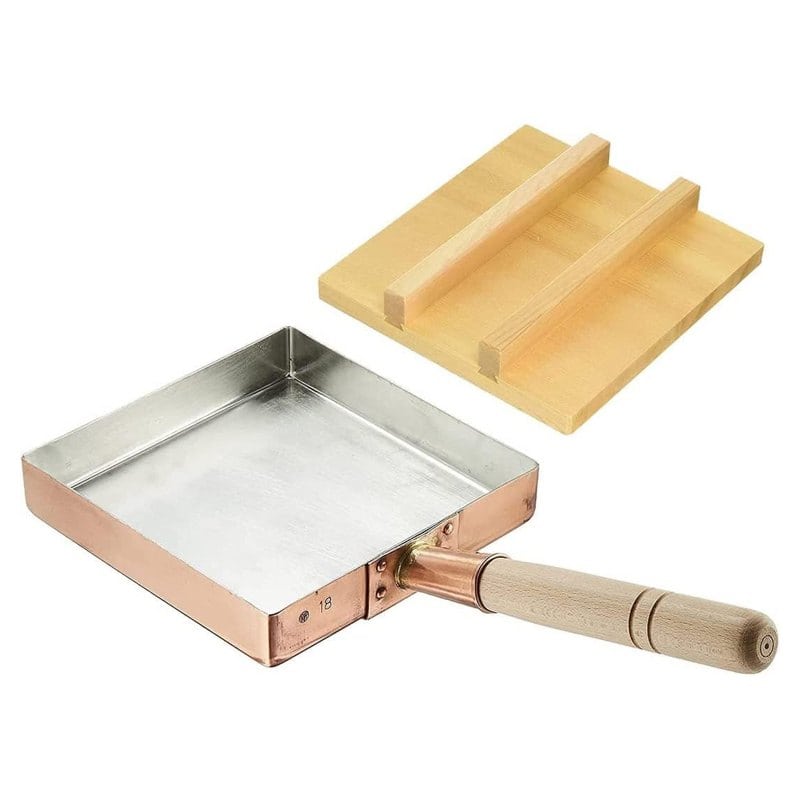
Datemaki burns easily, because the sugar caramelizes fast. Copper helps, since it spreads heat quickly and evenly across the base. The TIKUSAN copper tamagoyaki pan is made in Japan and comes with a square shape and a wooden lid. Its lid matters for this recipe, because datemaki cooks covered over very low heat. Its square shape also gives you straight edges, so the roll looks tidy in the box. Better still, copper responds fast when you lower the flame. After the New Year, use it for dashimaki tamago at breakfast. Copper rewards care, so dry it right away and season it lightly with oil after each wash.
Recommended
Ordering Osechi in Japan
Most families in Japan now order at least part of their osechi ryori. Department stores, hotels, famous restaurants and even convenience stores sell complete sets. The department store catalogs are the most elegant, with sets from Kyoto ryotei and Tokyo hotel kitchens. Orders open in late summer, and the best sets sell out well before December. Would you rather have it all arranged? Our custom Japan itineraries plan the whole holiday around the hotel, the ryokan and the New Year table.
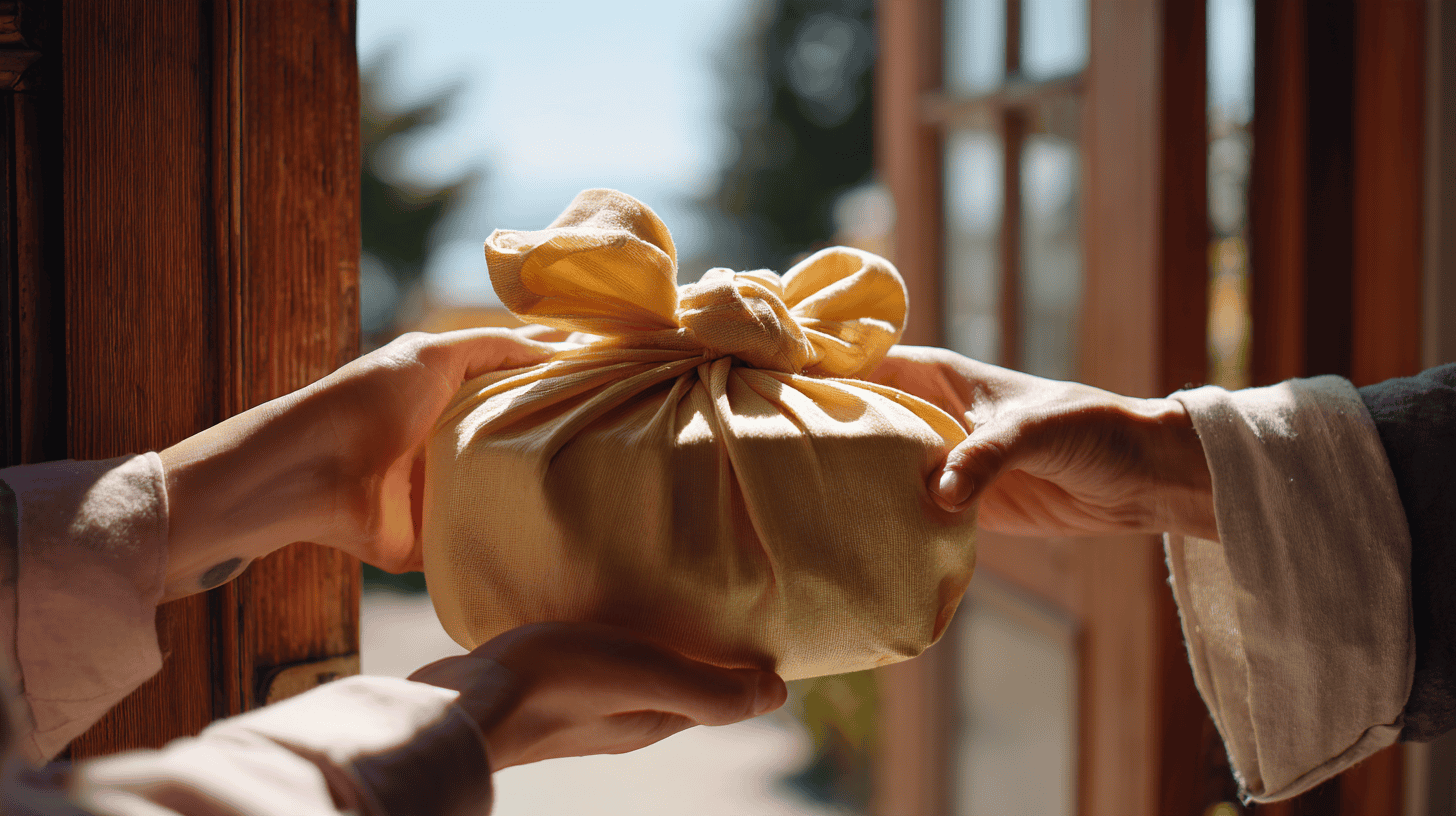
For example, Takashimaya’s osechi order page lists its online window for the 2027 season. Orders run from 10 a.m. on August 19, 2026 to 10 a.m. on December 25, 2026, and some sets are accepted until December 27. Windows vary by set, and stores take their own in-store orders. Most sets are delivered within Japan around December 30 and 31, or collected in store on New Year’s Eve.
For a visitor, the simplest route is the hotel. Many luxury hotels in Tokyo and Kyoto sell their own osechi and serve a New Year breakfast with it. Ask the concierge in autumn, because the hotel sets sell out too. Otherwise, a ryokan stay over the New Year often includes osechi at breakfast, served in the room.
Ten Proverbs to Carry With You
A printable folio of ten Japanese proverbs, each with a short note on where it shows up in daily life. A few suit the first slow morning of a new year. Leave your email and the printable arrives in your inbox, followed by an occasional letter on Japan.
One email with your printable. Occasional letters after that. Unsubscribe anytime.
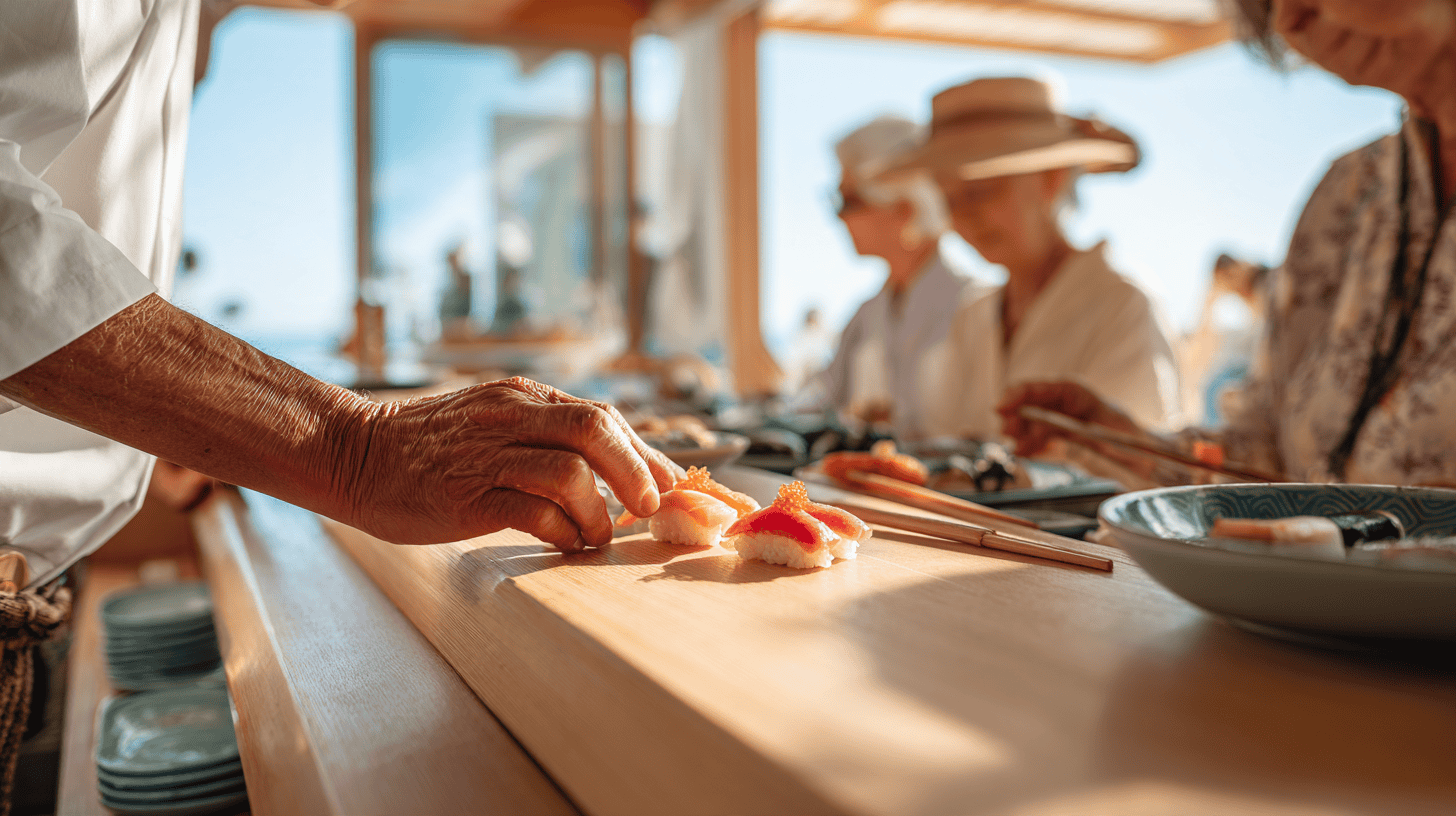
Finally, the food halls. In late December, the basement food floors of department stores fill with single osechi dishes sold by weight. You can buy kuromame from one counter, kazunoko from another, and kamaboko from a third. It is a wonderful way to taste the set without committing to a whole box. Go on the morning of December 30, before the crowds, and bring a small cooler bag. Note too that many stores close on January 1 and reopen with New Year sales on January 2.
Building a Small Osechi Set in the US
You do not need five tiers to celebrate. A good home set of osechi ryori in the US can be three tiers, or even one box, with five or six dishes. Start with the dishes your family is most likely to finish, and keep the rest simple. Choose one or two to make, and buy the rest. Japanese supermarkets help here. For instance, Uwajimaya took online osechi preorders until December 28 for the last New Year. Other Japanese markets run similar programs each December.
You may also like

A practical plan looks like this. Two days before, simmer the black beans or open a good packet, and make namasu, which improves overnight. One day before, make datemaki and kurikinton. Then buy kamaboko, kazunoko and a few cooked shrimp from a nearby Japanese market. Pack everything on the morning of January 1, with leaves or paper cups between the dishes. Our guide to Japanese cooking tools covers the pans, knives and mats that make the work easier and faster.
Washoku by Elizabeth Andoh — the home cook’s reference
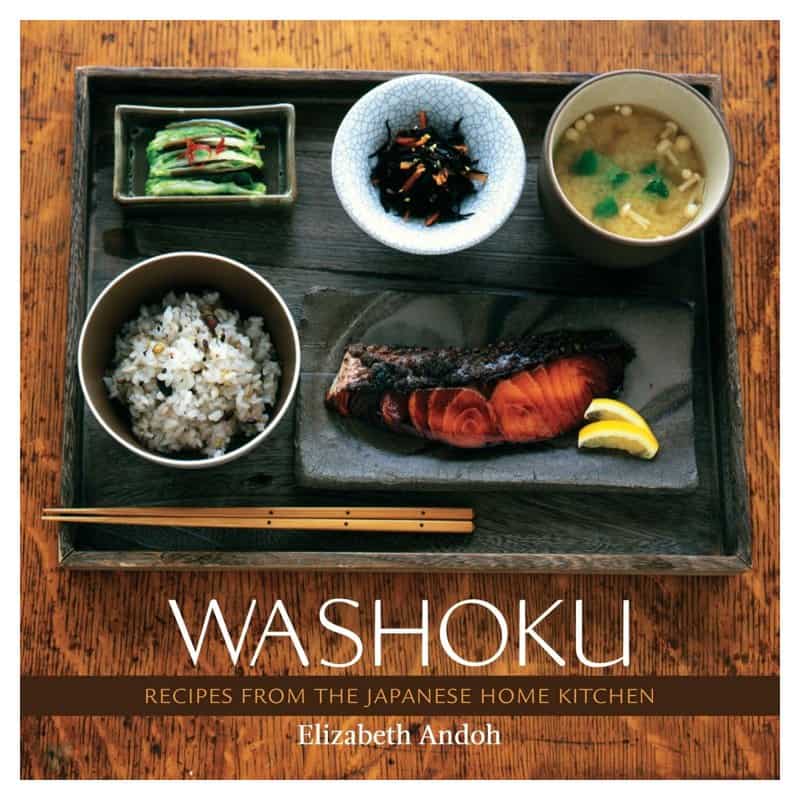
Osechi grows out of everyday Japanese home cooking, so the best preparation is a grounding in that cooking. Elizabeth Andoh has written about Japanese home cooking for decades. Her book Washoku: Recipes from the Japanese Home Kitchen is her fullest guide to it. She explains dashi, simmering, vinegar dressings and seasonal thinking with real care. Those are exactly the skills behind kuromame, nishime and namasu. The book also takes the time to explain why a dish is made the way it is. As a result, you finish it able to improvise rather than simply follow steps. Keep it beside the stove from December onward.
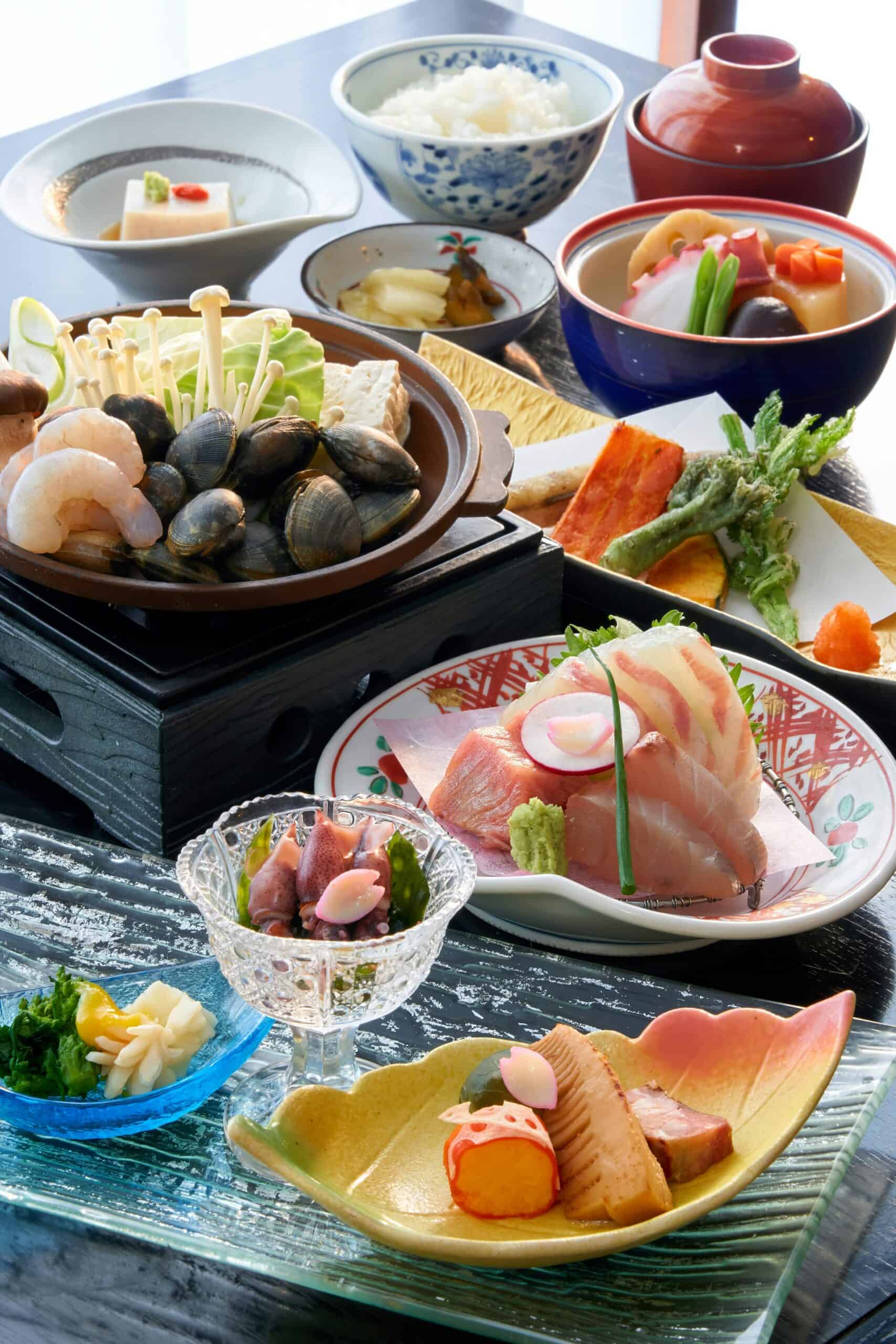
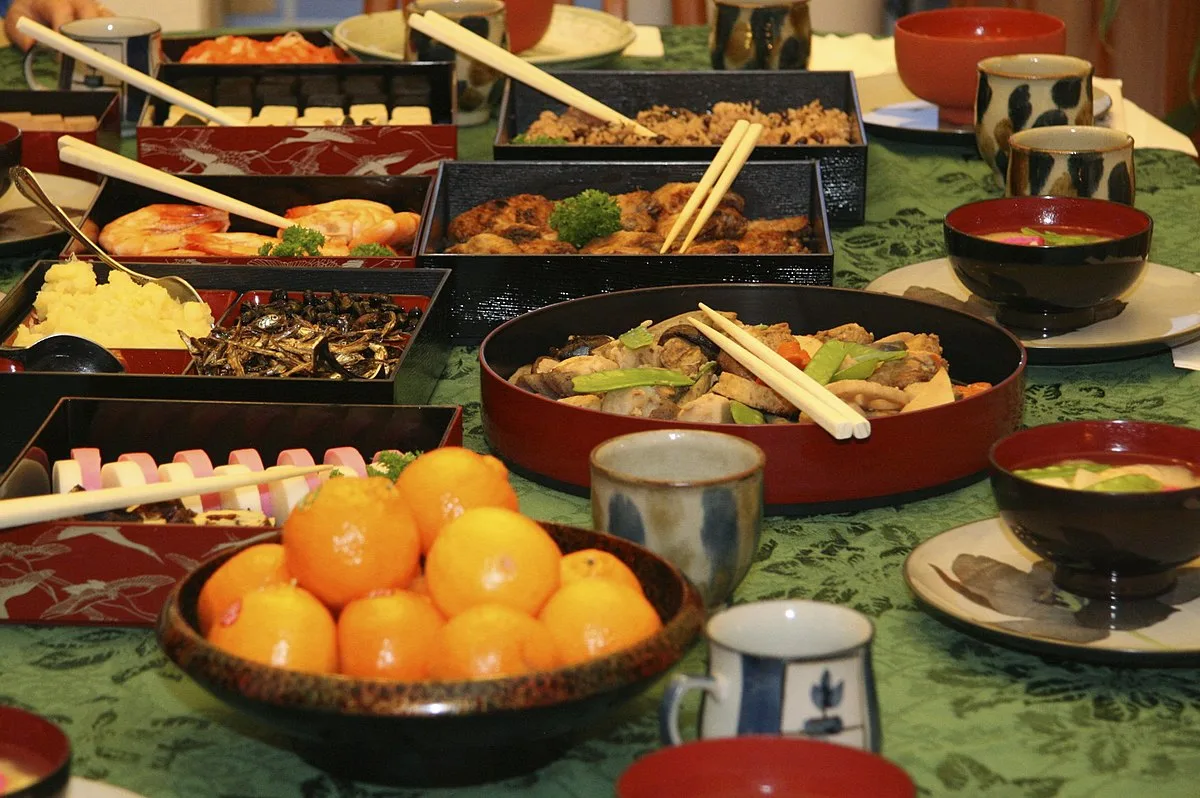
A few small touches make a home set feel like the real thing. Serve it on January 1, at breakfast or a late brunch, rather than on New Year’s Eve. Use your best chopsticks, ideally a fresh pair. Put out a dish of mandarins on the side. Then let everyone take a little from each tier rather than filling a plate. The rhythm should be slow and sociable, with tea, conversation and second helpings. Then on January 2, the leftovers become lunch, and the boxes empty slowly.
Ozoni and the Rest of the New Year Table
The boxes rarely appear alone. On January 1, most families serve ozoni, a soup with soft mochi rice cakes. Its style changes across the country. As the dashi maker Kayanoya explains, Tokyo-style ozoni uses square mochi in a clear broth. Kyoto-style ozoni uses round mochi in white miso.
A word of care with mochi. It is very sticky and can be hard to swallow. So cut it into small pieces for children and older guests. Eat it slowly, with plenty of broth. Meanwhile, the night before brings its own dish. Many families eat toshikoshi soba on New Year’s Eve, long buckwheat noodles for crossing into the new year.
Yamanaka Lacquerware Zoni Bowl — a lidded bowl for the New Year soup
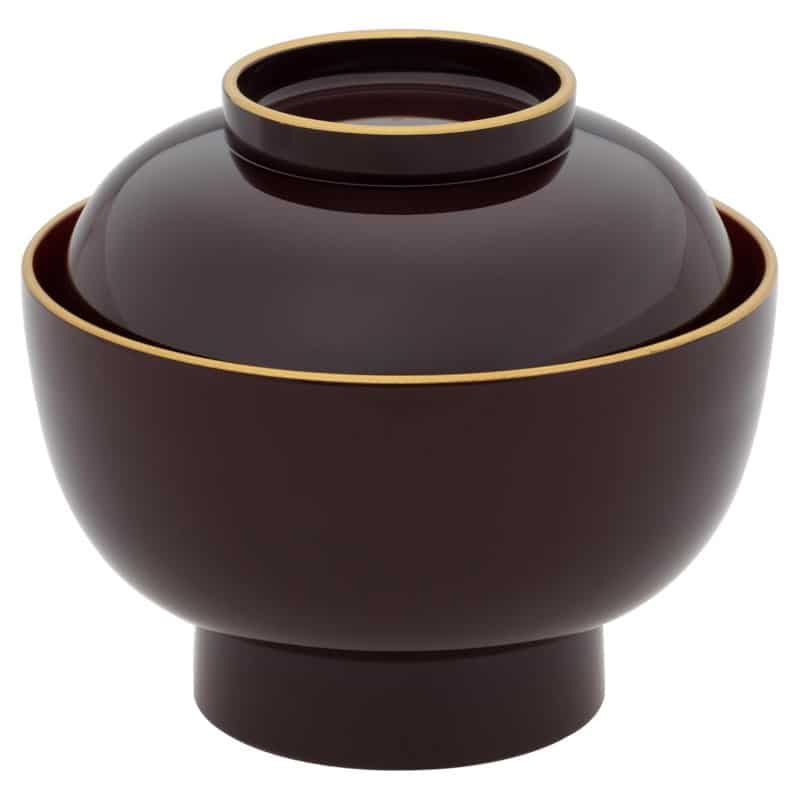
Ozoni is served in a lidded bowl, and lifting the lid is part of the ritual of the morning. Steam rises, and the clear broth catches the light. This Yamanaka lacquerware zoni bowl comes from Yamanaka in Ishikawa. The town is one of Japan’s best-known centers for lacquered tableware. It pairs black and red with a gold design, the same palette as the osechi boxes. It is resin, so it handles the dishwasher. However, keep it away from the microwave and the oven. Buy one for each guest, and the table instantly reads as a Japanese New Year. Then use them for miso soup and clear dashi broths all winter.
Around the food, a few customs complete the morning. Families exchange New Year greetings before the first bite, using a set phrase that wishes everyone well for the year ahead. Children receive otoshidama, small envelopes of money from relatives, and open them right away. Later, many people take a walk, visit friends or watch the first sunrise from a hill or the coast. Visiting a Japanese home? Our guide to Japanese etiquette covers chopsticks, toasts and the polite phrases around a meal.
You may also like
The days after January 1
The second and third days of January move at a gentler pace, and the table stays at the center. Families finish the boxes, visit relatives and take long walks. Some return to work early, but many offices stay closed until January 4. Meanwhile, the department stores reopen on January 2 with their famous New Year sales and lucky bags. So if you are in Japan for the holiday, keep the first day for the table, and save the shopping for the second.
If you travel to Japan over the New Year, plan around the holiday closures right from the start. Many shops, museums and restaurants shut from January 1 to 3. Hotels, ryokan and food halls are the exceptions, and they lean into the holiday with special menus. Book a ryokan early, ideally by late summer, because New Year rooms fill fast. Then let the boxes, the soup and the slow mornings set the pace of your trip, the way Japanese families do.
A new year invites a look back at what broke and what mended. Kintsugi, the art of repairing with gold, turns that look back into a 90-day practice. Each day brings one short prompt. Choose the digital edition for a tablet or the paperback for ink and paper. It is one of eight journals in the Cultural Reflection Collection, each built on a Japanese idea.
View The CollectionWhy Osechi Ryori Is Worth the Effort
Osechi ryori asks a lot of the cook in late December, and then it gives everything back. For three days, the kitchen rests, and the family eats together from the same boxes. Each bite carries a small wish: health, a full house, a good harvest, a long life. Few meals anywhere say so much with so little.
So start small this year. Make one dish, buy a few more, and pack them into a box with care. Lift the lid on the morning of January 1, and you will understand the appeal at once. In time, the set grows with your family, one tradition at a time.



One last thought before the questions. The best New Year in Japan is an unhurried one, spent at a good table rather than rushing between sights. That means a ryokan with an osechi breakfast and a December morning in the food halls. Would you like those choices made for you? Our travel designers can reserve the room, the meals and the restaurant counters. Then they build them into a wider trip around the holiday, so each day has one good table at its center and time to wander in between.
A custom itinerary for the traveler who wants to see in the year the Japanese way. It is built around an osechi breakfast at a ryokan and a December morning in the Tokyo food halls. Hotels are chosen for their New Year menus, and every holiday closure is planned around.
Plan Your Custom Japan ItineraryQuestions Worth Asking
What does osechi ryori mean?
Osechi ryori means the food of the seasonal festival days. The word comes from sekku, the old festival days of the calendar, of which the New Year was the first. Today it refers only to the New Year set of small, symbolic dishes packed in tiered boxes.
When do you eat osechi?
Families eat osechi from the morning of January 1, usually with ozoni soup. They keep eating it through the first three days of the year. The dishes are ready by December 31 and designed to keep, so nobody cooks during the holiday.
What are the main osechi dishes?
The core osechi ryori dishes are kuromame black beans, kazunoko herring roe, tazukuri sardines and datemaki rolled omelet. Kurikinton, red and white kamaboko, kohaku namasu, kobumaki, shrimp and nishime complete most sets. Many families add their own favorites.
Why is the bottom tier of a jubako left empty?
In the classic five-tier set, the bottom box stays empty to leave room for good fortune still to come. Most modern sets have only three tiers, and all of them are filled. Still, the idea of fortune stacking up, layer on layer, remains part of the meaning.
How do you order osechi in Japan?
Order through a department store, hotel or restaurant, usually between late summer and late December. Takashimaya’s online window for the 2027 season runs from August 19 to December 25, 2026. Sets are delivered within Japan or collected in store on December 31.
Can you buy osechi in the US?
Yes. Japanese supermarkets such as Uwajimaya take osechi preorders in December, and many sell single dishes such as kamaboko and kuromame. You can also build a small set at home. Make one or two dishes, such as datemaki, and buy the rest.
The Editors, Magnificent Japan