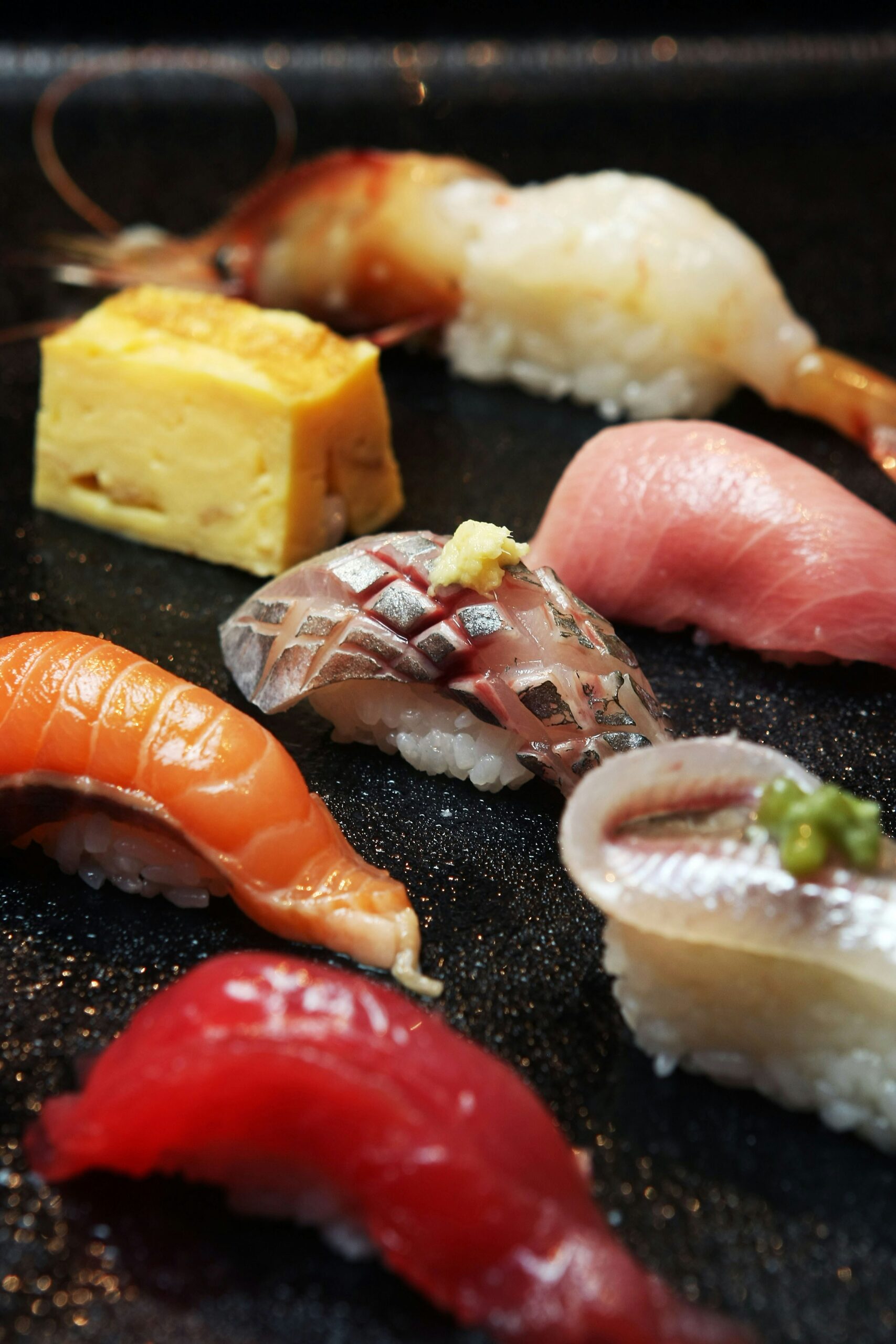
Sushi and sashimi share a counter, a knife and a fish market, so visitors often treat them as one dish. They are not. Sushi is built on seasoned rice, while sashimi is the fish alone, sliced and served with care. Each has its own history and its own manners at the table. Knowing both turns a meal in Japan from a guess into a conversation with the chef.
Below, you will see how a method for keeping fish became Edo street food. You will also see where the word sashimi came from. It closes with a simple roll to make at home. For the wider table, our guide to traditional Japanese dishes is a good companion.
Sushi is any dish made with vinegared rice, topped or rolled with fish, egg or vegetables. Sashimi is sliced raw fish or seafood served on its own, without rice. So a slice of tuna on rice is sushi, while the same slice on a plate is sashimi.
Sushi and Sashimi: The Short Answer
The word sushi refers to the rice, not the fish. Sushi rice is seasoned with vinegar, sugar and salt, and that rice is what makes a dish sushi. The topping can be raw fish, cooked eel, omelet or cucumber. Sashimi, by contrast, is the fish itself. It is sliced with a long knife and served with soy sauce, wasabi and a garnish, but never with rice. In short, sushi and sashimi are cousins, not twins.
The Difference Between Sushi and Sashimi
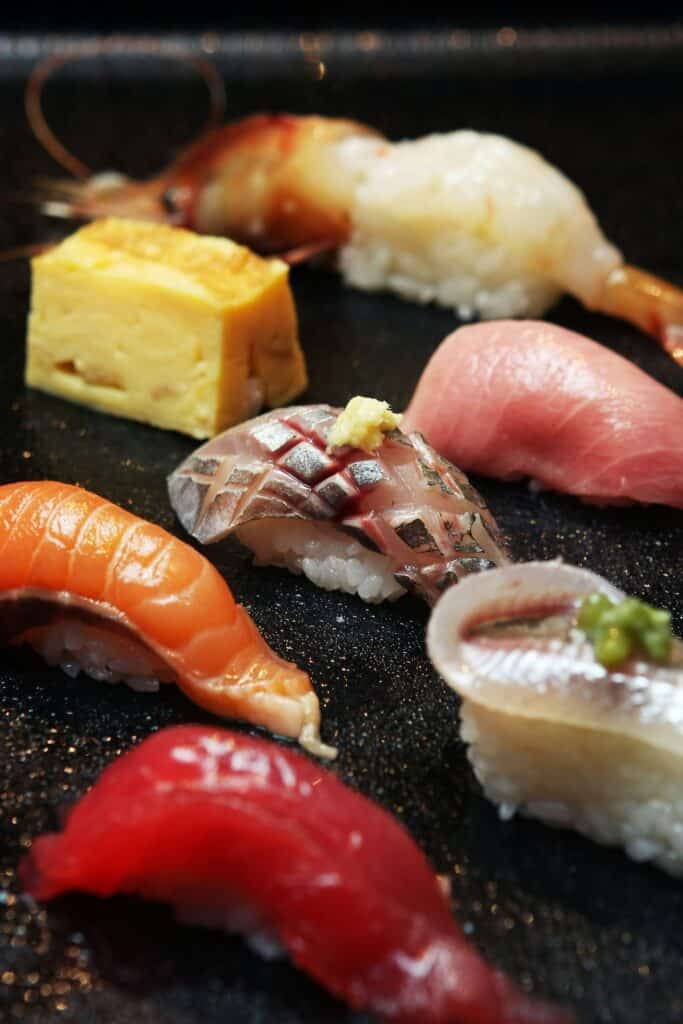
The clearest difference between sushi and sashimi is the rice. Beyond that, the two differ in temperature, seasoning and even in what the chef wants you to taste. Sushi rice is served close to body heat, so the fat in the fish softens slightly. Sashimi, meanwhile, arrives cool, on a chilled plate with shredded daikon and a shiso leaf.
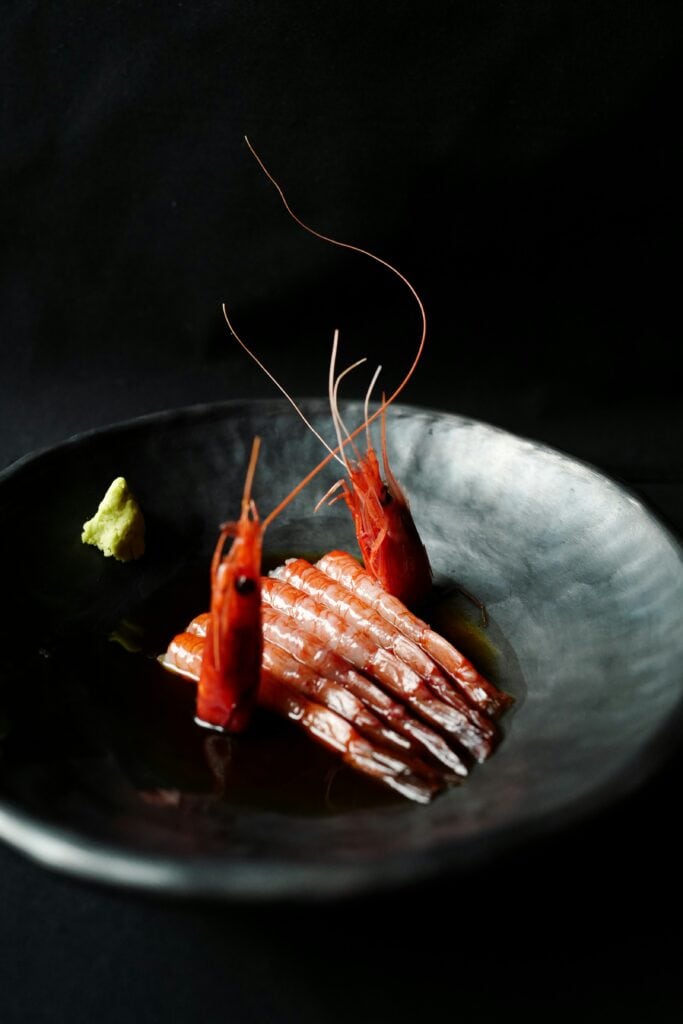
Seasoning differs too. With sushi, the vinegar in the rice already seasons the bite, so a light touch of soy sauce is plenty. With sashimi, however, the soy sauce and wasabi do more of the work. A chef may also serve ponzu, a citrus soy, with white fish or octopus. Finally, sushi is often eaten by hand, while sashimi is always eaten with chopsticks.
| Sushi | Sashimi | |
|---|---|---|
| Base | Vinegared rice | None |
| Topping | Raw or cooked fish, egg, vegetables | Raw fish or seafood |
| Eaten with | Fingers or chopsticks | Chopsticks only |
| Served | Near body heat | Cool |
Is Sushi Japanese? From Fermented Fish to Edo Street Food
Visitors often ask is sushi Japanese, or did it arrive from elsewhere? The answer has two parts. The oldest idea behind it, packing fish in rice so the rice ferments and preserves it, was known across Asia. Yet the sushi served in Tokyo today, with fresh fish on seasoned rice, is a Japanese invention. It took shape in Edo, the city now called Tokyo, in the early nineteenth century.
Narezushi, the slow beginning
The early form is called narezushi. Fish was salted, then packed in cooked rice for months while lactic acid did its work. The rice was usually thrown away, and only the sour fish was eaten. One version survives today. Funazushi, made from crucian carp caught in Lake Biwa, has been served in Shiga since the Heian period. That is according to a Japan Tourism Agency description. It is strong, sharp and an acquired taste.
Vinegar, speed and Edo
Over the centuries, cooks shortened the wait. They ate the rice along with the fish, then began adding vinegar so they could skip fermentation entirely. The decisive step came in Edo. According to Mizkan’s history of sushi, a vinegar made from sake lees was shipped to Edo from about 1810. Then a young cook named Hanaya Yohei, born in 1799, began selling hand-pressed nigiri from a stand around 1828.
Nigiri was fast food for a busy city. Fish from Edo Bay went onto vinegared rice and into a customer’s hand within minutes. That is why the style is still called edomae, meaning in front of Edo. So is sushi Japanese? In its modern form, unmistakably. Moreover, Japan’s whole food culture, washoku, was added to the UNESCO list of intangible cultural heritage in 2013.
You may also like
The History of Sashimi
The history of sashimi runs on a separate track from sushi. Japanese cooks served sliced raw fish dressed with vinegar, a dish called namasu, long before nigiri existed. The word sashimi itself appears in the Muromachi period, between the fourteenth and sixteenth centuries. A Yamaguchi University fisheries paper notes that aristocrats and samurai then began eating sliced raw fish. They dipped it in only salt or vinegar.
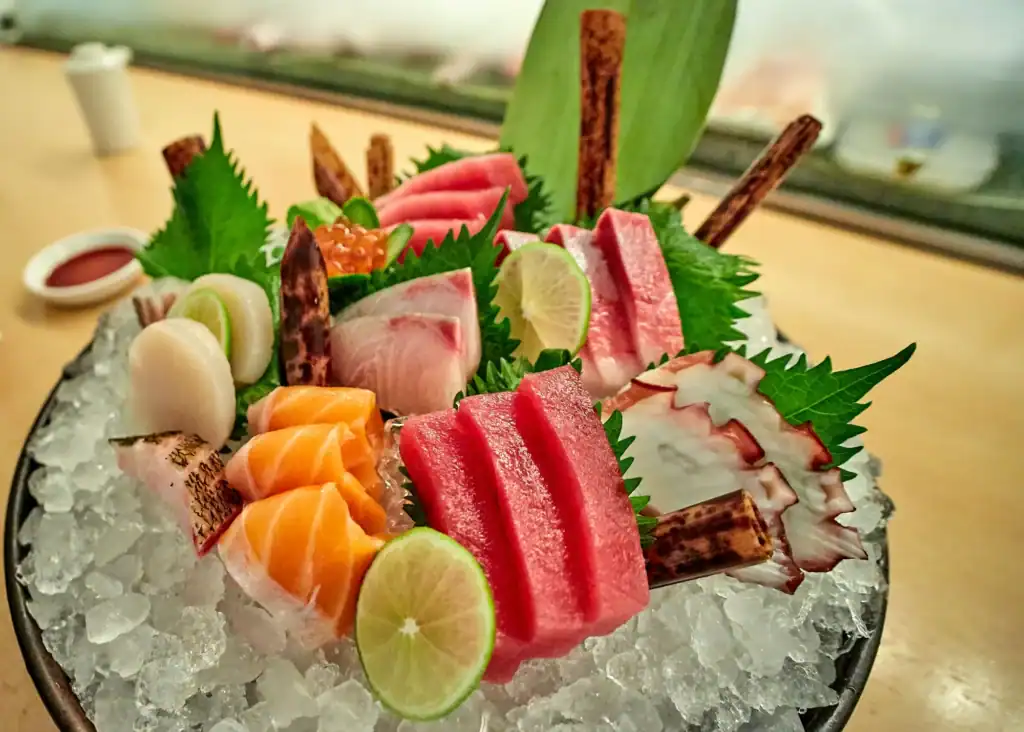
The name is curious. Sashi means to pierce and mi means body or flesh. One common explanation is that kiru, to cut, sounded like an ill omen in a warrior household, so cooks chose a gentler word. Another holds that a fin was pinned to the slices to show which fish they came from. Neither theory is proven, but both point to a dish served with ceremony.
Soy sauce changed everything. Once it became widely available in the Edo period, it replaced the older vinegar dressings. Sashimi then moved from feast tables to city restaurants. In other words, the history of sashimi is a story of better seasoning and faster transport. Fresh fish could finally travel from the coast to the city before it spoiled, and diners came to expect it.
The Main Styles of Sushi
Order sushi in Japan and you will meet a handful of shapes again and again. Each has its own setting. Nigiri belongs to the counter, while rolls belong to the home and the takeaway box. Chirashi is a bowl for lunch, and pressed sushi is a regional specialty that travels well.
You may also like


Nigiri is a slice of fish pressed onto a small oval of rice, sometimes with a dab of wasabi between them. Maki is rolled in nori with a bamboo mat. Thin rolls, hosomaki, hold one filling, such as tuna or cucumber. Thick rolls, futomaki, hold several. Temaki is a cone of nori that you roll by hand and eat at once, before the seaweed softens.
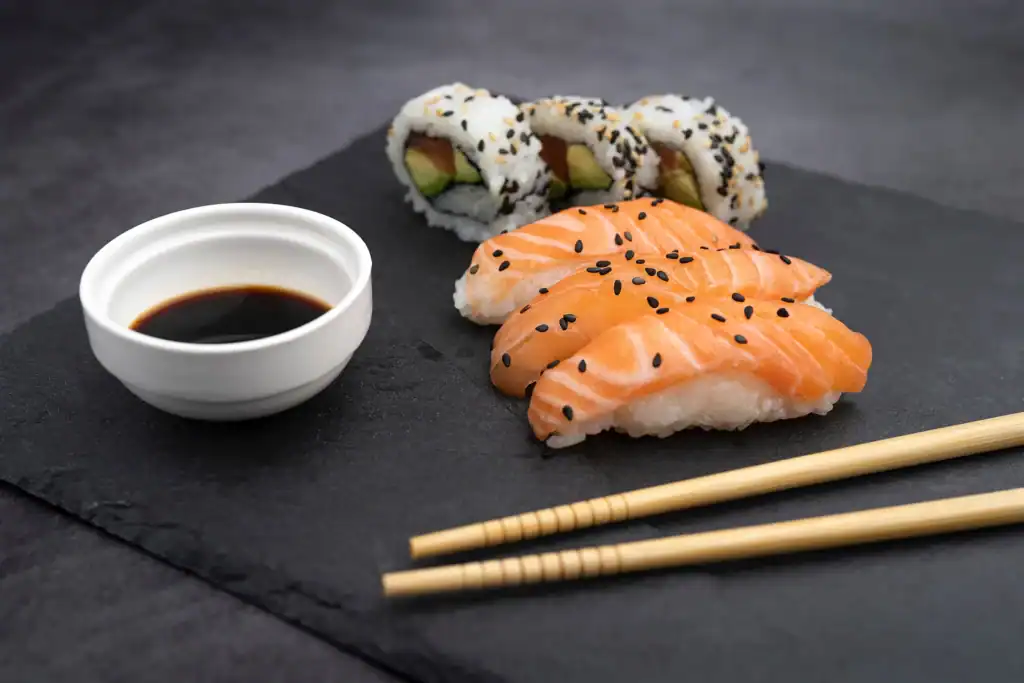
Chirashi scatters sashimi, egg and vegetables over a bowl of sushi rice. Inari fills a sweet fried tofu pouch with rice. Oshizushi, the pressed sushi of Osaka, is layered in a wooden box and cut into neat blocks. Finally, the inside-out roll, uramaki, with rice on the outside, became popular abroad before it reached most Japanese menus.
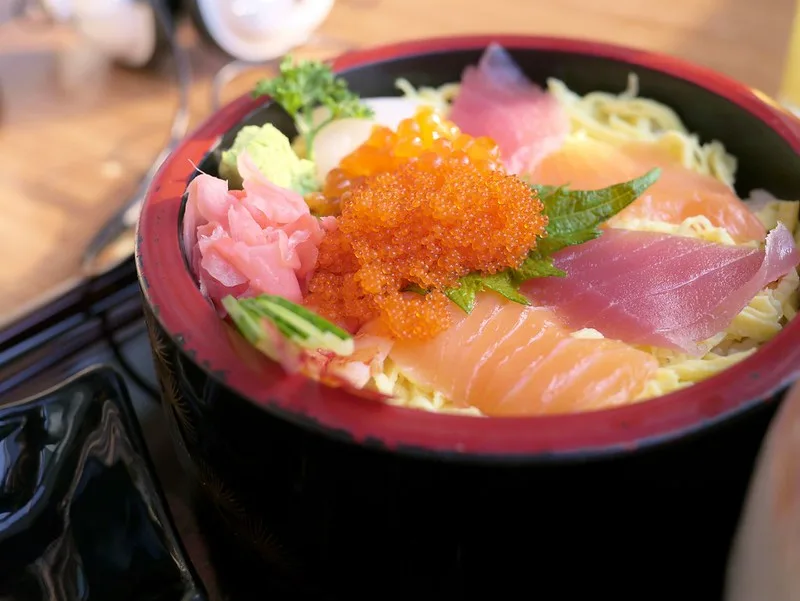
Osaka merchants, by contrast, favored pressed sushi that could be carried and shared. Our guide to Osaka food covers the rest of its table, from takoyaki to the late-night counters.
Sashimi Cuts and the Fish Worth Knowing
Good sashimi is a lesson in knife work. The chef uses a long, single-bevel blade called a yanagiba and draws it through the fish in one stroke. Sawing would tear the flesh. The most common cut, hira-zukuri, gives thick rectangular slices for tuna and salmon. Usu-zukuri, by contrast, gives slices so thin that the plate shows through. It suits firm white fish such as sea bream and fugu.
Tuna leads most menus. Akami is the lean red meat, chutoro is medium fatty, and otoro is the rich belly. Yellowtail, sea bream, scallop, sweet shrimp and octopus follow close behind. Uni, the sea urchin roe, appears in season and is worth ordering when the chef recommends it. Our full guide to the types of sashimi covers each fish in more depth.
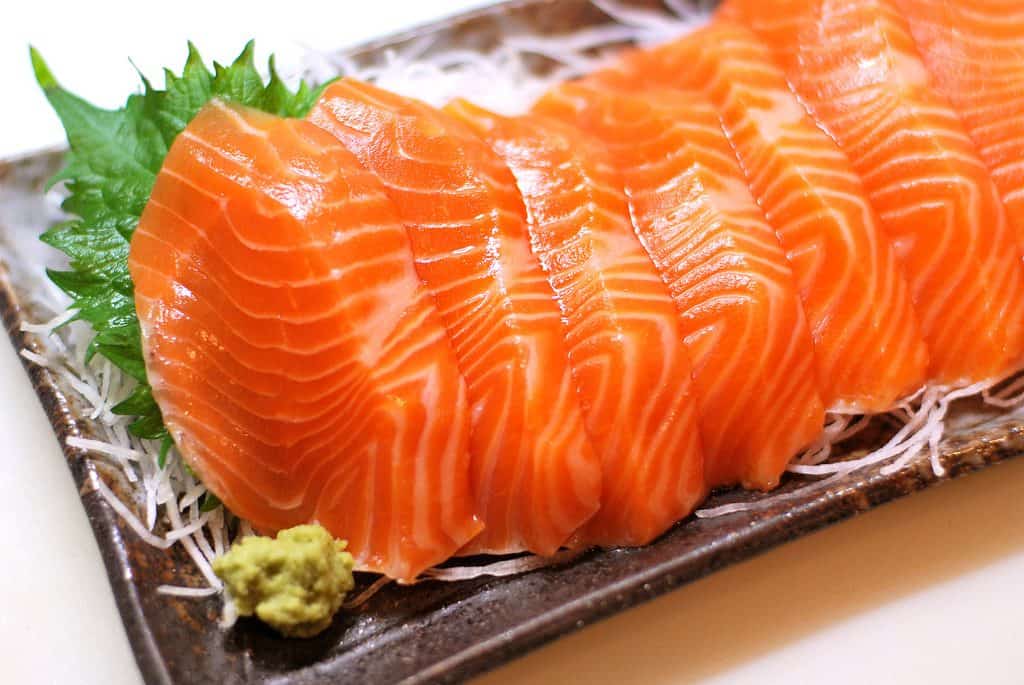
Salmon has a surprising story. Japanese cooks long avoided wild salmon raw, because of the risk of parasites, and served it salted or grilled. Then, in the mid-1980s, Norway began a campaign called Project Japan. It persuaded chefs that farmed Norwegian salmon was safe to eat raw. Today salmon is one of the most ordered pieces in the country. Yet it is younger than many of the diners eating it.
HOSHANHO Sushi Knife — a 10-inch blade for slicing sashimi
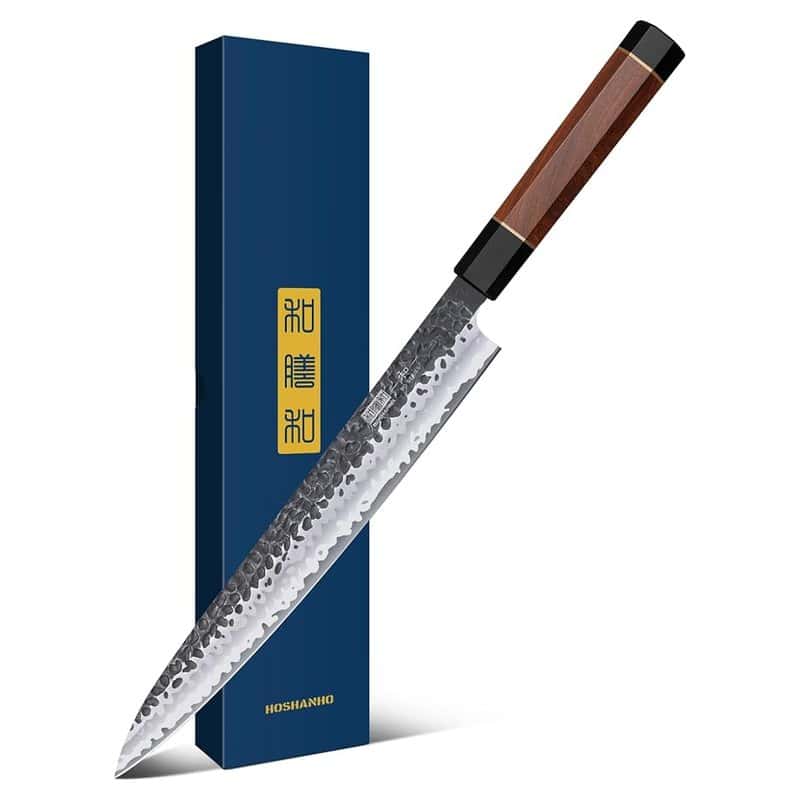
A long, narrow blade is the one tool that changes how home sashimi looks. The HOSHANHO Sushi Knife follows the shape of the yanagiba, with a 10-inch blade that lets you draw each slice in a single pull. That length matters, because a short knife forces you to saw, and sawing leaves ragged edges on tuna and salmon. The rosewood handle sits light in the hand, and the blade arrives sharp enough for thin white-fish slices. Wipe it after each cut with a damp cloth, and dry it straight away. Kept this way, it gives clean, glossy slices for years.
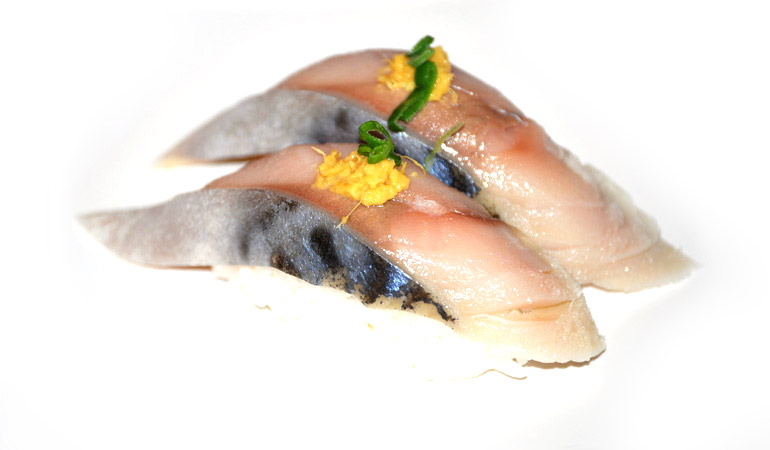
Mackerel and its relatives, the silver-skinned fish called hikarimono, show another side of the craft. Because they spoil quickly, they are often salted and then cured in vinegar before slicing. The result is firm, bright and slightly sharp. At the counter, these pieces tell you a great deal about a chef. A careful cure takes judgement, and regulars often order mackerel first to see how it was handled.
Sushi and Sashimi at the Counter
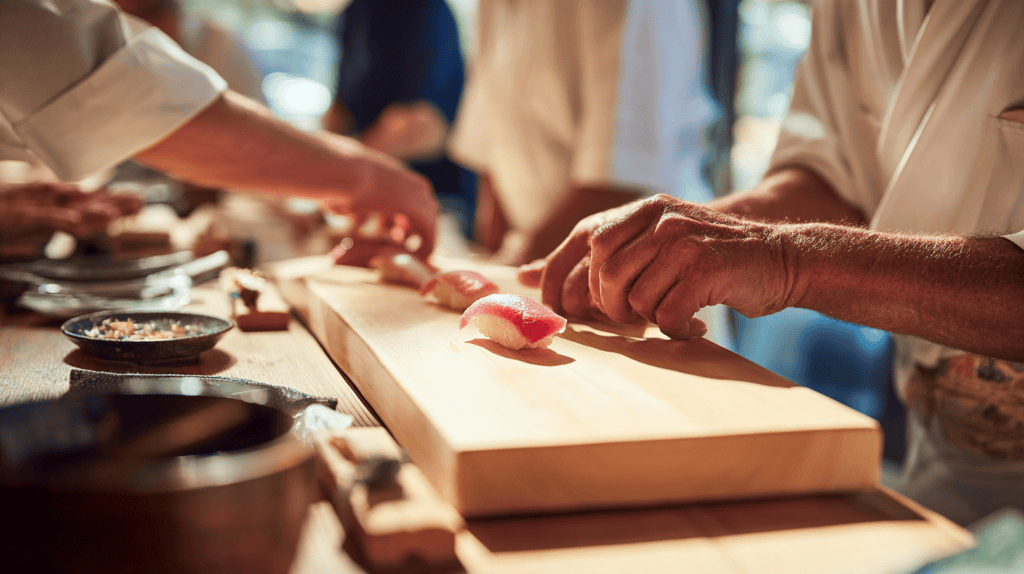
The finest way to eat sushi and sashimi in Japan is at a counter of eight to ten seats. The chef works in front of you and serves each piece the moment it is ready. Many top counters serve only omakase, which means I leave it to you. The chef chooses the fish, the order and the pace. A few small dishes and sashimi usually come before the nigiri begins.
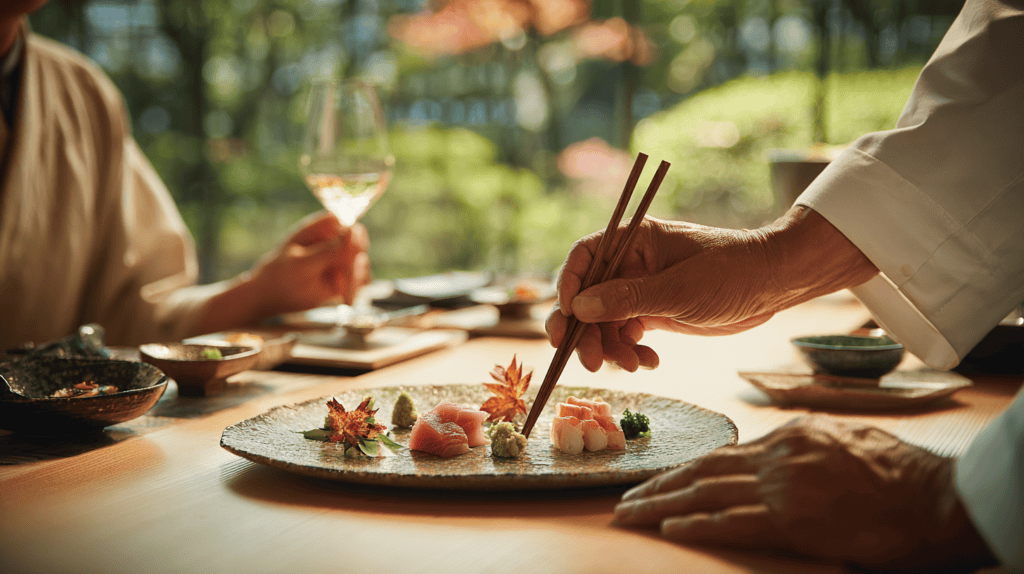
Reservations matter here. The most sought-after counters book out weeks ahead, and many accept bookings only through a hotel concierge or a Japanese-speaking service. At the top level, a dinner often costs several hundred dollars a person before drinks. In return, you get a long sequence of pieces, each seasoned exactly as the chef intends. Arrive on time, because the whole counter usually starts together.
Ordering à la carte, called okonomi, is also possible at many counters. Start with white fish or light pieces, move to richer fish such as fatty tuna, and finish with egg or a roll. Equally, it is fine to ask for a piece without wasabi, or to say that you prefer not to eat something. A good chef would rather adjust than serve a piece you will not enjoy.
Ten Proverbs to Carry With You
A printable folio of ten Japanese proverbs, each set in kanji with its reading and a line on where you will hear it.
Etiquette for Eating Sushi and Sashimi
Hands or chopsticks
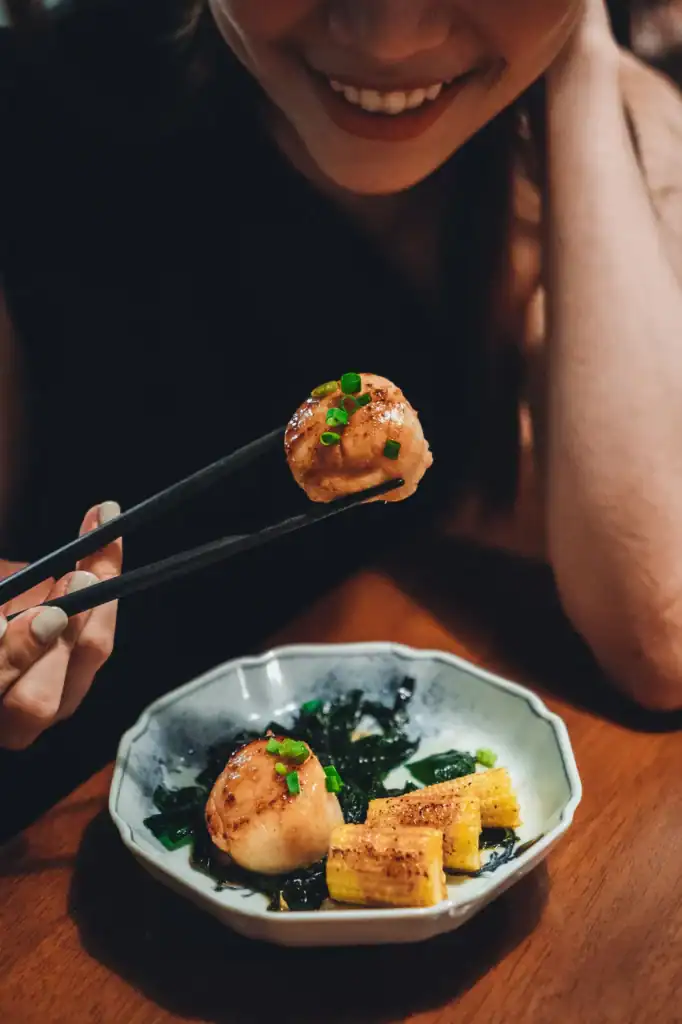
Nigiri may be eaten with clean fingers, and many chefs prefer it, since fingers hold the piece without crushing the rice. Use the hand towel, the oshibori, to wipe your fingers between pieces. Sashimi, on the other hand, is always eaten with chopsticks. Never pass food from one pair of chopsticks to another, and never stand them upright in rice. Both gestures echo funeral customs.
Soy sauce, wasabi and ginger
Pour only a little soy sauce into the small dish. Turn the nigiri on its side and touch the fish, not the rice, to the sauce. Rice soaks up soy sauce, overwhelms the fish and may fall apart. Likewise, avoid stirring wasabi into the soy sauce. The chef has already placed wasabi where it belongs. If a piece arrives glazed or seasoned, eat it as it is.
Ginger is a palate cleanser, not a topping. Eat a slice between different fish, especially after something oily, so the next piece tastes clean. Finally, eat each piece soon after it is served, ideally in one bite. The chef times the rice temperature to that moment. Leaving a piece on the counter while you talk or take photographs is the most common mistake visitors make.

Tipping and thanks
Tipping is not common in Japanese restaurants, as the Japan National Tourism Organization confirms. A tip left on the counter may simply be returned. Instead, thank the chef as you leave, and say gochisosama deshita, a phrase that means thank you for the meal. A sincere word about a favorite piece is the best compliment you can give.
The table matters as much as the kitchen. Small dishes for soy sauce, good chopsticks and a proper board for slicing complete the setting. Porcelain dishes keep each diner’s soy sauce separate, and smooth chopsticks grip slippery fish better than lacquered ones. A hinoki cutting board, meanwhile, is soft on a knife edge and is the wood many Japanese cooks choose for fish. Together, these three pieces turn a home roll into a proper meal. It arrives with the same small courtesies you would meet at a Japanese counter.
Three Pieces for the Home Counter
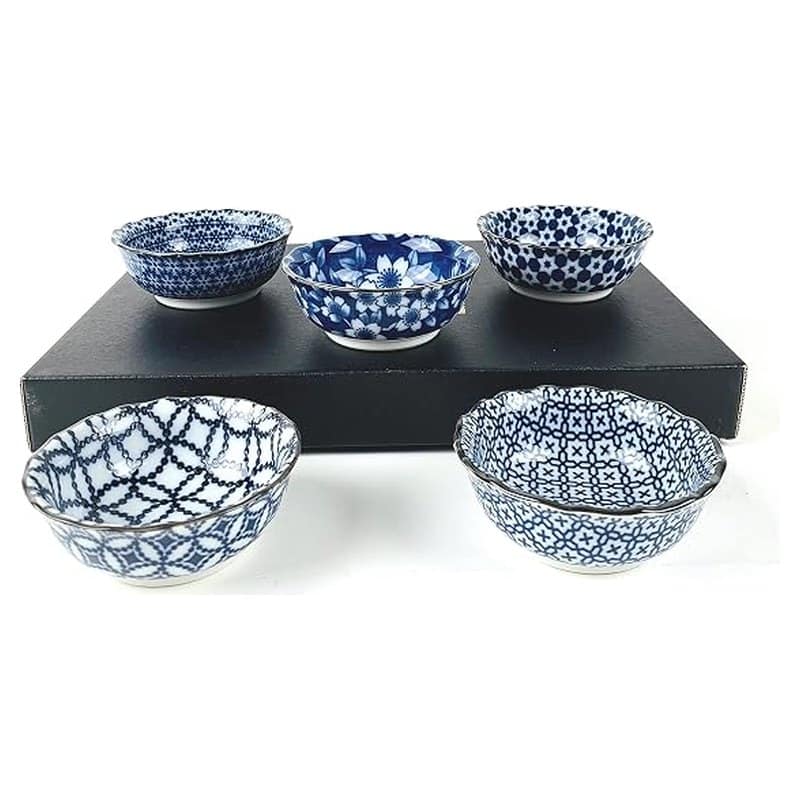
Blue and white porcelain bowls for soy sauce, one for each guest.
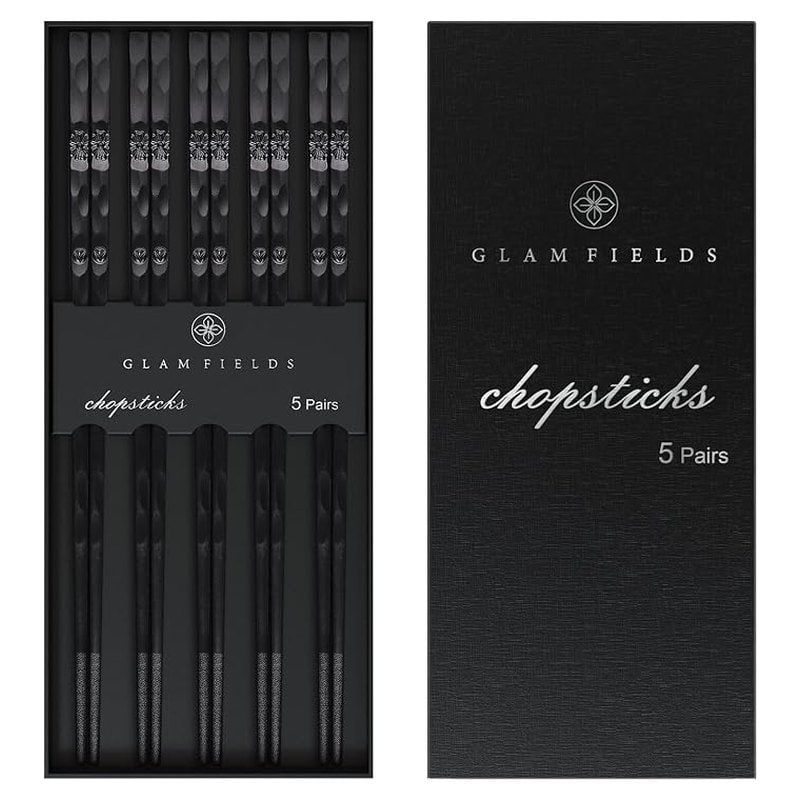
Matte black chopsticks that hold slippery fish without slipping.
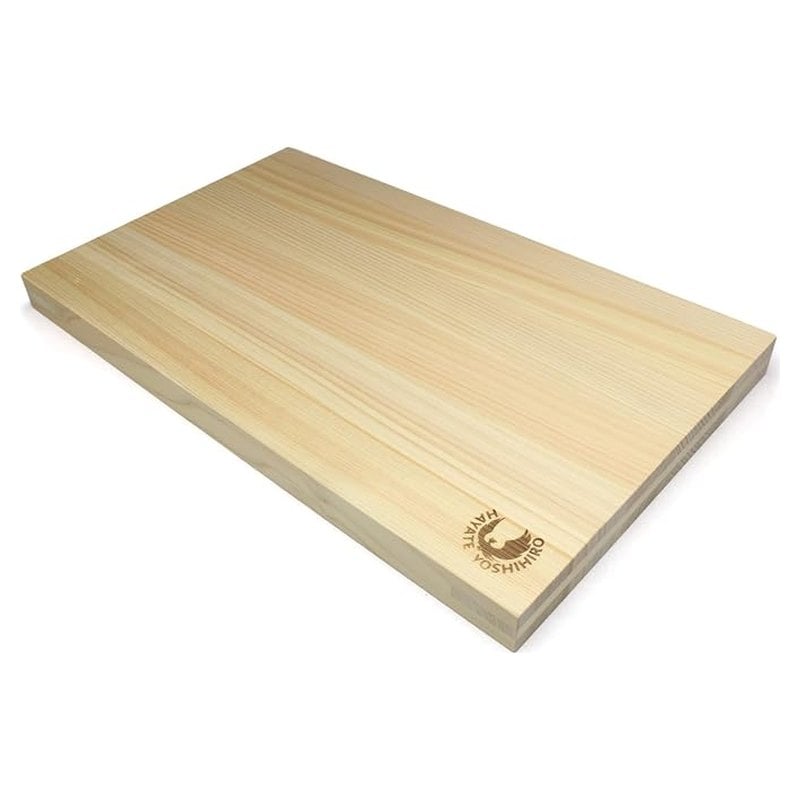
Japanese cypress, gentle on a sashimi knife and lightly fragrant.
Where to Eat Sushi and Sashimi in Japan
Tokyo sets the standard, and its fish market is the obvious starting point. The famous inner market at Tsukiji closed on 6 October 2018, as japan-guide records. Its wholesale trade moved to the new Toyosu Market. Several well-known counters moved with it, including Sushi Dai. Expect a long line at breakfast. Meanwhile, the Tsukiji outer market remains open for shopping and snacks.
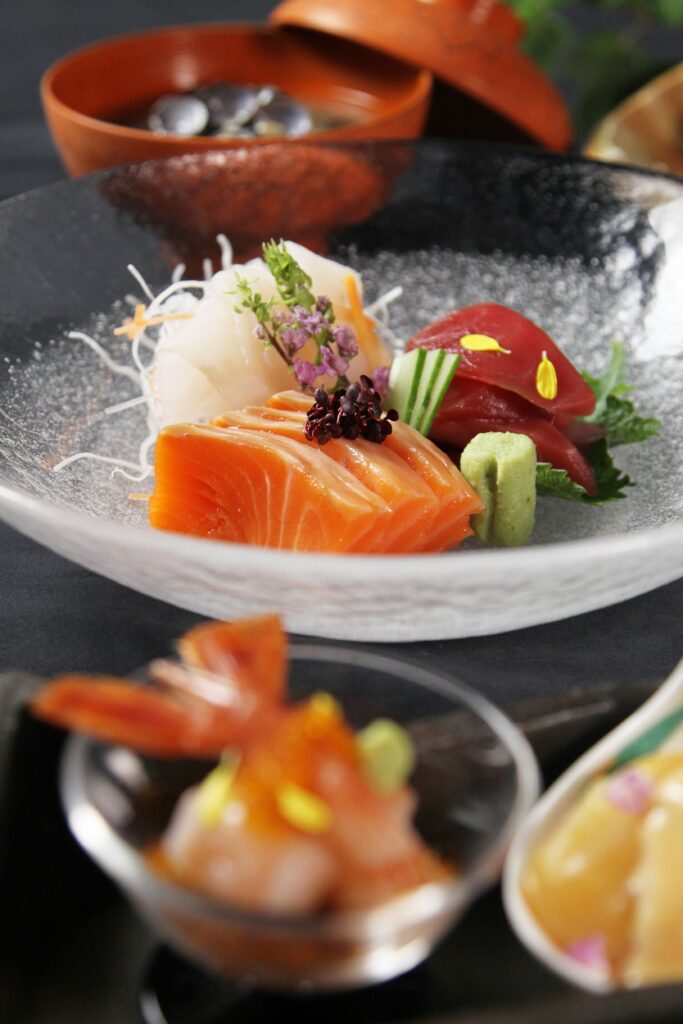
Beyond the markets, Tokyo’s best counters are spread across Ginza, Akasaka and Nishi-Azabu. Our guide to beautiful places in Tokyo suggests where to walk before or after. A sushi lunch is often the better value, since many counters serve a shorter version of the dinner course at midday.
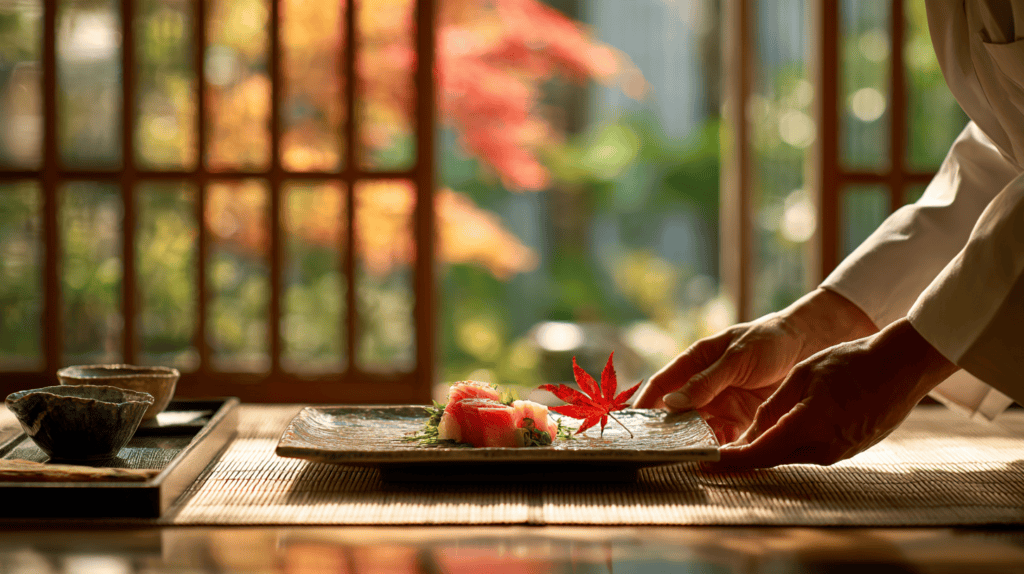
Outside Tokyo, the coast decides what is best. Kanazawa, on the Sea of Japan, is known for winter crab, sweet shrimp and yellowtail, sold through Omicho Market. Our Kanazawa guide covers the market and the craft city around it. In Miyagi, the Shiogama Seafood Wholesale Market lets visitors build a bowl from local fish. Hokkaido, finally, is the place for sea urchin and salmon roe.
Wherever you go, a few habits help. Book the counters you most want first, then build the route around them. Eat sashimi in coastal towns, where the fish has traveled the shortest distance. Above all, try at least one meal where you sit at the counter and let the chef choose. That is where sushi and sashimi make the most sense together.
Sushi and Sashimi at Home
Making sushi at home starts with the rice, not the fish. Short-grain Japanese rice is rinsed, cooked and folded with vinegar, sugar and salt while still hot. A wide wooden tub helps, because the wood absorbs extra moisture and the rice cools evenly. Fish for sashimi must be sold as sashimi-grade from a trusted fishmonger, and kept cold until the last moment.
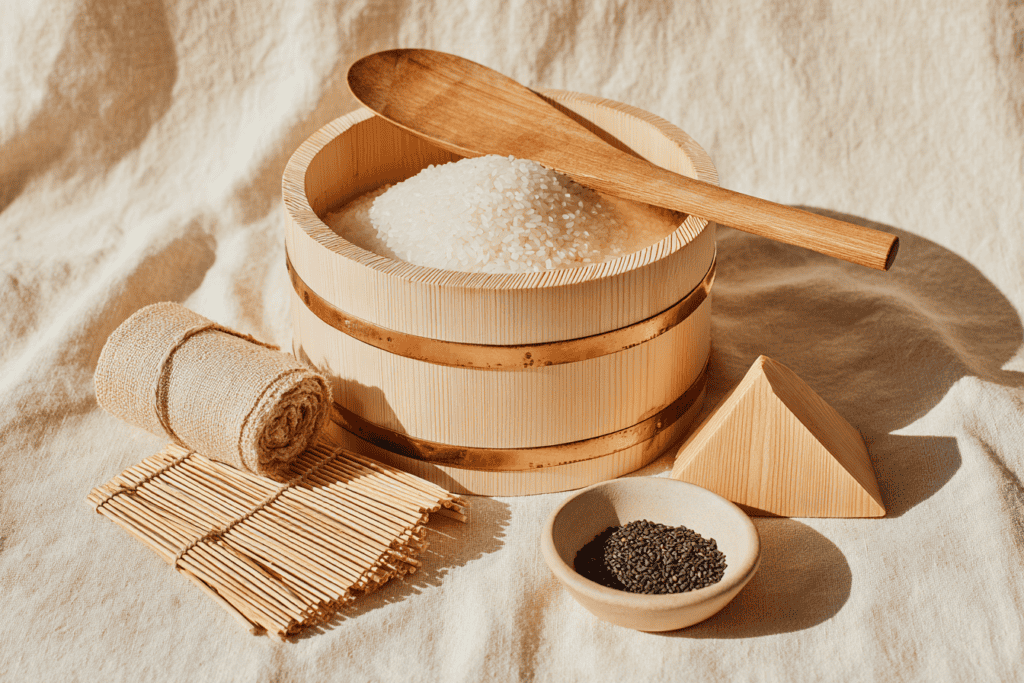
Beginners often focus on the fish and neglect the rice. Yet the rice is where most home sushi goes wrong. Too wet, and it turns to paste. Too dry, and it will not hold. Season it while it is hot, fan it as you fold, and keep it covered with a damp cloth. Then it stays glossy and soft through the whole meal.
For rolls, a bamboo mat does the shaping. Lay the nori shiny side down, spread a thin layer of rice, and leave a strip bare at the far edge. Then add the fillings in a neat line and roll away from you with firm, even pressure. Cut with a wet knife, wiping it between slices. Vegetable rolls are the best place to start, since they need no fish at all.
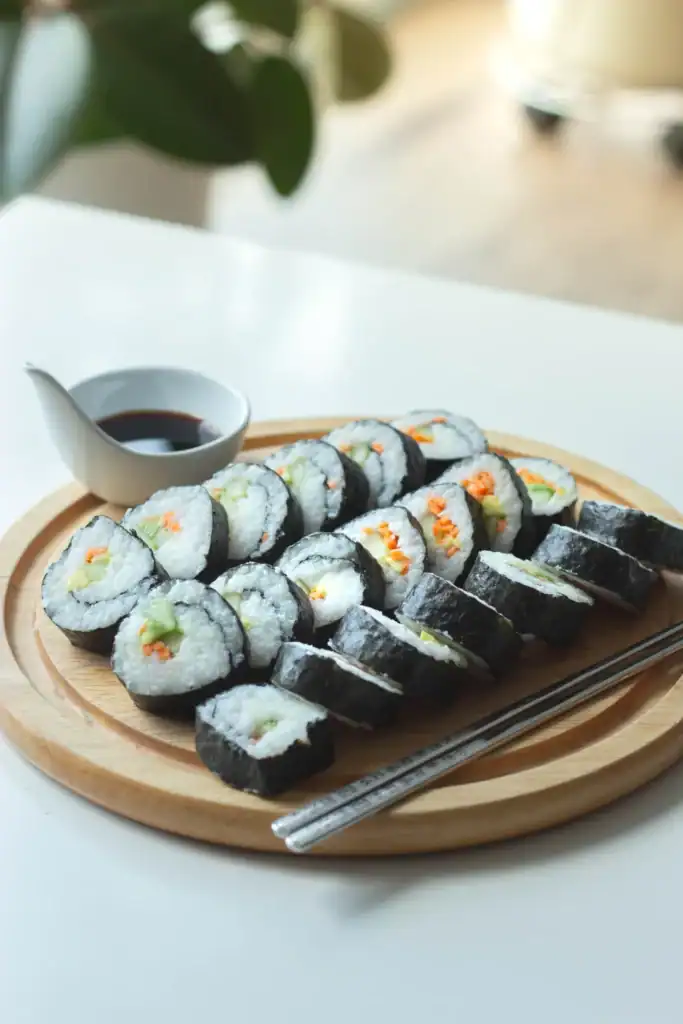
Yasai Maki — vegetable sushi rolls with cucumber, carrot and takuan
Rinse one and a half cups of short-grain rice until the water runs clear. Cook it with the same volume of water, then rest it for ten minutes. Stir three tablespoons of rice vinegar with a tablespoon of sugar and a teaspoon of salt. Fold this into the hot rice with cutting strokes while you fan it. Next, lay nori shiny side down on a bamboo mat. Spread a thin layer of rice over it, leaving an inch bare at the far edge. Lay cucumber, blanched carrot and takuan across the middle, then roll firmly away from you. Make four rolls, cut each into six pieces with a damp knife, and serve with soy sauce, ginger and wasabi.
A first roll with no fish
The crunch of cucumber, the sweetness of carrot and the salty snap of takuan make a balanced roll with no fish at all. In Japan, rolls like this appear in lunch boxes and on family tables. They are a reminder that sushi was never only about luxury fish. Once the rice feels easy, add tuna or salmon. For more equipment, our guide to Japanese cooking tools covers the wider kitchen.
Sawara Cypress Hangiri — a copper-banded rice tub made in Japan
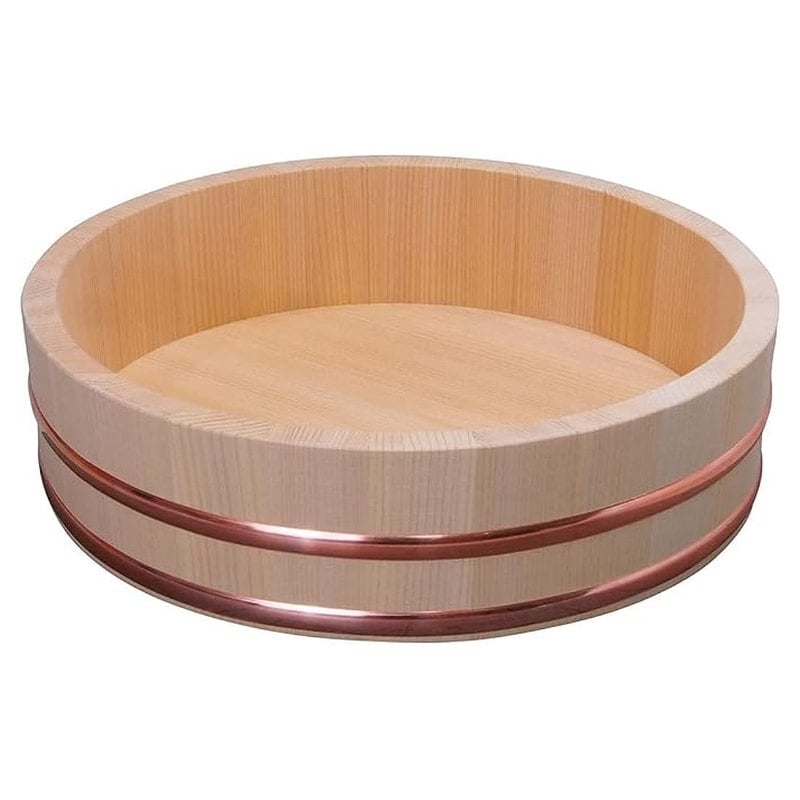
The hangiri is the tool sushi chefs reach for first, and this one is made in Japan from sawara cypress. The Sawara Cypress Hangiri is wide and shallow, so hot rice spreads out and cools quickly as you fold in the vinegar. Its wood draws off extra moisture, which keeps the grains separate and glossy rather than sticky. Copper bands hold the staves tight. Wet the tub before each use so rice does not cling. Afterward, rinse it with plain water and let it dry slowly away from heat. It is a simple object that changes every batch of rice.
Buying Fish for Sashimi
The fish decides whether home sashimi is a pleasure or a risk. Buy only fish labeled for raw eating, from a fishmonger who sells it that way every day. Ask when it arrived, where it was caught and how it was handled. Keep it below 40°F, carry it home on ice, and serve it the same day. Freshwater fish should never be eaten raw. Anyone pregnant or with a weak immune system should ask a doctor before eating raw seafood. Finally, slice just before serving, on a clean board, with a knife used only for fish. Japanese fishmongers and chefs take this care as a matter of course, every single day.
The Verdict on Sushi and Sashimi
So what is the difference between sushi and sashimi, in the end? Sushi is rice made into a meal, with fish or vegetables as its partner. Sashimi is the fish alone, judged by its freshness and the knife that cut it. One began as a way to keep fish through the winter, the other as a dish for warrior households. Both reached their modern form in Edo, where speed, vinegar and fresh fish from the bay met in a single bite. Today the two share a counter as easily as they share a menu. Learning them is a slow pleasure, and it helps to write down the fish, the counter and the season as you go.

For a traveler, the practical lessons are short. Look for the rice to tell the two apart. Eat nigiri with your fingers if you like, and sashimi with chopsticks. Touch the fish, not the rice, to the soy sauce. Eat each piece soon after it arrives, and thank the chef rather than leaving a tip. Above all, sit at a counter at least once, and let the chef choose for you. Then pay attention to what you enjoyed most. Within one trip, a clear picture of your own taste emerges, and the next trip becomes easier to plan.

Following the season
The calendar shapes every great counter, which is why those notes are worth keeping. Winter brings crab and yellowtail to the Sea of Japan, and the fish are at their richest in the cold. Spring, by contrast, favors sea bream, often served in thin slices with a touch of citrus. Early summer brings the first bonito, and later summer belongs to sea urchin in Hokkaido. A chef will often build a whole course around one of these moments. So the same counter can feel like a different restaurant in February and in July. Regulars return for exactly that reason. Ask what is best this week, every time.
Recommended
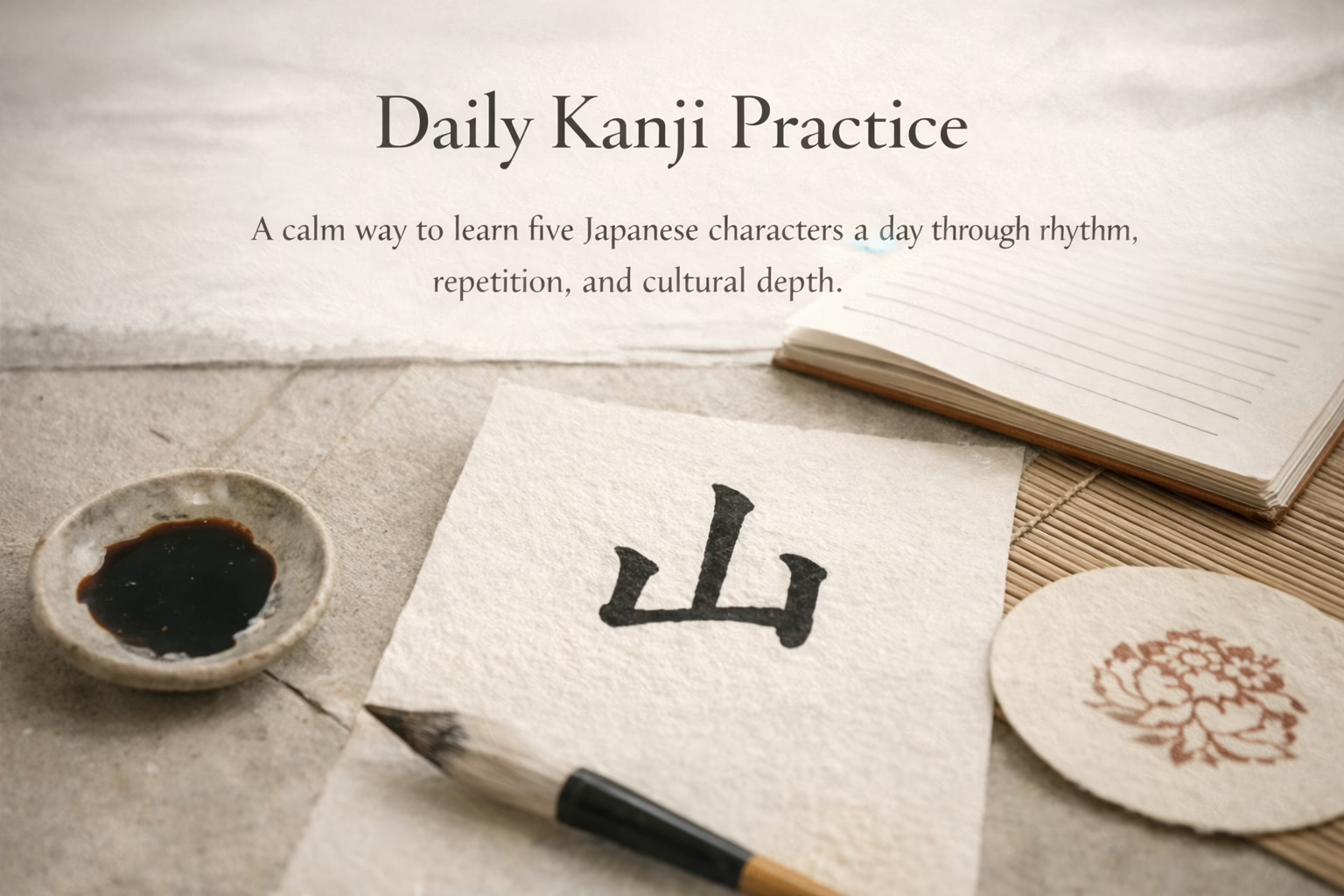
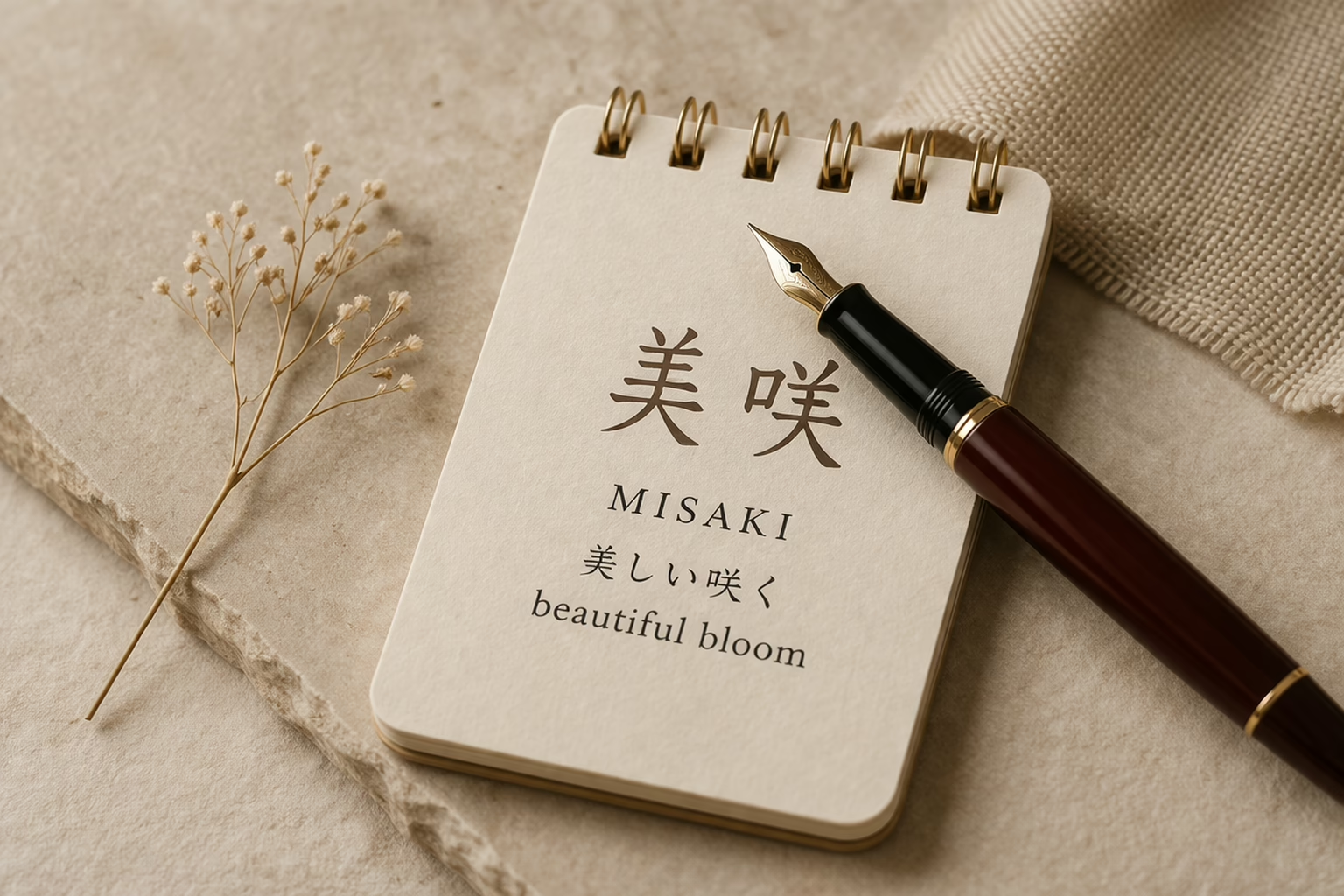
Food in Japan is easier to enjoy when the rest of the trip runs smoothly. Rail travel links the great fish towns in a few hours. A morning train from Tokyo reaches Kanazawa in time for lunch, and Osaka in time for an early dinner. Lunch at a fine counter, meanwhile, often costs far less than dinner. Language, too, is less of a barrier than it seems. Menus at fine counters are often handwritten, and many list fish only in kanji. A few characters learned before you leave make those menus and the station signs far friendlier. The tools below help with the route and the reading alike, and each takes only a few minutes.


Planning a Trip Around the Counter
For the most sought-after counters, timing and introductions matter as much as budget. Booking well ahead, through people who know the chefs, is often the only way in. A good plan also spaces the big meals, so each one gets your full appetite and attention. Market breakfasts start early and sell out by mid-morning, so they suit the first day in a new city. A slower plan also leaves time for markets, knife makers and the small counters that rarely appear in guidebooks. With that settled, the meal itself is simple. You sit down, the chef begins, and the season arrives one piece at a time. Trust that, and the meal becomes the memory the trip is built around.
A Journey Through Japan’s Sushi Counters
We can plan a route around the season’s fish: an omakase counter in Tokyo, the markets of Kanazawa in winter, and a morning with a knife maker in Sakai. Every itinerary is built around your pace and your table.
Plan Your Custom Japan ItineraryQuestions Worth Asking
Is sushi Japanese or Chinese?
Sushi as the world knows it is Japanese. Its distant ancestor, fish packed in rice to ferment, was known across Asia. Japan kept that method alive in dishes such as funazushi, then turned it into vinegared rice and hand-pressed nigiri in Edo in the early 1800s.
Is sashimi healthier than sushi?
Sashimi has fewer calories because it has no rice, sugar or salt from the seasoned rice. Both dishes rest on fresh fish, which brings protein and omega-3 fats. Go light on soy sauce with either, since that is where most of the salt in the meal comes from.
Do you eat sushi with your hands?
Yes, nigiri may be eaten with clean fingers, and many sushi chefs prefer it. Pick the piece up, turn it so the fish touches the soy sauce, and eat it in one bite. Sashimi is different, and is always eaten with chopsticks.
Is all sushi raw fish?
No. Sushi means the vinegared rice, not the fish. Many classic pieces are cooked or cured, such as simmered eel, boiled shrimp, rolled omelet and vinegared mackerel. Vegetable rolls with cucumber or pickled radish contain no fish at all, and they are a traditional part of the menu.
Do you dip sushi rice in soy sauce?
Try not to. Rice soaks up soy sauce quickly, overwhelms the fish and can make the piece fall apart. Dip the fish side lightly instead. At a good counter the chef often brushes on sauce for you, and those pieces need nothing more.
Do you tip at a sushi restaurant in Japan?
No. Tipping is not common in Japanese restaurants, and money left on the table may simply be returned to you. Thank the chef as you leave, and say the meal was delicious, gochisosama deshita. That phrase does the work a tip does in the United States.