The Nagomi Journal, a Practice in Harmony
A ninety-day practice — one prompt a day, drawn from nagomi, the Japanese sense of balance. Write on it with a stylus, or write in it with a pen.
Choose the write-on digital edition for your favourite tablet annotation app, or the paperback print edition for the desk and the bag. Both ask you to notice where harmony already lives in your days, and where it has slipped. Ninety guided prompts follow, sequenced so the practice deepens week by week.
Digital: instant download, every major tablet app · Paperback: ships worldwide · Try seven days first
Ikigai gives a life its direction. Nagomi keeps it in balance.
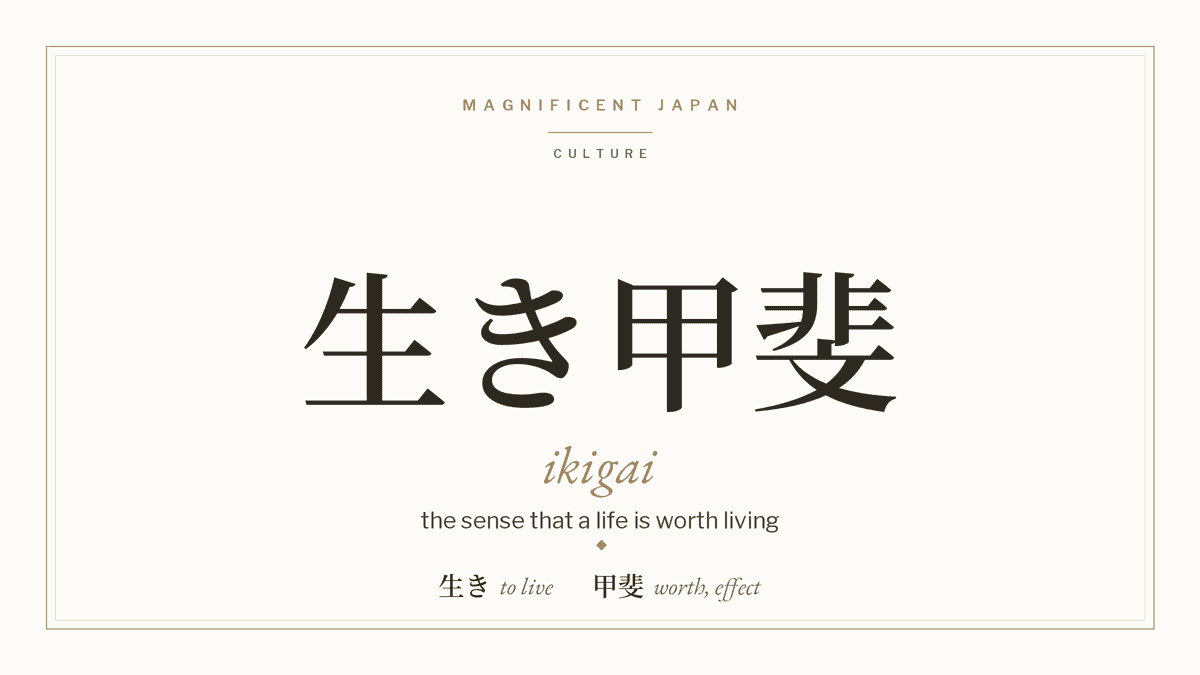
You may know ikigai — the sense that life is worth living, the pull toward what you are here to do. Nagomi is the older idea beneath it. In Japanese writing on wellbeing, it is the ground that ikigai grows from: the harmony that holds a life steady while you find your way.
The reason to get up in the morning, and the pull toward what matters to you. Most reflection journals stop here, at the search for purpose.
The harmony that holds you steady while you look — with the people around you, with what keeps changing, with the parts of yourself that pull in different directions. This is where the ninety days sit.
Japanese writing on harmony sets nagomi at the root of daily life, the balance that ikigai rests on. The fuller story of what ikigai means sits alongside it.
What nagomi means
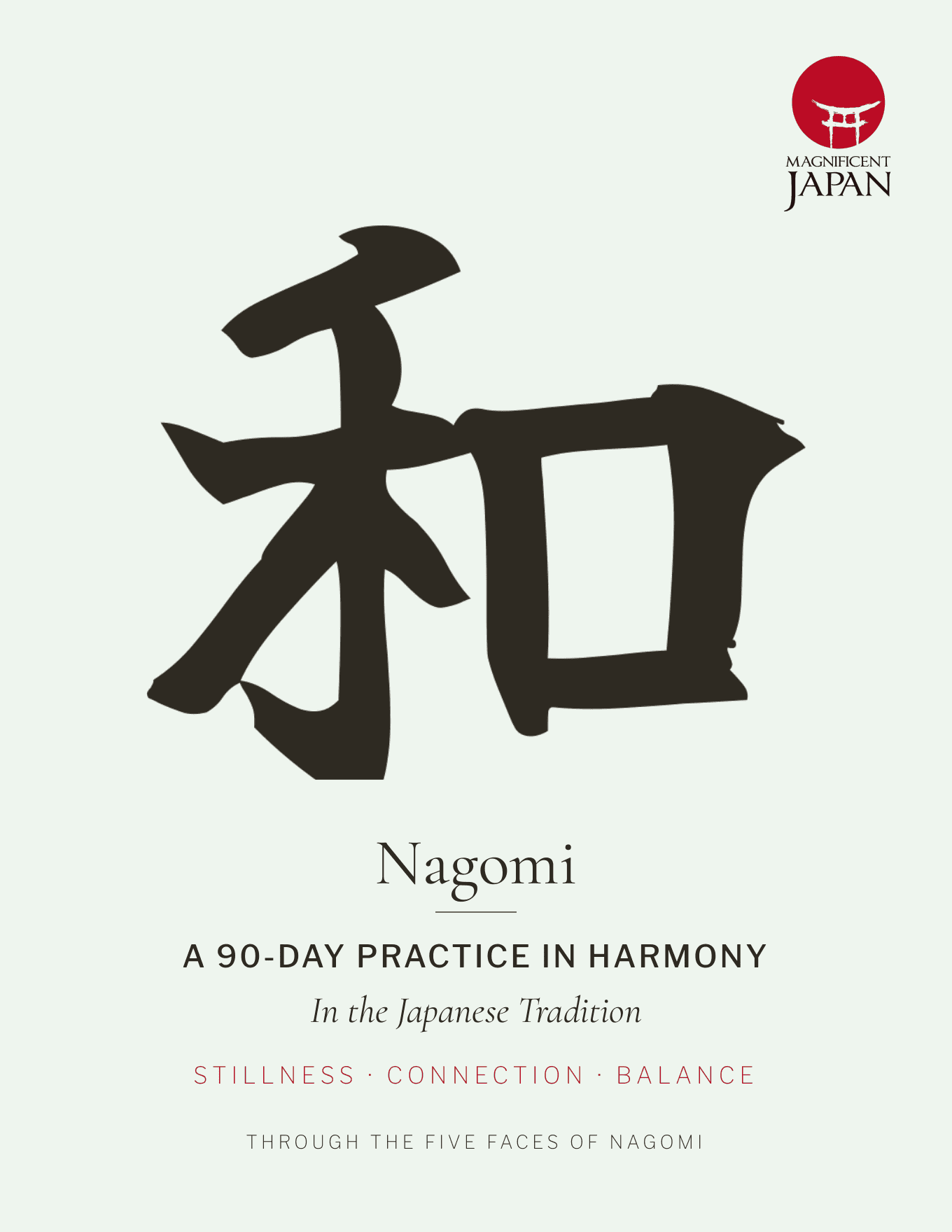
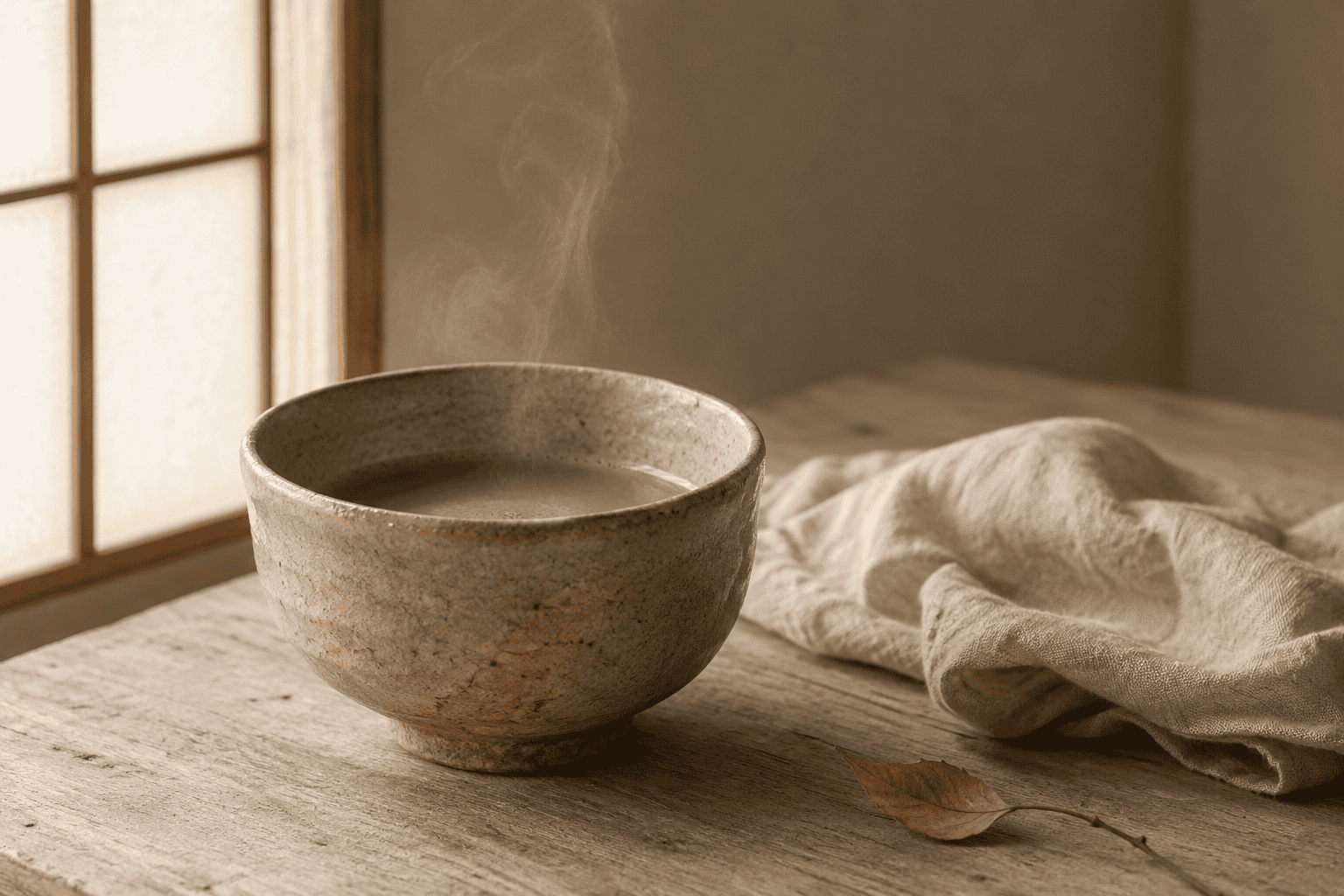
Nagomi 和み is the sense of harmony settling into a moment — the ease that arrives when things, and people, and the parts of yourself are in balance. The word grows from wa, the character for harmony that runs through Japanese life.
Recent writing on Japanese wellbeing has carried nagomi to English readers, describing it as the balance that holds beneath the search for purpose. It is the companion to ikigai, and in many tellings the ground ikigai grows from.
Five faces, ninety days
The prompts move through five faces of nagomi — five ways harmony shows itself across a life. You do not study them; the prompts teach them, asking each in turn and deepening as the weeks go on.




Prompts that ask the right question
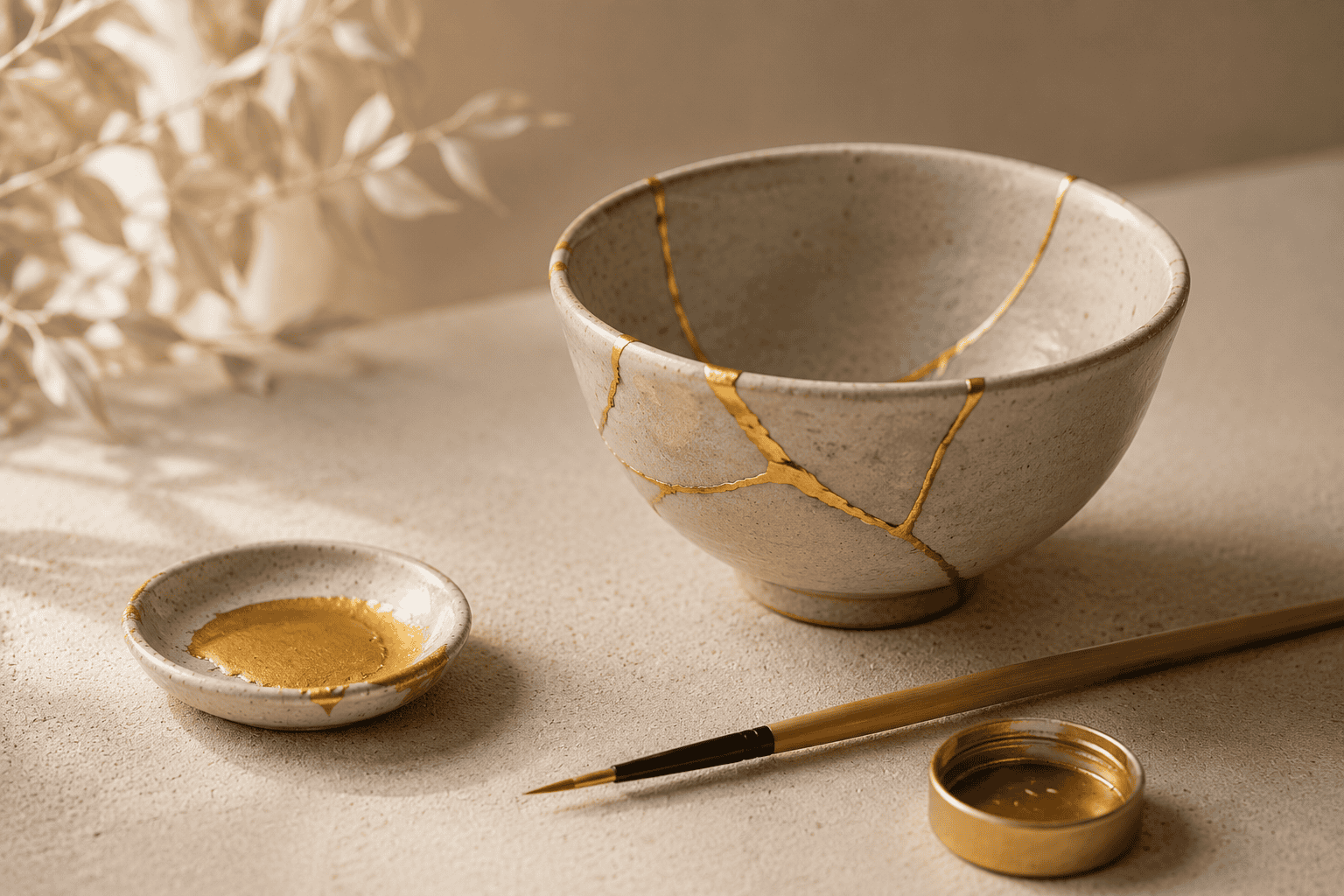
Most reflection prompts ask you to fix something, or to reach for more. These ask you to notice where balance already lives, and where it has slipped. The ninety days are sequenced so the practice compounds in a way a flat list never could.
The early prompts are small, the kind you can answer before the tea goes cold. The later ones assume you have been paying attention, and ask a little more.
What the nagomi journal includes
Both editions carry the same ninety-day structure. The digital edition is a write-on PDF for GoodNotes, Notability, Noteshelf, or any annotation app; the paperback puts the same practice on paper.
- Ninety daily prompts — one a day, across three months
- Twelve weekly syntheses — a look back at each week
- Three monthly reviews — the longer view across each month
- Two Beginning pages — revisited on Day Ninety, to measure the distance
- Tap-through navigation — side tabs and day links, in the digital edition
- Research foundations — the sources, and where to read further
Begin the practice
One journal, two editions, one price. Choose the screen or the page — the ninety days are the same, and both are built to be returned to, not read through.
A write-on PDF for iPad and tablet, with tap-through side tabs and links to any day. Yours the moment you order.
Begin the Practice — DigitalInstant download · GoodNotes, Notability & every major tablet app
The same ninety days in print — a matte-cover paperback for the desk, the bag, and the shelf it will one day join.
Order the PaperbackShips worldwide · part of the Cultural Reflection Collection
Digital checkout is handled by Payhip; the paperback checks out where it ships from. Both accept the cards and wallets above.
Look inside
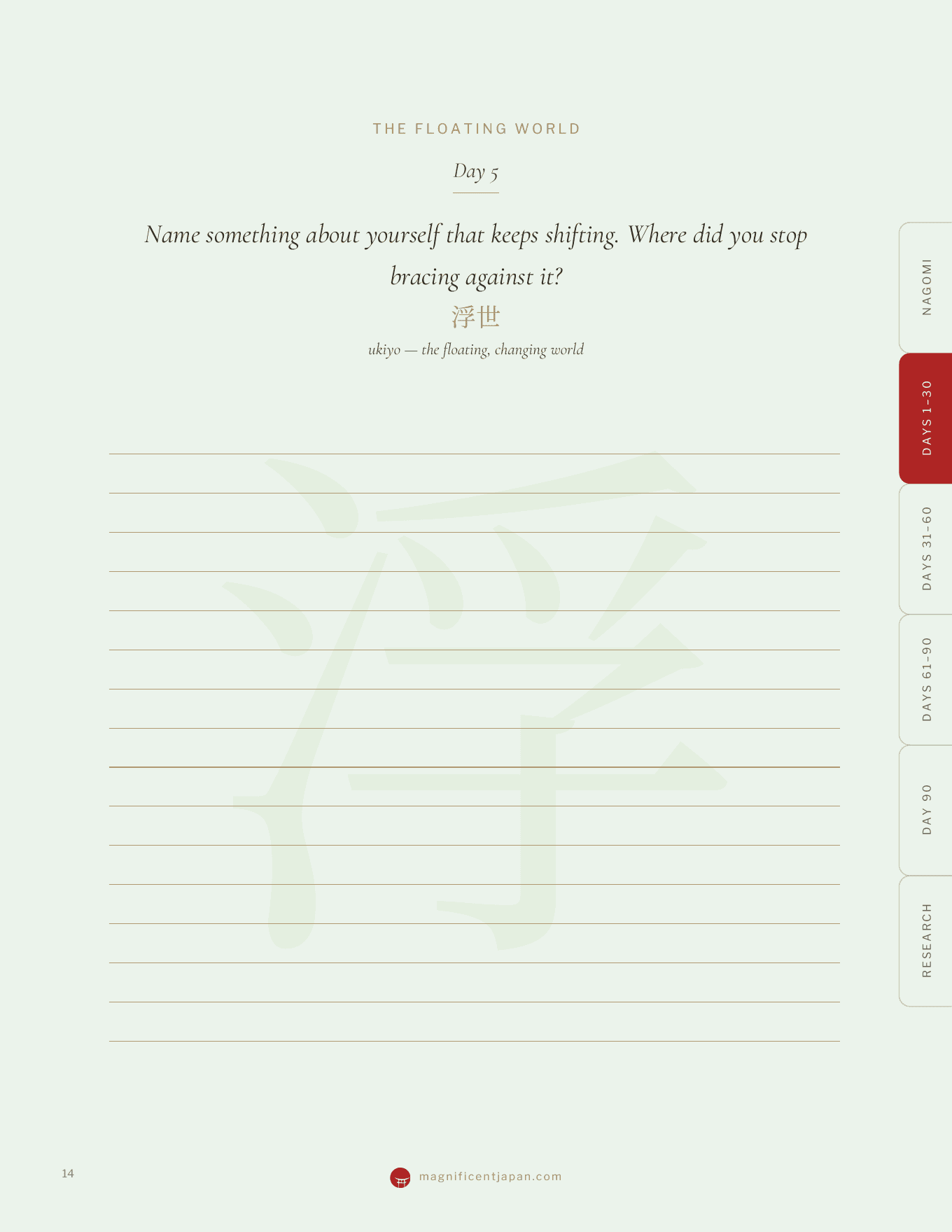
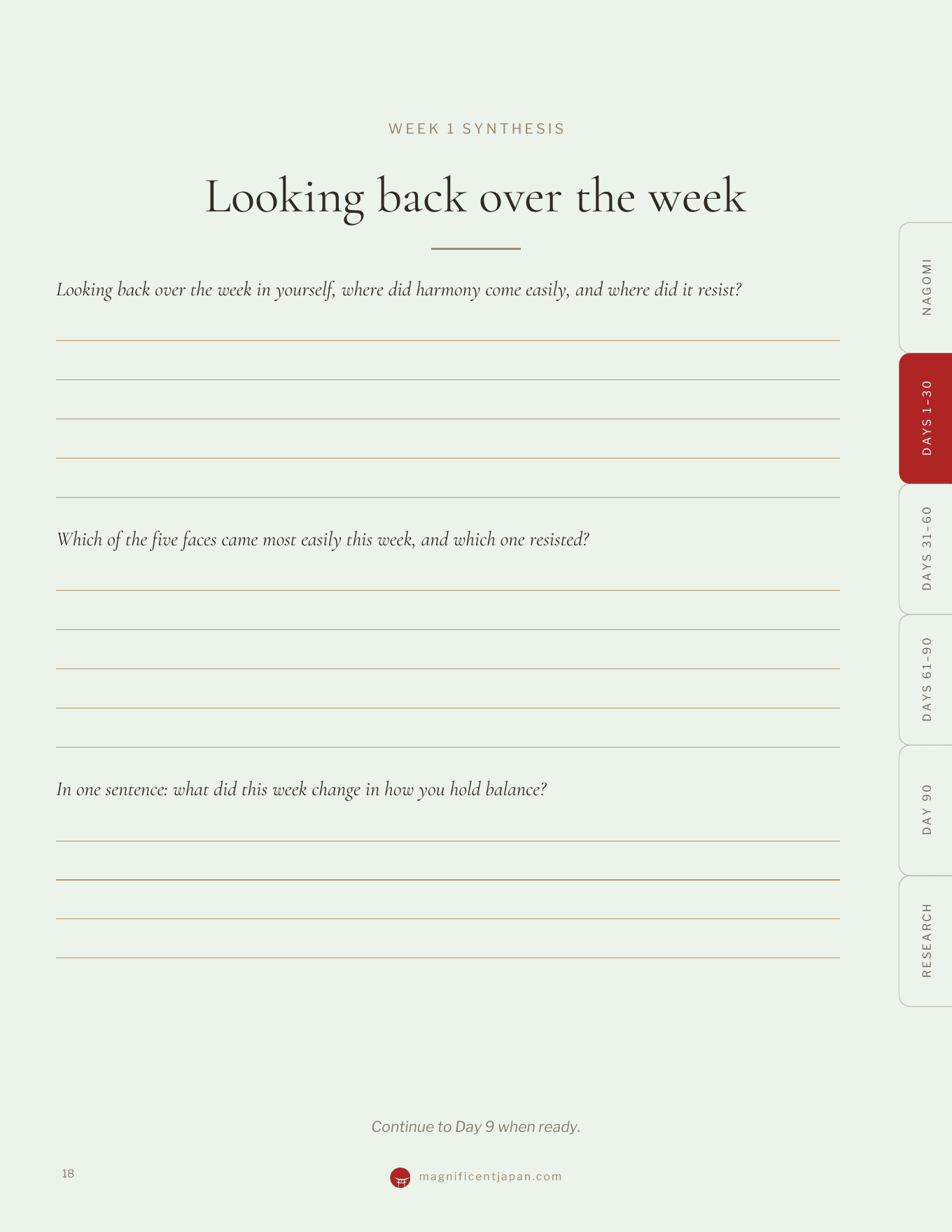
Three real pages, shown full size — a Beginning page you return to on Day Ninety, a daily prompt, and a weekly synthesis. Tap any page to open it larger. The pages are the same in both editions.
How it works
What ninety days does
A single prompt rarely changes much. Ninety of them, in sequence, do something a list never could. The early weeks ask small questions — where your shoulders dropped, who settled you, what you let change without bracing against it.
By the second month the prompts assume you have been paying attention, so they ask a little more. On Day Ninety you return to the two pages you began with, and the distance between them is the whole point.
Try seven days first
The seven-day sampler is the real first week of the practice, as a write-on PDF for your tablet. Leave your email and it arrives the moment it is ready.
One email a fortnight. Unsubscribe any time.Where the practice comes from
The balance this journal asks you to notice — between effort and rest, between people, between the seasons — runs through Japanese life. A tea room in late-afternoon light. A slow train through a valley. An inn where the evening keeps its own pace.
The practice works wherever you sit with it. Yet once it settles, some readers want to stand inside the unhurried Japan it draws from — and that is a journey worth shaping with care.
Slow mornings, a still tea room, a ryokan where the day softens. When you would like to step into the Japan this practice draws on, we shape the journey around how you want to travel.
Begin a Custom ItineraryQuestions Worth Asking
Is this a digital journal or a paper book?
Both. The Nagomi Journal comes as a write-on digital PDF for tablet annotation apps, and as a paperback print edition that ships worldwide. Both carry the same ninety days at the same price.
Which apps does the digital edition work in?
GoodNotes, Notability, Noteshelf, Penly, Xodo, and Samsung Notes. The side tabs and links work in any app that opens annotatable PDFs.
Do I have to journal every day?
No. The practice is built around returning to it, not around a perfect streak. You can move at your own pace in either edition.
How is this different from the Ikigai journal?
They are companions, built in the same format. The Ikigai journal is about direction, the sense that life is worth living. The Nagomi journal is about balance, the harmony that holds a life steady. Many people keep both, and neither repeats the other’s prompts.
Should I choose the digital or the paperback edition?
Choose digital if you write with a stylus — the tap-through side tabs and day links only work inside an annotation app. Choose the paperback if you prefer pen on paper; it is the same ninety-day practice in print, and it ships worldwide.
Will there be more journals?
Yes. Nagomi is part of the Magnificent Japan Cultural Reflection Collection, alongside the Ikigai journal, with further practices to follow.
Part of a longer practice
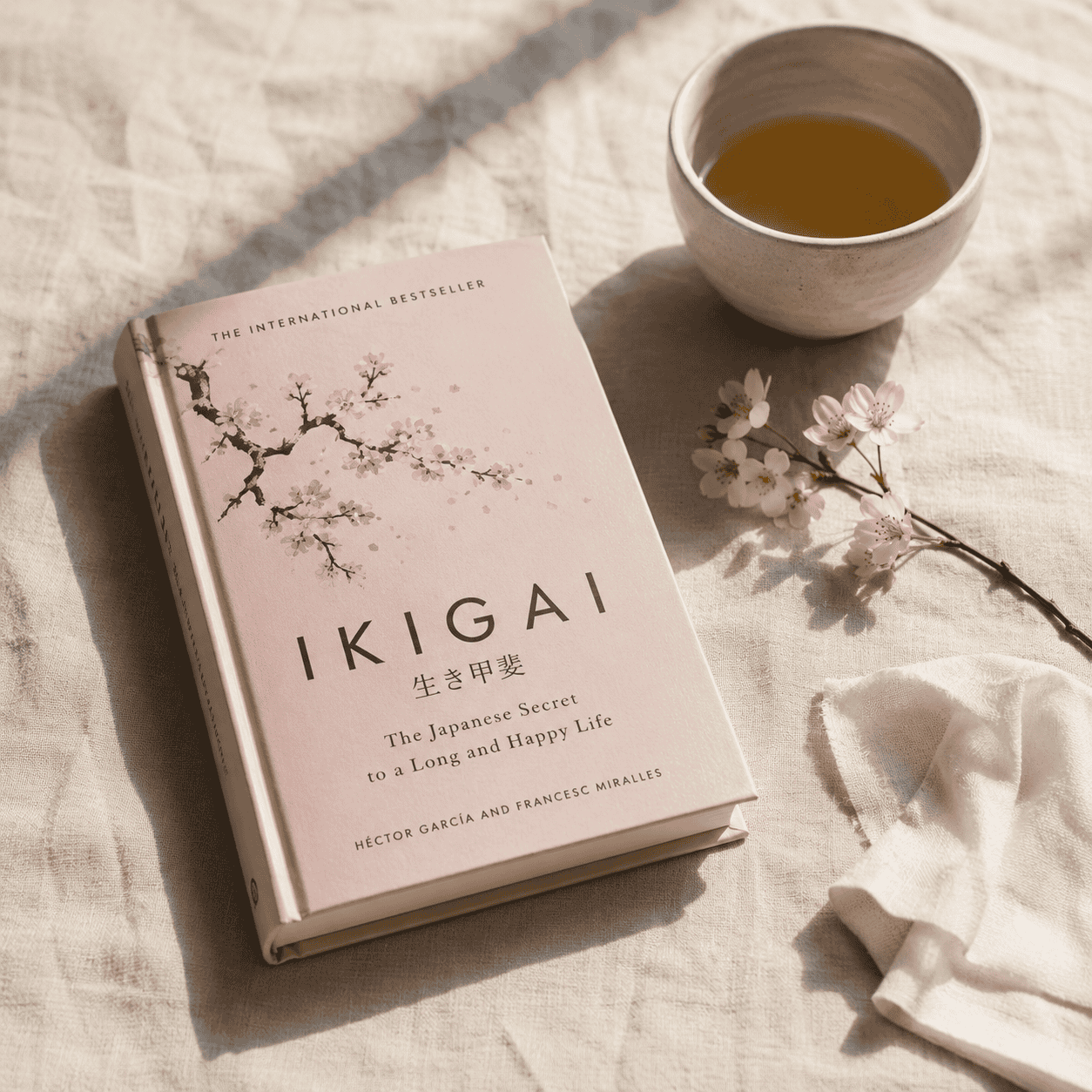
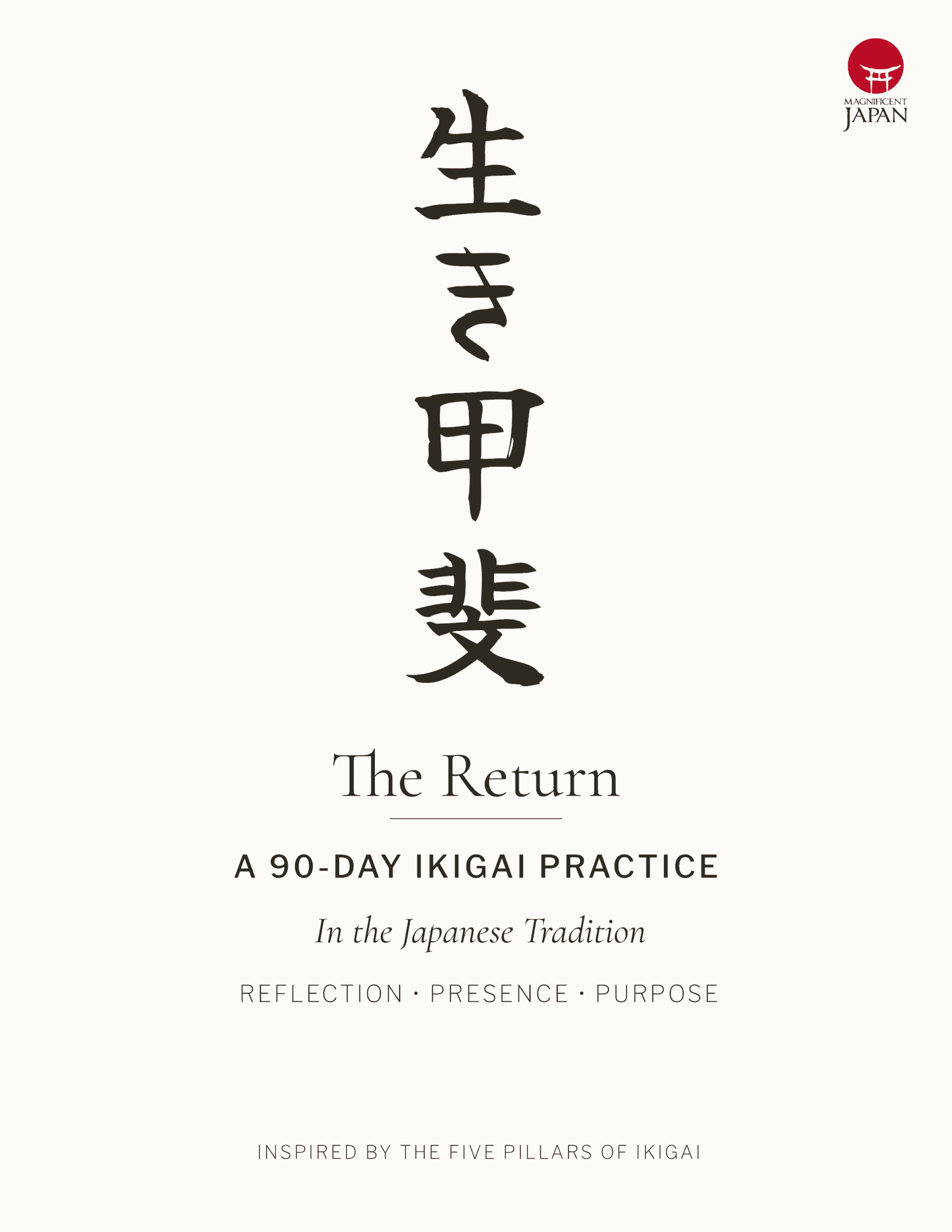
The Cultural Reflection Collection gathers guided practices rooted in single Japanese concepts, on screen or on paper. Nagomi sits beside its companion, The Ikigai 90-Day Journal — direction and balance, two halves of one understanding.