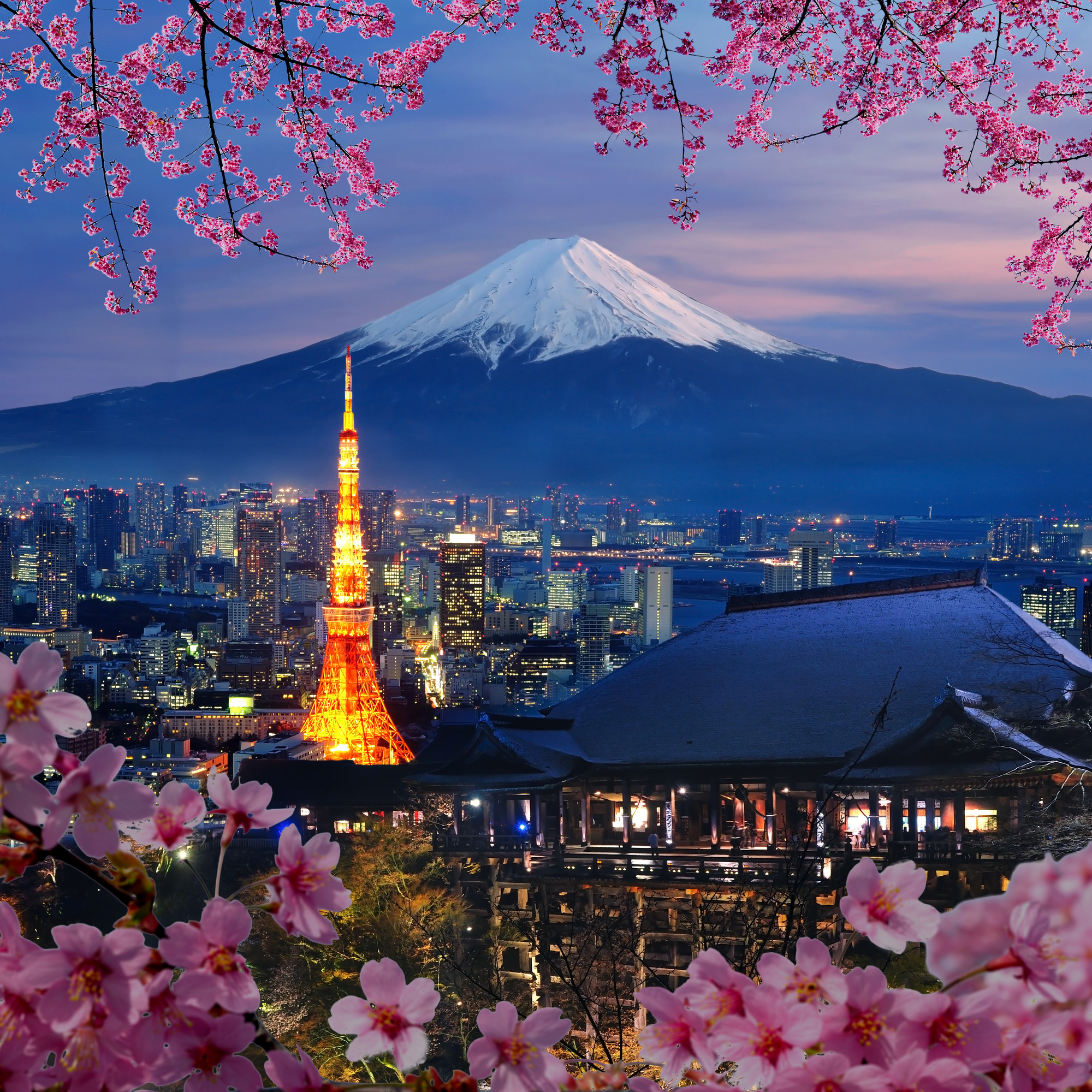
Thirty-seven things to do in Tokyo that most visitors never reach. Every one is open to you.
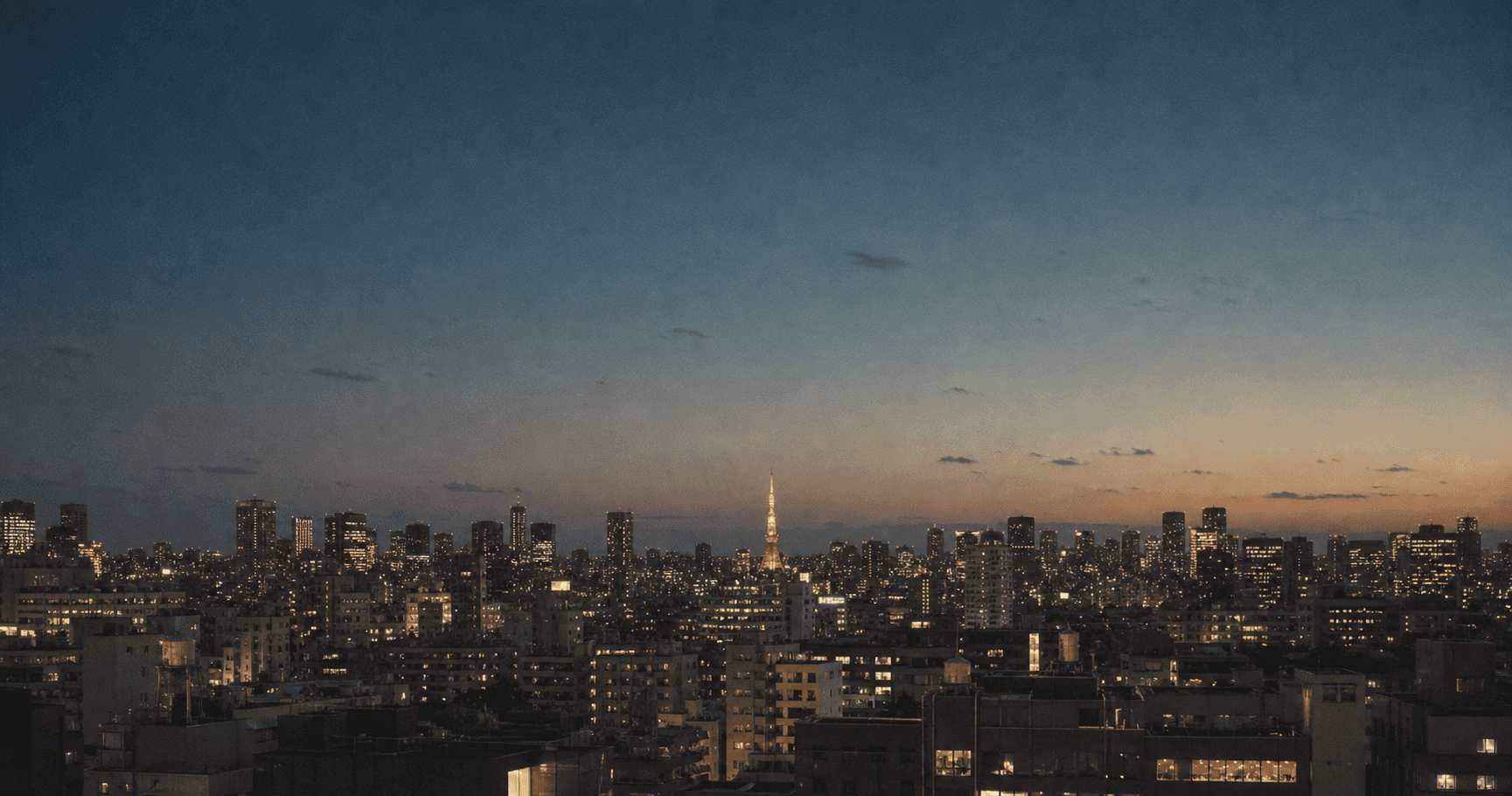
Tokyo is not short of lists. Most of them send you to the same six places, and those places are worth seeing once. Yet the city holds thirteen million people across twenty-three wards. The interesting part begins where the standard route stops.
This is a list of experiences rather than sights. Each asks something of you. An early alarm, a booking made weeks ahead, a workshop where you will be bad at something. That is deliberate. The things people remember about Tokyo are almost never the observation decks. Where the sights themselves are the point, they are gathered in beautiful places in Tokyo.
They are grouped by the kind of day they suit. So you can build an itinerary rather than tick a list. Practical notes sit under each entry, and none of them requires a guide unless it says so.
The most distinctive Tokyo experiences are sumo morning practice and a single-act kabuki ticket. Add a kintsugi or indigo workshop, and dawn at Senso-ji before the crowds. Each is bookable by a visitor. None sits on the standard tourist route.
Tokyo rewards the early riser more than almost any city. Temples open before dawn and markets trade before breakfast. The street that felt impossible at noon is empty at six. Four of the entries below only work at that hour, which is why they sit first.
11Sacred Tokyo, before the city wakes
1. Stand in Senso-ji at six in the morning
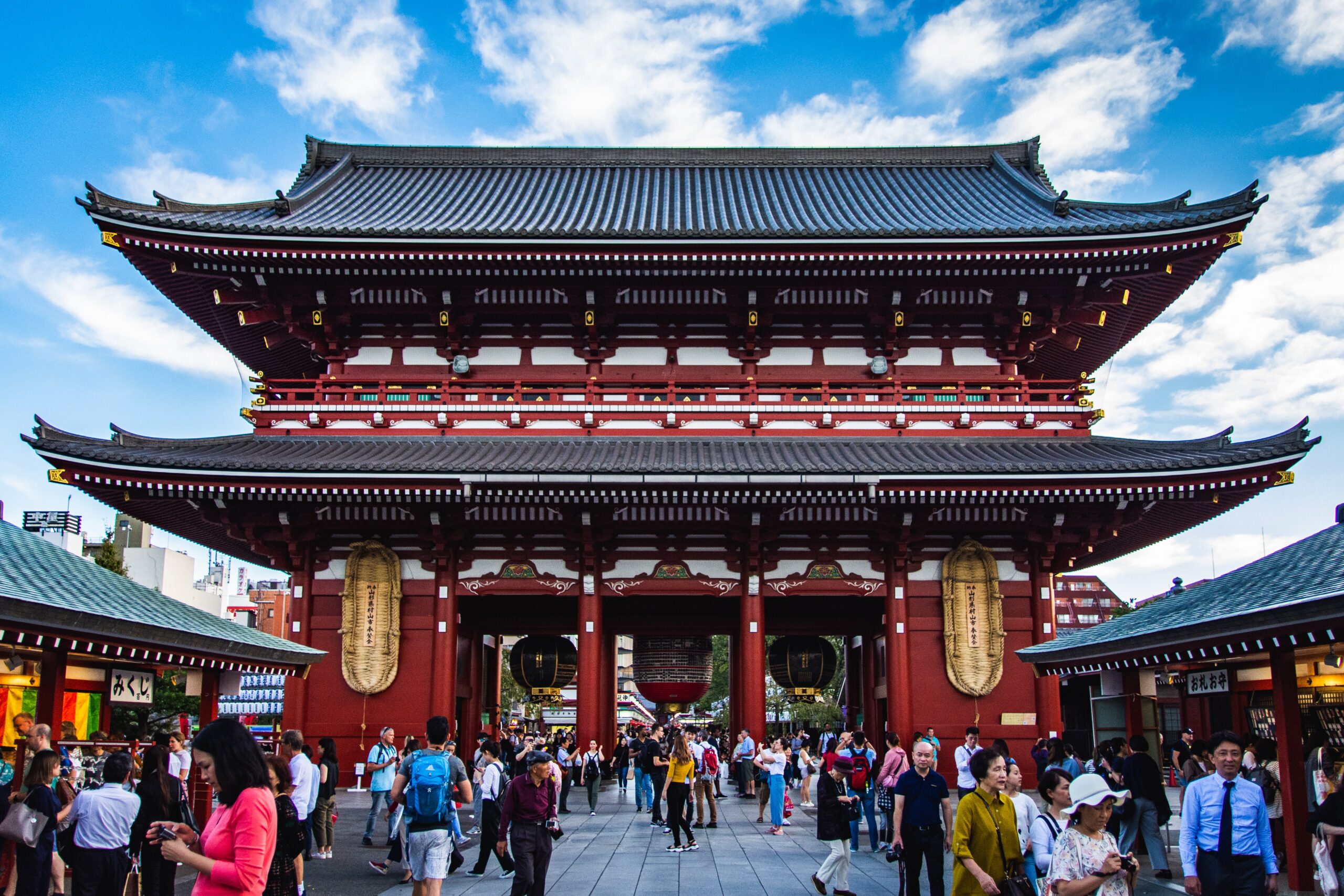
Asakusa’s great temple receives roughly thirty million visitors a year. By ten o’clock the approach is shoulder to shoulder. However, at six it is nearly deserted. Priests move through the halls, incense is lit, and the enormous lantern at Kaminarimon hangs over an empty street.
Opening hours shift with the season, so check a current guide before setting an alarm — the current Lonely Planet Tokyo is the 2024 edition rather than one of the six older printings still in circulation.
The temple was founded in 628, rebuilt after the firebombing, and has never charged admission. Morning prayers begin around six and are open to anyone who stands quietly at the back. Afterwards the shopkeepers on Nakamise raise their shutters one by one. Within the hour the street is ordinary again.
Practical: Because the gates never close, there is no ticket and no queue. Arrive before sunrise and walk Nakamise while every shutter is down. You will see the building rather than the crowd.
2. Walk the forest at Meiji Jingu
One hundred thousand trees were donated from across Japan and planted here in the 1920s. Although designed to look ancient within a century, the forest already does. Cicadas drown out the traffic within fifty metres of the entrance.
If you are in the city for four days rather than fourteen, the pocket edition covers the central wards without the weight.
Nothing here is wild. Every species was chosen so the canopy would shade out the understorey and sustain itself. That calculation has held for a century. Consequently you are walking through one of the most successful pieces of long-term landscape planning anywhere in the world.
Practical: Instead of Harajuku, enter from Yoyogi for the longer approach. The inner garden charges a small fee and is worth it in June, when the irises are out.
3. Find the beckoning cats at Gotokuji
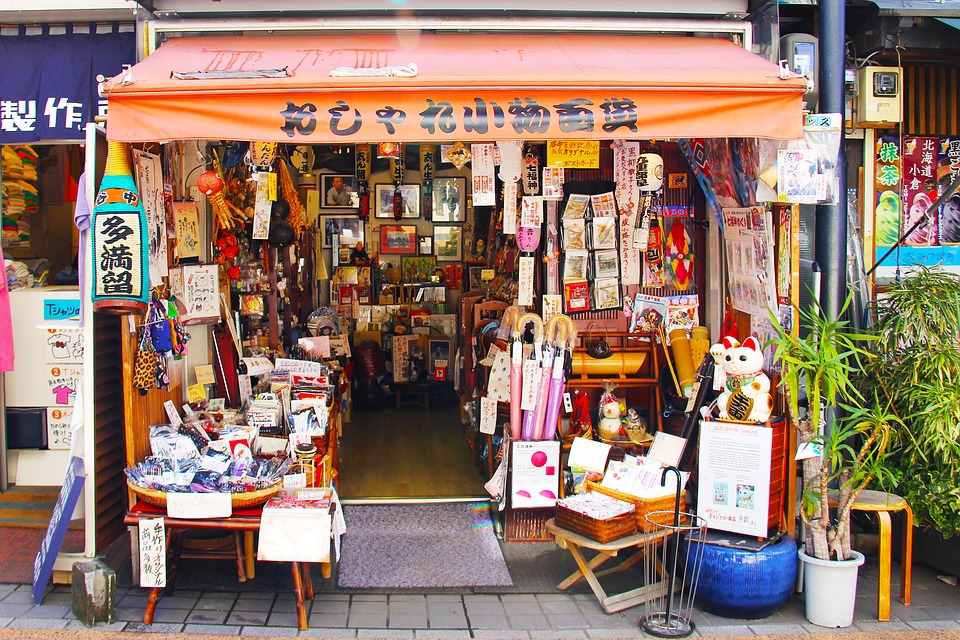
Hundreds of white maneki-neko sit in tiers behind the temple, left by visitors whose wishes came true. The legend holds that a lord sheltered here from a storm after a cat waved him in. So it reads as oddly moving rather than kitsch.
Visitors buy a cat, make a wish, and return it to the temple when the wish is granted. The tiers therefore grow and shrink with the fortunes of strangers. Because most people leave theirs quietly, the effect is closer to a collective diary than a shrine display.
Practical: Setagaya, about twenty minutes from Shibuya on the Odakyu line. Meanwhile, bring a cat if you have a wish to close.
4. Pay respects at Sengaku-ji
The forty-seven ronin are buried here, and incense still burns at every grave. The story of their revenge and ritual suicide is the most retold in Japanese history. Its small museum lays out the weapons and documents plainly.
The forty-seven waited nearly two years before striking, then surrendered and were ordered to take their own lives. Japan has argued about whether they were heroes or criminals ever since. Standing in front of the graves while a stranger lights incense makes the argument feel considerably less academic.
Practical: The temple sits near Shinagawa. Free to enter, small charge for the museum, and rarely more than a handful of people present.
10Gardens, water and the Edo city underneath
5. Cross the stepping stones at Kiyosumi Teien
The isowatari are flat stones set just above the water. Crossing them puts you mid-pond among carp and turtles. Moreover the stones were shipped in from across Japan by a Meiji industrialist.
Iwasaki Yataro, who founded Mitsubishi, had stones brought here by company ship from every region he traded with. Each is labelled with its province of origin. Walking the isowatari is therefore a slow tour of Japanese geology, undertaken while trying not to fall in.
Practical: Kiyosumi-Shirakawa, which is also Tokyo’s coffee district. Combine the two and give it a morning.
6. Take tea on the pond at Hama-rikyu
Remarkably, a three-hundred-year-old shogunal duck-hunting ground sits ringed by Shiodome’s towers. The teahouse stands on stilts over saltwater that rises with Tokyo Bay. No other garden in the city can claim it.
The garden also holds a three-hundred-year-old pine, planted by a shogun. It is now propped on wooden crutches across a lawn. Between the pine, the tidal pond and the towers behind, nowhere else in Tokyo compresses four centuries so bluntly.
Practical: Arrive by river boat from Asakusa for the best approach. Matcha and a seasonal sweet are served at the teahouse.
7. Walk the ravine at Todoroki
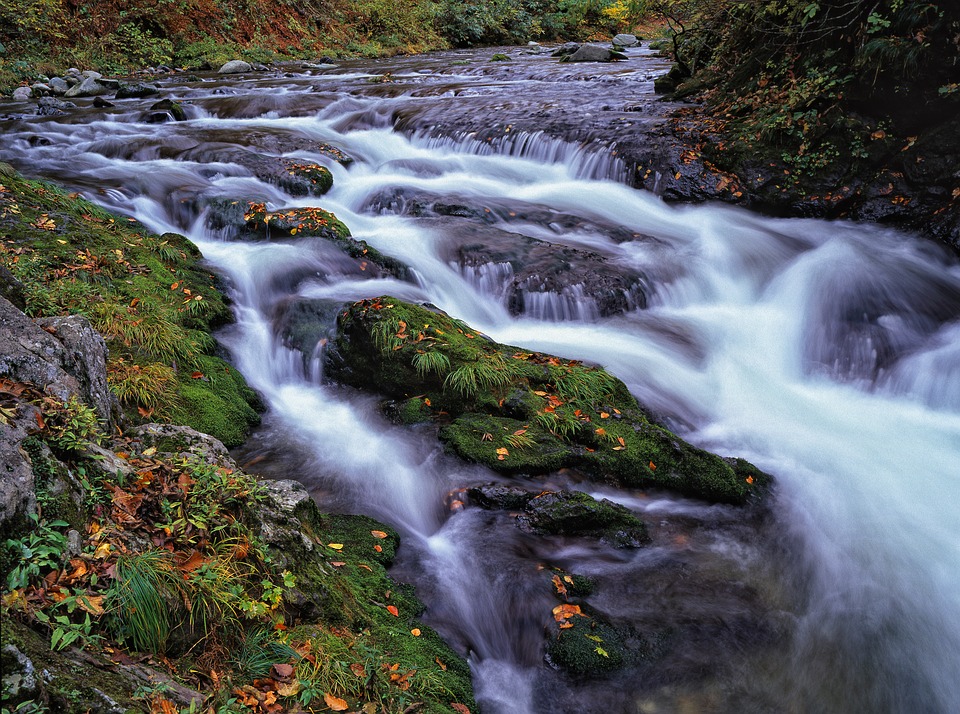
Tokyo’s only valley runs a kilometre under a canopy so dense that the temperature drops. A stream, a red bridge, a small waterfall and a temple at the far end. Yet it sits entirely within the twenty-three wards.
Bamboo grows on the upper slopes. Meanwhile the stream runs cold enough to drop the air temperature several degrees. Halfway along, a small waterfall was used for cold-water purification by ascetics, and it still is occasionally. None of this is visible from the street above.
Practical: Take Todoroki station on the Tokyu Oimachi line. Twenty minutes end to end, and best after rain.
8. Stand under the torii tunnel at Nezu Shrine
A corridor of vermilion gates climbs a small hill, tight enough that you pass through in single file. Kyoto’s Fushimi Inari gets the photographs. However, this one is three hundred years old and usually empty.
The shrine buildings survived the 1923 earthquake and the war intact, which almost nothing in Tokyo did. That makes them among the few genuinely old structures left in the city. Meanwhile the gate tunnel takes barely a minute to walk, so most visitors do it twice.
Practical: Look in Bunkyo ward, near Nezu station. Late April brings three thousand azaleas into flower on the same slope.
9Craft you make with your own hands
9. Repair a bowl with gold at a kintsugi workshop
Kintsugi mends broken ceramics with lacquer and gold. The break becomes part of the object’s history rather than a flaw to disguise. Therefore two hours with a teacher produces a bowl you keep.
If weeks of curing is more commitment than you want, a beginner epoxy kit sets in hours and ships with a practice bowl to break.
To continue at home, a kit with genuine urushi lacquer uses real tree lacquer and takes weeks to cure, exactly as the workshops describe.
The technique is four hundred years old. It grew from a tea culture that valued repaired vessels above flawless ones. Some historic bowls were reportedly broken deliberately so they could be mended. Whether or not that is true, it captures the attitude precisely.
Studios across the city now run English sessions. Real urushi lacquer takes weeks to cure, so most workshops use a fast-setting substitute and say so. The philosophy behind the practice.
10. Hold a brush properly for the first time
Shodo is judged as much by the space you leave as by the ink. An hour with a teacher will not make you good. It will permanently change how you read a written character.
The same instinct applies to mending: a starter set with a practice bowl includes a bowl meant to be broken before it is repaired.
Teachers begin with a single horizontal stroke and will keep you there far longer than feels reasonable. The stroke has a beginning, a body and an ending, and each demands different pressure. Only once that is passable does anyone hand you a character worth writing.
Many temples and cultural centres run introductory classes. You will learn posture and breathing before you are allowed near paper. Try tracing the characters first.
11. Dye indigo at an aizome studio
Japanese indigo is fermented rather than chemically reduced, and the vat smells of it. Consequently cloth emerges green and turns blue as the air hits it. The reaction takes about thirty seconds and never stops being startling.
The vat is alive. Fermented indigo is fed, tested and rested like a sourdough starter, and a neglected vat dies. Artisans therefore speak of theirs as bakers speak of a decade-old culture.
Practical: Studios in Sumida and Katsushika, the old dyeing districts, run half-day sessions today. Wear clothes you do not mind staining.
12. Shape wagashi for the tea ceremony
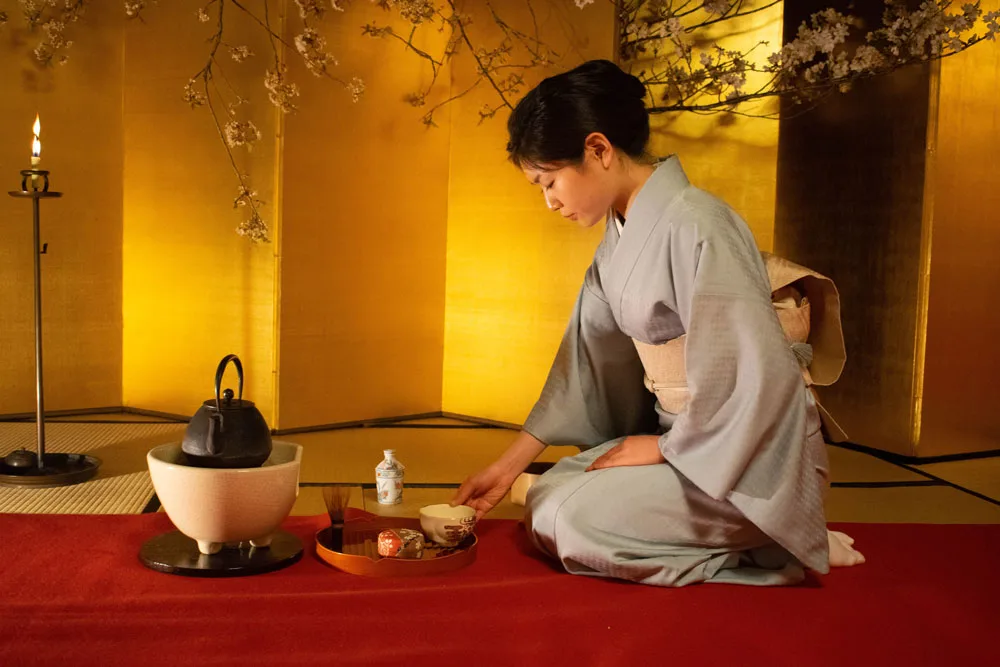
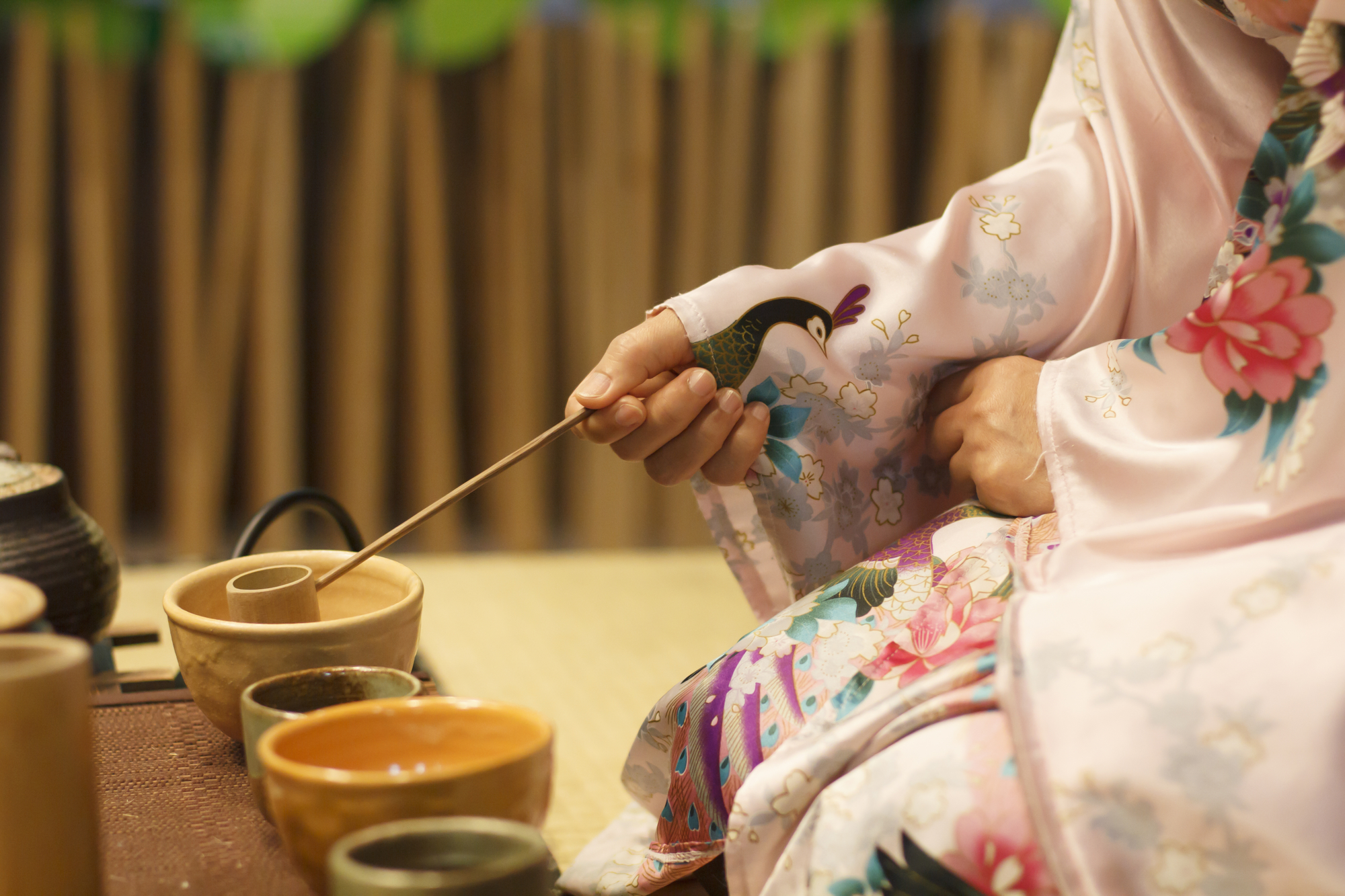
Seasonal sweets are sculpted from sweet bean paste with wooden tools, and the shapes change with the month. A June sweet suggests rain on a hydrangea. Here precision matters far more than strength.
Whisking matcha at home needs the right tool, and a hundred-prong bamboo chasen is the traditional shape rather than a wire substitute.
An entire vocabulary governs these sweets. A good host chooses one alluding to the season without naming it. A sweet in late November might suggest a fallen leaf rather than depict one. Consequently the guests are expected to work out the reference themselves.
Practical: Classes usually finish by serving what you made, alongside matcha. Two hours, and you take the rest home.
13. Beat a taiko drum until your arms give out
The instrument is played from the hips rather than the shoulders. The posture is closer to martial arts than percussion. So beginners are surprised how physical an hour becomes.
The drums began as village instruments. They marked festivals, warned of danger and set the rhythm for field work. Modern ensemble taiko is barely seventy years old. So the thundering wall of sound is a postwar invention rather than an ancient one.
Practical: Several Tokyo studios run drop-in sessions for visitors. No experience needed and no shoes allowed.
8Performance, staged and unstaged
14. Buy a single act at the Kabuki-za
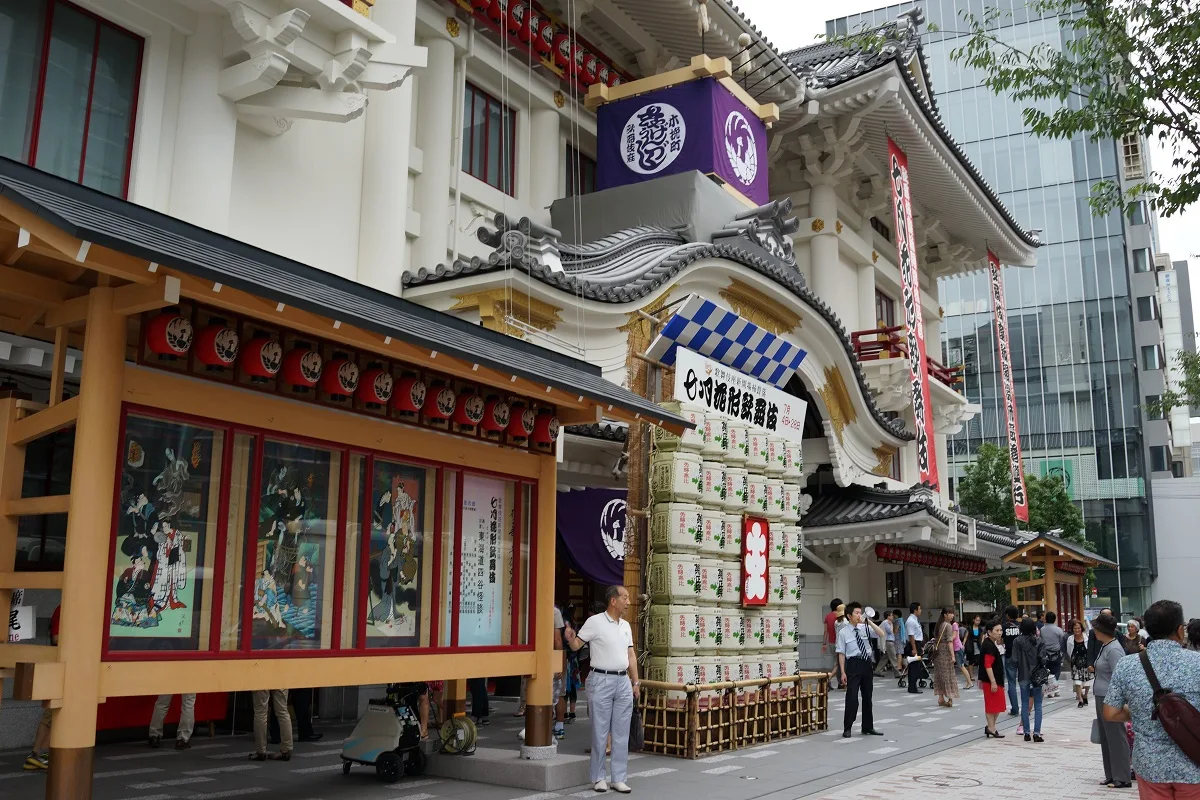
Hitomakumi tickets admit you to one act from the fourth floor. They are sold on the day for a fraction of a full seat. Furthermore you get an English audio guide and an hour of Japan’s most extravagant theatre.
The building was rebuilt in 2013 behind its original facade, with a tower rising directly out of the back. Kabuki began in 1603 with a woman’s dance troupe in Kyoto. It was promptly banned, and has been performed by men ever since.
Practical: Head to Ginza, then queue at the side entrance before the act begins; the fourth floor is unreserved.
15. Sit through a Noh play you do not understand
Noh moves slowly enough that Western audiences often fidget for the first twenty minutes. Then, gradually, something shifts. The masks catch light differently as the head tilts. The long silences begin to feel deliberate rather than empty.
Noh is roughly six hundred years old and the repertoire has barely changed. Masks are handed down through families and some in use today were carved in the sixteenth century. Because the form assumes you know the story already, the performance is closer to a ritual than a plot.
Sendagaya’s National Noh Theatre runs an English programme and posts synopses in advance. The idea that governs the pacing.
16. Laugh at rakugo without the language
A storyteller kneels on a cushion with a fan and a cloth. He plays every character in a monologue that can run half an hour. Although some theatres now offer English sessions, the physical comedy carries regardless.
Performers work from a repertoire of classical stories, and audiences know most of the punchlines already. The pleasure lies entirely in the telling. A good storyteller plays six characters with nothing but a change of angle and a shift in voice.
Practical: Suzumoto in Ueno remains the oldest continuously operating hall in Tokyo.
17. Watch sumo practice at six in the morning
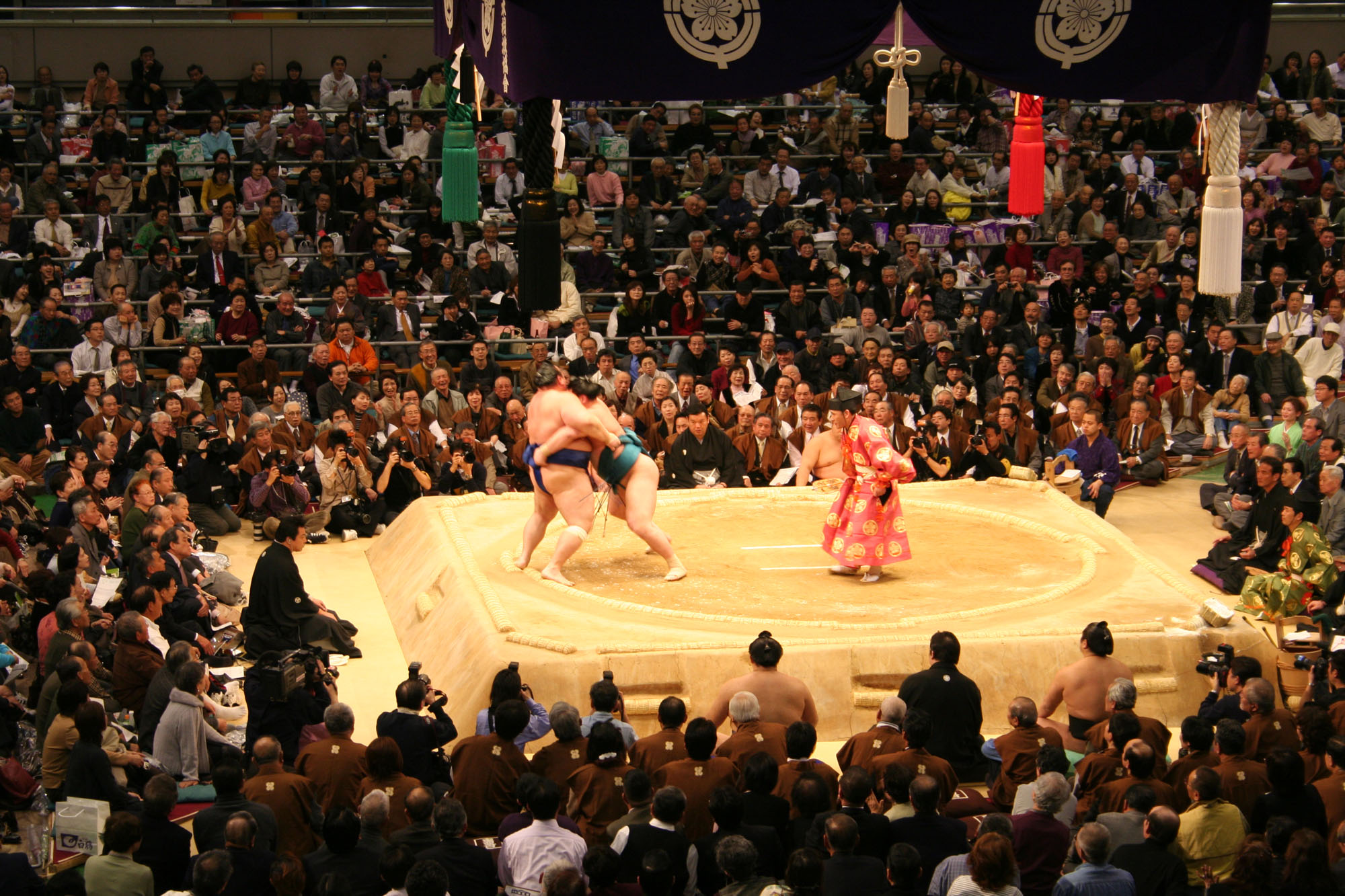
Tournaments run six times a year, but stables train daily. Meanwhile asageiko is silent, brutal and close enough to hear the impact. Visitors sit on the floor at the edge of the ring and do not speak.
a sumo-pattern furoshiki carries the wrestlers as a print, which is the least breakable souvenir in Ryogoku.
Wrestlers live in the stable and cook together. Rank dictates who bathes and eats first. Practice ends with the lowest ranks cleaning the ring. Seeing that hierarchy operate in a small room is a different experience entirely from watching a tournament.
Practical: Bookable through specialist guides only, and the etiquette is strict. Ryogoku is the district to look in.
Several entries here are difficult to arrange from outside Japan. A machiai teahouse evening, sumo morning practice, a private workshop. We shape journeys around how you actually want to travel, and we hold the relationships that open those doors.
Begin a Custom ItineraryBooking matters more here than in most cities. Workshops, teahouse evenings and sumo practice fill weeks in advance, particularly in blossom and autumn months. Temples, gardens and neighbourhoods need nothing at all. Build the fixed appointments first, then let walking fill the gaps.
7Eating like the city actually eats
18. Order monjayaki in Tsukishima
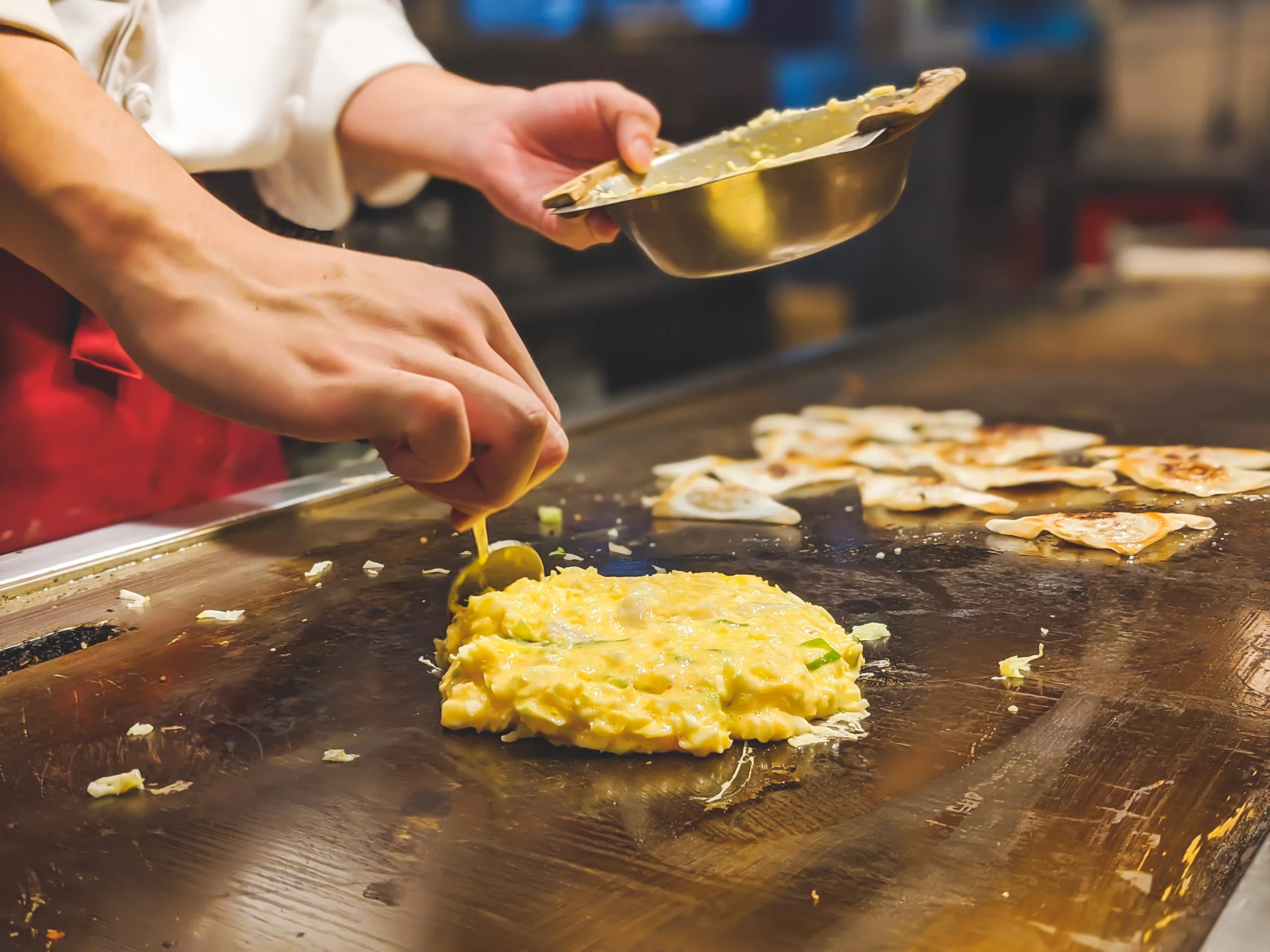
Monja is okonomiyaki’s looser cousin, cooked straight on the griddle. It forms a crust you scrape up with a tiny metal spatula. So it looks alarming and tastes excellent.
Cooking Japanese at home starts with one good blade, and the Shun Premier carries a hammered tsuchime finish that reduces drag.
Monja predates okonomiyaki and began as a children’s snack. Characters were written in the batter on shop griddles before eating. The name comes from that. Adults kept it, added seafood and cheese, and it stayed a Tokyo dish rather than an Osaka one.
Practical: Meanwhile Tsukishima’s Monja Street holds around seventy shops on one strip. Point at what the next table ordered.
19. Stand and eat sushi at the counter
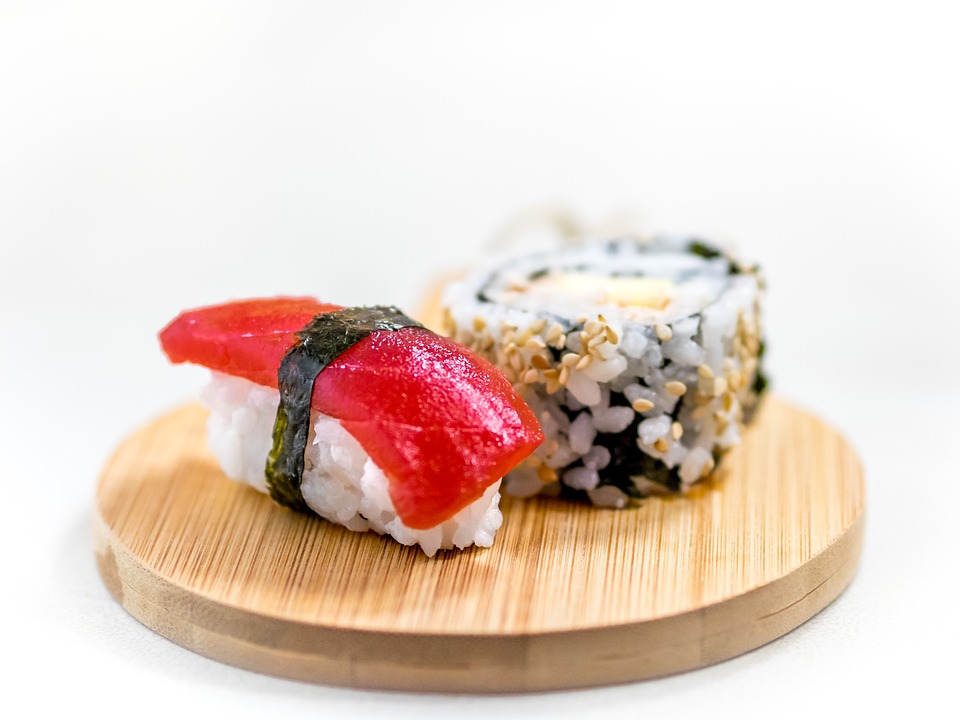
Tachigui sushi is eaten standing and finished in fifteen minutes. It is how Edo ate sushi when it was street food. Quality at the better counters is startling for the price.
Fish wants a longer edge, and a wider santoku gives you the width for clean single strokes.
Edo-period sushi was fast food, sold from carts and eaten by hand while standing. The pieces were considerably larger and the fish was cured rather than raw, since refrigeration did not exist. The modern standing counter is the closest surviving descendant of that street trade.
Practical: Simply look for shops with no chairs and a queue at midday.
20. Descend into a department store food hall
Depachika occupy the basements of the big stores. They sell wagashi, wagyu, pickles and pastry at a standard most cities reserve for their finest shops. Moreover samples are offered without obligation.
For a smaller hand or a smaller kitchen, a shorter five-and-a-half-inch santoku trades length for manoeuvrability.
Anything sold today must be worth eating today. So from around seven the counters begin discounting. Bento, tempura and cut fruit fall by a third or more. Consequently the depachika at closing is one of the better-value meals in central Tokyo.
Practical: Of these, Isetan Shinjuku and Mitsukoshi Nihonbashi are the two to see. Go at seven when the day’s food is discounted.
21. Drink coffee in a Showa-era kissaten
Before the chains there were kissaten. Dark wood, velvet seats, a siphon brewer, a proprietor of forty years. Yet many still serve a thick egg sandwich and refuse to hurry you.
Kissaten emerged in the early twentieth century as places to sit and read. The culture assumed you would stay. Many still discourage laptops and conversation above a murmur. Coffee is brewed one cup at a time and arrives on a saucer with a small jug.
Practical: Jimbocho and Ginza hold the greatest concentration of survivors.
22. Take dinner on a yakatabune boat
Low wooden boats with tatami floors serve tempura and sake. They drift past the Sumida bridges and the Rainbow Bridge. Although the tradition is Edo-period, the boats still hang paper lanterns.
the itinerary-led edition is built around routes rather than listings, which suits a trip planned by water.
These pleasure boats date from the Edo period, when nobles hired them for moon-viewing and fireworks on the Sumida. The tradition nearly died in the twentieth century and was revived by a handful of operators. Consequently what looks like a tourist novelty is closer to a restoration.
Practical: Most operators require a group booking, though several now sell single seats to visitors.
6Neighbourhoods that survived
23. Get lost in Yanaka
The firebombing and the earthquake both largely missed this district. Wooden houses, a working cemetery and a hundred temples remain. Meanwhile cats sleep on walls. The shopping street sells croquettes rather than souvenirs.
the novel in print is still available in several editions, and reading it before the walk changes the district entirely.
The district sits within the old shitamachi. Merchants and craftsmen lived there while the samurai occupied the hills. Several workshops still operate — a woodblock printer, a paper shop, a maker of wooden buckets. None of them advertises to visitors.
Practical: Start at Nippori station, then walk without a map. Allow half a day.
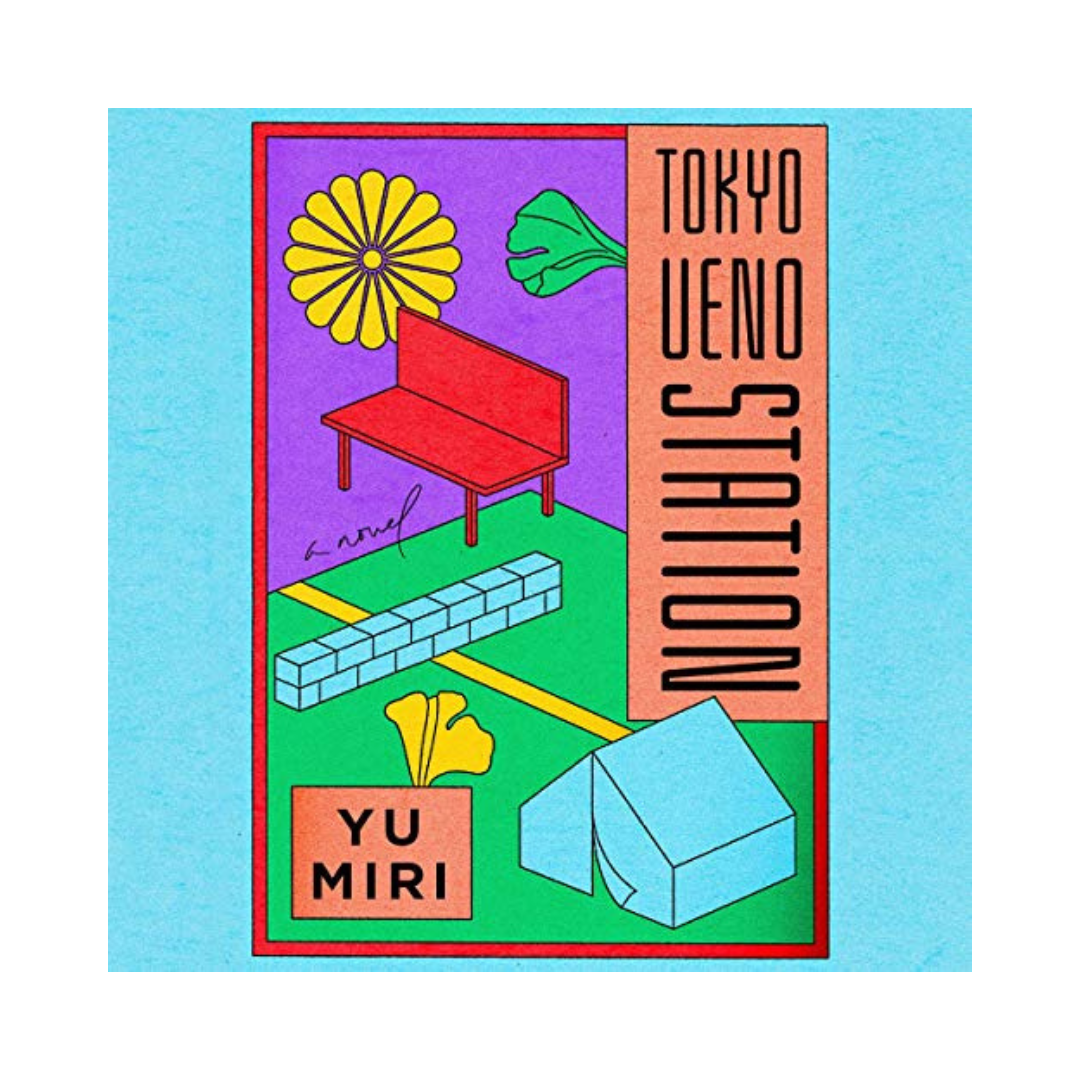
Kazu is dead, and he haunts the park by Ueno Station where he lived out his last years in the homeless villages. Yu Miri writes the low city from underneath — the labourers who built the 1964 Olympics and were discarded by them. Read it before walking Yanaka and the district stops looking picturesque.
24. Drink in a bar that seats six
Golden Gai holds over two hundred bars across six alleys, most no larger than a garden shed. Some charge a cover for outsiders, and a few remain regulars-only. Nevertheless the ones that welcome you are worth the search.
Golden Gai was a black market after the war and has repelled redevelopment since. The operators hold their own leases. Many bars have a theme so specific it borders on absurd. One plays only 1970s punk; another admits you only if you can name a jazz record.
Practical: Shinjuku. Cash is safer than card, while one drink per bar is the convention.
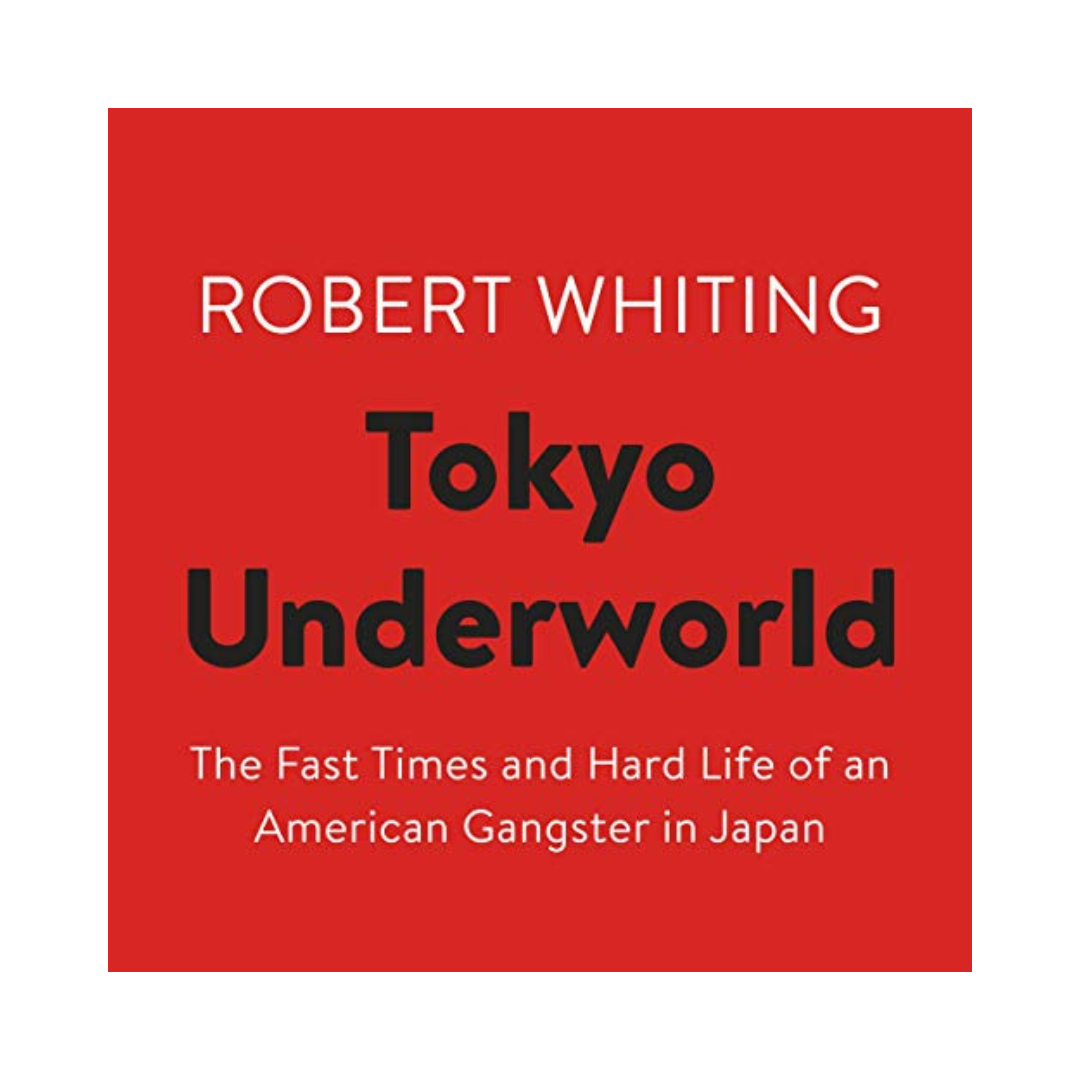
The postwar black market is the reason Golden Gai exists, and this is the definitive account of the years when American gangsters, Japanese yakuza and occupation officials ran the city between them. The six alleys make far more sense once you know what stood there in 1946.
25. Trawl Nakano Broadway for what you collected as a child
Four floors of shops selling vintage manga, cels, watches, toys and things with no English name. Mandarake alone occupies dozens of units. So it is Akihabara without the volume.
The building opened in 1966 as luxury apartments with a rooftop pool. It declined until secondhand dealers filled it. Mandarake began as one small shop here and grew into an international chain. Consequently the whole complex now functions as an accidental museum of Japanese popular culture.
Practical: Nakano station sits five minutes from Shinjuku, and shops stay open until eight.
26. Buy secondhand books by the kilometre in Jimbocho
Around one hundred and sixty bookshops occupy a few blocks. Many specialise in one subject — ukiyo-e prints, mountaineering, foreign literature. Moreover shelves spill onto the pavement in fine weather.
The same knife can be engraved as an engraved version, which makes it a gift rather than a purchase.
The district formed around the universities in the 1880s. It survived because the 1923 earthquake fire stopped a street short. Many shops face north, deliberately, to keep sunlight off the stock. Once you notice that, you cannot unsee it.
Practical: Alight at Jimbocho station, where several shops carry English stock, and the print dealers will let you browse.
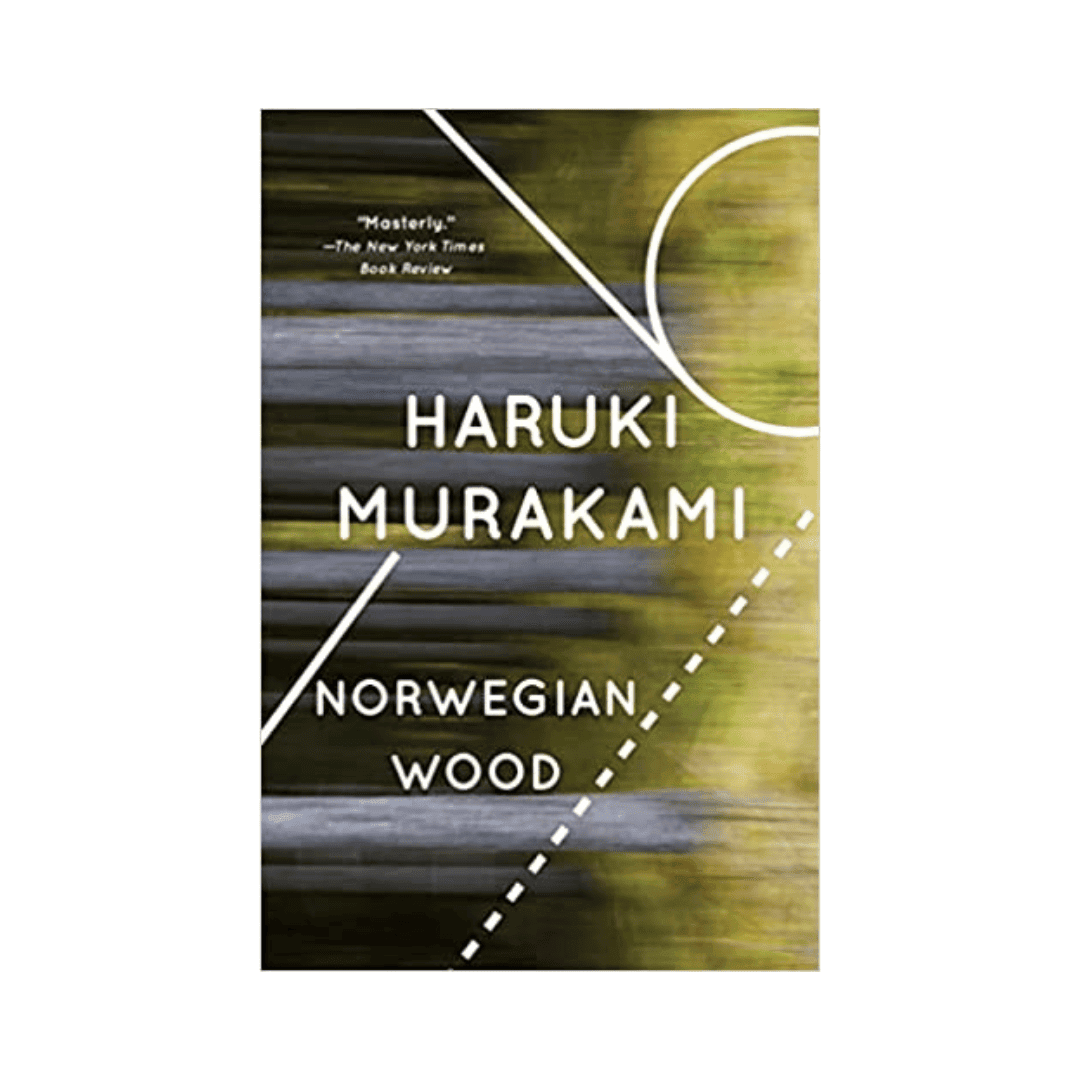
Murakami’s Tokyo novel moves through the student districts around Waseda in the late sixties, and Jimbocho sits at the edge of that world. Several shops here stock him in the original and in translation. Buying it three streets from where it is set is a particular pleasure.
Essays on Japanese culture, travel written for people who read, and the journals built from both. Leave your email and the next one finds you.
One letter a fortnight. Unsubscribe any time.
5Water, height and the long view
27. Soak at a neighbourhood sento
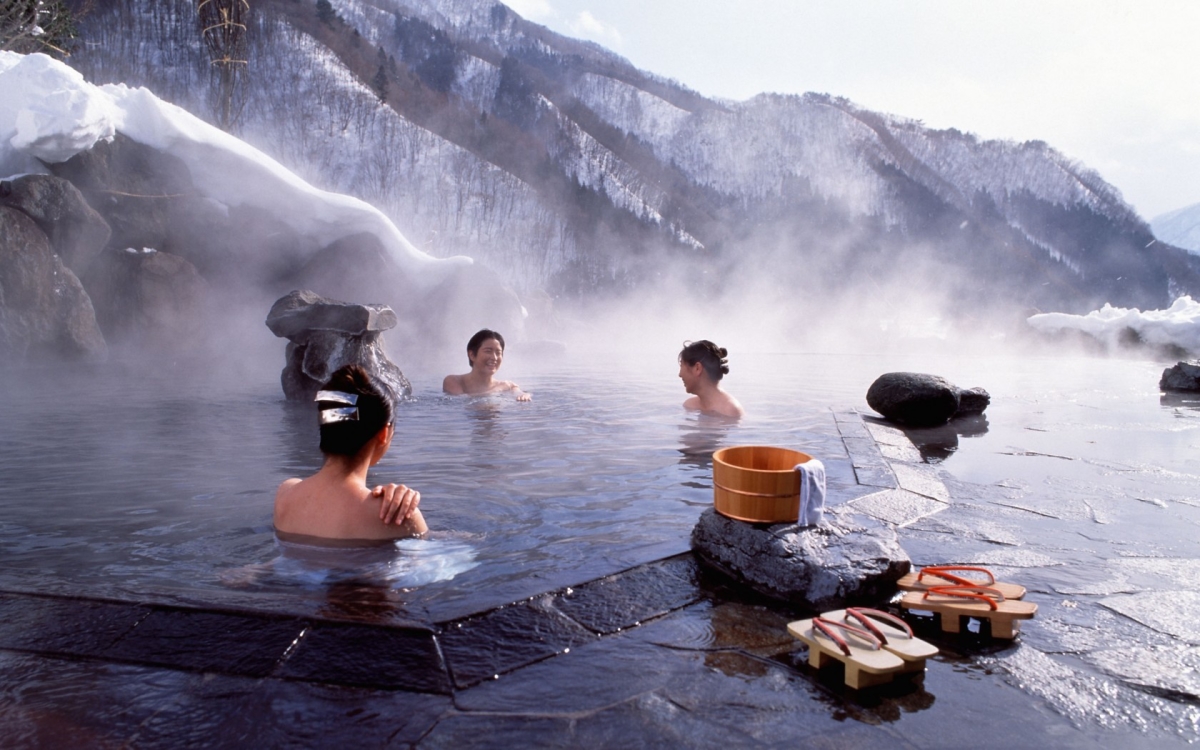
A sento is a public bathhouse rather than a hot spring, and it is where a district actually meets. Many are tiled with Fuji murals, painted by one of only three remaining specialists.
Tokyo held more than two thousand sento in the 1960s. The number falls every year as owners retire. Several have been restored by younger operators who kept the murals and added craft beer. The etiquette has not changed at all.
Practical: Roughly four hundred remain in Tokyo today. Bring a small towel and wash thoroughly before entering the water.
28. Climb Mount Takao before breakfast
Although an hour from Shinjuku, it offers eight trails to the summit. On a clear winter morning Fuji is visible from the top. A Buddhist temple sits halfway up, serving vegetarian food to pilgrims.
The mountain has drawn ascetic worship since the eighth century. The temple halfway up still runs fire rituals. It receives more annual visitors than any mountain on earth, which is why the early start matters.
Practical: Trail one is paved, whereas trail six follows a stream and is far better.
29. Ride the Sumida upstream
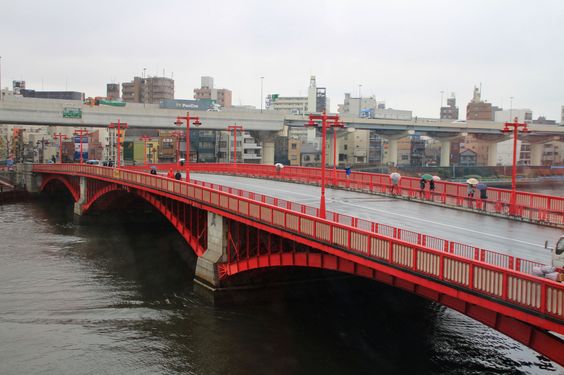
The river was Edo’s main road, and the water bus still runs it. Twelve bridges follow, each a different colour. Consequently the city rearranges itself seen from below.
Every bridge was rebuilt after the 1923 earthquake. The city treated it as an architectural showcase rather than an engineering job. Each was given a different structural form and colour on purpose. Consequently the river reads as a catalogue of interwar bridge design.
Practical: The Asakusa to Hinode run takes about forty minutes. The futuristic Himiko boat runs the same route.
4Art, design and the constructed world
30. Spend an afternoon in the Roppongi art triangle
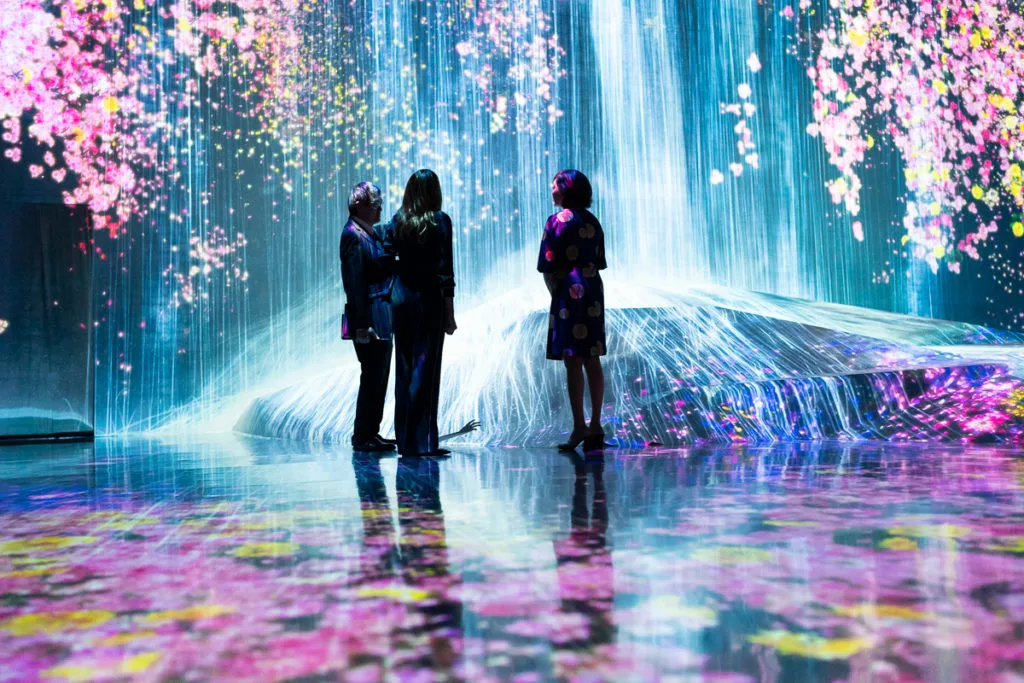
Three major institutions sit within walking distance. The Mori occupies the fifty-third floor, so exhibition and city arrive together. Meanwhile the National Art Center holds no permanent collection, only a Kurokawa building and rotating shows.
The three opened within a few years of one another. The aim was to give Roppongi a daytime identity beyond its nightlife. It worked. Meanwhile the Mori’s observation deck is included with the museum ticket, which few visitors realise.
Practical: Usefully, a combined ticket covers two of the three. Evenings are quietest.
31. Walk into a house from 1740
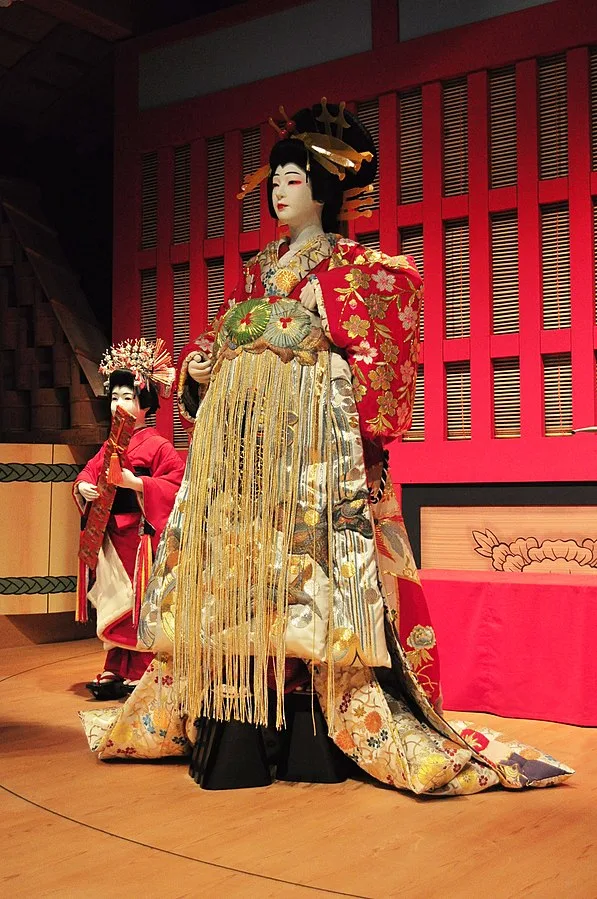
The Edo-Tokyo Open Air Architectural Museum has moved thirty complete buildings to a park in Koganei. Farmhouses, a bathhouse, a bar, a photographer’s studio. Better still, you take your shoes off and go inside.
Buildings were dismantled, transported and reassembled here when their original sites were redeveloped. Inside are a farmhouse, a soy sauce shop, a 1920s villa and a tram. Because you may enter almost all of them, it becomes an architecture lesson taken with your shoes off.
Practical: Travel to Musashi-Koganei station, then allow three hours; it is much larger than it appears.
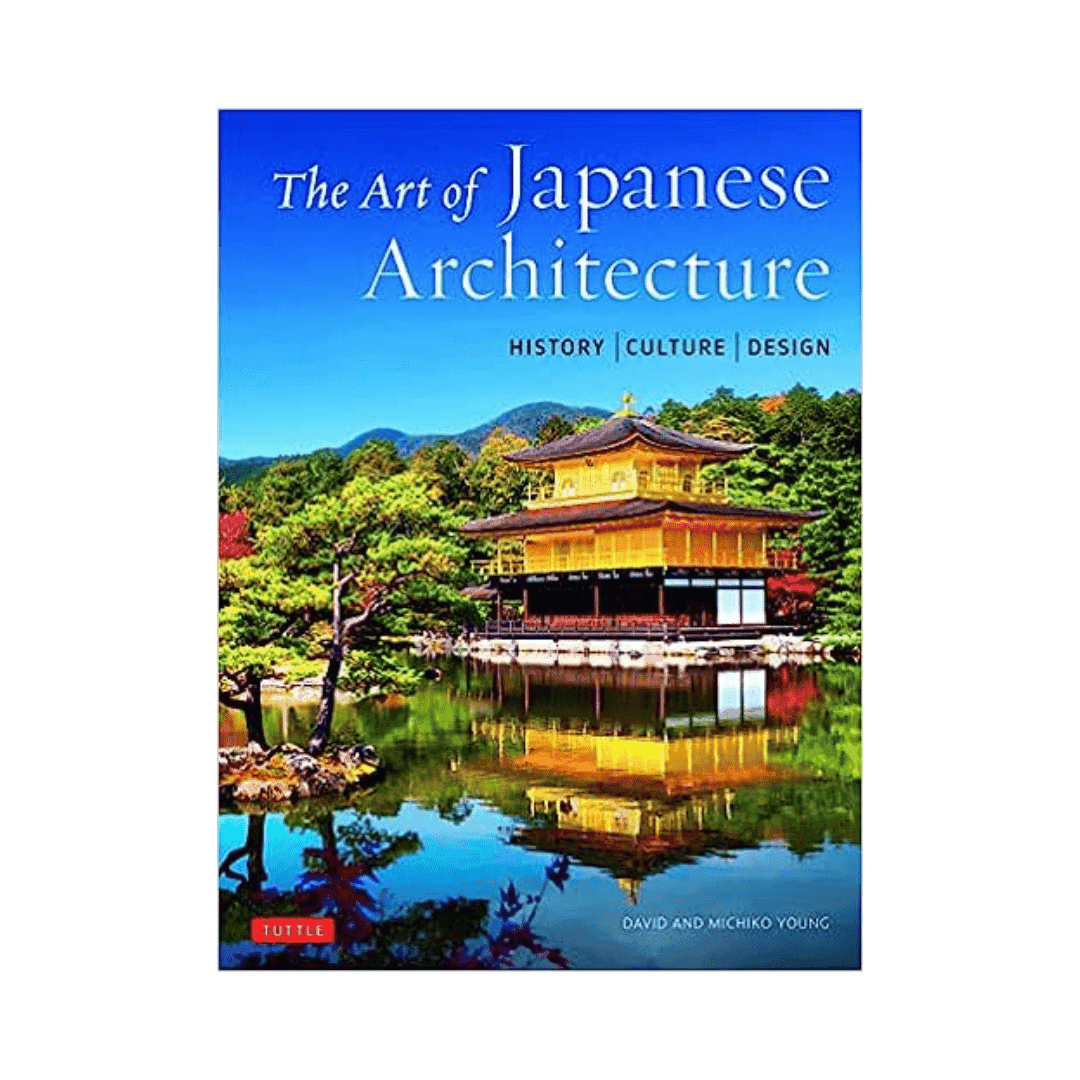
A clear survey of how Japanese building developed from pit dwellings to the modern era, heavily illustrated and readable without a background in the subject. Take it to the open air museum and the thirty relocated buildings arrange themselves into a sequence rather than a collection.
32. Choose a knife on Kappabashi
The restaurant supply street runs eight hundred metres. It sells everything a kitchen needs, including the plastic food models in restaurant windows. Moreover the knife shops grind an edge and engrave your name while you wait.
Nothing here travels well unwrapped. a furoshiki cloth is the traditional square cloth, and the shop staff will show you the knot.
If you would rather buy before you fly, the Shun Classic hollow-ground santoku is the seven-inch hollow ground, which releases food from the blade.
Japanese kitchen knives descend from swordsmithing. Several shops here are run by families who made blades before the Meiji ban. A single-bevel knife takes practice and rewards it. Staff will ask what you cook before letting you buy anything.
Practical: The street runs between Asakusa and Ueno, and most shops close by five and many shut on Sundays.
33. Sit with an ink painting at the Nezu Museum
Kuma’s building leads you down a long bamboo corridor before any art appears. That is the point. The collection holds national treasures, and the garden behind it contains four teahouses.
A railway magnate who also practised tea assembled the collection. Objects were chosen to be used rather than displayed. Seven national treasures sit among them. Meanwhile the garden holds four teahouses on a slope that feels nothing like central Tokyo.
Practical: Find it in Omotesando, where the garden alone justifies the ticket.
Half the entries here turn on timing rather than sight. The pause before a Noh gesture, the interval between movements in a tea room, the hour before a temple fills. Ma is the Japanese word for that space. This is ninety days of practising it.
View This Journal3Slow rituals worth the trouble
34. Sit zazen at a working temple
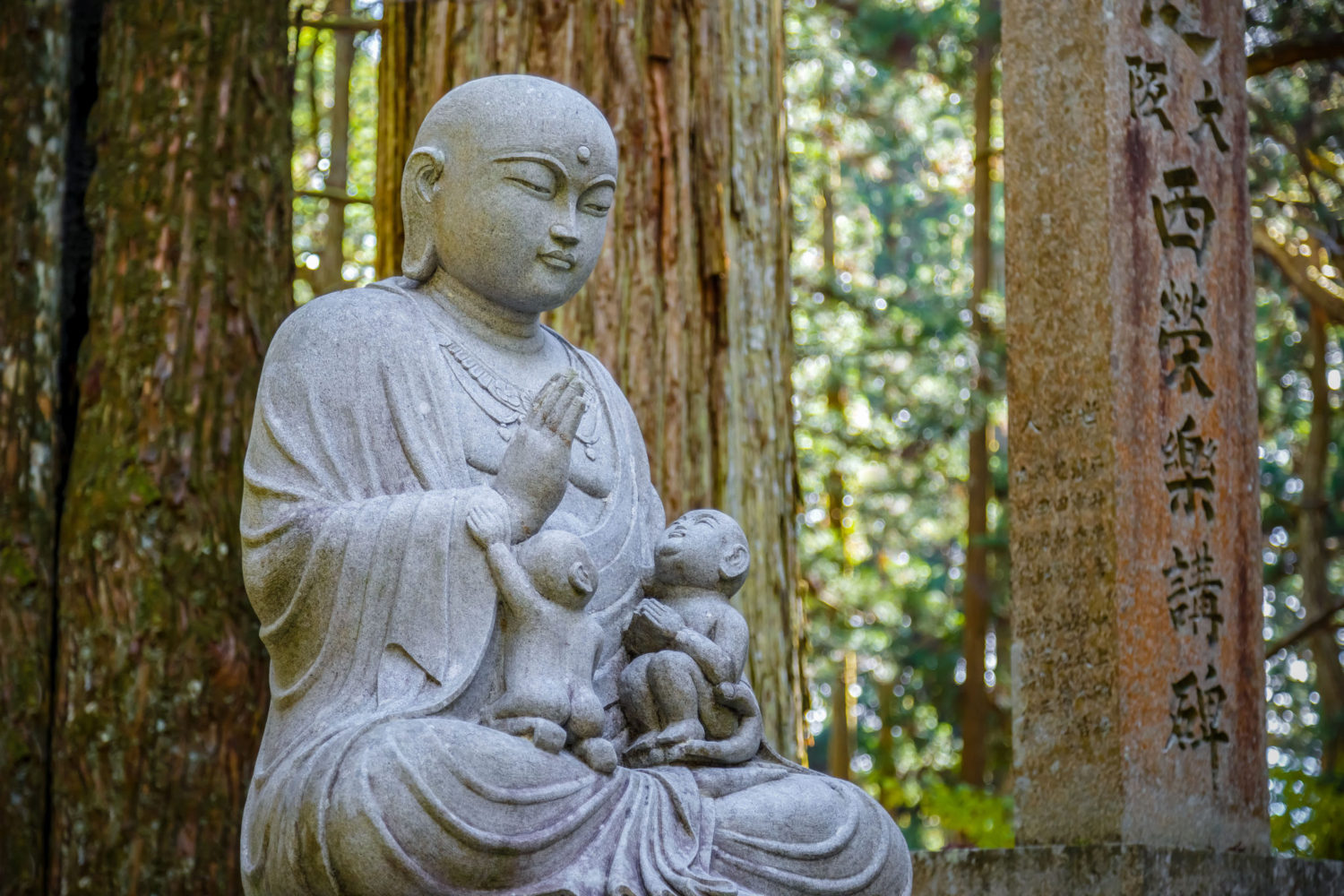
Several Tokyo temples run early morning meditation open to visitors. You sit facing a wall for twenty-five minute periods. Meanwhile a monk will correct your posture with a stick if you ask.
Zazen is not relaxation and is not intended to be pleasant. The instruction is to sit, keep the eyes half open, and let thoughts pass unfollowed. Most beginners find the first period long and the second shorter. That is the entire lesson.
Sessions generally begin between six and seven, and require no booking. Loose trousers help. The practice behind the stillness.
35. Take tea in a machiai teahouse in Kagurazaka
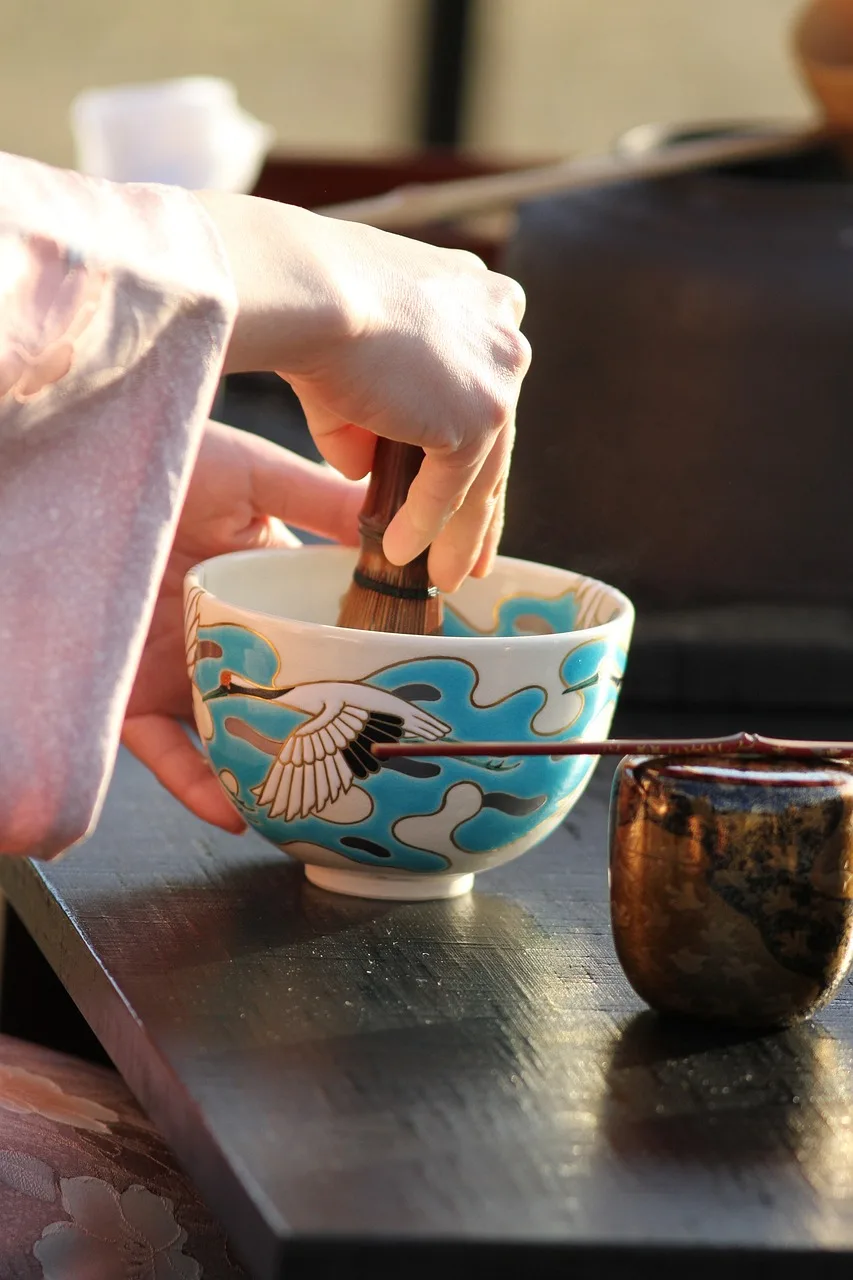
Today the old geisha district retains stone-paved lanes and a handful of teahouses. Some now admit visitors for an evening of conversation, dance and shamisen. That was closed to outsiders a generation ago.
Geisha in Tokyo are called geigi, and fewer than a hundred now work in the city against thousands a century ago. An evening involves conversation as much as performance. The skill being sold is the running of a room. Consequently the price reflects an art that takes decades to learn.
Bookings go through hotels or specialist agents rather than directly. How the tea ceremony works.
36. Watch plum blossom at Yushima Tenjin
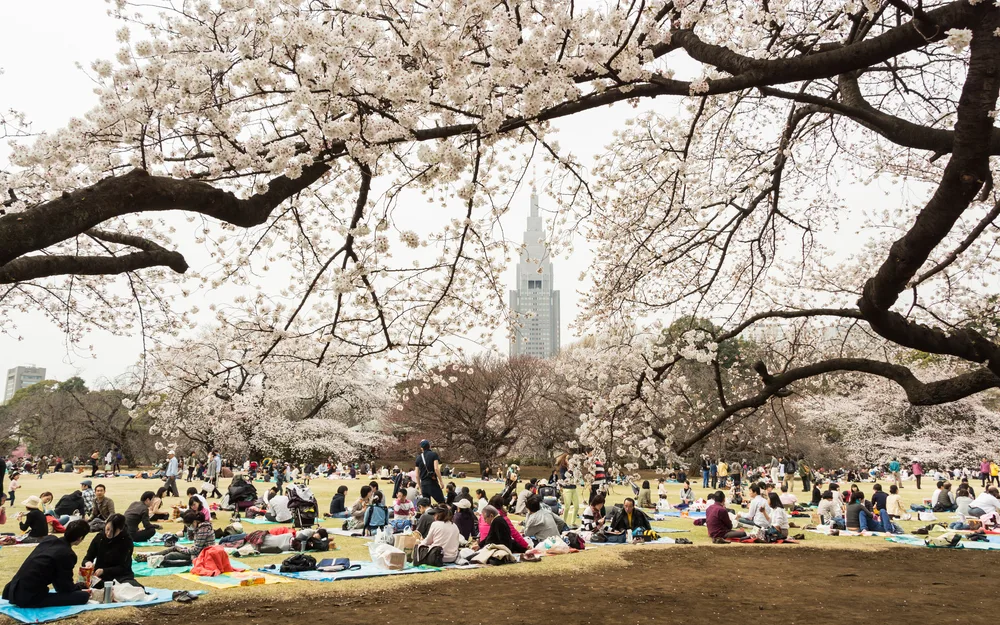
Plum comes a month before cherry, yet draws a tenth of the crowd. The shrine is dedicated to the god of learning, so the grounds fill with students leaving wooden plaques before examinations.
Plum arrived from China long before cherry became the national flower. Classical poetry treats it as the superior subject. It flowers in cold weather and carries a scent that cherry lacks entirely. Meanwhile examination season gives the grounds an atmosphere no cherry park has.
Practical: Visit in late February, when around three hundred trees flower. The plaques are worth reading.
37. Have a head spa and lose an hour
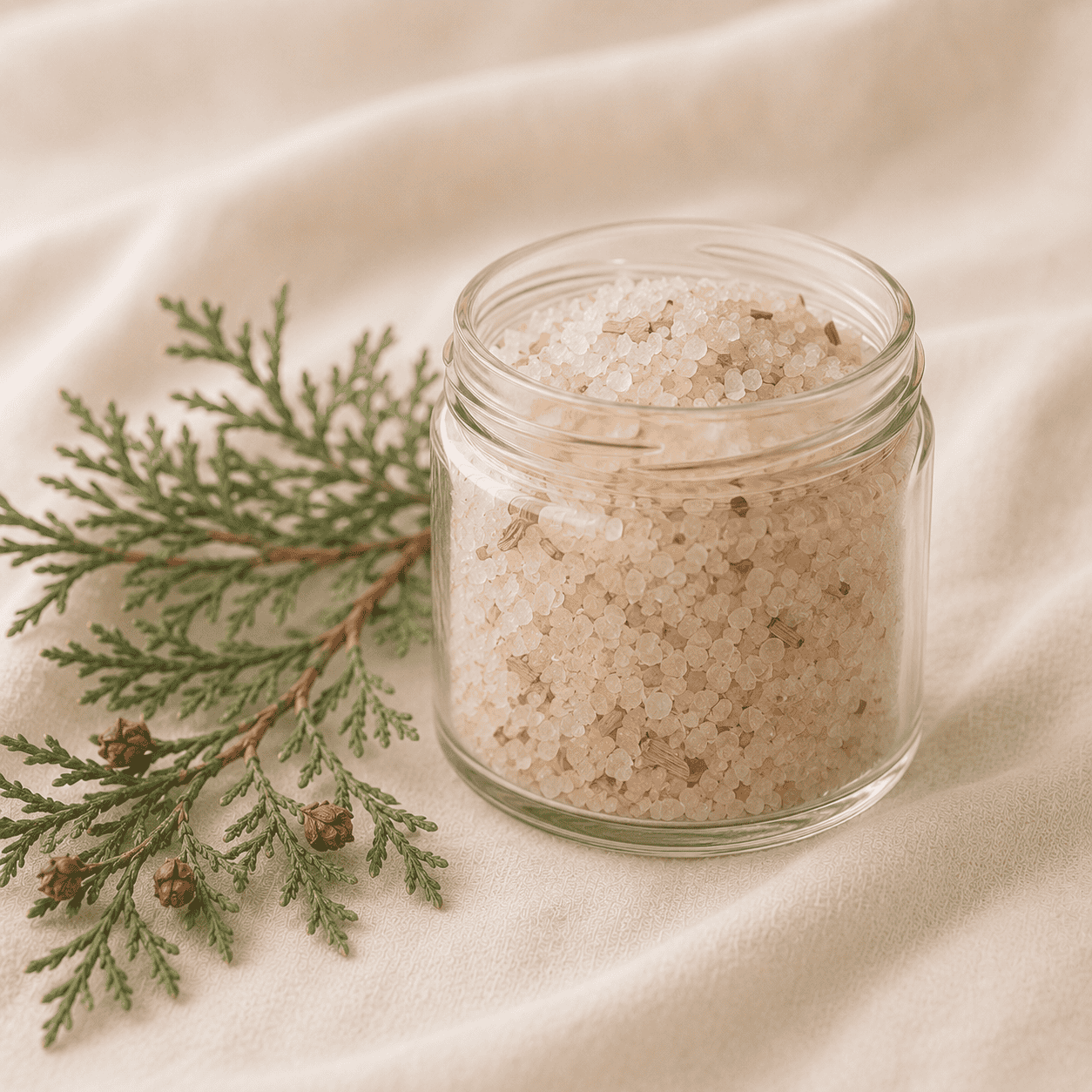
The Japanese head spa treats the scalp as seriously as a facial. Warm oil, a shampoo that takes twenty minutes, a scalp camera before and after. Consequently it has become one of the city’s genuine bucket list bookings.
The treatment grew from Japanese hairdressing rather than spa culture. Hence it is clinical rather than aromatic. Scalp condition is assessed under magnification, then treated accordingly. Most people fall asleep during the second shampoo. Salons regard that as a professional success.
Practical: Salons across Shibuya and Ginza now offer English service. Book at least a week ahead.
2How to use a list this long
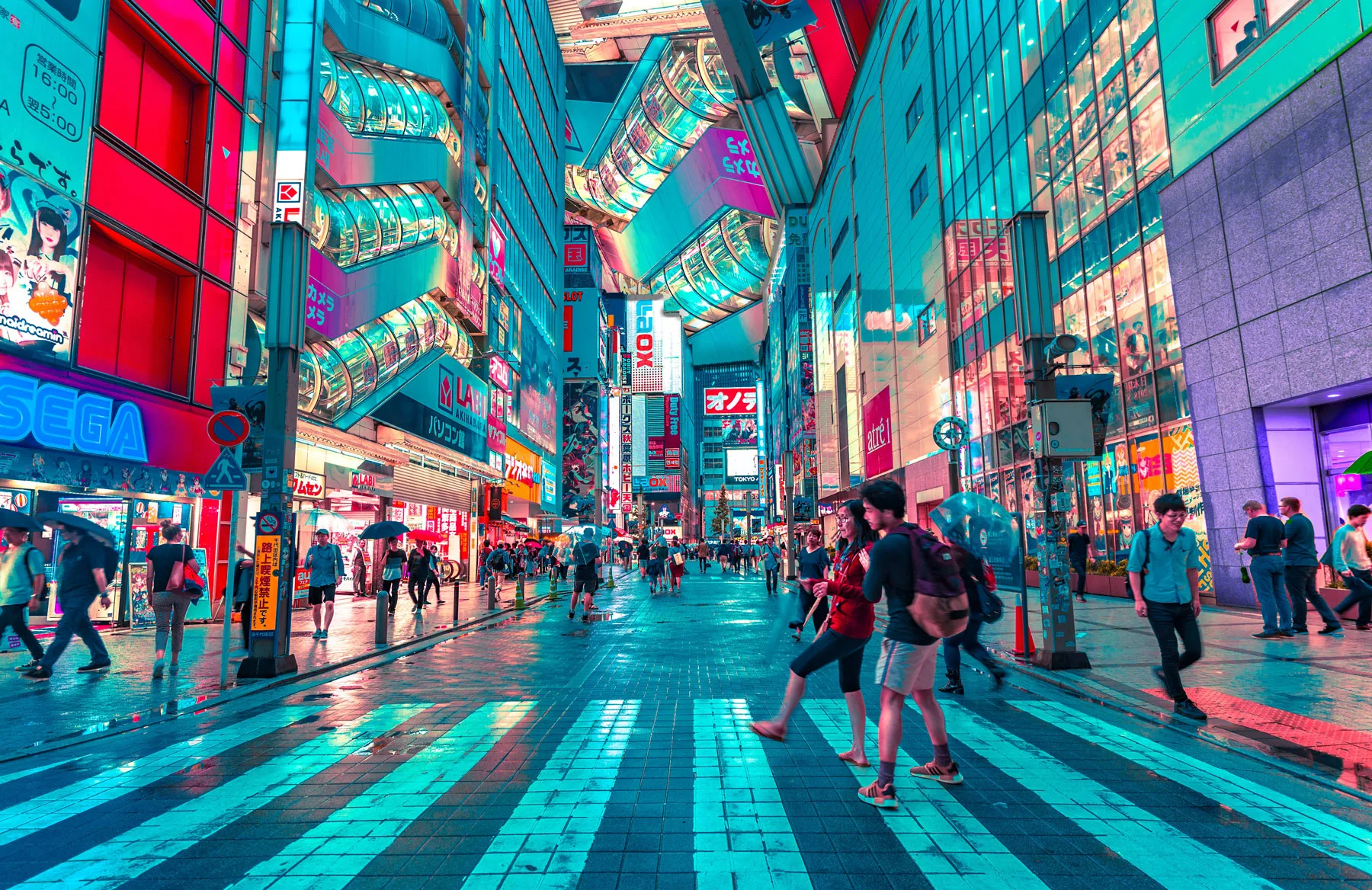
Nobody does thirty-seven things in one visit, and attempting it would produce the worst holiday of your life. Three or four per trip is a good ratio. Space them so a demanding morning is followed by a slow afternoon.
Instead, pick by the kind of day you want rather than the ranking. A craft workshop and a garden pair well. Sumo practice at six and a bathhouse at four pair even better, because the second undoes the first.
Above all, however, leave gaps. Tokyo’s best moments arrive in the unplanned hour between two arrangements. The wrong turn into a shopping street. The shrine you had not read about. A bar with six seats that happened to have one free.
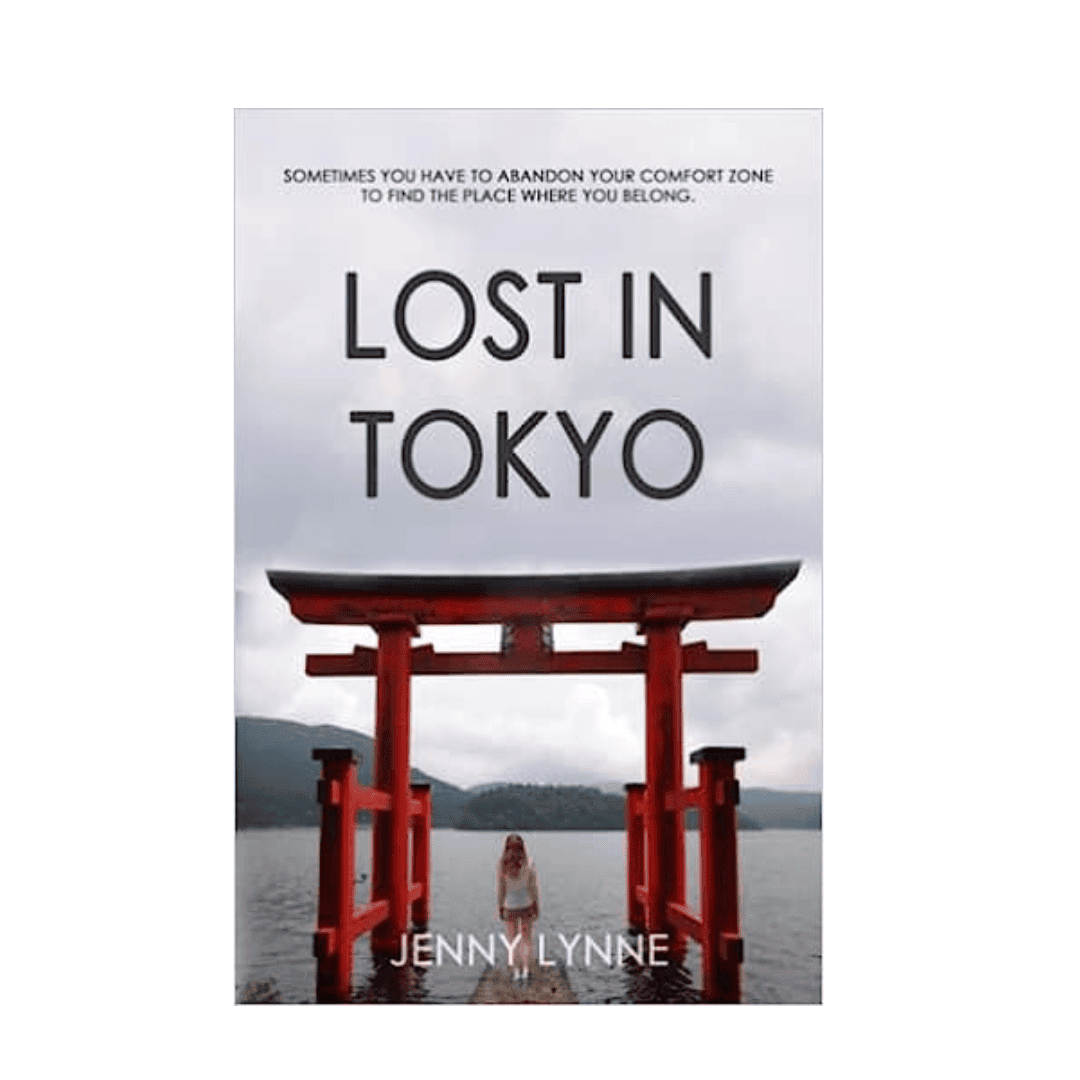
A first-time visitor’s account of getting comprehensively lost and finding the trip inside the mistake. It is the right note to end on, because no itinerary survives contact with the city and the ones that bend are the ones worth having.
1Questions Worth Asking
What is the most unique thing to do in Tokyo?
Watching sumo morning practice is the experience visitors most often name afterwards. Stables train daily and admit a small number of guests through specialist guides. It is silent, close and entirely unlike the tournament.
What should I do in Tokyo that is not touristy?
Yanaka, Kagurazaka and the Toden Arakawa tram line all sit outside the standard route. So does a neighbourhood sento, which is where a district actually meets. Each is reachable on a normal transport pass.
Is the Robot Restaurant still open in Tokyo?
No. The Shinjuku venue closed and did not reopen. Similar high-energy dinner shows now operate in the same district, so the style of evening survives even though the original does not.

How many days do you need in Tokyo?
Four days covers the central districts at a reasonable pace. Seven allows the outer neighbourhoods, a craft workshop and a day trip to Takao or the coast without rushing.
What is the best time of year to visit Tokyo?
Late March to April for blossom and October to November for autumn colour, though both are the busiest and most expensive months. February is cold, cheap and unexpectedly good for plum blossom and clear views of Fuji.
Do you need to book Tokyo experiences in advance?
Workshops, teahouse evenings and sumo practice need booking, often weeks ahead. Temples, gardens, markets and neighbourhood walking need nothing at all.