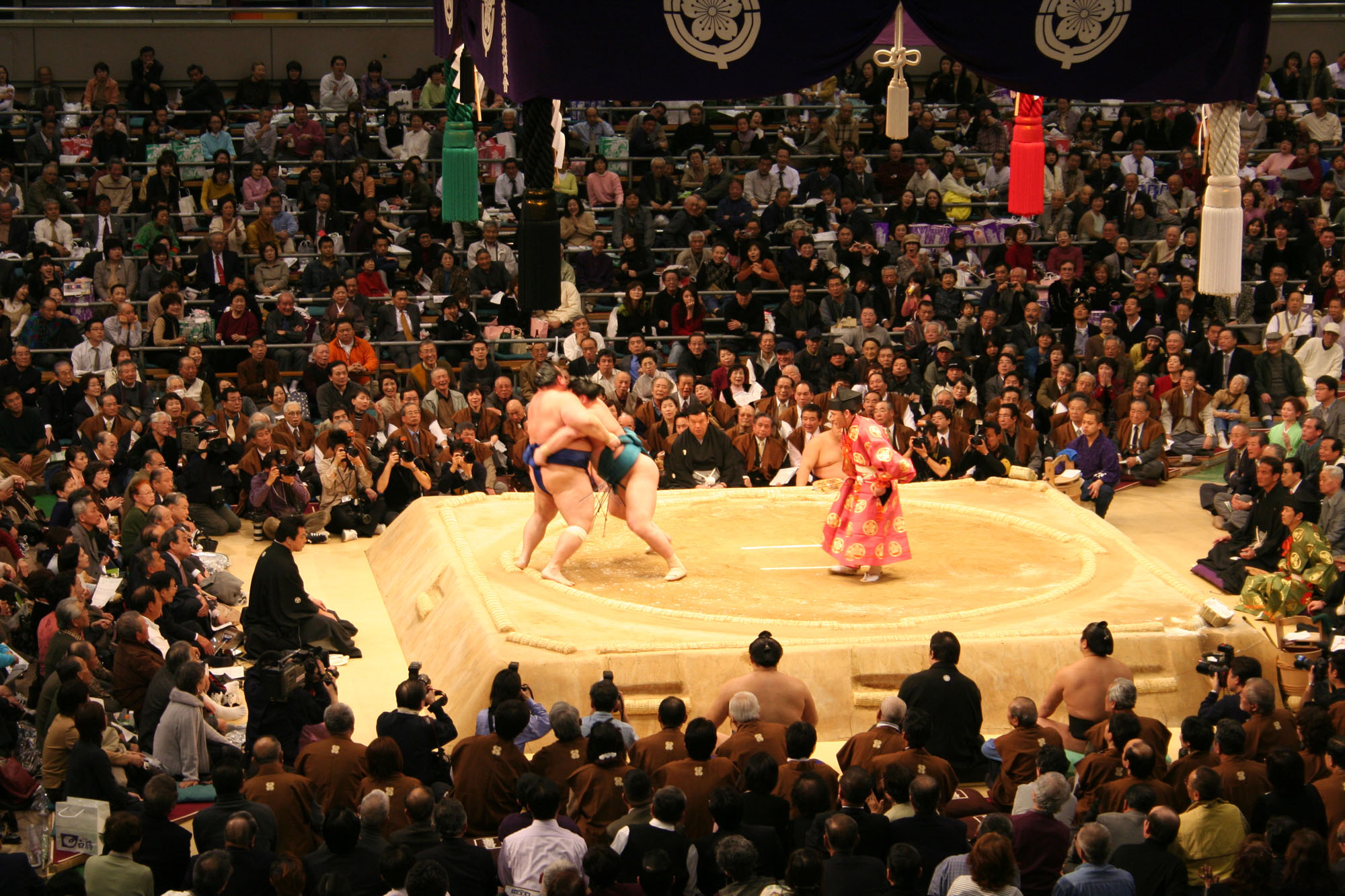
The sumo wrestling Japan stages six times a year is one of the few sporting events where the ceremony matters as much as the result. Two wrestlers face each other across a ring of packed clay, throw salt, crouch, rise and crouch again. Then, in a few seconds, it is over. For a visitor, the challenge is not appreciating sumo. It is knowing when and where to see it, and how to get a seat.
This guide answers those questions. It covers the six grand tournaments and their cities, and how a tournament day unfolds. Next come the ticket types and what they cost in dollars, and how to watch morning practice at a training stable. It ends in Ryogoku, the Tokyo neighborhood that has lived with sumo for two centuries. There, a bowl of the hot pot wrestlers eat to stay strong awaits.
Book a seat at one of the six grand tournaments: January, May and September in Tokyo, March in Osaka, July in Nagoya and November in Fukuoka. Tickets go on sale about a month ahead. Between tournaments, some Tokyo stables welcome visitors to morning practice.
The Sumo Wrestling Japan Calendar: Six Grand Tournaments
Professional sumo runs on a fixed rhythm. There are six grand tournaments, called honbasho, held in the odd months of the year. Each one lasts fifteen days and begins on a Sunday. Wrestlers in the top division fight once a day. The one with the best record on the final day takes the Emperor’s Cup. Because the calendar never changes, you can plan a trip around it months ahead.
| Month | City | Venue |
|---|---|---|
| January | Tokyo | Ryogoku Kokugikan |
| March | Osaka | EDION Arena Osaka |
| May | Tokyo | Ryogoku Kokugikan |
| July | Nagoya | IG Arena |
| September | Tokyo | Ryogoku Kokugikan |
| November | Fukuoka | Fukuoka Kokusai Center |
Tokyo hosts half of the year’s tournaments, so most visitors see sumo at Ryogoku Kokugikan, the national sumo hall. However, each regional tournament has its own character. Osaka in March feels loud and warm. Nagoya moved in 2025 to IG Arena, a new venue, after 59 seasons in the prefectural gymnasium. Fukuoka closes the year in November, when the crowds are local and the mood is relaxed.

The Japan Sumo Association publishes exact dates on its official English site. Check them before you book flights, because a tournament that starts one Sunday later can change your whole itinerary. If your dates fall between tournaments, do not give up on sumo. Morning practice, covered below, is often the more memorable experience anyway, and you can watch it from a few feet away.
How a Tournament Day Unfolds
A tournament day is long, and that is part of its charm. Doors open in the morning, when the lowest divisions take the ring in front of a nearly empty hall. These young wrestlers fight fast and hard, and you can watch them from almost any seat. As the day goes on, the ranks rise, the crowd grows and the bouts become slower and more ceremonial.
Most visitors arrive in the early afternoon. By then the second division, juryo, is fighting, and the hall starts to fill. In mid-afternoon, the top division, makuuchi, enters the ring in a procession called dohyo-iri. Each wrestler wears a heavy silk apron embroidered with his stable’s emblem. The grand champions, the yokozuna, then perform their own entrance, with a rope belt and two attendants.
The rituals before each bout
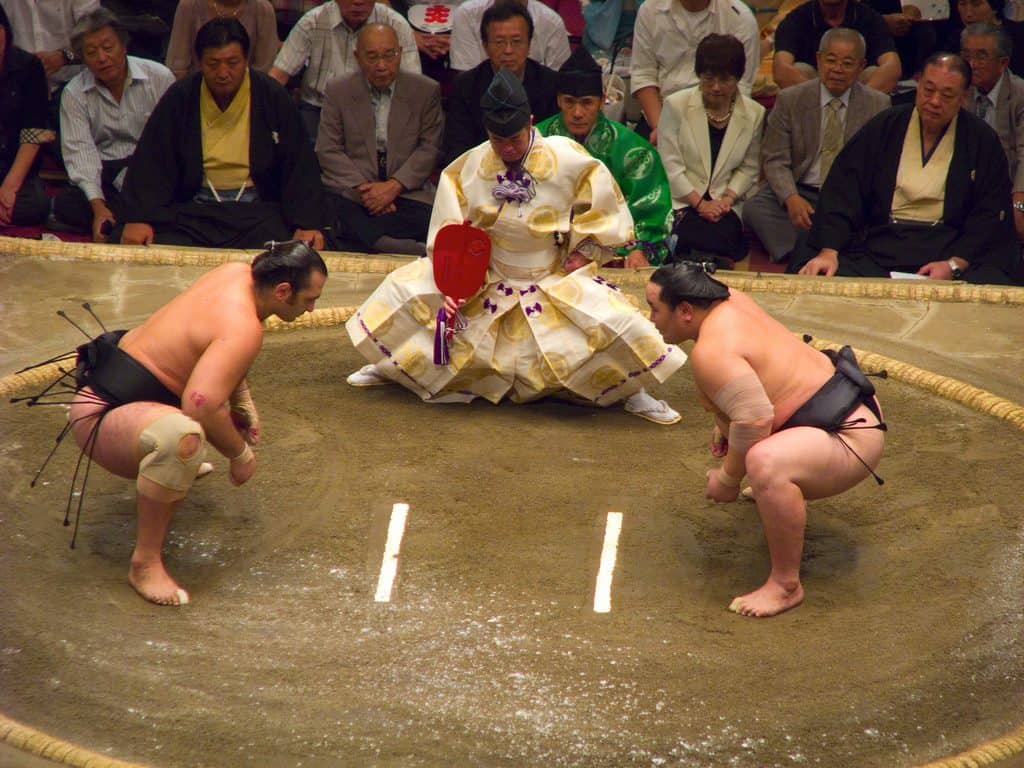
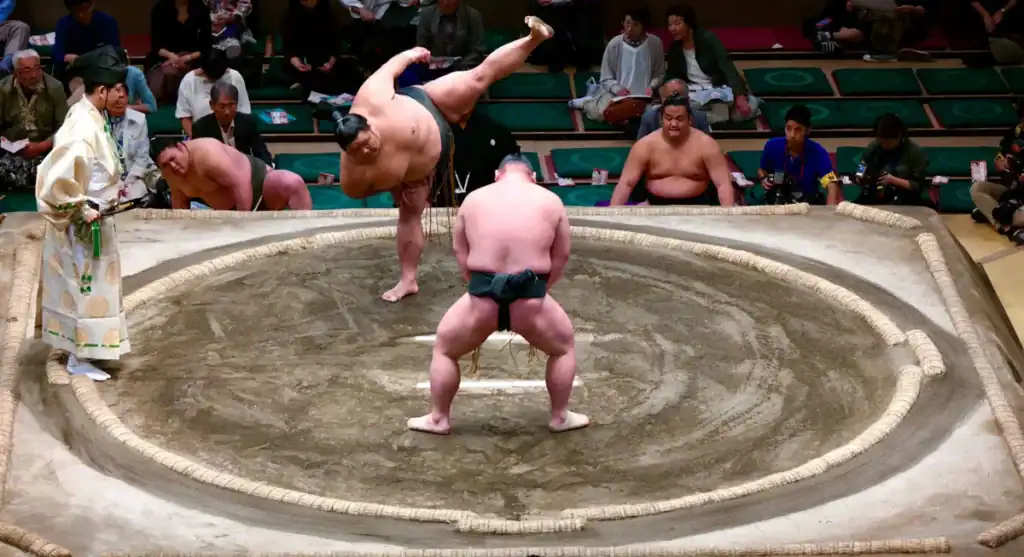
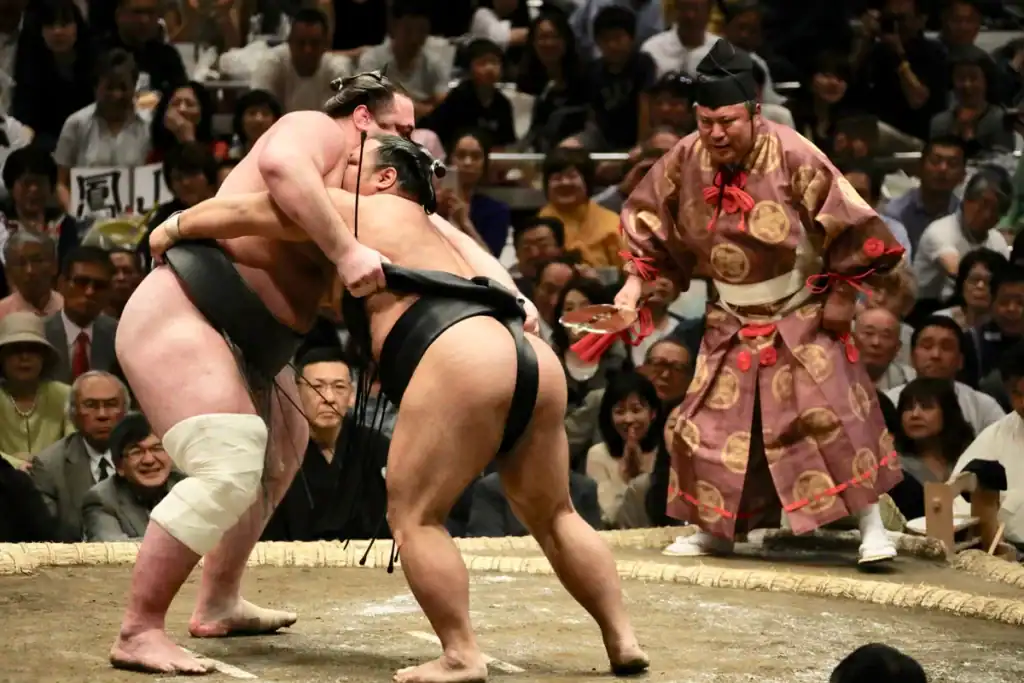
Before every top-division bout, the two wrestlers go through a sequence of rituals. They stamp their feet to drive away bad luck and rinse their mouths with water. Then each throws a handful of salt across the ring to purify it. Then they crouch at the starting lines, glare, stand and return to their corners. This can repeat several times. When both men touch their fists to the clay at the same moment, the bout begins.
The referee, the gyoji, wears silk robes in the style of the Heian court and holds a wooden fan. His rank mirrors the rank of the wrestlers he judges. Judges in black kimono sit around the ring and can overrule him. A wrestler loses when any part of his body except his feet touches the clay, or when he steps outside the straw bales. There are 82 winning techniques, but a handful decide most bouts.
You may also like

The last hour
The final hour holds the strongest wrestlers and the loudest crowd. Banners from sponsors circle the ring before the biggest bouts, and each one means prize money for the winner. When a yokozuna loses, cushions sometimes fly from the box seats, an old custom the officials discourage. The last bout usually ends around 6 pm. A bow-twirling ceremony, the yumitori-shiki, closes the day as the crowd heads for the station.
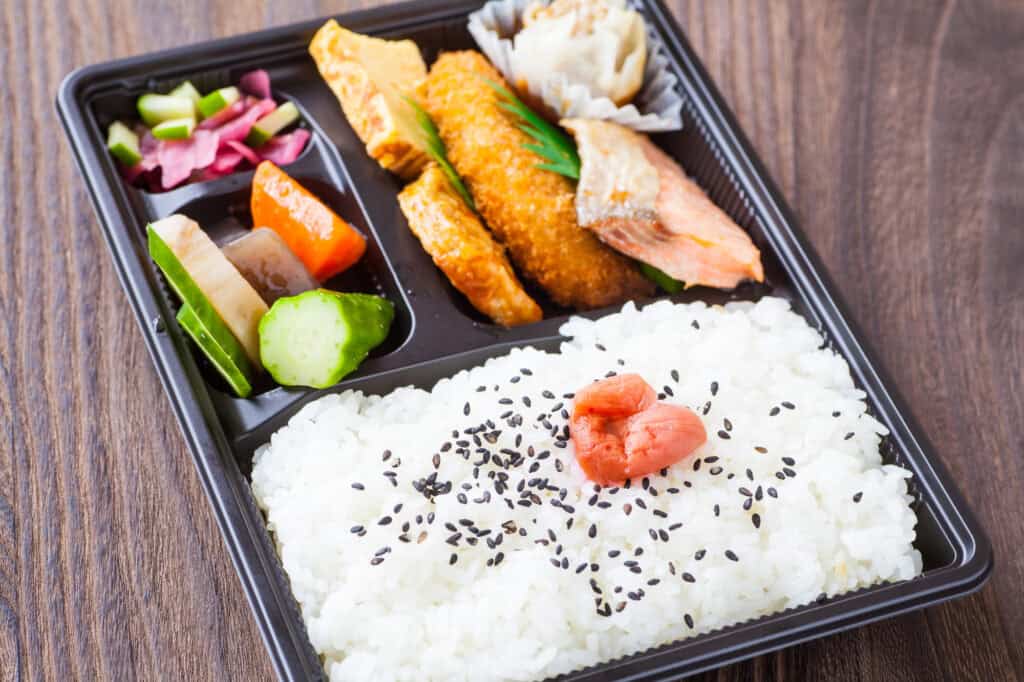
If you only have a few hours, arrive by 2 pm. You will see the end of the second division, both ring-entering ceremonies and every top-division bout. Bring a light jacket, since the hall can feel cool by evening, and a bento for the long middle of the day. Food and drink are sold inside, and you can eat at your seat except at ringside.
Sumo Tickets: Types, Prices and How to Buy
Tickets for each grand tournament usually go on sale about a month before the first day. The Japan Sumo Association runs an official ticket site with an English version, and that is the place to start. For the September 2026 Tokyo tournament, for example, the English sale opened on August 8 at 10 am Japan time. Weekend days and the final day sell out first, often within hours, so a weekday is the easier ticket. Demand for the sumo wrestling Japan stages in Tokyo is especially high.
At Ryogoku Kokugikan, upper-level chair seats run from about $23 (¥3,500) to $73 (¥11,000) per person, depending on the row and the day. A box seat, called masu-seki, is sold per box for four people. Prices run from roughly $230 (¥34,000) to $400 (¥60,000) per box. Ringside seats, the tamari-seki, are the closest of all, and the hardest to buy.

If every advance ticket is gone, there is still a chance. A limited number of same-day tickets, about $15 (¥2,200), go on sale at the venue each morning, roughly 400 in Tokyo. They are for the back rows of the upper level, and lines form early. Licensed tour operators also sell packages with seats and an English-speaking guide. They cost more, but they solve the booking problem and explain each bout as it happens.
A note on resale
Be careful with resale sites. Prices on unofficial platforms can run several times the face value, and some tickets are not valid. Stick to the official site, the venue’s own counters or a licensed operator. Planning a whole trip around one tournament day? Then a package from a reputable operator is the safest way to guarantee the seat you want.
Choosing a Seat: Box, Chair or Ringside
The box seats are the classic way to watch sumo. You sit on cushions in a small square on the floor, shoes off, with food and drink beside you. The views are excellent and the atmosphere is festive. However, the boxes are tight. Four people in one box is snug, and sitting cross-legged for hours is hard for some. Many couples book a full box for two, which is both more comfortable and more expensive.

Chair seats on the upper level are the practical choice. They are easier to buy and kinder to your back, and you can see the full ring with every ritual. The trade-off is distance. From the top rows, the wrestlers look small, and you miss the expressions that make each standoff so tense. That is why so many regulars bring something to close the gap.
Nikon Travelite Binoculars — the upper-level seat, brought closer
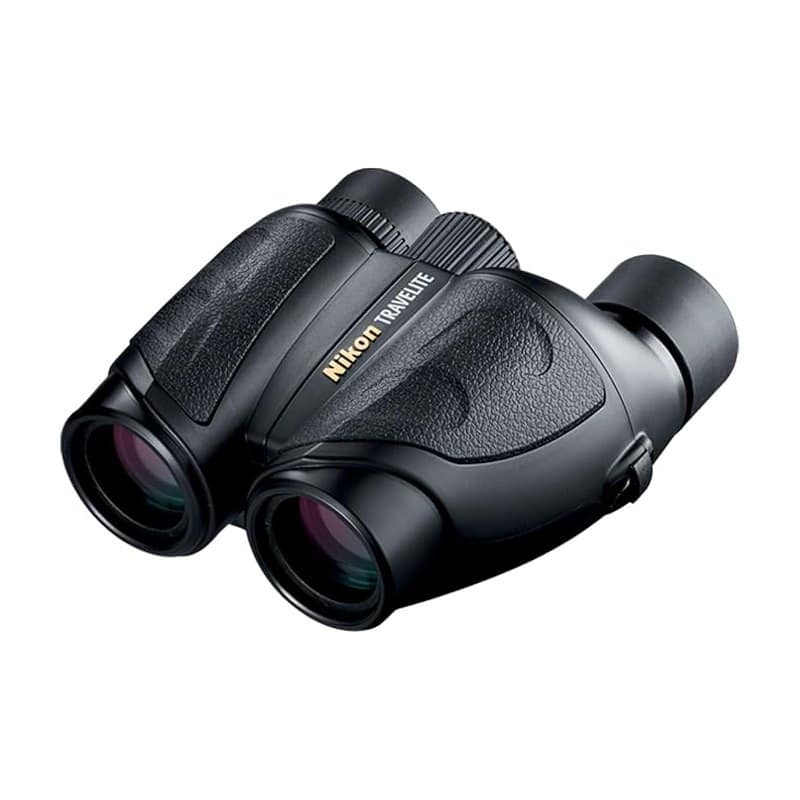
The Nikon Travelite binoculars are compact enough for a coat pocket and light enough to hold through a long afternoon. From the upper level of the Kokugikan, they turn a distant blur into a face. You see the stare before the charge, the salt leaving a wrestler’s hand and the referee’s fan turning. The optics are waterproof and fogproof, which helps on a wet tournament day. They also earn their place beyond the hall. Use them for the gardens of Kyoto, the castles of Osaka and Nagoya, or birds over a garden pond. For one small item in your bag, they change the experience of a chair seat completely.
Ringside seats are another world. You sit on a cushion just beyond the clay, close enough to hear the wrestlers breathe. They come with strict rules: no food, no drink, no photography during bouts and no children. There is also a real chance that a wrestler of 330 pounds will land in your lap. Most visitors find the box seats a better balance of comfort and closeness, with the freedom to eat, drink and take photos.
Morning Practice at a Sumo Stable
Between tournaments, the best way to see sumo is often at a stable, or heya, where wrestlers live and train. Practice, called keiko, starts early, usually around 7 am, and runs for two or three hours. The youngest wrestlers start first. The senior men arrive later, and the session builds to fierce, repeated bouts. Watching from a few feet away, you feel the impact in your chest.
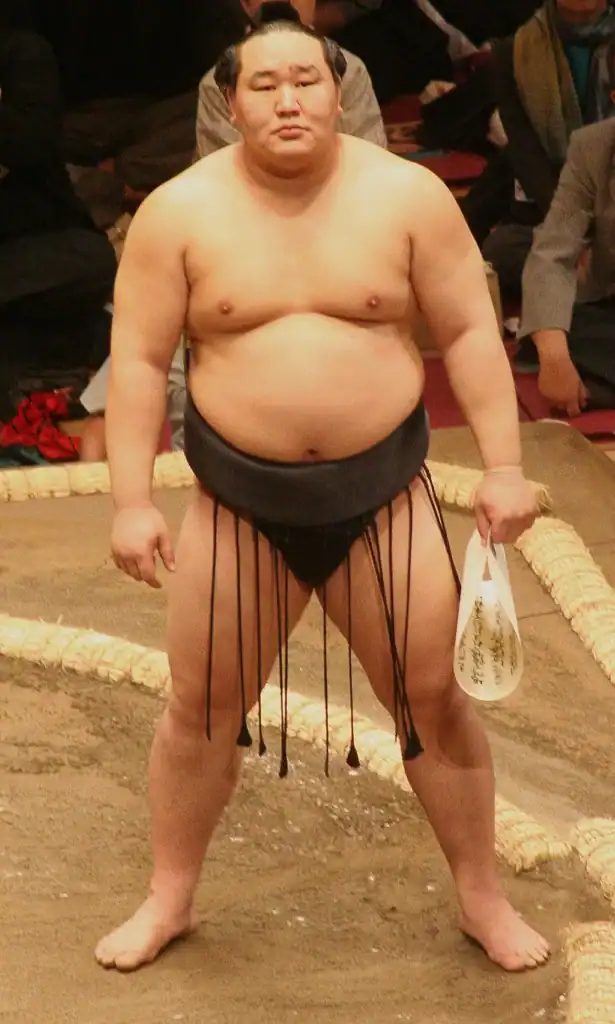
Not every stable accepts visitors, and few accept walk-ins. The simplest route is a licensed guide or tour that has an arrangement with a stable. Practice usually pauses during tournament weeks, so check the calendar before you plan around it. Morning practice is also the best choice for families. It is short, close and memorable, and there is no need to buy tickets weeks ahead.
Etiquette at practice
A stable is a home and a workplace, so behave as a guest. Arrive on time and stay silent throughout, since even whispering distracts. Sit where you are shown, usually on the floor at the edge of the room, and keep your legs tucked in. Never use flash, and turn off phone sounds. Do not eat, and do not leave halfway through. Above all, never step onto the practice ring. When it ends, a bow and a soft word of thanks to your guide is enough.
Ten Proverbs to Carry With You
A printable folio of ten Japanese proverbs, each set in kanji with its reading and a line on where you will hear it.
Many visitors say morning practice gave them more than the tournament did. In the hall, the ceremony and the crowd take center stage. At the stable, you see the work behind it. There are endless leg raises and slaps against the wooden pole. Senior wrestlers push the young ones until they collapse. It is raw and very human. Afterward, the whole neighborhood seems to make more sense.
Ryogoku: Tokyo’s Sumo Neighborhood
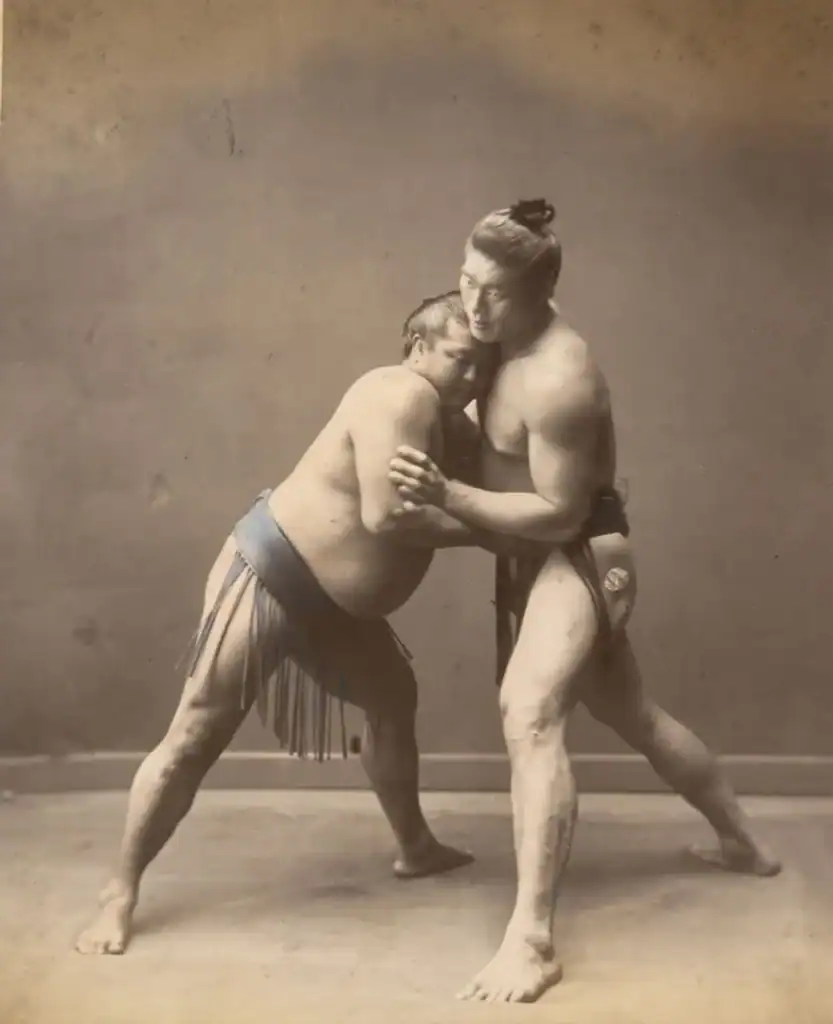
Ryogoku, on the east bank of the Sumida River, has been the home of sumo for about two centuries. Step off the JR Sobu Line and you see it at once. Handprints of champions line the station, and wrestlers in cotton robes walk the streets on wooden sandals. Many stables sit within walking distance, and so do the restaurants that serve their food.
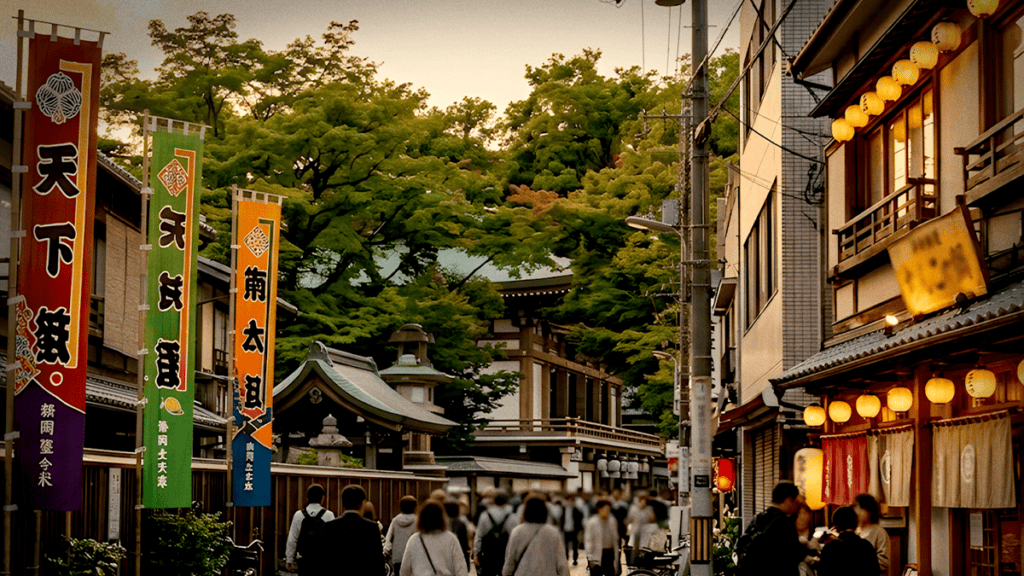
Ryogoku Kokugikan houses a small Sumo Museum with prints, ceremonial aprons and portraits of grand champions, with no admission fee. Nearby, the Sumida Hokusai Museum, opened in 2016, celebrates the artist who painted this river many times. The old Yasuda garden offers a short, calm walk. Together, they make a fine half day, even when no tournament is on. For more ideas across the city, see our guide to beautiful places in Tokyo.

A bowl of chanko nabe
No visit to Ryogoku is complete without chanko nabe, the hot pot that wrestlers eat to build strength. In a stable, the junior wrestlers cook it for everyone after practice. It is filling but not heavy, a light broth crowded with chicken, tofu and vegetables. Several Ryogoku restaurants are run by former wrestlers and serve it the stable way. Chicken is the traditional choice, because a chicken stands on two legs, and so should a wrestler.
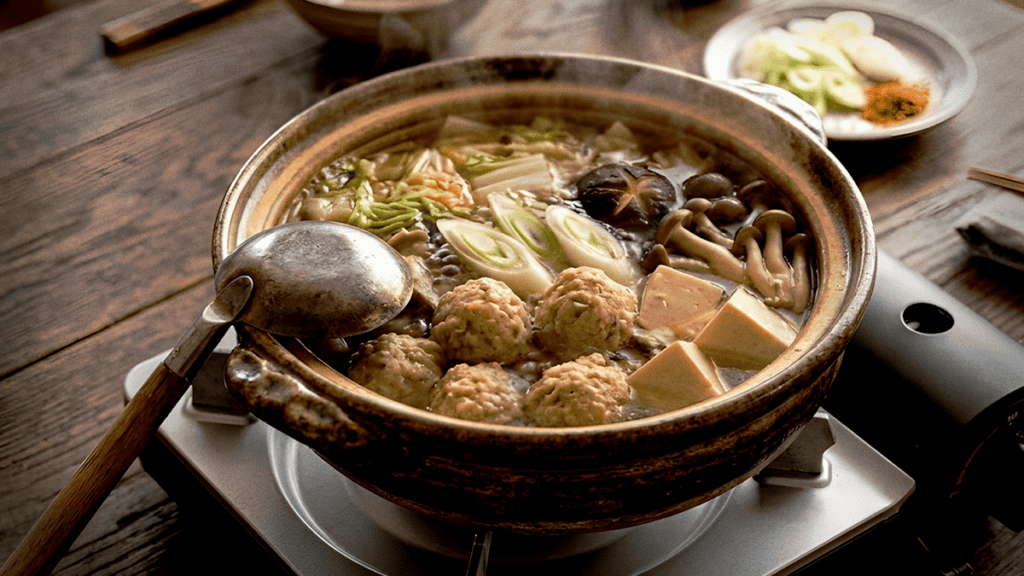
Chanko nabe — the sumo stable hot pot
Bring six cups of dashi to a simmer with three tablespoons of soy sauce, two of mirin and a splash of sake. Add a pound of chicken thigh in bite-size pieces and a sliced carrot, and let them cook for ten minutes. Meanwhile, mix half a pound of ground chicken with a teaspoon of grated ginger and drop it into the pot in small spoonfuls. Add cubed tofu, chopped napa cabbage, a sliced leek and a handful of mushrooms, and simmer until everything is tender. Serve straight from the pot at the table, then cook udon or rice in the last of the broth.
The last step matters most to wrestlers. After the pot is nearly empty, noodles or rice go into the remaining broth, which by then holds the flavor of everything cooked in it. It makes a warming end to a winter tournament day, and it travels well to a home kitchen. For more of the country’s home cooking, see our guide to traditional Japanese food.


Reading Before You Go
A little background makes every bout richer. Once you know the ranks, the rituals and a few winning techniques, the long pauses become tense rather than slow. You start to notice who is favored, who is fighting for promotion and why the crowd roars at an upset. You also learn to read the electronic board, the banners and the ring announcer’s calls, so the afternoon stops feeling like a puzzle. Even an hour of reading on the flight pays for itself many times over once you are in your seat. Fortunately, the sumo wrestling Japan has kept alive for centuries has inspired some excellent books in English, and one stands out for first-time spectators.
Sumo: A Thinking Fan’s Guide — the rules and ranks, explained
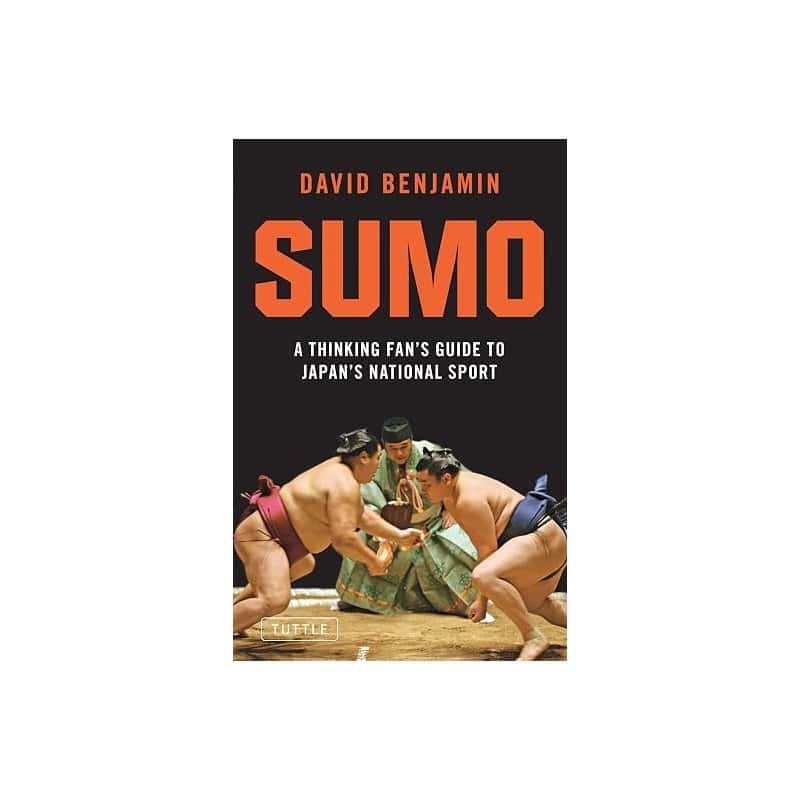
Sumo: A Thinking Fan’s Guide to Japan’s National Sport by David Benjamin is the book seasoned fans give to newcomers. It explains the ranking system and the way a wrestler rises or falls from one tournament to the next. The winning techniques you will see most often get clear explanations too. It also covers the stables, the referees and the life of a young recruit. Read it on the flight, and you will follow the drama of a tournament day rather than simply watching it. The chapters are short, so it suits a few minutes on a train. It also makes a fine keepsake when you return home and start following the results online, which many visitors do.
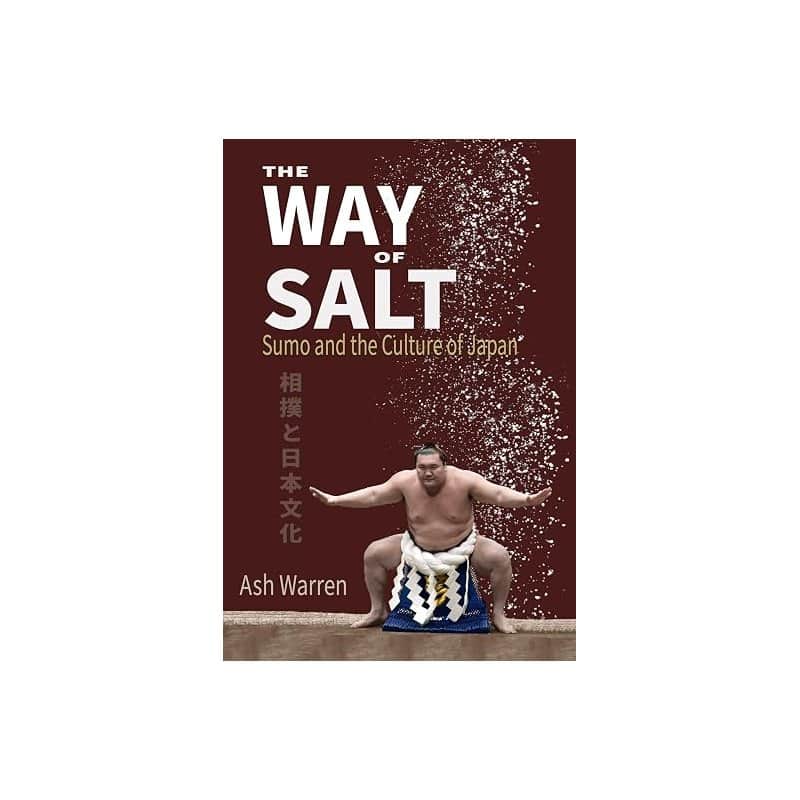
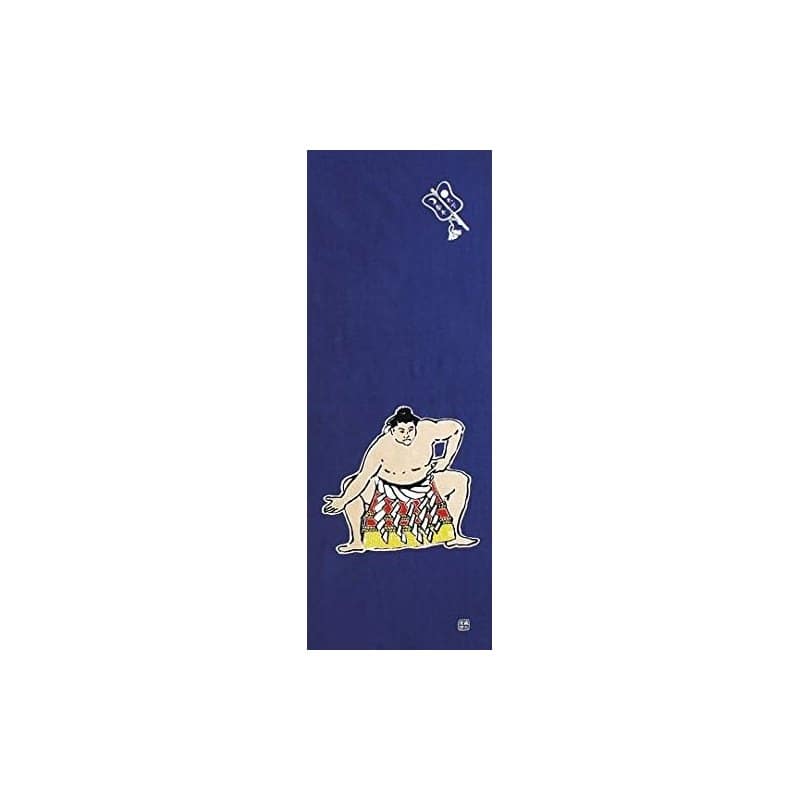
For a deeper look at sumo’s place in Japanese culture, two more books are worth packing. Ash Warren’s The Way of Salt traces the sport’s history and customs in an accessible way. The other, from the Kyoto publisher Seigensha, is a bilingual guide for spectators, in Japanese and English. Add a printed cotton tenugui from a Tokyo maker, a towel that doubles as a souvenir, and you are ready for the hall. All three are easy to carry and easy to enjoy. Better still, each one keeps paying off after the trip. You will start following the results from home and want to understand why a single upset matters so much.
Three Pieces for a First Tournament
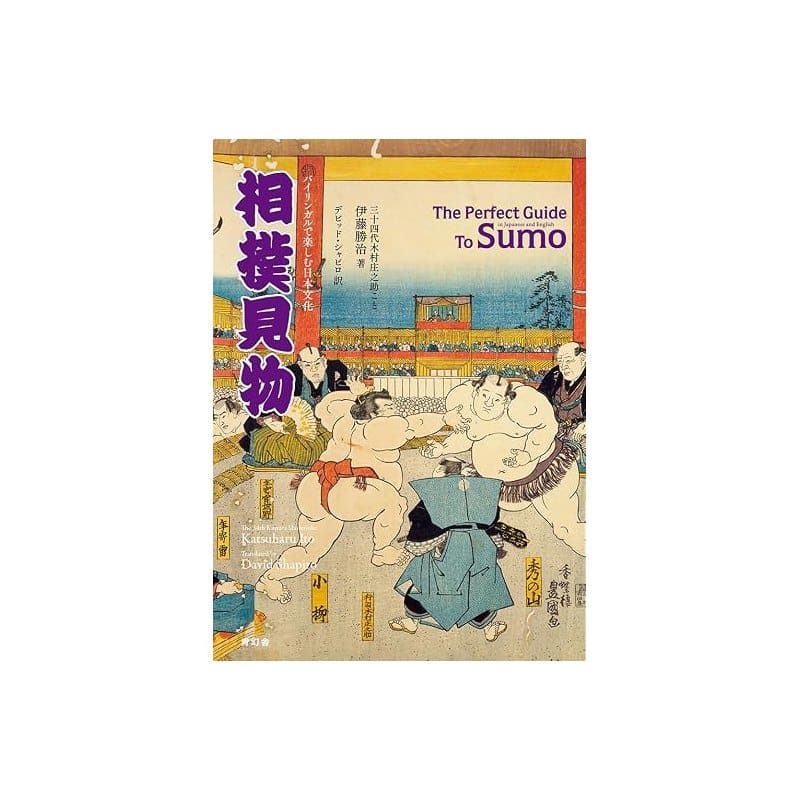
A bilingual Japanese and English guide to the ring.
Pick a Wrestler to Follow
Books and keepsakes aside, the best preparation is simple and costs nothing but a little time. Watch a few bouts online the week before you go, learn the names of the current grand champions and pick a wrestler to follow. Having someone to cheer for transforms a long afternoon. Note his stable, his rank and his record so far, and listen for his name when the ring announcer calls it. By the final day, you may find yourself checking the results from your hotel room, already planning a return. Many visitors also keep the printed daily program, the torikumi. It lists every bout in elegant brush lettering and makes a lovely keepsake of the day.
Sumo in Osaka, Nagoya and Fukuoka
The regional tournaments reward travelers who build them into a wider route. Osaka’s March tournament fills EDION Arena Osaka, near Namba, and puts you in the heart of the city’s food scene. The arena sits a short walk from the covered shopping streets of Namba, so a morning of exploring fits easily before the afternoon bouts. After the last bout, walk to Dotonbori for dinner. Our guide to Osaka food covers where to eat afterward.

Nagoya’s July tournament now runs at IG Arena, which opened with the 2025 tournament. Summer heat makes the air-conditioned hall welcome, and Nagoya Castle sits nearby. Fukuoka’s November tournament closes the year at Fukuoka Kokusai Center. Crowds are relaxed, tickets are easier and the city’s yatai food stalls are open late. If you are traveling between cities, check whether a Japan Rail Pass suits your route.
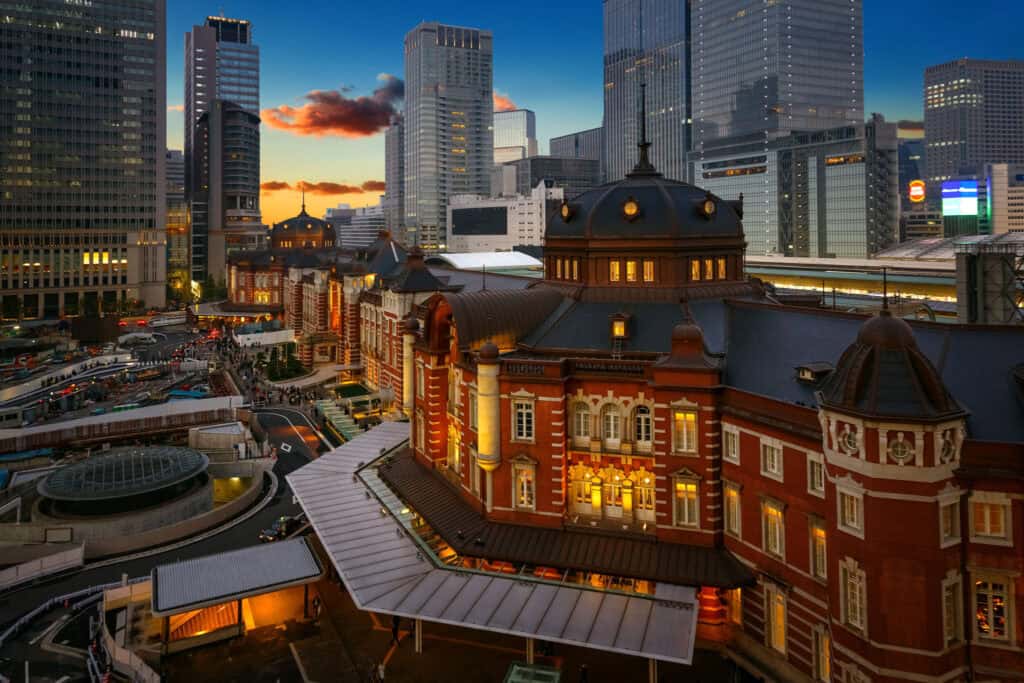
Wherever you go, the format is the same: fifteen days, the same rituals, the same long build to the final bouts. What changes is the city around it. Pair a tournament with a few days of exploring, and sumo becomes the centerpiece of a trip rather than a single afternoon. That is the way many Japanese fans see it, too, following their favorite wrestlers from city to city across the year.
You may also like
Planning Your Day at the Sumo
The sumo wrestling Japan is famous for rewards a little planning. Choose your tournament from the calendar, book tickets the day they go on sale and aim for a weekday if you can. Arrive by early afternoon, bring a bento and a light jacket, and stay for the final bout. If tickets are gone, try for a same-day seat or book a morning practice instead.
Above all, give it time. Sumo moves at its own pace, and the slow rituals are part of the drama. Watch how the wrestlers prepare, how the crowd reacts and how the tension builds through the afternoon. By the end of the day, the sumo wrestling Japan treasures will feel less like a curiosity and more like a story you were part of. Few sporting events anywhere feel quite as rooted in their place.
Recommended
Before you go, take a moment with the rest of the trip. Sumo pairs naturally with Tokyo’s food, gardens and museums, and with the regional cities that host the other tournaments. Plan it as the anchor of a longer stay, and every other day falls into place around it. Then add the season. A January tournament fits a winter week of hot springs and snow. May brings fresh green to the gardens, and September often keeps the warmth of summer. November, in Fukuoka, pairs well with autumn color in Kyushu. Whichever month you choose, the ring will be waiting, and so will a seat with your name on the ticket.

Help With the Details
For the smoothest visit, many travelers ask for help with the details. A good itinerary can secure box seats on the day you want. It can arrange a morning at a stable with an English-speaking guide and book a chanko dinner with a former wrestler. It can also fit the tournament into a wider journey, from Tokyo’s river districts to the castles of Osaka and Nagoya. That way, you spend your energy watching sumo rather than chasing tickets.
Expert planning also frees you to enjoy the slower pleasures of the day. Think of a long lunch in Ryogoku and a walk along the river. Then comes an unhurried evening after the final bout, when the crowds have gone and the banners come down.
A Grand Tournament, Arranged Around You
We can secure box or ringside seats, arrange a morning at a sumo stable with a licensed guide, and book a chanko dinner in Ryogoku. Every itinerary is built around your dates, pace and interests.
Plan Your Custom Japan ItineraryQuestions Worth Asking
When can I see sumo wrestling in Japan?
Six grand tournaments run each year, every odd month: January, May and September in Tokyo, March in Osaka, July in Nagoya and November in Fukuoka. Each lasts fifteen days and starts on a Sunday. Between tournaments, some stables in Tokyo welcome visitors to morning practice.
How much do sumo tickets cost?
At Ryogoku Kokugikan, upper-level chair seats run from about $23 (¥3,500) to $73 (¥11,000) per person. A four-person box seat costs roughly $230 (¥34,000) to $400 (¥60,000). A limited number of same-day tickets, about $15 (¥2,200), are sold each morning.
When do sumo tickets go on sale?
Tickets for each grand tournament usually go on sale about a month before the first day, through the official ticket site of the Japan Sumo Association, which has an English version. Weekend days and the final day sell out first, so book early or aim for a weekday.
What time should I arrive at a sumo tournament?
Doors open in the morning and lower-division bouts run all day. Most visitors arrive by early afternoon. The top-division ring-entering ceremony comes in mid-afternoon, and the final bout usually ends around 6 pm, so arriving by 2 pm covers the most dramatic hours.
Can visitors watch sumo morning practice?
Some stables allow visitors to watch keiko, the morning practice, usually by arrangement or with a licensed guide. Arrive on time, stay silent, sit where you are shown, never use flash and stay until the session ends. Practice usually pauses during tournament weeks.
What should I eat in Ryogoku?
Chanko nabe, the protein-rich hot pot that wrestlers eat to build strength. Several Ryogoku restaurants are run by former wrestlers and serve it in stable style, with chicken, tofu and vegetables in a light broth, finished with rice or noodles.