
Mono no aware missing someone sounds like an odd pairing, yet the two belong together. You are walking to the train, or rinsing a cup, and a person arrives in your mind without warning. The ache is sharp, and it is also strangely tender. Japanese culture has an old name for that tenderness, and it does not ask you to hurry past it.
This article reads the feeling of missing someone through what mono no aware means. It stays with the emotion itself. The loss may be a breakup, a goodbye or a person who has moved far away. The habits that build a daily practice live in our essay on how to practice mono no aware. Here the aim is simpler. It is to understand why the ache has a shape, and how Japan has long chosen to hold it.
What does mono no aware say about missing someone?
Mono no aware missing someone means feeling the absence fully and tenderly, without trying to fix it. The phrase translates roughly as the pathos of things. It treats the ache as proof that something mattered. You hold the loss and the love together, and the feeling softens once you name it.
A note on tone before the sections begin. This is a cultural reading, not advice, and it moves at the pace of an essay. Each section pairs one photograph with one idea. Some of the pictures are intense, because missing someone is intense. Either way, the aim is the same: to give the feeling a clear shape, so that it becomes something you can look at.
What Mono No Aware Missing Someone Really Means

Split the phrase in two. Mono means things, and aware is the pang of feeling they stir. Together they are usually rendered as the pathos of things. The scholar Motoori Norinaga, who lived from 1730 to 1801, argued that this feeling was the heart of Japanese literature. Britannica’s entry on Norinaga sums it up as sensitiveness to beauty. His chief example was The Tale of Genji, which Murasaki Shikibu finished around 1010.
For anyone missing someone, the point is simple. Mono no aware does not treat the ache as a fault. It treats the ache as a response, the natural result of caring about something that cannot stay. The Stanford Encyclopedia of Philosophy quotes the essayist Kenkō making the case plainly. If people never faded away, things would lose their power to move us.
Why it is not the same as sadness
People often assume the phrase means sadness. It does not. Sadness looks at what is gone. Mono no aware looks at what was here, and still is in memory, with the sweetness left in. Missing someone holds both at once. You feel the empty chair and the warmth of the person who sat in it. Our comparison of mono no aware vs wabi-sabi shows how this differs from the Japanese eye for imperfection.
That is why the phrase suits the ache better than the word sadness does. The ache is a kind of loyalty. You miss them because they mattered, so the pain and the value are one thing seen from two sides.
The Glass Between You and the Person You Miss

Distance is the first thing missing someone teaches you. They may be across a city or across an ocean. Or they may be across a line that neither of you can cross again. You can still see them clearly in memory. You can recall the laugh, the coat, the way they said your name. Yet a pane stands between you, and no amount of wanting opens it.
Mono no aware missing someone begins by accepting the glass. It does not ask you to smash it, and it does not ask you to pretend the glass is absent. It asks you to stand close and notice the shape of what you feel. Missing them is rarely a thought. It is a sensation. It usually arrives when you are least guarded, in a doorway, on a train or in the minute before sleep.
Why the feeling arrives at the odd hour
The feeling returns at the edges of the day because the edges are where attention loosens. Give the hour a small ritual, such as a lamp, a page or a walk, so the ache has somewhere to sit. The later sections return to that idea. A feeling with a place is easier to carry than a feeling that ambushes you.
You May Also Like

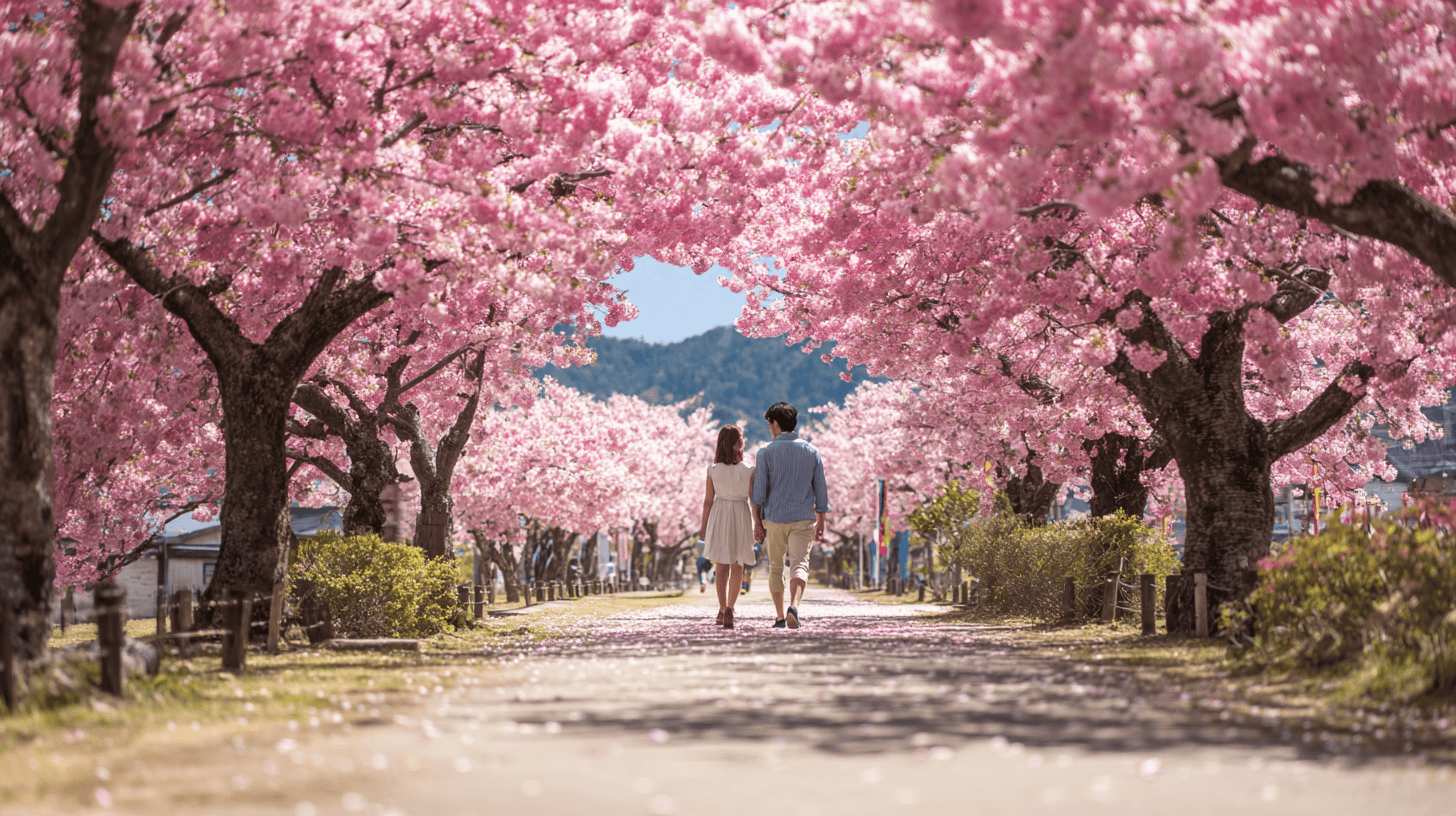
Those two essays sit on either side of this one. The first essay explains the phrase from the beginning, with its poets and its seasons. The second follows the feeling into the cherry blossom, where Japan has watched beauty fall for centuries. If the ache still feels shapeless, either one makes a good companion before you read on. Neither asks you to feel differently. Both treat the feeling as something worth understanding, which is a good place from which to begin the next section.
Longing: The Pull Toward Someone Who Is Not Here

Longing is the active edge of missing someone. Missing looks back, while longing leans forward, reaching toward a person who is not in the room. The Japanese character for this reaching is 慕, read shitau. The KANJIDIC dictionary project glosses it as to yearn for, to pine for and to love dearly. It is a warm word. It does not describe a wound, only a pull.
A poem about waking up
The pull is old, and so is the writing about it. The Heian-period poet Ono no Komachi, who flourished around 850, wrote a short poem about a man she saw in a dream after falling asleep thinking of him. Had she known it was a dream, she says, she would never have woken. A scholarly page on Komachi gives Donald Keene’s translation. It calls the poem a common experience in love, the wish to dream forever of the absent person.
Notice what the poem does not do. It never scolds her for dreaming, and it offers no plan for waking up. Instead it records the longing, exactly and gracefully, and lets it stand. That restraint is the lesson. Longing needs no cure. It needs a sentence, a letter or a poem. That is why writing to someone you miss, even without sending it, can loosen something that thinking alone cannot.
Between the sections, a pause. Longing and heartbreak are close cousins, but they ask for different things. Longing wants a direction, such as a letter or a memory. Heartbreak wants an acknowledgment that something has ended. The next section turns to the second of these. The ending of a relationship has its own shape, and the tradition has an eye for shapes of that kind. Seeing the shape clearly is the first step toward carrying it, and it is a step you can take slowly, over several evenings if you need them.
Heartbreak and the Shape of an Ending

Heartbreak is the loss of someone who may still be alive, still be reachable and still be thinking of you. That makes it strange. The person has not vanished, yet the future you shared has. Heartbreak is usually treated as a problem to solve. Mono no aware gives it a different job: to be seen, and to be honored for what it cost.
The torn heart in the photograph is a useful picture, because it refuses to lie. You can see the tape and the crease. Nothing pretends the paper is whole. In the same way, the ending of a relationship can be acknowledged without being repaired or reversed. You can say, this was real and it is over, and let both halves of that sentence be true.
Missing the person and missing who you were
Part of the ache is rarely about the person at all. You may also miss the version of yourself who existed beside them. That person laughed at certain jokes, kept certain plans and expected certain mornings. Naming that is a relief, because it explains why the feeling can outlast the person’s actual presence in your life. You are missing a season as well as a name.
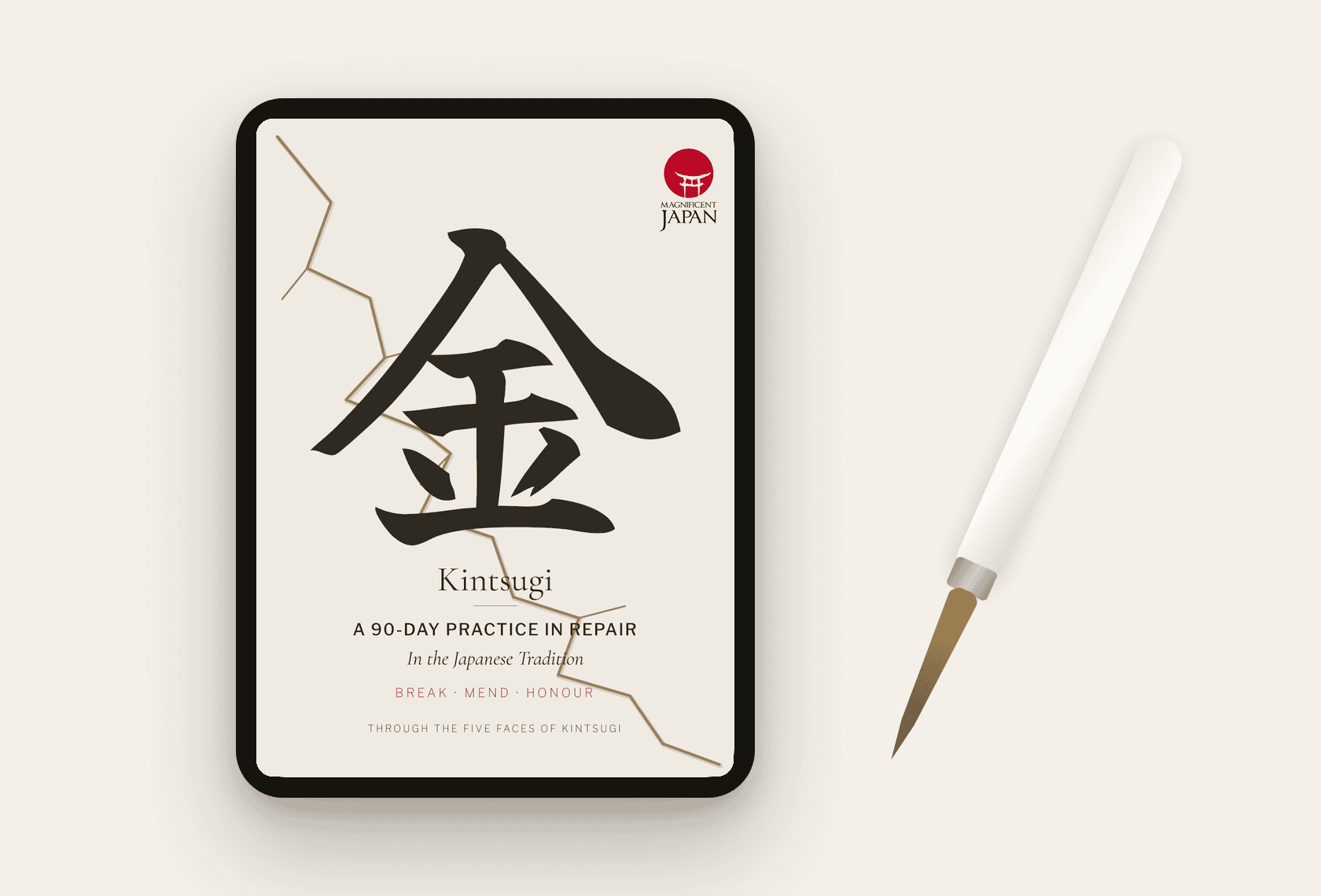
If repair is what you want, Japan has a separate idea for it. Kintsugi, the art of mending broken pottery with gold, is the subject of our Kintsugi journal. It makes a natural next step once the ache has been felt. Mono no aware comes first. It asks only that you look at the break before you decide what to do with it. Both ideas can sit on the same shelf. One teaches you to feel an ending, and the other teaches you to mend what remains.
Recommended
A short note before the next section, since the mood is about to change. The images here are intense by design, because they show feeling at several volumes, from a single tear to open weeping. If one of them is too much, skip it. The words around it still work on their own. Take only what helps, and leave the rest. The aim is only to show that many kinds of missing someone belong inside the same tradition. None of them needs an apology. If you would rather let the season do some of the work, our custom Japan itinerary service can build a trip around unhurried mornings, gardens and long evenings.
Parting: When a Goodbye Is Not Yours to Choose

Parting is the moment a presence becomes a memory. Sometimes you choose it. Often you do not. A job takes someone abroad, a relationship ends in one conversation, or a person simply leaves the room of your life. The Japanese character 惜, read oshimu, carries two senses in the dictionary: to regret, and to be sparing of. Together they suggest a reluctance to spend a moment too quickly. Most of us behave that way in the last hour of a goodbye.
The picture of the black car and its heap of flowers shows the same pairing. Beauty is placed around a leaving, deliberately, so that the leaving is not bare. People do this everywhere: the bouquet at a departure gate, the flowers on a table before a move, the letter tucked into a suitcase. Mono no aware names the instinct. When something is going, we make it lovely, and that effort is a form of love.
The wave at the platform
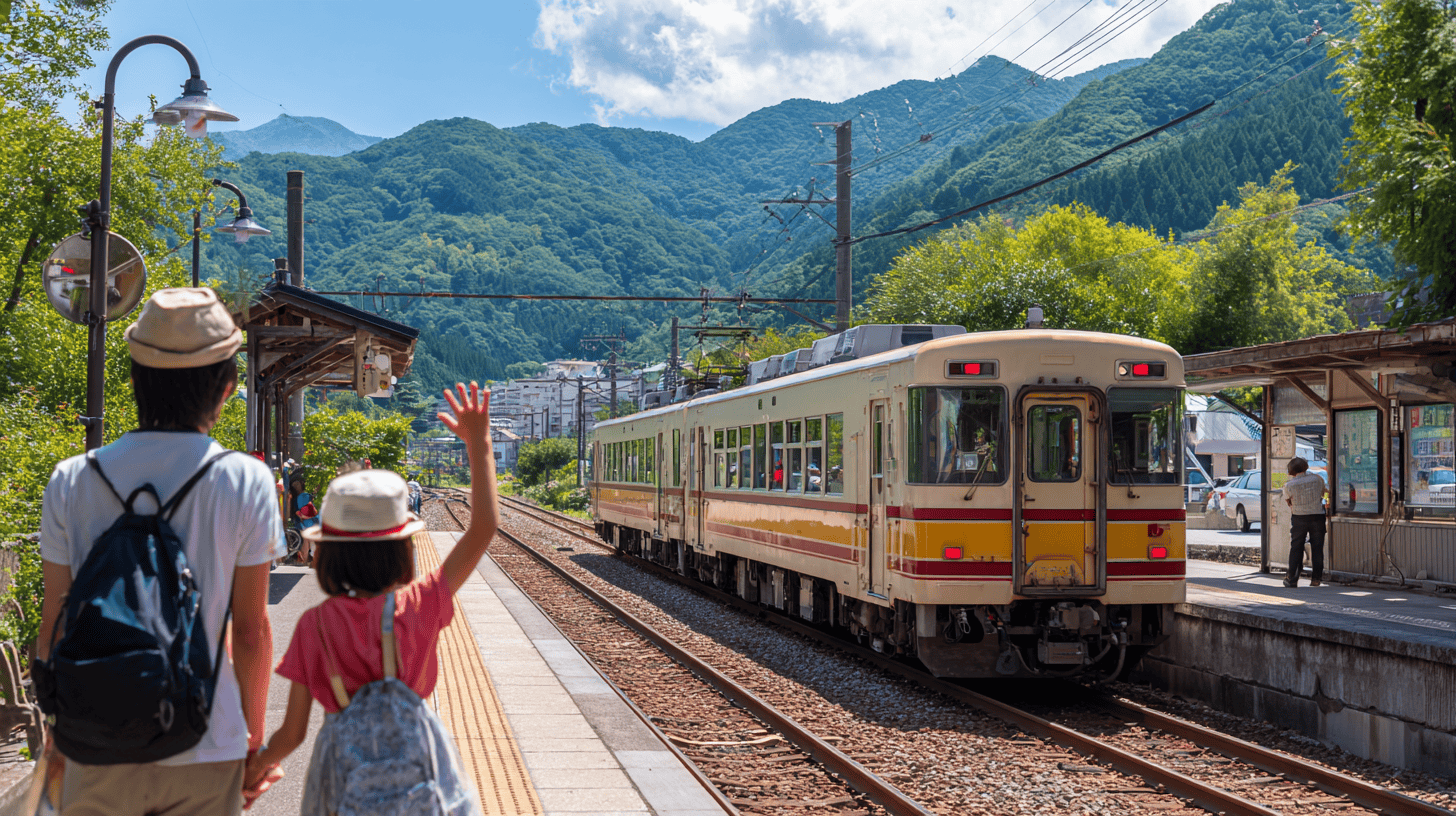
Station platforms hold some of the clearest goodbyes. Someone stands with a bag, a train arrives, and a hand goes up. The wave in this photograph asks for nothing else. It says: I am here, I see you go, and I will keep looking until you are out of sight. You can borrow that gesture for any parting. Give the goodbye your full attention, even if the goodbye is a text message or a closed door.
If the parting has already happened, the attention can arrive late. You can sit with the last conversation, the last meal or the last look. Give it the attention you were too busy or too stunned to give at the time. Nothing about that is morbid. It is a way of closing a door gently rather than leaving it swinging. Many people find that this late attention turns the memory from a flinch into something they can hold.
Letters on the Passing Seasons
Occasional letters on mono no aware, the Japanese calendar and the moments worth savoring, with news of the Cultural Reflection Collection.
Occasional letters. Unsubscribe anytime.
The next section is about the days when none of this feels graceful, and it is the most direct part of the essay. Those days happen to everyone who has missed someone, and they do not mean the practice is failing. A tradition built on feeling is not afraid of loud feeling. It simply asks that you let the feeling finish its sentence before you ask it to stop. With that in mind, here is what the loudest days can look like, and how a Japanese eye reads them with care.
When It Hurts: Moving Through Loss Without Hurrying It

Some days the feeling arrives at full volume. It is physical, with a tight chest, damp lashes and the urge to press your hands against your head and wait. The photograph shows exactly that, and it belongs in a Japanese essay for a reason. Mono no aware missing someone has never been a polite, pastel feeling. Its classical literature takes strong feeling seriously, and so does this practice.
People often ask how to move through loss. The honest answer is that you move through it by going through it, not around. There is no shortcut and no schedule. The aim is not to finish feeling. It is to stop being surprised by the feeling, so that each wave finds you a little better prepared than the last.
Let the feeling finish

Letting it be felt sounds passive, but it is work. You stay in the room with the ache until it changes shape. A wave rises, crests and falls. You are still there afterward, which is the evidence that you can bear it. The monochrome photograph shows the release in a face that has stopped holding back. The calm that tends to follow is easy to imagine. Nothing in the picture is polished, and that is its honesty. It is also why the image sits in an essay about tenderness rather than one about composure.
Carry it where others can see

Not every ache needs to be hidden. The painted pearls on this person’s cheeks turn tears into ornament and turn private feeling into something the face can wear. Wearing the ache openly is a choice, and it is not weakness. It is information about what you value. If you can say to a friend, I miss them today, you give the feeling a witness. A witnessed feeling usually weighs less than a hidden one.
You can do a smaller version of this at home. Tell one person plainly that you are missing someone, and ask only that they listen. Shared feeling is a different substance from solitary feeling.
Before the next section begins, a word about pacing. Between the loudest days there are long, flat stretches where the person is simply absent. This is the territory of remembrance, and it asks for a different skill. Instead of letting a wave pass, you learn to keep someone close in a form you can carry. That form may be a memory, a habit or an hour set aside. That is the work of the next section. It is gentler than the loud days, though it can take longer to learn.
Remembrance: Keeping Someone Without Clinging

The Japanese character 偲, read shinobu, means to recall and to remember. It is the verb for bringing an absent person to mind on purpose, with affection, rather than being ambushed by them. The dictionary lists its senses as recollect and remember. That small shift from ambush to invitation is the whole skill. Remembrance is missing someone with a door that you open yourself.
In a study of how people describe nostalgic memories, Wildschut and colleagues found a pattern. The memories usually star the self alongside close others, or at momentous events such as weddings. The authors find Werman’s description fitting: a joy tinged with sadness. That is a fair account of missing someone on a good day.
Give the memory an hour
Remembrance works better with edges. Choose an hour, a place and a small object. The woman in the photograph switches on one brass lamp and opens one journal, and that is the entire ritual. When the hour ends, the lamp goes off, and the person goes back to being remembered rather than missed. The structure is what keeps the practice gentle. Without it, the thought of them can fill every hour, but with it the thought has a home.
You May Also Like
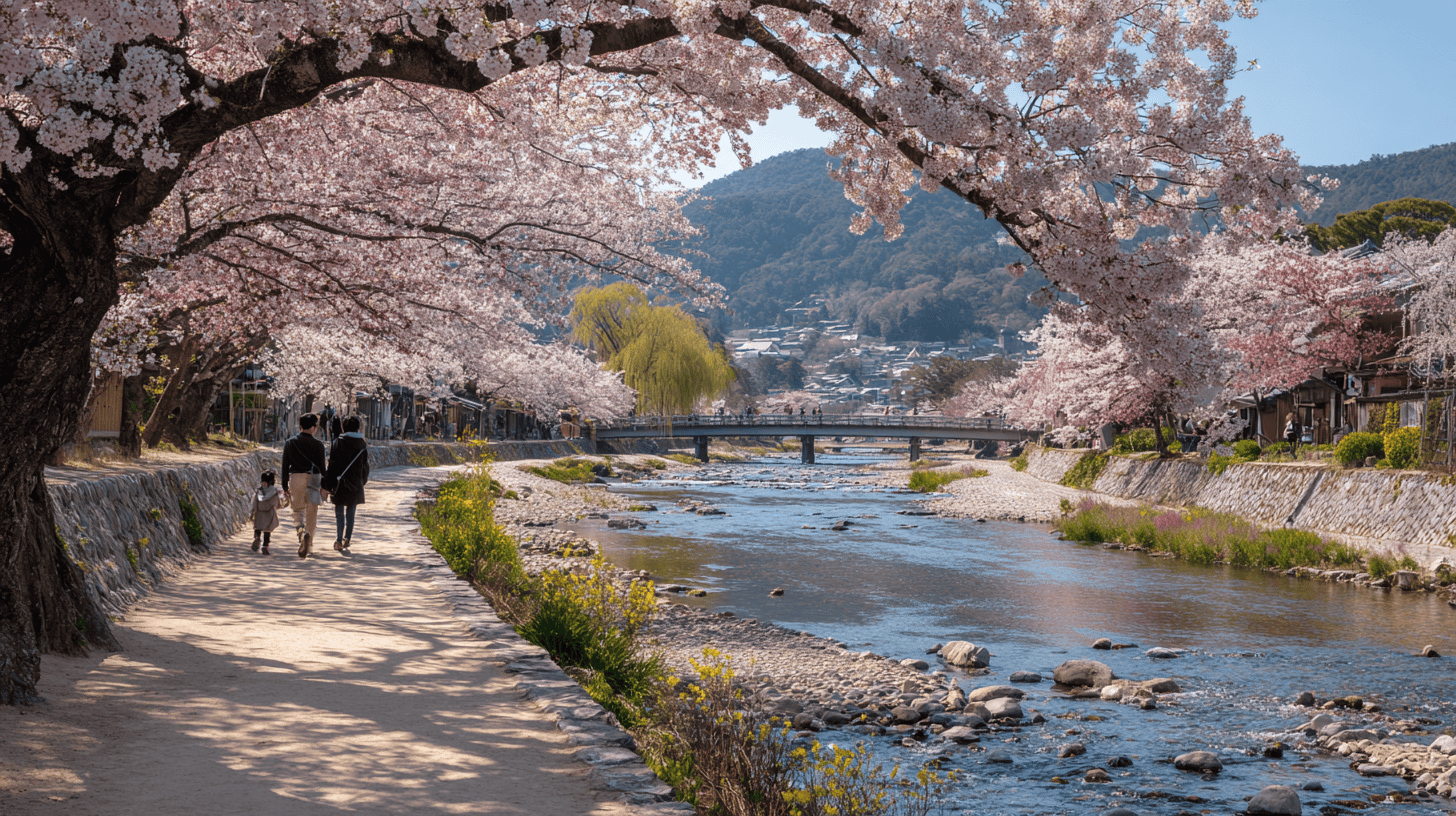
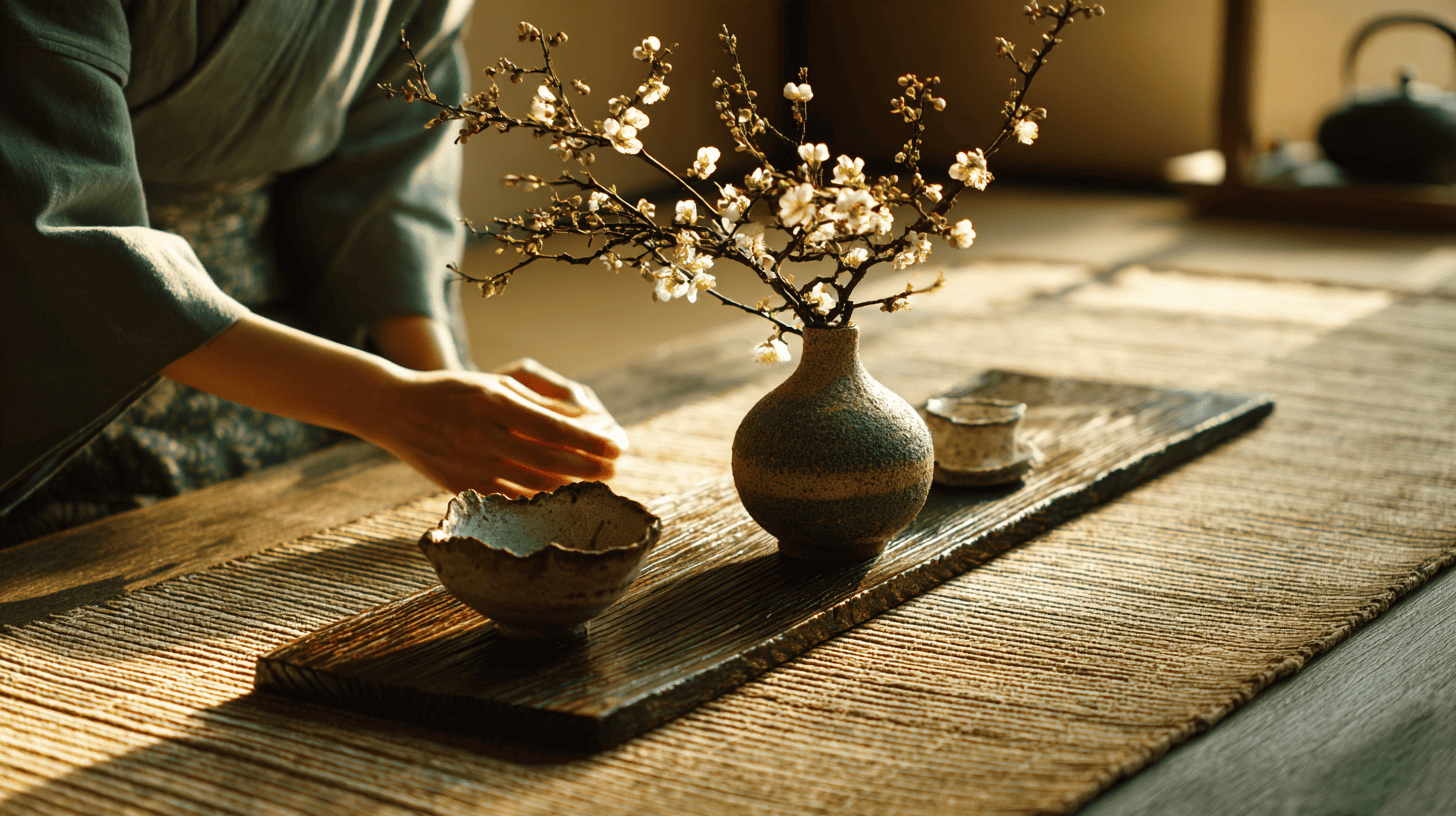
Those two essays widen the lens. One gathers the classic examples of the feeling, from the Heian court to a modern street. The other sets mono no aware beside its famous neighbor, wabi-sabi, and shows where they differ. Neither is about loss in particular, yet both help you see that missing someone is one instance of something much larger. A feeling that belongs to a whole tradition feels less like a personal malfunction. It feels more like a shared human inheritance.
What Blooms and Fades: Tenderness for Them and for You

Tenderness is where the tradition ends up, and it is the hardest face of the feeling to name. The character 慈, read itsukushimu, is glossed as mercy in the dictionary. It is the soft regard you give someone fragile. Here it has two recipients. One is the person you miss, who was never perfect and is not here to defend themselves. The other is you, who are doing the missing.
The dark flowers in the photograph make an argument without words. Against black, every petal glows. When something is about to fade, attention sharpens, and the details we ignored while it was secure become unmistakable. The same happens with people. After they leave, we notice how they held a cup. We notice how they said goodbye on the phone, and how a room felt when they entered it.
The rose at its fullest
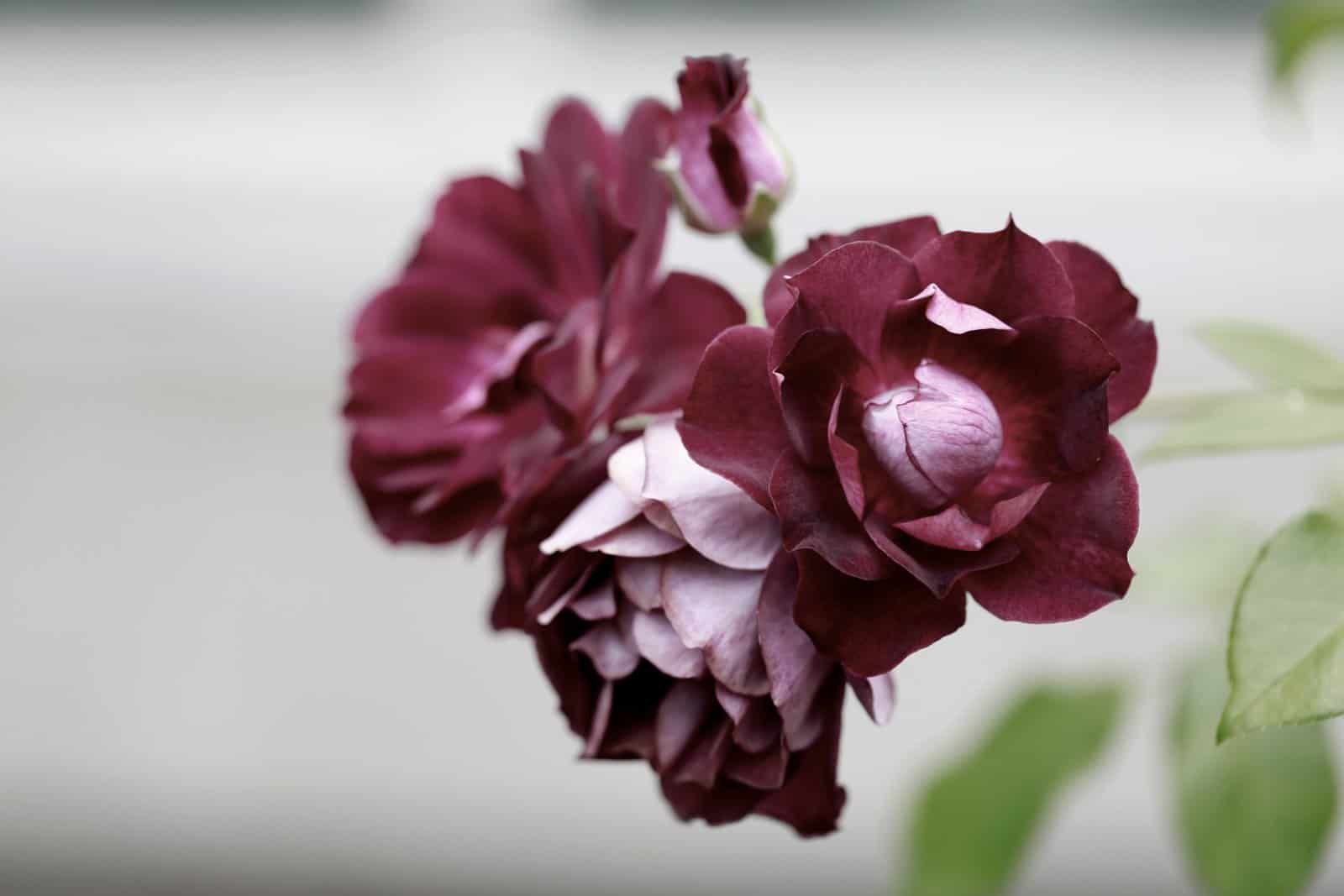
A rose at full bloom looks like a finish, yet it is also the start of the fall. The burgundy roses here show both at once, with a fresh bud beside a heavy open flower. Mono no aware asks you to love the bloom without forgetting the season. For a lost relationship, that can mean remembering the good months honestly, without polishing them into perfection or darkening them in hindsight.
Honest remembering is a mercy to yourself. It keeps you from building a monument and from tearing one down, and either project is exhausting. A fair account of someone, with warmth and flaws together, is easier to carry than a legend or a villain. It is also truer to the way they actually lived beside you.
Petals on the stream

Japan’s most famous image of passing beauty is the cherry blossom. It explains why petals appear on the water in so many poems. Our essay on mono no aware and cherry blossoms follows that image in detail. For missing someone, the lesson is gentle. You cannot hold the petals. You can touch them as they go, and that touch is enough to make the moment yours.
Turn that same softness toward yourself. You are allowed to miss them on a day you thought you were finished. You are allowed to laugh in the middle of it. Wanting to remember and to move forward at the same time is allowed, because tenderness has room for contradictions. A feeling that is held kindly tends to lose its edge, while a feeling that is judged tends to dig in.
Journal Prompts for Missing Someone, Loss and Heartbreak

Writing is the oldest tool for holding a feeling still, and a few good questions are enough to begin. The twelve prompts below are a taste, grouped by the three movements this article has followed: longing, parting and remembrance. They double as heartbreak journal prompts, and they work as journal prompts for loss and heartbreak more broadly. Set a timer for ten minutes and write without correcting yourself.
Longing prompts
- When does missing them arrive most strongly: which hour, which place, which sound?
- What are you actually longing for: the person, a version of yourself or a season of your life?
- If you could send one unsent sentence across the distance, what would it say?
- What do you reach for when the longing peaks, and does it steady you or stir you up?
Parting prompts
- Which goodbye do you replay most often, and what do you wish had been said?
- What did you not get to say, and who is allowed to hear it now, even if only you?
- What small detail of the last day do you want to keep exactly as it was?
- Where did the ending begin: a conversation, a look or a silence?
Remembrance prompts
- What did this person notice in you that no one else does?
- Describe an ordinary Tuesday with them in four sentences.
- What habit of theirs have you adopted without deciding to?
- What do you want to carry forward from them, and what are you ready to set down?
These prompts are a doorway, not a program. For habits that sit around the writing, read the seven small daily habits that our practice guide describes. Nothing here replaces patience, because missing someone keeps its own timetable.
You May Also Like

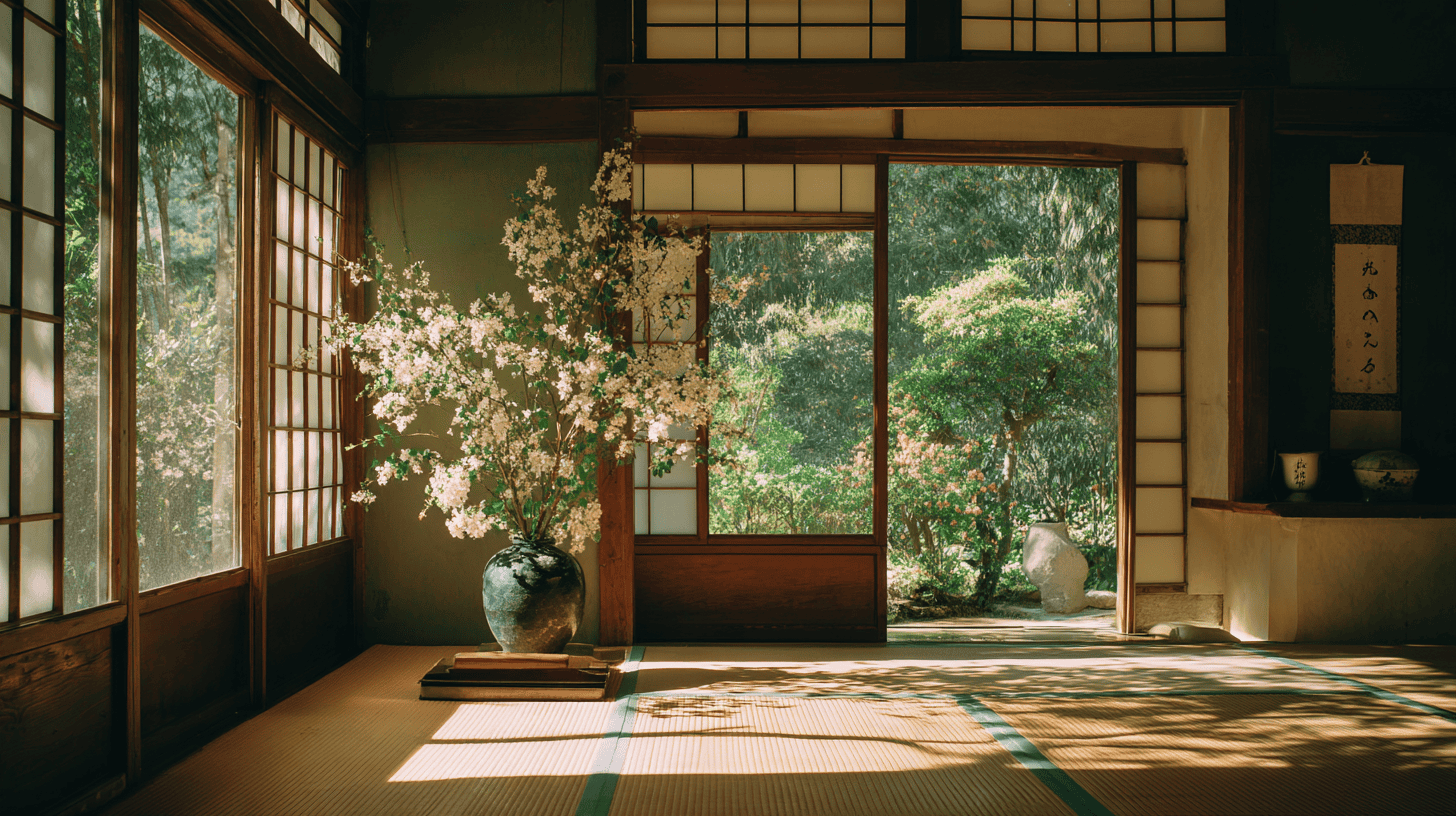
Those two pages give you more to work with. The first turns the feeling into small daily habits, and the second sets mono no aware beside seven other Japanese ideas for living. If you want to take your writing further, the journal described next pulls these threads into one sequence. It is designed for readers who found themselves nodding at the prompts above. They wanted a longer, steadier path, one that does not end when the evening does. Nothing about it is rushed, and nothing about it is required before you begin.
Why a Ninety-Day Practice Holds What One Evening Cannot

One evening of writing is a good start, but mono no aware missing someone rarely finishes in a single evening. The Mono no Aware Journal, subtitled A 90-Day Practice in Tenderness, gives the feeling a season instead. It is built for people who want to move through loss without pretending it is small. It is one of the eight journals in our Cultural Reflection Collection.
Its structure echoes this article. The three movements are longing, parting and remembrance, and they run through the ninety days as the weeks deepen. Five characters stand behind the practice: 哀 for the ache, 慕 for longing, 惜 for parting, 偲 for remembering and 慈 for tenderness.
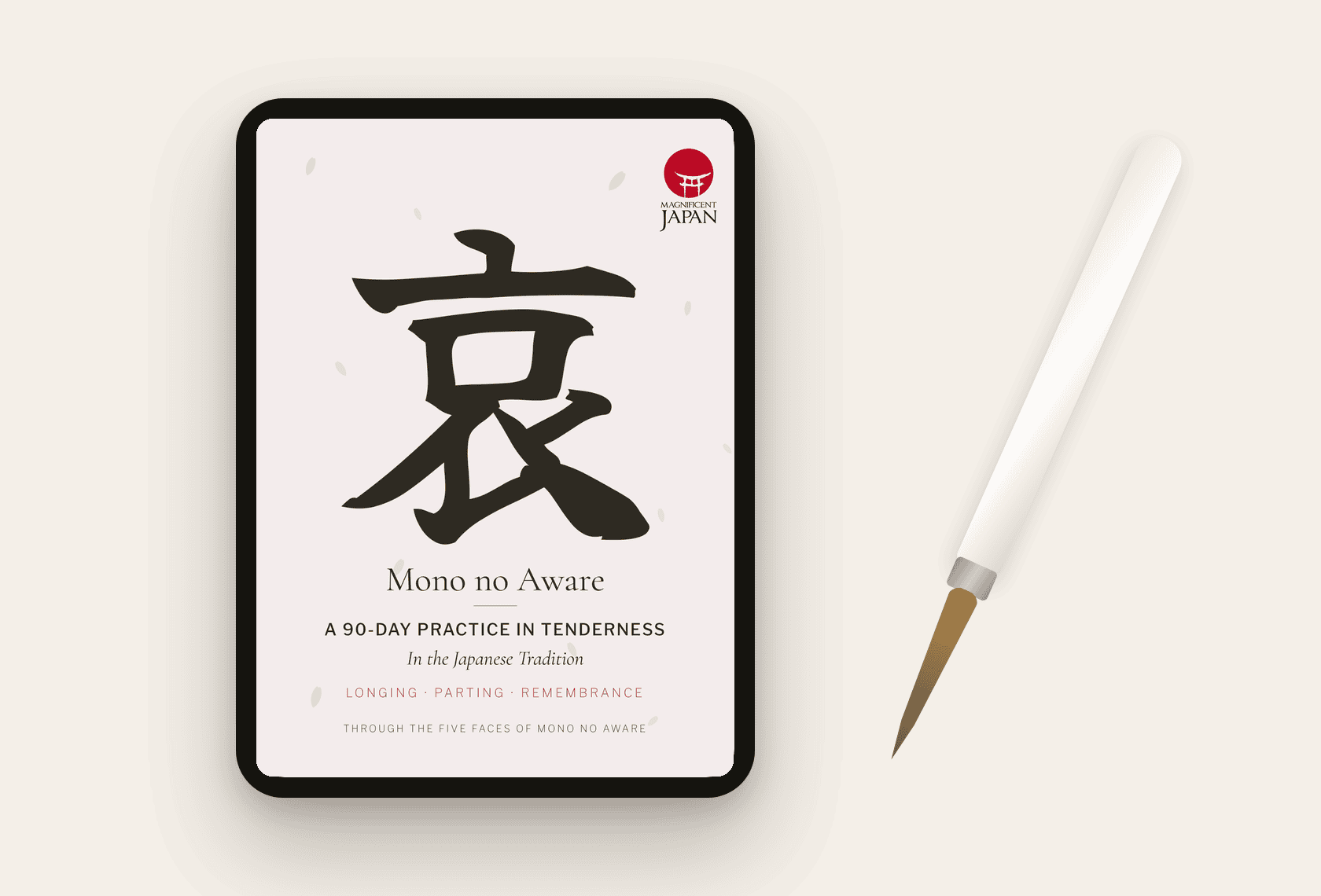
The journal comes as a write-on PDF for tablet annotation apps and as a paperback for the desk or the bag. It does not tell you how to feel, and it does not set a pace you have to keep. If a day passes, the page waits.
Other journals that pair with this one
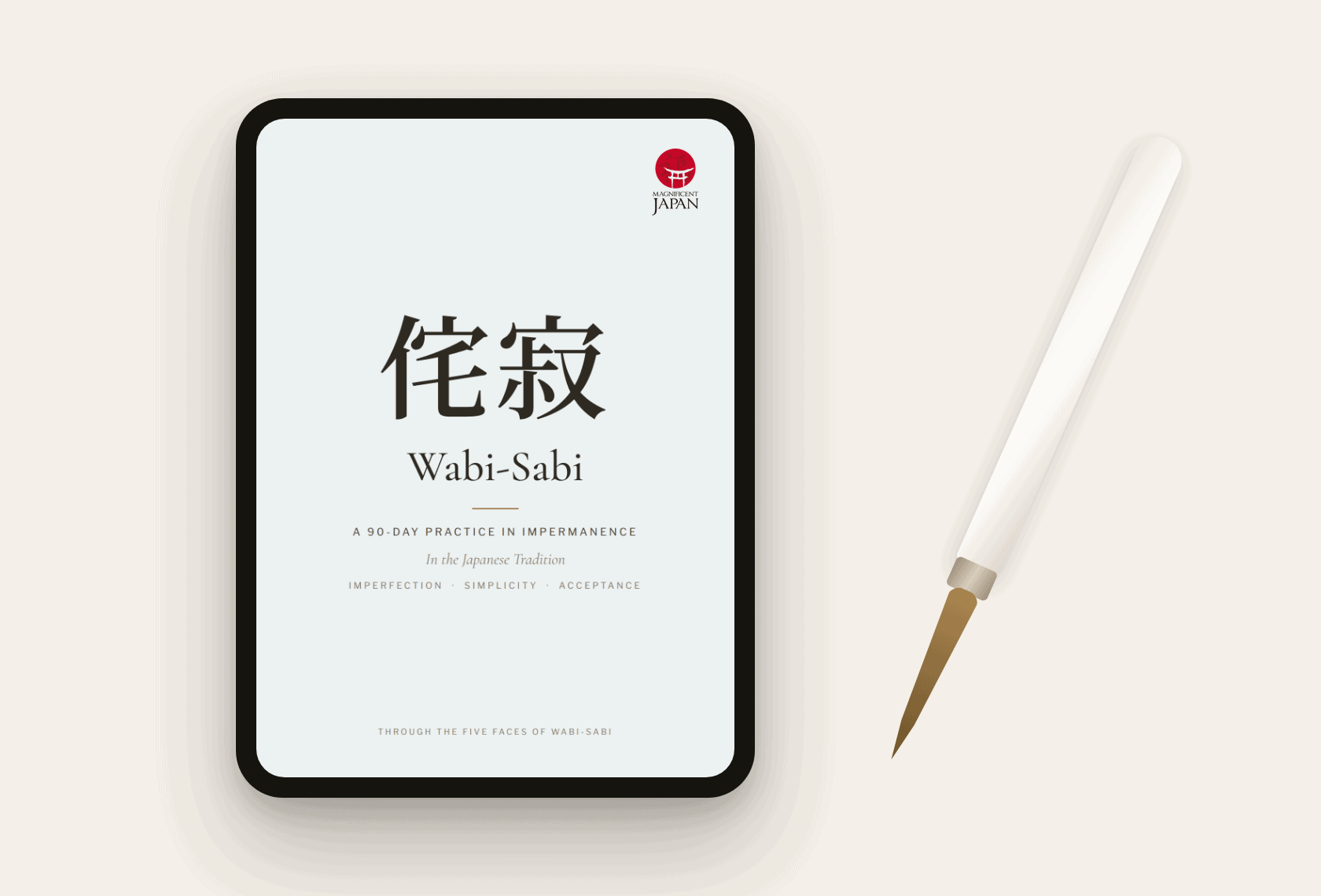
Two other journals pair well with it. The Kintsugi journal for repair is a practice in repair, and it suits the stage when you want to mend what remains. The Wabi-Sabi journal turns toward imperfection and impermanence, and it suits the stage when you want to stop judging the ending. Each journal stands on its own, and none repeats another’s prompts.
Questions Worth Asking
What does mono no aware mean when you are missing someone?
Mono no aware missing someone describes the tender, aching awareness that a person or a time mattered and is now out of reach. It does not ask you to stop feeling it. It treats the ache as the natural result of caring, and it invites you to notice the feeling clearly, with warmth rather than judgment.
Is mono no aware just another word for sadness?
No. Sadness looks at what has gone, while mono no aware looks at the beauty that makes the passing matter. The feeling includes sorrow, but it also includes gratitude and tenderness. In practice it feels closer to being moved than to being low.
How do you move through loss with a Japanese mindset?
Let the feeling finish before you try to fix it. Give it an hour, a page and a place. Remember the person honestly, with warmth and flaws together. Then let time do its slow work. The aim is not to stop missing them, but to carry the missing with more ease.
What are good journal prompts for missing someone?
Start with specific, sensory questions. Ask when the feeling arrives. Ask what you would say across the distance, and which small detail of them you want to keep. The prompts in this article group such questions under longing, parting and remembrance, and a longer practice builds on the same movements.
Does mono no aware apply to a breakup or a move away?
Yes. The idea covers any ending where something valued cannot stay as it was. That includes a relationship, a friendship, a home or a season of life. The feeling is the same tender recognition, whatever the cause. Heartbreak simply makes it louder.
Is the Mono no Aware Journal digital or paperback?
Both. The digital edition is a write-on PDF for tablet annotation apps. The paperback is a print edition for the desk or the bag. Each carries the same ninety-day practice in tenderness.
Where to Buy the Mono no Aware Journal
The journal’s own page
The Mono no Aware Journal page shows both editions, the preview pages and the full list of what each one includes.
Digital edition
Choose this edition if you write with a stylus. The digital edition on Payhip arrives as a write-on PDF that opens in GoodNotes, Notability and similar annotation apps.
Paperback edition
Choose the paperback if you prefer pen on paper. The paperback edition carries the same ninety days and ships worldwide.
Companion paperbacks
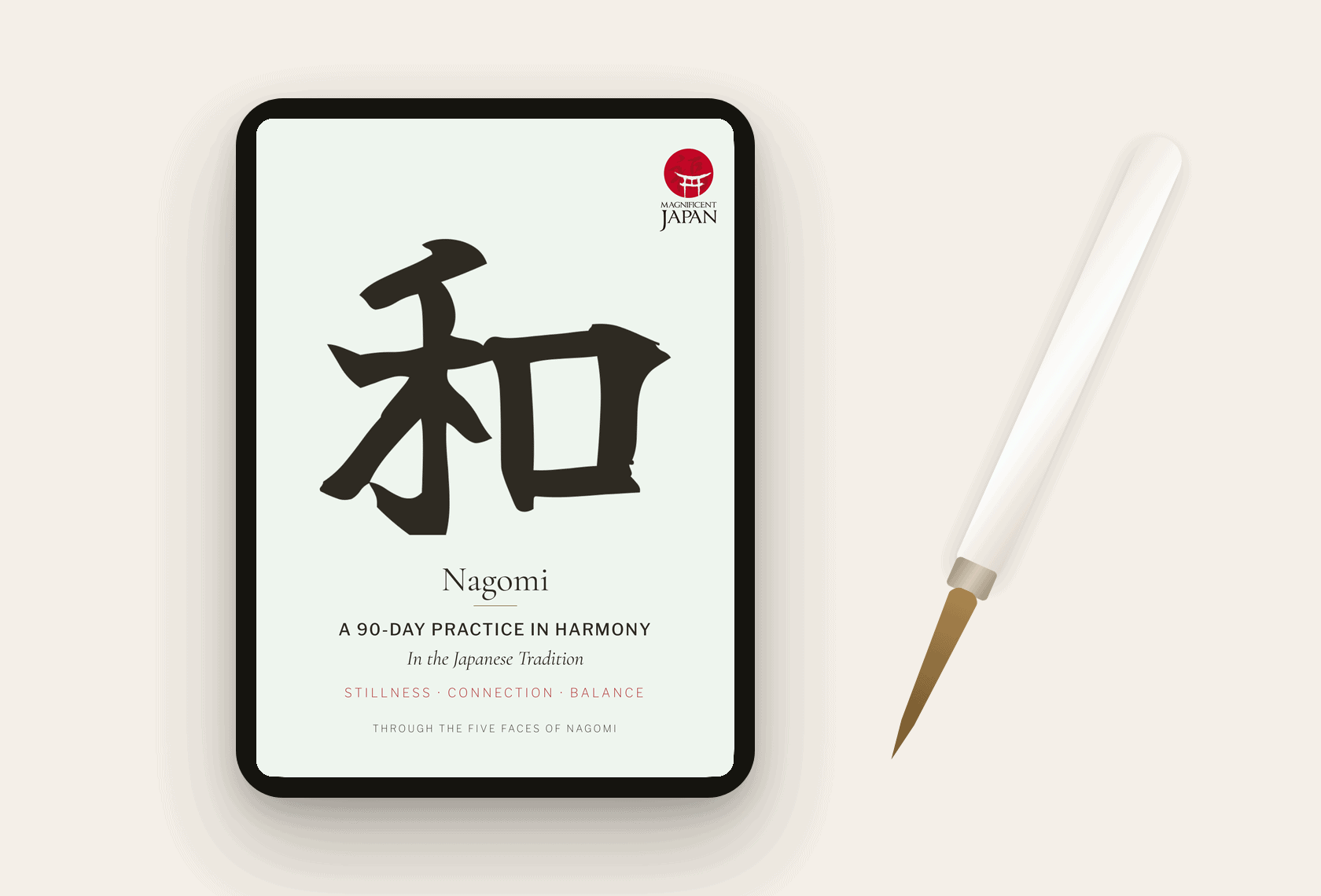
Three companions are also in paperback: the Kintsugi journal in paperback for repair, the Wabi-Sabi journal in paperback for imperfection, and the Nagomi journal in paperback for the days you want balance back.
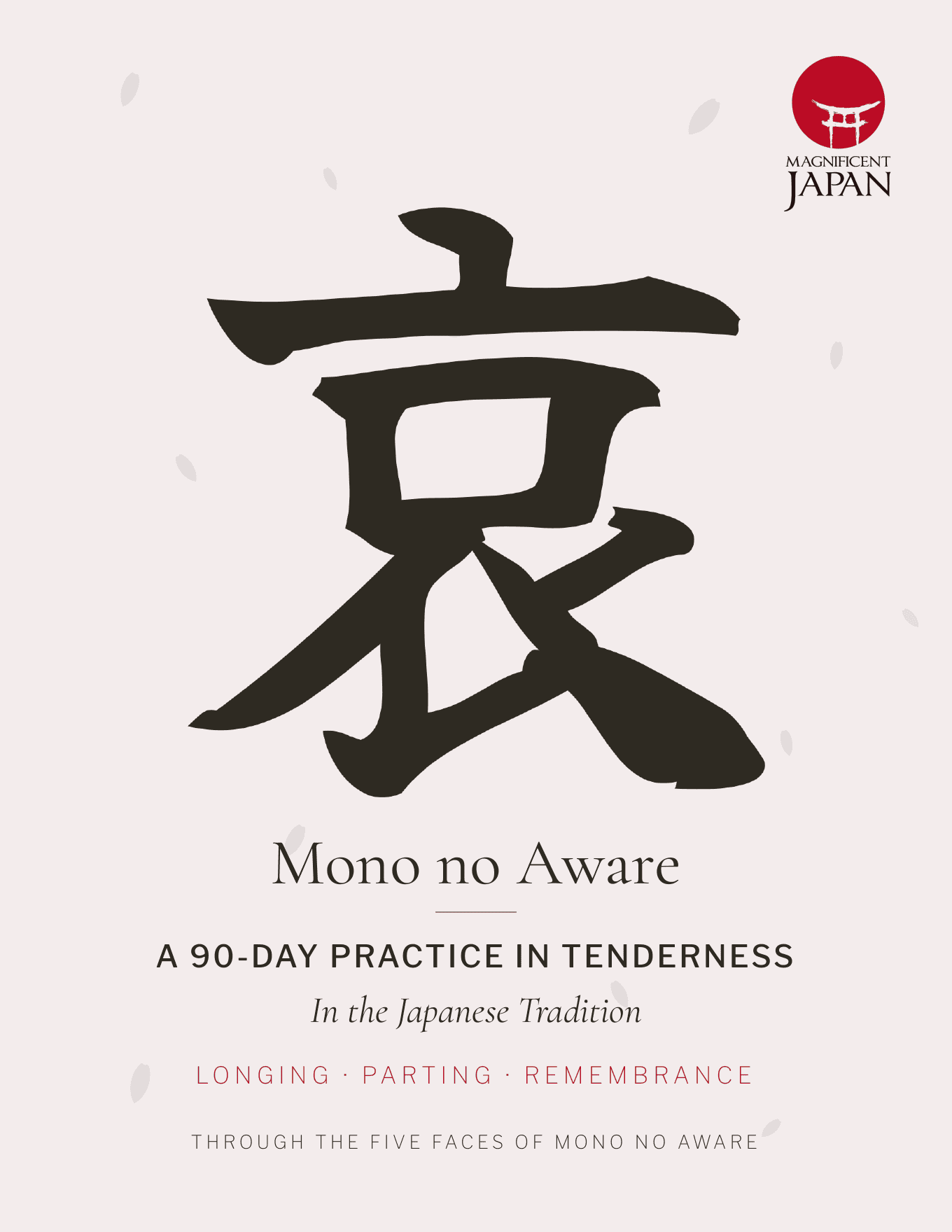
A guided journal for missing someone and for every passing thing: one question a day across ninety days, built around longing, parting and remembrance. It sits within the Cultural Reflection Collection, eight journals drawn from Japanese ways of seeing.
View The CollectionHolding It Gently
Missing someone is not a flaw in how you love. It is how love continues once the person has left the room. Mono no aware gives that continuation a name, a literature and a posture. Stay close to the feeling, look at it clearly and treat it with mercy.
You only have to meet the feeling honestly each time it arrives. Some evenings that means a lamp and a page, and on the hardest days it means letting the feeling be as loud as it is. All of it belongs to the same old tradition of finding beauty in what passes.
The Editors, Magnificent Japan
For the wider picture, browse every title in the journals library, or read the mono no aware examples that run from The Tale of Genji to everyday Japan. Each title in the library treats one idea at its own pace, and each essay in the series stands on its own. You can begin with whichever one matches the way you feel today, and return to the others when the feeling changes. Nothing needs to be read in order, and nothing needs to be finished.
Some people answer missing someone by going somewhere that moves slowly. Our team builds custom itineraries around the season that suits you, from maple gardens in November to plum blossom in February, with unhurried days, rooms that face a garden and time set aside for writing. Tell us the pace you want, and we shape the route around it.
Plan Your Custom Japan ItineraryKanji glosses: KANJIDIC2, © EDRDG, CC BY-SA 4.0.