
Most advice on how to find your ikigai starts with a chart. You draw four circles, fill them in, and hope the answer appears in the middle. Sometimes it does. More often, the page stays blank and the question starts to feel like a test you are failing.
There is a gentler route, and it is closer to how the word is used in Japan. Ikigai is less a single calling than a set of small reasons the day feels worth living. You find those reasons by noticing them, week after week, and then by giving them more room.
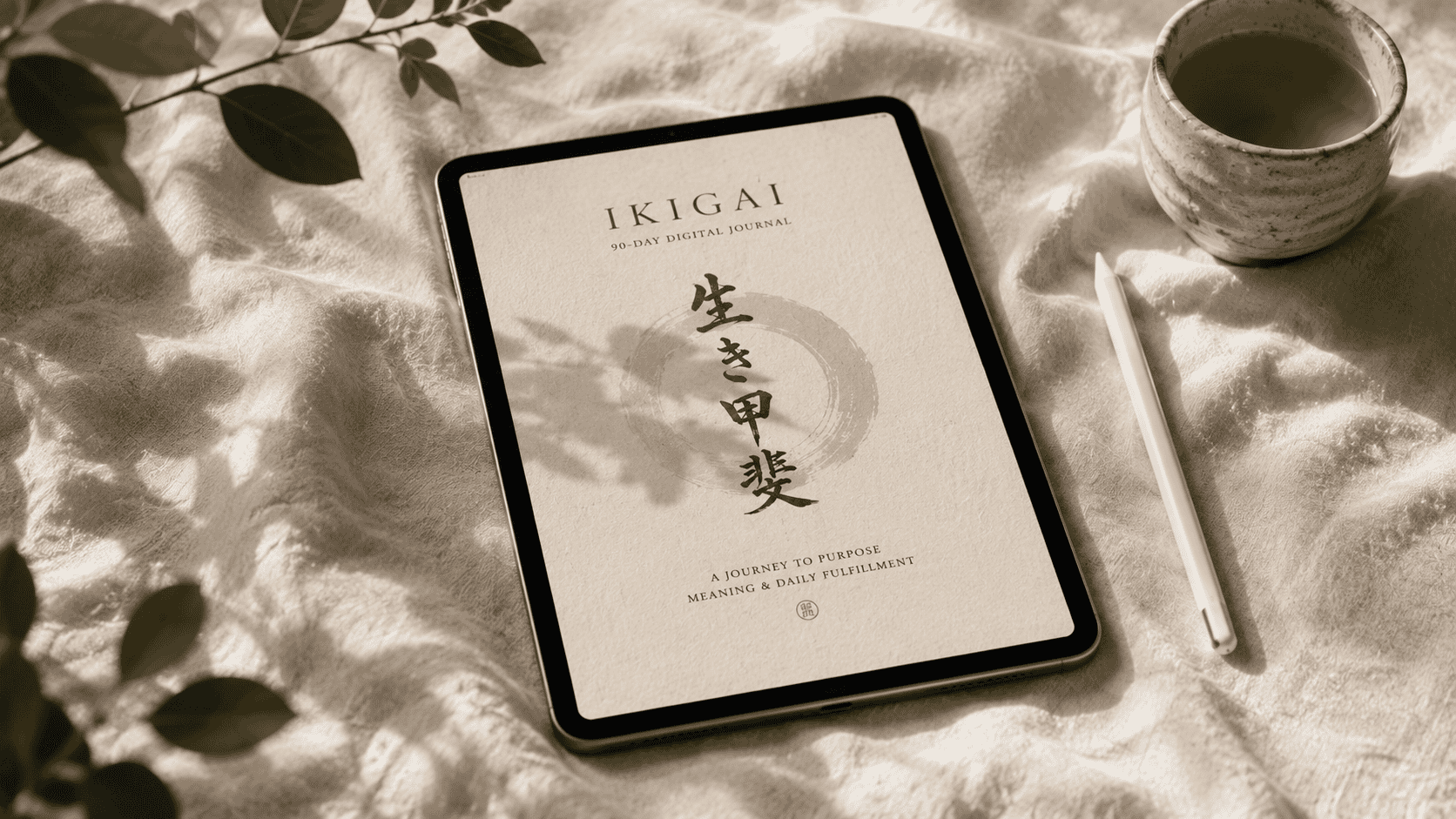
This article turns that idea into a practice. It draws on Japanese research, from the psychiatrist Mieko Kamiya to large health studies. It also gives you five steps to begin this week. If you want a daily structure for the work, The Return, our 90-day ikigai journal, was designed for exactly this kind of attention.
How to Find Your Ikigai: The Short Answer
Notice before you plan. For two weeks, write down the moments that made a day feel worth living, however small. Look for patterns of growth, of being needed, and of looking forward. Then protect those moments with small daily anchors, share them with other people, and revisit your notes each month. Ikigai is found through practice, not a single chart.
Finding Your Ikigai Starts With Noticing, Not a Diagram
The four-circle chart asks what you love, what you are good at, what the world needs, and what you can be paid for. Those are useful questions. However, they belong to career planning more than to ikigai itself. We explain the gap in why the ikigai Venn diagram misleads.
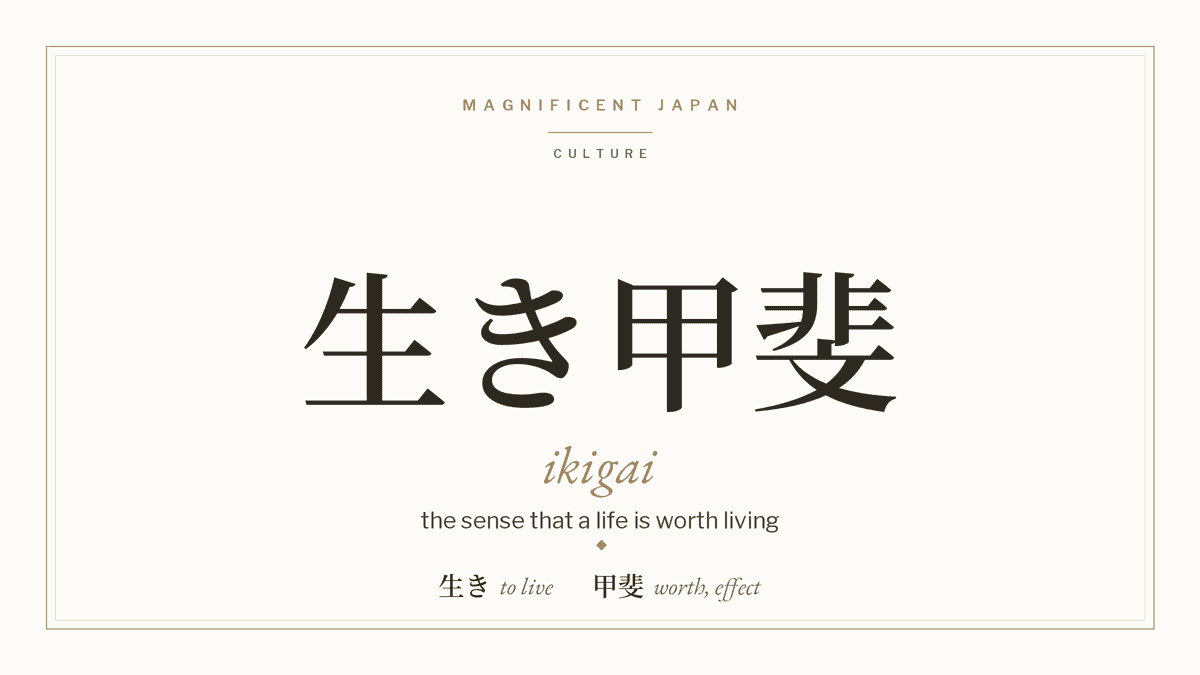
In everyday Japanese, ikigai can be a grandchild, a garden, a morning walk, or a job. It is usually plural and often modest. So the most honest answer to how to find your ikigai is to look at your own days first. For the full background on the word, see our essay on what ikigai really means.
Why a chart feels hard and a log feels easy
First, a chart asks you to judge your whole life at once. That is a heavy task, and it invites the answer you think you should give. A log asks something lighter. What happened today that you were glad of? Anyone can answer that, even on a slow Tuesday. Also, a log collects evidence. After a few weeks, the same kinds of moments return, and that repetition is the signal.

Think of a morning train past rice fields. Nothing dramatic happens. Still, you may notice that you look forward to those ten minutes of light on the water. Once you see it, you can ask why. Perhaps you value time alone to think. Or perhaps you love watching a season turn. Either way, a small moment has told you something true.
That is the shift this practice asks you to make. Instead of searching for one big answer, you gather small, honest ones. Then you let the pattern speak. Next, we look at what Japanese research says those patterns tend to contain.
What Japanese Research Says About Finding Your Ikigai
The modern study of ikigai begins with Mieko Kamiya, a Japanese psychiatrist whose book on the subject appeared in 1966. A later review of her work lists seven needs she linked to ikigai (Bilash, FIRE journal, 2019). They include the need to experience change, the need to believe in a bright future, and the need to feel that what you do resonates around you.
Growth, being needed, and looking forward
Put simply, three threads run through her list. First, growth: the sense that you are changing and learning. Second, being needed: the sense that your actions matter to someone. Third, looking forward: a reason to want tomorrow to arrive. The same review notes that Kamiya saw sources of ikigai as chosen for their own sake, not as tools for some other goal.

A national survey shows how ordinary these sources can be. In December 2021, Japan’s Cabinet Office asked people aged 65 and over about daily life (Cabinet Office, Annual Report on the Ageing Society, 2022). In total, 72.3 percent said they felt ikigai at least somewhat. Those who shared hobbies with neighbors reported strong ikigai most often. People with more close friends, and people who went out more, also reported it more.
Notice what is missing from that list. There is no grand mission and no job title. Instead, there are hobbies, company, and reasons to step outside. For most of us, the first reason to get up is simpler still. It is the kettle, the cup, and a few calm minutes before the day asks for anything.
Why the practice is worth the effort
Ikigai also tracks with health. The Ohsaki cohort study followed 43,391 people in Miyagi Prefecture for seven years (Sone and colleagues, Psychosomatic Medicine, 2008). Those who reported no ikigai had a higher risk of death from all causes.
A later study of older people in Japan found that having ikigai was linked to a 31 percent lower risk of functional disability and a 36 percent lower risk of dementia over three years (Okuzono and colleagues, Lancet Regional Health Western Pacific, 2022). These are associations, not proof of cause. Still, they suggest that noticing your reasons to live is time well spent, at home or on the road.

Blank pages for the small moments that make a day worth having.
Unlined · 120 pages · Original cover art
Shop This Journal →Travel is one of the easiest places to begin, because new surroundings sharpen attention. A station bell, a shop owner’s greeting, or a bowl of soup can stay with you for years. Writing those moments down while they are fresh gives you raw material for everything that follows. The steps below work anywhere, though. They need only a notebook, a pen, and a few minutes each day.
How to Discover Your Ikigai in Five Steps
This is how to find your ikigai without a chart. First, keep a noticing log for two weeks. Next, run each entry through a “worth it” test. Then, build small anchors around what passes. After that, bring other people in. Finally, revisit everything once a month. Together, these steps form a simple ikigai exercise you can repeat for life.
Step 1: Keep a two-week noticing log
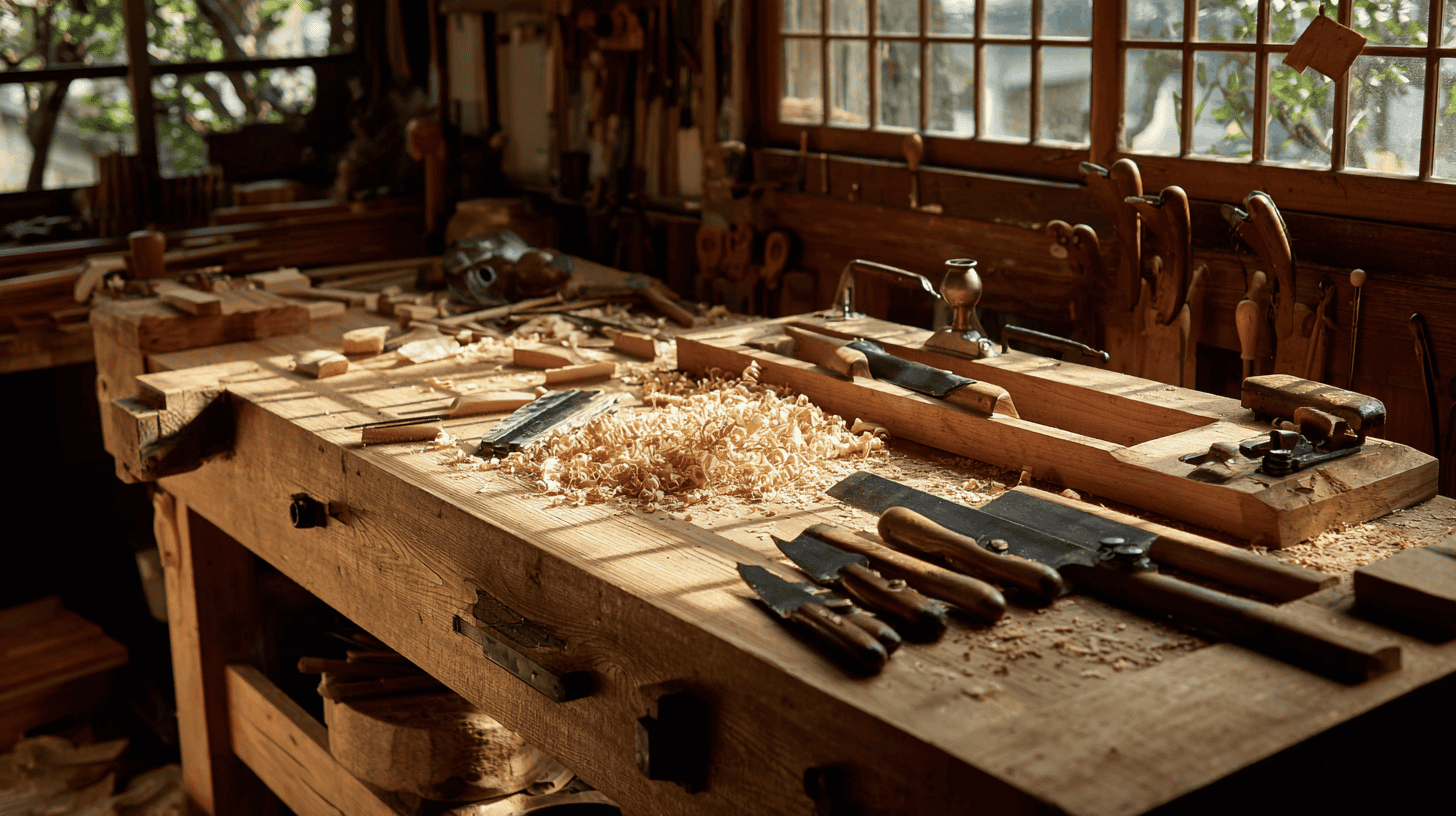
Each evening, write three lines. What moment today felt worth living? What were you doing? Who was there? Then keep the entries short and specific. “Planed a board smooth and felt proud” beats “had a nice day.” Do this for fourteen days, including weekends. Two weeks is long enough to catch a pattern and short enough to finish.
For now, do not judge the entries. A moment with a cat counts as much as a win at work. If a day feels empty, write that down too, because an empty day is also data. For a deeper set of ikigai questions to guide each entry, see our notes on ikigai journaling.
Step 2: Apply the “worth it” test
At the end of the two weeks, read your log in one sitting. Then ask one question of each entry. Would I be sorry if this disappeared from my life? If the answer is yes, circle it. If the answer is “not really,” let it go without guilt.
Next, sort the circled entries into Kamiya’s three threads. Did the moment involve growth, being needed, or looking forward? Some will fit more than one. A few will fit none, and that is fine. Those may point to plain enjoyment, which has value of its own. The table below gives you a quick way to read your results.
Most sources of ikigai fall into one of three threads, and each leaves a different trace in your notes.
| Thread | How it feels | Typical log entries | A small next step |
|---|---|---|---|
| Growth | You are changing or learning | Practiced a skill, solved a problem, read something new | Set aside ten minutes a day for it |
| Being needed | Your actions matter to someone | Helped a neighbor, cooked for family, answered a question | Offer it once more this week |
| Looking forward | You want tomorrow to arrive | Planned a trip, waited for a harvest, booked a class | Put the next date on the calendar |
| Plain enjoyment | The moment is good in itself | Morning tea, a walk, a favorite song | Protect it from busy days |
Most people find one thread stronger than the others. That is useful. If growth dominates, you may need more learning in your week. If being needed dominates, you may thrive with more contact and responsibility. When looking forward is thin, give yourself something specific to anticipate, such as a class, a visit, or a harvest. None of these needs to be large. Whatever you find, the next move is to give it a regular place in your day. In the short film below, a hand writes a morning prompt into The Return on a tablet, one simple way to begin.
Twenty seconds inside the journal
The digital edition in use — a morning prompt, answered by hand while the coffee is still warm. Tap to play, with sound.
One page, one intention, one single quiet moment.
Step 3: Build small daily anchors
The film shows only a few lines, and that is the point. An anchor is a short, repeatable habit that keeps a source of ikigai in your week. It should be small enough to survive a busy day. Ten minutes of sketching counts. So does a cup of tea before anyone else is awake.
To create one, take a circled entry and ask what made it possible. Then make that condition regular. If you loved an early walk, set a time. If helping a colleague lifted your mood, offer help at one set meeting each week. As a result, lucky moments become reliable ones. Travel can serve as an anchor too, because a trip built around your circled entries can teach you a great deal.
If that appeals, our team can shape a Japan itinerary built around what you love, from workshops to morning markets.
Occasional letters on ikigai and the Japanese ideas behind a good day, with news of the Cultural Reflection Collection.
Occasional letters. Unsubscribe anytime.
Step 4: Bring other people in
The Cabinet Office survey points in a clear direction. Shared hobbies, close friends, and time outside the house all went with stronger ikigai. So once you know your threads, look for ways to share them.
Still, this does not require a crowd. One friend who walks with you each Saturday is enough. A class, a volunteer shift, or a neighborhood cleanup can also work. The aim is not to perform your ikigai for others. Rather, it is to let it touch other lives, which feeds the “being needed” thread naturally. Island communities show this especially well, as we explore in our feature on ikigai in Okinawa.
Why shared routines last
Shared routines also make the practice easier to keep. When a friend expects you, you show up on tired days as well as bright ones. That steady rhythm matters more than intensity. In fact, many people learn how to find your ikigai through the company they keep, long before they name it. A weekly errand, a standing call, or a shared meal can each become a reliable source. What matters is that it repeats, and that both of you would notice if it stopped. Start by looking at the plans you already share, then add one small ritual to them.

Two friends cycling to market is not a big event. Yet it holds three things at once: movement, company, and a small plan for the day. Regular, low-stakes contact like this is where many people feel most at ease. It also gives each person a reason to show up for the other.
If your log shows few shared moments, start with one invitation this week. Ask someone to join a thing you already enjoy. Because the activity is familiar, the pressure stays low. Over time, these small rituals often become the part of the week people guard most closely. Some grow into lifelong friendships.
Recommended
Step 5: Revisit your log every month
Ikigai shifts as life does. A new job, a move, or a child leaving home can change which threads feel strong. For that reason, set a date once a month to read your recent entries. Ask what has grown, what has faded, and what you miss.
This review keeps the practice honest. It also stops you from clinging to an old answer that no longer fits. A study of family caregivers in Japan found that their sense of ikigai shaped how their self-understanding evolved over time (Yamamoto-Mitani and Wallhagen, Culture, Medicine and Psychiatry, 2002). In other words, your sources of meaning are allowed to grow with you, and a monthly review helps you notice when they do.
Also, keep the review short. Twenty minutes with a cup of tea is enough. First reread the month, then answer three questions. Which thread felt strongest? Which anchor slipped, and why? What is one thing to try next month? Write the answers on a fresh page. Over a year, those twelve pages become a map of how your ikigai has moved.
When Nothing Seems to Count Yet
Some people finish two weeks and feel their log is thin. That is common, and it is not a verdict on your life. Often it means the entries are too strict. Try lowering the bar. Did anything make you smile, even for a second? Write that. Learning how to find your ikigai takes patience, and early logs are often sparse.
Start with your mornings
Also, look at mornings. For many people, the first hour holds the clearest clues. The light on the table, the first cup, the sound of the street waking up: these are easy to overlook, and easy to record. Give them a line each, even when they seem too small.

A pot of tea set out for two is a small thing. Yet it says that someone is expected, and that the morning has a shape. If your log feels empty, try describing one such scene each day in full detail. What was on the table? Who poured? What did the room smell like? That way, detail turns a blur into a memory. Over time, those memories show you which scenes you keep returning to, and why. You may find that the same people, places, or tasks keep appearing. That is where to look first. Often the clue is not the activity itself, but the care with which it is done.

A breakfast worth getting up for
Picture a café owner who pours each cup by hand. The work repeats all day, so it could feel routine. Yet the regulars come back, and each cup is a small act of care for someone. That is the “being needed” thread at its most ordinary. If your own work feels thin, ask where it touches another person. Then look at how you begin your mornings, because food can be an anchor too.
Salt-grilled salmon, or shiozake, is a fixture of the Japanese breakfast table. It asks for very little: salt, a night in the fridge, and a few minutes under the grill. Served with rice and miso soup, it turns an ordinary morning into one you look forward to.
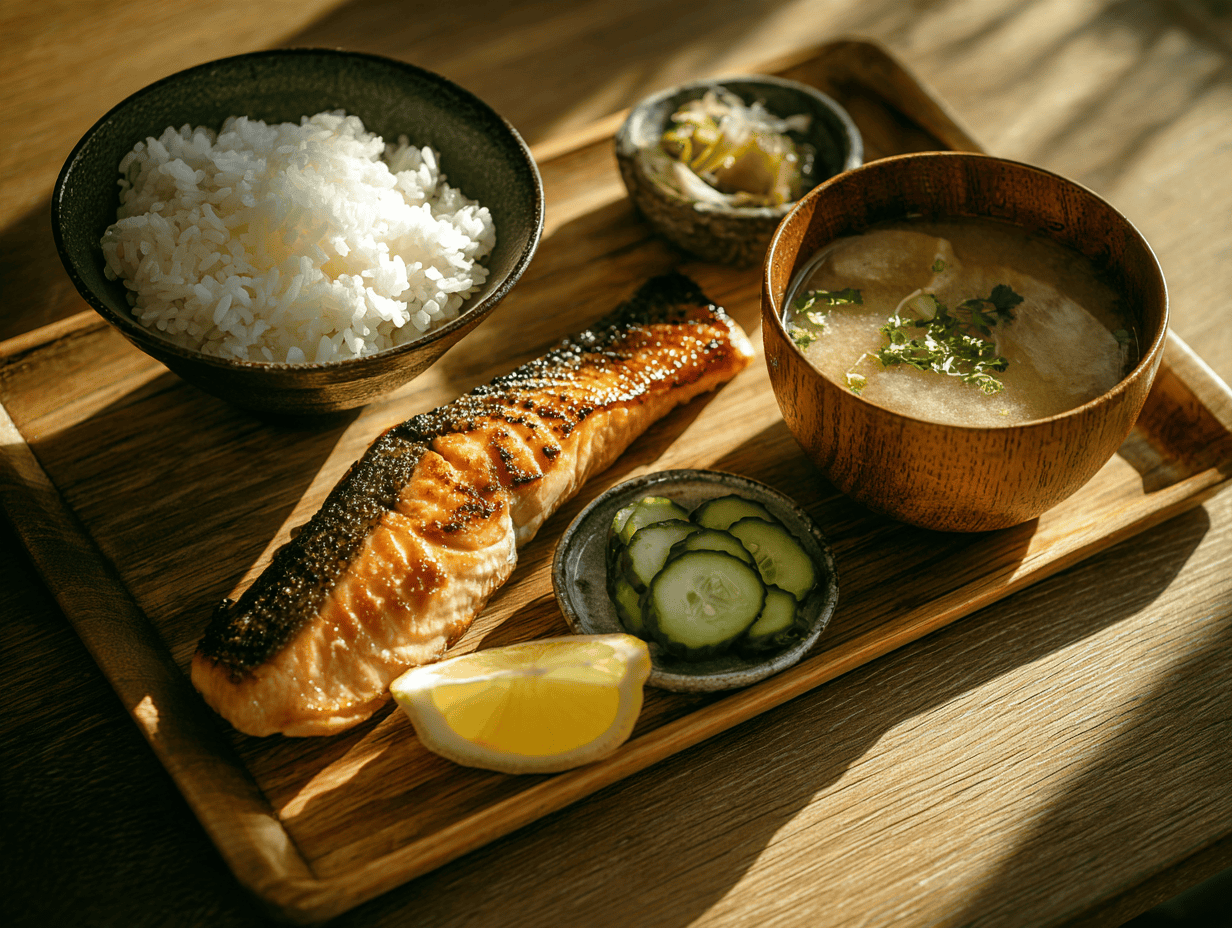
Salting salmon began as a way to preserve it. Today shiozake is a staple of Japanese breakfasts and bento lunches.
- 2 skin-on salmon fillets, about 200 g in total, 2.5 cm thick
- 3–4 g fine sea salt (about 3/4 teaspoon)
- 1 teaspoon sake (optional)
- Steamed rice and miso soup, to serve
- Grated daikon and a wedge of lemon or sudachi, to serve
- Remove any pin bones, then pat the salmon dry with paper towels.
- Rub the fillets with the sake, then sprinkle the salt evenly over both sides from a height.
- Wrap the fillets in paper towels, cover, and refrigerate overnight so the flesh firms and seasons through.
- Pat the fillets dry, then grill skin side up over medium-high heat for about 5 minutes. Turn and cook 1 to 3 minutes more, until just cooked through.
- Serve with steamed rice, miso soup, a mound of grated daikon, and a wedge of citrus.
The recipe works as a noticing exercise as well. Salt the fish at night, and you give tomorrow a small reason to begin. That is the looking-forward thread in miniature. It takes only a few minutes, yet it changes how the morning feels.
If your log stays thin for longer than a few weeks, be gentle with yourself. Low periods happen, and ikigai can be hard to feel during them. Keep the log going anyway, but lower the stakes further. Note one thing you saw, heard, or tasted each day. If the heaviness lasts, speaking with a doctor or counselor is a wise step. Meanwhile, the right tools can make daily noticing more inviting.
Keeping the practice going
A good notebook and a pen you enjoy make a real difference. When the tools feel pleasant, you reach for them more often. Keep them where you will see them, such as by the kettle or on your pillow. That way, the log becomes part of the evening rather than a chore you remember at midnight. A notebook kept only for this purpose also helps, because it turns the habit into a small ritual of its own.
After a few months, read back through every entry. Most people are surprised by how much they have collected. The threads will be clearer, and the anchors will feel natural. This is the lasting reward of the practice. You no longer need to ask what your ikigai is, because your own pages show you.
If you ever feel stuck again, return to the basics. Write three lines tonight. Circle what you would miss. Protect one small thing tomorrow. The method is simple on purpose, because simple habits last. Over the years, they add up to a life that feels worth living.
Finally, remember that ikigai is personal. Someone else’s answer will not fit you, however persuasive it sounds. Your own record, built day by day, is the most reliable guide you will ever have. So trust it, and let it change as you do. Then share what you learn with someone you love, and ask what they have noticed too.
Questions Worth Asking
How long does it take to find your ikigai?
There is no fixed timeline. A two-week noticing log usually reveals the first patterns, and a few months of steady notes make them clearer. Many people find that their sense of purpose keeps deepening for years, because ikigai grows with experience rather than arriving as a single discovery.
Can you have more than one ikigai?
Yes. In everyday Japanese use, people often name several sources at once, such as family, a hobby, and their work. Having more than one is healthy, because if one source fades during a hard season, the others can carry you until it returns or something new takes its place.
Does your ikigai have to be your job?
No. Work can be a source, but it is only one option. Many people draw their strongest sense of purpose from caring for others, gardening, learning, or community life. Treat paid work as one possible thread, not the test your whole life must pass.
What questions help you discover your ikigai?
Ask what moment today felt worth living, what you would miss if it vanished, and who benefited when you acted. Then ask what you are looking forward to this week. Answering these briefly every evening works better than answering them once in depth.
What if I feel I have no passion at all?
Passion is not required to start. Ikigai often begins with mild interest or simple comfort, such as a walk or a meal you enjoy. Record those moments without judging them. Over weeks, small pleasures tend to reveal a direction, and interest can grow into something stronger with practice.
Can your ikigai change as you get older?
It usually does. Retirement, parenthood, a move, or a new skill can shift which sources feel strongest. That change is normal rather than a loss. Revisiting your notes regularly helps you see the shift early and give new sources the time and attention they deserve.
Your Ikigai, One Morning at a Time
You now have the whole practice. Notice for two weeks. Keep only what you would miss. Anchor it, share it, and review it each month. None of these steps is dramatic. However, together they answer how to find your ikigai better than any diagram, because they start from your real days.
If you would like a guide for the first three months, a 90-day guided ikigai journal gives each morning a short prompt and each week a review. It follows the same rhythm as this article: small daily notes, patterns over time, and gentle action. Begin tonight with three lines, and let the rest unfold.
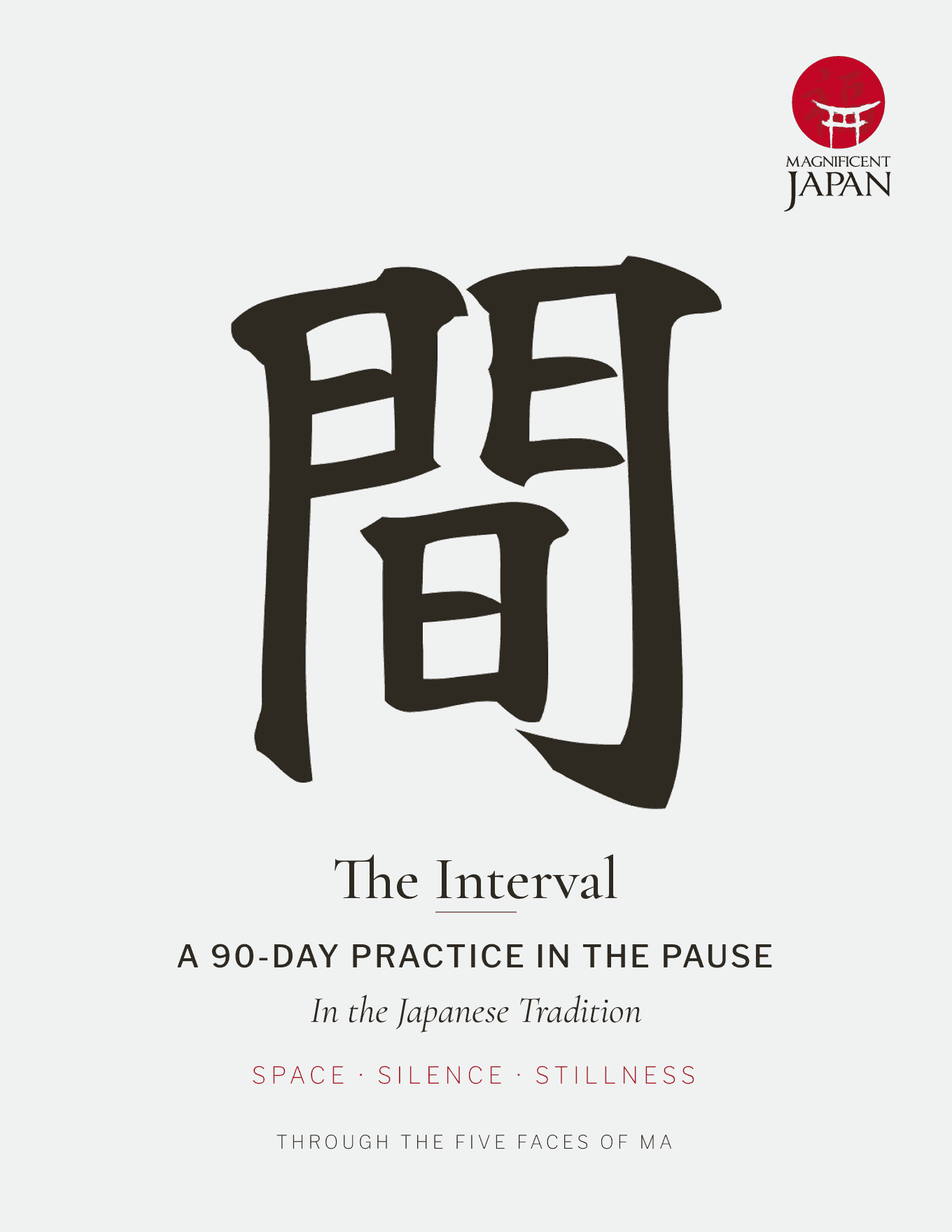
A ninety-day guided practice in the pause, for making room in the day so its small sources of worth have space to be noticed.
View the Journal →When the three months are done, a pause helps the lessons settle. A reflective journal built around ma, the Japanese sense of meaningful space, makes a natural next step. Keep noticing, keep circling, and keep what you would miss. And when you are ready to see Japan through your own threads, we would be glad to help.
The Editors, Magnificent Japan
We design routes around your own small sources of worth: a craft workshop, a morning market, a train ride through the rice fields, and time to notice them.
Plan Your Custom Japan Itinerary