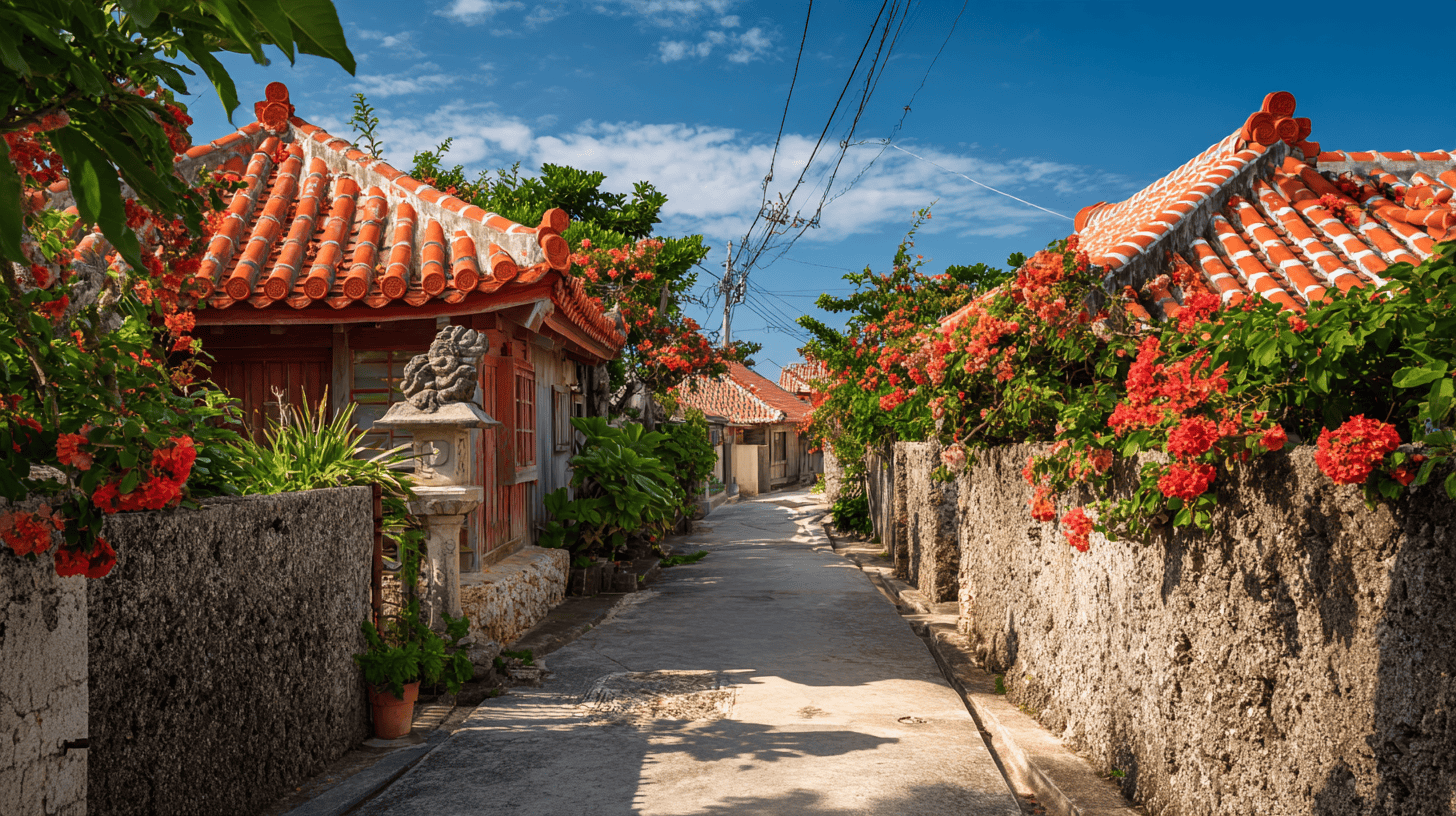
Few ideas travel as well as the ikigai Okinawa story. It goes like this. On a warm island in the far south of Japan, people live past 100 because each has a reason to rise each morning. It is a lovely story, and much of it is true.
Yet some of it has been stretched. The research on purpose and long life is real, but the best-known study was done elsewhere in Japan. Meanwhile, the islands’ famous lead in longevity has faded. So this piece sorts the solid parts from the soft ones, calmly and with sources.
What remains is still worth your time. You will meet a village of lively elders, a circle of friends called a moai, and a purple sweet potato. You will also find habits to borrow at home. For a daily place to keep them, there is The Return, our 90-day ikigai journal.
Does Ikigai Explain Okinawa’s Long Lives?
Partly, and only as one thread among many. Okinawa has long been home to many healthy centenarians. Research from elsewhere in Japan links a sense of ikigai with lower mortality, though it cannot prove cause. Diet, daily movement and close friendships matter too. Also, Okinawa no longer leads Japan in life expectancy.
Why the Ikigai Okinawa Story Took Hold
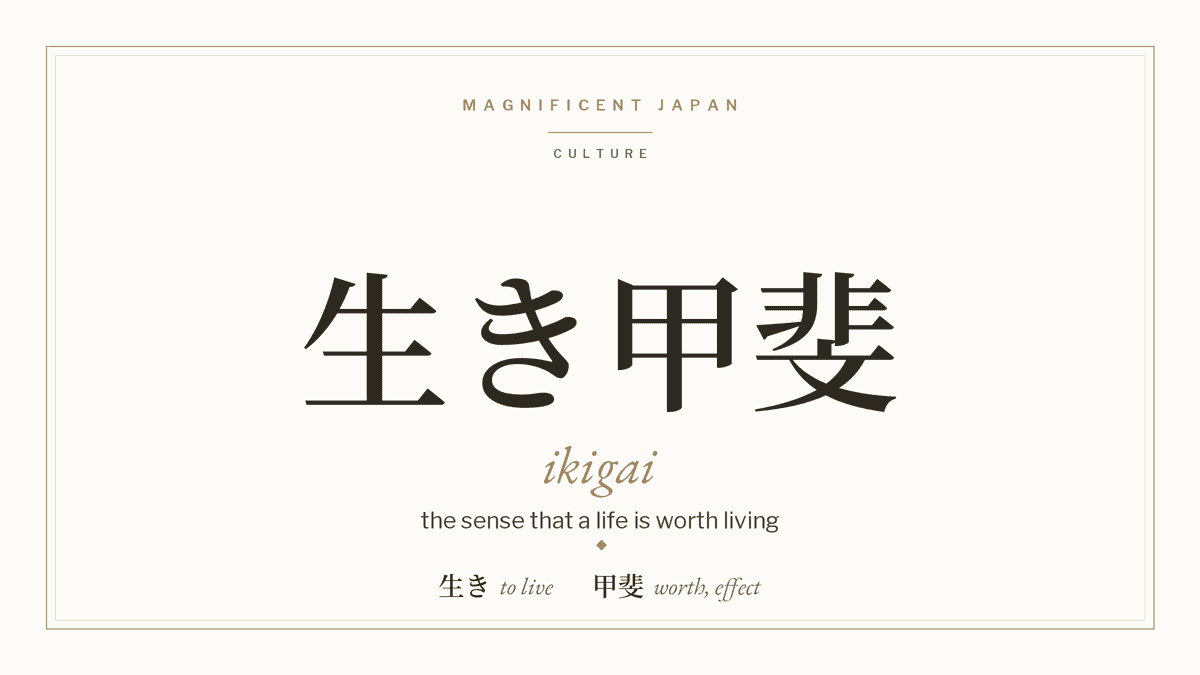
Start with the word itself. Ikigai is an everyday Japanese word, used from Hokkaido to the southern islands, so it is not an Okinawan invention. The psychiatrist Mieko Kamiya brought it to wide public attention in 1966. She described it as something lived and felt in ordinary days, rather than a theory (Kotera and Fido, a review of ikigai research). That framing still helps. For the fuller background, our guide to what ikigai means in Japanese traces the word from its roots. So why did one island become its home in the popular mind? The answer lies in research that began nine years later.
A study that began in 1975
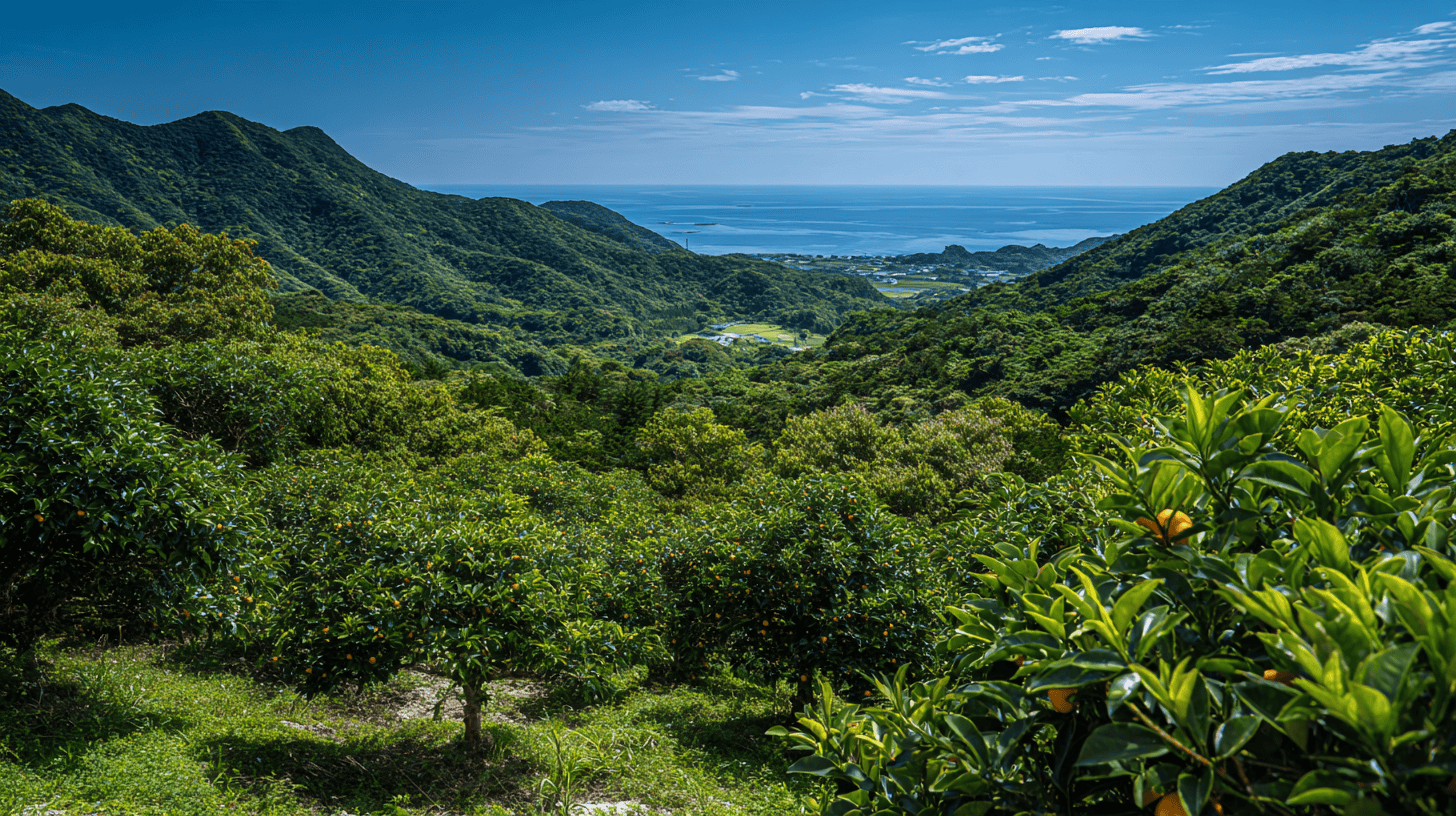
In 1975, the Okinawa Centenarian Study began to follow the islands’ oldest residents. Since then, it has enrolled more than 1,000 centenarians, plus hundreds of people in their seventies, eighties and nineties (Okinawa Centenarian Study). The team looks at diet, exercise, genes, social ties and outlook. Its findings are grounded. Most centenarians seemed healthier than average all their lives, and many stayed independent until their mid-nineties. However, the team calls the idea of superhuman elders a myth. These are ordinary people who aged well. The study also suggests that lifestyle shapes about two-thirds of lifespan. That matters, because habits can change.

How a region became a symbol
Over time, Okinawa joined the places writers call blue zones, where people seem to live unusually long and well. Then, in the 2010s, English-language books carried ikigai far from Japan. Some leaned on a five-part framing popularized in English by the neuroscientist Ken Mogi. Others simply tied the word to Okinawa’s elders. As a result, two separate things fused: a Japanese word for what makes life worth living, and a real group of long-lived islanders. That is how the ikigai Okinawa story took shape. Tidy stories, though, tend to lose detail, so it helps to look closely.
Ogimi and the Moai: Ikigai in Okinawa Is Shared
Ogimi sits in the green north of Okinawa Island, and locals call it the village of longevity. In 1993, its senior citizen clubs raised a monument to that name. Its plaque opens with a cheerful boast: at 80, I am still a child (Visit Okinawa Japan). The same official guide credits residents who live without worry or hurry. It also says they eat about three times the fruit and vegetables of other regions. In Ogimi, then, long life looks less like a private quest and more like a shared rhythm. Therefore, ikigai in Okinawa tends to show up in company.
A circle of friends called a moai
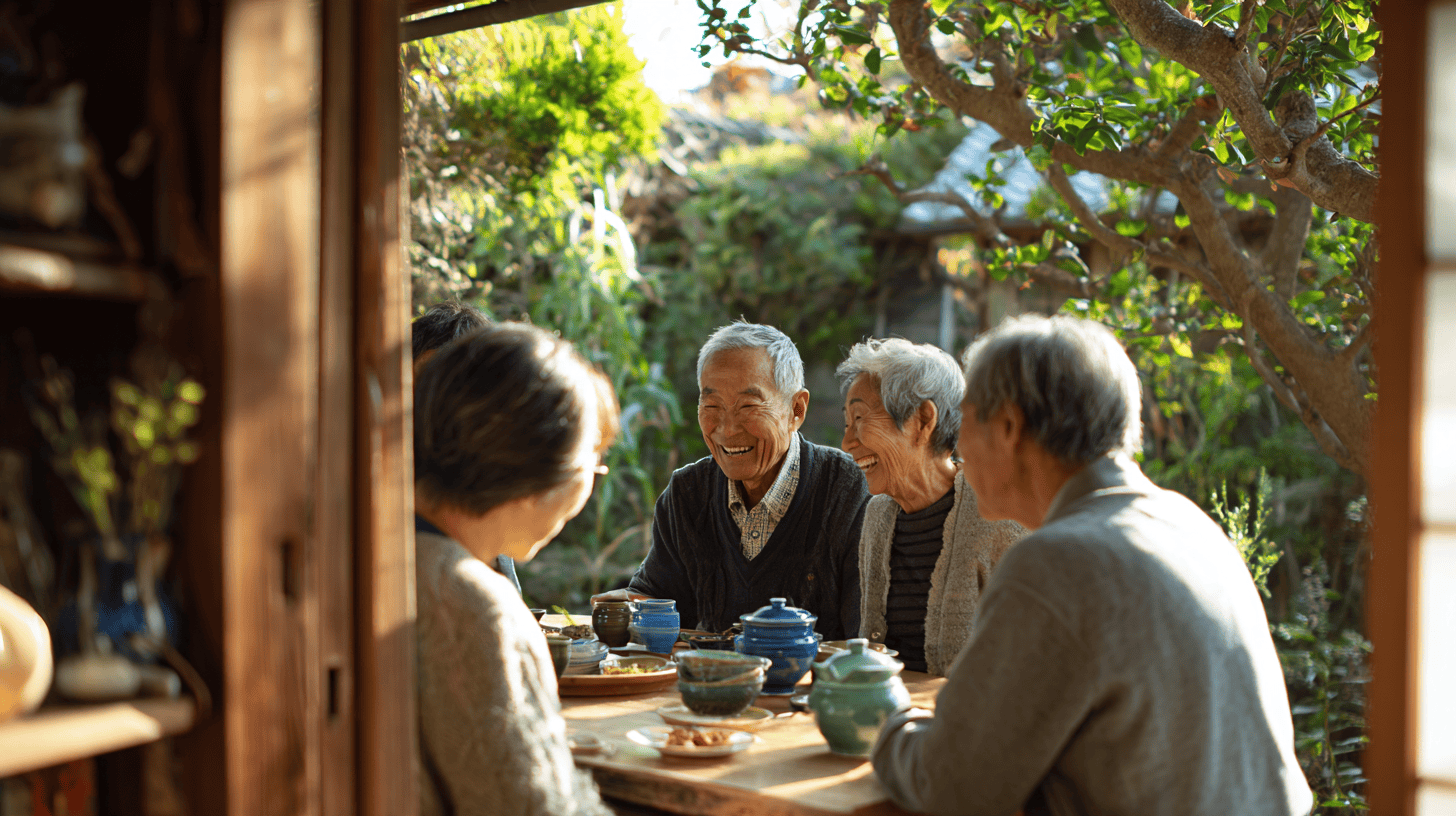
The clearest example is the moai, a small group of friends who meet regularly and support one another. Traditionally, members also pooled money, so each could draw on the group in turn. Some circles last for decades. Still, the money was often the smaller part. The meeting was the point, with food, talk and laughter at the same table each month. In other words, a moai turns friendship into a habit. You do not wait to feel close. Instead, you show up, and closeness follows. For an older person, that circle also means someone notices when you are missing.
The table as a gathering place
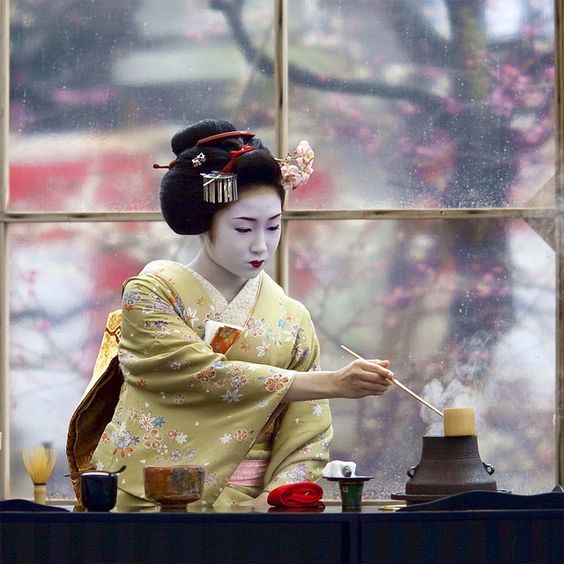
Notice what sits at the center of a moai. It is a table, set with small dishes and cups of tea. When friends share food, the meal slows down. People pass plates, refill cups and talk between bites. As a result, eating turns social, and portions stay modest without effort. You can bring this home simply. Invite the same few friends on the same evening each month. Then set out several small plates rather than one large one. Also, choose pieces you love to handle, because a well-made cup invites you to linger. The objects below share that spirit, from Japanese tableware to the bubbled, sea-colored glass of the Ryukyu islands.
Visiting Ogimi with open eyes
If you travel north to Ogimi, go slowly. The village is small, and its charm lies in daily life rather than sights. Walk the lanes early, while neighbors tend their gardens. Look for citrus trees on the slopes and boats along the shore. Then sit with a view of the sea and let the day unfold. Often the most vivid moments here are small: a nod from someone weeding, the smell of rain on warm stone. Those moments fade fast unless you catch them. So carry a notebook and write a few lines each evening. Japanese has a phrase for this attention, ichi-go ichi-e, one time, one meeting.
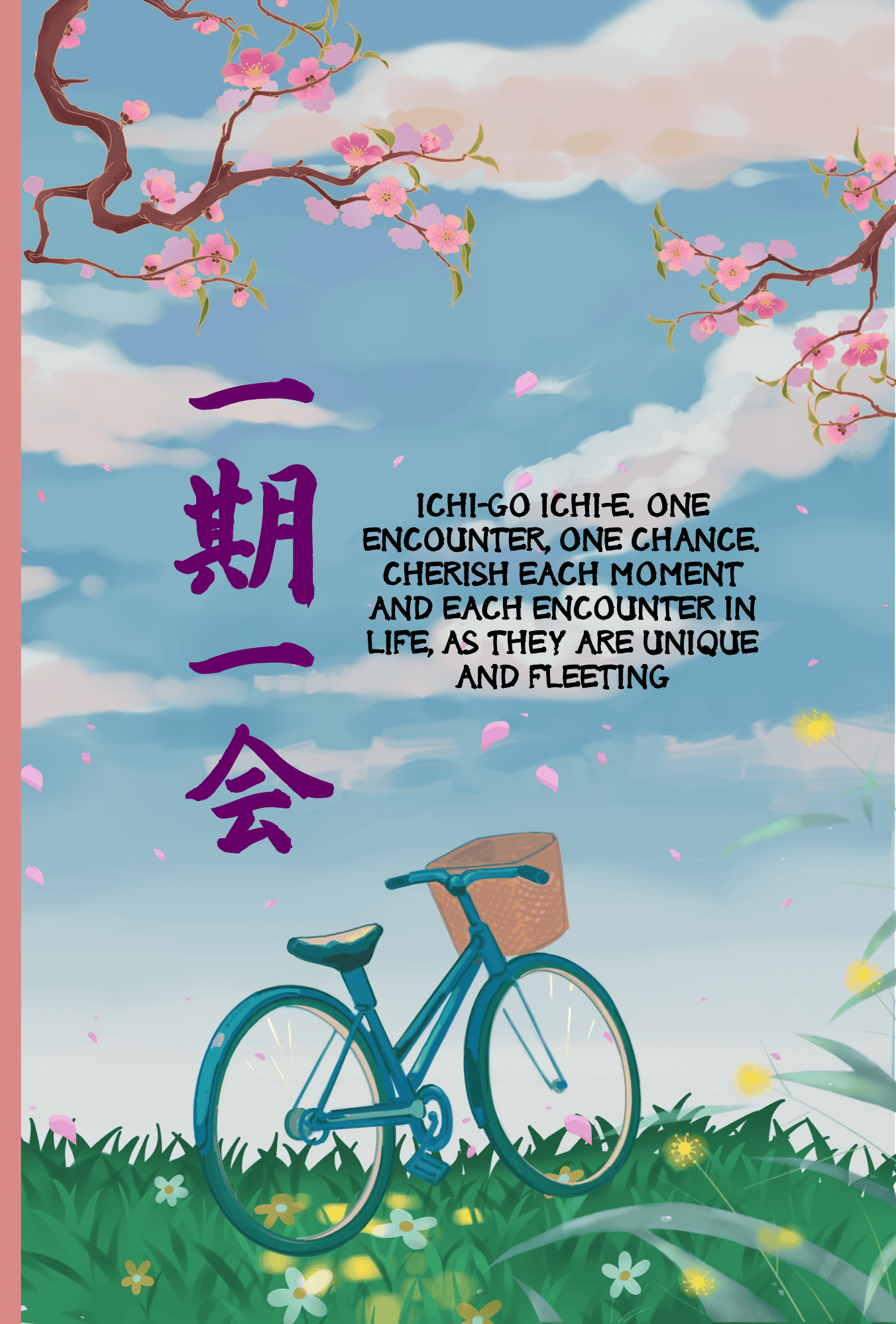
One encounter, one chance: pages for the moments worth keeping.
Unlined · 120 pages · Original cover art
Shop This Journal →What the Research on Ikigai and Long Life Shows
Now to the core of the claim. The best-known study on ikigai and mortality followed 43,391 Japanese men and women for seven years. It ran in Ohsaki, a rural area of Miyagi Prefecture, far north of Okinawa. Over the follow-up, those who said they lacked ikigai had a higher risk of death from any cause. Their risk from heart and circulation disease was also higher. However, for cancer the link was not significant (Sone and colleagues, Psychosomatic Medicine, 2008). It is a large and careful study. Still, notice where it took place. The ikigai Okinawa claim rests largely on evidence from the mainland.
Association is not cause
There is a second caution. Studies like this one find an association. They cannot show that ikigai itself adds years. For example, people who feel their lives are worth living may also start out healthier. They may sleep better, move more or have more friends, and any of those could explain part of the link. The review by Kotera and Fido makes the same point plainly. It ties ikigai to better health, yet it says no firm conclusion can be drawn about cause. That honesty helps. So treat ikigai as part of a good life, rather than a pill for a longer one. After all, you do not need a grand mission.
Big ikigai and little ikigai
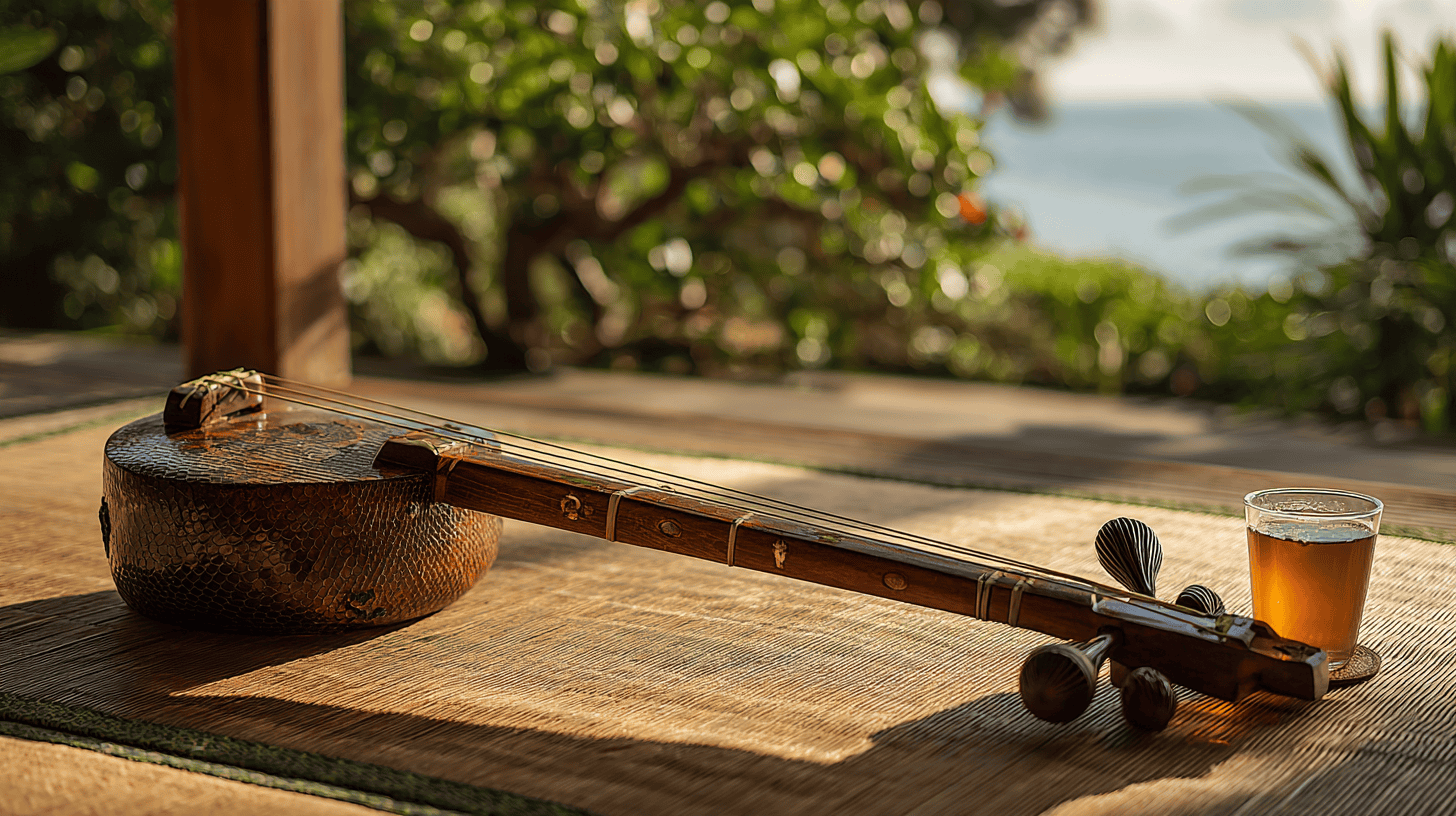
The Okinawa Centenarian Study offers a gentle way to hold this. Its lifestyle notes separate a big ikigai, your current mission, from many little ikigai, the small daily joys. The second kind is easy to overlook, yet it may be more reliable. A retired fisherman may no longer sail, but he can still mend nets for a neighbor. Likewise, a grandmother may no longer farm, but she can still play the sanshin at dusk. In each case, the purpose is small and near at hand. Therefore, it survives change. Big missions can end with a job, while little ones renew every morning. The table below sorts the popular story, claim by claim.
The core is real; the certainty is what gets overstated.
| Popular claim | What the evidence shows | How to read it |
|---|---|---|
| Okinawa has many healthy centenarians | Studied since 1975, with more than 1,000 centenarians enrolled | Well documented |
| Ikigai makes you live longer | Ohsaki study links having ikigai with lower mortality risk | An association, not proof of cause |
| Okinawa leads Japan in longevity | In 2020, women ranked 16th and men 43rd among prefectures | The lead has faded |
| Long life is mostly in the genes | Lifestyle is thought to account for about two-thirds | Habits carry most weight |
| Island elders are superhuman | Most stayed independent into their mid-nineties | Healthy, not mythical |
Writing purpose into the day
So how do you grow little ikigai on purpose? One simple way is to notice them in writing. At the start of the day, jot down one thing you look forward to. At the end, note one moment that felt worth living. Over weeks, a pattern appears, and you see which people and tasks keep lifting you. That record helps because memory is selective. Without it, a hard week can erase a good month. Moreover, writing slows you enough to feel the moment twice. The short film below shows the habit in practice: a hand writing a morning prompt in The Return, our ikigai journal, on a tablet.
Twenty seconds inside the journal
The digital edition in use — a morning prompt, answered by hand while the coffee is still warm. Tap to play, with sound.
One page, one intention, one single quiet moment.
The Okinawan Table and Hara Hachi Bu
Food is the other half of the story. Older Okinawans often repeat a saying, hara hachi bu, which means stopping at about 80 percent full. It is less a diet than a pause. You finish the meal before the last bite of comfort. Meanwhile, the traditional plate was built on vegetables, beans and tofu, with fish now and then. For centuries, the sweet potato was the staple, because it survived the typhoons that ruined other crops. In short, the old Okinawan table was plain, colorful and filling without being rich. So much of that pattern is easy to borrow, even far from the islands.
To taste this table where it grew, from a morning market in Naha to a slow lunch in the north, we can shape a private Okinawa itinerary around food and village life.
Occasional letters on ikigai and the Japanese ideas behind a good day, with news of the Cultural Reflection Collection.
Occasional letters. Unsubscribe anytime.
Color on the plate
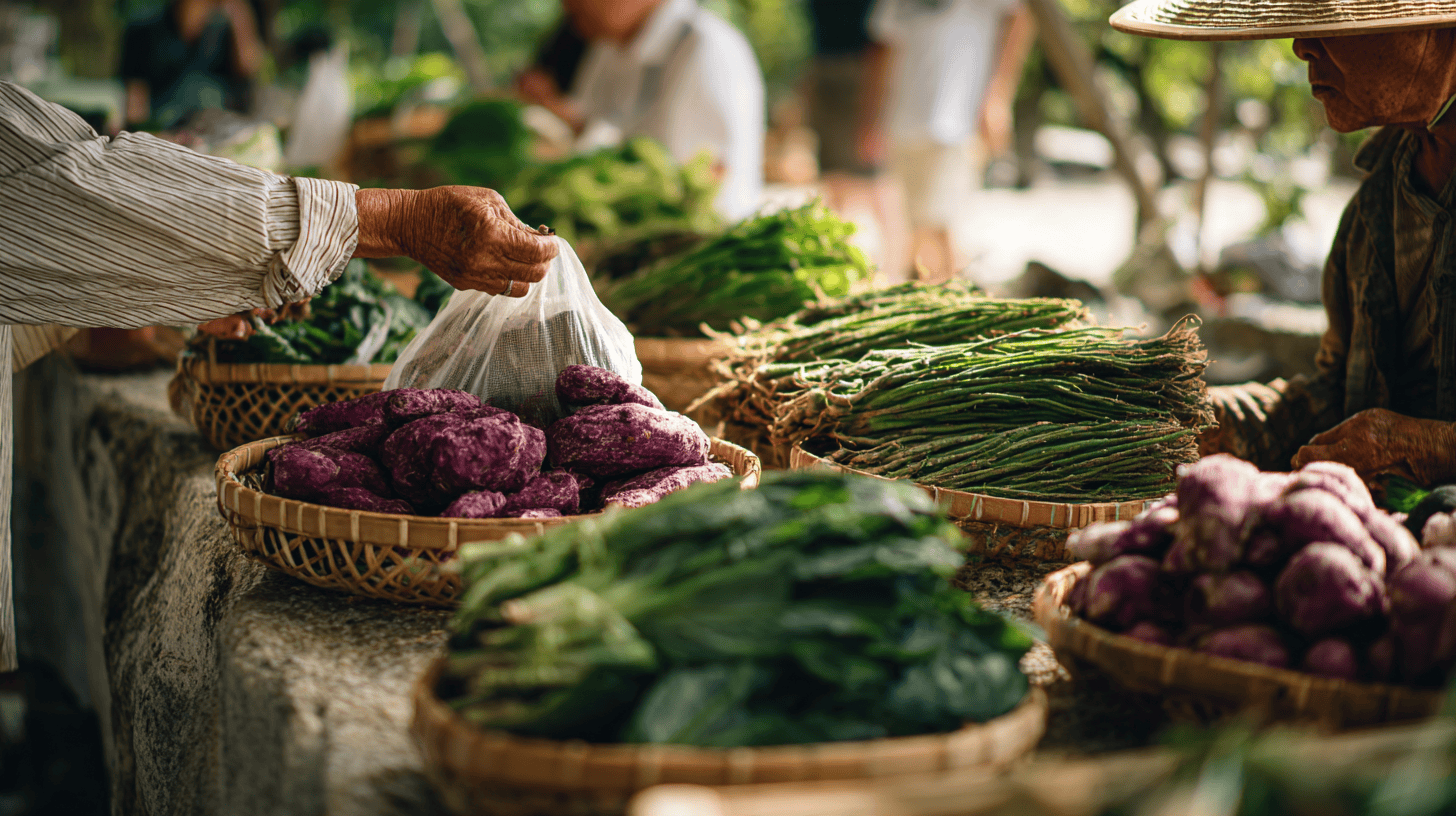
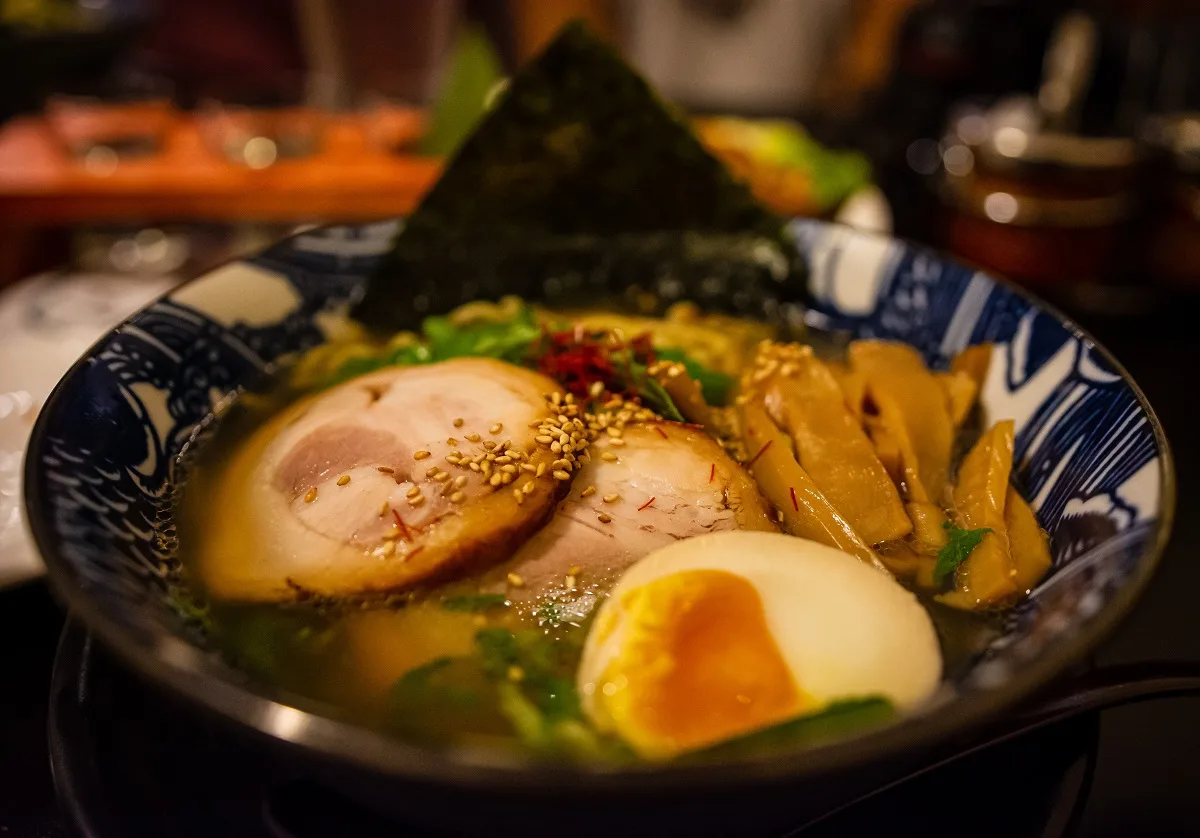
Walk through an Okinawan market and the palette tells the story. Deep purple beni imo sits beside bumpy green goya, the bitter melon. Small shikuwasa limes glow in baskets, while seaweed and tofu fill the next stalls. None of this is exotic to locals. What stands out is variety. A typical home meal offers several small dishes rather than one big one. As a result, the plate carries many colors and textures at once. That matches the Ogimi guide’s picture of plenty of vegetables, beans and tofu. You can start the same way at home. Add one more vegetable to dinner, and serve it in its own bowl.
Eating slowly, eating together
Hara hachi bu works best when meals are unhurried, and that is hard alone at a desk. Here the moai and the table meet. When you eat with others, you talk, and talking slows the fork. You notice fullness before it tips into heaviness. Then you rise feeling light enough to walk. Walking is the other steady partner of Okinawan longevity, since elders tend gardens and run errands on foot well into old age. None of this needs special equipment. It asks only for time, company and attention. So keep one meal a week away from screens, share it with someone, and let it last.
Tea, citrus and the rest of the day
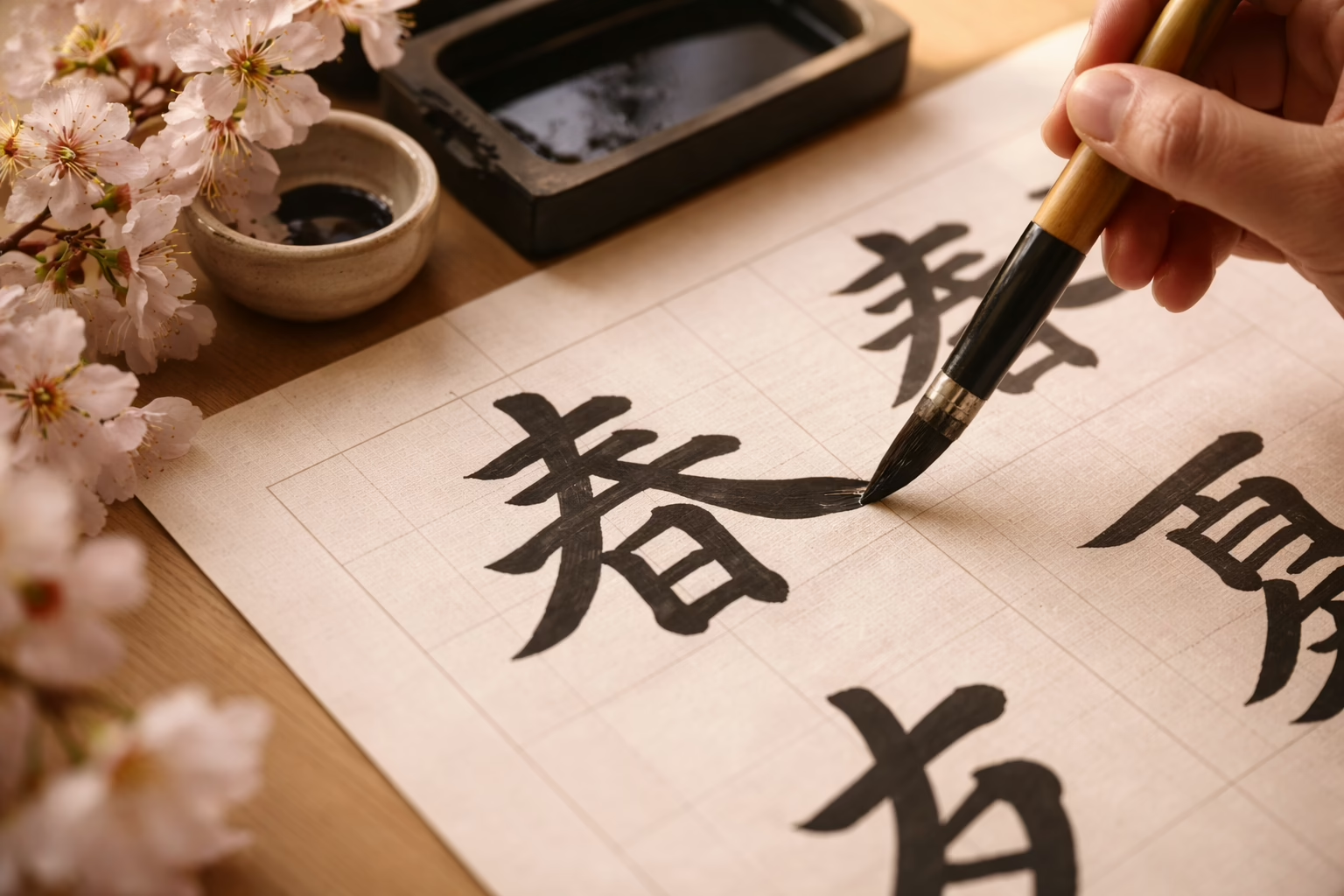
Between meals, Okinawans reach for tea. The island favorite is sanpin-cha, a jasmine tea poured at home through the day. The Okinawa Centenarian Study also suggests herbal teas and low-sugar drinks. That fits the wider Japanese habit of tea as a pause. If you are new to it, start with our guide to the varieties of Japanese tea. Another island flavor is shikuwasa, a small, sharp citrus from the north. Locals add it to drinks and dressings, and a little goes a long way. Together, tea and citrus bring brightness without heaviness. In this way, the afternoon becomes one more little ikigai.
Recommended
How Okinawa’s Longevity Lead Has Changed
Here the story needs its most honest update. For decades, Okinawan women topped Japan’s life-expectancy tables, and men ranked first in 1985. Yet by the 2020 prefectural tables, women had slipped to 16th and men to 43rd. It was the first time the women had fallen outside the top ten (South China Morning Post). Reporting on the change points to a faster, more modern way of life replacing the old slow pace. In other words, when the old habits faded, so did part of the advantage. That is sobering, but it is also hopeful. The benefit came largely from how people lived, and daily habits can always be rebuilt.
What the older generation still teaches
The elders studied since 1975 grew up in a very different Okinawa. Most walked, farmed and fished. Their meals came from gardens and the sea, and their neighbors had known them for life. Those long, healthy years are real, and they remain a gift to research. Still, they belong to a particular time. Younger Okinawans face the same pressures as people anywhere: long commutes, desk jobs and packaged food. Therefore, the ikigai Okinawa lesson is not about a place with special powers. Rather, it is about a way of living that any place can support. A daily walk, a circle of friends and a table full of plants are all portable.
The humble sweet potato
Of all those portable habits, the easiest may be the sweet potato. It reached the Ryukyu islands from China in the early 1600s. After that, it spread fast, because it survived storms that flattened other crops. For generations it fed families through hard years. Today, purple-fleshed beni imo turns up in cakes, tarts and ice cream across Okinawa. Yet the simplest way to enjoy it is also the oldest. Roast it whole and slowly, until the flesh turns soft and the sugars caramelize at the ends. Serve it warm with a pinch of sea salt, or cool it for lunch. Because it keeps well, one tray lasts several days.
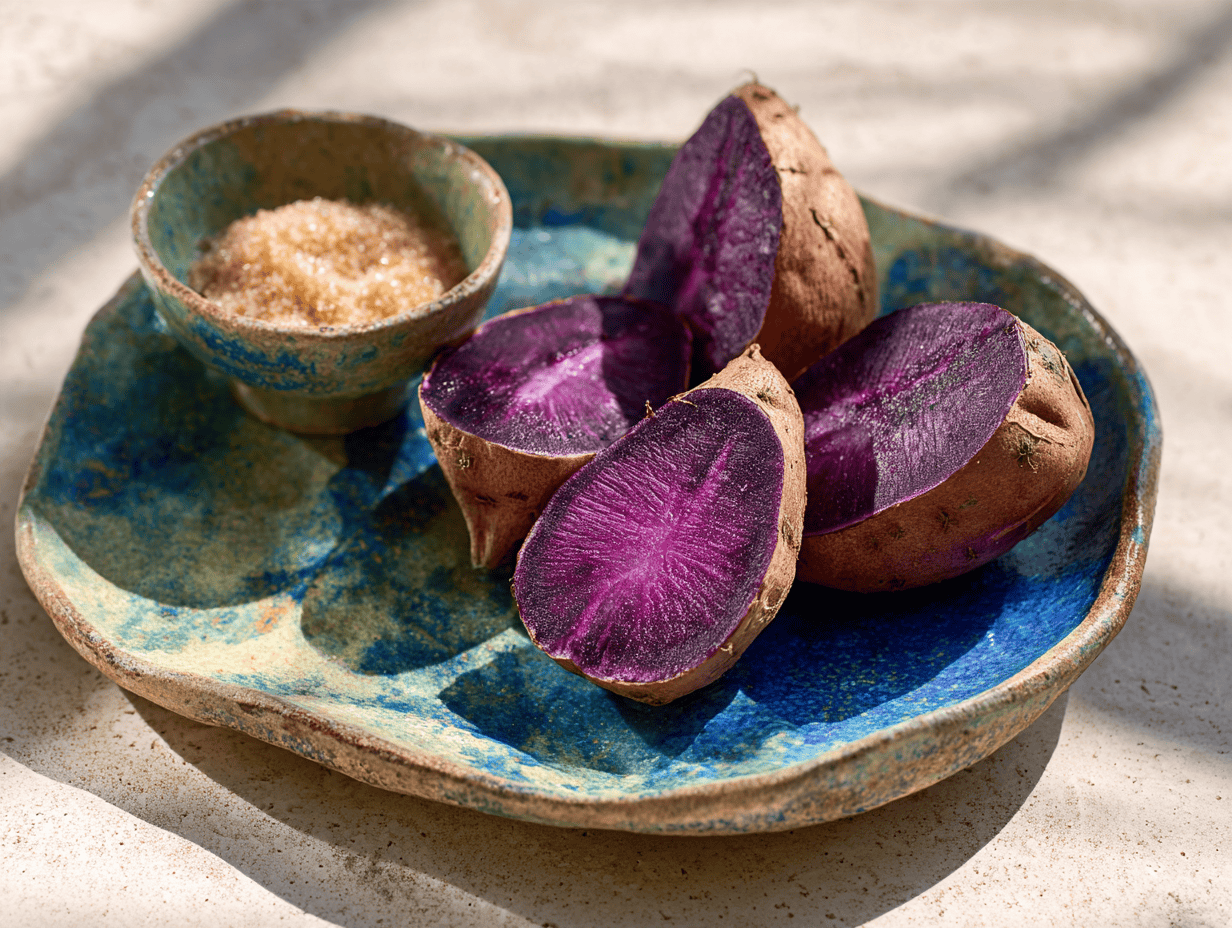
The sweet potato reached the Ryukyu islands from China in 1605 and carried Okinawa through typhoon years. Slow roasting, as in Japan's yaki imo, draws out its natural sweetness.
- 2 medium beni imo (Okinawan purple sweet potatoes), about 10 oz / 300 g each
- 1 teaspoon neutral oil
- A pinch of flaky sea salt
- A small knob of butter, to serve (optional)
- Heat the oven to 325°F (163°C) and line a baking tray with parchment.
- Scrub the sweet potatoes well, dry them completely, and prick each one several times with a skewer or fork.
- Rub the skins lightly with oil and set them on the tray. For softer skin and moister flesh, wrap each one in foil instead.
- Roast for 75 to 90 minutes, until a skewer slides through the thickest part with no resistance and the sugars bubble at the ends.
- Rest for 5 minutes, then split each potato open and finish with sea salt, and butter if you like. Serve warm.
What to Take From Ikigai in Okinawa
So what should you carry away? First, the core is sound. Okinawa did produce a remarkable generation of healthy elders, and researchers have studied them with care. Next, purpose matters. Across Japan, people with ikigai tend to live longer, even if the arrow of cause is unclear. Finally, the benefits came bundled. Purpose arrived with plants on the plate, daily movement and friends who showed up. That is good news, because you do not need to move to an island. Instead, you can keep a standing date with friends and stock a small pantry.
An Okinawan pantry at home
A few staples make that easier. Kokutō, the dark brown sugar of the islands, comes from sugarcane and has a deep, mineral sweetness. Many people enjoy small pieces with tea. Sanpin-cha brings the jasmine scent of Okinawan homes to your kettle. Shikuwasa juice adds a bright note to water and dressings. None of these is a cure, and none needs to be. Their value lies in ritual. A square of kokutō with an afternoon cup gives you a reason to pause. Over time, such small pleasures become part of your little ikigai. The three below make a good beginning.
A standing date with friends
The pantry is the easy part, whereas the circle takes intention. Still, it is the habit with the most promise. Think of two or three people you would like to see more often. Then propose a simple rhythm, such as the first Sunday of each month at one another’s homes in turn. Keep it light, since the aim is presence, not deep talk every time. Over a year, twelve meetings build more closeness than one grand reunion. Also, share the load. One person books, another brings food, and a third picks the walk. That is how a moai works at heart.
Travel as a gentle teacher
Travel can deepen all of this, because it lets you see habits in their home. On Okinawa, the lessons are everywhere once you look. An older couple walks the seawall at dawn. Friends share a table under a banyan tree. You can also look outward, toward the water, since the islands to the west hold some of Japan’s clearest seas. Our guide to scuba diving in Japan covers Okinawa’s reefs for anyone who wants to see them up close. A morning on the water has its own ikigai: full attention, calm breath and a sense of being part of something alive.

Bringing the lesson home
When the trip ends, the real work begins. It is easy to return inspired and slip back into old patterns within a week. So choose one habit and keep it simple. Perhaps it is a morning walk, or a monthly dinner with the same friends. Or it may be two lines in a notebook each night, naming what felt worth living. The islands suggest that such habits work best together, yet any one of them is a start. Also, be patient with yourself. After all, the elders of Okinawa built their lives over many decades, one ordinary day at a time, and so can you.
Questions Worth Asking
Is ikigai an Okinawan concept?
No. Ikigai is a common Japanese word used across the whole country, from the northern prefectures to the southern islands. Okinawa became linked with it in English-language books because of the islands' famous elders. Japanese speakers everywhere use the word to describe whatever makes their life feel worth living.
Is Okinawa still a blue zone?
Okinawa is still often listed among the blue zones, and its oldest residents remain remarkable. However, younger generations no longer share that advantage. In the 2020 national tables, the prefecture ranked in the middle for women and near the bottom for men, so the label now describes the past more than the present.
What does hara hachi bu mean?
Hara hachi bu is a saying that means eating until your stomach is about eight parts in ten full. In practice, it encourages people to put down their chopsticks before they feel heavy. Many families in Okinawa repeat it at mealtimes as a gentle reminder rather than a strict rule.
What foods did long-lived Okinawans eat?
The older generation ate mostly plants. Sweet potato was the main staple for many years, along with green vegetables, beans, tofu, seaweed and some fish. Portions were moderate, and meals were built from several small dishes rather than one large serving, which kept variety high and heaviness low.
Can visitors go to Ogimi village?
Yes. Ogimi lies in the forested north of Okinawa Island. It is a working rural village rather than a resort, so visitors come for forest walks, coastal views and local food. A rental car gives the most flexibility, and an early start leaves time for a slow lunch.
How can I practice ikigai the Okinawan way?
Focus on small daily joys as much as big goals. Keep in touch with a steady circle of friends, move your body each day, eat plenty of vegetables, and pause for tea. Writing down what you look forward to each morning can help you notice what gives your days meaning.
Taking the Ikigai Okinawa Lesson Home
The ikigai Okinawa story is not a fairy tale, and it is not a hoax. Instead, it is a real example of how purpose, food, movement and friendship can work together over a lifetime. The research gives it weight, while the honest caveats keep it human. You do not need a new country or a dramatic reinvention to use it.
What you need is a few habits, kept with care: a daily walk, a colorful table, and friends who expect you. Add a few calm minutes each morning to ask what makes the day worth living. For a guided place to ask that every day for three months, The Return, our guided ikigai journal, walks you through it. For the next step, read our companion piece on how to find your ikigai in everyday life.
A ninety-day guided practice in harmony, the natural next step once ikigai has you noticing the people and routines that hold a good day together.
View the Journal →Whichever habit you begin with, give it time. The Okinawan elders built their long lives slowly, with patience and good company. Let your own practice grow the same way, a little each day, until it feels like home. We look forward to hearing where it leads you.
The Editors, Magnificent Japan
We design Okinawa routes around village life: a morning in Ogimi, a market lunch, glassblowers in their workshops, and the reefs of the Kerama Islands.
Plan Your Custom Japan Itinerary