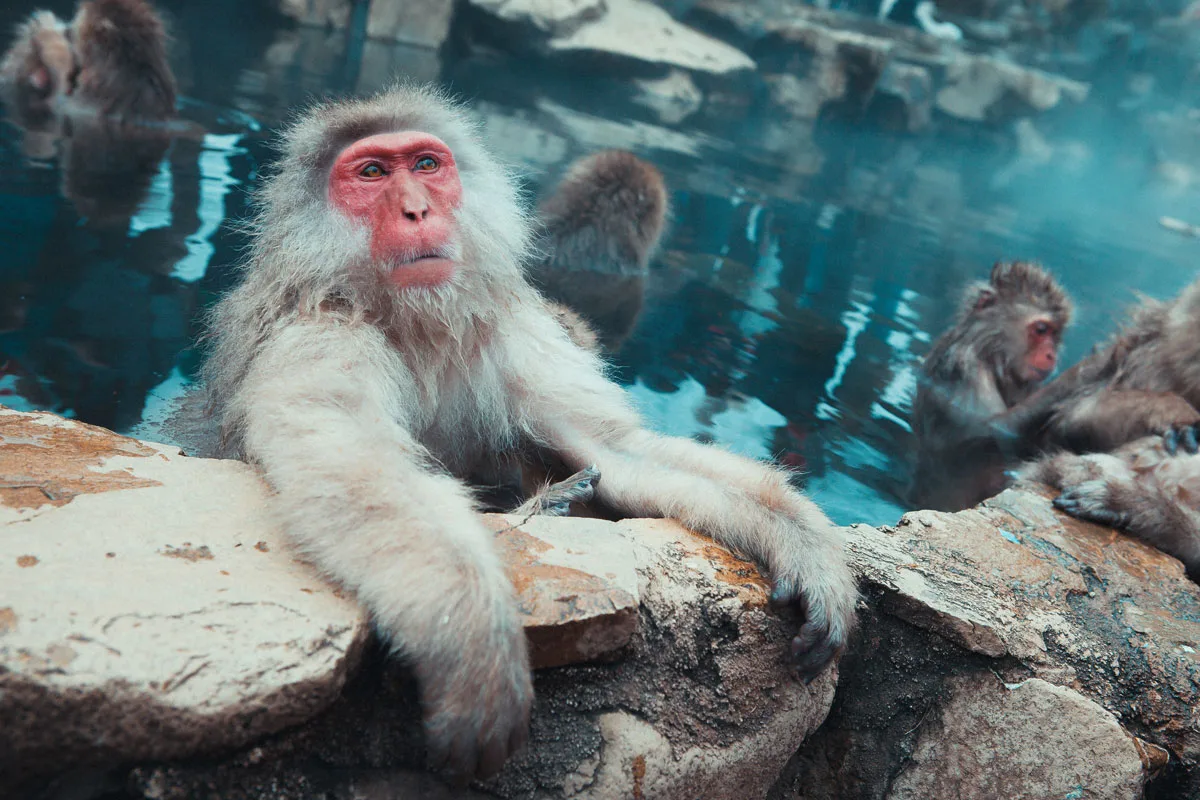
Japan wildlife photography is a winter craft. The animals that draw photographers here gather in the cold, in a handful of places, across about four months. Snow moves macaques into hot water. Ice brings sea eagles to the coast at Rausu. Frozen ground pulls cranes onto feeding fields where a farmer once scattered corn, and the habit held.
None of that is scenery. It is behavior with an address and an opening time, so planning matters more here than equipment does. This guide works through the sites by island, then the rules each operator sets, then the gear. If you want the wider picture of shooting Japan, from festivals to old streets, our Japan photography tours guide sets out the frame first.
When is the best time for wildlife photography in Japan?
Winter, for practical reasons. Crane feeding at the Tsurui sanctuary runs from mid or late November to late March. The Rausu drift-ice cruises run from December to February. Jigokudani’s macaques bathe in the hot springs to stave off the cold, so the classic bathing shot is a winter scene, not a year-round one.
What Makes Japan Wildlife Photography Different
Three things set Japan wildlife photography apart. The subjects are used to people without being tame. Working distances are short, so a long lens behaves differently here than on a savannah. And the support is good: paved roads, reliable trains and small heated rooms beside the viewing areas. You can work one site for days without logistics eating the week.
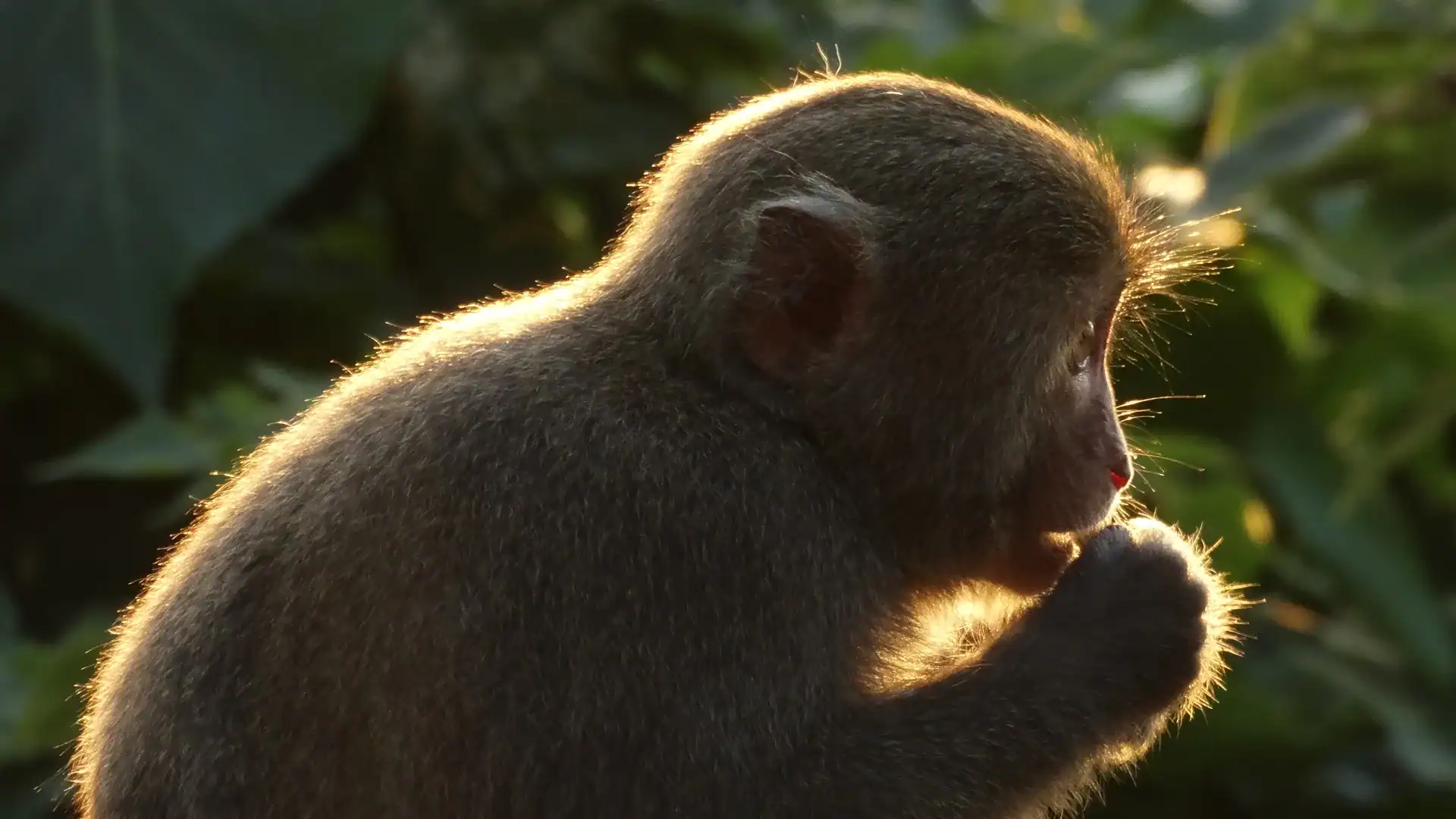
Then there is the weather, which is never just a backdrop. Snow is the reason the animal stands where it stands. Warm weather does not soften the picture; it removes it. Jigokudani says as much on its own guide page. Its monkeys bathe to stave off the cold in winter, and they do not use the baths at all hours or all year. So a mild February week can leave you with monkeys on rocks rather than in water.
Where the cold gathers the animals
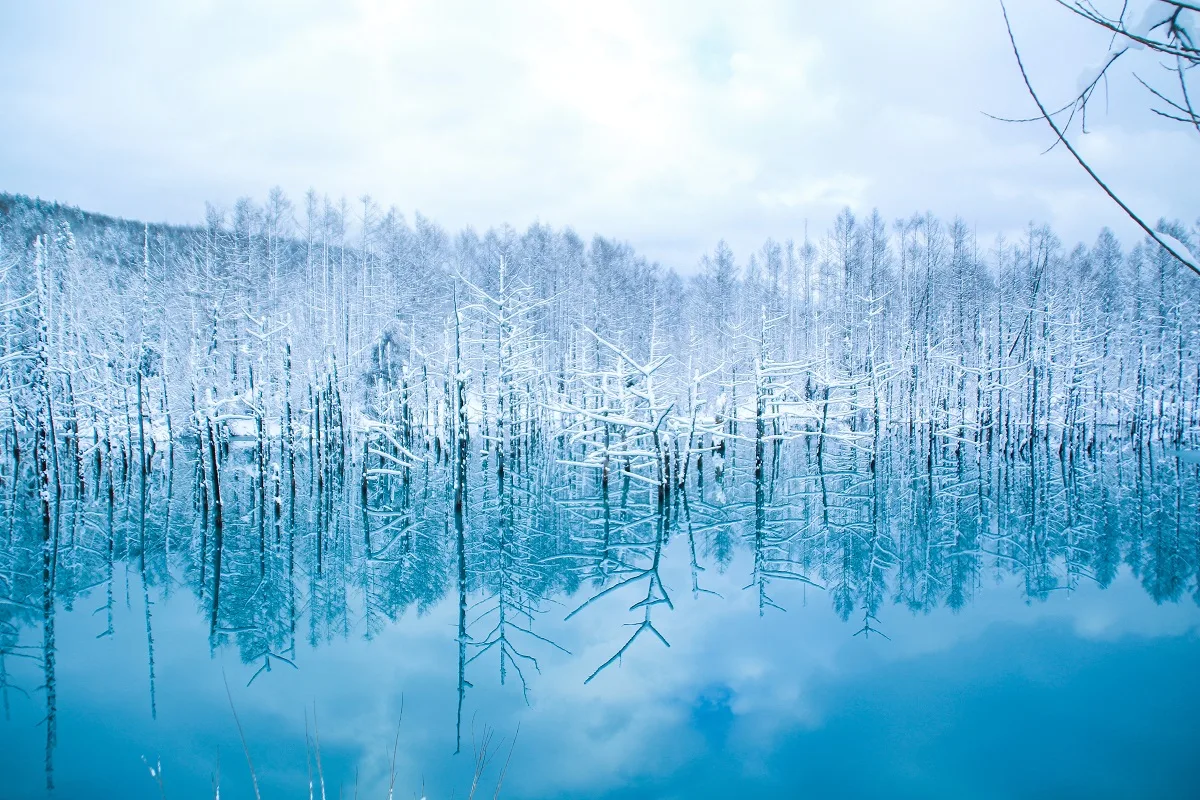
Eastern Hokkaido carries most of it. Kushiro Wetland holds the cranes. The Shiretoko Peninsula holds the wintering eagles. Lake Kussharo, inland and warmed by hot springs, holds the swans. Those three sit within a day’s drive of each other. Honshu holds the macaques, in a mountain valley in Nagano, and nothing else on this list.
So the first planning question is simple. Can the trip cover both islands, or should it cover one island properly? Ten days suits one island. A fortnight covers both without rushing. Either way, build the trip so that one site failing does not sink the week. In practice that means two regions, or one region with a spare day.
The daily rhythm matters as much as the map. Cranes are a dawn subject. Eagles keep the boat operator’s schedule. Macaques work all day, but they depend on the weather. Plan around those three rhythms and the driving sorts itself out.
Japan Wildlife Photography in Hokkaido: Cranes, Eagles and Swans
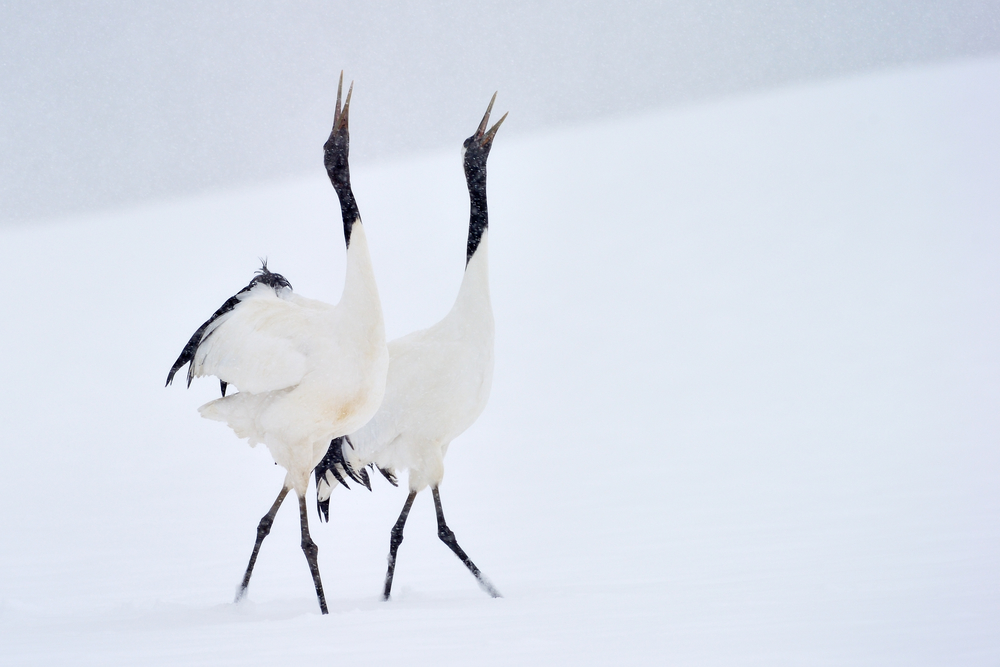
Start with the cranes. Between late November and mid-March they are the steadiest subject in the country. The Tsurui-Ito Tancho Sanctuary sits in the village of Tsurui, beside Kushiro Wetland, on about thirteen hectares of land. In winter part of that land becomes a feeding station, and visitors watch from the edge.
The history explains the behavior. The Wild Bird Society of Japan founded the sanctuary in 1987, on land belonging to a dairy farmer named Yoshitaka Ito. Feeding in this district goes back to the 1950s. So what you see is not a wild gathering that happens to be handy. It is seventy years of steady feeding, and the birds treat the field accordingly.
Two crane sites, and what each gives you
Tsurui is the close one. The society records more than three hundred cranes at once during the peak. Its rangers also run camera traps that take a photo every five minutes, to learn how the birds forage away from the station. A nature center overlooks the ground, with a heated observation room, spotting scopes and binoculars. However, there is no shelter at the outdoor viewing area. That one line decides what you wear.
One lens that covers the eagles at Rausu and the cranes at Tsurui, with dust and moisture sealing for snow and spray.
View the Sony 200-600mm →A dust- and splash-resistant Sony E-mount zoom from the Japanese maker, covering the same range as the brand option.
View the Sigma 150-600mm →A 200-800mm equivalent reach on Micro Four Thirds at a carrying weight that suits the boat and the valley walk alike.
View the M.Zuiko 100-400mm →The Akan International Crane Center, known as GRUS, is the other anchor. It opened in 1996, and the Hokkaido tourism board calls it Japan’s only facility dedicated to the conservation and research of the red-crowned crane. Its open-air area holds red-crowned and white-naped cranes all year. That makes it the crane site worth a visit outside winter. It sits about 45 minutes by car from JR Kushiro Station, so it slots into an eastern Hokkaido loop easily.
Rausu, and the ice that brings the eagles
Shiretoko works on a different rhythm, and here Japan wildlife photography leaves the land. Winter cruises leave Rausu into the ice floes, looking for Steller’s sea eagles and white-tailed eagles. Japan’s national parks listing for the Rausu cruise gives the season as December to February. It also splits the trip in two: a photography course of about two and a half hours, and a sightseeing course of about one. Book the photography course, because the difference is time on the water.
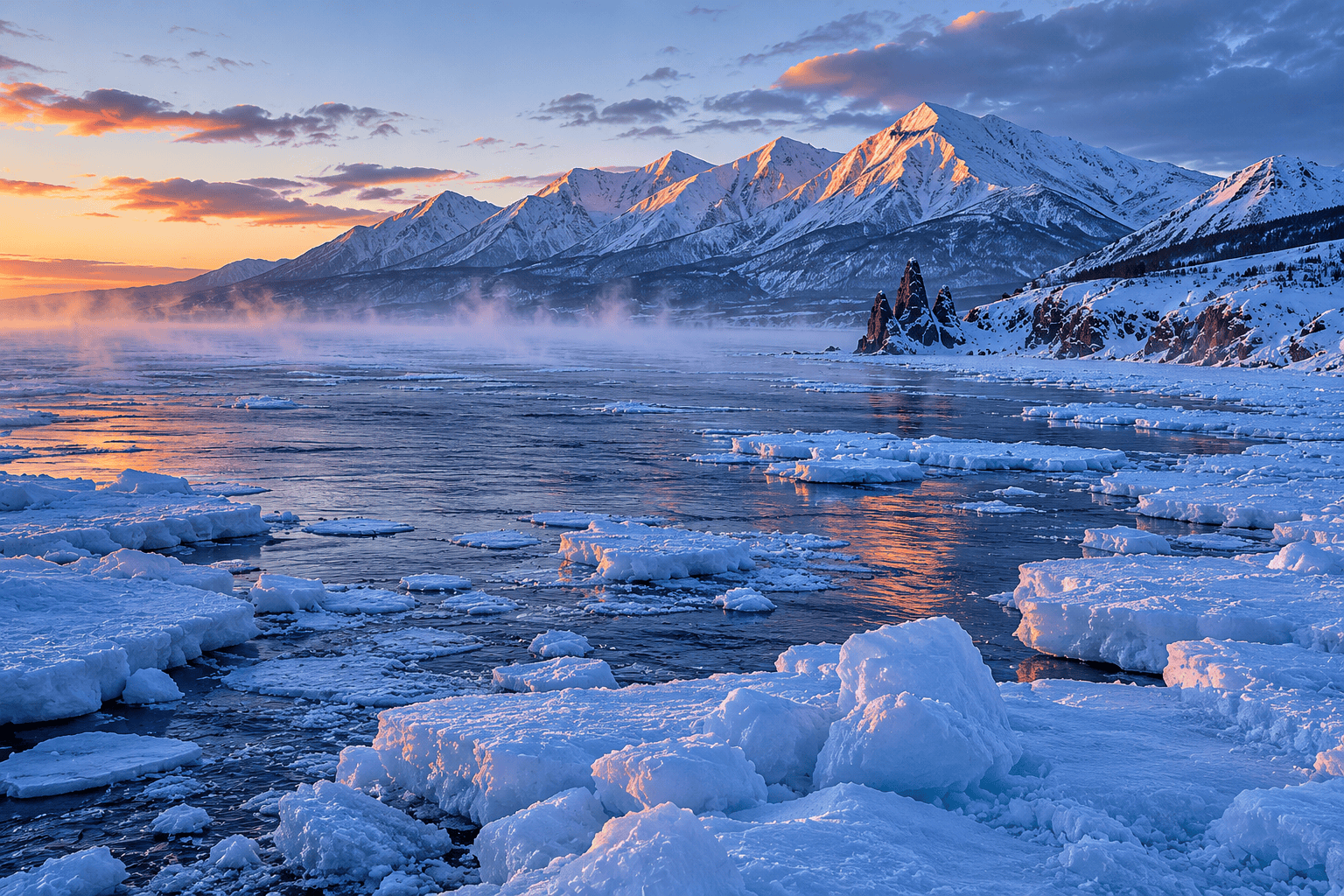
You are shooting a bird on moving ice, from a moving boat, in flat light, with salt in the air. That mix is hard on autofocus and hard on equipment. Yet it gives frames nothing else in Japan gives. Winter fishing boats work the same water from January, and they belong in the frame. The eagles follow them, so a picture that shows the link is the more honest one. Shoot wide once for that reason alone, then go back to the long lens. Keep a cloth in your pocket too, because spray settles on the front element within minutes.
For crane counts, boat times and the monkeys in the steam, written down before the light goes.
6 × 9 in · 120 unlined pages · matte softcover
Shop This Journal →Lake Kussharo and the swans
Inland, Lake Kussharo does something the coast cannot. Hot spring water keeps parts of the shore open when the rest of the lake freezes. Whooper swans migrating from Siberia gather there in winter. The Hokkaido tourism board records this at Kotan-no-Yu, a stone-lined open-air bath on the shore that the local community looks after.
Steam, snow and a large white bird at close range make an unusual frame. The bath sits about twenty minutes by car from JR Kawayu Onsen Station and about an hour from Memanbetsu Airport. That makes it a sensible first or last stop rather than a detour. Also, the birds come close enough that a wide lens has real work to do, which is rare on a trip built around long glass. Pack it within reach. Swimwear or a towel may be worn in the bath, and a large natural rock separates the bathing areas, so a soak can follow the shoot.
Japan Wildlife Photography in Honshu: The Macaques of Jigokudani
Jigokudani Yaen-koen has run since 1964, in the mountains of Yamanouchi in Nagano Prefecture. It is not a zoo. The park keeps no animals. Instead it draws wild monkeys in through a regulated feeding routine during opening hours. As a result, the monkeys may not show up at all on a given day, and the park says visits are especially patchy in autumn.
Hours change with the season. The park’s visitor guide lists 8:30 a.m. to 5:00 p.m. from April to October, and 9:00 a.m. to 4:00 p.m. from November to March. It has no set holidays and opens all year. Still, it may close without notice for weather or other reasons. There is no advance ticket service, so you buy tickets at the park on the day.
Nagano also gives you the flexible day on this trip. The valley sits a short drive from the hot spring towns of Yudanaka and Shibu. Both photograph well on an afternoon when the monkeys stay away. The same region carries the winter sports towns, and the ski season in Japan overlaps almost exactly with the wildlife season.
The walk in, which itineraries underestimate
There are no paved roads inside or outside the park. Wheelchairs and carts cannot use either approach. In warmer months the park suggests sneakers or hiking shoes. In winter it suggests rubber or snow boots, and it advises buying simple crampons before you arrive. Plan the walk with a long lens on your shoulder, because that is how you will do it.
Match the island to the animal, then book around the closing days.
| Site | Region | What you photograph | Published window |
|---|---|---|---|
| Tsurui-Ito Tancho Sanctuary | Kushiro, Hokkaido | Red-crowned cranes at a feeding station | Late November to mid-March at best; center closed Tue and Wed |
| Akan International Crane Center | Kushiro, Hokkaido | Red-crowned and white-naped cranes | All year, 9:00 to 17:00 |
| Rausu drift-ice cruise | Shiretoko, Hokkaido | Steller's sea eagles and white-tailed eagles | December to February |
| Kotan-no-Yu, Lake Kussharo | Eastern Hokkaido | Whooper swans on open water | Winter |
| Jigokudani Yaen-koen | Yamanouchi, Nagano | Japanese macaques bathing in the cold | All year; bathing is a winter habit |
The walk also shapes the gear list. A heavy lens that feels fine at home feels different after the climb in snow. Many photographers end up shooting the lighter zoom here, even when they packed the big one. Moreover, the monkeys come close, so reach matters less in this valley than anywhere else on the route. That is the point where a sequenced plan starts to pay off, since the order of the sites decides which lens rides on the camera each day.
Prefer to have the route built for you? A custom Japan itinerary can sequence the cranes, the boats and the valley around each operator’s closing days.
A typeset printable: ten Japanese proverbs with kanji, romaji and meaning. Signing up also brings occasional letters on Japan and word when a new journal reaches print.
One email with your printable. Occasional letters after that. Unsubscribe anytime.
Beyond the Headline Species
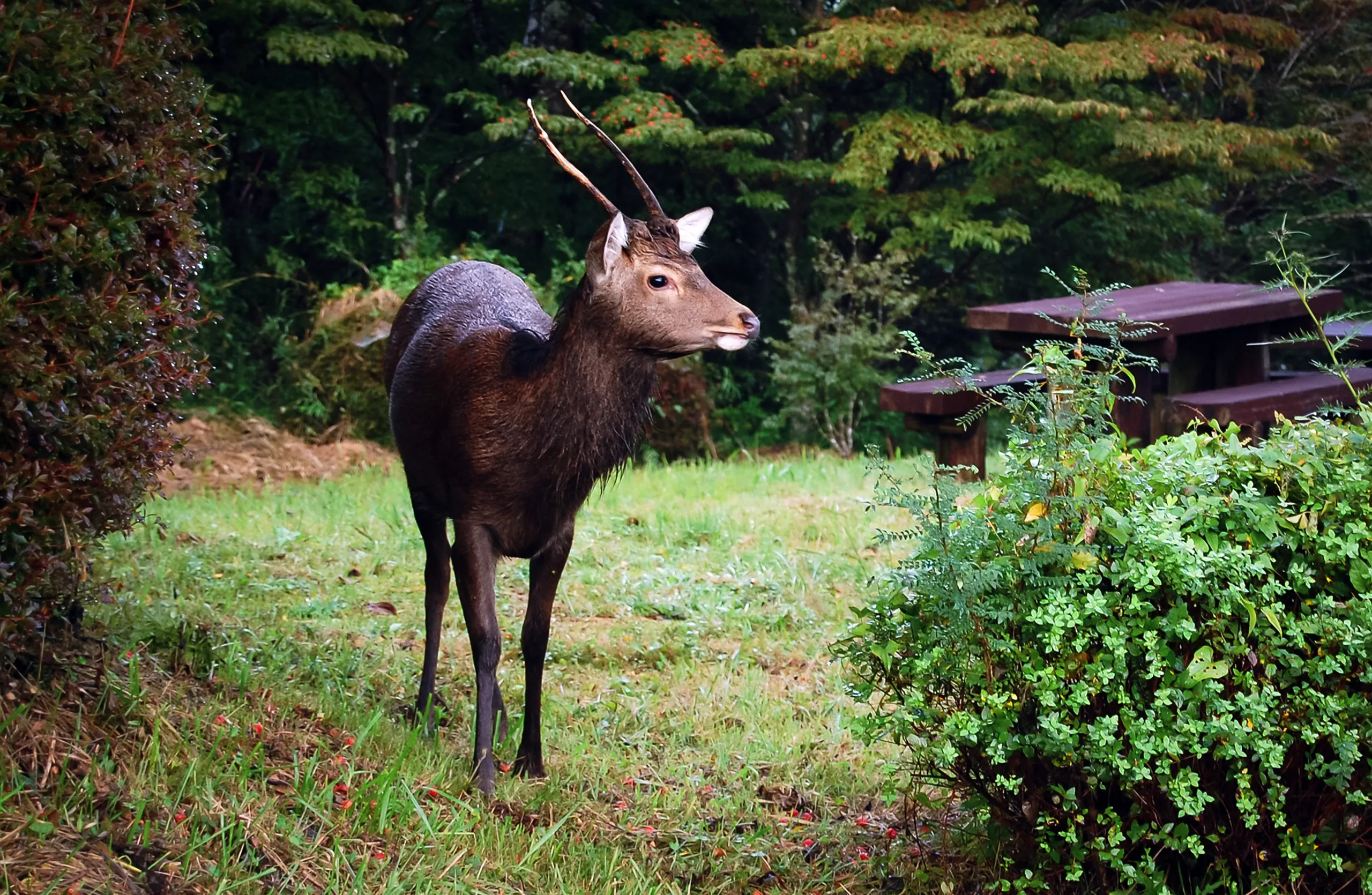
Three species fill the brochures, and most itineraries stop there. A fourth and fifth often make better pictures. Sika deer live along the wooded edges of both islands. In low winter light against bare trees, they give you something the macaques cannot: an animal acting normally while you work. Red foxes appear on field edges in eastern Hokkaido, usually at dawn. None of them has a gate or a queue.
Birds beyond the cranes are the other underused seam. Blakiston's fish owl is the famous one, but it is a specialist pursuit. More reachable are the wintering ducks and swans on open water, and the raptors that follow the fishing boats. A field guide earns its place here, because a caption is only as good as the bird you named at the time.
Practice distance, then photograph the habitat
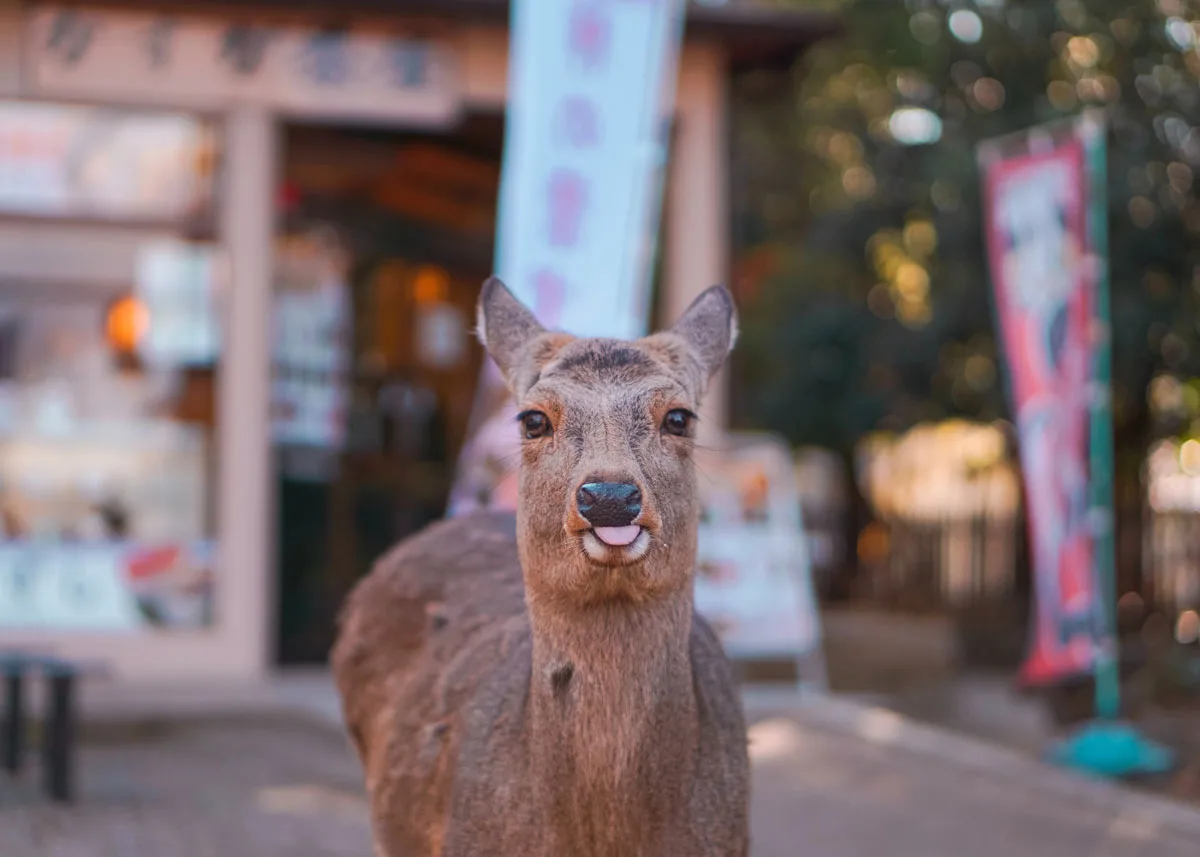
Deer are also the best place to practice. In Nara, habituated deer let you rehearse the distance habits that wilder sites demand, and our one-day Nara itinerary shows how to fit the park into a city day. Watch closely how the animal reacts as you slowly approach on foot. Notice the moment it stops feeding and looks up. That moment is your line, and you learn it far more cheaply in a city park than on a frozen field in Hokkaido. It is the most useful habit in Japan wildlife photography, and it costs you nothing but time and patience.
Photograph the habitat. A wetland in winter, a river that refuses to freeze, a stand of oak along a bank. These are the frames that turn animal portraits into a body of work, and they are there whenever the light is. This habit also keeps a week honest. Shoot only the sure subject and you come home with the same pictures as everyone else, taken from the same two meters of fence.
Here is a simple test. Ask what the picture would show about the place if the animal walked out of frame. If the answer is nothing, the place is a backdrop, not a subject. In that case, rest and get ready for the next dawn. Eastern Hokkaido punishes photographers who skip sleep, because the good light starts before breakfast and the boats leave early.
Recommended
Access, Hours and the Rules That Catch People Out
This is the part tour operators rarely write, and it is where a morning is won or lost. What follows comes from each site's own published rules. It is also the material most likely to change, so treat it as a prompt to check, not a substitute for checking.
Do not feed the monkeys, and never show them food. Touching and shouting are out too. Do not stare into their eyes, because a stare with an open mouth reads as a threat. If a curious monkey comes close, step away rather than holding your spot for the frame. No pets are allowed, guide dogs included. Photography and video are fine, and the park's caution page even allows flash. However, it bans selfie sticks, drones and placing a camera inside the bath. There are no fences, so these rules are the barrier.
Tsurui-Ito, day by day
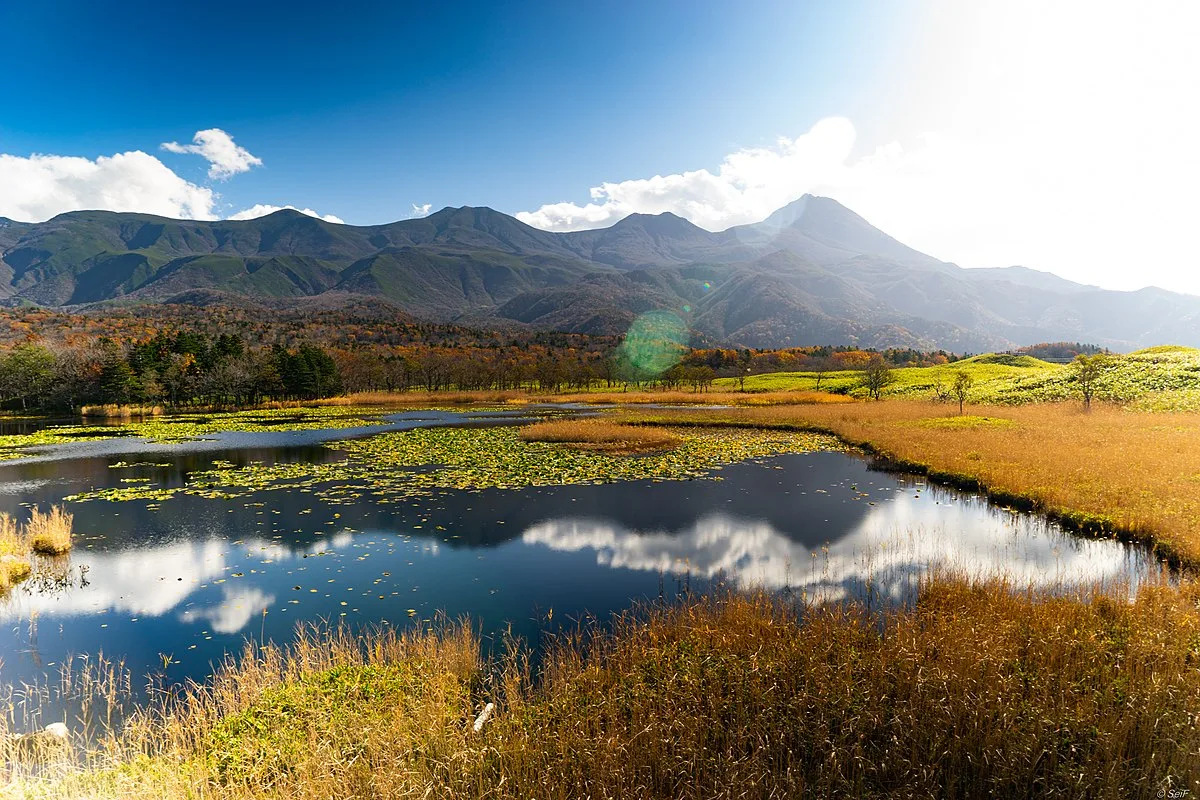
The Tsurui nature center opens from October to March, from 9:00 to 16:00, with no admission charge. It closes on Tuesdays and Wednesdays. That closing pattern is the one detail on this page worth writing down. Book a Tuesday and a Wednesday in Tsurui and you have booked two days at an outdoor viewing area with no heated room behind it, in February.
Getting there deserves the same care. The sanctuary is about fifty minutes by car from Kushiro Airport, or about an hour by bus from Kushiro. From the nearest bus stop it is a twenty-minute walk. In winter, with a long lens, that walk decides whether you arrive for the early activity or after it. If you rely on buses, plan the return leg first.
Then there is the cold itself, which affects gear more than people expect. Batteries drain fast below freezing, so carry spares in an inside pocket. Condensation is the other trap. Carrying a cold camera into a heated room fogs the lens inside and out. The fix is simple. Seal the camera in a bag before you go indoors, then let it warm slowly. Food matters too. Long cold mornings call for a proper breakfast, and in Hokkaido that often means salmon.
Salt-grilled salmon with rice and miso soup is a standard Japanese breakfast, and Hokkaido is the country's great salmon region. It is the kind of breakfast that carries you through a long morning at a fence. It is also easy to make at home when you want a taste of the trip. The recipe below takes a few minutes of work, plus an overnight salting if you have time.
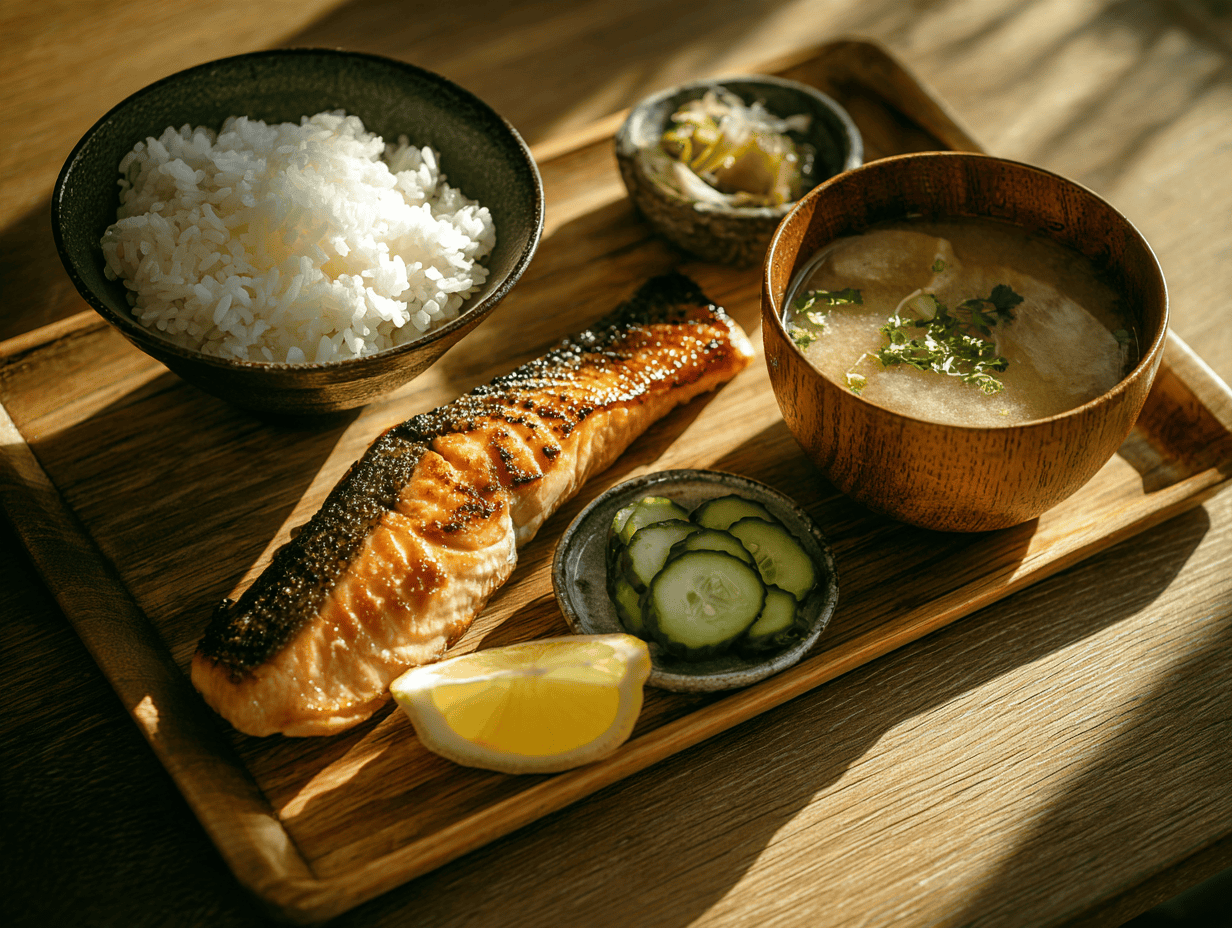
Shiozake is salted salmon grilled until the skin crisps, a fixture of the Japanese breakfast tray. Hokkaido, the country's main salmon region, makes it a natural taste of a winter trip north.
- 2 skin-on salmon fillets, about 5 ounces each
- 2 teaspoons coarse sea salt
- 1 tablespoon sake
- 1 small piece daikon radish, finely grated
- 1 teaspoon soy sauce
- 1 lemon wedge
- 2 cups hot cooked Japanese short-grain rice
- Pat the salmon dry, rub both sides with the sake, then sprinkle evenly with the salt.
- Wrap the fillets and refrigerate for at least 1 hour, or overnight for a firmer, more seasoned fish.
- Pat off any liquid, then grill skin side up under a hot broiler or in a dry nonstick pan for 4 to 5 minutes.
- Turn the fillets and cook 3 to 4 minutes more, until the skin is crisp and the flesh flakes.
- Serve with rice, a mound of grated daikon dressed with soy sauce, and the lemon wedge.
Gear for Japan Wildlife Photography
Reach decides everything else. At Rausu the eagles do not come closer. At Tsurui the viewing line sets a distance that does not move. So the long end of the lens does the work. The lenses earlier in this guide answer that in one piece of glass. Yet weight matters more than a spec sheet suggests, and it has a specific address: the unpaved walk into Jigokudani.
A lighter kit covers much of what Japan offers. A 100-400mm zoom handles the monkeys with ease and still reaches the cranes. Binoculars let you scan the field before you lift the camera, which saves your arms on a long morning. A monopod is the easy choice on a crowded platform after a long walk. Jigokudani publishes no tripod ban, so that is a carrying preference, not a park rule.
A weather-sealed zoom that stays compact enough for the unpaved climb into Jigokudani.
View the NIKKOR Z 100-400mm →Nitrogen-filled and O-ring sealed against fogging, which matters when you move between a heated room and the cold.
View the Monarch M7 →An aluminum support that takes the weight of a long lens on a crowded platform after a long walk.
View the XPRO Monopod →Third-party glass reaches the same subjects. A good 150-600mm zoom from an independent maker covers the same range as the brand-name options. A photographer who buys one has lost nothing a reader would notice in the final frame. What does show up is weather sealing, and on a boat that matters a great deal.
Two smaller items decide whether a Rausu morning works at all. First, a rain cover sized for your lens, because February on the Sea of Okhotsk can mean snow moving sideways. Second, gloves with flip-back fingertips, so you can change a setting without bare hands. Buy them a size up, because a thin glove under a shell is warmer than a thick glove alone. Finally, keep a notebook in a dry pocket for species, times and light.
Planning the Trip Around the Light
Every rule on this page comes down to one idea. The animal did not agree to the photograph. Japan makes that easy to forget, because the subjects are close and the platforms are comfortable. Jigokudani asks visitors not to bring a camera or phone too close to the monkeys. Those terms are not style notes. They are the terms on which the access exists.
Winter days in eastern Hokkaido are short, and the best light for Japan wildlife photography is shorter still. In practice that gives two working blocks. An early one starts before the crane feeding. A late one ends sooner than a summer photographer expects. Everything between them is travel, food and battery care. Build the week around those blocks, not around distances.
The spare day and the routing
Leave one day open. Weather closes the boats. The monkeys stay out of the water. Heavy snow turns a fifty-minute drive into two hours. One spare day absorbs all three. The region also rewards anyone who arrives fit, since the same hills carry some of Japan's best trail running outside the snow months. Sequencing, not stamina, is where the week is usually lost.
One last piece of routing. If Sapporo is your arrival point rather than Kushiro, the eastern sites are a long drive or a short flight away. Treat the city as a day at either end, and our guide to winter in Sapporo covers what opens in the cold months. Kushiro Airport is the closer entry for the cranes. Flying into one city and out of the other saves a day.
A final word on the crop. A fence that puts you a short way from three hundred birds invites a thought: a little closer would make a better frame. It would, and it would also break the deal that makes the access possible. Work inside the published rules, crop rather than creep, and accept that the frame on offer is not always the frame you imagined. That tension is the job, not a flaw in it. Ask, too, whether the image needs the animal larger at all. Often a small bird in a wide white field says more about winter in Hokkaido.
Questions Worth Asking
When is the best time for wildlife photography in Japan?
Winter is best. Crane feeding at the Tsurui sanctuary runs from mid or late November to late March. The Rausu drift-ice cruises run from December to February. Jigokudani's macaques bathe to stave off the cold, so the classic hot spring shot belongs to the winter months rather than the whole year.
Where can you photograph snow monkeys in Japan?
At Jigokudani Yaen-koen in Yamanouchi, Nagano Prefecture. The park keeps no animals. It draws wild monkeys in through a regulated feeding routine during opening hours, and it states plainly that they may not appear on a given day. Visits are especially patchy in autumn, so winter is the season to plan around.
What lens do you need for wildlife photography in Japan?
Reach decides most of it. A 150-600mm or 200-600mm zoom covers the eagles at Rausu and the cranes at Tsurui, where the birds set the distance. A 100-400mm zoom is lighter and covers Jigokudani well, where the monkeys come close and the walk in is long and unpaved.
Can you use a tripod at Jigokudani Monkey Park?
The park's published rules do not ban tripods. They do ban selfie sticks, drones and placing a camera inside the bath, and they ask visitors not to bring a camera too close to the monkeys. The approach is an unpaved walk, so carrying weight is the real limit, and many people bring a monopod.
Where are the red-crowned cranes in Hokkaido?
Around Kushiro Wetland in eastern Hokkaido. The Tsurui-Ito Tancho Sanctuary, run by the Wild Bird Society of Japan, feeds them in winter and can hold more than three hundred birds at peak. The Akan International Crane Center keeps an open-air area where red-crowned cranes can be seen all year.
Is flash photography allowed at Jigokudani?
Yes. The park's caution page states that photos and video are permitted and that flash may be used. It prohibits selfie-stick photography, drones and placing a camera inside the bath. Visitors must not feed, touch, shout at or stare at the monkeys, and should step away if one comes close.
When can you see Steller's sea eagles in Japan?
In winter, around the Shiretoko Peninsula in eastern Hokkaido. Drift-ice and birdwatching cruises leave Rausu from December to February, looking for Steller's sea eagles and white-tailed eagles. A photography course of about two and a half hours gives far more time on the water than the one-hour sightseeing option.
What the Cold Buys You
This works because Japan has made its animals reachable without making them tame, and the operators are honest about the difference. The monkey park says the monkeys may not appear. Likewise, the crane society says the birds rarely come near the viewing area from April to October. The eagle cruise sells two lengths and lets you choose. Nobody oversells the wildlife here, so the planning sits with you.
Take that seriously and the trip repays it. Read each operator's own page. Book around the closing days rather than the flights. Leave one day spare. Carry less than you think, except where reach is the point. And if the snow monkeys draw you back to Nagano, our guide to the onsen experience in Japan covers the hot water from the human side.
Ninety days on the beauty of passing things, the same attention a winter of fleeting light asks for.
View the Journal →What stays with you afterwards is rarely the frame you planned. It is the sound of three hundred cranes calling across a frozen field, heard before the birds are visible. It is the hush of a boat cutting its engine among the ice. The pictures are what you bring home, not all of what you went for.
Kushiro at dawn for the cranes, Rausu on the water for the eagles, and Nagano for the macaques if the fortnight allows it, sequenced around the closing days each operator publishes, with a spare day built in for the weather.
Plan Your Custom Japan Itinerary