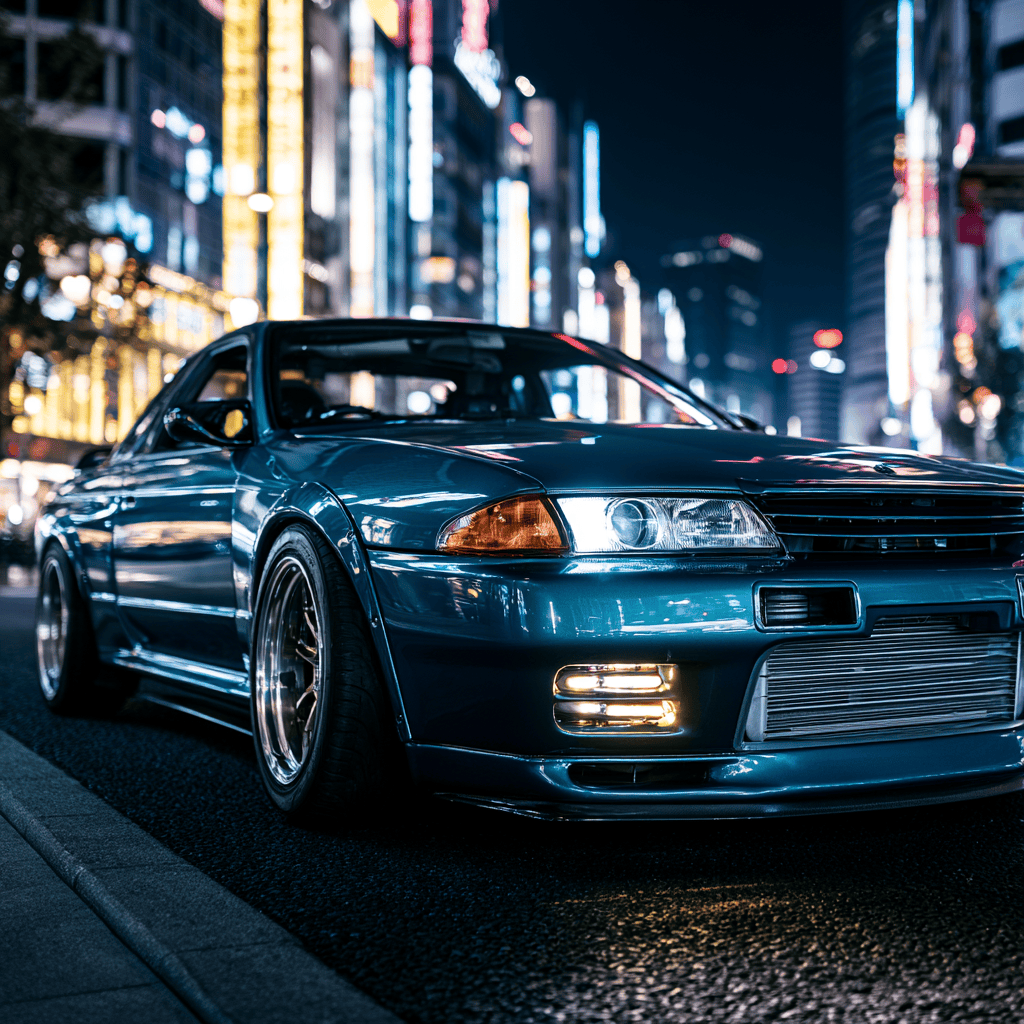
Every few months, a new wave of visitors lands in Tokyo. They carry a version of the city inherited from a 2006 car movie. They go looking for the parking structure, the crossing, the exact frame. What they find is more interesting than the frame. Tokyo drift real life is a smaller, stranger story than the film’s marketing let on. Much of it is quietly rebuilt Los Angeles. The rest is a car-meet culture that never needed a script to be worth watching.
This guide separates the two. It names what was actually shot, and where. Readers get a sense of what still exists to photograph today, and where Tokyo’s own night-driving culture actually gathers now. It also covers how to bring a camera into that world without breaking a law or wrecking a scene. None of it requires a stunt double or a studio permit. It just takes a plan, some patience with low light, and a willingness to arrive on the night’s own terms.
What’s real about tokyo drift real life? Very little of the film’s footage is actually Tokyo. Production was shot almost entirely in the Los Angeles area, built to look like Tokyo on screen. What is real is the culture the film borrowed from. It is a genuine JDM meet scene. It is still active, still centered on spots like Daikoku PA after dark.
Where Was Tokyo Drift Actually Filmed?
The honest answer: mostly not in Tokyo. Production was shot almost entirely in the Los Angeles area. Its most recognizable set is the car-meet garage. It is a Los Angeles parking structure, dressed to read as Tokyo on screen. School scenes used a real Long Beach high school. It stood in for a fictional Arizona campus. A key chase was filmed separately, near Victorville, well outside the city.
Two sites anchor what can be verified. This is a primary record, not a listicle.
- Hawthorne Plaza, Los Angeles. The shopping center’s multi-level parking garage became the film’s most recognizable set, dressed with signage and lighting to double as Tokyo. Los Angeles’s official tourism board confirms the film was shot almost entirely in this area.
- Juan Rodriguez Cabrillo High School, Long Beach. This campus stood in for the story’s fictional Oro Valley High School in Arizona. The race that gets the story’s lead character caught was filmed separately, roughly 80 miles outside Los Angeles, near Victorville.
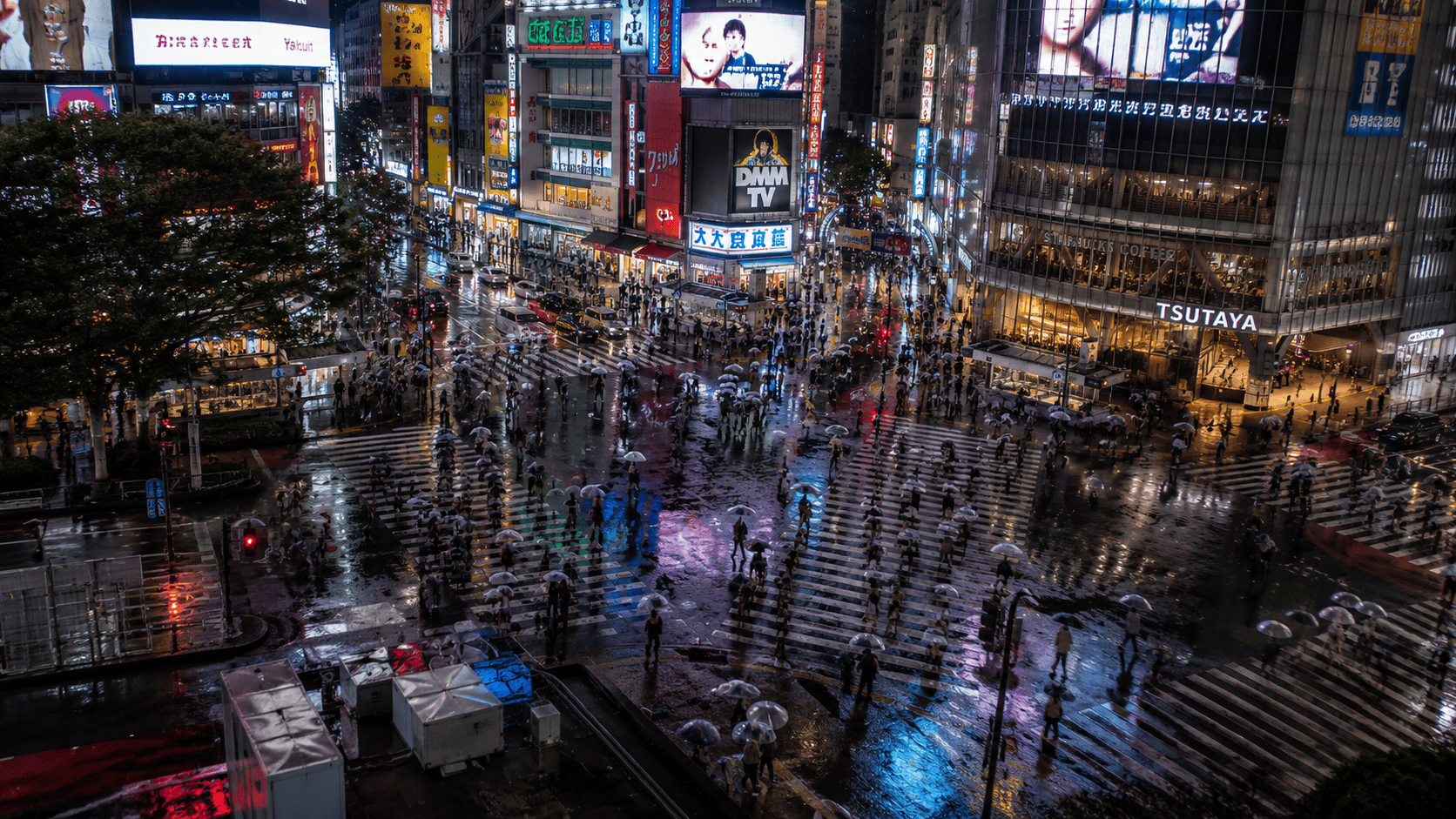
Other names turn up across the sites that rank for this search: a red-light district block, a rooftop court, a canyon road. None of them checked out against a primary source this run. This guide leaves them out rather than repeat an unverified claim. That gap is itself the honest answer. The film’s Tokyo was closer to an idea than a mapped set of streets. Most of it was actually built in California. For a wider survey of where Tokyo photographs best after dark, MJ’s guide to Tokyo’s most photogenic corners is a useful next stop. It covers ground this piece does not. The two work well read together.
What “Tokyo Drift Real Life” Actually Means
The touge origin
The phrase gets searched two ways. One is a question about the film’s accuracy. The other is a question about a culture that existed long before Hollywood touched it. The second is the more interesting one. Drifting means deliberately breaking a car’s rear traction through a corner and holding the slide. It has roots in Japan’s mountain passes, not its cities. Drivers in past decades practiced the technique on touge. These are narrow switchback roads that climb hills in places like Hakone, Okutama and Gunma. They chased lap times on public roads never built for the purpose.
That mountain-road scene feeds directly into tokyo drift real life as it exists today. Competition series moved the discipline off the touge and onto dedicated circuits. There, the same slides get scored and watched without turning a public road into a hazard. The film compresses that shift into a single Tokyo neighborhood and a single season. That compression is the part that reads as fiction to anyone who has spent real time around Japan’s car culture.
What survives the compression is the after-dark instinct itself. It is the pull toward empty roads, wet asphalt, and a car doing something graceful it isn’t built to do. Public-road drifting remains illegal and genuinely rare. The culture’s real center of gravity moved decades ago. It moved to circuits, and to one very specific parking area on Tokyo Bay. That is where a photographer chasing this world should actually point a camera.
You may also like
Where Tokyo’s Car Culture Gathers After Dark
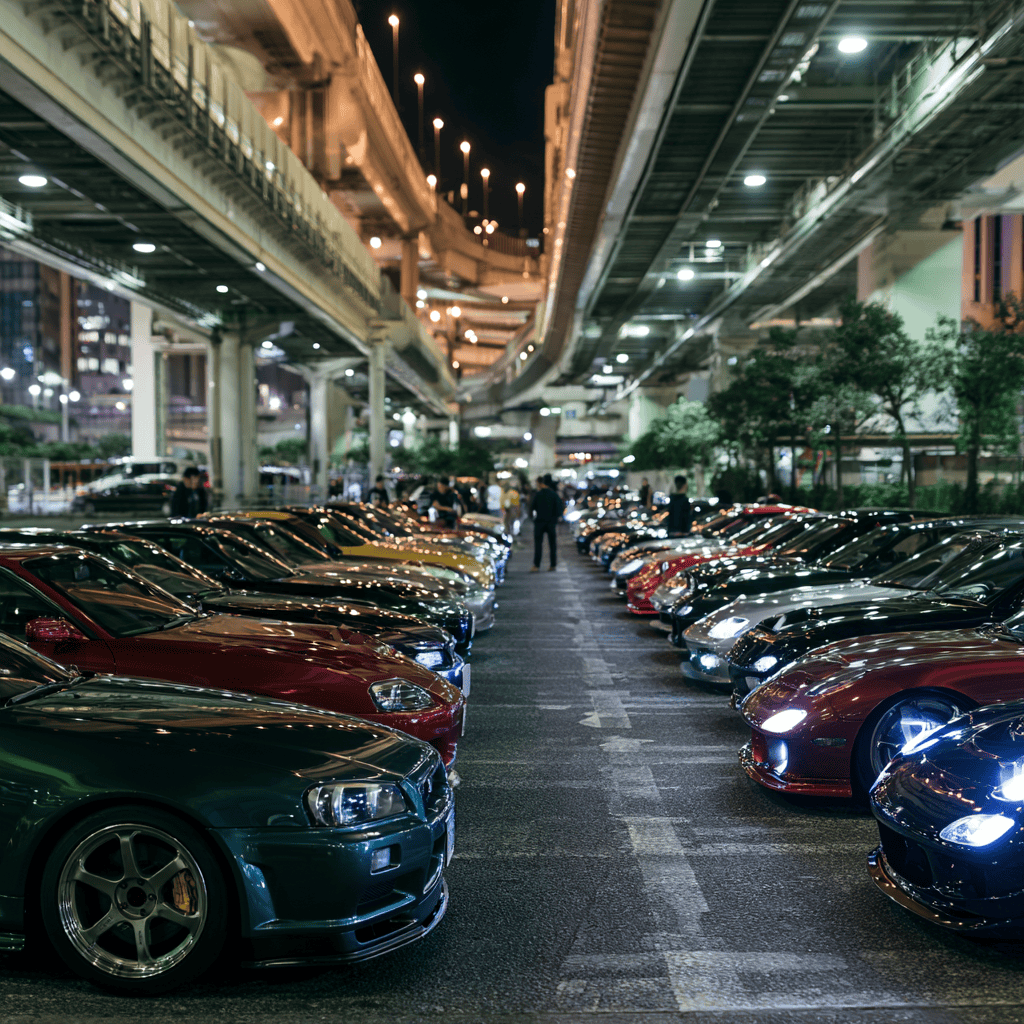
If one place answers the “real life” half of this search better than any film location, it is Daikoku PA. This full-size rest area sits on the Shuto Expressway, on reclaimed land in Yokohama Bay. By day it is ordinary: restrooms, a convenience store, vending machines, a place to refuel. After dark, especially Friday and Saturday nights, it becomes one of the most photographed car-meet spots anywhere. Rows of Skyline GT-Rs, RX-7s, Supras and modified builds park under sodium light. Engines are still ticking as they cool.
Getting there
Access only works one way: by car. Daikoku PA has no pedestrian or bicycle entrance, no taxi stand and no bus stop. The official Shuto Expressway site is explicit: pedestrians, cyclists and mopeds cannot enter. The approach is expressway ramps at expressway speeds. A visit means arriving on four wheels. That can be a rental, a hired driver, or a tour built around the timing. There is no posted schedule for when cars arrive. The crowd simply forms, thickens past ten, and thins before the first commuter traffic.
A first-hand note
On MJ’s own custom-itinerary desk, this is the part of a Tokyo photography route that clients plan worst. Most arrive too early, before the meet has any density. Others arrive too late, after the strongest cars have already peeled off toward the next stop on their own night. One habit MJ’s planners pass along is small but useful. Log the night, the weather, and roughly when the lot filled. Write it in the same travel journal carrying the rest of a trip’s notes, against the exact expressway exit used to get there. A pattern shows up after two or three entries. No single visit ever reveals which nights actually draw a crowd.
Etiquette
This is a working rest area with real traffic, not a photo set. Owners are used to attention but not to being crowded. Ask before photographing a car up close. Keep clear of the lanes cars use to pull in and out. Expect a heavier police presence some nights than others; patrols check in periodically, and short-notice closures happen. None of this is a performance for visitors. It is a genuine subculture that tolerates cameras rather than exists for them. Treating it that way keeps it open to the next photographer who shows up, and the same instincts that guide good manners elsewhere in Japan, covered in MJ’s guide to Japanese etiquette, apply here too.
The Night Shoot Planning Sheet
A one-page printable for planning a Tokyo night photography route: a gear checklist, the settings starting points from this guide, and space to log which nights and locations actually deliver.
One email with your printable. Occasional letters after that. Unsubscribe anytime.
Planning a Tokyo Drift Photoshoot, Lawfully
A tokyo drift real life photoshoot works best as two separate outings. The first is a scouting pass through central Tokyo, in daylight or early evening. Shibuya, Shinjuku, a parking structure or two. Build a shot list of frames that will read well once the neon comes up. The second outing is the shoot itself, timed for full dark. Signage carries the frame then, and headlights start doing useful work.
The legal picture
Legality is the part most guides skip past. Public roads are for driving, not staged car photography. Standing in traffic lanes or blocking a crosswalk for a shot is dangerous. In central Tokyo it is actively enforced too. The workaround is not complicated. Shoot from sidewalks, plazas and legitimate public vantage points. Use a parked car rather than a moving one for anything involving traffic. Treat a green light at a crossing as a five-second window, not a stage. None of the frames this guide chases require breaking that rule. The honest version of a shot is usually the better photograph anyway.
If a shoot needs an actual drifting car in frame, the answer is a circuit day, not a street. Ebisu Circuit in Fukushima is a purpose-built drift facility carved across a mountainside. Fuji Speedway hosts sanctioned competitive drift events through the year, including its Fuji Xtreme Days program with Formula Drift Japan. Both welcome spectators. With the right arrangement, both welcome photographers working close to the action too. MJ builds nights like this into a custom Japan itinerary for readers who want the shoot planned around the meet, not improvised on the night.
Tokyo Locations That Deliver the Look
Skip the search for the film’s exact frame. Tokyo still offers a genuine, photographable version of the same mood: neon density, wet reflection, scale. These are real, current spots, not stand-ins for something a movie once faked. Each one rewards a different lens and a different hour. Some work best right at dusk, before the crowds peak. Others only come alive once the sky goes fully dark and the signage takes over. None of them need a permit, a connection, or luck. They just need a reader willing to stand still for twenty minutes and let a scene build on its own.
You may also like
Shibuya
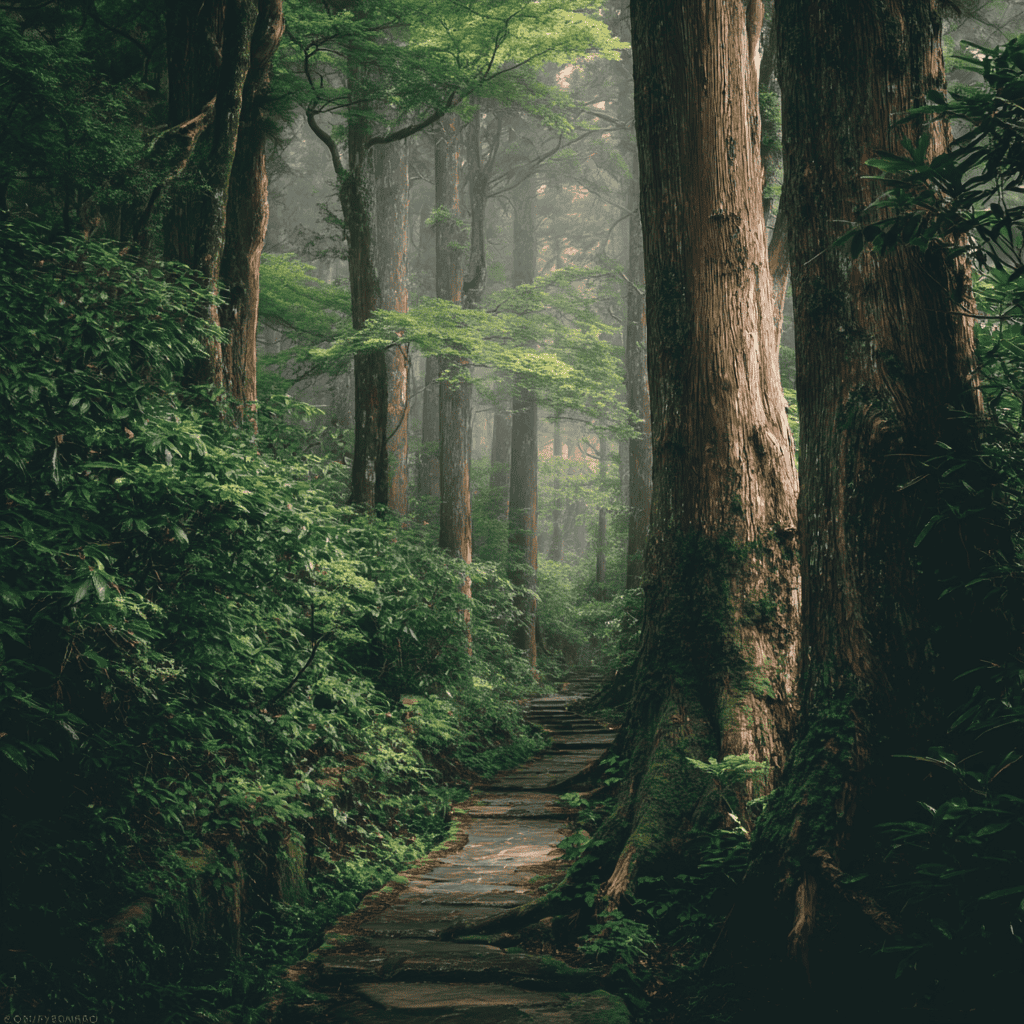
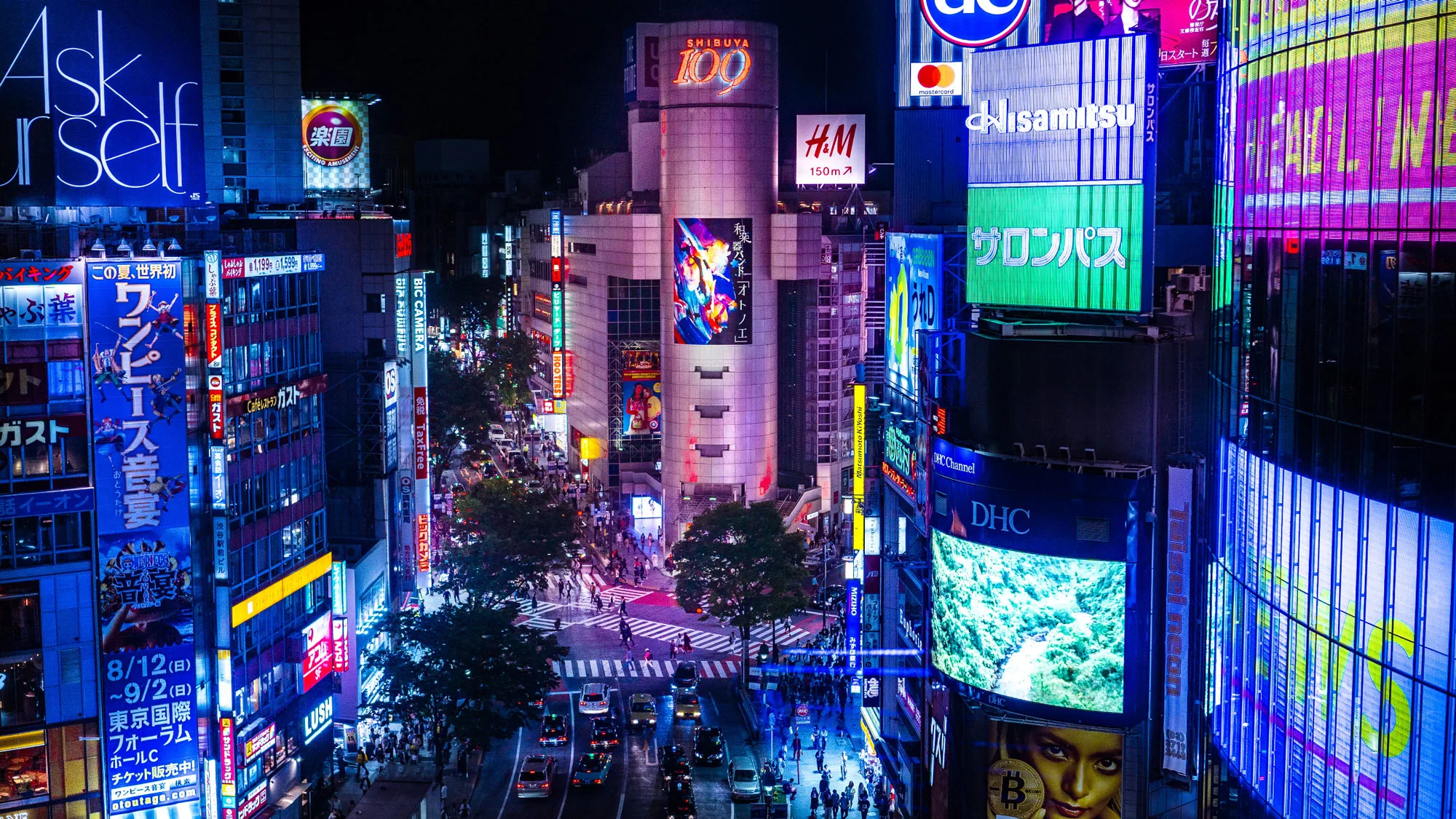
The crossing is still the city’s single best neon-and-crowd frame. Japan’s tourism board estimates 1,000 to 2,500 pedestrians cross during a single busy two-minute cycle. That density makes almost any lens choice work: wide for the scramble, longer for compression against the billboards above it. Shoot from one of the elevated cafés for the classic overhead angle. Or get into the crowd itself with a fast prime. That gives more texture and less postcard polish.
Shinjuku
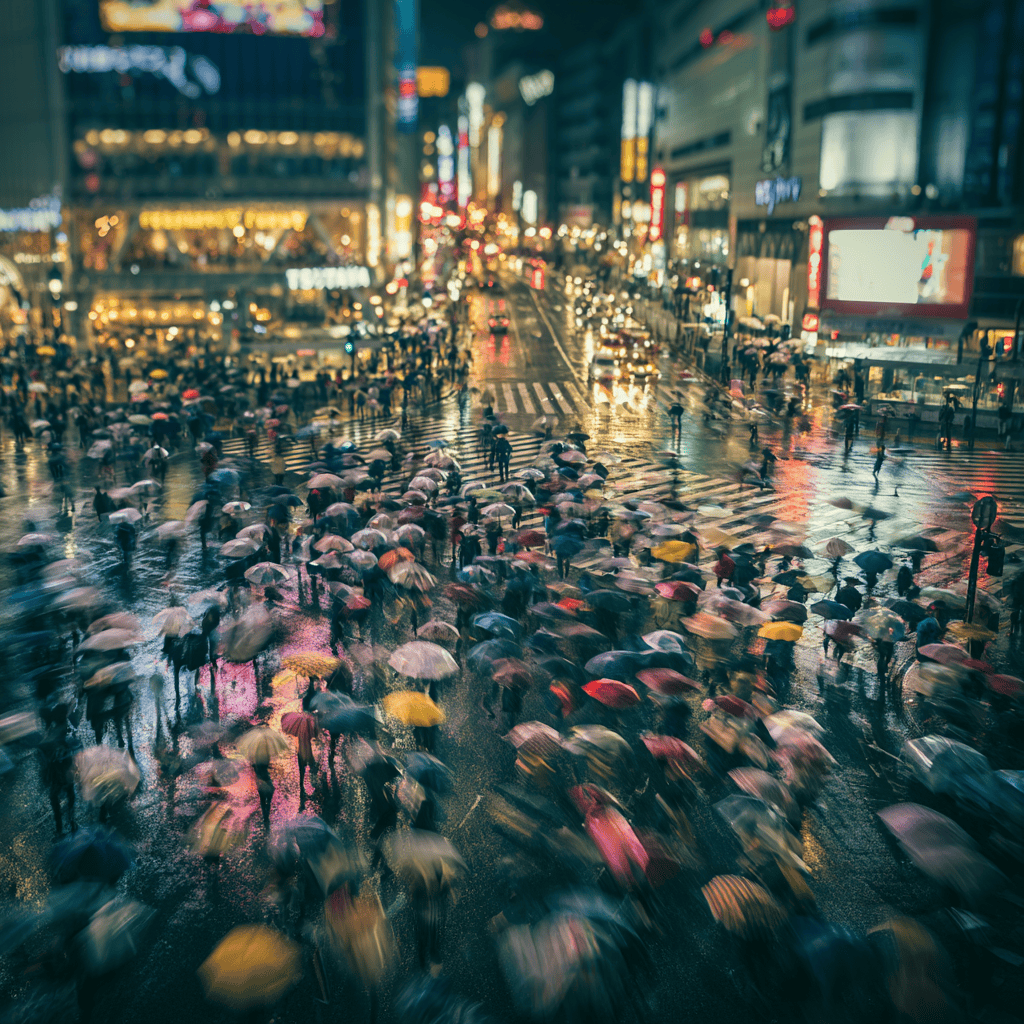
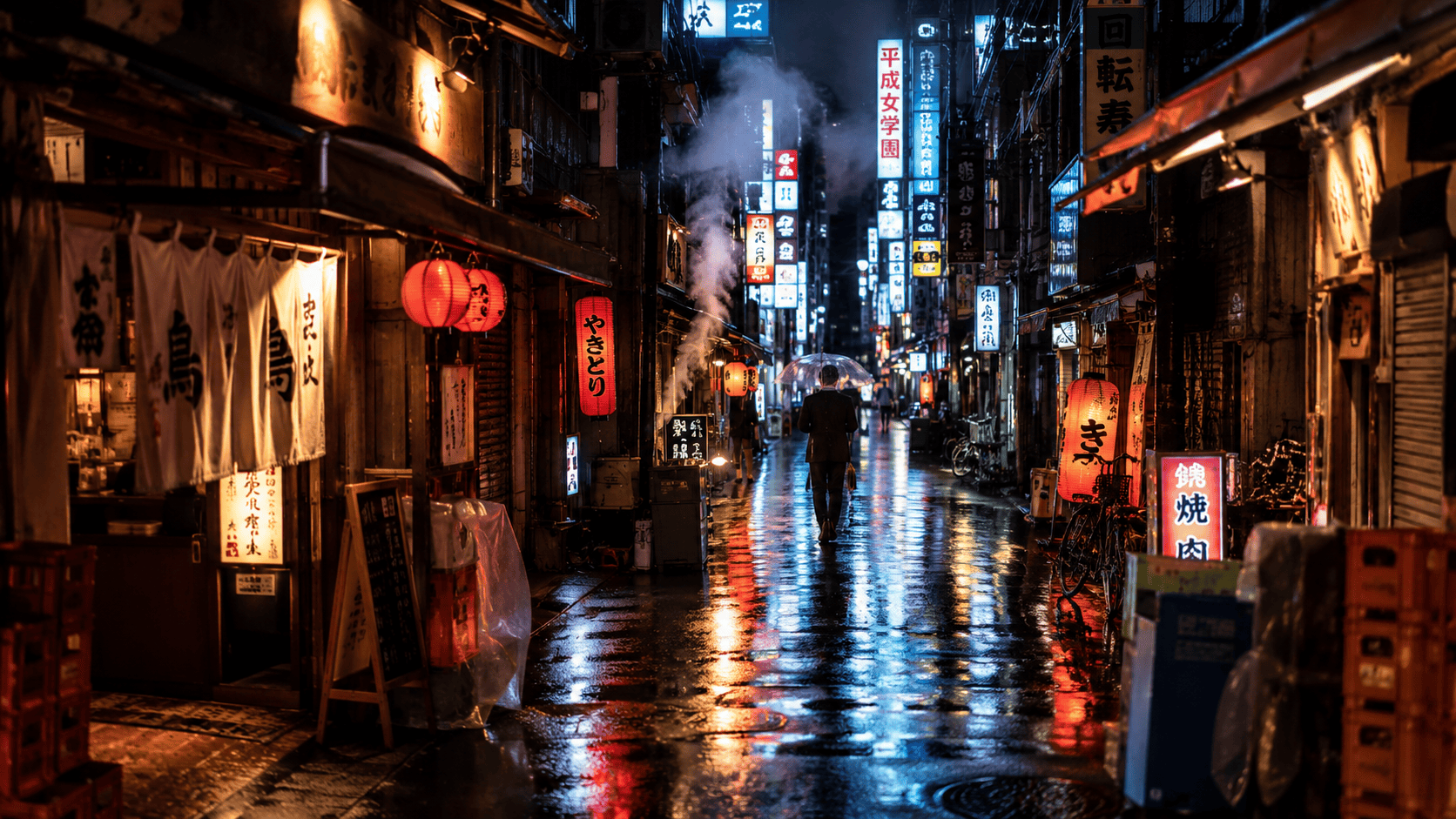
Where Shibuya is wide and crowded, Shinjuku is tight and vertical. Narrow backstreets stack three and four storeys of signage. A longer lens works best here, compressing those layers of neon into a single frame. The smell of grilled skewers and cigarette smoke tends to hang in these alleys after 9pm. The noise is a wall of competing speaker systems and idling delivery scooters. A still photograph cannot capture that noise, but framing can imply it.
Parking structures
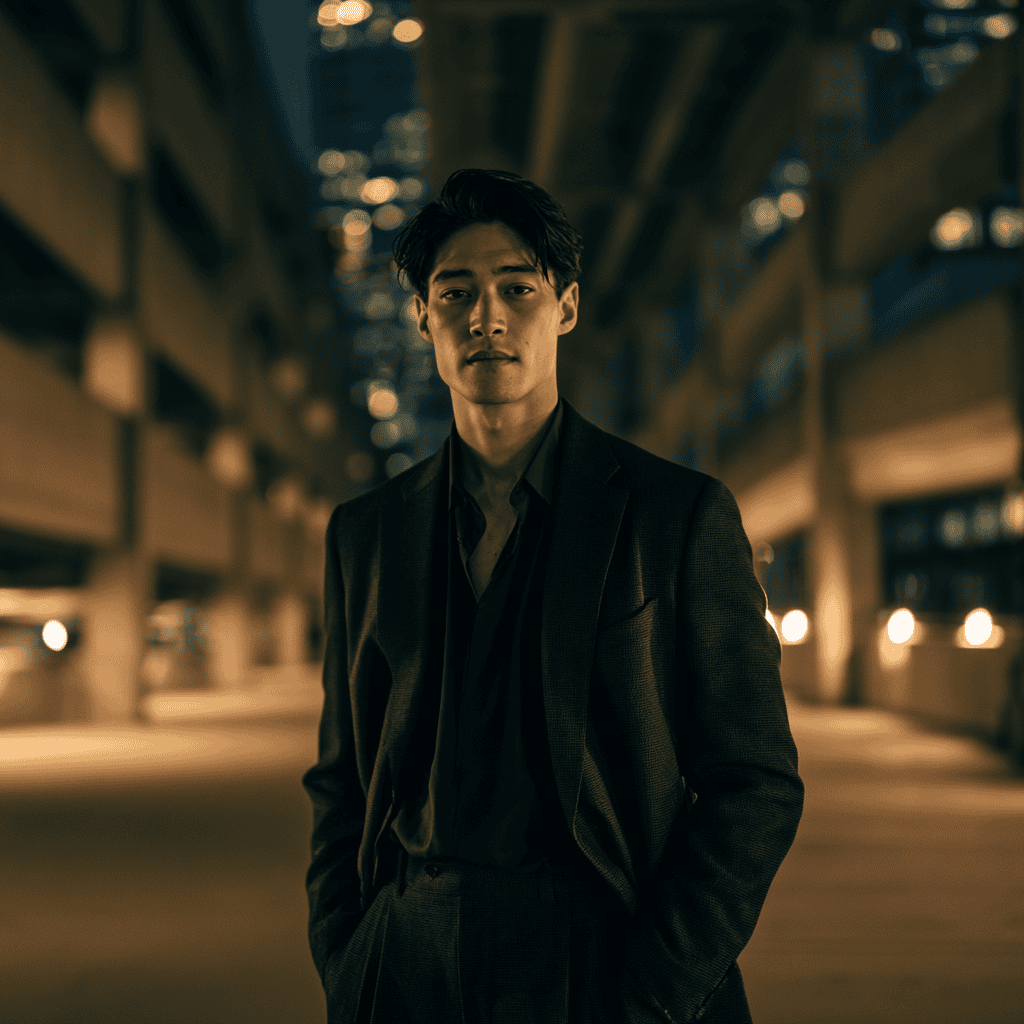
Multi-level parking garages are the closest real-world equivalent to the film’s staged car-meet aesthetic. Repeating concrete lines, harsh sodium lighting, cars parked at odd angles between levels. A handful of central Tokyo structures allow photography if approached briefly and respectfully. Ask at the entrance booth before setting up a tripod. Expect a firm no in some buildings and an indifferent shrug in others.
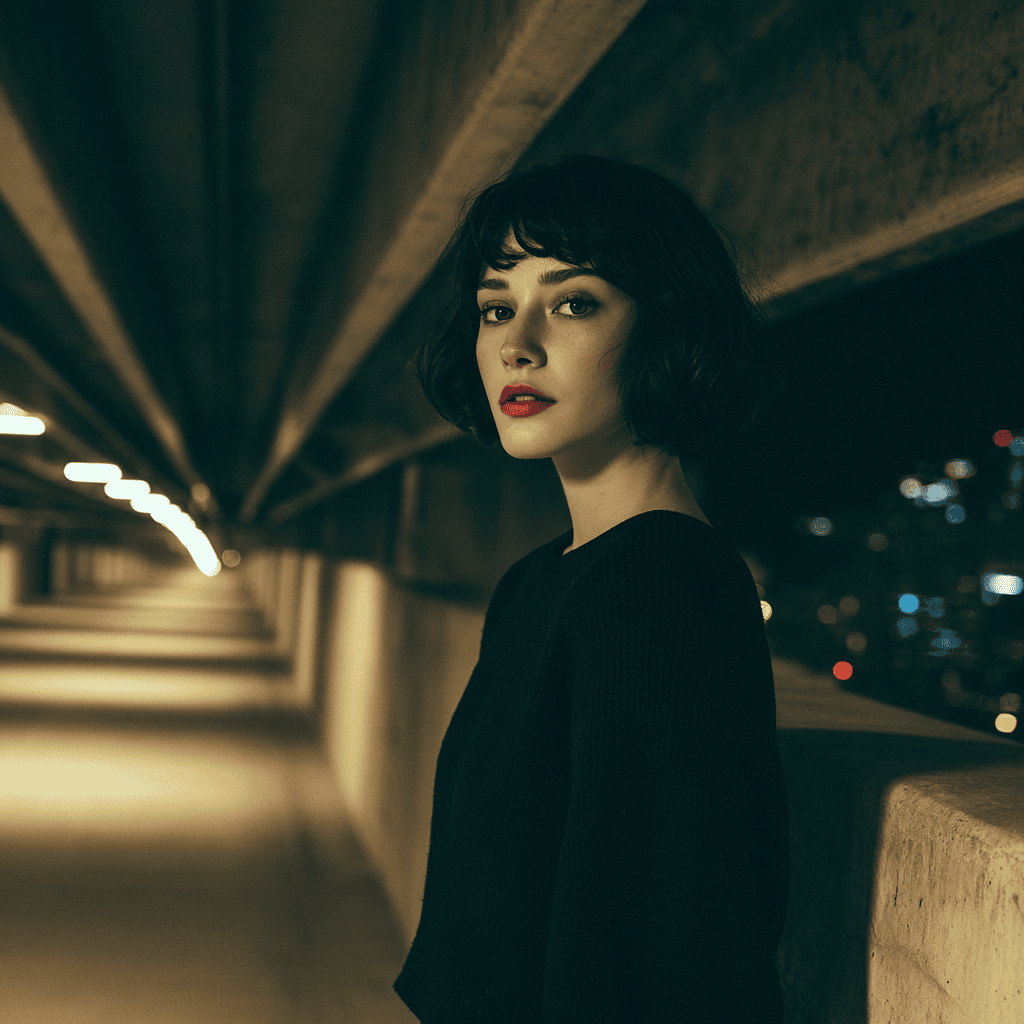
A second angle on the same structure often reads completely differently once the crowd thins and the light settles. Patience here pays off more than gear does. Wait for a car to pull through the frame, or for a single figure to cross a level below. The empty ramps photograph well on their own, but a scene needs one moving element to hold a viewer’s eye. Ten minutes of standing still in the right spot usually beats an hour of walking the whole structure looking for a better one.
For a broader survey of where else the city rewards a camera after dark, MJ’s guide to Tokyo’s most scenic spots covers daylight and blue-hour locations. It pairs well with a night-shoot itinerary built around this one. Together the two cover a full day, not just a single window after sunset. A morning spent scouting daylight compositions makes the night shoot faster. The eye already knows which corners work by then. Most readers who plan both come away with a stronger set of frames. A single rushed evening rarely produces the same result. Read the two guides as one plan, not two separate errands.
Recommended
Camera Gear for a Night Shoot
Night car-culture photography has a specific set of constraints. Low light. No tripod room in a crowd. A scene that reads as intrusion the moment a photographer looks like they are working rather than watching. The gear that suits it is compact, fast, and unobtrusive. It is not necessarily the most technically capable camera available. It is the one that disappears fastest into a pocket between shots.
The FUJIFILM X100VI
The FUJIFILM X100VI is the camera already associated with this kind of shoot, and for good reason. Its fixed 23mm lens, a 35mm-equivalent field of view, sits at f/2 and decides the frame before arrival. That turns out to be an advantage. There is no time to dither over a focal length once a car pulls in and the light is fading. Six stops of in-body stabilization help too. A leaf shutter that runs close to silent means a shot can be taken inches from a stranger without announcing itself. The honest caveat: supply has not caught up with demand this year. The X100VI is presently listed as temporarily out of stock at the retailer above. It is a camera worth wanting and planning around, not one to count on ordering the week before a trip.
The Ricoh GR IIIx
The Ricoh GR IIIx is the more realistic answer for a reader who will not carry two cameras. Its 24.2-megapixel APS-C sensor sits behind a 40mm-equivalent f/2.8 lens. That is a slightly tighter, more natural field of view than the Fujifilm’s 35mm-equivalent. Built-in shake reduction helps in low light. A fast start-up means the camera is ready almost the moment it clears a pocket. A focus lock at a preset distance readies the shot before it happens, not during it. The whole body fits in a jacket pocket. That is the real test of whether a camera actually comes along on a night like this.
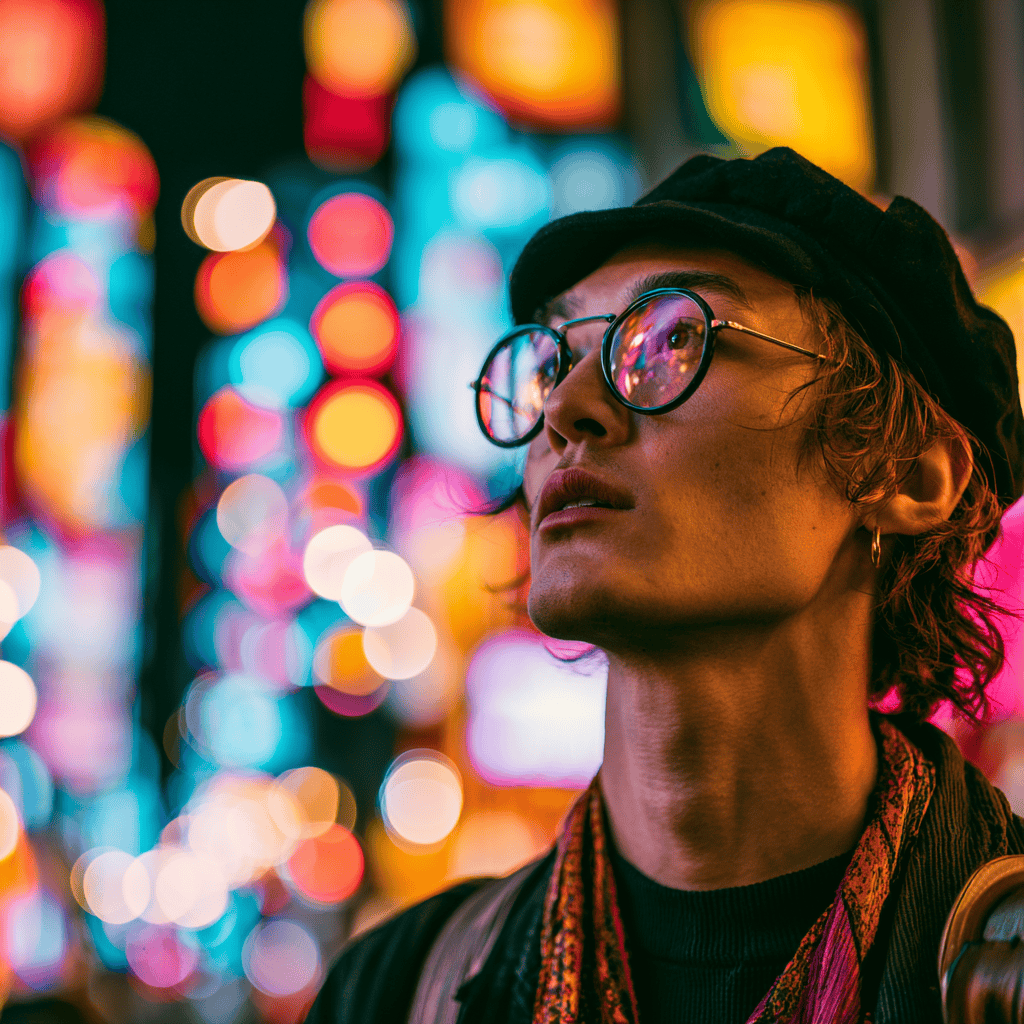
Either camera earns its keep the same way: by being small enough to forget it is there. This matters more on a crowded night than any spec sheet. It is the single filter worth applying before buying anything for this kind of shoot. A larger body with a longer zoom captures more technical detail. It also announces itself the moment it comes out of a bag. At Daikoku PA or in a packed Shibuya crossing, that announcement changes how people behave around a camera. Small and fast beats big and capable for this specific job, even when the spec sheet argues otherwise.
Camera Settings for Neon and Motion
These are starting points, not rules. Every scene’s mix of signage, ambient light and motion is different. The numbers below exist to be adjusted from, not followed exactly.
Shutter speed
For a static portrait against neon, a shutter speed around 1/125 to 1/250 of a second freezes a subject. It keeps the background signage crisp too. For panning shots that track a moving car into a blur, slow that down to roughly 1/20 to 1/40 of a second. Follow the car’s motion with the lens. Light trails from moving traffic need much longer exposures. Try two to ten seconds on a stable surface, aperture closed down to hold sharpness across the frame.
Aperture, ISO and white balance
Aperture choice depends on the goal. Wide open, around f/1.4 to f/2, it isolates a subject against a wash of neon bokeh. Closed down to f/4 or f/8, it keeps a whole street scene readable. That matters when the composition depends on layers rather than isolation. ISO can run higher than daylight habits allow. 800 to 1600 is a reasonable starting band on a modern APS-C sensor, before noise becomes a real cost. White balance is worth setting manually rather than trusting auto. Neon-heavy streets often read warm, around 4000 to 4500K. Wetter, bluer scenes under mixed lighting can want 5000 to 5500K, to avoid an overly orange cast.
MJ’s guide to landscape photography in Japan covers the daylight half of this same discipline. The light is different. The instinct to read a scene before setting the camera stays the same.
What to Wear
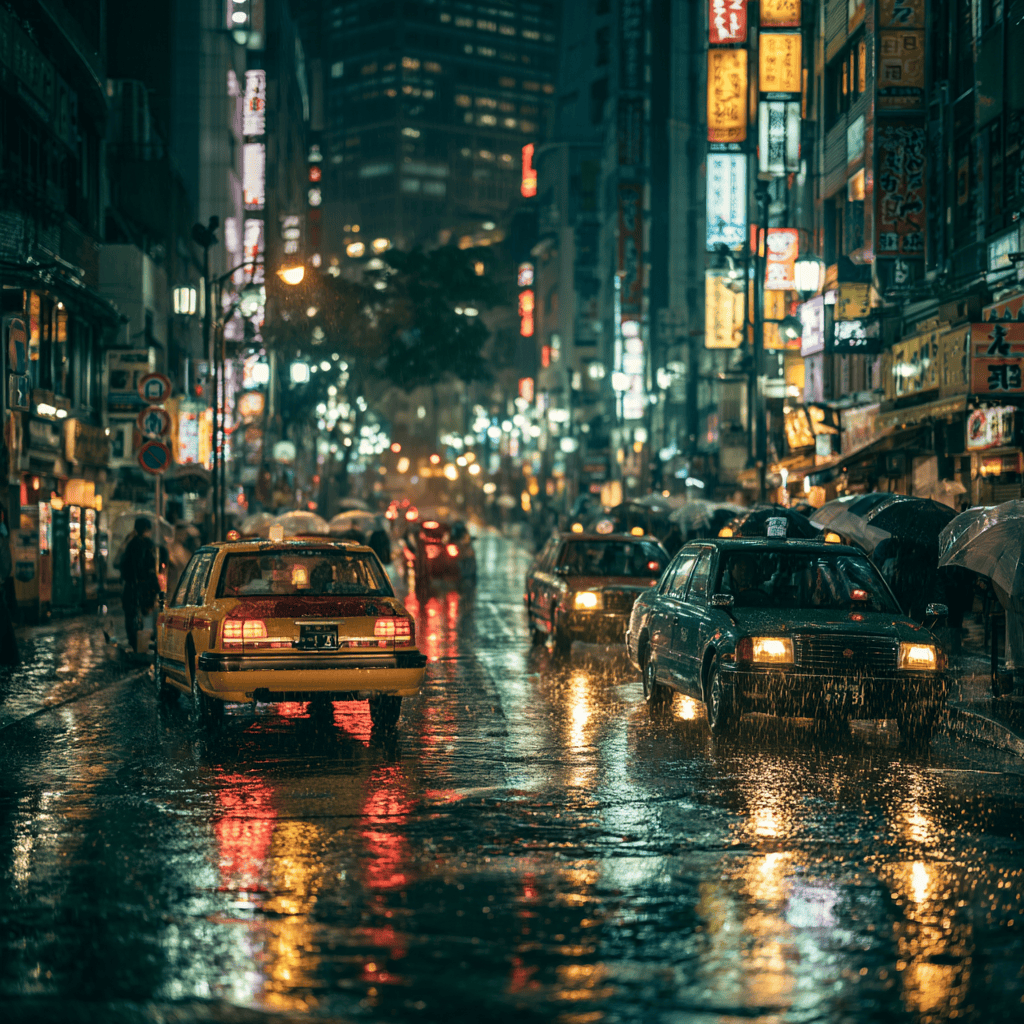
Practical concerns outrank style ones on a night like this, though the two are not in conflict. Layer for a temperature drop after 10pm even in warmer months. Tokyo’s humidity holds heat during the day and lets go of it fast once the sun sets. Dark, unremarkable clothing helps more than anything branded or bright. The goal at a car meet or a crowded crossing is to read as another person in the scene. A photographer visibly working the scene changes it. Comfortable, closed shoes matter more than they sound like they would. A night shoot means hours standing on concrete. It means stepping around parked cars, and reacting fast when something worth shooting arrives without warning.
Posing and Shooting in Scenes
Movement over stillness
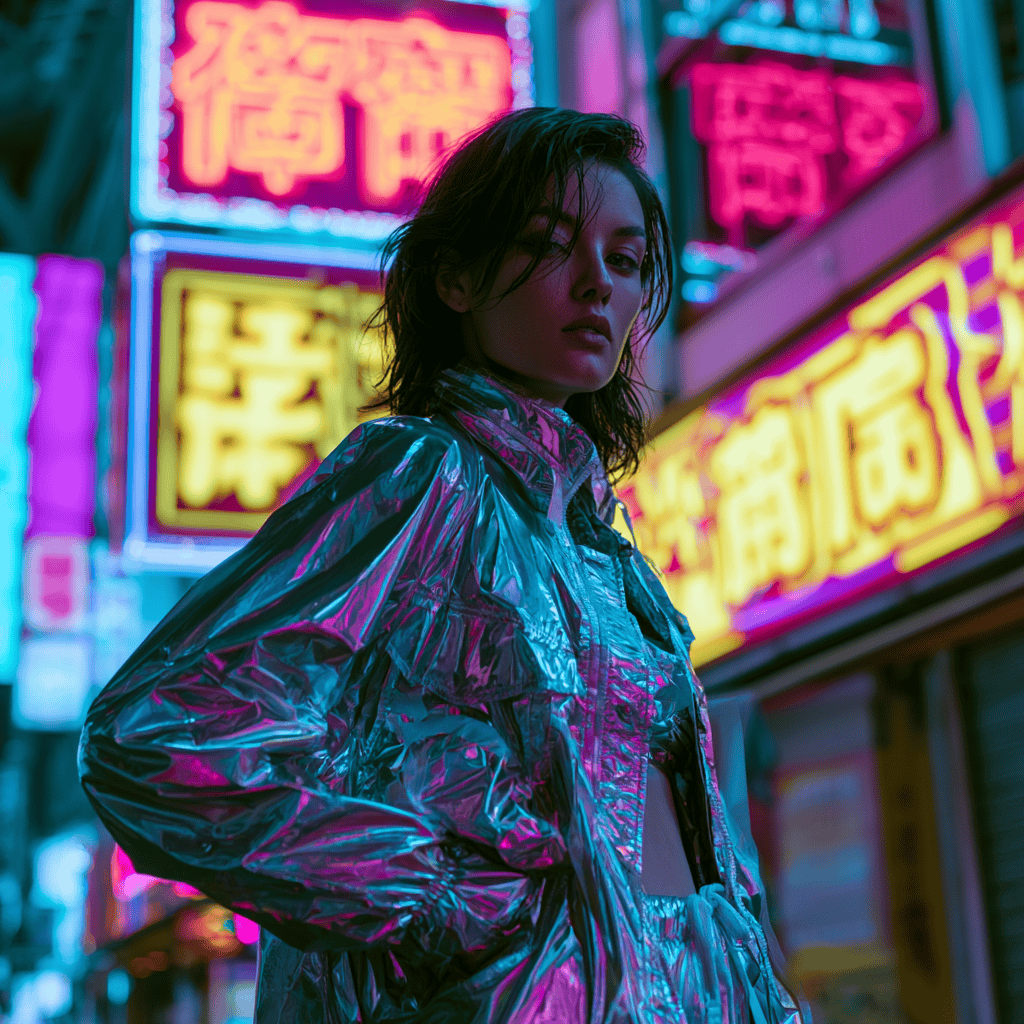
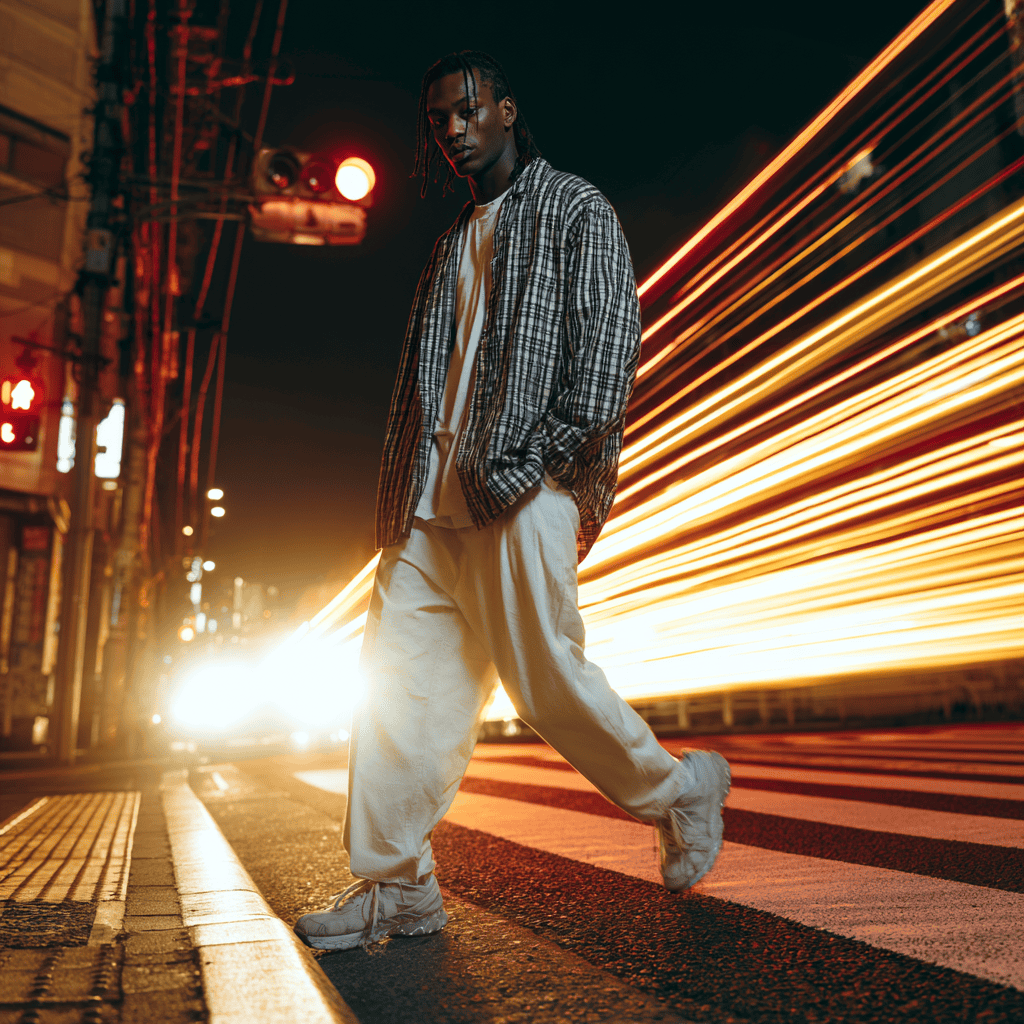
The strongest frames from a night like this rarely come from a posed portrait standing still against a wall of signs, though that shot has its place. Movement reads better than stillness in a scene this dense. A figure mid-stride through a crossing, glancing back at a passing car, caught between one storefront’s light and the next. Direct the moment loosely rather than precisely. Give a subject somewhere to walk toward. Give them a reason to look somewhere other than the lens. Shoot the in-between frames rather than the held pose.
Foreground and patience
Foreground matters as much as the subject in a scene this dense. Let a passing car’s taillight streak across the bottom third of a frame. Shoot through a crowd’s silhouettes toward a lit subject beyond them. The image gains depth a clean, empty background never quite manages. Patience earns better results than direction. Find a spot with good light. Let the street’s own rhythm supply the moment: the crossing’s signal cycle, a shop’s rolling shutter, a knot of people breaking apart. That beats staging it from scratch.
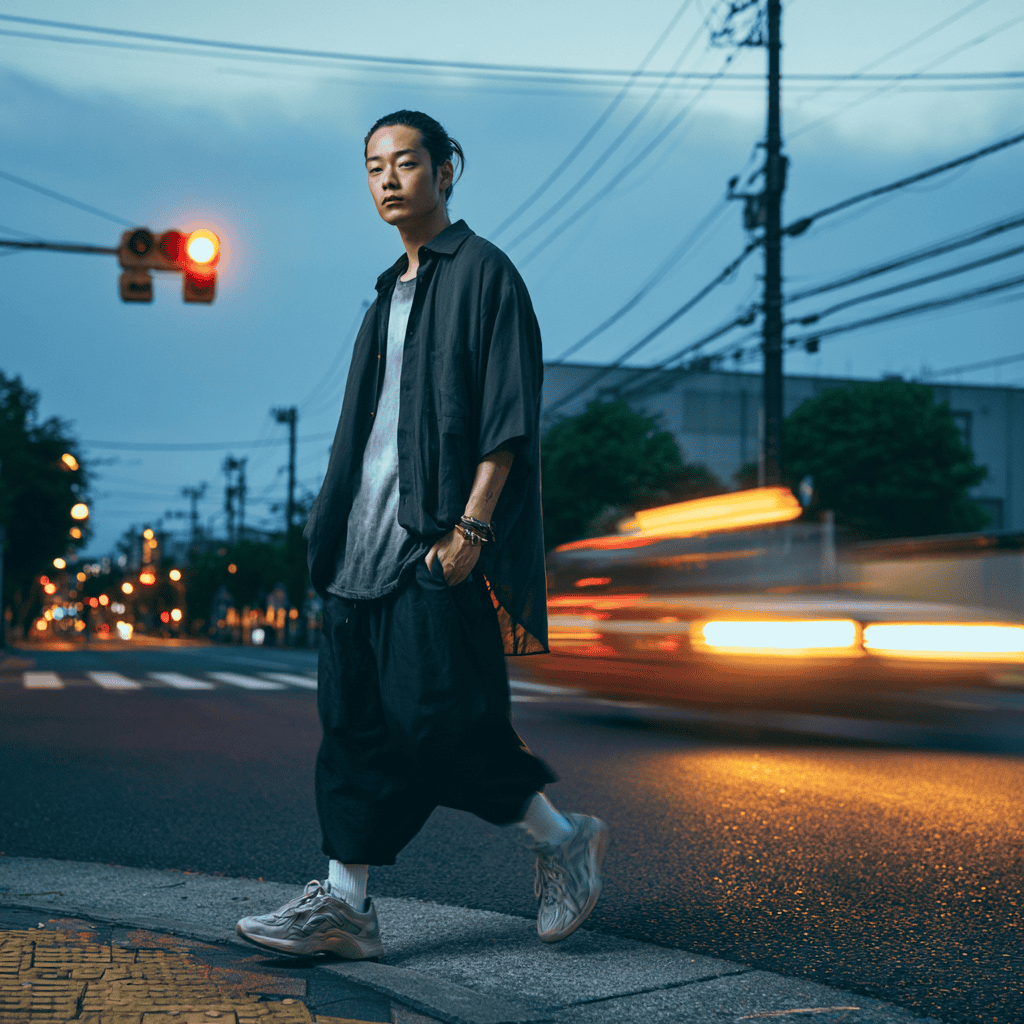
MJ’s guide to photographing Japan’s traditional culture covers the opposite register of this same skill: stillness and formality rather than motion and neon. Read together, the two make a fuller photography trip than either alone. Most readers planning a Tokyo night shoot end up wanting both. A still morning at a garden or a formal tea setting teaches a different kind of patience than a crowded crossing does. Both disciplines reward the same underlying habit. Watch a scene long enough to know when it is actually ready. Do not shoot the first frame that looks close.
Safety, Etiquette, and the Law
The law
Street racing and street drifting are illegal on Japan’s public roads. This is not a gray area or a tolerated tradition. Driving in a way that endangers others on a public street is an offense under Japan’s Road Traffic Act. It carries fines and the possibility of license suspension or prosecution. The culture the film romanticized moved off public streets decades ago for exactly this reason. It moved onto circuits built to hold it safely.
Ebisu Circuit and Fuji Speedway are the two venues most associated with sanctioned drifting today. Ebisu, carved across a mountainside in Fukushima, is a purpose-built drift facility with multiple dedicated courses. Fuji Speedway hosts competitive drift events through the year, including its Fuji Xtreme Days program. It welcomes spectators who want to watch the sport done properly. Anyone chasing an actual drifting-car photograph should plan around one of these two venues, not a public intersection.
Etiquette at Daikoku
Daikoku PA sits in a different category: legal to visit, but with its own etiquette. It is not a stage, and the cars there are someone’s property parked at a rest stop, not props. Photograph from a respectful distance. Ask before getting close to a car or its owner. Treat a heavier-than-usual police presence on a given night as the area’s normal rhythm, not a sign something has gone wrong. The culture stays open to visitors mainly because most who show up already understand this.
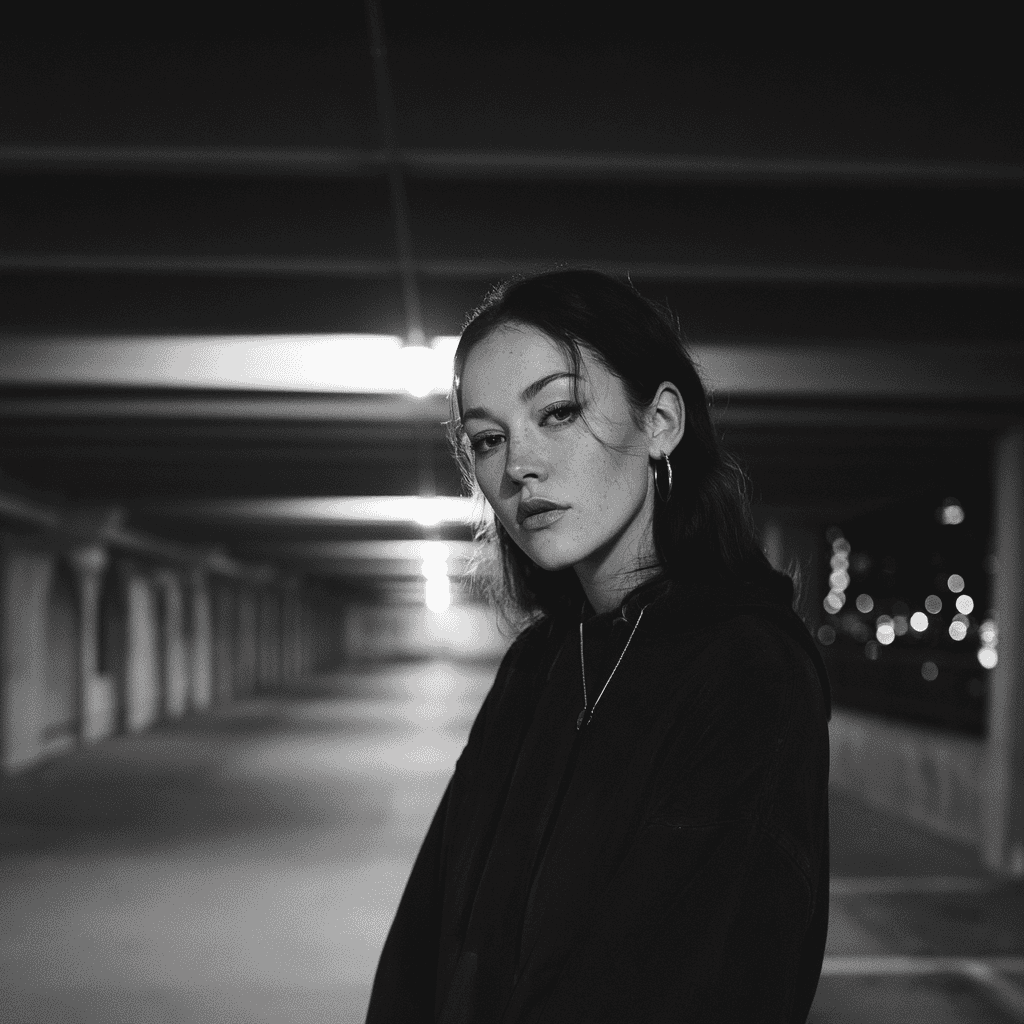
One more scene worth knowing before it turns up unlabelled somewhere else online. This is the same style of parking-structure portrait covered earlier, shot from a different angle and in a different light. Black and white treatment works especially well here. It strips out the neon’s color and leaves only the structure’s own geometry to carry the frame. A reader chasing this exact look does not need a rare location. They need a willingness to return to the same ordinary structure more than once, at a different hour each time.
Questions Worth Asking
Is Tokyo Drift based on a real place?
Partly. The film’s car-meet culture draws on a real subculture centered on spots like Daikoku PA. The story and most of the driving scenes are Hollywood fiction, not a documentary account.
Can tourists watch car meets at Daikoku PA?
Yes, by car. Daikoku PA is a public expressway rest area, open to any vehicle on the Shuto Expressway. Crowds are heaviest on Friday and Saturday nights. There is no pedestrian entrance.
Is street drifting legal in Japan?
No. Drifting or racing on public roads is a driving offense under Japan’s Road Traffic Act, carrying fines and possible license suspension. Legal drifting happens at circuits such as Ebisu Circuit and Fuji Speedway.
What camera works best for a Tokyo drift photoshoot?
A camera that handles low light without a tripod and does not draw attention. A compact prime-lens body with strong stabilization and a near-silent shutter, such as the FUJIFILM X100VI or the Ricoh GR IIIx, suits a crowded night scene better than a larger rig.
Was Tokyo Drift filmed in Tokyo or Los Angeles?
Mostly Los Angeles. The production was shot almost entirely in the LA area, including at Hawthorne Plaza’s parking garage, with school scenes at Cabrillo High School and a chase sequence filmed near Victorville.
How do you get to Daikoku PA without a car?
There is no direct way. Daikoku PA has no pedestrian or bicycle access, no bus stop and no taxi stand. It is reachable only by vehicle on the expressway. A hired car or a driven tour is the practical route.
Twenty-seven unlined journals, one for every kind of Japan trip, including the kind that involves standing at a highway rest stop at midnight, logging which exit you used and what time the cars started arriving. Built for notes a phone loses and a memory eventually blurs.
View The CollectionThe City Underneath the Film
What makes tokyo drift real life worth chasing is not the movie at all. It is everything the movie borrowed and simplified to fit a two-hour runtime. A crossing fills and empties on a ninety-second cycle, whether anyone is filming it or not. Nearby, a parking area on reclaimed land in Yokohama Bay turns into one of the world’s great informal car shows most weekend nights, for no audience but the people who already love these cars. Further out, a mountain-road tradition moved, sensibly, onto circuits built to hold it.
None of that needed Hollywood to be worth photographing. It needed a camera that could handle low light. It needed a plan that respected the culture’s own etiquette. Mostly, it needed enough patience to let the city’s actual rhythm decide when the shot arrives.
Planning the route
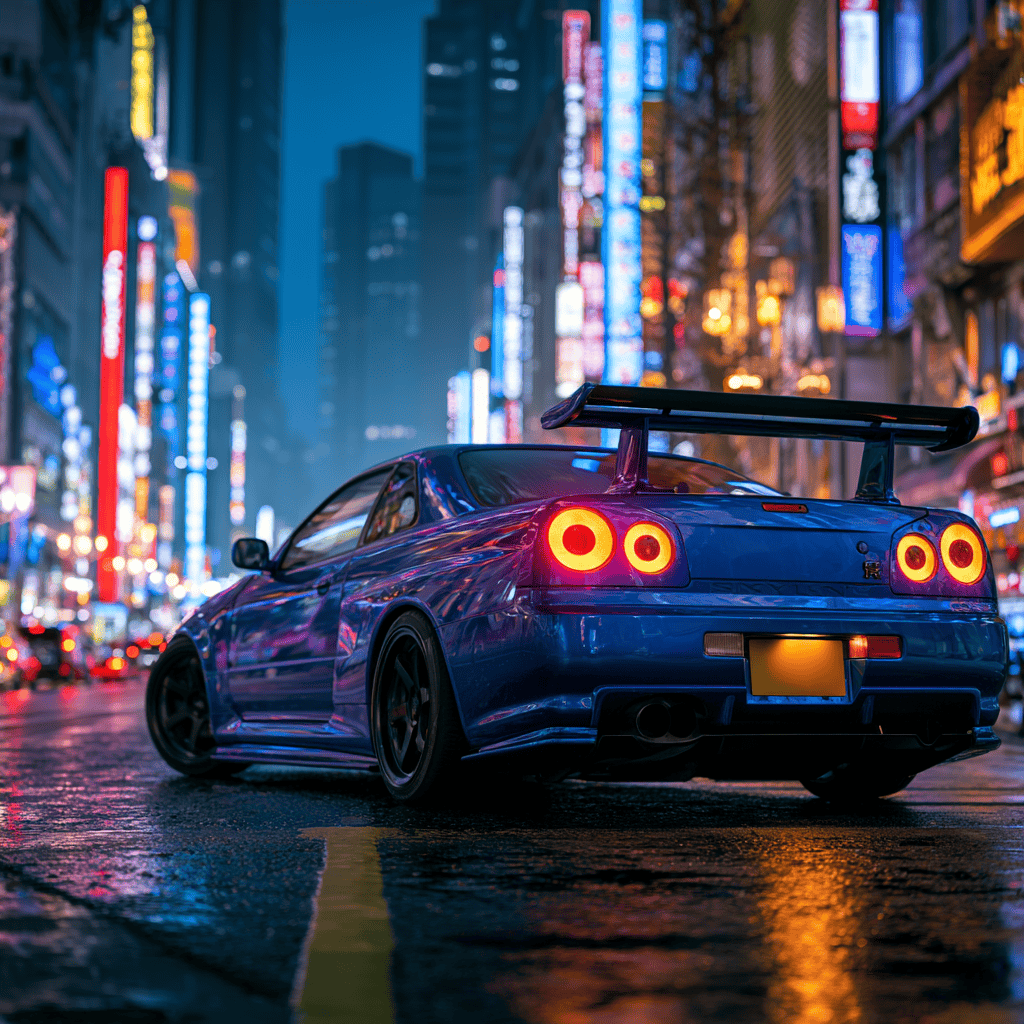
A trip built around one night at Daikoku PA rarely stays one night for long. It tends to pull in a photoshoot at a real circuit. It often adds a slower morning in Shibuya before the crowds arrive, plus a stop entirely unrelated to cars. Every reader who has planned this route with MJ’s desk has added at least one thing they did not expect to want. That is usually the sign a trip is built around curiosity rather than a checklist. The route below is a starting draft, not a fixed itinerary. The desk adjusts it around whichever nights actually suit the calendar.
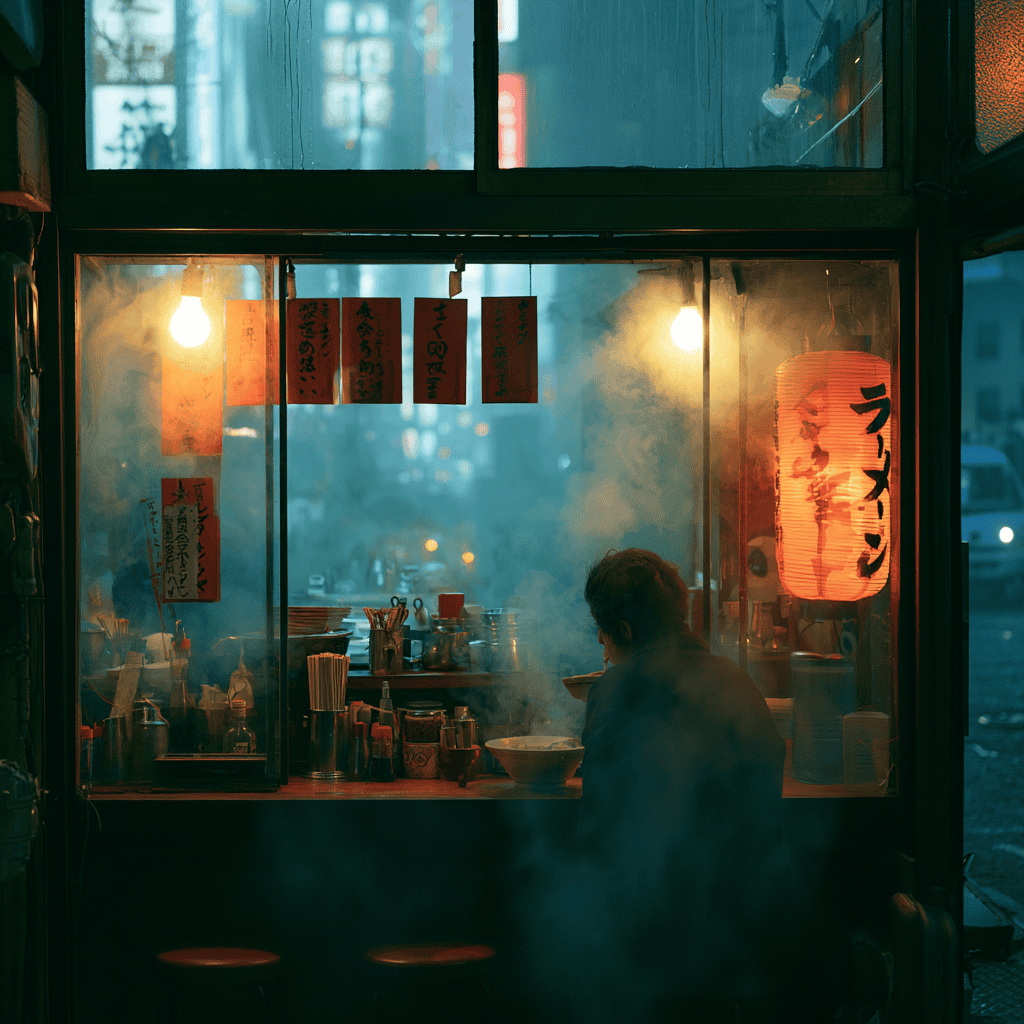
That last stop matters more than it sounds like it should. Hours standing on cold concrete leave most photographers hungry and half-frozen by midnight. A counter seat with a hot bowl is the natural close to the night. It is also when the best notes get written. The shots are still fresh in memory then, rather than sorted the next morning on a laptop. A few tools below make the planning easier before the next trip, whatever shape it takes.
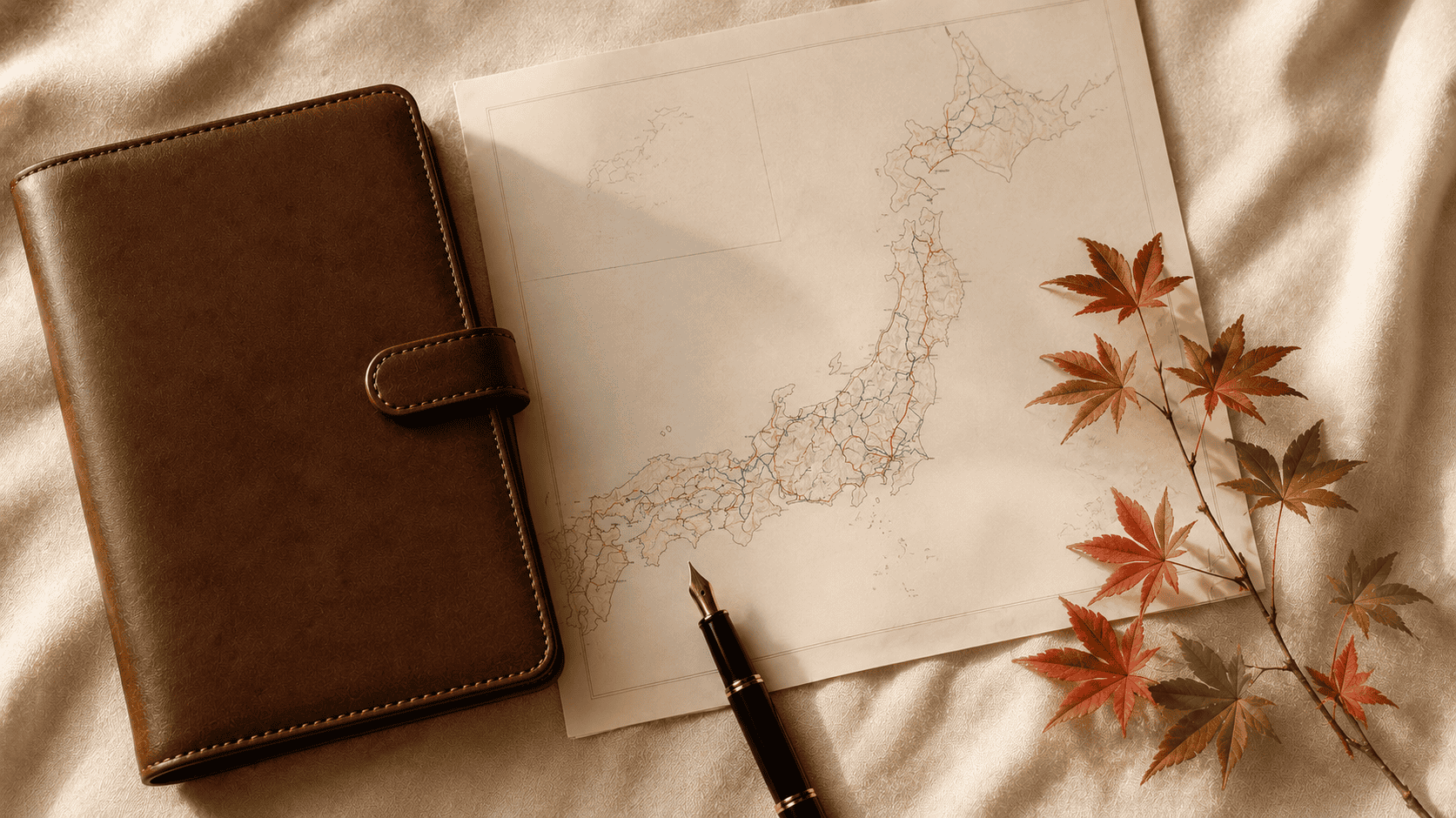

A custom itinerary can carry all of this in one arc rather than a single evening. Daikoku’s Friday and Saturday timing, a Shibuya and Shinjuku night-shoot route, and, where the calendar allows, a legal drift day at Ebisu Circuit or Fuji Speedway. MJ’s planners build the whole route rather than one stop at a time. This is usually the difference between a good night and a wasted one. The desk works from the same first-hand notes this guide describes, gathered trip after trip. That beats a generic list pulled from a search result. It is the difference between a route that sounds right and one that actually holds up after dark.
A custom itinerary built around Daikoku PA’s Friday and Saturday timing, a Shibuya and Shinjuku night-shoot route, and, where it fits the calendar, a legal drift day at Ebisu Circuit or Fuji Speedway.
Plan Your Custom Japan Itinerary