To start a business in Japan as a foreigner in 2026, you register a company at the Legal Affairs Bureau and hold a Business Manager Visa, or prepare under the Startup Visa first. Most applicants choose a KK or GK structure, show roughly five million yen in capital, and lean on a bilingual advisor. The process is slower than in the West, though steadier — and 2026 reforms have widened the door.
To start a business in Japan as a foreigner has never been a casual undertaking, and it should not be sold as one. Yet the gap between intention and incorporation is narrower now than at any point in the last decade. The government has set an explicit target of more than $800 billion (¥120 trillion) in foreign direct investment by 2030, and the procedural friction that once deterred newcomers has been quietly sanded down. This guide walks the full path: why the timing is unusual, which visa carries you, which structure to register, what it costs, and where foreign founders actually win.
Japan rewards a particular temperament. The founder who treats bureaucracy as an enemy will struggle. The founder who treats it as a system to be learned, methodically, tends to thrive. Trains run to the second. Contracts mean what they say. A registered seal carries genuine legal weight. The conditions favour patience over hustle, and that filter is itself a competitive moat.
Why Japan rewards the foreign founder in 2026
Japan remains one of the world’s most stable consumer economies. Demand is consistent, infrastructure is reliable, and trust in established suppliers runs deep. For a foreign founder, that stability is the appeal — and the obstacle. Breaking in takes longer, but the ground holds once you arrive.
The clearest opening in 2026 is demographic. As the population ages, gaps widen in healthcare, elder care, logistics, and consumer technology. These are sectors where fresh thinking is genuinely needed rather than merely tolerated. Government policy has followed the demand: METI and local authorities now offer foreign direct investment incentives, including subsidies, grants, and low-interest financing for priority industries.

Reform has done the rest. Incorporating a company, securing a Business Manager Visa, and registering a legal address have all become more straightforward, especially in startup-friendly zones like Fukuoka and Tokyo. One-stop business centres and English-language support continue to expand. The priority sectors the state is courting — digital transformation and green transformation chief among them — signal where the incentives, and the patient capital, will concentrate.

The visa pathways
Three statuses matter to a foreign founder, and confusing them is the most common early mistake. The Startup Visa is a preparation status. It lets you stay and build before you meet the full capital and office thresholds. As of 2026 the programme runs nationwide, extends up to two years in many municipalities, and carries lighter administrative weight than it once did.
The Business Manager Visa is the operating status. Your company transitions to it once you can show compliance: real capital, a genuine office, and a plan that holds together. A shorter four-month variant exists to bridge the incorporation window. Each city frames the entry differently. Tokyo runs a structured application with broad industry focus and good English support. Fukuoka offers a fast-track route with monthly check-ins and coworking access. Osaka provides a one-year preparation window with an official support desk.

The recurring obstacle is sponsorship. Securing municipal endorsement, demonstrating sufficient funds, and arranging housing all take longer than people expect. The Startup Visa eases the capital and employee thresholds at the outset, but the transition to a full Business Manager Visa still demands proof of compliance. Treat the preparation window as real runway, not a formality.

Choosing a structure: KK, GK, or branch
When you start a business in Japan, the structure decision shapes everything downstream. Two forms dominate. A Kabushiki Kaisha, the joint-stock company, carries the most credibility with banks, clients, and investors. It also carries the most administrative weight. A Godo Kaisha sits closer to a limited liability company: cheaper to form, simpler to run, and popular with solo operators and small teams.
An established overseas company has two further options. A branch office runs full operations under the parent’s governance, without independent corporate status. A representative office is narrower still, limited to research and liaison work that generates no revenue. Most founders building something new in Japan choose the KK or GK and move on.

The legal minimum capital for either form is one yen, and that number misleads more people than any other. In practice, most invest between roughly $3,000 and $33,000 (¥500,000 to ¥5 million) to establish credibility, particularly when a Business Manager Visa application is in view. Every company also needs a registered office address. Shared offices and coworking spaces are the common, cost-effective answer — they satisfy the legal requirement while giving you a real local footing.
The two forms diverge on cost, credibility, and governance. The table below sets them side by side so the trade-off is plain before you commit.
| Consideration | KK (Kabushiki Kaisha) | GK (Godo Kaisha) |
|---|---|---|
| Closest equivalent | Joint-stock corporation | Limited liability company |
| Setup cost (approx.) | Higher — registration tax and notarization run near 1,500 to 2,000 US dollars | Lower — often half that, with no charter notarization |
| Credibility | Highest with banks, enterprise clients, and investors | Solid, though less familiar to conservative partners |
| Governance | Shareholders and directors, with formal reporting | Members manage directly, lighter formalities |
| Outside funding | Can issue shares — the structure investors expect | Harder to raise equity; suits self-funded ventures |
| Best for | Growth-stage and venture-backed ventures | Solo operators, consultants, lean teams |
The honest summary is short. Choose the KK when you must convince banks or investors and can absorb the heavier admin. Choose the GK when speed and economy matter more than prestige. Many begin as a GK and convert later, once revenue justifies the formality.

The psychological, cultural, and operational field guide to building a business and a life in the world’s most sophisticated economy. Join the list to be first to read at launch. Sent in one email when it publishes. No newsletter churn.
One email. No spam. Unsubscribe anytime.
What it costs, and the four steps to register
Beyond capital, budget for the work around it: notarization, the registered address, a corporate bank account, and the bilingual hand that smooths each step. None is ruinous on its own, though together they reward planning. Those who under-budget the administrative layer lose weeks they could have spent on the business.
In US-dollar terms, the recurring early costs are modest but real. Registration and notarization run a few hundred to roughly a thousand dollars, depending on the structure you choose. A registered shared-office address sits in the low hundreds per month. A bilingual administrative scrivener or accountant typically charges one to three thousand dollars to shepherd incorporation, and ongoing bookkeeping adds a monthly retainer. The single hardest line to budget is the corporate bank account, which is less about money than patience. Japanese banks scrutinize foreign-owned entities closely, and approval can stretch over several weeks.
| Line item | Typical cost (USD) | Notes |
|---|---|---|
| Registration and notarization | $700–$2,000 | Lower for a GK; KK adds charter notarization |
| Capital (visa-credible) | ~$33,000 (¥5M) | Legal floor is one yen, but the visa bar is the real number |
| Registered office address | $100–$400 / month | Shared office or coworking satisfies the requirement |
| Bilingual accountant / scrivener | $1,000–$3,000 setup | Plus a monthly bookkeeping retainer |
| Corporate bank account | Minimal fees | Cost is time, not money — budget several weeks |

Incorporation itself follows a clear sequence. None of the four steps is difficult on its own, and a bilingual legal or accounting firm can run several in parallel where the rules allow.
- Secure an office address. A physical or virtual registered address is the first requirement, and a coworking membership usually satisfies it. Some banks and visa reviewers prefer a dedicated space, so weigh that against cost early.
- Draft and notarize the Articles of Incorporation. These define the company name, purpose, capital, and officers. A KK requires notarization; a GK does not, which is part of why the GK is cheaper to form.
- Register at the Legal Affairs Bureau. You deposit the capital, file the incorporation documents, and register the company seal. Once accepted, the company legally exists and can obtain its certificate of registered matters.
- Complete tax and social-insurance registration. File with the local and national tax offices, then enroll for pension and health insurance. The corporate bank account, opened alongside, is the step most likely to test your patience.


One pragmatic alternative deserves a mention, because most guides skip it. You do not always need a company to begin operating or hiring. An Employer of Record lets you bring on staff in Japan without first incorporating, opening a corporate account, and clearing a visa. For anyone testing the market before committing, that flexibility can buy a useful season of evidence.
There is also a lighter on-ramp that suits consultants and solo operators. Registering as a sole proprietor, rather than incorporating, is fast and inexpensive, and electing blue-form taxpayer status unlocks a deduction worth up to roughly four thousand three hundred US dollars a year. It will not satisfy a Business Manager Visa on its own. Yet for someone already holding a work or spouse status, it is often the most sensible way to begin earning while the larger entity takes shape.
Where foreign founders win
Foreign founders in Japan succeed in identifiable places. Technology leads — software, artificial intelligence, and SaaS. Tourism follows, with boutique agencies and guide services. Food and beverage, education and edtech, and import-export round out the field. METI data shows the overwhelming majority of foreign-affiliated companies operate in non-manufacturing: information, communications, wholesale, and services dominate.

Survival data is reassuring rather than spectacular. Specific five-year figures for foreign-led firms are not separately published, though the non-manufacturing sector that houses most of them shows stability on par with domestic companies. The pattern is consistent: niche innovation, served to a large and demanding home market, tends to find durable footing. Japan punishes the generic and rewards the specific.
For a founder choosing where to plant, the calculus is part market, part lifestyle. Tokyo offers the deepest talent pool and the most clients, at the highest cost. Osaka and Nagoya trade some reach for lower overheads and strong regional demand. Fukuoka has staked its civic identity on startups, and the support infrastructure shows it. The right answer depends less on a ranking than on the specific business, and on the life you want built around it.
Sector choice matters as much as city. Four areas reward foreign founders most consistently right now. Technology and software lead, carried by the digital-transformation push across an economy still rich in legacy systems. Inbound tourism services follow, as record visitor numbers strain a market short on multilingual, design-led operators. Eldercare and health technology answer the demographic reality directly. And specialty food, beverage, and import businesses thrive on Japan’s appetite for authentic, well-curated foreign goods. The thread connecting them is the same: solve a specific problem for a demanding market that values quality over noise.


Goes past etiquette into the values inside Japanese capitalism — how to negotiate, and how to hear a “no” that sounds like a “yes.”
View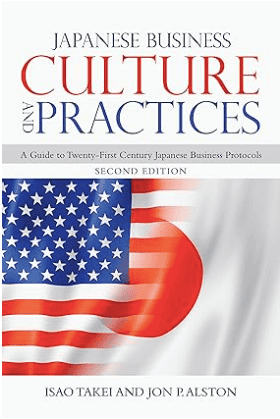
A practical reference on protocol, negotiation, and the everyday minutiae of conducting business the Japanese way, with a useful glossary.
View
A roadmap-style primer covering structures, visas, and market entry — a quick orientation to read alongside this guide.
ViewReading prepares the ground, but tools move the work forward. A handful of well-chosen items earn their place on the desk in those first months, from language references to the planners that keep a relocation organised. The curated edit below pulls together what tends to be genuinely useful, rather than what merely fills a list.
Who is starting businesses in Japan
The founder profile is broadening. Overall demographics still skew male, though the shift is real. A government survey found women accounted for a meaningful share of entrepreneurs, even as female chief executives remained underrepresented. Organisations such as Startup Lady Japan, which supports members from more than fifty countries, are narrowing that gap deliberately. The MJ profile of women entrepreneurs in modern Japan goes deeper on that ground.

By origin, foreign founders arrive from the United States, China, Korea, India, and France, drawn by a strong market and a supportive visa regime. Support has organised around them: the Tokyo Women Entrepreneurs Center, Venture Café Tokyo, and Founder Institute Japan run regular meetups, pitch nights, and mentorship. JETRO’s Invest Japan programme offers no-cost consultation and early-stage office space, while SMRJ supports foreign-owned small and medium enterprises across the country.

Browser-based practice for calligraphy, names, and daily kanji study. Plus our published workbook series.


Legal, tax, and the cultural ground
Compliance is where good intentions meet reality. Employment law requires written contracts covering salary, hours, and duties, alongside labour-standard obligations on paid leave, health insurance, and pension. Corporate tax sits at an effective rate near 23.2 percent, with local taxes layered on by location and scale. Protect the brand early: Japan runs a first-to-file trademark system, so registering intellectual property with the Japan Patent Office should not wait.

The cultural ground matters as much as the legal one. Language threads through every form and negotiation, and even basic business Japanese earns goodwill that English alone cannot. Expect bureaucracy, and meet it with organised records and a clear sense of timelines. Above all, trust is the currency. Japanese business culture values long relationships, reliability, and mutual respect, and the founder who builds genuine local connections opens doors that marketing never will.

Questions worth asking
Yes. A foreigner can start a business in Japan and run it under a Business Manager Visa, or prepare under the Startup Visa first. The company registers at the Legal Affairs Bureau, while residence status is reviewed separately by the Immigration Services Agency. A workable business plan and a registered office address are what every pathway expects.
The legal minimum capital for a KK or GK is one yen, but that figure misleads. To clear the Business Manager Visa bar, most applicants show roughly five million yen, near thirty-three thousand US dollars, or hire two full-time staff. Budget separately for registration, a registered address, and bilingual support.
A Kabushiki Kaisha is the joint-stock company, with more credibility among banks and investors and more administrative weight. A Godo Kaisha is closer to a limited liability company: cheaper to form and simpler to run. The choice turns on who you must convince and how lean you want operations.
Incorporation can complete in a few weeks once documents are notarized and capital is in place. The slower elements are the registered address, the corporate bank account, and the visa review. Plan for two to three months end to end working through bilingual advisors.
You can incorporate without fluent Japanese, especially in Tokyo and Fukuoka where English support is widening. In practice, most forms and negotiations run in Japanese. A bilingual accountant removes most of the friction, and even basic business Japanese builds the trust local partners weigh heavily.
Yes. The Startup Visa is a preparation status that lets you build before the full capital and office thresholds are met. As of 2026 it runs nationwide and extends up to two years in many municipalities. The Business Manager Visa is the operating status the company moves to once it meets the compliance bar.
To start a business in Japan is to accept a slower clock in exchange for a steadier one. The reforms of 2026 have widened the entrance without softening the standards, which is exactly the trade a serious founder should want. Learn the system, earn the trust, and the same friction that deters the casual becomes the moat that protects the committed.
A scouting trip tells you what a business plan cannot — the neighbourhood, the commute, the daily texture of a city you may build a company in. We design the visit around what you actually need to learn. Quote within 24 hours, no commitment.
Begin a Custom Itinerary