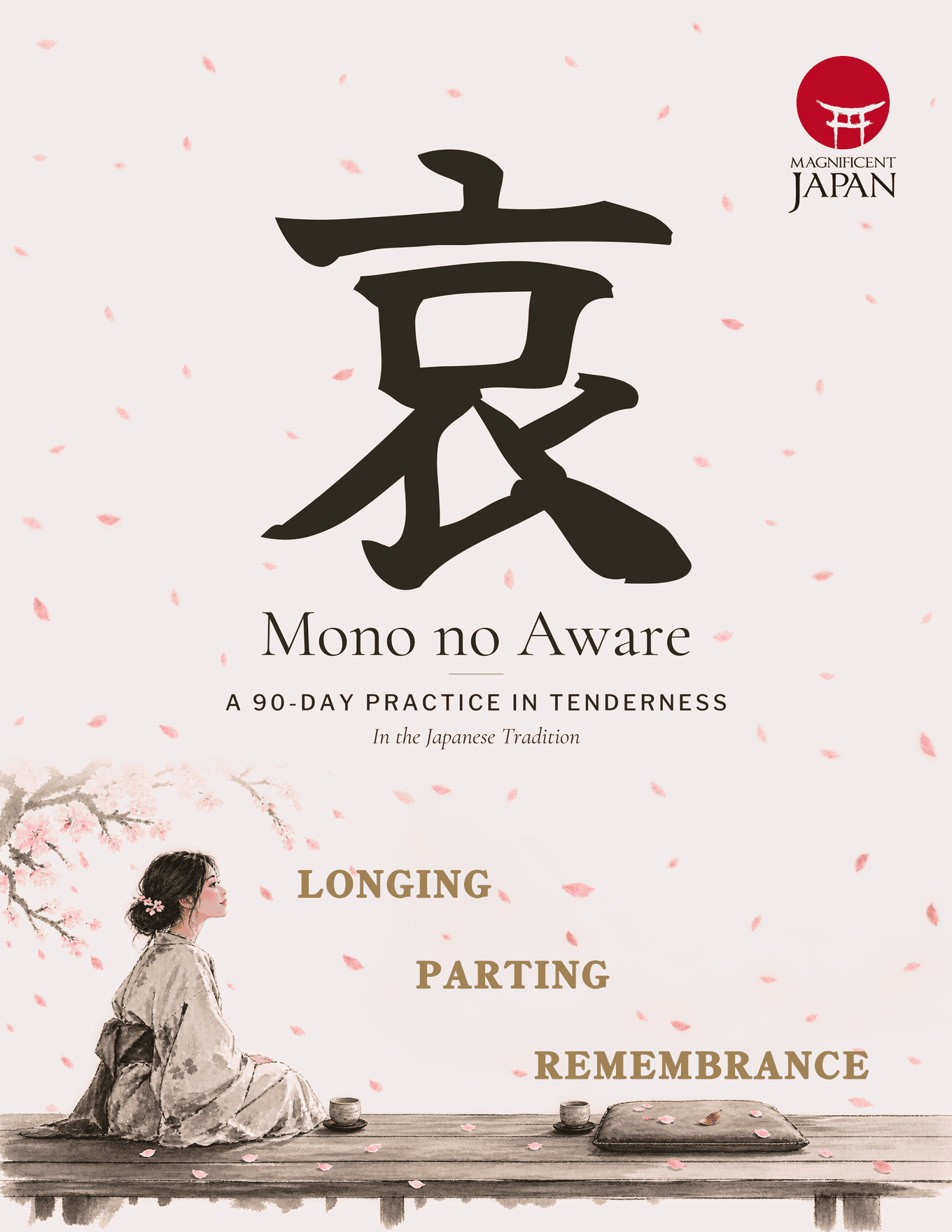
The Mono no Aware Journal, a 90-Day Practice in Tenderness
A ninety-day practice in digital and paperback editions — one prompt a day, drawn from mono no aware, the Japanese feeling for the beauty in what passes.
Choose the write-on digital edition for your favourite tablet annotation app, or the paperback print edition for the desk and the bag. Either way, the mono no aware journal is a guided practice in impermanence and tenderness — a way to notice what is fleeting, hold it fully, and let it go. Ninety prompts follow, sequenced so the practice deepens week by week.
Digital: instant download, every major tablet app · Paperback: ships worldwide · Try seven days first
Twenty seconds inside the journal
The digital edition in use — a morning prompt, answered by hand while the coffee is still warm. Tap to play, with sound.
One page, one intention, one still moment.
The world says hold on, preserve it, do not let go. Mono no aware says love it as it passes.
Mono no aware is the Japanese awareness that everything you love is fleeting — and that this is not a flaw but the source of its meaning. It is the feeling at the sight of falling blossom: grief and gratitude held together, the ache of an ending and the fullness of having been there.
The kept, the preserved, the frozen — what most of modern life pushes you toward. We archive, we cling, we resist every ending.
The fleeting, the fading, the ending — noticed fully, and loved for the very fact that it will not last. A practice not in detachment, but in tenderness. This is where the ninety days sit.
This is not a practice in sadness. It is a practice in tenderness — a way of meeting impermanence that sits within the wider Cultural Reflection Collection.

What mono no aware means
Mono no aware 物の哀れ means, roughly, the pathos of things. 物 (mono) is things; 哀れ (aware) is the tender ache of feeling. Together, the bittersweet awareness that all things pass.
The scholar Motoori Norinaga named it in the eighteenth century, describing the emotional heart of The Tale of Genji. But the feeling is older than any text — the Japanese saw it most clearly in the cherry blossom, cherished most in the instant of its falling.
For a thousand years, Japanese poets and storytellers have returned to this idea. They did not see sorrow as something to hide or hurry past. Instead, they saw it as proof of how much we love. Noticing that time passes does not dim love; it sharpens it. Mono no aware does not ask you to stop hurting. It asks you to let the hurt lead you back to love.
Who it’s for
This journal is for the daughter or son watching a parent grow older. It is for the parent whose children are growing up too fast. It is for the friend who misses someone who drifted away. It is for the partner who wants to cherish the person beside them now, and for the one grieving the end of a marriage. And it is for anyone carrying the memory of someone already gone.
It is for everyone whose love lives inside passing time. You need no knowledge of Japan, no faith tradition and no writing experience. Five to fifteen minutes a day is enough.
How it helps you walk through pain
Pain that has nowhere to go tends to stay. Many people carry grief, worry or regret alone for years because no one asked the right question. This journal asks those questions, one gentle step at a time.
Day by day, you put words to what you have been holding. First, you name what you fear losing. Then you make room for the longing, the goodbyes and the memories. Slowly, the weight becomes something you can carry. Above all, you turn back toward the people still here and love them more fully now.
- Give your feelings a safe place to land, without judgment
- Say what matters to the people you love, while you still can
- Carry the memory of those you have lost with warmth instead of only pain
- Face goodbyes, big and small, with fewer regrets
This is a reflective practice, not grief therapy. Where a loss is heavy or fresh, it is no substitute for the care of people and professionals.
Five faces, ninety days
The prompts move through five faces of mono no aware — five ways the awareness of impermanence is felt. You do not study them; the prompts teach them, asking each in turn and deepening as the weeks go on.





Prompts that ask the right question
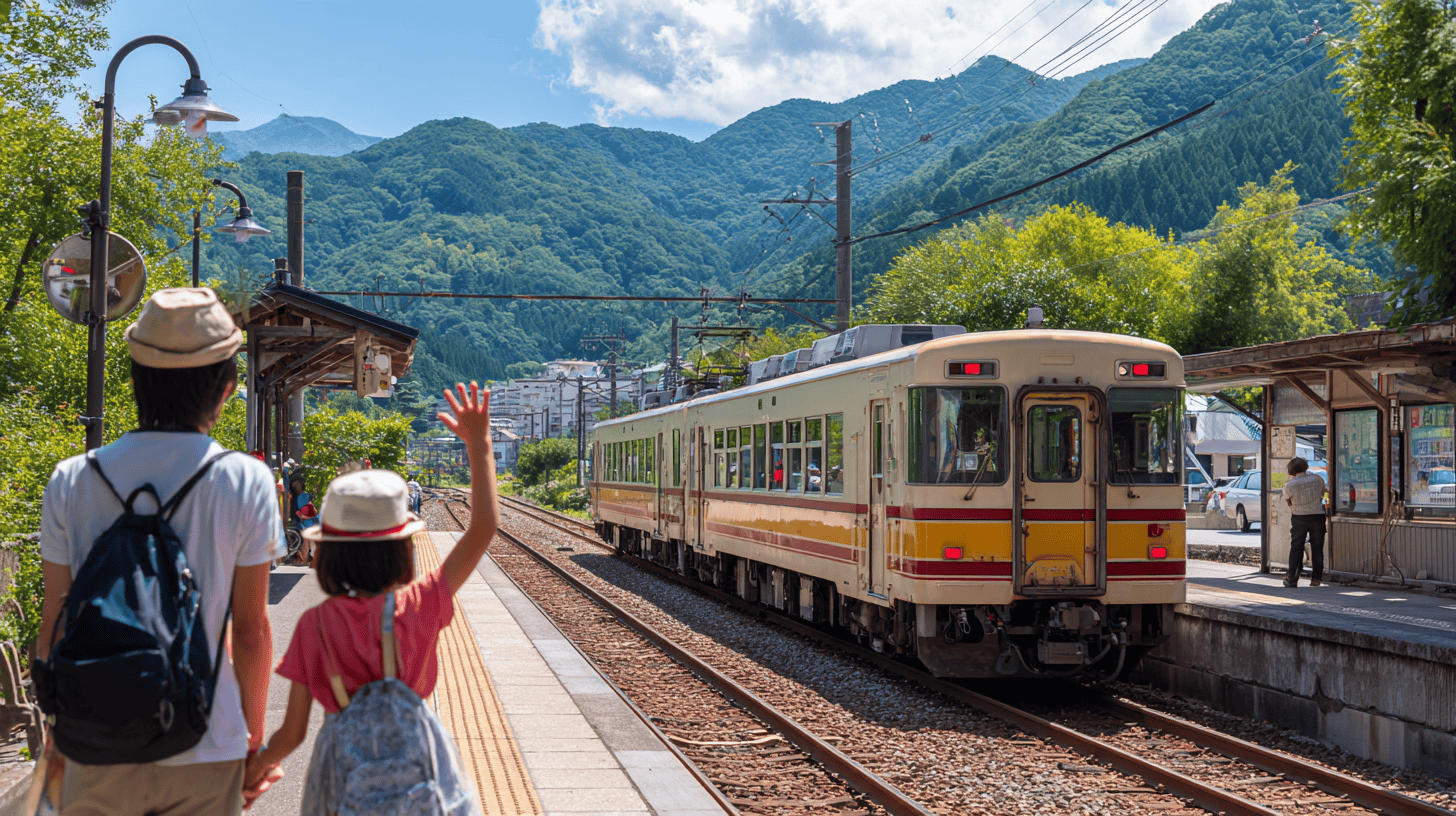
Most reflection prompts ask you to hold on, or to move past. These ask you to notice what is passing — clearly, tenderly — and to love it as it goes. The ninety days are sequenced so the practice compounds in a way a flat list never could.
The early prompts are small, the kind you can answer before the tea goes cold. The later ones assume you have been noticing, and ask a little more.
What the mono no aware journal includes
Both editions carry the same ninety-day practice in impermanence. The digital edition is a write-on PDF for GoodNotes, Notability, Noteshelf, or any annotation app; the paperback puts the same practice on paper.
- Ninety daily prompts — one a day, across three months
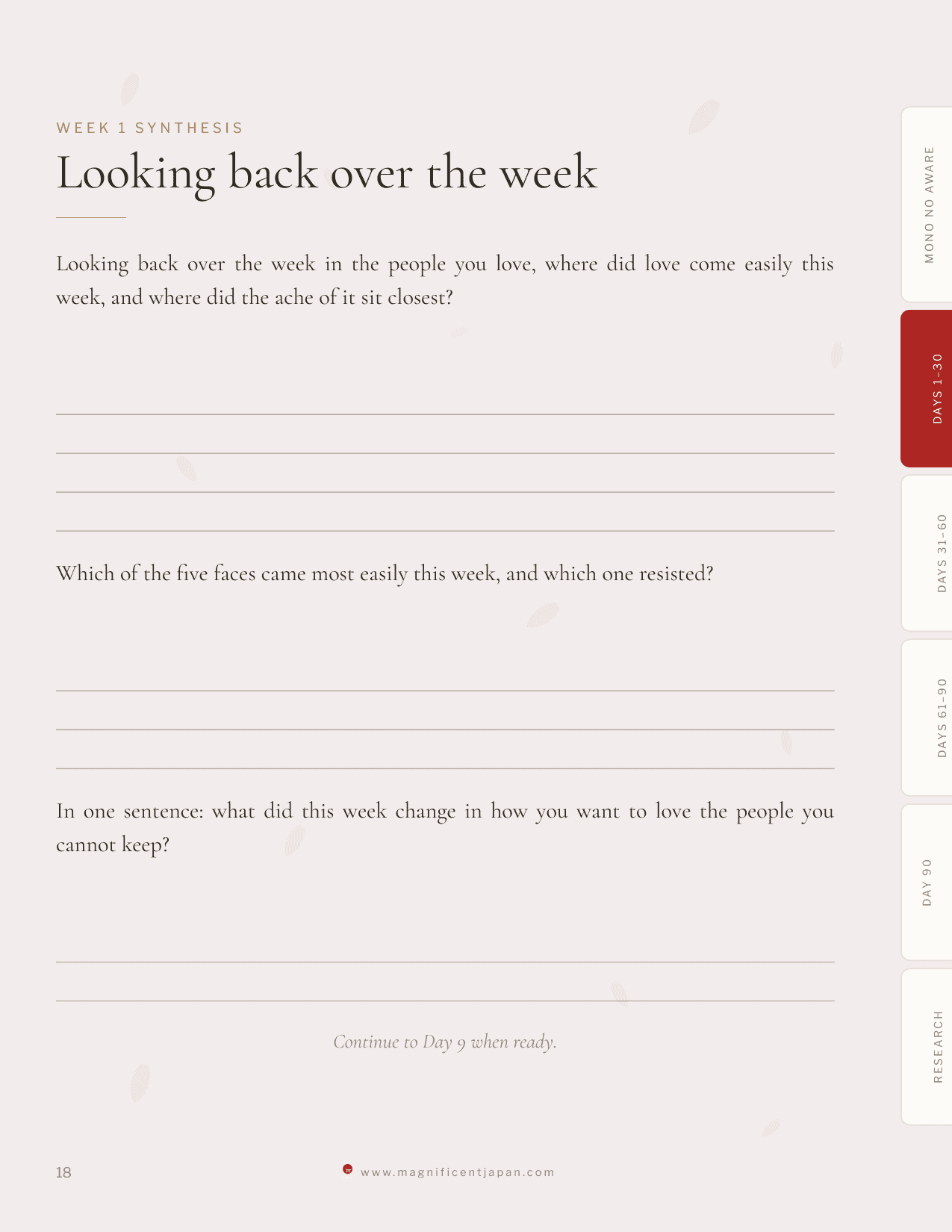
- Weekly syntheses — a look back at the close of each week
- Three monthly reviews — the longer view across each month
- Two Beginning pages — revisited on Day Ninety, to measure the distance
- Tap-through navigation — side tabs and links to any day or section
- Research foundations — the sources, and where to read further
Begin the practice
One journal, two editions, one price. Choose the screen or the page. The ninety days in tenderness and impermanence are the same, and both are built to be returned to, not read through.
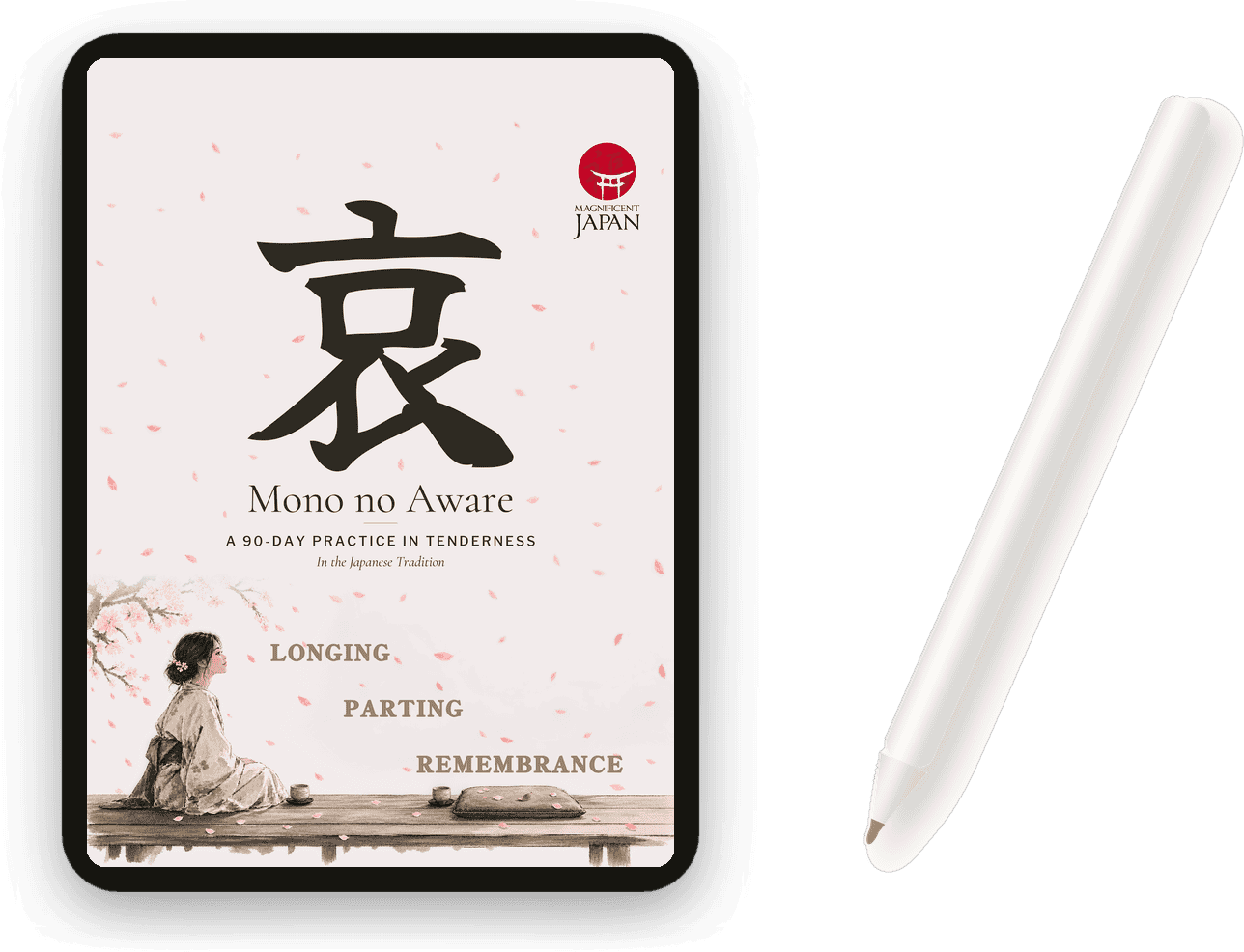
A write-on PDF for iPad and tablet, with tap-through tabs and links to every day. Yours when you order.
Download the DigitalInstant download · GoodNotes, Notability & every major tablet app
The same ninety days in print, a paperback for the desk, the bag, and the bookshelf it will one day join.
Order the PaperbackShips worldwide · a 6 x 9 matte paperback with 232 pages to write in
Look inside
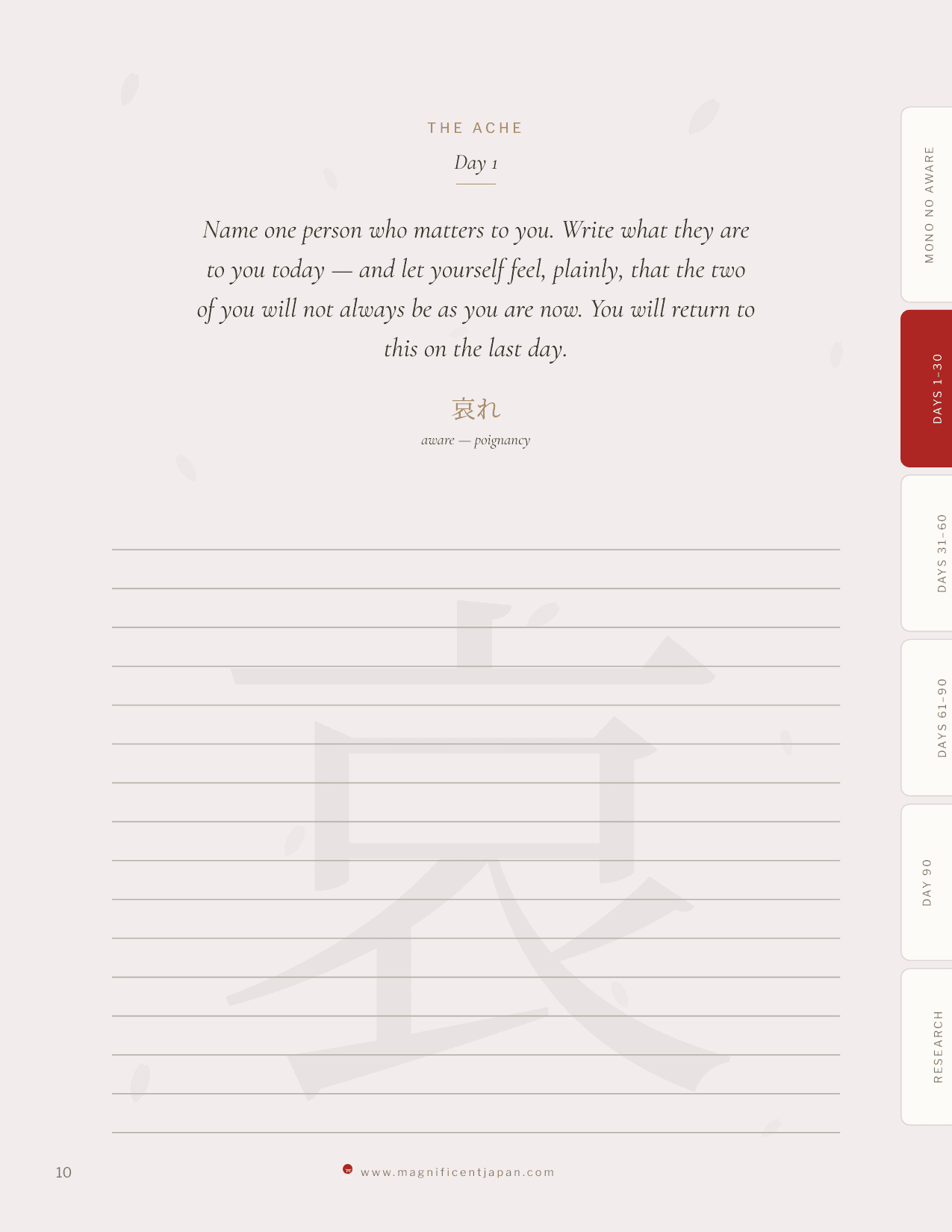
Three real pages, shown full size — a Beginning page you return to on Day Ninety, a daily prompt, and a weekly synthesis. Tap any page to open it larger.
How it works
What ninety days does
A single prompt rarely changes much. Ninety of them, in sequence, do something a list never could. The early weeks ask small questions — the ending you have been bracing against, the moment you rushed past, the thing you are holding too tightly.
By the second month the prompts assume you have been noticing, so they ask a little more. On Day Ninety you return to the two pages you began with, and the distance between them is the whole point.

Ten Proverbs to Carry With You
A printable folio of ten Japanese proverbs, each set in kanji with its reading and a line on where you will hear it.
Where the practice comes from
The eye the mono no aware journal trains — for what passes, and the beauty in its passing — runs through Japan itself. Cherry blossom falling over a temple path. A garden shaped by the turning season. An old inn where time is felt on every surface.
The practice works wherever you sit with it. Yet once it settles, some readers want to stand inside the Japan it draws from — and that is a journey worth shaping with care.
A blossom-lined temple path in the week it falls, a garden at the turn of the season, a ryokan where the passing of the day is the point. When you would like to step into the Japan this practice draws on, we shape the journey around how you want to travel.
Begin a Custom ItineraryQuestions Worth Asking
Is this a digital journal or a paper book?
Both. The Mono no Aware Journal comes as a write-on digital PDF for tablet annotation apps, and as a paperback print edition that ships worldwide. Both carry the same ninety days at the same price.
Which apps does it work in?
GoodNotes, Notability, Noteshelf, Penly, Xodo, and Samsung Notes. The side tabs and links work in any app that opens annotatable PDFs.
Do I have to journal every day?
No. The practice is built around returning to it, not around a perfect streak. You can move at your own pace.
How is this different from the other journals in the collection?
They are companions in the same format, part of one collection. Ikigai is about direction; nagomi is about balance; wabi-sabi is about the imperfect; kintsugi is about repair; mono no aware is about impermanence — loving what is fleeting, and letting it go with tenderness. Each stands on its own, and none repeats another’s prompts.
Choosing your edition
Should I choose the digital or the paperback edition?
Choose digital if you write with a stylus, because the tap-through side tabs and day links only work inside an annotation app. Choose the paperback if you prefer pen on paper; it is the same ninety-day practice in tenderness and impermanence, in print.
Will there be more journals?
Yes. Mono no aware is part of the Magnificent Japan Cultural Reflection Collection, alongside the Ikigai, Nagomi, Wabi-Sabi, and Kintsugi journals, with further practices to follow.
Five short reads to keep beside the mono no aware journal. Start with the meaning, then try the habits and the seasons that give the mono no aware journal its daily prompts.
 What Is Mono no Aware? The Meaning The word, its origins in The Tale of Genji and how to feel it.
 Mono no Aware Examples From Genji and haiku to film, the seasons and everyday Japan.
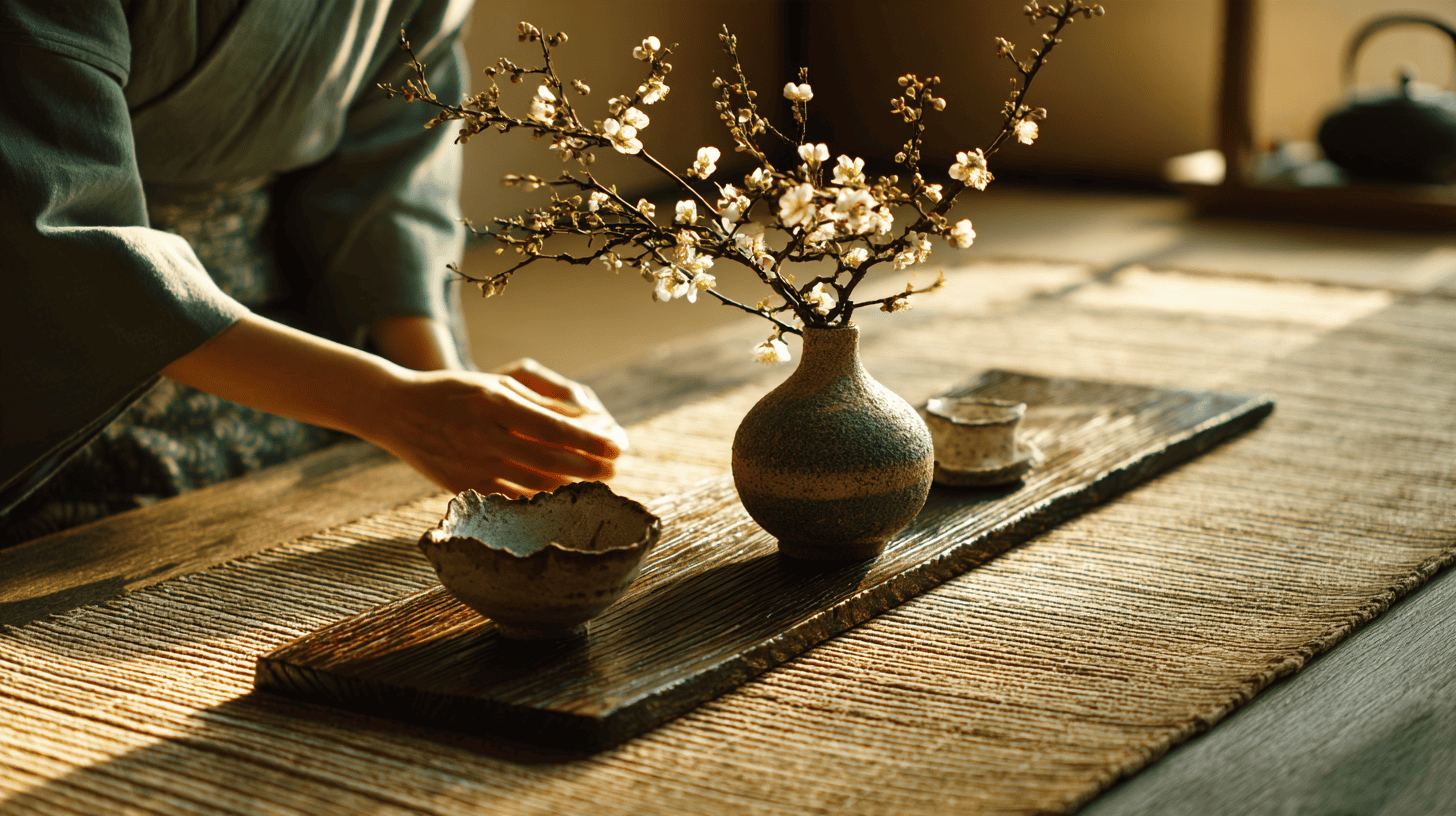 Mono no Aware vs Wabi-Sabi One is a feeling, one an aesthetic: how the two ideas differ.
 How to Practice Mono no Aware Seven small daily habits, from seasonal walks to letters.
 Mono no Aware and Cherry Blossoms Why sakura moves Japan: hanami, the bloom front and night blossoms.
Part of a longer practice
The Cultural Reflection Collection gathers guided practices rooted in single Japanese concepts. The mono no aware journal sits alongside The Ikigai 90-Day Journal and En, a 90-day practice in connection — each a single concept, met a day at a time, until it becomes something you have lived rather than read.
Digital: instant download, every major tablet app · Paperback: ships worldwide