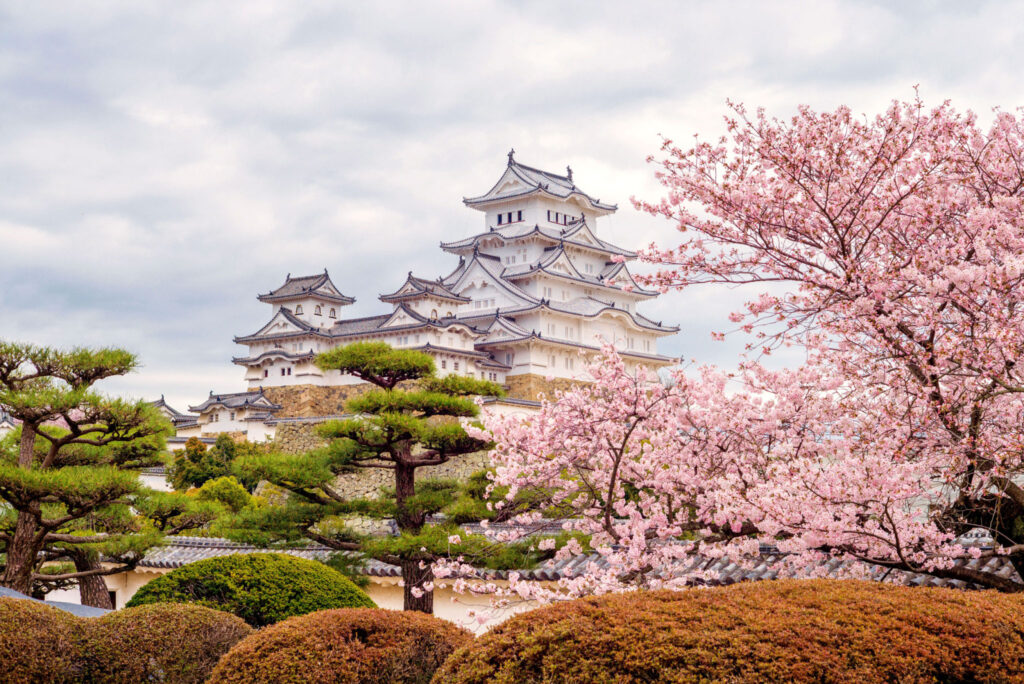
Cherry blossom season in Japan lasts only a few weeks, yet it shapes the whole year. Hotels fill months ahead. News programs track the bloom like the weather. Then, for about a week in each city, the trees open together, and everyone heads outdoors to sit beneath them.
The custom has a name, hanami, which simply means flower viewing. Office teams claim a patch of grass at dawn, while families unpack stacked lunch boxes. After dark, lanterns come on along the rivers, and the same trees look entirely different.
This guide covers when the blossoms arrive, region by region, and where to see them in Tokyo, Kyoto and beyond. It also explains hanami manners and how to book around a moving date. For the wider picture, start with our guide to planning luxury travel in Japan well.
When is cherry blossom season in Japan?
Cherry blossom season in Japan runs from late March to early May on the main islands. Tokyo’s trees usually open around March 24 and reach full bloom about a week later. Kyoto and Osaka follow within days. The north blooms in April, Hokkaido in late April or May, and Okinawa’s early variety in January.
When Cherry Blossom Season in Japan Begins
Japan’s weather agency declares the start in each city by watching a sample tree. In Tokyo, an official checks a Somei Yoshino specimen in Chiyoda every morning. Once at least five flowers open, the season is officially under way. Forecasters call that day kaika. According to the agency, the average date for Tokyo is March 24.
Full bloom, or mankai, usually follows about a week later. The trees then hold their peak for several days, depending on wind and rain. A warm spell shortens the show, while a cold snap can stretch it out. Because of this, two cities only a few hundred miles apart can peak a week or more apart.
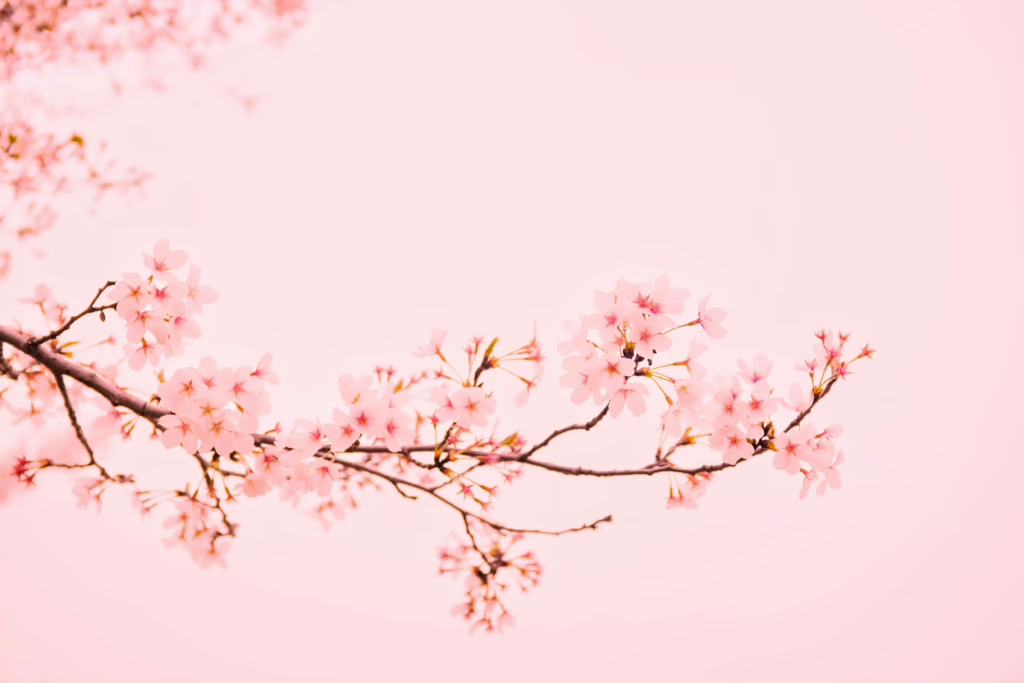
Forecasts start early. The Japan Meteorological Corporation issues its first projection each winter, then updates it through spring. Its cherry blossom forecast draws on some 1,000 viewing spots across the country. Japan’s tourism board also publishes a regional bloom forecast in English. Check both as your dates near, because early estimates can shift by a week.
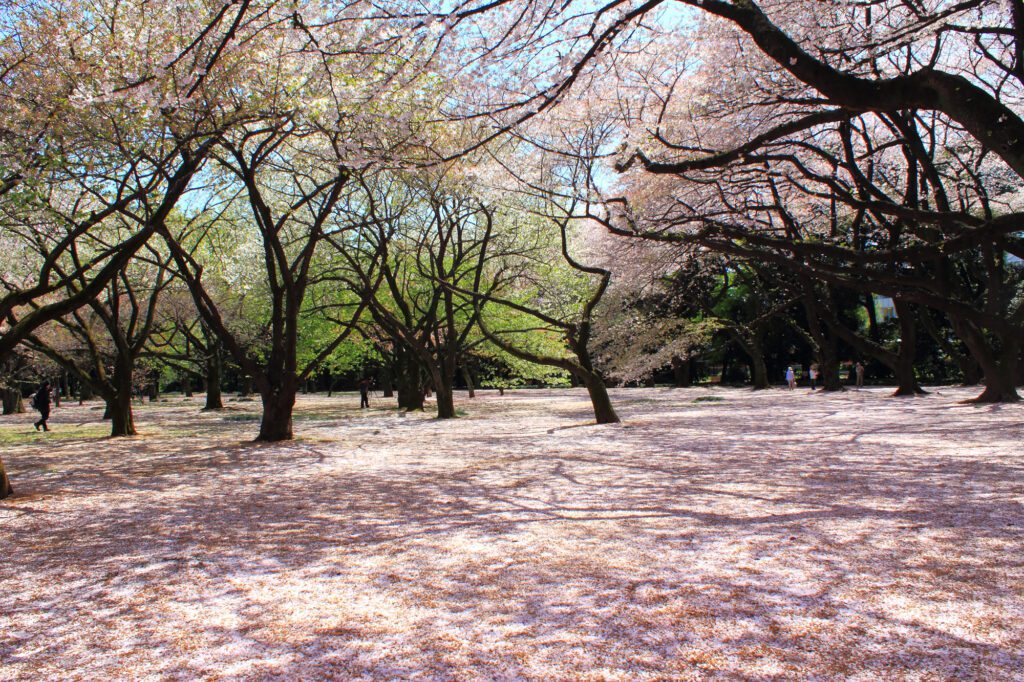
For a fixed trip, the safest target is the overlap between full bloom and the first falling petals. That stage, called hanafubuki or flower blizzard, often looks finer than the peak itself. Petals drift across paths and settle on moats. Even a late arrival, then, can catch a memorable version of the season.
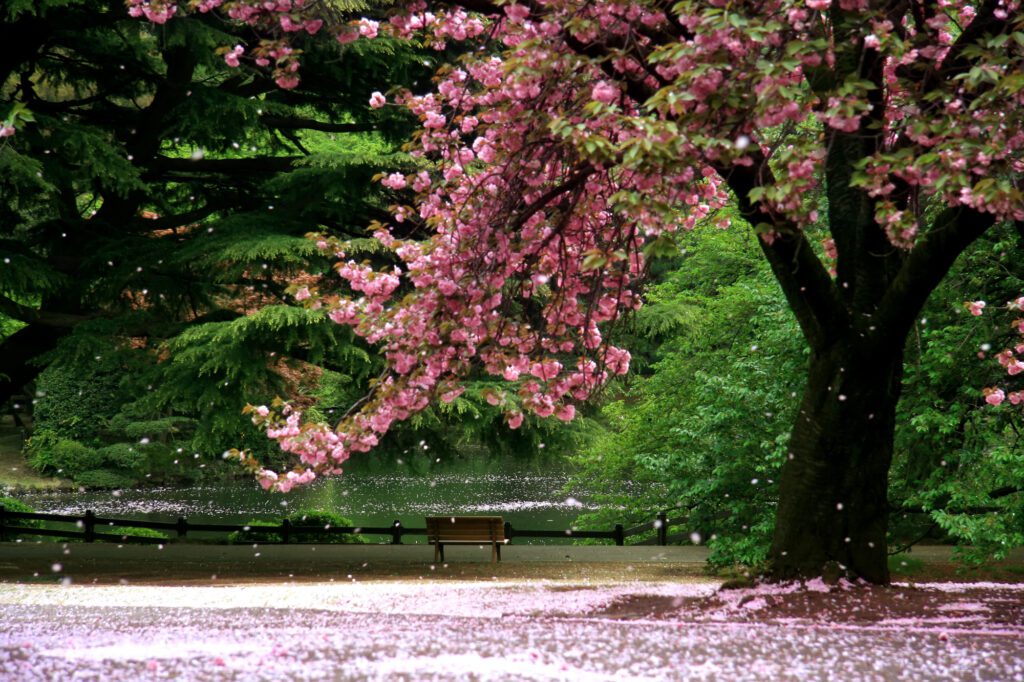
Weather is the other variable. Spring in Japan swings between warm afternoons and chilly evenings, so layers matter more than a heavy coat. Rain can strip a tree in one night. Therefore, build some slack into the schedule, and remember that the frilled double blossoms, yaezakura, open a week or two after the main wave.
The Bloom Front, From South to North
Japanese television calls it the sakura zensen, the cherry blossom front. In practice, cherry blossom season in Japan moves north and uphill through spring, in step with the warming weather. According to the national tourism board, it begins on Kyushu in March and runs as late as early May. Following the front lets a long trip see the blossoms twice.
Okinawa and the South
Okinawa keeps its own calendar. Its hikan-zakura, a deeper pink variety, opens in January, weeks before the main islands stir. Kyushu and Shikoku follow in mid to late March. Cities such as Fukuoka and Kochi often bloom slightly ahead of Tokyo.
Tokyo, Kyoto and Osaka
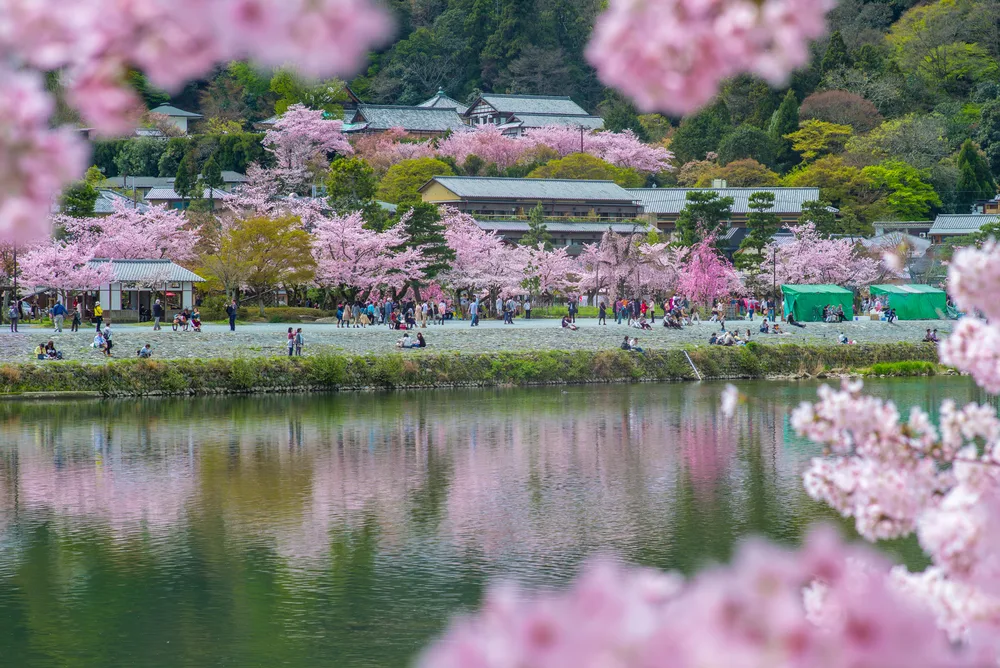
The three big cities usually bloom within a week of each other. Tokyo tends to open first, in the last week of March. Kyoto and Osaka follow a few days later, with peaks in late March or early April. That timing overlaps with school holidays, so expect full trains and busy parks.
Tohoku and the Mountains
Northern Honshu blooms through April. Sendai usually opens in early April, and Aomori later in the month. Mountain towns in Nagano run late as well, because of altitude. For travelers who miss the peak in Tokyo, a bullet train north often finds trees just opening.
Hokkaido
Hokkaido closes the season. Sapporo usually blooms in late April or early May, around the Golden Week holidays. Matsumae, on the island’s southern tip, is known for its castle park and its many varieties. Farther east, around Kushiro, the trees can still be in flower in mid-May.
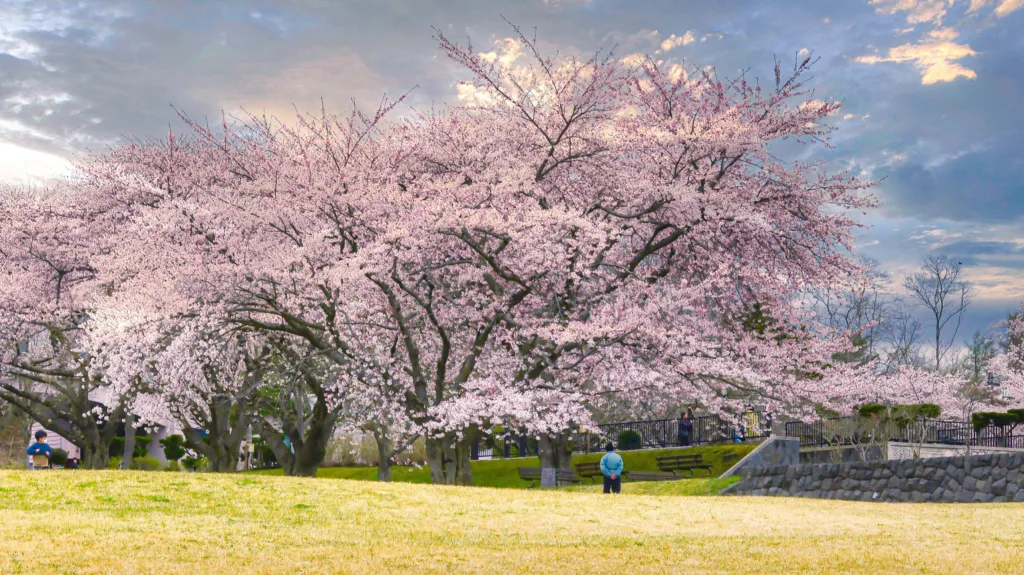
A route that follows the front works well for a two-week trip. Start in Kyoto or Tokyo at the end of March, then head north as the forecasts update. The rail network makes this simple, and our page on the Japan Rail Pass helps you judge whether a pass pays for itself.
If you prefer a single base, choose one city and make day trips instead. From Tokyo, the lakes around Mount Fuji often peak a week or two after the capital. From Kyoto, the slopes of Yoshino in Nara bloom in stages, lower zones first. Either way, one booking can cover several chances at full bloom.
You may also like
Where to See Cherry Blossoms in Tokyo
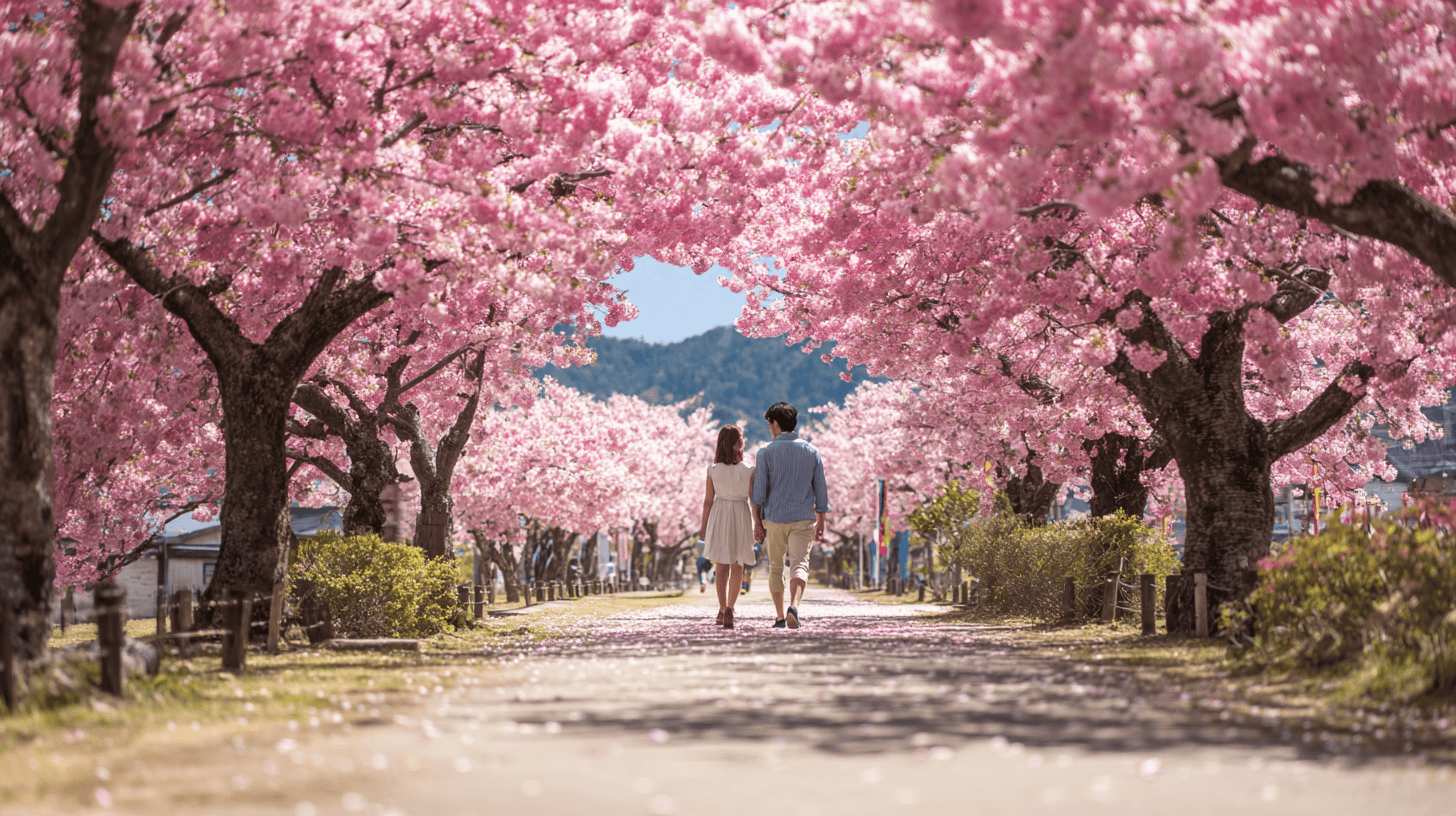
Tokyo has more than a dozen famous viewing spots, and each suits a different mood. Some are formal gardens with closing times, while others are riverbanks lit until late. The trick is pairing the place with the hour, because a crowded park at noon can feel calm at seven.
Shinjuku Gyoen
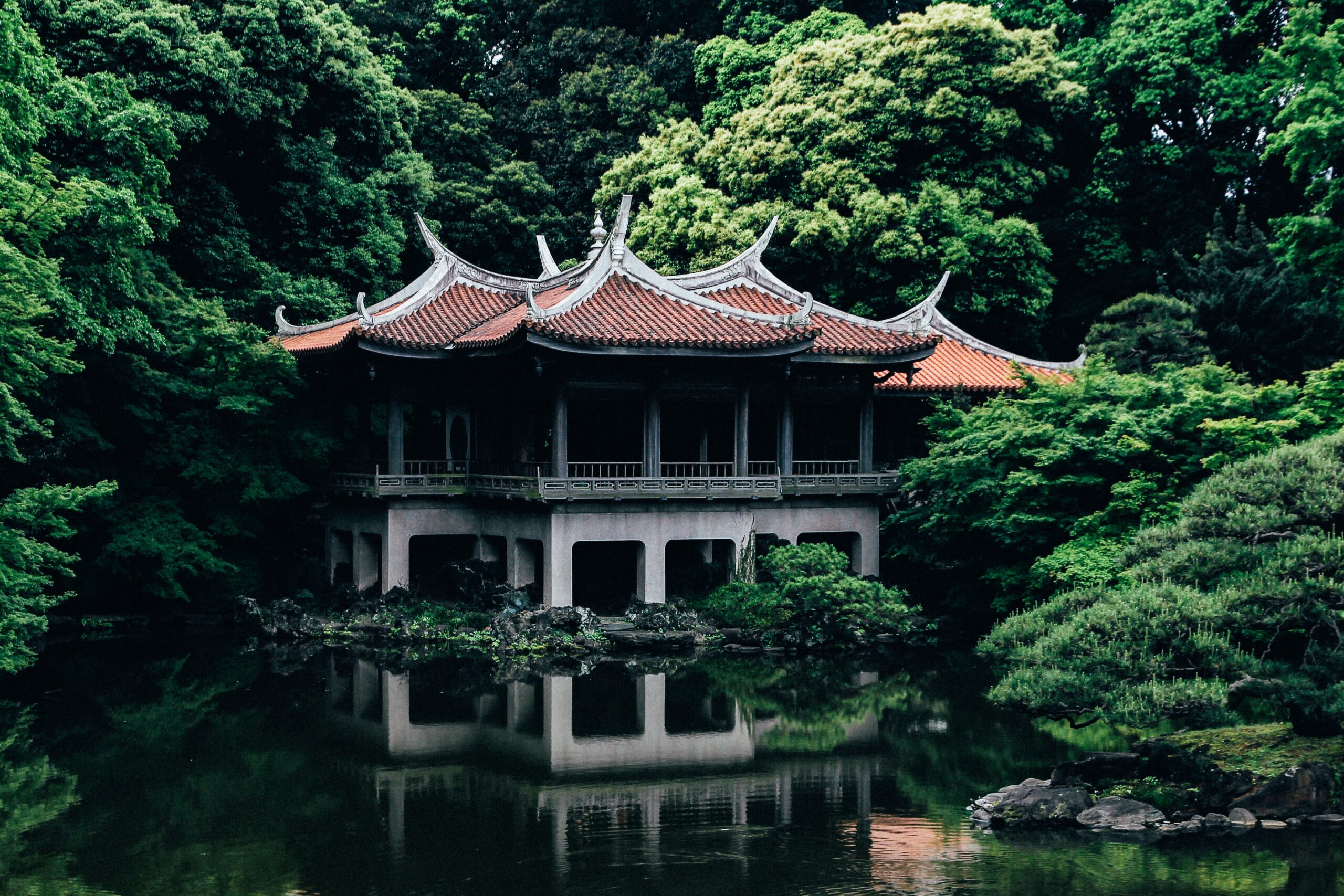
Shinjuku Gyoen is the polished choice. This national garden mixes Japanese, English and French styles, and its many varieties extend the season by weeks. It charges admission and closes on Mondays, which keeps the lawns orderly. Arrive at opening time, and you will share the main lawn with joggers and photographers rather than crowds.
Chidorigafuchi and the Palace Moat
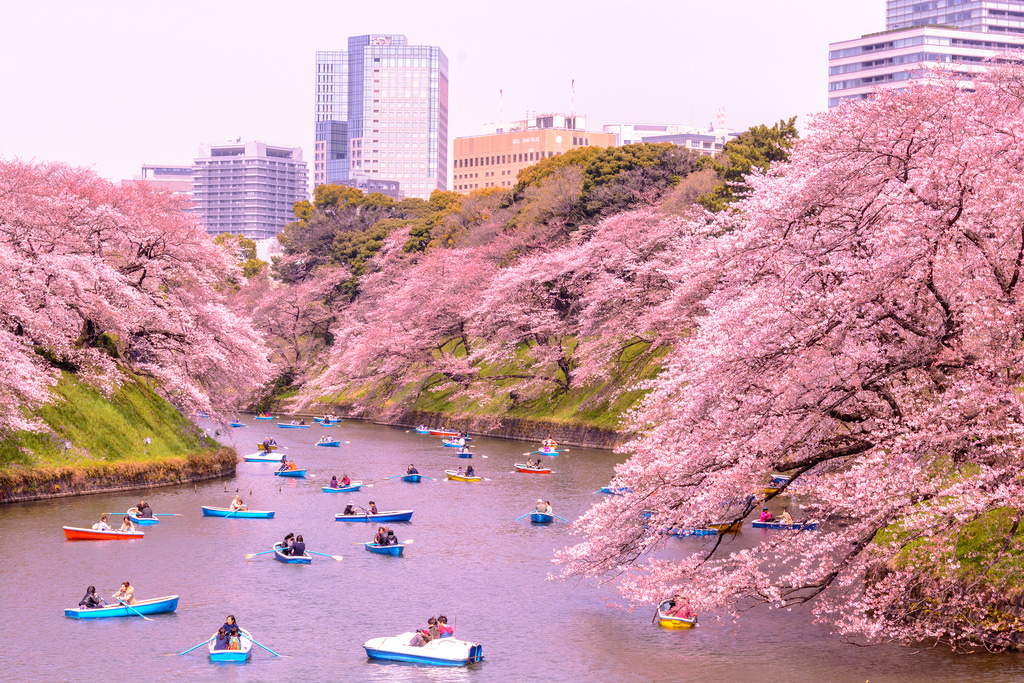
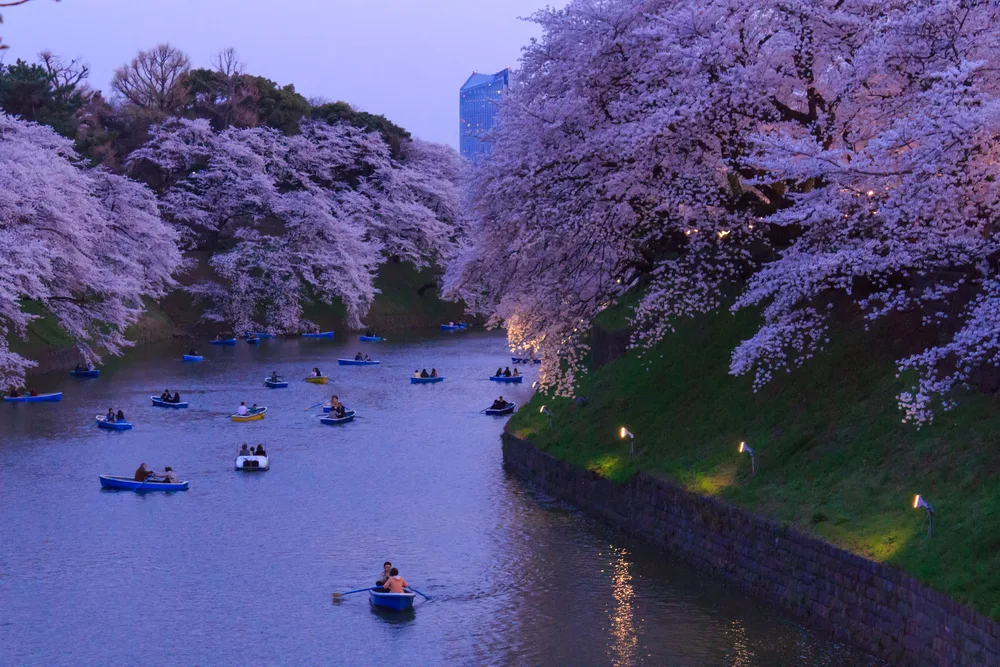
Chidorigafuchi follows the old moat on the northwest side of the Imperial Palace. A walkway runs beneath an arch of trees for a long, gentle stretch. Below, rowing boats drift on the water, and renting one is the classic way to see it. Queues build quickly, so go early in the day.
After dark, the walkway lights up, and the reflections double the blossoms. Weeknights are easier than weekends. Afterward, the streets around Kudanshita offer simple dinners within a short walk.
The Meguro River
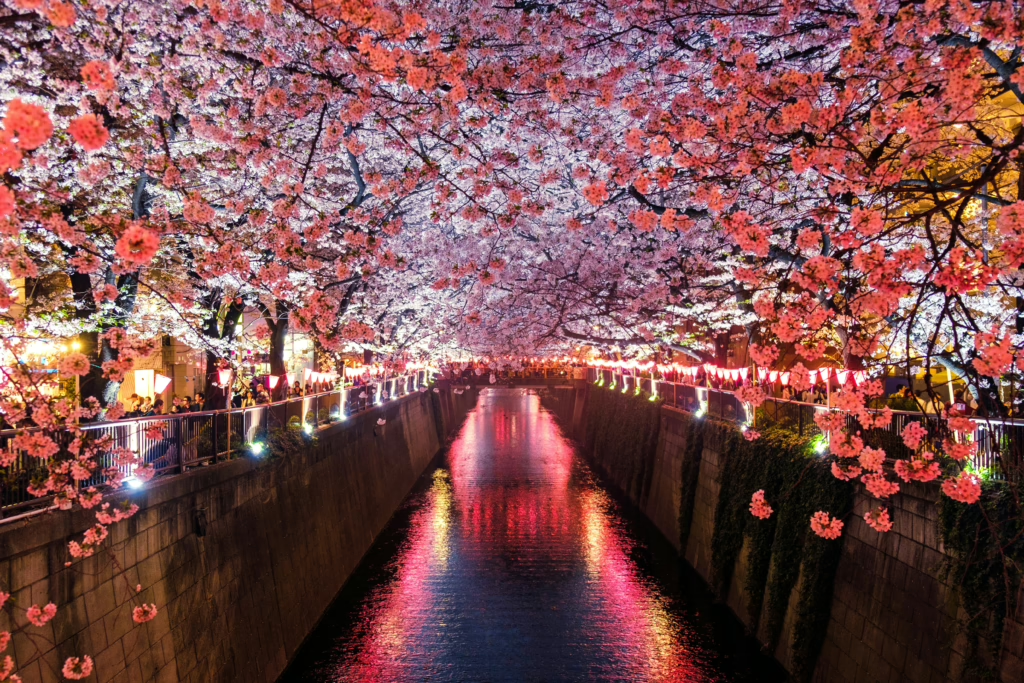
The Meguro River is Tokyo’s favorite night walk in spring. Hundreds of trees lean over a narrow canal between Nakameguro and Ikejiri-Ohashi. Paper lanterns glow along the railings after sunset. Small cafés sell drinks through their windows, and the whole stretch becomes one slow procession.
Keep in mind that this is a residential neighborhood. Locals ask visitors to keep moving, to avoid blocking bridges and to keep their voices low. In return, the view rewards patience, especially later in the evening when the crowds thin.
Inokashira Park and Ueno Park
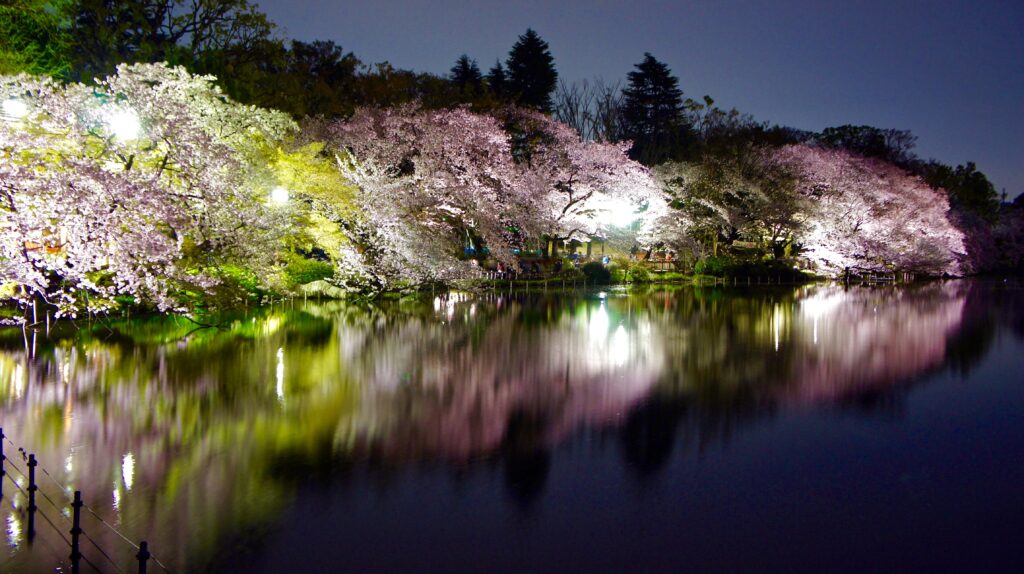
Inokashira Park in Kichijoji suits a slower afternoon. Swan boats glide across the pond, and the national tourism board singles it out for boating among the blossoms. Ueno Park is the opposite: lively, packed and full of picnic groups under the trees. Both are worth a visit, though for different reasons.
In Ueno, the main avenue fills by mid-morning. Instead of joining it, wander to the side paths near the pond, where the trees grow thicker. Then come back after dark, when lanterns turn the avenue into a long tunnel of light. The scene is busy, but it shows hanami at its most social.
Zojirushi SM-SA48 Stainless Mug — warmth for night viewing
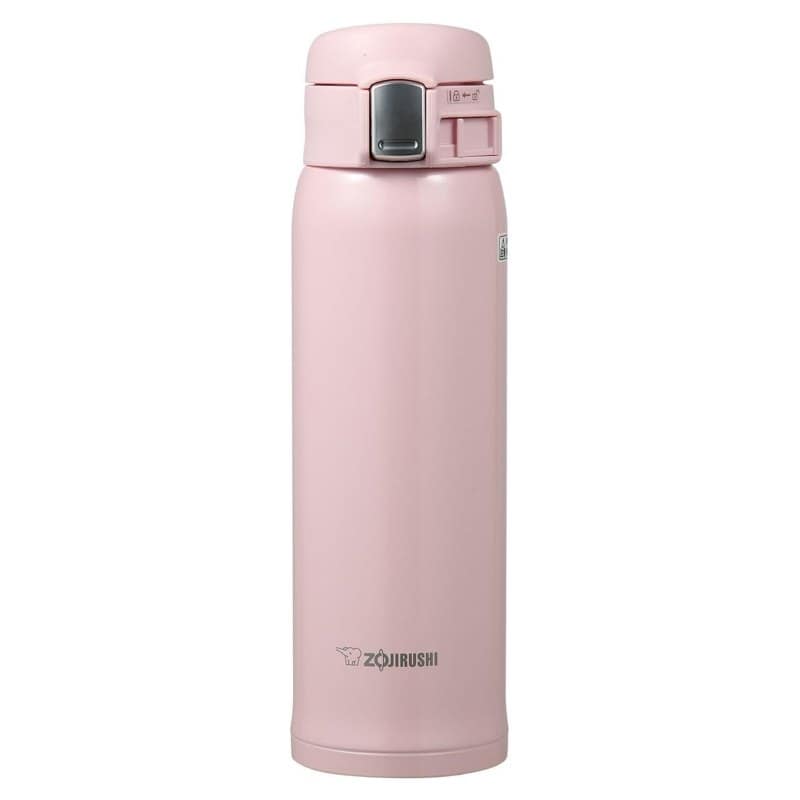
Night viewing has its own name, yozakura, and it involves plenty of standing in the cold. That is where a good vacuum mug earns its place. The Zojirushi SM-SA48 stainless mug holds sixteen ounces and keeps tea hot for hours. It comes from the Osaka company that Japanese households rely on for rice cookers and flasks. Fill it with green tea at the hotel before an evening on the Meguro River. Later, it keeps your hands warm on the walk back. It also slips into a coat pocket, and the lid locks shut. In short, it is the simplest comfort you can bring to a night under the blossoms.
Kyoto, Nara and the Kansai Season
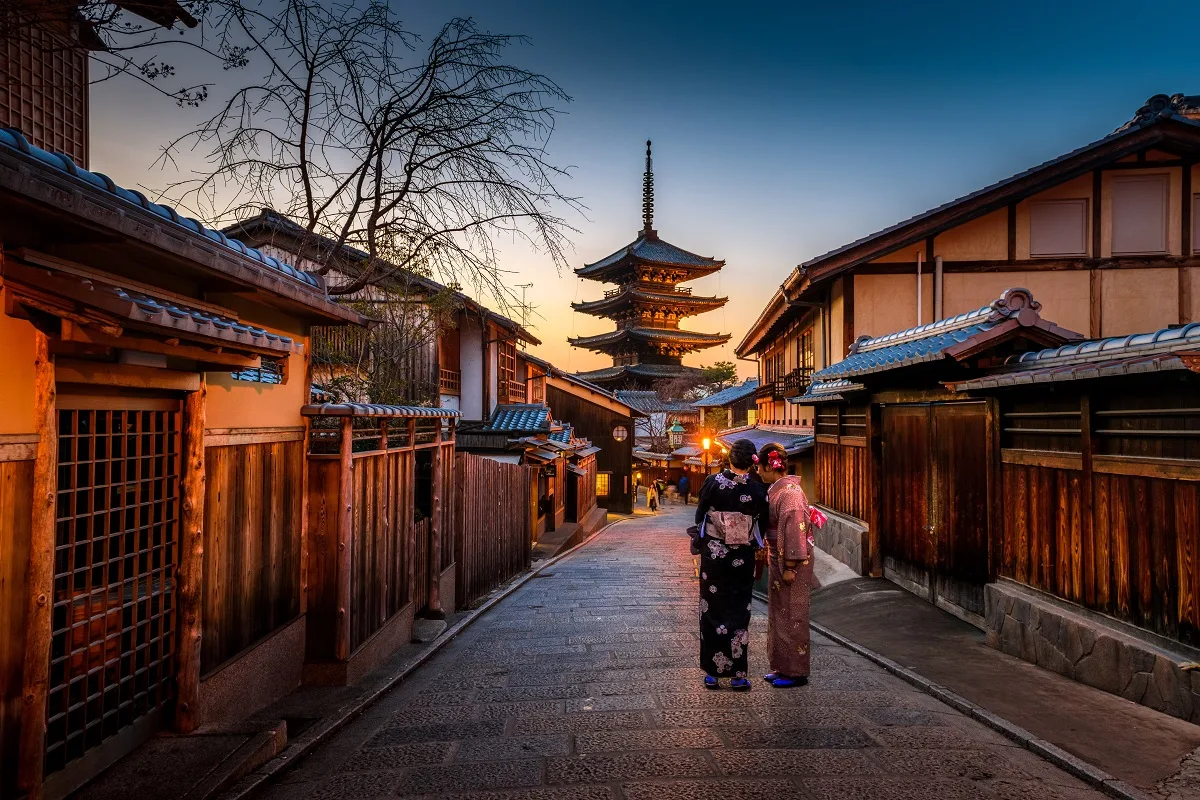
Kyoto in blossom season is beautiful and very busy, so timing matters even more than in Tokyo. The city is compact, which helps. Most famous spots sit along the eastern hills and the Kamo River, within walking distance of each other. Start early, and save the middle of the day for lunch. Our two-day Kyoto itinerary shows how to order the rest of a stay.
The Philosopher’s Path and Maruyama Park
The Philosopher’s Path follows a canal through northeastern Kyoto. Cherry trees line both banks, and petals collect on the water late in the season. At dawn it is almost empty. By ten, it fills with tour groups, so begin there and walk south toward Okazaki.
You may also like
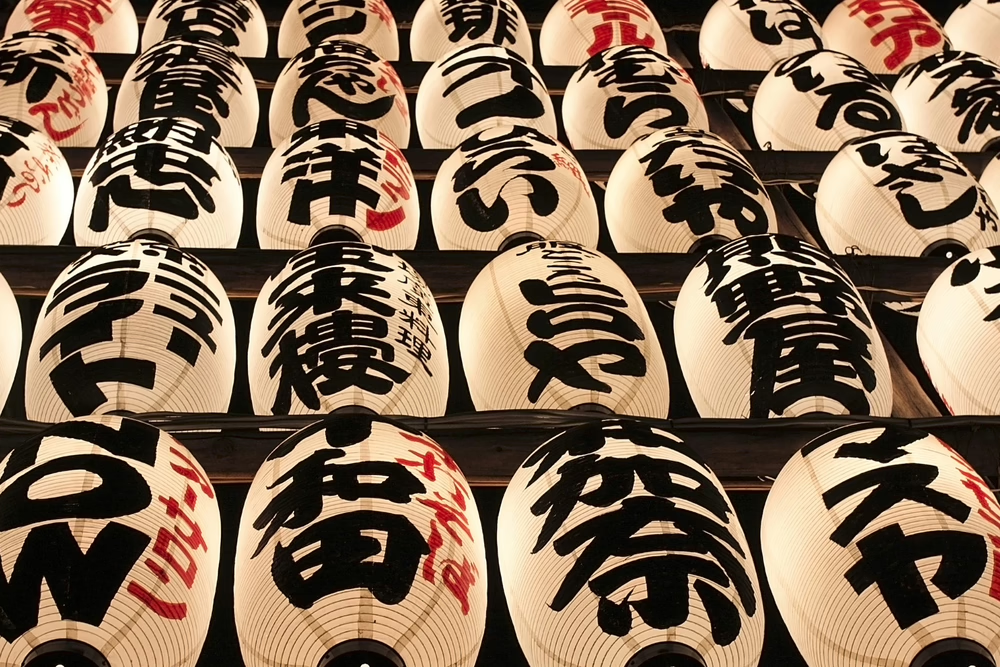
Maruyama Park, at the foot of the eastern hills, is Kyoto’s party park. Its famous weeping cherry is lit at night, and food stalls ring the lawns. Picnic groups spread mats beneath the trees from the afternoon. For a calmer view, the banks of the Kamo River nearby offer long stretches of blossom and room to sit.
To see Kyoto’s blossoms without the crowds, a custom Japan itinerary can time each garden for its calmest hour. It can also add a private guide for the old streets. Better still, it books the dinners that fill first in spring.
Recommended
Nara and Yoshino
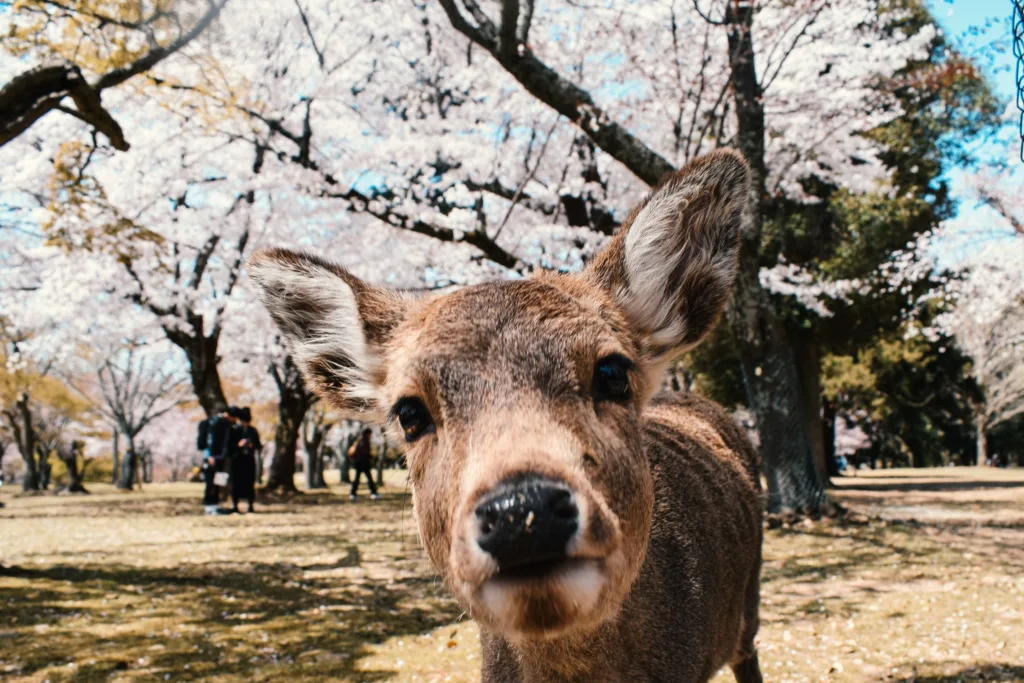
Nara sits less than an hour from Kyoto by train. In spring, Nara Park adds cherry blossoms to its famous wandering deer. The deer ignore the crowds and doze beneath the trees. Mornings are best here too, before the day-trip groups arrive from Osaka and Kyoto.
Farther south, Mount Yoshino holds one of the great cherry displays of Japan, with tens of thousands of trees. They grow in zones up the mountainside, so the blossoms climb the slopes over several weeks. Stay overnight to see the upper zones at dawn. The national tourism board also describes a sakura trail that links Yoshino with eastern Kyoto.
Osaka and Himeji
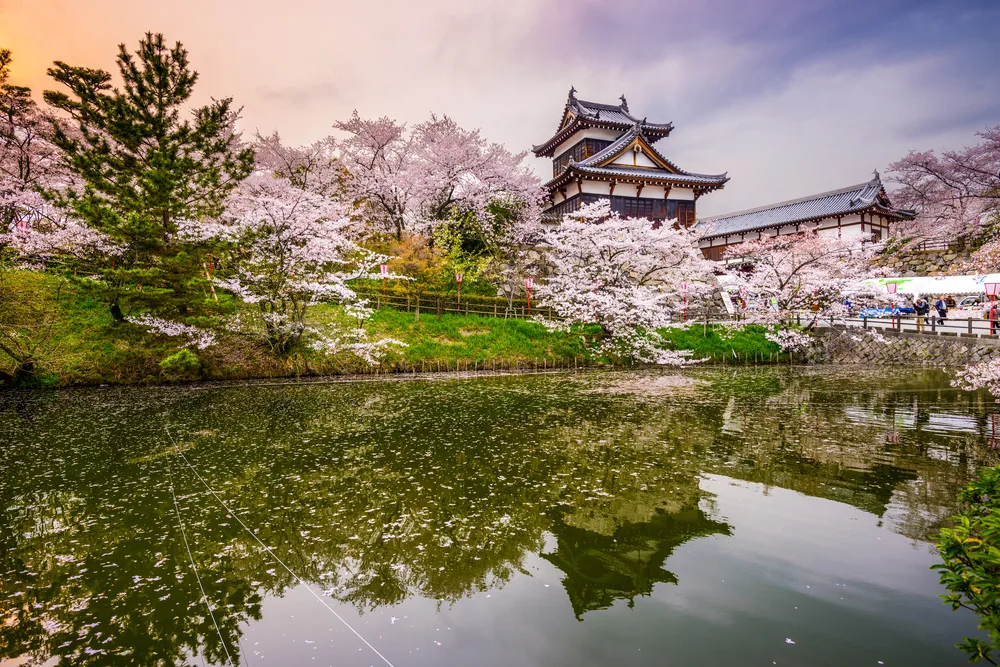
Osaka Castle Park combines a castle, a moat and thousands of trees, and it lights them after dark. Himeji Castle, about an hour west by bullet train, is a favorite sight of the season. Its white walls and the pale blossoms seem to share one color. Go early, because the lines for the keep form quickly in April.
Between these cities, smaller castle towns offer calmer scenes. Many see few overseas visitors, even at peak bloom, so mornings there feel unhurried.
Later Blooms: Kanazawa, Tohoku and Hokkaido
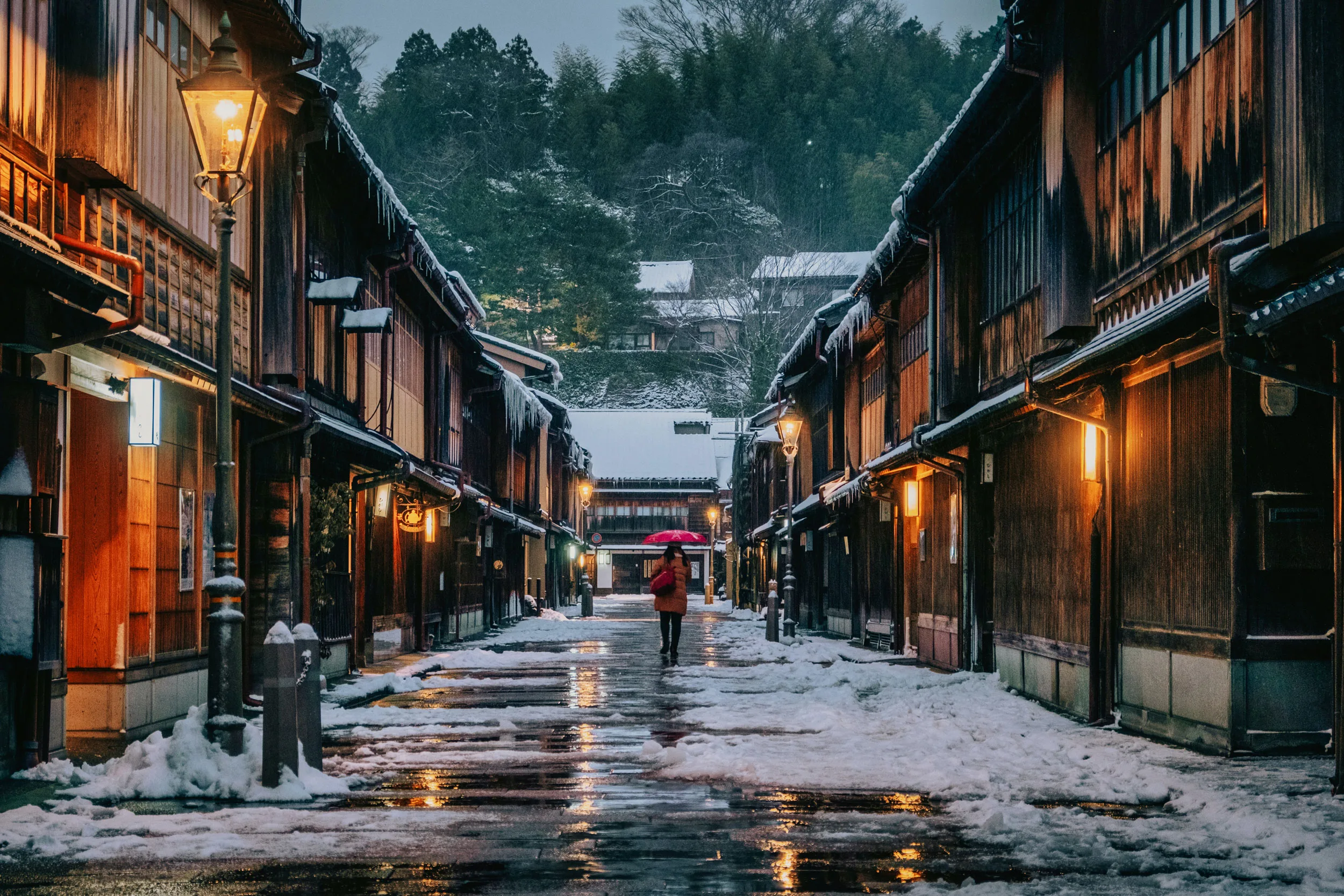
Late arrivals still have excellent options. In early April, the castle park in Kanazawa blooms, and Kenrokuen Garden sits right beside it. Combine both in a morning, when the light is soft and the paths are calm. Then walk to the old teahouse district of Higashi Chaya for lunch.
Farther north, Hirosaki in Aomori holds a festival around its castle park in late April. The park grows about 2,600 cherry trees, and petals cover the outer moat late in the season. Kakunodate in Akita is known for weeping cherries above old samurai houses. Both towns sit on the bullet-train lines out of Tokyo.
Ten Proverbs to Carry With You
A printable folio of ten Japanese proverbs, each with a short note on where it shows up in daily life. Several suit an afternoon beneath the blossoms. Leave your email and the printable arrives in your inbox, followed by an occasional letter on Japan.
One email with your printable. Occasional letters after that. Unsubscribe anytime.
In Hokkaido, the season arrives in May. Matsumae, on the southern tip, grows many varieties around its castle, so the blossoms there last for weeks. Sapporo’s parks bloom in early May, and the evenings stay crisp. A spring trip this far north feels very different from the crowds of Kyoto.
For a northern route, fly into Sapporo or take the bullet train to Aomori, then move between towns by rail. Distances are long, so allow at least one night in each place. The reward is a calmer season, with more room under the trees and fewer tour groups at every stop.
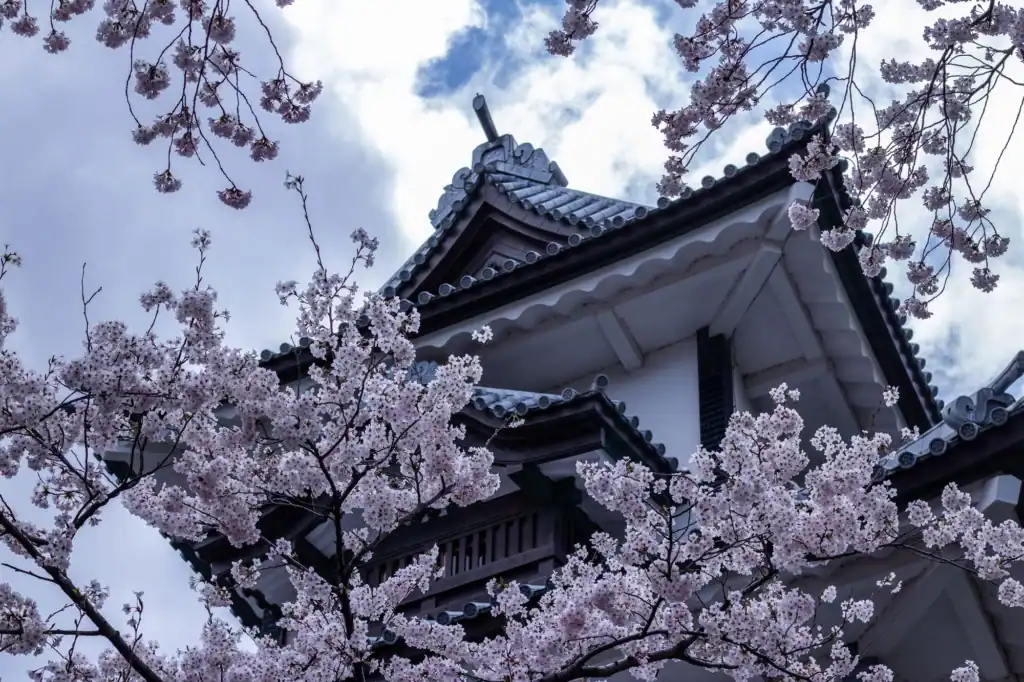
Kanazawa also makes a good bridge between regions. It sits on the bullet-train line from Tokyo, and trains continue toward Kyoto by way of Tsuruga. A loop of Tokyo, Kanazawa and Kyoto can therefore follow the blossoms for a week or more. Book seats in advance during the season, since trains fill on weekends. If you can, travel midweek, when carriages are calmer and hotel rates ease. Our guides to Kyoto and Kanazawa, below, cover the rest of each stay.
You may also like
Hanami Manners and the Picnic
Hanami looks informal, but it runs on unwritten rules. A few surprise first-time visitors, so learn them before you spread a mat beneath the trees.
First, never touch, shake or climb the trees. Cherry bark is delicate, and parks protect their oldest trunks with ropes. Second, take every piece of trash home, because bins overflow quickly in spring. Third, remove your shoes before stepping onto a picnic sheet. Finally, check each park’s rules on music, grills and drinks, since they vary widely.
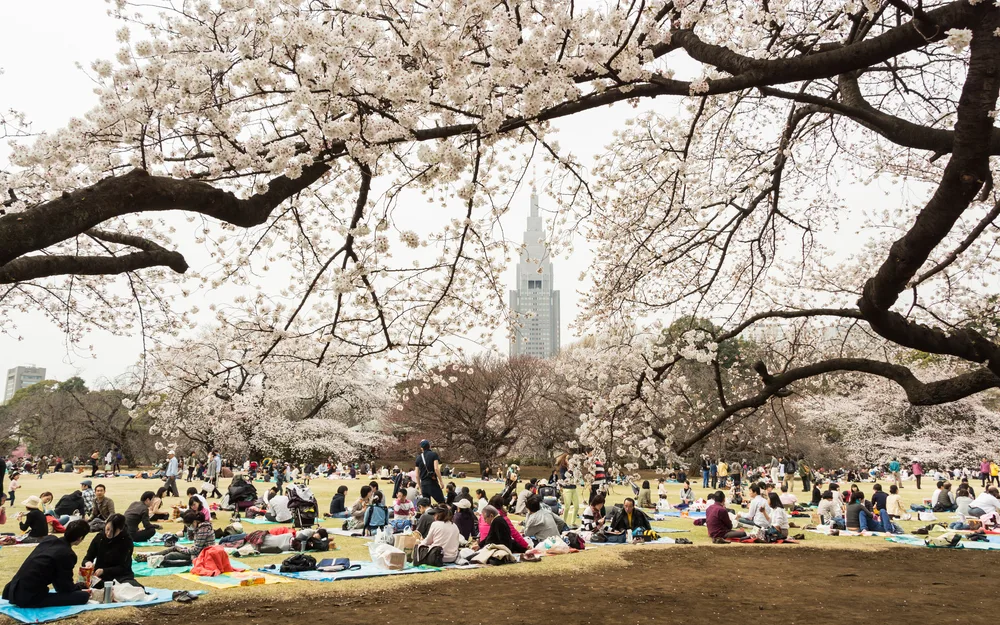
Saving a spot is part of the ritual. Junior staff sometimes arrive at dawn and sit alone until their colleagues finish work. Even so, a sheet left unattended for many hours is poor form in a busy park. A small group can usually find space by arriving before ten, or by choosing a weekday.
The picnic itself is where hanami becomes personal, and a few good objects make the afternoon feel special.
IPPINKA Yamanaka Jubako — a three-tier box for the picnic
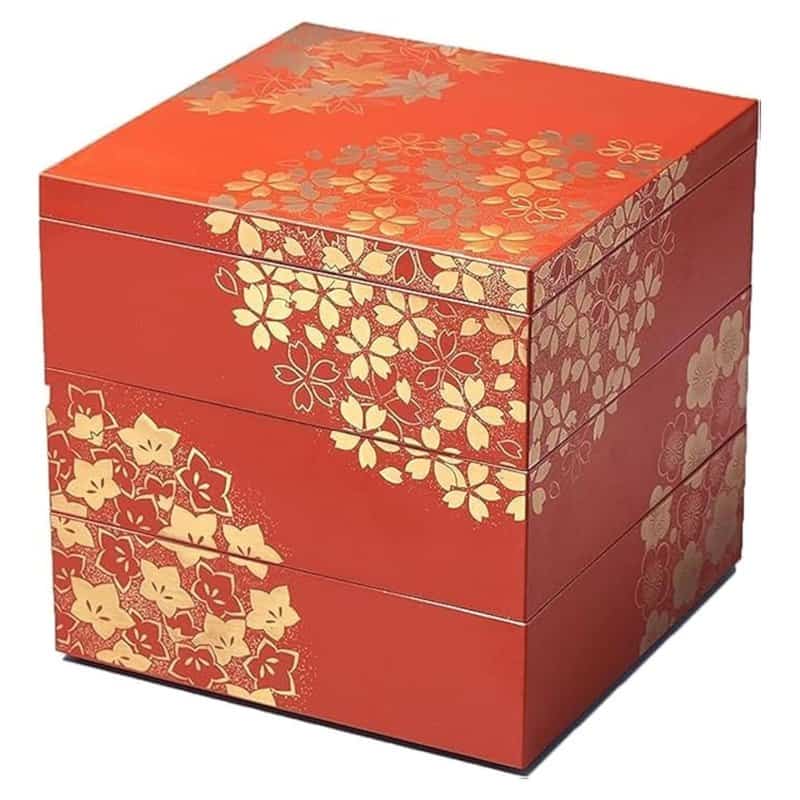
Jubako are the stacked boxes that Japanese families use for New Year food and spring picnics. This three-tier Yamanaka jubako is hand-painted by craftsmen at a lacquerware maker founded in 1809. Each tier is about five inches square, so the set suits two or three people. It is also dishwasher safe, which helps a great deal after a long day outdoors. Pack rice balls in the top tier, side dishes in the middle and sweets at the bottom. At the park, the tiers spread out into a small feast. Above all, it turns a simple picnic into a proper hanami.
You may also like
Big Tree of Sakura Furoshiki — a cloth to wrap the lunch
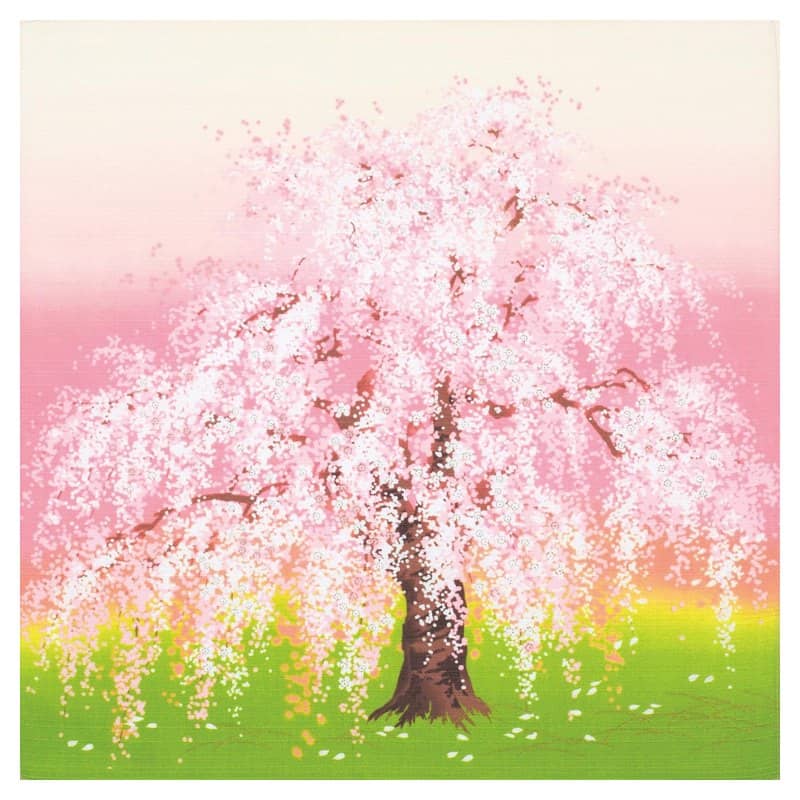
A furoshiki is a square of cloth that wraps almost anything. Tie it around a lunch box, and it becomes a carry bag with a handle. Then spread it out at the park, and it becomes a small tablecloth. This Big Tree of Sakura furoshiki is cotton, nineteen inches square and made in Japan. Its pattern shows a single cherry tree in full bloom, which suits the season well. The cloth is washable, so a spill on the grass is no trouble. Afterward, it folds flat into a pocket, ready for the long walk back to the hotel at dusk.
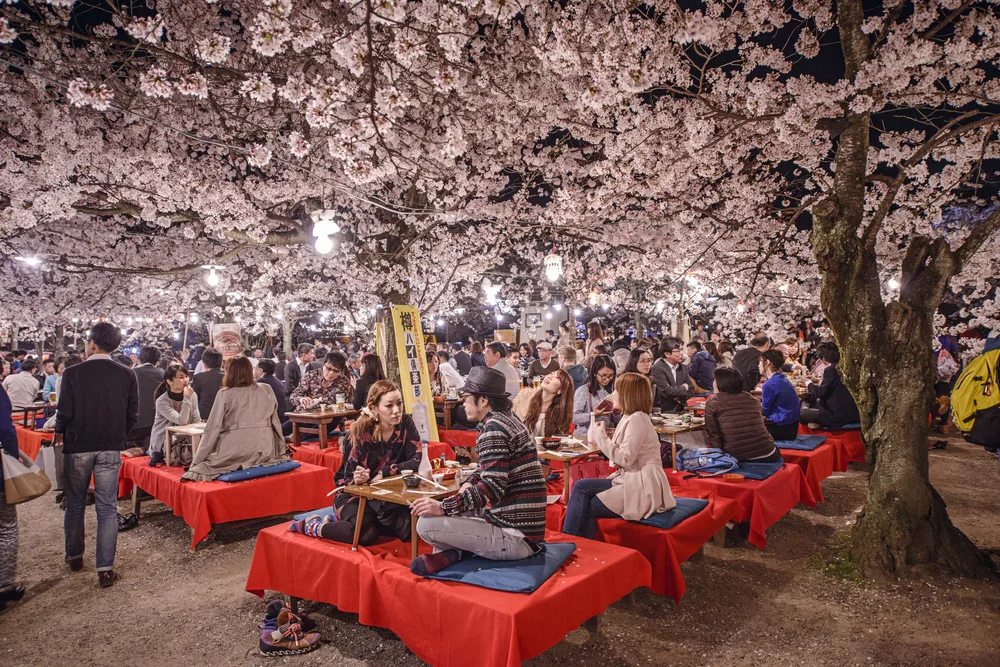
Anbo Tenugui, Mount Fuji and Cherry Blossom — a cotton cloth for the day
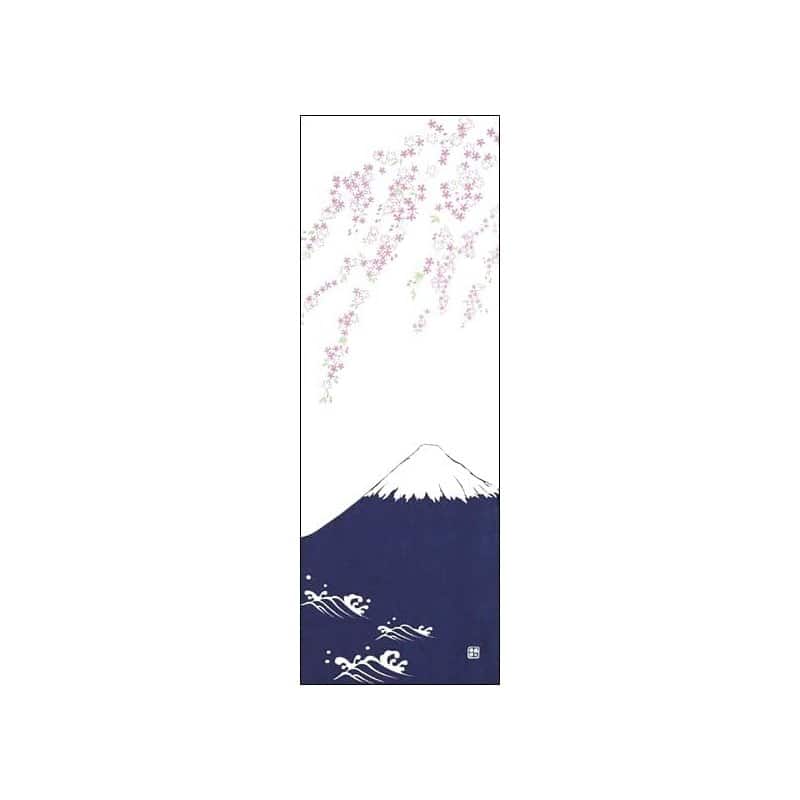
A tenugui is a thin cotton towel, and it may be one of the most practical souvenirs in Japan. Use it to dry your hands after a picnic, to cover a bento or to shade your neck from the sun. This Anbo tenugui of Mount Fuji and cherry blossom is dyed by craftsmen at a Japanese dyeing works. Its ends are left uncut, in the traditional way, so they soften with every wash. The cloth measures about forty inches long, and its design pairs Fuji with hanging blossoms. Hung on a wall at home, it also makes a lasting reminder of the season.
Sakura Sweets and the Flavor of Spring
For a few weeks each spring, Japan flavors almost everything with cherry blossom, from lattes to pastries. The finer versions use real salted leaves or blossoms rather than syrup.
The classic sweet is sakura mochi, a pink rice cake wrapped in a salted cherry leaf. Tokyo makes it with a thin, crêpe-like wrapper. The Kansai style, common in Osaka and Kyoto, uses a coarse glutinous rice flour called domyoji, which gives a pleasant chew. You eat the leaf too, and its saltiness balances the sweet bean paste.
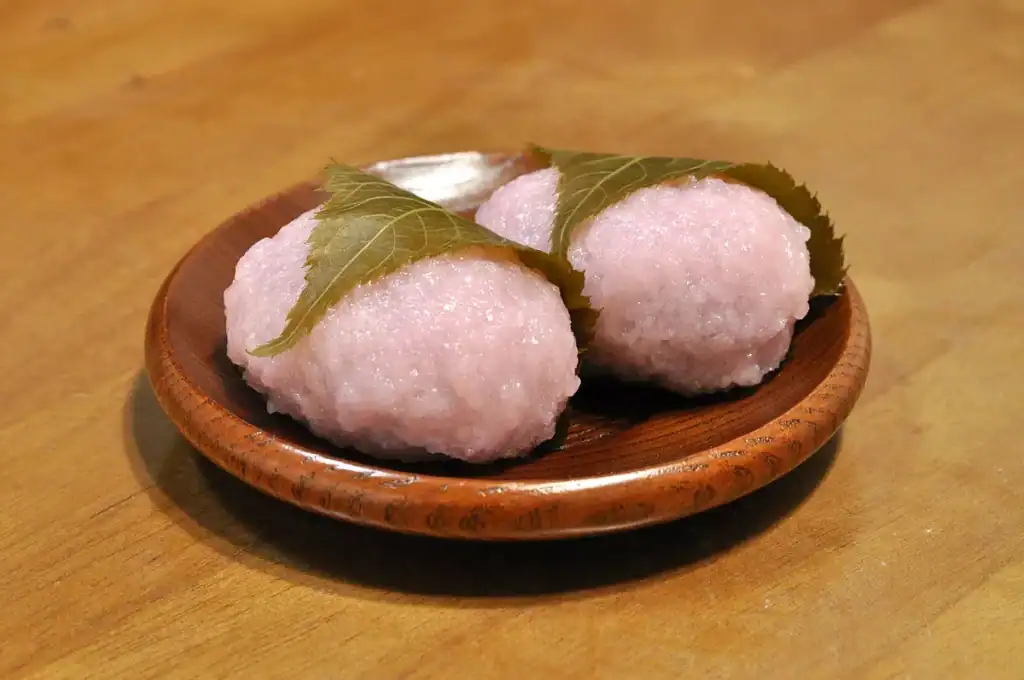
Kansai Sakura Mochi — pink rice cakes in a cherry leaf
Rinse ten salted cherry leaves, then soak them in plenty of water for about thirty minutes. Pat them dry. Next, roll seven ounces of smooth red bean paste into ten small balls. In a heavy pot, bring one cup of water to a boil with two tablespoons of sugar and a drop of red coloring. Stir in four and a half ounces of domyoji flour quickly. When it boils again, lower the heat and cook for about six minutes, stirring so nothing catches. Then turn off the heat, cover the pot and let it steam for ten to twelve minutes. With damp hands, flatten each portion into a round about three inches across. Set a ball of paste in the center and close the dough around it. Once the cakes cool, wrap each in a leaf, underside out, and serve with green tea.
The recipe follows the Osaka version published by Japan’s agriculture ministry. Japanese grocers sell both the salted leaves and the domyoji flour.
Kyoto Asanoha Sakura Sencha — cherry blossom green tea
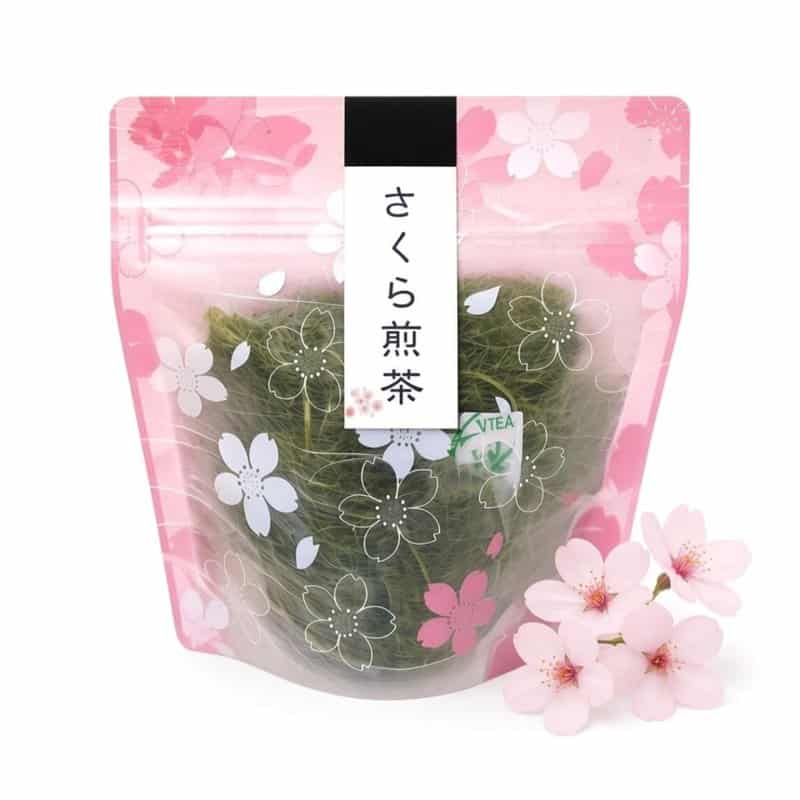
Sakura mochi calls for green tea, and this blend brings the season into the cup as well. Kyoto Asanoha sakura sencha combines Japanese sencha with real salted cherry leaves, the same leaves used to wrap the sweet. There are no added flavors or colors. Brew a bag at about 175°F for ninety seconds, and the aroma of sakura mochi rises from the cup. Sencha holds less caffeine than black tea, so it also suits an evening. Each box holds eight bags, a thoughtful small gift for a host. For travelers who miss the season, it brings a little of spring home.
Booking Around the Forecast
The hardest part of cherry blossom season in Japan is that nobody knows the exact dates when you book. Hotels in Tokyo and Kyoto fill months ahead for late March and early April, and rates rise to match. So book early, choose flexible rates where you can and plan around a range rather than a day.
A two-week window gives the best odds. Spend two or three nights in each city, so an early or late bloom still falls inside your stay.
Location matters as much as dates. A hotel near a viewing spot lets you walk out at six, before the crowds, and return for breakfast. In Kyoto, the eastern side of the city puts the canal path and the parks within a short walk. In Tokyo, staying near the palace or Shinjuku works well.
The Sakura Obsession by Naoko Abe — a book for the flight
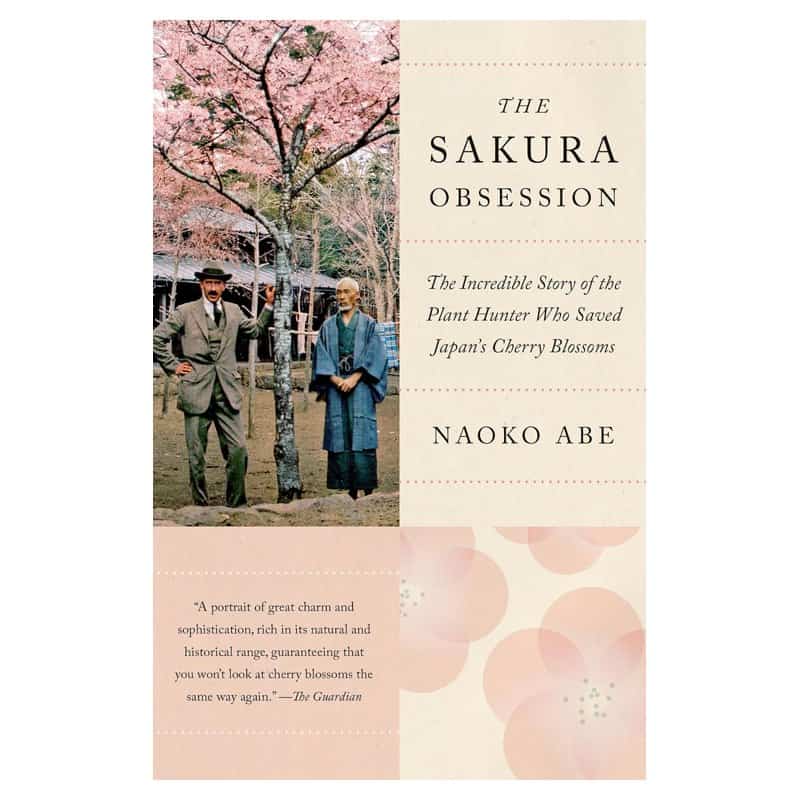
Before you go, read the story behind the trees. In The Sakura Obsession, Naoko Abe tells how an Englishman, Collingwood Ingram, fell for Japan’s cherries on his honeymoon in 1907. Years later, he learned that a variety called the Great White Cherry had almost vanished in Japan. So he sent a cutting back from his English garden, buried in a potato for the long rail journey. The book also follows the blossom through Japanese history, from the imperial court to the present day. It reads easily on a long flight, and it changes how you see an ordinary park tree.
You may also like
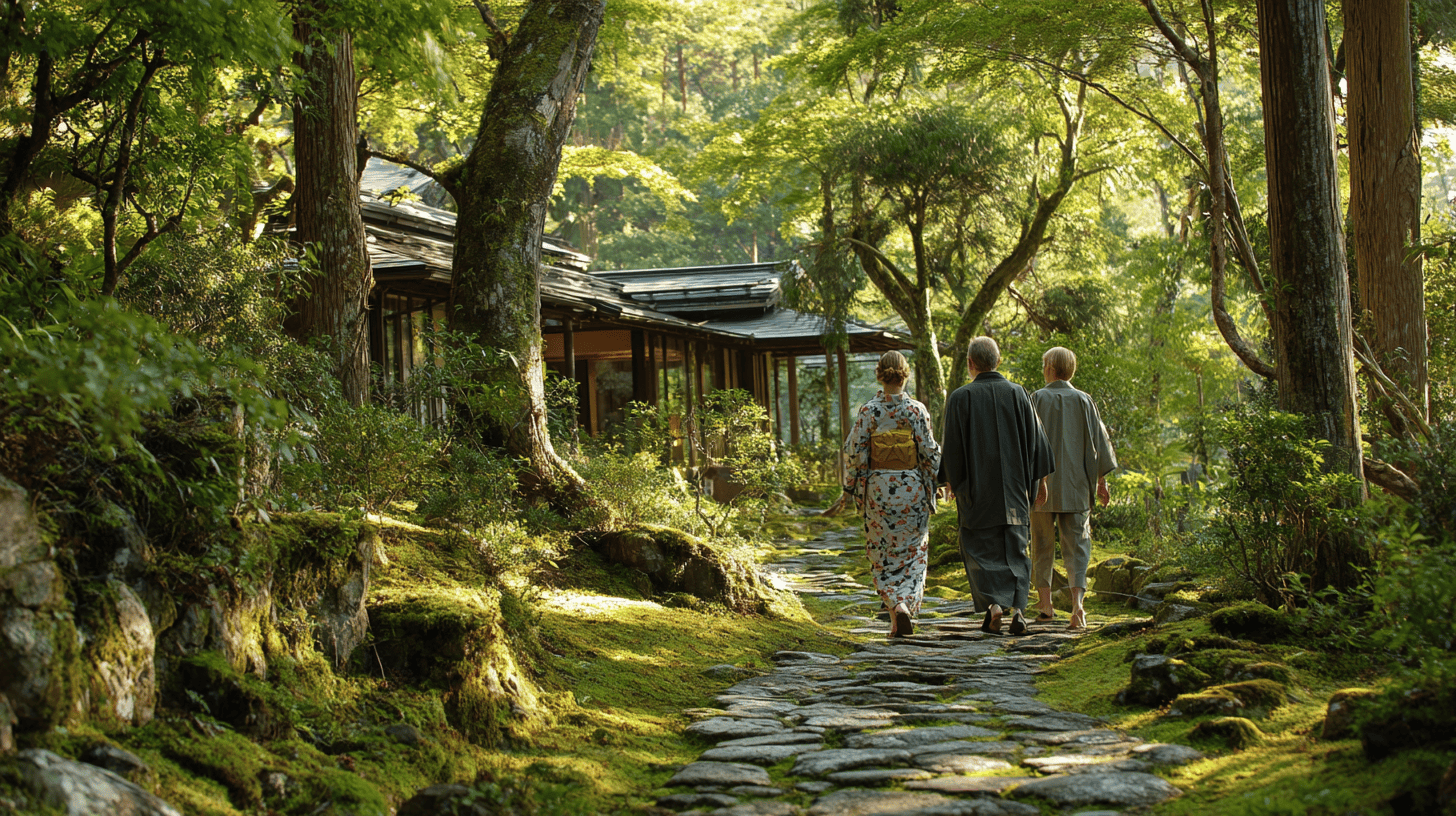
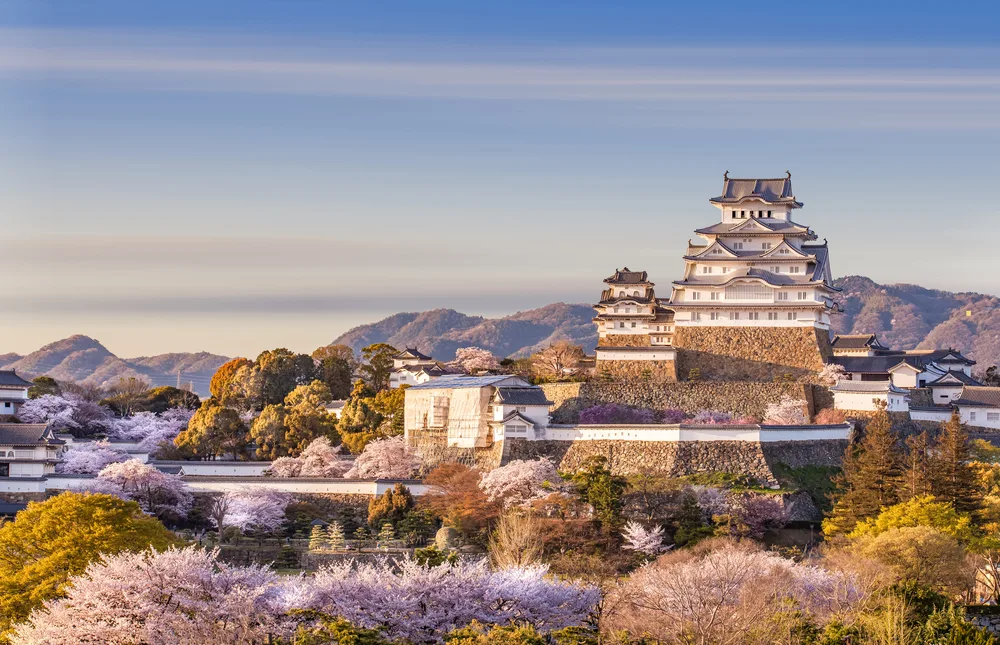
Some travelers build an entire spring around a single setting. A ryokan with its own garden lets you watch the blossoms from a hot bath. Castle towns pair the season with history. Either choice turns the trip into something slower than a race between famous parks, and many people find they prefer it.
Whatever the plan, keep one evening open. Walk wherever the trees lead, with no list to follow. Some of the loveliest scenes of the season appear on ordinary streets: a single tree beside a school, petals on a canal or lanterns above a narrow lane.
The Japanese have a phrase for the feeling a falling petal stirs: mono no aware, a tenderness for things that pass. It explains why a picnic under blossoms can feel joyful and wistful at once. Our essay on why sakura moves Japan explores the idea in depth. Many travelers find that a few lines written each evening help them hold on to the season. Note the place, the light and how the petals fell. The journal below was made for exactly that.
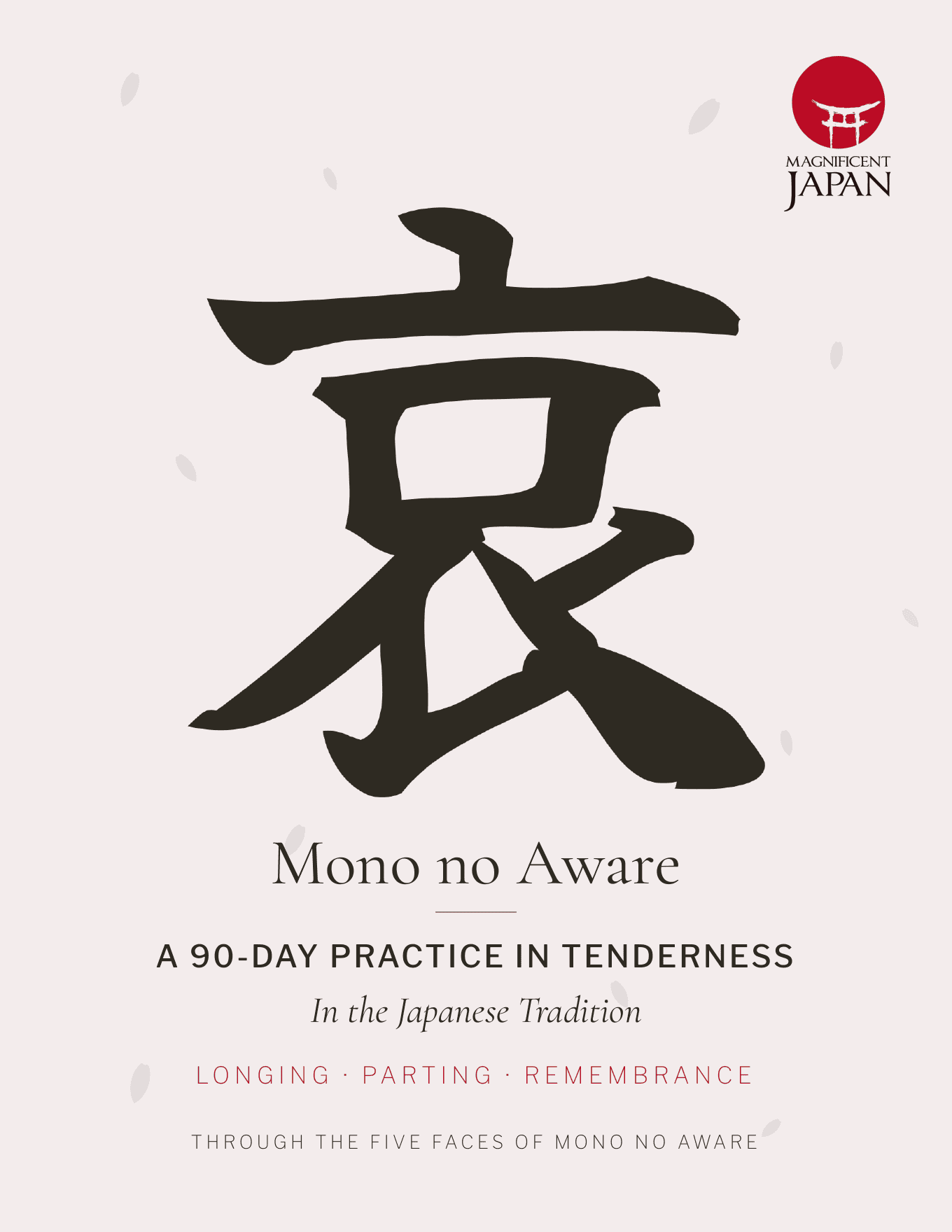
Mono no aware is the Japanese tenderness for things that pass, the feeling every falling petal carries. This 90-day guided journal turns it into one short prompt a day, a fitting companion for blossom season. It comes as a write-on digital edition and as a paperback edition, and it is one of eight journals in the Cultural Reflection Collection.
View The CollectionWhat the Blossoms Ask of a Traveler
Cherry blossom season in Japan rewards a particular kind of traveler. It suits someone willing to rise early, change plans for the weather and sit still for an hour beneath a tree. The flowers last only days. Because of that, the people around you slow down, and the cities feel gentler than at any other time of year.
So choose a region, book a flexible window and leave room for chance. Watch the forecasts, then follow the blossoms rather than the schedule. When the petals start to fall, stay a little longer. That is often when the season looks its most beautiful.
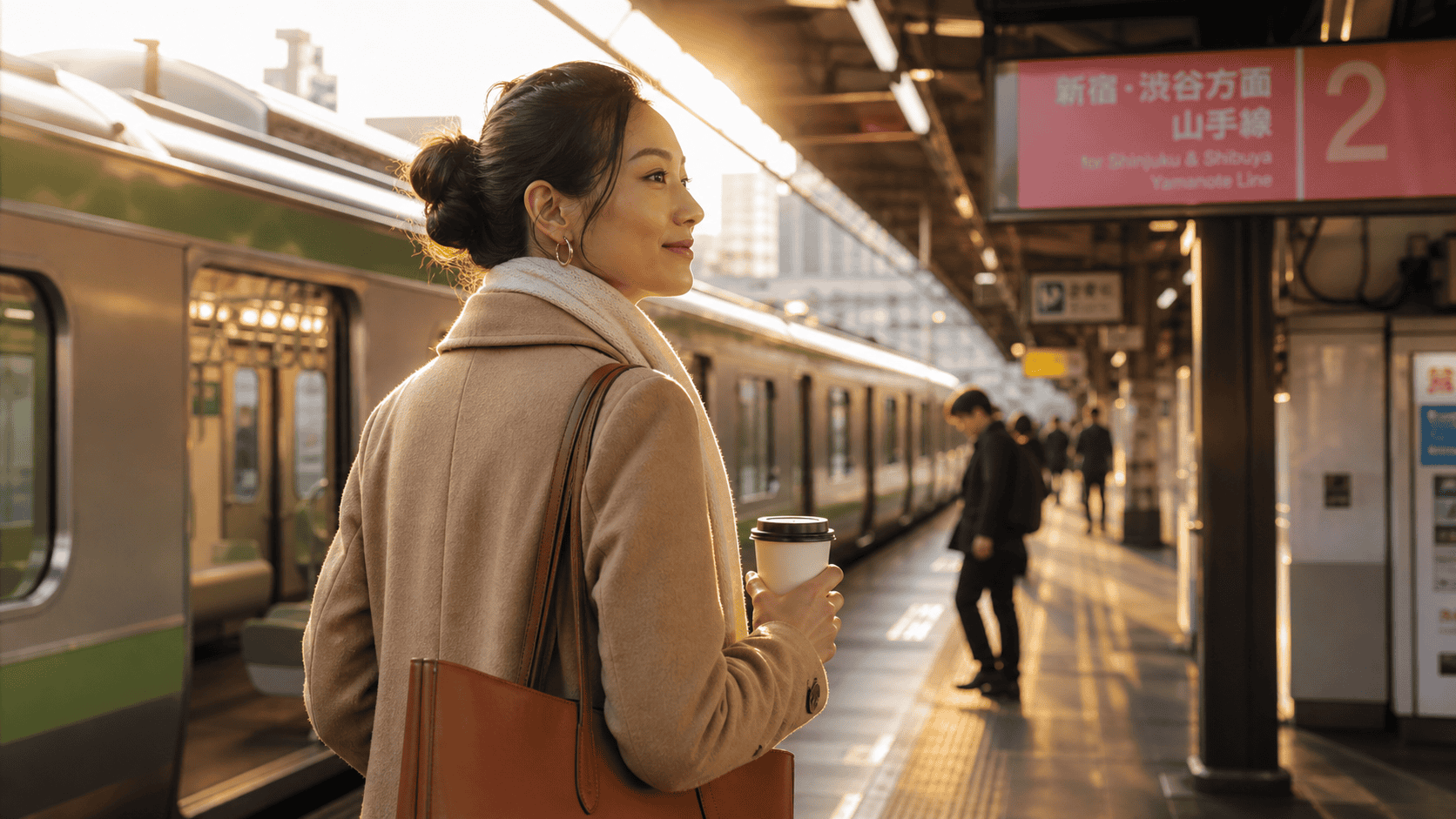
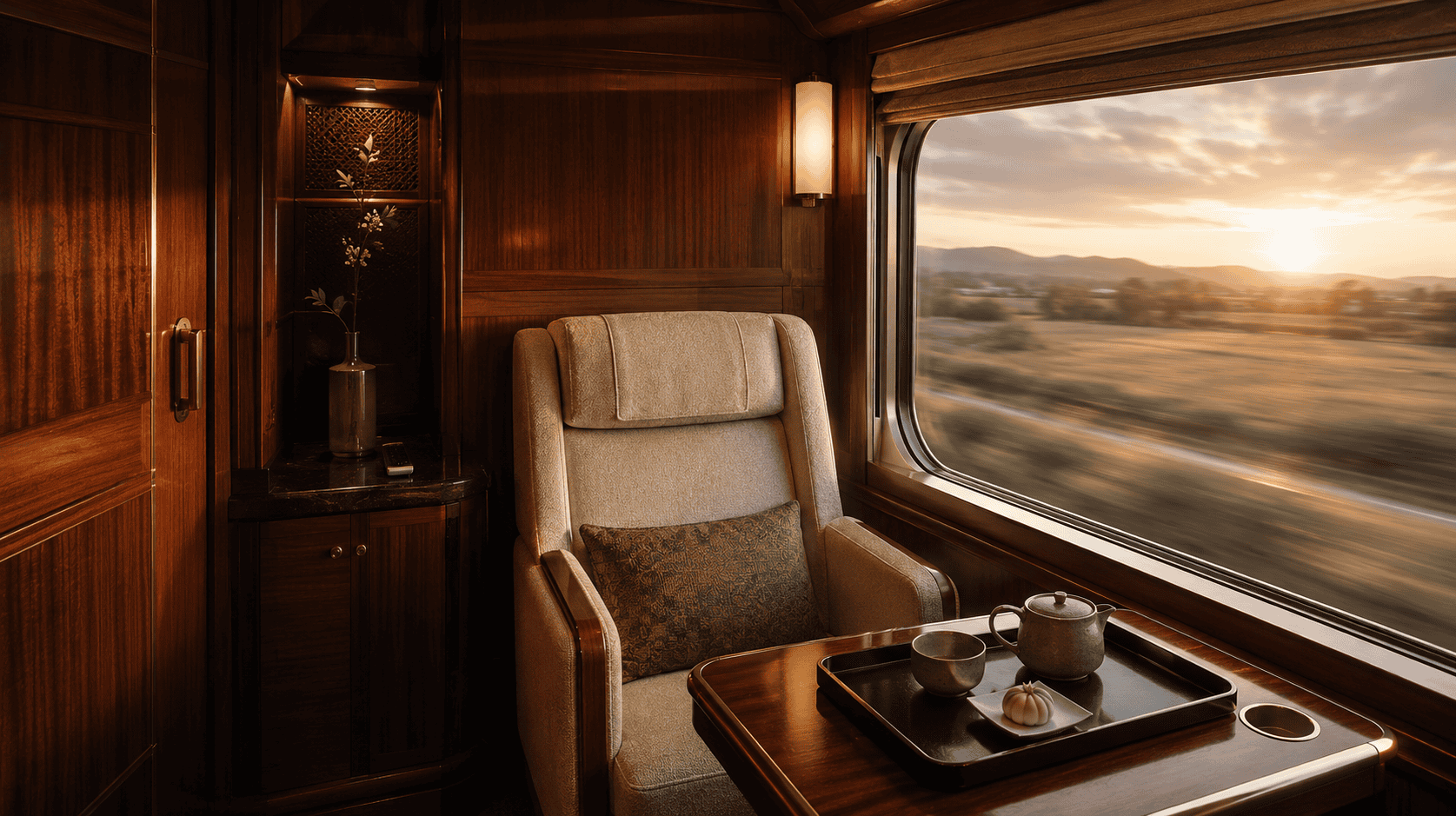

One last thought before you plan. The finest hanami days rarely happen by accident. They come from the right hotel, an early start and a guide who knows which garden is calm at which hour. Our travel designers build spring trips around the forecast and adjust the order of cities as the bloom moves north. They also secure the rooms that sell out first, so the season can unfold at an easy pace. All you need to bring is the time to enjoy it.
For the traveler who wants the blossoms without the guesswork: a custom itinerary that moves with the bloom front, from the canal paths of Kyoto to the lantern-lit rivers of Tokyo. Hotels sit close to the viewing spots, and dinners are booked well in advance.
Plan Your Custom Japan ItineraryQuestions Worth Asking
When is cherry blossom season in Japan?
Most of Japan blooms between late March and early May. Tokyo’s average flowering date is March 24, and full bloom follows about a week later. The north follows in April and May.
How long do cherry blossoms last in Japan?
Each tree holds its peak for about a week, from the first open flowers to the falling petals. Because the front moves north over two months, the season as a whole lasts far longer.
When does the cherry blossom forecast come out?
The Japan Meteorological Corporation usually releases its first forecast in December and updates it through spring. Japan’s national tourism board publishes an English version too. Early estimates can move by a week, so check again as your trip approaches.
Where can I see cherry blossoms in Tokyo?
Shinjuku Gyoen suits a calm garden visit, and Chidorigafuchi offers rowing boats beneath the trees. The Meguro River is the classic night walk. Ueno Park shows hanami at its liveliest.
What should I bring to a hanami picnic?
Bring a waterproof mat, a lunch box or bento, wet towels and a bag for trash, since bins fill quickly. Add a warm layer for the evening. Check each park’s rules first, because some ban grills, music or large sheets.
What time of day is best for cherry blossom viewing?
Early morning is the calmest and gives soft light for photographs. Afternoons bring picnic crowds and a festive mood. After sunset, many parks and riverbanks light their trees for yozakura, or night viewing, often until nine or ten.
The Editors, Magnificent Japan