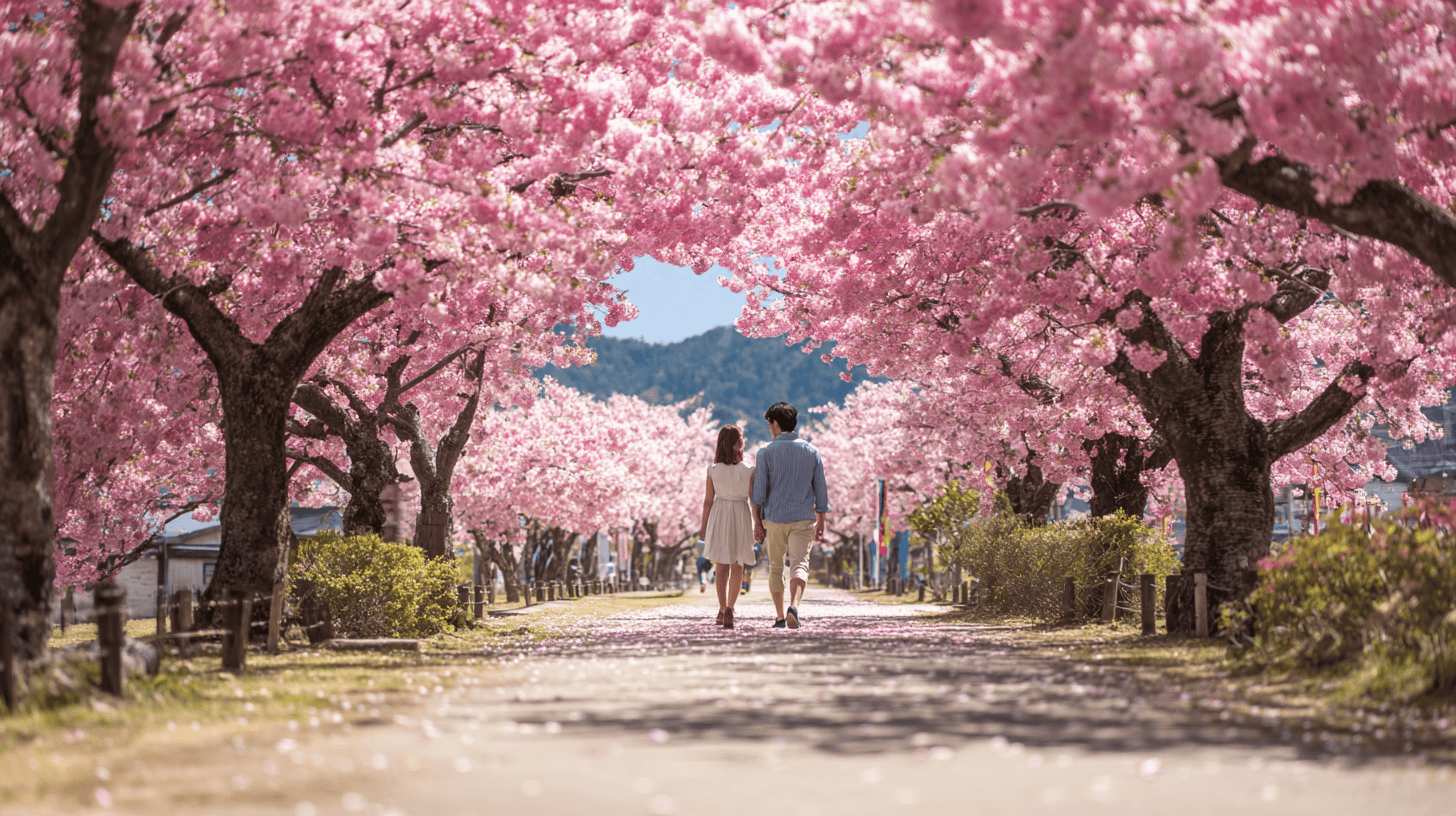
Every spring, people search for the meaning behind mono no aware cherry blossoms. The answer is warmer than most expect. Mono no aware is a gentle attentiveness to things as they are right now. And sakura, which open and scatter within days, make that attention easy.
So this is a happy story. It is about picnics under pink branches, lanterns at dusk and petals drifting across a castle moat. It is also about why a short season feels so rich, and why Japan has celebrated it for more than a thousand years.
Below, you will find the history of hanami, the sakura front that moves north each year, night blossoms, petal storms and a spring sweet to make at home. If the feeling stays with you after the season, The Mono no Aware Journal, our 90-day guided journal in tenderness, carries it into ordinary days.
Why Are Cherry Blossoms the Emblem of Mono no Aware?
Mono no aware is a heartfelt sensitivity to things, sharpened by knowing they change. Cherry blossoms show that change in real time. They bloom for about ten days, then scatter in drifts of petals. Because the moment is short, people go out, gather and pay full attention. The brevity turns looking into savoring, which is the feeling itself.
Mono no Aware and Cherry Blossoms: Why the Short Bloom Matters
The phrase joins two words. Mono means things, and aware is a soft cry of feeling, close to “ah.” Together they describe being moved by the world around you. The eighteenth-century scholar Motoori Norinaga brought the idea to the center of Japanese literary thought. He found it running through The Tale of Genji, as the Stanford Encyclopedia of Philosophy’s entry on Japanese aesthetics explains. That entry also ties the feeling to the way things change.
Yet the idea is not heavy. It is closer to tenderness than to sorrow. Think of the warmth you feel watching a child laugh, or the last golden light on a lake. For a fuller definition, start with what mono no aware means in everyday Japanese.
Ten days that everyone notices
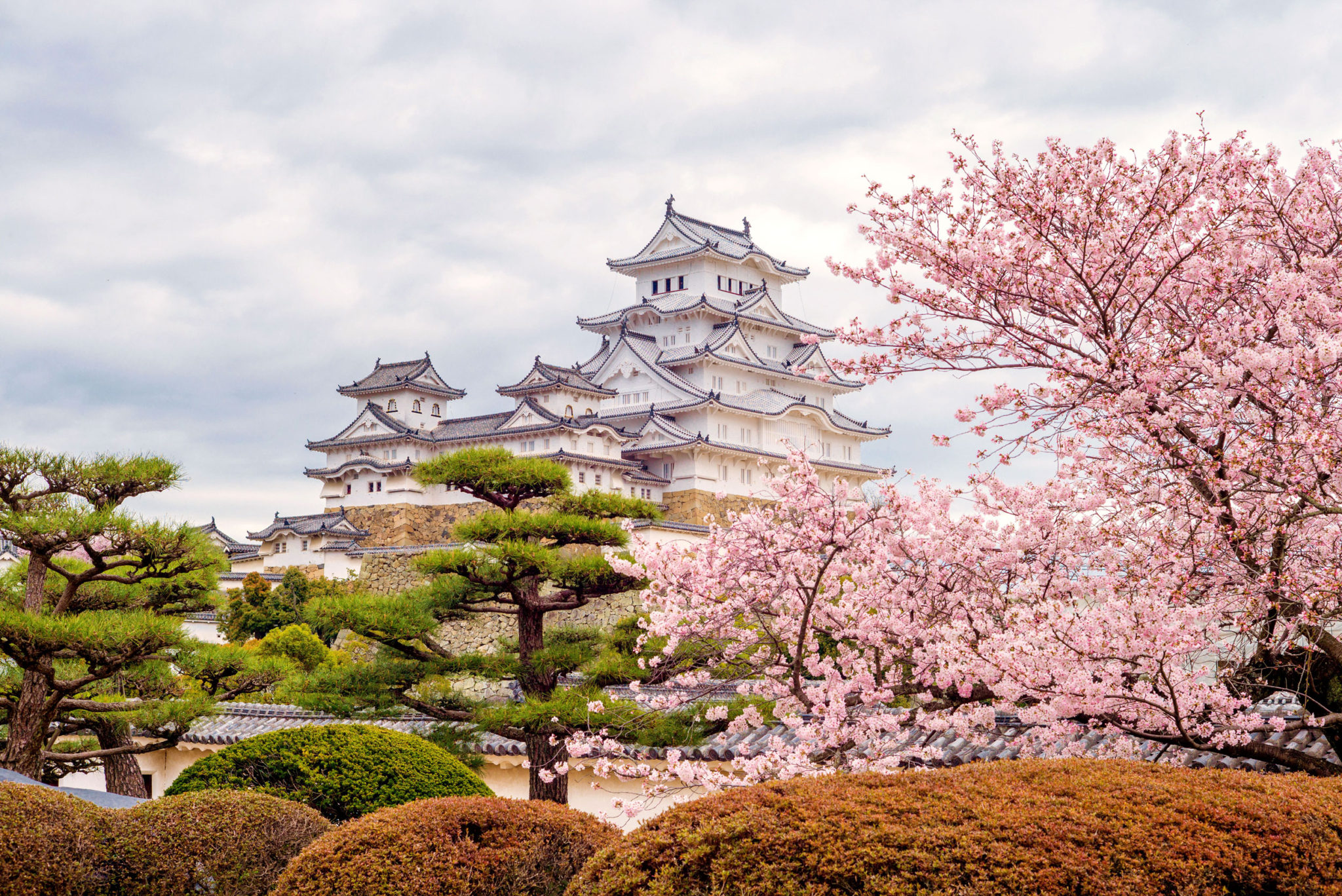
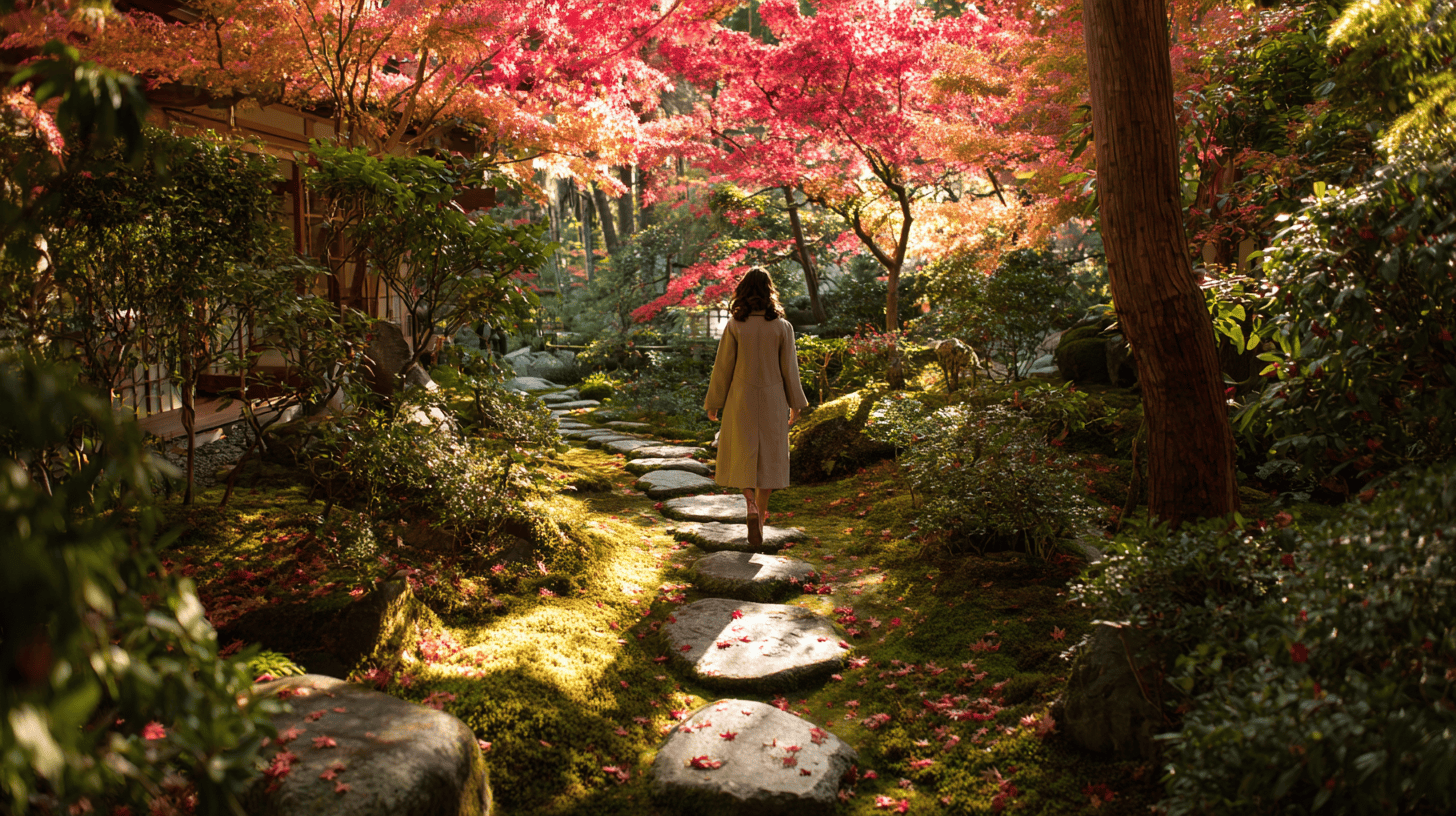
Sakura do not linger. According to a cherry blossom expert’s guide on Nippon.com, the flowers bloom for only about ten days. Then they let go, all at once, in pale showers. So the whole season has a clear beginning and a clear end.
That short window changes how people behave. Friends set dates. Offices plan evening picnics. Families check the weather each morning. The Stanford entry makes the point directly: cherry blossoms are no lovelier than pear or apple flowers. Instead, they are prized for their transience. In other words, value comes from timing, not from the petal itself. When something will not wait, you stop postponing it. You go today, and you look properly while you are there.
Kenko’s case for every stage of the bloom
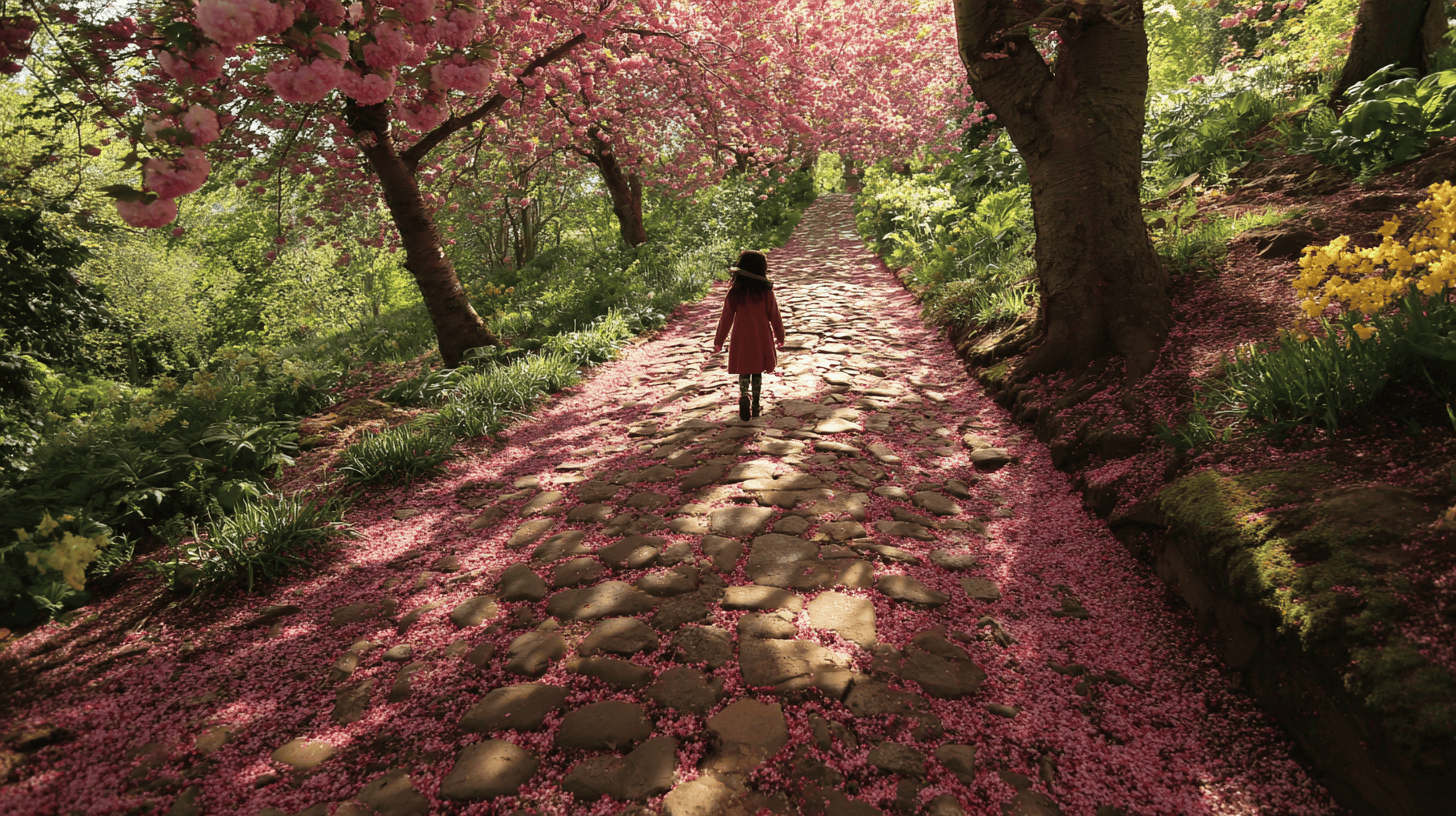
Around seven centuries ago, the essayist Yoshida Kenko asked a question that still delights readers. “Are we to look at cherry blossoms only in full bloom, at the moon only when it is cloudless?” For him, branches about to open and gardens strewn with petals were just as worthy of admiration. The Stanford entry quotes both lines.
This is a generous way to see a tree. The buds hold promise. Full bloom brings the party. Then the fallen petals turn a plain path into something festive. Every stage has its own pleasure, so there is no wrong day to go.
Kenko’s advice also has a practical side. If every stage counts, then the best plan is simply to be outside often. That is exactly what hanami asks of you. Pack a little food, find a patch of grass and stay long enough to notice the light change. A lacquered or wooden bento box keeps rice and pickles neat on a blanket. Meanwhile, a furoshiki, the square Japanese wrapping cloth, carries the box and then becomes a place mat. Here are a few pieces made for exactly that kind of afternoon.
From Court Gardens to Public Parks: A Short History of Hanami
Hanami means flower viewing, and it did not begin with cherries. According to Nippon.com’s history of hanami, eighth-century nobles admired plum and peach blossoms, which had arrived from China. Then taste shifted. In the Heian period, from 794 to 1185, Japan grew more intent on shaping its own culture. As a result, more people began viewing sakura each spring.
The shift mattered. Plum blossoms open in late winter, one by one. Cherry trees, however, burst into bloom together and cover whole hillsides. They suited a court that loved seasonal display, poetry and gatherings. Over time, the cherry became the flower that meant spring itself.
Edo opens the party to everyone
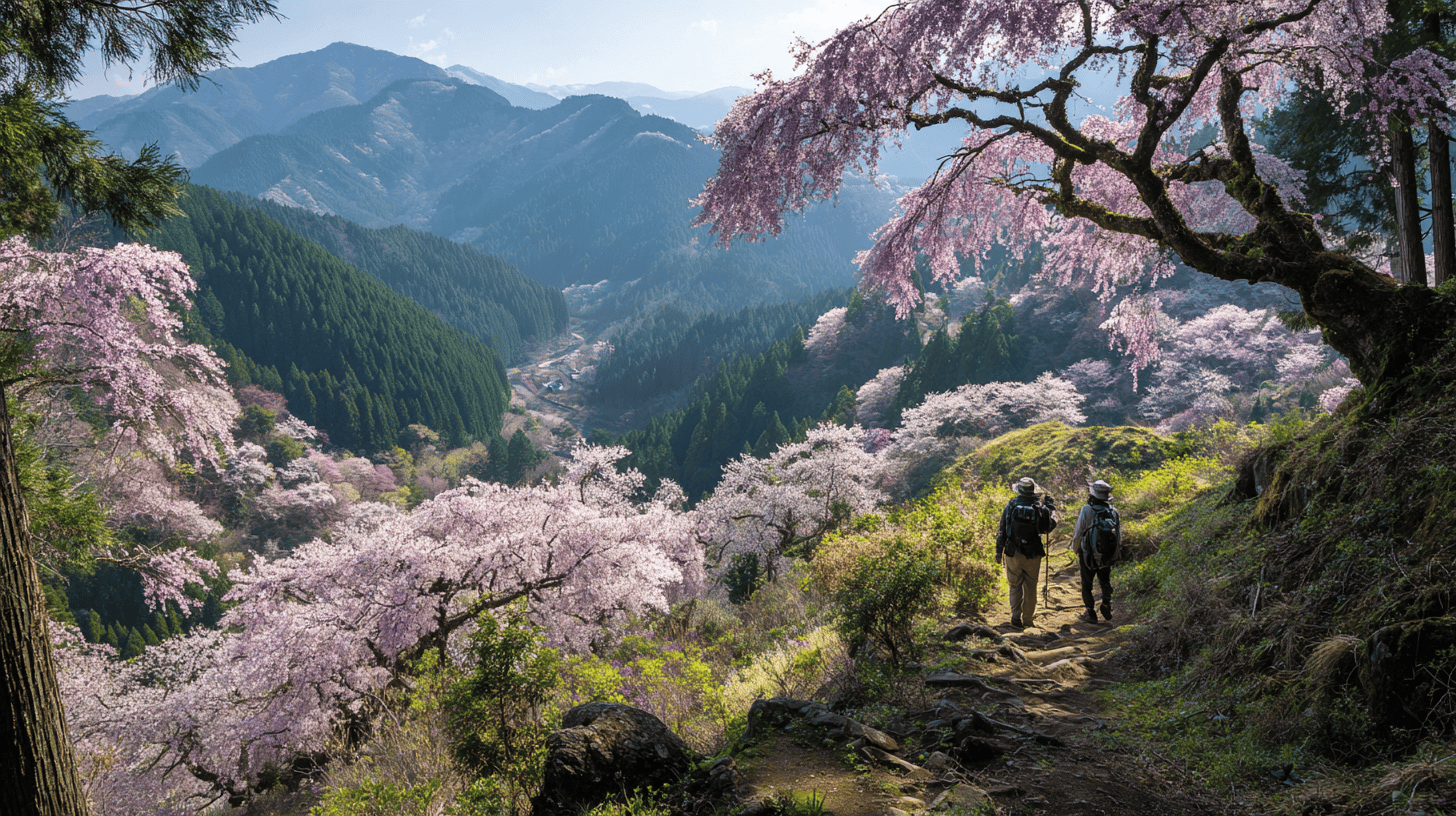
For centuries, blossom viewing belonged mostly to private gardens. Then the Edo period changed that. Hanami moved into public spaces in the city, as Nippon.com recounts. The eighth Tokugawa shogun, Yoshimune, who ruled from 1716 to 1745, planted hundreds of yamazakura for ordinary people to enjoy. Parks grew in places like Asukayama and Gotenyama. There, the public ate, drank and made merry under the trees.
That image still defines the season. Hanami is not a solemn rite. It is a shared meal, a song, a nap on a blanket and a friend pointing at a branch. Yamazakura, the wild mountain cherry, also fill the slopes of Yoshino. There, the official Nara travel guide counts 30,000 trees in about 200 varieties.
Many people who return to hanami each spring like to keep a record of it. They note the date the first buds opened, who came along and what everyone ate. Over the years, those notes become a family almanac of springs. Our blank Cherry Blossoms travel journal was made for exactly that habit, with open pages for words, sketches and keepsakes.
Pages for hanami picnics, bloom notes and pressed petals.
Unlined · 120 pages · Original cover art
Shop This Journal →The tree most people picture
Look at almost any photo of city hanami, and you will see somei yoshino. This variety got its start in the mid to late nineteenth century in the village of Somei in Edo, according to Nippon.com. It combined two useful traits. Its pale pink flowers open before the leaves appear, so the branches look like clouds. It also grows tall quickly.
Those traits made it the perfect park tree, and it spread widely. Because the trees in one area share so much, they tend to open at almost the same time. Whole avenues bloom within days of each other. That shared rhythm gives the season its sense of a single, national event. If you are planning where to go, our overview of the best places to see sakura in Japan maps the classic spots.
Following the Sakura Front Across Japan
Each spring, Japan follows the sakura zensen, or cherry blossom front. The Nippon.com expert guide describes it clearly. The front for somei yoshino travels north up the country over about a month. Flowers open from Kyushu to Tokyo around the end of March. Then Aomori and Hokkaido follow in late April.
This is why the season feels like a slow wave rather than a single date. Forecasters publish maps. News programs track the first open buds. Friends in the south share photos while friends in the north are still waiting. So the whole country ends up paying attention to the same thing at once. In a busy modern life, that is a rare and warm kind of togetherness.
Late blooms in the north
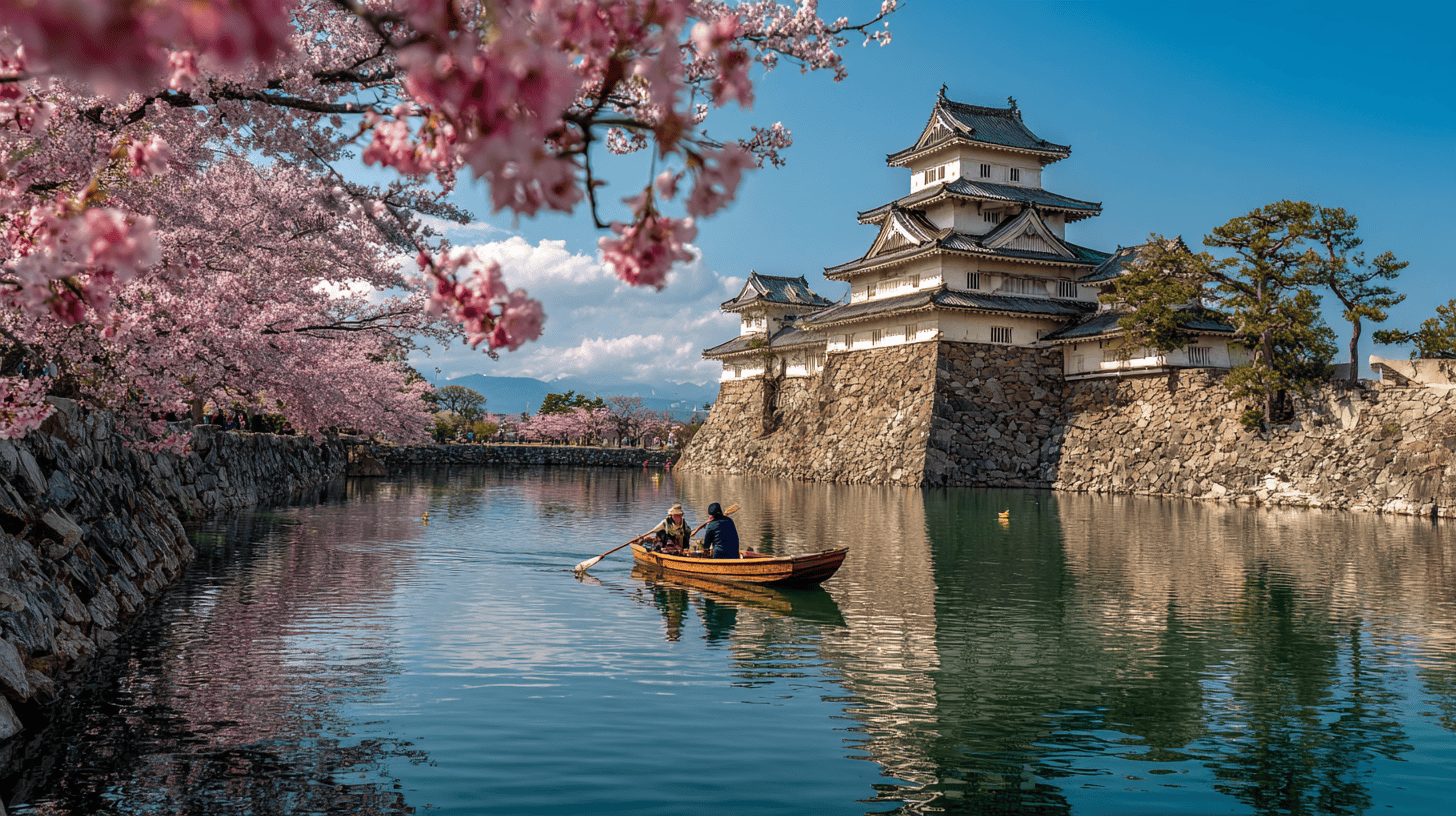
Travelers who miss the peak in Tokyo can often catch it farther north. Hirosaki Park in Aomori is a favorite example. According to the Japan National Tourism Organization’s guide to Hirosaki Park, the park holds some 2,600 trees in more than 50 varieties. They bloom from mid-April to early May, and the Hirosaki Cherry Blossom Festival runs from late April.
The front makes a second chance possible. Missing the bloom in one city is never the end of the story. Instead, it becomes a reason to follow spring a little farther. The table below gathers the rough timing, drawn from the sources in this article.
Spring moves north over about a month, so the bloom offers more than one chance.
| Region | Typical bloom | What to look for |
|---|---|---|
| Kyushu to Tokyo | Around the end of March | Somei yoshino avenues in city parks |
| Mount Yoshino, Nara | Early April into May | 30,000 trees opening from the bottom of the mountain to the top |
| Hirosaki, Aomori | Mid-April to early May | Some 2,600 trees and petals floating on the castle moat |
| Hokkaido | From late April | The last stop of the somei yoshino front |
A season with a countdown
The countdown shapes the mood. Once the forecast names a date, people start to plan, and anticipation becomes part of the pleasure. Kenko would approve, since the buds count too. Then, when the day comes, nobody needs to be told to look up.
That daily looking is the real practice. It is also how mono no aware cherry blossoms teach their lesson: one small moment of attention, repeated each day. A guided journal works the same way. The short film below shows The Return, the first journal in our Cultural Reflection Collection. A morning prompt is answered by hand on a tablet. The Mono no Aware Journal uses the same daily format, with one short prompt each morning. In a few lines, the day’s noticing becomes something you can keep.
Twenty seconds inside the journal
The digital edition in use — a morning prompt, answered by hand while the coffee is still warm. Tap to play, with sound.
One page, one intention, one single quiet moment.
Yozakura and Hanafubuki: Mono no Aware Cherry Blossoms After Dark
Some of the loveliest hours of the season arrive after the peak. Hanafubuki, or flower blizzard, names the moment when wind lifts thousands of petals into the air at once. The Nippon.com guide notes the special charm of petals scattering from the branches and dancing along the ground. Children chase them. Parents hold out their hands. For a few minutes, a whole park laughs.
Mono no aware lives right here. The petals are leaving, yet the feeling is pure delight. You are glad to be there, glad to see it and glad to share it. That joy is the center of the idea, and it is why the storm feels like a celebration.
If you would like to time a spring journey around the bloom, we can design a custom Japan itinerary around cherry blossom season, from southern parks to northern castles.
Occasional letters on mono no aware, the Japanese calendar and the moments worth savoring, with news of the Cultural Reflection Collection.
Occasional letters. Unsubscribe anytime.
Hana-ikada, the petal rafts
Water adds another layer. When petals land on a moat or a river, they drift together into pale pink rafts. Japanese calls these hana-ikada, or flower rafts. At Hirosaki, JNTO describes great numbers of petals clustering on the castle moat and floating across its surface.
It is a soft, slow spectacle. Rowers glide through pink water. Visitors lean over bridges to watch the rafts turn in the current. Nothing about it feels like an ending. Instead, the tree seems to be giving one last gift to the town below. After the rafts, the branches fill with fresh green leaves, and early summer begins. Seen this way, each stage hands the season on to the next. For more moments like this one, browse our collection of everyday examples of mono no aware, from first snow to a last train home.
Yozakura, the blossoms by lantern light
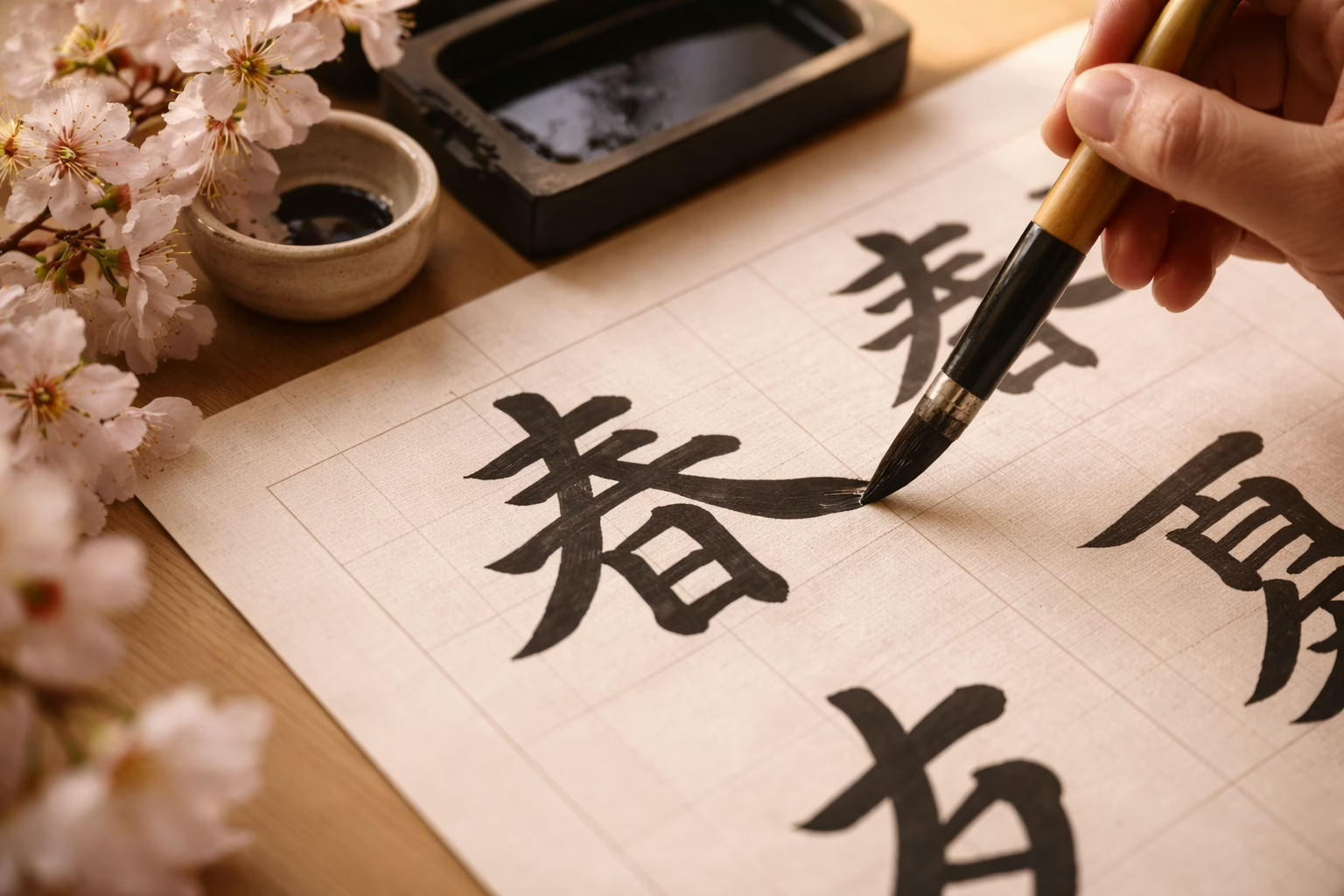
Night viewing has its own name, yozakura. When the sun sets, paper lanterns and soft lights come on under the branches. The flowers turn silver, pink or gold depending on the light. The crowds slow down, and voices drop to the pitch of a good dinner conversation.
Many famous spots light their trees after dark. On Mount Yoshino, the official Nara guide notes, the trees around town are lit at night. Locals often dress in colorful kimono, which adds to the festive mood. At Hirosaki, JNTO highlights blossoms at night reflected on the moat. So the season does not end at sunset. It simply changes costume.
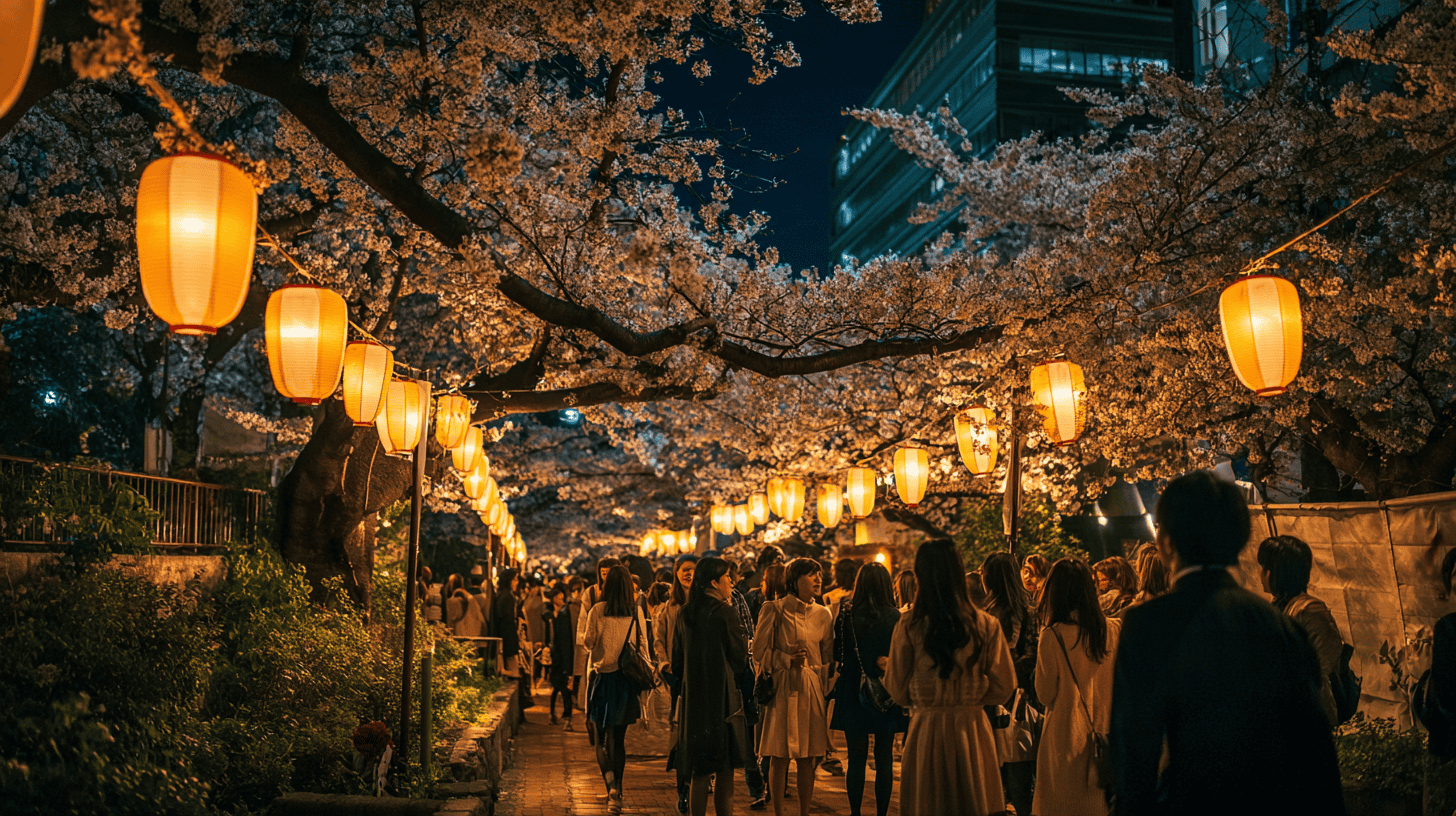
Night is where mono no aware cherry blossoms feel most generous. In daylight, you notice crowds and schedules. After dark, the branches seem to float, and small details step forward. You hear a lantern creak in the wind. You notice a single petal caught in a friend’s hair. Then you realize the whole avenue will look different tomorrow.
That realization is a gentle nudge to slow your pace. Walk the length of the avenue once, then walk it back. Stop at the bench you liked. Buy a warm drink from a stall and hold it with both hands. These are small choices, yet they turn an evening into a memory. Besides, yozakura rewards patience, because the light keeps shifting as the night deepens.
Recommended
How to Enjoy Hanami in the Spirit of Mono no Aware
The best way to enjoy mono no aware cherry blossoms is also the simplest: go, look and stay a while. You do not need a famous park. A single tree by a train station counts. So does a row of trees along a canal near your hotel.
Go early, and go more than once
First, visit the same tree more than once. Go when the buds are tight, again at full bloom and once more when the petals fall. Each visit shows you a different face. Next, go early in the morning, before the crowds. The light is soft, and the air still holds the night’s chill. Finally, put the phone away for five minutes. Then take one photo, not fifty. That way, the memory stays in you rather than in a folder.
Good manners belong to the spirit, too. Spread your blanket without blocking paths, and keep music low. Never shake or pull the branches for a photo. Then take every scrap home with you. Because the trees serve everyone, caring for them is part of the pleasure. It also means the next group finds the same beauty you did.
The hanami sweet: sakura mochi
No spring picnic in Japan feels complete without something sweet. Sakura mochi is the classic choice. It is a small pink rice cake filled with sweet red bean paste and wrapped in a salted cherry leaf. The leaf adds a light, floral saltiness that balances the sugar. Yes, you eat the leaf too.
There are two regional styles. The Kanto version, made around Tokyo, rolls a thin pink crepe around the bean paste. Meanwhile, the Kansai version below uses domyoji-ko, glutinous rice that has been steamed, dried and coarsely ground. As a result, the finished cake has a pleasing, grainy chew. It pairs beautifully with green tea, whether at home or alongside the seasonal sweets served in a Japanese tea ceremony.
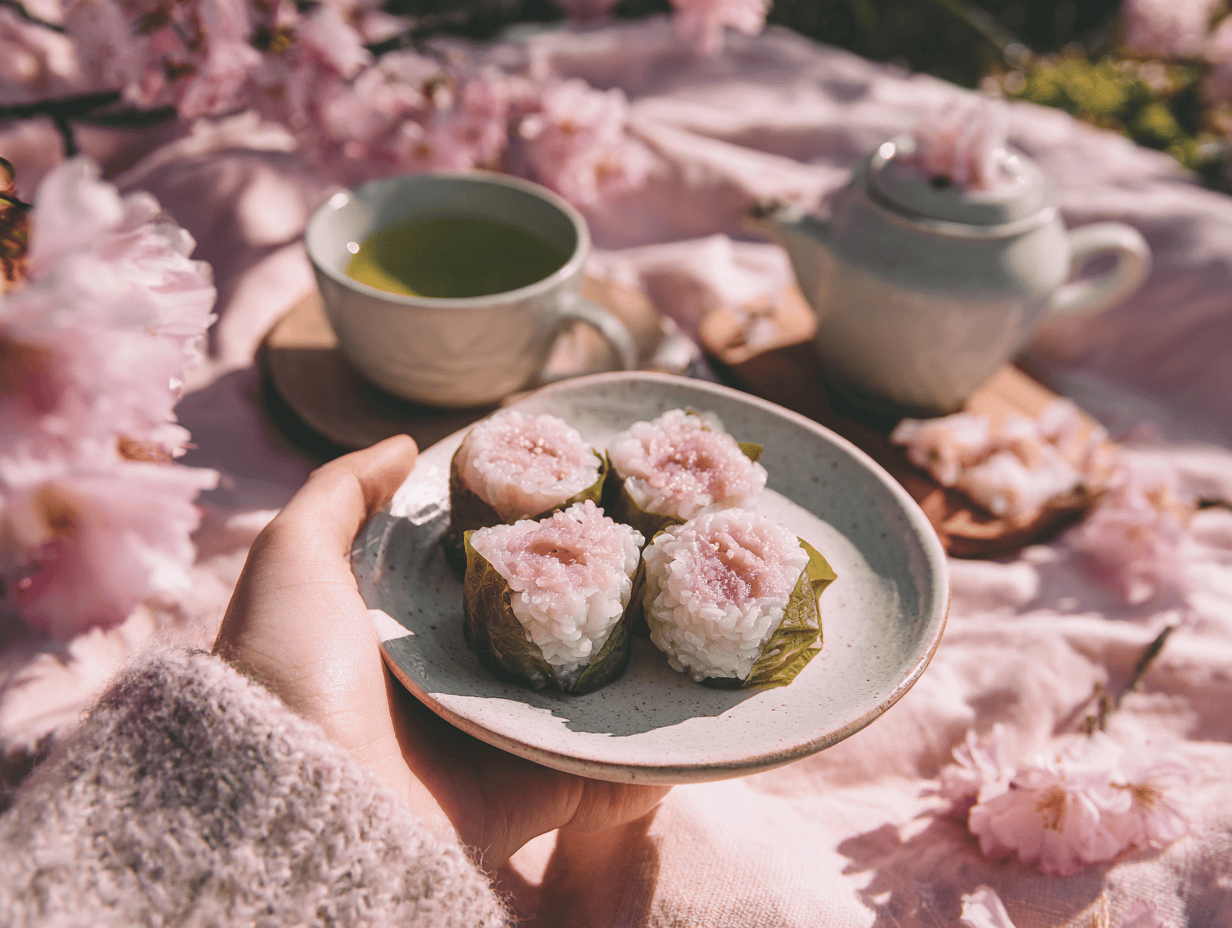
A spring wagashi from western Japan, where the Kansai style is made with domyoji-ko, coarse steamed-and-dried glutinous rice. The salt-preserved cherry leaf perfumes the rice and is eaten along with it.
- 8 salt-preserved cherry leaves
- 100 g domyoji-ko (coarse glutinous rice flour)
- 150 ml warm water
- A very small amount of red food coloring (optional)
- 20 g sugar
- 200 g smooth sweet red bean paste (koshian)
- Soak the cherry leaves in a bowl of water for 20 to 30 minutes to draw out the salt, then blot them dry with a paper towel.
- Rinse the domyoji-ko quickly and drain it. Place it in a bowl with the warm water and let it sit for 10 minutes. For a pale pink tint, stir in a trace of food coloring dissolved in a little water; the color deepens as it steams.
- Line a steamer with a damp, well-wrung cloth. Spread the rice mixture on top and steam over high heat for about 15 minutes.
- Transfer the hot rice to a bowl, add the sugar and fold it in quickly and lightly with a wooden spoon, without kneading. Meanwhile, roll the bean paste into 8 balls of about 25 g each.
- Divide the rice into 8 portions and press each into a round on baking paper. Set a ball of bean paste in the center and close the rice around it, seam side down.
- Wrap each rice cake in a cherry leaf and serve.
Share the food, share the moment
Hanami food is meant to be passed around. One friend brings rice balls, another brings fried chicken, and someone always brings too many sweets. That generosity is part of the tradition. After all, Edo townspeople turned the season into a public feast, and the habit never left.
Sharing also slows everyone down. When plates move from hand to hand, people talk, laugh and linger. Nobody checks the time. The tree above does the work of a good host, keeping everyone together a little longer. So pack for the group, not just for yourself, and leave room for an extra cup. Bring a small bag for wrappers, too, so the grass looks untouched when you fold the blanket.
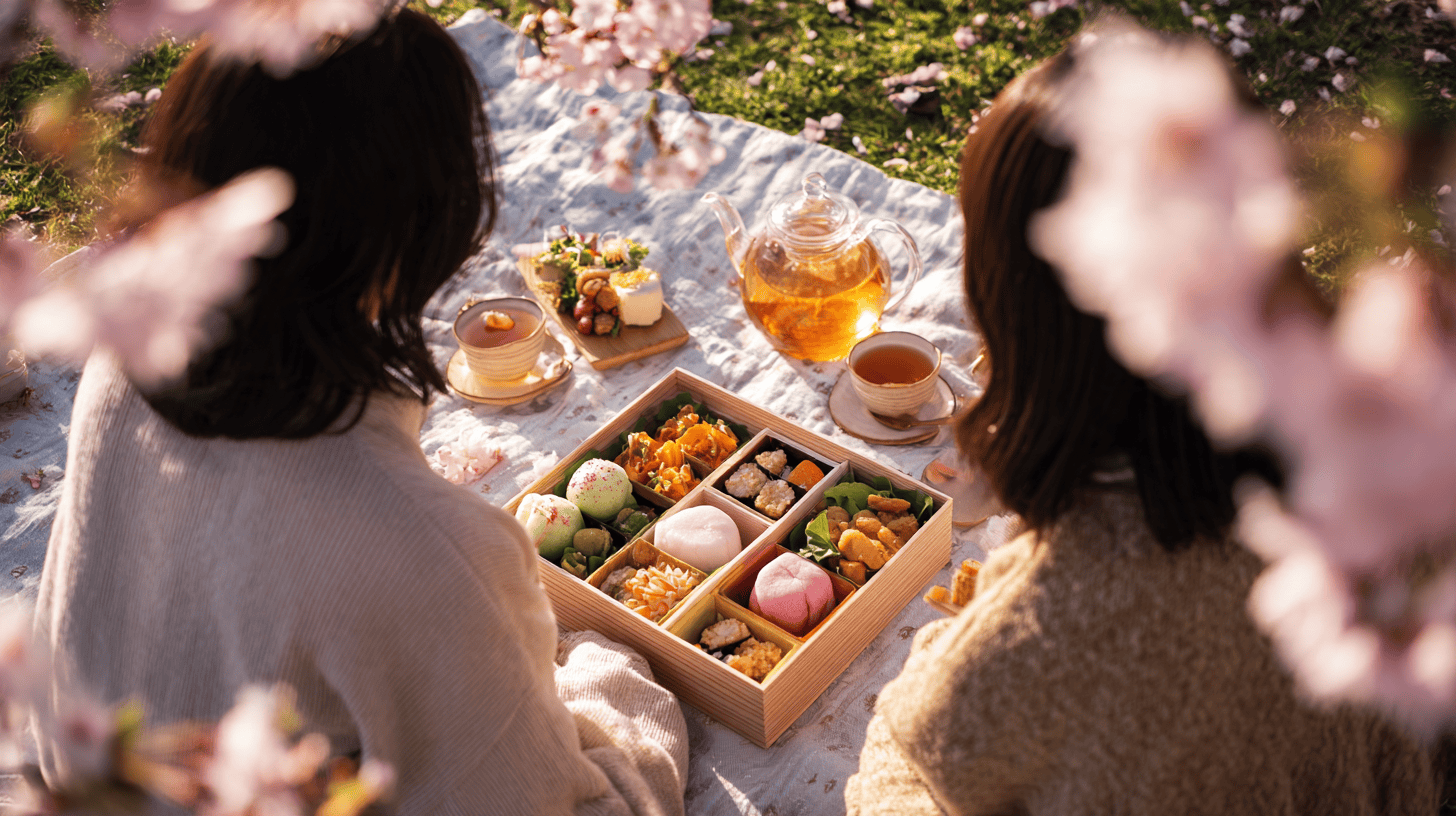
Sakura tea and spring sweets
The season also lives in the teacup. Japanese tea makers release sakura-scented blends each spring, soft and floral in the cup. Spring wagashi appear in shop windows in pale pink and green. Some carry the scent of cherry leaf, while others are simply shaped like petals. They make a lovely way to bring hanami indoors on a rainy day.
Because the flavors appear only for a few weeks, they carry the same charm as the trees. You taste them, enjoy them and look forward to them again next year. That rhythm of return is a gift in itself. Here are a few sakura teas and spring treats from Japanese makers worth seeking out.
Bring one branch home
You do not have to be in a park to keep the feeling. A single blossoming branch in a vase can hold a whole spring. Place it where the morning light falls. Then notice it each day, the way you would notice a friend’s mood.
The branch will change quickly. On the first day, the buds are tight. By the third day, the flowers open. Before long, a few petals rest on the windowsill. Each stage offers its own small pleasure, just as Kenko promised. Its cousin, wabi-sabi, finds beauty in the worn and the imperfect instead, and our note on how mono no aware differs from wabi-sabi traces the line between them. Watching it closely turns an ordinary room into a place of attention.
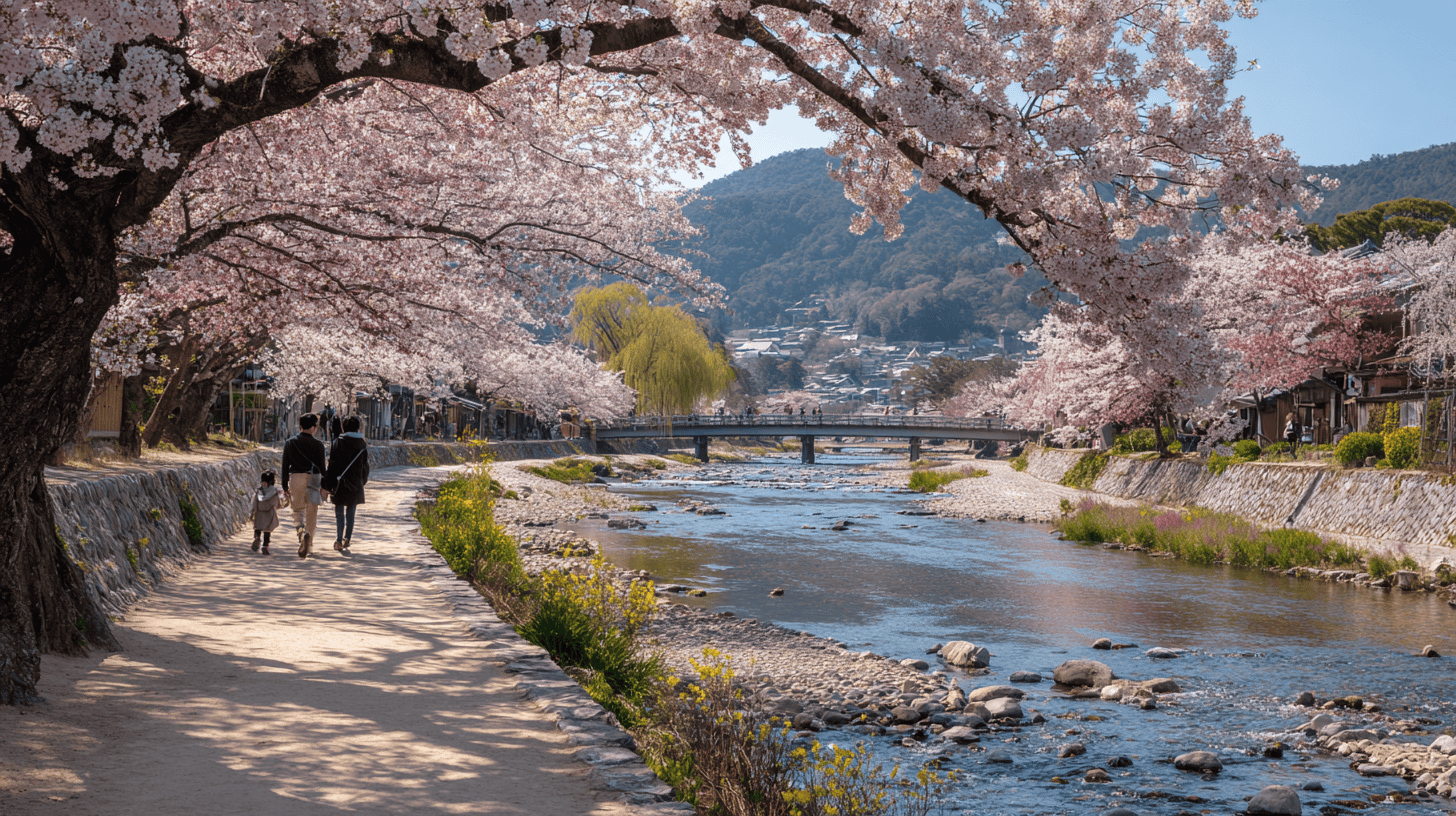

That habit of noticing does not have to end with spring. Many people find that the season wakes up a skill they want to keep. They start to notice the first warm evening of summer, the smell of rain on a hot street or a favorite cup warming their hands. Those small moments carry the same tenderness as a blossoming branch.
If you want a simple daily routine, try one sentence each night about something you saw that day and will not see in quite the same way again. It takes two minutes. Our guide to a gentle daily practice of mono no aware offers more ideas. In short, the practice is easy, and it grows richer with time.
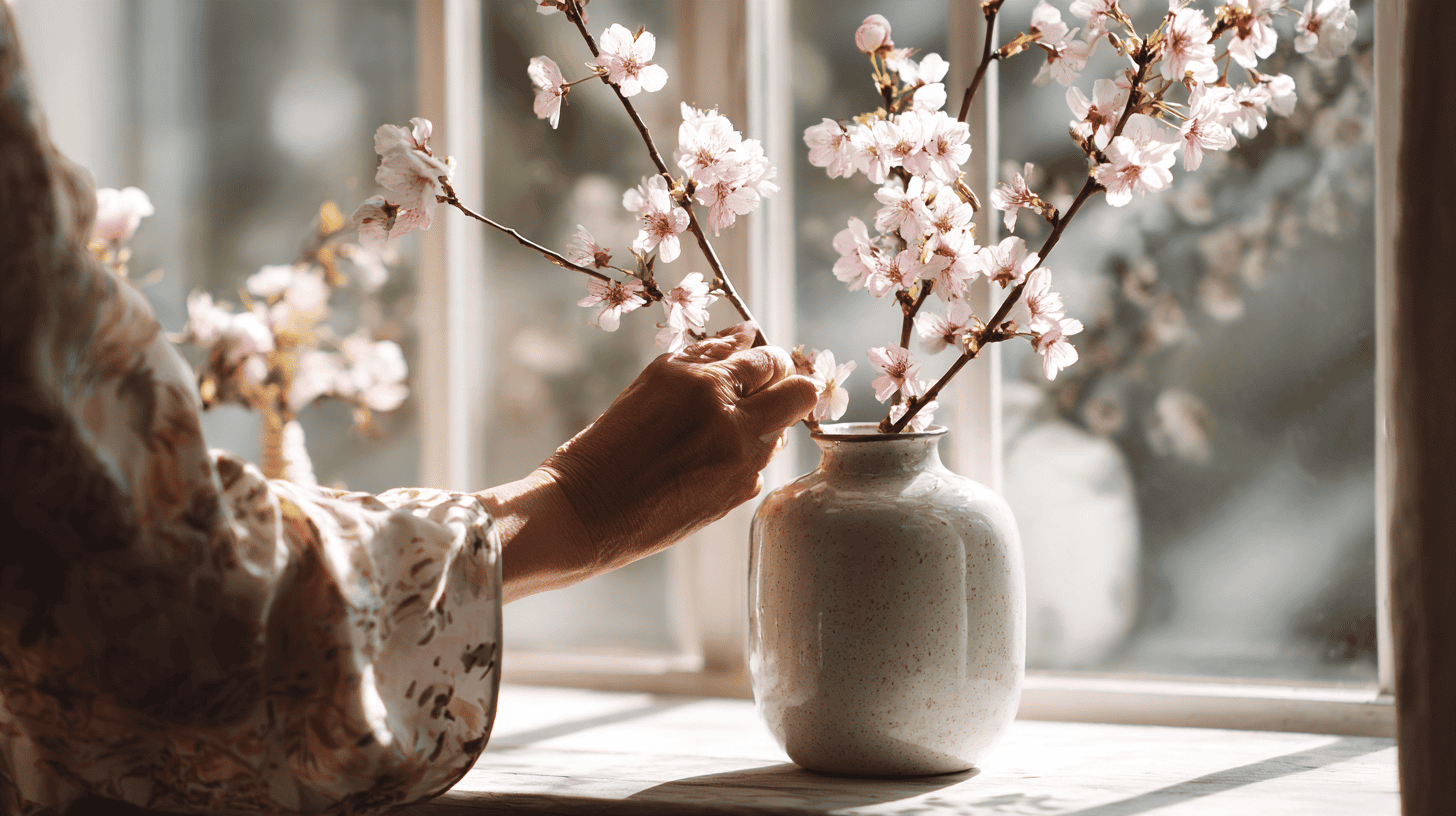
Let gratitude finish the season
There is also a note of gratitude in all of this. When you know the blossoms will not wait, thanks comes easily. You thank the friend who saved the spot under the tree. The weather earns thanks for holding. Even the wind gets a nod for the petal storm. That gratitude does not depend on the flowers staying. It depends only on your being there to see them.
This is the gentle promise tucked inside every spring in Japan. The trees will bloom again next year, and you will be a little different when they do. So each season becomes a marker in your own life. You remember the spring you traveled, the spring a friend visited and the spring you finally made sakura mochi. The blossoms return, and so do you.
Questions Worth Asking
What does mono no aware mean in simple terms?
It describes the gentle feeling of being moved by things, heightened by the awareness that they change. Scholars often render it as "the pathos of things." In daily life, it is the tug you feel at a sunset, a farewell wave or a tree in flower, and it tends to make those moments feel more precious.
Why are cherry blossoms important in Japan?
Sakura mark the arrival of spring. Since the Heian period (794–1185), they have been the flower Japanese culture most associates with the season. Their short bloom gathers people outdoors, so the trees stand for shared celebration, fresh starts and the pleasure of paying attention.
What is the meaning of hanami?
Hanami literally means "flower viewing." Today it usually refers to gathering under cherry trees in spring to eat, drink and enjoy the blossoms with friends, family or coworkers. The custom spread from the court to ordinary people during the Edo period, when public parks were planted with cherry trees.
How long do cherry blossoms last in Japan?
An individual tree blooms for roughly ten days, and full bloom often lasts only a few of those. Across the country, however, the season stretches over about a month. The front begins in the south in late March and reaches Aomori and Hokkaido by late April.
What is sakura mochi made of?
It is a sweet rice cake filled with red bean paste and wrapped in a salt-preserved cherry leaf. The Kansai style uses domyoji-ko, a coarse glutinous rice, while the Kanto style around Tokyo uses a thin crepe made with shiratamako rice flour. The pickled leaf is edible and adds a floral, salty note.
What is the difference between yozakura and hanami?
Hanami is the broad custom of viewing blossoms, usually by day with a picnic. Yozakura means "night cherry blossoms" and refers to viewing the trees after dark, when lanterns or lights illuminate them. Many parks and towns, including Mount Yoshino in Nara, light their trees during peak bloom.
Keeping Mono no Aware and Cherry Blossoms Close All Year
Mono no aware cherry blossoms teach one lesson that lasts all year: pay attention while the moment is here. The trees make that easy for ten bright days. After that, the practice is yours to keep. A daily prompt helps, because it asks you to name one small thing before the day moves on. Over weeks, those small notes add up to a record of a life lived with open eyes.
That is the idea behind our 90-day guided journal in tenderness, with a short prompt for each day. It turns the spirit of hanami into a gentle daily habit. For a companion practice, the journal below turns to nagomi, the Japanese idea of harmony.
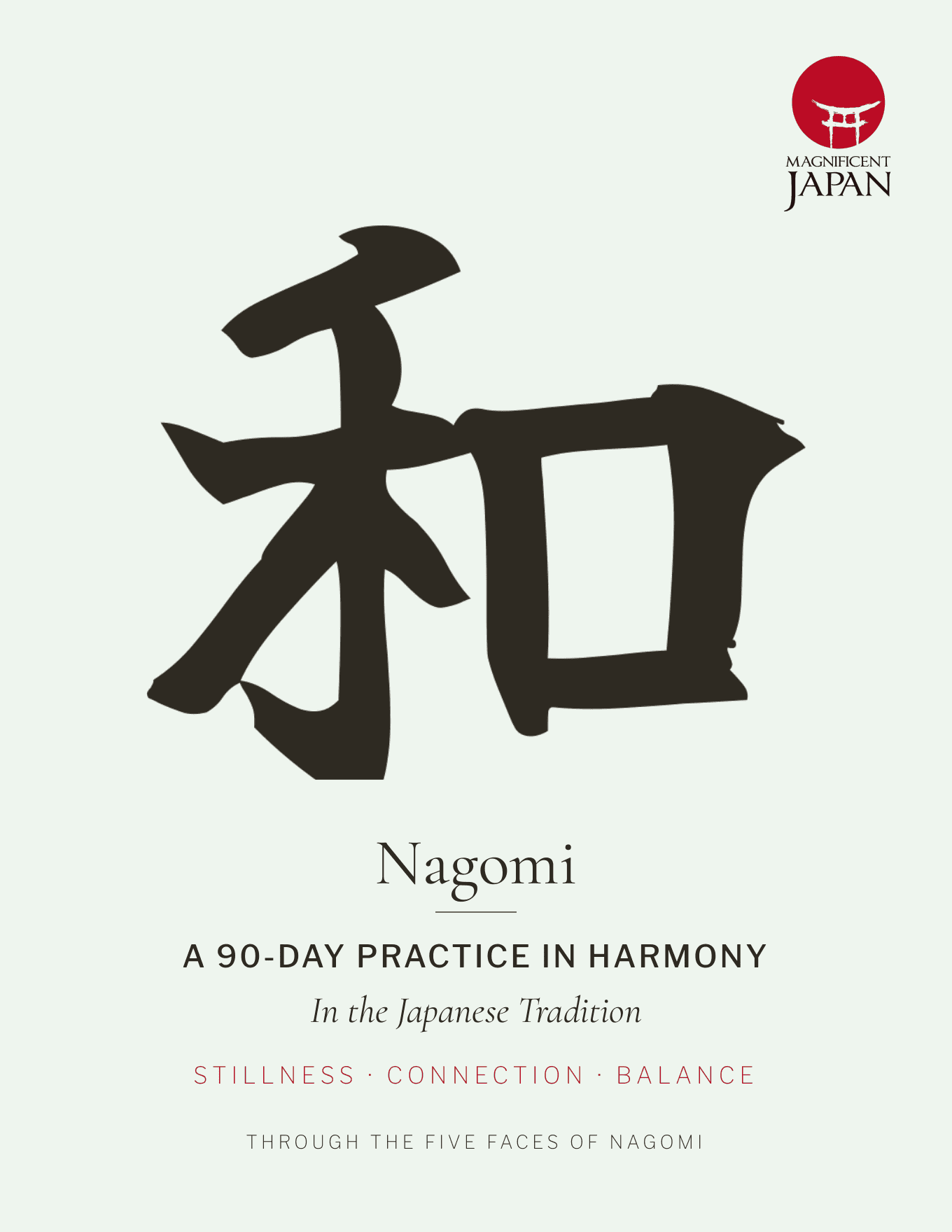
A ninety-day guided practice in harmony, the natural next step once ikigai has you noticing the people and routines that hold a good day together.
View the Journal →Whether you watch the blossoms in Kyoto, Hirosaki or your own neighborhood, the invitation is the same. Go outside, share something good to eat and look up. Then carry that attention home. Spring will come back next year, and it will find you ready to notice all over again.
The Editors, Magnificent Japan
We design spring routes that follow the sakura front: a riverside picnic in Kyoto, castle moats in bloom, and a night walk under the lanterns.
Plan Your Custom Japan Itinerary