
A Nara day trip is one of the easiest ways to step back more than twelve centuries in Japan. The city sits about 35 minutes from Kyoto by train, yet it feels like another country. Deer wander between ancient halls, stone lanterns line forest paths, and a bronze Buddha fills one of the largest wooden buildings on earth.
This guide lays out a single, well-paced day. It follows the route most travelers find works best: Kintetsu-Nara Station, then Kasuga Taisha, the deer of Nara Park, Todai-ji, lunch, and an unhurried afternoon in the old Naramachi quarter. Along the way you will find train times, admission prices in dollars, and the small choices that make the day feel calm rather than crowded.
Take the Kintetsu train to Kintetsu-Nara by nine. Walk to Kasuga Taisha first, meet the deer in Nara Park, see Todai-ji before noon, then spend the afternoon in Naramachi. The core sights sit within a 20-minute walk of each other.
Why a Nara Day Trip Rewards an Early Start
Nara became Japan’s capital in 710, decades before Kyoto. That early role explains why so much survives here in one compact area. The great halls, the shrine and the park all grew together around the old court. As a result, you can walk between them in minutes, which is what makes a single day so rewarding.
Timing is the one thing to get right. Tour buses from Kyoto and Osaka arrive from about ten o’clock, and Todai-ji fills fast by late morning. If you reach Nara by nine, you meet the lantern paths of Kasuga Taisha in soft light and almost alone. The deer are also calmer early, before the crowds begin buying crackers. That simple head start shapes the entire day.
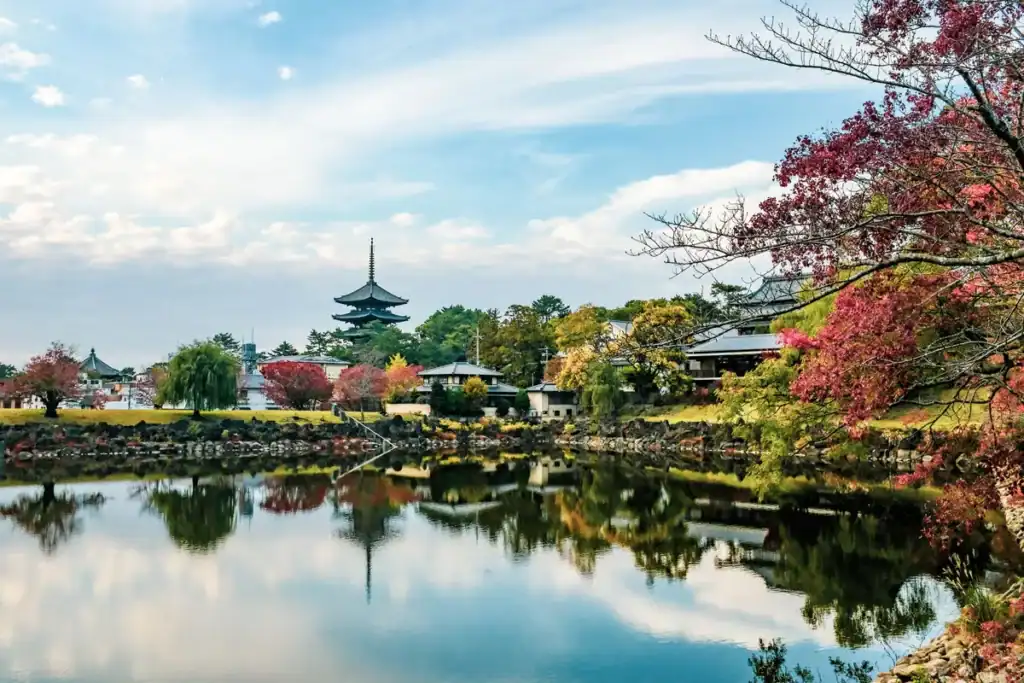
The route below runs from east to west and back toward the station. It covers about five kilometers on foot, mostly on wide, shaded paths. Comfortable shoes matter more than anything else you pack. So does a little flexibility, because the best moments often come from lingering where the deer gather or a garden gate stands open.
Getting to Nara From Kyoto and Osaka
Nara has two main stations, and the choice matters. Kintetsu-Nara Station sits about five minutes on foot from Nara Park. JR Nara Station, by contrast, lies about 20 minutes’ walk to the west. For a day trip, the Kintetsu line usually saves time and energy, even though it costs a little more.
From Kyoto, twice-hourly Kintetsu limited express trains reach Kintetsu-Nara in about 35 minutes for about $9 (¥1,280) one way. A slower direct express takes about 45 minutes for about $5 (¥760). If you hold a Japan Rail Pass, the JR Miyakoji Rapid runs every 30 minutes and takes about 45 minutes to JR Nara Station, with the fare covered. From Osaka-Namba, Kintetsu trains reach Nara in well under an hour, which makes Nara an easy add-on to a stay built around Osaka’s food scene.

Our guide to the Japan Rail Pass explains when a pass pays off for a trip like this. In short, it rarely does for Nara alone. However, if Nara is one stop in a longer Kansai loop, the pass can make sense. Either way, buy or load an IC card such as ICOCA before you leave Kyoto, so you can tap through the gates without queuing for tickets.
Getting Around Kyoto and Nara — a pocket atlas built for transit
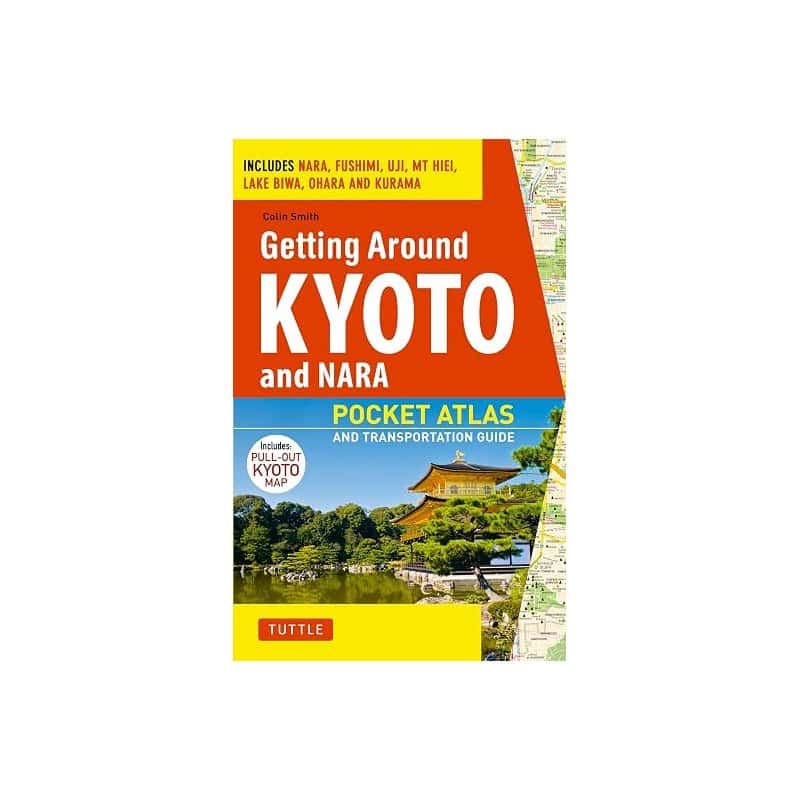
Phones are useful in Nara, but a paper atlas shows the whole picture at once. Getting Around Kyoto and Nara is a slim Tuttle pocket guide that maps the rail lines, bus routes and walking districts of both cities. It is especially helpful for seeing how Nara Park, Todai-ji and Naramachi fit together, which an app screen tends to hide. The Nara section covers the walk from Kintetsu-Nara and the bus loops that link the outer sights. It also covers Uji, Fushimi and the other stops many travelers combine with Nara in a longer Kansai stay. Keep it in a jacket pocket and you will rarely need to stop and search for a signal.
8:30 a.m. — Kasuga Taisha and the Lantern Paths
Begin with the walk that most visitors save for later. From Kintetsu-Nara, head east through the park and follow the long approach toward Kasuga Taisha. The path climbs gently through cedar woods, lined with moss-covered stone lanterns. In the early light, with few people about, it is one of the most beautiful walks in Japan.

Kasuga Taisha was founded in 768 to protect the capital. Today it is a shrine complex of vermilion halls set against the forested slopes of Mount Kasuga. Its signature is the lanterns, about 3,000 of them in stone and bronze, given by visitors over centuries. The outer grounds charge nothing to enter. The inner area, where the bronze lanterns hang in long rows, costs about $5 (¥700).
Allow about an hour here. Walk the outer corridors first, then step into the inner area while it is still calm. Afterward, follow the signs downhill toward the park. On the way, small side paths lead into the Kasugayama woods, which have been protected for more than a thousand years. Even a ten-minute detour gives you a sense of how green and ancient this corner of Nara feels.
You may also like


10:00 a.m. — Nara Park and Its Famous Deer
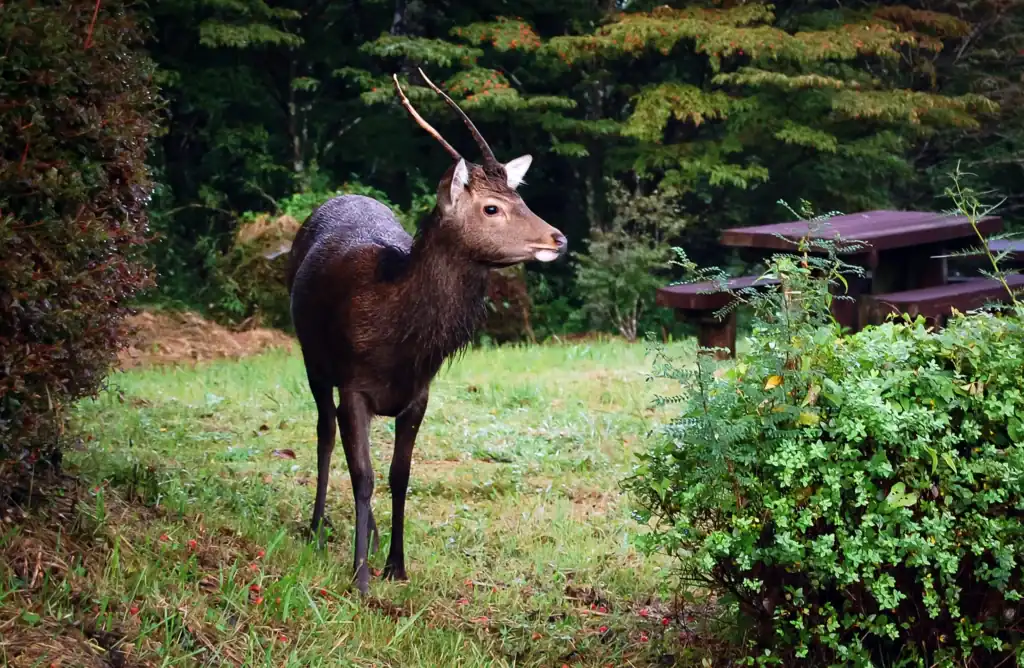
By now the deer will have found you. More than a thousand of them live in and around Nara Park, and they are a protected National Natural Monument. Local tradition holds them as messengers linked to Kasuga Taisha, which is why they have roamed freely here for so long. They are wild animals, but they have grown remarkably used to people.
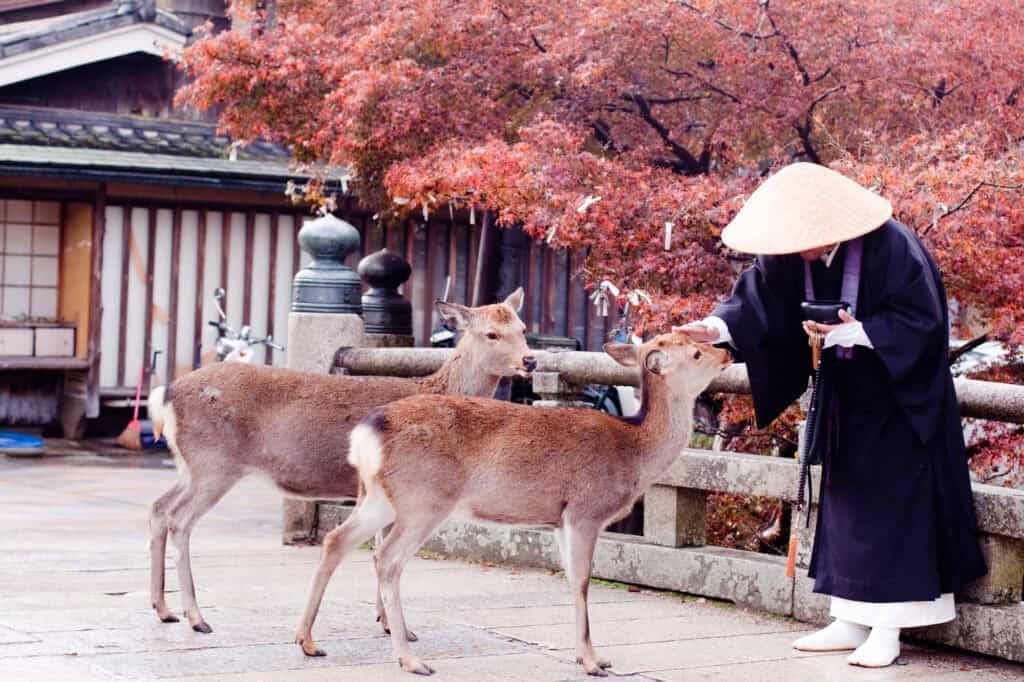
Vendors around the park sell shika senbei, plain crackers made for the deer. Many deer bow before they take one, and visitors quickly learn to bow back. Still, a few rules keep the encounter pleasant. Feed only the official crackers. Show your empty hands when you have finished, so the deer know the snack is over. Keep maps, tickets and paper bags out of reach, because the deer will happily eat them too.
The park itself is wide and open, with lawns, ponds and old trees. Families picnic here on weekends, and photographers wait for deer to pose against the halls. If the main lawns feel busy, walk toward the calmer edges near the Ukimido pavilion on Sagiike Pond. For a moment, with a deer resting nearby and the hills behind, the city disappears entirely.

Spring is fawning season. From around June, small spotted fawns appear, often hidden in the grass while their mothers graze. Give mothers and fawns extra space at this time of year, since protective does can be wary. In autumn, by contrast, the males grow bold during the rutting season. Watching from a respectful distance is the best way to enjoy them.
11:00 a.m. — Todai-ji and the Great Buddha
From the park, walk north to Todai-ji, the highlight of any Nara day trip. You enter through the Nandaimon, a vast wooden gate guarded by two fierce wooden figures. The sculptors Unkei and Kaikei carved them in 1203, and they stand more than eight meters tall. Pause here, because the scale of what follows starts at this gate.

Beyond the gate rises the Daibutsuden, the Great Buddha Hall. The current building dates from 1709 and is about two-thirds the width of the original. Even so, it remains one of the largest wooden buildings in the world. Inside sits the Great Buddha, a bronze figure about 15 meters tall. Admission to the hall costs about $5.50 (¥800). The Todai-ji official site lists current hours before you go.
Take time to walk the full circuit inside. Behind the statue, a wooden pillar has a hole at its base said to be the size of the Buddha’s nostril. Children squeeze through for good luck, and a patient queue usually forms. Afterward, climb the short slope east to the Nigatsu-do hall. Its wooden veranda offers one of the finest views over Nara, especially in the soft light of late afternoon.
Ten Proverbs to Carry With You
A printable folio of ten Japanese proverbs, each set in kanji with its reading and a line on where you will hear it.
If you have extra time, the Todai-ji Museum near the entrance displays statues and treasures from the temple’s long history. Otherwise, save your energy for the afternoon. By now it is past noon, the crowds have arrived, and you have already seen the city’s greatest sights in their calmest hours. That is exactly the advantage of an early start, and it is time to eat.
Lunch: Mochi, Persimmon-Leaf Sushi and Nara Sweets
Nara’s food is gentle and seasonal. The local specialty is kakinoha-zushi, small pieces of pressed sushi wrapped in persimmon leaves. The leaves keep the fish fresh and add a faint, grassy scent. Many shops near the station sell boxed sets, which make a fine lunch on a park bench. The region’s persimmon orchards also supply fruit in autumn, sold fresh or dried along the shopping streets.
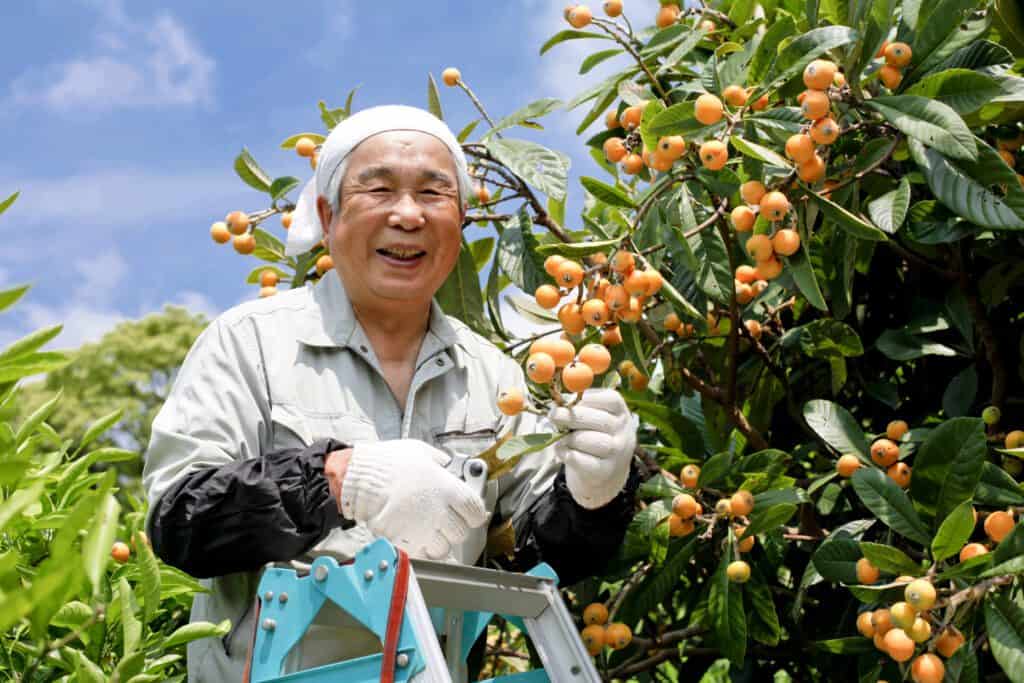
For something sweet, head to the Sanjo-dori shopping street. There, a well-known mochi shop pounds rice by hand at high speed, a performance that draws a crowd several times an hour. The result is yomogi mochi, soft green rice cakes flavored with mugwort and filled with sweet red bean paste. They are best eaten warm, minutes after pounding. Below is a version you can make at home.
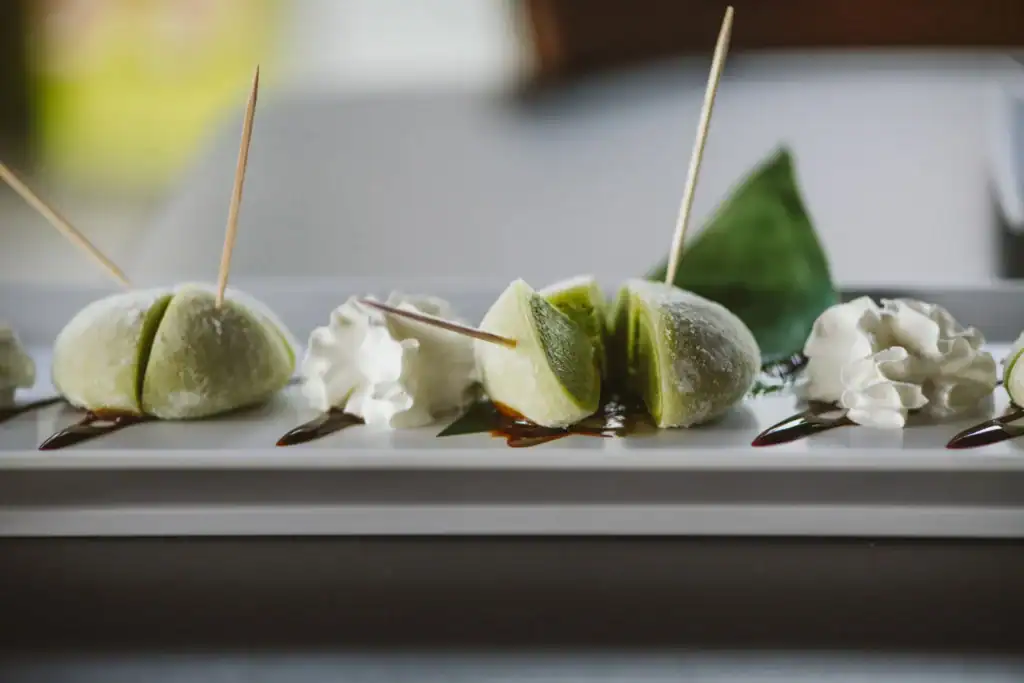
Yomogi Mochi — mugwort rice cakes with sweet bean paste
Soak two teaspoons of dried mugwort powder in a spoonful of warm water for five minutes, then stir it into one cup of glutinous rice flour with two tablespoons of sugar. Add about half a cup of water a little at a time until the dough feels as soft as an earlobe. Steam it for ten minutes, or cover it and microwave in two-minute bursts, stirring between each, until the dough turns glossy and stretchy. Knead it briefly with a wet spatula, divide it into eight pieces, flatten each one and fold it around a ball of sweet red bean paste. Dust the cakes with roasted soybean flour and eat them warm, while the green dough is still soft and fragrant.
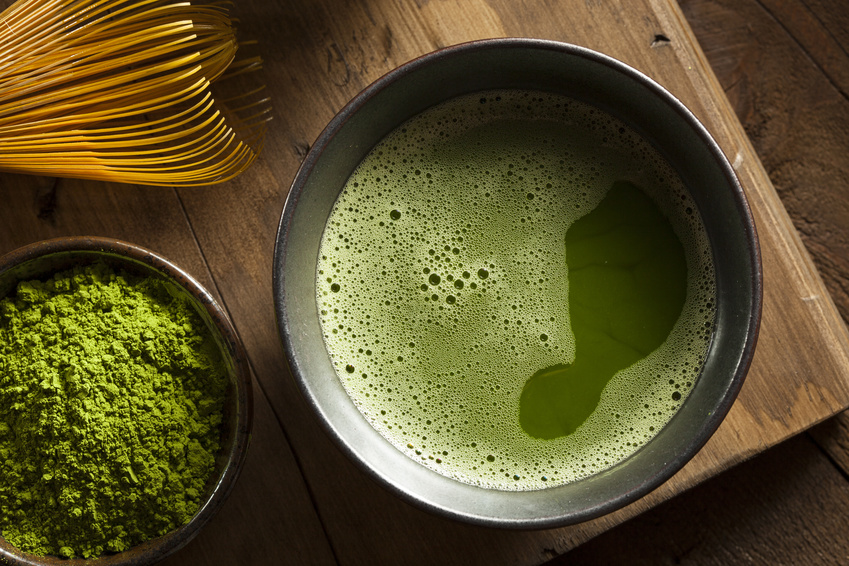
The mugwort gives the mochi its color and a fresh, slightly herbal taste. In spring, Japanese families gather young yomogi leaves for exactly this kind of sweet. Pair it with a cup of green tea and you have the classic Nara afternoon break. Our guide to traditional Japanese food covers more regional dishes worth seeking out across the country.
2:00 p.m. — Gardens or the National Museum
After lunch, choose one of two calmer pleasures. The first is Isuien, a garden near Todai-ji that borrows the temple’s roofs and the hills beyond as part of its view. It has teahouses, ponds and moss, and it rarely feels crowded. The second is the Nara National Museum, which holds one of Japan’s finest collections of early sculpture and art.
Each autumn the museum hosts the Shosoin Exhibition, a rare showing of treasures from the eighth-century imperial storehouse. It draws long lines, so book ahead if your trip falls in that season. In other months, the permanent galleries are calm and spacious. Either way, an hour inside offers a welcome change from walking, especially on a hot day.
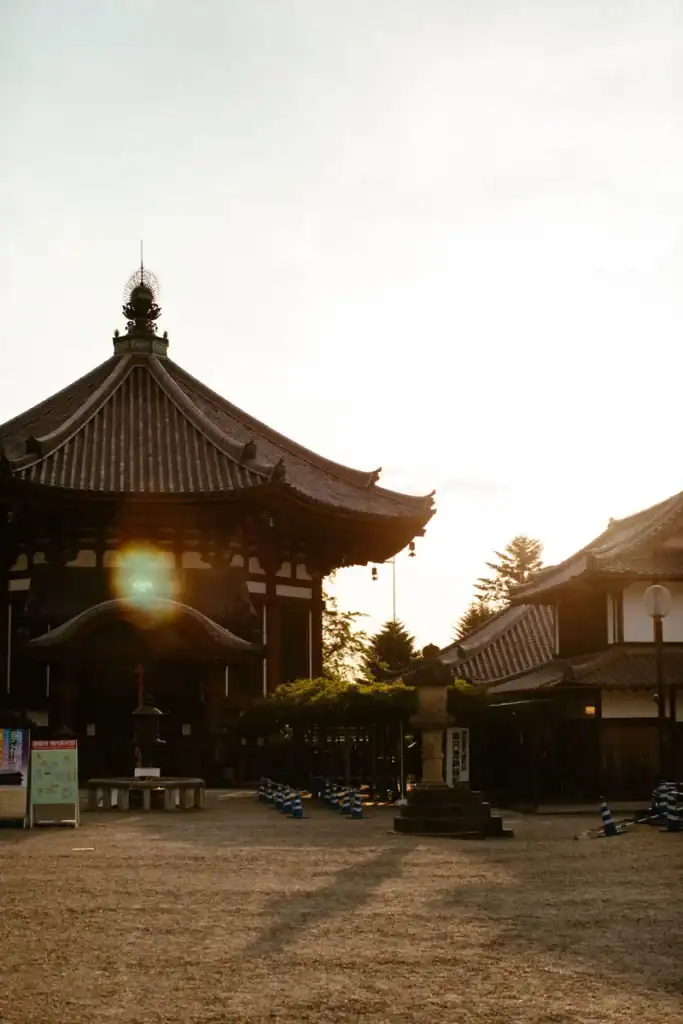
If you prefer to keep moving, walk south past Kofuku-ji and its pagoda instead. The route leads down to Sarusawa Pond, where the pagoda reflects in the water on still days. It is a short, pleasant walk, and it delivers you to the edge of Naramachi without any backtracking. From there, the old town is only a few minutes away.
You may also like


3:30 p.m. — Naramachi, the Old Merchant Quarter
End the day in Naramachi, the old merchant district south of Sarusawa Pond. Its narrow lanes are lined with machiya, the wooden townhouses with slatted fronts where merchants once lived and worked. Many now hold small cafés, craft shops and galleries. After the grandeur of the morning, this quarter feels intimate and lived-in.

Step inside Naramachi Koshi-no-Ie, a reconstructed merchant house that opens its rooms to visitors without charge. It shows how these long, narrow homes stretched back from the street around small courtyards. Afterward, browse the lanes for Nara crafts, such as fine sumi ink, which the city has made for centuries and which Japanese calligraphy still depends on. A stick of good ink makes a light, meaningful souvenir.
As the afternoon light fades, walk back toward Kintetsu-Nara along the shopping arcades. It takes about fifteen minutes. If you have the energy, pause at Sarusawa Pond once more to watch the pagoda catch the last of the sun. Then catch the train, and you will be back in Kyoto or Osaka in time for dinner.
What to Carry for a Day in Nara
A Nara day trip asks for little, but a few items help. Most of all, wear comfortable walking shoes, because the route covers several kilometers. Bring a light layer, as the forest paths near Kasuga Taisha stay cool even in warm weather. In addition, carry a small bag that zips fully, which keeps maps and snacks safe from curious deer.
Your phone will do a great deal of work, from train times to photos. By mid-afternoon, though, its battery may run low. A compact power bank solves that, and it weighs very little. Rain is another common surprise in Kansai, especially in early summer. A sturdy folding umbrella, kept in your bag, means a shower never ends the day early.
Anker 10,000mAh Power Bank — a slim charger for a long day out

Navigation, train apps and photographs drain a phone quickly on a full day of walking. The Anker 10,000mAh Power Bank holds enough to recharge most phones about twice. Yet it is small enough to slip into a jacket pocket or a slim day bag. It charges through USB-C, so the same cable usually works for your phone and the battery itself. For Nara, that means you can keep maps and the camera running from the first lantern at Kasuga Taisha to the last train back. Charge it overnight at your hotel and it will easily see you through the day, with power to spare for the evening.
Beyond power and rain, a few small comforts make a long day of walking easier. A cotton tenugui towel dries hands after the purification basins and wipes a damp bench. A good guidebook, meanwhile, fills in the history behind each hall and the stories carved into its gates, so the day becomes more than a series of photographs. Together, these three items cover most of what can go wrong on a day out in Nara. None of them is expensive, and all of them fold small. That matters on a route where you carry everything from the station to the far side of the park and back again, often for seven or eight hours.
Three Things for the Walk
A compact guide to both cities, with maps and history for each hall.

A light cotton cloth for drying hands, cooling a neck or wrapping a snack.

Opens in a second and folds small enough for a day bag.
Keep the rest simple. A refillable water bottle is useful, since vending machines are common but the walk is long. Cash still matters at smaller shops and stalls, even though most stations and museums take cards. With those basics in place, you can focus on the day itself rather than on your bag.
When to Take a Nara Day Trip
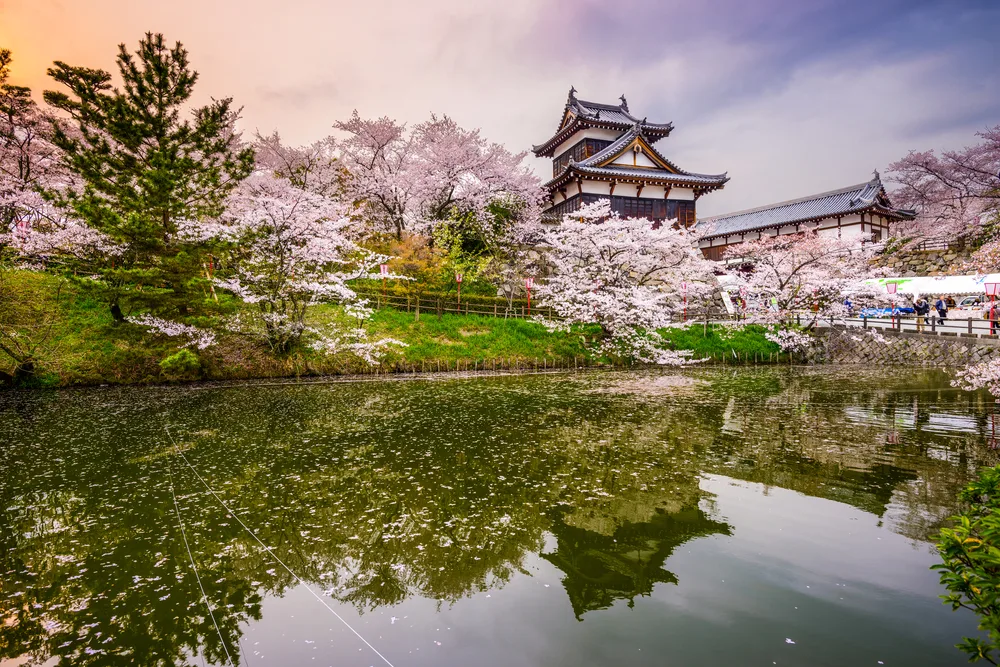
Every season brings something different to Nara. In early April, cherry trees bloom across the park and around the ponds. The days are mild, but crowds are at their peak, so an early start matters even more. Late November, by contrast, turns the maples deep red around Todai-ji and the Kasugayama woods. Many consider it the most beautiful time of year here.
Summer is hot and humid, and the long walks can feel tiring by midday. Still, June brings the fawns, and summer evenings bring lantern festivals. In winter, the city is calm and the air is clear, though some mornings are cold. Whatever the season, weekdays are calmer than weekends, and mornings are always calmer than afternoons.
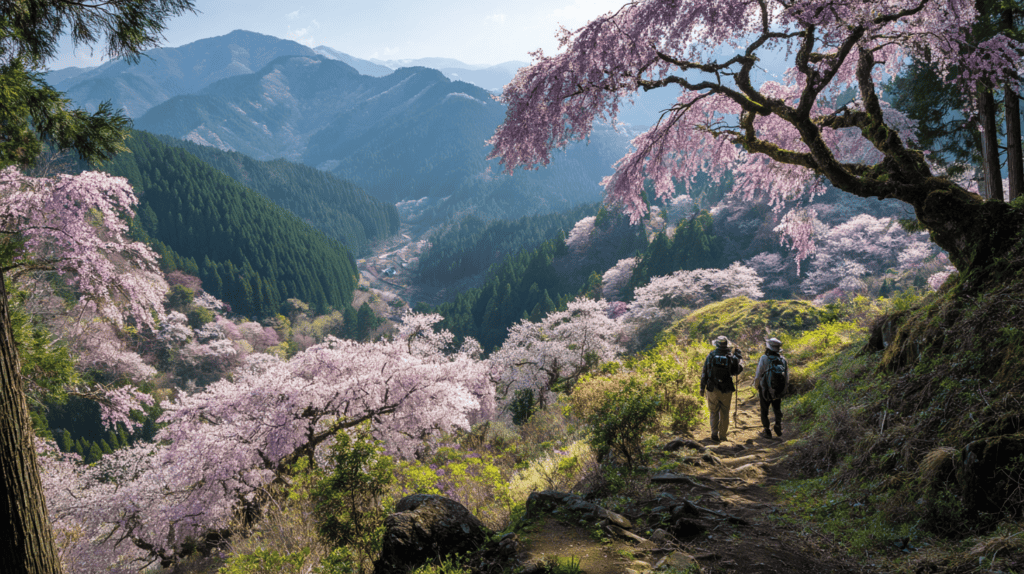
If your trip falls in cherry blossom season, consider a separate day for Yoshino. This mountain town, about 90 minutes south of Nara, is famous for its hillsides of wild cherry trees. It is too far to combine with central Nara in a single day. However, it makes a memorable addition if you are staying in the region for longer.
Recommended
Turning a Nara Day Trip Into More
One day shows you the heart of Nara, but the city rewards a slower pace. An overnight stay lets you walk to Kasuga Taisha at dawn, when the lanterns and the deer have the paths to themselves. It also leaves time for the museum, the gardens and a long dinner without watching the clock for the last train. In that sense, the best Nara day trip is sometimes the one that becomes two days.
Nara also makes a fine base for exploring the wider region. Ancient temples lie scattered across the plain to the south and west, and Yoshino waits in the mountains. For first-time visitors, though, the route in this guide is the place to start. Our two-day Kyoto itinerary pairs well with it for a fuller week in Kansai.
Whatever you choose, give Nara the attention it asks for. Walk slowly under the lanterns, bow back to the deer, and stand for a while beneath the Great Buddha. These are simple acts, yet they stay with travelers long after the photographs fade. The city has welcomed visitors for more than twelve centuries, and it still rewards those who arrive early and leave unhurried.
Above all, plan the morning and let the afternoon unfold. Arrive early, see the great sights first, and save the old town for the softer light. With that rhythm, a single day in Nara feels full rather than rushed, and you will likely leave already planning a return.


Planning With Help
A Nara day trip is easy to plan alone, yet a few details change the experience. A private guide can open the history of each hall as you walk, and a well-chosen inn turns the day into an evening among the lanterns. Some travelers add a calligraphy lesson with sumi ink made in Nara, or a morning at a craft workshop in Naramachi. Others link Nara with Kyoto, Uji and Yoshino in a single, unhurried loop through the old heart of Japan. Each of those choices depends on your pace, your interests and the season you travel, and each is easier to arrange well in advance, especially in spring and autumn.
Nara and Kansai, Planned Around You
We can arrange a private guide for Todai-ji and Kasuga Taisha, a night at a traditional inn near the park, and a route that links Nara with Kyoto and the mountains of Yoshino at your own pace.
Plan Your Custom Japan ItineraryQuestions Worth Asking
Is one day enough for Nara?
One day covers the core: Kasuga Taisha, Nara Park and its deer, Todai-ji and a walk through Naramachi. Start by nine, keep lunch simple and you will finish by late afternoon. Add a night if you want the museum, the gardens and the empty early-morning paths.
How do you get to Nara from Kyoto?
The Kintetsu limited express runs from Kyoto Station to Kintetsu-Nara in about 35 minutes. The JR Miyakoji Rapid takes about 45 minutes to JR Nara Station and is covered by the Japan Rail Pass. Kintetsu-Nara sits closer to the park, which saves a 20-minute walk.
Are the deer in Nara safe to approach?
They are wild animals that are used to people. Many bow before taking a cracker, but they can nip or butt when they see food. Feed only the shika senbei sold in the park, show empty hands when you are done, and keep paper maps and snacks out of reach.
What does a Nara day trip cost?
Train fares from Kyoto run from about $5 to $9 each way, depending on the service. The Great Buddha Hall at Todai-ji charges about $5.50 (¥800), and Kasuga Taisha’s inner area about $5. The park and most of the shrine grounds charge nothing.
When is the best time for a Nara day trip?
Spring and late autumn are the most beautiful, with blossoms in early April and red leaves in late November. Weekday mornings are calmest in any season. In June, newborn fawns appear in the park. Midsummer is hot and humid, so start earlier and rest at midday.
Should I stay overnight in Nara?
If you can, yes. After the day visitors leave, the paths to Kasuga Taisha empty out and the deer settle. An overnight stay also gives you time for the Nara National Museum and the Isuien garden without rushing back to the station.