The hidden temples in Kyoto are where the city still feels like an old capital rather than a queue. Millions of visitors crowd Kinkaku-ji and Fushimi Inari every year. Meanwhile, a short bus ride away, moss gardens, mountain halls and lantern-lit lanes keep their own pace. This guide covers twelve of those places: eight temples and four traditional districts. They range from mountain halls reached by forest paths to streets where craftspeople still work as their grandparents did.
Each one shows a side of Japanese culture, architecture and daily life that most visitors never see. These are living places, not museums. Resident priests still keep their morning routines, makers still use old techniques, and gardens still change with every season. For the wider picture, start with our guide to planning luxury travel in Japan well.
Where are the best hidden temples in Kyoto?
The best hidden temples in Kyoto sit on the city’s edges. Sanzen-in and Jakko-in lie in the Ohara valley, Kurama-dera on a forested mountain, and Adashino Nenbutsu-ji and Daikaku-ji in Arashiyama and Saga. In the northern hills, Shisendo, Genko-an and Ruriko-in reward an early start.
Beyond the Tourist Trail in Kyoto
Kyoto has around 1,600 temples, yet most itineraries visit the same ten. The famous names earn their fame. Even so, they fill by mid-morning, and the experience can feel rushed. A different Kyoto begins just past the last stop of the city bus lines. The hidden temples in Kyoto share three qualities. First, they take some effort to reach, whether by a long bus ride, a mountain path or a reservation. Second, they keep a strong sense of place.
Third, each one adds something the famous sights cannot, such as silence in a moss garden or a single framed view of a maple. None of them needs a special ticket or a guided tour. All they ask is an early start and a willingness to walk a little further than most visitors.
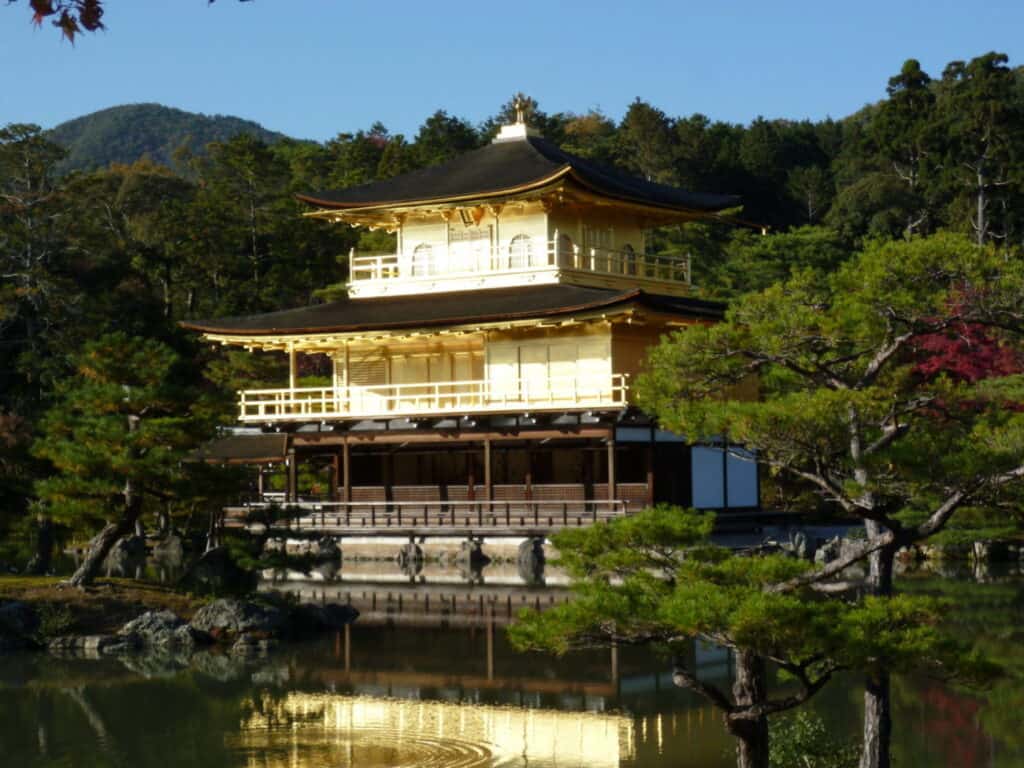
The districts work the same way. Instead of souvenir streets, they offer working markets, stone lanes and riverside teahouses. Pair one temple with one district each day, and leave the afternoons loose enough to linger. Our guide to two well-paced days in Kyoto covers the classic sights, and this list goes further. Most of the places below sit in three clusters, so a week can cover them without long transfers. One cluster lies north of the city, in the valleys of Ohara and Kurama. A second sits west, beyond the bamboo of Arashiyama. The third is scattered through the northern hills, where three small temples reward patience more than walking.
Hidden Temples in Kyoto’s Northern Valleys: Ohara and Kurama
North of the city, the land rises into cedar forest. Two valleys here hold three of the most rewarding temples in Kyoto, and the air is noticeably cooler than downtown. Farmhouses line the roads, and small stalls sell pickles made from the valley’s own shiso and eggplant.
1. Sanzen-in — the Moss Garden of Ohara
In the mountain village of Ohara, Sanzen-in holds one of Japan’s loveliest moss gardens. This Tendai temple traces its roots to the eighth century and moved to Ohara in 1156. It is said to grow more than a hundred varieties of moss beneath tall cedars. Inside the Ojo Gokuraku-in hall, a gilded Amida triad, a National Treasure, sits above the green.
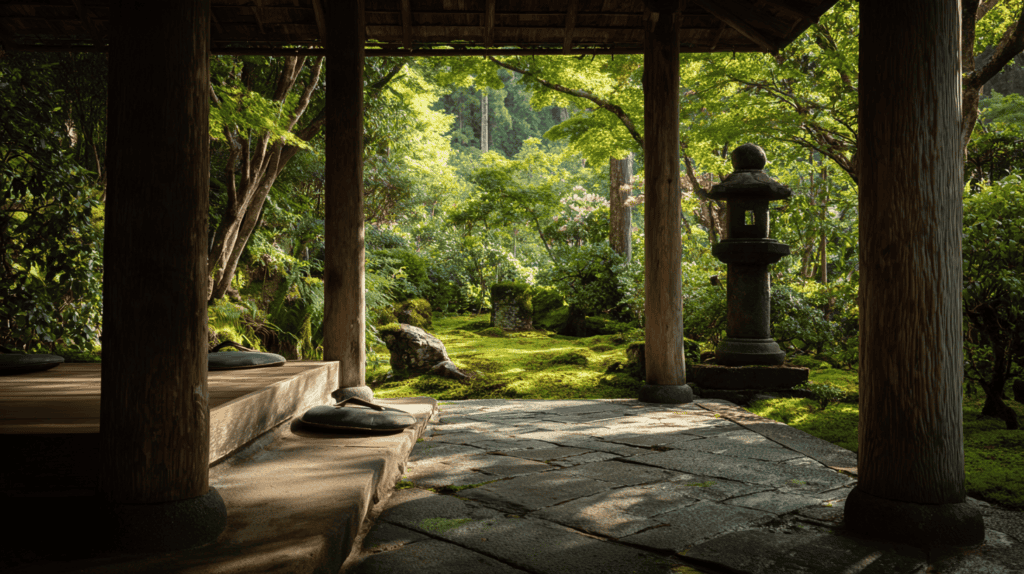
The setting is what makes it special. Morning mist and filtered light give the gardens a hushed, unhurried mood. Moss also needs steady humidity and cool air, so the valley has stayed green and largely undeveloped. Arrive around eight or nine in the morning for the softest light and the fewest visitors. The bus from central Kyoto takes about an hour, and it follows a river valley for much of the way. Bring a light jacket, too, since the valley stays cool even in early summer.
2. Kurama-dera — the Mountain Temple
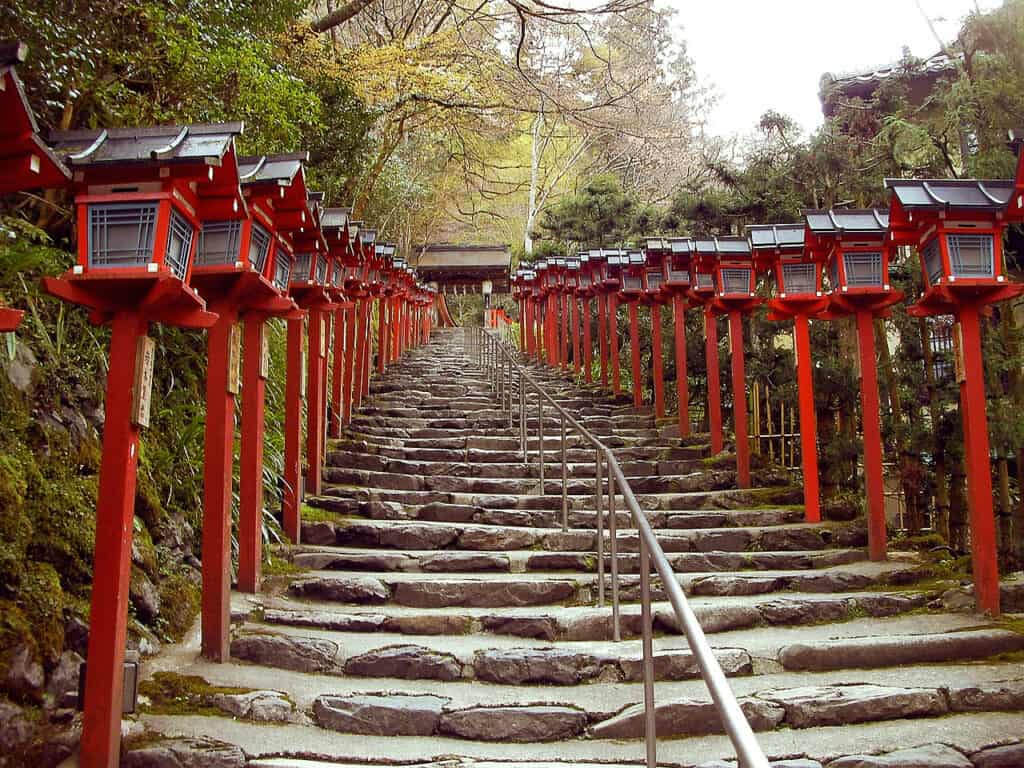
High on Mount Kurama, Kurama-dera dates to 770. Its halls spread across several levels, linked by steep forest paths. The climb itself is the point, and it rewards the effort with views over layered ridges.
The temple honors Bishamonten, a guardian figure linked to protection and good fortune. Reaching the main hall means climbing hundreds of stone steps through old cedars that rise like columns. Good shoes matter here, because the stones stay damp long after rain.

A short cable car covers part of the climb, although it has been closed for repairs at times, so check before you go. The old Kurama Onsen hot spring at the foot of the mountain closed in 2021 and is being rebuilt. In addition, shojin ryori, the vegetarian temple cuisine, is served at lodgings in the area, and autumn brings evening illuminations. Allow a full morning for the temple, then walk over the ridge if your legs allow.
3. Jakko-in — the Nunnery of Ohara
Further into the Ohara valley, Jakko-in offers a glimpse of women’s lives in old Japan. Tradition dates it to the sixth century, and for centuries it served as a refuge for women who left court life behind. Its garden follows Pure Land design, with water, seasonal flowers and places to sit and look. The main hall burned in 2000, and craftsmen rebuilt it using traditional techniques and natural materials. Today it looks much as it did before. A book makes a good companion for these northern days, especially one written by people who live in the city.
Zen Gardens and Temples of Kyoto — John Dougill’s guide
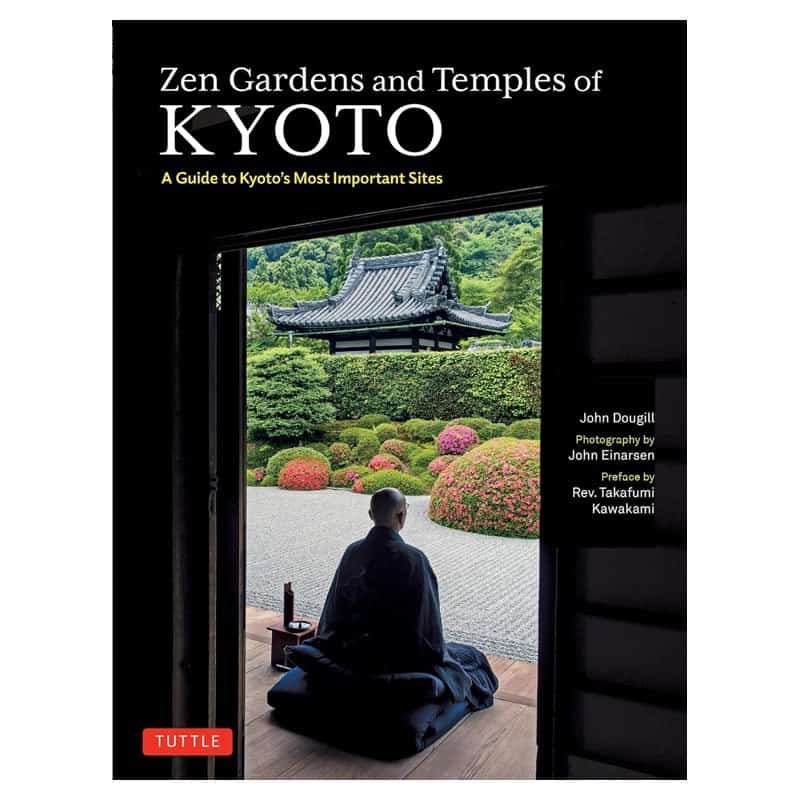
Kyoto resident John Dougill wrote Zen Gardens and Temples of Kyoto, which covers more than fifty temples and gardens. John Einarsen, a photographer based in the city, shot the images. Each entry explains the history, then points to the small opportunities visitors miss, such as early morning sitting sessions or tea served in a garden room.
The preface comes from Takafumi Kawakami, deputy head priest at Shunkoin. The book slips easily into a day bag, so it works as a guide on the bus to Ohara and as a keepsake afterward. Read the entry before you arrive, and the garden in front of you makes more sense. It is also the best primer we know on the hidden temples in Kyoto.
Planning a Day in Ohara and Kurama
Ohara and Kurama make a natural pair for one long day. Start early at Sanzen-in, walk the lane to Jakko-in, and take the bus back toward the city by lunch. Then ride the little Eizan line north to Kurama for the afternoon climb. Alternatively, split them across two days and add a night at a ryokan in Kibune, where riverside platforms serve dinner over the water in summer. Either way, carry cash, because some small stalls and entrance gates in the valleys still prefer it.
The famous sights in town are worth a visit too, of course. The two guides below cover them well, and they make a good counterweight to the slower days in the valleys. Use them to balance a week between the headline sights and the calmer edges of the city.
You may also like

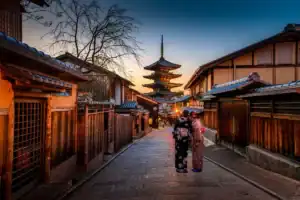
West of the center, a second cluster waits in Arashiyama and Saga. Most visitors see only the bamboo grove and the river here, then head back to the station. Yet a twenty-minute walk north leads to stone lanes, thatched roofs and two temples with long histories. The walk itself is part of the reward, passing farmhouses and small fields on the way. Go on a weekday if you can, and start at the far end, so you walk back toward the crowds rather than with them.
Hidden Temples in Arashiyama and Saga
4. Adashino Nenbutsu-ji — the Temple of Remembrance
At the far end of Arashiyama, Adashino Nenbutsu-ji holds more than 8,000 stone figures and memorial stones. They honor people who died without proper burial rites. A short bamboo path leads in, and the approach feels set apart from the town below.
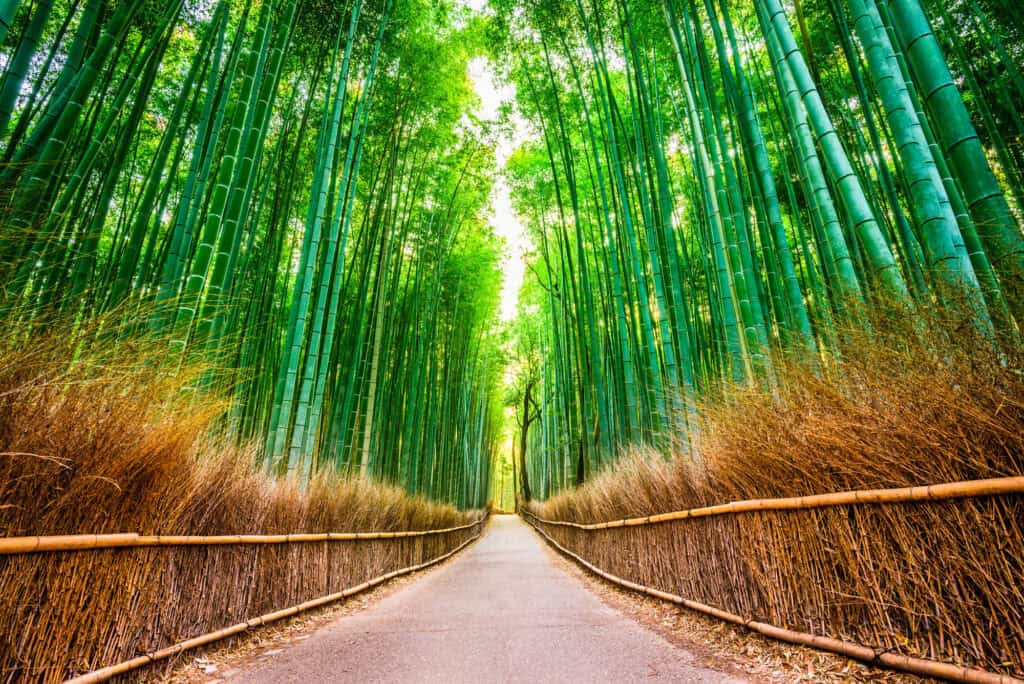
The temple dates to the early Heian period. It speaks to the passing of all things and to compassion for strangers. Rows of weathered figures stand in the stone garden in many poses, and the effect is moving rather than grim. The temple’s great event is Sento Kuyo, held on August 23 and 24. Then, thousands of candles light the stone figures at dusk. It is one of the most moving evenings in the Kyoto calendar. Outside those two nights, the temple is calm, and a morning visit rarely meets more than a handful of people. Photography rules vary inside the grounds, so read the signs at the gate first.
5. Daikaku-ji — the Imperial Temple
Daikaku-ji began as an imperial villa and became a temple in 876. It keeps the elegance of court culture, with painted sliding doors, or fusuma-e, by some of Japan’s finest artists. Outside, the wide Osawa Pond reflects each season.

The temple is the head of the Daikaku-ji school of Shingon. Its priests still follow rituals more than a thousand years old. Visitors can join morning services and sitting practice on set days, so ask at the entrance. Covered corridors link the halls, and their floors creak underfoot in a pattern that has its own charm. In autumn, the pond hosts moon-viewing boats, a custom that recalls the court life of the villa’s first owner. The pond itself is one of Japan’s oldest surviving garden ponds.
Scent is part of every temple visit in Kyoto. In the halls, a thin thread of incense hangs in the air, and it lingers in the memory long after the trip. Many Kyoto households keep the habit going with a few sticks at home.
Shoyeido Moss Garden Incense — Kyoto incense for home
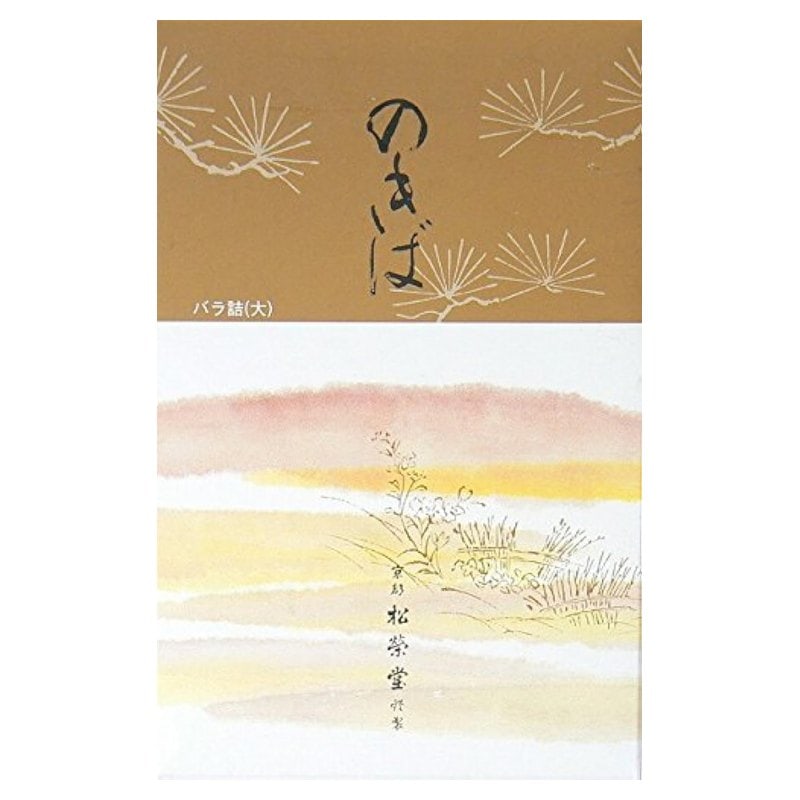
Shoyeido has blended incense in Kyoto for about three centuries, and its family recipes still guide every stick. Shoyeido Moss Garden incense, called Nokiba in Japanese, blends sandalwood, patchouli and benzoin into a soft, woody scent. It suits this chapter well, because the name recalls the green gardens of Ohara.
The box holds 500 sticks, each about five inches long, and one burns for roughly thirty minutes. There are no synthetic oils, so the smoke stays clean. Light one in the evening after a temple day, and the scent of the halls follows you home. A single stick also makes a calm end to a busy day of travel.
Poets, Windows and Reflections: Three Northern Temples
Three smaller temples in the northern hills reward patience more than walking. Each is built around a single idea: a poet’s study, a pair of windows or a polished floor. They sit within a short taxi ride of each other, so one morning can hold two of them, with lunch in between at one of the small noodle shops near Ichijoji station. Students from the nearby universities keep those shops busy at noon, so arrive a little early or a little late.
6. Shisendo — the Poet’s Hermitage
Ishikawa Jozan, a samurai who became a poet, built Shisendo in 1641 as his retirement villa. It joins literature, philosophy and garden design. Its name means Hall of the Poetry Immortals, after the portraits of thirty-six Chinese poets that hang inside.
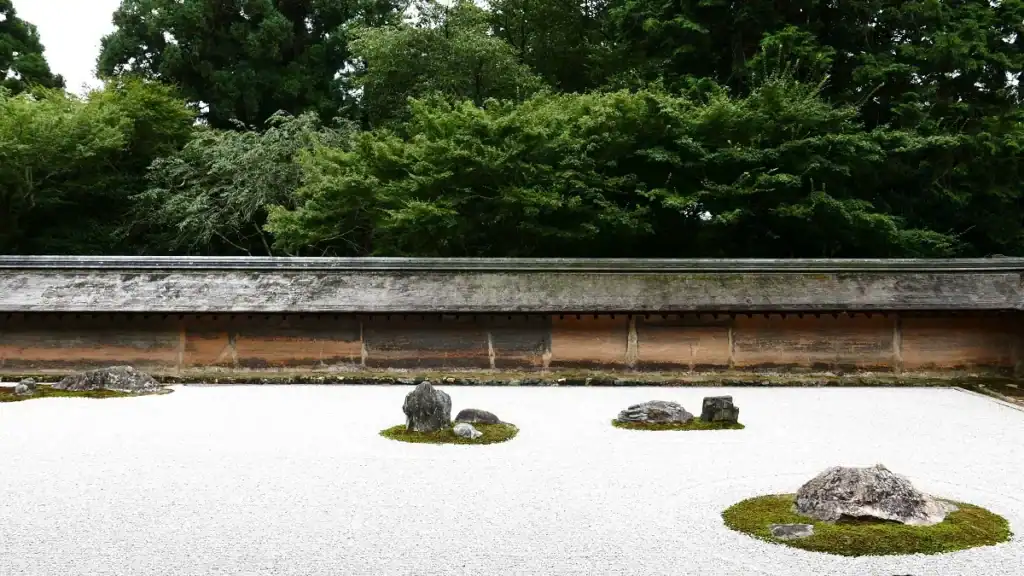
Jozan chose the poets with the scholar Hayashi Razan, and Kano Tanyu is credited with the paintings. Outside, a shishi-odoshi, or deer-scarer, knocks at steady intervals as its bamboo tips and refills. Framed views of the garden shift through the day as light and shadow move across the raked sand and clipped azaleas. Sit on the veranda for twenty minutes, and the rhythm of the bamboo becomes the clock.
7. Genko-an — the Two Windows
Genko-an is famous for two windows. A round one stands for enlightenment, and a square one for the struggles of ordinary life. This Zen temple uses architecture to make an idea visible, so most visitors sit before each window in turn. Its ceiling carries old bloodstains from Fushimi Castle, where defenders fell in 1600. The boards were moved here as a memorial and as a reminder that life is brief. It is one of the most striking hidden temples in Kyoto, and its small size keeps every visit personal.

Back at Genko-an, in autumn, maples blaze through both windows, and the contrast between the round and square frames becomes vivid. Sit on the tatami a few feet back, and each window becomes a picture of its own. The temple is small, so a visit takes half an hour, yet many people stay longer. The neighborhood around it, Takagamine, was once an artists’ village, and its lanes still hold craft studios and a few old villas. Come in the last hour before closing for the warmest light through the windows. In winter, the garden’s bare branches make an equally striking frame.
8. Ruriko-in — the Reflecting Floor
Ruriko-in is small, and it is famous for one view. Its polished wooden floors and lacquered desks mirror the maples outside, doubling every color. The temple opens mainly in spring and autumn, and in recent years it has required online reservations for its peak autumn weeks. As a result, visits stay intimate, even at the peak of the season.

The design blurs inside and outside. Visitors sit on the floor while reflected leaves move with the light and wind. The upstairs room holds the famous view, while a moss garden downstairs is just as lovely in spring green. The temple sits in Yase, at the foot of Mount Hiei, a short ride from Demachiyanagi on the same line that serves Kurama. That makes it an easy addition to a northern day. Arrive at your reserved time, since slots are short and strictly kept.
A good book on Kyoto’s gardens explains why the reflections work so well, and it is a fine way to prepare before you travel. Its photographs also help you pick which gardens to visit, which matters when time is short.
Kyoto Gardens: Masterworks of the Japanese Gardener’s Art — the photographic companion
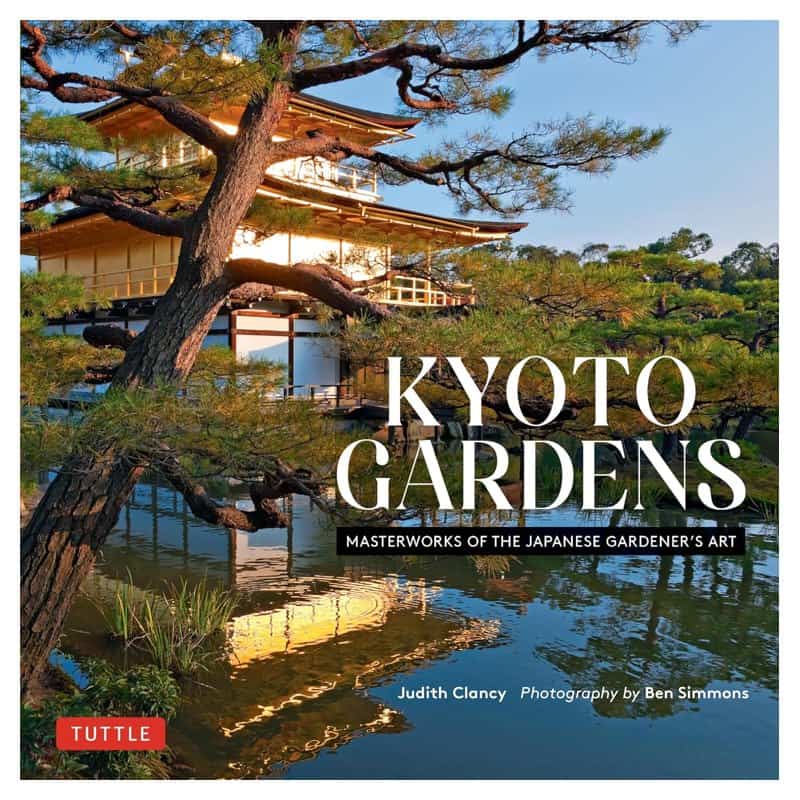
Longtime Kyoto writer Judith Clancy and photographer Ben Simmons made Kyoto Gardens together. The essays explain how each garden was designed, while the photographs capture the gardens in every season. It covers well-known places, such as the Silver Pavilion’s sand garden, alongside smaller ones.
The book is a large hardcover, best enjoyed at home before a trip or after one. Read a chapter, then plan a morning around that garden. You will notice details, such as a borrowed view of a hill, that would otherwise slip past. Gardeners call that technique shakkei, and Kyoto’s gardens use it nearly everywhere you look.
Shakkei explains much of what makes these northern temples feel larger than they are. A garden wall stops at just the right height, and a distant ridge becomes part of the design. Once you notice it, you see it everywhere, from Shisendo’s veranda to the upstairs window at Ruriko-in. It is a reminder that Kyoto’s gardeners worked with the landscape around them, not against it. That habit of borrowing and framing runs through the city’s streets too, as the districts below show.
After the temples, the old neighborhoods offer a change of pace. They are busier, warmer and full of the sounds of daily trade. Each district has its own character, from farm lanes to river terraces, so choose by mood rather than by fame.
Four Traditional Districts in Kyoto
Temples are only half of the old city. Kyoto’s districts carry the same history in a different form, with markets, townhouses and riverside teahouses that still work for a living. Spend an afternoon in one of them after a morning temple, and the two halves of the city come together.
9. Saga-Toriimoto — the Thatched Village
At the top of Arashiyama, Saga-Toriimoto preserves a street of thatched farmhouses, or minka, beside old merchant townhouses. Families farmed rice and vegetables here for centuries, and some still sell pickles and crafts from their front rooms. A small preserved house explains how people lived and worked along the street. Its isolation has kept local customs alive, and the lane feels close to the Edo period on a weekday morning. Walk it slowly on the way to Adashino, and stop wherever a door stands open.
10. Nishiki Market — Kyoto’s Kitchen
Nicknamed Kyoto’s Kitchen, Nishiki Market runs for five blocks and has fed the city for about four hundred years. More than a hundred shops sell everything from fresh tofu and pickles to tea and sweets.

Many stalls have traded for more than two hundred years. They keep old preparation methods, buy seasonal produce from the same farms and serve families who have shopped there for generations. Come before eleven, when chefs do their buying. Look for kyo-yasai, the heirloom vegetables of Kyoto, and for the knife shop at the market’s eastern end, which has sharpened blades for the city’s cooks since the sixteenth century.
11. Ishibei-koji — the Stone-Paved Lane
Ishibei-koji is a stone-paved lane of wooden townhouses, or machiya, lit by paper lanterns. Strict rules keep modern fittings out of sight, so the lane looks as it might have a century ago. Ryokan, teahouses and small restaurants occupy buildings that have hosted similar trades for generations. At dusk, the lanterns glow against the stone walls, and the lane is at its most atmospheric.
12. Pontocho — the Riverside Lane
Pontocho is a narrow alley between the Kamo River and Kiyamachi. Geiko and maiko still entertain guests in its ochaya, or teahouses, and the lane’s tight buildings make the most of little space. Our guide to geisha culture in Kyoto today explains how to see that world respectfully. From May to September, restaurants build wooden platforms, called kawadoko, over the river. Dining outside to the sound of the water is one of the great pleasures of a Kyoto summer. Book a riverside table a few weeks ahead in June and July, when the evenings are warm and the platforms fill. Our guides below go further into both worlds.
You may also like

Kyoto’s culture is something you can join as well as watch. Tea rooms and craft workshops welcome visitors who book ahead, and many belong to families who have practiced the same art for generations. Booking a week or two ahead is usually enough outside spring and autumn. Several temples and old districts still host tea ceremonies in rooms that have barely changed in centuries. Certified teachers lead them, and they offer a close look at Japanese aesthetics, philosophy and seasonal awareness.
Tea Ceremonies and Craft Workshops
Tea in Hidden Tea Houses
A private session usually lasts about an hour. It begins in a waiting room, continues along a garden path and ends with a bowl of tea in a small room lit by paper screens. Wear clean socks, since you will kneel on tatami throughout.
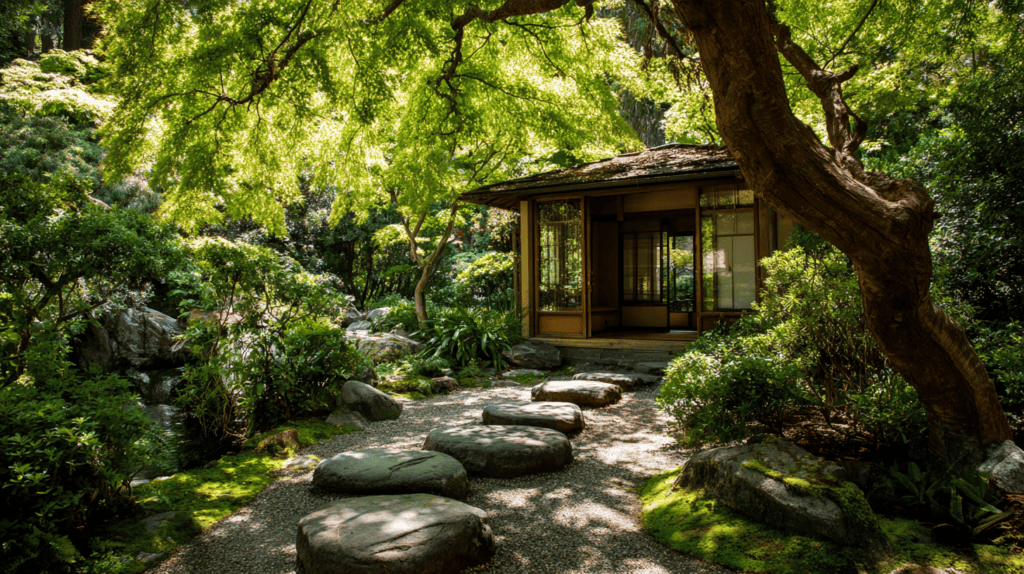
Guests learn the etiquette, notice the season in the scroll and flowers, and drink carefully whisked matcha with a sweet. The host prepares each bowl in silence, and the guest turns it before drinking, so the front faces the host. Our guide to the way of tea walks through each step. Most teachers welcome questions after the ceremony, which is the moment to ask about the bowl, the scroll and the sweet. A small sweet comes first, so the tea’s bitterness lands softly.
Afterward, many guests want to keep the habit going at home. A good matcha from a Kyoto house makes that easy, and it brings back the room every time you whisk a bowl. Ask the shop for its current lot, since the taste shifts slightly through the year.
Ippodo Hatsu Matcha — light matcha from Kyoto
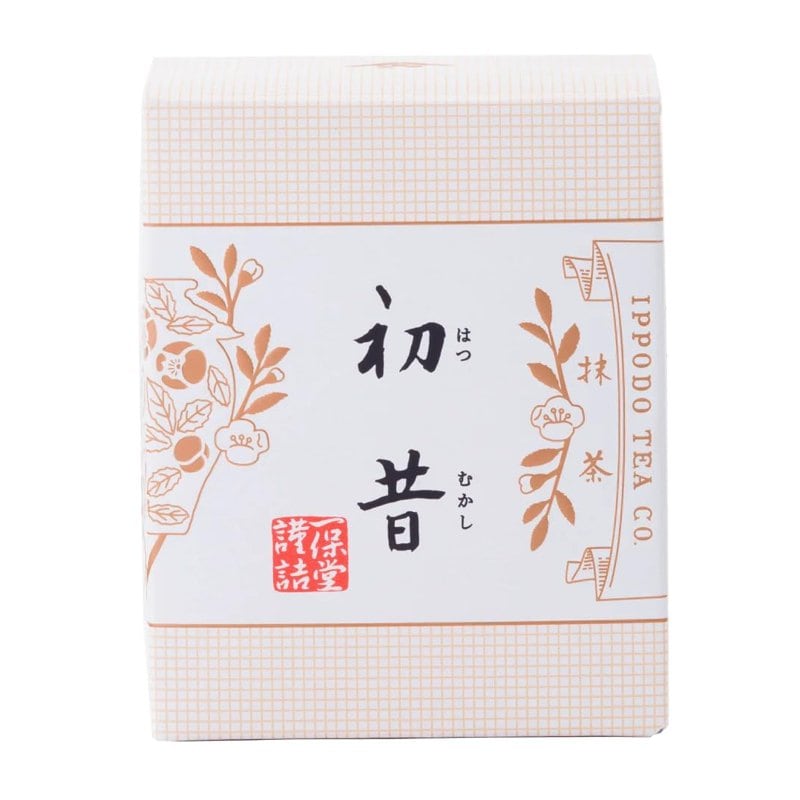
Ippodo has sold tea in Kyoto since 1717, and its old shop on Teramachi Street is still a local institution. Ippodo Hatsu matcha is a light-bodied blend with a short, crisp finish. It works well as everyday usucha, the thin tea of most ceremonies.
Each tin holds 40 grams, enough for many bowls. Sift it first, whisk it briskly with water just off the boil, and serve it with a small sweet. It also makes a good matcha latte, so it suits mornings as well as afternoons after a temple visit. Store the tin in the fridge once opened, so the color stays bright.
The Ippodo shop itself is worth a visit on Teramachi, a covered street of old stationers, booksellers and tea merchants just north of the city hall. Its tea room serves a bowl with a seasonal sweet, and staff will explain the difference between the grades. Nearby, small shops sell incense, brushes and handmade paper, all good gifts that travel well. Teramachi also links easily to Nishiki Market, so the two make a natural morning together before lunch. Most of the shops there close by early evening.
For anyone who wants to take a little of Kyoto home in words rather than objects, we send a small printable of Japanese proverbs. It arrives by email, and each proverb comes with a note on when people say it.
Ten Proverbs to Carry With You
A printable folio of ten Japanese proverbs, each with a short note on where it shows up in daily life. Several suit a slow morning in a temple garden. Leave your email and the printable arrives in your inbox, followed by an occasional letter on Japan.
Thank you. The next letter will find you.
Traditional Craft Workshops
Workshops across Kyoto teach pottery, textile dyeing, woodworking and papermaking. Many sit inside family businesses that have run for generations, so you learn directly from master makers. You make your own piece while learning how Japanese design works, where materials come from and how makers think about their work. A morning painting a fan or throwing a small bowl leaves you with a souvenir that carries a story. Several workshops sit in Nishijin, the old weaving district, where looms still clatter behind wooden fronts.
Most workshops last two or three hours and take small groups. Pottery pieces are fired after you leave and shipped on, so ask about timing and overseas delivery when you book. Many also run shorter one-hour sessions for children and families.
Photographing Hidden Temples in Kyoto
Golden Hour at the Temples
The outer temples photograph best at golden hour, when warm light filters through the trees onto old wood. Early mornings bring both the best light and the fewest people in your frame.
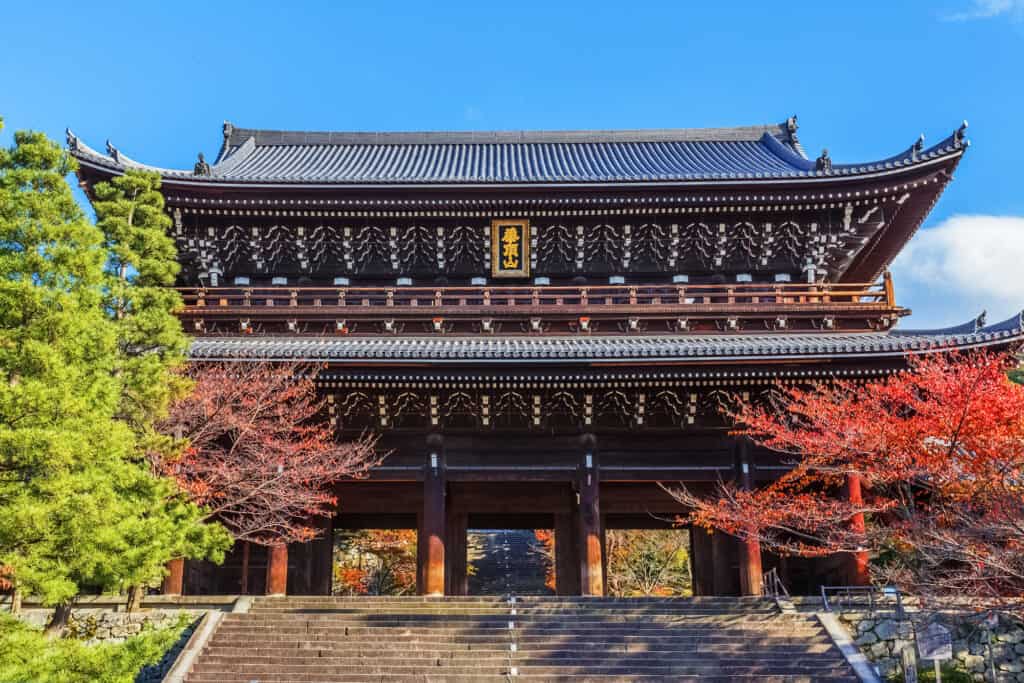
A few habits help. Use a wide-angle lens for halls and gardens, and a polarizing filter to deepen color and cut glare. Bring a small tripod for low light, where it is allowed. Above all, keep a respectful distance from anyone lighting incense or taking part in a ceremony, and put the camera away when you are asked. Many halls ban photography inside, and the rule protects old paintings as well as privacy. Ask before photographing any person, especially geiko in the evening.
Seasonal Color
Each place has its season. Spring brings cherry blossoms, summer deep greens, autumn maples and winter snow. Because these temples see fewer visitors, they offer natural frames and clear compositions that crowded sites rarely allow. Early starts pay off in every season.
Getting Around and Planning the Days
Transport and Access
Most of these places need a mix of train, bus and walking. Kyoto stopped selling its bus-only day pass in 2023 to ease crowding. Instead, the Subway and Bus One-Day Pass covers the city’s subway and buses, plus some routes run by other companies. Mountain temples add a hike or a local train. For the northern valleys, the Eizan line from Demachiyanagi is the key, and Kyoto Bus routes reach Ohara from the same station. A sensible order works like this:
- Start with the easier temples in town.
- Move on to the mountain temples, which take more time and effort.
- Finish in a traditional district for an evening meal.
- Give each area a full day rather than rushing between them.
Planning Your Spending
Plan for four kinds of daily cost: local transport, temple entry, meals and cultural experiences. Entry to most temples is modest, while tea ceremonies, workshops and kaiseki dinners vary widely. A private guide or driver adds the most, yet it saves hours on the outer routes.
Recommended
Timing matters as much as transport. Kyoto’s outer temples open early, often at nine, and many close by half past four, so a late start can cut a day in half. Taxis are plentiful near stations but scarce in the valleys, so arrange a pickup if you plan to visit several places. Finally, check each temple’s calendar before you set out, because some close for ceremonies or seasonal maintenance with little notice. The seasons shape everything else. Each one changes the gardens, the crowds and the best hours to visit, as the next section explains. Spring and autumn draw the biggest crowds, while winter and early summer stay calmer and easier to book.
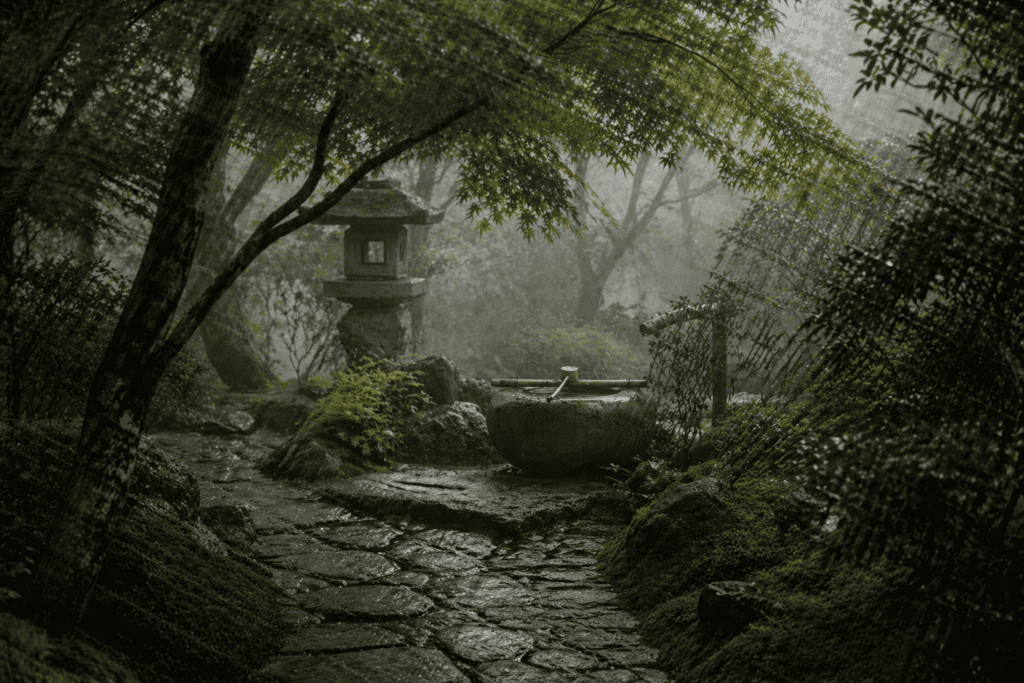
Rain is the other variable. June brings the rainy season, when moss gardens look their greenest and visitor numbers drop. A light umbrella and waterproof shoes make those days a pleasure rather than a chore, and the gardens reward the effort.
Ten Proverbs to Carry With You
Prefer something to read before you go? Our printable folio gathers ten Japanese proverbs, several of them about the seasons. Leave your email and it arrives in your inbox, followed by an occasional letter on Japan.
Thank you. The next letter will find you.
Kyoto Temples Through the Seasons
Spring, March to May
The outer temples offer cherry blossoms without the crush. Mountain areas bloom later than the city, so the season lasts longer here. Gardens planted for spring flowers make fine places to sit and photograph. Ohara’s azaleas and Daikaku-ji’s pond follow the cherries in April and May.
Summer, June to August
The mountain temples stay cooler under thick trees and at higher altitude. Local summer festivals bring music, dance and food that feel very different from the big events downtown.
Autumn, September to November
This is the finest season for color. Maples frame halls and reflect in garden ponds, and the outer temples let you enjoy them without elbowing for a view. Visiting hidden temples in Kyoto in November means early starts, but the reward is a garden almost to yourself. Book hotels early for November, because rooms across the city fill months ahead. The peak usually arrives in the third week of November in the city, and a little earlier in the valleys.
Winter, December to February
Snow turns the temples into scenes from old paintings, with dark roofs rising from white ground. A few sites hold winter illuminations that make the evenings memorable. Snow falls on only a handful of days in the city, yet the northern valleys see it more often. On those mornings, Ohara’s moss gardens turn white, and the bus is almost empty. Dress in layers, because halls are unheated and floors are cold underfoot. Some temples also hold special winter openings of halls that stay closed the rest of the year.
On cold mornings, a cotton cloth around the neck helps more than you might expect. Japanese travelers carry one in every season. It also dries your hands at a temple basin and wraps a small bento for the long bus ride.
Y’s Factory Gauze Tenugui — cotton cloths made in Japan

A tenugui is a thin cotton cloth, and Japanese travelers carry one everywhere. These Y’s factory gauze tenugui are made in Japan from soft cotton gauze, printed with the classic wave-and-plover pattern. Each measures about 14 by 35 inches, and the set holds three.
Use one to dry your hands at a temple basin, as a scarf on a cold morning or as a wrap for a bento. The gauze dries fast, so it fits a day bag on a long walking day. It also makes a fine small gift for a host, folded into a neat square with a note.
Temple Etiquette and Respect
How to Behave
Temples are places of daily practice, so a few habits matter. Most are simple courtesies, and local visitors follow them without thinking. Learn them once, and every temple visit in Japan becomes easier. The list below covers what matters most, from the gate to the main hall. At the entrance, you will often find a stone basin with wooden ladles. Rinse your left hand, then your right, then your mouth from your cupped palm, never from the ladle itself. Then step aside.
- Bow lightly before entering the grounds and the halls.
- Remove hats and sunglasses inside halls.
- Speak softly, especially during services.
- Check signs before taking photographs, or ask.
- Dress modestly, with shoulders and knees covered.
- Silence your phone for the whole visit.
Joining In
Many temples welcome visitors to morning services and sitting practice. Follow the lead of local visitors, stay still, and never treat a ceremony as entertainment or a photo opportunity. Our guide to Japanese etiquette for travelers covers the rest. It is short and practical.
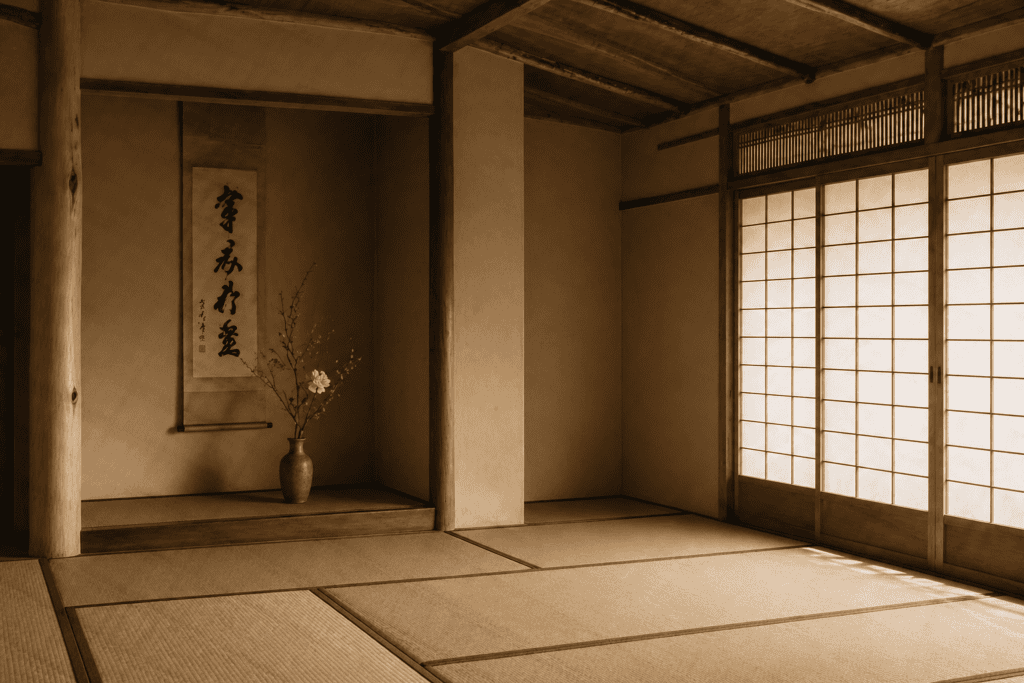
Shoes come off at the entrance to every hall, so wear a pair that slips on and off easily. Carry clean socks, because floors are polished wood and tatami, and bare feet are best avoided. Finally, if a priest offers you tea, accept it with both hands and a small bow. These gestures earn warmth in return, and they often lead to the best conversations of the trip. Visitors who take that care are often shown a little more of the temple.
Many temples also stamp a goshuin, a handwritten seal, into a small book for visitors. Ask politely, pay the small fee and wait while the calligraphy dries. Each stamp is different, and the book becomes a lovely record of the trip.
You may also like
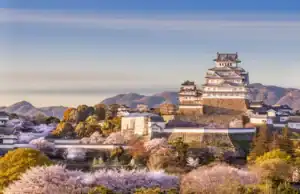
Food is one of the best reasons to visit the outer temples. Kyoto’s temple kitchens shaped the city’s cooking, with tofu, vegetables and careful seasoning at the center. Several temples still serve those meals in rooms overlooking their gardens. Booking ahead is wise, since some kitchens cook only a few trays a day. Several temples serve shojin ryori, the vegetarian cuisine of Japanese temples. It shows how plant ingredients can build deep, satisfying flavor through careful preparation and close attention to the season.
Temple Food and Neighborhood Restaurants
Shojin Ryori, the Temple Cuisine
A typical tray holds rice, soup, pickles and several small dishes of simmered vegetables, sesame tofu and seasonal greens. Nothing is wasted, and flavors come from kombu, mushrooms and careful timing rather than meat or fish. Portions are small but satisfying.
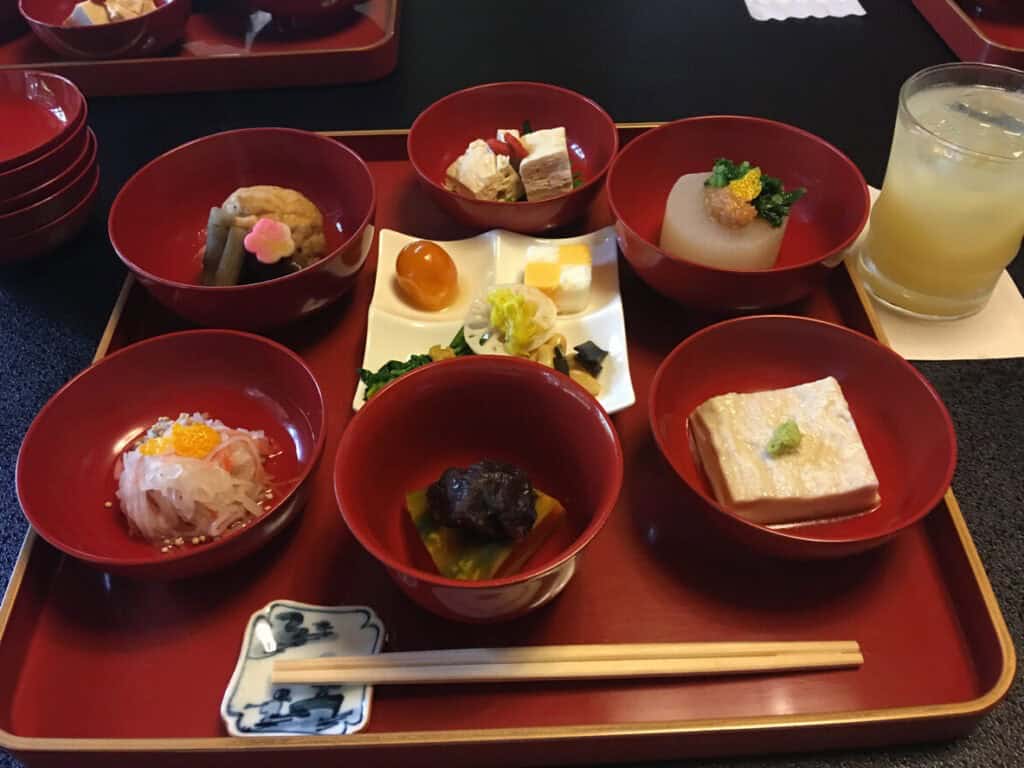
The meals follow clear principles: waste nothing, cook with the season and balance each tray with natural foods prepared with care and gratitude. One of the simplest dishes, yudofu, became a Kyoto specialty, and restaurants near Nanzen-ji have served it for centuries. The idea is simple. Good tofu, made with soft Kyoto water, is warmed gently in kombu broth and eaten with a light dipping sauce. Its plainness shows off the quality of the tofu, which is why Kyoto’s makers take such pride in it.
Yudofu is also easy to make at home. A clay pot and good tofu are all you need, and the recipe below takes about fifteen minutes from start to finish. It suits a cold evening especially well, served with rice and pickles.
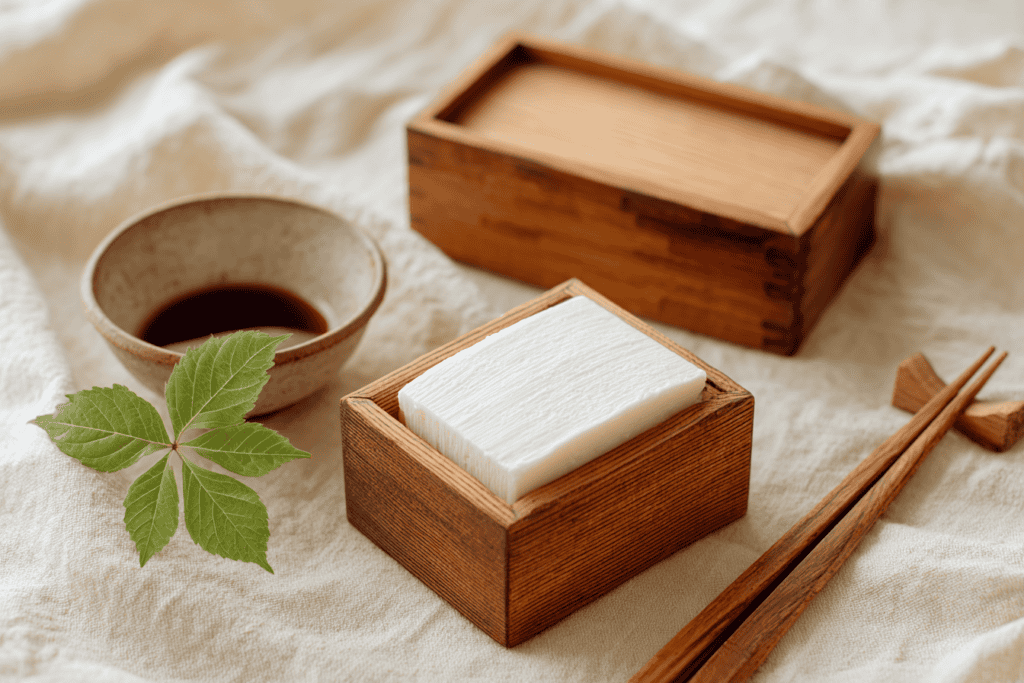
Yudofu — Kyoto’s simmered tofu
Pour four cups of water into a donabe or heavy pot and add one sheet of kombu. Bring it to a boil, then lower the heat to medium-low. Meanwhile, cut a fourteen-ounce block of tofu into eight pieces. Slide them gently into the pot, cover it and simmer for seven to eight minutes. Bring the pot to the table and lift each piece out with a slotted spoon. Dip it in ponzu, then top it with sliced green onion, a pinch of shichimi and a little grated daikon.
The recipe follows a standard home version from Japanese Cooking 101. For the best result, buy the softest silken tofu you can find, and keep the broth just below a boil, so the pieces stay smooth rather than spongy. Kombu gives the broth its gentle savor, and you can reuse the sheet once for a second pot. In Kyoto, the dish is served in a clay pot at the table, which keeps the tofu warm through a long meal. Serve it straight away.
That clay pot is the one piece of equipment worth bringing home. It turns a simple dish into a small ceremony at the table. Japanese homes bring theirs out all winter long, for simple hot pots, rice and slow stews.
Ginpo Banko Ware Donabe — a clay pot for the table
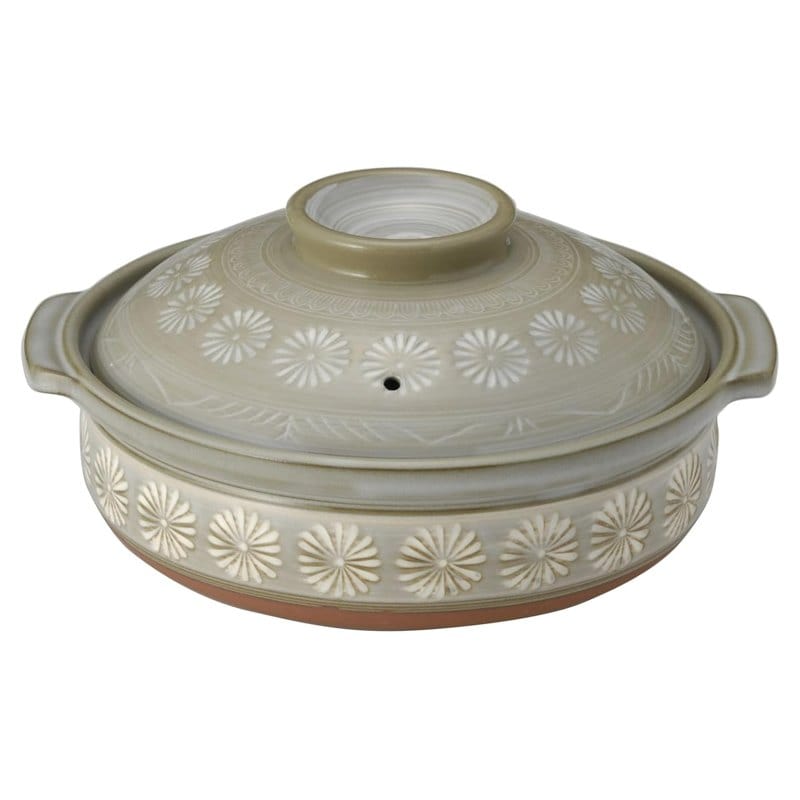
A donabe is the clay pot at the heart of Japanese table cooking, and this Ginpo Banko ware donabe is made in Japan. Banko ware comes from Mie Prefecture, and its heat-resistant clay handles a gas flame well. This deep No. 9 pot serves four to five people.
It also works in the oven and microwave, although not on induction. Use it for yudofu, then for hot pots and rice through the winter. Because the clay holds heat, the pot keeps simmering gently long after it leaves the stove. Season it once with rice porridge before its very first use.
Neighborhood Restaurants
The old districts hide restaurants that have fed local families for generations. They serve regional dishes rarely found on tourist streets, cooked in traditional ways, with menus that change through the year. Our guide to kaiseki, omakase and kappo dining explains how to book them. Many of the best are tiny counters with eight or ten seats, so reservations matter, and a hotel concierge can often secure a table that is closed to online booking. Ask your hotel to call, since many counters take bookings only by phone.
Lunch is the clever choice at the grander places. Many serve a shorter version of the dinner menu at midday, in the same rooms and with the same care. It is also far easier to book, especially in spring and autumn.
Many travelers keep a small notebook in Kyoto. They note the temple, the weather and one small detail: the sound of the bamboo fountain, a round window, a stone figure in the moss or the smell of incense in a hall. Over a week, those small notes become the trip you remember, long after the photographs blur together. The journal below was made for exactly that kind of attention, and its theme suits the weathered beauty of these old temples.
Wabi-sabi is the idea behind it, and Kyoto is the best place in Japan to feel what that word means. Mossy steps, worn floors and patched walls all carry it. Look for it in moss on old stone and in repaired tea bowls.
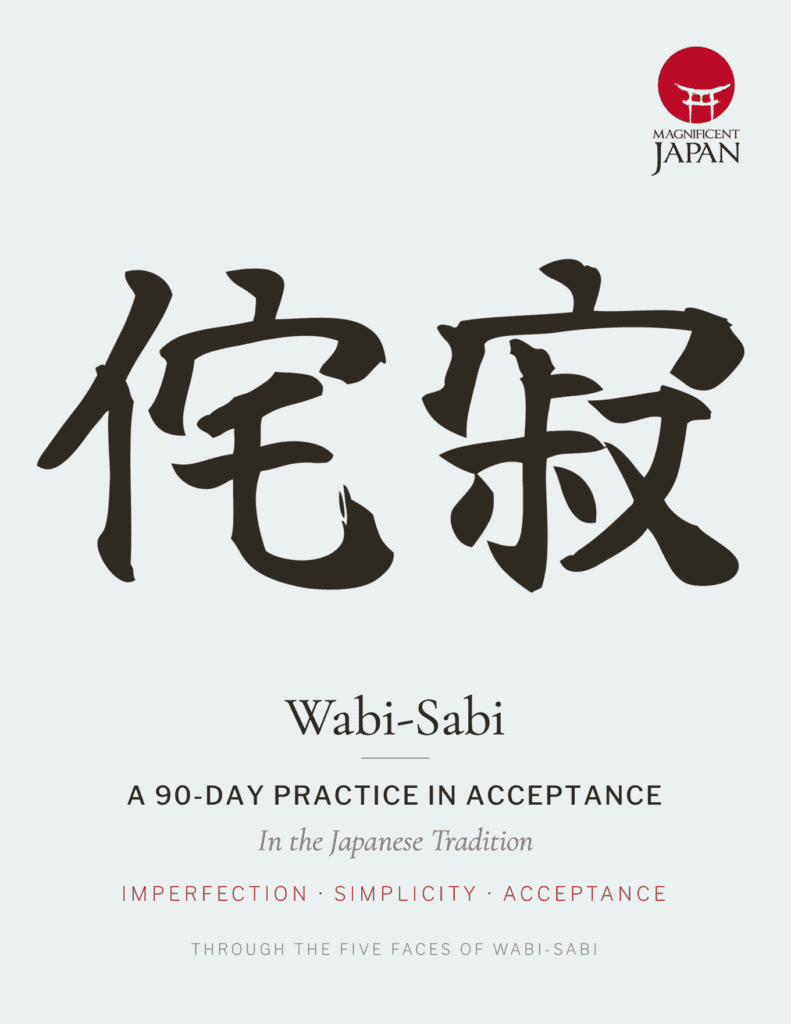
Wabi-sabi is the Japanese eye for weathered, imperfect beauty, the quality that makes a mossy temple step lovelier than a new one. This 90-day guided journal turns that idea into one short prompt a day. It comes as a write-on digital edition for a tablet, and it is one of eight journals in the Cultural Reflection Collection.
View The CollectionFinding Kyoto Beyond the Crowds
The hidden temples in Kyoto offer more than a break from the crowds. They connect visitors with the art, craft and daily life that shaped Japanese culture, and they show how those traditions still guide the city today. They also ask for something in return: effort, respect and patience. The journey to reach them becomes part of the experience, and the memories last long after you return home. In a city of many famous sights, these places stay personal and unhurried.
Visit with an open mind and a light step, and you help keep these places as they are while seeing a Kyoto that many visitors never find. The links below lead further into the city, its food and its traditions.
Coming Back to Kyoto
Kyoto rewards a second visit more than almost any city in Japan. The first trip usually covers the famous names, while the second finds the valleys, the poets’ gardens and the stone lanes in this guide. Many travelers return in a different season simply to see the same garden change. If you are planning a longer journey, Kyoto also pairs well with Nara, an hour away, and with the hot spring towns of the mountains to the north. Each season brings something new.
A few tools make planning easier. Our trip planner groups places by area, and the rail pass calculator checks whether a pass pays for itself. Use them before you book any flights, so the route fits the days you actually have.


Planning the Outer Temples With Us
The outer temples reward careful timing more than any other part of Kyoto. Our travel designers build days around opening hours, bus schedules and the reservation windows of places like Ruriko-in. They pair each morning temple with an afternoon district, arrange private guides and book shojin ryori lunches in garden rooms with a view of the moss. As a result, you spend the day looking rather than waiting. They also know which gardens open only by reservation, and when, each season.
The evenings stay open for long dinners by the river, and nothing is rushed. Tell us which seasons and places appeal, and we will shape the first draft. Every itinerary is shaped around your pace, with time left for wandering.
For the traveler who wants Kyoto without the crowds: a custom itinerary through the moss gardens of Ohara, the mountain steps of Kurama and the stone lanes of Arashiyama, with private guides, temple lunches and evenings in Pontocho.
Plan Your Custom Japan ItineraryQuestions Worth Asking
Are hidden temples in Kyoto accessible for visitors with limited mobility?
Access varies widely. Mountain temples such as Kurama-dera involve long flights of stone steps, while city temples like Genko-an and Daikaku-ji are mostly level. Contact each temple ahead of time to ask about level routes and other arrangements.
Can I visit Kyoto temples during ceremonies?
Most temples welcome respectful visitors during regular services, but major ceremonies may close some halls or need advance permission. Check each temple’s calendar, arrive early and follow the lead of local visitors.
Do hidden temples in Kyoto require reservations?
A few do. Ruriko-in has required online reservations for its peak autumn weeks, and some gardens limit numbers in high season. Most others are first come, first served, so an early start is the best plan.
What is the best way to learn the history of each temple?
Many temples hand out English leaflets, and a few offer guided tours. A knowledgeable local guide adds the context that leaflets leave out, from garden design to the families who built each hall.
Can you stay overnight at a temple near Kyoto?
Yes. Several temples offer shukubo lodging, with early morning services, vegetarian meals and a simple room. Book well ahead, especially in spring and autumn, and expect an early bedtime.
When is the best time to visit Kyoto’s outer temples?
Late autumn and spring are the most beautiful, but also the busiest. Early mornings in any season are calmer. Winter brings thin crowds and, on some mornings, snow on the moss gardens of Ohara.
The Editors, Magnificent Japan