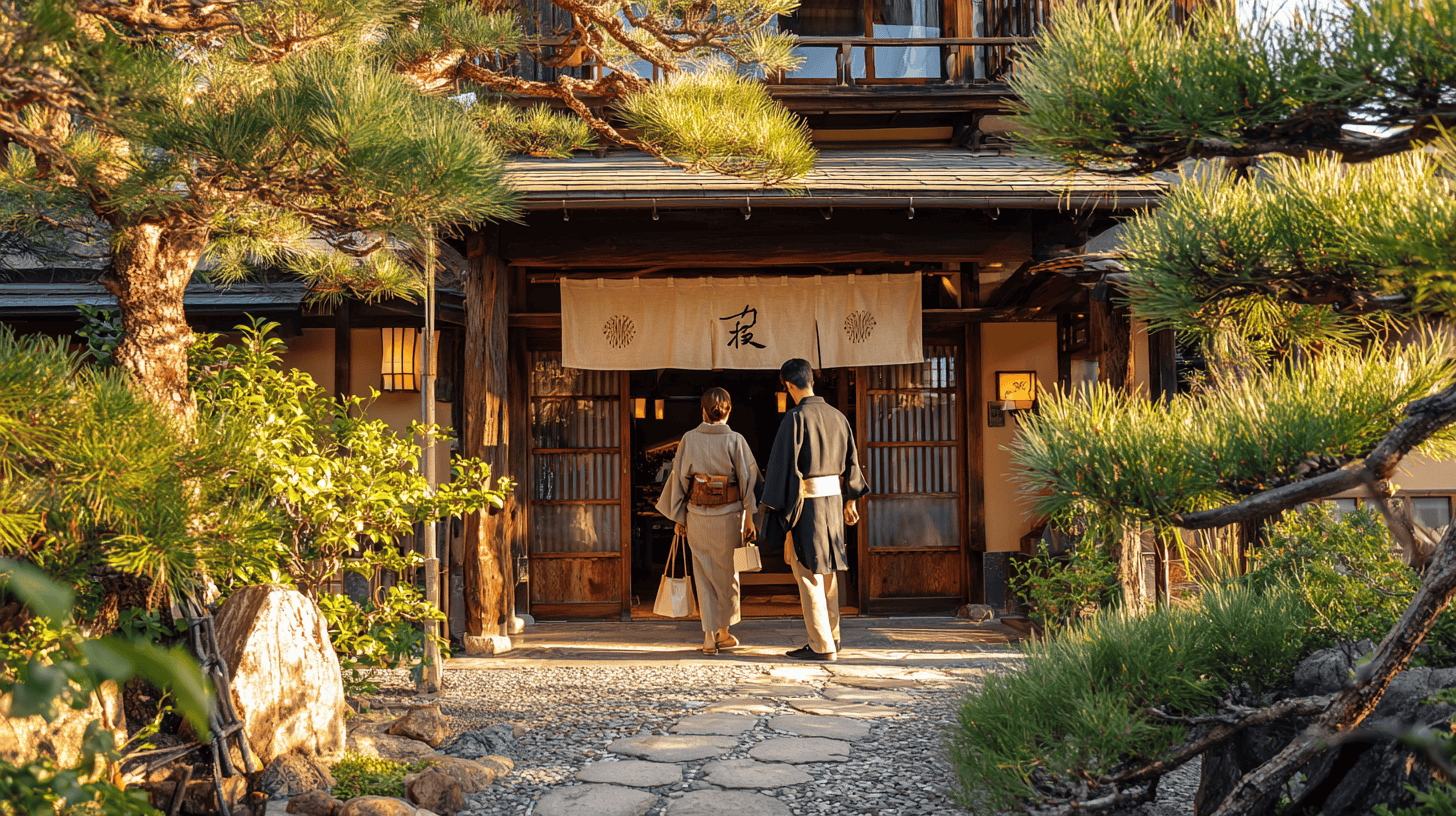
The ryokan experience is less a hotel stay than a single evening run by someone else. You arrive at three, and from then on the inn sets the pace. There is tea, a robe, a bath, a long dinner, and a bed that appears while you are out. Then comes a slow breakfast. Nothing about it is complicated. However, almost nothing works the way a hotel does, and that is the point.
This guide explains how the ryokan experience runs, hour by hour. That way, the first night feels familiar rather than foreign. It sits within our wider guide to luxury travel in Japan, which places the inn in a longer trip. Here, the subject is the stay itself, from the arrival tea to the last bath.
What is the ryokan experience?
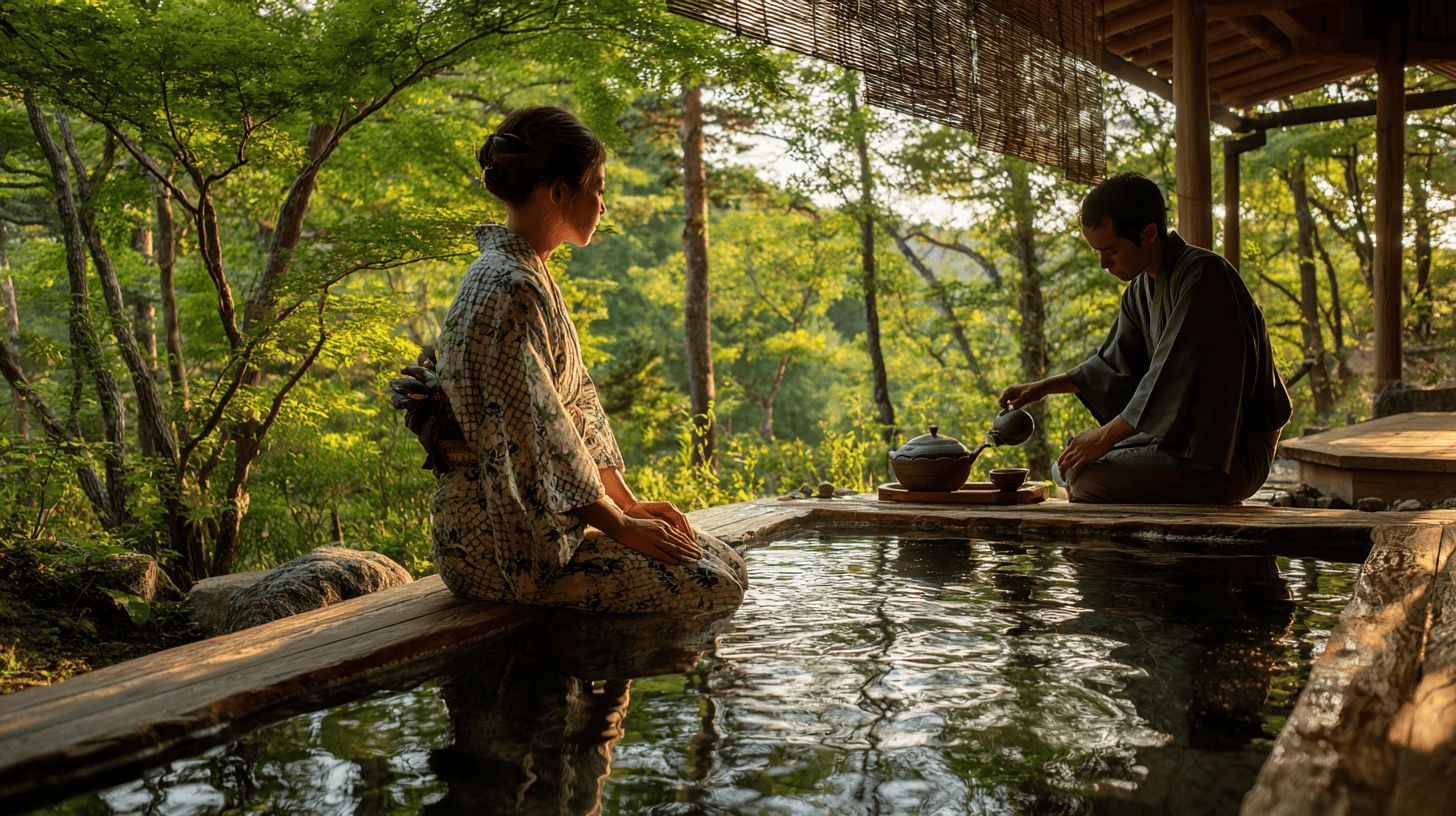
A ryokan stay is a traditional Japanese inn visit built around one evening. You check in from about 3pm, change into a cotton yukata, and bathe in the hot spring. Then a multi-course kaiseki dinner is served, often in your room. Staff lay out futon bedding while you eat, and breakfast follows before a 10am or 11am check-out.
Most of what follows is about timing, because timing is what first-time guests misjudge. The meals and bath hours are fixed. That is also why we recommend arriving early. An inn rewards the guest who gives it the whole afternoon. By contrast, a guest who arrives at seven meets dinner already waiting.
What Is a Ryokan Onsen, and How Is It Different from a Hotel?
A ryokan onsen is a traditional inn built on a natural hot spring. The bath, the dinner and the room come as one stay. The Japan National Tourism Organization describes ryokan as inns that date back to the 8th century. Its guide lists the common elements: tatami floors, futon bedding, the yukata robe and a kaiseki dinner. Many inns also have private baths, sometimes outdoors.
The difference from a hotel is structural rather than decorative. A hotel sells you a room and leaves the rest to you. By contrast, an inn sells you an evening, and the room is only one part of it. Rates are usually quoted per person, with dinner and breakfast included. As a result, the price of two guests in one room is roughly double the price of one.
The space also changes use through the day. At four o’clock your room is a sitting room with a low table. By ten it has become a bedroom, because staff have moved the table and laid the futon. This rhythm is the ryokan experience in miniature. You stop arranging things and let the house arrange them.
Why the inn is priced by the person
Per-person pricing confuses guests who think in room rates, so it helps to see the logic. Dinner is the largest cost in the stay, and it is cooked for each guest. Therefore the inn prices the meal, and the room comes with it. That is also why a solo stay can cost more per head. The same logic explains the range. A simple family inn is a modest night, while a top-tier ryokan is a major splurge.
The Ryokan Experience, Hour by Hour
Every inn has its own habits, yet the shape of the stay barely changes. What follows is the standard evening, with the times most inns use. Treat it as a map rather than a rulebook. The staff will steer you if you drift, and that steering is part of the service.
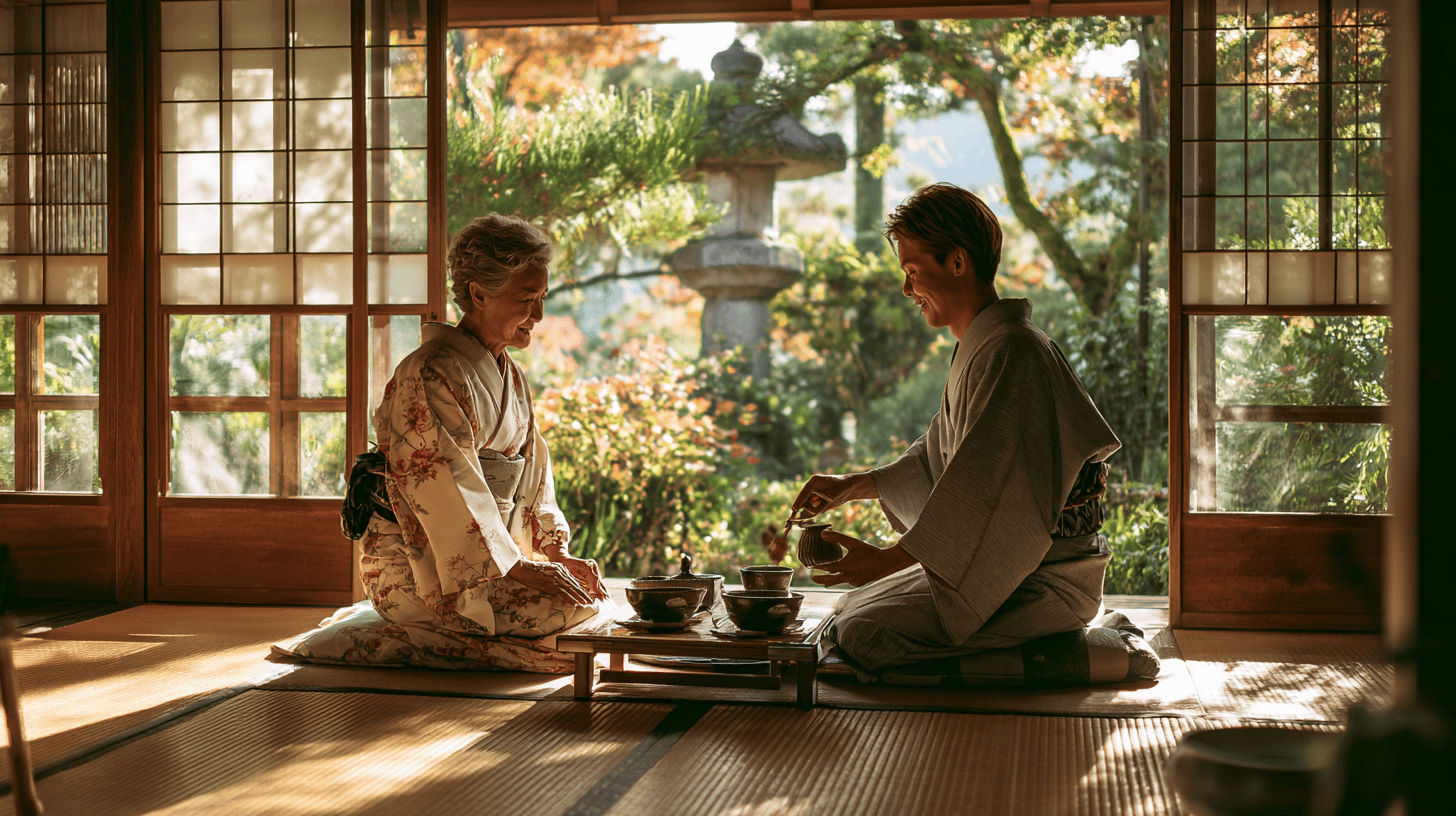
3pm: arrival, shoes and tea
Check-in usually opens at 15:00. Japan Guide notes that dinner follows around 18:00 or 19:00. You remove your shoes at the entrance and step into slippers. Then a member of staff leads you to your room, or to a lounge. Either way, the paperwork arrives with a cup of tea and a small sweet.
Accept the tea and sit for it. It is the inn’s way of saying the clock has stopped. In many inns, one person looks after you for the whole stay, so this is also your introduction. Next, they will show you the yukata, the heating and the bath hours. Ask about dinner time now, since it is fixed per room.
A Nambu cast-iron pot in the hobnail pattern. It suits the slow pour of the arrival tea.
View the Product →Eight hot-spring styles, named for the travel inn. It turns a weeknight bath into a small echo of the rotenburo.
View the Product →Organic cotton from a wind-powered Imabari maker. Light and quick to dry, it keeps the bath ritual simple.
View the Product →The tea served on arrival is usually sencha, the everyday green tea of Japan. To carry the moment home, look to Ippodo, a Kyoto tea house founded in 1717. It sells its Kaboku sencha in a 155g can. The maker describes a deep, rich character with full umami and a long finish.
4pm: the robe and the first bath
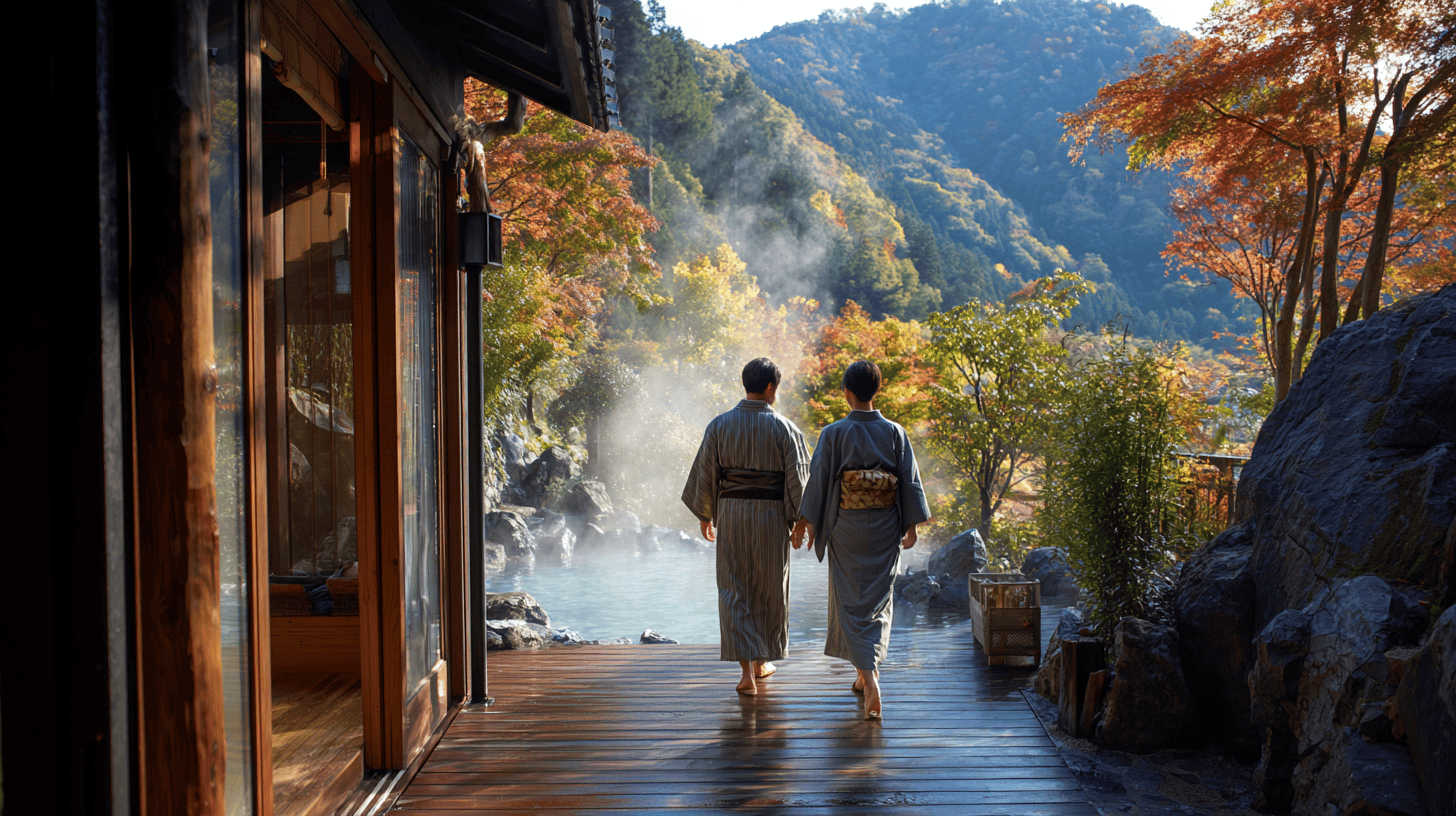
Change into the yukata before you go anywhere. It is worn left side over right, and it is correct throughout the inn. You can wear it to the bath, to dinner and to the lobby. Most guests take a first bath before dinner. At that hour the water is calmer, and light still falls on the garden.
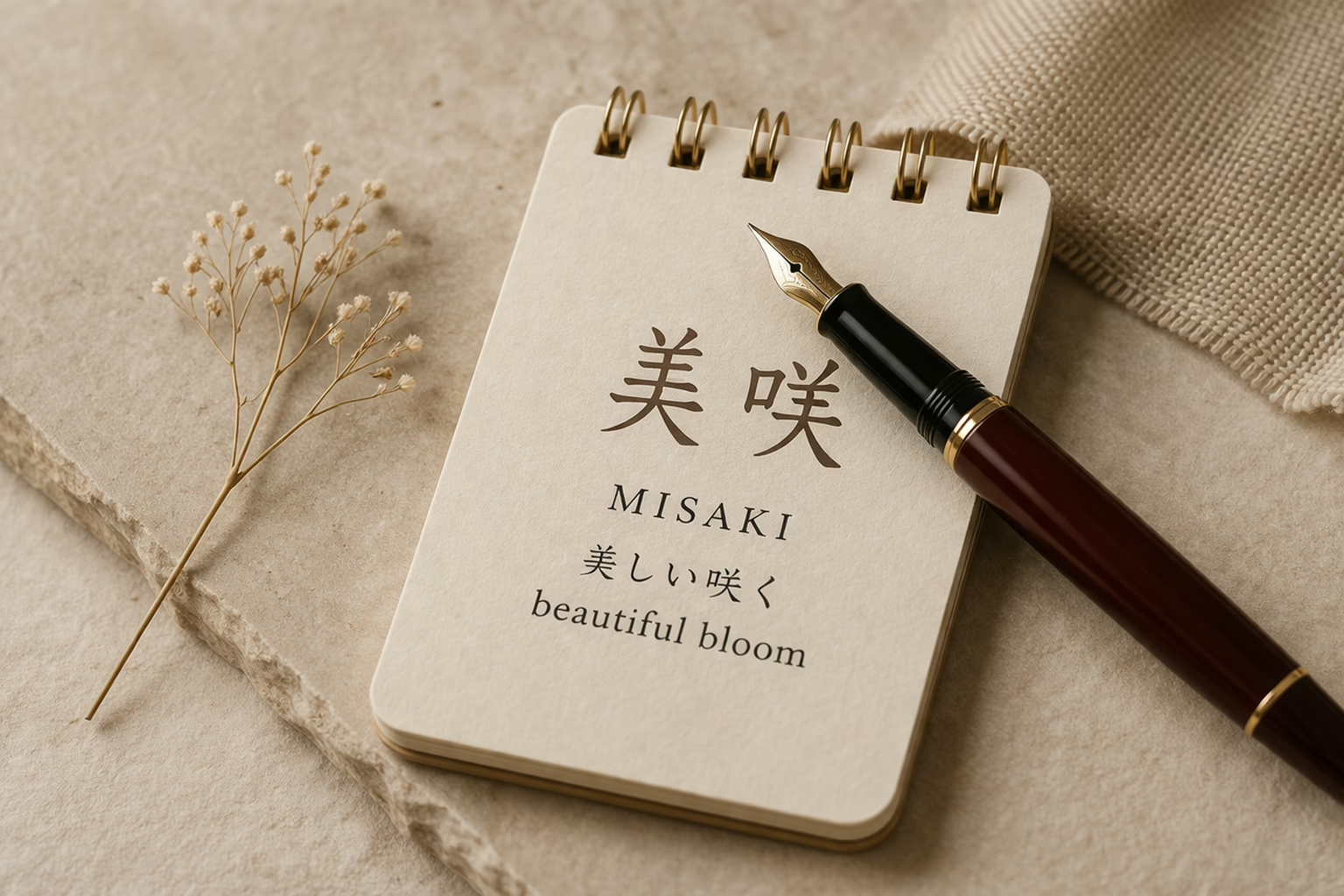
For the notes that fade first: the second sake, the dish in a hollowed citrus, the hour the bath was empty.
6 × 9 in · 120 unlined pages · matte softcover
Shop This Journal →6pm to 7pm: dinner arrives
Dinner is the centre of the stay, and it runs for well over an hour. Some inns bring it to your room. Others use a private dining room or a shared hall. We describe the meal itself further down. For now, know that the timing is firm. If you are late, the kitchen is late, and every course after it suffers.
8pm: the room changes
While you eat, staff move the low table and lay out the futon. This is one of the small surprises of a first stay. You leave a sitting room and return to a bedroom. Visit Kinosaki adds a detail many guests notice. Some rooms have no clock at all, so guests stop watching the time.
7am: breakfast and the last bath
Breakfast is served early, and it is a real meal. Expect grilled fish, rice, miso soup, pickles and a Japanese omelet. Meanwhile, staff fold away the futon. Check-out is usually 10:00 or 11:00, which leaves time for a morning bath. Take it. The water in daylight is a different bath from the one you had at night.
One inn, checked on 1 October 2026
To ground the timings, we checked one well-known inn directly. Nishimuraya Honkan in Kinosaki Onsen has 29 guest rooms. It lists check-in from 15:00 to 18:00 and check-out by 11:00. Its kitchen runs a seasonal kaiseki from April to November and a snow-crab menu from November to March. In other words, one real inn follows the standard ryokan experience almost to the hour.
The schedule is fixed, so the one real choice is to arrive early and let the inn set the pace.
| Time | What happens | What to do |
|---|---|---|
| 3pm | Check-in, slippers and tea | Accept the tea and ask the dinner time |
| 4pm | Yukata on, first bath | Bathe at least an hour before dinner |
| 6pm to 7pm | Kaiseki dinner, often in the room | Be on time, since the kitchen keeps pace |
| 8pm | Futon laid while you eat | Take a late bath before bed |
| 7am | Breakfast and the morning bath | Take the daylight bath |
| 10am to 11am | Check-out | Settle drinks and extras |
That consistency is useful when you plan. Because the evening is fixed, judge an inn on how it fills the hours. A strong inn times the courses to your pace and reads your mood. It has the futon ready before you think of it. A weak one simply runs the schedule.
Etiquette for a Ryokan Stay, Simply
Etiquette is the part of the ryokan experience that worries guests most. Mostly, it is about floors and feet. Shoes stay at the entrance. Slippers are for corridors, and they never step onto tatami. Inside the room, you go barefoot or in socks. The toilet has its own slippers, which stay in the toilet. Forgetting them in the corridor is the classic first-night error, and staff will smile rather than mind.
Other customs are softer. Yukata are fine anywhere inside the inn, including dinner. Sit on the floor cushions, and stretch your legs if kneeling hurts. Speak at a low volume in corridors at night, since rooms are close.
Payment is the last piece. Japan Guide notes that most ryokan now accept major credit cards, while smaller ones may not. Carry some cash for a family-run inn. Tipping is not part of the custom. If the service was exceptional, a sincere thank-you at the door says more than an envelope.
How the Onsen Bath Actually Works
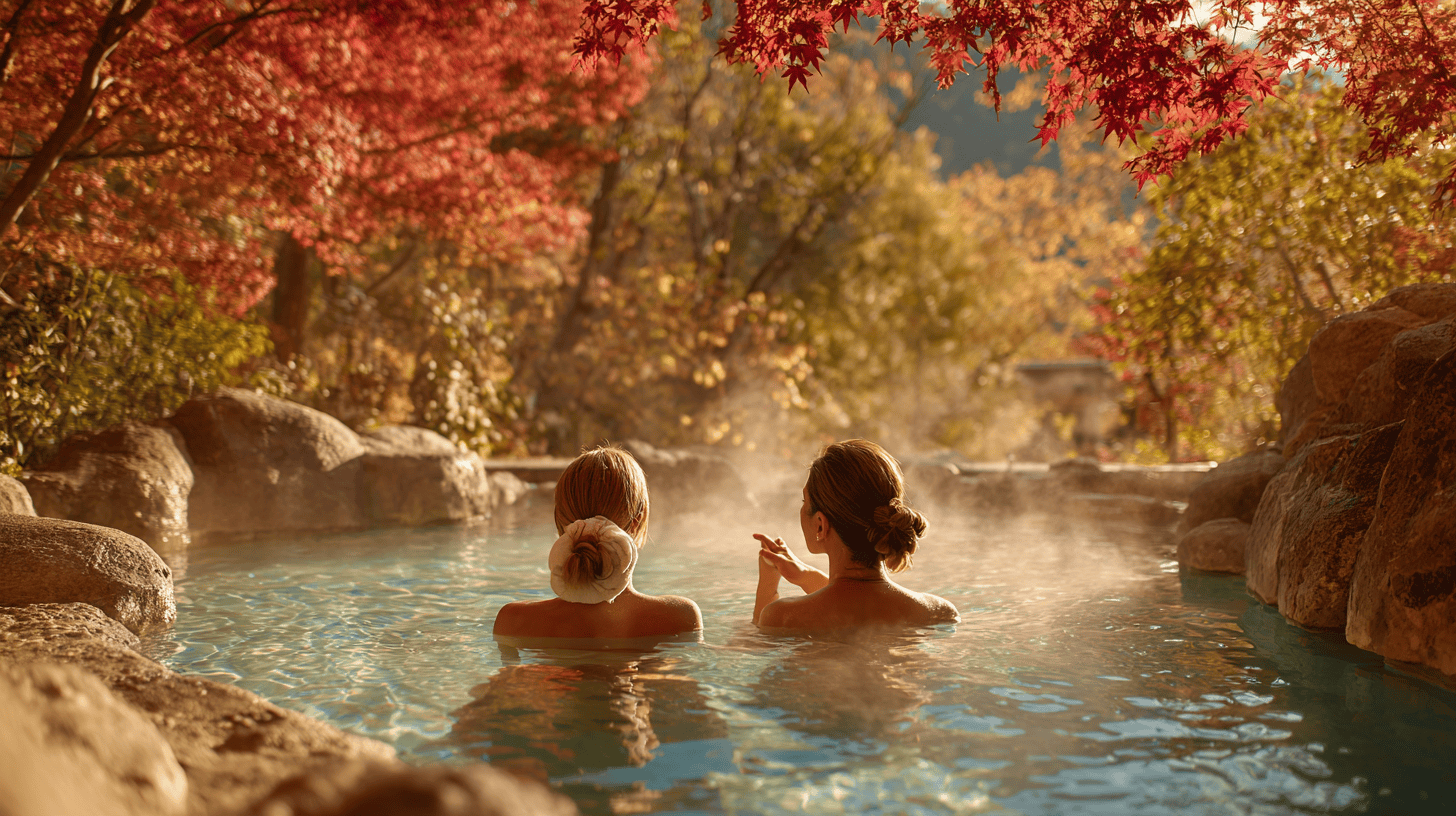
The bath intimidates first-time guests more than anything else, yet the rules are short. First, you wash before you soak. Second, you go in without clothing. Third, the water is for soaking, not for washing. Once you follow those three, everything else is detail.
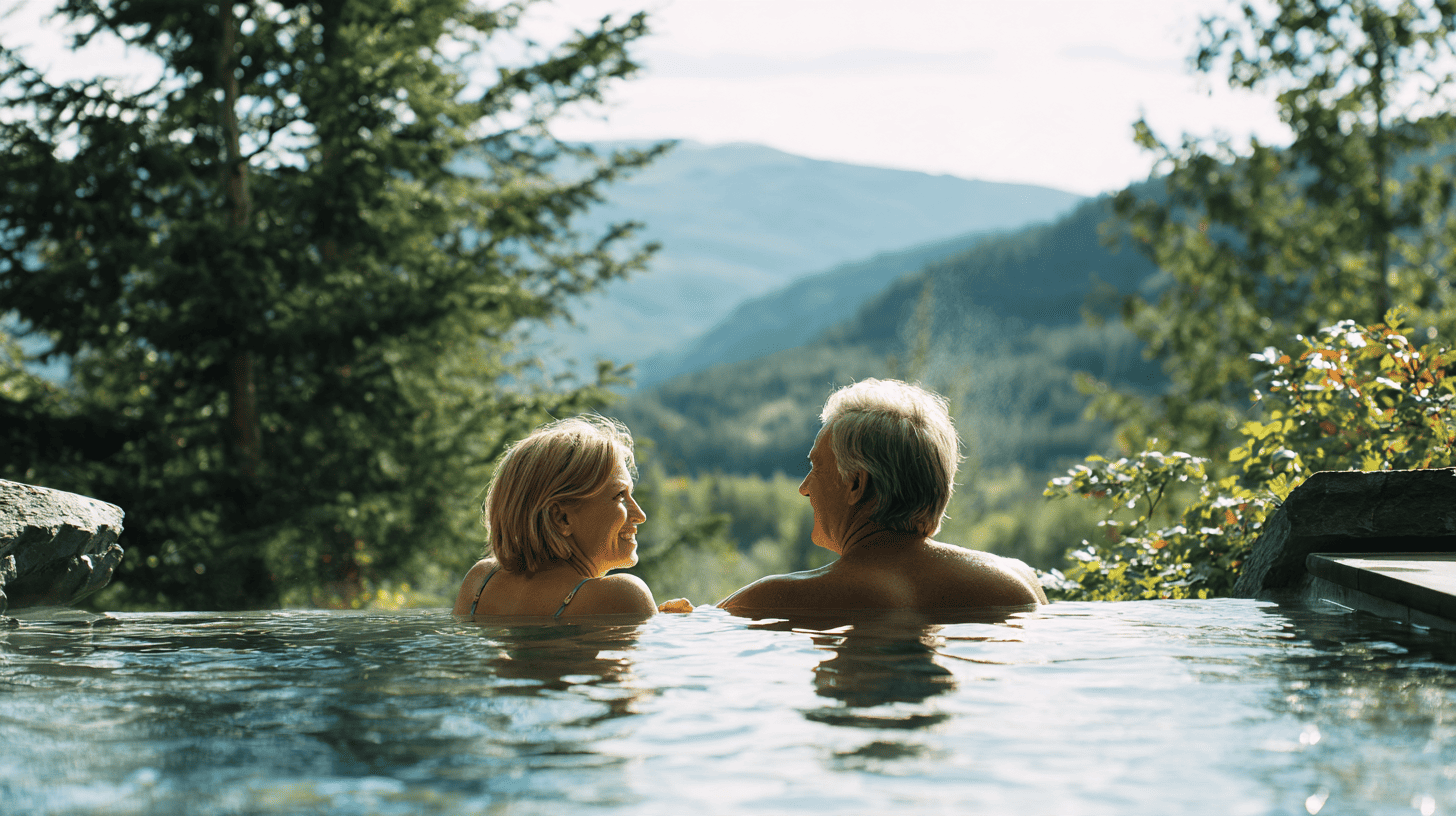
The sequence at the washing station
Undress in the changing room and leave your clothes in a basket. Take only a small towel with you. At the washing station, sit on the low stool and rinse thoroughly. Then soap, shampoo and rinse again. Only after that do you step into the bath. The small towel stays out of the water. Many guests fold it and rest it on their head.
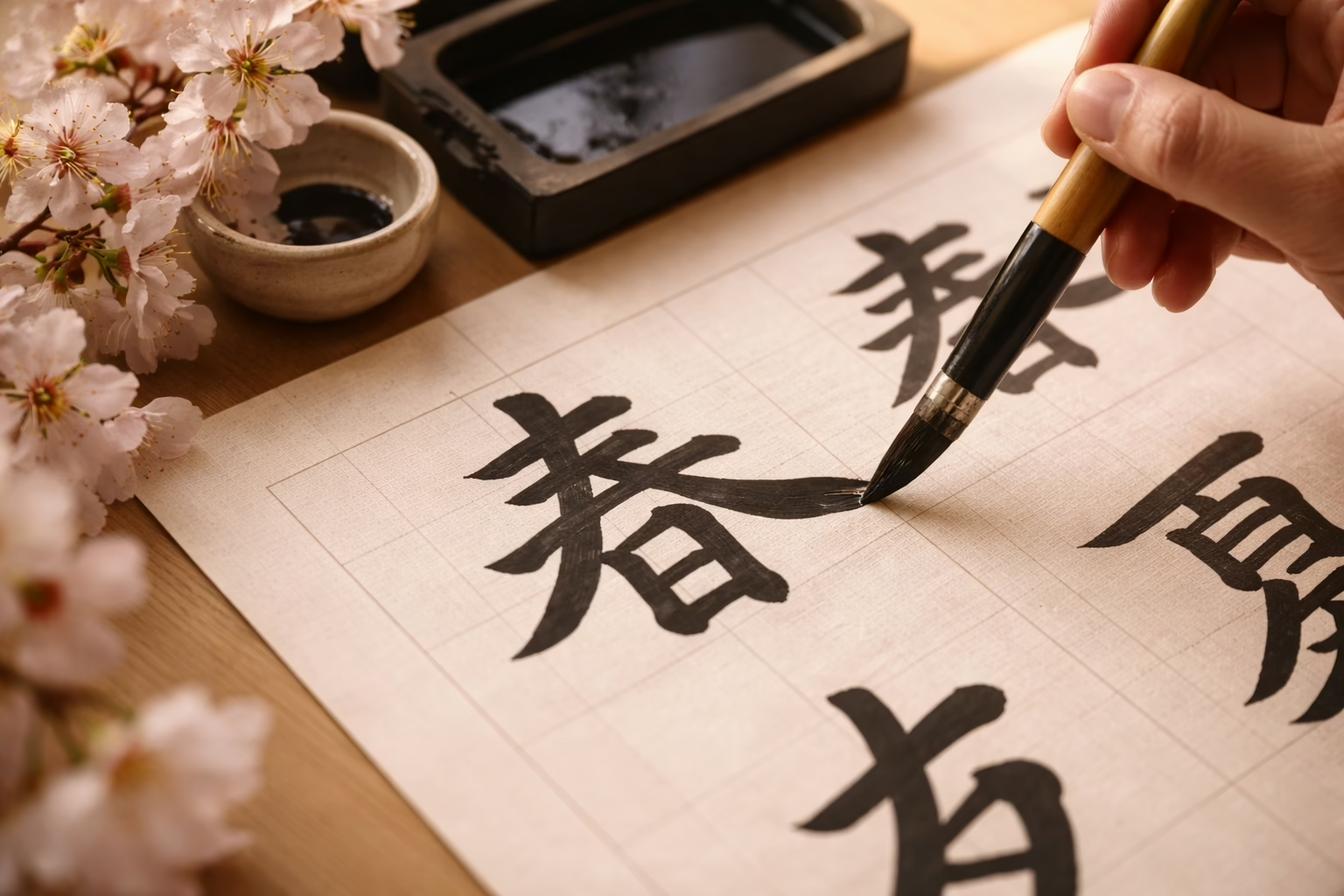
Most inns separate the large baths by gender, and some swap them between night and morning. As a result, you may bathe in two different rooms during one stay. Read the signs at the entrance carefully. The characters on the curtain are the real guide: 女 marks the women’s bath and 男 the men’s.
Private baths and tattoos
If you would rather bathe alone, ask for a private bath. Many inns rent out a family bath by the hour, and some rooms have their own tub. Nishimuraya Honkan, for example, notes that a few select rooms carry their own open-air bath. Booking one also helps guests with tattoos. Policies vary widely, so ask the inn before you arrive rather than at the door.
Would you like the evening sequenced for you, from the train to the second night? Our custom Japan itinerary service builds the onsen leg around your dates.
Book early if you want a particular house, because the best rooms are few. Popular dates fill months ahead, especially in autumn and the winter crab season. The edit below helps you plan the rest of the trip around that booking.
MJ's Luxury Japan Edit is a curated planning edit for luxury travel in Japan. Leave your email and we will send it straight to your inbox. Letters on Japanese travel and culture follow, roughly monthly.
One email with your printable. Occasional letters after that. Unsubscribe anytime.
Bringing the bath home
Some guests ask how to keep the habit once they are home. Japanese households often add a mineral bath powder to the evening tub. Kracie's Tabi no Yado onsen bath salt set takes its name from the phrase for a travel inn. It turns an ordinary bath into a nightly reminder of the trip.
Timing the bath around dinner
One note on timing before the meal. Bathe at least an hour before dinner, not straight before it. Hot water raises your body temperature, and a long soak blunts appetite. In contrast, a short bath an hour before dinner leaves you relaxed and hungry. Japanese guests often bathe three times: before dinner, late at night and at dawn. You do not need to match that, but two baths is the minimum we would suggest.
The Onsen and Kaiseki Experience: Dinner at the Inn
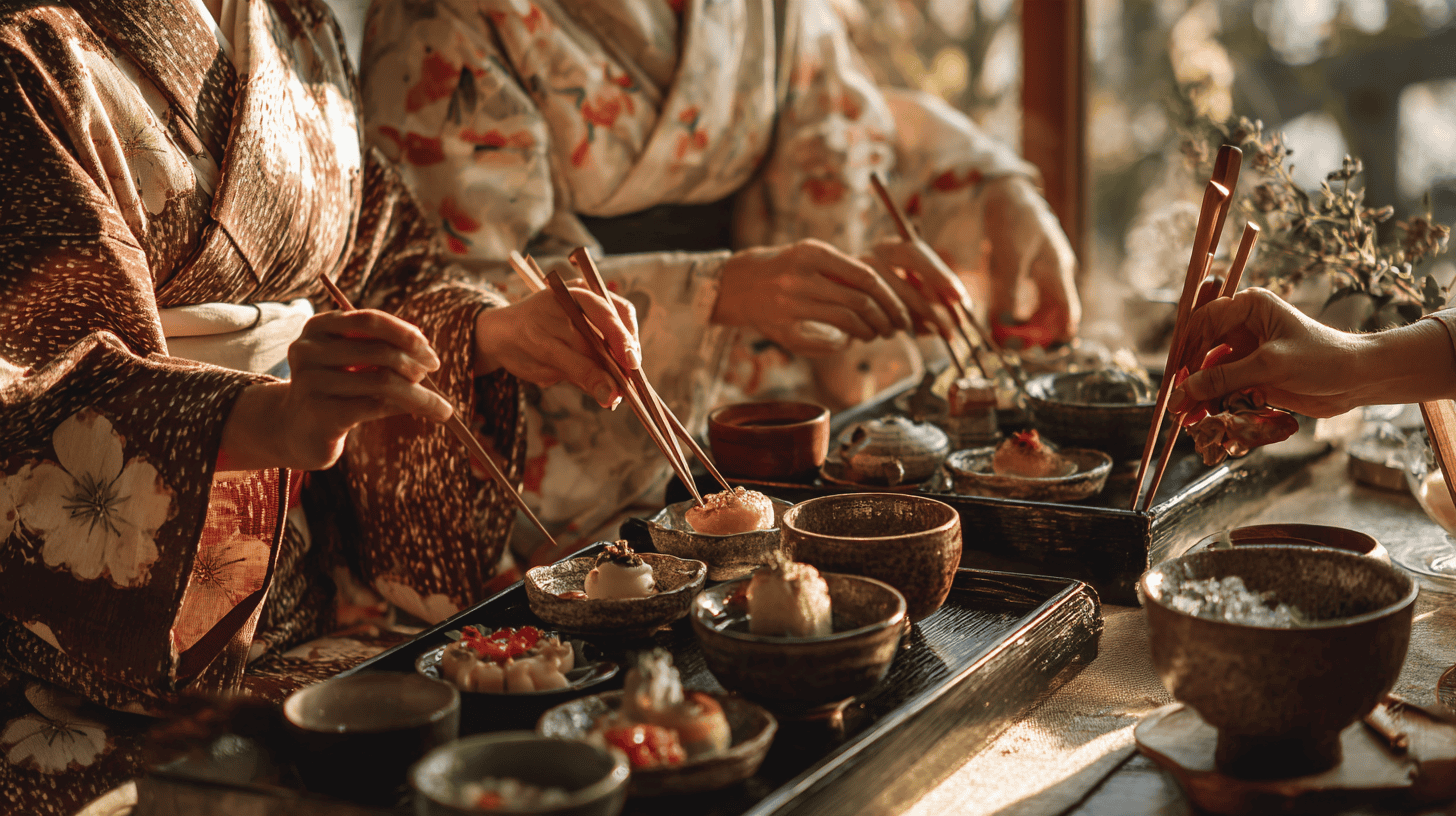
The meal is the reason many guests choose one inn over another. Japan Guide notes that ryokan dinners usually mirror kaiseki ryori, the multi-course haute cuisine of Japan. Dinner typically starts between 18:00 and 19:00. Alcohol is ordered separately and added to the final bill.
What arrives, and in what order
The courses follow a loose order. First comes a small appetiser and a seasonal platter. Then sashimi, a clear soup, a grilled dish and a simmered dish follow. Rice, pickles and miso soup close the savoury part, and fruit or a sweet ends the meal. Some inns serve everything at once on trays. Better ones bring each course separately, timed to your pace.
Recommended
Local produce shapes the menu more than any fixed recipe. In Kinosaki, for instance, snow crab runs from November to March, and Tajima beef appears through the year. Mountain inns lean on river fish and wild vegetables. Coastal ones lean on the morning catch. When you book, ask what the kitchen is cooking that month. The answer can decide the date.
The onsen and kaiseki experience works because the two halves support each other. Heat slows you down, and the meal rewards the slowness. That is why we never recommend eating out on a ryokan night, even in a famous food town. For the restaurant side of Japanese fine dining, read our guide to kaiseki, omakase and kappo counters. However, on the night of the inn, eat at the inn.
Allergies, preferences and drinks
Because the kitchen plans each meal ahead, inns need notice of allergies when you book. Many can adjust a menu with a week's warning. Few can do it on the night. Equally, if you dislike raw fish, say so early.
A word on drinks, since the bill surprises some guests. Sake, beer and wine are charged by the bottle or glass. Ask the staff to suggest a local sake to match the menu. Many inns stock bottles from breweries in the same valley, and they rarely appear outside the region. Therefore, the inn is often the best place to taste them. Settle the drinks bill at check-out along with any extras.
A simmered dish to cook at home
Of all the courses, the simmered dish travels home most easily. In kaiseki it is called nimono, and it usually arrives midway through dinner. Vegetables or fish cook gently in dashi, sake and a little soy. As a result, the flavour sits inside the food rather than on it. Kabocha, the dense Japanese squash, is the version most home cooks start with. It needs one pot, a drop lid and some patience. In autumn and winter, many inns serve it in a small lidded bowl. It also tastes better after a short rest in the pot, so plan ahead. For a vegetarian table, swap the bonito dashi for one made with kombu.
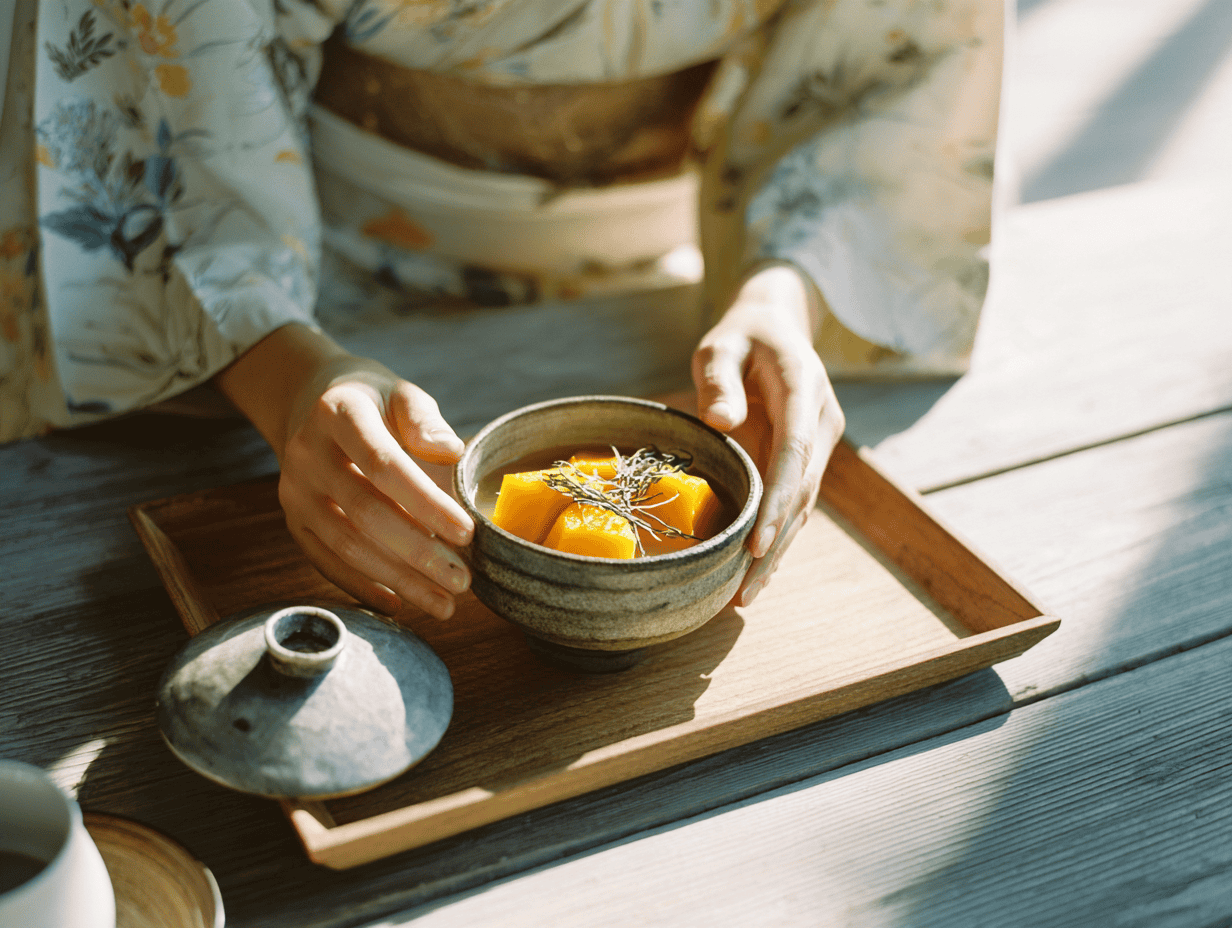
Nimono, or simmered dishes, are a staple of Japanese home cooking and a set course in kaiseki. Kabocha no nimono is the autumn and winter version, often served at inns in a small lidded bowl.
- 1 3/4 cups water
- 1/2 cup bonito flakes (katsuobushi)
- 1/2 small kabocha squash (about 1 lb), seeded
- 2 tablespoons sake
- 1 tablespoon sugar
- 2 teaspoons soy sauce
- 1 pinch salt
- 1 small knob fresh ginger, cut into fine threads
- Boil the water, add the bonito flakes, then take the pot off the heat. Steep for 15 minutes and strain.
- Microwave the kabocha for 2 minutes to soften it, then cut it into 2-inch pieces.
- Lay the pieces skin side down in one layer in a wide pot. Add the dashi, sake and sugar, and bring to a boil.
- Swirl in the soy sauce and salt. Lower the heat, set a drop lid on the squash and simmer for 20 to 30 minutes.
- Cover the pot and rest it for 30 minutes. Serve warm with threads of fresh ginger.
Choosing an Onsen Town for Your First Stay
The town matters as much as the inn, because it decides what you do between baths. Some towns are built for walking from bath to bath. Others are one inn in a valley. Choose the setting first, then the property. For named properties, our guide to the best luxury ryokan in Japan does the comparing.
Kinosaki: the walking town
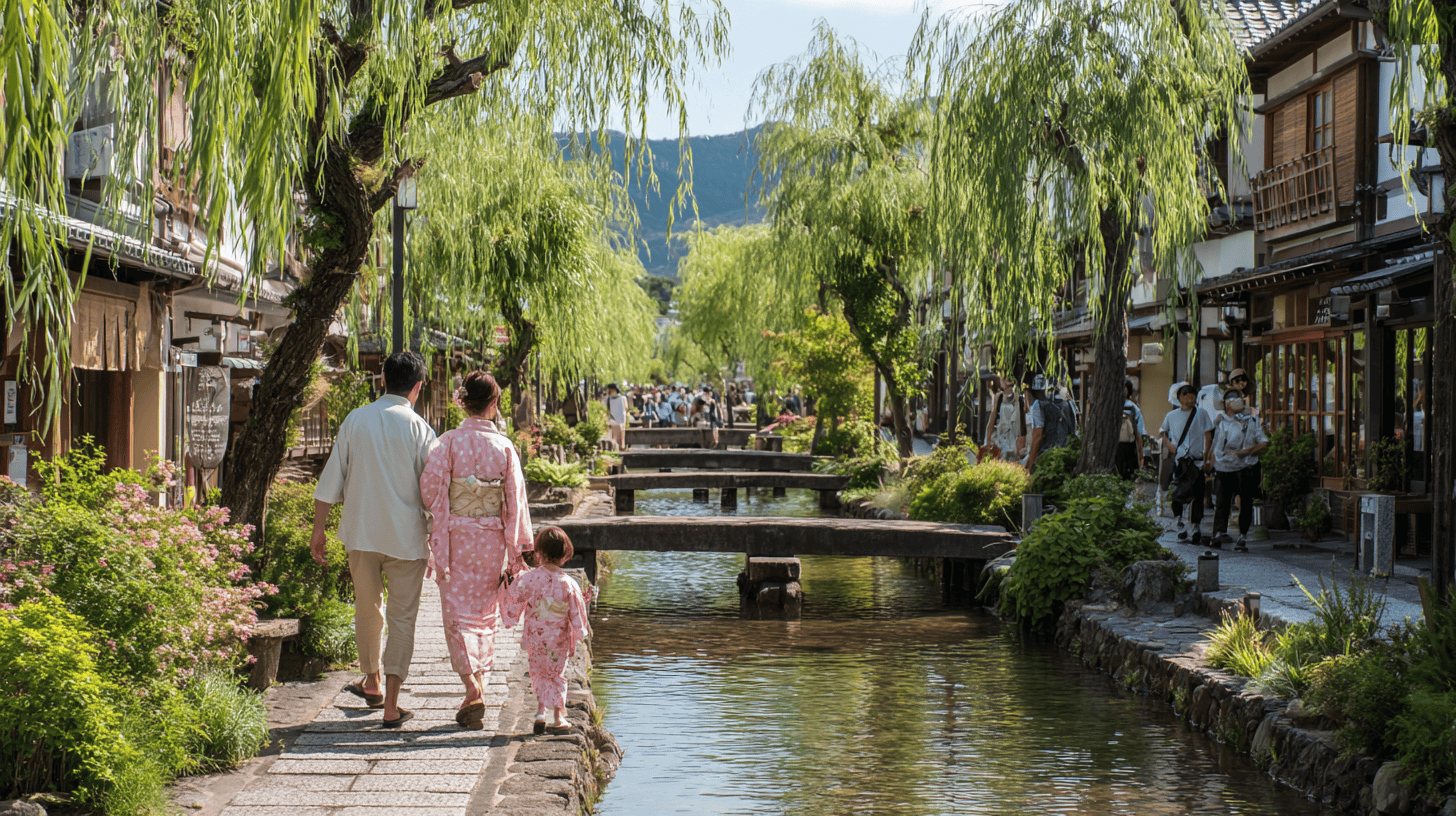
Kinosaki, in Hyogo, suits a first stay better than anywhere we know. The town has seven public bathhouses along a willow-lined canal. Visit Kinosaki notes that most inns give guests a pass to all seven. Guests walk between them in yukata and wooden sandals. Over 74 inns share the town, so the range is wide.
Hakone, Kusatsu and Beppu
Hakone is the easy choice from Tokyo, with inns spread across hills and lakes. Kusatsu, in Gunma, is a high mountain town built around one steaming central spring. Beppu, in Oita on Kyushu, is a seaside town where steam rises from vents between the houses. Each one suits a different traveller. Hakone fits a short trip, while Kusatsu and Beppu reward two nights.
Ginzan, Arima and the north
Ginzan, in Yamagata, is a single street of wooden inns along a river. It is at its best under snow. Arima, near Kobe, works as an easy overnight from Kyoto or Osaka. Further north, Noboribetsu in Hokkaido and Yufuin on Kyushu each have their own character. If you want to link several towns into one trip, our onsen town itinerary guide covers the sequencing.
A guide to individual ryokan and onsen across the country. The photographs show rooms and baths as they look on arrival.
View This Book →A close study of the people who run a rural inn. It explains why the evening feels effortless.
View This Book →A bilingual introduction to the inn and its customs. Read it on the flight, then compare notes with your own stay.
View This Book →Season changes the choice as well. Autumn brings colour to the mountain towns. Winter brings snow and crab to the north coast. Spring and early summer are milder and easier to book. In addition, consider pairing an inn with a city hotel. Our guide to luxury hotels and ryokan icons explains how the two stays balance each other.
For the wellness-minded, the bath has a research literature behind it. Mineral content varies from spring to spring. Even so, claims about specific cures deserve caution. The calmer, better-supported benefit is simpler: heat, rest and an evening without screens. Our piece on onsen health benefits looks at what the evidence does and does not show.
Before You Go: Seasons, Notes and a Light Bag
Seasonal touches worth asking about
Seasonal touches are worth asking about when you book. Some inns float yuzu citrus in the bath around the winter solstice. Others add iris leaves in early summer. These small changes reward a second visit in a different season. They also show what a good inn is really selling. It is not a room, and it is not even the bath. It is attention, paid continuously, by people who notice what you need before you ask. When you book, mention the season you hope to see, and ask which touches the inn plans that month and which room shows them best.
A notebook and a few words
Many guests find that writing the evening down is the best way to keep it. The details fade quickly. The name of the second sake goes first, then the dish served in a hollowed citrus. Those are exactly the notes worth having when you plan the next stay. A small notebook on the low table, used before bed, captures more than any photograph. It also gives the evening a natural ending, and that is what the inn intends.
Many guests also learn a little Japanese before a first ryokan stay, and the effort is noticed. A greeting at the door helps, and so does a thank-you after dinner. The characters for hot water and for men and women are a useful first set. They are small steps, but an inn is a place where small gestures carry weight.
Packing light
Before the questions, one last practical point. Bring very little into the room. The inn provides the robe, the towels, toiletries and often a jacket for cold evenings. A small bag keeps the tatami clear and the room calm. Luggage forwarding services can carry larger cases ahead to your next hotel, and most inns will help arrange it at the front desk. As a result, you can walk from the station with one bag, the way the inn expects. In winter, pack warm socks as well, since slippers stay outside the tatami room and the corridors can run cold at night.
Questions Worth Asking
What happens during a ryokan stay?
You check in from about 3pm, change into a yukata and take a first bath. A multi-course kaiseki dinner follows around 6pm or 7pm, often in your room. Staff lay the futon while you eat. Breakfast is served early, and check-out is usually 10am or 11am, after a morning bath.
Is a ryokan the same as an onsen?
No. An onsen is a natural hot spring, or the bath fed by one. A ryokan is a traditional inn. Many ryokan sit on a hot spring and include onsen baths, which is why the two are often paired. Some ryokan, especially in cities, have ordinary baths rather than spring water.
Do you wear anything in an onsen?
No swimwear or clothing is worn in a shared onsen. You wash fully at the seated shower first, then soak. A small towel comes with you but stays out of the water; many guests rest it on their head. If you prefer privacy, book a private family bath or a room with its own tub.
Are meals included in a ryokan stay?
Usually, yes. Most ryokan rates are quoted per person and include dinner and breakfast. Dinner is typically a kaiseki-style course meal of local, seasonal food. Drinks are charged separately and added to the bill at check-out. Some inns also sell room-only or breakfast-only plans.
How long should a first ryokan stay be?
One night shows you the full routine, from arrival tea to breakfast. Two nights is better, because the second evening is when the routine stops feeling new. In a town with several public baths, two nights also leaves a full day for walking between them.
Can you stay at a ryokan with tattoos?
Often, but policies vary by inn. Some bar visible tattoos from shared baths, while others accept them or offer cover patches. The simplest answer is a room with its own bath or a bookable private bath. Ask the inn directly before booking, rather than at check-in.
What should you wear at a ryokan?
Wear the cotton yukata the inn provides. It wraps left side over right and is correct throughout the inn, including the bath, dinner and the lobby. Slippers are for corridors and come off before you step onto tatami. In cold months, many inns also add a jacket over the robe.
Do you tip at a ryokan?
No. Tipping is not part of the custom at a ryokan, and staff do not expect it. If the service was exceptional, a sincere thank-you at the door says more than an envelope. Settle drinks and extras at check-out, and carry some cash for smaller family-run inns.
The Ryokan Experience, Kept
The ryokan experience asks very little of you. Arrive early, accept the tea, and bathe before dinner. Eat what the kitchen sends, then let the room become a bedroom. Bathe again at dawn, before breakfast arrives. Everything else is the inn's work, and the best inns make that work invisible.
For a wider trip, start with our luxury Japan journeys. Then place the inn at the centre. One night is enough to understand the form. Two nights is enough to stop thinking about it. The second evening, with the schedule already familiar, is when the stay finally feels like yours.
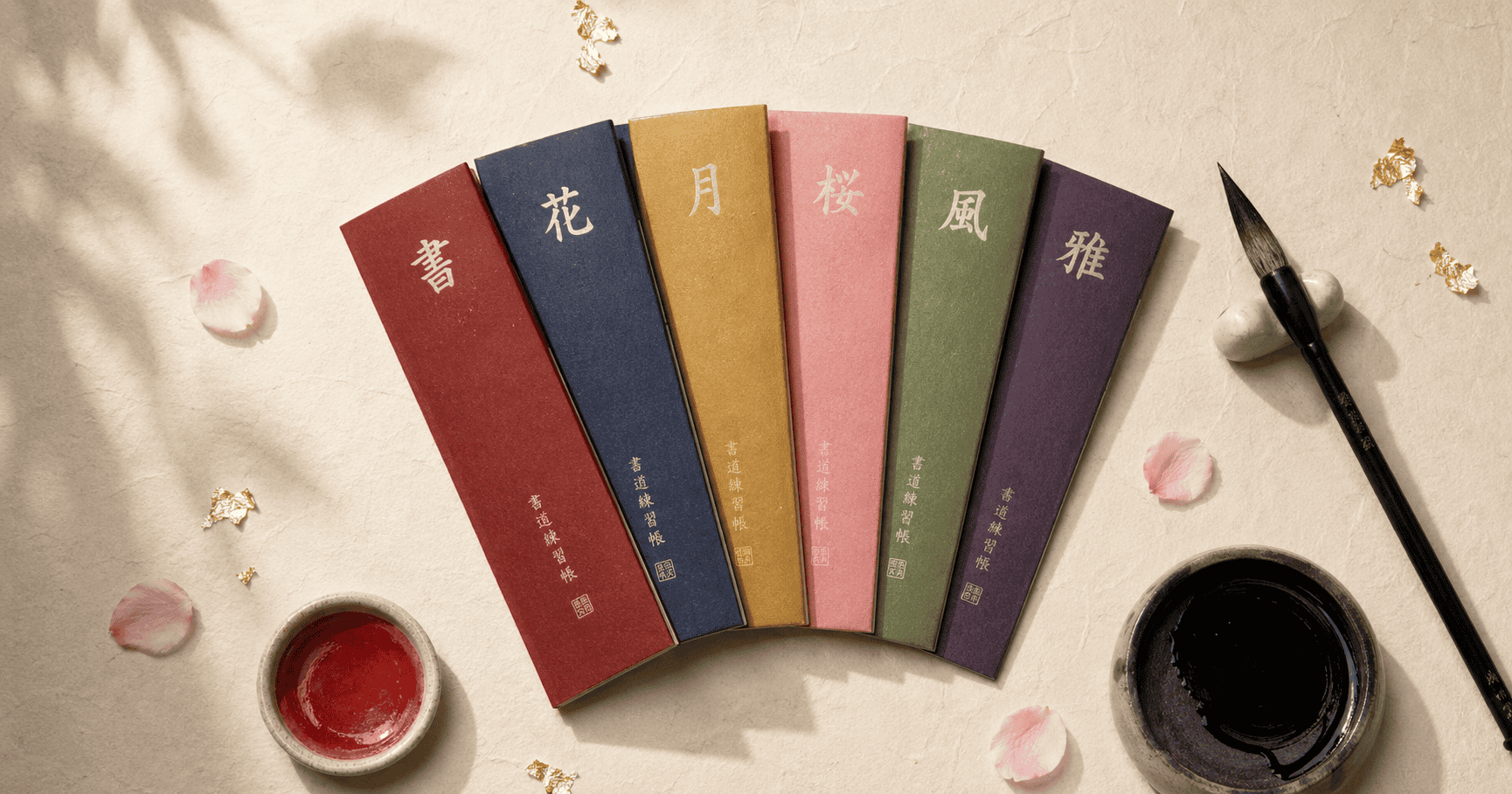
For the evening that ends too soon, and the season you watched from the bath.
View the Journal →Whichever inn you choose, the evening will follow the same arc. When you want one inside a longer route, we can build it with you. We match the town to the season and time the trains so you arrive at three, not seven.
We place the inn at the centre of the route: the right town for the season, a room with its own open-air bath where you want one, the dinner time set before you arrive, and luggage sent ahead so you walk in with one bag.
Plan Your Custom Japan Itinerary