Luxury anime fashion is easiest to recognize when nobody points at it. A long Yohji Yamamoto coat has moved through fashion-week photography for decades. To one viewer it reads as Yohji: draped, asymmetric, faintly architectural. To another it reads as a body in motion in a Satoshi Kon film. Both readings hold, and neither has to displace the other.
That doubling is the whole premise. The reference does not live on the surface of the garment. Instead, it lives in the cut, the seam, and the weight and fall of the cloth. For the wearer who knows, recognition stays private. Everyone else simply sees something austere and well made.
This page follows the lineage rather than a catalog. Broader context sits in our reader’s guide to manga and anime in Japan, and the wider cluster gathers at the Anime in Japan hub. Consider this the dressing room of it.
What is luxury anime fashion?
Luxury anime fashion is designer clothing whose anime reference lives in silhouette, material or a licensed collaboration, not in a printed character. The lineage runs from the cyberpunk films of the eighties into the Japanese houses of the same era. So it reads as influence rather than costume, and it ages across years rather than seasons.
What Luxury Anime Fashion Actually Is
The definition matters, because the category gets mistaken for merchandise all the time. A character printed across a chest is a different proposition. It is a valid one, though it belongs to fan tribute rather than to design. Here, the reference has to survive with no logo at all.
In luxury anime fashion, the garment itself carries the reference. Weight, drape, seam placement and the swing of a hem when the wearer turns do the work. Nothing announces itself, and nothing needs to.
That restraint also shapes who the clothes are for. They suit a reader who has watched the films, already owns a piece or two, and now cares more about lineage than about the next drop.
Two things follow from that. First, the clothes survive a decade, because they were never tied to one season’s title. Second, they read correctly to people who have no idea what they are looking at. A wool coat with a technical seam logic reads as tailoring in a boardroom. To somebody raised on the same films, however, it reads as something much closer to home. That is rarer than it sounds. Most reference-led clothing works only for the audience that gets the joke, and it stops working the moment the joke goes stale. Reading the lineage first can save a season of buying badly.
The Lineage of Luxury Anime Fashion
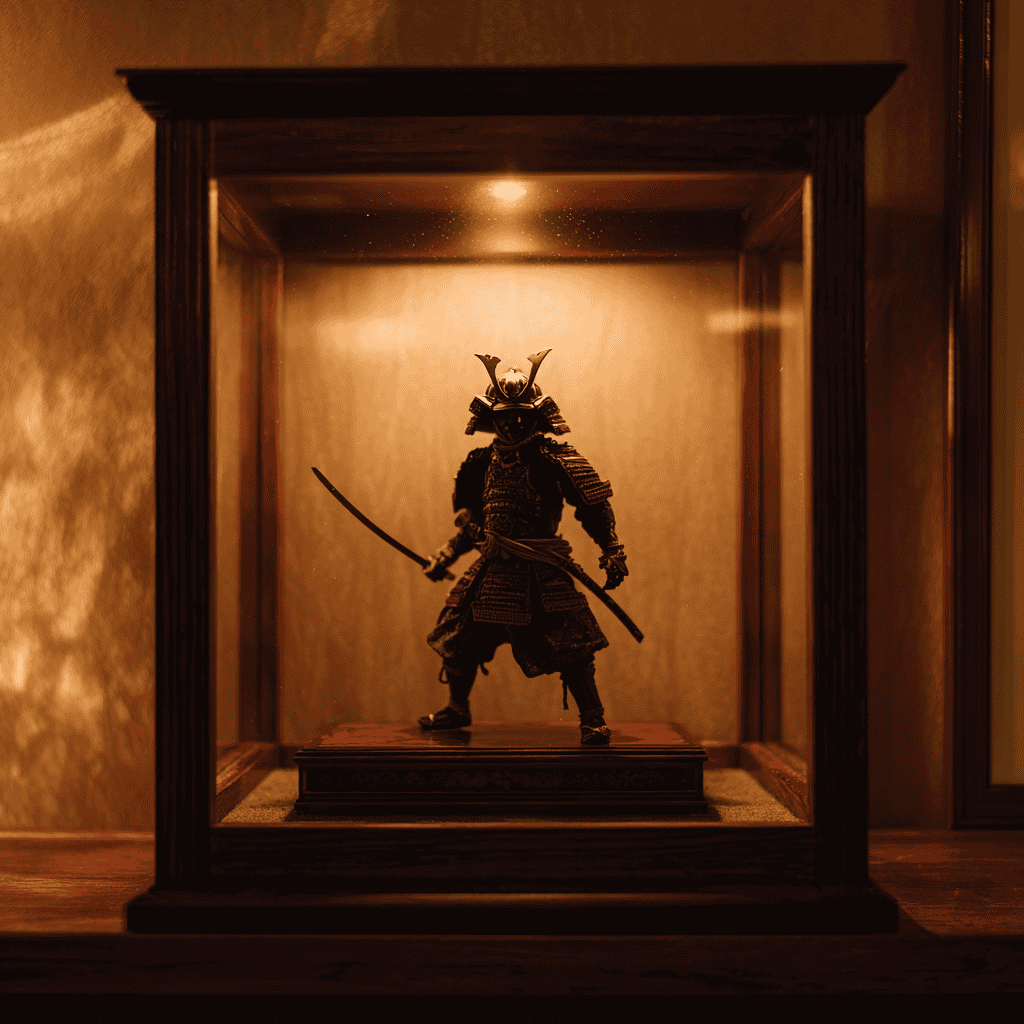
What we now call luxury anime fashion was a long absorption rather than a trend. Yohji Yamamoto and Rei Kawakubo at Comme des Garçons set the first vocabulary: drape, asymmetry and a refusal of ornament. Issey Miyake then added pleating that reads as cinematic on a moving body. None of them were quoting anime. Instead, films and clothing drew from the same well of postwar drawing, midcentury craft and a rebuilt city.
The record of that shared well is easy to reach. The Studio Ghibli art books, for example, gather concept sketches, background paintings and cel images. Look at the pages rather than the characters. When a house borrows from Ghibli, it borrows the palette and the line.
A close study of how Issey Miyake, Yohji Yamamoto and Rei Kawakubo built the vocabulary this page traces. Read it for the originators before the inheritors.
See the Japanese Designers Study →Otomo's own collection of the design work behind AKIRA. The red jacket and the Neo-Tokyo palette start here.
View the Akira Club Book →Concept sketches, background paintings and cel images with production interviews. The palette and the line that houses borrow live in these pages.
See the Totoro Art Book →Two generations, one dialect
What changed, slowly, is that the next generation grew up inside the films. Jun Takahashi at Undercover, Yoon Ahn at Ambush and Chitose Abe at sacai do not treat anime as research material. They speak the dialect because it was native to them. One generation studied the source, while the next was raised on it. That is the gap between a translator and a native speaker. Both produce serious work, but only one produces work that feels lived in. As a result, the newer houses can reference a film without ever quoting it. Their clothes feel familiar to fans and simply well made to everyone else.
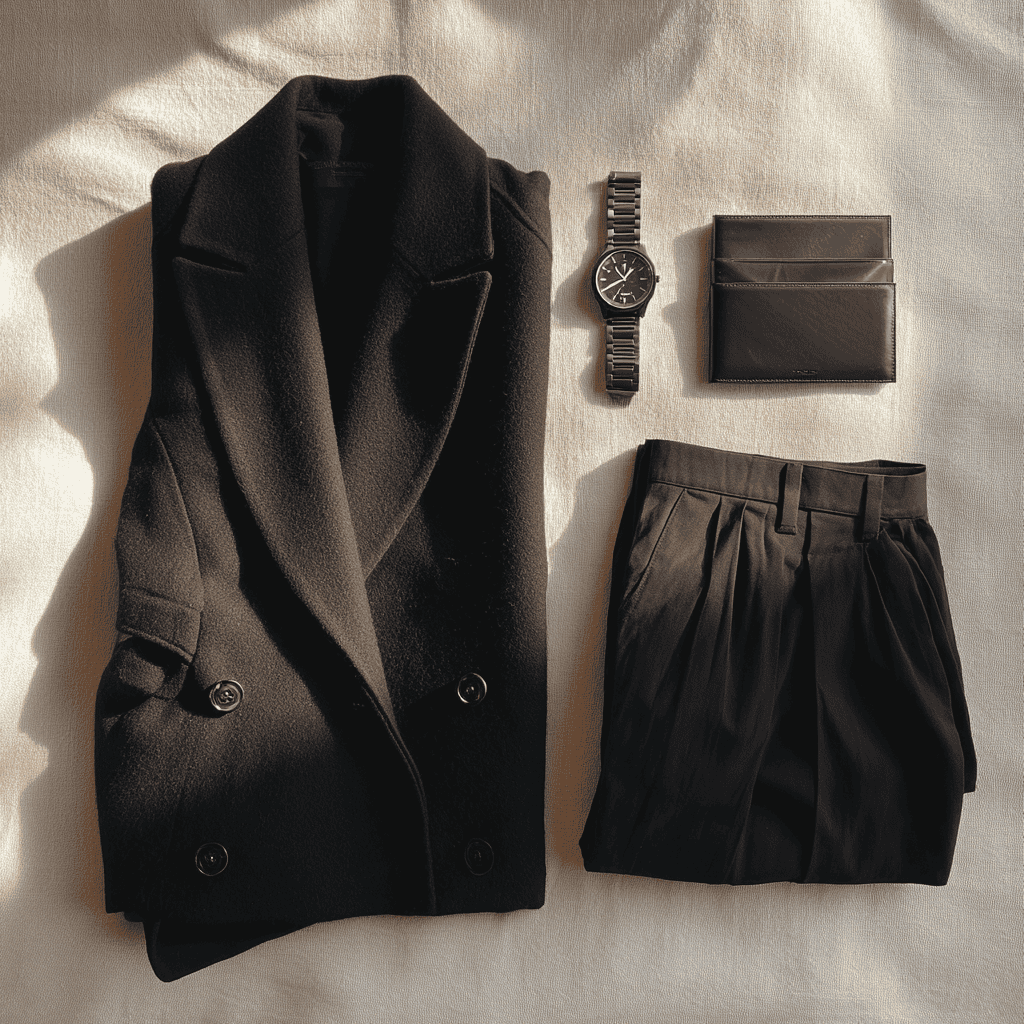
Abe founded sacai in Tokyo in 1999. The house’s own account of its method describes hybridization through juxtaposition. Knits sit against fine wovens, and patterns shift until the garment lands somewhere unexpected. That is not an anime reference as such. Still, it is the same instinct that let animators layer military surplus over school uniforms, so that the mix read as one coherent person. The house also describes Abe’s interest as clothes that are timeless rather than seasonal. That single idea explains most of this category. Even the fabric choices follow it. Nylon holds a crease where wool would soften, so a spliced seam stays readable from across a room.

For the notes taken standing up: the fabric weight, the shoulder width, the shop that had the archive rail.
6 × 9 in · 120 unlined pages · matte softcover
Shop This Journal →The Cyberpunk Inheritance
If the Yamamoto coat is one founding image, the other is a red leather jacket moving through Neo-Tokyo. Kodansha published the first chapter of Katsuhiro Otomo’s AKIRA in 1982, and Otomo went on to direct the film. That film handed designers something new. Streetwear could carry narrative weight, and a single garment could read as costume and as character at once. The jacket has been redrawn many times since. Yet none of the redrawings has replaced it. For many designers, that jacket was the first proof that a film could set a silhouette. Otomo’s own art collection, Akira Club, gathers the design work behind it.
What followed was an inheritance of shapes rather than of titles. Technical outerwear arrived with the seam logic of utility: transparent panels, exposed hardware and a silhouette built for a body that only half belongs to its city. All of it entered the vocabulary within a few years. Evangelion then supplied a palette on top of that. Muted orange sat against industrial gray, with lavender as provocation. Even the plastic surfaces somehow read as human, and designers took note.
What the drawings gave designers
Studio Ghibli has been slower and longer in its influence. Think of kiln-fired ceramics on a bathhouse shelf, cotton aprons on working women, or the cracked leather of an old aviator jacket. None of that is a silhouette a house can copy outright. Instead, it arrives as texture and color temperature, which is exactly why it dates so slowly.
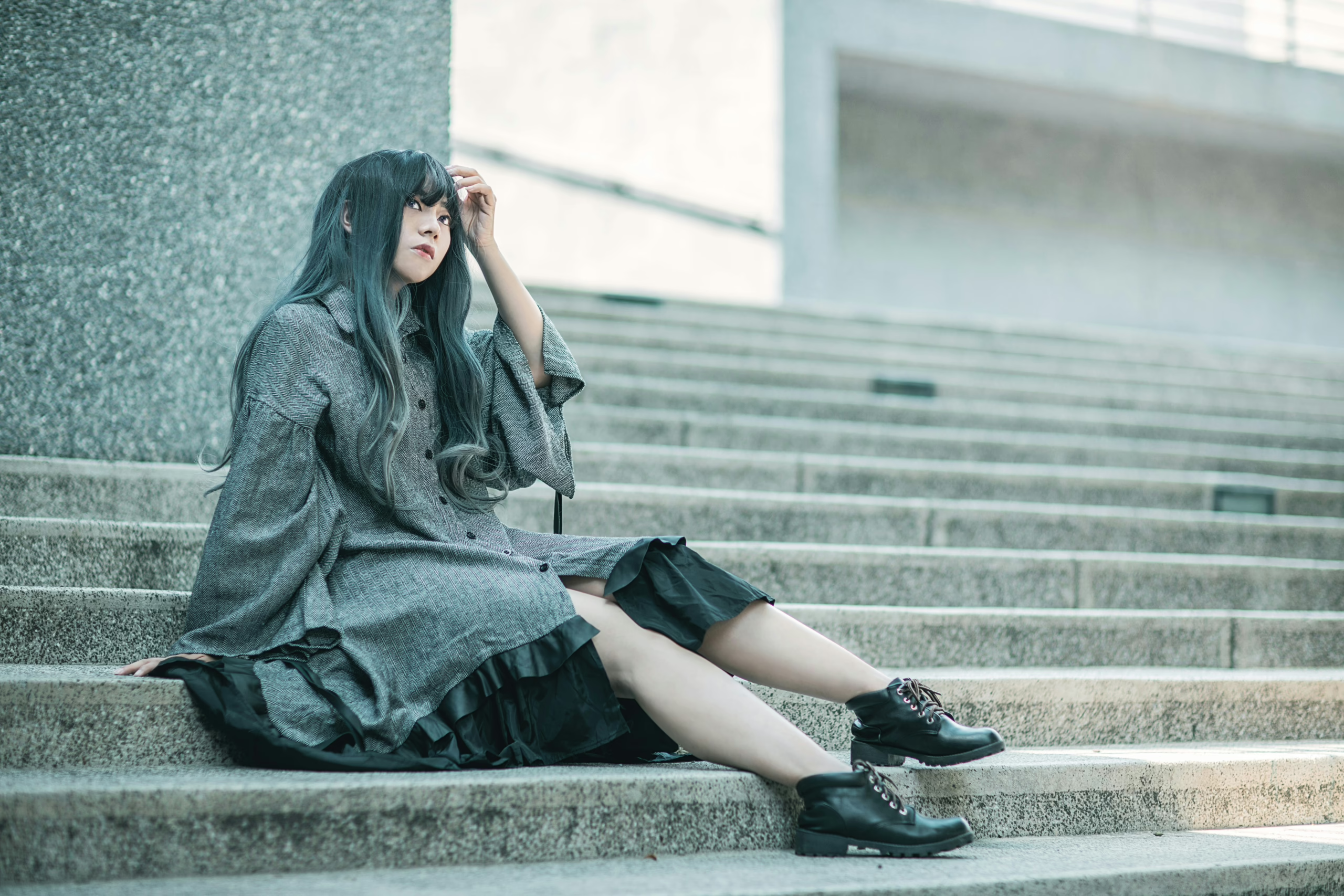
The point is not that a film inspired a garment. Rather, films and clothes came out of one culture in the same decades. Work of this kind shares an internal logic because it shares a generation. Read it that way and the category stops looking like a marketing exercise, which is how the trade press often frames it. Read it the other way and every coat becomes a costume. The difference matters when you buy, because the first reading leads to clothes you keep and the second leads to clothes you regret. Below, a short table sets the six houses side by side.
Each house reached the register by a different route, so each rewards a different first piece.
| House | Founder | Signature | Where to begin |
|---|---|---|---|
| Yohji Yamamoto | Yohji Yamamoto | Black drape and asymmetry | A long wool coat |
| Comme des Garçons | Rei Kawakubo | Deconstruction | Archive pieces on resale |
| Issey Miyake | Issey Miyake | Pleating and geometry | A BAO BAO bag |
| sacai | Chitose Abe | Hybrid garments | A spliced bomber |
| Undercover | Jun Takahashi | Dark prints, Evangelion | Outerwear |
| Ambush | Yoon Ahn | Silver hardware | One piece of jewelry |
The Houses Behind Luxury Anime Fashion
The houses worth knowing sit across two generations. Originators set the vocabulary, and current voices extend it. Six names follow, and none of them needs the others to make sense. Together, though, they explain why luxury anime fashion holds its value when the season turns.
Prefer to walk the flagships with the route already built? A custom Japan itinerary can pace the districts around fitting rooms rather than addresses.
The Current Voices: Undercover, Ambush and sacai
Jun Takahashi’s Undercover keeps returning to Evangelion. The label’s own Evangelion page gathers the collaboration in one place. It draws on the EVA units and the plug suits, then pushes them through Takahashi’s darker register. Outerwear is the sane way in, since a bomber absorbs a strong print better than any knit will.
A typeset printable: ten Japanese proverbs with kanji, romaji and meaning. Signing up also brings occasional letters on Japan and word when a new journal reaches print.
One email with your printable. Occasional letters after that. Unsubscribe anytime.
Yoon Ahn's Ambush works in silver hardware: chain, ring, case and clasp. The vocabulary sits closer to a Mamoru Hosoda night scene than to anything on a runway. Weight is the tell. The pieces feel heavier in the hand than their scale suggests, and that heft keeps them from reading as costume jewelry.
Of the current Japanese houses, sacai carries the register most subtly. A coat is also a parka. Then a knit opens into a shirt. Somewhere in the same collection, a pleated panel refuses to hang the way the eye expects. That is character design made wearable, and it arrives without a single printed reference.

The Originators: Yohji Yamamoto, Issey Miyake and Comme des Garçons
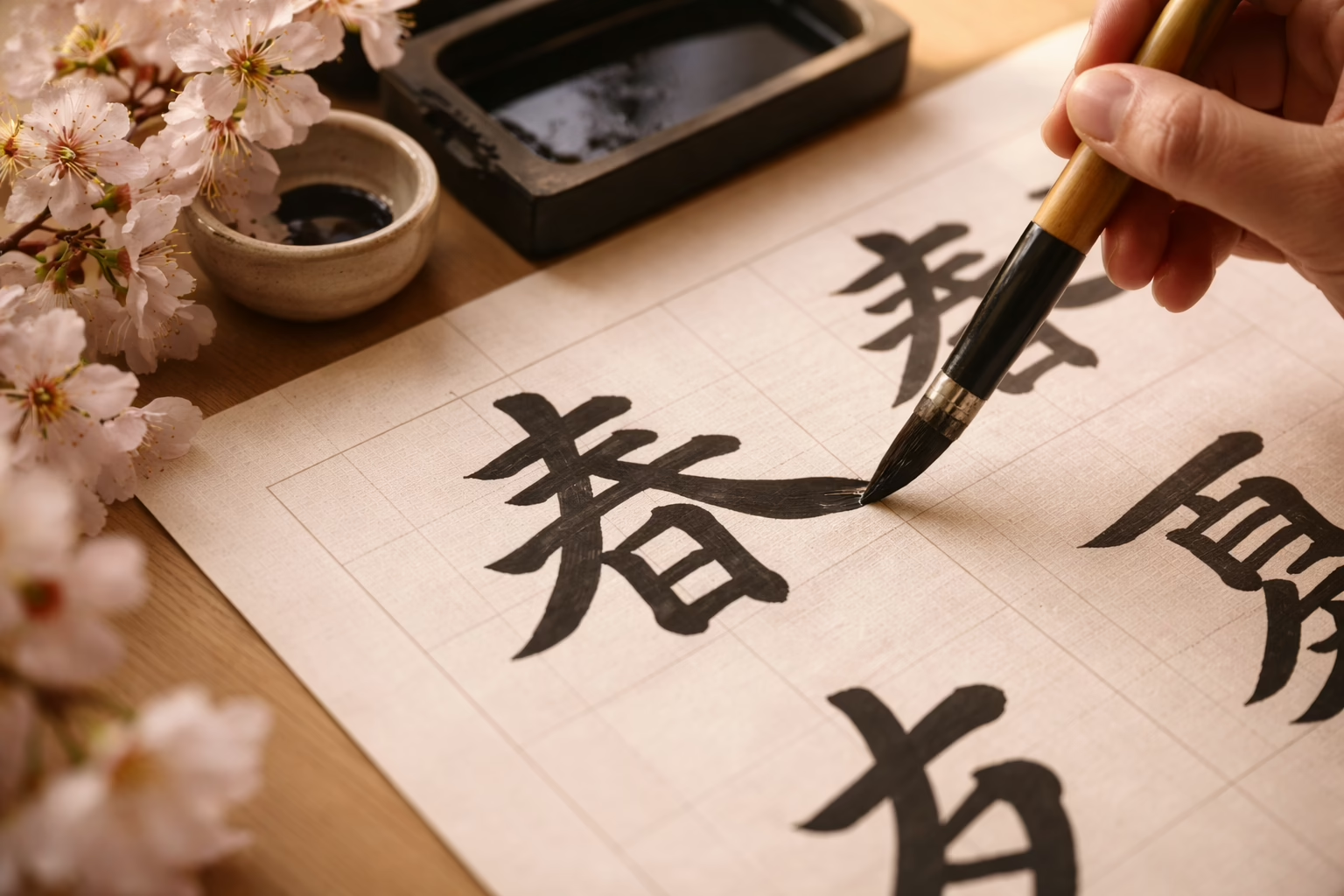
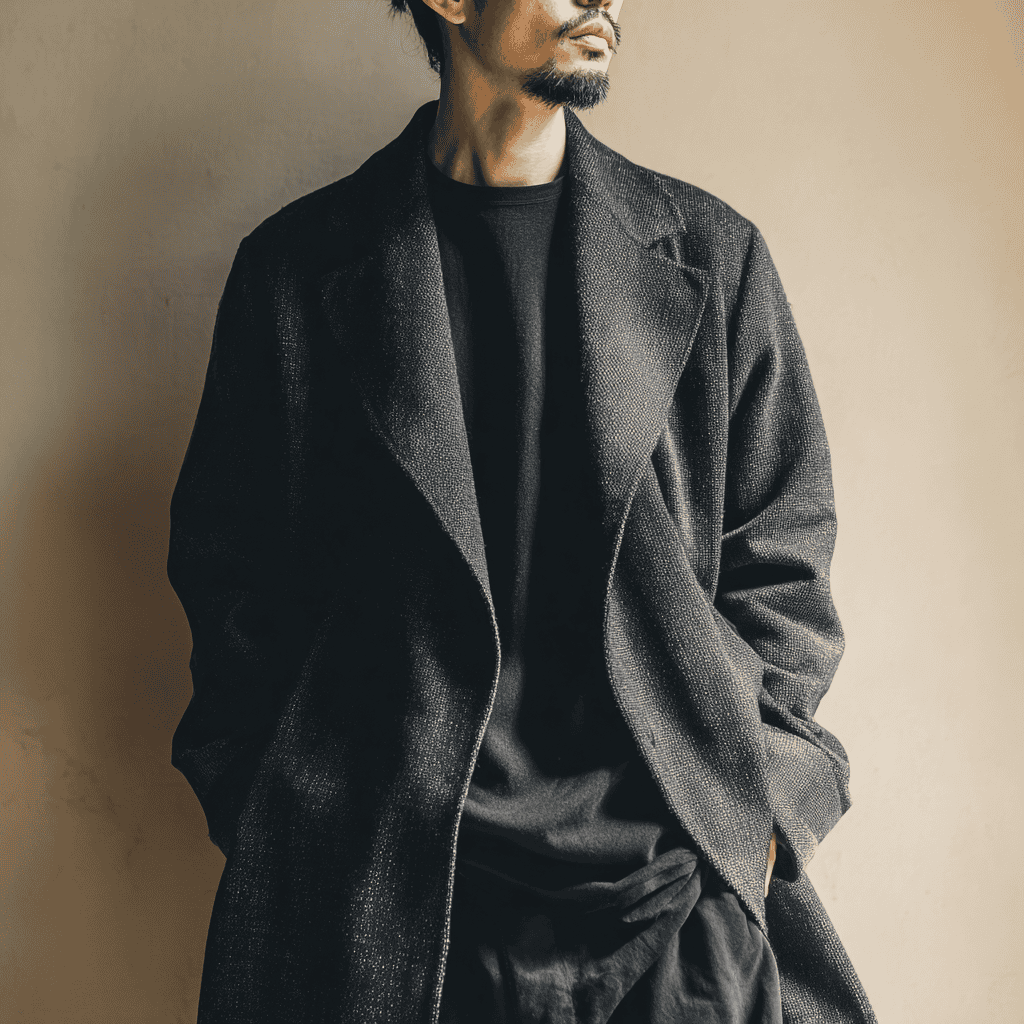
Yohji Yamamoto is the first originator. All black, asymmetric and deconstructed, his work set the template before there was a conversation to call it one. Current collections continue the line, while the deepest pieces surface on resale, where archive coats and Pour Homme trousers appear at intervals. Fabric hand is the argument here. A Yamamoto wool weighs more than it looks, and it falls in a single unbroken plane from the shoulder. Nothing about it flatters in the usual sense. It simply hangs, and the hanging is the point. A wardrobe that admits one Yamamoto piece tends, over time, to admit several more.
At Issey Miyake, pleating is the entire conversation. Think of how cloth falls around a body in a Ghibli scene: a housekeeper's dress, a cotton apron, a skirt caught by wind on a hillside. The Miyake pleat answers all of it almost without trying. The BAO BAO bags run on the same logic, with triangles that shift into three dimensions as the bag fills.
Rei Kawakubo's Comme des Garçons is the source code that newer labels have iterated on for two generations. Undercover, Ambush and sacai all build on its deconstruction, whether or not they say so. Dover Street Market Ginza remains the natural home for the depth. It also sits within easy reach of the Tokyo shopping districts worth walking properly.
Recommended
The Women's Editorial Register
The women's side of this conversation has run under the radar, and search results still skew male by default. That is a reporting gap rather than a market one. sacai's womenswear, the Miyake accessories and the Loewe capsules serve both wardrobes. All three houses designed for women from the start, not as an afterthought.
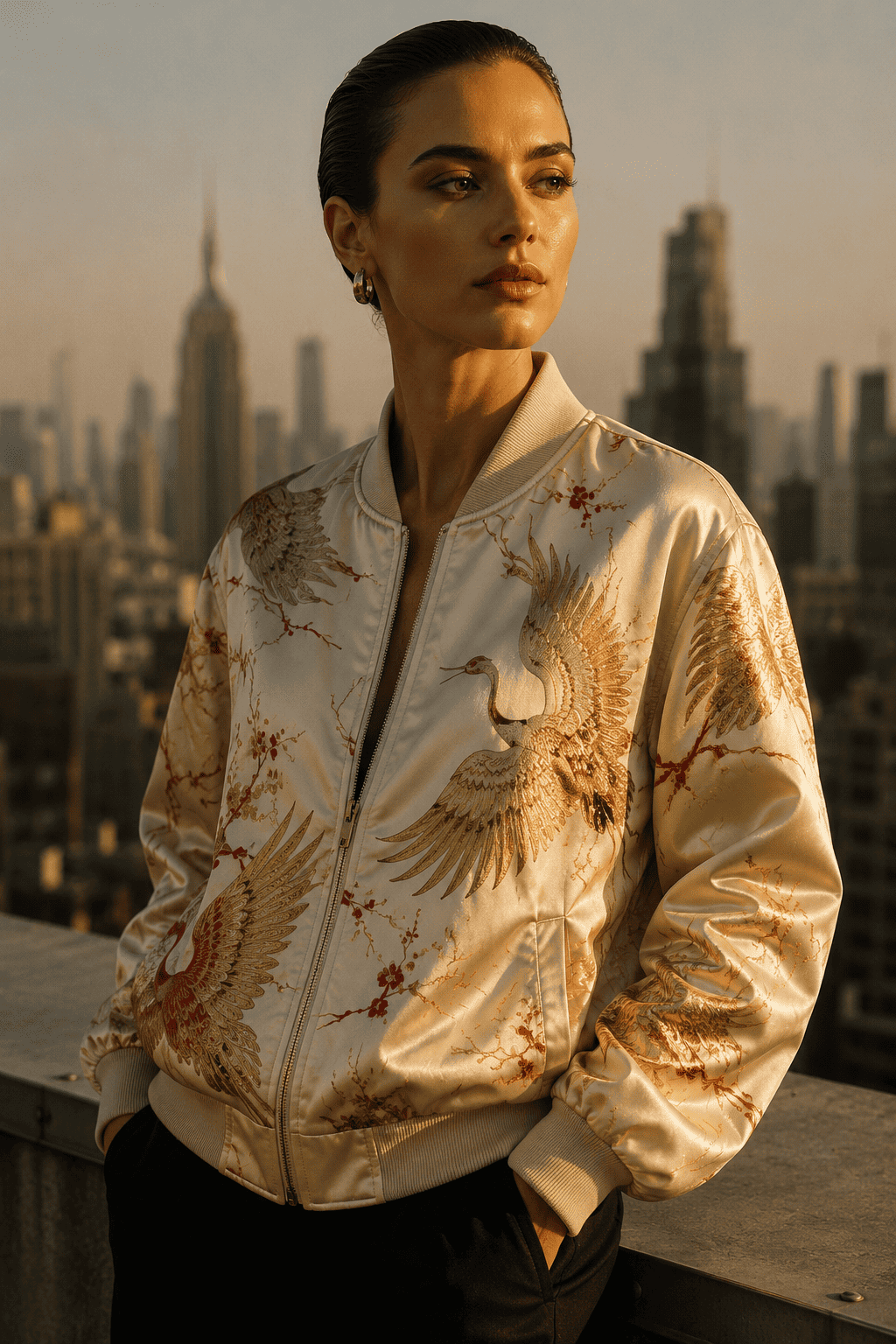
The styling logic matches the menswear: silhouette over graphic, one reference per outfit, and a dark base with accents. The two diverge in proportion rather than principle. A spliced bomber behaves differently over a narrower shoulder, so the answer is usually a longer line beneath it. Proportion, in other words, is the only real variable.
Resale, Sizing and a Tokyo Fitting Day
Resale is where the register gets interesting for women, since the archive runs deeper than current stock ever does. It also rewards patience more than any other route, and it teaches the cut of each house. Japanese proxy services and European platforms both carry Comme des Garçons and Yamamoto womenswear in volume. The seasonal cycle becomes clear once you have watched it for a year. Listings soften some months after a release, and that is when the patient buyer moves. On the ground, the same instinct leads to vintage shopping in Japan, where sellers know exactly what they hold.
One practical note before the collaborations. Sizing across these houses is rarely comparable. Japanese cuts often run narrow through the shoulder while sitting long through the body, which flatters some frames and defeats others. Where you can handle a piece before buying, do so. The drape of a heavy wool is impossible to judge from a photograph. In Tokyo, that means a long day of fitting rooms in Aoyama and the resale floors of Shibuya and Nakano. It also means a proper lunch. Katsudon is the classic counter meal for that kind of day, and its name even sounds like winning.

Katsudon is a donburi of breaded pork cutlet simmered with onion and egg over rice, a staple of Japanese lunch counters. Because katsu sounds like the verb for winning, students often eat it before exams.
- 2 boneless pork loin cutlets, about 4 oz each
- Salt and black pepper
- 1/4 cup all-purpose flour
- 1 large egg, beaten, for breading
- 1 cup panko breadcrumbs
- Neutral oil, for frying
- 1/2 onion, thinly sliced
- 2/3 cup dashi
- 2 tablespoons soy sauce
- 2 tablespoons mirin
- 1 tablespoon sugar
- 3 large eggs, lightly beaten
- 2 cups hot cooked short-grain rice
- Sliced scallion, to garnish
- Season the cutlets with salt and pepper, then coat each in flour, beaten egg and panko.
- Fry the cutlets in oil at 340°F for about 5 minutes, turning once, until golden; drain and slice into strips.
- Simmer the dashi, soy sauce, mirin, sugar and onion in a small skillet for 3 to 4 minutes until the onion softens.
- Lay one sliced cutlet in the skillet, pour half the beaten eggs around it, cover and cook for about 1 minute until just set.
- Slide the cutlet and egg over a bowl of rice, garnish with scallion, and repeat for the second bowl.
Luxury Anime Fashion Collaborations Worth Tracking
Licensed collaboration is where the category becomes visible to a wider audience. The pieces are limited, properly designed and clear about their source. A few deserve the attention a serious wardrobe pays, and the rest are safe to ignore.
Jonathan Anderson's tenure at Loewe produced a sustained body of Ghibli work across three collections. The house's own Howl's Moving Castle page calls the last one the third and final entry. Leather marquetry, crystal inlay, print and feather embroidery all belong to the house rather than to a licensing studio. So buy on the leather rather than the character, and the piece keeps working long after the capsule ends.
Designed by Ikuto Yamashita, the series' own mechanical designer, for the thirtieth anniversary of the broadcast. The reference sits in the credit.
View the Evangelion G-SHOCK →Triangular pieces on a mesh ground that turn three-dimensional as the bag fills. Geometry as construction rather than decoration.
See the LUCENT Crossbody →A low, slim trainer descended from the LIMBER-UP of 1961 and the LIMBER of 1966. The least costume-adjacent shoe in the conversation.
View the MEXICO 66 →UNIQLO's UT program puts genuine Studio Ghibli artwork onto cotton at a scale nothing else in the category reaches. The licensing is legitimate, and the printing holds up through washing. Restraint is the whole trick: one or two pieces, never the full capsule. Worn under a plain coat, a single UT shirt reads as a nod rather than a uniform.
G-Shock, Evangelion and the Credit Test
Casio's G-Shock division runs collaborations constantly, and most of them are forgettable. The GA-110EVA30-7A is not. It marks the thirtieth anniversary of the original television broadcast, since the series first aired in 1995. Ikuto Yamashita designed it. He is the mechanical designer of Evangelion itself, not an outside licensing studio.
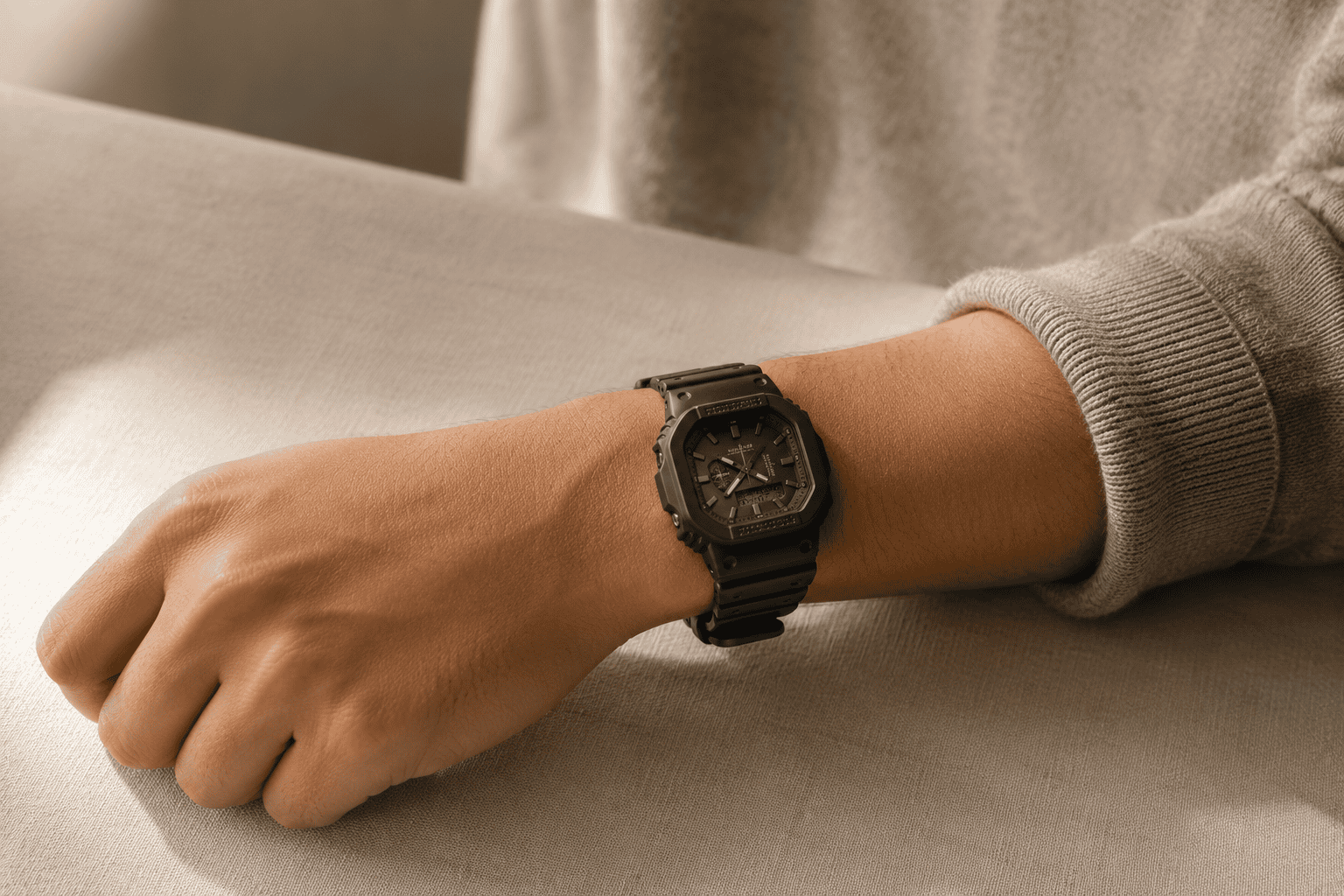
The base is the GA-110 case, which carried Casio's first Evangelion collaboration back in 2010. Unit-01's headgear runs along the short band, while the arm gripping the Spear of Longinus crosses the long band. Resin rather than steel keeps it light on the wrist through a long day. The reference sits in the design credit, which is the version that ages well.
Three questions sort the serious work from the rest. First, does the design credit name somebody from the source material? Next, what is the piece made of, since a licensed print on poor cotton is still poor cotton. Finally, would you wear it if the license were stripped out? Anything that passes all three is worth tracking. Anything that fails the last one is merchandise wearing a house name, however good the print.
How to Wear Luxury Anime Fashion
The wearers who get this right treat it as accumulation rather than collection. Pieces arrive over years, not across a season. If you want the itemized version, the 35-piece anime luxury wardrobe sets out the pieces themselves. The reasoning underneath them is simpler. If the coat carries the lineage, the shoes do not. When the watch is a collaboration piece, everything else stays plain. Build the base in black, charcoal and ink, so that the red of AKIRA or the orange of Evangelion can mean something. Outerwear comes before tees, because a good jacket stays in rotation for years. Bags come early too, since the piece you carry daily is the one you use most.
For work, wear one Yamamoto or sacai coat over plain charcoal trousers, a black knit and black leather Derbies. The coat talks, and everything else stays out of its way. For the weekend, an Undercover or Ambush layer goes over a plain tee, raw denim and the Onitsuka Tiger MEXICO 66. That shoe descends from the LIMBER-UP of 1961 and the LIMBER of 1966, and it is the least costume-adjacent shoe in the conversation. For travel, pack pleated trousers, a plain knit, a longline coat and a small card holder. Everything packs flat, which matters more on a long trip. For the rest of the trip, luxury travel in Japan covers the practical side.
Questions Worth Asking
What is luxury anime fashion?
Luxury anime fashion is designer clothing whose anime reference lives in silhouette, material or a licensed collaboration rather than a printed character. Its lineage runs from the cyberpunk films of the eighties into Japanese houses such as Yohji Yamamoto, Comme des Garçons, Undercover and sacai. It reads as influence, not costume.
How do you wear anime-influenced clothing without looking like you are in costume?
Lead with silhouette and fabric rather than graphics. A black asymmetric coat with technical seams reads as anime to people who know the films, while everybody else sees good tailoring. Keep to one reference per outfit, build the rest in dark neutrals, and let a single piece do the talking.
Which designers run anime collaborations?
UNDERCOVER carries an Evangelion collaboration on its own site. Loewe produced three Studio Ghibli collections under Jonathan Anderson, the last drawn from Howl's Moving Castle. Casio's G-Shock has worked with Evangelion since 2010, and UNIQLO runs a Studio Ghibli UT line. Designer-led, licensed work is the part worth tracking.
Where can you find these pieces in Tokyo?
Dover Street Market Ginza carries the depth for Comme des Garçons and the newer Japanese labels. The Aoyama flagships cover Yohji Yamamoto, Issey Miyake and sacai. For archive pieces, the resale stores of Shibuya and Nakano hold stock that few overseas platforms match. Buy from authorized sellers only.
Is the anime influence on designer fashion a passing trend?
No. The vocabulary entered serious fashion through Comme des Garçons and Yohji Yamamoto and has only deepened since. A generation that grew up on the films now runs its own houses, so the reference comes from inside rather than from research. That makes it structural rather than seasonal, and it keeps evolving.
Does luxury anime fashion work for a women's wardrobe?
Yes, and the principles do not change. sacai's womenswear, the Issey Miyake accessories and the Loewe Ghibli capsules were built for both wardrobes from the start. Proportion is the main variable. A spliced bomber behaves differently over a narrower shoulder, and a longer line beneath it usually solves that.
What the Lineage Finally Tells Us
Why does the register work for a grown wearer? Because the pieces stop asking anybody to declare anything. A teenager in the AKIRA jacket is taking part in tribute, which is a valid relationship to the source. On somebody in their thirties, that same jacket marks a person who has carried the reference for two decades.
That confidence is the real luxury, and it accumulates rather than arrives. A Comme des Garçons coat bought years ago still works now. In the end, luxury anime fashion earns its keep across years rather than seasons. Buy slowly, buy heavy, and let the reference sit underneath the garment. When you are ready to walk the source material too, start with the collector retail circuit in Tokyo.
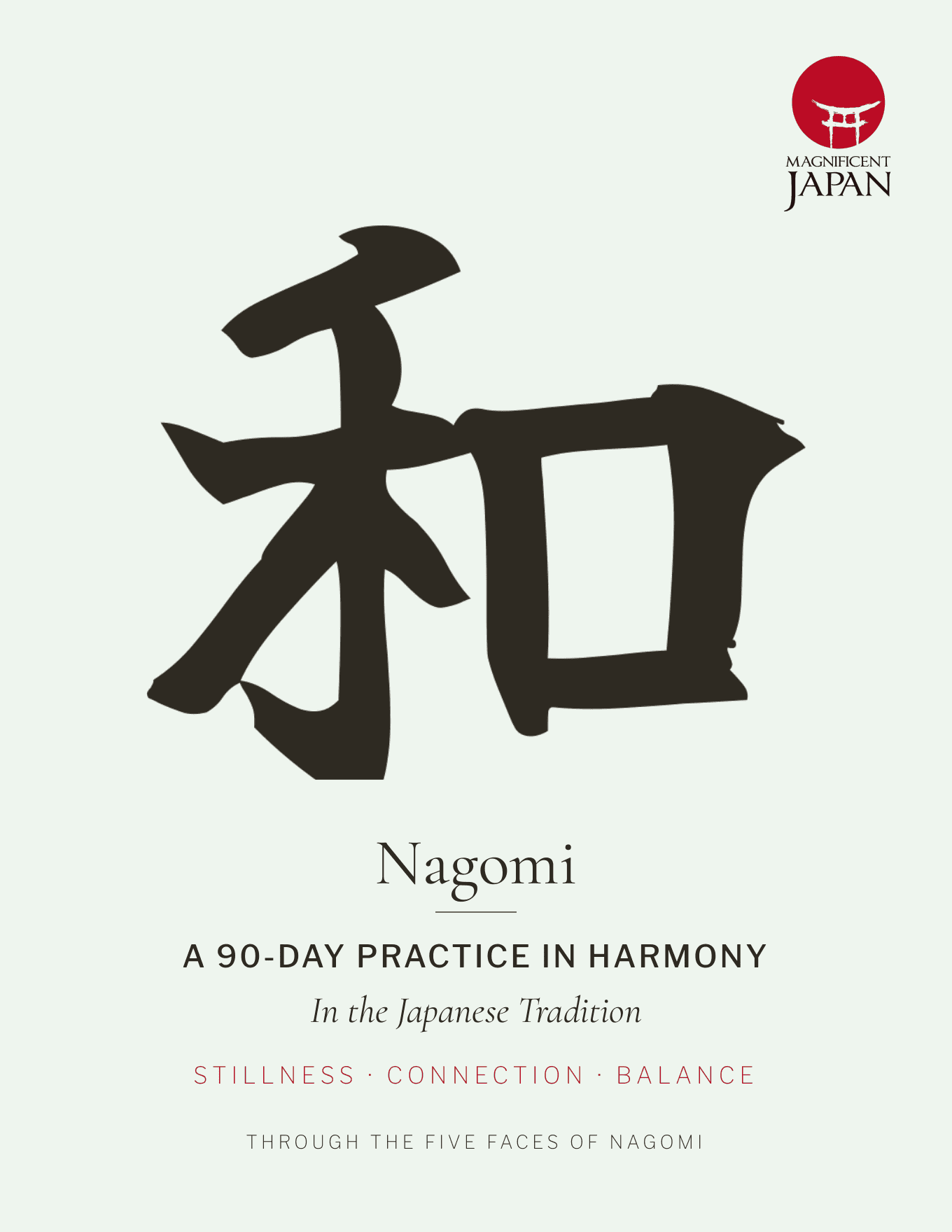
Ninety days on harmony and restraint, the same discipline that keeps a wardrobe to one reference per outfit.
View the Journal →Seeing the clothes in person changes the argument faster than reading does. A Yamamoto wool behaves differently in the hand than on a screen. Tokyo puts the flagships, department-store floors and resale streets a few train stops apart, so the trip below runs on walking distance.
Dover Street Market Ginza in the morning, the Aoyama flagships across the afternoon, then the Shibuya and Nakano resale floors on a second day, with fitting time built in rather than squeezed. We plan the route, the openings and the pacing around how you actually shop.
Plan Your Custom Japan Itinerary