Anime luxury is not a printed character on a shirt. It is a Japanese house that has watched the same films you have, then answered in steel, leather, denim and pleated cloth. A G-Shock reads as a tool long before it reads as Evangelion. A pearl strand reads as a pearl strand. That is the register this wardrobe works in, so it survives an office, a dinner and a long-haul flight without explaining itself.
Fifteen pieces follow, in four groups: watches, bags and small leather goods, outerwear, and the finishing pieces. Most come from Japanese makers. A few carry a licensed collaboration, while the rest carry an affinity with the films. For the wider cultural map first, start at the Anime in Japan hub.
What is anime luxury?
Anime luxury is designer clothing and accessories that carry an anime reference through material, silhouette or a licensed collaboration, rather than through a printed character. It reads as influence instead of costume. The reference stays legible to people who know the films and invisible to everyone else, which is why it works at the office.
Why Anime Luxury Reads as Influence, Not Imprint
Two different things get called by the same name. One is merchandise: a licensed character, reproduced at scale, sold because the character sells. The other is influence, where a designer absorbs a visual language and returns it in cloth or metal. Merchandise dates the moment the season ends. Influence does not, because the silhouette does the work rather than the licence. A well-built wardrobe sits entirely in the second category.
Japanese animation has drawn clothes with real attention for decades. Katsuhiro Otomo drew moulded plastic and matte metal. Hayao Miyazaki drew linen, wool and worn leather. Mamoru Oshii drew technical outerwear before fashion had a name for it.
Designers noticed, and many of them were Japanese to begin with, so the traffic runs both ways. Some houses have answered directly. LOEWE ran three Studio Ghibli capsules, closing with its Howl’s Moving Castle collection. Others work by affinity instead. Maison Margiela built the Tabi boot on the split-toe Japanese sock, and the shape still reads as a statement. For the longer argument, see how anime shaped designer fashion. In short, anime luxury rewards the viewer who knows the films and asks nothing of anyone else. That asymmetry is the whole method, and it shapes every choice in the four groups below.

The four tests behind this list
Every piece here cleared four tests. First, would a stranger read it as clothing rather than as a reference? Second, does the material carry the idea, so the piece still works once the film is forgotten? Third, will the maker produce it again next season, or does it vanish with a capsule? Finally, does it sit beside what you already own without demanding a new outfit? Those rules explain the absences too. There are no character prints, no graphics that read at ten paces, and no resale-only pieces you cannot replace if they are lost. Build slowly, in that order, and the wardrobe holds together.
Anime Luxury Watches From Japanese Houses

A watch is where this wardrobe usually starts, because a wrist is a small and discreet canvas. Japanese watchmaking gives the category its spine. Seiko builds at every level, from a field diver to a hand-finished dial. Casio built a case that survives a drop down the stairs. Both houses have also taken licences. Seiko released its ONE PIECE limited editions in 2021, each run capped at 5,000 pieces. Meanwhile, Grand Seiko keeps a Japan Seasons series that reads like a storyboard of the year. Seven watches follow.
1. Casio G-SHOCK GA-110EVA30-7A — the Evangelion anniversary

Casio built the G-SHOCK GA-110EVA30-7A for the thirtieth anniversary of Evangelion’s original television broadcast. Ikuto Yamashita, who drew the machines in that series, designed this watch too. It sits on the same GA-110 case that carried the first Evangelion collaboration in 2010. As a result, it reads as a designer’s signature rather than a character print. A shirt cuff covers most of the artwork, which is exactly the point.

For the sizes, districts and counters worth noting down on a Tokyo wardrobe trip.
6 × 9 in · 120 unlined pages · matte softcover
Shop This Journal →2. Casio G-SHOCK DW-5600KHG25-1 — Hokusai’s red Fuji
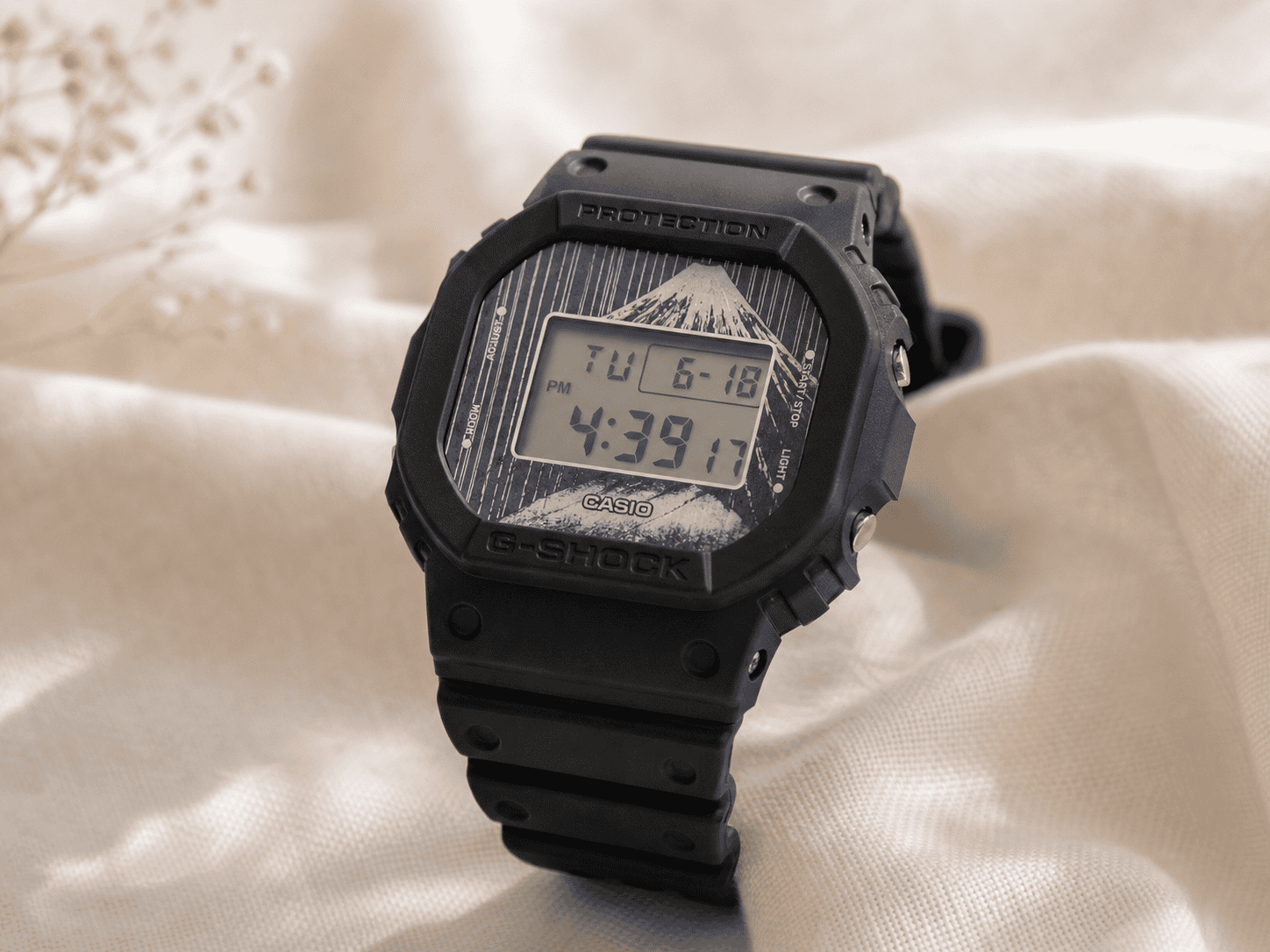
Here the reference is older than animation itself. The G-SHOCK DW-5600KHG25-1 carries artwork from Hokusai’s Thirty-six Views of Mount Fuji on the classic square case. Animators have long borrowed Hokusai’s waves and skies, so the watch sits in the same visual family without any licence. It also wears like any 5600, light and flat on the wrist. Few objects connect woodblock prints and anime this neatly.
3. Casio G-SHOCK GW-M5610U-1 — the square, solar and plain
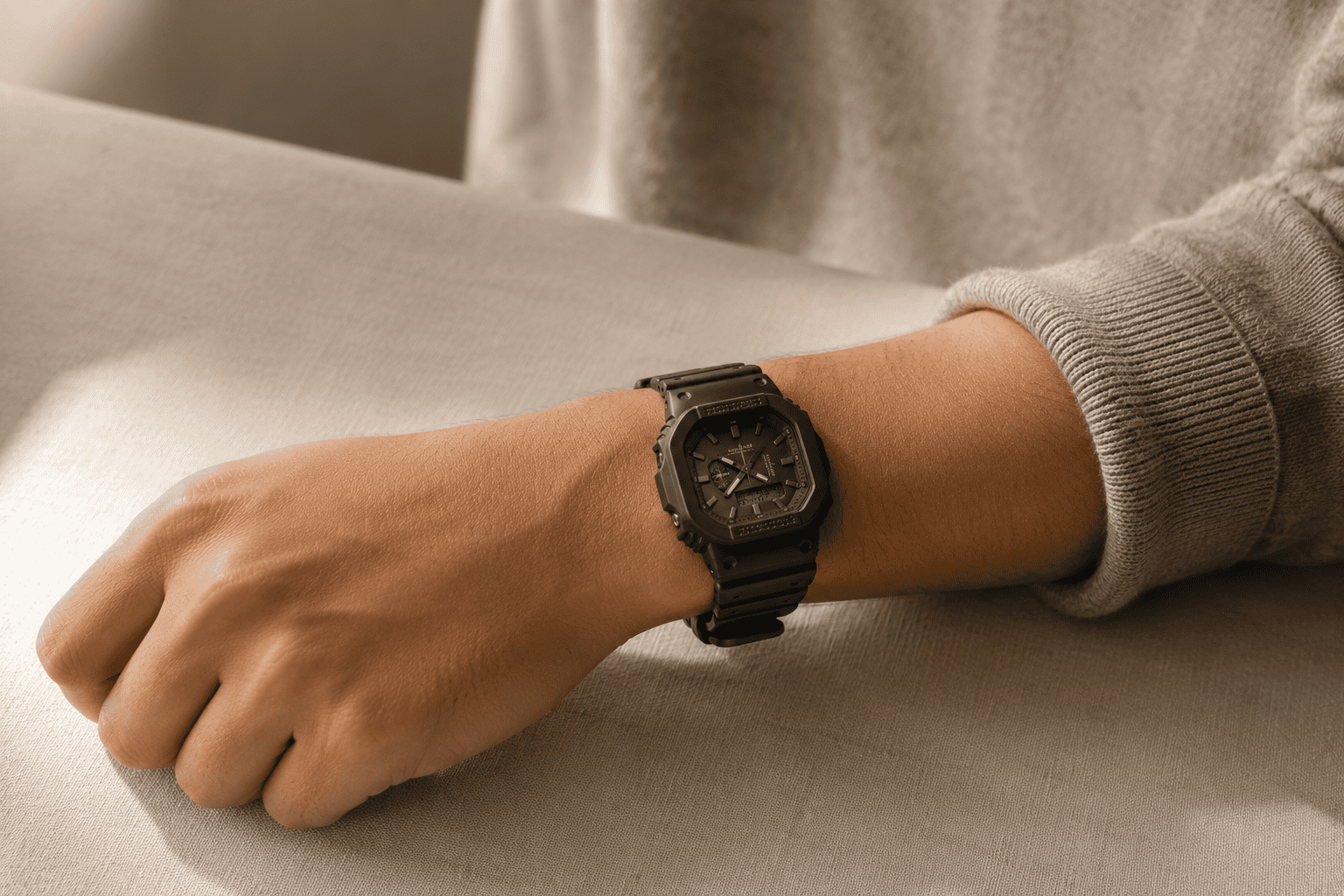
Black resin, a square case and a clear digital display. The G-SHOCK GW-M5610U-1 charges from light and sets itself by radio signal, so it asks nothing of its owner. Animation draws this shape whenever a character needs a watch that simply works. On a cream sofa or under a cuff, it disappears. That makes it the most wearable object here, and the one you stop noticing first.
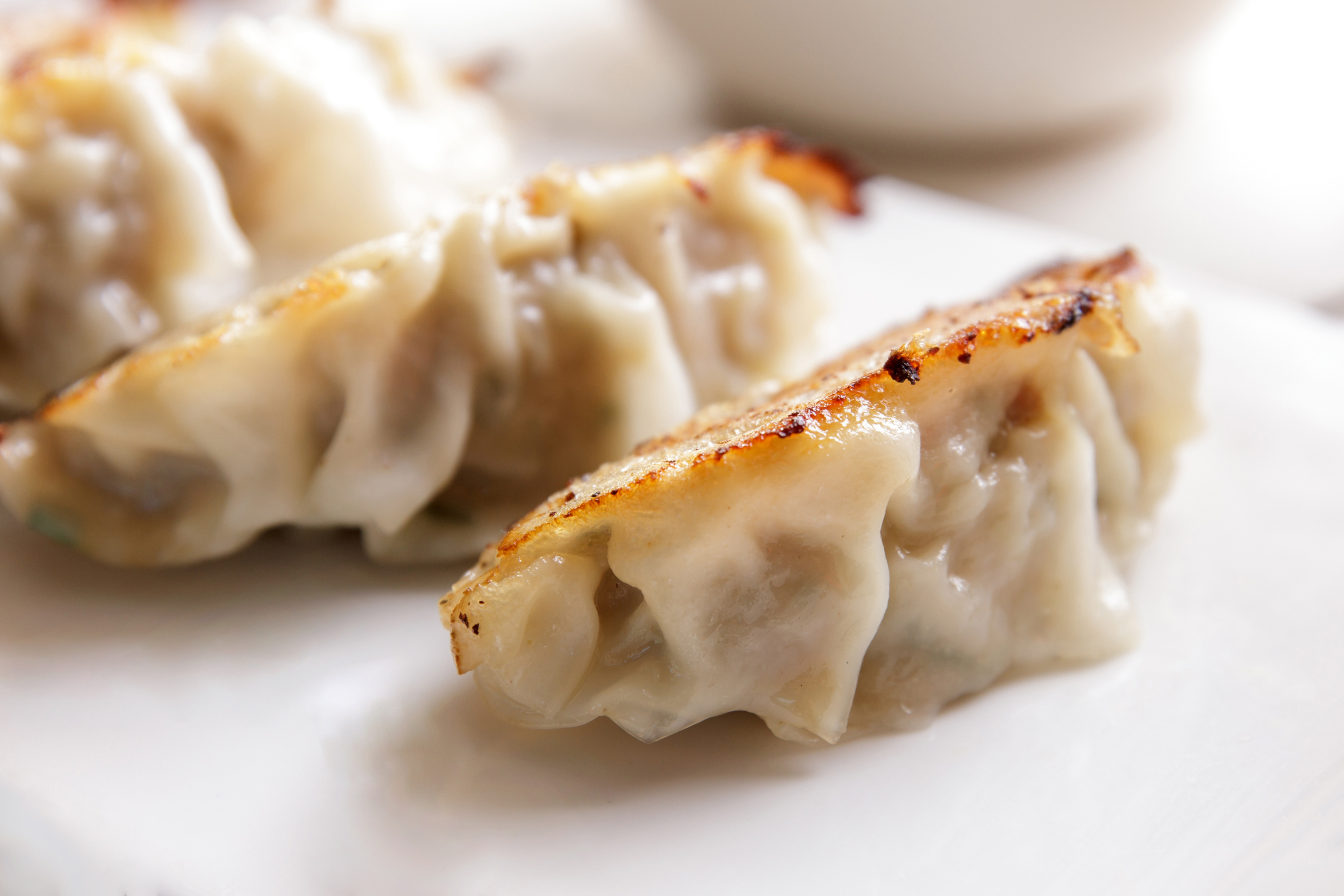
Gyoza came to Japan from northern China after the Second World War. Pan-fried until crisp underneath, they became a staple of ramen shops and home kitchens.
- 8 oz ground pork
- 1 1/2 cups finely chopped napa cabbage
- 2 green onions, finely chopped
- 1 tsp grated fresh ginger
- 1 garlic clove, grated
- 1 tbsp soy sauce
- 1 tsp toasted sesame oil
- 24 round gyoza wrappers
- 1 tbsp vegetable oil
- 1/3 cup water
- Salt the cabbage lightly, rest it 10 minutes, then squeeze out the water.
- Mix the pork, cabbage, green onion, ginger, garlic, soy sauce and sesame oil until sticky.
- Spoon a teaspoon of filling onto each wrapper, wet the edge and pleat it closed.
- Heat the oil in a skillet and fry the gyoza flat side down until golden underneath.
- Add the water, cover and steam for 4 minutes, then uncover and cook until the pan is dry and the bottoms crisp.
- Serve with a dip of soy sauce and rice vinegar.
4. Casio G-SHOCK MTG-B2000BD-1A4 — carbon and Bordeaux

MT-G is where Casio stops being utilitarian and starts being engineered. The G-SHOCK MTG-B2000BD-1A4 pairs carbon and steel with a Bordeaux ion-plated finish that darkens almost to black indoors. Carbon gives it a weight that surprises anyone expecting plastic. Field operatives in near-future anime wear something very close to it. Wear it with a plain shirt, though, and the reference stays private.
5. Grand Seiko SBGA413 — Shunbun, the spring equinox
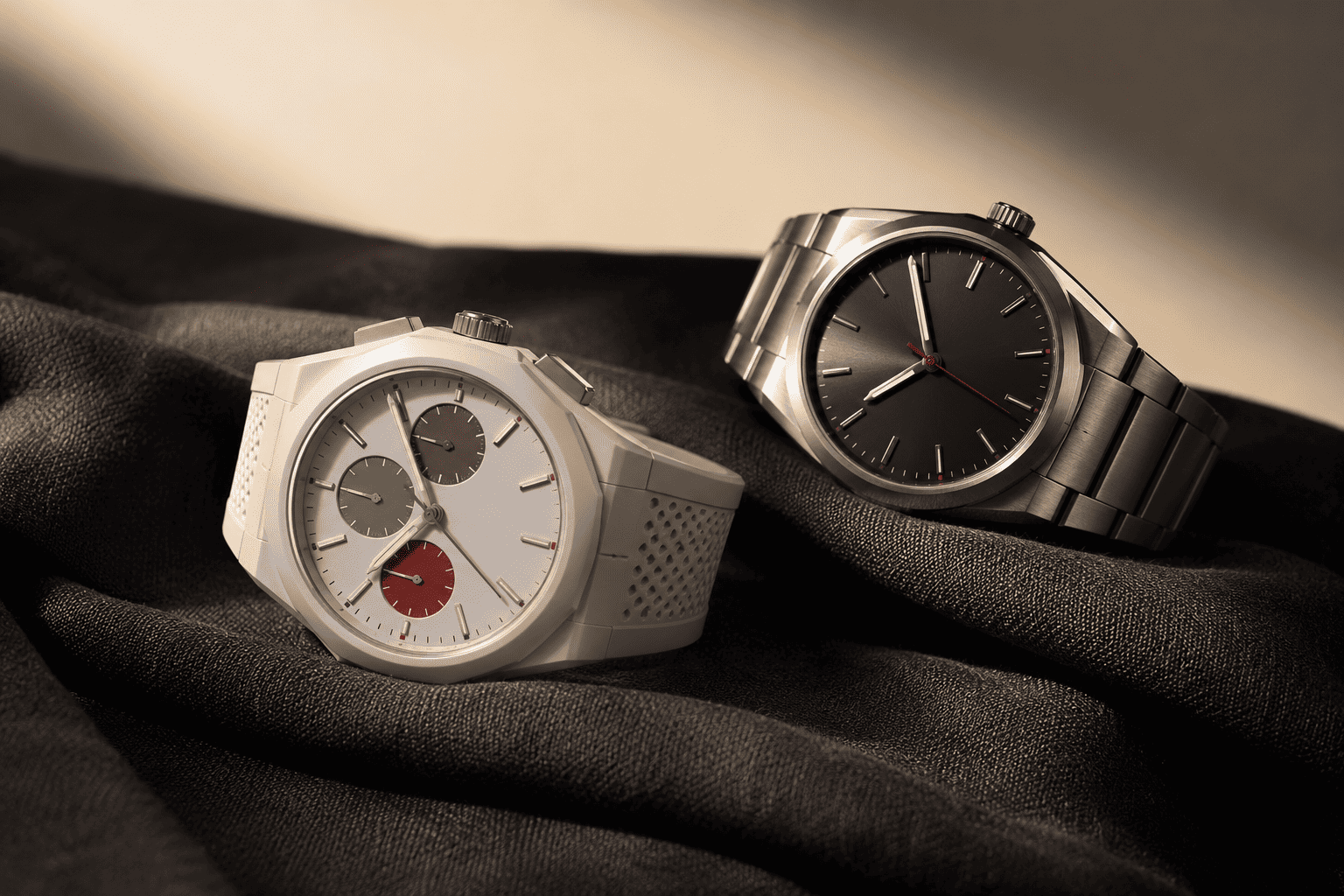
Pale pink, and not a flat pink. The Grand Seiko SBGA413 dial evokes hana-ikada, the raft of blossom on moving water around the spring equinox, or shunbun. Spring Drive Caliber 9R65 moves the hands in a glide rather than a tick, with roughly seventy-two hours in reserve. High-intensity titanium keeps it light. Animation has drawn that same scene for decades, while here a Japanese house drew it in metal.
6. Seiko Prospex SRPE93 — the automatic diver
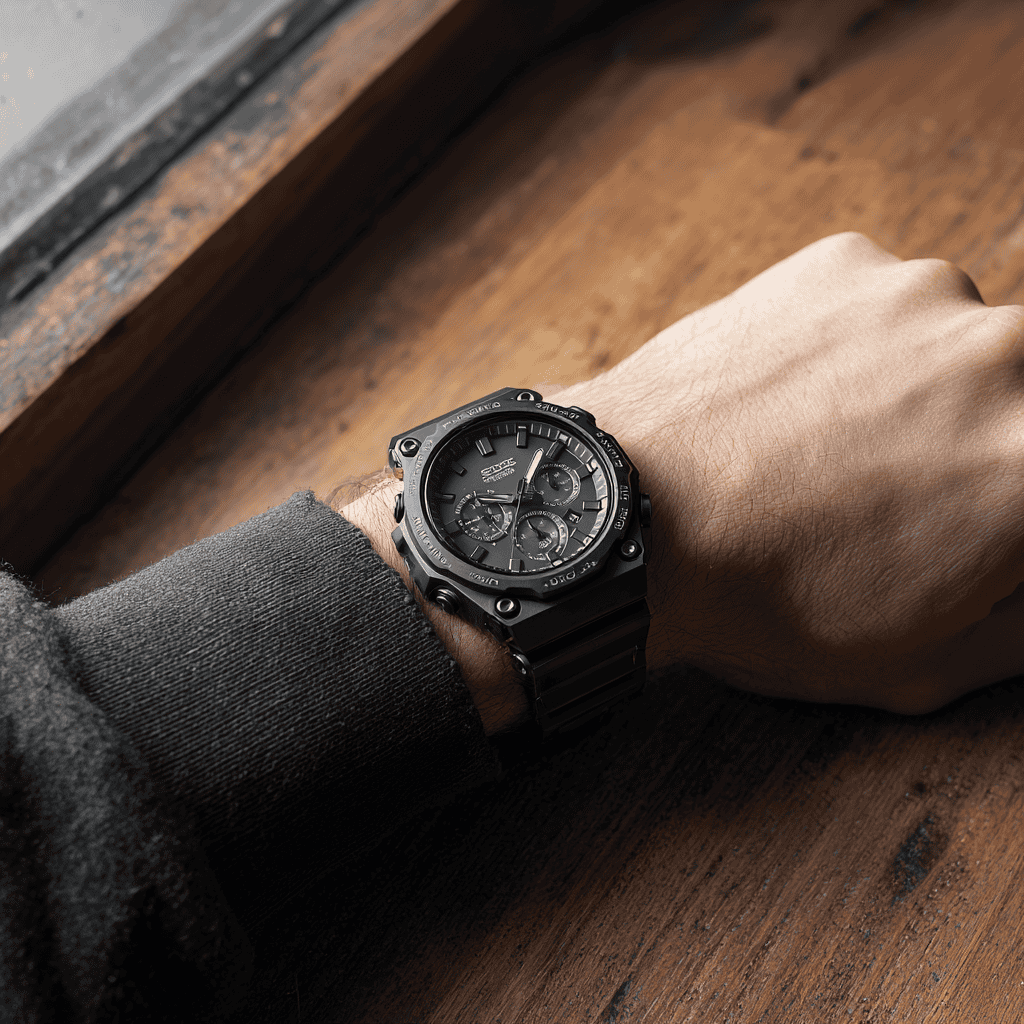
Black dial, rotating bezel and a rubber strap built for water. The Seiko Prospex SRPE93 is an automatic diver rated to 200 meters. Its cushion case sits low on the wrist despite the size. Adventure anime draws this kind of watch on anyone who goes near the sea. Off the boat, it pairs with denim just as easily, because the design was never decorative to begin with.
7. Seiko 5 Sports SRPD55 — the working end of the wardrobe
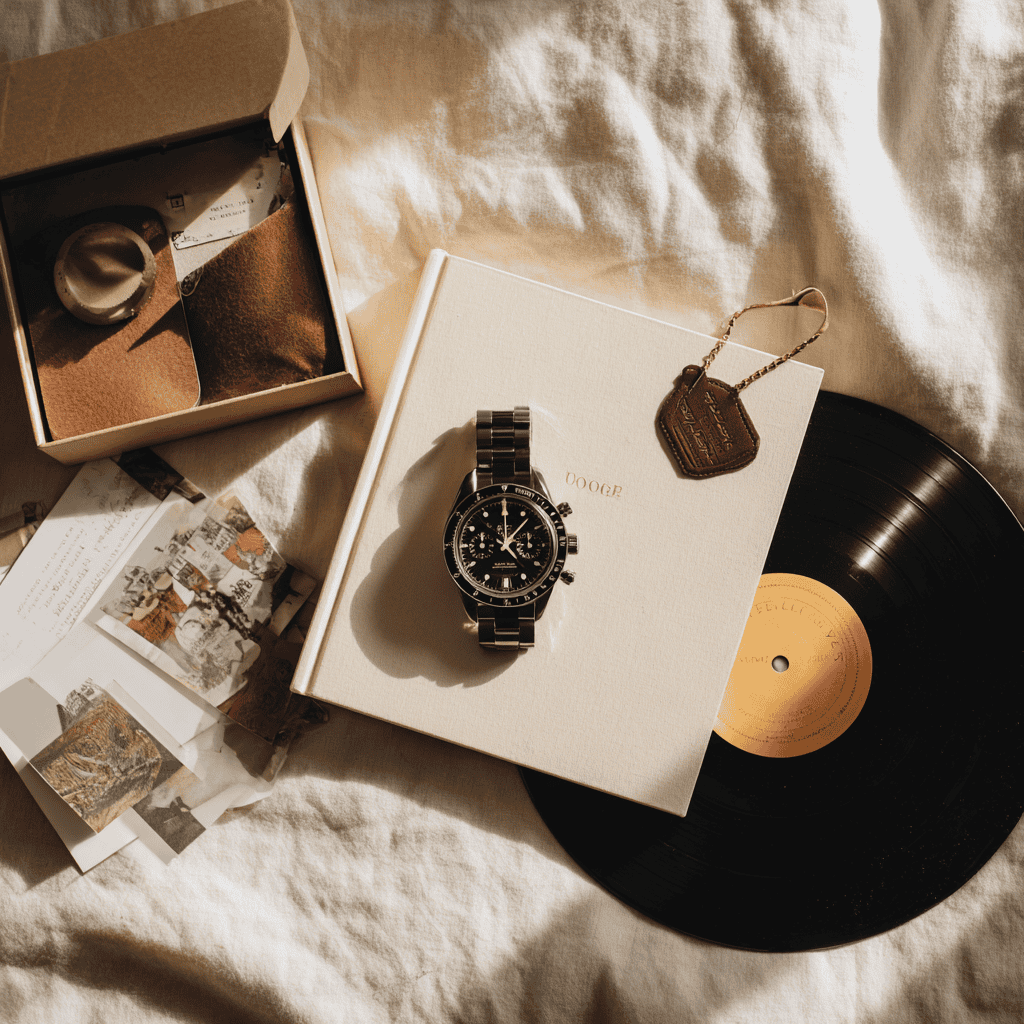
Day-date at three, a black dial and a steel bracelet with a little play in it. The Seiko 5 Sports SRPD55 is what a Tokyo office worker actually straps on. It is also what animation draws when a character needs to look competent rather than wealthy. Brushed lugs, applied indices and an automatic movement keep it honest. It asks for less attention than anything else here, which is precisely its use.
Seven watches is more than anyone needs, so treat the group as a range. Start with one, usually a G-Shock, and wear it daily for a season before adding a second. If you are choosing for somebody else instead, luxury anime gifts with restraint covers that question separately. Meanwhile, the Ginza watch counters will usually open a display case and let you try a piece properly. Fit matters on a bracelet watch, because a link too many makes even a fine dial slide around and look borrowed.
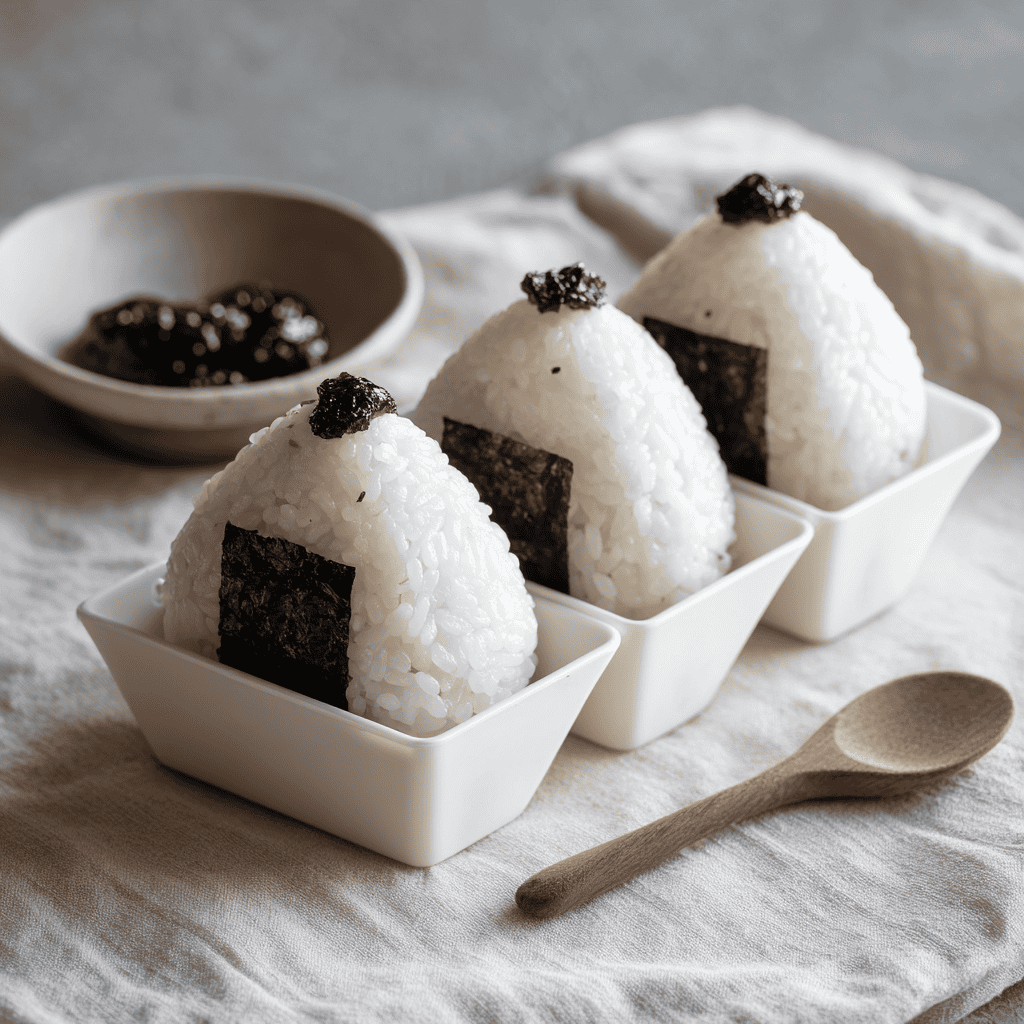
Rice balls have fed Japanese travelers and workers for centuries. Today onigiri fill every convenience store and lunch box in the country.
- 2 cups uncooked Japanese short-grain rice
- 2 1/2 cups water
- 1 tsp salt
- 4 umeboshi (pickled plums), pitted, or 1/2 cup flaked cooked salmon
- 2 sheets nori, cut into strips
- Rinse the rice until the water runs clear, then cook it with the water.
- Let the cooked rice cool until you can handle it comfortably.
- Wet your hands and rub them with a pinch of salt.
- Take about 1/2 cup of rice, press a hollow in the center and add a little filling.
- Close the rice around the filling and press it gently into a triangle.
- Wrap a strip of nori around the base just before eating.
Watches also teach the habit that runs through the rest of this list. Buy the permanent model from the house, then treat limited editions as things you happened to catch. Limited runs sell out within days and reappear on consignment at figures that have nothing to do with retail. Permanent references stay in production for years, so you can buy them calmly, in the right size, with a returns policy. That patience is the real discipline here, and it applies to leather just as well. Leather is where the list turns next, starting with a bag built for daily carry.
Bags and Small Leather Goods
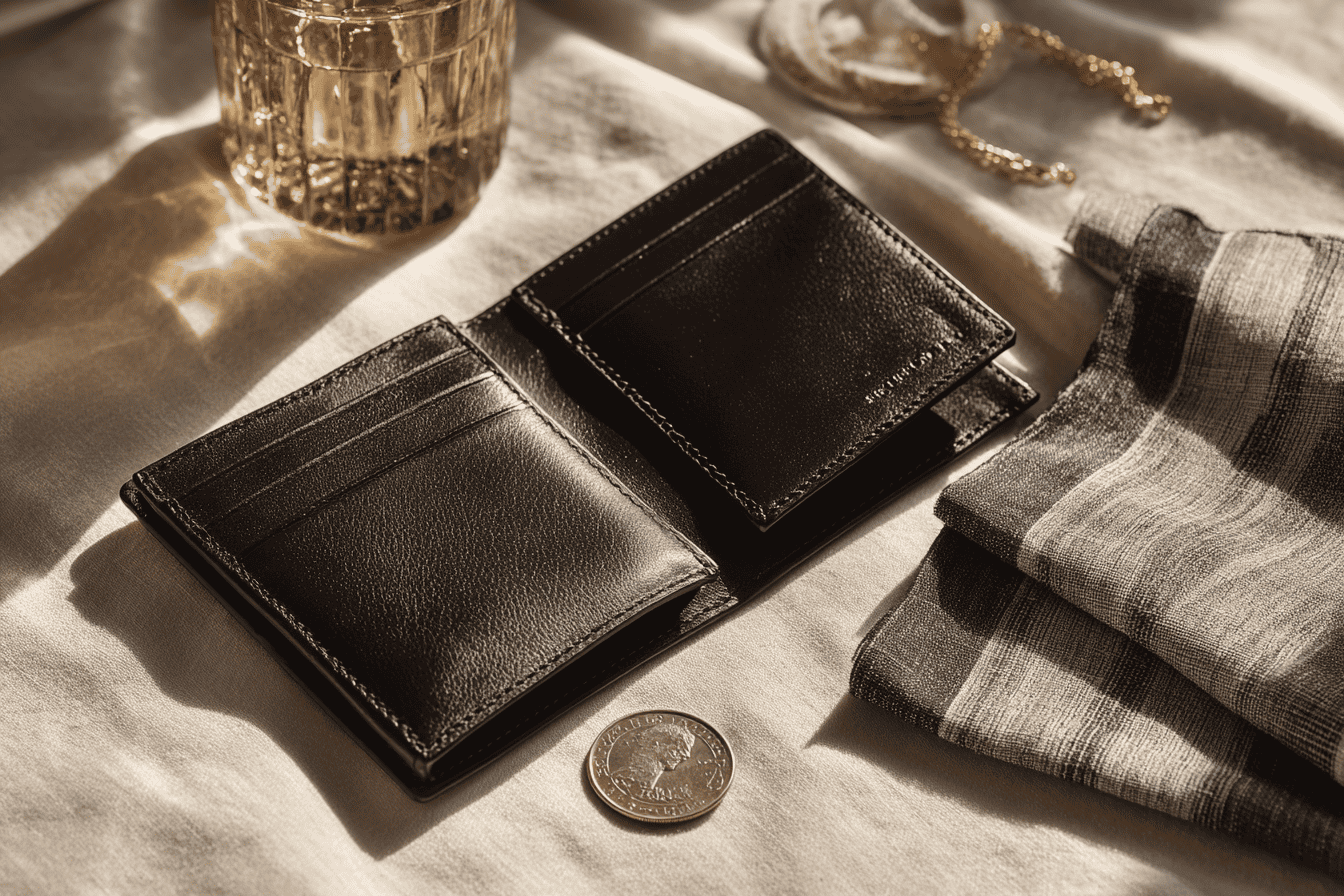
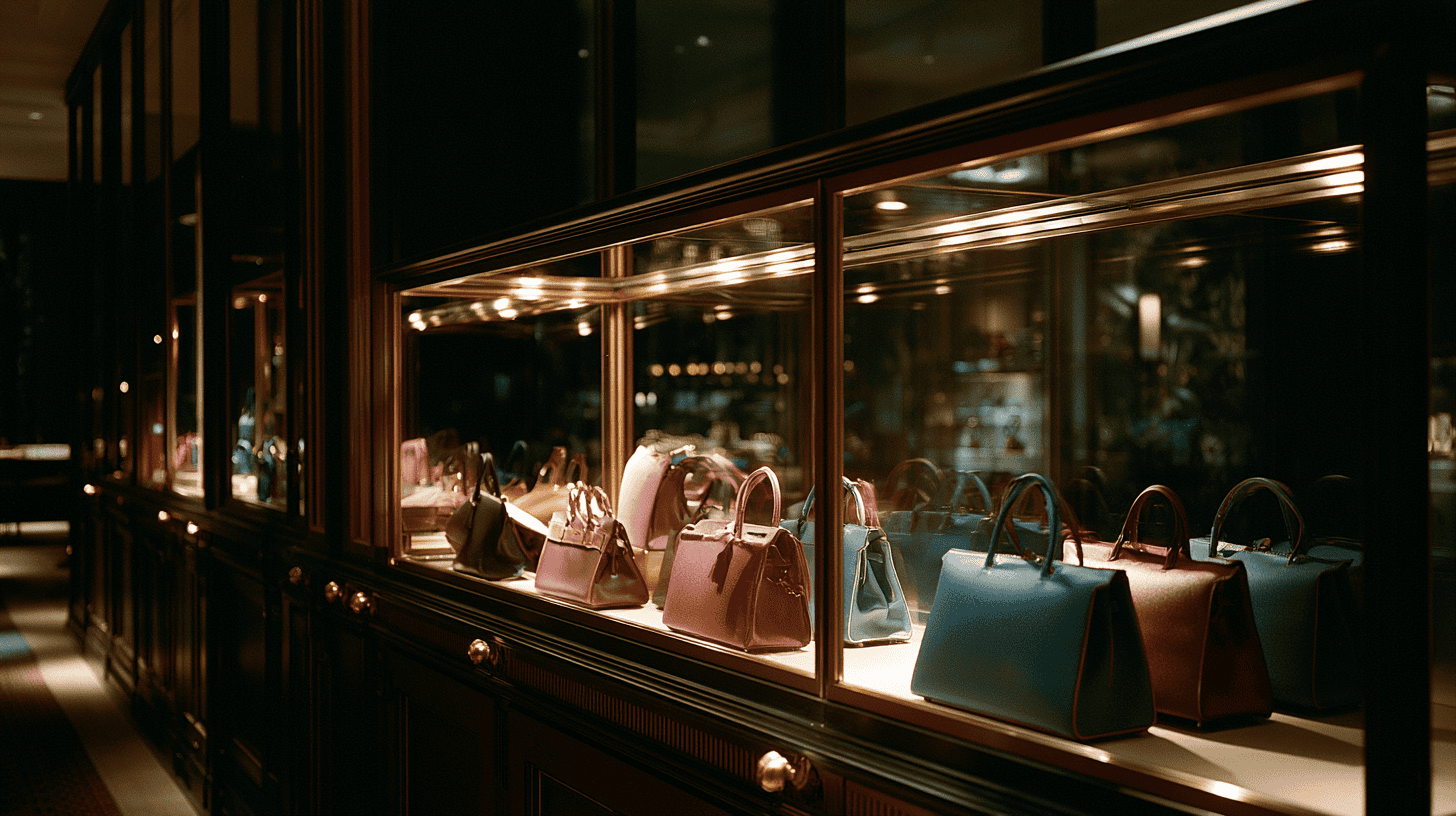
Small leather goods are where a wardrobe gets tested. You handle them daily, then they lie flat in a pocket where nobody sees them. That privacy suits this register well, because a card holder announces nothing. It only has to feel right in the two seconds it takes to come out. Japanese makers dominate this group. Osaka-based master-piece builds to a made-in-Japan brief and runs its own factories, while Comme des Garçons and Yohji Yamamoto treat leather with the same restraint as their clothing.
8. master-piece Slick L Backpack — the technical carry

Black, structured and almost bare on its face, the master-piece Slick L Backpack is the working bag of this wardrobe. Technical bags are the register Japanese animation borrowed for its near-future characters. master-piece was making them before that borrowing became fashionable. Construction does the talking here. Check the zips and the strap anchors first, because finishing shows at the fastenings before it shows anywhere else.
Watches carry the reference most discreetly; outerwear carries it furthest.
| Group | Lead makers | Reference reads | Where to try it |
|---|---|---|---|
| Watches | Casio, Seiko, Grand Seiko | At the wrist, under a cuff | Ginza watch counters |
| Bags and leather | master-piece, Yohji Yamamoto, Comme des Garçons | In the hand, for two seconds | Aoyama and department-store leather floors |
| Outerwear | Momotaro, sacai | Across a room | Kojima Jeans Street, Aoyama |
| Finishing | Mikimoto, Pleats Please Issey Miyake | On movement, at the collar | Ginza pearl houses, Aoyama |
9. Yohji Yamamoto Card Holder — black, and nothing more
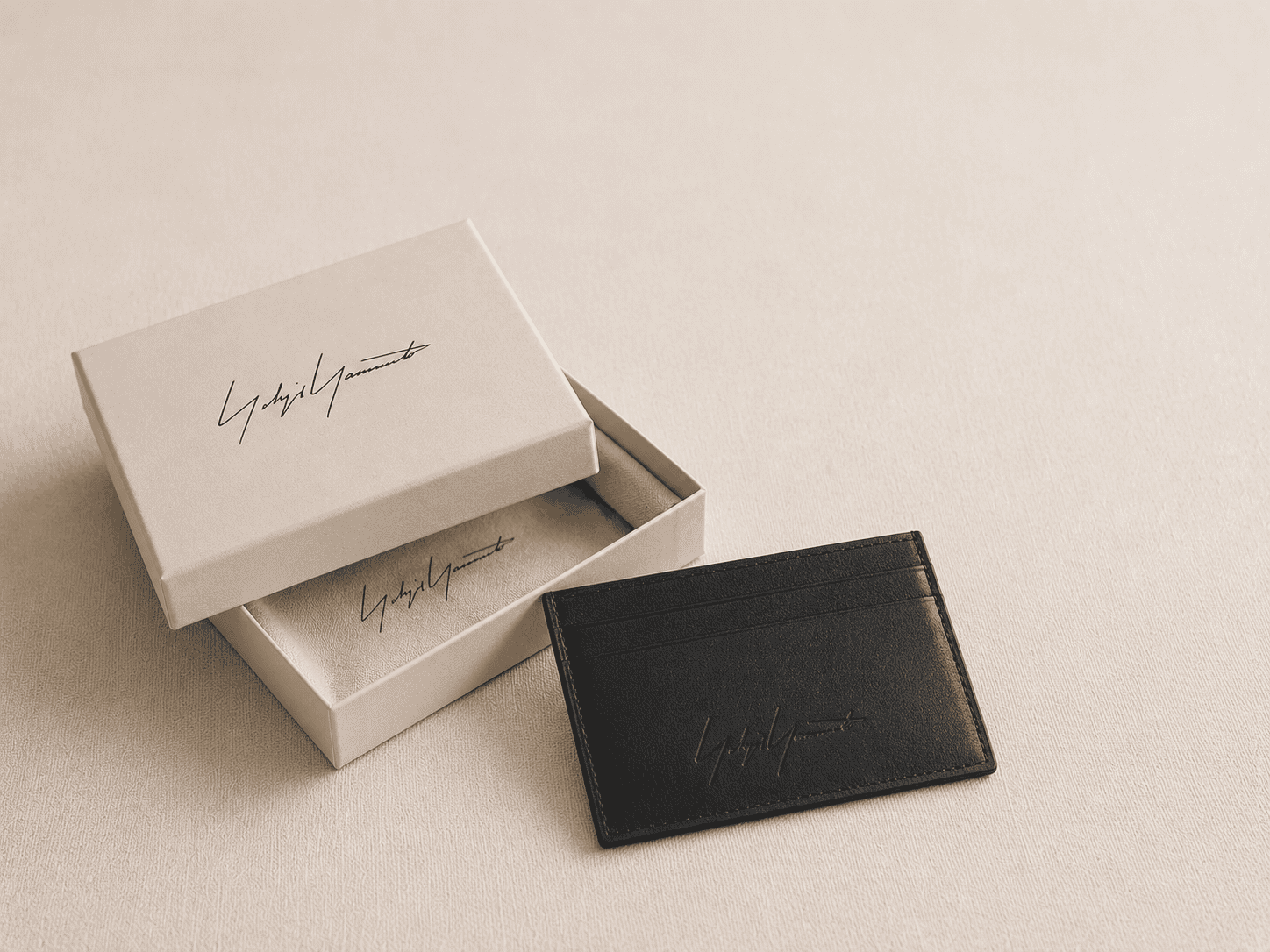
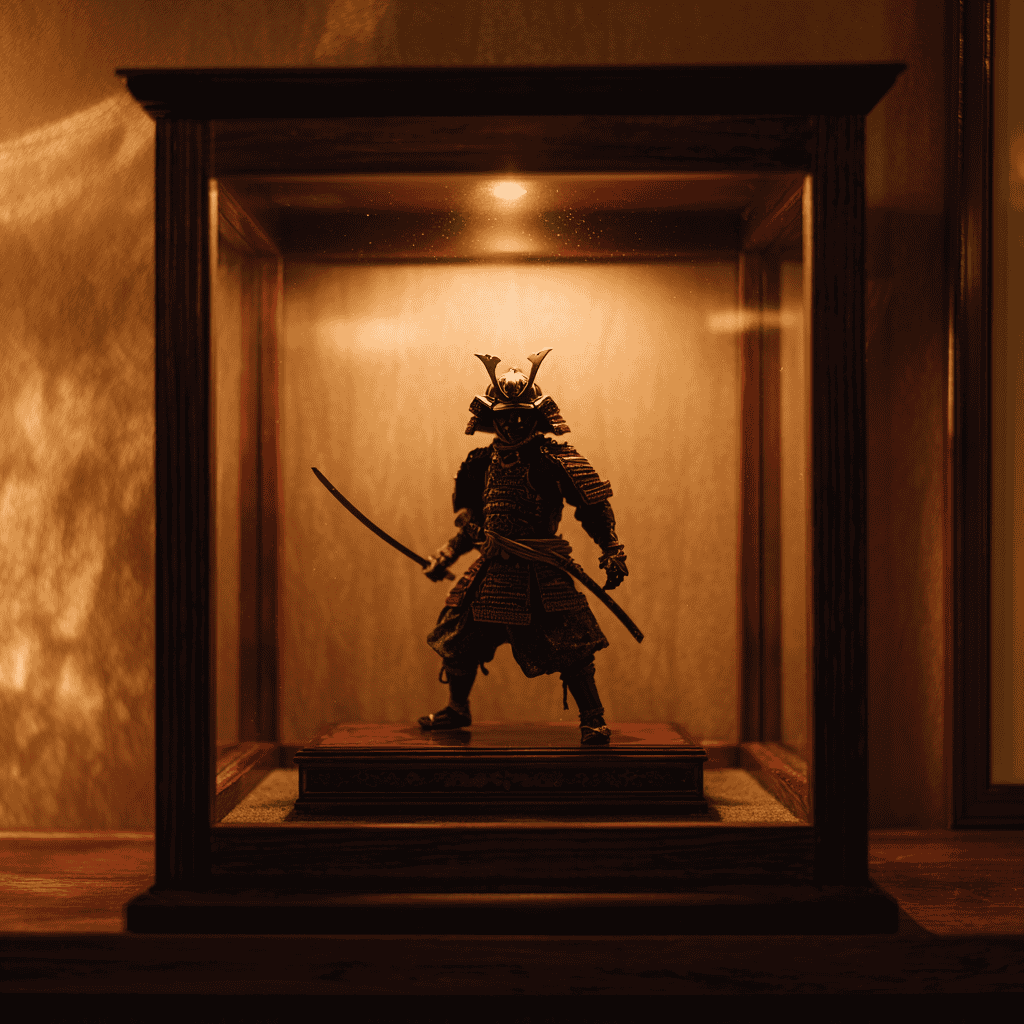
Yamamoto has worked in black for his whole career, and the Yohji Yamamoto card holder carries that discipline into a pocket. Nothing on it competes for attention, and no colour dates it. The leather softens with handling and keeps the shape of the cards you actually carry. A lone swordsman in a period anime would carry something this plain. Ordering from the house’s own store also settles any question about provenance. It makes a sensible first purchase from a Tokyo house.
Prefer to have the route built for you? A custom Japan itinerary can put Aoyama, Ginza and Nakameguro on consecutive mornings, with fittings booked ahead.
A typeset printable: ten Japanese proverbs with kanji, romaji and meaning. Signing up also brings occasional letters on Japan and word when a new journal reaches print.
One email with your printable. Occasional letters after that. Unsubscribe anytime.
10. Comme des Garçons Wallets Small Classic Wallet — brown zip
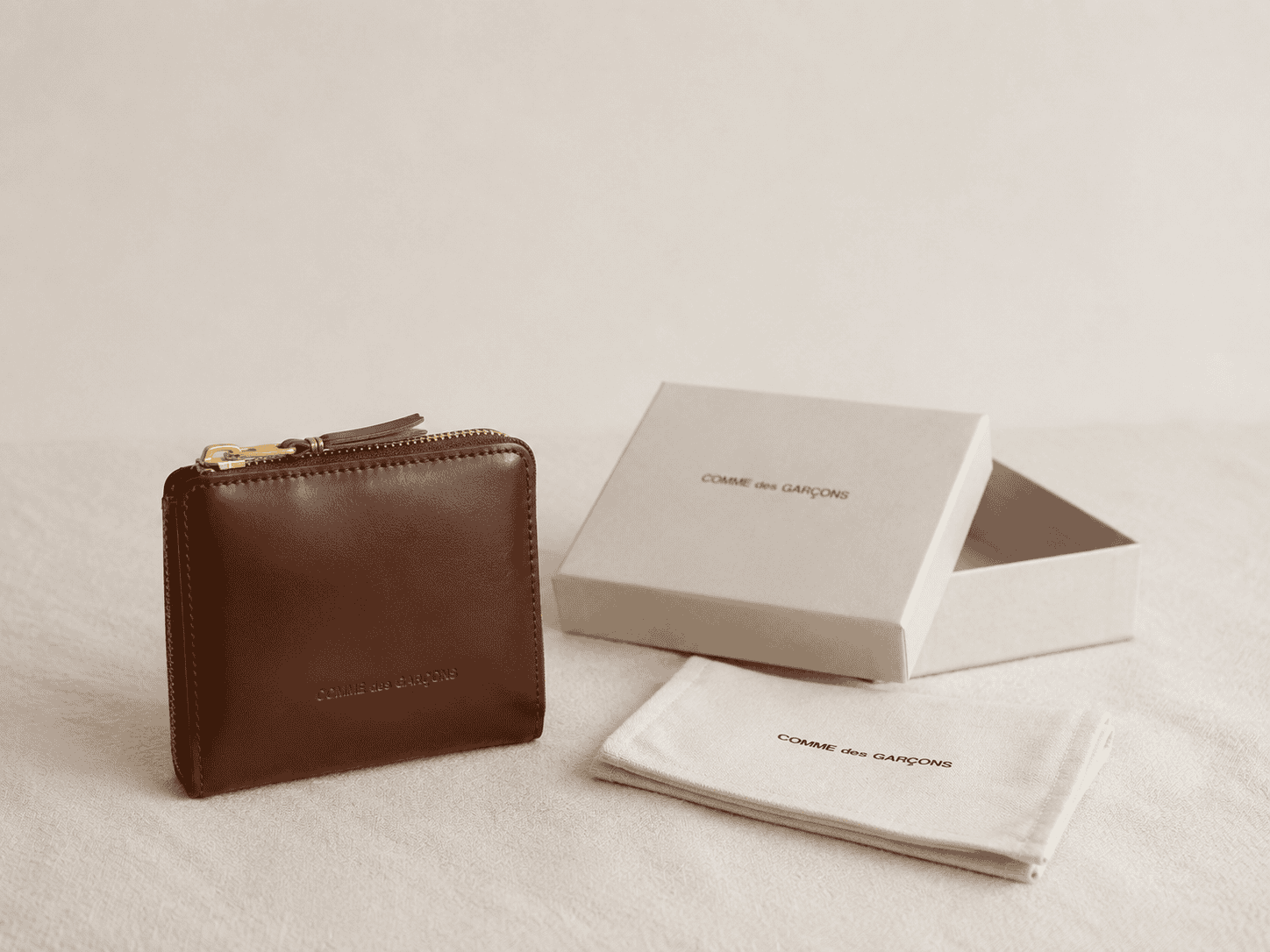
Brown leather, a zip that runs around three sides, and a small embossed name. The Comme des Garçons Wallets Small Classic Wallet makes the case for subtraction better than any lecture. Rei Kawakubo's house rarely explains itself, and this object follows suit. Brown also ages more gracefully than black, picking up a patina from the hand. Over a few years it becomes yours in a way a new wallet never is. The zip also keeps coins and folded receipts contained, which suits a travel day in a city that still uses cash. Open it fully and every card sits visible at once.


11. Comme des Garçons Wallets Classic Leather Line — the black bifold
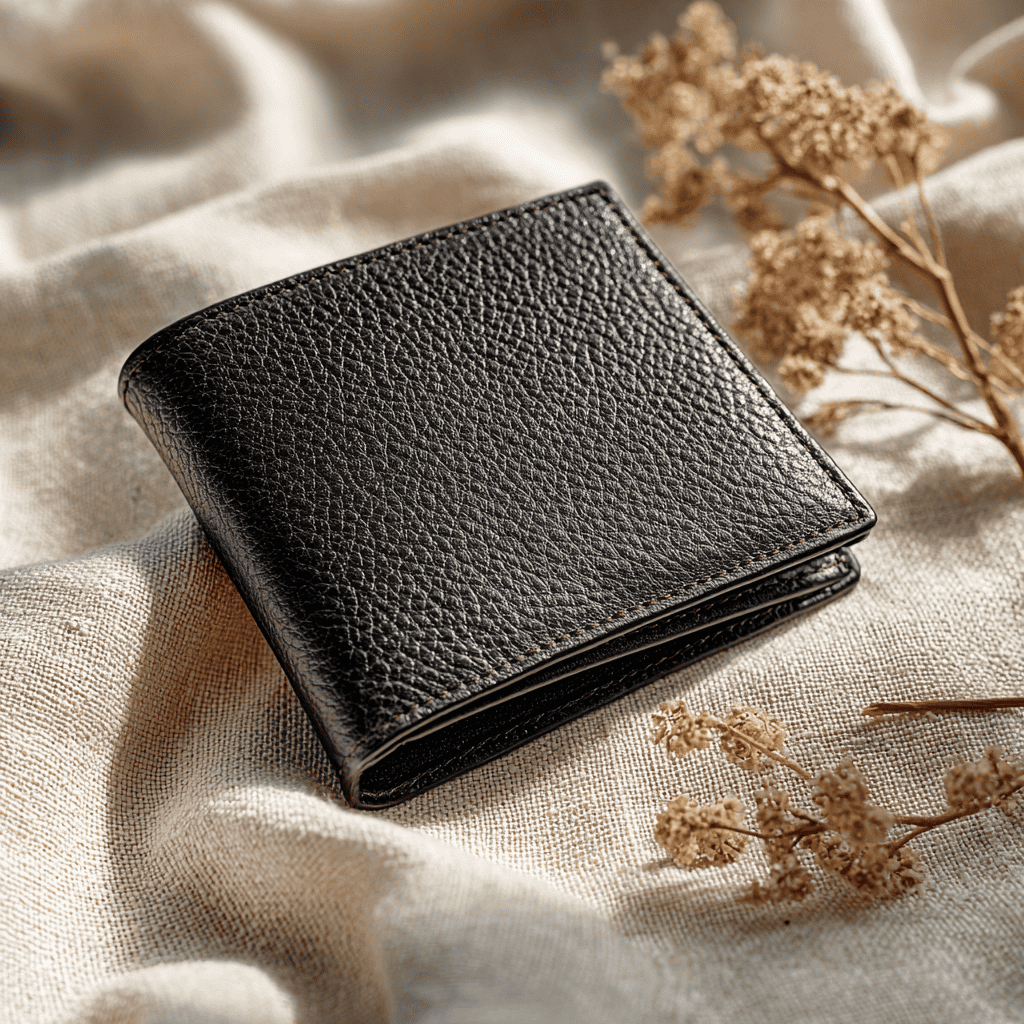
Black leather, clean edges and a few card slots, nothing else at all. The Comme des Garçons Classic Leather Line Wallet is the counterweight to the zip version. It slides into a jacket and stays flat. The leather softens against a hip within weeks, then keeps its new curve. Anime detectives tend to carry exactly this kind of object: issued, precise and unremarkable until somebody looks closely. Because it has no zip, it stays thin enough for a suit jacket. Check the stitching along the fold before you buy, since that line takes the most strain over the years.
Recommended
Two wallets from one house may look like repetition, yet they answer different days. The zip holds coins and receipts on a travel day, while the bifold suits an evening when a jacket pocket is all you carry. Choose one first and live with it. Leather that photographs well and wears badly is common at this level, so handle a piece before you commit. Japanese department stores help here, because their small-leather-goods floors usually let you open every compartment and feel the edges. Good anime luxury leather should feel better in year three than on day one, and the staff will tell you which lines age best.
Anime Luxury Outerwear: Okayama Denim and Tokyo Nylon
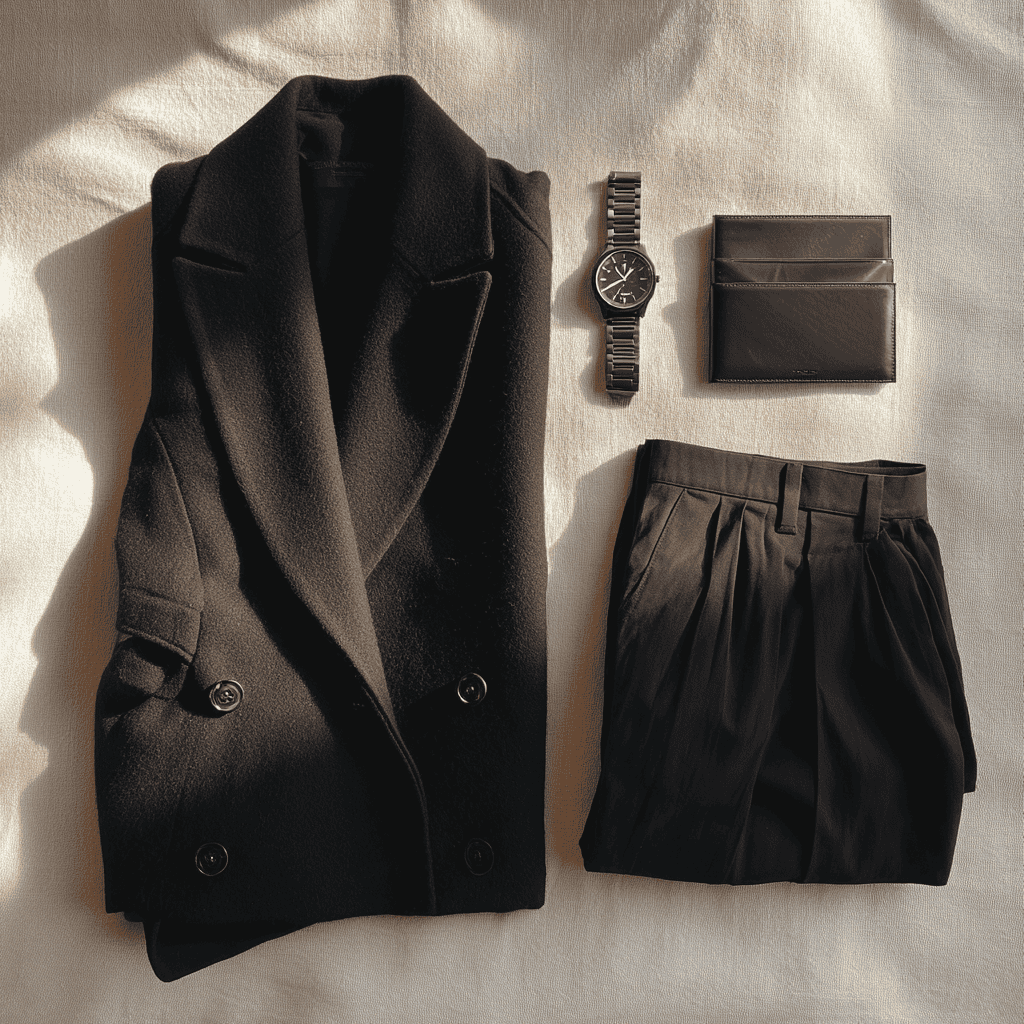
Outerwear carries this wardrobe furthest, because a jacket reads from across a room. Two Japanese traditions supply it. The first is denim. Okayama Prefecture calls itself Japan's jeans capital, and its mills weave selvedge cloth on slow shuttle looms. The second is technical nylon from the Tokyo houses, cut so a jacket behaves like equipment. Anime has drawn both for decades: the denim of a wandering hero, and the black shell of a city operative.
12. Momotaro 3rd Type Denim Jacket — Kojima selvedge
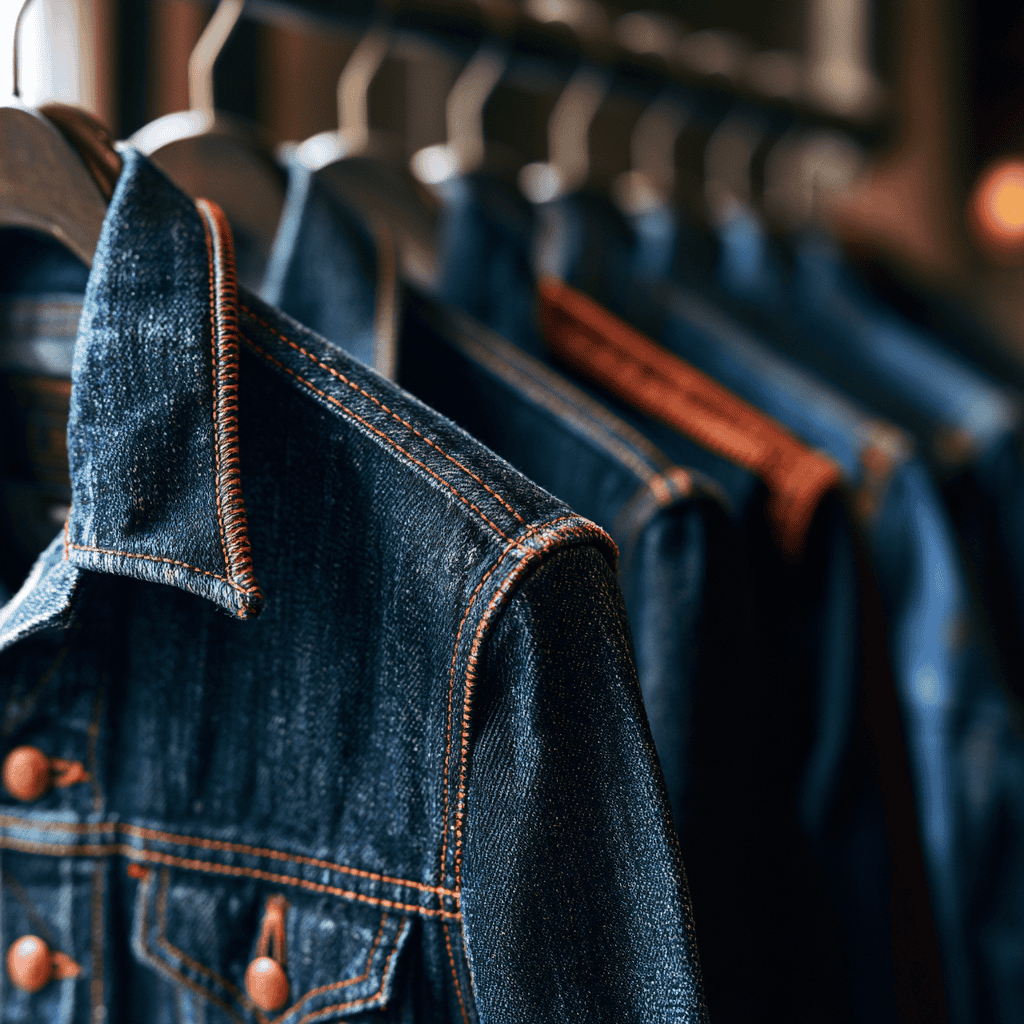
Heavy indigo selvedge, cut to the classic third-type pattern with pointed pocket flaps. The Momotaro 3rd Type Denim Jacket comes from Kojima, the Okayama town that built its name on jeans. The cloth feels stiff at first. Then it fades along every crease you make, so after a year the jacket records how you move. Anime heroes on the road wear denim for the same reason: it looks better worn than new.
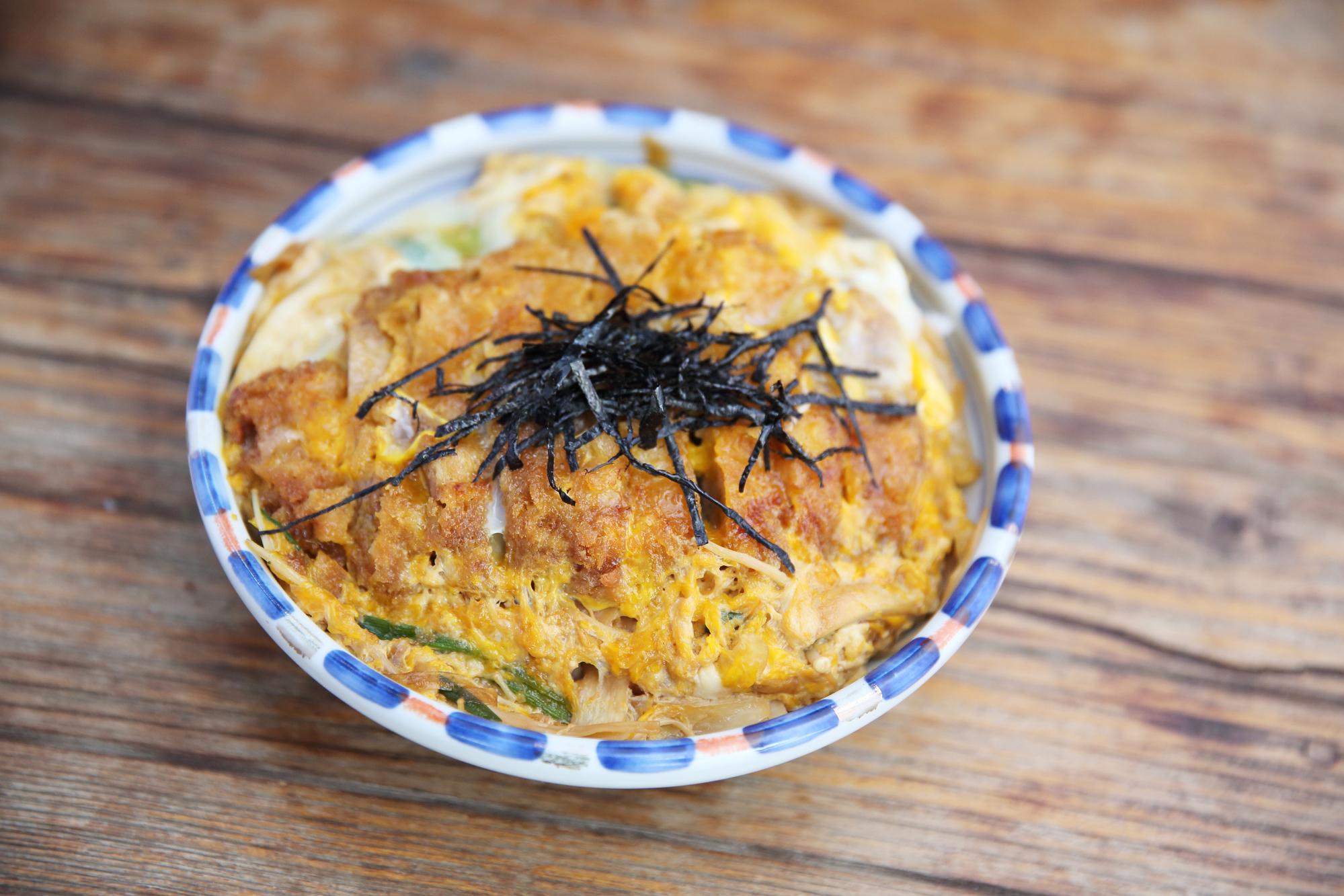
Katsudon tops rice with a breaded pork cutlet simmered in a sweet soy broth with egg. It has been a Japanese lunch staple since the early twentieth century.
- 2 boneless pork loin chops, about 1/2 inch thick
- Salt and pepper
- 1/4 cup all-purpose flour
- 1 egg, beaten, for coating
- 1 cup panko breadcrumbs
- Vegetable oil for frying
- 1/2 onion, thinly sliced
- 1/2 cup dashi
- 2 tbsp soy sauce
- 1 tbsp mirin
- 1 tsp sugar
- 2 eggs, lightly beaten, for topping
- 2 cups cooked short-grain rice
- Season the pork, then coat it in flour, beaten egg and panko.
- Fry the cutlets in 350°F oil for about 3 minutes per side, then drain and slice.
- Simmer the onion in the dashi, soy sauce, mirin and sugar in a small pan for 3 minutes.
- Lay one sliced cutlet in the pan and pour half the beaten egg over it.
- Cover and cook for 1 minute, until the egg is just set.
- Slide it over a bowl of rice and repeat for the second serving.
13. sacai Treated Nylon Twill Blouson Bomber — the city shell
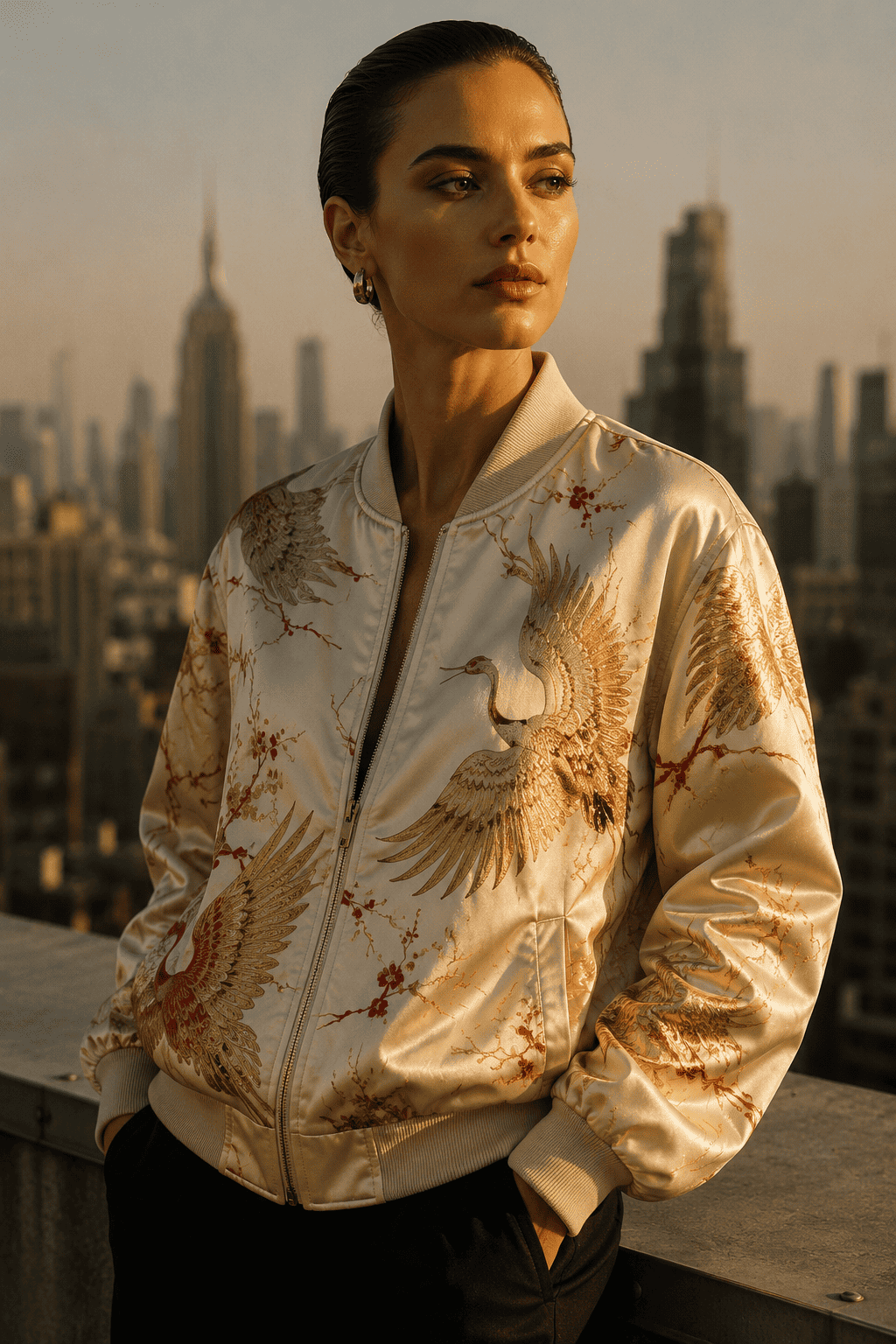
Black treated nylon twill, cut as a blouson with a bomber's volume. The sacai Treated Nylon Twill Blouson Bomber shows how Chitose Abe's Tokyo house splices one garment type into another. A bomber becomes a blouson, and a technical fabric drapes like tailoring. Near-future anime dresses its operatives in exactly this kind of shell. Over a plain knit, it simply reads as a good black jacket. Nylon also packs flat in a suitcase, so it travels well. Try it on in Aoyama if you can, because sacai volumes vary from piece to piece and the fit decides everything in the end.
Denim and nylon pull in opposite directions, which is why they work together. One ages and softens, while the other stays crisp and sheds rain. Wear one at a time, with the rest of the outfit plain, and the reference stays private. Sizing deserves patience too. Japanese denim often shrinks or relaxes after the first soak, so read the maker's care notes before buying. Technical shells, by contrast, fit as they are, which makes them the easier purchase on a short trip. Either way, anime luxury outerwear should look like a good jacket first and a reference second. That test never changes.
Pearls, Pleats and the Anime Luxury Finish
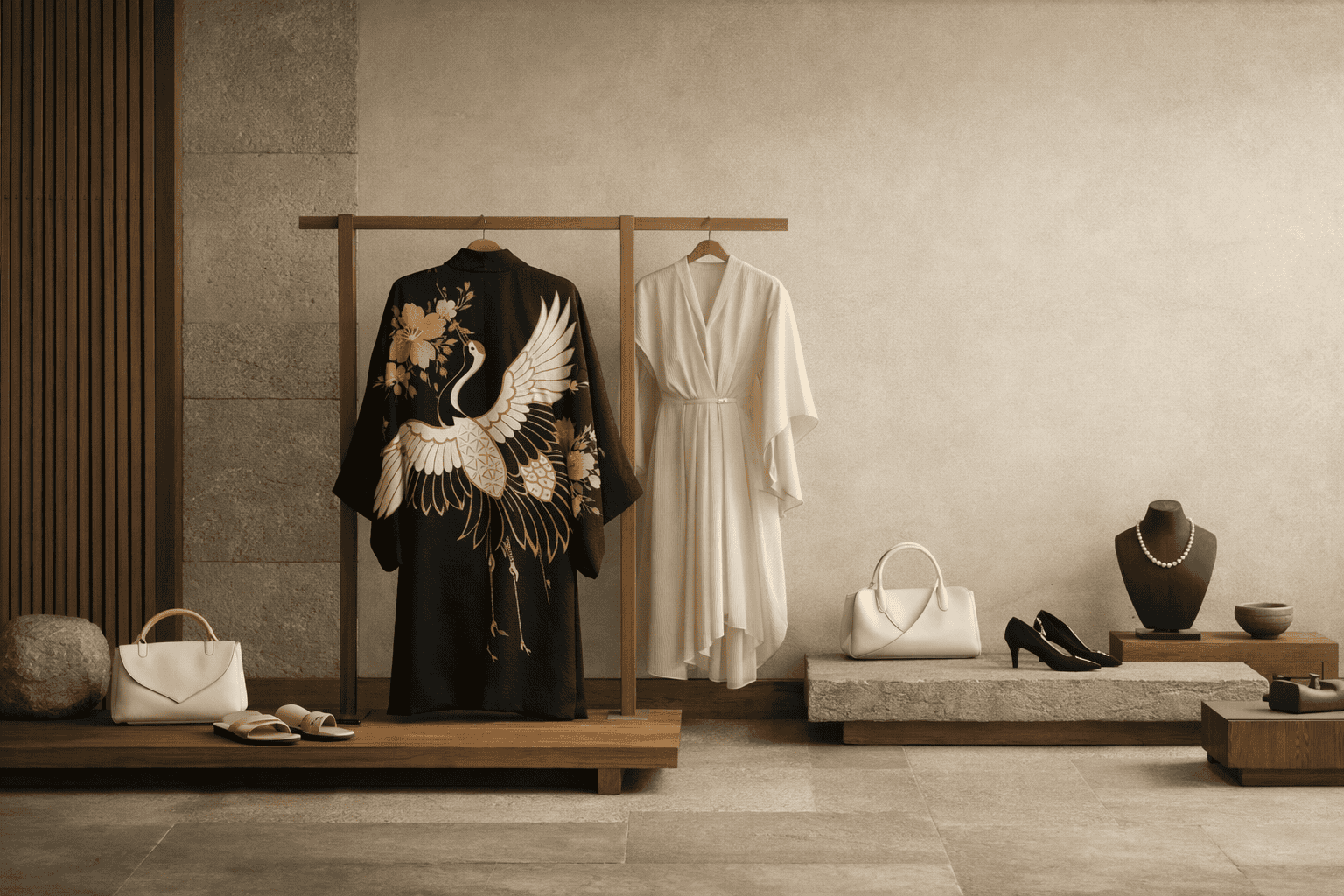
Finishing is where a wardrobe holds together or admits it came from parts. Celestial imagery runs through Sailor Moon and its peers, and luxury houses have answered that directly. Jimmy Choo has partnered twice with Pretty Guardian Sailor Moon, most recently on a collection of five more sailor guardians. The two pieces below take a softer route. One is a pleated scarf. The other is a pearl strand from the house that pioneered cultured pearls in 1893.
14. Pleats Please Issey Miyake Madame-T Scarf — garment pleated
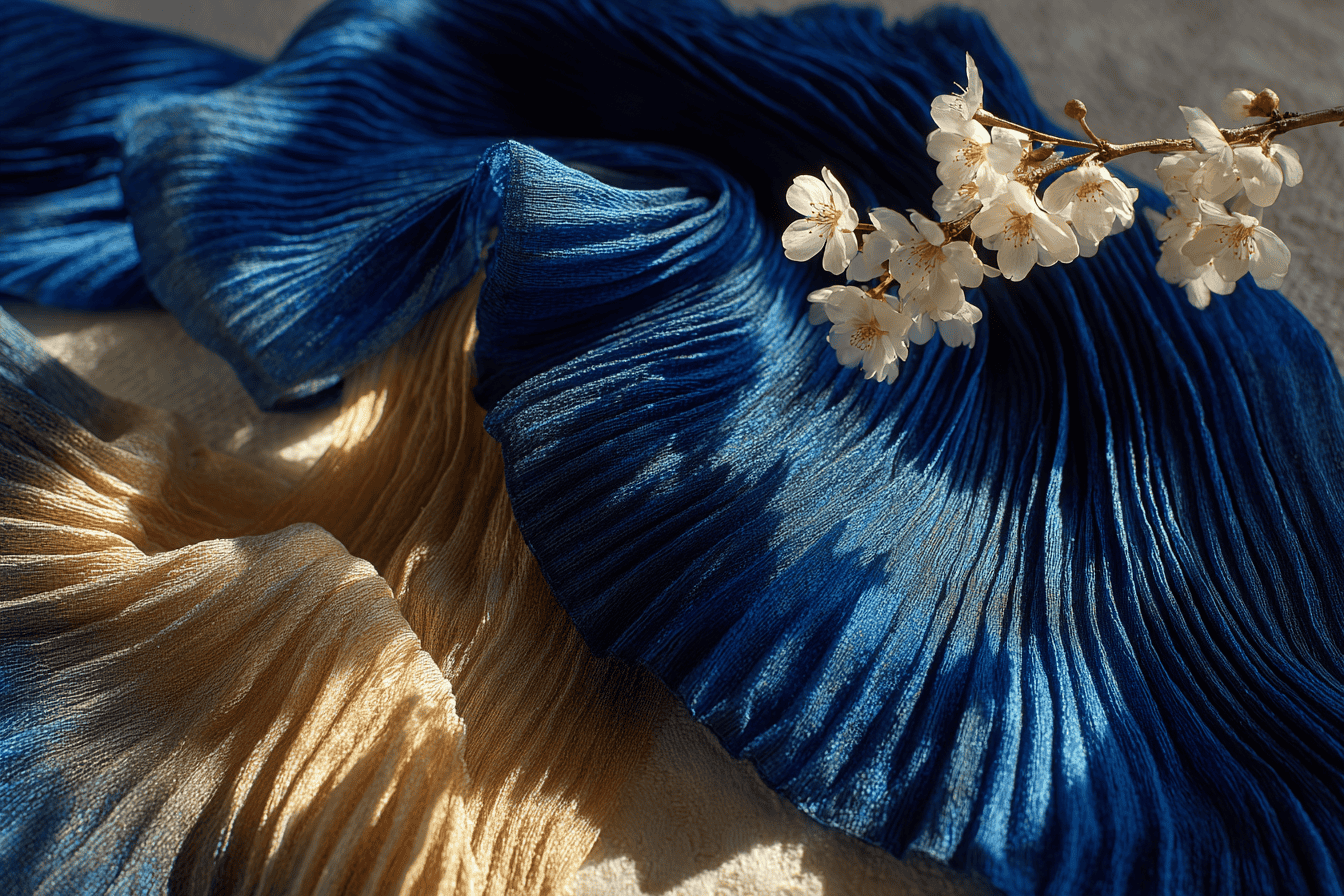
Garment-pleated tricot, with a slot cut through the centre so one end pulls through the other. The Pleats Please Madame-T Scarf holds whatever shape you leave it in, then releases it. Colour is the risk and the reward. Against black, a saturated scarf does what a single bright frame does in a grey anime sequence. Fold it into a bag and it takes almost no room, then recovers its pleats overnight.
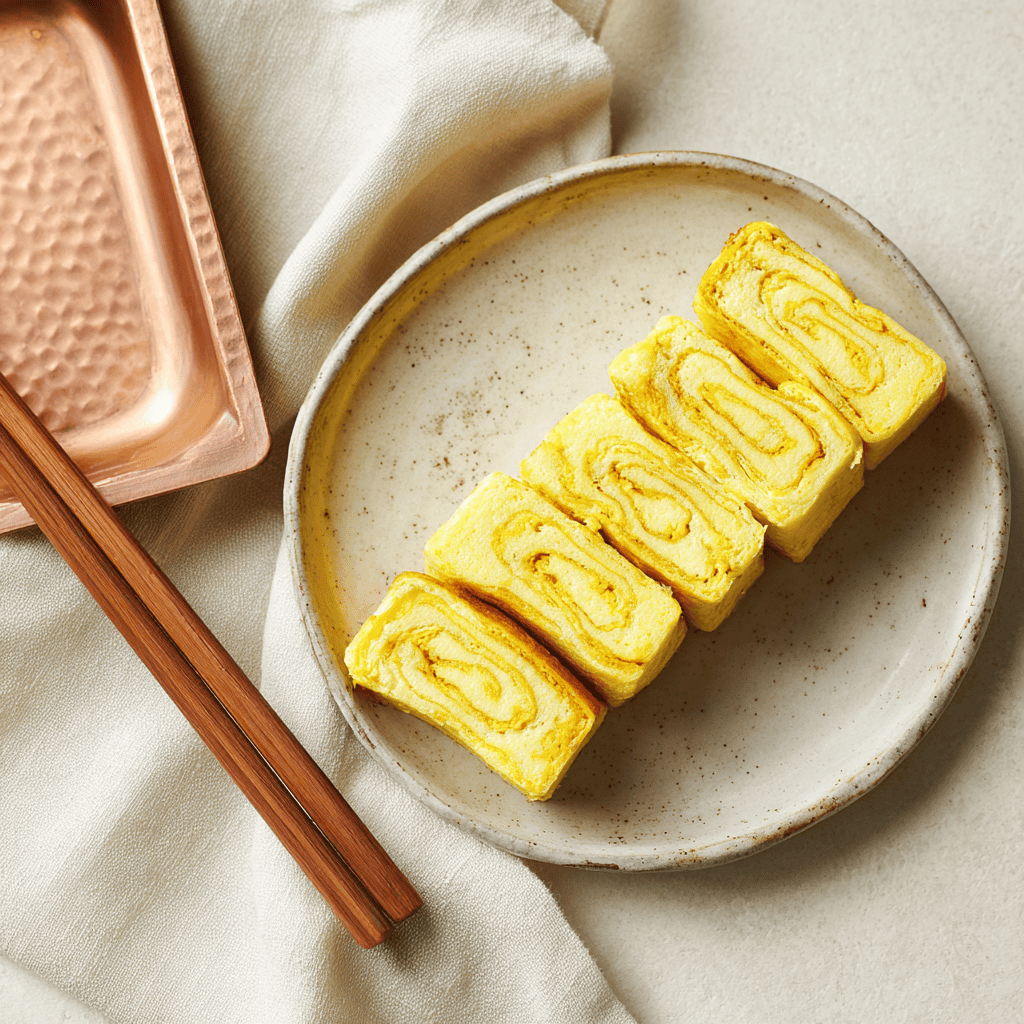
Tamagoyaki is cooked in thin layers and rolled in a rectangular pan. It is a fixture of Japanese breakfasts and bento boxes.
- 4 eggs
- 2 tbsp dashi
- 1 tbsp sugar
- 1 tsp soy sauce
- 1 tsp mirin
- 1 tsp vegetable oil
- Whisk the eggs, dashi, sugar, soy sauce and mirin until smooth.
- Heat a lightly oiled tamagoyaki pan or small skillet over medium-low heat.
- Pour in a thin layer of egg and let it half set.
- Roll the layer toward you, push the roll to the far side and oil the pan again.
- Add another thin layer, lift the roll so egg flows underneath, and roll again.
- Repeat until the egg is used, then rest the omelet for a minute and slice.
15. Mikimoto Akoya Cultured Pearl Strand — eighteen inches
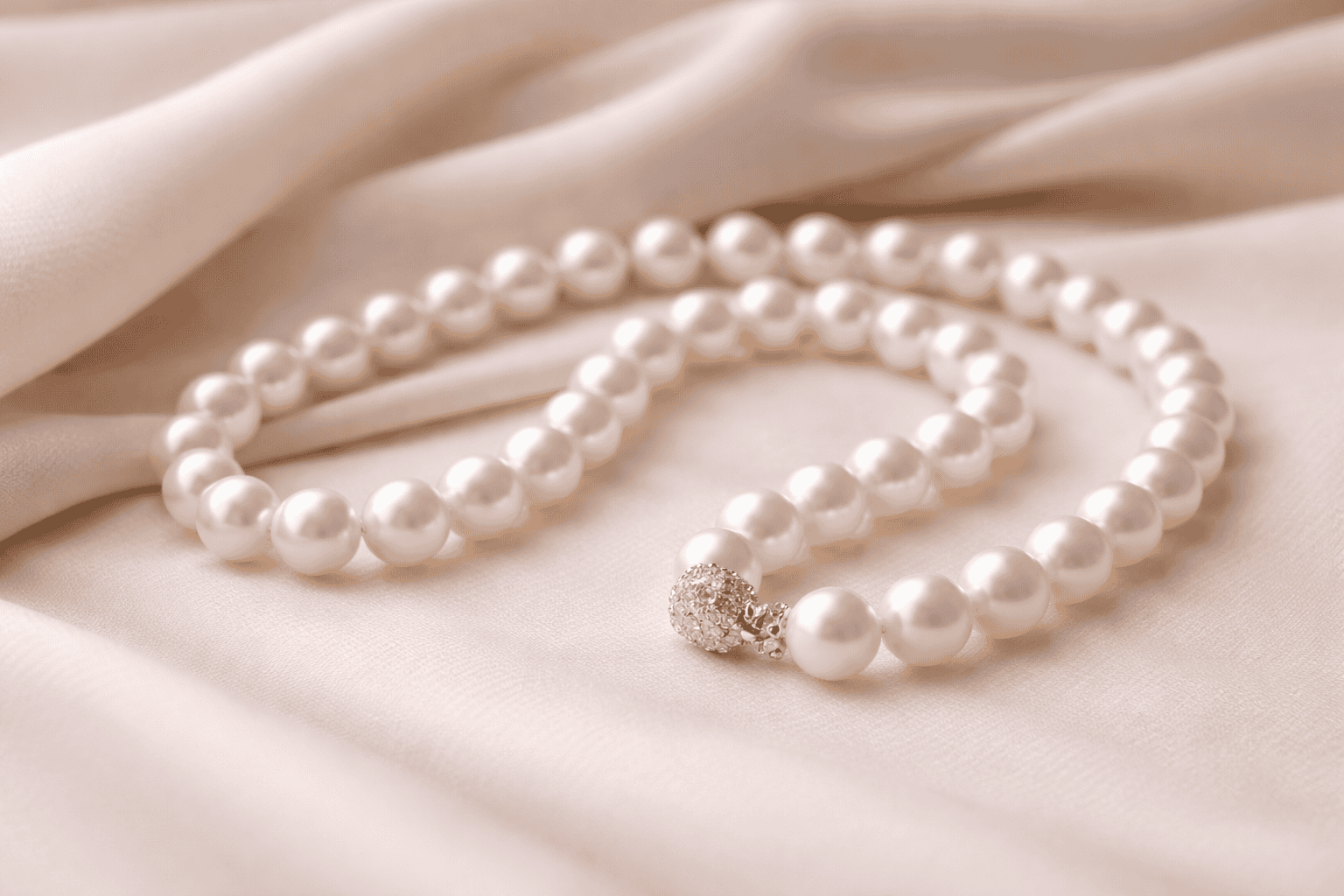
Round Akoya pearls on an eighteen-inch strand, finished with a white gold clasp. The Mikimoto 18-inch Akoya strand is the moonlight of this wardrobe. A good pearl holds a soft glow in shadow, then brightens as it moves. Anime heroines draw on that same small light inside a dark field. Worn under an open collar, it reads as classic jewellery first, and the reference waits for anyone who recognizes it. A well-matched strand glows evenly from clasp to center, which is what you are paying for. It is the one piece here that you could pass on to someone else.
Pearls and pleats share one quality: both look calm until they move. That makes them the right last layer for a wardrobe built on references nobody has to explain. A strand also outlasts every trend on this list, and it suits a suit as easily as a sweater. Restring it every few years if you wear it often, because silk thread stretches with use. The scarf needs even less care. Roll it rather than folding it, and keep it away from heat so the pleats stay sharp for years. Small habits like these keep an anime luxury wardrobe looking deliberate rather than tired, season after season.
Where to Buy Anime Luxury in Japan and Online

Three routes work, in this order. The house's own store comes first, because it carries the full colour range and writes its returns policy down. Casio, Seiko, Grand Seiko, Yohji Yamamoto and Mikimoto all sell direct. A Japanese department store comes second, if you are in the country, since its leather floors stock references that rarely reach export markets. Finally, the second-hand market fills gaps, especially for sold-out collaborations and archive pieces. Each route suits a different kind of purchase. The house store suits anything you will wear daily. Department stores suit gifts and comparisons. Second-hand dealers suit the capsule you missed, as long as you check condition carefully.
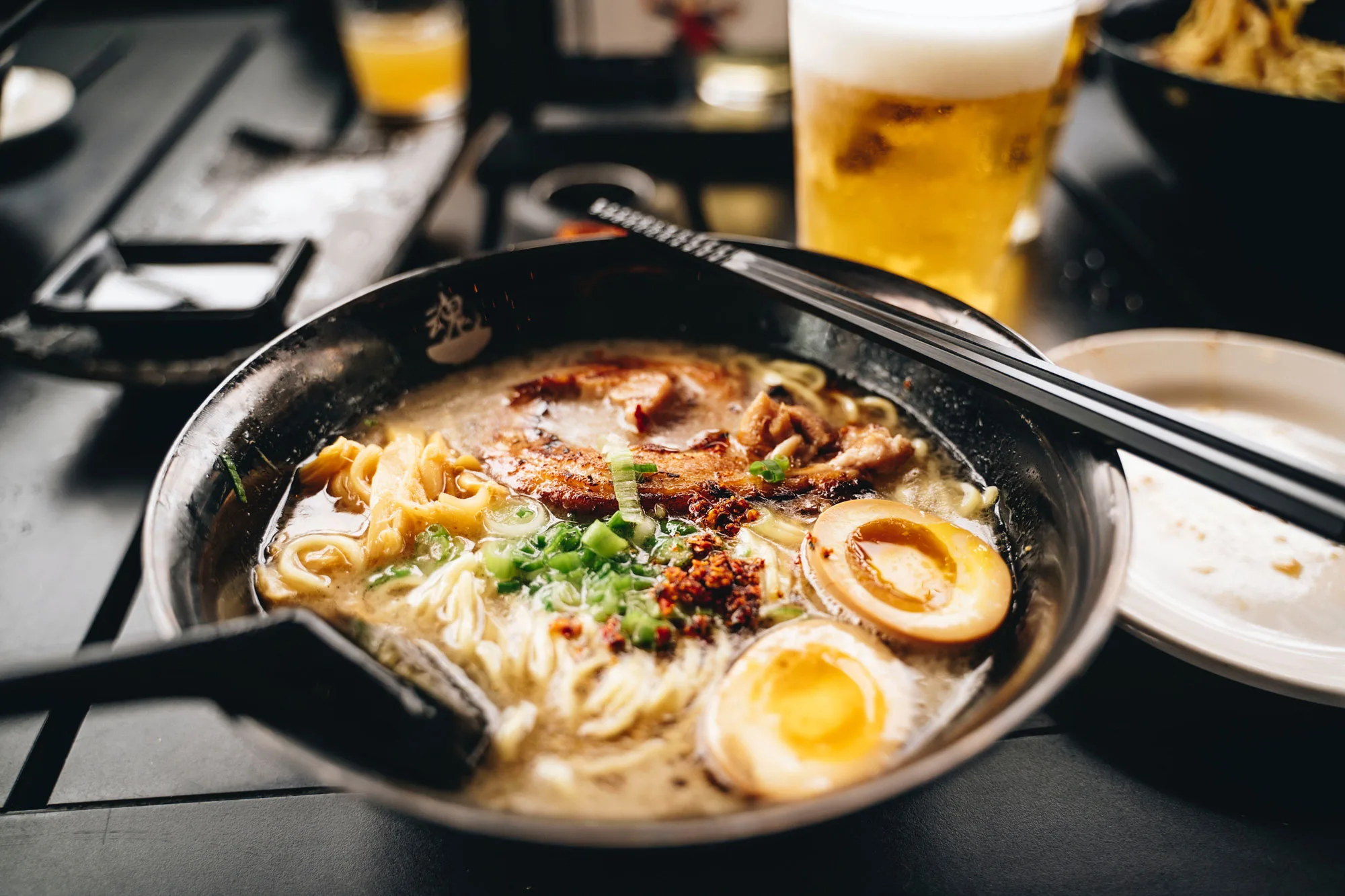
Ramen arrived in Japan with Chinese cooks in port cities. The clear soy sauce broth became the classic Tokyo style.
- 4 cups chicken stock
- 1 cup dashi
- 3 tbsp soy sauce
- 1 tbsp mirin
- 1 tsp sesame oil
- 2 garlic cloves, smashed
- 1 inch ginger, sliced
- 2 portions fresh ramen noodles
- 2 soft-boiled eggs, halved
- 2 green onions, sliced
- 2 sheets nori
- Simmer the chicken stock, dashi, garlic and ginger for 15 minutes, then strain.
- Stir the soy sauce, mirin and sesame oil into the hot broth.
- Cook the noodles in boiling water according to the package, then drain well.
- Divide the noodles between two warm bowls and ladle the broth over them.
- Top with the eggs, green onions and nori, and serve at once.
Building a Tokyo route around the districts
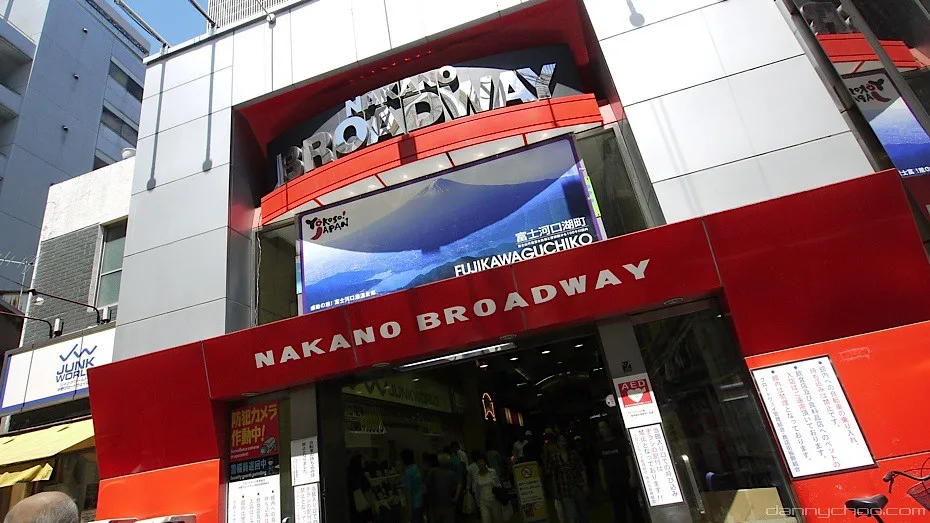
In Tokyo, build the day around districts rather than shops. Aoyama holds the fashion houses, including Comme des Garçons, Yohji Yamamoto and Issey Miyake. Ginza holds the watch counters and the pearl houses. Nakameguro holds the archive floors and the vintage racks. Our guide to famous Tokyo shopping districts maps each one. For denim, though, go to the source. Kojima Jeans Street in Okayama lines up small makers along one walkable lane. Dozens of denim shops line the street, so you can compare cloth weights side by side. The 400-meter street sits a short walk from JR Kojima Station, so plan a full day.
Online, buy from the house or from a retailer with a clear returns policy, and keep receipts with the boxes. Collaboration pieces need extra care. Consignment listings for sold-out capsules vanish when sold and cannot be replaced, which makes them a poor foundation for a wardrobe you mean to keep. Check serial numbers on limited watches, and ask for close photographs of stitching on leather. A seller who hesitates over either request has answered your question already. The same caution applies to anime luxury bought abroad, since counterfeit watches and wallets circulate widely online. When a deal looks too easy, walk away.
Questions Worth Asking
What is anime luxury and how does it differ from character merchandise?
Anime luxury is designer clothing and accessories that carry an anime reference through material, silhouette or a licensed collaboration, rather than through a printed character. Merchandise reproduces an image. Influence reproduces a visual language. The second survives the season, because the silhouette rather than the licence does the work.
Which luxury houses have collaborated with anime franchises?
LOEWE ran three Studio Ghibli capsules, beginning with My Neighbor Totoro and closing with Howl's Moving Castle. Jimmy Choo has partnered twice with Pretty Guardian Sailor Moon. Casio and Seiko have both run licensed watch collaborations, with Evangelion and ONE PIECE respectively.
How do you wear anime luxury without looking like a costume?
Wear one reference at a time, and never at the centre of the outfit. Put the coded piece at the wrist, the shoulder or the collar, and keep everything else plain. If a stranger reads the item as clothing before they read it as a reference, the balance is right.
Which Japanese brands suit an anime-inspired wardrobe?
Casio G-Shock, Seiko and Grand Seiko cover watches. Comme des Garçons, Yohji Yamamoto, sacai and Issey Miyake cover clothing and leather from the Tokyo houses. Momotaro supplies Okayama selvedge denim, master-piece makes technical bags, and Mikimoto covers pearls. Each reads as design first, with the reference underneath.
What happened to the Seiko ONE PIECE watches?
Seiko released its 5 Sports ONE PIECE references in 2021, each limited to 5,000 pieces on an automatic calibre, with character-specific dials such as the Sanji footprint pattern. Because the run was finite, finding one now usually means the second-hand market, so check serial numbers carefully.
Is the G-Shock Evangelion watch an official collaboration?
Yes. Casio released the GA-110EVA30-7A to mark thirty years since Evangelion first aired on television. Ikuto Yamashita, the series' mechanical designer, created the design, and it uses the GA-110 case that carried the first Evangelion G-Shock in 2010. Casio lists it on its own site.
Where do you buy anime luxury without resale risk?
Buy permanent pieces from the house's own store, where sizing, colour and returns are all documented. Treat licensed capsules as opportunistic rather than plannable. Consignment listings for sold-out collaborations vanish when sold and cannot be replaced, which makes them a poor foundation for a wardrobe you mean to keep.
Is Tokyo a good place to shop for Japanese designer pieces?
Yes, if you plan by district. Aoyama gathers the Tokyo fashion houses, Ginza the watch counters and pearl houses, and Nakameguro the archive and vintage floors. Department stores add leather floors with wide ranges. Booking fittings ahead saves time, because the pieces you want often sit in the back.
A Wardrobe of Small Declarations
Fifteen pieces is still a long list, and nobody sensibly buys them all. Treat it as a map rather than an order form. Anime luxury works best when one object carries the whole idea, and the rest of the outfit stays out of its way. A G-Shock on Monday. One card holder, every day, for a decade. Then a denim jacket that fades into its owner. Every piece above earns its place through material and construction, so none of it should date quickly. The reference is a bonus rather than the point, and that ordering is the entire argument. For more objects chosen the same way, browse made-in-Japan picks worth sending.
A wardrobe built slowly asks what you value enough to keep; this journal asks the same of a life.
View the Journal →Almost everything here is easier to judge in person than from a photograph, because grain, weight and drape carry the argument. Tokyo makes that possible in a few mornings, if the route follows districts rather than shops, with fittings booked ahead.
Three mornings built around Aoyama, Ginza and Nakameguro, with fittings booked before you land and afternoons left open. We can add a day trip to Kojima Jeans Street in Okayama for selvedge denim, and hold a lunch table near each district so the day never turns into a queue.
Plan Your Custom Japan Itinerary