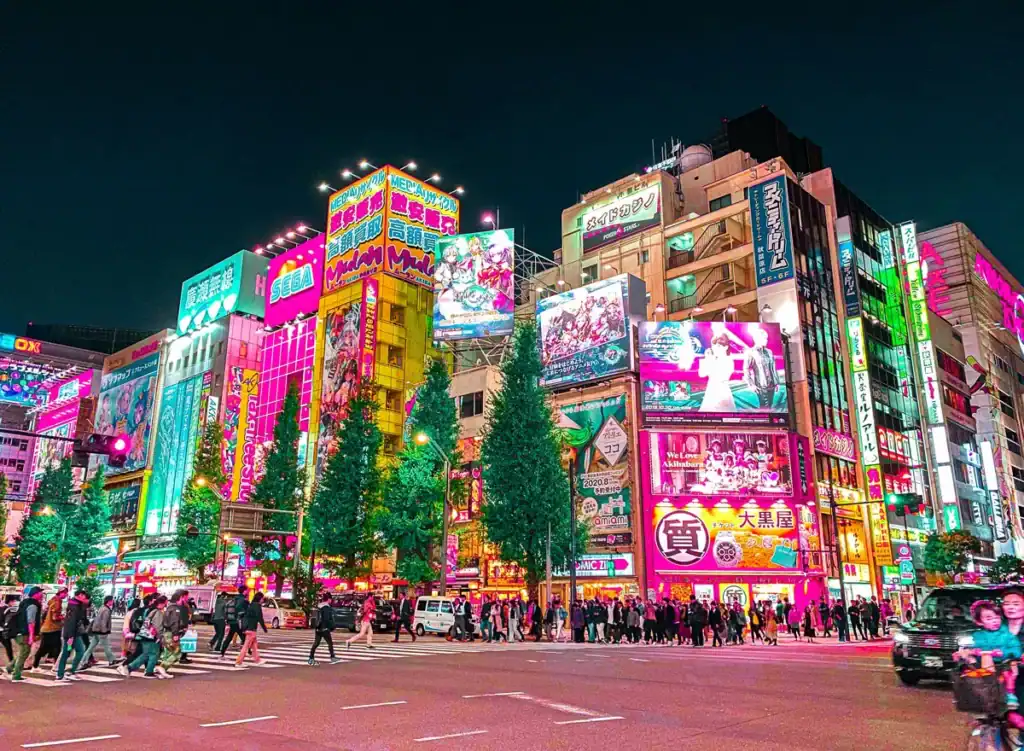
Anime culture in Japan is not a genre. It is the whole of animation, made for every age band. It holds a place closer to the one television and the novel share elsewhere. A commuter reads a seinen volume standing on the Chuo line. A collector waits at a Nakano counter for a figure discontinued years ago. Neither would call it a hobby, yet both sit inside the same medium. For a first-time visitor, that shift in scale is the single most useful idea to bring.
This page is the orientation, so it answers three things. First, what the word covers. Next, how large the business has grown. Finally, where the work is visible on the ground. For the long reading list, turn to the reader’s guide to manga and anime in Japan. Here you get the map, and each section routes to the guide that treats its subject properly. Our anime in Japan hub gathers the tools and gift ideas in one place.
What does anime mean in Japan?
In Japan, anime simply means animation, whoever made it and whoever it is for. The work is written for every age band, so it covers drama, science fiction and comedy for grown readers as well as children. It also shapes districts, museums and events, which keeps the medium visible in ordinary daily life.
What Anime Culture in Japan Actually Means
In Japanese, anime simply means animation, whoever made it and whoever it is for. English borrowed the word and then narrowed it. Now it names a look: large eyes, flat color, a particular cutting rhythm. Japanese never narrowed anything. A viewer in Tokyo will call a Pixar feature anime and mean nothing unusual by it. That difference sounds pedantic until you try to shop, plan or read on the assumption that the two words match. Anime in Japan, then, is the larger idea, and the English sense is only a subset of it. Keep that in mind and the rest of this page reads more easily.
It also changes how you talk to staff. Ask for anime in a Japanese shop and you may be shown films for children, grown viewers and families at once. Naming a title, a studio or a reader group gets you to the right floor far faster.

The distinction matters most in a bookshop or a department store. A floor labeled anime may hold children’s films, adult dramas and art books side by side. Nobody there expects the visitor’s narrow definition, so the visitor has to widen it instead. Once you do, the shelves make sense, and so does the way people read in public without a second glance. It also explains why the same studio can release a family film and a violent thriller in one season, and why both find an audience.
The same breadth shows up on television schedules. Late-night slots carry serious dramas for grown viewers, while early evenings belong to family shows. Both are simply anime, and nobody finds that strange. Visitors usually adjust within a day of watching late-night television in a hotel room.
You may also like

Every Age Band, Not One
Publishing is where the distinction becomes concrete. Magazines sort by readership before subject. Shonen is for adolescent boys and shojo for adolescent girls, while seinen is for men and josei for women. Those labels sit on the spine. However, they describe an intended reader, not a level of ambition. A seinen serial can run for twenty years and carry the weight of a literary novel. Some have won major literary and cultural prizes in Japan, and their authors are treated as serious writers.
Readers cross the categories constantly, and nobody polices the boundary. A salaryman can read shojo on the train without comment. The label tells a publisher who to sell to, and the reader ignores it at will. Shops shelve by label anyway.
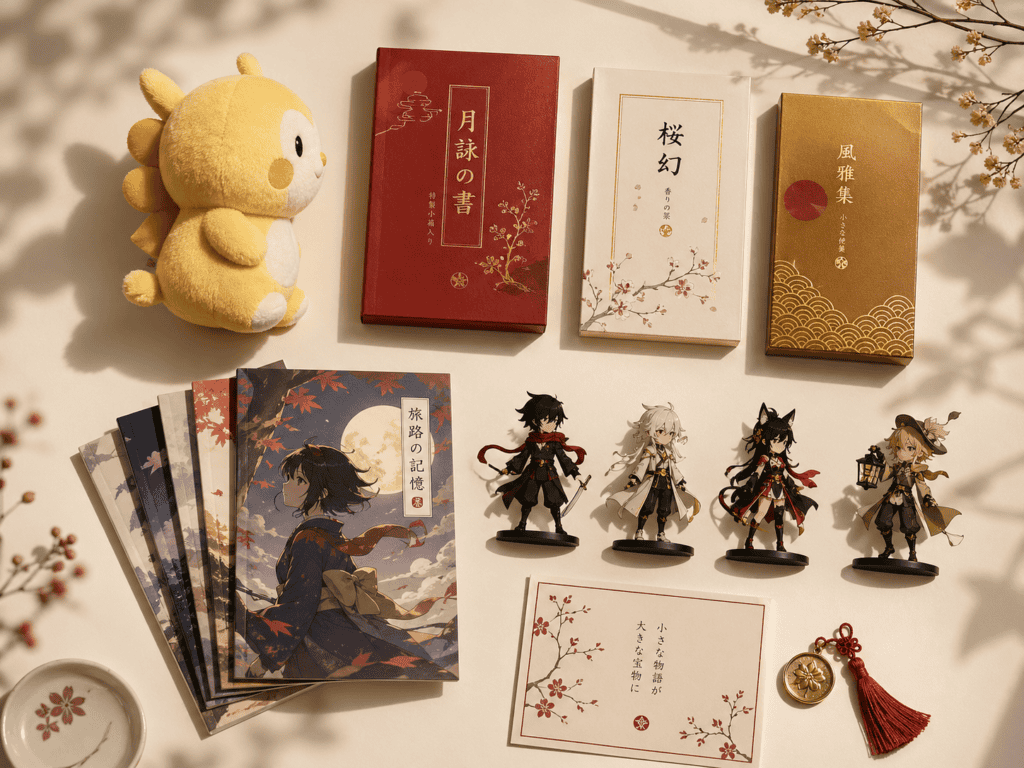
Manga usually comes first. It is serialized weekly on cheap gray paper, and reader rankings decide what continues. A series that fails is cut within months, while one that holds can run for decades. Animation then adapts what has already proved itself. That is why the two forms read as one culture rather than as two industries.
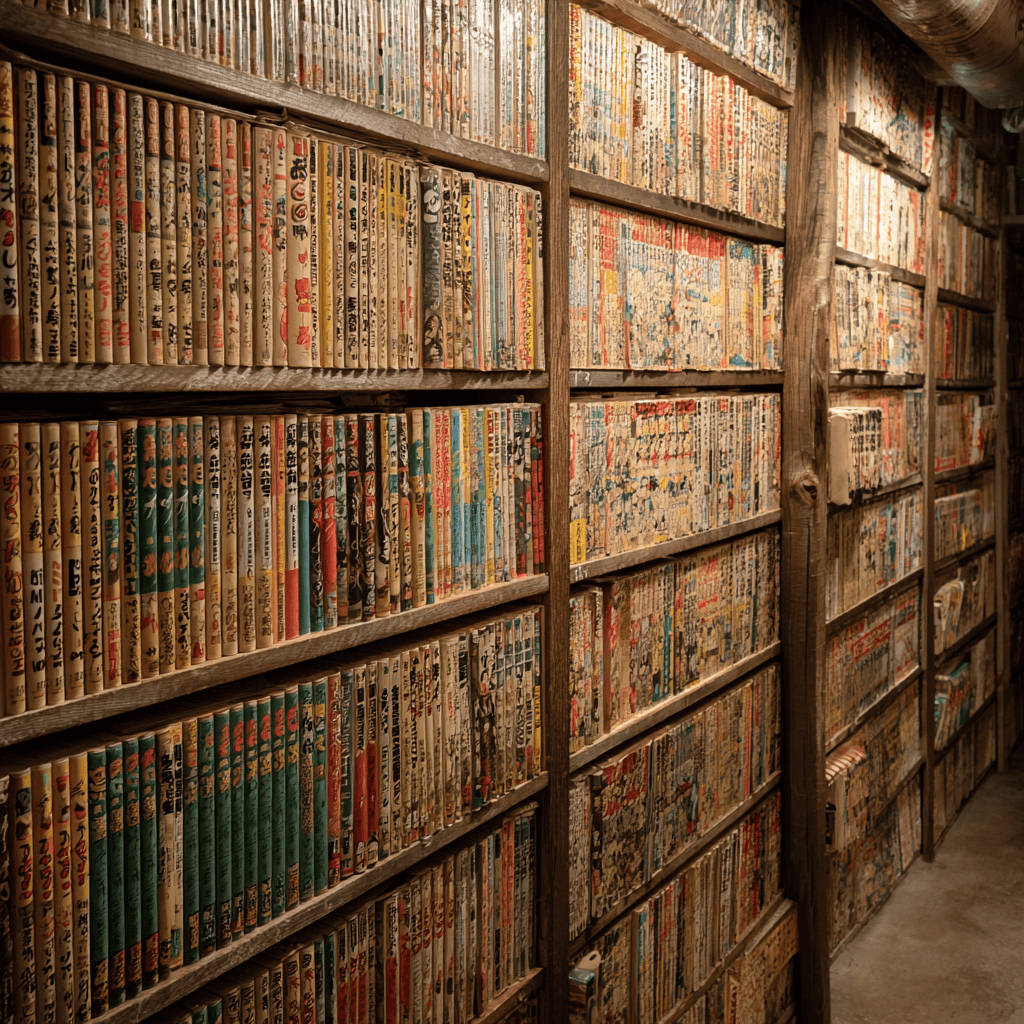
Walk into a Japanese bookshop on a weekday evening and the readership becomes obvious. Office workers in their forties stand at the manga wall. A woman in a suit reads three pages of a josei volume, then buys it. Nobody looks up. So if you arrive expecting a subculture, you will look in the wrong places and find only shops. For the reading shelf, one history explains how all this took shape. It is the best single starting point in English.
Anime: A History by Jonathan Clements — the story of the medium
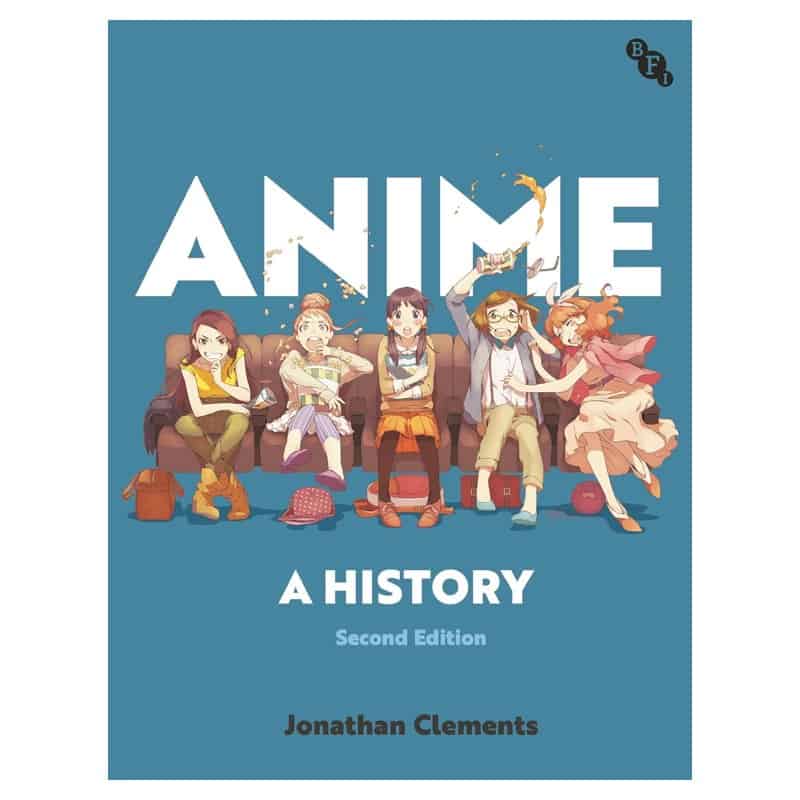
Jonathan Clements’ Anime: A History is a readable history of Japanese animation from its earliest films to the streaming era. It traces the medium from a handful of hobbyists in the 1910s to the Oscar-winning Spirited Away and beyond. The writing is brisk, and the chapters are short enough for a train ride.
Clements draws on Japanese sources and on testimony from people inside the industry. He also covers corners most histories skip, such as wartime instructional films. It explains how the industry took the shape it has today, which makes everything in the sections below easier to read.
Reading Anime in Japan: Where a Newcomer Starts
Most people arrive without a series, which is the harder starting position. Recommendations tend to come as lists of forty titles. A list of forty is a way of saying no decision has been made. The better route is one complete work with a stated ending. Read it as an object rather than streamed. Finish it before starting a second, since a stated ending lets you judge the story as a whole, the way you would a novel. Then decide whether the grammar of panels and cuts suits you. Reading is where anime culture in Japan stops being a topic and becomes a habit.
Print also changes the pace. A volume can be paused on any page, reread and lent to a friend. Streaming rarely invites that kind of attention, so a book makes a better first teacher. Many readers keep their first volume for years as a souvenir of the habit.
Akira remains the standard first answer. It is the work that made the medium legible to grown readers outside Japan. Kodansha’s 35th anniversary box set collects it in six hardcover volumes with the Akira Club art book. Because it prints right to left, it reads as Katsuhiro Otomo drew it. What matters most is that the story is complete, which is exactly what a first purchase should be. The hardcovers also last, and they look handsome on a shelf. Each volume is sewn and sturdy.
It is also worth reading because so much later work quotes it. Once you know the motorcycles, the city and the ending, you will spot the references everywhere, from posters to films. That recognition is one of the small rewards of reading it first, before anything else.
Akira 35th Anniversary Box Set — the complete first read
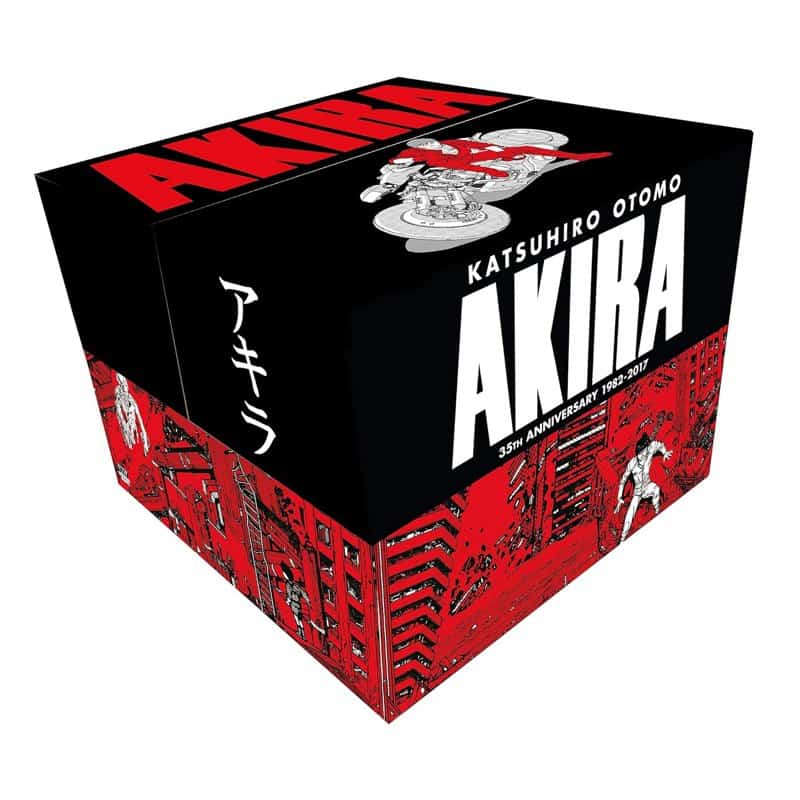
The Akira 35th Anniversary Box Set holds six hardcover volumes and the Akira Club art book, printed right to left. It is a complete work with a stated ending, which is what a first read should be. The box also includes a patch with the series’ famous pill design, a nice touch for a collector.
Kodansha published the first chapter in 1982, and the 1988 film carried its influence onto the global stage. The story follows Neo-Tokyo, a city rebuilt after catastrophe, its streets ruled by motorcycle gangs. Read it over a week, one volume a night, and you will understand why so much later work quotes it.
Right to Left, Then Sideways
Direction is the only real obstacle, and it lasts about twenty pages. Japanese manga reads right to left, so you begin where an English reader expects the back cover. Within a page, move from the top-right panel down to the bottom-left. Most English editions now keep that original orientation. The reversal feels wrong briefly, and then it stops registering entirely. After one volume, most readers forget they ever found it strange, and some start preferring it. The art reads more naturally as drawn.
A trip notebook helps the reading habit travel. Our Shinkansen travel journal, from the Japan travel journal collection, is made for the shop names, floor numbers and the figure you decided against, district by district. It runs to 120 unlined pages in a 6 × 9 inch matte softcover.
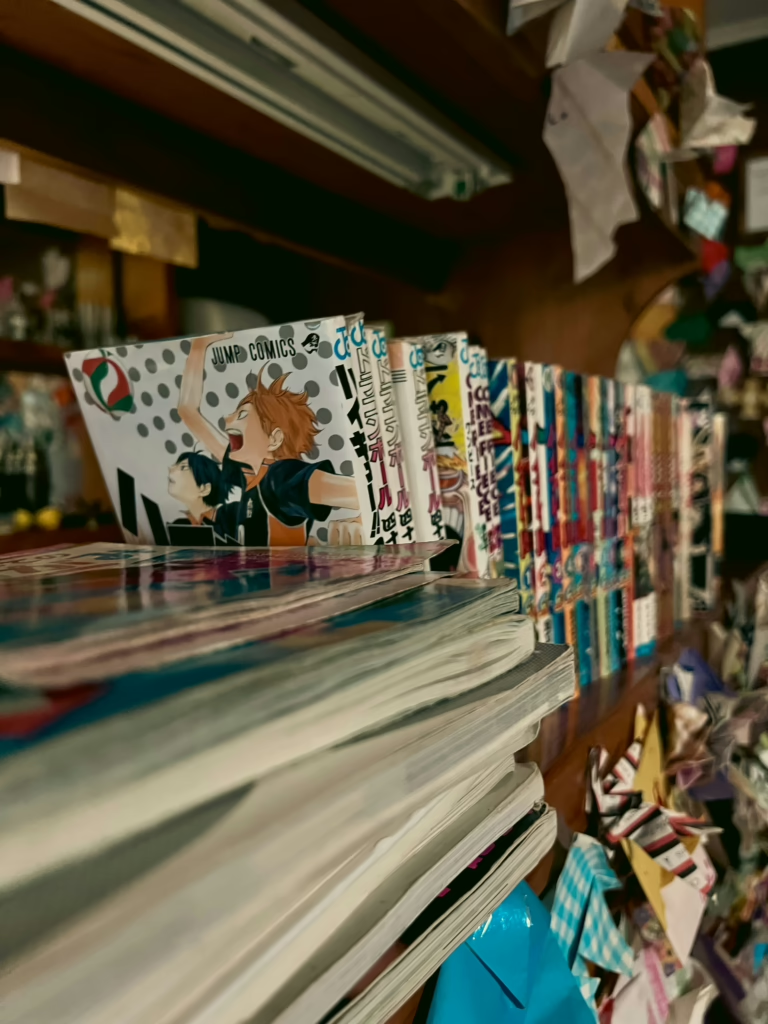
After the first complete work, the sensible next move is sideways rather than onward. Read something from a different demographic label, such as a josei title after a seinen one. The range of the medium then becomes visible in a way no ranked list conveys. Language helps too. Two kanji on a shop sign will change how a floor guide behaves, and a little kana turns a menu into a decision. Even a few characters help, and they make shop signs feel friendlier.
Nobody needs fluency, only recognition built in short sittings. Reading a spine is easier than reading a page, so start there. The tools further down this page cover that ground, one character a day. A month of short sessions is plenty for a first trip.
Why the Numbers Matter
Reading habits explain the shelves, but they do not explain the size of the business behind them. For that, you need the numbers. They are unusually clear for a creative industry, because a trade body publishes them every year. They also explain why English editions and subtitled screenings are now so easy to find on a trip.
Anime in Japan by the Numbers
Scale is the part travel guides skip, though it explains almost everything else. The market set a record in 2024, with growth of 14.8 percent. The Association of Japanese Animations released the figures, and Screen Daily reported the full breakdown. Overseas sales rose 26 percent and exceeded domestic revenue for the second year running. Meanwhile, the domestic side grew about 3 percent. Both numbers matter, though the gap between them matters more. It shows where the growth now comes from.
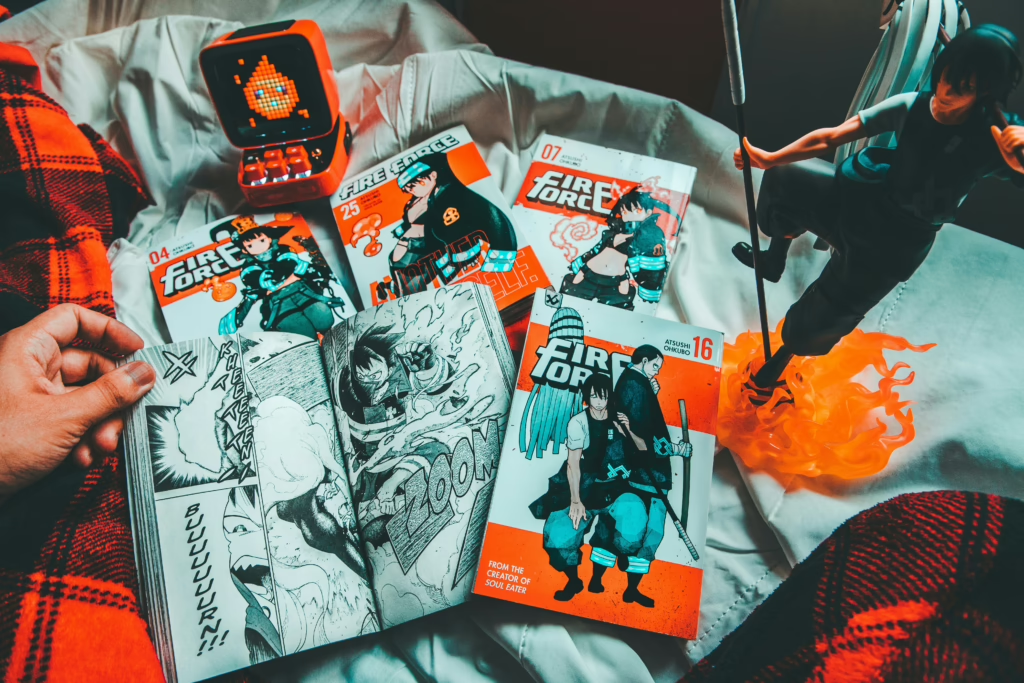
Read that split carefully, because it changes your position as a reader. A medium earning more abroad than at home has started designing for two audiences. Simulcast schedules, subtitled releases and international licensing all follow from that. For a visitor the practical effect is availability. English editions, subtitled screenings and tax-refund counters are now routine.
What takes effort is choosing well, which means knowing which district does what before you spend an afternoon in the wrong one.
For anime culture in Japan, the headline figure is not what studios receive. The production market, the money reaching the companies that draw the frames, set its own record too, yet it is a small fraction of the total. Merchandising, licensing, music and live events absorb the rest. This is why a hit series can be everywhere while its animators stay underpaid. The gap is structural rather than accidental, and nothing in the headline number describes it. One director wrote frankly about that gap.
Starting Point: 1979–1996 by Hayao Miyazaki — the director on the work
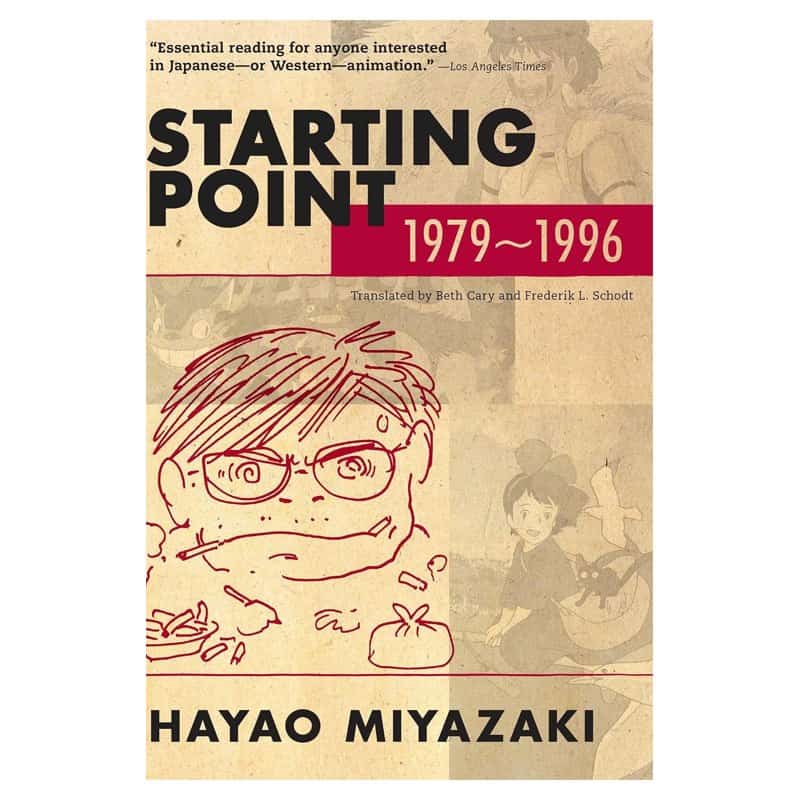
Hayao Miyazaki’s Starting Point: 1979–1996 gathers essays, interviews and notes from the director’s early career. It shows how one of the medium’s central figures thinks about the work. The translation, by Beth Cary and Frederik L. Schodt, keeps his dry humor and his sharp impatience fully intact throughout.
Before Spirited Away, Miyazaki was a salaried animator with a vision of his own, and these pages record his frustration with an industry that often stifles creativity. They also follow the founding of Studio Ghibli. Read it before a visit to Mitaka, and the museum’s sketches and storyboards gain a voice.
The numbers also explain the shopping. Because so much revenue now comes from merchandise and licensing, the districts below are stocked like never before. New figures, art books and character goods arrive every week, and the resale market follows close behind. For a visitor, that means more choice than ever, and more need to choose carefully. Knowing which district does what saves both time and money. The four districts below each serve a different collector, and the circuit works best in the order given.
It also means the best shops sell out fast after big releases. Weekday mornings remain the calmest time to browse. Weekends, by contrast, bring long lines at the larger shops. Plan the heavy shopping for weekdays if your travel dates allow it.
You may also like

Where Anime in Japan Lives: The Districts
Four places carry most of it, and they are not interchangeable. Each grew around a different trade. Each still smells and sounds different: solder and cooled air in one, dust and old cardboard in another. The circuit below runs in the order that works on the ground rather than the order of fame. Give it two days if you can, and three if the trip allows.
At a glance, the four anime districts. Each district does one job well, so plan the circuit by what you want to find.
| District | Best for | Getting there | When to go |
|---|---|---|---|
| Akihabara | New releases, figures and character goods | Akihabara Station, central Tokyo | Before eleven, as a morning |
| Nakano Broadway | Resale, out-of-print volumes and vintage figures | Five minutes on foot from Nakano Station, JR Chuo Line | Weekday mornings, 10:00 to 20:00 |
| Ikebukuro | Otome Road shops and Animate’s flagship | Near the station’s east exit | Weekday mornings, before the crowds |
| Den Den Town, Osaka | Ota Road anime and manga shops, games and electronics | Along Sakaisuji in Nipponbashi | Half a day on a Kansai leg |
Akihabara for the new · Nakano for the deep shelf · Ikebukuro for shojo and josei
Akihabara handles what is new. Character goods, current releases and figures fill the floors. Everything stacks vertically, because the land allows nothing else, so lifts open straight onto a category. Most first visits should start here, since the density of the place calibrates everything you see afterwards. Arrive before eleven and the crowds are still thin. Start at the station, work outward along Chuo-dori, and use the floor directories by each lift, since most buildings post them in English as well as Japanese.
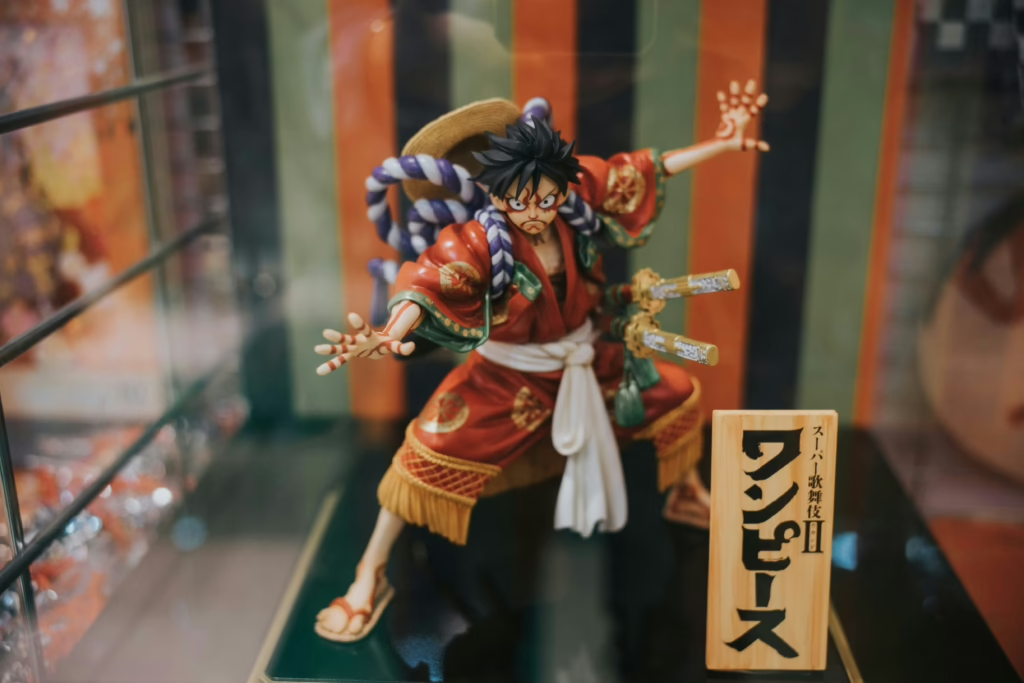
Still, do not mistake volume for depth. Out-of-print volumes and discontinued figures moved west years ago, and so did most of the resale market. Treat the district as an opening chapter. Give it a morning rather than a day, then keep the afternoon for the Chuo line. If you want something to build rather than simply buy, Akihabara’s hobby floors are the place. Model kits fill whole storeys, and the original mobile suit from 1979 is still the classic first build.
Building Rather Than Buying
Model kits are made in Japan by Bandai and sold at every level of difficulty. Beginners can finish a simple kit in an evening, with no glue and no paint required. Hobby floors also sell the small tools you will need.
Bandai HGUC RX-78-2 Gundam Revive — the original mobile suit, built by hand

The original mobile suit from 1979 is still the kit most collectors build first. This HGUC RX-78-2 Gundam Revive renders it in 1/144 scale with modern proportions and engineering that snaps together without glue.
It comes with a beam rifle, two beam sabers, a bazooka and a shield, and the joints hold the poses from the original series. A model kit is a calm way to start a shelf, because it is built rather than simply bought. Plan an evening for it, with good light and a small pair of nippers. Finished, it stands about five inches tall on a shelf.
After Akihabara’s bright floors, the next stop feels like a different city. The Chuo line runs west in about fifteen minutes, past ordinary neighborhoods and office blocks. Nakano itself looks unremarkable from the station, with a covered shopping street leading north. Yet that street ends at one of the densest collector buildings in Japan, and the contrast is part of the pleasure. Give yourself time to wander the covered street on the way in. The walk from the station takes about five minutes.
Nakano Broadway, the Deep Shelf
Nakano Broadway stands five minutes on foot from Nakano Station. It offers the opposite experience. The building runs to four floors of shopping, with hobbyist shops on floors two to four. Doors open at ten and close at eight. Come for the resale market rather than the new stock.
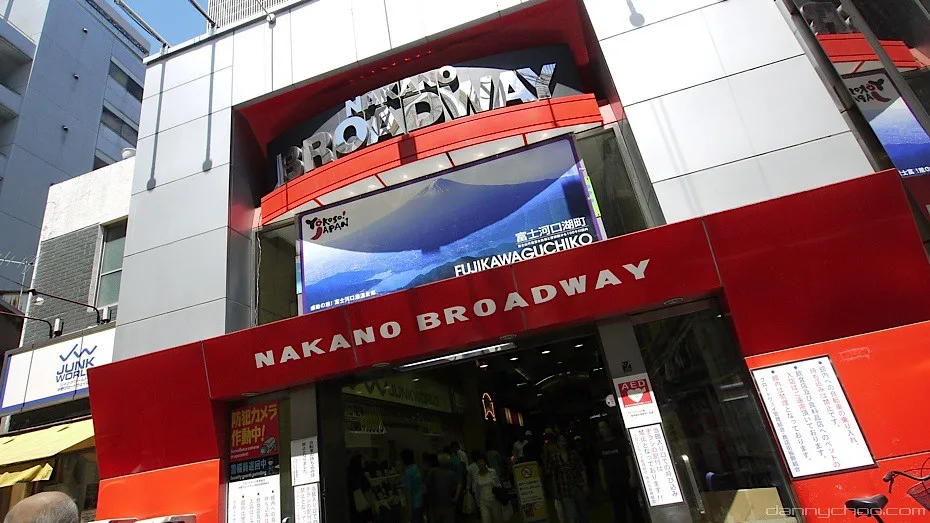
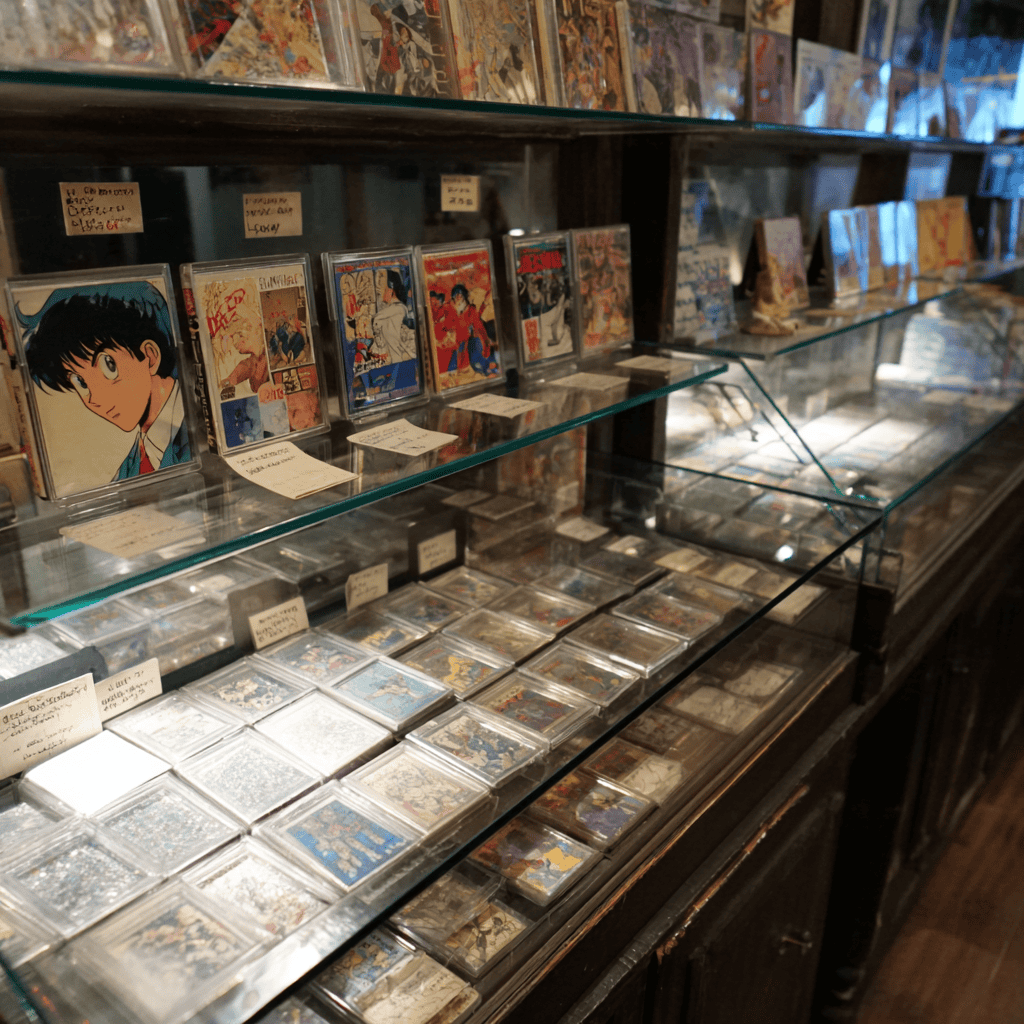
Out-of-print volumes and boxed goods from thirty years ago sit behind glass, graded by condition. Weekday mornings are almost silent. The full route sits in the collector’s shopping circuit. Prefer to have the route built for you? Our travel designers can put Akihabara, Nakano and the museum dates in the right order. That saves a lot of backtracking.
Mandarake is the name most visitors arrive with. It is worth knowing that it is not one shop. The company’s floor guide for the Nakano store lists separate named shops across all four floors. Each holds a different category, so cards and cosplay have rooms of their own. Ask staff for the shop rather than the item. That single habit saves an hour of walking in circles. Staff are used to the question. Most will happily walk you to the right door.
The Anime Pilgrimage Map
The real places behind the anime readers ask us about most, prefecture by prefecture.
Patience pays here in a way it rarely does elsewhere. Two cabinets on different floors will carry the same figure at different grades. Staff will open a case on request, often without a word of English between you. If something matters, walk the building twice before buying, because the second pass often turns up a better copy. Keep a note of floor and shop name for anything you like, so you can find it again after lunch, when the corridors look different.
Condition and Price
Prices vary with condition more than with title. A boxed figure in mint condition can cost several times the same figure loose. Decide before you go which matters to you, because it changes which shops are worth your time. Condition is everything here.
Ikebukuro and Osaka
Ikebukuro is the third leg, and it faces a different reader. Otome Road runs a stretch of shops built around female readers. Animate’s flagship stands near the station’s east exit. Its shelves run to doujinshi, drama recordings and character goods for shojo and josei titles. Visitors who only know Akihabara are usually surprised by the size of this market. They are more surprised by how little the two districts overlap. Each has its own regulars and its own rhythm. Both are worth a visit.
For a reader of shojo or josei, this is the district to put ahead of Akihabara. Weekend afternoons fill and weekday mornings do not, which matters because the shops are small and the aisles are narrow. Go early, and take your time on the upper floors.
Recommended
Osaka carries the fourth. Den Den Town runs along Sakaisuji in Nipponbashi, and Ota Road runs parallel to it, lined with anime and manga shops. The mix leans harder toward games and electronics than Tokyo does. The streets are flatter and easier to walk. If the trip includes Kansai, give the district half a day. Combine it with Kuromon Market nearby for lunch, and the afternoon fills itself. Osaka’s street food makes the walk easy. Trains from Namba take only a few minutes.
Like Akihabara, it grew as an electronics district after the war, which explains the mix on its shelves. Locals call it Ponbashi, and the old line still holds: Akiba in the east, Ponbashi in the west. A full Tokyo-side route is laid out in the Tokyo anime circuit.
Eating Between Shops
A shopping day also needs feeding, and the districts make that easy. Station counters and small diners near every one of these streets serve the same handful of comfort dishes. Katsudon is the classic choice: a fried pork cutlet simmered with onion and egg, then laid over rice. It turns up in anime constantly, often as the meal a character eats before an exam or a big day. Viewers in Japan recognize the cue at once. It signals nerves and hope.
The reason is a pun. Katsu, the cutlet, sounds like the verb katsu, to win, so students eat it for luck before tests. Families sometimes cook it the night before a match or an interview for the same reason.
It is also simple to make at home after the trip, with one pan and about half an hour. Many of these diners take orders through a ticket machine by the door, so choose, pay, then hand the ticket over at the counter.

Katsudon — Pork Cutlet and Egg Rice Bowl
Katsudon is a donburi, a rice bowl topped with a fried pork cutlet simmered in a sweet soy broth with onion and egg. Season the pork, then coat it in flour, one beaten egg and panko. Fry the cutlets in an inch of oil at 340°F for about five minutes, turning once, then drain and slice. Next, bring the dashi, soy sauce, sugar, sake and mirin to a boil in a small pan and soften the onion for three minutes. Lay in one cutlet, pour over two beaten eggs, cover and cook for one minute. Slide it over rice and repeat.
The broth follows the classic ratio published by Japanese Cooking 101, scaled for two bowls. It is a staple of Japanese diners and station counters across the country, so you will taste the real thing within a day of arriving. Order it at a counter near Nakano, and you will understand why students swear by it before a test. A bowl at a counter costs little and fills you for an afternoon of walking. Look for counters with a short line of office workers at lunch.
Wearing and Collecting It
The wardrobe side surprises people, because it has nothing to do with costume. Japanese makers have worked with animation studios for decades. The results are often restrained enough that only another reader would catch the reference: a colorway, one engraving on a case back, a lining print you see once a day. Nothing shouts, and nothing needs explaining at a dinner table. That restraint is very Japanese.
Casio, for example, marked the thirtieth anniversary of Evangelion with a G-Shock designed by Ikuto Yamashita, the series’ own mechanical designer. Thirty years of partnership between a studio and Japanese industry looks like this, not like a printed T-shirt. It is a watch first and a reference second.

Use a simple test before buying anything in this category. Would the piece still work if you never explained the reference to anyone? If yes, it belongs in a wardrobe. If no, it is merchandise, and merchandise stops being worn within a season. Japanese collaborations pass that test more often than foreign ones, because the domestic market expects the object to function first and decorate second. Buyers in Japan are demanding, and makers respond with real quality. That standard shapes every collaboration.
Apply the test in the shop, since it gets harder once the box is open. You will find the full list of pieces in the anime luxury wardrobe. The runway end, where houses have borrowed from animation, is covered in anime’s influence on designer fashion.
That Evangelion anniversary edition, the GA-110EVA30-7A, sold through Casio’s own stores and is hard to find outside Japan. Still, the square case that started G-Shock passes the wrist test just as well.
Casio G-Shock DW5600UE-1 — the square that started it
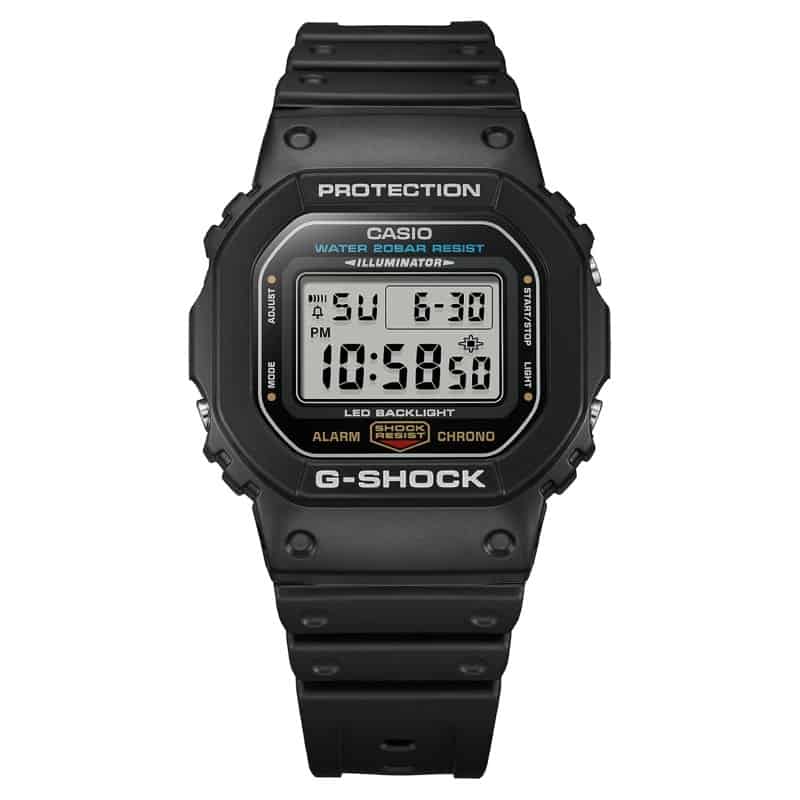
This G-Shock DW5600UE-1 keeps the square case that launched the line, the shape most anime collaborations still borrow. It resists shocks and water to 200 meters, and a bright LED lights the face in a dark shop. Its stopwatch and alarms cover a long day of trains and opening times.
The battery lasts about five years, so it asks almost nothing of its owner. It is a working watch that passes the wrist test, and it pairs with a jacket as easily as a T-shirt. If an anniversary edition ever appears in a Tokyo window, you will already know how the case wears.
The same test works for any object in this world, from bags to stationery. Japanese makers often release collaborations in small runs, sold for a few weeks in department stores and studio shops. They rarely reach overseas retailers, so a trip is often the only chance to see them. Check department store event floors, which host pop-up shops for new series almost every week. Larger stores in Shinjuku and Ikebukuro rotate these events through the year, so check their websites before you fly.
Those pop-ups also sell exclusive goods. Arrive early on the first day if a title matters, since the best pieces often sell out by noon. Staff can usually tell you what remains. A polite question in English usually goes a long way.
You may also like

The First Shelf
Collections almost never begin with a cabinet. Instead they begin with one figure or model kit, bought on a trip and carried home in hand luggage. The cabinet arrives two years later, after the shelf has run out. So buy for the shelf you will have, not the one you have now. Scale discipline matters more than title choice. Most collectors learn this the hard way, after a few mismatched purchases. Start small, and let the shelf grow at its own pace.
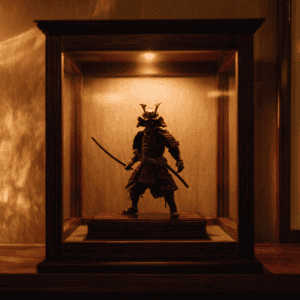
A shelf mixing small figures with quarter-scale pieces reads as clutter, so pick a height and keep to it. Then light it warm and low from the front, never from overhead. Those two rules do more for a display than doubling the number of pieces ever will.
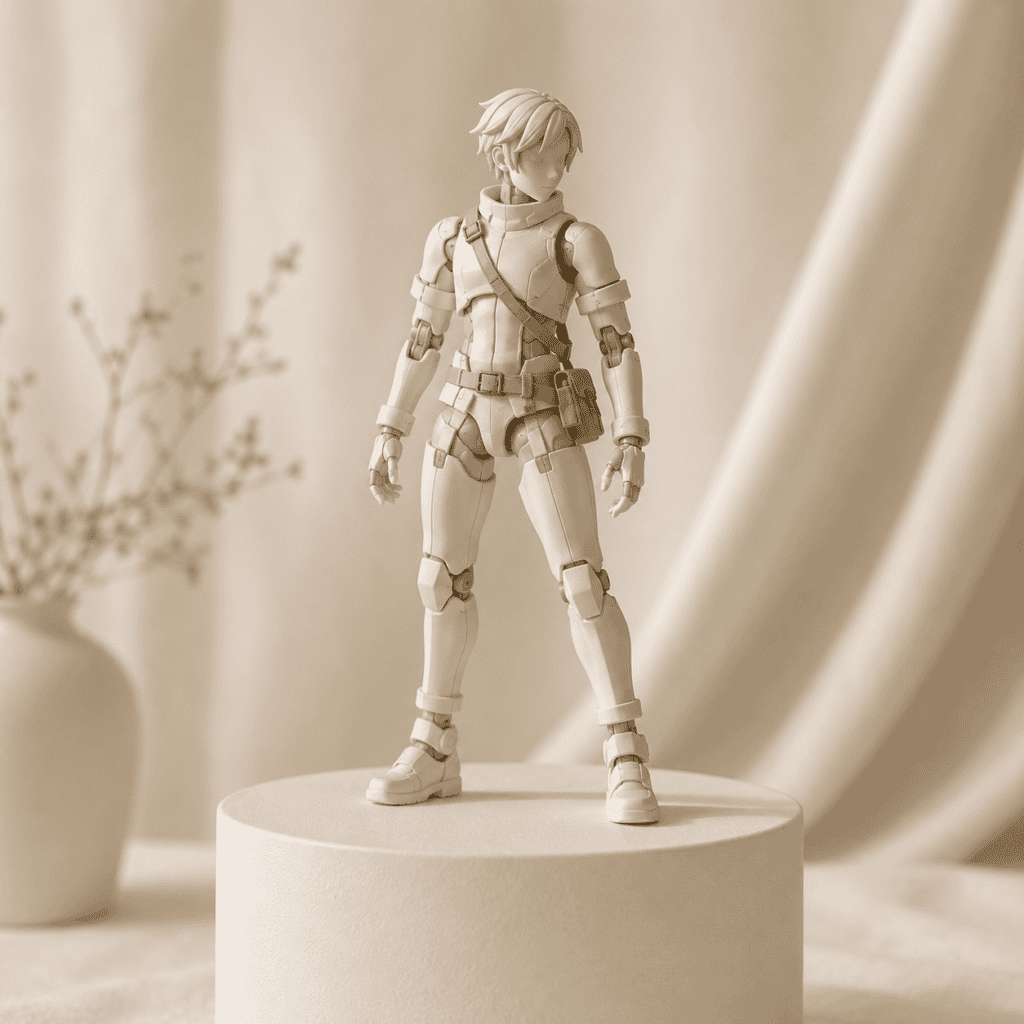
There is a point where collecting turns into curation, and it usually arrives with the third cabinet. Serious collectors start selling as much as they buy. They trade up in condition rather than adding pieces. Nakano exists because of exactly that behavior, which is why its stock is so good. If the habit interests you as a discipline, the long version sits in the collector’s statue cabinet. A good reference book belongs beside it, for the history behind each piece.
Context makes a collection richer. Knowing who designed a figure, or which series first aired a character, turns objects into a story you can tell. Guests notice the difference immediately. It also helps later on, when you decide which pieces to sell or trade.
The Anime Encyclopedia, 3rd Revised Edition — a century in one volume
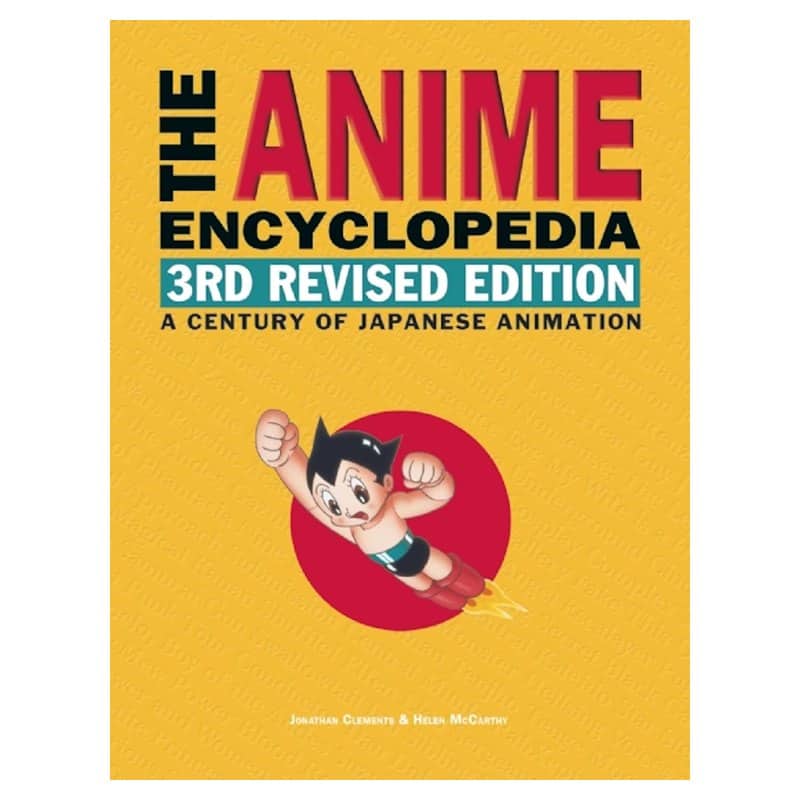
The Anime Encyclopedia, by Jonathan Clements and Helen McCarthy, covers a century of Japanese animation in one reference volume. Its third revised edition runs to more than 10,000 entries across 1,160 pages. Both authors have written about the medium for decades, and it shows in every single detail.
Each entry carries credits, cross-references and opinions, so it reads as criticism as well as data. It sits well beside the cabinet when a title on the shelf needs context. Look up each new piece as it arrives, and the collection gains a history rather than just a count.
Books and figures can be bought anywhere online. What cannot be shipped is the experience of the places themselves. The museum in Mitaka, the convention halls and the towns that appear in famous scenes all need you to be there. They also run on schedules that do not bend for visitors. Planning around them is the difference between seeing them and missing them. Most visitors who miss the museum simply booked too late. A calendar reminder set weeks ahead solves that.
That is why the next section matters most for travelers. Start your plan here, before you look at hotels, flights or rail passes. Once the dates are secure, the rest of the trip falls into place far more easily than most travelers expect.
From Owning to Seeing
Owning the work is one pleasure. Seeing it where it was made is another, and in many ways the more memorable one. The museums, conventions and real locations that anchor anime culture in Japan all run to fixed calendars, and most of them sell out. That makes them the part of the trip to plan first, before hotels and before flights. Everything else can flex around them, from hotels to day trips. A little foresight here pays for itself many times over.
Seeing Anime in Japan: Museums, Events and Pilgrimage
Seeing the work in place is a different pleasure from owning it, and it needs more planning. Museums run on reservation systems rather than queues. Events follow a fixed calendar. Both reward booking early, and both punish the traveler who assumes a ticket desk will be open on arrival. Build the trip around these dates rather than fitting them in afterwards.
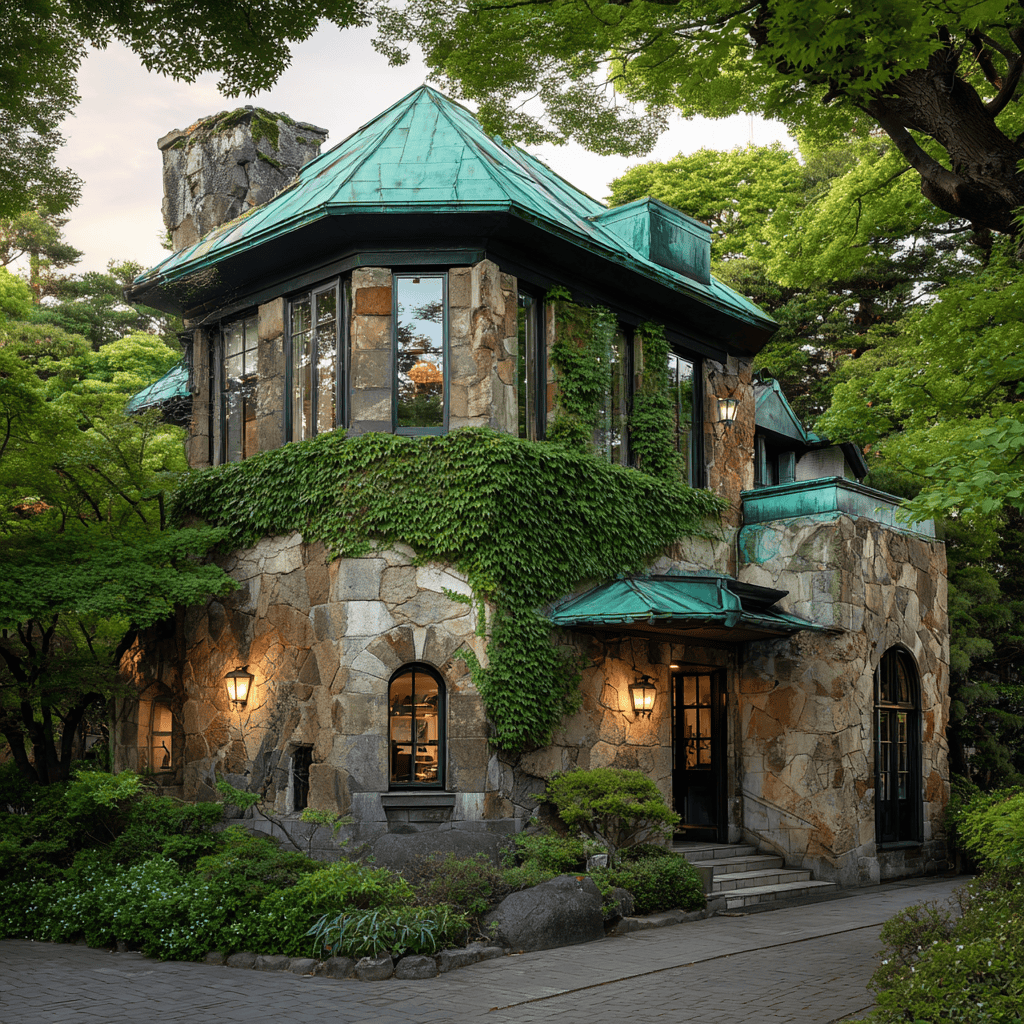
The Ghibli Museum in Mitaka is the clearest case, since entry needs a ticket bought before the visit. Lawson Ticket releases dates at 10:00 Japan time on the 10th of each month for the following month. JTB’s overseas tour packages work to a separate, earlier calendar. Put the release time in your calendar before you book flights. Release time is morning in Japan, which can be evening or night in the United States. Set an alarm. Japan is many hours ahead of the United States.
Sales often sell out within minutes, so sign in a little early and keep one backup date. Resold tickets are refused at the door, which makes the official release the only reliable route. Plan for it, and have a second date ready in case the first sells out.

The Events Calendar
Conventions run on the same principle of fixed dates. AnimeJapan 2026 took place on 28 and 29 March at Tokyo Big Sight. The 2027 edition moves to Intex Osaka on 27 and 28 March, the first time it leaves Tokyo. Comic Market 108 drew about 260,000 people across 15 and 16 August 2026. As a result, March and August are the heaviest months in this calendar, so book hotels before tickets. Rooms near the venues fill first, often months ahead.
Then there is seichi junrei, the practice of visiting the place a scene was drawn from. Readers find the level crossing, the platform or the hillside. They stand in it and compare. Towns now publish walking maps of their own animated locations, because the visits bring steady arrivals outside peak season. It is slower work than a convention, and for many readers it is the part that lasts.
It is also one of the gentlest ways to experience anime in Japan, because it takes you to ordinary towns rather than shops. Bring the scene on your phone and compare angles on the spot.
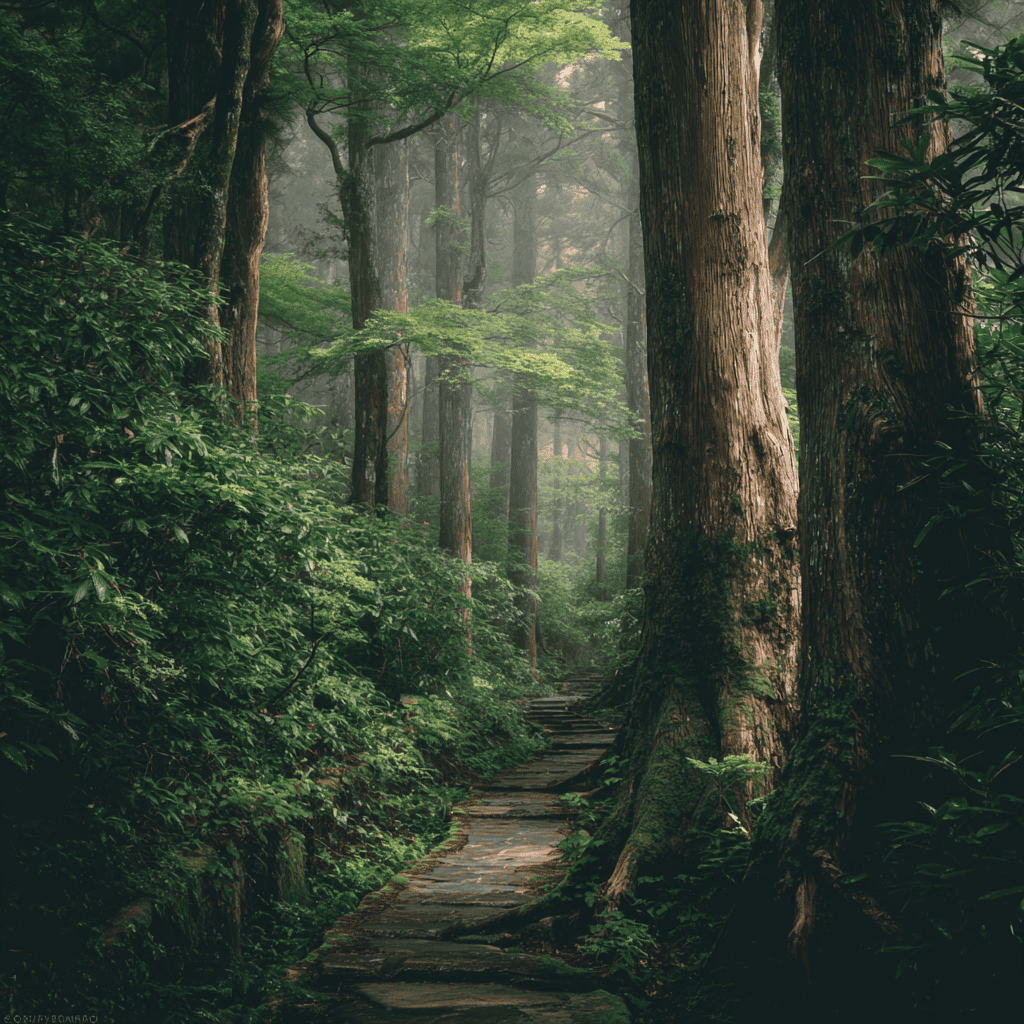
The Ghibli routes, from Mitaka to the forests that shaped the films, sit in the Studio Ghibli pilgrimage. All of this sequences badly if you leave it to chance. Museum releases, convention dates and shop hours pull in different directions. A week in Tokyo absorbs perhaps three of them comfortably. Push for five and the trip becomes logistics, so choose the fixed points first and let the rest of the country fit around them. Fewer fixed points make a better trip.
When to Go
A shop-led trip suits the shoulder seasons, when the Nakano corridors are almost empty. Late September works well, as the weather softens and the shelves restock after the summer events. Before a pilgrimage, it helps to know which films changed the medium.
Japan’s Anime Revolution by Jonathan Clements — twenty films that changed it

In Japan’s Anime Revolution, Jonathan Clements tells the story behind twenty landmark films. The list runs from Momotaro, Japan’s first feature-length anime, to My Neighbor Totoro and beyond. Clements writes with the same clarity as in his longer history, but with more backstage stories and plenty of fierce studio rivalry.
Each chapter covers what changed: content, production or distribution, along with the backstage drama. Tuttle, a publisher with deep roots in Japan, prints it in a compact paperback. Read a chapter before visiting a location, and the place stops being a backdrop. It becomes the moment the medium turned.
Many of those films are tied to real places, which is where pilgrimage begins. Fans of Ghibli visit the forests of Yakushima and the old streets of western Tokyo. Others trace a single scene to a level crossing in Kamakura or a stone stairway in a small town. Local tourism offices now print maps for these routes, often in English as well as Japanese. Some towns even offer stamp rallies, where visitors collect a printed stamp at each location along the route.
The maps are usually available at stations and visitor centers. Ask for them by the series name, and staff will often point out the nearest location as well. Tourist information desks keep the stamp cards too, along with simple walking maps.
Souvenirs Worth Keeping
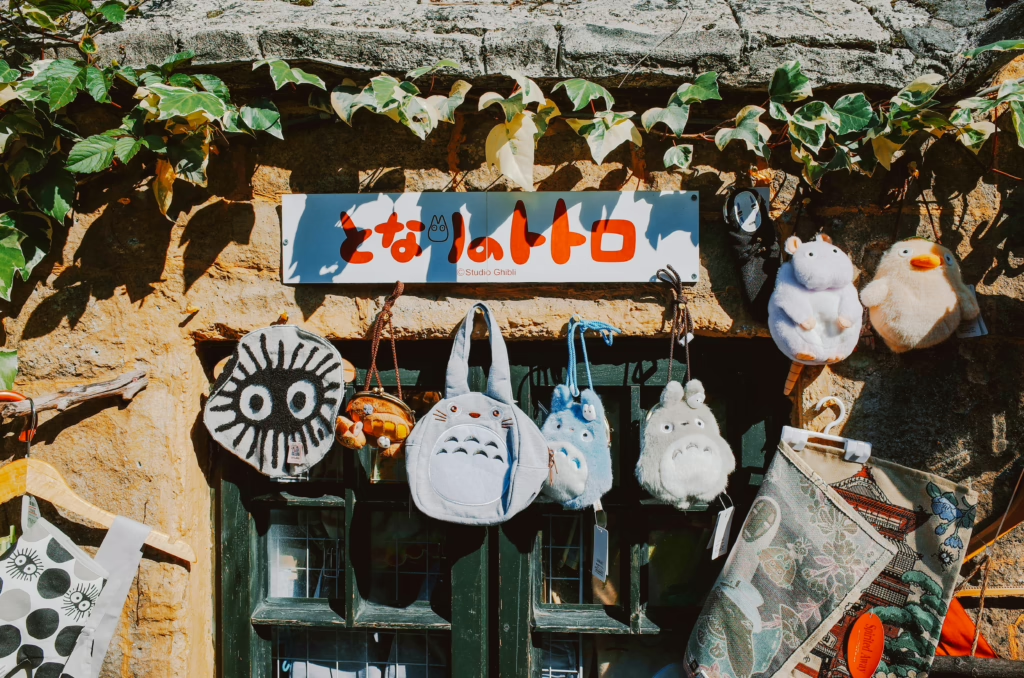
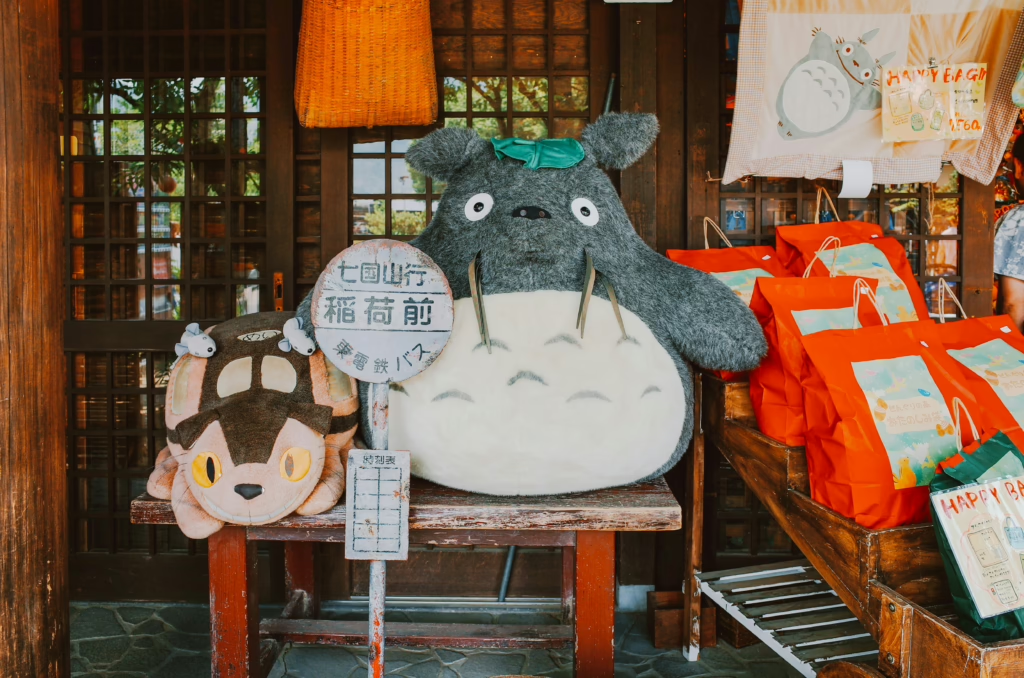
Souvenirs are part of the pilgrimage too, and the best ones are small. Character shops in Tokyo station malls and near Mitaka carry bags, cups and plush toys from the films. Buy one object that you will use, rather than a bag of things you will store. The test from the wardrobe section applies here as well: function first, reference second. A cup used every morning keeps the trip alive far longer than a plush toy on a high shelf.
Studio shops also stock books, postcards and art prints at reasonable prices. Prints from the museum shop in Mitaka are only sold on site, which makes them a fine keepsake. They pack flat, too, which helps. Staff can wrap them for travel.
You may also like

Shops near the big stations keep long hours, so they suit the last evening of a trip. Allow time for tax-refund paperwork, since most character shops now handle it at the till. Keep your passport with you, and keep receipts together until the flight home. Station shops also close later than the district stores, which helps if the museum takes the whole afternoon. Akihabara’s larger chains stay open until about nine, so a late visit can still catch a missed title.
Before the last evening, check your list once more. Most visitors leave something behind in a shop the first time, and the second visit is often the better one. Leave a gap in the schedule for it. Evenings are calmer in most shops.
Getting It Home
One last practical point: luggage. Figures and box sets are heavy and fragile, so pack a soft bag inside your suitcase for the return. Many shops in Akihabara and Nakano will ship overseas, and the cost often beats an excess baggage fee. Ask before you pay, because some shops only ship from certain floors. Keep original boxes, too, since collectors value them, and wrap each one in clothing rather than paper. A figure that arrives with a crushed box loses much of its resale value.
Ask about shipping insurance, too, and keep tracking numbers with your receipts. Duty rules differ by country, so check your own before a big purchase. A little research avoids surprises at home. Customs forms are simple, but they always need accurate values.
The Anime Pilgrimage Map
The real places behind the anime readers ask us about most, prefecture by prefecture.
With the shopping, the museums and the calendar in place, the trip has its fixed points. The rest is a matter of order and pace. Anime culture in Japan rewards the traveler who does less, more slowly, and returns to the same streets twice. The three steps below turn everything on this page into a plan you can actually follow. Keep them simple, and the trip will feel easy. Most good trips are built on very few rules. The rest is detail.
Where to Begin
An orientation is only useful if it ends with a next step, so here are three. Read one complete work before you buy a second. Walk one district properly before you try four. Then book the fixed points in order: museum, convention, flight. Everything else can be picked up as you go.
If you are choosing something for somebody else, the anime gift selection narrows the field. The reward is a different relationship with a country, where a station name starts to mean something. A drawn hillside turns out to be a real one you can walk up. That builds slowly, and it holds far longer than any single series does.
Here is a last thought before you go. Most Japanese readers never call themselves fans. They simply read, watch and go back to the same shelves for years. A first visit works best in the same spirit: curious, unhurried and willing to start from the beginning, one district and one book at a time. A first visit to anime culture in Japan rewards the beginner’s mind, and the journal below gives ninety days to practice it, before the trip or after it.
Beginner’s mind suits any first visit, not only an anime one. It means noticing details you would otherwise rush past, which is exactly how the best finds turn up in Nakano. The journal simply makes that attention a daily habit.
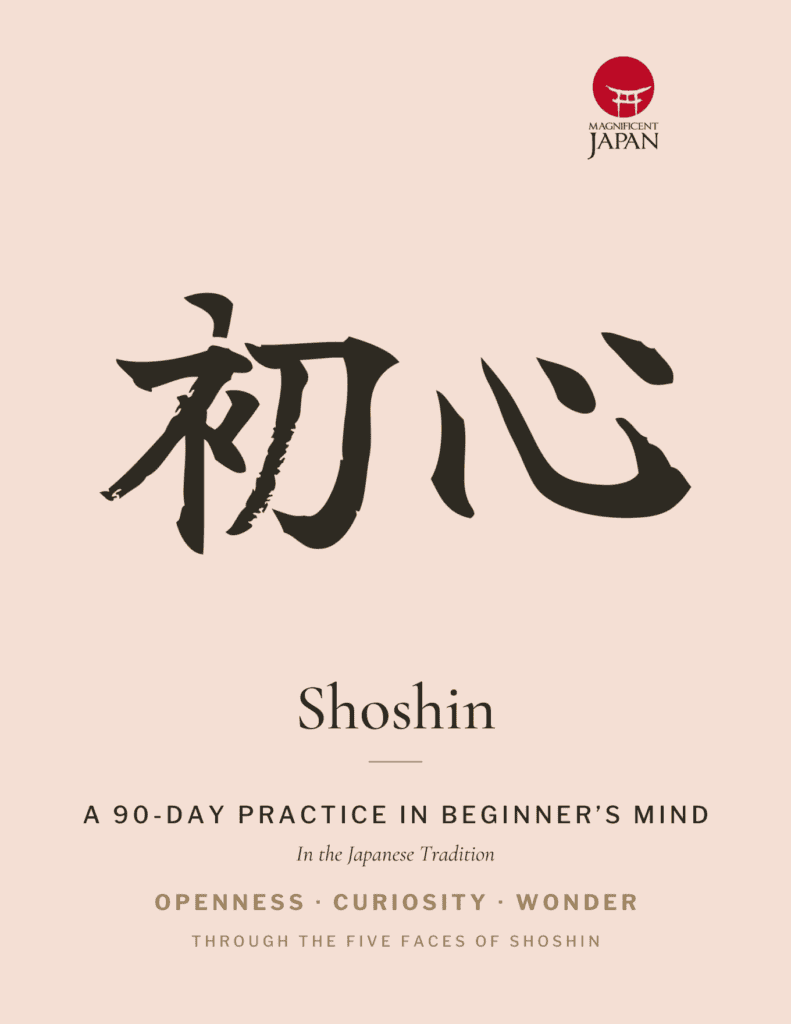
Shoshin means beginner’s mind, the habit of meeting something familiar as if for the first time. This 90-day guided journal gives you one short prompt a day to practice it, which suits a first trip into anime culture in Japan. It comes as a write-on digital edition for a tablet, and it is one of eight journals in the Cultural Reflection Collection.
View The CollectionReading the Signs
Language makes every part of this trip easier, and it starts small. A few kana and a handful of kanji let you read a floor guide, a shop sign or the spine of a volume. The tools below are built for exactly that kind of recognition, in short daily sittings, with nothing to install and nothing to memorize in bulk. Ten minutes a day for a month before the flight makes a visible difference on the first morning in Akihabara.
Proverbs make good first reading because they are short and they repeat. Many appear on shop noren, on tea towels and in the speech bubbles of the very series you may read on the flight. Recognizing even one character in the wild is a small thrill, and it tends to lead to the next.
Each of those guides goes deeper into one part of this page. The reader’s guide lists complete works by age band, while the shopping circuit maps Nakano floor by floor. The Ghibli guide covers the museum and the forests behind the films. Read the one that matches your trip, and leave the rest for the next visit, since nobody sees everything on a first trip. That is a reason to return. Bookmark the two or three guides that match your interests before you fly.
If you would rather start with the language itself, the tools below are the quickest way in. They take minutes a day, and they make the first walk through Akihabara far easier. Even a little reading changes how a place feels.

Putting It Together
Akihabara in the morning, the Chuo line west to Nakano after lunch, Ikebukuro on a separate day, and the Mitaka museum date secured the month tickets release. That is the shape of a good first anime trip, and it leaves room for the unplanned detours that make a trip. Our travel designers set the fixed points first, then fit the rest of the country around them, from a Kansai day in Den Den Town to an evening walk through a real animated location.
They also secure the museum dates the moment they release, so the fixed points are never left to chance. That leaves your days for the shelves themselves, and for the unplanned finds that make a trip memorable. Everything else can stay flexible.
Akihabara in the morning, the Chuo line west to Nakano after lunch, Ikebukuro on a separate day, and the Mitaka museum date secured the month tickets release. We set the fixed points first, then fit the rest of the country around them.
Plan Your Custom Japan ItineraryQuestions Worth Asking
What does anime mean in Japan?
In Japan the word covers all animation, whatever its origin or intended viewer. It names a medium rather than a genre. A domestic drama, a science-fiction serial and a children’s series all sit under the same word. English narrowed the term on the way over, which is why the two usages keep talking past each other.
Why do grown readers take anime seriously in Japan?
Because the medium was built for them as well. Magazines have been published for decades for men in their thirties and women in their forties, and the work carries the subjects those readers care about. Reading in public draws no comment. The habit sits closer to reading a novel on the train than to a private hobby.
Where should a first-time visitor go for anime in Japan?
Start in Akihabara for new releases and character goods. Then take the Chuo line west to Nakano Broadway for the resale market. Ikebukuro covers the female-oriented shops along Otome Road, and in Osaka, Den Den Town does the same work. The Ghibli Museum in Mitaka needs a ticket bought well before you fly.
How large is the Japanese anime industry?
The market set a record in 2024, growing 14.8 percent, according to the Association of Japanese Animations. Overseas sales rose 26 percent and exceeded domestic revenue for the second year running, while the domestic side grew about 3 percent. The production market, the money reaching studios, is only a small fraction of the total.
What is seichi junrei, the anime pilgrimage?
It is the practice of visiting the real place a scene was drawn from. Readers find the level crossing, the station platform or the hillside, then stand in it and compare. Many towns now publish walking maps of their own animated locations. The appeal is unhurried rather than spectacular, and the visits bring steady arrivals outside peak season.
Is Akihabara still the center of anime culture?
It remains the front door rather than the whole house. Akihabara handles new releases, character goods and figures at volume, which is where most first visits begin. However, the resale and out-of-print market has largely moved to Nakano, and the female-oriented market sits in Ikebukuro. Treat the three as one circuit rather than as rivals.
Do I need to speak Japanese to shop for anime in Japan?
No. Staff in the main districts are used to visitors, English editions are common, and pointing works well at a glass case. Still, a little kana and a few kanji help a great deal. They let you read floor guides, shop signs and spines, which turns a long walk into a short, direct one.
The Editors, Magnificent Japan