
Relationship readiness journal prompts are questions you answer on paper before you start dating, not after. They turn a vague feeling of “maybe I’m ready” into something you can read, test and build on. Most prompt lists online are written for couples. These fifteen are written for you, single and not yet dating, as a starter set.
The prompts come in five sets of three. Each set follows one of five threads, from the life you have in order today to the first conversation you will one day have with someone new. Every thread carries a Japanese word and its kanji, explained in plain language.
You will also find the research on why writing about feelings helps, a simple way to use the prompts, and what changes when a list becomes a 90-day practice in connection, one page a day.
What Are Relationship Readiness Journal Prompts?
They are short, specific questions for single people who want to do inner work before dating. You answer one a day, in writing, for ten to fifteen minutes. The best prompts ask about your routines, your patterns, your values and how you meet people. Over weeks, your answers show where you are ready and where you still want time.
Why Relationship Readiness Journal Prompts Work
A prompt is only useful if writing the answer changes something. Fortunately, there is good research on what writing does to a feeling. It comes from two lines of work, one on expressive writing and one on naming emotions.
Writing about feelings has a long research record
In the mid-1980s, the psychologist James Pennebaker asked students to write about difficult experiences for 15 minutes a day, over four days. In the months that followed, those students visited the campus health center at about half the rate of a control group. By 1997, about twenty studies had tested the method, as Pennebaker recounts in a 2018 review in Perspectives on Psychological Science.
The format matters for anyone preparing to date. Short, regular sessions were enough. Nobody needed a weekend retreat or a perfect notebook. They simply wrote honestly, then stopped.

Naming a feeling softens it
The second line of research looks at single words. In a brain-imaging study, Matthew Lieberman and colleagues showed people negative emotional images. When participants put a word to the feeling, activity in the amygdala dropped compared with other tasks. Meanwhile, a region of the prefrontal cortex became more active, according to the 2007 paper in Psychological Science. The researchers call this affect labeling.
For relationship readiness, this is practical. A nervous flutter before a first message is hard to work with. However, “I’m afraid of being boring” is a sentence you can answer. Many of the prompts below ask you to name one feeling plainly, and then move on.

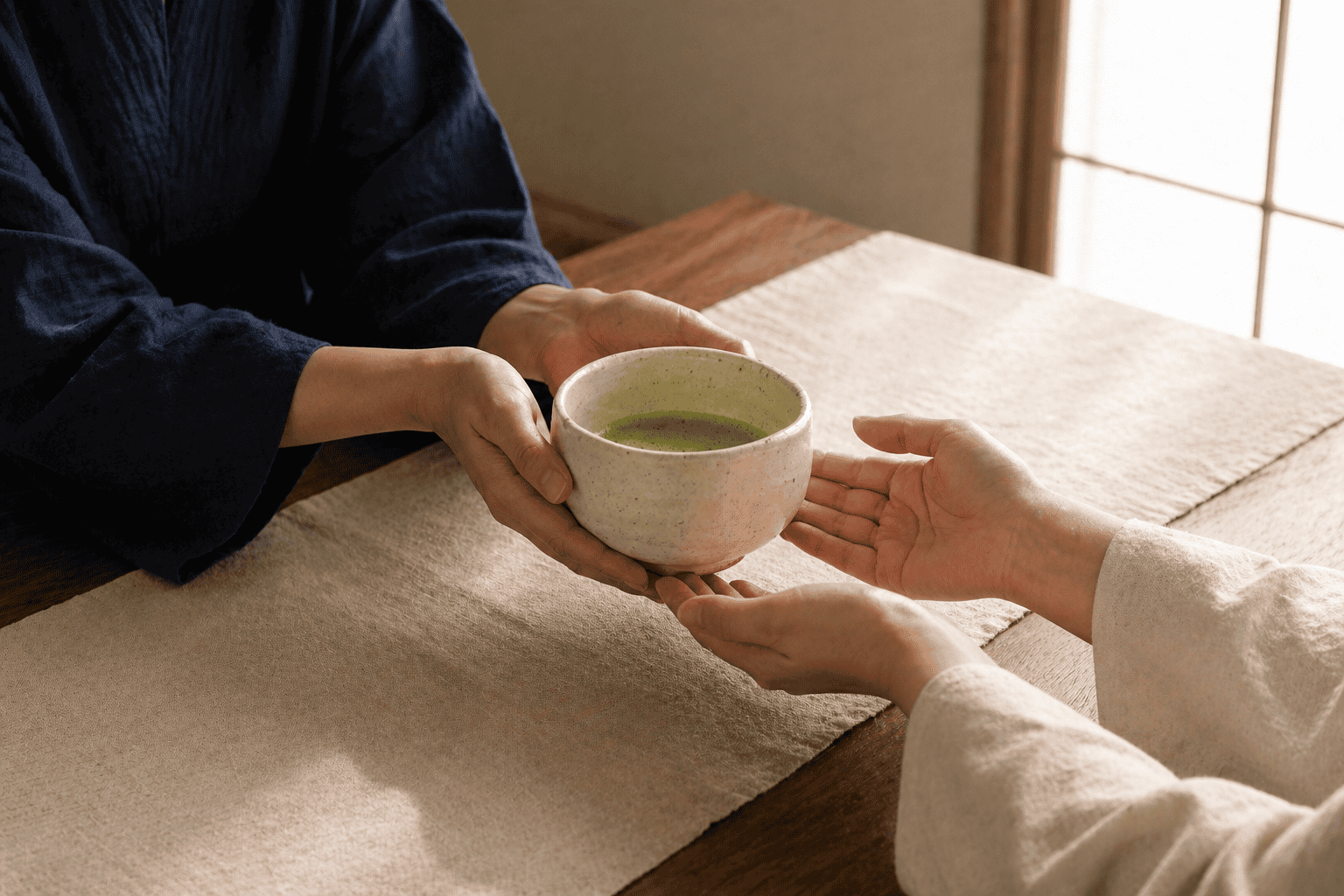
Why prompts for singles look different
Couples prompts ask how you and a partner talk, fight and make up. Relationship readiness journal prompts, by contrast, point inward and forward. They ask what your days already hold, which habits you bring from past relationships, and what kind of meeting would let you relax. If you are still deciding whether to date at all, our guide to the question am I ready for a relationship pairs well with these pages.
The tools stay simple. A notebook you like to open, a pen that moves easily and a regular time do most of the work. Japanese pen makers have spent decades refining smooth everyday pens, from fine gel rollers to light fountain pens. A pen that glides makes the first line easier to start, which is often the hardest part of any page.
The Five Threads of Relationship Readiness
The five sets of prompts borrow their shape from one Japanese word: 縁, read en. In everyday Japanese, en means a connection or bond between people. You hear it in common phrases. For example, ご縁 (go-en) is a polite way to speak of a connection, as when someone says they are glad to have met you through work. Its left side is 糸, the radical for thread. Our piece on en, the Japanese word for connection, explains the character in more depth.
Thread is a useful picture for inner work before dating. A connection is made of strands, and you can tend each one. As a result, the five threads move from the inside out.
On the go, a blank journal with no lines suits these prompts well. You can write a single question at the top of a page and let the answer find its own shape. Our travel journals suit exactly that kind of loose, unruled writing.
Pages for tasting notes, tea rooms and the ideas they bring to mind.
Unlined · 120 pages · Original cover art
Shop This Journal →From the inside out
The first thread, 整 (totonoi), is The Prepared Self. This word suggests putting things in order, so this set looks at your routines, home and friendships. The second, 心 (kokoro), is The Known Heart. Kokoro means heart and mind together, and the prompts ask how you feel, react and repair.
Next comes 間 (ma), The Interval. Ma is the meaningful space between things, explored further in our essay on ma and the art of the pause. Here it frames single time as an interval with value, not a waiting room. The fourth thread, 結 (musubi), is The Tie. The verb musubu means to tie or knot, so this set asks what you want to bind together with another person. Finally, 逢 (au) is The Encounter. It is a less common way to write the verb “to meet,” often chosen for a meeting that matters.
Why five threads instead of one list
A single long list tends to circle the same worries. Grouping the prompts by thread keeps the work balanced. On a hard day, you can answer a gentle question about your home. On a bolder day, you can rehearse a first conversation. Over time, every part of readiness gets some attention, not just the part that feels urgent.
The threads also rotate well. Take one prompt from each set across five days, and then start again. That way, inner work and outward steps stay in conversation with each other. If one thread keeps feeling hard, stay with it a little longer. The table below sums up each thread at a glance.
Each thread looks at one strand of connection, moving from your own life toward a first meeting.
| Thread | Kanji and reading | Plain meaning | The prompts ask about |
|---|---|---|---|
| The Prepared Self | 整 totonoi | A life in order | Routines, home, friendships, time |
| The Known Heart | 心 kokoro | Heart and mind | Feelings, reactions, old patterns |
| The Interval | 間 ma | The space between | Single time, pace, what you wait for |
| The Tie | 結 musubi | What binds | Values, boundaries, how you show care |
| The Encounter | 逢 au | A meeting that matters | First conversations and early dates |
Fifteen Readiness Journal Prompts, in Five Sets
Each of these relationship readiness journal prompts is short enough to read in one breath. Answer in full sentences, even if they are short ones. When a prompt feels too big, write about one recent example instead of your whole life.
整 Totonoi: The Prepared Self
This first set asks whether your daily life has room for someone else, and what you want to keep as it is.
- Walk through your current week, hour by hour. Which evening would you happily give to someone new, and which would you keep for yourself?
- List three things you do well for yourself without anyone asking. How did you learn each one?
- If something began next month, what would you refuse to give up? Write why each one matters.

心 Kokoro: The Known Heart
The second set turns to feelings and reactions. In 1987, Cindy Hazan and Phillip Shaver proposed that romantic love works as an attachment process, much like early bonds in life (Journal of Personality and Social Psychology). In other words, the way you reach for comfort has a history. These prompts help you notice yours, kindly.
- Recall a moment you felt truly understood. What did the other person do, specifically, that made it land?
- When you feel hurt, what is your first move: to reach out, to go silent or to explain? Describe a recent example.
- Which feeling do you find hardest to name out loud? Write one sentence that names it plainly.
If a pattern keeps returning in these answers, our guide on how to break relationship patterns takes the next step. The short film below shows how small one daily page can look. In it, a hand writes a morning prompt in The Return, the first journal in our Cultural Reflection Collection, on a tablet. The En Journal uses the same format: one prompt a day, written by hand.
Twenty seconds inside the journal
The digital edition in use — a morning prompt, answered by hand while the coffee is still warm. Tap to play, with sound.
One page, one intention, one single quiet moment.
間 Ma: The Interval
The third set treats single time as useful in its own right. The prompts ask what this stretch is giving you, and what you might be avoiding.
- Where do you rush to fill a silence, a weekend or an empty evening? What happens if you leave it open?
- Pick one past relationship or crush. Which part of it would you handle differently today, and why?
- What are you waiting for before you start dating? Is it a real need, or a reason to delay?
Travel is one of the clearest intervals there is. A week away gives you new streets, new food and long stretches where nobody needs a reply.
If a solo trip is part of this season, we can plan a Japan itinerary with room to write and wander, built around your own pace.
Occasional letters on relationship readiness, inner work before dating and the Japanese words for connection, with news of the Cultural Reflection Collection.
Occasional letters. Unsubscribe anytime.
結 Musubi: The Tie
The fourth set looks ahead to the bond itself. It asks what you hope to share with someone, where your limits sit and how you like to give and receive care.
- Name three values you want to share with a partner, and one you are happy for them not to share.
- How do you most like to show care: time, words, help, touch or small gifts? How do you like to receive it?
- Think of a friendship that has lasted ten years or more. What held it together through the hard parts?
Take these slowly. A values list written in one sitting tends to describe the person you think you should be. Return to it after a week and edit it. The lines that survive a second reading are usually the ones that matter, and they make relationship readiness feel concrete rather than abstract.
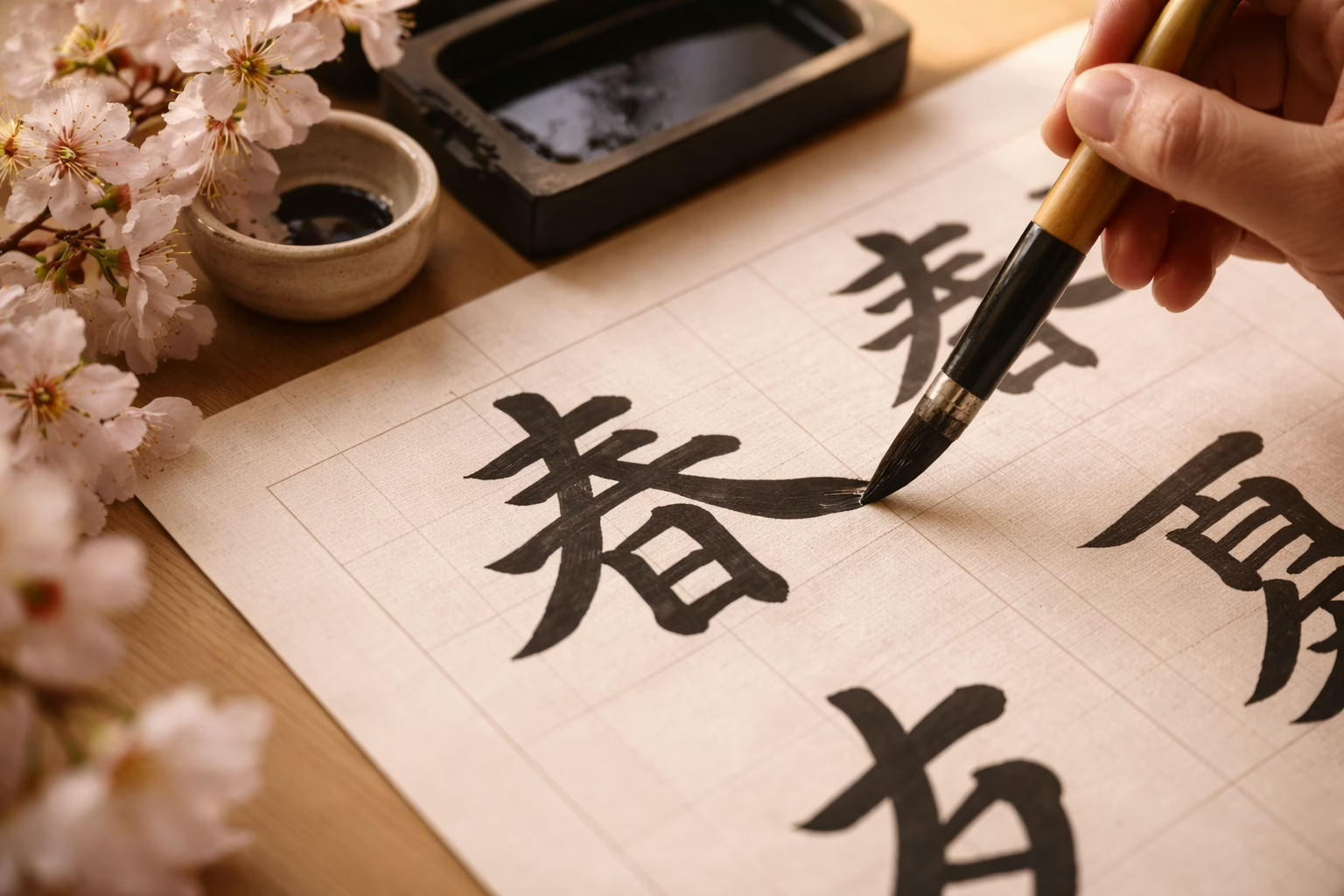
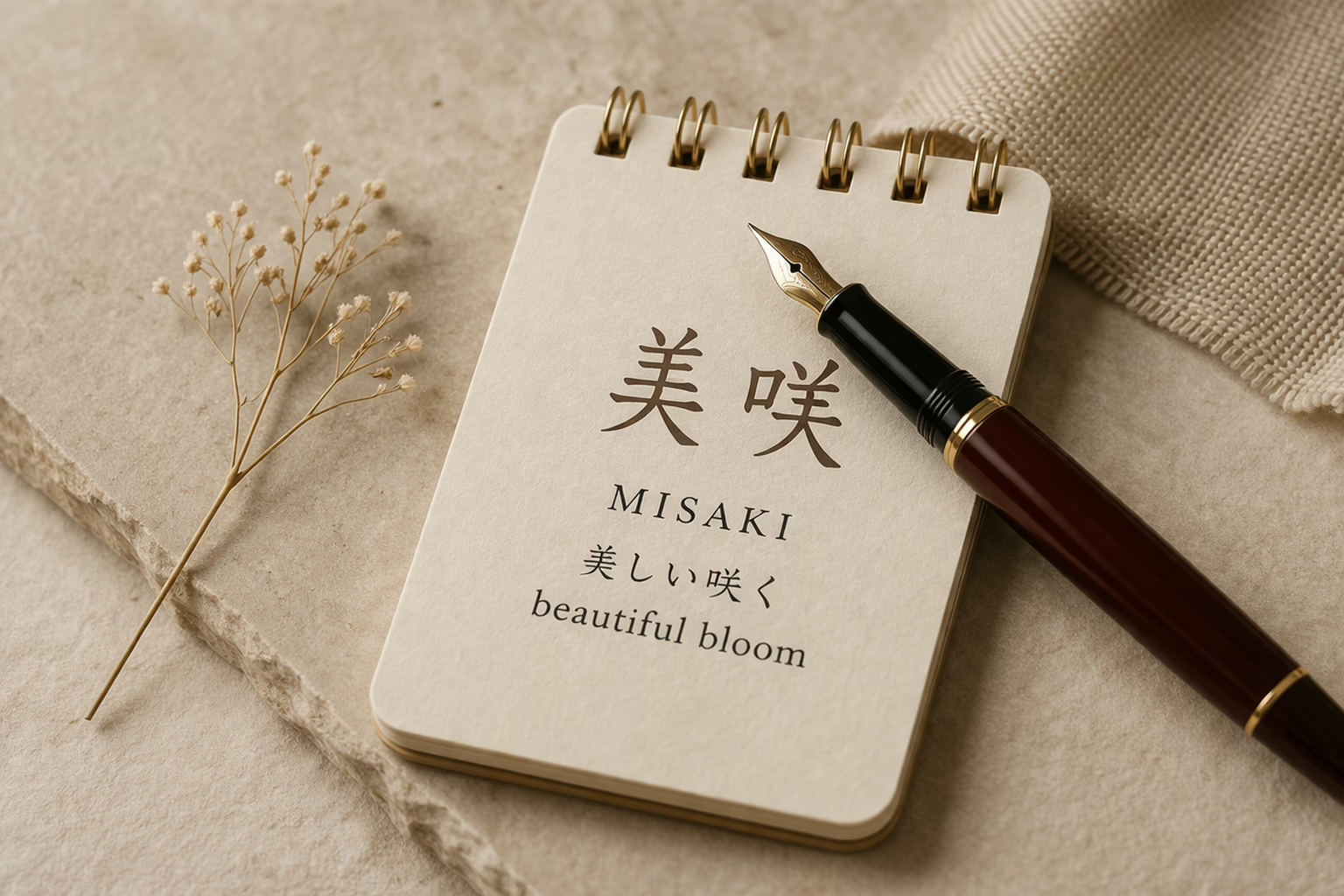
逢 Au: The Encounter
The last set brings you to the door. These prompts rehearse the first meetings themselves, so that curiosity can lead instead of nerves. After all, a first date is a conversation, not an exam.
- What kind of first meeting would let you feel most at ease: a walk, a meal, a museum or a coffee? Why?
- Which early signs tell you a new connection is good for you? Write down the three you trust most.
- Write a short note to yourself on the morning of a first date. What do you want to remember?
These fifteen are a taste of the practice. The En Journal, a 90-day practice in connection, holds 135 prompts, each written for this stage of inner work before dating, in an order that builds week by week. It comes as a write-on digital edition and as a paperback, so you can choose how you write.
These encounter prompts work best close to the real thing. Answer one on the evening before a planned meeting, then read it again the morning after. The gap between what you expected and what happened is where the most useful notes come from, and it keeps the inner work before dating tied to real life.

How to Use Journal Prompts Before Dating
Fifteen relationship readiness journal prompts are a small, manageable start. So treat them as a menu, not a test. The aim is a steady habit of honest pages, and the steps below keep it light.
One prompt a day, at the same time
Pick one prompt and give it ten to fifteen minutes. Write in the morning if you can, before messages and plans fill your head. If evenings suit you better, choose a fixed hour instead. Either way, link the page to something you already do, such as your first coffee or the walk home. A fixed cue makes the habit far easier to keep than willpower alone.
Write by hand when possible. It slows you down, and slower writing tends to be more honest. Date every page, too, because rereading is half the value.
Recommended
When an answer is hard
Some prompts will touch something sore. That is normal, and it is often useful. Name the feeling in one word first, then write one sentence about what you need right now. Then stop for the day. You do not have to solve anything on the page. Instead, come back to the same prompt in a week and see what has shifted.
If the same painful pattern keeps returning, or a prompt brings up memories that feel too heavy, talk to a qualified therapist. A journal can help you notice patterns. However, deeper patterns deserve a trained professional who can work through them with you. Seeking that help is part of readiness, not a detour from it.
Reread on Sundays
Once a week, read back over the last few pages. Underline any sentence that surprises you. Then write two lines at the end: what you noticed, and one small thing to try next week. That short review turns scattered answers into a picture of your own relationship readiness.
Look for repeats as you read. Perhaps the same friend appears in three answers, or the same worry returns every few days. Repeats are useful, because they show you where to spend the next week of prompts. Similarly, notice what has disappeared. A fear that filled a page in week one may barely show up by week four, and that change deserves a line of its own.

From a List to a 90-Day Practice in Connection
A list of relationship readiness journal prompts is a good start. Still, most lists get read once and saved for later. Real change tends to come from returning to the page, day after day, long after the novelty fades.
Why ninety days rather than a weekend
Habits take longer to settle than most people expect. Researchers at University College London found that a new daily habit took an average of 66 days to form. They also found that missing a single day did not significantly set the process back, as UCL reported on the study led by Phillippa Lally. Ninety days gives the habit time to settle, with a few weeks to spare. That is the thinking behind a 90-day practice in connection.
Because the Day 1 answers are on paper, you can compare them with Day 90 and see the change for yourself.

A small dish for a writing evening
Evening writers deserve something warm on the table. Agedashi tofu suits the mood well. Cubes of tofu are dusted in potato starch, fried until crisp and set in a light dashi broth. It takes about half an hour from start to finish, and most of that is simply waiting while the tofu drains. While the tofu drains, you can choose tonight’s prompt and set out your notebook. Make a single small plate, then sit down with your pen while the broth is still warm. A page and a bowl, side by side, make a gentle end to a long day of work.
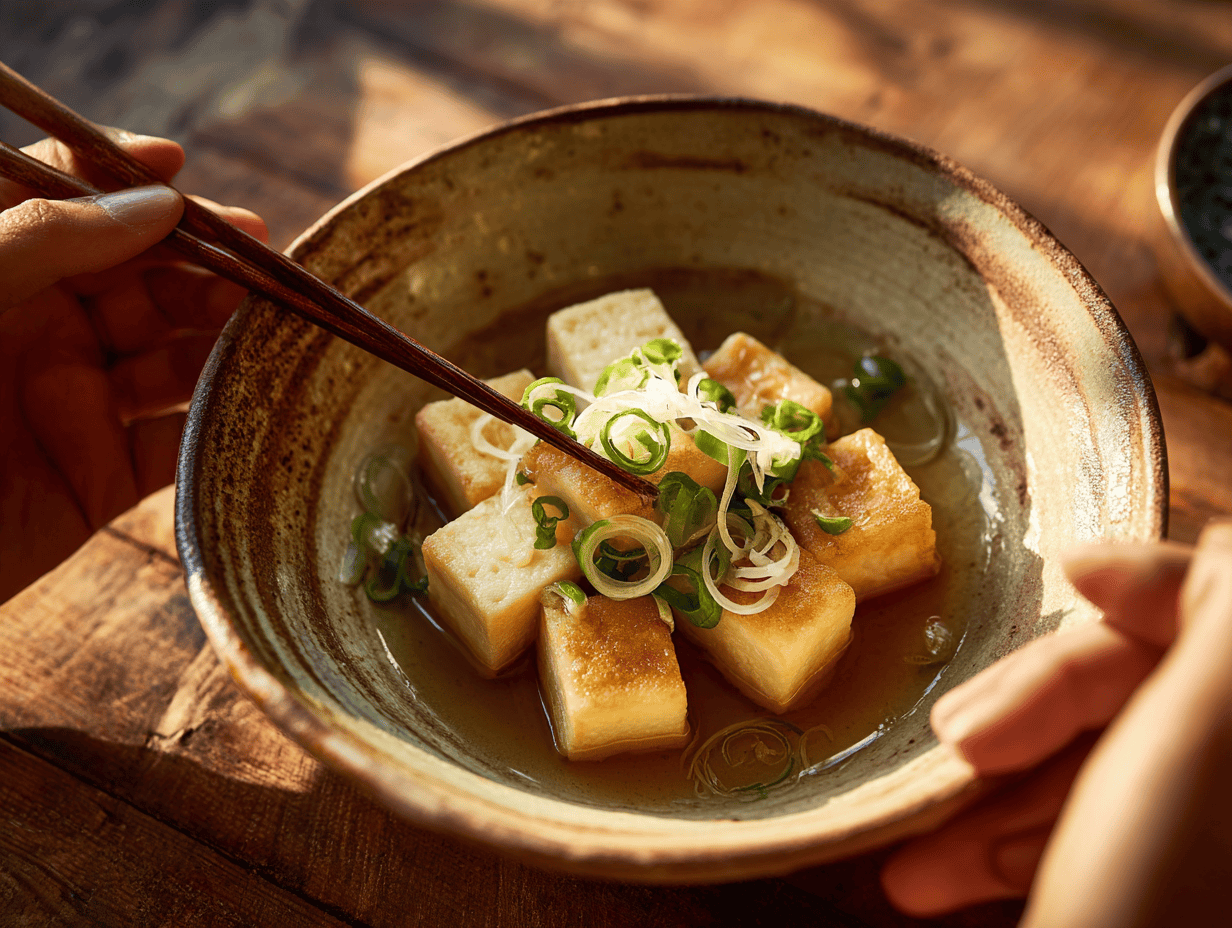
A classic small plate on Japanese izakaya menus. The potato starch coating fries crisp, then softens slightly in the warm dashi.
- 1 block medium-firm tofu (about 10 oz / 300 g)
- 1/3 cup potato starch (katakuriko)
- Neutral oil, for deep-frying
- Scant 1 cup (200 ml) dashi
- 1 tablespoon soy sauce
- 2 teaspoons mirin
- 2 tablespoons grated daikon, lightly squeezed
- 1 teaspoon grated ginger
- 1 scallion, thinly sliced
- A pinch of katsuobushi (bonito flakes), optional
- Wrap the tofu in paper towels and set a light plate on top. Let it drain for 15 to 20 minutes, then cut it into 6 even cubes.
- In a small saucepan, bring the dashi, soy sauce and mirin to a gentle simmer. Keep the sauce warm over low heat.
- Heat about 1.5 inches of oil to 350°F (180°C). Pat the tofu dry, then roll each cube in potato starch and tap off the excess.
- Fry a few cubes at a time for 2 to 3 minutes, turning once, until crisp and pale golden. Drain on a rack.
- Set the tofu in two shallow bowls and spoon the warm sauce around it.
- Top with daikon, ginger, scallion and bonito flakes, and serve at once while the coating is still crisp.
Letters worth sending
Some answers want to leave the notebook. The friendship prompt in The Tie, for instance, often ends with a thank-you you never quite said. Similarly, an answer from The Known Heart may remind you of someone who once understood you well. Writing to them is a gentle way to practice connection now, before any date.
Japanese stationers make lovely washi letter paper for exactly this. The fibers give each sheet a soft, slightly textured feel, and the ink settles into it well. A short letter on good paper reads as care before a single word is taken in. Moreover, choosing who receives one is itself a small act of relationship readiness.
Share the practice with a friend
Inner work before dating does not have to be solitary. Some readers pair up with a close friend who is also single. Each of you answers the same prompt during the week. Then you meet for coffee and share only what you choose to share. Some weeks that is a single sentence, and other weeks it is a whole page read aloud to someone you trust.
This adds warmth and a little accountability. It also shows you something useful: how it feels to be heard without being fixed. That experience is good, gentle practice for any relationship you hope to build later.

Keep a few simple ground rules from the very start. Agree on the prompt in advance, and set a time limit for sharing. Listen without advice unless your friend asks for it. And keep the notebooks private, so each of you can write without editing for an audience. Finally, end each meeting with something light, such as a walk or a shared meal. The point is good company, not a formal support group. Over a few months, these conversations often become one of the warmest parts of the practice, and a steady reminder that connection already runs through your life in many forms.

Signs the practice is working
Progress rarely feels dramatic. Instead, it shows up in small changes. You name feelings faster. You say no to plans that do not suit you, and yes to ones that do. Your answers about what you want grow shorter and clearer, because you no longer need to argue with yourself on the page.
You may also notice that dating feels less like a test you might fail. It starts to feel like a chance to meet someone with curiosity. That shift is the real goal of relationship readiness. It is not a promise of any outcome, but a steadier way to begin.
Questions Worth Asking
What should I journal about before dating?
Start with your daily life, your emotional habits and your values. Ask where another person would fit in your week, how you react when hurt, and what you want to share with a partner. Then rehearse first meetings on paper. Writing about all four areas gives a fuller picture than focusing only on past relationships.
How do I know if I am ready to start dating?
Readiness usually shows in steadiness rather than urgency. You have a life you enjoy, friends you lean on and a fair sense of your own patterns. You can name what you want and what you will not accept. If dating mainly feels like a way to escape loneliness, give it a little more time.
How long should I journal before I start dating again?
There is no fixed rule. Many people find that a few weeks of daily writing shows them a lot, while a full season gives habits time to settle. Let your answers guide you. When your pages feel calmer and clearer than they did at the start, that is a useful signal.
Can journaling help with dating anxiety?
It can help you understand it. Naming a worry in plain words often makes it feel more manageable, and writing a kind reply to yourself can ease the tension before a date. If anxiety is intense or constant, though, a qualified therapist or doctor is the right person to talk to.
Should I write by hand or type my journal prompts?
Either works, so choose whichever you will keep doing. Many people find handwriting slower and more reflective, which suits personal questions. A tablet with a stylus offers a middle path, combining handwriting with easy storage. What matters most is writing regularly and rereading what you wrote.
Is self-love journaling the same as relationship readiness journaling?
They overlap but are not identical. Self-love journaling focuses on how you treat and speak to yourself. Readiness journaling includes that, then adds practical questions about time, values, boundaries and first meetings. Think of self-love as one strand, and readiness as the wider set of strands you bring to a relationship.
Inner Work Before Dating, One Page at a Time
Fifteen prompts are enough to begin. Answer one tonight, and another tomorrow. In a few weeks, you will know more about your days, your heart and the kind of meeting you hope for.
If you would like the full practice laid out for you, our relationship readiness journal for inner work before dating holds 135 prompts in all: ninety daily prompts across the same five threads, plus weekly synthesis and monthly review questions. It moves through three months, The Ground, The Opening and The Thread, with weekly synthesis pages and monthly reviews. A ten-question readiness self-assessment opens Day 1 and returns on Day 90, so you can see what has changed. It comes as a digital write-on edition for tablet apps and as a paperback. It also sits within our wider collection of Japanese philosophy journals.
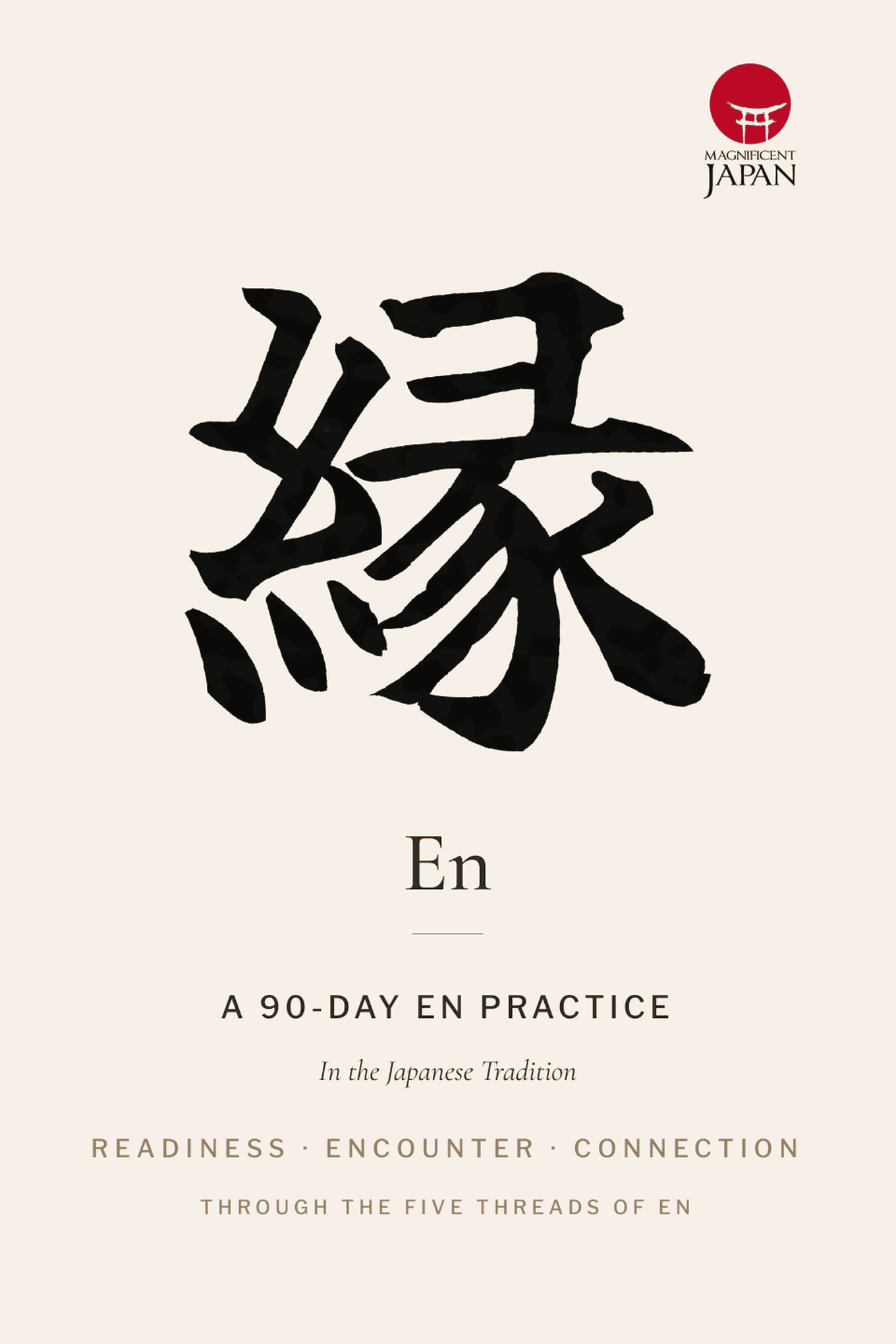
A guided journal for relationship readiness: ninety days of inner work before dating, shaped by the Japanese word for connection.
View the Journal →Whichever way you write, keep it simple. One prompt, one page and one honest answer at a time. The connection you build with yourself now travels with you into every meeting ahead, wherever and whenever it happens.
The Editors, Magnificent Japan
We design routes built around encounters: a cooking class in a Kyoto home, a long lunch with a potter in Mino, an evening at a neighborhood counter where the chef remembers your name.
Plan Your Custom Japan Itinerary