
Am I ready for a relationship? It is a fair question, and an online quiz rarely answers it well. Most people ask it at a turning point. A breakup has finally faded. A close friend has just moved in with a partner. Or a long, open weekend suddenly feels a little too open.
This guide offers something slower and more useful. You will find ten honest questions, each with a note on what your answer suggests. Then comes a clear table of signs you are ready and signs to wait, plus what research says about relationship readiness. It draws on the same thinking as our relationship readiness journal, The En Journal.
None of it is a test you pass or fail. Readiness is not a fixed trait. Instead, it is a season you can prepare for, through steady inner work before dating. By the end, you will know where you stand and what to do next.
Am I Ready for a Relationship? The Short Answer
You are likely ready when you have time and attention to give, your last relationship no longer steers your choices, and you can name what you need and what you will not accept. You also enjoy your life as it is. If several of those feel shaky, wait a little and do some inner work before dating. Readiness can be built.
What Relationship Readiness Really Means
Relationship readiness is the sense that this is the right time in your life to commit to someone. However, it is not the same as wanting love. Plenty of people want a partner in the abstract, yet have no room for one in practice. So when you ask am I ready for a relationship, you are really asking about timing, capacity and clarity.
Readiness is a matter of timing
Psychologists have studied this directly. Christopher Agnew, Benjamin Hadden and Kenneth Tan proposed a construct they call commitment readiness. It describes a person’s sense of when the time is right for a committed relationship (Agnew, Hadden and Tan, Social Psychological and Personality Science, 2019). Across five independent samples, readiness predicted commitment and the everyday work of keeping a relationship going. That work included self-disclosure, accommodation and sacrifice. People who felt both committed and ready were the least likely to take steps toward ending things.
Their studies looked at people already in relationships. Still, the lesson travels well for single readers. Timing is not a minor detail, because it shapes how much you can give once you meet someone you like.

Your friends can often see it
There is a second, more surprising finding. A 2025 study from Michigan State University asked nearly 800 people in friend groups to rate readiness in themselves and in each other. Friends largely agreed about who seemed ready for a committed relationship (Michigan State University, 2025). Moreover, friends who seemed less ready were also seen as more insecure in their relationships.
That gives you a practical tool. Ask one or two trusted friends where they think you are. Also, choose people who know your habits, not just your plans. Then listen without arguing. Their view is not the final word, but it offers data you cannot easily see yourself.


Am I Ready for a Relationship? 10 Honest Questions
The questions below are written for single readers who are not dating yet. Together, they turn am I ready for a relationship from a vague worry into something you can actually answer. Take them slowly. Write each answer by hand, in full sentences, rather than ticking boxes. A yes or no tells you little, while the reasons behind it tell you a great deal.
Questions 1 to 3: your life as it is now
1. Do I have real room for someone? Look at an ordinary week. Then count the evenings and weekends you could give to another person without strain. If the honest number is close to zero, readiness may be a scheduling question first.
2. What am I hoping a partner would solve? Loneliness is human and worth naming. Yet a partner chosen to end a hard month often carries a heavy load. If your answer is mostly escape, the need is real, but a relationship may not be the right fix.
3. Do I enjoy my own company? Notice how a weekend alone feels. Is it restful or restless? Enjoying your own life is not a condition for love. However, it does mean you choose a partner from fullness rather than from hurry.
For this exercise, paper works better than a phone. Writing by hand slows you down, and slower answers tend to be more honest. A well-made notebook and a smooth pen also make the habit pleasant enough to repeat. Japanese stationery makers do this especially well, with paper that takes ink cleanly and pens that feel steady in the hand.
Questions 4 to 6: what you carry from before
4. Can I talk about my last relationship calmly? Try telling the story out loud, briefly. If it still comes out with heat, blame or a long defense, part of you is still in it. That is normal, and it usually eases with time and reflection.
5. Do I know the pattern I tend to repeat? Most people have one. For example, perhaps you chase people who keep you guessing. Or perhaps you leave as soon as things feel close. Our piece on how to break relationship patterns goes deeper into this question.
6. Can I hear no without losing my footing? Dating involves rejection, often from near strangers. If one unanswered message would color your whole week, build some steadiness first. Then the early stages will feel lighter.

Questions 7 and 8: what you want
7. Can I name what I need, and ask for it plainly? Needs might include reliable contact, shared plans or time alone. Write down three, and then practice saying one of them in a single, kind sentence. Clear requests prevent a great deal of guessing later.
8. Do I know what I will not accept? A short list of firm limits protects your time. Also keep it specific, such as dishonesty or contempt. A long list of preferences, by contrast, tends to narrow your view before you meet anyone.
Some people find these answers come more easily away from home. A train window, a new city or a long solo walk loosens familiar thinking. If you travel this year, take a blank journal and answer one question a day as you go. The Ichi-go Ichi-e travel journal suits this well. Its name comes from a Japanese phrase often translated as one time, one meeting.
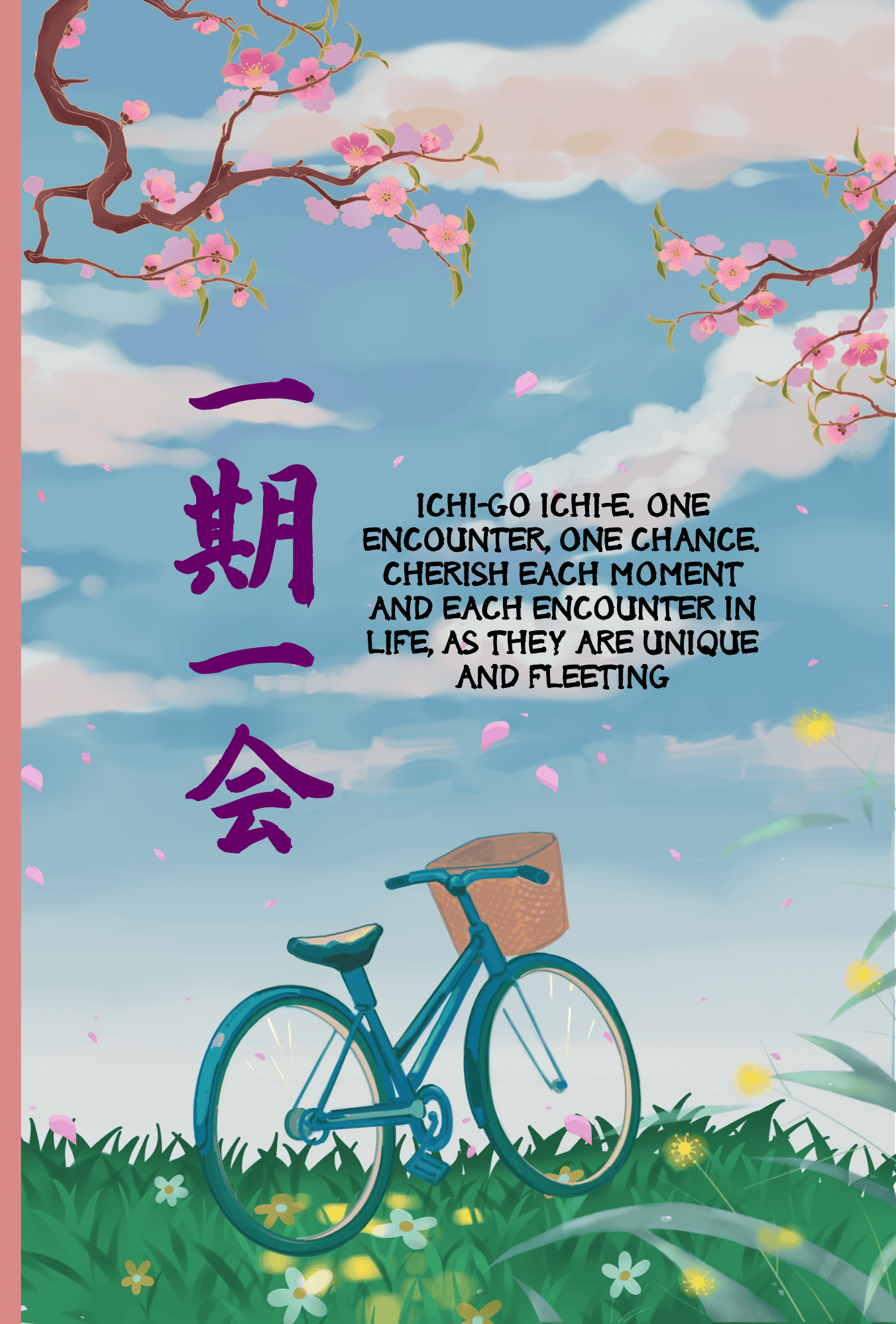
One encounter, one chance: pages for the moments worth keeping.
Unlined · 120 pages · Original cover art
Shop This Journal →Questions 9 and 10: room for another person
9. Am I curious about someone else’s inner life? Readiness looks outward as well as inward. So notice whether you ask friends real questions and listen to the answers. Curiosity is one of the quickest ways to make another person feel seen.
10. Would I be content to stay single a little longer? This one sounds odd, yet it matters. If waiting feels unbearable, pressure may push you toward the wrong match. If you can wait gladly, you can choose well.
Read your ten answers back the next morning. Underline any that surprised you, because those usually point to the work worth doing first. Then set the page aside for a week before you look again.
What Your Answers Say About Relationship Readiness
Your answers will rarely be all yes or all no. Most people land somewhere in between, and that is useful. The table below sorts the ten questions into five areas. For each one, it shows what readiness tends to look like and what suggests waiting a little. It also offers one small step to take next.
Use it as a mirror, not a score. If you see yourself in the middle column for one area, you have simply found your starting point. That clarity is the whole purpose of the exercise, and it is worth more than any quiz result. Keep the page somewhere you will see it again.
Most people are ready in some areas and still building in others.
| Area | Signs you are ready | Signs to wait a little | One next step |
|---|---|---|---|
| Time and energy | You can give regular evenings without strain | Your week is already full to the edges | Clear one evening a week for a month |
| Your last relationship | You can tell its story calmly | It still sparks heat or blame | Write the story once, then put it away |
| Self-knowledge | You can name your pattern and your needs | Your own reactions often surprise you | Note one strong reaction a day for two weeks |
| What you want | You hold a few firm limits and an open mind | You have a long checklist, or none at all | Cut your list to three firm limits |
| Your life now | You enjoy your days as they are | You hope a partner will rescue a hard season | Add one thing you love to each week |
Read across each row and circle the column that fits today. Then pick only one next step. Doing one small thing for a month changes more than planning five. As your answers shift, the table will tell a different story, and that is the point.
Writing a short answer every morning is the simplest way to keep this going. One prompt a day is enough. The film below shows that format in practice: a hand writing a morning prompt in The Return, the first journal in our Cultural Reflection Collection, on a tablet. Similarly, the En Journal, a 90-day practice in connection, follows the same daily rhythm.
Twenty seconds inside the journal
The digital edition in use — a morning prompt, answered by hand while the coffee is still warm. Tap to play, with sound.
One page, one intention, one single quiet moment.
Signs You Are Ready for a Relationship, and Signs to Wait
Beyond the table, a few signs tend to show up in daily life before they show up on paper. These are not rules. Instead, they are patterns worth noticing over a few weeks.
Signs you may be ready
You think about dating with curiosity rather than urgency. You can also picture sharing your weekends without resenting the loss of them. When friends mention someone they know, you feel interested, not anxious. You also talk about past partners with fairness, including your own part in what went wrong.
Another good sign is steadiness. A slow week does not send you looking for distraction, and your mood does not hang on messages. Above all, you would like company, yet you do not need rescuing.
For some readers, a solo trip is part of this season. If that sounds like you, we can plan a custom Japan itinerary for one, paced around long walks, good meals and time to write.
Occasional letters on relationship readiness, inner work before dating and the Japanese words for connection, with news of the Cultural Reflection Collection.
Occasional letters. Unsubscribe anytime.
Signs it may help to wait
Some signs suggest a little more time would help. You still check an ex’s profile, or you replay old arguments at night. You want a partner mainly to prove something, perhaps to a former partner or to family. Or your days are so full that a new person would only add pressure.
Waiting is not failure. In fact, it can be the most generous choice for you and for whoever you meet next. Use the time well, and the wait itself becomes preparation. If you want structured questions for this stage, our relationship readiness journal prompts offer fifteen to start with.

Readiness is not a single moment
Many people expect readiness to arrive like a switch. In practice, it tends to grow unevenly. You may feel ready on a bright Saturday and doubtful by Tuesday. That swing is normal. What matters is the trend over weeks, not the mood of one evening.
This is why a written record helps. When you answer the same questions every few weeks, you can see change that feels invisible day to day. For example, your last relationship might now take one line to describe instead of a page. That shift is real progress. So when you next ask am I ready for a relationship, look back through your notes before you answer.
Why Relationship Readiness Is Built, Not Found
Readiness can feel like luck. In fact, much of it comes from habits you can practice. Two areas of research make the case.
Your patterns are not fixed
At first, attachment research focused on infants and parents. Then, in 1987, Cindy Hazan and Phillip Shaver applied it to romantic love. In their survey, about 60 percent of people described themselves as secure, about 20 percent as avoidant and about 20 percent as anxious-resistant. The psychologist R. Chris Fraley sets this out in his overview of adult attachment research at the University of Illinois. He also notes that early attachment and adult romantic attachment are only moderately related.
That moderate link is good news. Your early experiences matter, but they do not write your future. Patterns can shift through new experiences, honest reflection and, where needed, support. If you notice a deep pattern that keeps causing pain, a qualified therapist is the right person to help with it.
Recommended
Chemistry cannot be planned, but you can prepare
The second finding concerns attraction itself. In a 2017 study, researchers applied machine learning to speed-dating data. Before their dates, participants answered questions on more than 100 traits and preferences. The models could predict who was generally desirable, yet not who would desire whom (Joel, Eastwick and Finkel, Psychological Science, 2017).
In other words, a specific connection is hard to forecast before two people meet. That takes the pressure off. You cannot plan chemistry. You can, however, prepare yourself: your time, your clarity and your steadiness. That is the part of relationship readiness that sits in your own hands.

Friendship is part of readiness
A full life makes a better foundation than an empty one. Friendships, work you care about and small pleasures all count. As a result, they give you somewhere to stand if a date goes badly. They also give a future partner a real life to join, rather than a gap to fill.
Japanese has a useful word here. 縁 (en) is an everyday term for a connection or relation between people. It is written with the 糸 thread radical, a fitting image for ties that link one life to another. Our piece on en, the Japanese word for connection, explores the word and how people use it.
Inner Work Before Dating: What to Do in the Weeks Ahead
If your answers suggest waiting a little, the next few weeks are not empty time. They are your chance for inner work before dating. The aim is not perfection. Instead, it is a calmer, clearer version of the person you already are.
Turn intentions into if-then plans
Good intentions often fade by Thursday. A simple fix is the if-then plan, which psychologists call an implementation intention. A meta-analysis of 94 independent tests found that these plans had a medium-to-large effect on reaching goals (Gollwitzer and Sheeran, Advances in Experimental Social Psychology, 2006).
Apply it to readiness. For example, if you feel the urge to check an ex’s profile, then you write one line in your notebook instead. Or, when Sunday evening arrives, you answer one question from the list. Small plans like these turn hopes into habits.

Cook for yourself as you would for a guest
One small, telling habit is how you feed yourself. Many single people eat standing up and scrolling, as if the meal does not count. Try the opposite. Set the table, cook one proper dish and sit down to it. It is a weekly reminder that your own company deserves care.
Chawanmushi, the Japanese savory steamed egg custard, is a fine place to start. Its name means steamed in a teacup, and it appears everywhere from kaiseki restaurants to home kitchens. It also teaches patience. Steam it too hot and the custard turns rough and pitted. Keep the heat gentle, and it sets silky and smooth.

Chawanmushi means steamed in a teacup, and it appears everywhere from kaiseki restaurants to home kitchens. Its roots trace to shippoku banquet cooking in Nagasaki during the Edo period.
- 2 large eggs (about 100 g)
- 1 cup dashi (about 250 ml), at room temperature
- 1 teaspoon light soy sauce (usukuchi)
- 1 teaspoon mirin
- 1 pinch of salt
- 4 slices kamaboko fish cake
- 1 small handful shimeji mushrooms, separated
- 2 sprigs mitsuba or 1 thin scallion, to garnish
- Whisk the eggs gently with chopsticks, cutting through the whites without whipping in air. Stir in the dashi, soy sauce, mirin and salt.
- Strain the mixture through a fine sieve into a jug so the custard sets smooth.
- Divide the kamaboko and shimeji between two heatproof cups. Pour the egg mixture over them and skim off any bubbles on the surface.
- Cover each cup with its lid or a piece of foil. Set the cups in a steamer over water that is hot but not boiling, with the steamer lid slightly ajar.
- Steam gently for about 15 minutes, until the custard is set but still slightly loose in the center. Never let the water boil.
- Top with mitsuba or scallion and serve hot.
The lesson carries over neatly. Readiness, like chawanmushi, does not respond well to force. Turn up the heat and you get bubbles and holes. Give it steady, gentle warmth, and it sets in its own time. The same is true of the weeks before you date.
Make room for slow pleasures
Tea works the same way. A roasted green tea such as hojicha is gentle and warming, so it suits an evening of writing. Making it well takes only a few minutes. Still, those minutes change the pace of a night. A small teapot, a cup that fits the hand and good leaves turn a habit into something you look forward to.
Pair each cup with one question. Then, over a month, that adds up to a real body of reflection. It also builds a routine that will serve you well once you are dating, because steady habits make the early weeks feel calmer. Over time, the notebook becomes a record of how far you have come.
Spend time somewhere new
Finally, give yourself some fresh scenery. A walk in a new park, a solo afternoon in a museum or a weekend away all shake loose old thinking. New places tend to make you more observant, and observation is where self-knowledge begins. Bring the notebook, and write what you notice about yourself as well as the place.

Autumn suits this kind of reflection. The light is soft, the air is cool and the year is turning. Many people use the season to take stock before winter, and you can do the same. Revisit your ten answers, compare them with your first set and note what moved. For another lens on patience, our piece on what ma means in Japanese explores the value of the pause.
Then decide, gently, whether the next season is for dating or for more groundwork. Either answer is a good one when you reach it honestly. Also remember that the decision is not permanent. You can always revisit it next month, once your notebook has a few more pages filled.

When the answer is yes
If your answers now lean toward yes, take that seriously too. Readiness does not mean every question is settled. It means you have enough clarity to begin, and enough steadiness to learn as you go. Start small. For instance, say yes to an introduction from a friend, or to one well-chosen date. Afterward, notice how you feel and write it down.
Keep your if-then plans in place. Keep cooking for yourself, and keep your friendships warm. After all, dating should add to a life you already enjoy, not replace it. That balance is what relationship readiness looks like in practice, week after week.
Questions Worth Asking
How long should you wait to date after a breakup?
There is no fixed timeline that suits everyone. A better guide is how you feel when the breakup comes up. If you can describe it calmly, you no longer compare new people to your ex, and you are dating for curiosity rather than distraction, you are probably close.
Is it normal to feel nervous even when you are ready to date?
Yes. Nerves and readiness often arrive together, because meeting someone new matters to you. Readiness is less about feeling calm and more about feeling steady. If nervousness passes after a first meeting and does not stop you from enjoying your week, it is simply part of the experience.
What does it mean to work on yourself before dating?
It means using the time before dating to understand your patterns, needs and limits. In practice that can include journaling, strengthening friendships, building routines you enjoy and reflecting on past relationships. The goal is clarity and steadiness, not becoming a different person or reaching some ideal version of yourself.
Should I talk to a therapist before I start dating?
Many people date well without therapy. However, if you notice a painful pattern that keeps returning, strong anxiety about closeness, or grief that still shapes your days, a qualified therapist can help. Talking to a professional is a practical step, not a sign that you are not ready.
Can you be ready for a relationship but not find anyone?
Yes. Readiness describes your side of the equation, not the timing of meeting someone compatible. Attraction between two specific people is hard to predict in advance. Staying open, widening your social circle and keeping a full life make it more likely that a good connection has room to happen.
Readiness Is a Practice in Connection
So, am I ready for a relationship? Only you can answer that, and the answer can change. What you can do today is ask the questions honestly, notice the patterns and build the habits that make connection easier when it comes.
If you would like a structure for that work, The En Journal offers a 90-day practice in connection. It gives you one prompt a day across five rotating threads, with weekly synthesis pages and monthly reviews. On Day 1, you complete a ten-question readiness self-assessment. On Day 90, you answer it again and see what has changed. That side-by-side comparison can be revealing.
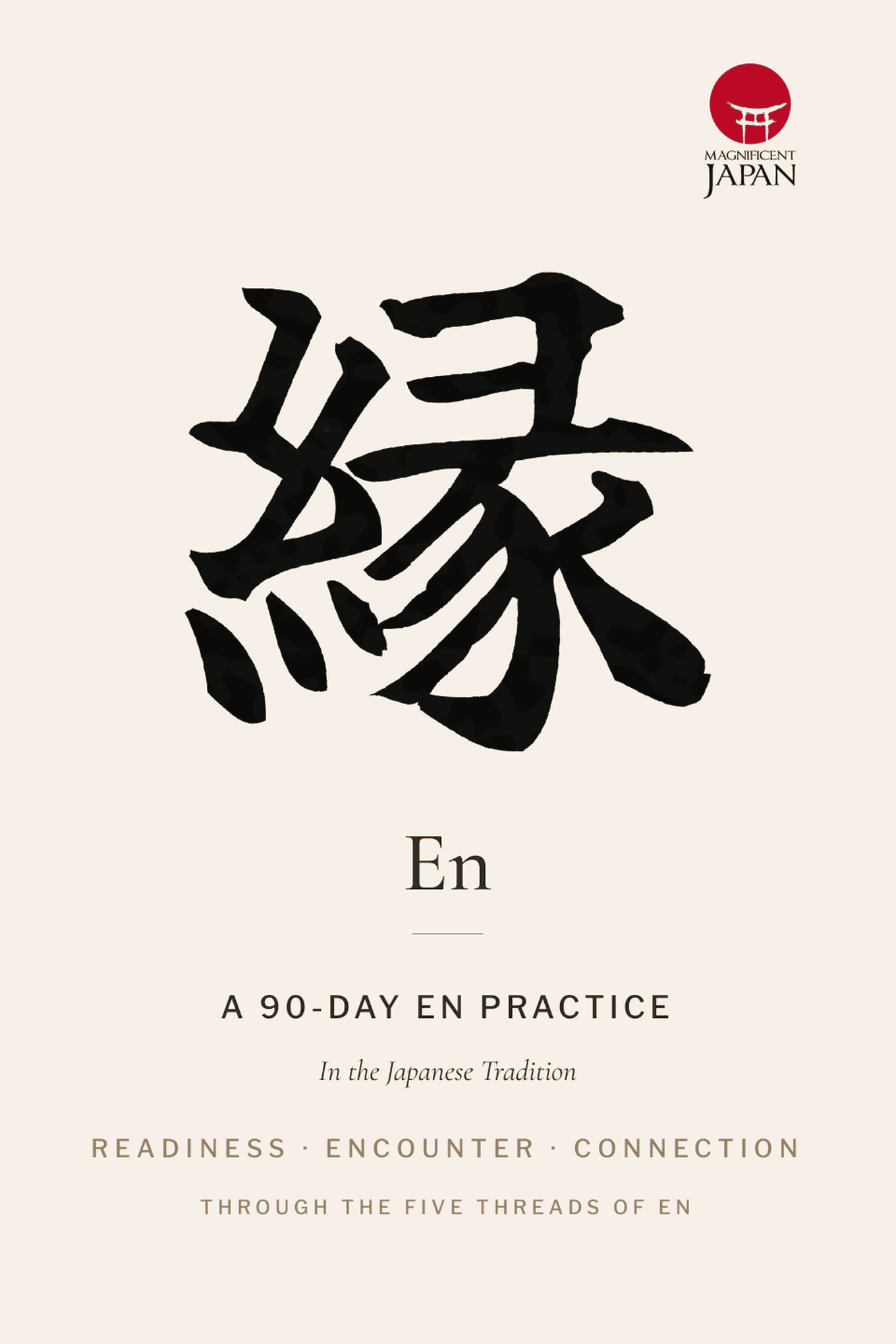
A guided journal for relationship readiness: ninety days of inner work before dating, shaped by the Japanese word for connection.
View the Journal →Whatever you decide, begin with one question tonight. Write the answer by hand, read it tomorrow and see what it teaches you. Readiness grows from small, honest pages like that, one morning at a time. Meanwhile, keep enjoying the life you already have, because that life is what you will one day share.
The Editors, Magnificent Japan
We design solo routes with room for encounters: a seat at a Kyoto chef’s counter, a morning walk along the Kamakura coast, a ryokan dinner served at your own pace.
Plan Your Custom Japan Itinerary