The En Journal — Ninety Days of Inner Work Before You Start Dating
A ninety-day practice — one prompt a day, completed before you begin dating. Write on it with a stylus in your favourite tablet app, and spend a deliberate season becoming ready for connection.
The write-on digital edition works in every major tablet annotation app. One journal, ninety days, and a matched Day One and Day Ninety assessment that shows you what the season changed.
Digital: instant download, every major tablet app · One prompt a day, five to fifteen minutes · Try seven days first
Most dating advice starts from the wrong end
Most advice about finding love starts with the search: the apps, the openers, the strategy. Relationship readiness starts earlier. Psychologists call it commitment readiness — the sense that you are genuinely open to a relationship and willing to do what one asks — and research links it to whether relationships form and last.
The search-first approach asks: where do I find someone? It treats readiness as assumed, and it is why the same patterns repeat with new people.
The readiness-first approach asks: who arrives when I do? It spends a season on the ground you stand on, so the search that follows starts from steadiness rather than habit.
The En Journal takes the second path. Ninety days of inner work before dating — patterns named, worth settled, standards written — before anyone else is in the room.
Relationship readiness, before the search
Relationship readiness is measurable, and it matters. Researchers describe commitment readiness as the felt sense that the time is right — that you want a relationship and are willing to do the work one asks. In studies, that readiness predicts whether relationships form, how they are maintained, and whether they last. Wanting a partner is common; being ready for a relationship is a different state, and it can be built.
The strongest building material the research offers is self-concept clarity — how clearly and stably you know who you are. Higher self-concept clarity is associated with higher relationship satisfaction and commitment. That is what inner work before dating is actually for: not fixing yourself, but knowing yourself, so the next relationship starts from clarity rather than habit.
What en actually means
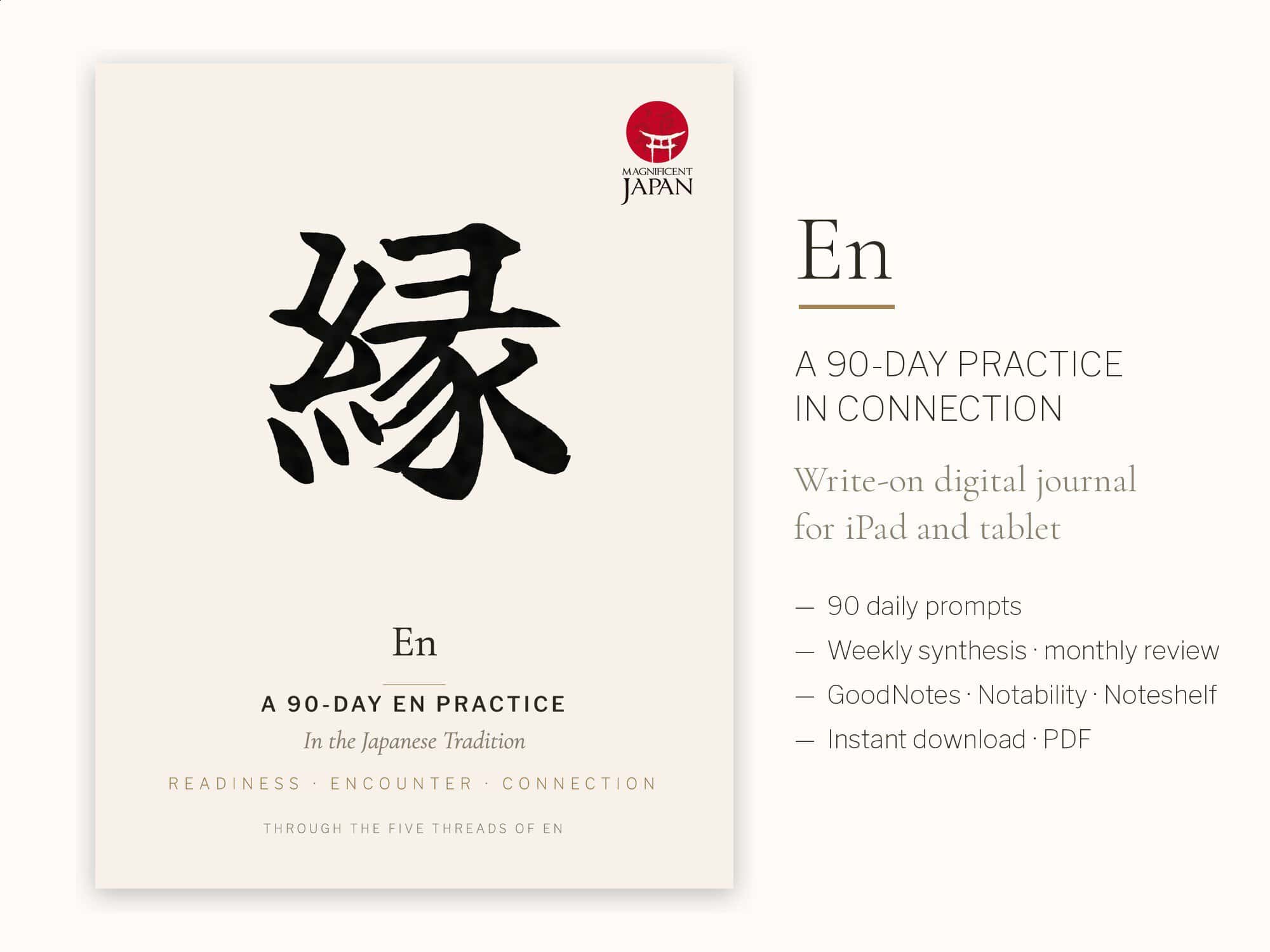
En 縁 is a Japanese word for the unseen thread of connection between people. The character carries the thread radical 糸, and its meanings run from the edge of a cloth to a bond between people. In everyday speech, goen names the fortunate connection that brought two people into the same room.
In other words, the word makes a humble claim. En is not a promise waiting somewhere; it is a tie that can only take hold where the conditions exist for it. A seed alone grows nothing — soil, water, and season decide. This journal is ninety days of tending those conditions in yourself, before you start dating.
Five threads, ninety days
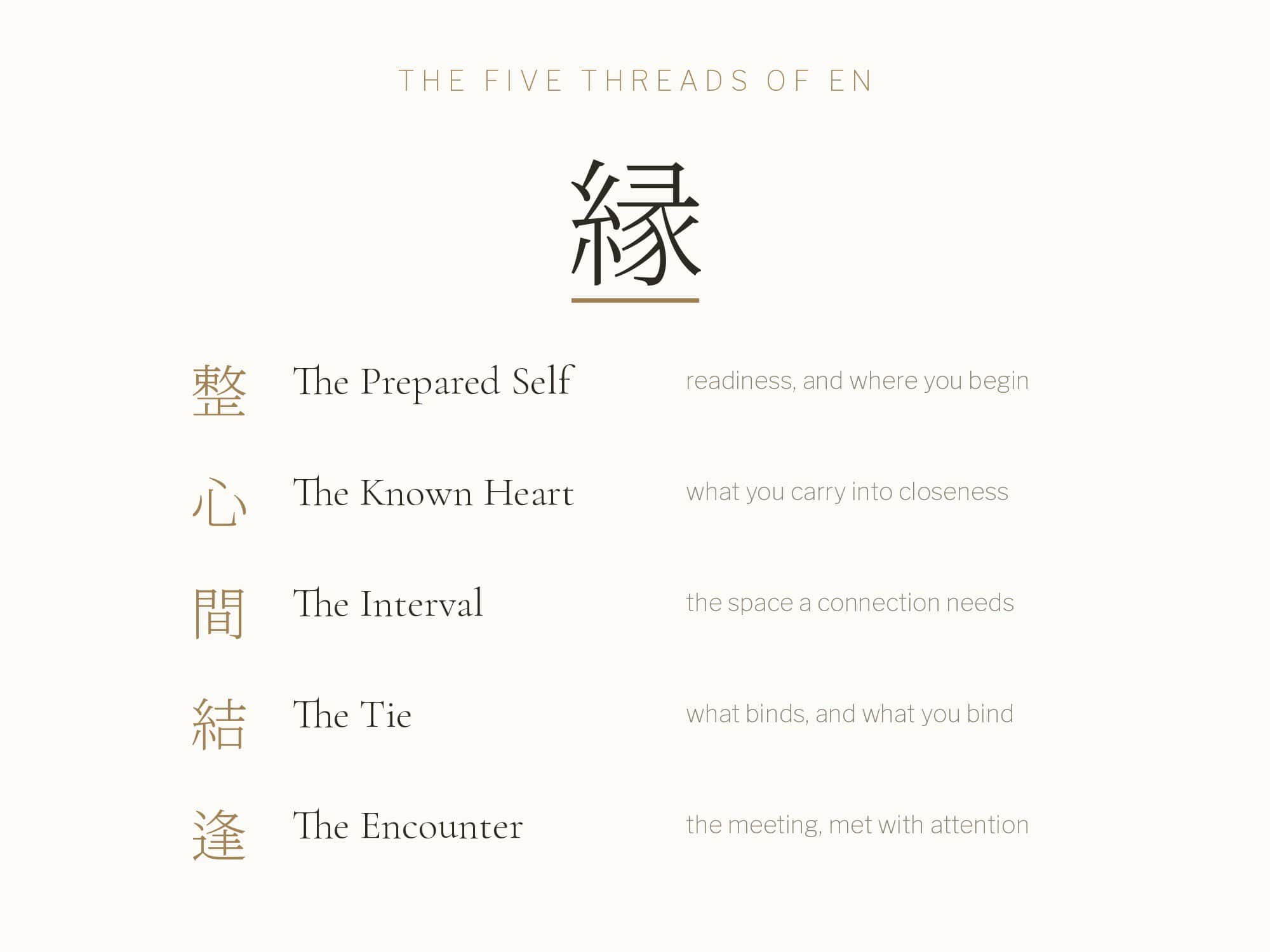
From there, the prompts move through five threads — the prepared self, the known heart, the interval, the tie, and the encounter. Each is asked of you eighteen different ways across the ninety days, so a question that slides past you in week one can land in week twelve.
Prompts that ask the right question
Most dating journals ask who you want to meet. These ask who arrives when you do. Emotional readiness for a relationship is built in questions like that — patterns read without blame, worth held without an audience, standards that invite rather than exclude.
The practice assumes one thing: for these ninety days, you are not dating. Not searching, not swiping. A deliberate interval, so that what begins afterwards begins from readiness.
What the En journal includes
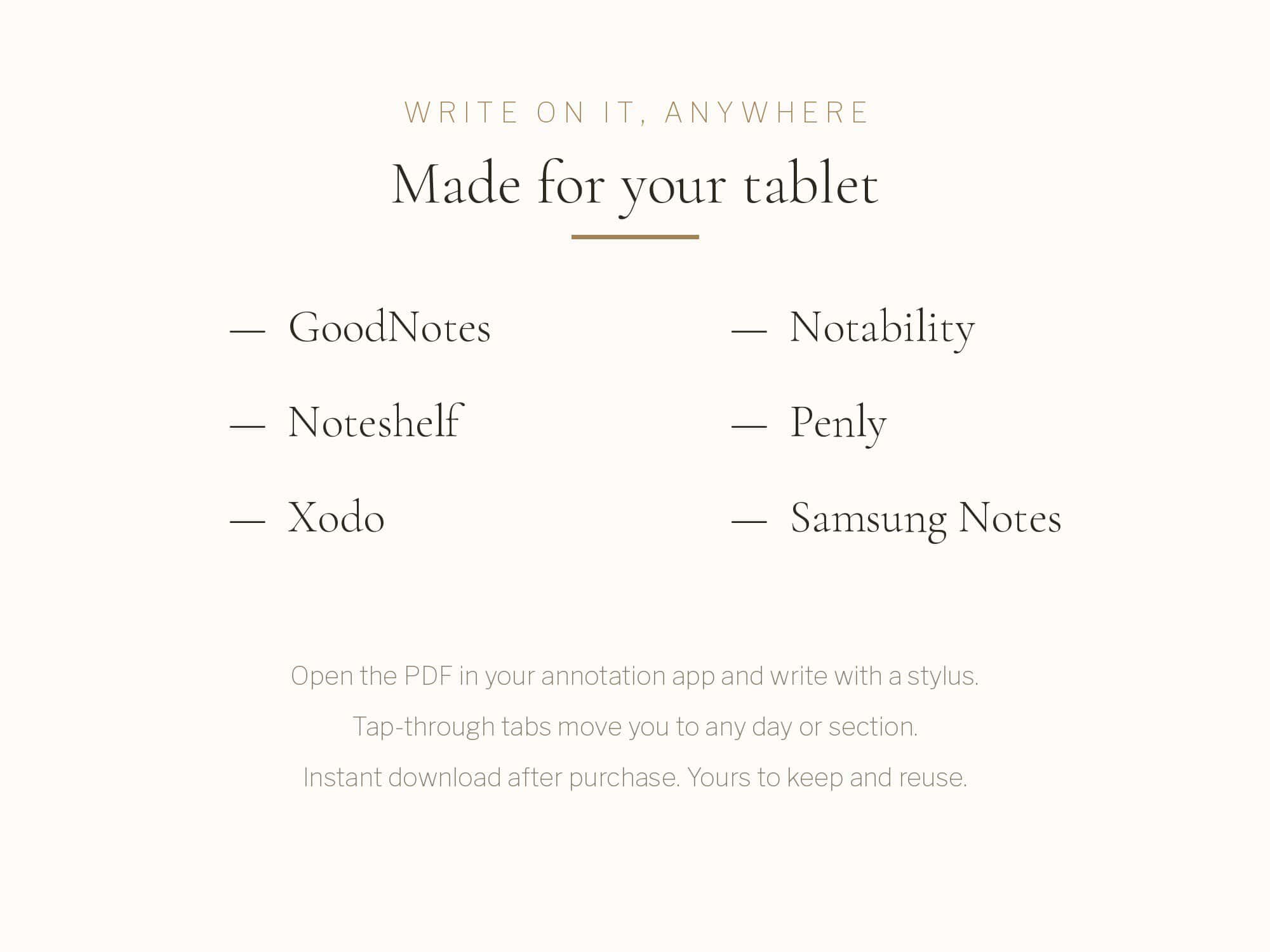
Inside, the digital edition is a write-on PDF for GoodNotes, Notability, Noteshelf, and every major annotation app, with tap-through side tabs and day links throughout.
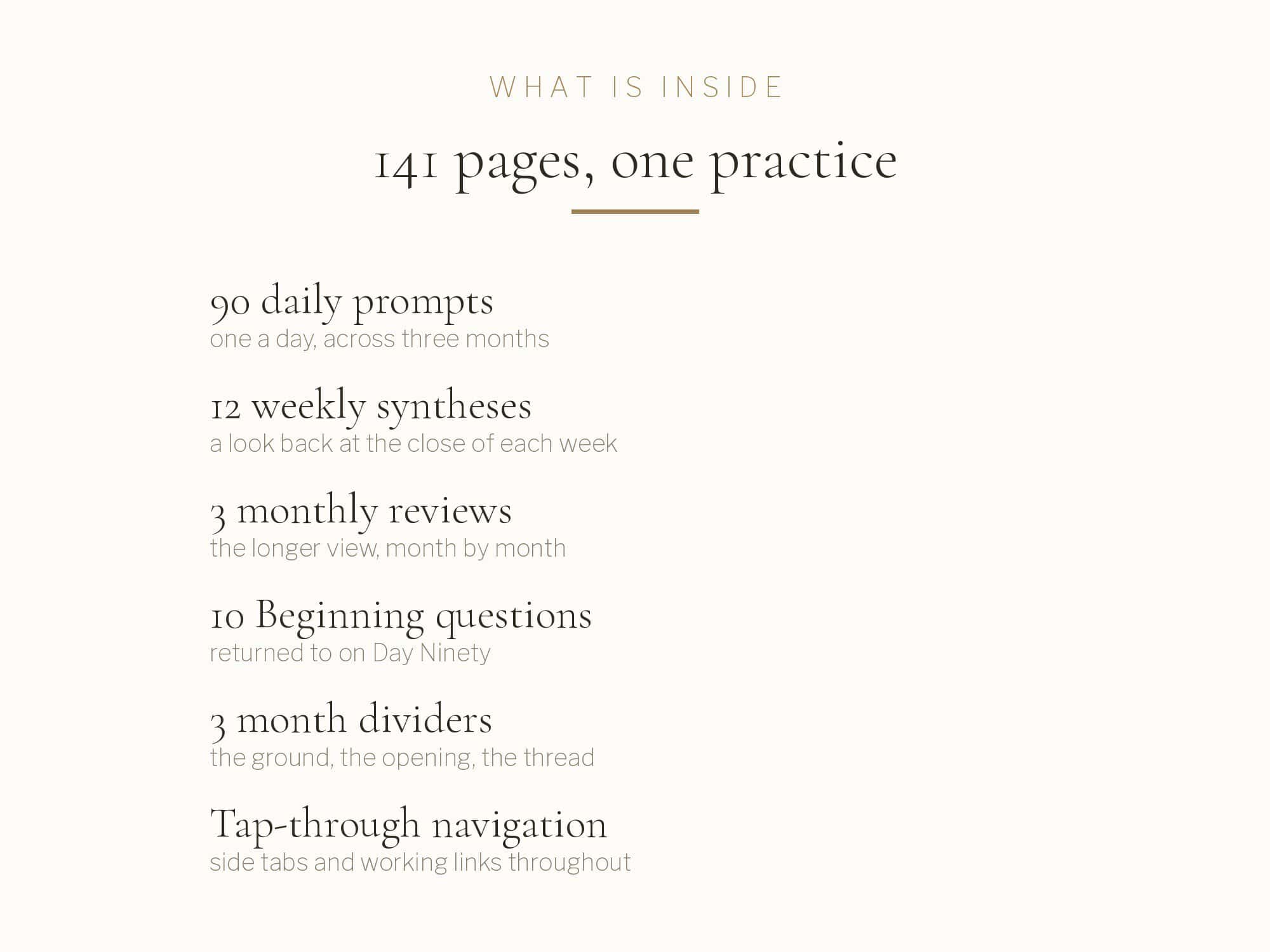
- Ninety daily prompts — one a day, across three months: the Ground, the Opening, the Thread
- Twelve weekly syntheses — a look back across each week
- Three monthly reviews — the longer view across each month
- A ten-question Day One assessment — answered again on Day Ninety, side by side
- Tap-through navigation — side tabs and day links throughout
- Research foundations — the published psychology, cited, with its caveats stated honestly
Begin the practice
One journal, one deliberate season. The digital edition is yours the moment you order, ready for tonight’s first page.
A write-on PDF for iPad and tablet, with tap-through side tabs and links to any day. Yours the moment you order.
Begin the Practice — DigitalInstant download · GoodNotes, Notability & every major tablet app
Digital checkout is handled by Payhip, and accepts the cards and wallets you already use.
Look inside
Because the pages sell the practice better than any summary, here are three looks inside, shown full size — the ten-question Day One assessment you return to on Day Ninety, a daily prompt with its Japanese term, and everything the 141 pages hold.
How it works
What ninety days does
On its own, a single prompt rarely changes much. Ninety of them, in sequence, do something a list never could. The first month stays entirely with you. The second opens — space, attention, the defenses that no longer serve. The third turns toward connection itself: standards, discernment, recognition.
On Day Ninety you answer the same ten questions you answered on Day One, and read the two pages side by side. The distance between them is the most honest record of what a season of inner work before dating actually did.
Try seven days first
The seven-day sampler is the real first week of the practice, as a write-on PDF for your tablet. Leave your email and it arrives in minutes.
One email a fortnight. Unsubscribe any time.Where the practice comes from
Meanwhile, the concept is Japanese; the evidence is published psychology. Self-concept clarity — knowing who you are, stably and confidently — tracks with relationship satisfaction and commitment in peer-reviewed research. The journal cites its sources in the back matter and states their limits plainly.
Naturally, the practice works wherever you sit with it. Yet once it settles, some readers want to stand inside the unhurried Japan that shaped these ideas.
Slow mornings, a still tea room, a ryokan where the day softens. When you would like to step into the Japan the practice comes from, we design that journey privately.
Begin a Custom ItineraryHow do you know when you are ready?
There is no single sign you are ready for a relationship, but the research points somewhere specific. People who know their own patterns, hold their worth without an audience, and can name what they require tend to build better partnerships than people who simply wait longer. Notably, studies of rebound relationships found that time alone does not do the work — clarity does, on whatever timeline is yours.
That is the honest case for a structured season. Ninety days of guided inner work will not deliver a person, and this journal never claims to. What it builds is the readiness the research does connect to better outcomes: patterns named, standards written, and a self you can describe clearly to someone worth describing it to.
Questions Worth Asking
Is this a digital journal or a paper book?
The En Journal is a write-on digital PDF for tablet annotation apps. A paperback edition is planned; the email list below hears first.
Which apps does the digital edition work in?
GoodNotes, Notability, Noteshelf, Penly, Xodo, and Samsung Notes. The side tabs and links work in any app that supports PDF hyperlinks.
Do I have to journal every day?
No. The practice is built around returning to the page, not around a perfect streak. A paused day costs nothing; the season resumes where you left it.
Can I use it while dating someone?
It asks you not to. The practice assumes a deliberate season away from dating, so the work has room. If you are seeing someone casually, the prompts simply keep the attention on you.
How do I get the most from the digital edition?
Write with a stylus in an annotation app for the full experience — the tap-through tabs and day links live there. You can also print any page at full size on US Letter.
Is this part of a series?
Yes. En is Book One of a pair. Its companion, Musubi, is the active season that follows — releasing the past, planning deliberately, and going into the field. En prepares; Musubi acts.

Part of a longer practice
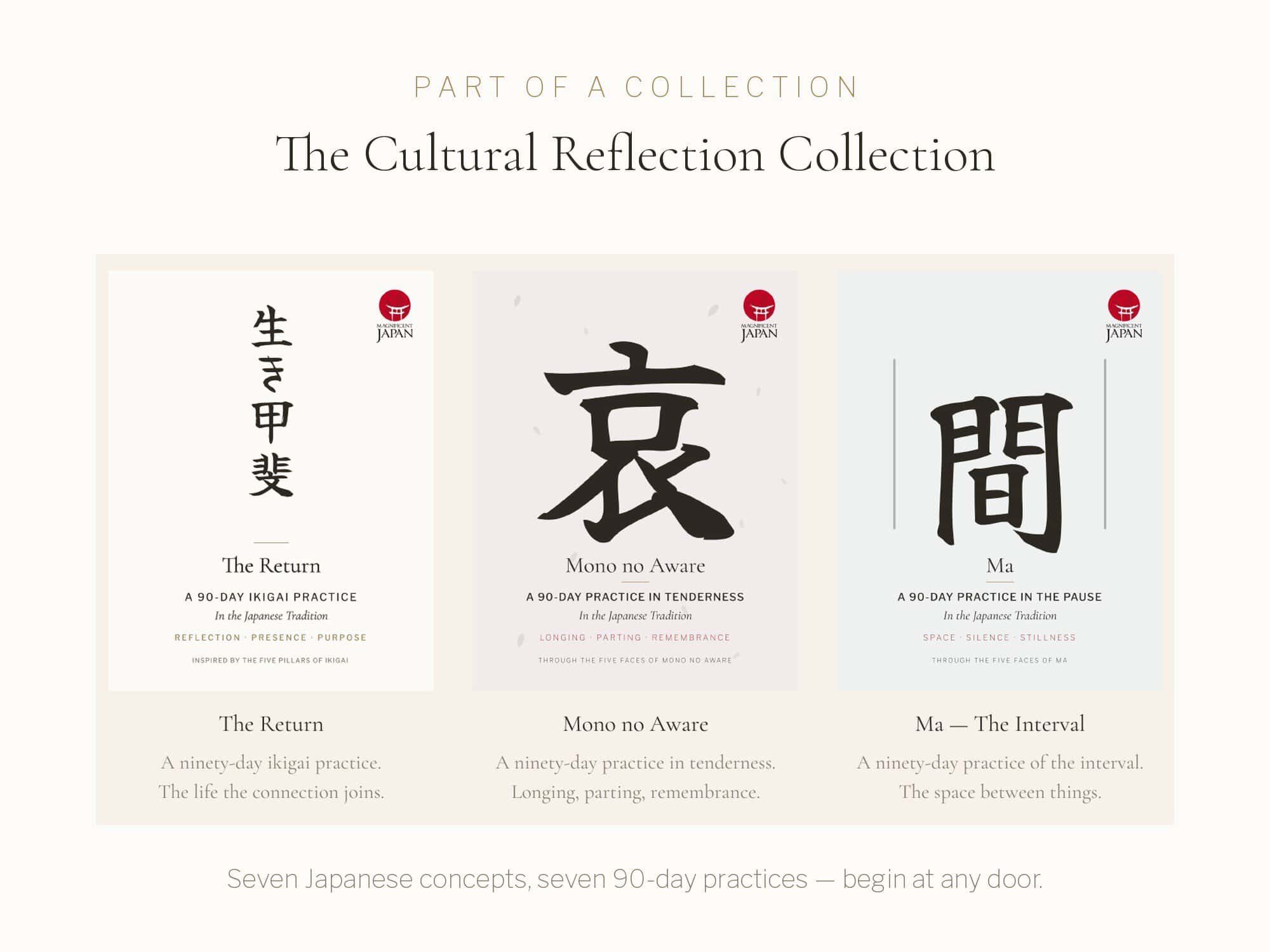
The Cultural Reflection Collection holds guided practices rooted in single Japanese concepts — ikigai, nagomi, wabi-sabi, kintsugi, and now en and musubi. Each is a structured season, built the same way, sold the same way.