
Learning how to break relationship patterns usually starts with a moment of recognition. A new relationship begins, and around the third month it starts to feel familiar. The same argument returns. The same distance opens up, or the same worry keeps you awake at night. It is a different person, yet the story is the same.
That repetition is not a flaw in your character. It is a learned pattern, and learned patterns can change. Research on attachment and on if-then planning points to a calm, practical method.
Below, you will find why patterns repeat, a way to spot your own, and five steps to change it. It is the same ground covered by a 90-day practice in connection, our guided journal of relationship readiness. The best time to begin is now, while you are single.
How to Break Relationship Patterns: The Short Answer
Look back at two or three past relationships on a single page and name the moment that keeps repeating. Next, find what triggers it. Then write one if-then plan: “If this happens, then I will do that instead.” Practice the new response in small, safe situations, and note your progress weekly. For deeper patterns, a qualified therapist can help.
Why Relationship Patterns Repeat
A relationship pattern is a loop. Something happens, a feeling rises, and you respond the way you always have. Then the other person responds to you, and the loop closes.
Repeating relationship patterns tend to have two roots: how you learned to seek closeness early in life, and the beliefs you formed about yourself and others. Both run fast. As a result, they shape choices before you have time to think.
Attachment: the first template
In 1987, psychologists Cindy Hazan and Phillip Shaver applied attachment theory, first developed for infants and caregivers, to romantic love. They also built a short self-report measure of attachment style (Shaver, UC Davis Adult Attachment Lab). Researchers now describe two tendencies. Anxious attachment brings a strong wish for closeness and worry about a partner’s availability. Avoidant attachment brings discomfort with closeness. Security sits where both are low.
Here is the hopeful part. Attachment styles first take shape with early caregivers. Yet the same summary notes that important relationships throughout life keep updating them. In other words, your template is a draft, not a verdict.

Early schemas: the beliefs underneath
Schema therapy, set out by Jeffrey Young and colleagues in 2003, adds a second layer. It describes early maladaptive schemas: deep beliefs that form when core childhood needs go unmet, such as the need for secure connection. A schema might sound like “people leave” or “my needs are too much.” Later on, it shapes how you read a partner’s behavior.
A 2024 study of 47 couples in Hungary tested this idea (Kover and colleagues, Frontiers in Psychology). The emotional deprivation schema, a sense that your emotional needs go unmet, went with lower relationship satisfaction for both partners. In other words, a private belief shaped the space between two people.


Why do I keep dating the same type?
Many people ask why they keep dating the same type, and research suggests the feeling is real. In 2019, Yoobin Park and Geoff MacDonald at the University of Toronto analyzed 332 people from a nine-year German study. Their partners’ personalities showed clear consistency from one relationship to the next (University of Toronto).
Park’s advice was practical: if the same issues keep returning, consider how a pull toward the same traits feeds them. Park also noted that skills learned in one relationship can carry into the next. That is the opening this article builds on.
How to Spot Your Own Relationship Pattern
To change a loop, you first need to see it. However, looking back can slide into replaying. So the method has a firm edge: one page, then stop.
A single-page method
Take a single sheet and draw three columns. Label them Moment, Feeling and Response. Next, recall two or three past relationships, or close friendships, and write one familiar moment from each. Perhaps a partner went silent and you chased them. Or perhaps someone got close and you found reasons to leave.
Then add what you felt and what you did next, a line for each. Finally, read the page once and circle the response that shows up more than once. That circled line is your pattern, at least for now. Then close the notebook. The goal is a clear view, not a full account.

Step back, then stop
One technique makes the page easier to write. Psychologist Ethan Kross at the University of Michigan studies self-distancing. It means looking back on a hard moment as a fly-on-the-wall observer, rather than reliving it from the inside (University of Michigan Depression Center). His work links this outside view to insight and closure, while rumination keeps negative emotions alive.
In practice, write the Moment column as if watching a film of it. If old feelings rise and stay, take a walk or call a friend. A pattern page should leave you clearer, not heavier. For more structure, our relationship readiness journal prompts offer gentle questions to start with.
The page itself deserves a proper home. Choose paper that takes ink cleanly and a size that fits in a bag. The three below are Japanese notebooks well suited to the task, so choose whichever feels good to open.
A page that travels
Patterns often show up most clearly away from home. On a trip, routines fall away, and you notice how you respond to new people and small surprises. That is why some travelers keep a blank notebook for the evenings, noting one moment each night and reading it back the next day.
The Japanese proverb nana korobi ya oki means “fall down seven times, get up eight.” It suits this work well. You will slip back into old responses, and that is normal. What counts is getting up once more than you fall. A blank travel journal with that proverb on its cover keeps the idea close.
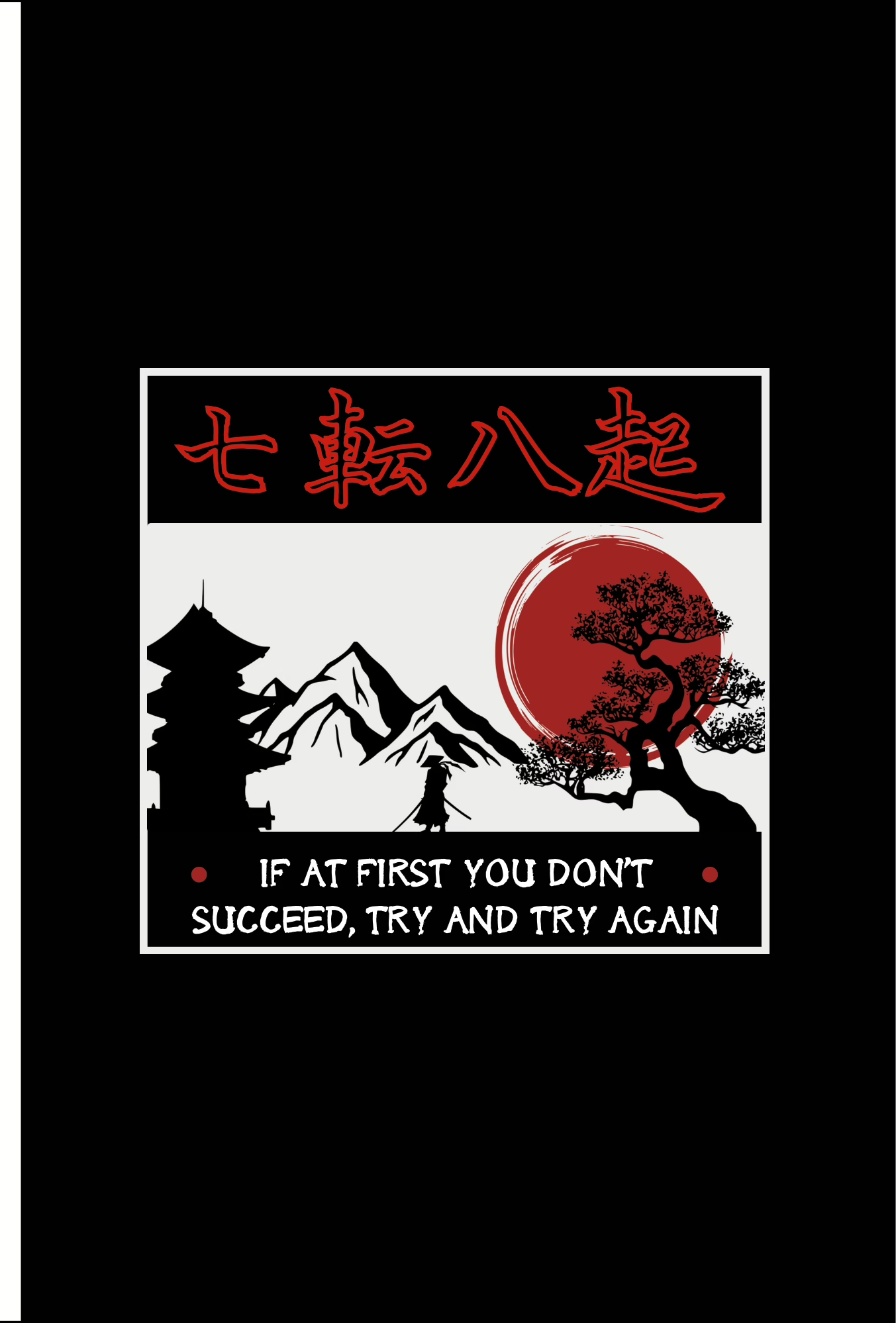
Fall seven times, rise eight: open pages for practice by hand.
Unlined · 120 pages · Original cover art
Shop This Journal →Unlined pages help here. They leave room for a quick sketch of a place, a single word, or a full paragraph on a slow evening. Moreover, a journal you carry becomes a record of growth, not just of places. Read it a month later and you may notice something new. The moments that once felt automatic start to look like choices. That shift, from automatic to chosen, is where change begins. It also sets up the five steps that follow. Each one turns a noticed moment into a new response, and together they show how to break relationship patterns without forcing anything.
How to Break Relationship Patterns in Five Steps
With your page in hand, here is how to break relationship patterns in daily life. The five steps build on one another. Give each one about a week.
Step 1: Name the pattern
Give your circled line a short, neutral name. For example, “the chase,” “the early exit” or “yes to keep the peace.” A name turns a vague feeling into something you can spot. It also adds a little distance, because you are now describing a habit, not judging yourself.
Keep the name kind. Harsh labels such as “I ruin everything” tend to stir up the very feelings that drive the loop. A neutral name, in contrast, invites curiosity.
Step 2: Find the trigger
Every pattern starts somewhere. Look at the Moment column again and ask what came just before your response. Was it a slow reply? A plan that changed at the last minute? Write down the two or three triggers that appear most often.
Triggers are useful because they are specific. You cannot plan for “relationships,” but you can plan for “a message left unanswered for a day.” Also note the first sign in your body, such as a tight chest or a rush of heat. That signal is your early warning.

Think of each trigger as a fork in the trail. On autopilot, you take the same turn every time, without noticing there was a choice. Once you can see the fork, though, you can slow down as you approach it. That is the whole purpose of the trigger list. It moves the decision point earlier, to a moment when you still have room to choose. Keep the list short, too. Two clear triggers are more useful than ten vague ones. The next step gives you a plan for that moment, written in advance, so you are not searching for words under pressure.
Each step makes the old response a little slower and the new one a little easier.
| Step | What you do | Example | What it gives you |
|---|---|---|---|
| 1. Name it | Give the pattern a short, neutral label | "The early exit" | Something you can spot |
| 2. Find the trigger | List what comes just before the response | A message left unanswered for a day | An early warning |
| 3. Plan it | Write one if-then sentence | If I want to leave, then I wait one day | A response ready in advance |
| 4. Practice it | Try the new response in low-stakes moments | Naming a small need to a friend | Confidence through repetition |
| 5. Notice it | Record small wins each week | "Paused instead of chasing" | Proof that change is under way |
Step 3: Write an if-then plan
This step has the strongest research behind it. Psychologists call it an implementation intention: “If situation X arises, then I will do Y.” Peter Gollwitzer and Paschal Sheeran pooled 94 independent tests of these plans. They found a medium-to-large effect on reaching goals (Gollwitzer and Sheeran, 2006). The plans helped people start, stay on track and drop strategies that were not working.
Write one plan for each trigger. For example: “If a reply is slow, then I will wait until evening before writing again.” Keep each plan short enough to remember. Then the response is ready before the moment arrives.
Writing the plan down daily keeps it close. The short film below shows a hand writing a morning prompt in The Return, the first journal in our Cultural Reflection Collection, on a tablet. Likewise, the En Journal uses the same format: one prompt a day and a few honest lines.
Twenty seconds inside the journal
The digital edition in use — a morning prompt, answered by hand while the coffee is still warm. Tap to play, with sound.
One page, one intention, one single quiet moment.
Step 4: Practice the new response
A plan becomes a habit through repetition. Yet you do not need a relationship to practice. Most patterns also appear with friends, family and colleagues, in smaller forms. If your pattern is going silent when hurt, try naming one small hurt to a trusted friend. If it is saying yes to everything, try one gentle no this week.
Start small on purpose. Low-stakes moments let you build confidence before the stakes rise. Then, gradually, you can try the new response in moments that matter more. Expect it to feel awkward at first, since most new habits do. Awkward is a good sign here. It means you are doing something different.

Reshaping a habit is a little like working clay on a wheel. The material remembers its old form, so steady, repeated pressure matters more than force. Some days the shape slips back. That is not failure, only part of the process. Each attempt still leaves a trace, and the new form grows firmer with each turn. Practice can happen anywhere, including far from home. On a trip, familiar cues fall away, and a new response can feel easier to try. A slower week of travel also gives you evenings to write.
If a change of scene appeals, we can plan a custom Japan trip around slow mornings and long walks, with room to write each evening.
Occasional letters on relationship readiness, inner work before dating and the Japanese words for connection, with news of the Cultural Reflection Collection.
Occasional letters. Unsubscribe anytime.
Step 5: Notice your progress
Change rarely announces itself. Instead, it shows up as small differences: a pause where there used to be a reaction, or one calm message where there used to be three anxious ones. So once a week, return to your notebook and write down one moment when you responded differently. Even a partial success counts.
This record matters for two reasons. First, it shows that the pattern is moving, which keeps you going. Second, it gives you evidence against the old belief underneath. “People leave” is harder to hold beside a page of moments when you stayed steady and nothing fell apart.

Think of it like a morning run. The first week is hard, and the improvement is invisible. Then, one day, the same route feels lighter. Nothing dramatic happened. You simply showed up often enough for the change to add up. Weekly notes capture those small gains before you forget them. Over a season, they form a clear picture of who you are becoming. They also offer an honest answer to a question many people ask before dating again. Am I actually different now, or does it only feel that way? Your notebook will know. In the end, that record is the clearest lesson in how to break relationship patterns: small, repeated proof.
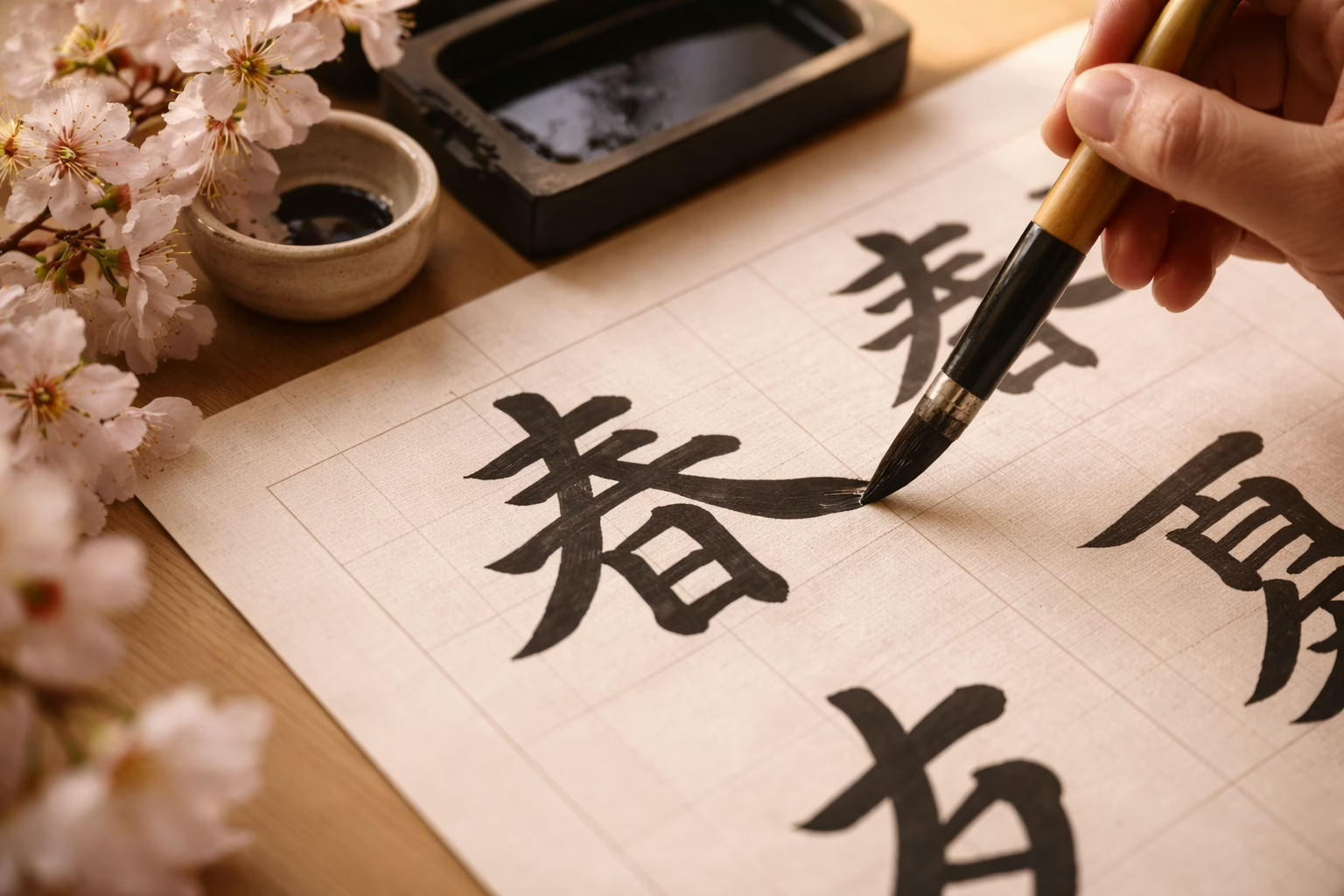
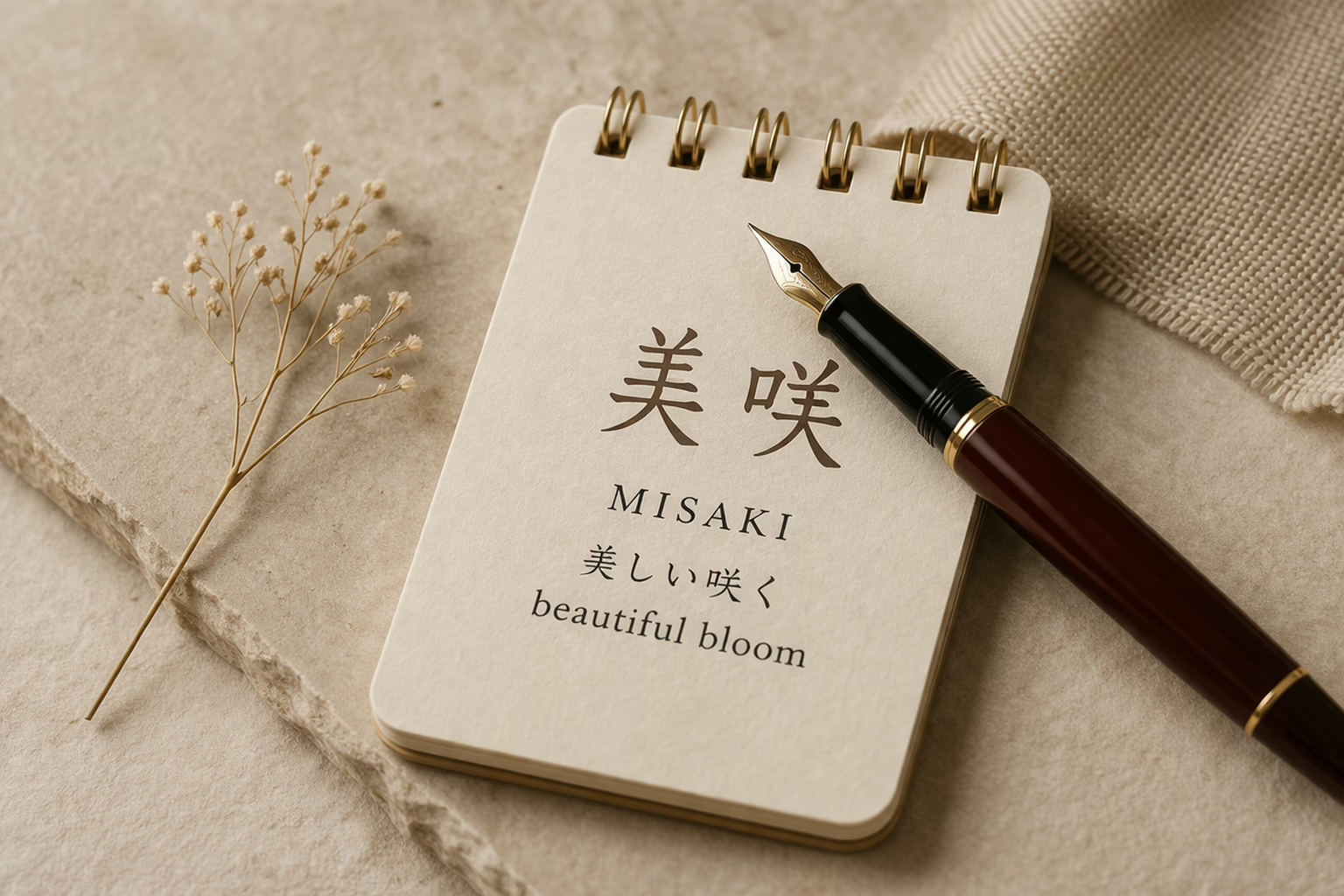
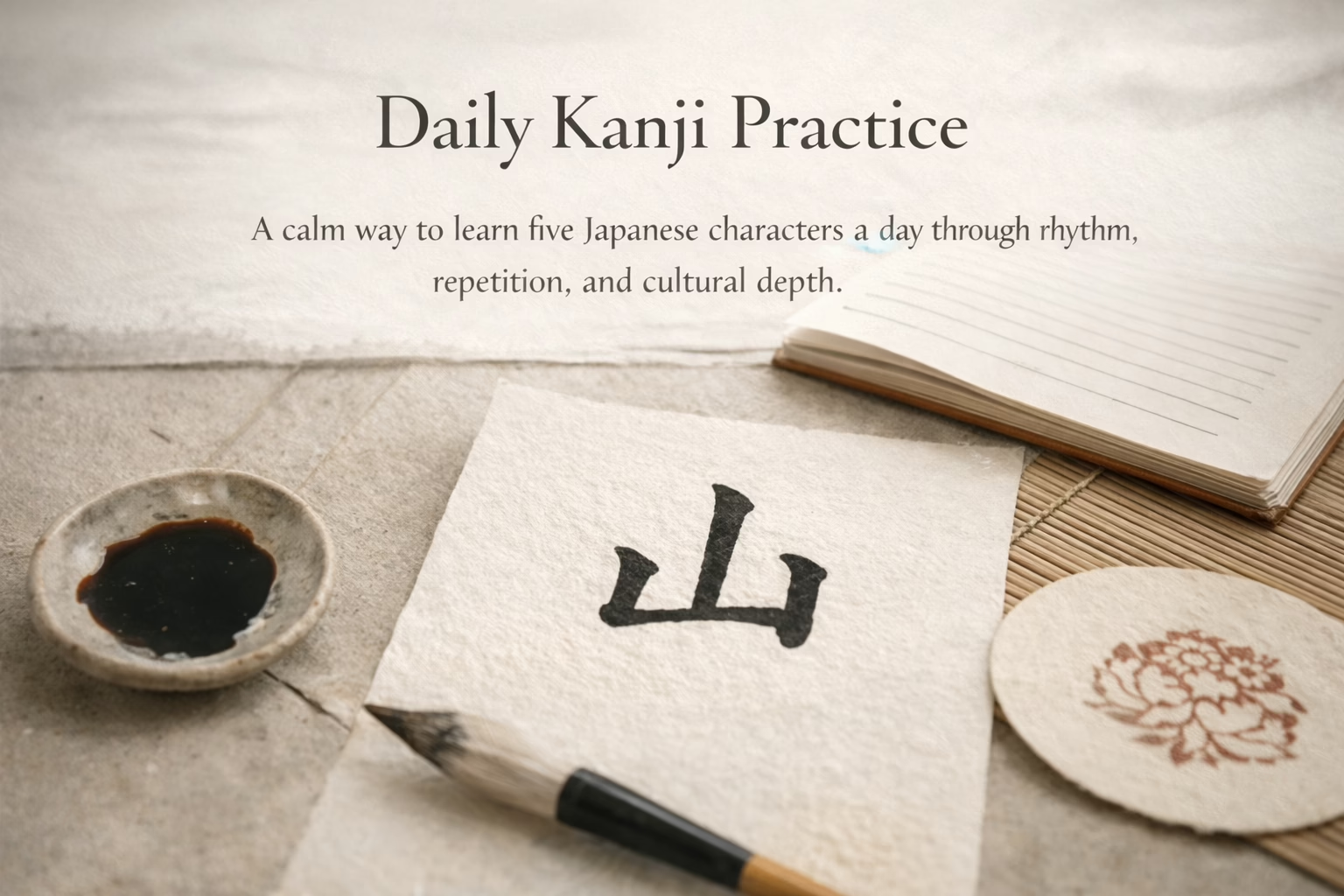
The Pause That Breaks a Pattern: 心 and 間
Japanese offers two words that fit this work closely. The first is 心, kokoro, a word for both heart and mind. The second is 間, ma, the interval or space between things. In conversation, ma is the pause before a reply. In a pattern, it is the gap between trigger and response.
Kokoro: the known heart
Breaking a pattern starts with knowing your own kokoro. That means noticing what you feel, and also what you tend to believe about closeness. Together, they turn a blur of reactions into a heart you know well. In The En Journal, this thread is called The Known Heart, and it returns in rotation across all ninety days.
Recommended
Ma: the pause that changes the ending
Ma is where the change actually happens. Between a trigger and your usual response, there is a small gap. At first it may last less than a second. With practice, though, it widens. In that space, you can recall your if-then plan and choose it. Our guide to the Japanese idea of ma explores the word in more depth.
You can train the pause directly. When you feel the early warning in your body, take three slow breaths before you speak or type. Or set a rule that any message written in a strong feeling waits ten minutes before sending. These are small intervals. Yet each one gives kokoro time to catch up with the moment, so the old ending no longer writes itself.
When to See a Qualified Therapist
Self-reflection can take you a long way, but it has limits. Some patterns sit on painful experiences that deserve skilled support. A qualified therapist is the right person if looking back brings up distress that lingers for days. The same applies if a pattern involves feeling unsafe, or if low mood or anxiety affects your sleep, work or daily life.
Therapy is not a last resort. Many people use it simply to understand themselves before a new relationship. A good therapist can also help you pace the work, so insight arrives without overwhelm.
Kindness on the slower evenings
Inner work also needs ordinary care. On heavier evenings, cook a simple meal for yourself. Oyakodon is a fitting choice. Its name means “parent and child,” a nod to the chicken and egg in the bowl. It is also a light reminder that early patterns often begin around a family table. This time, you cook, and the bowl is for you.

Oyako means parent and child, for the chicken and egg cooked together in one pan. Rice bowls with a topping spread from eateries in the late Edo period, and oyakodon remains an everyday favorite across Japan.
- 10 oz (280 g) boneless, skinless chicken thighs, cut into bite-size pieces
- 1/2 onion, thinly sliced
- 4 large eggs
- 1/2 cup dashi
- 2 tbsp soy sauce
- 2 tbsp mirin
- 1 tbsp sake
- 2 tsp sugar
- 2 bowls steamed Japanese short-grain rice
- A few sprigs of mitsuba or sliced green onion, to garnish
- Stir the dashi, soy sauce, mirin, sake and sugar together. Lightly beat the eggs, leaving some streaks of white.
- Add the onion and the seasoning to a small skillet and bring to a simmer over medium heat.
- Add the chicken in a single layer and simmer for about 5 minutes, until it is cooked through and the onion is soft.
- Pour about two thirds of the egg in a slow circle over the chicken. Cook until it is nearly set.
- Add the rest of the egg and the mitsuba, cover for 30 seconds, then take the pan off the heat while the top is still soft.
- Spoon the rice into bowls and slide the chicken and egg over it, with the broth.
The dish rewards patience in a familiar way. You pour the egg in two stages and let the first set slightly before adding the rest. Rushing gives you a scramble, while waiting gives you soft, silky layers. That small pause is ma at the stove. Eat slowly, at a table rather than a screen.
Afterward, a warm cup makes a natural close to the day. It is a small routine that signals the work is done. Hojicha, a Japanese green tea roasted until its leaves turn brown, suits evenings well, with a warm and toasty aroma. A small teapot and a cup that fits your hands make the moment feel deliberate, rather than another task to get through. Each piece below suits that slower hour.
Why Inner Work Before Dating Is the Right Moment
There is a good reason to do this work now, while you are single. In a new relationship, patterns fire fast. It is hard to observe a loop while you are inside it. Between relationships, in contrast, you can look at the whole picture calmly and practice new responses at your own pace.
Inner work before dating is not about fixing yourself or becoming someone else. It is about knowing your kokoro, widening your ma, and arriving at a first date with a plan instead of a reflex. That is what relationship readiness means here. It promises no outcome. Instead, it gives you more choice in how you show up.

Relationship readiness, measured gently
How do you know when you are ready? A few signs help. You can name your pattern without shame. There is an if-then plan for your main trigger. You have tried a new response a few times. And you feel curious about meeting someone, rather than urgent. None of these signs needs to be perfect. They point to a direction rather than a finish line, and most people notice them arriving gradually, one ordinary week at a time, as the new response starts to feel more familiar than the old one. Our companion piece on how to tell if you are ready for a relationship walks through these signs in more detail.


Readiness is also a moving target, and that is fine. You may feel ready one month and less sure the next. Treat those shifts as information. Return to your page, check which trigger is active, and update your plan. Meanwhile, keep living fully: see friends, travel, and learn something new. A full life is good for its own sake, and it lets you meet people from a place of choice rather than need. The Japanese word for connection, 縁, en, is written with the thread radical 糸, and our piece on en, the Japanese word for connection shows how people use it every day.
Questions Worth Asking
Why do I keep attracting the same type of partner?
Often it is less about attraction and more about what feels familiar. Familiar traits can feel comfortable, even when they lead to the same problems. A University of Toronto study found real consistency in the personalities of people's partners over time. Noticing which traits draw you in is the first step toward choosing differently.
Can your attachment style change?
Yes. Attachment styles begin in early relationships, but researchers describe them as working models that keep updating through life. Steady, responsive relationships of many kinds, friendships included, can shift them over time. Therapy can help as well. Change tends to be gradual rather than sudden, so patience with yourself matters.
How long does it take to break a relationship pattern?
There is no fixed timeline. Expect small shifts first, such as a slightly longer pause before reacting, and deeper change later. How long it takes depends on how old and how strong the pattern is. Brief weekly notes help you see progress that would otherwise slip past unnoticed.
Should I stop dating to work on myself?
A dating break is not required, but it can help. Without a new relationship under way, you can observe your habits calmly and try new responses in low-stakes settings. Choose a period that feels right, such as a few months, and treat it as preparation rather than a waiting room.
Is journaling good for relationship patterns?
Journaling helps when it stays focused. A short entry about one moment, followed by closing the notebook, supports reflection. Rewriting the same painful memory night after night can tip into rumination. Keep entries brief, describe moments from an observer's point of view, and pair each one with a concrete plan.
What is the difference between reflection and rumination?
Reflection looks at a moment to learn from it, then moves on. Rumination replays the same moment again and again, usually with growing distress. A useful test is how you feel afterward. Reflection tends to leave you clearer, while rumination leaves you heavier. If it is mostly the second, pause and seek support.
A New Pattern, One Page at a Time
Learning how to break relationship patterns is less about one breakthrough than about many small, deliberate moments. You name the loop, find its trigger, plan a new response and practice it. Then you notice, week by week, that the old ending no longer arrives on schedule.
If you would like a structure for that work, The En Journal, a relationship readiness journal for inner work before dating, offers 90 daily prompts across five threads, including 心 The Known Heart and 間 The Interval. It opens with a 10-question readiness self-assessment on Day 1 and asks the same questions again on Day 90. In between, it is a 90-day practice in connection, one prompt a day, with weekly synthesis pages.
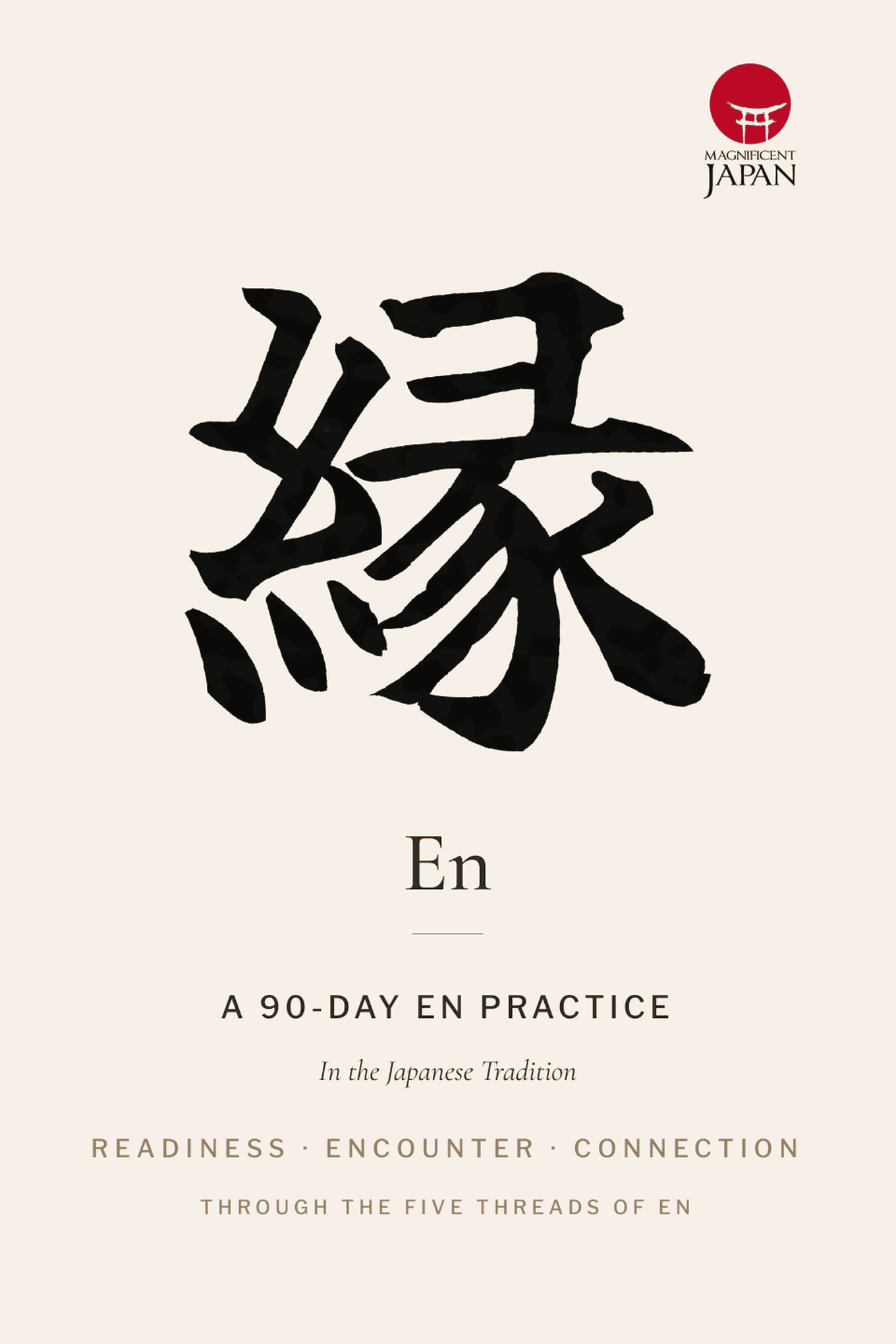
A guided journal for relationship readiness: ninety days of inner work before dating, shaped by the Japanese word for connection.
View the Journal →Begin with one page tonight: three columns, two or three moments, and one circled line. Then close the notebook and make yourself something warm. The new pattern starts there, with one honest page and a little patience, repeated over the weeks ahead.
The Editors, Magnificent Japan
We design trips that break the usual pattern: a mountain trail in Nagano, a pottery morning in Mino, a sunrise walk along the Kamo River before the city wakes.
Plan Your Custom Japan Itinerary