English has one word for love and asks it to do everything. The Japanese words for love divide the work. One names longing, another names devotion, and a third is what you say about ramen. Several more never mention love at all, yet describe it better than the word itself.
Below are twelve of them, each with its kanji, its reading and its plain meaning. You will also see how each word is really used today, and what it suggests about being ready for a relationship. That last angle sits at the center of our relationship readiness journal, which takes its name from 縁, one of the words ahead.
You do not need to speak Japanese to use any of this. Each word works as a small lens on your own habits.
What Are the Japanese Words for Love?
The two core words are 恋 koi, romantic longing, and 愛 ai, deep and lasting love. In daily speech, most people say 好き suki, to like or love, or 大好き daisuki. Around them sit words for care and connection: 思いやり omoiyari, 気遣い kizukai, 甘え amae, 絆 kizuna and 縁 en.
Koi and Ai: Why Japanese Has More Than One Word for Love
Start with the pair that every list opens with, because their difference explains the rest. Both kanji contain 心, the character for heart. However, koi leans toward wanting, while ai leans toward giving.
恋 koi: love as longing
恋 is read koi, and it means romantic love, especially the early, pulling kind. It appears in words such as 恋人 koibito, a sweetheart or partner, and 初恋 hatsukoi, a first love. You hear it in songs and conversations about crushes. Yet you rarely hear it addressed to a person.
That tells you something. Koi is a state you are in, rather than a gift you hand over. It is about your own feelings, the racing pulse and the checking of your phone. So koi is honest, but it is also partial. It describes what happens inside one person.
For anyone doing inner work before dating, koi is worth noticing in yourself. When you feel that pull, ask what it is pulling toward. Is it this person, or the relief of no longer being single? Naming it separates attraction from need, and that can change what you choose next.
愛 ai: love as care that lasts
愛 is read ai, and it covers deep, steady love. It reaches well beyond romance, to family, friends, country and even a craft. The verb form 愛してる aishiteru means “I love you” in its most serious sense. In fact, many Japanese speakers save it for rare moments, because it carries real weight.
Where koi wants, ai tends. It describes attention that keeps going after the first excitement fades. So think of the people you already love in the ai sense, such as an old friend or a sibling. How do you show it? The answer reveals the kind of partner you are already practicing to be. In other words, readiness rarely starts from zero.

How to Say Love in Japanese: Suki and Daisuki
Of all the Japanese words for love, the word people say most is neither koi nor ai. Instead, it is a modest word that also means “like.” That surprises many learners, yet it reflects a real preference for understatement.
好き suki: the everyday confession
好き is read suki, and it means to like or to love, depending on context. You can say it about tea, a song or a person. When it is said to a person, with some care, it becomes the classic confession of feeling. The phrase 好きです suki desu, “I like you,” is how many relationships in Japan begin.
Notice what the word does. It lets someone speak plainly without overclaiming. Suki does not promise forever. It simply says that you enjoy this person’s company. As a result, it leaves room for the other person to answer at their own pace.
There is a lesson in that restraint. A first statement of interest does not need to be large to be sincere. If you tend to rush toward intensity, suki offers a calmer model.
大好き daisuki: love, said warmly
大好き adds 大, “big,” to suki. The result means “really like” or “love,” and speakers use it generously, in the warmest sense. You will hear it about a favorite dish, a grandparent, a pet or a partner. Because it covers so much, daisuki sounds affectionate rather than heavy.
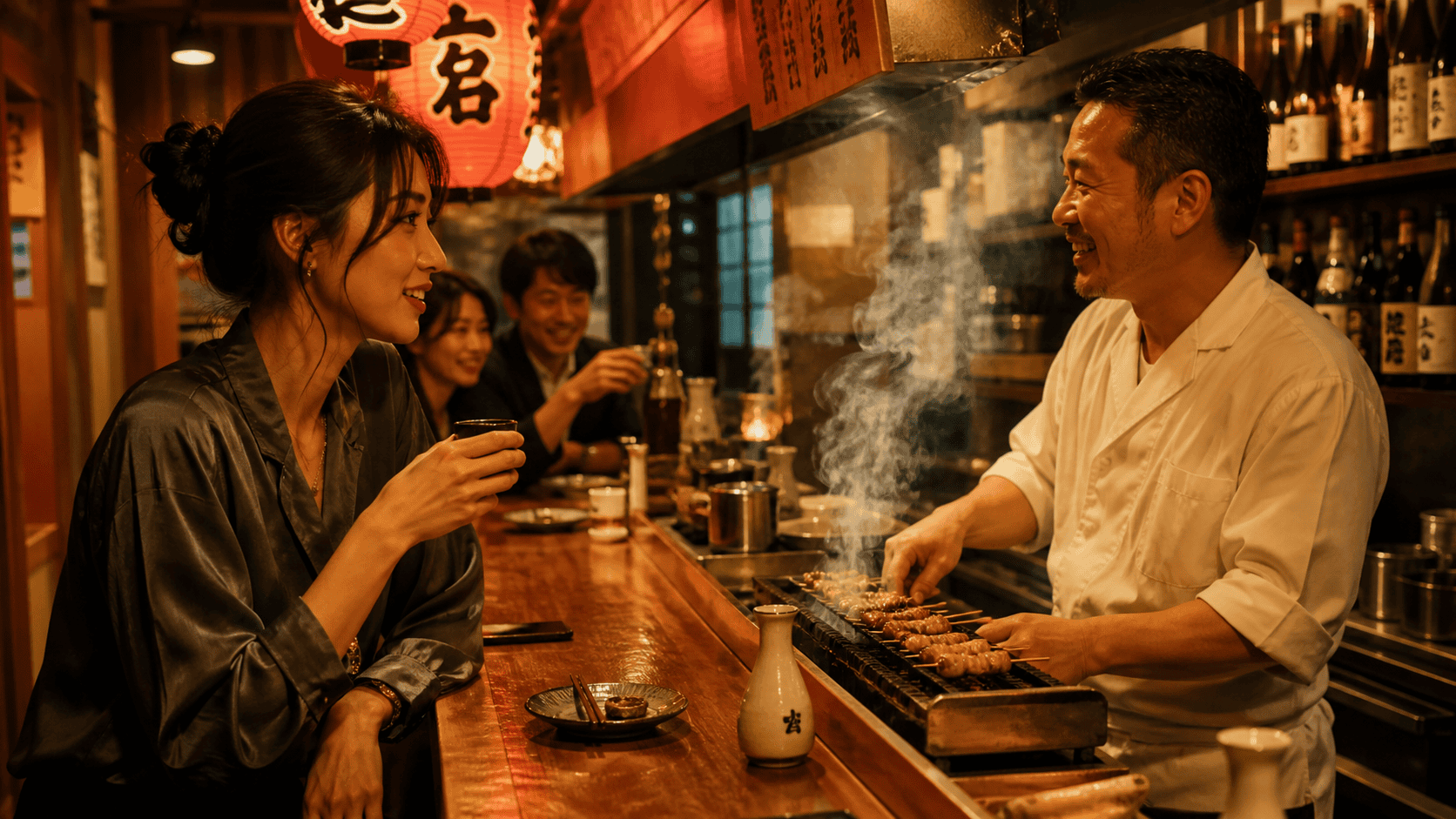
Daisuki also shows that love in Japanese often lives near food and company. A bar counter, a home kitchen or a table set for two is where it gets said. Choosing two matching cups is a small act of daisuki in itself. It tells someone, without a speech, that they are expected and welcome. Japanese ceramics make this easy, because many makers sell pieces in pairs, each glazed a little differently.
Japanese Words for Falling in Love: Hitomebore and Koi no Yokan
Two more expressions describe the very start of attraction. They often appear together in English lists, yet they point in opposite directions. One is fast, and the other is slow.
一目惚れ hitomebore: love at first sight
一目惚れ is read hitomebore. The dictionary Digital Daijisen defines it as becoming fond of someone after seeing them only once. The parts are vivid. 一目 means one look, and 惚れ means to fall for someone. The word is common and a little playful, much like “love at first sight” in English.
Hitomebore is a real experience, so there is no need to distrust it. Still, it runs on appearance and imagination. One glance supplies a face, and the mind supplies the rest. For that reason, it says more about your hopes than about the other person. When you travel, try noting first impressions of places as well as people. Then reread the page a week later, and see which impressions held. A blank, unlined journal suits this kind of note.
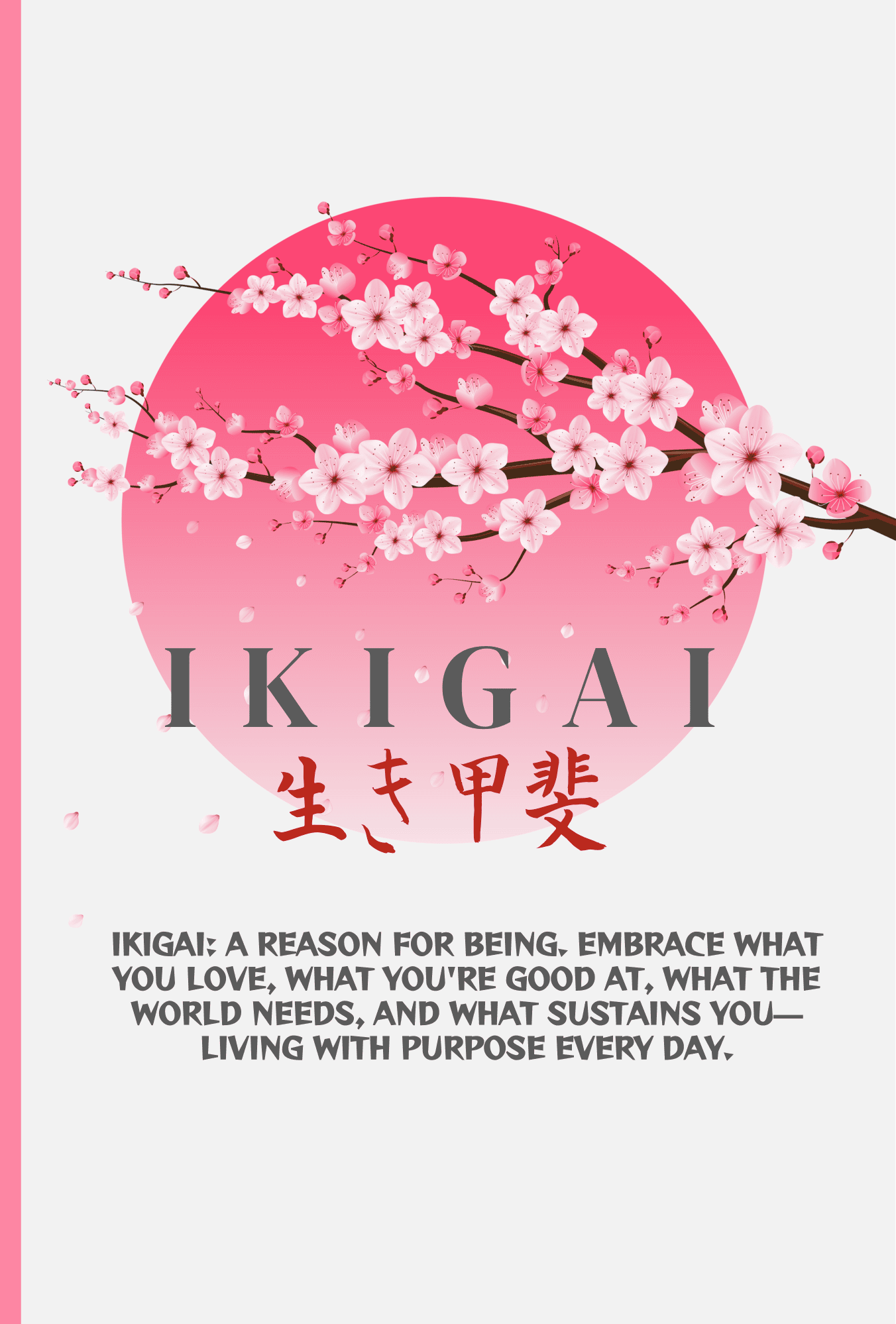
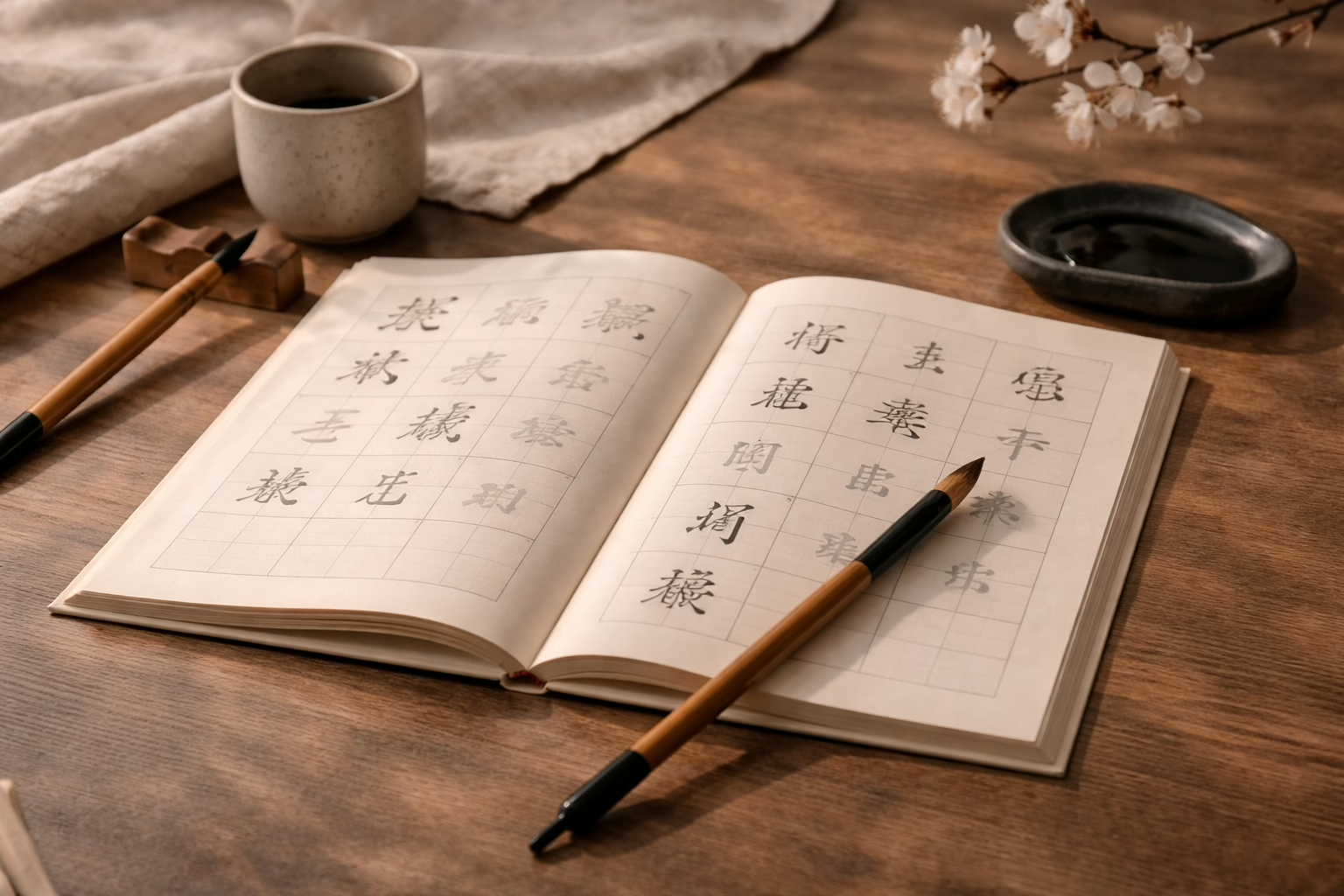
The same open pages, in a softer cover made for gifting.
Unlined · 120 pages · Original cover art
Shop This Journal →恋の予感 koi no yokan: the sense that love may come
恋の予感 is read koi no yokan. It is a phrase rather than a single word, built from koi and 予感 yokan, a premonition or hunch. In English writing it is often described as the feeling, on meeting someone, that you will come to love them. The Duolingo linguist Ben Kramer described it to Axios in 2026 as the premonition of love, and he noted that it is not the same as love at first sight. Japanese has hitomebore for that.
The difference is useful. Hitomebore is a conclusion reached in a second. Koi no yokan, by contrast, is an open question. It admits interest while leaving the outcome undecided. That is a healthy posture for anyone single and curious. You can feel drawn to someone and still wait to learn who they are.
Taken together, these words show a pattern. Japanese tends to separate feeling from statement and attraction from commitment. Koi is felt, while ai is given. Likewise, hitomebore is instant, while koi no yokan waits. Each pair puts a small pause between impulse and action, and good choices get made in that pause. If you would like to look harder at your own impulses, our guide to breaking old relationship patterns picks up exactly this thread.
Japanese Words for Love and Affection: Omoiyari and Kizukai
The next Japanese words for love never mention love directly. Instead, they concern care in action: noticing, anticipating and adjusting. In practice, that is how most affection shows up from day to day. Before going further, here is the full set of twelve on one page. Use it as a reference while you read, or save it for later study.
Some words name a feeling, and others name the care that keeps it going.
| Word | Kanji | Meaning | When to use it |
|---|---|---|---|
| Koi | 恋 | Romantic longing, early love | About a feeling or crush, rarely said to someone |
| Ai | 愛 | Deep, lasting love | Serious moments; aishiteru is saved for rare occasions |
| Suki | 好き | To like, to love | Everyday speech and first confessions |
| Daisuki | 大好き | To really like, to love | Warmly, about people, food and favorite things |
| Hitomebore | 一目惚れ | Love at first sight | Playfully, about an instant attraction |
| Koi no yokan | 恋の予感 | A sense that love may come | About an early hunch, not a certainty |
| Omoiyari | 思いやり | Thoughtful empathy | Praise for someone who considers others |
| Kizukai | 気遣い | Attentive care | Thanks for small, practical kindness |
| Amae | 甘え | Trusting reliance on another's goodwill | About closeness and leaning on someone |
| Kizuna | 絆 | An enduring bond | Family, friends and communities |
| En | 縁 | A connection or relationship | Chance meetings and lasting ties |
| Aiaigasa | 相合傘 | Two people sharing one umbrella | A playful image of a pair |
思いやり omoiyari: feeling for another person
思いやり is read omoiyari. It joins 思い, thought or feeling, with やり, from the verb “to send.” So it suggests sending your thoughts toward someone else. The communication scholar Kazuya Hara, writing in Intercultural Communication Studies in 2006, proposed “altruistic sensitivity” as its English translation. He also quoted a classic definition: the ability to feel what others feel and help them without being told.
“Without being told” is the important phrase. Omoiyari asks you to imagine a person’s situation before they explain it. That is a skill, and it improves with practice. It also starts at home, because noticing your own moods makes other people easier to read.
A daily habit helps here, and it can be very small. One question each morning, answered in a few lines, builds that noticing. The short film below shows the format: a hand writing a morning prompt in The Return, the first journal in our Cultural Reflection Collection.
Twenty seconds inside the journal
The digital edition in use — a morning prompt, answered by hand while the coffee is still warm. Tap to play, with sound.
One page, one intention, one single quiet moment.
気遣い kizukai: care you can see
The En Journal uses that same one-prompt-a-day format for ninety days of inner work before dating. That brings us to 気遣い, read kizukai. The Digital Daijisen defines it as being attentive about many small things. A common phrase uses it: お気遣いなく, “please don’t trouble yourself.” Where omoiyari is the feeling, kizukai is the visible act. Refilling a glass, remembering a preference and texting after a hard day all count.
Relationship research points the same way. The Gottman Institute describes a “bid” as any attempt to win a partner’s attention, affection or support. In its summary of a newlywed study, couples still married six years later had turned toward those bids 86 percent of the time. Couples who divorced had done so only 33 percent of the time.

In other words, small attentions add up. You can practice kizukai long before you meet anyone. Notice how you respond when a friend shares good news, or when a coworker seems tired. Do you turn toward them, or keep scrolling? That habit will travel with you into any relationship. Therefore, the best rehearsal for partnership is the care you give the people already around you. A wrapped lunch, a thank-you note or a well-timed call all count as practice.
If these words make you want to see the culture behind them, we can plan a custom Japan trip built around everyday hospitality, from neighborhood counters to family-run inns.
Occasional letters on relationship readiness, inner work before dating and the Japanese words for connection, with news of the Cultural Reflection Collection.
Occasional letters. Unsubscribe anytime.
Amae, Kizuna and En: The Japanese Word for Connection, Three Ways
The last group moves from feeling to relationship. These words describe what exists between people, rather than inside one of them. Each one adds something to the question of readiness.
甘え amae: trusting someone with your weight
甘え is read amae, from 甘い amai, sweet. In 1971 the psychiatrist Takeo Doi made it famous in his book 甘えの構造, translated into English in 1973 as The Anatomy of Dependence. A Japan Times review of the book summarizes amae as “the desire to be passively loved.” Doi used the idea to explain much of Japanese social behavior.
In daily life, the verb 甘える amaeru means to lean on someone, sometimes sweetly and sometimes too much. A child asking to be carried shows amae. So does a partner who asks for comfort after a long week.
Amae raises a useful question for anyone single. How comfortable are you with depending on another person? Some people lean too hard and lose themselves in a partner. Others never lean at all, and keep everyone at a distance. Healthy amae sits between them: you can ask for help without collapsing into it. If this question touches on deeper patterns, a qualified therapist is the right person to explore it with. A journal, meanwhile, is a good place to simply notice which way you tend to lean.
絆 kizuna: the bond that holds
絆 is read kizuna. The Digital Daijisen gives two senses. First, it is a connection between people that cannot be broken. Second, it is a rope used to tether animals such as horses. So the word joins warmth and strength in one image.

In 2011, after the earthquake and tsunami, Japan chose 絆 as its kanji of the year in a nationwide public poll. Japan Today reported that the choice reflected a year when strangers rushed to help one another. The word covers family, friendship and community as much as couples.
That breadth is the point for readiness. A strong bond with a partner rarely appears out of nowhere. It grows from the same skills that hold friendships and families together, such as showing up, keeping promises and staying through difficult seasons. So look at the kizuna you already have. Those ties are evidence of what you can build. They also keep any future relationship from carrying your whole social life.
Recommended
縁 en: the Japanese word for connection
縁 is read en, and dictionaries translate it as relationship, bond, link or connection. Its kanji carries the 糸 thread radical on the left, so the idea of a thread is built into the character. In daily speech, people use ご縁 goen to describe a meaningful connection. The same kanji, read fuchi, also means an edge or rim.
That second meaning is easy to overlook, yet it fits. A connection happens at an edge, where one person’s life meets another’s. It cannot be forced from one side alone. What you can do is tend your own side: your clarity, your kindness and your openness. For a fuller look at the word, read our guide to en, the Japanese word for connection.
Aiaigasa: Love Under One Umbrella
The final word is the most playful, and in some ways the most practical, because it describes something you can do on any wet afternoon. 相合傘 is read aiaigasa. Dictionaries define it simply as two people sharing an umbrella. It also names a familiar doodle: an umbrella drawn over two names, the Japanese equivalent of writing “X loves Y.”
Sharing one umbrella
Think about what sharing an umbrella actually involves. You match each other’s pace. You tilt the umbrella toward whoever carries the bag. Someone’s shoulder usually gets wet, and it is often the person holding the handle. Nobody needs to discuss any of this. It simply happens, step by step, through attention.
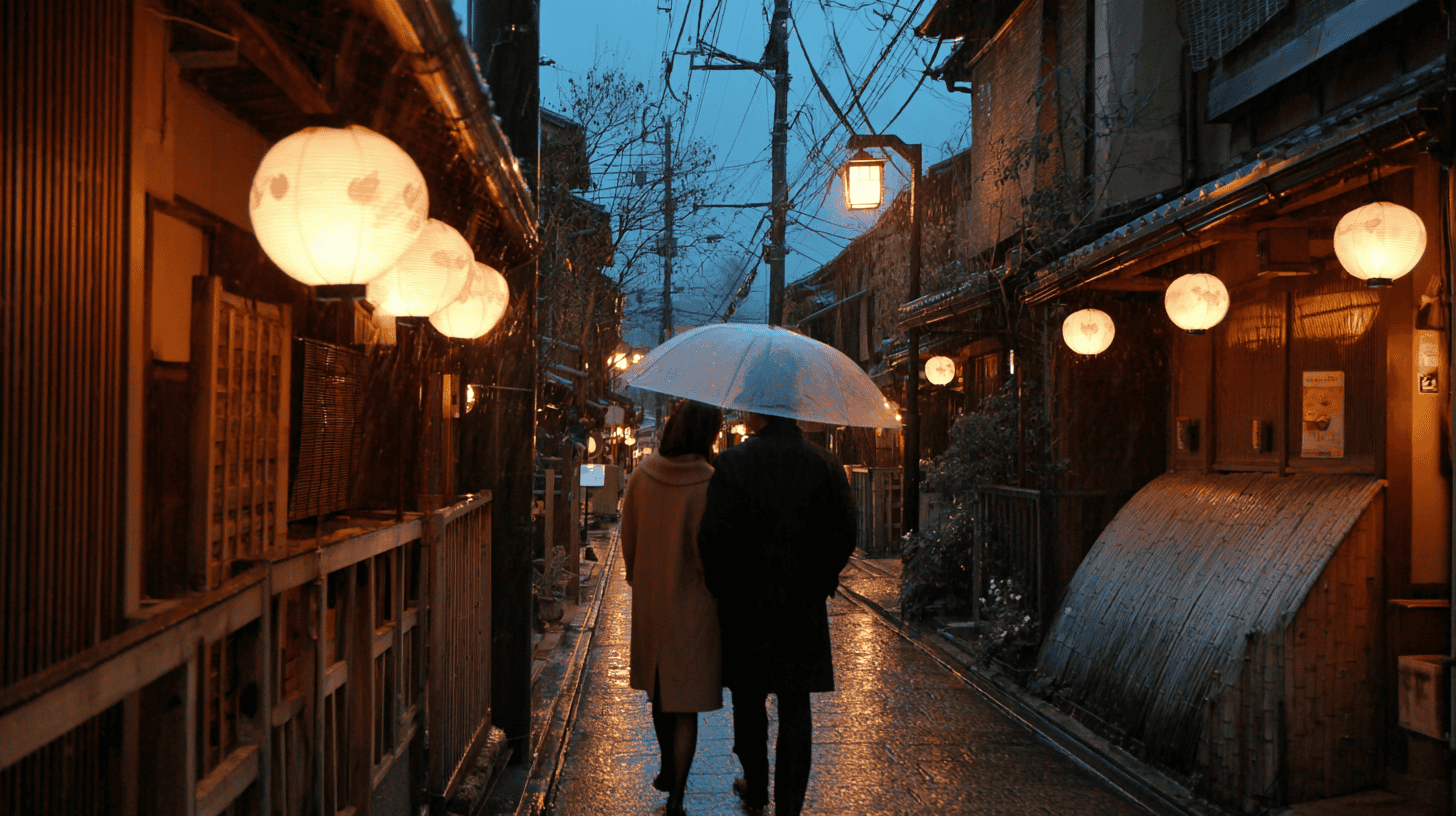
That makes aiaigasa a good summary of the whole list. It combines omoiyari, kizukai and a little amae in one ordinary moment. Moreover, it reminds us that love is mostly made of coordination, not grand gestures. Two people adjust to each other, again and again, until it feels natural.
Food offers the same lesson at the table. Temaki zushi, or hand-rolled sushi, is a favorite home meal in Japan for gatherings with family and friends. Nobody cooks it for everyone. Instead, the rice, nori and fillings go in the middle, and each person rolls their own. Before long, people start rolling cones for each other, passing the best piece of salmon across the table. It suits friends, family or a new date equally well.
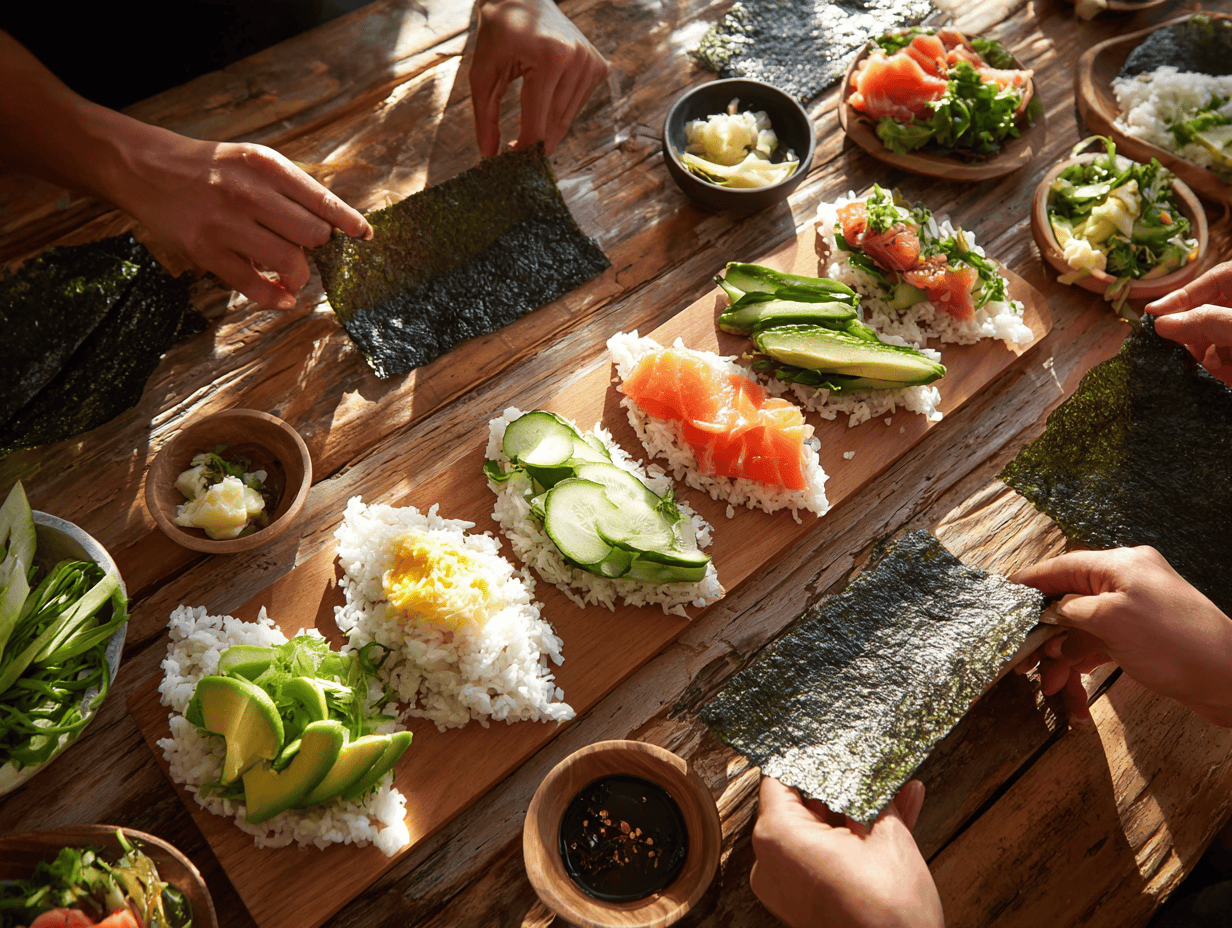
Temaki zushi means hand-rolled sushi, a home favorite in Japan for gatherings. Rice, nori and fillings go in the middle, and every diner rolls their own at the table.
- 400 ml Japanese short-grain rice
- 480 ml water
- 1 tablespoon sake
- 5 cm piece of kombu (optional)
- 4 tablespoons rice vinegar
- 1½ tablespoons sugar
- 1 teaspoon salt
- 10 sheets roasted nori, halved
- 200 g sashimi-grade tuna
- 200 g sashimi-grade salmon
- 1 cucumber
- 1 ripe avocado
- 10 shiso leaves
- Wasabi and soy sauce, to serve
- Rinse the rice until the water runs nearly clear. Cook it with the water, sake and kombu, then remove the kombu.
- Stir the rice vinegar, sugar and salt until dissolved. Fold the mixture into the hot rice with cutting strokes, fanning it as you go, then cover with a damp cloth.
- Cut the fish, cucumber and avocado into strips about 1 cm wide and 7 to 8 cm long. Arrange them on platters with the shiso, wasabi and soy sauce.
- Set the rice, the halved nori and the platters in the middle of the table.
- To roll, hold a half sheet of nori in your palm, spread about 3 tablespoons of rice over one end, add a little wasabi and 3 or 4 fillings, then roll it into a cone.
- Dip lightly in soy sauce and eat right away, while the nori is crisp. Roll the next one for the person beside you.
A gift wrapped the Japanese way
Temaki works because it is shared work. Everyone contributes, and the meal belongs to the whole table. Relationships run on the same principle, which is why the habit of giving matters so much in Japan. A gift there may come wrapped in a 風呂敷 furoshiki, a square of cloth tied by hand around a box or bottle. The cloth itself can be reused, so the wrapping becomes part of the gift. A short note on washi paper makes a fitting companion.
Both objects carry kizukai in physical form. Tying the cloth takes a minute of attention, and writing by hand takes a few more. That time is what the other person receives. So if you want to practice care before a relationship arrives, start here. Wrap something small for a friend, and write them a few honest lines.
Love among friends
Most of these twelve Japanese words for love apply to friendship as fully as to romance. Ai covers friends, and daisuki is said about them constantly. Likewise, kizuna, en and omoiyari describe the ties that carry people through the years. This matters for anyone single. A full life of friendship is not a waiting room for romance. Rather, it is where people learn the skills of love and keep them sharp. Friends teach you how to apologize, how to celebrate and how to stay in touch across distance. They also show you, honestly, how you behave when you feel let down.

Seen this way, readiness becomes less about finding someone and more about being a good companion already. So ask yourself a few gentle questions. Do your friends feel seen by you? When they offer help, can you accept it? And when life gets busy, do you still keep in touch? Each honest answer is a piece of inner work before dating. None of the questions has a pass mark, and that is the point. They simply show where your care flows easily and where it stalls. If you want a structured way to check, our sister post asks whether you are ready for a relationship through ten clear questions.


Room between two people: ma
Japanese has many related ideas beyond these twelve. For instance, 間 ma describes the meaningful interval between things, including the pause in a conversation. It pairs naturally with the words above, because good relationships need space as well as closeness. Two people under one umbrella still need room to walk. Similarly, two people at one table still need moments of their own. Our guide to Japanese concepts for everyday life gathers several of these ideas in one place. Read slowly, and keep the ones that speak to you. After all, a word you use every day will shape your habits far more than a word you only admire.
Questions Worth Asking
How do you say "I love you" in Japanese?
The most direct form is 愛してる (aishiteru), but it sounds weighty and is kept for rare, serious moments. Far more common is 好きだよ (suki da yo) or 大好き (daisuki), which feel warm without being dramatic. Affection is also often shown through small actions rather than spoken declarations.
What is the difference between ai and koi?
Koi (恋) is romantic longing, usually tied to attraction and the early stage of a relationship. Ai (愛) is a broader, steadier devotion that also covers family and friends. A simple way to remember it: koi is something you fall into, while ai is something you choose and keep giving.
What is the Japanese word for connection?
The closest single word is 縁 (en), which means a link or relationship between people, often one that arrives through circumstance. Its polite form, ご縁 (goen), is common in everyday speech. Related words include 絆 (kizuna), an enduring bond, and つながり (tsunagari), a general word for ties.
Is daisuki stronger than suki?
Yes, slightly. The prefix 大 (dai) means big, so daisuki suggests a fuller, more open enthusiasm. Yet plain suki, said to someone face to face, can carry more romantic weight, because it sounds more personal and deliberate. Context and delivery matter more than the word chosen.
Can you use these words with friends and family?
Many of them, yes. Daisuki, ai, kizuna, en and omoiyari all apply to friends and relatives. Koi, hitomebore and koi no yokan are romantic, and aiaigasa is a playful image of a pair. Suki works for anyone, though tone decides whether it sounds friendly or romantic.
Do Japanese people say aishiteru often?
Generally not. Most speakers find it too intense for daily use and reserve it for moments that truly matter. Everyday affection usually takes gentler forms: suki, daisuki, a thank-you, or a practical kindness that shows attention. In that sense, the word matters less than the steady attention behind it.
What These Words Teach About Relationship Readiness
Read together, these Japanese words for love describe a skill set more than a feeling. Koi and hitomebore name attraction. Suki and daisuki show how to speak it honestly. Omoiyari and kizukai turn love into daily attention. Amae, kizuna and en describe what grows between two people, and aiaigasa shows it all in one rainy walk.
Almost every one of those skills can be practiced while single. That is good news. You can learn to notice your feelings, show care, ask for help and keep your bonds strong today. Nothing here promises a partner. Yet each word makes you a steadier, kinder person to meet. If you would like a guided place to do that work, The En Journal offers a 90-day practice in connection, with one prompt each morning and five rotating threads.
A guided journal for relationship readiness: ninety days of inner work before dating, shaped by the Japanese word for connection.
View the Journal →Whichever word stays with you, write it somewhere you will see it tomorrow. Then notice one moment in the day when it applies. That small habit is how a word becomes a way of living. If Japan itself is calling, we would be glad to help you plan the visit.
The Editors, Magnificent Japan
We design trips for two, for friends or for family: a rainy-evening walk in Gion, a temaki dinner in a Tokyo home, an autumn afternoon among the ginkgo trees.
Plan Your Custom Japan Itinerary