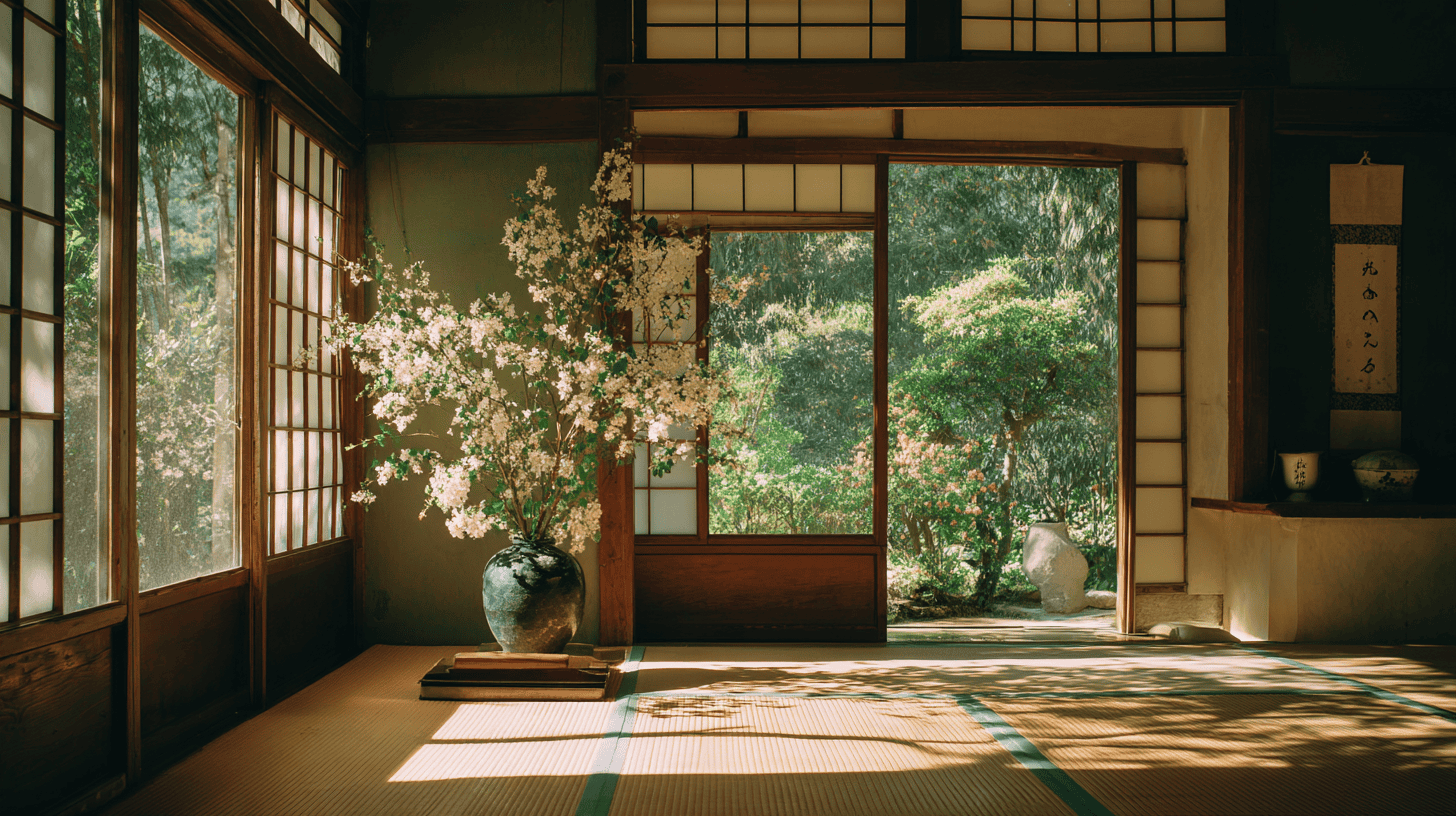
Some of the most useful Japanese concepts for life fit inside a single word. Ikigai names what makes a day worth waking for. Wabi-sabi finds beauty in the worn and the handmade. Ichi-go ichi-e reminds you that this exact meeting will never happen twice. None of them asks you to move to Kyoto or rebuild your routine.
Instead, each idea offers a small shift in attention. Below are eight of them, explained plainly and drawn from Japanese research, art and daily custom. Every one comes with a practice to try this week. We begin with ikigai, because a sense of purpose tends to make the other seven easier.
From there, we move through harmony, imperfection, presence, pauses, beginnings, change and repair. Read them in order, or jump straight to the one you need today.
What Are Japanese Concepts for Life?
They are compact Japanese words for ways of living well. The eight most useful are ikigai (a reason to get up), nagomi (harmony), wabi-sabi (beauty in imperfection), ichi-go ichi-e (one time, one meeting), ma (the meaningful pause), shoshin (beginner’s mind), mono no aware (tenderness for passing things) and kintsugi (visible repair). Each works best as a small daily practice.
Ikigai and Nagomi: Japanese Concepts to Live By
Ikigai: a reason to get up in the morning
Of all the Japanese concepts for life, ikigai is the best known abroad. It is often translated as a reason for being. A closer rendering is simpler: the things that make life feel worth living. Crucially, it does not have to be grand. For many people in Japan, ikigai lives in a garden plot, a grandchild or a weekly choir.
The psychiatrist Mieko Kamiya was one of the first to study the idea in depth, in her 1966 book Ikigai ni tsuite. Researchers still build on her work. One paper describes ikigai as eudaimonic well-being, the kind that comes from meaning and growth rather than pleasure alone (Kumano, Applied Research in Quality of Life, 2018). In other words, ikigai is less a feeling you chase and more a direction you keep choosing.
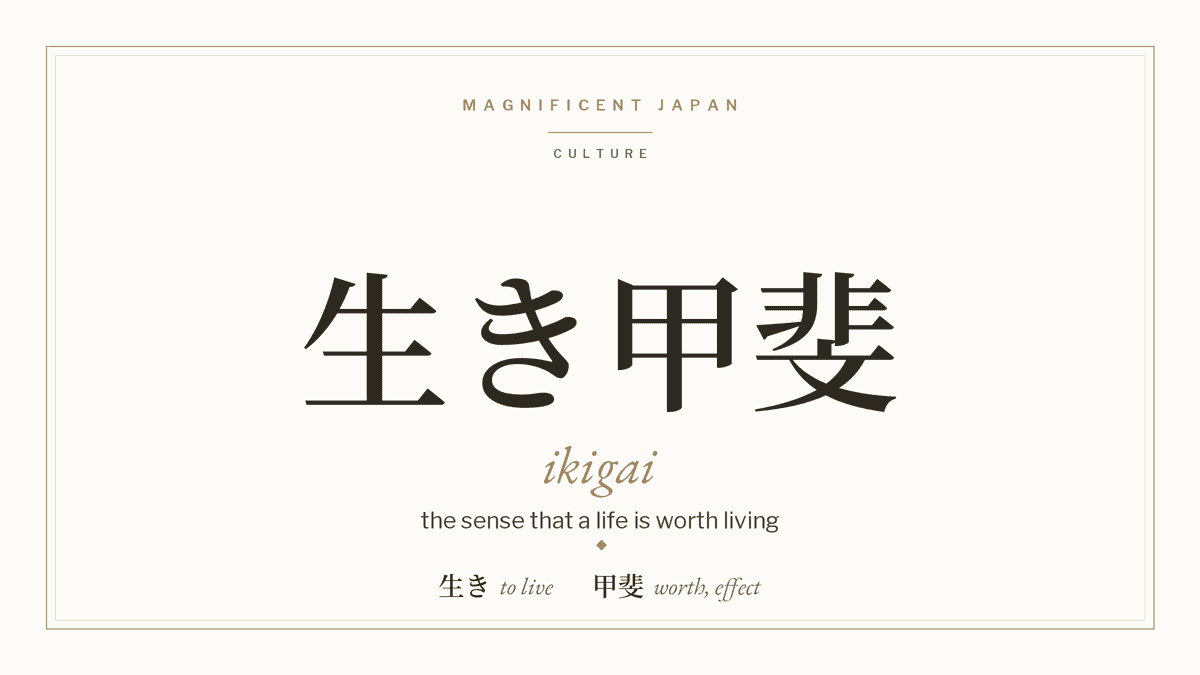

That direction seems to matter for health, too. A large study followed thousands of older people in Japan for several years. Those who reported having ikigai later showed lower risks of functional disability and dementia, along with fewer depressive symptoms (Okuzono and colleagues, The Lancet Regional Health, 2022). The authors call these associations, not proof of cause.
To try it this week, keep a two-line note each evening. First, write one moment that felt worth living for. Then write who or what made it possible. After a week, read it back and notice where ikigai already lives. For the longer history, our essay on what ikigai really means traces the word from its roots.
Nagomi: harmony that softens a room
Nagomi (和み) describes the ease that settles in when people, things and moods fit together. The kanji 和 also stands for peace, and for Japan itself. You feel nagomi at a table where everyone is relaxed enough to reach across for the pickles.
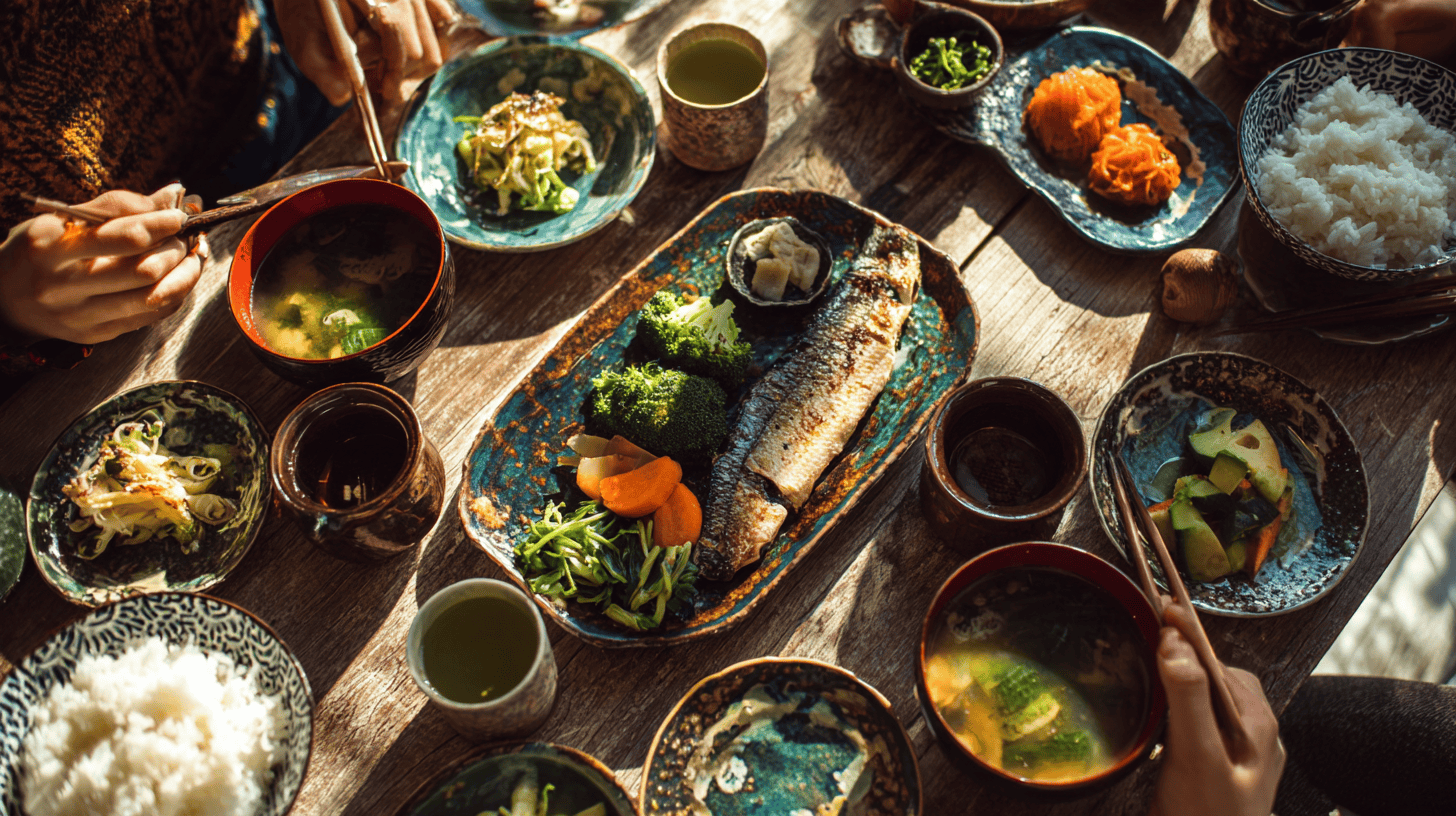
Harmony in this sense is active. It asks for small adjustments, not a perfect match. A host warms the sake a little for a guest who feels the cold. A family seats the talkative uncle beside the shy cousin. Each gesture keeps the whole room at ease. Nobody has to perform, and so everyone, including the cook, can simply enjoy the evening.
This week, choose one shared meal and plan for comfort rather than display. Put the dishes in the middle so people serve each other. Afterward, notice what shifted in the conversation. Our nagomi journal builds that noticing into a daily habit, one short prompt at a time.
Wabi-Sabi and Ichi-go Ichi-e: Japanese Ideas From the Tea Room
Wabi-sabi: the beauty of the worn and handmade
Wabi-sabi joins two older words. Wabi points to simplicity and modest means, while sabi suggests the patina that time lends to things (Stanford Encyclopedia of Philosophy).
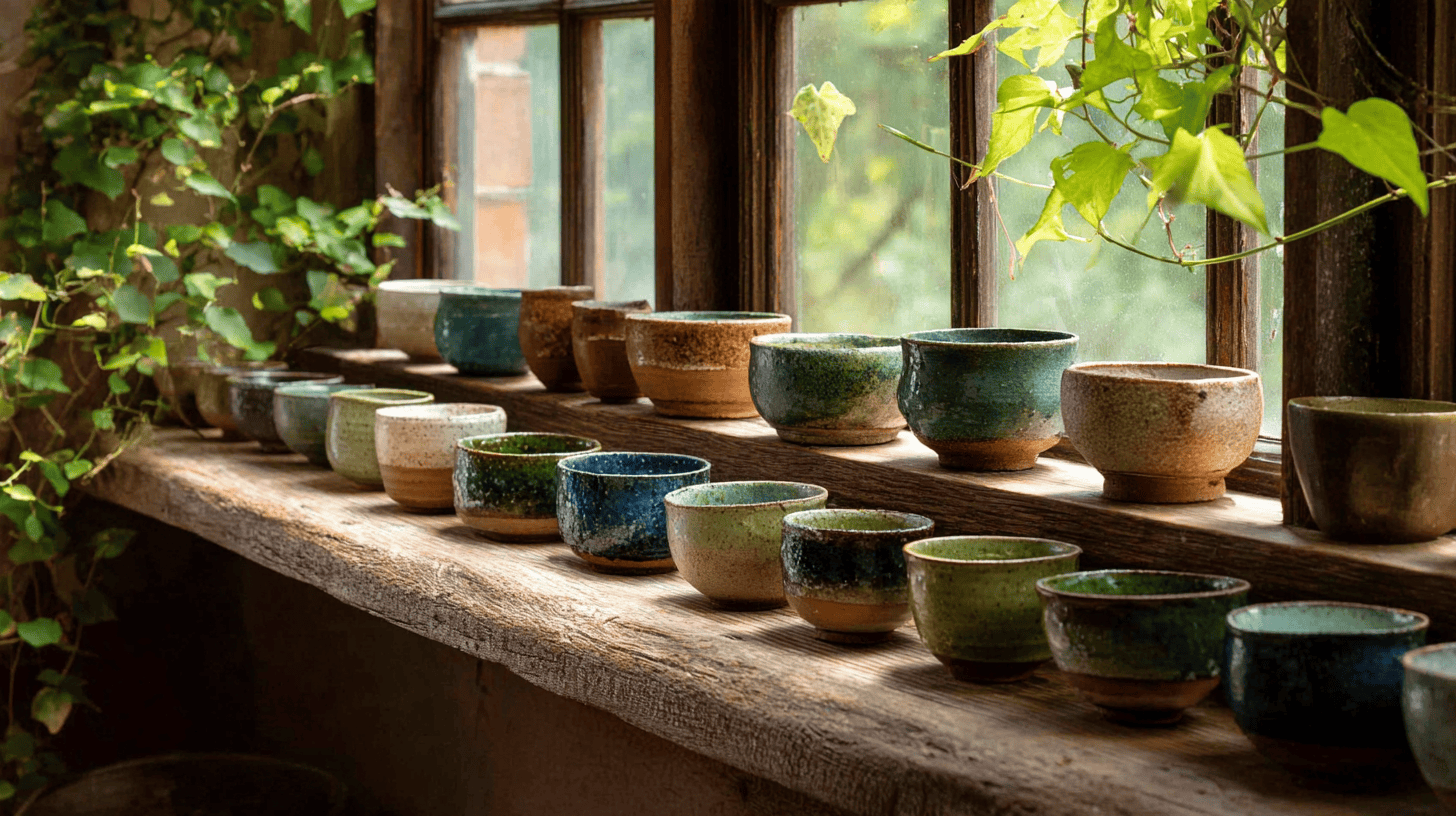
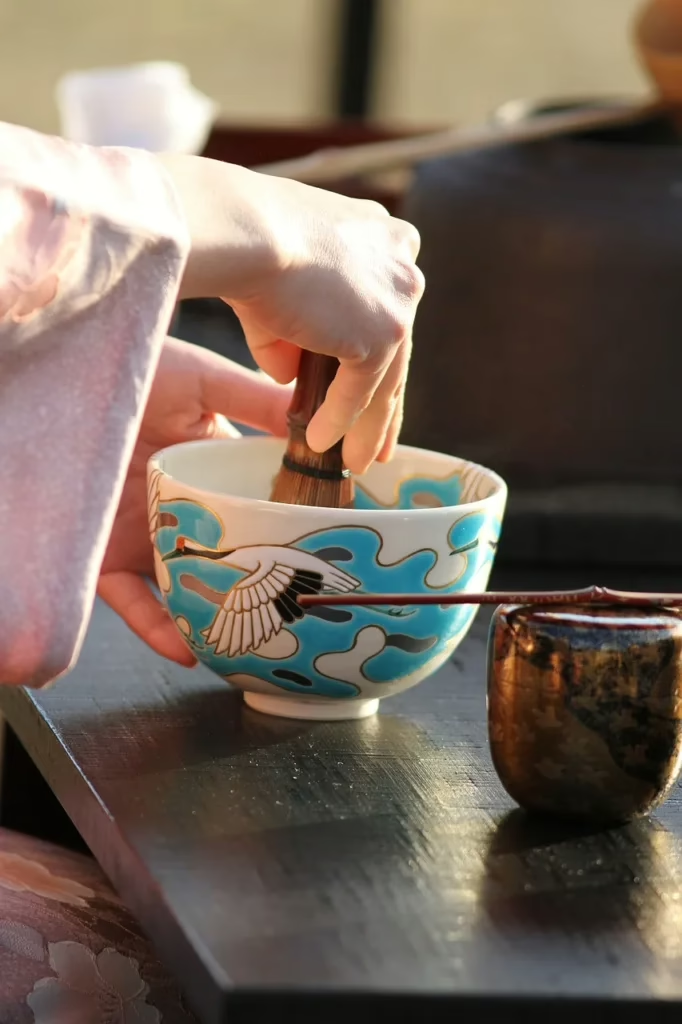
In the sixteenth century, the tea master Sen no Rikyū shaped wabicha, a style of tea built on modest rooms and simple natural materials. A later tea text, the Nampōroku of 1690, notes that utensils with small flaws were often valued more than ostensibly perfect ones. A cup with an uneven lip feels better in the hand because a person made it.
In practice, wabi-sabi is not an excuse for clutter, though. Instead, it rewards owning fewer things and keeping them longer. This week, pick one object you use daily and learn its story: who made it, and where. Handmade ceramics are the easiest place to begin, since every bowl carries the potter’s hand and shows its own small irregularities of glaze and form. Our wabi-sabi journal follows the same idea for ninety days.
Ichi-go ichi-e: one time, one meeting
Ichi-go ichi-e (一期一会) comes from the world of tea as well. It translates roughly as one time, one meeting. The host prepares as if this gathering will never repeat, because in truth it cannot. The guests, the weather and the light through the paper screen will all be different next time.
Far from sad, the idea is joyful. So this week, treat one meeting as unrepeatable. Ask a real question and listen to the full answer. Afterward, jot down three details you would otherwise forget: a phrase, a color, the taste of the tea. If you plan to attend a tea ceremony in Japan, a blank journal made for that day keeps those details together.
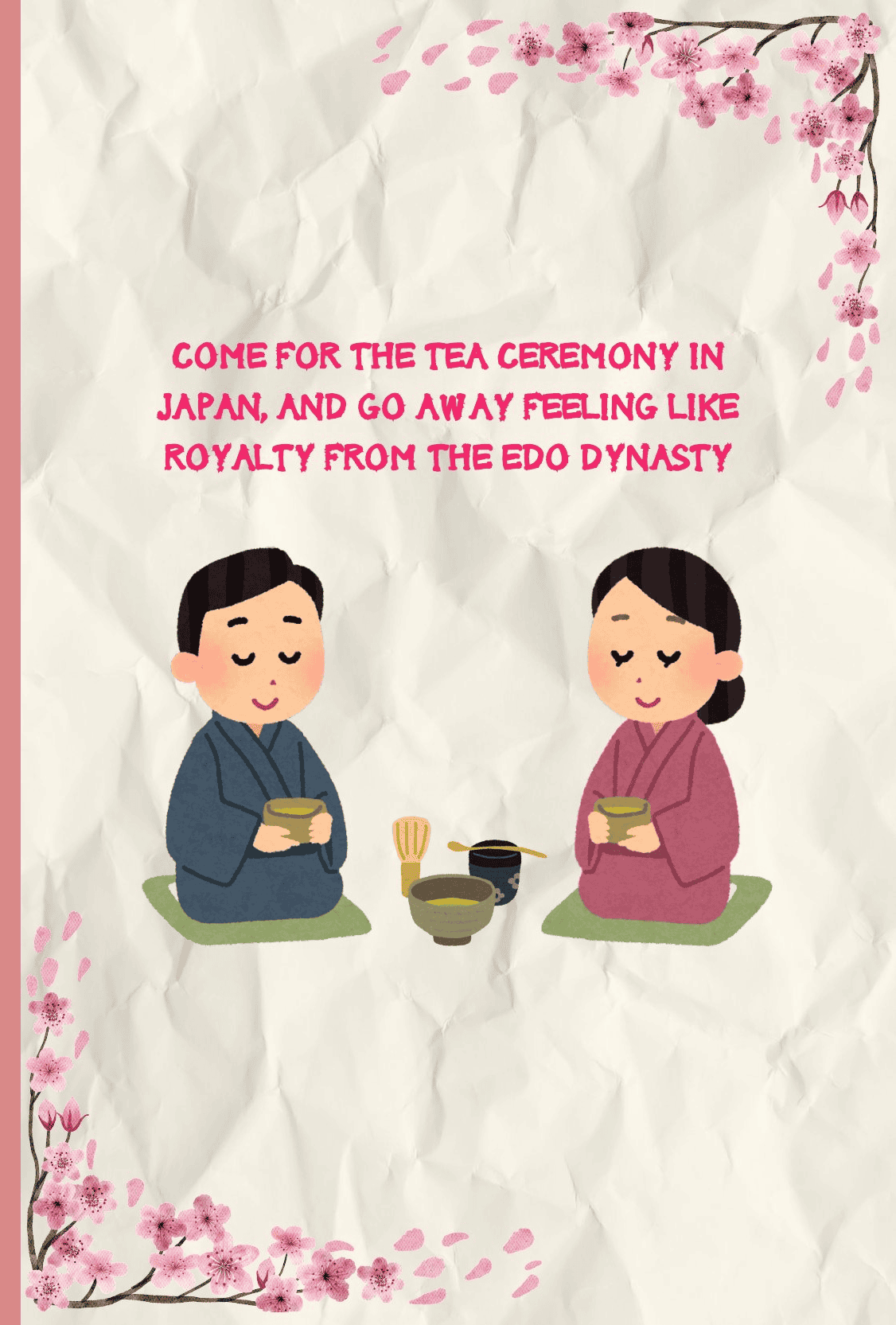
Pages for tasting notes, tea rooms and the ideas they bring to mind.
Unlined · 120 pages · Original cover art
Shop This Journal →Writing things down is part of the practice, not a souvenir. When you plan to record a meeting, you look more closely while it happens. Moreover, the notes become a record of people rather than of places. Years later, a single line about a host’s kind correction can bring back the whole room.
Ichi-go ichi-e also pairs well with the other ideas here. Wabi-sabi teaches you to value the imperfect object in front of you. Similarly, ichi-go ichi-e teaches you to value the imperfect moment. Together they make a strong case for slowing down, even a little, before the moment passes. Neither idea needs a tea room; a kitchen table will do.
Ma and Shoshin: Japanese Concepts for Pauses and Beginnings
Ma: the meaningful pause
Ma (間) is the space between things, and it matters as much as the things themselves. In music, it is the rest between notes. Gardens use it too, in the raked gravel that lets each stone stand apart. In speech, it is the beat before an answer that shows you heard the question. Our essay on how ma shapes Japanese space and time explores the word in architecture and design.
Traditional houses make ma easy to see. The engawa, a wooden veranda along the garden side, belongs to neither the room nor the garden. It is a threshold, and thresholds are where ma lives. Even a small apartment has one, perhaps a balcony or a window seat.
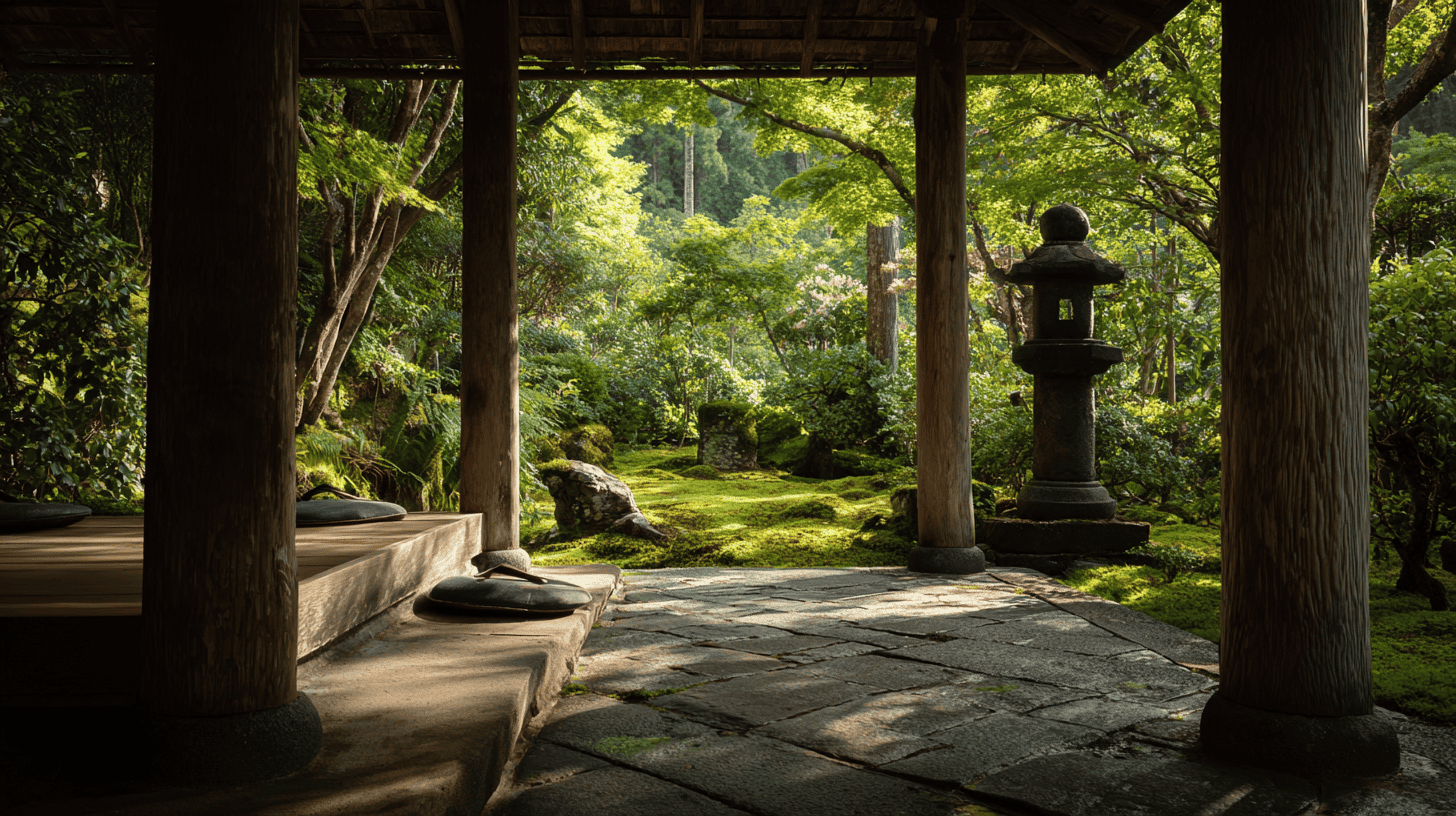
People sit there to cool off, shell beans or watch the rain. Nothing is scheduled for that edge, and so it stays useful.
Modern life tends to fill every gap. However, a day with no ma feels crowded even when it is productive. So this week, add one deliberate pause to each day. Leave five minutes between meetings with nothing in them. You can also pause in conversation: count one beat before you reply. The ma journal gives that pause a page of its own each morning.
Because the eight ideas overlap, it helps to see them side by side. The table below pairs them by theme, with a short practice for each pair.
Pair two ideas for one week, and the practice tends to stick.
| Pair | Theme | Kanji | A Five-Minute Practice |
|---|---|---|---|
| Ikigai and Nagomi | Purpose and harmony | 生き甲斐 · 和み | Note one moment worth living for; share one unhurried meal |
| Wabi-Sabi and Ichi-go Ichi-e | Imperfection and presence | 侘寂 · 一期一会 | Use one handmade object with care; treat one meeting as unrepeatable |
| Ma and Shoshin | Pause and beginning | 間 · 初心 | Add a five-minute gap; ask one beginner's question |
| Mono no Aware and Kintsugi | Change and repair | 物の哀れ · 金継ぎ | Name what you will miss; write what a repair taught you |
Shoshin: beginner’s mind
Shoshin (初心) means beginner’s mind. The word is common in Japanese arts and sports, where teachers remind even senior students to keep their first openness. A beginner asks basic questions and notices everything. By contrast, an expert often sees only what they expect.
In everyday Japanese, the word also carries a second meaning: the resolve you felt on day one. Returning to shoshin means remembering why you started. That makes it useful long after the lessons end. Ten years into a career or a craft, it still asks the same bright question. What drew you here, and is it still alive? Answering honestly is often the start of a better chapter.
Writing by hand helps here, because it slows you to a beginner’s pace. The short film below shows a hand writing a morning prompt in The Return, our 90-day ikigai journal, in its digital edition on a tablet.
Twenty seconds inside the journal
The digital edition in use — a morning prompt, answered by hand while the coffee is still warm. Tap to play, with sound.
One page, one intention, one single quiet moment.
Notice how brief the prompt is. On most days, a single honest sentence is enough, and that brevity keeps the habit alive. Shoshin and ikigai work well together in this way. First, the beginner’s mind keeps you curious. Then ikigai gives that curiosity somewhere to go. Across ninety days, those sentences add up to a clear map of what matters to you. Few tools are as simple, or as easy to keep beside the bed.
Trying beginner’s mind this week
This week, take up one small thing you have never done. It could be a pottery class, a new recipe or ten minutes of a language. Notice the feelings that come with not knowing: impatience, curiosity, sometimes delight. Then bring the same attitude back to something you already do well. Ask one question about it you have never asked. The shoshin journal uses that exact move, with a daily prompt that makes the familiar new.
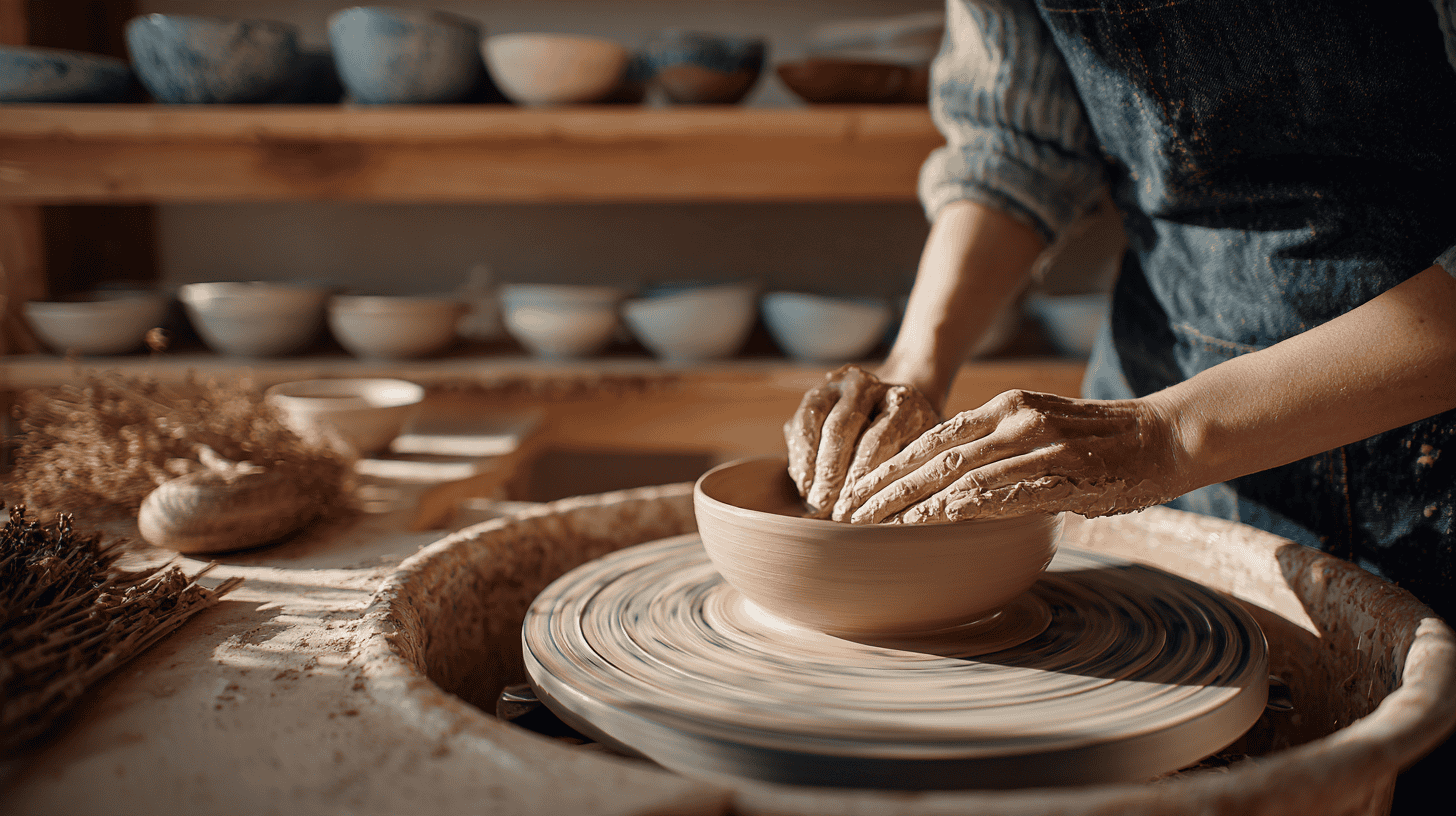
The teacher’s guiding hand belongs to shoshin as well. Beginner’s mind is easier in company, when someone more experienced can steady the clay. So look for a class, a mentor or a friend who knows more than you do. Asking for help is not a weakness here. Rather, it is the practice itself, and it keeps the whole craft generous. The same holds for any skill you are rebuilding later in life.
If you would like to meet these ideas in person, from a tea room in Kyoto to the veranda of a country inn, we can help you plan a journey around Japanese culture.
Occasional letters on ikigai and the Japanese ideas behind a good day, with news of the Cultural Reflection Collection.
Occasional letters. Unsubscribe anytime.
Mono no Aware and Kintsugi: Japanese Ideas for Change and Repair
Mono no aware: tenderness for passing things
Among Japanese concepts for life, mono no aware (物の哀れ) may be the most moving. It is often rendered as the pathos of things. A warmer translation is a tender sensitivity to what does not last. The scholar Motoori Norinaga made it central to literary thought, reading The Tale of Genji as a study of this feeling (the Stanford entry on Japanese aesthetics).
The feeling is not despair. Instead, it is the ache that makes beauty sharper. This week, choose one thing that is about to change: a season, a child’s age, a friendship before a move. Give it your full attention once, on purpose. Then say aloud what you will miss. Naming a thing is a way of honoring it, and the attention you give it becomes part of the memory. Some people keep a small list of these moments across the year, one line for each season, and read it back each New Year.
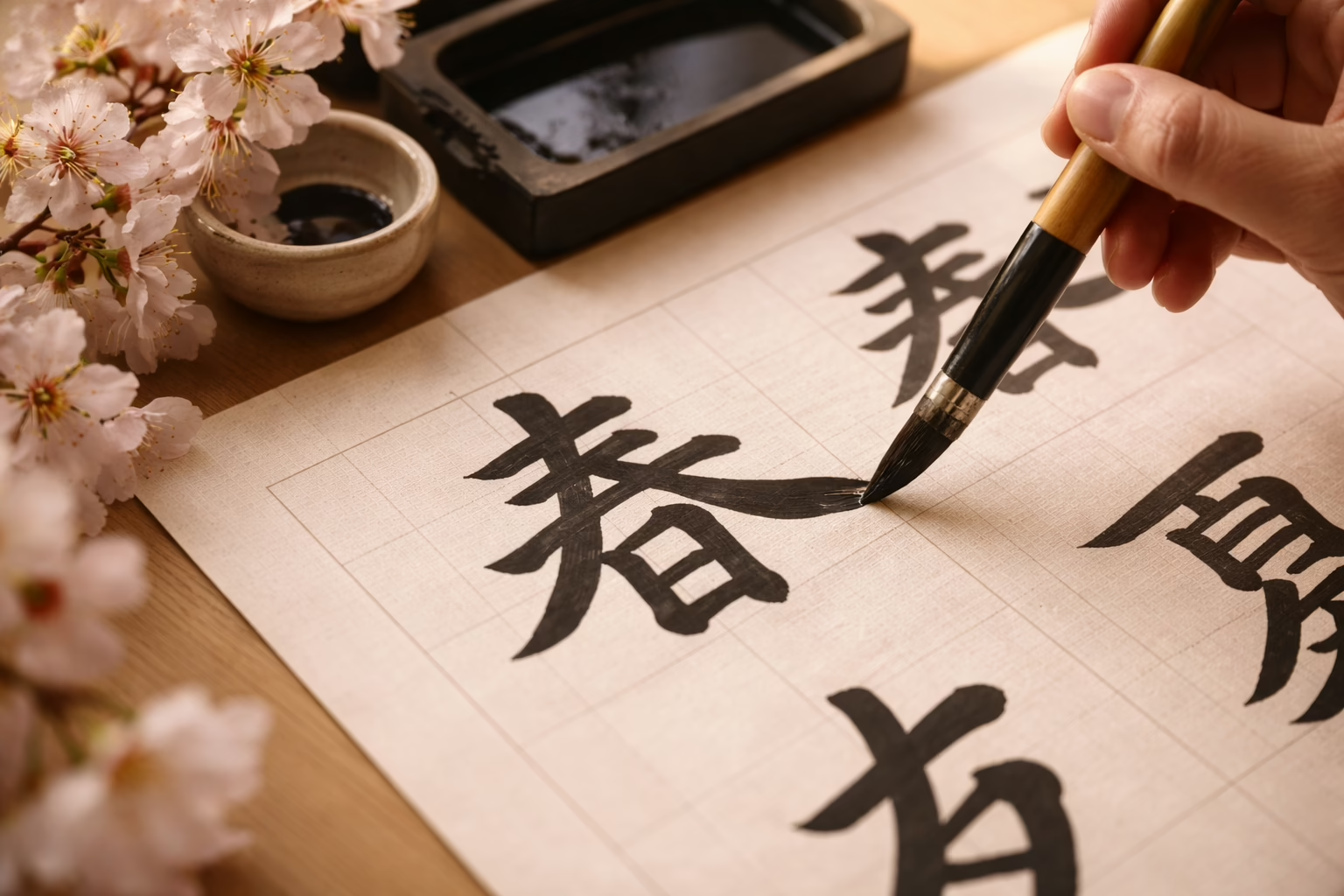
Hanami: a party for passing blossoms
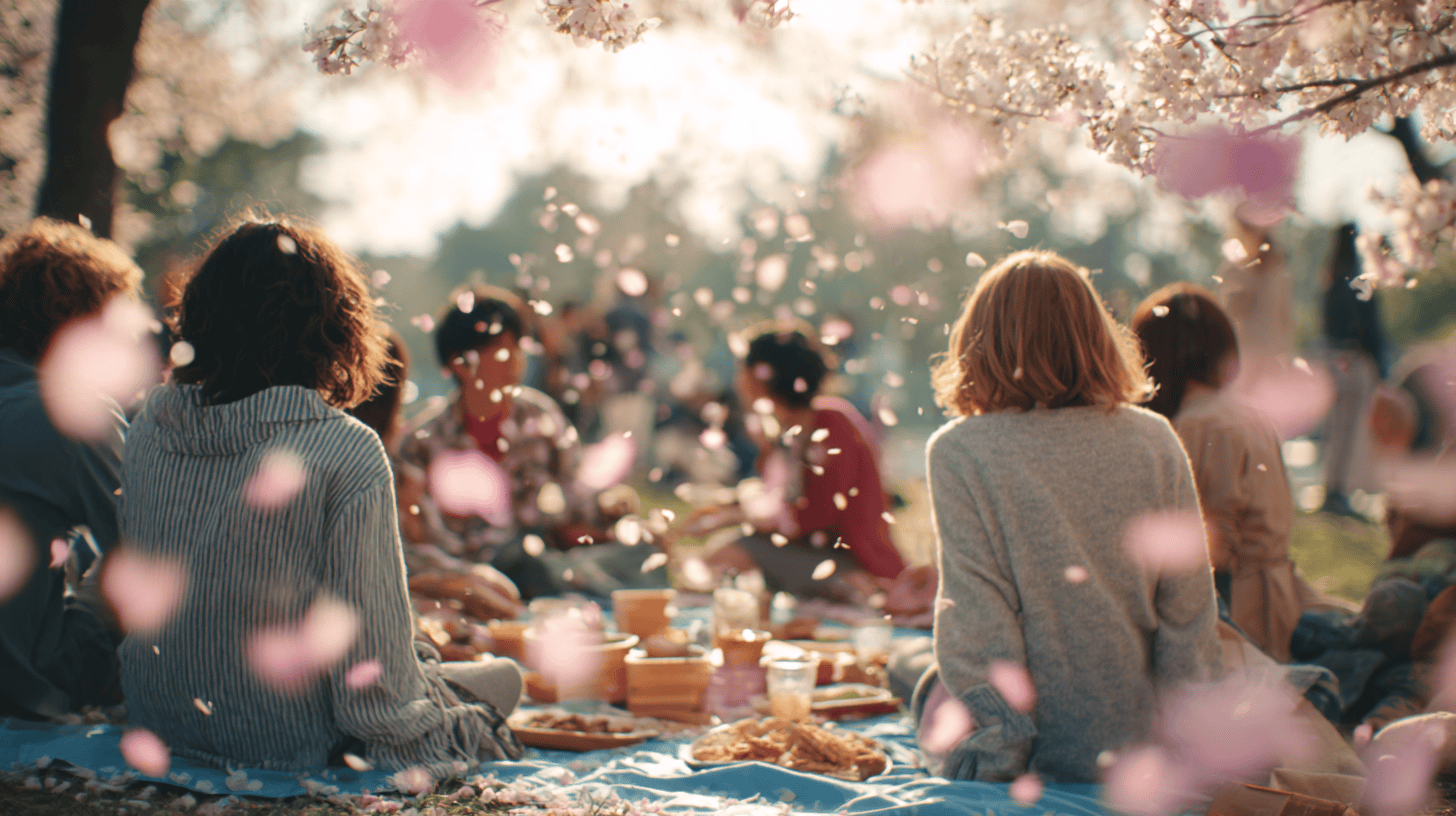
In Japan, the calendar itself supports this habit. Shops change their sweets with the season, and letters often open with a line about the weather. Spring brings hanami, or blossom viewing, when friends spread a sheet under the trees and share food. According to the same encyclopedia entry, cherry blossoms remain the most cited example of mono no aware, loved all the more because they fall so soon.
The picnic itself is cheerful and noisy. Yet everyone knows the petals will soon be gone, and that knowledge adds warmth to the afternoon. It is mono no aware in its most social form: a party for something that is leaving.
You do not need cherry trees to practice it. Every place has its own brief season. It might be the week the plane trees turn on your street, or the first cold morning of the year. Mark it with a small gathering, even two people and a pot of tea. Our mono no aware journal offers ninety days of prompts for exactly this kind of noticing.
Over time, the practice changes how change feels. Endings become occasions rather than losses. As a result, you tend to grow more grateful for the present, because you have learned to see it as brief. That shift is gentle, and it lasts.
Recommended
Seasonal sweets and the pleasure of the moment
Food is one of the easiest ways into mono no aware. Japanese confectioners, for instance, design wagashi to match a single season, sometimes a single month. A sweet shaped like a hydrangea appears in the rainy season and then leaves the counter. Eating it becomes a small act of attention.
Summer has its own cool treats, meant to be eaten slowly on a hot afternoon. Their texture, their chill and their short life all belong to the season. In that sense, they teach the lesson better than any essay could. Next summer, try buying one seasonal sweet and eating it slowly, with nothing else in your hands.
Warabi mochi is one of the best loved. It is a soft, wobbling jelly made from bracken starch, chilled, then dusted with kinako (roasted soybean flour) and finished with kuromitsu, a dark sugar syrup. Traditional versions are best eaten on the day, since the texture fades.
Making it at home takes well under an hour, and much of that is chilling. Better still, the stirring is a kind of ma: ten minutes at the stove with one simple task. Serve it to someone on a warm evening, and you have mono no aware, nagomi and ichi-go ichi-e on one plate. The recipe below serves four.
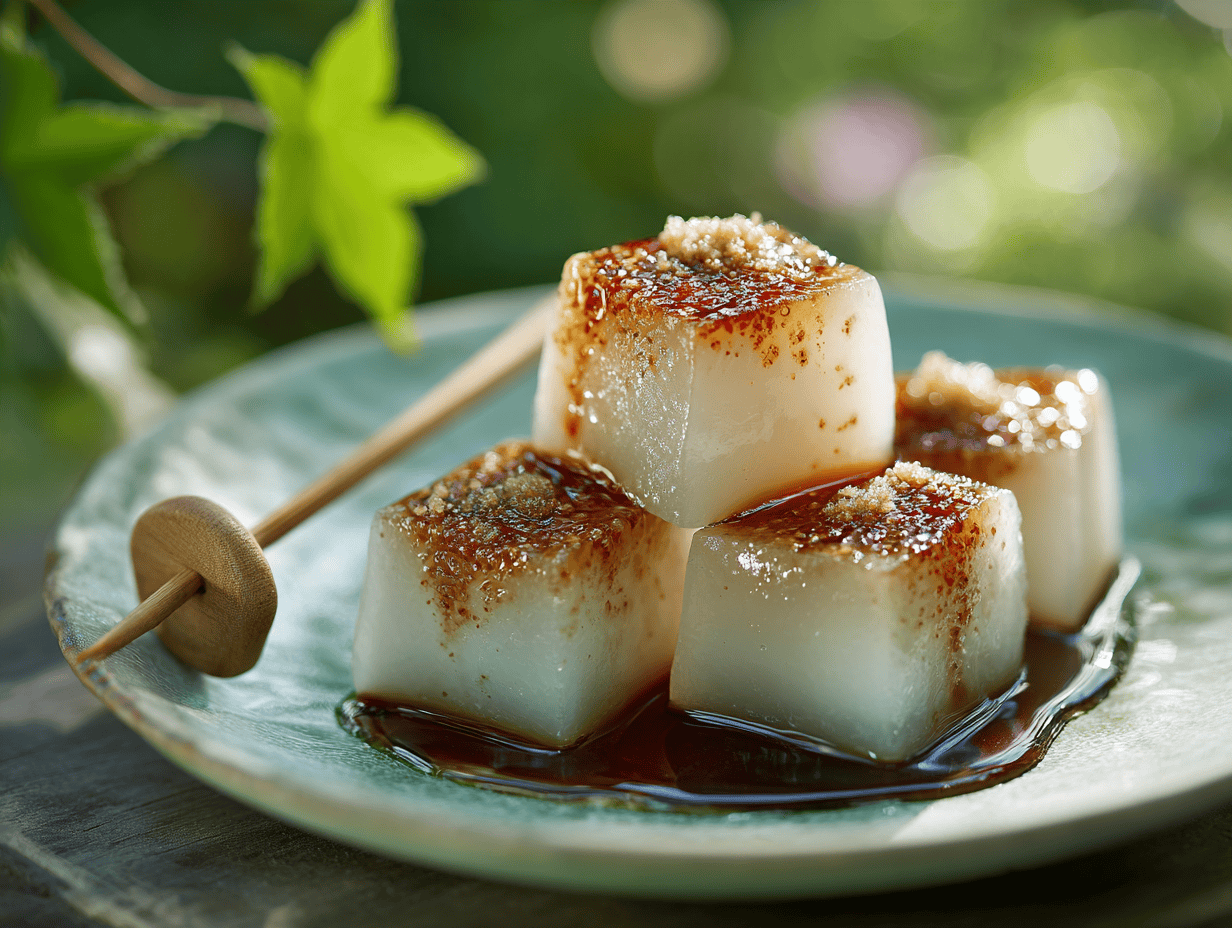
A classic wagashi made from the starch of the bracken fern root (warabi). Served chilled in summer, it is dusted with kinako and finished with kuromitsu.
- 80 g warabi mochiko (bracken starch blend) or hon warabiko
- 50 g sugar
- 400 ml water
- 4 tbsp kinako (roasted soybean flour)
- 1 tbsp sugar, for the kinako
- 60 g kokuto or dark brown sugar, for the kuromitsu
- 60 ml water, for the kuromitsu
- Make the kuromitsu: simmer the dark sugar with 60 ml water in a small pan for 3 to 5 minutes until slightly syrupy, then let it cool.
- Whisk the warabi mochiko, sugar and 400 ml water in a saucepan until smooth.
- Cook over medium-high heat, stirring constantly. When it turns lumpy, lower the heat and keep stirring vigorously for about 10 minutes, until thick, glossy and translucent.
- Mix the kinako with 1 tbsp sugar. Dust a tray with half of it, spread the hot mochi over it and chill for about 20 minutes.
- Cut into bite-size cubes, roll them in the remaining kinako, drizzle with kuromitsu and serve the same day.
Kintsugi: repair that shows
From one season’s sweets, it is a short step to the objects we keep for years. Those objects break, of course, and Japan has a beautiful answer for that too. It is one of the most hopeful ideas on this list.
Kintsugi (金継ぎ) means joining with gold. A broken bowl is mended with lacquer, a natural resin from tree sap, and the seams are dusted with powdered gold. Lacquer repair is very old in Asia. However, the gold finish developed in Japan and spread with the practice of tea in the late sixteenth century (Smithsonian). The result does not hide the break. Instead, as the Smithsonian puts it, the repair highlights the life of the object.
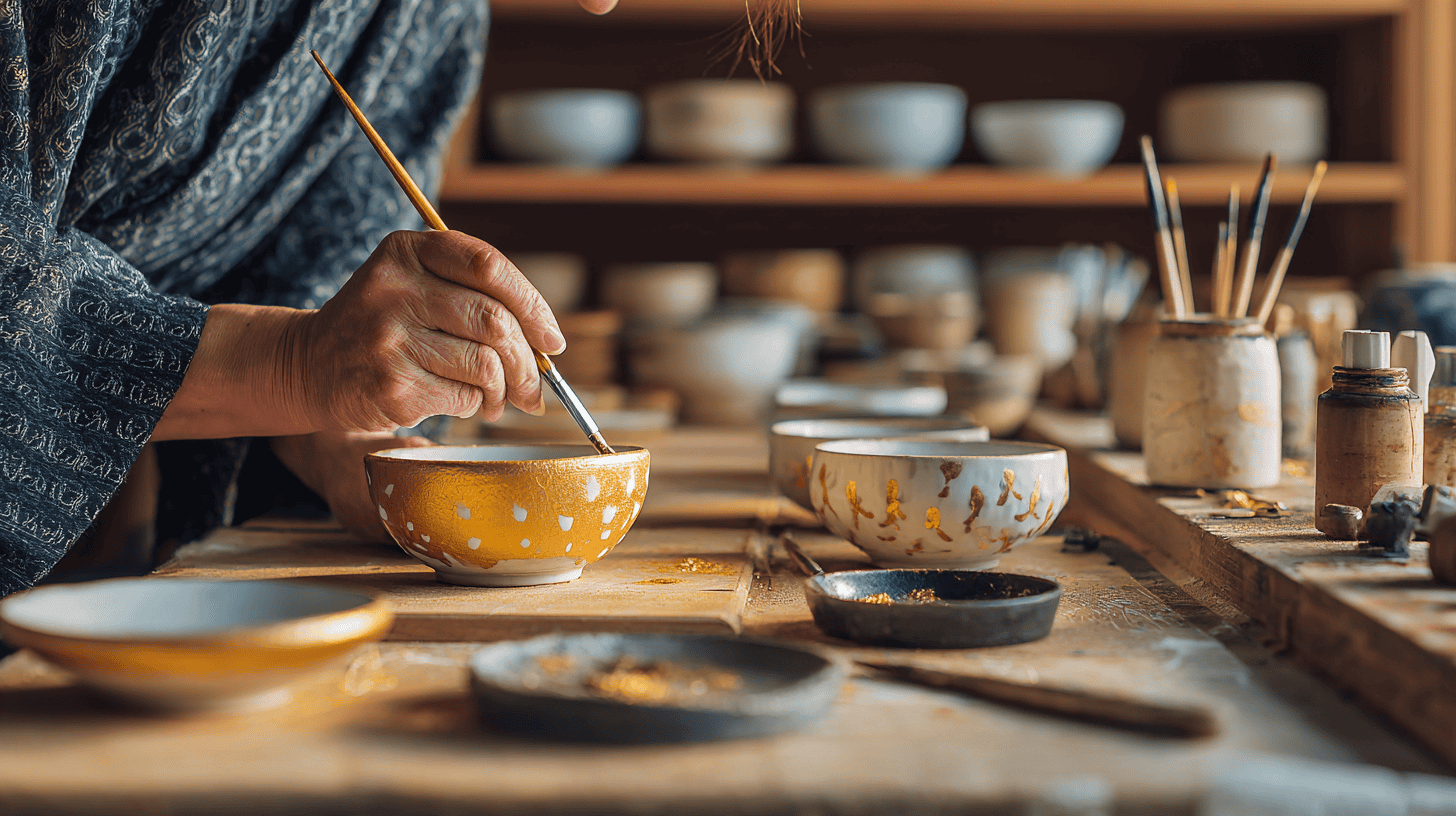
As a life idea, kintsugi is about recovery rather than perfection. Everyone collects cracks: a failed plan, a lost job, a hard year. Kintsugi suggests that repair can become part of the story, even the most interesting part. That is a hopeful thought, and a practical one too.
This week, name one thing you have mended, whether a skill, a friendship or a routine. Write down what the repair taught you. Our kintsugi journal does this work on paper. If you enjoy working with your hands, real kintsugi is a patient craft worth learning with good materials. A proper repair kit from a Japanese maker, alongside a few well-made tea things, turns the idea into an afternoon at the table.
How to Try These Japanese Concepts for Life This Week
Eight ideas at once is too many. So choose one pair and live with it for seven days. For example, pair ikigai with shoshin if you feel stuck at work. Or pair nagomi with ma if your home feels rushed. When you are being hard on yourself, pair wabi-sabi with kintsugi.
Keep the practice small enough to finish on a tired day. Five minutes counts. First, read about the idea in the morning. Next, look for one example of it during the day. Finally, write a single line about it before bed. That rhythm of reading, noticing and writing is how Japanese concepts for life turn from pleasant words into habits.
Expect some days to feel flat. That is normal, and beginning again without fuss is itself a form of shoshin. Similarly, the practice will look different in different seasons. In summer, mono no aware may come easily, while nagomi may need more effort around a busy holiday table.
After a week, look back at your seven lines. Ask which idea felt natural and which felt like work. The natural one is often a clue to your ikigai. The difficult one is often the practice you need most. Then choose the next pair, and keep going at the same unhurried pace.
Noticing the ideas on a journey to Japan
Travel sharpens all eight ideas, because everything is new. That alone is shoshin. In a ryokan, you may find yourself on an engawa at dusk with nothing to do, which is ma in its purest form. A tea ceremony, meanwhile, is ichi-go ichi-e made visible, from the single flower in the alcove to the bow at the door.
Look for the others too. A market stall selling one fruit for two weeks a year is mono no aware. Likewise, a chipped cup in a family-run café may be wabi-sabi or even kintsugi. When you return, keep one of those moments alive at home. That is how a trip becomes a practice rather than a memory.
It also helps to travel a little more slowly. Leave one afternoon unplanned in each city. Then let it fill with whatever the day offers, whether a garden, a conversation or a long lunch. Those open hours are often the ones you remember most clearly.
Questions Worth Asking
What is the Japanese idea of living a good life?
There is no single term. Japanese speakers often point to ikigai, the sense that life is worth living, alongside harmony with others and attention to the season. A good life, in this view, is built from ordinary days that feel meaningful, rather than from one large achievement or a distant goal.
What does ichi-go ichi-e mean in daily life?
It means treating each encounter as unrepeatable. In practice, that looks like giving a friend your full attention over coffee, greeting a colleague properly, or noticing the light on a familiar walk. The phrase encourages gratitude for the present meeting, because the same people and circumstances will never gather in exactly that way again.
Is ikigai the same as finding your passion?
Not quite. Passion suggests intensity, while ikigai is steadier and often modest. It can be a morning routine, a friendship or tending plants. Many people in Japan describe several small sources of ikigai rather than one calling, which makes it easier to find and harder to lose.
What is the difference between wabi-sabi and kintsugi?
Wabi-sabi is a broad aesthetic that finds beauty in simplicity, age and imperfection. Kintsugi is a specific craft: mending broken ceramics with lacquer and gold. You could say kintsugi puts wabi-sabi into action, since it treats the history of an object, including its damage, as something worth showing.
How can I practice ma at home?
Leave some space empty on purpose. Clear one shelf or corner and resist filling it. Build short gaps into your schedule, even five minutes between tasks. In conversation, let a pause sit before you answer. These small intervals make everything around them easier to notice and enjoy.
Can you practice these ideas without visiting Japan?
Yes. Each concept describes a way of paying attention, and attention travels well. A shared meal, a mended mug, a seasonal walk or a new hobby can all carry the same spirit. Visiting Japan adds depth and context, but the daily practice can begin wherever you live.
Carrying Japanese Concepts Into Everyday Life
None of these ideas asks for a new life. Rather, each asks for a slightly different way of seeing the one you have. Ikigai points you toward purpose, and nagomi softens the room around you. Wabi-sabi and kintsugi make peace with wear and repair. Mono no aware and ichi-go ichi-e sharpen your love for the moment. Shoshin keeps you learning, while ma leaves space to breathe.
If you want a steady structure, The Return, our guided ikigai journal, is a fine first companion. For the full set, our Japanese philosophy journals give each idea its own ninety days. Of all the Japanese concepts for life, the best one is simply the one you practice.
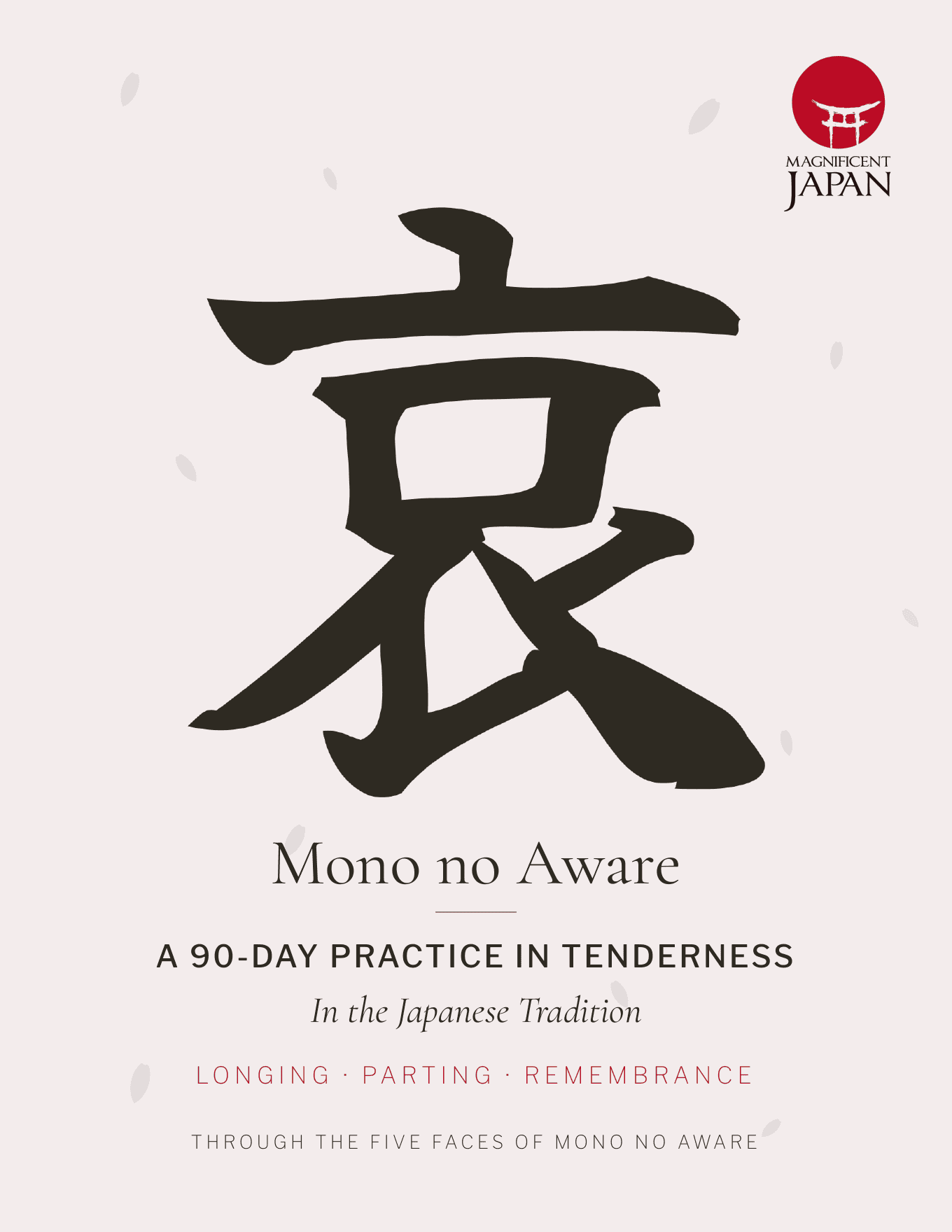
A ninety-day guided practice in tenderness, for savoring the season you are in while it is here.
View the Journal →Mono no aware is a lovely place to begin if this season is bringing change. Its prompts turn endings into occasions. And if you would rather meet these ideas in Japan itself, we would be glad to help you shape the trip, season by season.
The Editors, Magnificent Japan
We design routes around the ideas on this page: a tea room at sunrise, a kintsugi workshop, hanami under the cherry trees, and time left open on purpose.
Plan Your Custom Japan Itinerary