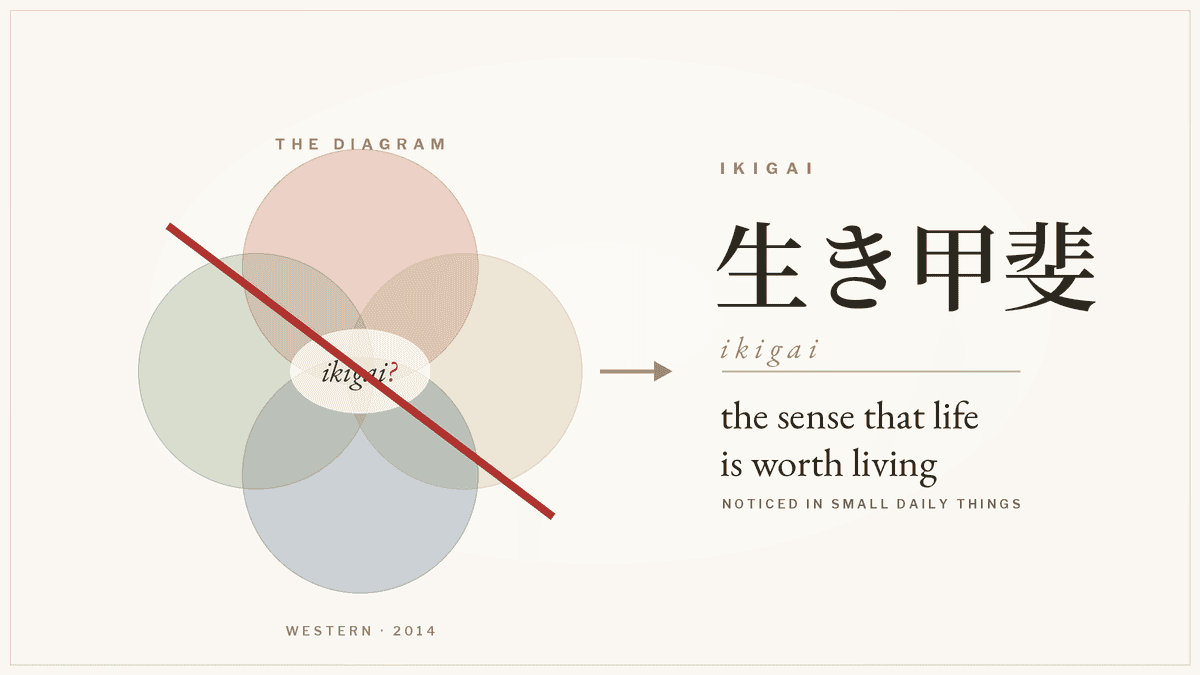
You have seen the ikigai venn diagram. Four overlapping circles: what you love, what you are good at, what the world needs, what you can be paid for. The word ikigai sits where they all meet. It appears in career talks, on whiteboards, in self-help books. It is also not Japanese, and it is not what the word means.
The diagram is a Western invention from 2014. The word it borrows is centuries older. It points at something subtler, and harder to draw: not a job at the center of four circles, but the daily sense that a life is worth living. This piece traces where the famous picture came from. It explains why Japanese researchers regard the diagram as misleading, and what ikigai actually describes once you set the circles aside.
The ikigai venn diagram is not Japanese. The British entrepreneur Marc Winn published it in a blog post in May 2014, after a TED talk by Dan Buettner. He took a 2011 purpose diagram by the Spanish writer Andrés Zuzunaga and replaced the centre word with “ikigai”. Both the Japan Times and The Economist have since reported the diagram as a Western misreading. In Japan, ikigai means the felt sense that life is worth living, noticed in small daily moments rather than solved by aligning four circles.
Start with the picture almost everyone has seen.
The reading almost everyone has seen — a four-circle puzzle with a paid career at its centre.
That is the version in most people’s heads. Its history explains two things at once: why it spread so fast, and why it has so little to do with Japan.
Decades after Kamiya, the neuroscientist Ken Mogi brought the everyday reading of ikigai to Western readers — small pleasures, starting where you are, the profile of a lived morning rather than a career equation. His account and Kamiya’s research point the same direction, and it is the opposite direction from the worksheet: ikigai as something noticed daily, not solved once.
Where the diagram actually came from
The four-circle picture has a documented origin, and it is short enough to hold in mind. It runs through three people, none of whom set out to define a Japanese word, and none of whom claimed to be doing so. One drew a chart about purpose in Spanish. One swapped a single word into its centre after hearing the term in a talk. The third never touched the graphic at all, and simply mentioned ikigai in passing while describing why Okinawans live a long time. The timeline below sets out the sequence.
The paper trail: a 2011 Spanish purpose chart, relabelled in 2014, then shared worldwide.
In 2011, a Spanish writer named Andrés Zuzunaga drew a venn diagram about purpose. His version placed the Spanish word for purpose — not ikigai — at the meeting point of four circles. Those circles were familiar: what you love, what you are good at, what the world needs, and what you can be paid for. The graphic appeared in a 2012 book, and circulated as a model for finding direction in work.
Then, in May 2014, a British entrepreneur named Marc Winn wrote a short blog post. He had watched a TED talk by the longevity researcher Dan Buettner. Buettner mentioned ikigai in passing, while describing why people in Okinawa tend to live long lives. Winn took Zuzunaga’s purpose diagram and swapped one word. Purpose became ikigai. By his own later account, that single substitution was the whole of his contribution. He changed one word on someone else’s diagram, and shared it.
The post went viral. The graphic has since been seen by tens of millions of people. It has been reproduced across countless articles, slide decks, and books. That is how the ikigai venn diagram became, for most of the English-speaking world, the definition of the word. The trouble is simple. The diagram never came from Japan, and the circles describe a career-fit puzzle the original word was never asked to solve.
Who made the ikigai venn diagram, and where to cite it
Because the question keeps arriving as a request for a source rather than an explanation, here is the record in one place. The four-circle chart was drawn in 2011 by the Spanish writer Andrés Zuzunaga, with the Spanish word for purpose at its centre. In May 2014 the British entrepreneur Marc Winn replaced that centre word with “ikigai” and published it, having heard the term in a TED talk by the longevity researcher Dan Buettner. Winn has since said in print that swapping one word was the entirety of his contribution.
The correction has been reported widely. The Japan Times has covered the gap between the diagram and Japanese usage, and The Economist has described the four-circle version as a misleading rendering of the word. Within the academic literature the reference point is older still: Mieko Kamiya’s Ikigai ni Tsuite, published in 1966 and never translated into English, which contains no diagram of any kind. The clinical psychologist Akihiro Hasegawa and the anthropologist Gordon Mathews reach the same conclusion from separate directions.
So the short citation is this. The ikigai venn diagram is a 2014 Western adaptation of a 2011 Spanish purpose chart, and no Japanese source before it uses four circles. Anyone who needs the primary reference should reach for Kamiya rather than the graphic.
How the idea is actually understood
Set the diagram aside, and the account from Japanese scholarship looks plainer. The clinical psychologist Akihiro Hasegawa has studied the word closely. He notes that ikigai attaches to seikatsu — everyday life — rather than to jinsei, a whole lifetime. It is a word about the meaning in ordinary days, not a single grand aim to be settled once. Most Japanese would sooner point to a hobby, a family, or a small routine than to a career.
The anthropologist Gordon Mathews reached somewhere similar by another route. For his book What Makes Life Worth Living, he interviewed dozens of people across Japan and the United States. He found that ikigai gathers around two ideas: ittaikan, a sense of commitment to a group or role, and jiko jitsugen, self-realization. His caution is the useful part. Ikigai, he says, is not something grand or extraordinary. It is fairly matter-of-fact, and it shifts as a life changes — never final, always provisional.
None of this is merely poetic. In 2008, researchers at Tohoku University put a single question to more than forty-three thousand Japanese men and women: do you have ikigai in your life? They followed the group for seven years. Those who answered yes were less likely to die over that period. The same word travels attached to Okinawa. There, the longevity researcher Dan Buettner found it woven through daily life. He adds one caution: naming an ikigai is not enough — people have to act on it. The neuroscientist Ken Mogi has mapped the same ground as five pillars rather than four circles. What none of these accounts contains is a chart of overlapping circles with a salary at the center.
The reading the word actually carries — several small things, noticed across ordinary days.
What ikigai means in Japanese
The word is built from two parts. 生き (iki) means life, or being alive. 甲斐 (gai) means worth — the reward that makes an effort worthwhile. Put together, ikigai is something like “that which makes life worth living.” It is a reason to get up in the morning, in the most ordinary sense of the phrase.
What matters is the grammar of the idea. Ikigai is felt, not solved. It is closer to an experience than to an answer. English keeps reaching for “purpose” because purpose is a thing you can set, pursue, and tick off. Ikigai resists that. You do not arrive at it by completing a diagram. You notice it, repeatedly, in the texture of an ordinary day. That is why the ikigai venn diagram feels so satisfying. It gets the word wrong at the very same time. A diagram promises a destination. The word describes a way of attending.
This is the short version. The full treatment goes further — the literal meaning, the five pillars, and where the concept actually shows up in a life. That lives in the pillar piece on what is ikigai.
The shift from the diagram to the word changes what you go looking for. Instead of one perfect career at a centre, ikigai points to small, repeatable practice — and to the few objects that quietly support it. None of them is necessary, and a supermarket notebook will hold the same entries as a bound one. What they do is lower the friction on a habit that has to survive its own dull weeks, which is a modest claim and the only one worth making for them. A short, edited set sits below, in the same slow register the word describes.
The same attention runs through the tools we make. Each one turns a Japanese idea into something you can practise on an ordinary morning, rather than a concept to admire from a distance. Several sit close to the ikigai practice this piece describes, and all of them are open in a browser without a purchase or an account. That matters for a habit more than it looks like it should. The practices that last are almost always the ones with the lowest cost of a first attempt, and a tool you can open in ten seconds clears that bar in a way a book on a shelf does not.
From Magnificent Japan
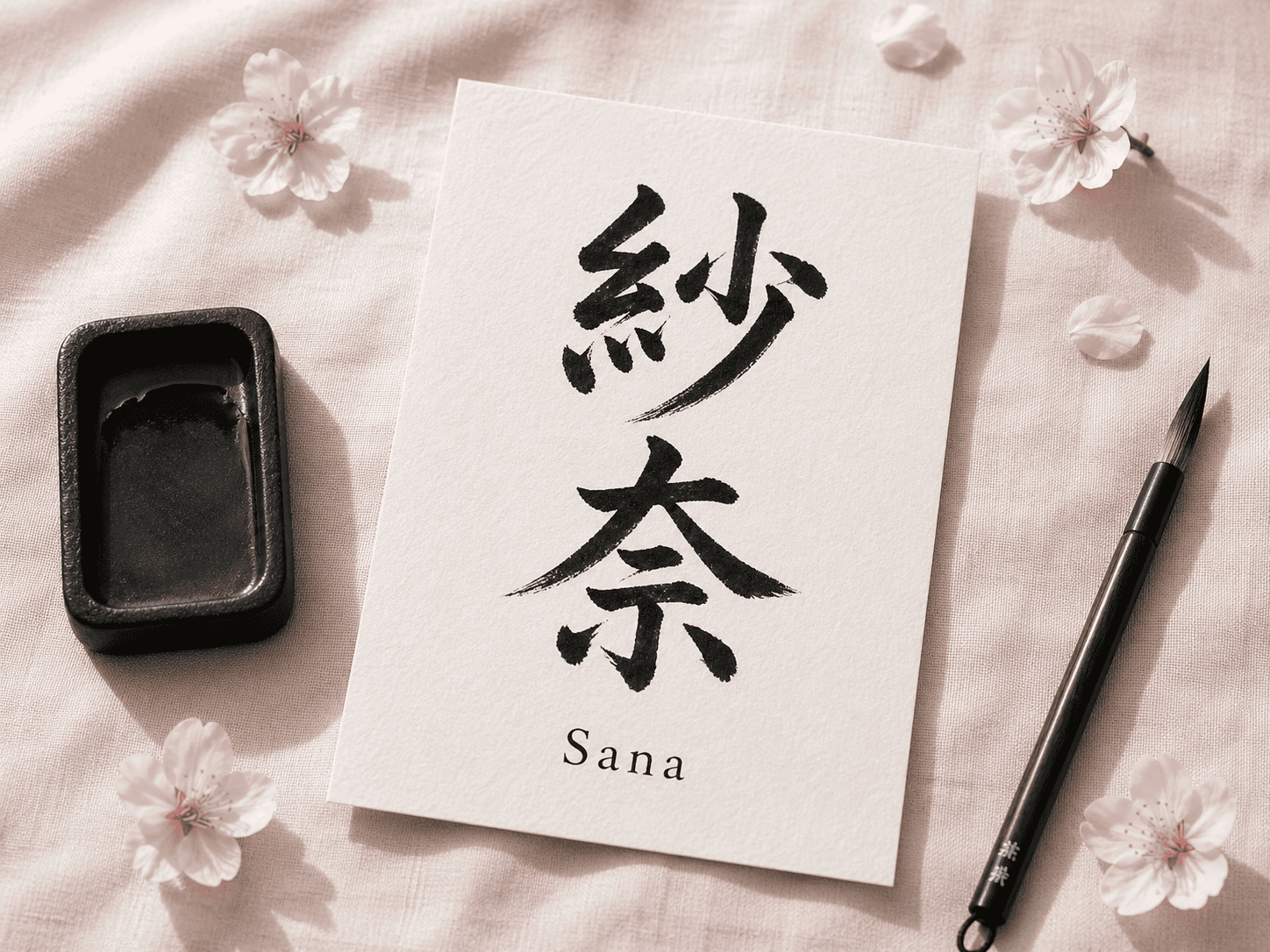
Each of those sits close to the same habit this piece describes — a character traced by hand, a name rendered in kanji, a page kept most mornings. None of them asks for a decision before you try it, and that lowers the cost of a first attempt more than any argument could.
The practice is recent in its packaging, but old in origin. Long before it reached a slide deck, ikigai was the subject of serious clinical study in Japan, carried out among people whose lives had none of the four circles to speak of. That research is the reason the word survives translation at all, and it points somewhere the diagram never does. To see how far back it goes, it helps to return to the psychiatrist who first studied it.
Mieko Kamiya and the research root
Long before the diagram, ikigai had a serious academic root. It belongs to a psychiatrist who studied the word among people the four circles would have left with nothing.
What Kamiya separated: the sources of meaning, and the felt sense the diagram fuses with them.
The psychiatrist Mieko Kamiya studied ikigai firsthand. She worked with patients at a leprosy sanatorium in mid-century Japan — people who had lost almost everything the diagram would call a circle. Her 1966 book, Ikigai ni Tsuite (On the Meaning of Life), is still treated as the foundational text by Japanese researchers. It has never been translated into English.
Kamiya separated two ideas that the diagram collapses. There is the source of meaning — the people, roles, memories, and activities a person holds onto. And there is the felt sense that life is worth living, which she called ikigai-kan. Her central finding ran against the grain of achievement. The strongest sense of ikigai did not come from status, wealth, or career success. It came from small, recurring meaning. It was often most present in those who had every external reason to feel they had none.
That is the lineage the ikigai venn diagram skips. The word arrives in English by way of a TED talk and a swapped label. Its actual research history is about something else: how people find a reason to keep going when the circles fall away.
Why the difference matters for how you live
This is not a pedantic point about a graphic. The two versions of ikigai send you in opposite directions. The diagram version asks a single large question: have you found the one pursuit that satisfies all four circles at once? For most people, the honest answer is no. The question then produces a low background anxiety about work, calling, and whether the job is the right one. It turns meaning into a problem to be optimized.
The Japanese version asks something smaller and more answerable. What, today, was worth noticing? It moves attention from the grand to the granular. Think of the first taste of a meal, a conversation that went well, a task done with care. You can practise that. You cannot practise a venn diagram. And the practice tends to compound. People who attend to small daily meaning report more of it over time. That is closer to how a reflective journaling practice actually works than to any career exercise.
The Return turns one unanswerable question into ninety answerable ones.
The takeaway is not that the circles are useless. As a career tool, Zuzunaga’s purpose diagram is a reasonable thing. The error is the label. Stop expecting ikigai to be the answer at the center of four circles. Start treating it as the thing you notice on an ordinary Tuesday. Then the word finally does what it was meant to do.
Ikigai journaling: the practice behind the real meaning
What is ikigai journaling? Ikigai journaling is a short daily writing practice rooted in the Japanese understanding of ikigai — noticing the small, ordinary sources of a life worth waking for — rather than solving the Western four-circle worksheet. A few minutes each morning, one prompt, one honest answer. Over weeks, the entries surface a pattern the diagram never could.
The difference in method follows directly from the difference in meaning. The Venn worksheet asks you to reason your way to a grand answer in one sitting. Ikigai journaling works the opposite direction: it assumes the answer is already scattered through your days, and gives you a structured way to collect it. Kamiya’s seven needs make natural prompt territory — life satisfaction, growth, a sense of future — and so do the five pillars. A set of ikigai journal prompts drawn from both is the simplest way to begin tonight, with nothing but a notebook.
For a practice with a spine, our guided journal takes the same principles across ninety days. The Return pairs a morning prompt with an evening reflection, moves through the themes at the root of the word, and asks for five minutes a day — long enough to notice, short enough to keep. It exists precisely because the diagram kept failing people who wanted the real thing.
Seeing the practice is faster than reading about it. The short film below pages through The Return — the morning prompt, the evening reflection, and the monthly review that turns ninety days of ikigai journaling into a record you can actually reread. The journal is not built on any single author’s framework; it is inspired by the root of what ikigai means — the reason you wake, noticed daily and written down.
Twenty seconds inside the practice — a morning prompt, answered by hand. Tap to play, with sound.
What the film shows is deliberately unremarkable: a question at the top of a page, a few lines underneath, a date. That is the entire mechanism, and its plainness is the point. The argument running through this piece is that the diagram fails not because it is inelegant but because it cannot be done daily, and anything that cannot be done daily never becomes a practice. A worksheet answered once is a worksheet. A question answered ninety times is a record of a life, and the difference between the two is only repetition.
Questions Worth Asking
Is the ikigai venn diagram Japanese?
Who created the ikigai diagram?
What is the real meaning of ikigai?
Is ikigai about finding your dream job?
What is the source for the claim that the ikigai diagram is not Japanese?
What is ikigai journaling?
How do I start an ikigai practice?
What follows from the real meaning
The diagram version produced a question: what is the one thing that fits all four circles? The Japanese version produces a habit instead. Notice what was worth living for today, and do it again tomorrow. That is the whole of the practice. It is more demanding than it sounds, because attention is harder to sustain than ambition.
A short, guided start is the easiest way in. Our 7-Day Ikigai Sampler sends one short prompt each morning for a week. It arrives by email, one small prompt a day.
Seven mornings of ikigai practice.
One short prompt a day, drawn from the roots of the tradition — a week of guided ikigai practice by email. Signing up also brings early access when new Japanese journals launch.
Done. Look for the first prompt in your inbox shortly.
Seven emails, one a day. Unsubscribe anytime.
Some readers would rather hold the practice in their hands. For them, the journal sequences ninety days of prompts, monthly reviews, and a beginning-and-end self-reading. It is drawn from the root of what ikigai means, rather than from the circles. The difference in format matters more than it sounds: a guided page removes the question of what to write about, and that question is what stops most people by the second week. Three editions carry the idea — the guided journal, in digital and print, and two open paperbacks for readers who prefer to set their own rhythm.
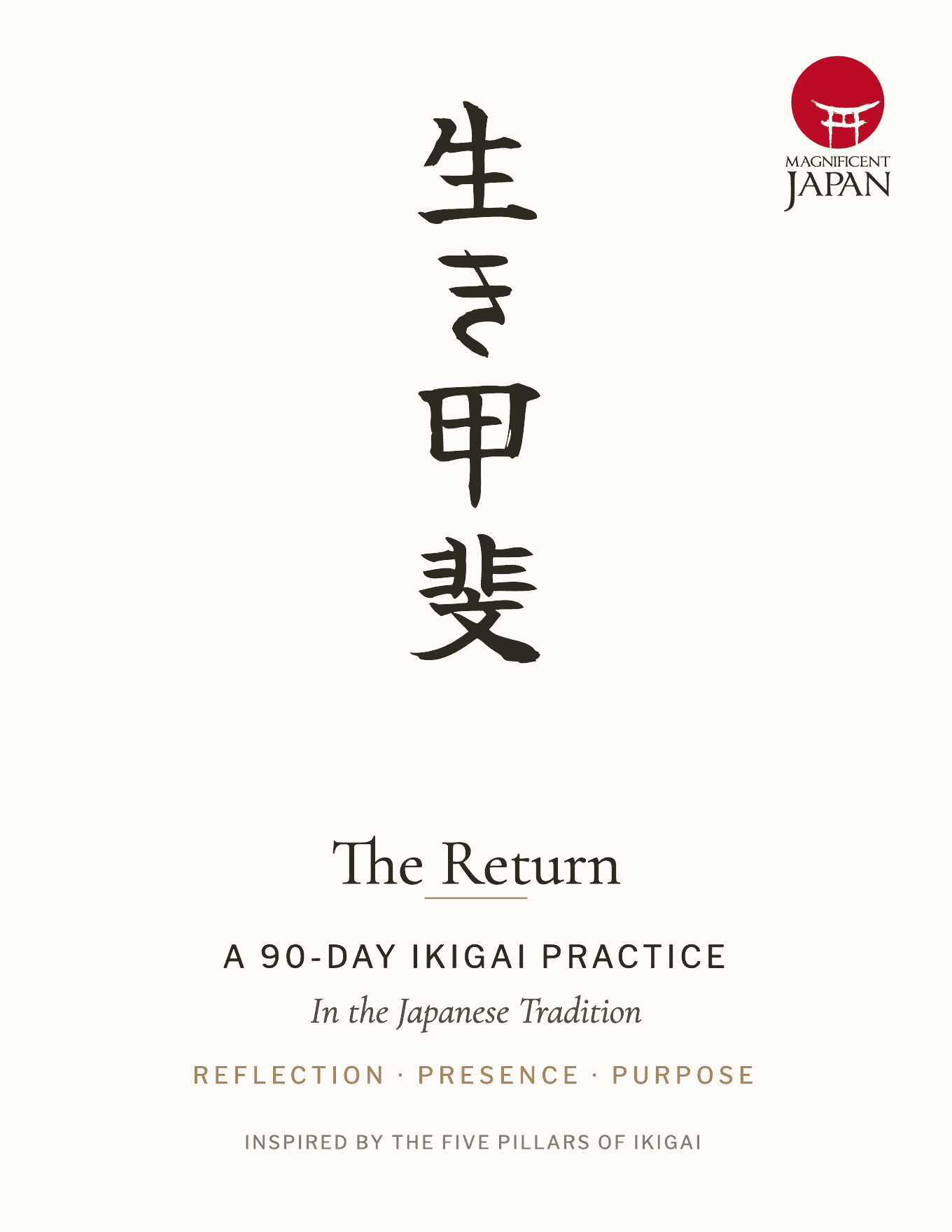
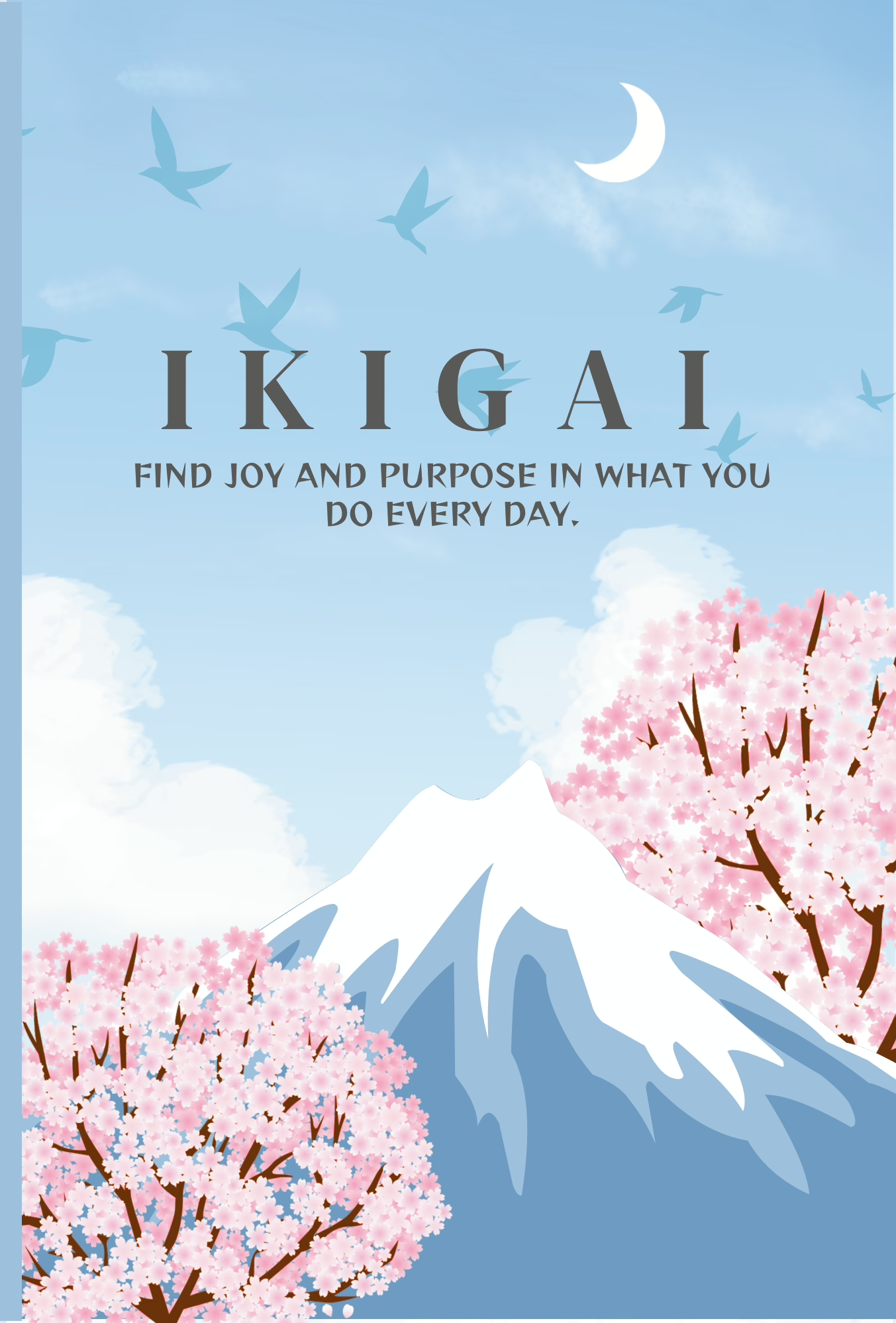

Whichever edition fits, the method is the same: a small noticing, most mornings, returned to until it holds. The guided edition simply removes the question of what to write about, which is the thing that stops most people by the second week. Ninety prompts arrive in a sequence, the weekly synthesis gathers them, and the monthly reviews set your first answers beside your last. Most readers who abandon a journal do not run out of interest. They run out of things to say on a blank page, on about day eleven, and never open it again.
Ninety mornings, one prompt each, with a weekly synthesis and monthly reviews. Written from what the word means rather than from the four circles, and designed to be answered by hand in five minutes.
View This JournalReading about a practice and keeping one are different skills, and the second is mostly logistics. A fixed time, a page already open, and a question you did not have to invent. That is the whole of the design, and it is why the guided form survives the fortnight where an empty notebook usually does not. Kamiya reached the same conclusion from the opposite direction, studying people for whom every external source of meaning had been removed. What remained was the noticing itself, repeated, and that is a thing you can build a page around.
Kamiya found ikigai in ordinary mornings, and Japan is still built around them — a slow breakfast, a tea room, a train that leaves exactly on time. When you would like to stand inside that Japan rather than read about it, we shape the route around how you want to travel.
Begin a Custom ItineraryTo go deeper, two pieces help. The pillar on what is ikigai gives the full definition and the five pillars. The guide to ikigai journal prompts shows how to turn the idea into a daily practice. The wider Magnificent Japan journals carry the same slow-attention register across other Japanese ideas.