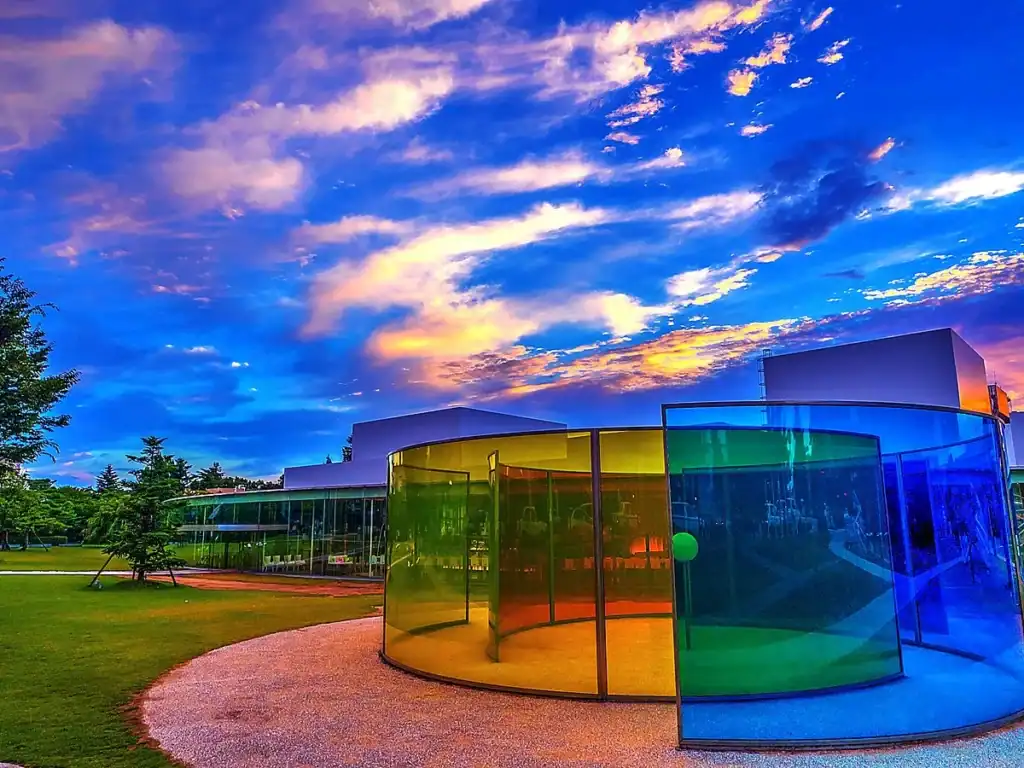
Japanese design principles are reshaping luxury far beyond Japan. In the boutiques of Milan and the lobbies of five-star hotels from New York to Dubai, a calm revolution is under way. Wabi-sabi, ma and a deep respect for space now guide how the most prestigious brands build rooms, stores and products. This shift is more than a passing trend. As buyers grow more discerning and more conscious of waste, the Japanese approach offers an alternative to loud displays of wealth. It favors the beauty found in simplicity, honest materials and a close bond with nature.
The timing matters, too. According to Bain & Company’s 2025 luxury study with Altagamma, personal luxury sales slipped about 2% from 2024, which the authors read as maturity rather than renewed momentum. Brands chasing loyalty in a slower market are turning to experience and meaning, and Japan supplies both. For the wider picture, start with our guide to planning luxury travel in Japan.
What are the core Japanese design principles?
The core Japanese design principles are wabi-sabi, the beauty of imperfection and age; ma, purposeful empty space; and mono no aware, a feeling for things that pass. Kanso, or simplicity, and shibui, understated elegance, support them. Together they explain why Japanese rooms feel calm and why luxury brands now borrow them.
The Foundation: Understanding Core Japanese Design Principles
To appreciate the global reach of Japanese design, start with its philosophy. Wabi-sabi is perhaps the most misunderstood idea in Western readings, and it goes far beyond minimalism. It celebrates imperfection, impermanence and incompleteness. Those qualities seem at odds with classic luxury marketing. Yet they speak directly to buyers who want something real. Ma, the idea of negative space or purposeful emptiness, plays an equally important role. Western design often fills every corner. Japanese design, by contrast, understands that what is absent can be more powerful than what is present. Space used with care creates a sense of exclusivity and calm that no amount of ornament can buy.
Each idea also has a practical side. Designers use them as working tools rather than slogans, testing every room, product and page against a simple question: does this element earn its place? If the answer is no, it goes, however attractive it may be.
The third pillar, mono no aware, translates roughly as “the pathos of things.” It is an awareness that beauty does not last. This idea has shaped everything from seasonal menus in fine restaurants to limited-edition collections. In each case, the brand acknowledges that a moment will pass, and that honesty creates an emotional bond. Two supporting ideas complete most lists. Kanso means simplicity, the removal of anything that does not serve a purpose. Shibui describes an understated elegance that reveals more the longer you look. A plain ceramic cup with a subtle glaze is shibui. Meanwhile, a room with nothing extra is kanso. Both explain why Japanese luxury rarely shouts.
Ma in Gardens and Museums
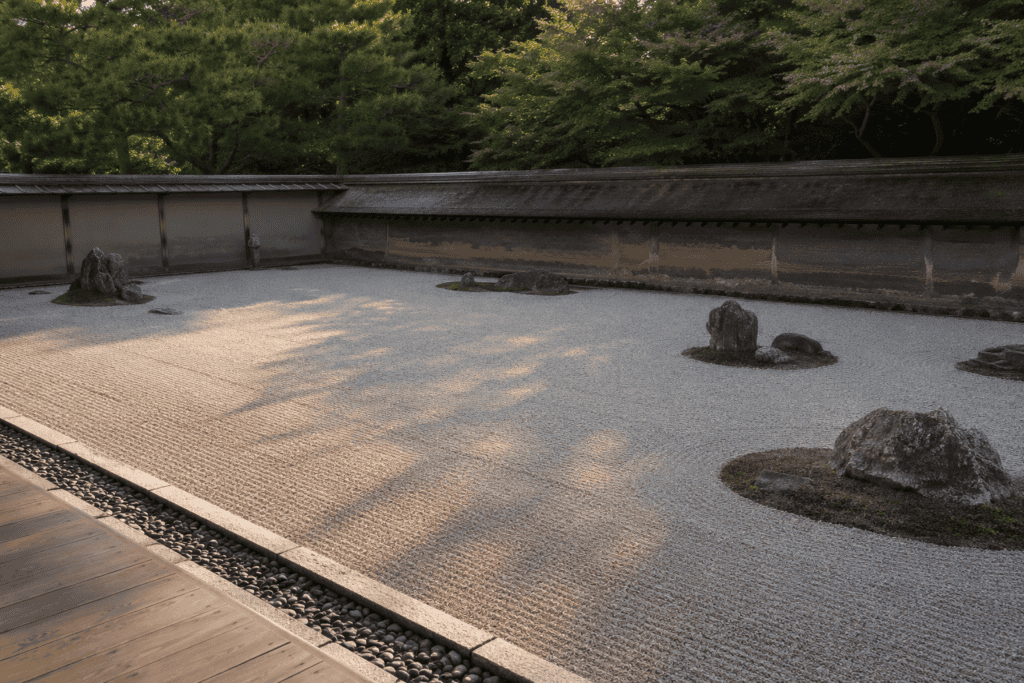
Ma is easiest to feel in a garden, where open gravel or still water sets the pace of the visit. Museums borrow the same trick indoors, using an empty courtyard or a long corridor to slow visitors before the art.

Kenya Hara and the Empty Container
Kenya Hara, the art director of Muji since 2001 and one of Japan’s most influential designers, puts the idea in a single image. He compares good design to an empty container, one that receives meaning rather than imposing it. That thinking has become a cornerstone of modern luxury design. In practice, the finest experiences look effortless while hiding layers of careful planning. A hotel corridor seems simply calm, yet the lighting, the materials and the sound have all been tuned. The guest feels the result without seeing the work. Hara’s own writing is the best way into that mindset.
Hara’s influence reaches well beyond Muji. His work for the Nagano Winter Olympics, for Japanese department stores and for exhibitions abroad all rests on the same respect for emptiness. His books explain the thinking clearly, in short chapters that reward slow reading.
White by Kenya Hara — the Muji designer on emptiness

Before he shaped Muji’s identity, Kenya Hara spent years thinking about one color. White is not really a book about color, though. Instead, it explores white as the root of Japanese aesthetics, a symbol of simplicity, subtlety and the empty container. Hara argues that good design, like good conversation, listens rather than pushes.
That idea of the empty vessel runs through every principle in this guide. The book is small, beautifully made and easy to read in an afternoon. It also suits anyone who works in branding, hospitality or retail. Keep it beside you on a design trip, and the stores of Ginza will start to make more sense.
The principles above are easy to name and harder to see in action. Architecture is where they become visible at full scale, because a building has to decide what to leave empty and how light should enter. Japan’s architects have turned those decisions into an international language. The next section follows how tradition and technology meet in their work.
For travelers, these ideas are not abstract. They decide how a hotel room feels at the end of a long day. They also explain why a shop seems calm even when it is busy, and why a simple lunch in Kyoto can feel like an occasion. Once you know the vocabulary, you start to notice it everywhere, from the spacing of stepping stones to the way a receptionist hands over a key with both hands. The guides below show where to see it at its best.
You may also like

Architectural Innovation: Where Tradition Meets the Future
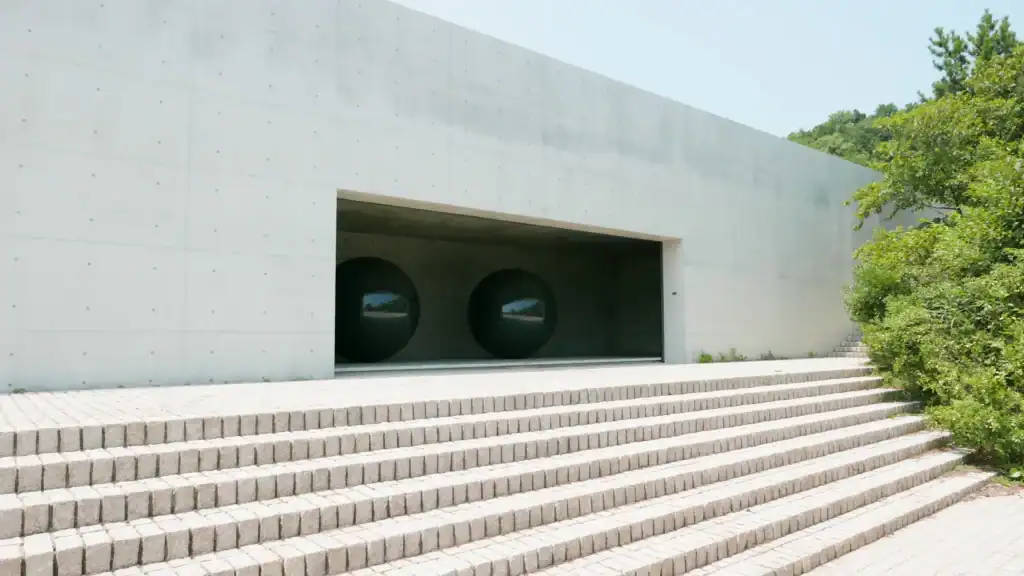
Japanese architecture has evolved remarkably. Contemporary architects blend traditional principles with new technology and sustainable building. Tadao Ando’s concrete structures, for example, put light, shadow and geometry first. His influence now shows in luxury developments worldwide, from private homes to museums. Sou Fujimoto, another influential voice, has said he once saw boundaries between inside and outside in his work and wanted them to disappear. That idea shows up in luxury hotels and stores that blur indoor and outdoor space. As a result, the rooms feel both refined and organic.
Naoshima is the clearest place to see Ando’s approach at full scale. Several of his buildings sit on one small island. A single day lets you walk from one to the next and compare them side by side in the same light.
Biophilic design has become a hallmark of these spaces. Natural light, wood and stone, water features and plants all appear, and none of them is mere decoration. Together, they create rooms that support well-being and calm. Affluent travelers and shoppers increasingly value exactly that. The profession’s top honor tells the same story. When Riken Yamamoto won the Pritzker Prize in 2024, he became the ninth Japanese laureate, more than any other country has produced. International firms, therefore, study Japanese practice closely. The point is not to copy a style. Rather, it is to understand the philosophy that makes these buildings so compelling.
Many Japanese museums now treat the building as part of the exhibit. Natural light, timber and stone are chosen to frame the art rather than compete with it. The visitor’s route is planned as carefully as the displays themselves, room by room.
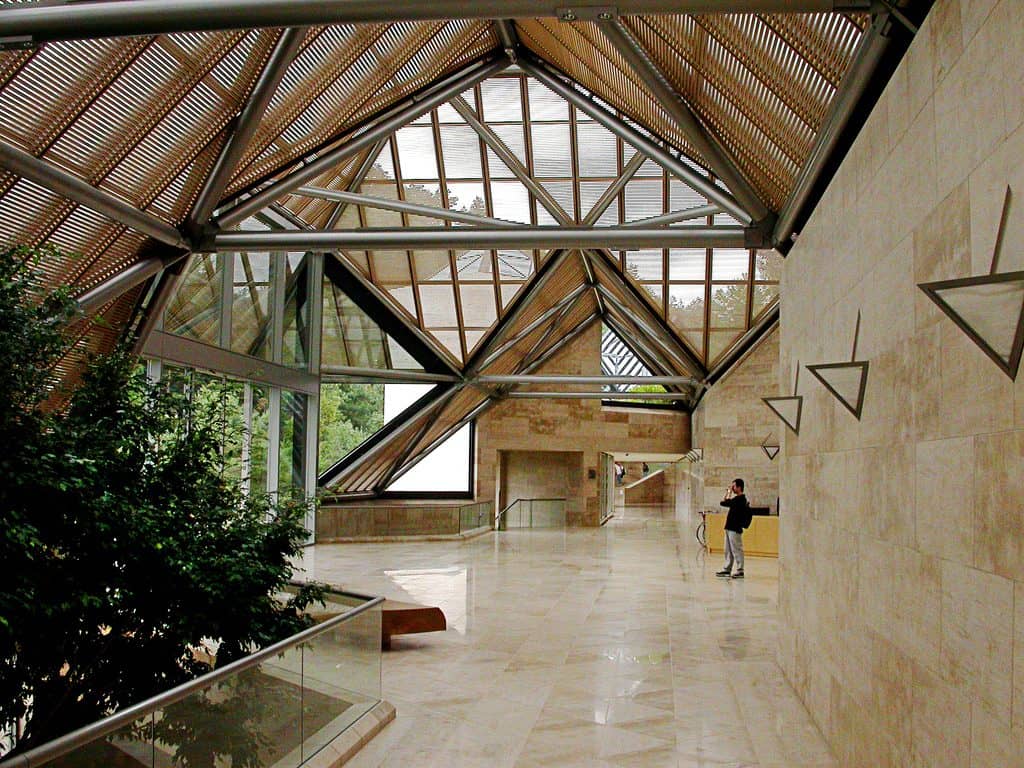
The Nezu Museum
Tokyo offers a clear lesson in Minami-Aoyama. The Nezu Museum was rebuilt to a design by Kengo Kuma and completed in 2009. According to the museum, Kuma sought harmony between the building, its collection and its garden. Its glass entrance hall frames the garden like a living scroll. Walk through it slowly, then look back at the low roof against the trees. For anyone who wants to study the objects behind these buildings, one book gathers them in a single, generous volume.
Objects tell the same story at a smaller scale. A teapot, a lamp or a box can carry as much design thinking as a museum, and they are far easier to bring home in a suitcase. Choosing one object well, and using it daily, is the most personal way to keep a design trip alive.
Shops in Japan’s museums are worth a visit for the same reason. Many stock small objects by contemporary designers and craft workshops, chosen to echo the building and the collection, and they make thoughtful souvenirs.
WA: The Essence of Japanese Design — 300 objects by material
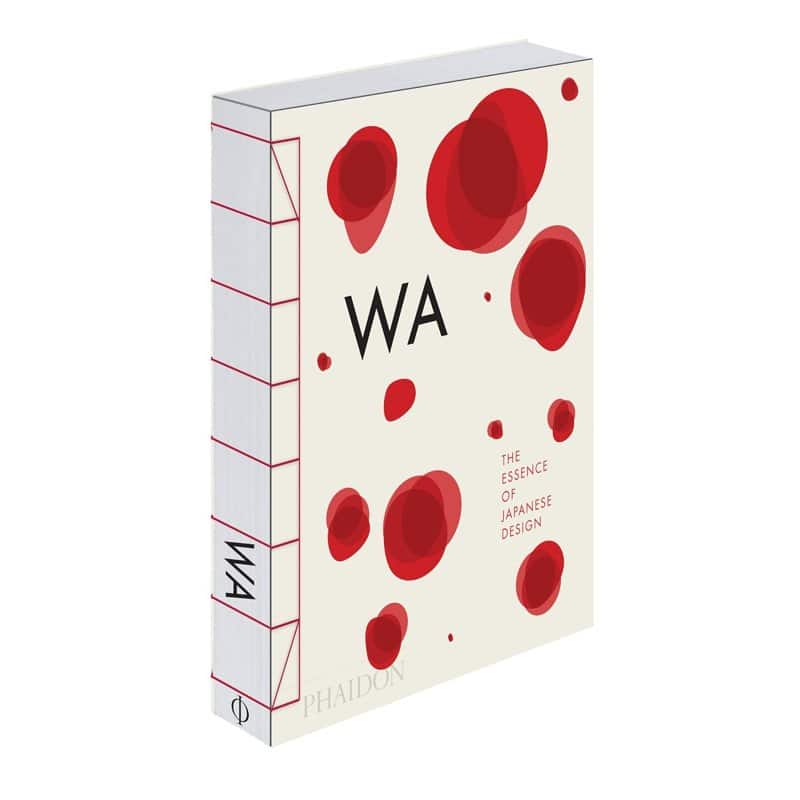
Published by Phaidon, WA: The Essence of Japanese Design gathers some 300 objects, from packaging and lighting to furniture and interiors. Rossella Menegazzo and Stefania Piotti wrote it with Kenya Hara. Instead of following designers or dates, the book is organized by material: wood, paper, ceramic, metal, plastic and more.
That structure reveals how closely Japanese design follows its materials. A lacquer box and a modern lamp sit side by side, linked by the same respect for surface. Above all, it shows Japanese design principles at the scale of a hand rather than a building, which is where most of us meet them.
Training the Eye
Design books like this one also train the eye for travel. After an evening spent turning its pages, a walk through a Japanese department store becomes a lesson in materials, from lacquer and paper to tin, glass and cedar. You begin to notice how a box is folded, how a label is placed and how much empty space surrounds each item on a shelf. That habit of looking closely is the real souvenir of any design trip, and it costs nothing to keep. Bring the habit home, too. A single well-made object, placed with care, can change how an entire room feels.
Once you start noticing materials, you will see them everywhere in Japan, from the cedar of a bath to the paper of a lantern. Each one was chosen with care, and learning to read them makes every room more interesting.
Hotels translate these ideas into a complete experience. A guest does not just look at a building; they sleep, bathe and eat inside it. That makes hospitality the most demanding test of Japanese design principles, and the most persuasive one. When the light, the materials and the service all agree, the result feels like care rather than décor.
Luxury Hospitality: Hotels Embracing Japanese Design
The hospitality industry has embraced Japanese design with particular enthusiasm. Luxury hotels worldwide now use its principles to create distinctive stays. The Park Hyatt Tokyo, made famous by the film “Lost in Translation,” remains a masterclass in atmosphere. It reopened in December 2025 after a renovation that began in May 2024, with slightly fewer, larger rooms.
Japanese hotels also design for the senses that photographs miss. Guests notice the weight of a door, the scent of hinoki wood in a bathroom and the near silence of a corridor long before they notice the furniture. Architects work with acoustic engineers and craftsmen to tune these details, because they shape the feeling of calm more than any single piece of decor. It is a level of care that many international brands now try to copy, with mixed results.

International chains have followed. The EDITION brand, created by Ian Schrager with Marriott, opened The Tokyo EDITION, Toranomon as its first hotel in Japan. A second, The Tokyo EDITION, Ginza, followed, again with Kengo Kuma. Both show how Japanese principles adapt to a global brand while keeping their essential character. Their success lies in more than looks. It rests on omotenashi, a form of hospitality that anticipates a guest’s needs before they are voiced. This idea has shaped service standards at luxury hotels worldwide. As a result, a stay becomes something closer to an art than simple accommodation.
Service completes the design. In the best hotels, staff move unhurriedly and speak softly, so the space never feels crowded, even when it is full. Guests often say the calm comes as much from people as from rooms, and the best hotels train for exactly that.

Ryokan Abroad
Luxury ryokan, the traditional Japanese inns, have also won international recognition. Hoshino Resorts took its Hoshinoya brand abroad with Hoshinoya Bali in 2017 and Hoshinoya Guguan in Taiwan in 2019. Each of Guguan’s 50 rooms has its own outdoor hot spring bath. These properties prove that tradition can meet modern luxury without losing comfort.
Inside a Ryokan
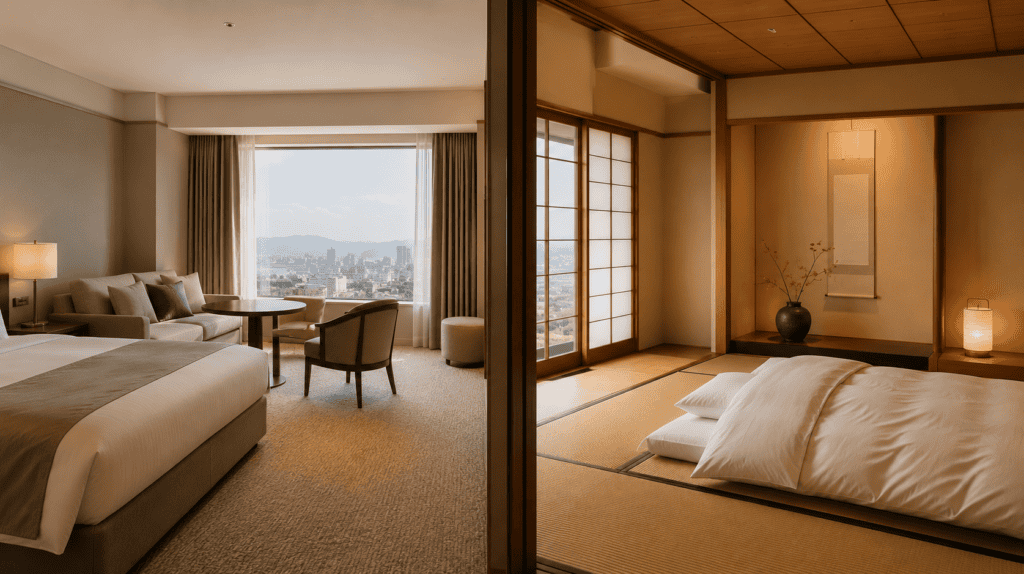
Inside a ryokan, the details carry the philosophy. Shoes come off at the door. A low table faces the garden, and tea arrives in the room soon after you do. Nothing is crowded, so each object receives attention. For a deeper look at these inns, see our guide to the best luxury ryokan in Japan.
Hoshinoya Tokyo shows how far the idea can go in a modern city. The hotel occupies a tall tower in the Otemachi business district, yet guests remove their shoes at the entrance and walk on tatami throughout the building. Each floor has its own lounge, where tea and small snacks are served through the day. The effect is of a traditional inn stacked vertically, a design that turns a skyscraper into a place of calm. It is one of the best examples of these ideas applied at urban scale.
The tea itself is part of the design. Hosts choose the kettle, the cups and the tray as carefully as the room, because guests notice them first. One modern kettle has become an icon of that idea in Japanese homes.
Choosing that tea service is a small act of design in itself. Hosts in Japan think about the weight of the cup, the color of the tea against the glaze and the sound the kettle makes on the stove. Even a modest home kitchen can follow the same logic, starting with one object made to last. A good kettle, used every morning, teaches more about kanso than any book, because you feel its balance in your hand each time you pour.
Sori Yanagi Kettle — a Japanese design classic for the stove
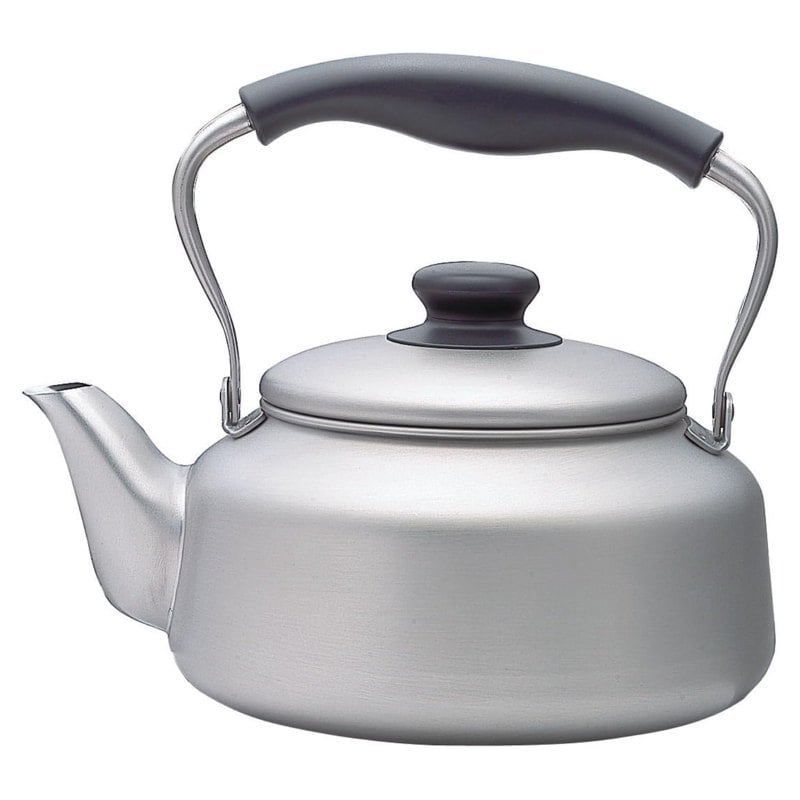
Sori Yanagi was one of Japan’s great postwar industrial designers, and his stainless steel kettle shows why. The form is simple, with a wide base that heats water efficiently on gas or induction. Small details, such as the recess at the back of the handle, make it easy to pour with one finger.
It is made in Japan, and its brushed finish hides fingerprints well. Set it on the stove and it looks complete without decoration. That is kanso in a single object. Use it for a morning pot of sencha, and the ritual of a ryokan room comes home with you.
Craft Towns and Tableware
The same thinking runs through Japanese tableware, from Hasami porcelain to Takaoka tin and Kanazawa lacquer. Each craft town has its own materials and techniques, yet they share a respect for use over display. Pieces are meant to be handled daily, washed, stacked and passed down. Buying one well-made object, rather than a set of disposable ones, is the simplest way to bring that philosophy into your own kitchen. It often becomes the piece guests ask about first. Many of those craft towns welcome visitors. A workshop tour gives the objects a story you will remember every time you use them.
Many design hotels in Japan now display local crafts in their rooms and lounges. Ask at the front desk about the makers, and staff will often share the workshop’s name and where to find more of its work nearby, sometimes within walking distance.
Ten Proverbs to Carry With You
A printable folio of ten Japanese proverbs, each with a short note on where it shows up in daily life. Several speak to patience, craft and care. Leave your email and the printable arrives in your inbox, followed by an occasional letter on Japan.
Retail may be where Japanese design principles have changed the most. A store has to sell, and selling usually means filling shelves. Japanese-influenced retail does the opposite. It gives each product room, slows the visitor down and treats shopping as a calm experience. The results have spread from Tokyo’s flagship streets to shopping districts around the world.
Retail Revolution: Japanese Aesthetics in Commercial Spaces
Retail has perhaps changed most through Japanese influence. Luxury brands have found that wabi-sabi and minimalism create stores that invite reflection. Visitors connect with products emotionally, so purchases become more meaningful and less impulsive. Apple’s stores are often compared with Japanese minimalism, and Steve Jobs’ admiration for Japanese design is well documented. Natural materials, careful lighting and generous spacing make technology feel approachable and human. Whatever the exact lineage, the stores show how restraint can sell.
Ginza and Omotesando
Tokyo’s flagship streets are the best classroom for this. In Ginza and Omotesando, global brands compete to commission Japanese and international architects, and the results line the sidewalks like an open-air museum. Walk them slowly in the early evening, when the facades light up and the crowds thin. Notice how many buildings rely on a single material, such as glass block, perforated metal or timber, rather than signage, to announce the brand inside. Restraint, here, is the loudest statement on the street.

Fashion brands have been especially inventive. Comme des Garçons’ Dover Street Market stores feel more like galleries than shops. They encourage exploration and discovery, reflecting ikigai, the Japanese idea of finding purpose and joy in everyday activity. The influence extends to whole districts. Renovations of luxury shopping areas in London, New York and Paris have drawn on Japanese design, with natural materials, water features and curated sightlines that guide visitors along. In Tokyo itself, our guide to Tokyo’s shopping districts maps where to see the best of it. For those who want to understand how space affects feeling, one book explains the idea better than any store.
Good stores, in short, work on the visitor before any product is touched. The light, the scent and the width of the aisles all shape how long people stay and how they feel, and Japanese retailers plan each of them deliberately.
The Architecture of Happiness by Alain de Botton — why rooms move us
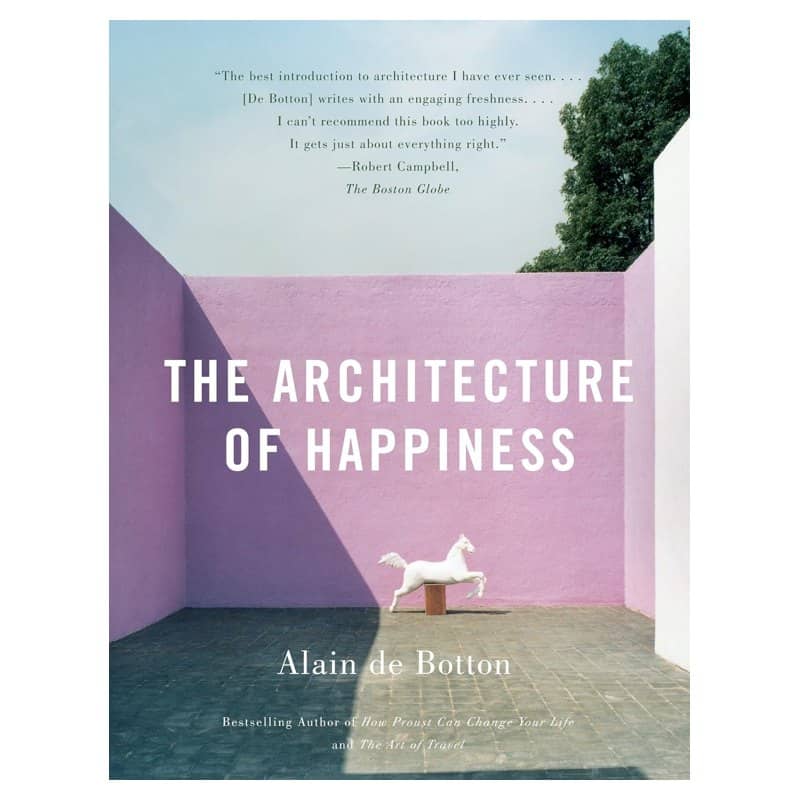
Alain de Botton starts from a simple claim: where we are shapes who we can be. The Architecture of Happiness explores why some walls, chairs and streets lift us while others wear us down. It is generously illustrated and written for general readers, not architects.
The book is not about Japan, yet it explains exactly why Japanese-influenced spaces feel calming. De Botton shows that buildings speak to us, and that a room can remind us of our better selves. The Vintage paperback runs to 280 pages. It is the ideal companion for anyone visiting Ginza with an eye for design.
Old and New Side by Side
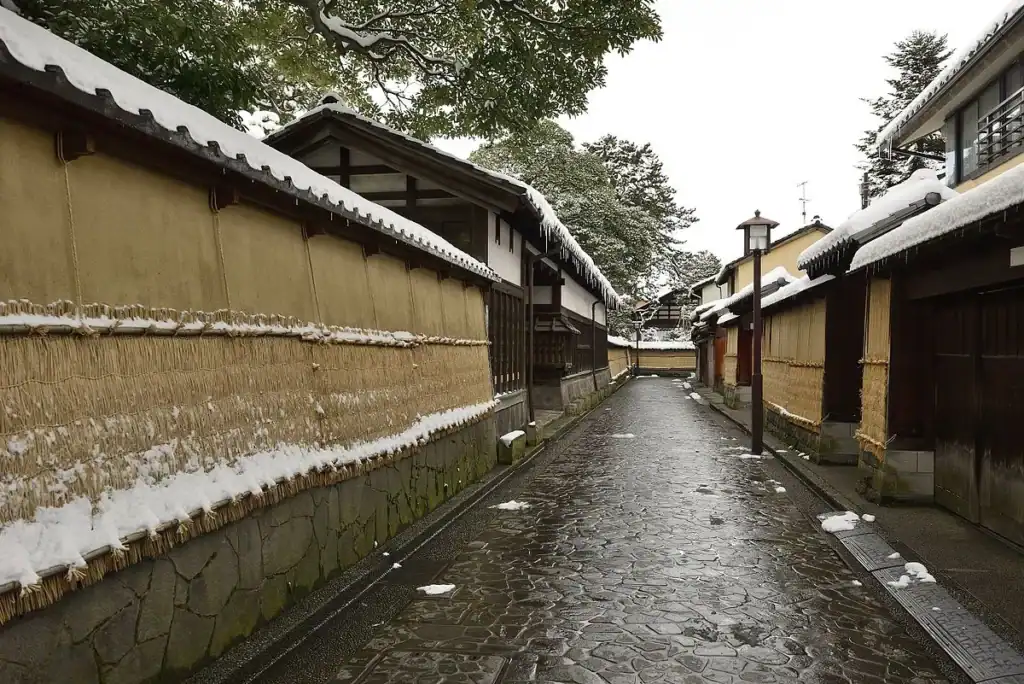
De Botton’s ideas pair naturally with a walk through Japanese cities, where old and new buildings stand side by side. A wooden machiya townhouse can sit next to a glass tower, and both can feel calm if they are well made. That contrast is one of the pleasures of design travel in Japan. Comparing the two teaches more about proportion, light and material than any textbook, because you can feel the difference with your own body as you move between them. Kanazawa and Naoshima, covered in the guides below, are two of the best places to see that dialogue up close.
Kanazawa is especially rewarding for this kind of comparison. Its samurai and teahouse districts sit a short walk from contemporary museums, so old and new design can be seen within a single afternoon. The city is compact and easy to walk, with buses linking the main districts.
You may also like


Reading prepares the eye, but nothing replaces walking through these places yourself. Japan rewards a design-minded traveler more than almost any country, because the old and the new sit within a short train ride. A good trip moves between scales, pairing a garden with a museum and a workshop with a flagship store. The tips below build that route, from historic gardens to contemporary towers.
Tips for Design Lovers Visiting Japan
Start With Historic Gardens
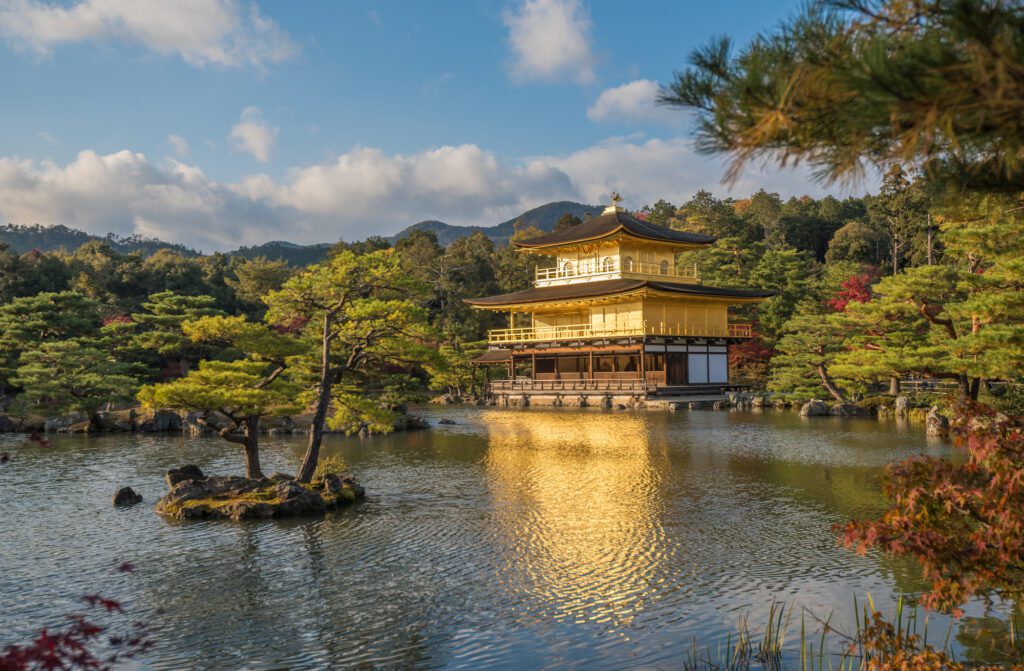
Begin at Kinkaku-ji, the Golden Pavilion in Kyoto, and the rock garden at Ryoan-ji, two of Japan’s World Heritage Sites. Both show the basics of Japanese aesthetics in their purest form. Notice how space, light and natural elements work together to create atmosphere.
Seeing the principles on site also changes how you plan a day. Design-minded travelers often visit fewer places and stay longer in each, timing gardens for early morning and museums for late afternoon light. That slower rhythm is itself an application of ma, leaving space between experiences so each one can register. It also avoids the crowds. Most tour groups follow the opposite pattern and arrive at the famous sights in the middle of the day, when the light is flat.
Experience Contemporary Architecture
Visit the Nezu Museum in Tokyo, designed by Kengo Kuma, to see traditional principles in a modern building. Its relationship with the surrounding garden shows shakkei, or borrowed scenery, in action. Afterward, walk the boutiques of Omotesando, where many buildings are by Japanese architects.
Stay in Design-Forward Hotels
Book a night at Hoshinoya Tokyo or The Capitol Hotel Tokyu to feel how these principles create luxury. Notice how each property uses natural materials, lighting and spatial flow. In both, a dense city falls away once the door closes. Architecture lovers can build a whole route around Japan’s living architects. Kengo Kuma, Tadao Ando, Toyo Ito and the SANAA partnership have all left major buildings in Tokyo, Kanazawa and the Seto Inland Sea. Many are public museums or shops, so they are easy to visit without special access. A good plan groups them by neighborhood, so you can walk between them and see how each responds to its street, its light and the buildings around it.

Explore Retail Spaces
Walk Ginza’s flagship streets, especially Renzo Piano’s Maison Hermès and Toyo Ito’s Mikimoto building. The Hermès facade uses about 13,000 glass blocks, each about 18 inches square. It reads as a modern paper screen by day and glows like a lantern at night.
Study Traditional Crafts
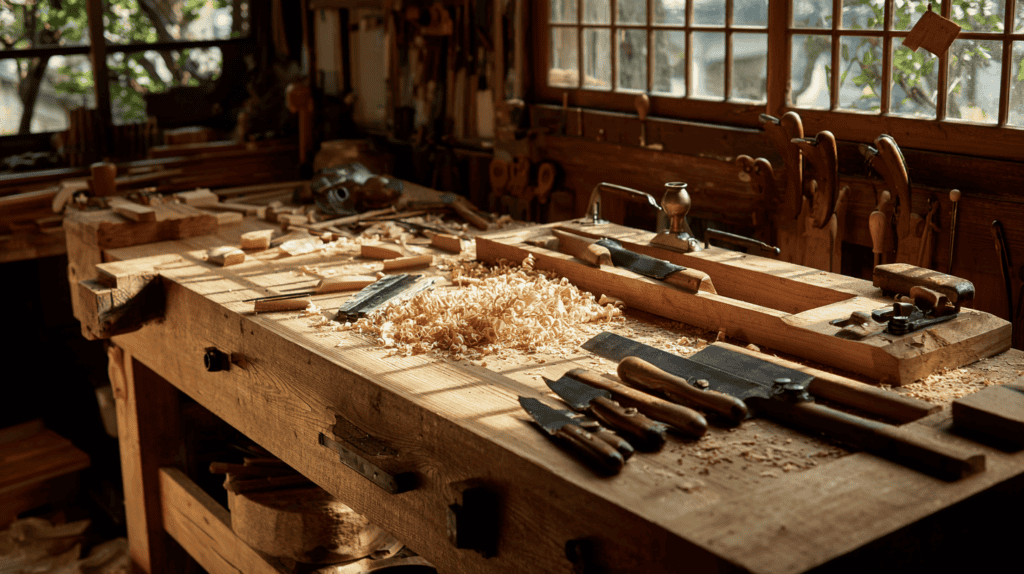
Spend time in workshops where traditional crafts are still practiced. The attention to detail and respect for materials there shape contemporary luxury design. Kanazawa, Takaoka and the pottery towns of Kyushu all welcome visitors. Soetsu Yanagi’s book, below, gives excellent background.
Gardens deserve the same attention. Kanazawa’s Kenrokuen, Kyoto’s moss gardens and the dry gardens of the city’s old estates each show a different balance of plants, stone, water and space. Visit one garden in each season if you can, because the design changes with the light and the weather. Gardeners in Japan plan for those changes years ahead, pruning and shaping each tree so that it looks natural rather than controlled. That is design at its most patient and generous, and each garden rewards a second visit.
Takaoka, in Toyama, is a good example. The city has cast bronze and other metals for centuries, and its workshops now make modern tableware as well. One of them makes objects you can bend by hand, a playful twist on an old metalworking tradition.
Craft towns reward a slow pace. Many workshops offer short sessions where visitors can try a technique, such as polishing lacquer, throwing a bowl or shaping metal, under a craftsman’s eye. Book ahead, since sessions are small, and allow time to talk with the makers afterward. Their explanations of materials and tools often reveal more about Japanese design than any museum label, and the piece you make becomes a lasting reminder of the visit. Takaoka, in Toyama Prefecture, is a good example of a craft town that has modernized without losing its roots. Its workshops are easy to reach by train from Kanazawa in under an hour.
Nousaku Foldable Tin Basket — a Takaoka craft you shape by hand
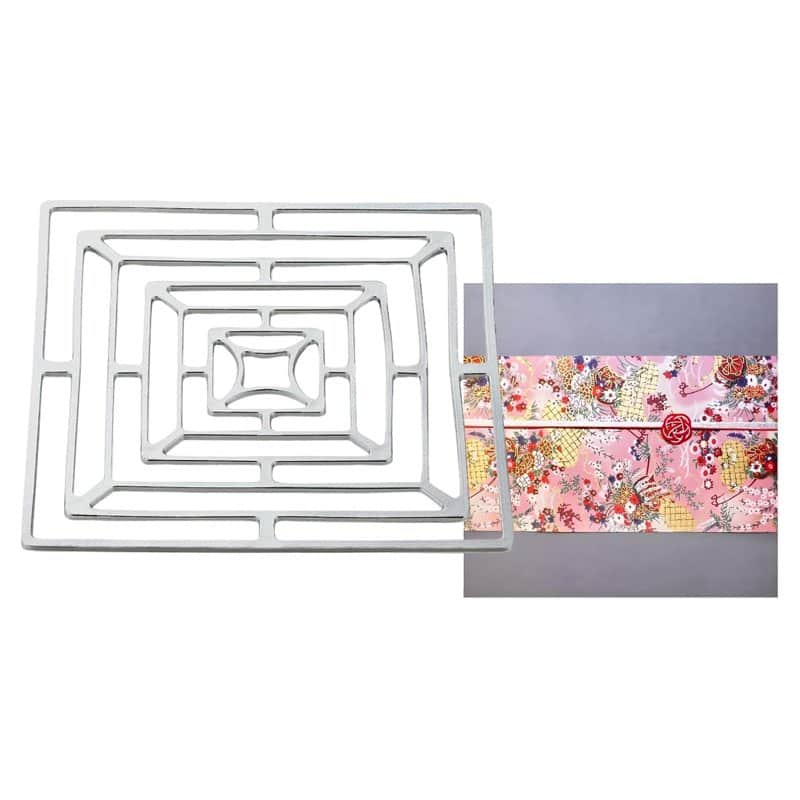
Nousaku began as a casting workshop in Takaoka, and its foldable tin basket turns that heritage into something playful. It arrives as a flat grid of 100% tin, about 7.9 inches square, hand-finished in Takaoka. Because tin is so soft, you bend it into whatever shape the table needs.
Use it as a bowl for fruit or bread, or as a catch-all by the door. Then flatten it again for storage. The material softens with use and gains a gentle patina, which is wabi-sabi you can watch happen. It also arrives gift boxed, a thoughtful present for a design-minded host.
Objects like this show how Japanese craft adapts to modern homes. The material is traditional, yet the design is playful and practical, made for a table rather than a display case. That balance between heritage and everyday use is exactly what many luxury brands now try to capture. Buying from the workshops themselves, or from stores that credit the makers, keeps those skills alive for the next generation of craftsmen in towns like Takaoka. Many workshops also sell seconds or smaller pieces, an easy way to start a collection.
Before you buy, ask how a piece should be cared for. Tin, lacquer and unglazed clay each age differently, and makers are usually glad to explain how to keep an object beautiful for many years. Their advice often turns a purchase into a long relationship with a workshop.
Document Spatial Relationships
Take photographs that capture not just objects but the spaces between them. Japanese design is as much about what is absent as what is present. Understanding ma, the art of negative space, is essential to the aesthetic.
Visit in Different Seasons
Japanese design is tied closely to seasonal change. Visit the same places at different times of year to see how the aesthetic adapts to natural cycles. That principle matters more and more in sustainable luxury design. Kanazawa makes a perfect base for several of these tips at once. Its old samurai streets, its garden and its contemporary art museum sit within walking distance. Our guide to Kanazawa, the city called Little Kyoto covers the route in full.
Spend at least one evening of a design trip simply walking. Residential streets in Tokyo and Kyoto are full of small, careful details: a bamboo fence, a potted maple by a doorway, a shopfront lit by a single lamp. None of them appear in guidebooks, yet together they explain the national taste better than any landmark. Bring a notebook and sketch what you see, because drawing forces you to notice proportion and spacing in a way a photograph never does.
Recommended
Travel also reveals how easily these ideas go wrong when they are copied without care. Many hotels and stores outside Japan borrow the look but miss the thinking. A few pitfalls appear again and again, and recognizing them makes the real thing easier to spot. The most common mistakes are below.
Common Mistakes to Avoid
Confusing Minimalism With Emptiness
True Japanese minimalism is not about owning fewer things, nor about bare white walls. Instead, it is about having the right things in the right relationships. Every element serves a purpose and adds to the harmony of the whole.
When copying Japanese design at home, start with what you remove rather than what you add. Clear a single surface or corner completely, then return only the objects that are useful or genuinely loved. Leave space around each one, and choose natural materials where you can. The result will not look like a showroom, and it should not. Japanese design principles aim for a lived-in calm that suits the people who use the room every day, not a photograph taken for strangers.
Ten Proverbs to Carry With You
A printable folio of ten Japanese proverbs, each with a short note on where it shows up in daily life. Several speak to craft, patience and care. Leave your email and the printable arrives in your inbox, followed by an occasional letter on Japan.
A second mistake is treating Japanese design as a single style. In fact, it ranges from the austere calm of a dry garden to the rich color of Kutani porcelain and the gold of a lacquer box. What unites them is not a look but a way of thinking about materials, use and space. Studying regional crafts reveals that variety. Ishikawa Prefecture alone produces gold leaf, lacquer, porcelain and silk dyeing, each with its own palette. All of them rest on the same respect for skill and season.
Keep that variety in mind when you shop or decorate at home. A room can hold bold color and still feel Japanese. Each piece simply needs to be placed with care and given enough space to breathe, and the whole room stays calm.
Ignoring Cultural Context
Copying Japanese elements without understanding their meaning often produces shallow results. The surface looks right, yet the depth is missing. Learn why a tokonoma holds one object in the Japanese tea ceremony, and the room you design will improve.
Overlooking Craftsmanship
Japanese design values execution as much as the idea itself. Rushing construction or using poor materials undermines the whole philosophy. The best antidote is a book written more than half a century ago. Craftsmanship takes time to recognize. Learn to look at joints, edges and the underside of objects, where makers either take care or cut corners. The hidden surfaces tell the truth about any piece.
Yanagi spent his life teaching people to see that care. He collected everyday objects made by anonymous craftsmen, such as rice bowls, textiles and wooden tools, and argued that their beauty came from honest use rather than artistic ambition. His thinking inspired the Japan Folk Crafts Museum in Tokyo, which still displays his collection. A visit there is the perfect companion to the craft towns, and the building itself is a lesson in simple, sturdy design. It rewards a slow, unhurried hour.
The Unknown Craftsman by Soetsu Yanagi — a classic on handmade beauty
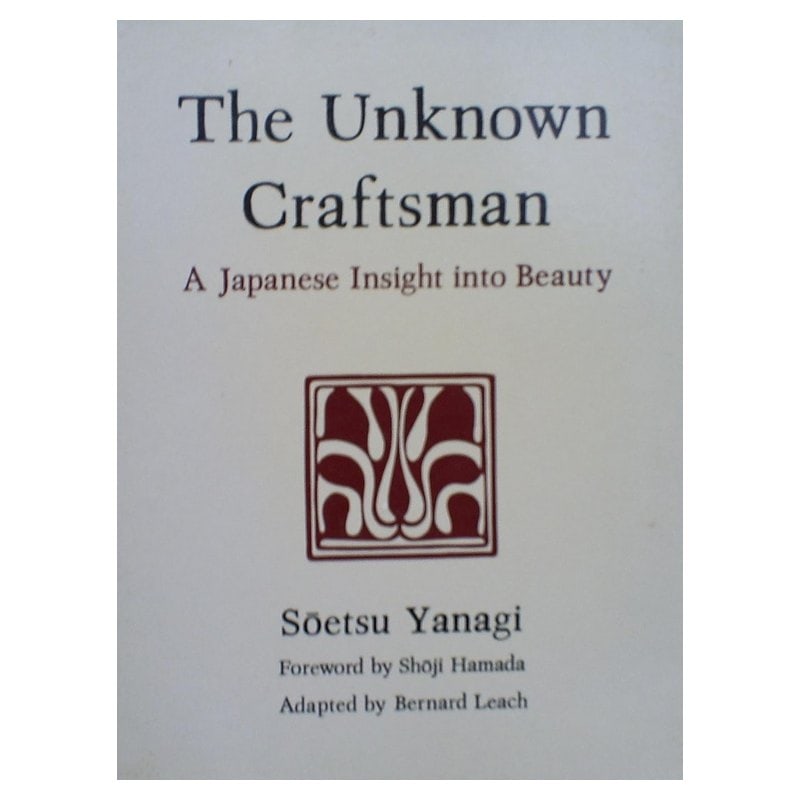
Soetsu Yanagi founded Japan’s folk craft movement, and The Unknown Craftsman is his essential book in English. Adapted by the potter Bernard Leach, it asks why a roughly lacquered farmhouse bowl can be beautiful. Yanagi’s answer is the value of anonymous handwork, objects “born, not made.”
The essays explain why Japanese designers still prize materials, repetition and humility. As a result, the book reads as a warning against shortcuts and a case for patience. It also pairs naturally with visits to Japan’s many craft towns. Read a chapter each evening of a trip, and the workshops will feel familiar too.
Yanagi’s ideas also explain why handmade objects feel different from factory goods. Small variations in glaze or grain give each piece its own character, so no two are quite the same. That is wabi-sabi in practice, and it is why many luxury buyers now seek out named makers rather than famous brands. The essays below explore the same ideas from other angles, from the pause of ma to slow, sustainable travel across Japan and its craft regions. Read them before your trip, and the workshops and gardens you visit will make more sense.
The Japan Folk Crafts Museum sits in Komaba, a short train ride from Shibuya. Allow an hour, and check opening days before you go, since it closes for exhibition changes between shows. The museum shop sells modern folk crafts made in the same spirit as the collection.
You may also like


Most of these principles also work at home, and they need no renovation to try. A single shelf, a well-made cup and a seasonal branch can teach more than a showroom. The key is to start small, choose natural materials and leave space around each object. The next section suggests where to begin.
Japanese Design Principles at Home
Begin with one surface, such as a shelf or a side table. Clear it completely, then return only what you love and use. Give each object room, and turn its best side to the room. Consequently, the surface becomes a small composition rather than storage.
Kitchens are a good place to begin, because they hold the objects we touch most often. Replace one plastic container with a ceramic or wooden one, and notice how it changes the routine. Many people find that a single good bowl, knife or kettle makes cooking feel calmer and more deliberate. Japanese households often own fewer kitchen tools than Western ones, but each is chosen carefully and used for decades, which is kanso and wabi-sabi working together every day.
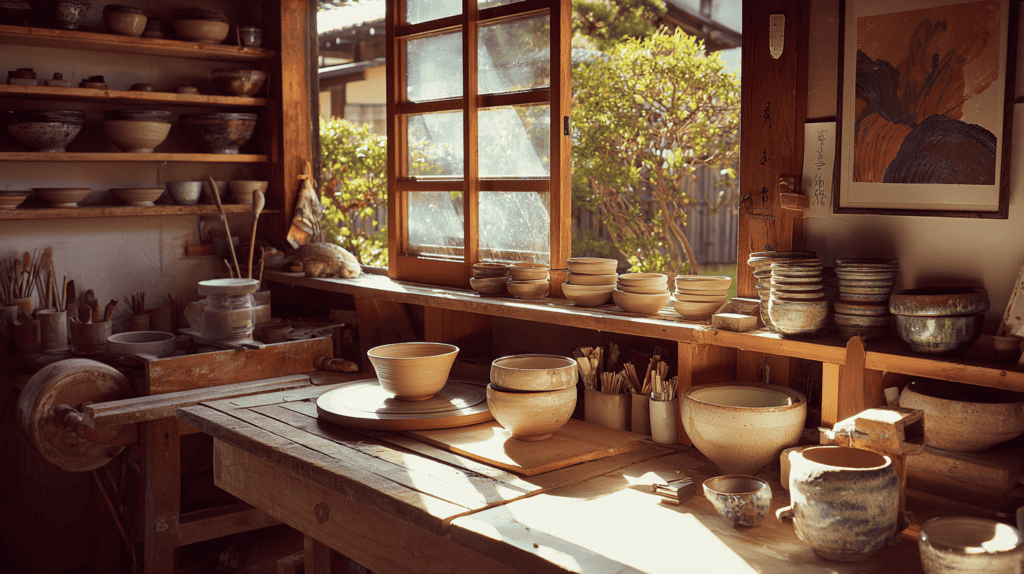
Choose materials that age well. Wood darkens, tin softens and ceramics gather small marks of use. These changes are wabi-sabi in daily life, and they make objects more personal over time. Plastic, by contrast, only looks worse. Food completes the picture, because Japanese design reaches the table too. Kanazawa’s signature winter dish, jibuni, was once served in thin, wide, shallow bowls made for it. The recipe below follows the version published by Japan’s agriculture ministry.
Design at the Table
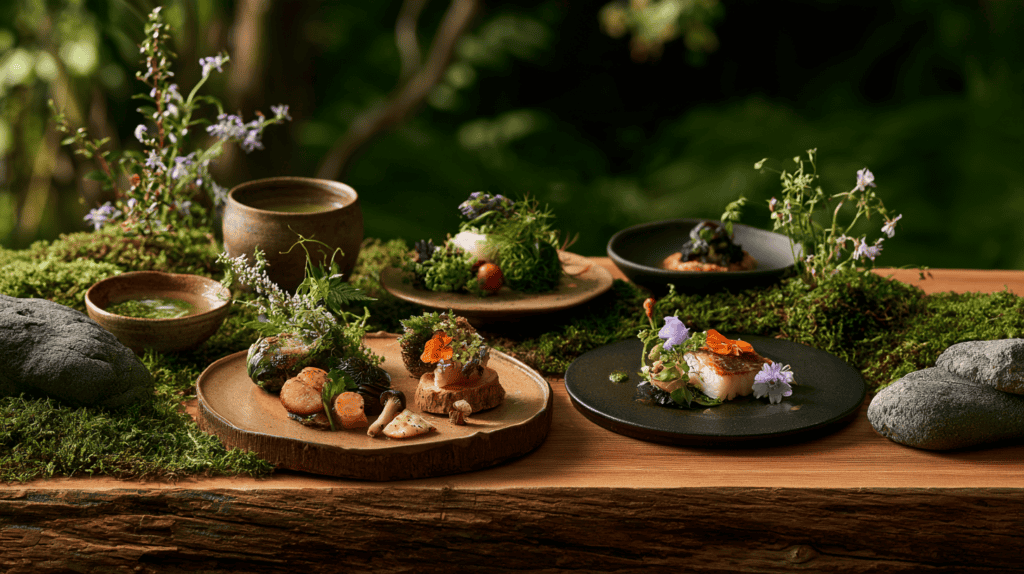
Kanazawa is the ideal city to see that philosophy at the table. Its restaurants serve local dishes on Kutani porcelain and Wajima lacquer, and the plates are chosen to suit the season and the food. Even a simple lunch there shows how presentation, tableware and space work together. Jibuni, the city’s signature simmered duck, is the dish most visitors remember, and it is easier to make at home than its elegant look suggests. Serve it in shallow bowls, as the original recipe suggests, so the broth spreads and the colors show.
Jibuni — Kanazawa’s simmered duck
Slice four ounces of duck thinly. Boil the sudare-fu, blanch four peeled taro and trim four shiitake. Next, blanch a few greens, roll them in a bamboo mat and cut short lengths. Warm two tablespoons each of light soy sauce, dark soy sauce, mirin and sake with one tablespoon of sugar and two and a half cups of dashi. When it simmers, add the sudare-fu, taro and shiitake. Dust the duck with flour and simmer it in a second pot of broth. Arrange everything in shallow bowls, thicken the duck broth with a little flour and water, pour it over and add wasabi.
The flour on the duck is the clever part, since it thickens the broth into a silky glaze. At home, chicken works if duck is hard to find. Serve it in your widest, shallowest bowls, and leave space on the table around each one. Presentation follows a few simple rules that anyone can borrow. Use plates that leave space around the food, choose colors that contrast with what you serve and match the season where you can, with lighter dishes in summer and deeper tones in winter. Arrange items in odd numbers, and avoid filling every inch of the plate. These small choices, repeated at every meal, turn ordinary cooking into a daily practice of these principles at home.
Kanazawa’s old markets and kitchenware shops sell the same kind of tableware used in its restaurants. Choosing a few pieces there is a practical way to take the city’s design sense home with you. Shopkeepers will wrap fragile pieces carefully for the journey.
A Cup Made With Care
Finally, drink from something made with care. A good cup costs little more than a poor one, and you use it every day. Japan’s porcelain towns make some of the best everyday pieces anywhere, often to award-winning modern designs. Planning a design trip benefits from the same restraint. Choose two or three cities rather than six, and give each one enough time for gardens, museums and a craft workshop. Leave an afternoon unplanned in each place, so you can follow a recommendation from a shopkeeper or return to a garden you loved. The best design discoveries in Japan often happen in those unscheduled hours, when you have time to look closely rather than rush to the next sight.
A well-paced itinerary also leaves room for shopping in the craft towns, which often close earlier than city stores. Plan those visits for the morning, when the workshops are open and the makers have more time to talk and demonstrate.
Hasami Ware Common Mug — award-winning porcelain for every day
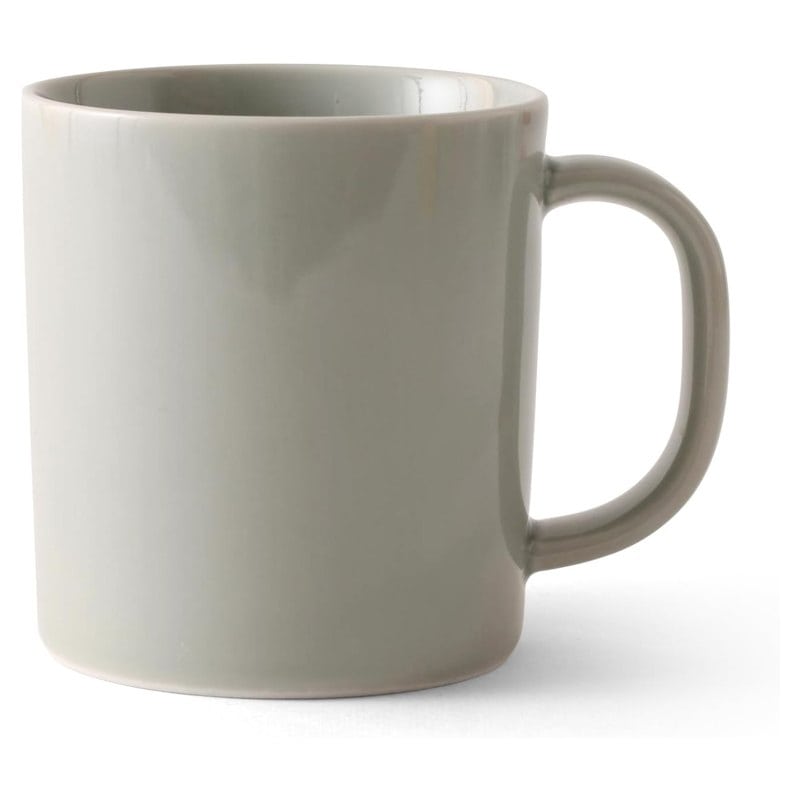
Hasami, in Nagasaki Prefecture, has made porcelain for centuries, and the Common mug by Saikai brings that tradition to a modern table. It won a Good Design Award in 2014 and an iF Design Award in 2015. The shape is plain and stackable, with a soft gray glaze.
It holds about 11 ounces, enough for coffee or tea, and it is microwave and dishwasher safe. That practicality matters, since good Japanese design always serves daily life. Set two on a bare tray, and you have shibui at breakfast. It is also a modest, thoughtful gift for anyone who loves Japan.
Everyday Objects
Everyday objects are where Japanese design meets daily life most directly. A cup used every morning shapes the start of the day more than any painting on the wall. Choose one that feels balanced in your hand, with a glaze you enjoy looking at, and it will reward you every time you reach for it. Japanese porcelain towns such as Hasami, Arita and Mino make many of the best everyday pieces, often to modern designs that suit any kitchen. A pair of matching cups also makes a thoughtful gift for anyone who loves Japan.
Porcelain is an easy place to begin a collection. It is durable, easy to clean and made in many styles, from plain white to bold modern glazes, so it suits any kitchen and any budget. Start with a single cup or bowl, then add pieces slowly over the years.
Many readers find that a few lines written each evening sharpen their eye for design. Note one room, object or garden that stayed with you on the day, and exactly why it worked. Was it the light, the material or the empty space around it? Over a trip, the notes become a personal record of taste, and they shape the next room you furnish. The journal below was built on wabi-sabi, the gentle principle at the heart of this whole guide. Writing also slows the eye, which is exactly what design appreciation needs.
Keep the journal near your favorite chair or bedside table, so writing becomes an easy, almost automatic part of the evening rather than another task to remember. Five minutes is enough, and the habit grows from there. Many readers find that the notes they write on design change how they arrange their own homes.
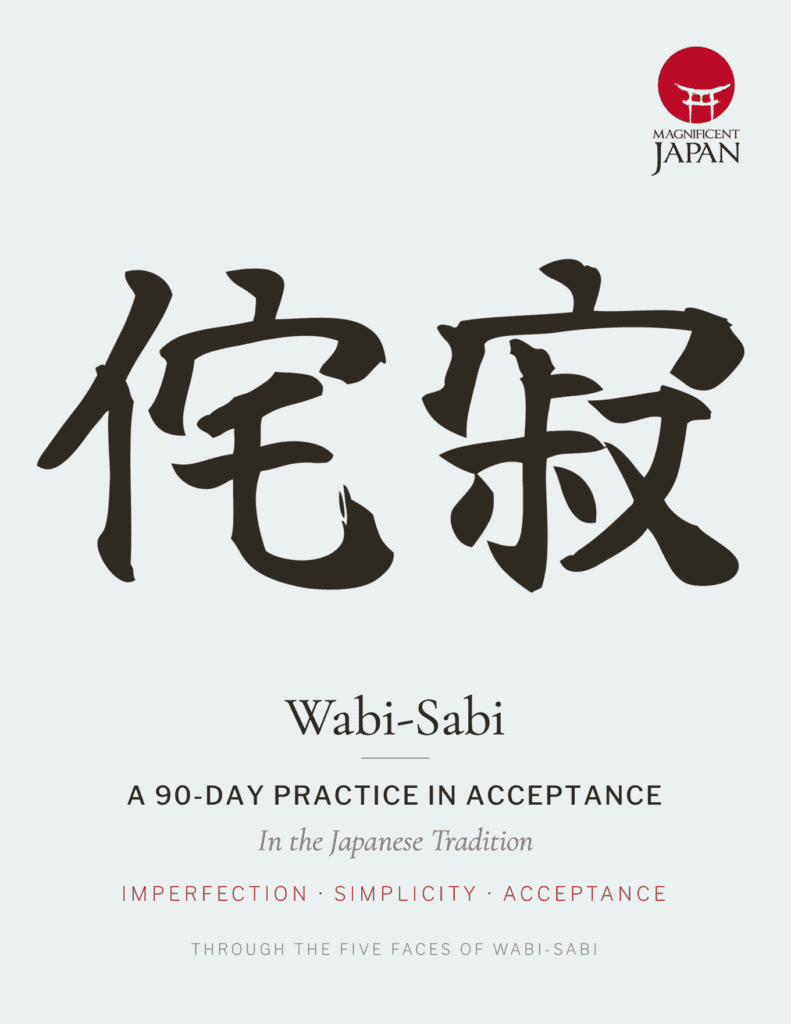
Wabi-sabi is the Japanese art of finding beauty in what is imperfect, impermanent and incomplete, the idea behind so much of the design in this guide. This 90-day guided journal offers one short prompt a day to help you notice it. It comes as a write-on digital edition for a tablet, and it is one of eight journals in the Cultural Reflection Collection.
View The CollectionThe Future of Luxury Design
The influence of Japanese design on global luxury is more than a trend. It marks a shift toward more thoughtful, sustainable and emotionally resonant spaces. Every era leaves its values in its buildings, and ours increasingly values honesty, mindfulness and harmony with nature. For brands and design lovers alike, understanding and honestly applying Japanese design principles offers a path forward. It creates experiences that match contemporary values while honoring timeless ideas of beauty and function. The future of luxury lies not in display but in balanced, carefully made spaces that serve both daily needs and the spirit.
As you explore these ideas, whether through travel or your own projects, remember that Japanese design is ultimately about respect. That means respect for materials, for space, for the people who use a room and for the natural world that sustains us all.
Planning a Design Trip
Whether you are planning a first design trip or a return visit, a little preparation goes a long way. Decide which principles interest you most, then choose cities that show them well: Tokyo for architecture, Kanazawa for craft, Kyoto for gardens and Naoshima for art. Book the most popular museums and workshops ahead, and leave the rest of each day open. The tools below help with the practical side, from route planning to rail passes. Most design-led trips work best at two to three weeks, with no more than four bases in total.
Spring and autumn are the most popular seasons for design trips, with mild weather and beautiful gardens. Winter brings snow to Kanazawa’s gardens and fewer visitors, which suits travelers who prefer calm streets and unhurried visits to museums and workshops.



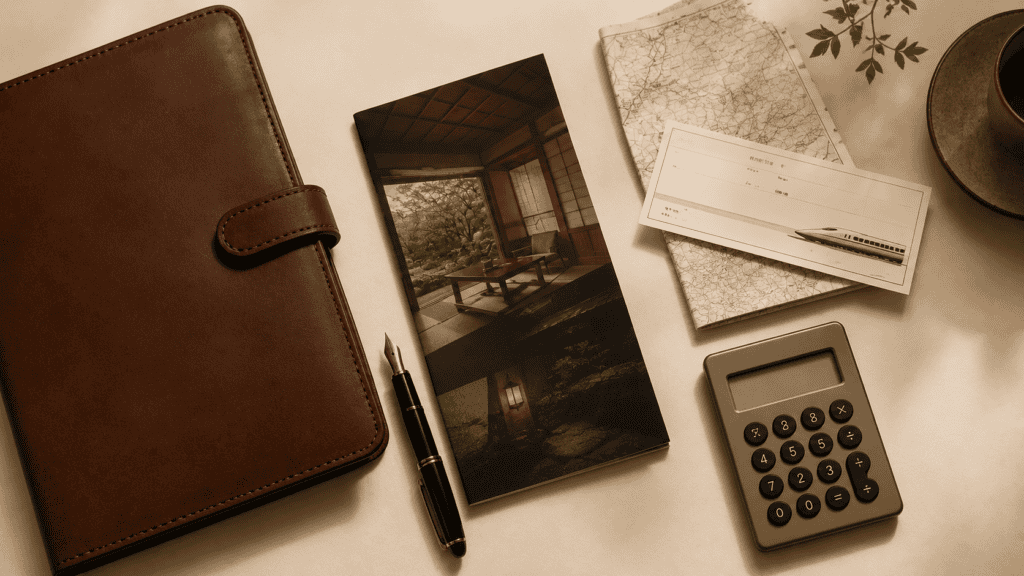
Seeing these principles in person is the finest education of all. A morning at the Nezu Museum, an afternoon in Ginza and a night at a design-led ryokan teach more than any book. Our travel designers build routes like that around opening hours, craft visits and the best rooms. They also arrange private access to workshops in Kanazawa and Kyoto, so the trip becomes a study in Japanese design. Every detail is confirmed before you land, from tickets to tables. The most memorable trips combine famous sights with private access, such as an early garden visit or an evening in a maker’s studio.
Our designers know which studios welcome visitors and which gardens open early, and they build each itinerary around your own interests in architecture, craft or food. Every booking is confirmed before you travel, so the trip unfolds at an easy pace.
For the traveler who wants Japanese design principles up close: a custom itinerary through Tokyo’s architecture, Kanazawa’s craft workshops and Kyoto’s gardens, with design-led hotels and private studio visits arranged in advance.
Plan Your Custom Japan ItineraryQuestions Worth Asking
What are the main Japanese design principles?
The ideas cited most often are wabi-sabi, the beauty of imperfection and age; ma, purposeful empty space; and mono no aware, a feeling for passing things. Kanso, or simplicity, and shibui, understated elegance, round out most lists.
Why do luxury brands use Japanese design?
Japanese design suggests quality through restraint rather than display. Calm space, natural materials and fine craft read as confidence. Many luxury buyers now prefer that over logos and ornament, so hotels and stores borrow the language.
Is Japanese minimalism the same as Scandinavian minimalism?
No. Both favor simple forms and natural materials. Japanese design, however, values age, asymmetry and empty space as active parts of a room, while Scandinavian design leans toward comfort, brightness and even proportions.
Where can I see Japanese design principles in Tokyo?
Start with the Nezu Museum by Kengo Kuma and its garden in Minami-Aoyama. Then walk Ginza to see Renzo Piano’s glass-block Maison Hermès and Toyo Ito’s Mikimoto building. Hoshinoya Tokyo shows the ideas in a hotel.
What is omotenashi?
Omotenashi is Japanese hospitality that anticipates a guest’s needs before they are voiced. It shapes service at ryokan and luxury hotels, from the temperature of a towel to the timing of tea, and it has influenced service standards worldwide.
How can I bring Japanese design into my home?
Begin with one uncluttered surface and a few objects made from natural materials. Choose handmade ceramics, wood or tin over plastic, leave space around each piece, and change one object with the season rather than adding more.
The Editors, Magnificent Japan