Culture · Arts
How to Host a Japanese Tea Ceremony at Home — A Considered Guide
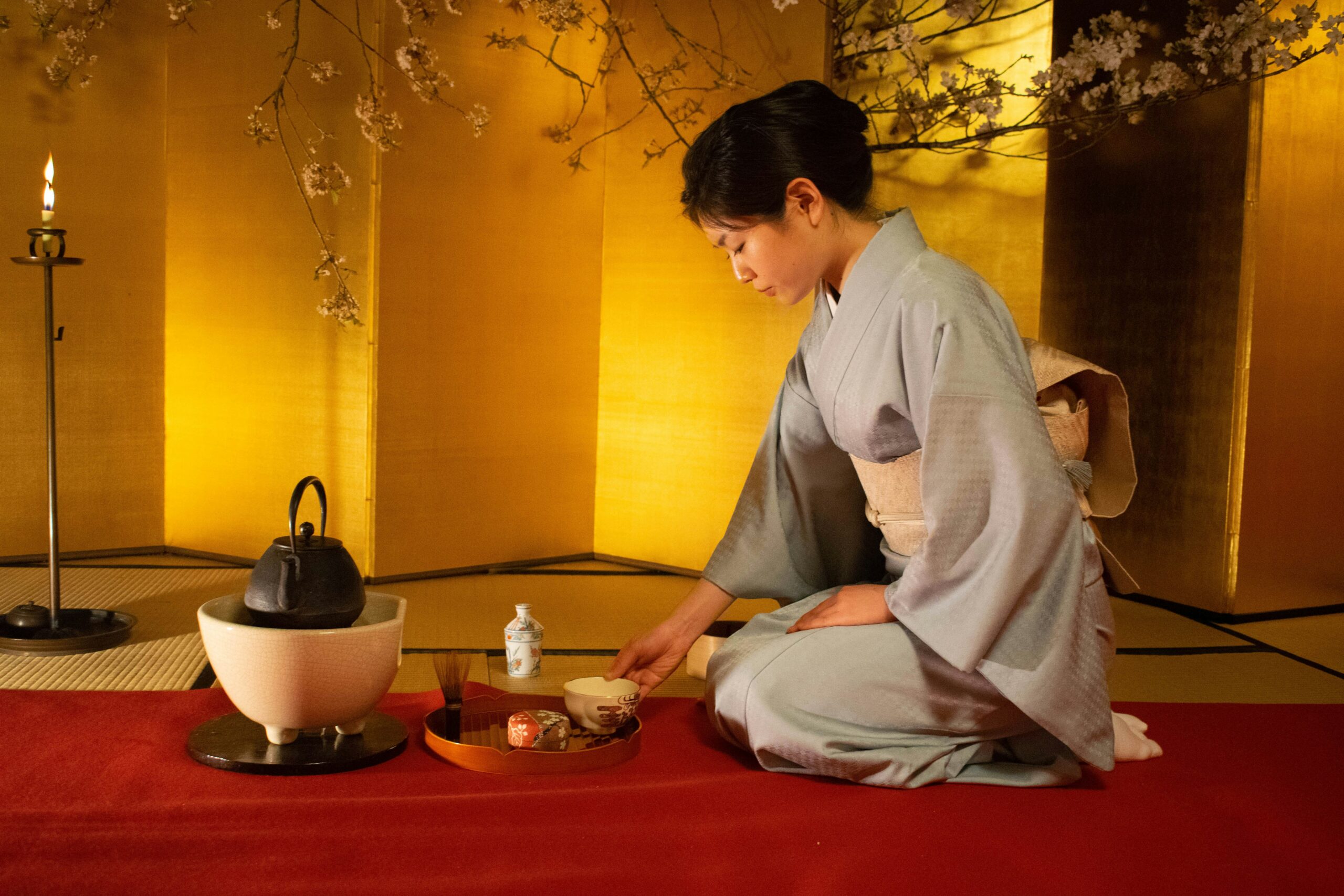
Hosting chanoyu at home asks for less than most people think. Five small objects, a bowl of ceremonial-grade matcha, water at 75°C, and the willingness to give one guest twenty quiet minutes of full attention. The form is simple. The discipline is paying real attention while you do it.
Most home guides to the Japanese tea ceremony either reduce it to a recipe or pad it with Zen poetry. Neither is useful when you are standing in your kitchen with a new chasen in your hand and a friend in the next room. This guide is the third option — a host’s-eye walk-through of how to actually do it, with the equipment you need, the matcha that matters, the eight steps in order, the etiquette compressed for one guest at a low table, and the small mistakes that break the spell. The full philosophy and history of chanoyu sit with the considered guide to the Japanese tea ceremony; this page is the practical companion. By the end you will know what to buy, how to set the room, how to whisk a clean bowl of usucha, and how to receive a guest with grace. The first home ceremony is the hardest. The second one starts to feel like yours.
Sections
- Why host one at home
- The minimum equipment you need
- The matcha — ceremonial vs culinary
- Setting the space — tatami not required
- Thin tea or thick tea — usucha vs koicha
- The water — temperature and quantity
- The eight-step ceremony at home
- The whisk technique — the W-pattern
- Inviting a guest — etiquette at home
- Common mistakes a beginner makes
- Where to go deeper
- Bringing the spirit into daily life
Why Host One at Home
A tea ceremony you book in Kyoto is a beautiful event that someone else hosts for you. A tea ceremony you make at home is a small piece of practice that becomes part of how you live. The difference matters. The Japanese phrase ichigo ichie — one time, one meeting — sits inside chanoyu because the host is asked to treat each gathering as something that will not happen again. At home, with one friend, in your own kitchen, on a Sunday afternoon, this is much easier to feel than in a crowded teahouse.
The other reason to host at home is that the equipment is cheap, the matcha lasts a month, and the practice is forgiving. You will not embarrass yourself in front of a master. You will spill, you will under-whisk, you will boil the water too hot the first time. None of this matters. The point is to start.
The Minimum Equipment You Need
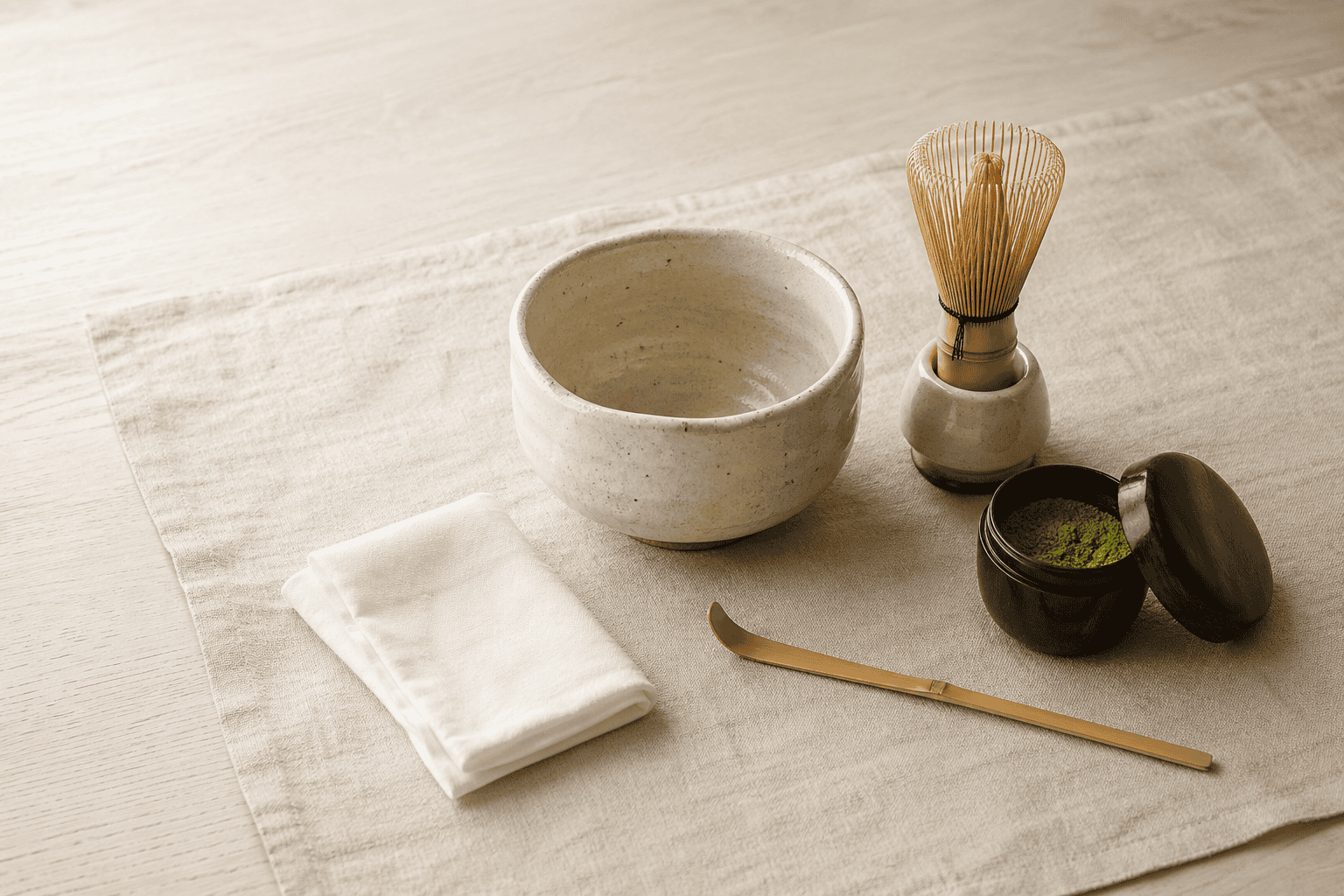
You need five pieces and one drink. The chawan is the matcha bowl, around 350 millilitres, wide enough to whisk in. The chasen is the bamboo whisk, ideally with eighty tines for thin tea. The chashaku is the long bamboo scoop. The chakin is a small linen cloth for wiping the bowl. The natsume is a lacquered tea caddy — any small lidded container with a tight seal works. Plus ceremonial-grade matcha, a kettle, and a small fine sieve to break up clumps. A starter kit with bowl, whisk, scoop, and whisk holder runs around forty US dollars. The whisk lasts about a year of regular use. The bowl lasts a lifetime.
The starter set most people buy is a complete matcha kit with bowl, whisk, scoop, and holder, which gives you everything except the matcha itself. If you want individual pieces of better quality, a separate hand-cut bamboo chasen with eighty tines is the upgrade most worth making — the whisk is the working tool of the ceremony and a good one is obvious in the foam it produces. A ceramic chawan with a built-in whisk holder keeps the chasen tines in shape between sittings, which extends its life by months.
The premium upgrade — kiln-direct chawan
Once your daily practice is established and the bowl matters more than the kit, the next step is a hand-thrown chawan from a named Japanese kiln. The Floral Moonlight Matcha Bowl from JOC Goods is one such piece — Kyoto Kiyomizu ware, hand-painted seasonal blossoms with a fine crackled glaze, the kind of object that quietly changes how you treat the practice. It is not a beginner purchase. It is the bowl you buy in year two, when the daily ritual is established and the upgrade is earned.
What you do not need
Tatami, a separate tea room, a kimono, a tokonoma alcove, or a sunken hearth. The architecture of the formal ceremony is centuries old and built for a country with a different floor system. None of it is the substance of the practice. A clean low table, a folded linen cloth, and a quiet room are sufficient.
Recommended
The Matcha — Ceremonial vs Culinary
There are two grades. Ceremonial-grade matcha is made from the youngest spring leaves, stone-ground slowly in granite mills, and intended to be drunk on its own with hot water. It is bright jade-green, smooth on the palate, and faintly sweet at the finish. Culinary-grade matcha is the same plant, harvested later, ground faster, and intended to be mixed into lattes, baking, or smoothies where its rougher texture and more bitter edge are masked by milk and sugar.
Use ceremonial grade for the ceremony. A stone-ground ceremonial-grade matcha is the right starting point. Buy small tins (30 grams) rather than large ones — matcha oxidises quickly once opened, and a 30-gram tin lasts a single host roughly six weeks of regular practice. Store it in the fridge, sealed, and let it come to room temperature before you whisk.
If you want to understand the broader Japanese tea family — sencha, hojicha, genmaicha, and where matcha sits among them — the guide to Japanese green tea varieties covers each one in depth.
Setting the Space — Tatami Not Required
The space matters more than its decoration. You want quiet, soft natural light, and a low surface for the bowl. A coffee table works. A side table works. A dining table works if you move the everyday clutter off it first. Lay a clean unbleached linen cloth across the surface. Place the bowl, whisk, scoop, and caddy in a small line on your right. Place the chakin folded next to the bowl. Sit your guest opposite you, close enough that you can hand the bowl over without standing up.
One small flower in a slim vase, set off to the side, is the only decoration needed. A single seasonal flower in a plain stem holder is the traditional choice — what is in season where you live is more important than what species the books recommend. Avoid fragrant flowers; the matcha needs the air to itself.
Light, sound, and phones
Pull the curtains or shades back to let in real daylight. Switch off any music. Both phones — yours and the guest’s — go in another room. The whole point of the ceremony is twenty minutes during which nothing else is happening. If the doorbell rings, ignore it.
Thin Tea or Thick Tea — Usucha vs Koicha
There are two forms of matcha service in chanoyu. Usucha (thin tea) uses around two grams of matcha to seventy millilitres of water, whisked vigorously into a fine foam. Each guest receives their own bowl. This is the format that begins every tea student’s training and the only one a beginning home host should attempt. Every step in this guide assumes usucha.
Koicha (thick tea) uses double the matcha and half the water, kneaded with the whisk into a thick paste with the consistency of warm honey. A single bowl is shared between three to five guests, who pass it in turn. Koicha is the higher form of the ceremony and the centrepiece of a formal chaji. It also demands a higher grade of matcha than most home practitioners stock. Reach koicha after a year of usucha, not in week one.
10 Japanese Proverbs Worth Writing Down
A free, beautifully typeset printable. Sign up brings early access to new journals and occasional reader-only offers.
One email a fortnight. Unsubscribe any time.The Water — Temperature and Quantity
This is the single technical detail most beginners get wrong. Boiling water scorches matcha and produces a bitter, astringent bowl. The correct temperature is around 75°C, or 167°F. If you have a temperature-controlled kettle, set it. If you do not, boil the water and let the kettle sit uncovered on the bench for two minutes — the temperature will drop into the right window. The surface of the water should look still rather than steaming.
Quantity is roughly seventy millilitres for a single bowl of usucha, which is about a quarter of the chawan. A common beginner mistake is to fill the bowl to the rim — the chasen needs the empty space above the water to whisk freely. Less water, more matcha intensity, better foam.
The Eight-Step Ceremony at Home
This is a beginner-friendly sequence for one host serving one guest, simplified from the formal Urasenke usucha temae but faithful to its order. The whole sequence takes roughly twenty-five minutes from set-up to clean-up.
- Prepare the spaceClear a low table. Lay a clean linen cloth. Set out the bowl, whisk, scoop, caddy, and chakin in order from left to right. Sit your guest first. Put both phones in another room. Boil the water.
- Warm the bowlPour hot water into the chawan to warm it. Let the chasen tines soak in the warm water for thirty seconds — this softens the bamboo and reduces the chance of breaking a tine on the first whisk. Pour the water out. Wipe the bowl dry with the chakin.
- Sift the matchaHold the small fine sieve over the bowl. Use the chashaku to scoop two level scoops (about two grams) of matcha through the sieve. This is the single step that prevents lumps in the foam. Most home failures are skipped sifts.
- Pour the waterPour roughly seventy millilitres of water at 75°C into the bowl. Pour with intention, not speed. The matcha and water meet — this is the start.
- Make the pasteHold the chasen tip down on the bowl floor and gently mix the matcha and water for five seconds, working any dry powder into the wet. Do not whisk yet. You are making a smooth green paste.
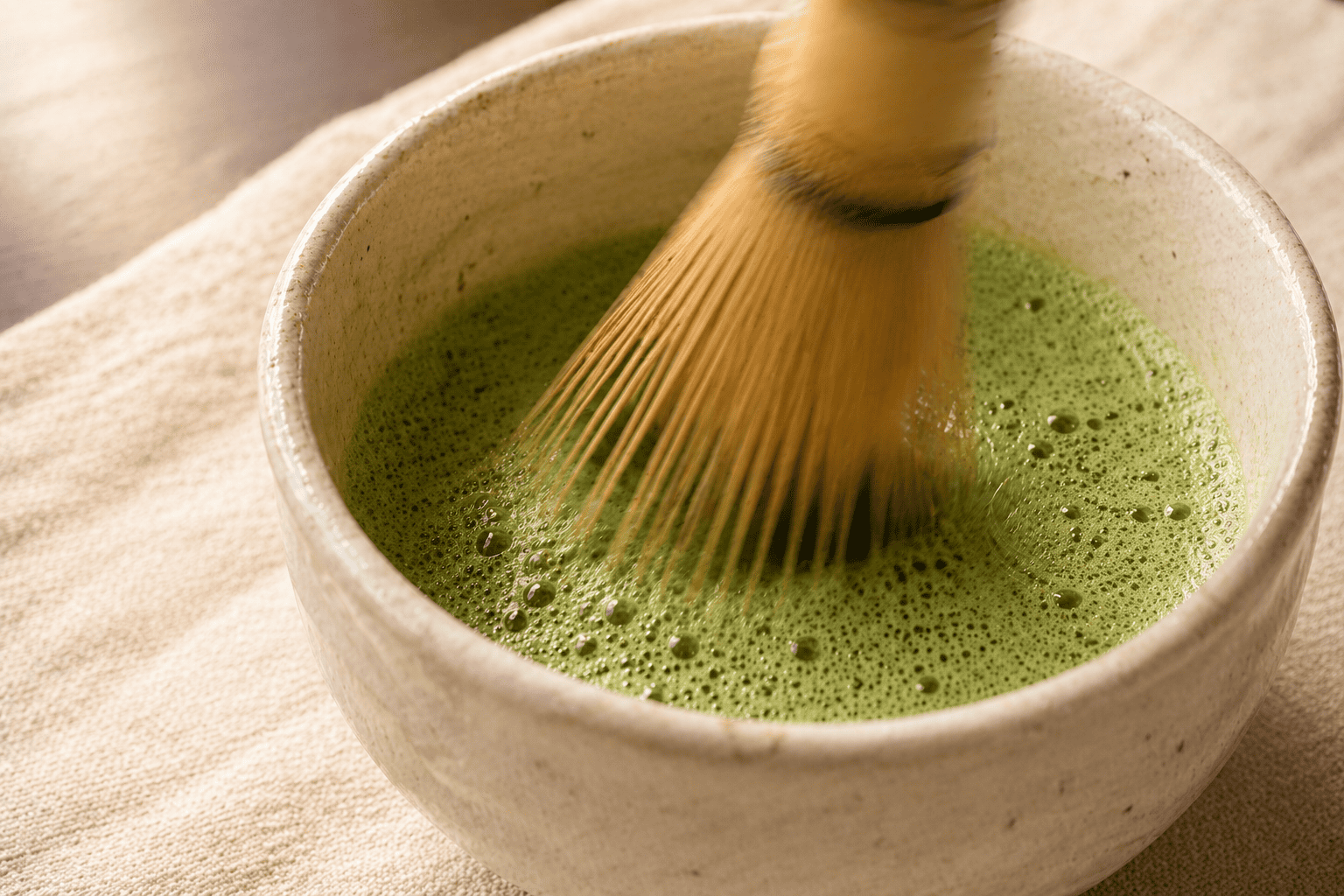
- Whisk in a W-patternHold the chasen lightly between thumb and three fingers — a loose, comfortable grip. Whisk briskly back and forth in a W or M shape from the wrist (not the elbow), for fifteen to twenty seconds. The bamboo barely touches the bowl floor. A fine cream-coloured foam will appear across the surface.
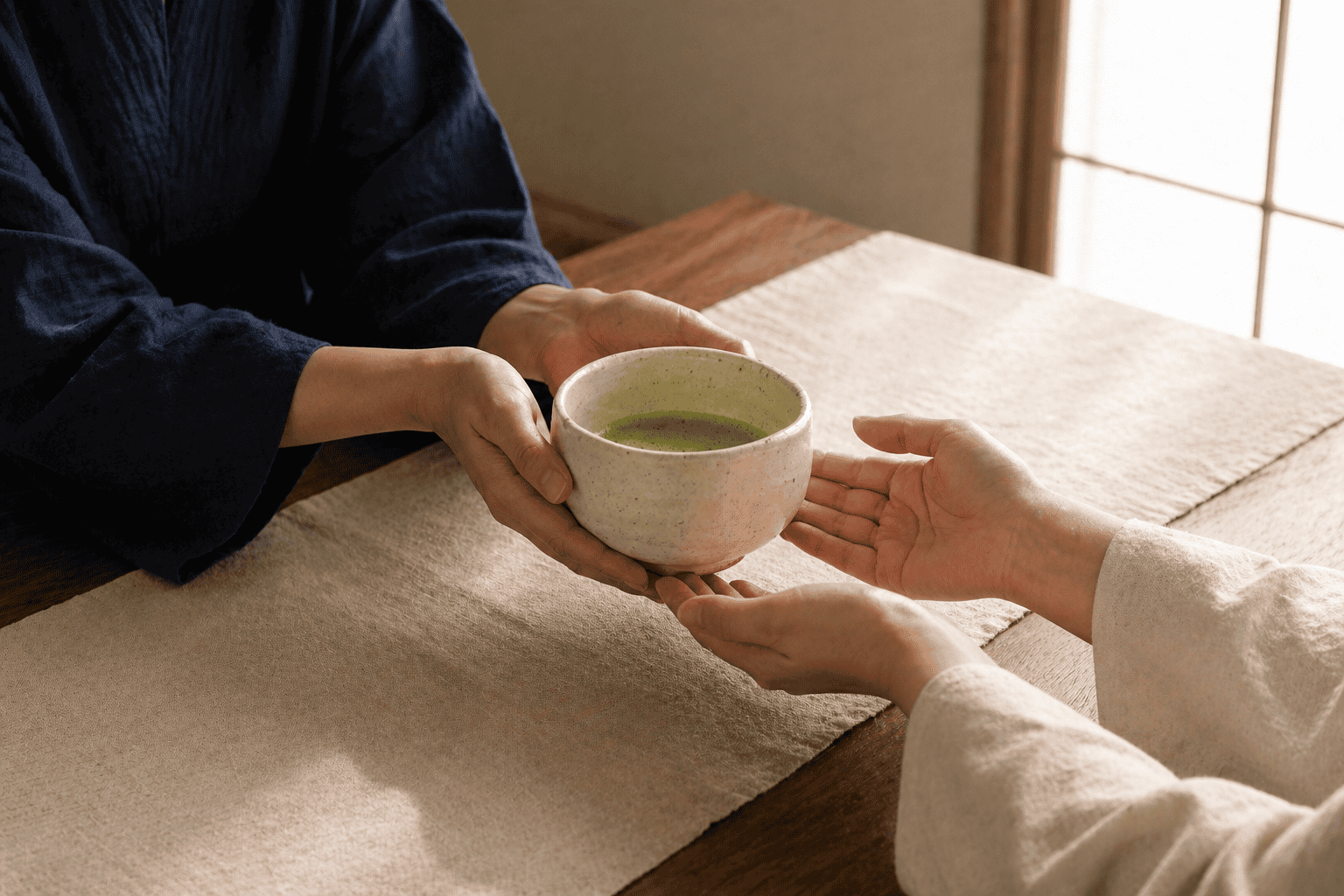
- Lift and presentWhen the foam is even, lift the chasen straight up through the centre of the foam in one smooth motion. Rotate the bowl twice clockwise so the front faces your guest. Place the bowl on the linen with both hands, with a small bow.
- Receive, drink, and cleanThe guest takes the bowl with both hands, rotates it twice clockwise to avoid drinking from the front, and drinks the matcha in three sips. They wipe the rim with a fingertip and place the bowl back on the linen with thanks. Both then clean the utensils together — water through the bowl, water through the whisk, dry the chashaku.
The Whisk Technique — The W-Pattern
The whisk is the working tool of the ceremony and the place beginners spend the most time fixing. Three rules. First, the wrist does the work, not the arm — if your forearm is moving, you are whisking too hard and the bamboo will fray within weeks. Second, the chasen tip should barely brush the bowl floor — not push into it. Third, the motion is a brisk back-and-forth in a W or M shape across the surface, not a circular stir.
Whisk for fifteen to twenty seconds and stop. Beginners over-whisk, which collapses the foam and makes it thin. A correctly whisked bowl has a uniform pale-green foam covering the entire surface, with a fine bubble structure and no visible matcha sediment along the rim. If you can see liquid through the foam, the foam is too thin — you whisked too fast or your matcha was too old.
Inviting a Guest — Etiquette at Home
The full guest etiquette of a chaji takes a chapter to explain. For one guest at a low table at home, the compressed version is short. Tell the guest in advance to wear something comfortable, modest, and unscented — strong perfume swamps the matcha. Ask them to take off their watch and rings before sitting down (the metal can chip the bowl). Greet them at the door and lead them to the table without small talk. Offer them a small sweet first — a piece of dark chocolate works if you cannot find wagashi. The sweet balances the slight bitterness of the matcha that follows.
When you present the bowl, present it with both hands. When the guest receives it, they take it with both hands and rotate it twice clockwise — this is to avoid drinking from the bowl’s front, the side the host designated as the most beautiful. They drink in three sips. The third sip is sometimes drunk audibly to signal to the host that the bowl is finished. They wipe the rim with a fingertip, return the bowl to the linen, and bow with a quiet thanks. The whole exchange takes around three minutes. The full guide to Japanese etiquette covers the broader context if you want to extend the standard to other settings.
Common Mistakes a Beginner Makes
The five mistakes that ruin a first home ceremony, in order of frequency:
1. Boiling the water
Water at 100°C scorches matcha within seconds, producing a bitter, hay-flavoured bowl. Let the kettle stand uncovered for two minutes after it boils, or use a temperature-controlled kettle set to 75°C.
2. Skipping the sift
Matcha clumps in storage. Without a fine sieve, the lumps survive the whisk and float on the foam looking like green pebbles. Sift always, even when you are in a rush.
3. Whisking too long
Twenty seconds is the ceiling. After that, you are breaking the foam down faster than the chasen builds it.
4. Using culinary matcha
Culinary matcha is harsh and grey-green. Even a perfect technique cannot make it taste good in a bowl on its own. Spend the extra five dollars for ceremonial.
5. Filling the bowl too full
The chasen needs the empty space above the water to whisk freely. Fill no more than a quarter of the bowl. The smaller the volume of water, the better the foam.
Where to Go Deeper
If a few weeks of home practice make you want to study chanoyu seriously, the path is clear. The three schools — Urasenke, Omotesenke, and Mushakōjisenke — all trace back to Sen no Rikyū and all teach the same essential ritual with small differences in procedure. Urasenke is the most internationally accessible, with branches across North America, Europe, and Asia that take adult students and run weekly classes.
For a single in-person experience in Japan, the best venues are not the largest. A sub-temple in Kyoto with a small tea room, an arts centre in Kanazawa’s samurai quarter, or a quiet teahouse in a Tokyo garden will all teach you more than a hotel ballroom demonstration. The Kyoto guide covers where to find the small ceremonies that matter. The considered guide to the Japanese tea ceremony covers the philosophy, history, and three schools in depth.
The artisan tier — Takayama-made tools
If you reach the point of buying tools made by named artisans rather than by mass-market factories, the most authoritative source in the United States is Toiro Kitchen, the Los Angeles studio of Naoko Takei Moore. Three pieces are worth the spend. A traditional 100-tine chasen hand-carved by specialist artisans in a Nara family workshop — Takayama is the only government-designated chasen-making region in Japan and produces over ninety percent of the country’s whisks. A hand-carved Kyoto bamboo chashaku replaces the generic mass-produced scoop with provenance. And a Rikyu-Ume natsume tea caddy from Isuke, a 190-year-old Kyoto urushi lacquer house, gives the matcha a vessel worth the powder it holds. None of these are first-month purchases. All three are worth knowing about as you grow into the practice.
Bringing the Spirit Into Daily Life
The home practice does not need to be a ceremony every time. The four principles — wa (harmony), kei (respect), sei (purity), jaku (tranquillity) — apply to a morning bowl of matcha drunk alone in a kitchen as much as to a formal sitting. Many regular practitioners keep a small chawan and chasen by the kettle and whisk a single bowl most mornings, with no guest, no sweet, and no choreography. It is the same gesture, smaller. Over time, the rhythm of preparing matcha with attention starts to colour other parts of the day — the way a cup of coffee is made, the way a meal is plated, the way a conversation is listened to. This is the long arc of the practice.
The Magnificent Japan Tea Ceremony journal, below, was made for the kind of host who wants to keep a record of what each sitting taught them — the matcha used, the season, the guest, what was learned. It is a small notebook, not a manual, and it earns its place on the table next to the bowl.
Tea Ceremony
Come for the tea ceremony, and leave feeling like royalty from the Edo dynasty.
6×9 in · 120 blank pages · Matte softcover
Shop This Journal →Questions, Answered
Can I do a Japanese tea ceremony at home without tatami?
Yes. The ritual moved from temples to tatami rooms because that was the architecture of the day. The substance of the ceremony is the bowl, the whisk, the matcha, the host’s attention, and the guest’s reception. A clean low table, a simple linen cloth, and a quiet room are enough at home. The form serves the spirit, not the other way around.
What is the minimum equipment to host a tea ceremony at home?
Five items: a chawan (matcha bowl, around 350 millilitres), a chasen (bamboo whisk with around eighty tines), a chashaku (bamboo scoop), a chakin (small linen cloth), and ceremonial-grade matcha. A kettle and a small fine sieve complete the kit. A starter set with bowl, whisk, scoop, and holder costs around forty US dollars and serves for years.
What temperature should the water be?
Around 75°C, or 167°F. Boiling water scorches matcha and makes it bitter. Either use a temperature-controlled kettle, or boil and let the kettle stand uncovered for two minutes. The water should look still on the surface, not steaming hard.
Can a milk frother replace a chasen?
Mechanically yes — it makes foam. Ceremonially no. The chasen is the gesture of the ritual. A frother removes the host’s hand from the most important moment of the practice, and the foam it produces is coarser than what a hand-whisked bowl creates. A real bamboo whisk costs around fifteen dollars and lasts a year of regular use. Use the chasen.
Is it disrespectful for a non-Japanese person to host a tea ceremony?
No. The Urasenke and Omotesenke schools have taught chanoyu to non-Japanese students for over a century, and Urasenke maintains active branches across North America, Europe, and Asia for that purpose. What matters is the spirit of the practice, the care taken with the equipment, and the attention given to the guest. Approach it with respect, study what you can, and the tradition welcomes you.
Plan a Considered Trip to Japan
Magnificent Japan designs custom itineraries for travellers who want depth over volume — the right tea ceremony, the right ryokan, the right two days in Kyoto.
Request a Custom Journey