Naoshima Art Island: Tadao Ando’s Ten Buildings on One Island
Naoshima sits in the calm grey-green water of the Seto Inland Sea, midway between Honshu and Shikoku. Eight square kilometres. Roughly two thousand nine hundred residents. A working copper smelter on one end and one of the most concentrated bodies of contemporary architecture in the world on the other. For travellers who care about how art is housed as much as what is in it, the island is unrivalled in Japan and arguably anywhere. For a wider context on the country’s quietest cultural landscapes, our considered guide to Japan’s best art destinations sets the frame.
What makes Naoshima distinct is not the volume of work on view. It is the singular vision behind it. Since 1989, the architect Tadao Ando has designed ten buildings here, working with one client across thirty-seven years. The latest, the Naoshima New Museum of Art, opened on the last day of May 2025. The result is the closest thing in contemporary architecture to a complete oeuvre rendered on a single small island. This guide reads Naoshima through that lineage, then walks the practicalities — what to see, when to come, how to stay, and whether the trip is for you.
What Naoshima art island is, and why it matters now
Naoshima art island is a small island in Kagawa Prefecture that has, across the last three decades, become one of the most considered contemporary-art destinations in the world. The model is unusual. One private foundation — Benesse, run by the publishing-family heir Soichiro Fukutake — has commissioned a single architect, Tadao Ando, to design every major building. The art collection is curated to the buildings, and the buildings to the landscape. Nothing on Naoshima is generic.
The “now” matters because 2025 was the most consequential year on the island in a generation. The Naoshima New Museum of Art opened on 31 May 2025, the first museum on the island to carry the name Naoshima itself. It is also Ando’s tenth building here. Conde Nast Traveler named Naoshima one of Asia’s best places to visit in 2026, the BBC included it among its 25 best places to travel in 2025, and Lonely Planet ranked it among Japan’s top destinations the same year. The island has shifted from a quiet recommendation among art people into the centre of the international conversation about contemporary culture in Japan.
For the traveller, this changes the planning calculus. Bookings now move faster. Reservations for the Chichu Art Museum sell out earlier. Benesse House Hotel rooms open six months ahead to the day. The trip rewards intention — and punishes the assumption that one can simply turn up.
Tadao Ando’s ten buildings: the architectural through-line
Most guides to Naoshima list the museums. Few explain that they are chapters in a single architect’s career. Ando first came to the island in 1988, invited by Fukutake to design a summer camp. The relationship has continued without interruption ever since. Working with one client across thirty-seven years is rare in any field. In contemporary architecture it is almost unheard of. Naoshima is the result.
Reading the buildings in order reveals how Ando’s vocabulary has evolved. Concrete remains the constant material. Light, water, geometry, and the relationship between built form and surrounding land remain the constant preoccupations. The vocabulary deepens. The restraint sharpens.
1989 — Naoshima International Camp
Ando’s first project on the island. A camp facility that included Mongolian-style yurts on the southern hillside. Modest in scale, but it set the relationship between Benesse, the architect, and the land that would shape everything after.
1992 — Benesse House Museum
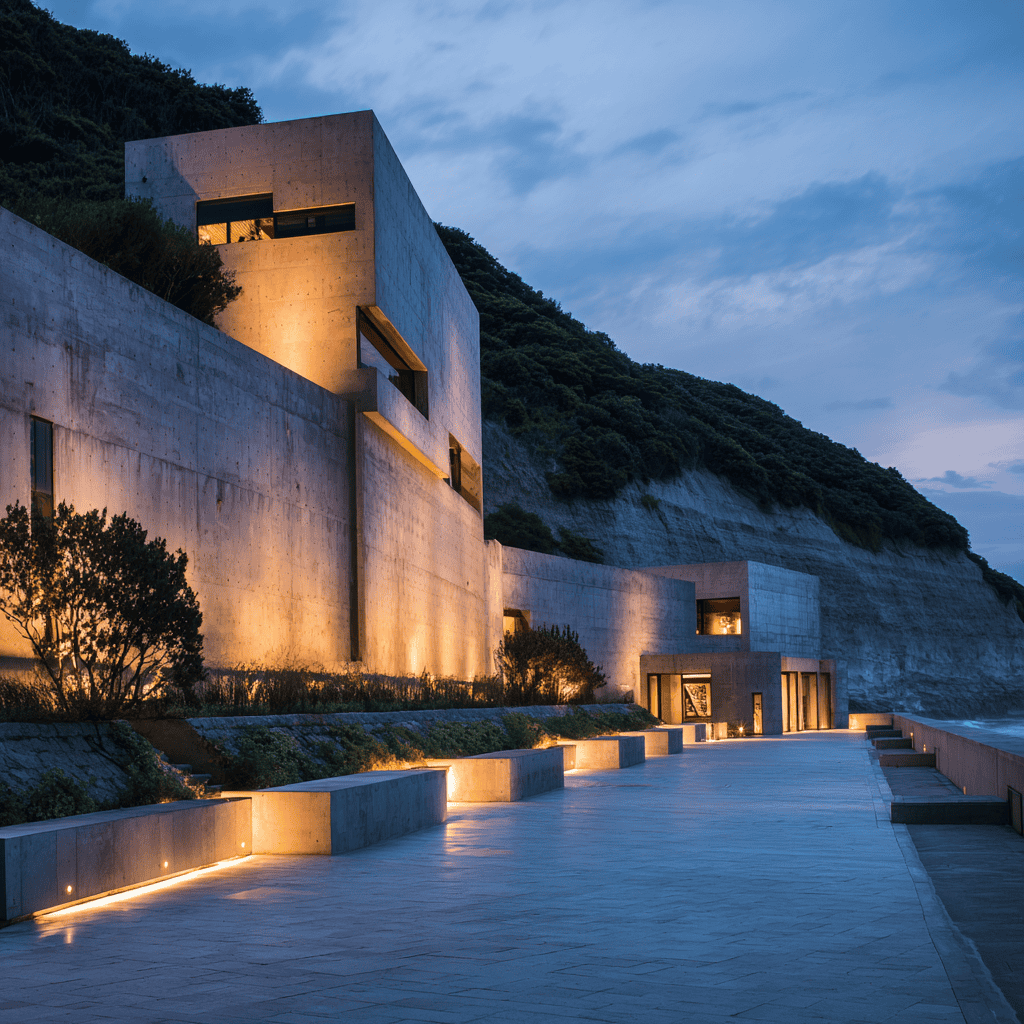
The work that established the project. A concrete museum-and-hotel cut into the southern hillside, with rooms above the galleries and the Seto Inland Sea below. Ando’s signature long horizontal slot windows frame the water. The collection includes site-specific pieces by Hiroshi Sugimoto, Richard Long, and Yannis Kounellis. Guests staying in the hotel rooms have after-hours access to the museum. Few hotels in the world offer that.
1995 — Benesse House Oval
Six suites set above the Museum building, accessible only by monorail. A circular pond at the centre. The most architecturally distinct of the four Benesse House accommodations.
2004 — Chichu Art Museum
Chichu is the work that turned Naoshima into a destination. The museum is built almost entirely underground. Light enters through skylights and vertical openings cut into the concrete. Three rooms hold the permanent collection: a quartet of Claude Monet’s late Water Lilies hung in a gallery designed to be lit only by natural light, Walter De Maria’s Time / Timeless / No Time, and James Turrell’s Open Sky. The museum is not photograph-friendly, which is part of the point.
2006 — Benesse House Park & Beach
Two further accommodation buildings attached to the original Museum complex, each with its own architectural register. Park sits closer to the museum core. Beach faces the water.
2010 — Lee Ufan Museum
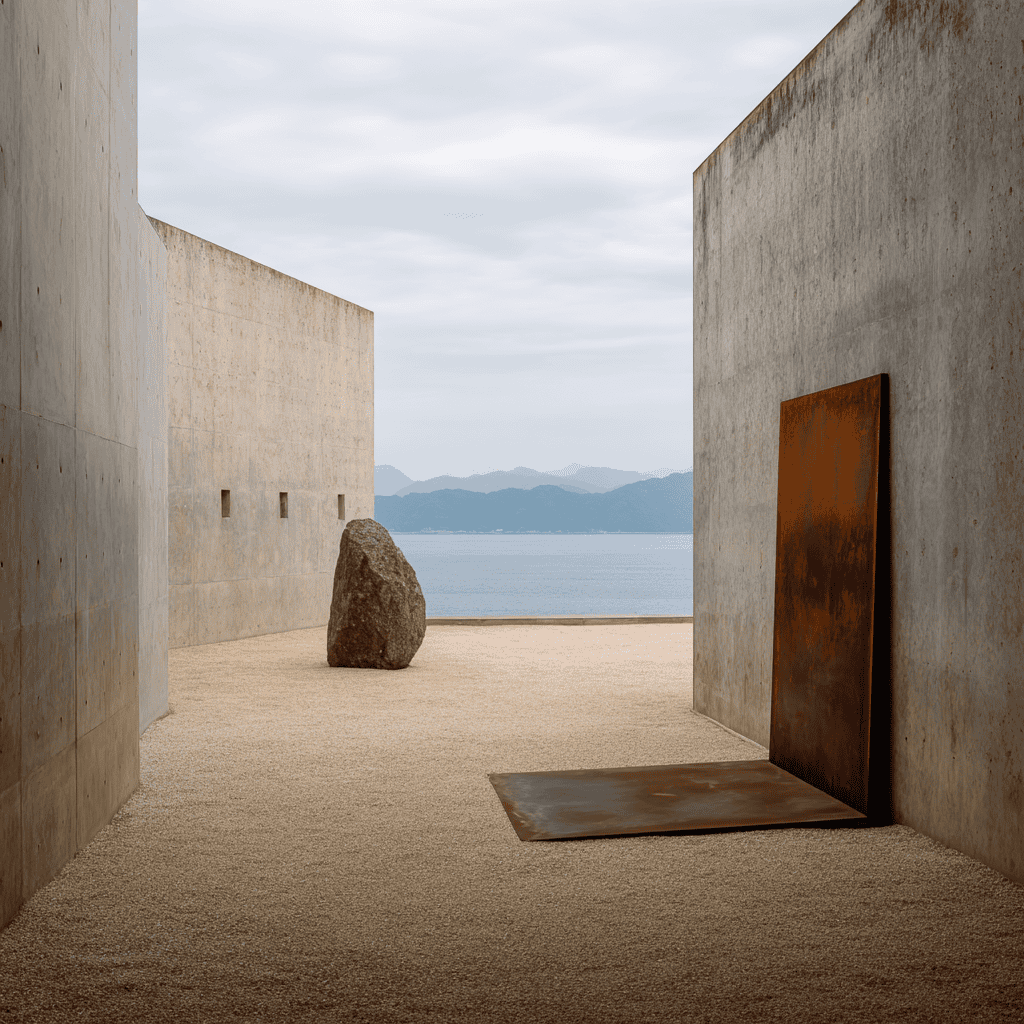
Built into a hillside above a small bay. The Korean-Japanese artist Lee Ufan is the central figure of the Mono-ha movement, which examines the meeting points between natural and industrial materials. Ando’s design gives Lee’s stones, steel plates, and minimal canvases the negative space they need. A long courtyard of raked gravel sets the threshold.
2010 — Ando Museum
A small two-room museum in Honmura village dedicated to Ando’s own work on the island. Built inside a 100-year-old wooden machiya house, with concrete inserted into the timber frame. The most intimate of the ten buildings.
2022 — Valley Gallery
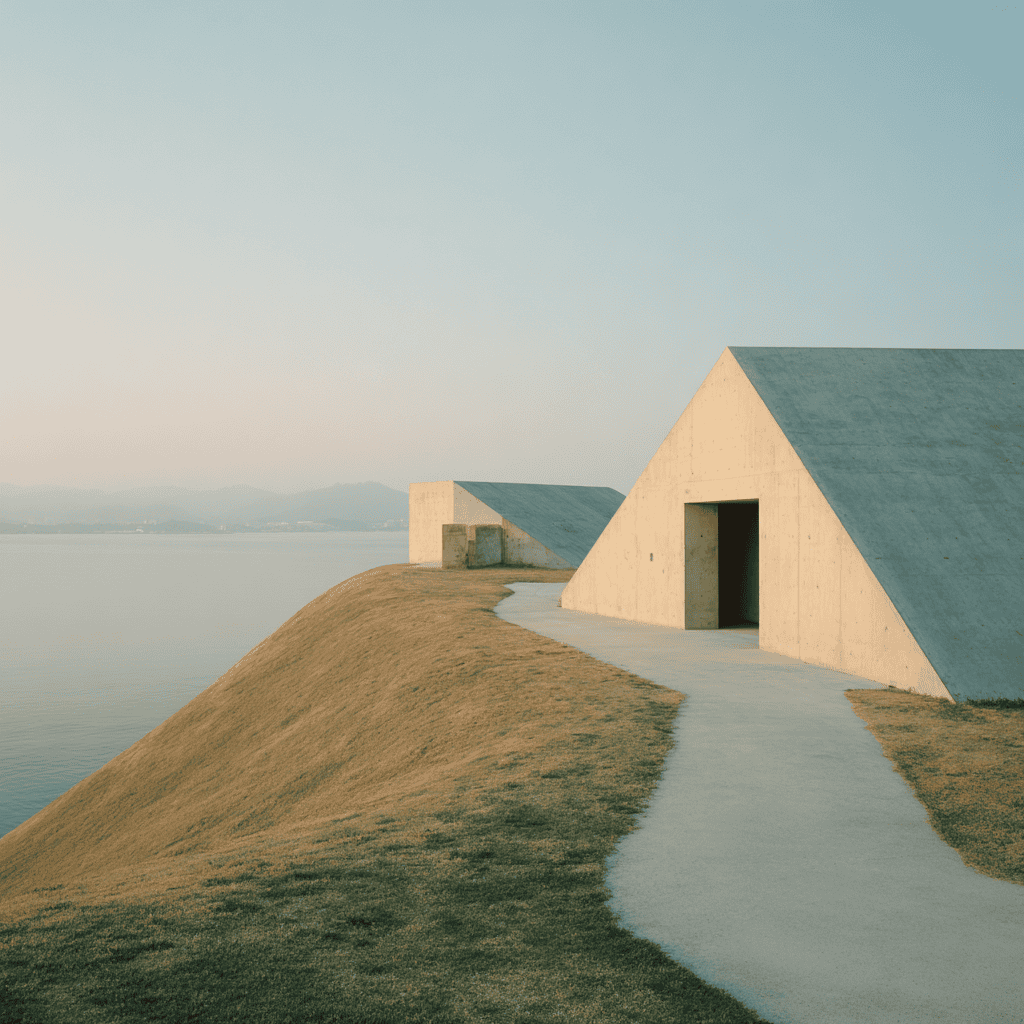
Located on the path between the Lee Ufan Museum and the Benesse House complex. A single-room gallery designed around a permanent installation by Yayoi Kusama. The exterior reads as a low concrete wedge set into the slope.
2022 — Hiroshi Sugimoto Gallery: Time Corridors
A gallery dedicated to the photographer and conceptual artist Hiroshi Sugimoto, located on the southern Benesse coast. The work on view includes Sugimoto’s seascape and theatre series. Its architecture is built around the relationship between the long photographic exposures inside and the slow time of the sea outside.
2025 — Naoshima New Museum of Art
The tenth building. Opened on 31 May 2025 on a hilltop near Honmura village. Three floors total, of which two are below ground. The exterior uses black plaster that references the burned-cedar walls (yakisugi) of traditional Japanese houses, and a stacked-pebble fence designed to fold into the surrounding residential street. The first museum on the island to carry the name Naoshima. Detail in the next section.
Read together, the ten buildings make a slow argument: that contemporary architecture is at its best when it serves the work it houses, the land it sits on, and the community it joins. There are very few places in the world where that argument has been made this consistently across this much time.
The Benesse Art Site: Chichu, Lee Ufan, Benesse House
The southern half of the island holds the three buildings most travellers come for. They sit close enough that a half-day on foot or a long morning by electric bike covers all three. They reward time in a way that most museums do not.
Chichu Art Museum
Chichu is the centrepiece of the island and the building most worth pre-booking. The Monet room is the closest most travellers will ever come to the painter’s actual studio conditions: white walls, soft natural light, no glass over the canvases, no flash photography, a small group at any time. Walter De Maria’s Time / Timeless / No Time occupies a stepped chamber lit from above, with a polished granite sphere and gilded wooden columns arranged around the entry stair. James Turrell’s Open Sky changes minute by minute as the light shifts. Allow at least two hours. Reservations are timed and sell out, particularly during weekends and Triennale years. Book the moment your travel dates are confirmed.
Lee Ufan Museum
Quieter than Chichu. The work is sparse, the architecture is half the experience. Lee’s Relatum series places a single rough stone next to a steel plate in raked gravel; the proposition is that the relationship between the two reveals more than either alone. The museum sits in a sunken courtyard cut into the hillside. The walk down toward the entrance is itself part of the work. One hour is enough; two if you sit with it.
Benesse House Museum
The original 1992 building still functions both as a contemporary art museum and as a hotel. The collection runs across painters and sculptors of the post-war period — Bruce Nauman, Andy Warhol, David Hockney, Yves Klein, Hiroshi Sugimoto, Yayoi Kusama, Cy Twombly. Several pieces were commissioned for their specific locations in the building, which means they cannot be experienced anywhere else. Hotel guests have after-hours access; day visitors do not. If staying at Benesse House is possible, this is one of the strongest reasons to do so.
Yayoi Kusama’s pumpkins
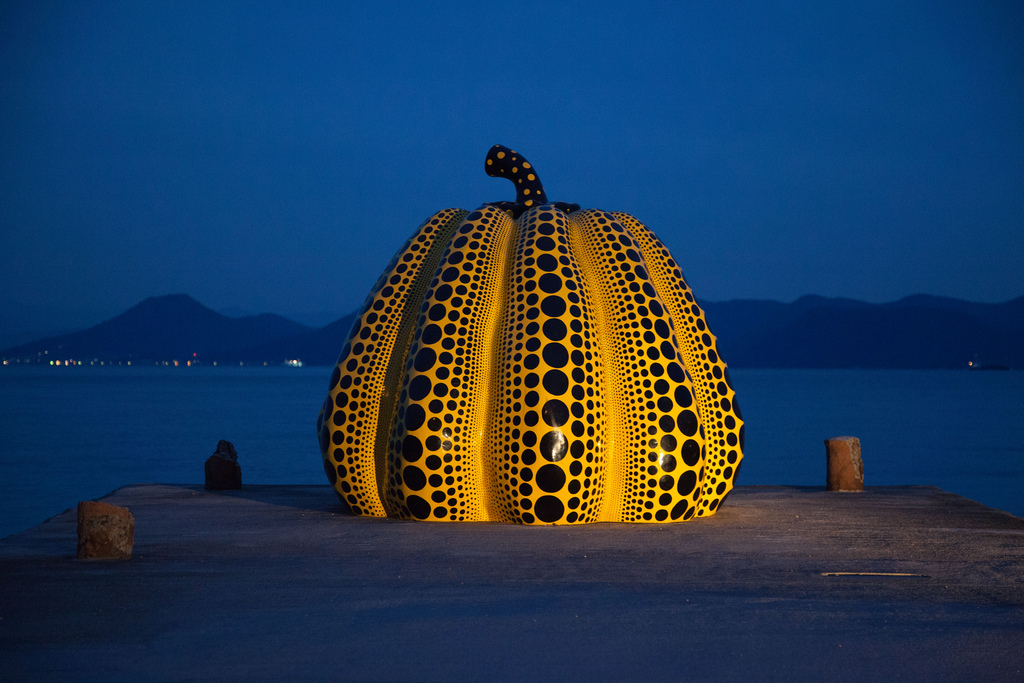
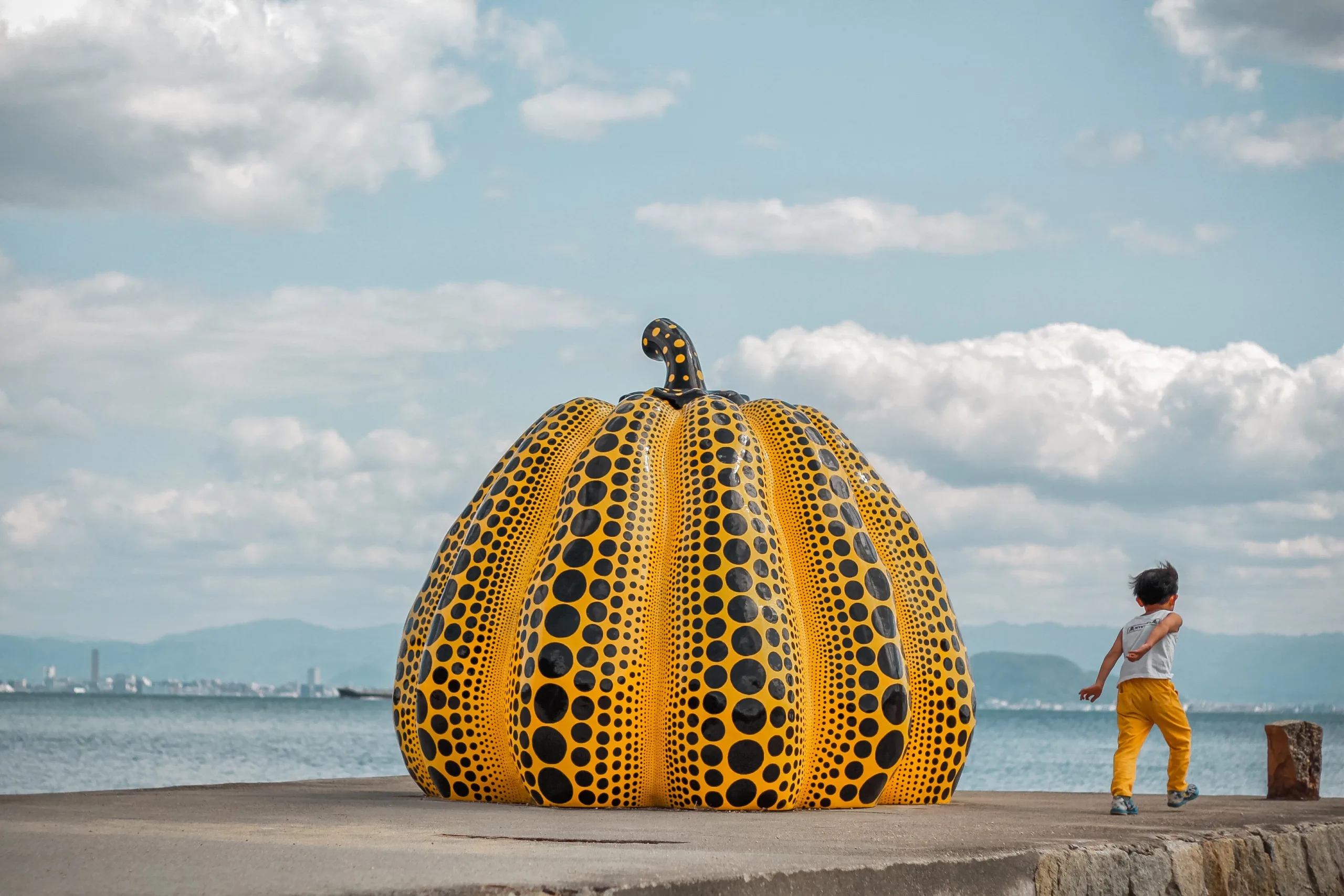
The most photographed objects on the island, and reasonably so. Her yellow Pumpkin sits at the end of a small pier on the southern coast, near the Benesse House complex. The red Pumpkin stands at Miyanoura Port, the main ferry arrival point on the western side. Both are outdoor and accessible at any hour with no ticket required. The yellow one is best in early morning or late afternoon when the colour reads against the blue water. And the red is large enough to walk inside.
Ten Japanese Proverbs
An editorial folio of ten classical proverbs translated and contextualised. Yours to keep, sent on subscription. A quiet companion to a Naoshima trip.
The Naoshima New Museum of Art and what opened in 2025
The most consequential addition to the island in two decades opened on 31 May 2025. The Naoshima New Museum of Art (直島新美術館) sits on a hilltop near Honmura village, set within the residential street grid rather than apart from it. Three floors. One above ground, two below. A central staircase room runs through all three floors, lit from a skylight at the top. Four gallery spaces and a top-floor café look across to the neighbouring island of Teshima.
The architectural language is recognisably Ando, but turned outward to its village setting. On the exterior, a stacked-pebble fence and black plaster read as a contemporary response to yakisugi, the traditional charred-cedar finish on the wooden houses of Honmura. The entrance unfolds as a slow descent into the building. Cai Guo-Qiang’s installation Head On, ninety-nine wolves running toward an unseen wall, occupies the lower gallery in the inaugural exhibition. The work is impossible to forget.
Curatorially, the museum’s focus is contemporary art from across Asia, a deliberate pivot from the European and American emphasis of Chichu and Benesse House. The opening exhibition includes Aida Makoto, Martha Atienza, Cai Guo-Qiang, Chim↑Pom, Heri Dono, indieguerillas, Takashi Murakami, N. S. Harsha, Sanitas Pradittasnee, Do Ho Suh, and Pannaphan Yodmanee. Akiko Miki directs. Reservations are required and recommended in advance.
Valley Gallery and the Hiroshi Sugimoto Gallery: Time Corridors
Two further Ando buildings opened in 2022 and remain the freshest additions to the southern Benesse complex before NNMoA. Valley Gallery, on the path between Lee Ufan and Benesse House, is built around a Yayoi Kusama installation and reads as a low concrete wedge in the hillside. The Hiroshi Sugimoto Gallery: Time Corridors holds a permanent exhibition of Sugimoto’s photography and is structured around the relationship between the photographer’s long-exposure seascapes and the actual sea visible from the building. Older guides do not include either.
For travellers planning a 2026 or 2027 visit, the implication is straightforward. There is materially more to see now than at any previous point in the island’s history, and the buildings designed for that work are by the same architect who designed everything before. The trip is a longer one than it used to be.
The Art House Project and Honmura village
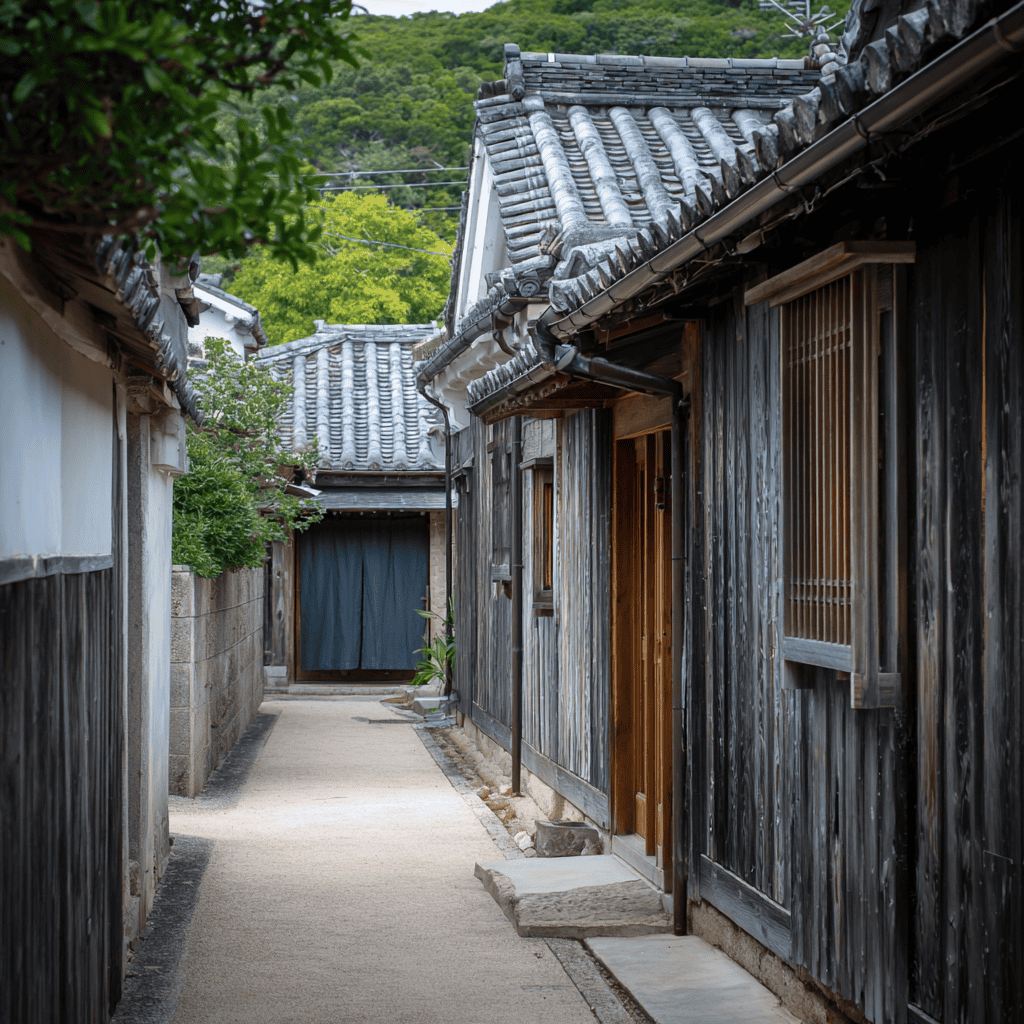
The Art House Project began in 1998. Its premise was simple. Empty traditional houses in Honmura — the residential village on the eastern side of the island — would be given to contemporary artists to use as long-term installation spaces. The houses are not gallery substitutes. They are the work itself. Honmura is a working village of around eight hundred people, and the houses sit among occupied homes. Walking the project means walking a residential neighbourhood. Voices carry. Doors close at dinner. The relationship between art and daily life is the entire point.
Seven houses are open to the public. Tickets are bought at the Honmura Lounge, the project’s small visitor centre, and run at 600 yen per house if booked online or 700 yen on-site at 2026 prices. Children fifteen and under enter without charge.
The seven houses
- Kadoya — the first house renovated, in 1998. A long permanent installation by Tatsuo Miyajima of LED counters set into a darkened pool of water.
- Minamidera — designed by Tadao Ando around a James Turrell light installation, Backside of the Moon. Visitors enter in total darkness; the work reveals itself only after several minutes. Timed slots required.
- Kinza — a Rei Naito installation experienced one visitor at a time, by reservation only.
- Go’o Shrine — Hiroshi Sugimoto’s intervention on an existing Shinto shrine, including a glass staircase descending into a chamber beneath the main hall.
- Ishibashi — a Hiroshi Senju installation of monumental waterfalls painted directly onto the walls of an old merchant house.
- Gokaisho — a Yoshihiro Suda piece using carved-wood camellia flowers, invisible until you slow down enough to find them.
- Haisha — Shinro Ohtake’s “scrap-house,” built into a former dental clinic and packed with collaged material from his decades of work.
The walk between houses takes the visitor through Honmura’s narrow lanes, past low-tile roofs and the indigo noren curtains of the village’s small cafés and pottery studios. Allow most of a day if all seven houses are part of the plan. Lunch in Honmura is straightforward to find but reservations help. Most of the houses close one day a week. Check the official Benesse Art Site calendar before locking the date.
I♥YU bathhouse
At Miyanoura Port, the I♥YU public bath designed by Shinro Ohtake is a working sentō open to the public for around 660 yen. The exterior is collaged with neon, signage, and salvaged objects. The interior continues in the same register. It is one of the few places on the island where the contemporary art and the daily life of residents share the same physical space at the same time.
Teshima and Inujima: the wider archipelago
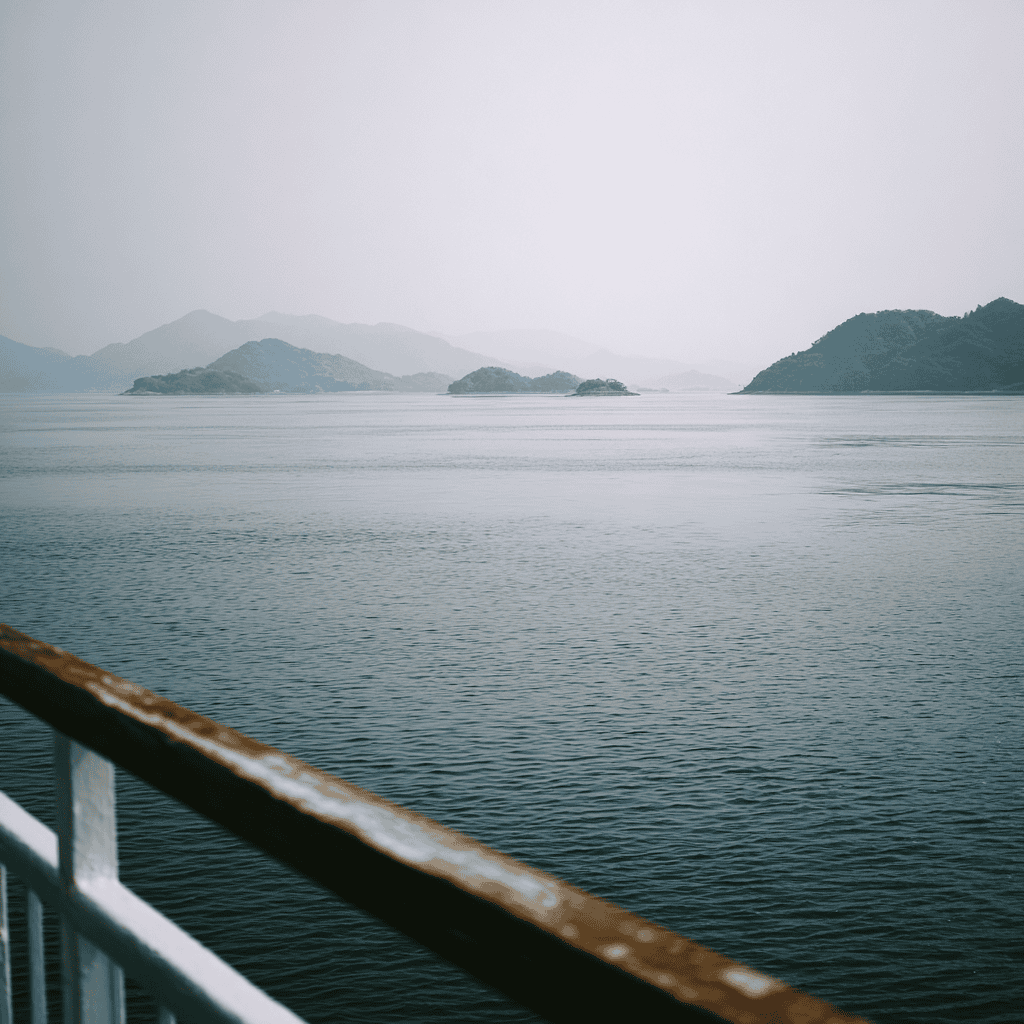
The art-island project did not stop on Naoshima. Two further islands in the immediate Setouchi area now hold permanent museums and installations under the same Benesse umbrella. Each has its own register and its own closure days, which matters for planning.
Teshima
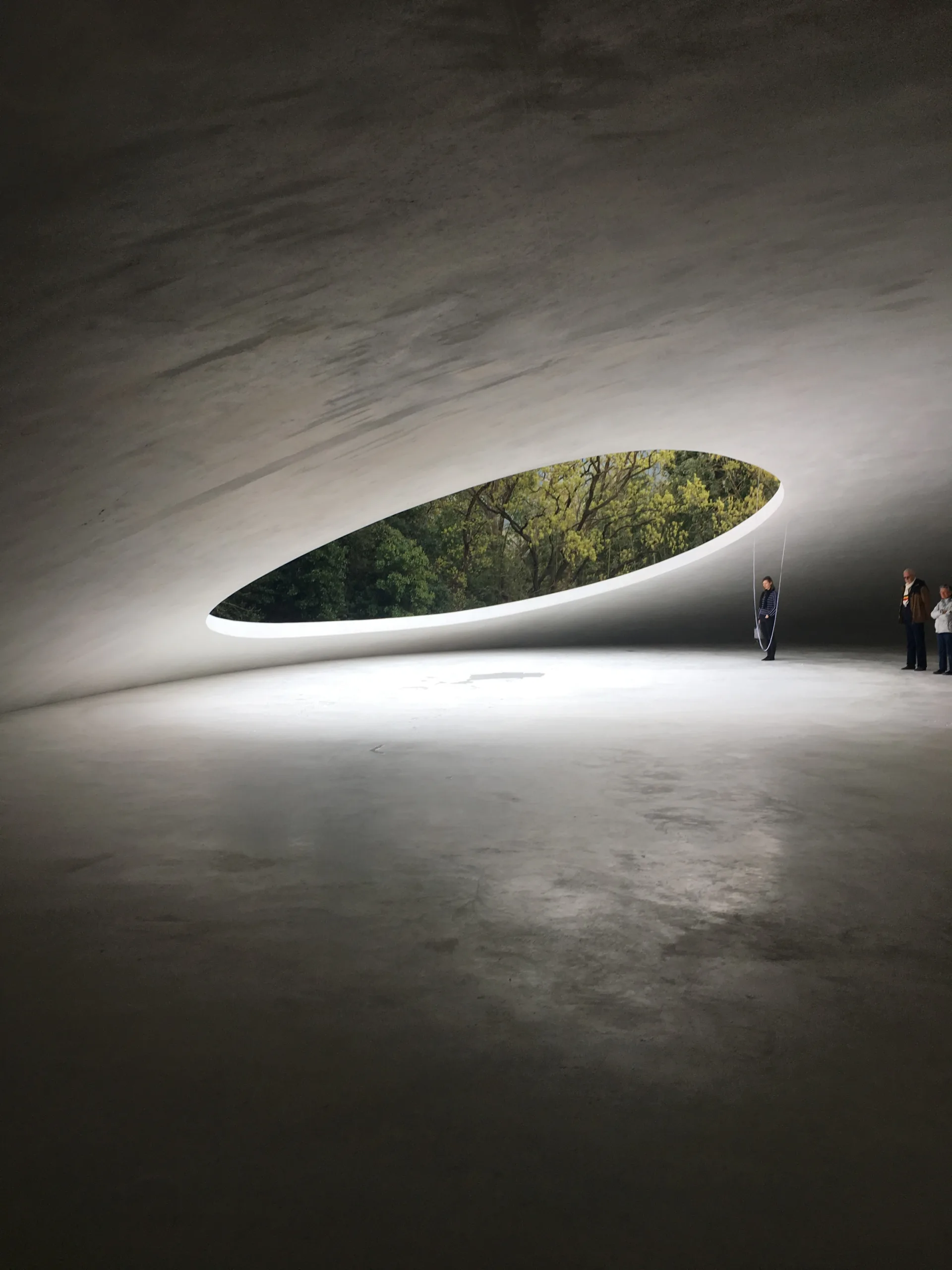
Roughly thirty minutes from Naoshima by ferry. Its principal work is the Teshima Art Museum, designed by the architect Ryue Nishizawa in collaboration with the artist Rei Naito. The building is shaped like a single water droplet pressed into the hillside, a thin concrete shell with two oval skylights open to the weather. The work inside is Naito’s Matrix: water moves slowly across the polished floor, drawn from below the ground, responding to the ambient temperature. Visitors enter without shoes, in small numbers, in silence. It is the most contemplative single building in the Setouchi. Teshima also holds Christian Boltanski’s Les Archives du Cœur, an audio archive of human heartbeats, and the Teshima Yokoo House. Closures fall on Tuesdays for most sites.
Inujima
The smaller and more remote of the two. Around forty minutes by ferry from Naoshima. The Seirensho Art Museum is built into the ruins of a copper refinery that operated on the island in the early twentieth century, with the smoke chimneys preserved as architectural features. Inujima also runs an Art House Project of its own, smaller in scale than Naoshima’s. The island is walkable and quiet. Add a third night to the trip if both islands are on the plan.
When to go, how to get there, where to stay
When to go
Naoshima is comfortable to visit in any season. Spring (late March through May) and autumn (mid-September through November) offer the best weather and the gentlest light for photography. Summer is hot and humid but workable if the itinerary moves slowly. Winter is mild — snow is rare — and the island is at its quietest, though some museums close for extended maintenance in January. Check the official Benesse Art Site calendar six months out for the exact closure dates of each museum.
The single most important date to know is Monday. Most museums on Naoshima close on Mondays. If a public holiday falls on a Monday, they remain open and close on Tuesday instead. Teshima and Inujima museums close on Tuesdays. Plan ferry days and museum days with the closure pattern in mind.
The Setouchi Triennale year
Every three years, the Setouchi Triennale brings a wave of additional installations to twelve islands in the Inland Sea, including Naoshima. Its 2025 edition has now closed. The next edition runs in 2028. Triennale years are louder, more crowded, and harder to book. The off-Triennale years — 2026 and 2027 — give the same permanent collection without the festival traffic and are, for most travellers, the better window.
How to get there
Two ports serve Naoshima. Miyanoura on the western side handles most arrivals and is where the main bus network starts. Honmura on the eastern side is closer to the Art House Project and the Naoshima New Museum of Art. Choose the arrival port based on where the first visit of the trip lies.
The standard route from Tokyo, Kyoto, or Osaka is the shinkansen to Okayama (around three to four hours from Tokyo), then the JR Uno Line south to Uno Port (40–60 minutes, with one change at Chayamachi), then the Shikoku Kisen ferry to Miyanoura Port (20 minutes, around 290 yen each way). Your Japan Rail Pass covers the train segments. The ferry does not require advance booking and runs every hour or so during the day.
From Takamatsu on Shikoku, the ferry crossing is around 50 minutes by regular ferry or 30 minutes by high-speed boat. Takamatsu has more hotel inventory than Uno and is a comfortable base for travellers who prefer to sleep on the mainland. The Tokyo (Haneda) to Takamatsu Airport flight runs about an hour with several daily departures and can be the fastest one-way option from Tokyo. For broader practicalities on rail travel inside Japan, our guide to luxury travel in Japan covers the wider context.
How to get around the island
Three options: bus, electric bicycle, or walking. The local Naoshima Town bus connects Miyanoura to Tsutsujiso for 100 yen and runs 1–3 times an hour. From Tsutsujiso, complimentary shuttle buses serve Benesse House Museum, Lee Ufan Museum, and Chichu. Electric bicycles are available for rent at Miyanoura Port for around 1,500 yen for a day. The island has steep hills and an electric assist makes the difference. Walking is possible between any two points but the distances add up.
Where to stay
Benesse House Hotel is the only true hotel on the island. Four buildings — Museum, Oval, Park, and Beach — sit within the Benesse Art Site complex. All were designed by Tadao Ando. Guests of the Museum and Oval buildings have 24-hour access to the Benesse House art collection, which is reason enough to consider it. Rooms run from around USD 500 to USD 1,000+ per night and are best booked six months ahead to the day, since the booking window opens that far in advance and the most desirable rooms go quickly.
If Benesse House is unavailable or the budget runs differently, the alternatives are smaller. Naoshima Ryokan Roka is a recent ryokan within walking distance of Honmura, with a kaiseki dinner programme and on-site hot springs. Sana Mane offers a glamping experience near Miyanoura with several distinctive tent structures. Several traditional minshuku guesthouses operate around both ports at lower price points. For travellers who prefer mainland sleep, Takamatsu has the deepest inventory.
How long to stay
Two nights is the considered minimum. One night is workable from Okayama or Takamatsu but truncates the experience. Three nights opens up Teshima or Inujima as a calm second island and gives the Naoshima New Museum of Art the time it deserves. The island rewards a slower pace.
What to book in advance
- Chichu Art Museum timed-entry reservations
- Naoshima New Museum of Art reservations (NNMoA)
- Minamidera (James Turrell light installation in the Art House Project) timed slot
- Kinza (Rei Naito installation) — single-visitor reservation
- Benesse House Hotel — six months ahead to the day
- Restaurant Issen and any other on-site Benesse restaurant
- Ferry from Honmura to Teshima or Inujima — schedules are limited
Practical notes that matter
Naoshima has two small supermarkets and one 7-Eleven. There is no chemist or pharmacy on the island. Bring any medication or skincare with you. Teshima and Inujima have less still — no convenience stores at all. Restaurants are limited and book up; reserve for any meal that matters. Cash is useful at smaller venues, although card is widely accepted at the Benesse facilities. Consider luggage forwarding (Yamato or Sagawa) from your previous hotel directly to your next mainland stop, so the island portion of the trip travels with a small overnight bag rather than a full suitcase.
The reading shelf
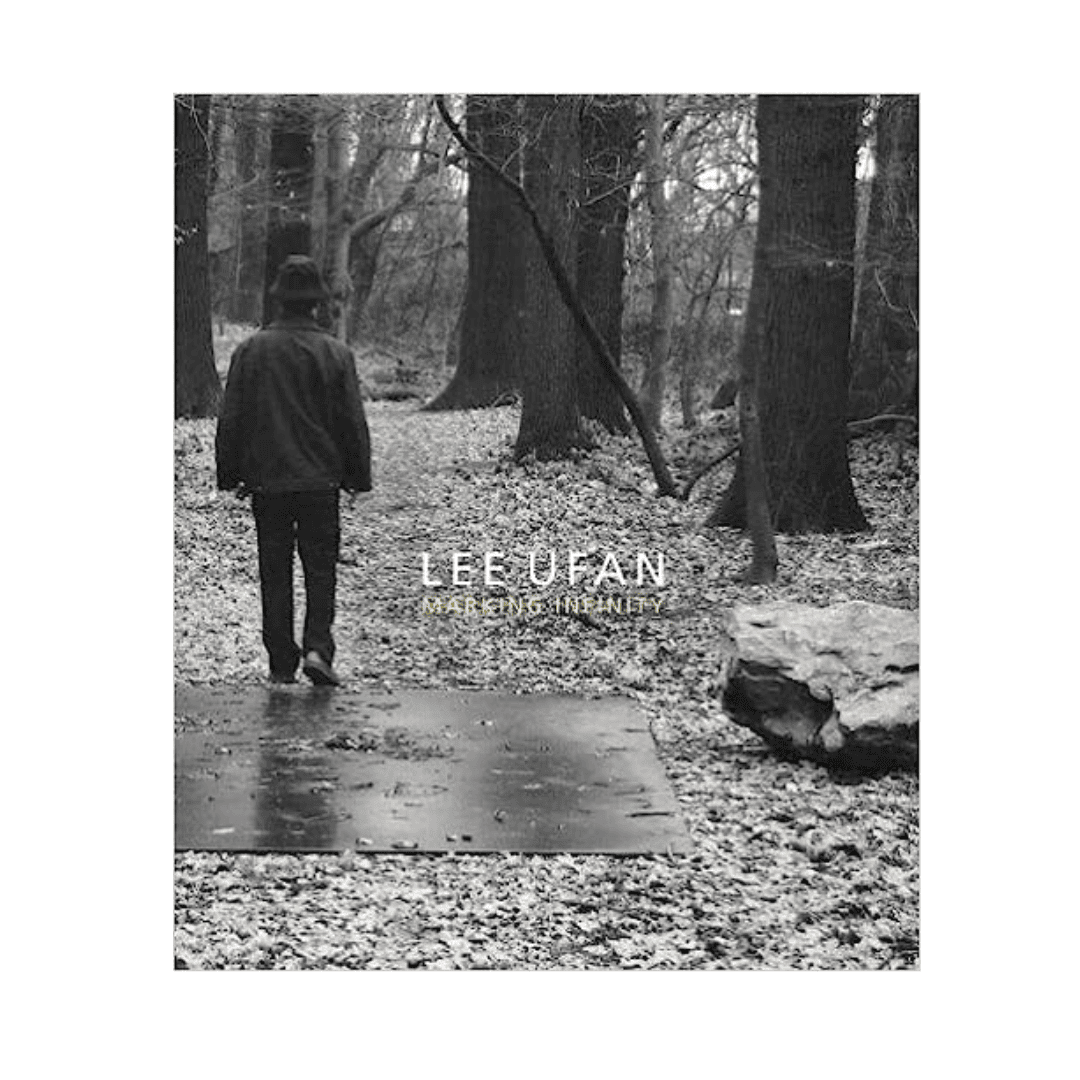
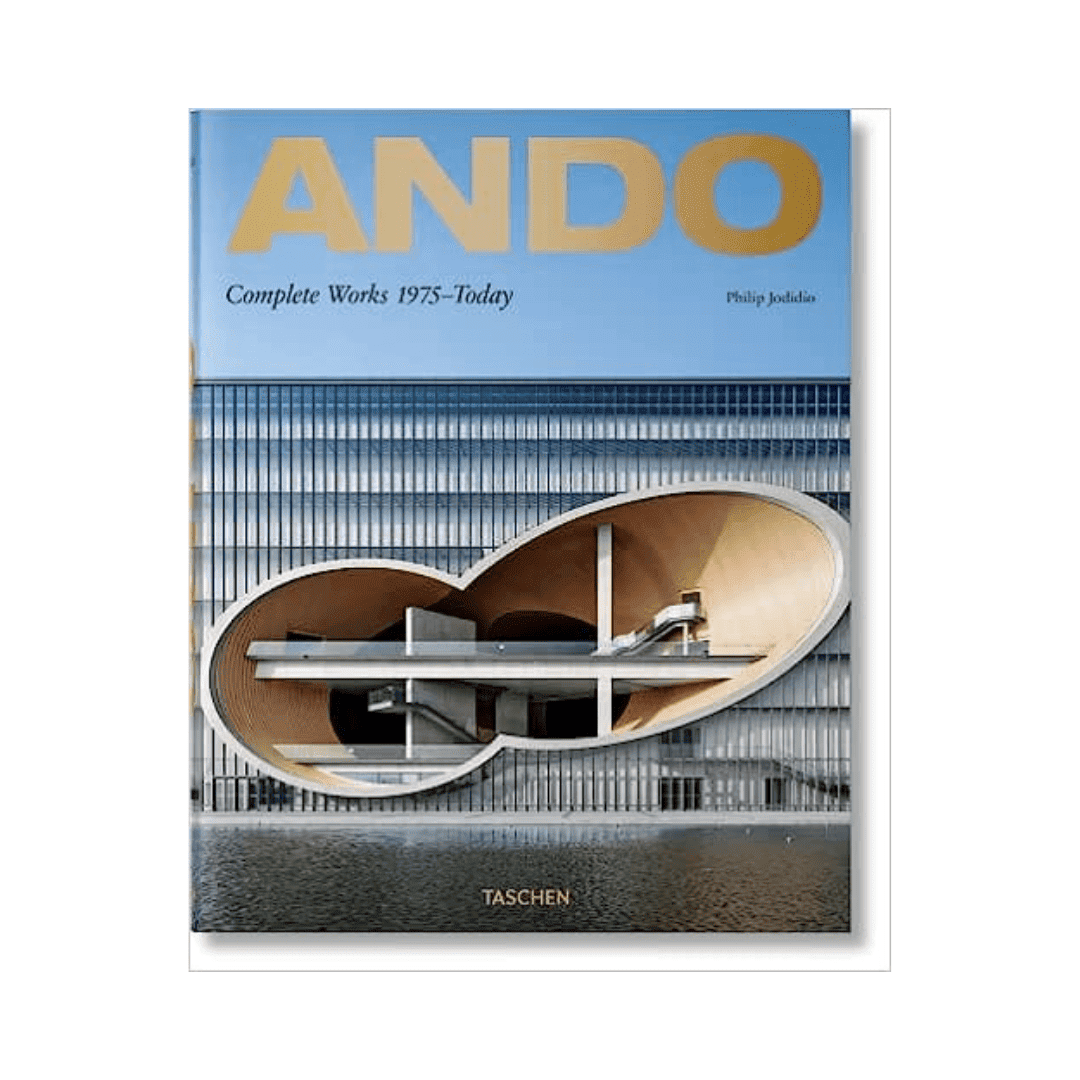
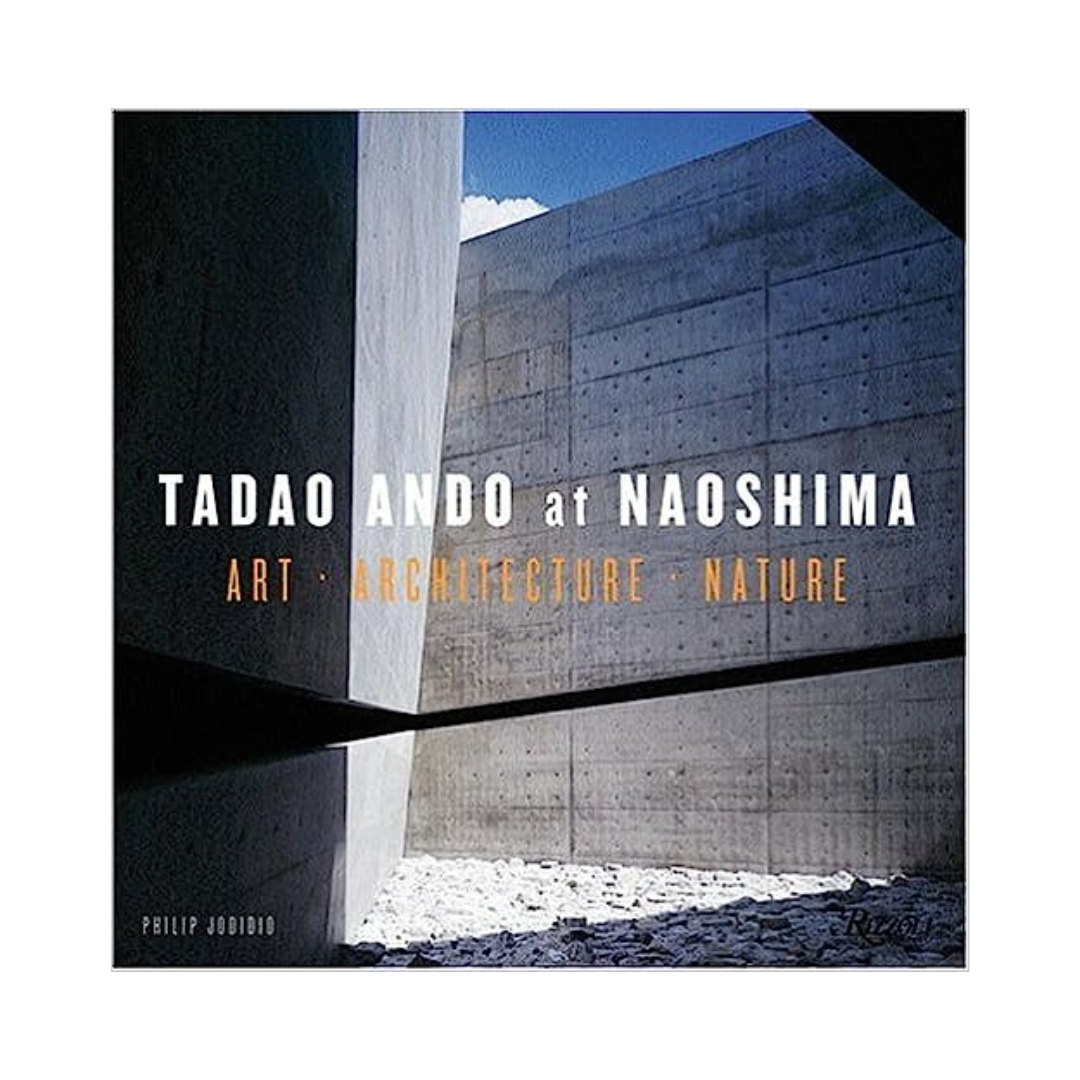
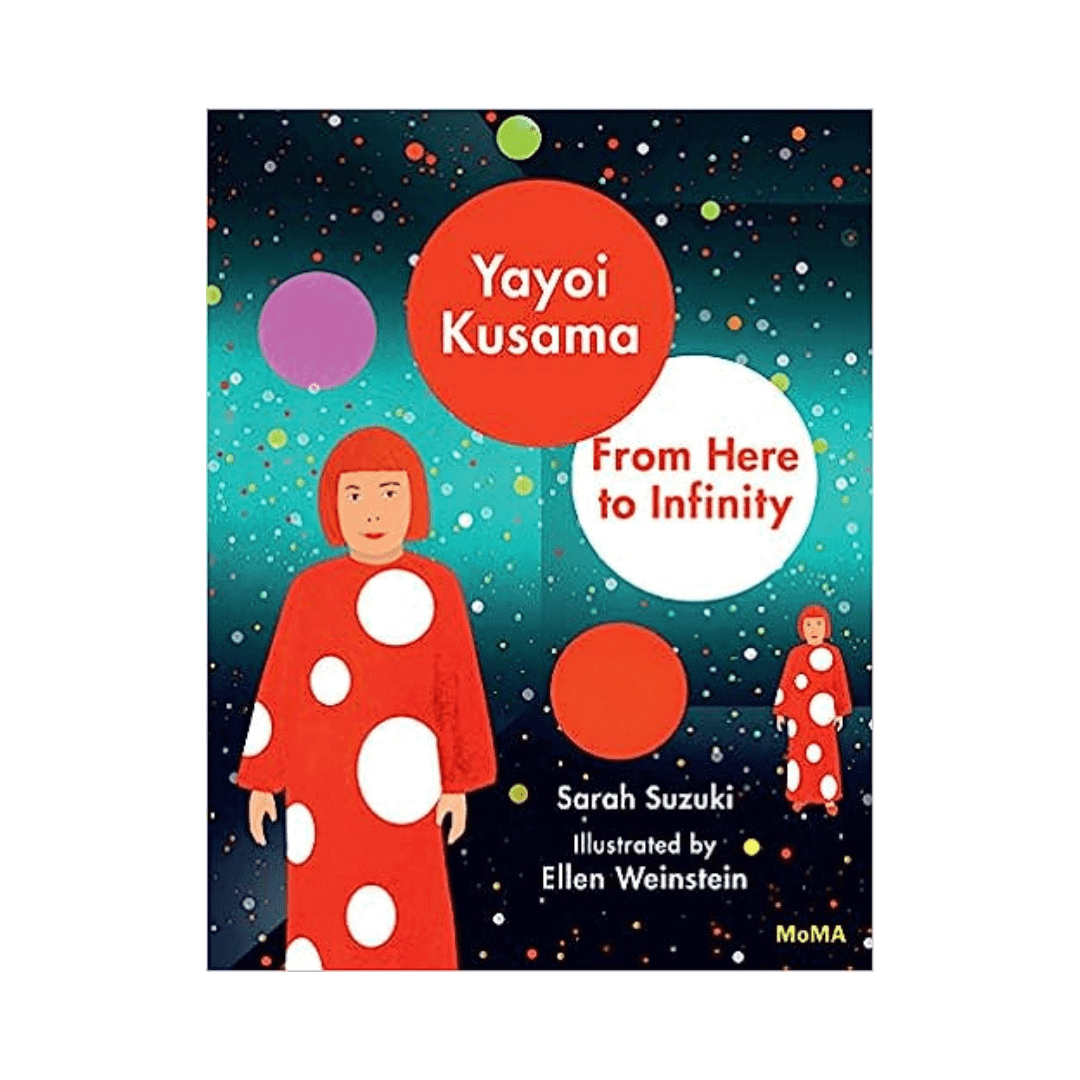
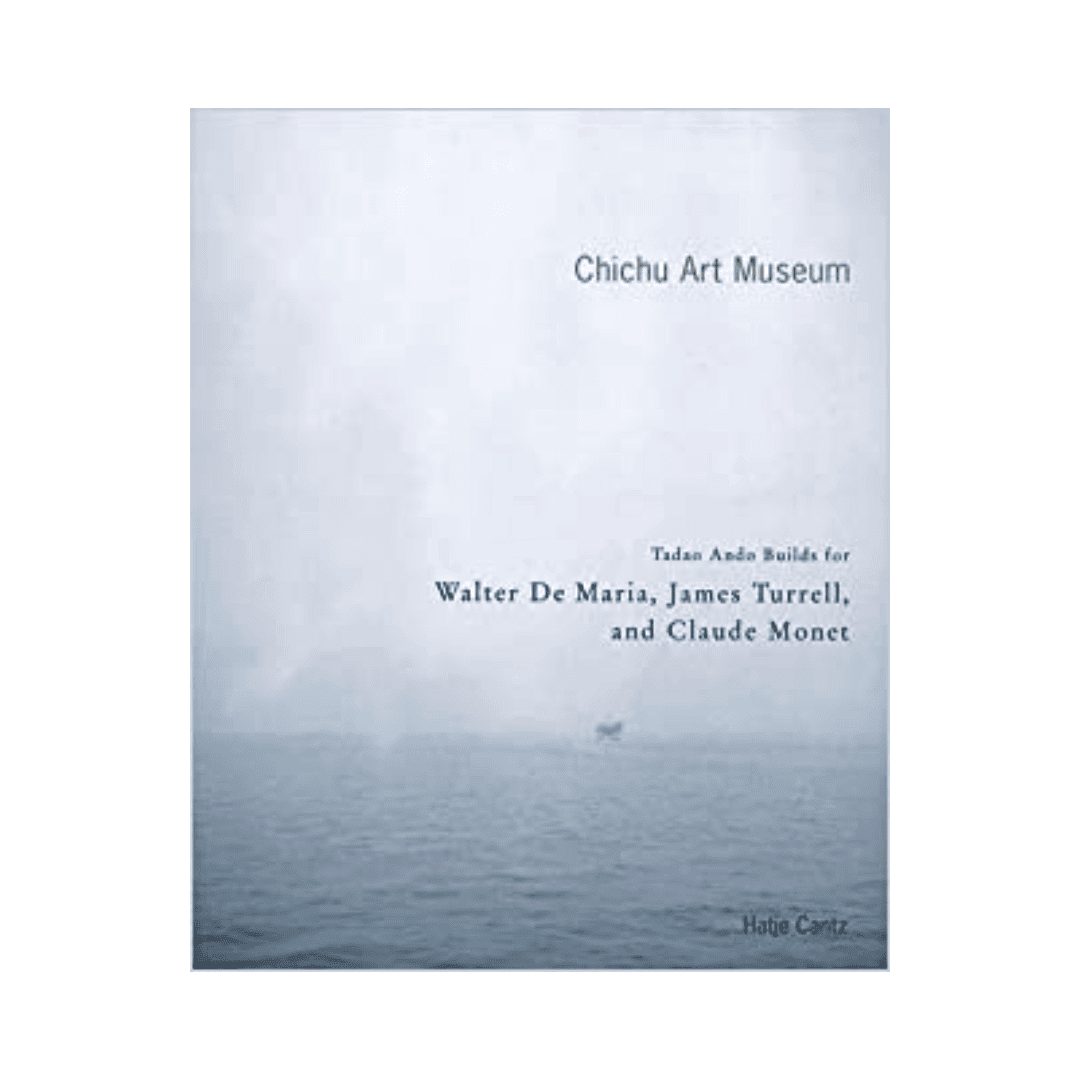
Six books that take the Naoshima trip from a visit to a reading. Read one before going. Bring a second.

Is Naoshima for you? A considered framework
Naoshima is not for everyone. The competitor reviews are honest about this, and so are the residents. The island rewards travellers who care about contemporary art, architecture, design, or some intersection of the three. It tests travellers who do not, particularly across the half-day journey from Tokyo or Osaka and back. A short framework, by traveller type:
If you are an art traveller
Naoshima is essential. There is nothing comparable in concentration, ambition, or quality anywhere in Asia. Two nights minimum, three if Teshima is in scope. Stay at Benesse House if at all possible. Read at least one of the books in the shelf above before going.
If you are an architecture traveller
The trip is the closest thing in the world to a complete career retrospective by a single living architect. Ten Ando buildings on one island across thirty-seven years. The Lee Ufan Museum, the Chichu Art Museum, and the Naoshima New Museum of Art together are reason enough on their own.
If you are a contemplative traveller
The island is quieter than most Japanese destinations and slower than most. Walking Honmura in the late afternoon, sitting in the Lee Ufan courtyard, or watching James Turrell’s Open Sky shift over an hour at Chichu are experiences you will remember when louder trips have faded.
If you are a design-led generalist
Worth one to two nights. The Benesse Art Site core, plus a half-day in Honmura, plus a meal at the Benesse House restaurant gives a strong condensed version of the island.
If you are a casual sightseer
Probably not. The journey is real. Beyond that, the art is contemporary and demanding. The island is small and the photography moments are concentrated around two pumpkin sculptures that travellers queue for. Other parts of Japan offer more in less effort.
If you are coming with children
School-age children with an interest in art do well here, particularly on bicycles. The Naoshima New Museum of Art’s Cai Guo-Qiang wolf installation tends to land. Younger children find it a long day. The Yayoi Kusama picture book in the shelf above is a useful primer.
Editor’s Finds
A small selection of related objects worth a look.
Questions worth asking
Is Naoshima art island worth visiting?
Naoshima is worth visiting if contemporary art, architecture, or both are part of why you travel. The island holds Tadao Ando’s thirty-seven-year body of work, the Benesse Art Site museums, Honmura’s Art House Project, and the Naoshima New Museum of Art that opened in May 2025. Two days minimum. Bookings essential.
How many days do you need on Naoshima?
Two nights is the considered minimum. One night feels rushed because most travellers arrive on the early-afternoon ferry and leave on the same the next day. Three nights opens up Teshima or Inujima as a calm second island. Day trips are possible from Okayama or Takamatsu, but the island rewards a slower pace.
Can you visit Naoshima as a day trip?
Yes, from Okayama or Takamatsu, where the ferry crossing is around twenty minutes to one hour. From Tokyo or Osaka the day-trip equation collapses, because the inbound train alone runs three to four hours. Stay at least one night if you are coming from those cities.
What is the Naoshima New Museum of Art?
The Naoshima New Museum of Art opened on 31 May 2025 on a hilltop in Honmura. Designed by Tadao Ando, it is his tenth building on the island and the first to carry Naoshima in its name. Four galleries focus on contemporary work from across Asia, with rotating exhibitions and a top-floor café overlooking Teshima.
Do you need reservations for the Chichu Art Museum?
Yes. Chichu requires timed-entry reservations, which sell out quickly during weekends, holidays, and Setouchi Triennale years. Book the moment your travel dates are confirmed. Minamidera, the James Turrell installation in the Art House Project, also runs on a timed-slot system. Benesse House Hotel opens bookings six months ahead to the day.
You may also like
Plan a Naoshima trip with us
For travellers who want Naoshima held inside a longer Japan itinerary — Benesse House bookings managed, Chichu reservations secured, Teshima or Inujima added with the right ferry timing, the rest of the trip designed around the visit. Bespoke Japan trip planning from the Magnificent Japan team.
Plan Your Itinerary