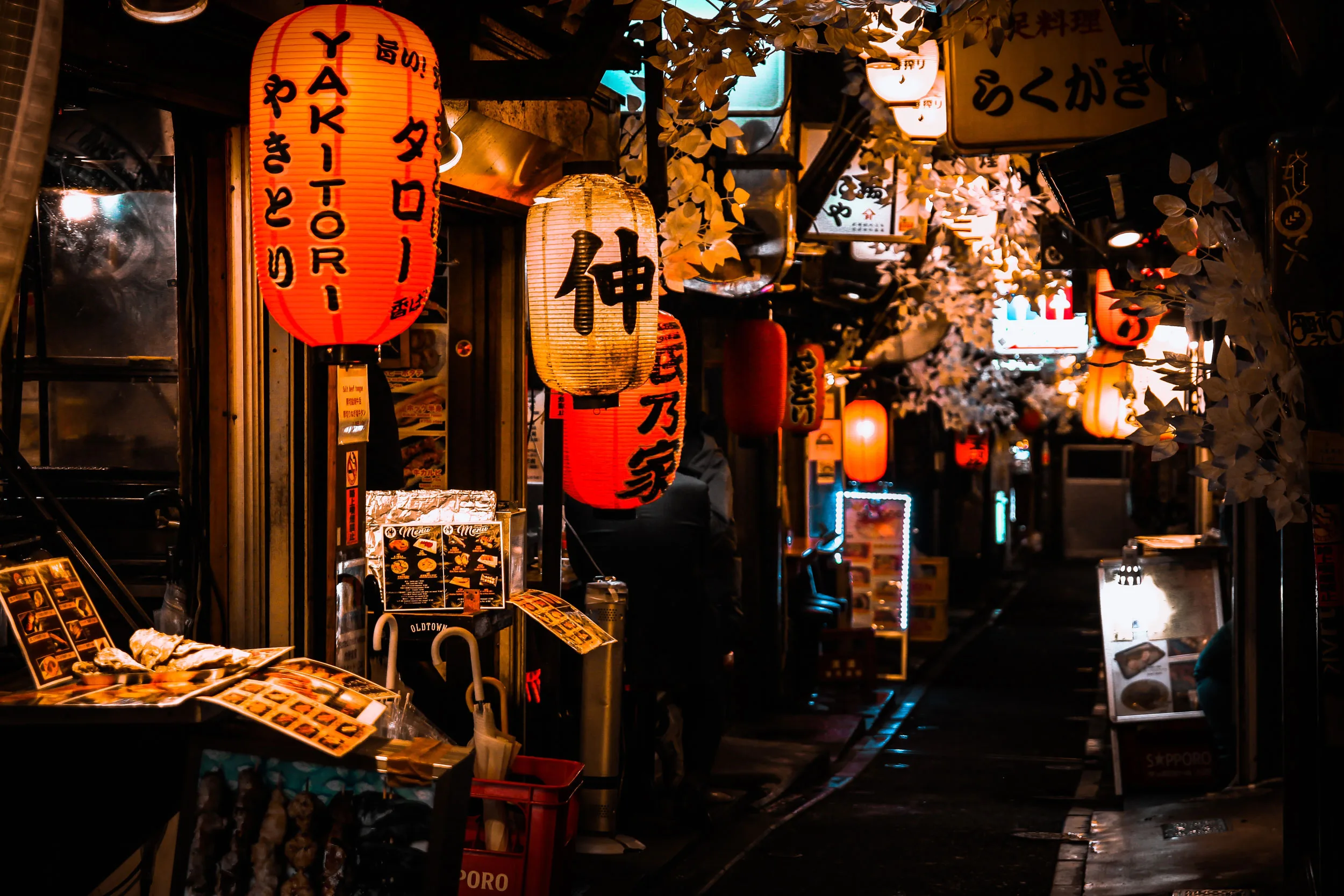
An izakaya in Japan is where the working day ends and the evening begins. It is a casual pub with a long menu of small plates. Friends order a round of drinks, then a few dishes, then a few more. Nobody hurries, and nobody eats alone unless they want to.
For a first-time visitor, the format can feel unfamiliar. A small dish arrives that you did not order. The menu may be handwritten. The bill comes as one total for the table. Once you know the rhythm, though, the izakaya becomes the easiest and warmest meal of the trip.
This guide covers what the word means, how the room works, how to order, what to eat and drink, and where to find the best streets for it. It sits inside our wider guide to traditional Japanese food, which maps the dishes you will meet across the country.
What is an izakaya?
An izakaya is a casual Japanese pub that serves drinks with many small, shareable plates. The name combines the characters for stay, drink and place. Guests order in rounds, share dishes from the center of the table, and pay one bill at the end. It is the everyday heart of an evening out in Japan.
What an Izakaya in Japan Actually Is
The word itself explains the idea. Izakaya is written 居酒屋, three characters that read roughly as stay, drink and place. A shop that sold drink became a place where you could stay and drink. Food followed, because nobody drinks well on an empty stomach. The Tokyo tourism bureau’s guide to izakaya pub grub gives the same reading.
Today the format spans a wide range. Some rooms seat eight people at a single wooden counter, with the owner cooking a few feet away. Others are large chains with private booths, tablet menus and a hundred dishes. Most sit somewhere between, with a counter, a few tables and a raised tatami area.

What unites them is the rhythm. You sit, you order a drink, and the food comes in waves. Plates land in the middle of the table, and everyone takes a little. Because nothing arrives as a single main course, the meal can last forty minutes or four hours.
That flexibility explains why the izakaya in Japan matters so much. It is where colleagues unwind after work, where old friends catch up, and where solo diners take a counter seat for a beer and two plates. For travelers, it is the clearest window into how Japan actually relaxes.
From Sake Shop to Neighborhood Pub
The story begins in the Edo period, which ran from 1603 to 1868. Sake merchants in growing cities began letting customers drink on the premises. At first, a buyer simply stood at the shop and sampled what was for sale. Then stools appeared, and a few snacks to go with the cup.
Those shops became known as places to stay and drink, and the name stuck. Over time the snacks grew into real cooking. Grilled fish, simmered vegetables and pickles joined the menu. By the twentieth century, the izakaya in Japan had become a fixture near every station and office district.
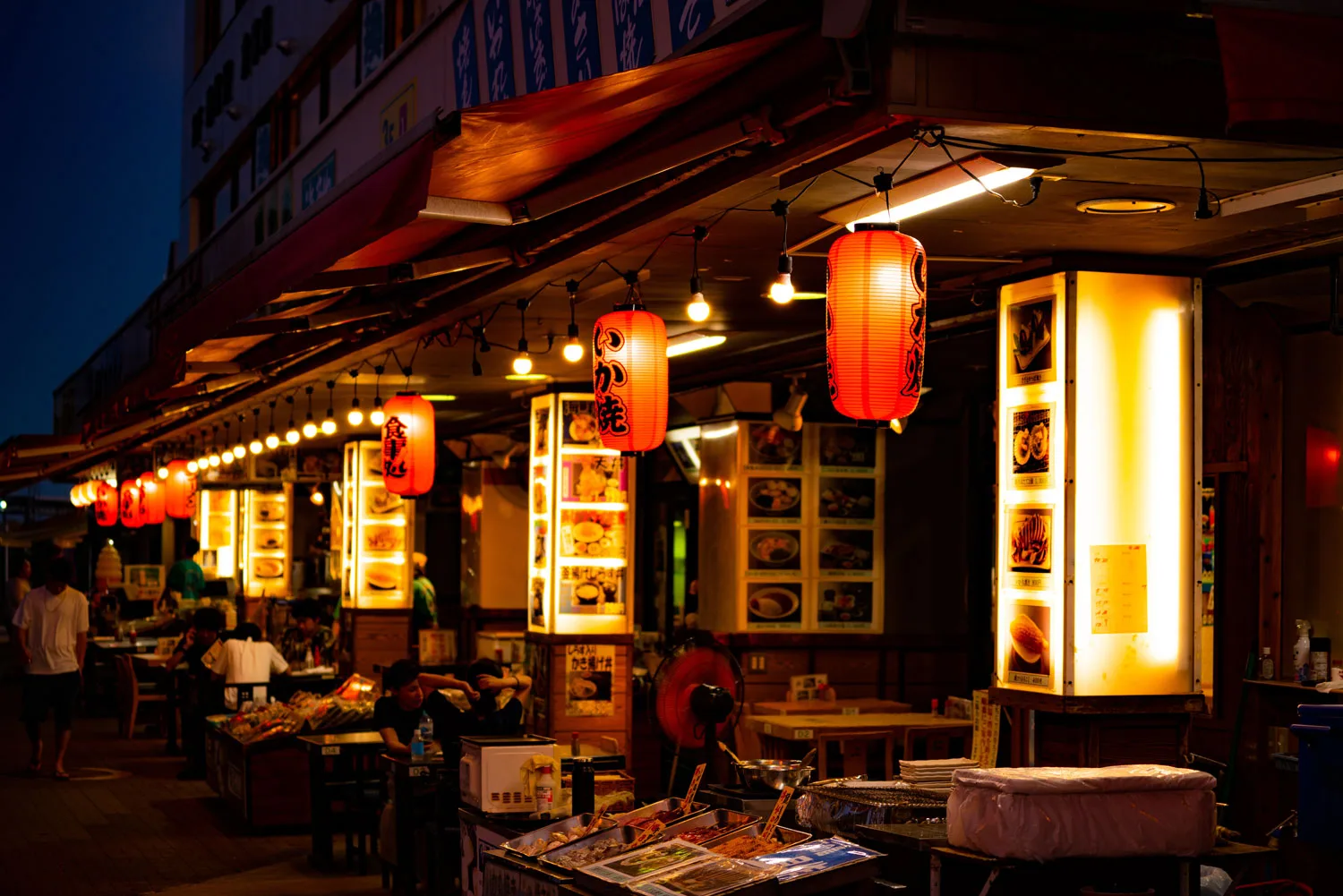
After the war, the format spread fast. Office workers needed somewhere close and casual, and small owner-run rooms filled that gap. Later, national chains made the experience easy for groups. Still, the small independent counter remains the version most people remember.
The modern menu reflects every era at once. You will find old dishes like grilled fish beside newer favorites such as potato salad, fried chicken and even pizza. That mix is not a lapse in tradition. Instead, it is the tradition, because an izakaya has always served whatever goes well with a drink.
You may also like
Inside the Room: Seating, the Otoshi and the First Drink
Walk under the short curtain at the door, called a noren, and someone will call out a welcome. Staff will ask how many are in your party. Hold up fingers if words fail, and they will lead you to a seat. At some places, you remove your shoes before stepping onto a raised floor.
Seating shapes the evening. The counter puts you close to the cooking and to other guests. Tables suit a group of four. The tatami area, with low tables and cushions, suits a longer and slower night. If you have a choice, the counter is usually the most fun for two people.

Once you sit, a hot or cold towel arrives, along with a tiny dish you did not order. This is the otoshi. It might be simmered vegetables, a few slices of fish or a spoonful of salad. It comes with a small seating charge, called otoshidai, which appears on the final bill.
Think of it as a cover charge with a snack attached. Declining it is possible at some places, but it is unusual and can feel awkward. Most regulars treat it as part of the welcome. Meanwhile, the staff will want your drink order right away, often before you have opened the menu.

For that first round, many people simply say “toriaezu biru,” which means “beer for now.” It is the most common opening line in any izakaya. The phrase buys time to read the menu. Soon after, the drinks arrive, glasses touch, and the evening has properly begun.
Since April 2020, Japanese law has restricted smoking in most bars and restaurants. Many rooms are now smoke-less inside or keep smokers in a separate booth. Smaller independent places may still differ, so check the sign by the door if smoke matters to you.
How to Order at an Izakaya, Round by Round
The golden rule is to order in rounds. Start with three or four dishes for the table, then see how you feel. Add more as plates empty. Because portions are small, a group of four might share ten or twelve dishes across an evening.
A good first round mixes textures. Choose something cold and fresh, like edamame or a salad. Add something fried, such as chicken karaage. Then pick something grilled from the charcoal. After that, follow your appetite and the staff’s recommendations.

Menus come in three forms. Large chains often use a tablet at the table, usually with an English option and photos. Mid-sized places hand you a laminated menu, sometimes with pictures. Small counters may list dishes on paper strips along the wall, written by hand in Japanese.
When you cannot read the menu, point and ask. “Osusume wa nan desu ka?” means “What do you recommend?” Staff will gladly suggest the dish of the day. Also look at what neighbors are eating, then point politely. That trick has saved many first nights out.
To call staff, raise a hand and say “sumimasen.” Shouting it across a busy room is normal, not rude. Planning a longer trip around evenings like this? We build food-focused days, and the reservations behind them, into every custom Japan itinerary.
The Izakaya Menu: Plates Worth Knowing
Every menu at an izakaya in Japan is different, yet certain dishes appear almost everywhere. Learn these and you can order with confidence anywhere in the country. Most are simple, salty and made to go with a cold drink. Together they form a kind of shared language.
The menu usually runs in sections. Expect cold starters, fried dishes, grilled dishes, simmered dishes and rice to finish. Rice and noodles come last, because they close the meal rather than open it. Ordering a bowl of rice early marks you as new to the format.
Yakitori
Yakitori means grilled chicken, and it is the backbone of many menus. Skewers of thigh, breast, skin, heart and meatballs cook over charcoal. You choose salt, called shio, or a sweet soy glaze, called tare. Order a mix, because each cut tastes different.

Some izakaya specialize in yakitori and grill nothing else. At those, the cook stands behind the counter, fanning the coals and turning each skewer by hand. Sit close and watch. The smoke, the sizzle and the timing are part of the meal.
Karaage and gyoza
Karaage is Japanese fried chicken, marinated in soy, ginger and garlic before a light coating and a quick fry. It arrives hot, crisp and juicy, usually with a wedge of lemon. Gyoza, the pan-fried dumplings, come crisp on one side and soft on the other.
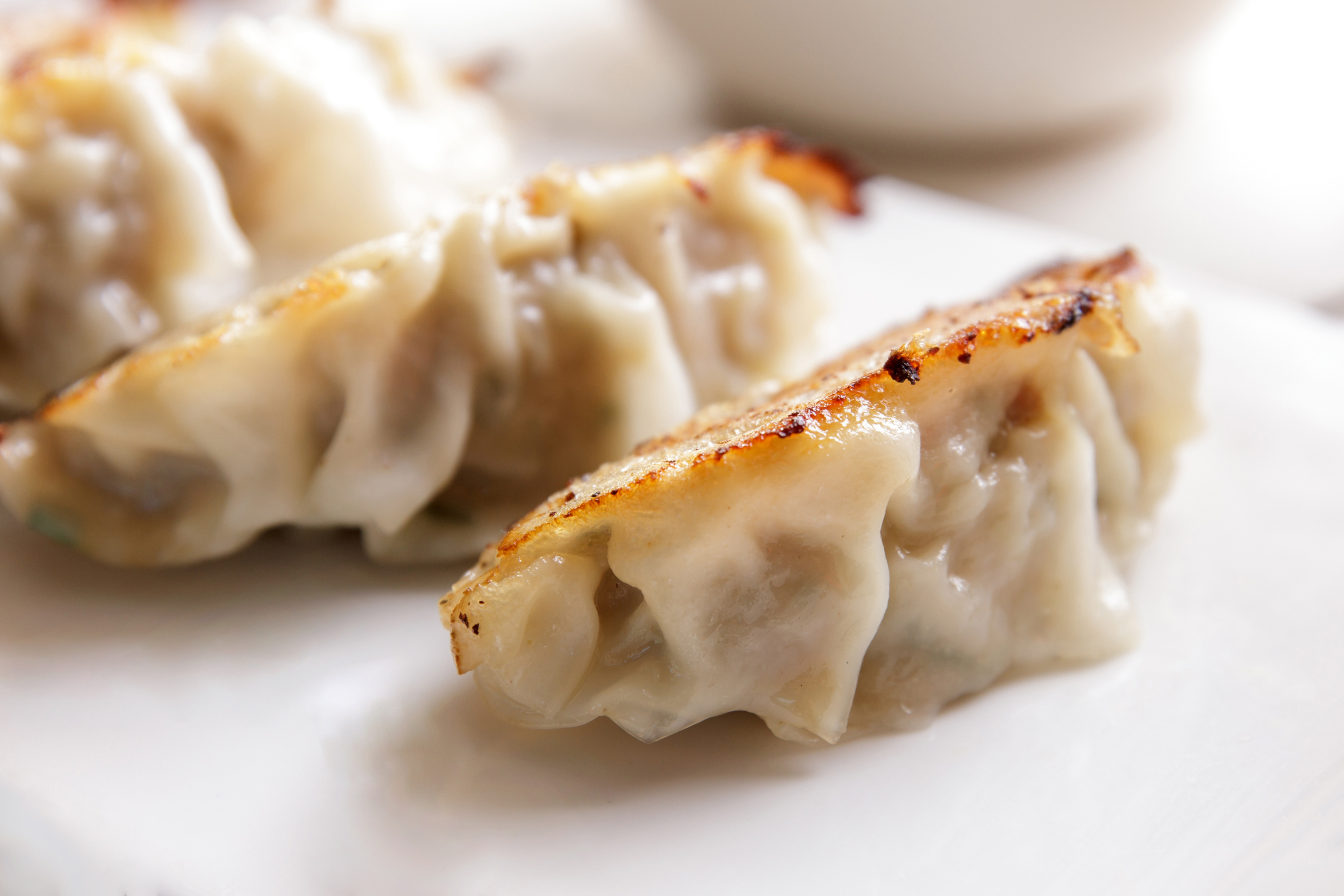
Both dishes suit beer perfectly, which is why they top so many first orders. Mix a little soy sauce, vinegar and chili oil in the small dish provided for the gyoza. For karaage, a squeeze of lemon is common, but ask the table before you squeeze it over everyone’s portion.
Takoyaki and okonomiyaki
These two dishes come from Osaka, though you will find them across Japan. Takoyaki are round batter balls filled with octopus, cooked in a special pan. Okonomiyaki is a savory pancake of batter, cabbage and your choice of fillings, topped with sauce and mayonnaise.

Hiroshima makes its own version of okonomiyaki, layered rather than mixed, often with noodles inside. If you travel west, try both and pick a side. Our guide to Osaka food and the kuidaore habit covers where locals go for each.
At an izakaya, these dishes usually arrive mid-evening, after the first drinks and the lighter plates. They are filling, so one portion goes a long way. Some places let you cook okonomiyaki yourself on a griddle set into the table. If so, staff will show you how to flip it, and the attempt is half the fun.

Both dishes reward an unhurried table. Okonomiyaki is often cut into wedges with a small spatula and passed around. Takoyaki come six or eight to a plate, so they divide neatly. Order one plate of each when you are four, and nobody will miss out.
Afterward, slow the pace. A cold dish such as a simple salad of cucumber with miso, or a plate of pickles, resets the palate. Then the table is ready for fish. That gentle rise and fall, from rich to light and back again, is how regulars build an evening without ever feeling too full.
Ten Proverbs to Carry With You
A printable folio of ten Japanese proverbs, each set in kanji with its reading and a line on where you will hear it.
Sashimi and tempura
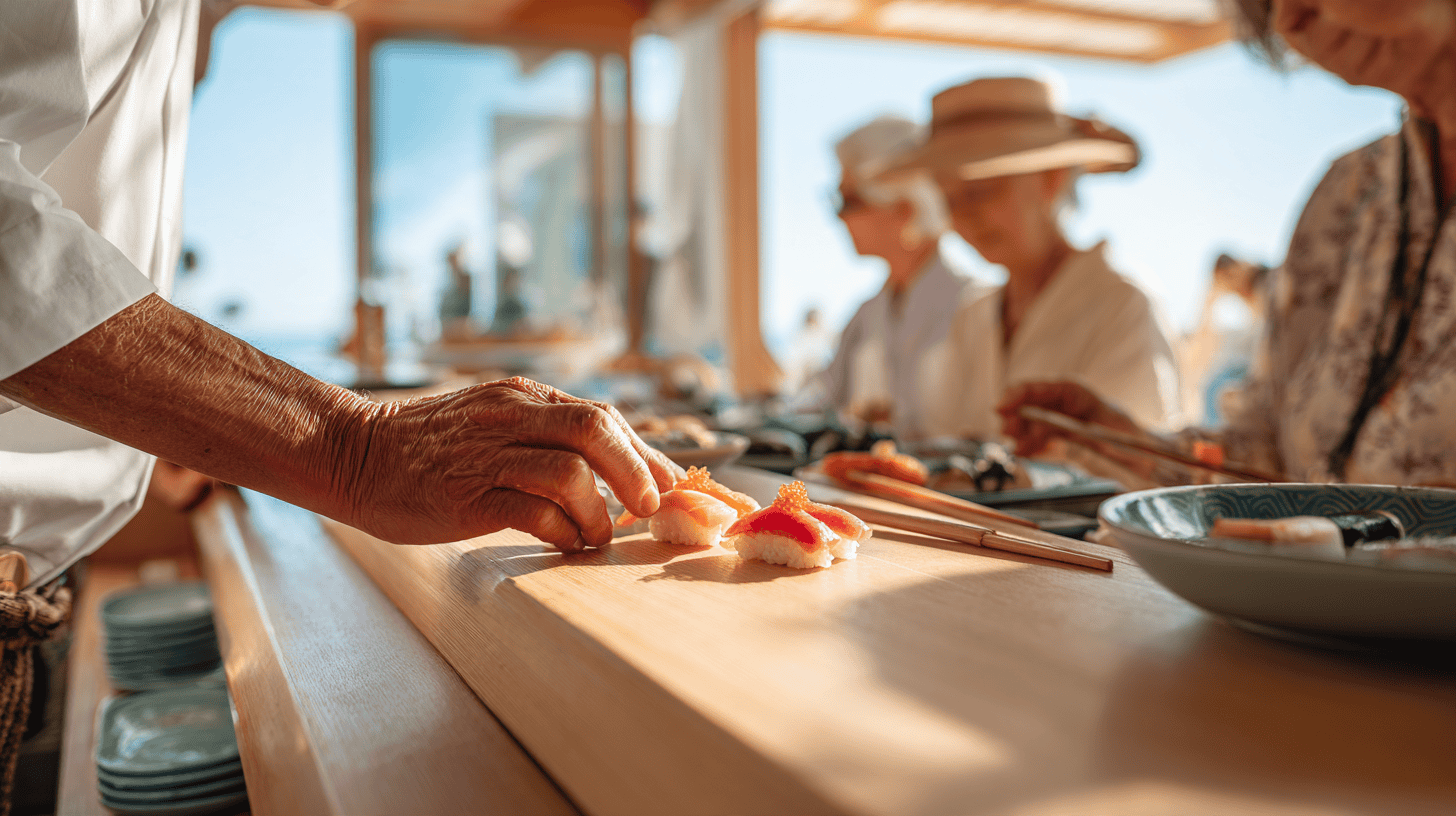
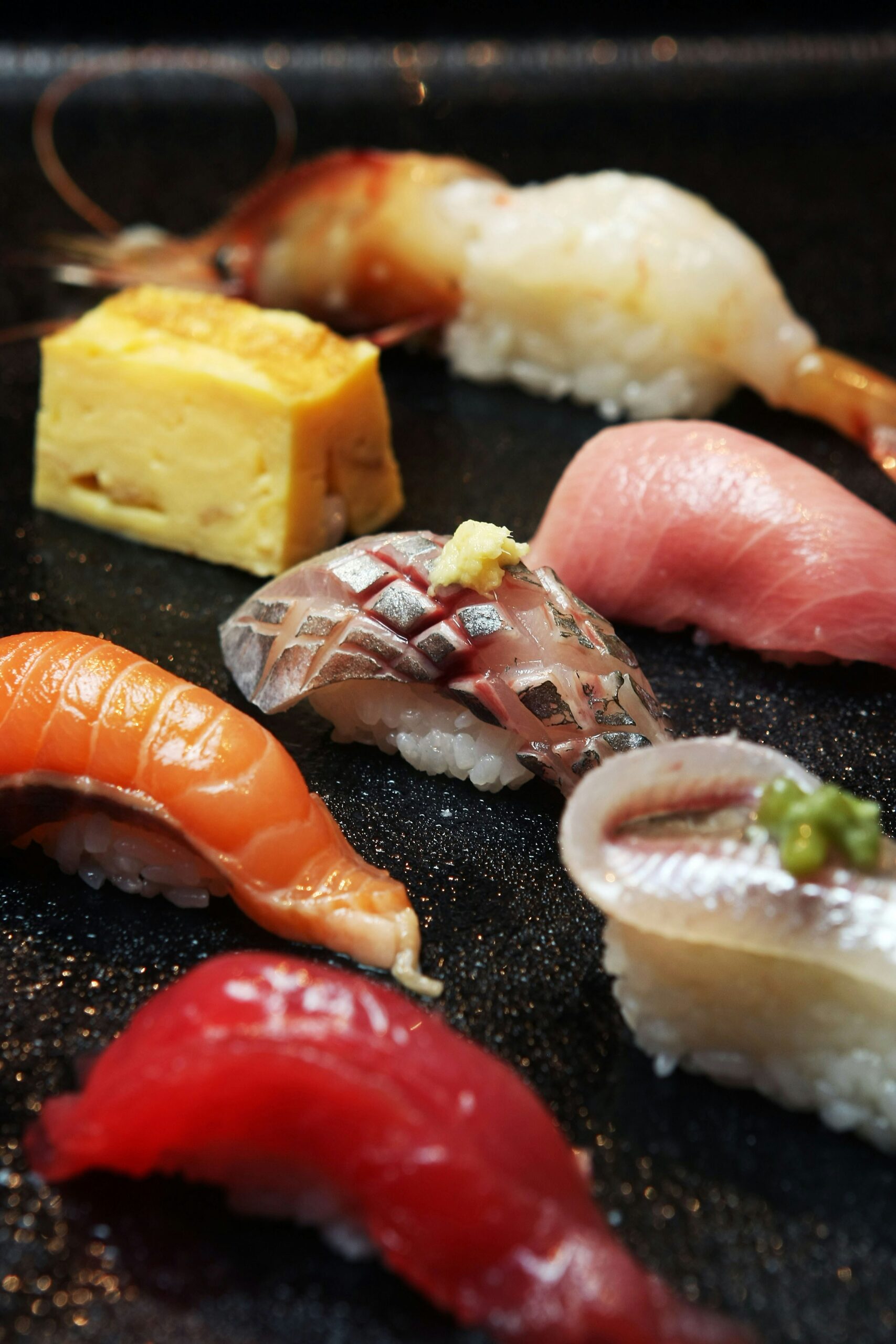
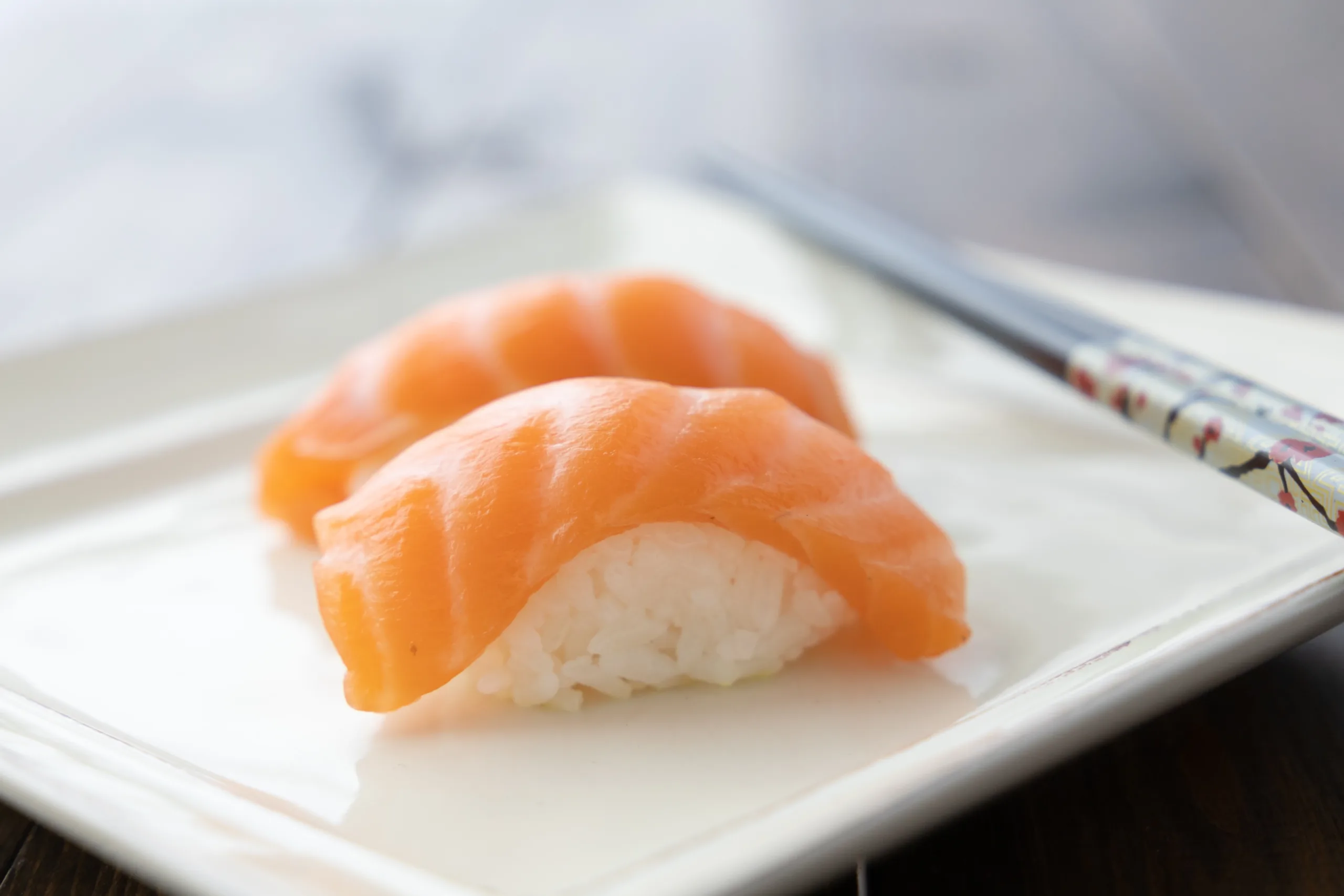
Many izakaya buy fish each morning and list it on a board by the door. Sashimi, sliced raw fish served with soy and wasabi, is the purest way to taste it. Ask what came in today. The answer tells you what the kitchen is proud of.
Coastal cities make this easy, because the fish travels only a short distance from the market. Even in Tokyo, though, a good counter will source well. If the menu offers a mixed platter, called moriawase, choose it. You get a small tour of the day’s catch, and the cook decides the best cuts for you.
Tempura shows the other side of the kitchen. Shrimp, squid, pumpkin and eggplant go into a thin batter and a hot pan, then come out light and crisp. Dip each piece in tentsuyu, a warm broth of dashi, soy and mirin, or simply in salt.
Order tempura in small batches rather than one large plate. It loses its crispness quickly, so a second round arrives fresher than a pile that sits. Vegetables like shiso leaf, sweet potato and lotus root are often the most interesting pieces. Ask for a mix when the menu allows it.

Two more dishes belong to colder months. Oden is a pot of daikon, eggs, fish cakes and konnyaku simmered in a light dashi broth. Nabe is a hot pot cooked at the table, with meat, tofu and vegetables added a little at a time. Both turn a winter evening into a long one.
Finally, finish with something starchy. A grilled rice ball, called yaki onigiri, or a bowl of ochazuke, rice in tea or broth, closes the meal. These are the plates that tell the kitchen you are nearly done.
You may also like
What to Drink: Beer, Highballs, Sake and Shochu
Draft beer is the default opener, served ice-cold in a heavy mug. After that, the field opens up. The highball, whisky with soda over ice, has become one of the most popular orders of all. Sours, made with shochu, soda and fruit juice, are light and easy.
Lemon sours are the most common, but grapefruit, yuzu and green tea versions appear on many menus. Non-drinkers are well looked after too. Oolong tea, soft drinks and non-alcoholic beer are standard, so nobody needs to sit out a round. Order whatever suits you, then raise the glass with everyone else.

Sake deserves its own attention. Ask for it cold, at room temperature or warmed, depending on the style and the season. Dry sake suits salty and fried plates, while richer styles stand up to grilled meat. For the basics of grades and serving, read our beginner’s guide to Japanese sake.
At home, the right vessels change the experience. A carafe and small cups slow the pace and invite pouring for each other. This Mino ware sake set in black Kuro Oribe glaze is made in Gifu, one of Japan’s oldest ceramic regions. A carafe and four cups suit a small table, and the dark glaze looks right beside grilled skewers.
Shochu is the other spirit to know. It is distilled from barley, sweet potato or rice, and drinkers take it on the rocks, with water or with hot water. Many izakaya also offer nomihodai, a set period of all-you-can-drink. It suits groups, but pace yourself, because the clock runs fast.
Recommended
Izakaya Etiquette That Makes the Night Easier
Izakaya manners are relaxed, yet a few habits help. First, wait for everyone’s drink before you sip. Then raise your glass and say “kanpai,” which means cheers. After that, nobody minds if you drink at your own pace.
Pouring for others is a small kindness. When a friend’s glass runs low, top it up from the shared bottle. They will usually return the favor. If you would rather stop, leave your glass full, and nobody will press you. Our wider guide to Japanese etiquette for travelers covers table manners beyond the izakaya.
Use the small plate in front of you, called a torizara, to take food from shared dishes. Japan’s national tourism organization explains this habit in its guide to dinner at a Japanese tavern. Turn your chopsticks around if you want to serve others with the clean ends. Never stand chopsticks upright in rice, and never pass food from chopstick to chopstick. Both echo funeral customs.
When the evening ends, ask for the bill with “okaikei onegaishimasu.” Crossing your index fingers into an X works too. The bill is usually a single total, and groups often split it evenly. There is no tipping, and leaving extra coins can confuse staff. As you leave, “gochisousama deshita” thanks the kitchen for the meal.
Where to Find the Best Izakaya Streets
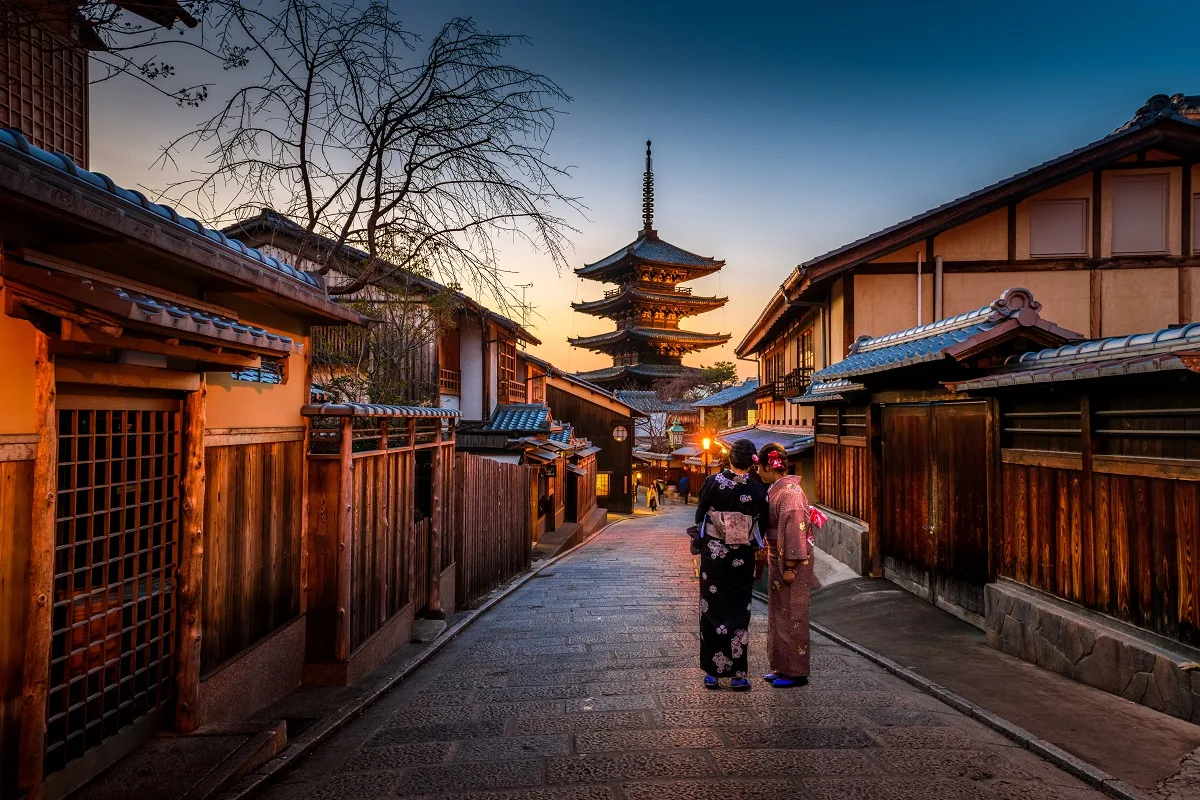
The best izakaya in Japan cluster wherever people finish work. Look near major train stations, under railway tracks and in narrow lanes called yokocho. These alleys hold dozens of tiny rooms side by side. Many seat fewer than ten people, so small groups do best.
In Tokyo, start with Omoide Yokocho beside Shinjuku Station, a smoky lane of yakitori counters. Ebisu Yokocho packs many small kitchens under one roof and stays lively late. Shimbashi, a classic office district, has rooms tucked beneath the elevated tracks. Ameyoko in Ueno mixes market stalls with standing bars.
Standing bars, called tachinomi, suit a quick drink and two plates. They turn over fast and welcome solo guests. Golden Gai in Shinjuku is a little different, since its tiny rooms are mostly bars rather than izakaya. For the late-night side of the city, see our guide to Tokyo nightlife districts.
Osaka has its own rhythm. Ura-Namba, the lanes behind Namba, is dense with small izakaya and standing bars. Tenma, north of the center, runs on a long covered shopping street lined with counters. In Kyoto, the narrow lanes of Pontocho and Kiyamachi hold small counters along the river.
Wherever you go, follow the noise and the light. A red lantern outside, called an akachochin, traditionally marks a casual place to drink. If the room is full of laughter and the counter is packed, that is usually your answer. Step in, nod, and wait to be seated.
You may also like
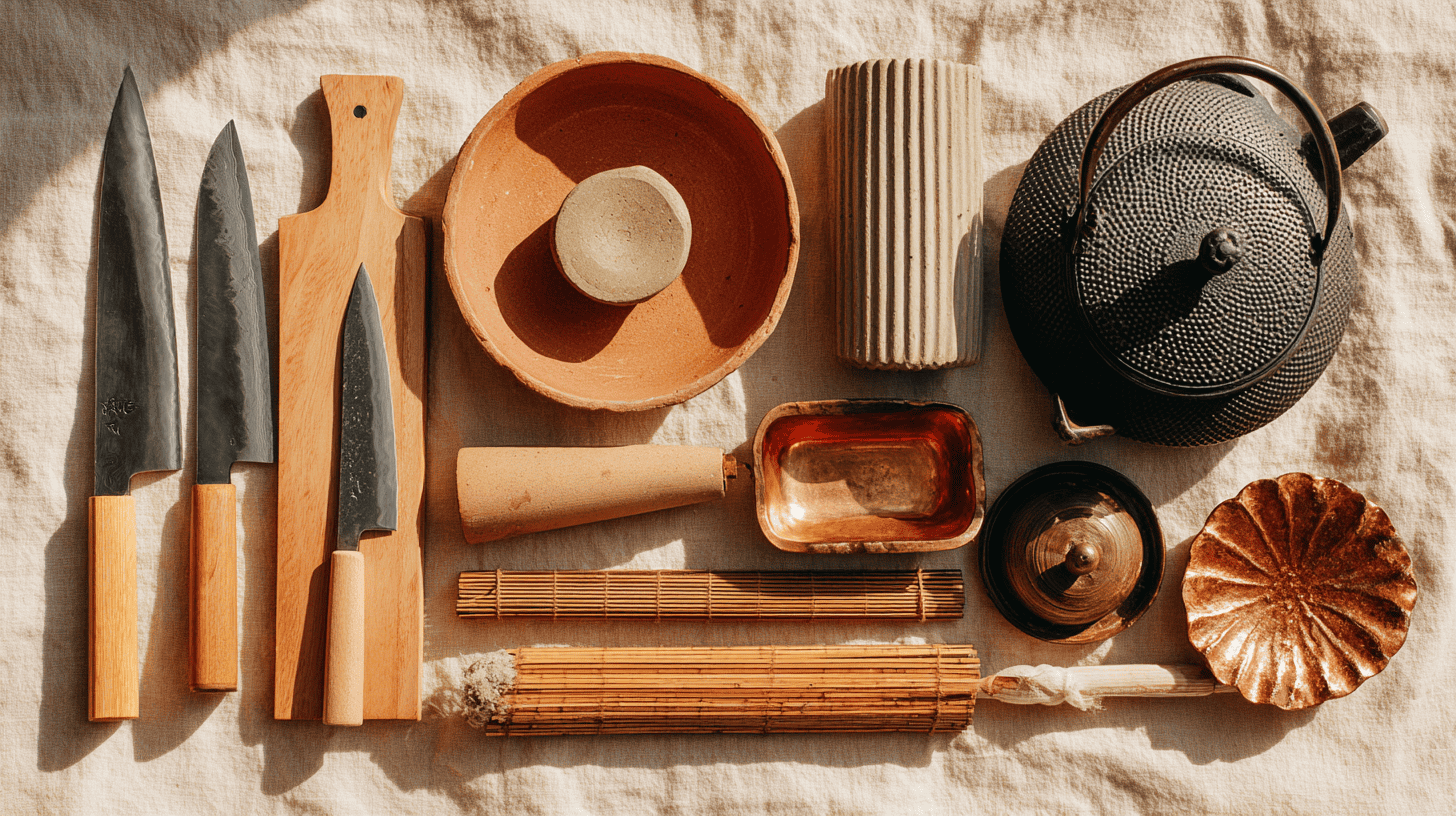

Bring the Izakaya Home: Five Books Worth Owning
An izakaya night is easy to recreate in your own kitchen. The dishes are small, the techniques are simple, and the point is company rather than polish. These five books cover the cooking, the drinks and the culture. Each one rewards a slow read before a trip.
Start with the cookbooks, then move to the drinks. Cook two or three plates, set out small dishes, and invite friends to share. Serve in rounds, just as a real izakaya would. By the third round, the format will feel natural.
The Real Japanese Izakaya Cookbook

The Real Japanese Izakaya Cookbook by Wataru Yokota collects 120 classic bar bites from Japan. The recipes are short and practical, and many use pantry staples. It is the best single place to start. If you cook only one book from this list, choose this one.
Moreover, the book is organized the way a menu is. Cold plates come first, then fried, grilled and simmered dishes, then rice to finish. That structure teaches you how to plan an evening as well as how to cook. Pick one dish from each section and you have a complete night.
Izakaya: The Japanese Pub Cookbook

Izakaya: The Japanese Pub Cookbook by Mark Robinson profiles a group of Tokyo izakaya and their owners. Each chapter pairs a place with its recipes. Therefore it reads as much like a travel book as a cookbook. It is a fine way to understand why regulars return to the same counter for years.
Still, the recipes are approachable. Many need only a grill pan, a pot and a sharp knife. Read a chapter, cook two dishes, then pour something cold. The book makes a strong case that the best izakaya food is simple, and that care matters more than technique.
Skewers first, then the rest

Skewers are the easiest place to begin at home. A cast-iron grill pan gets close to the charcoal flavor, and short bamboo skewers keep each portion small. Brush on tare in the last minute so the glaze does not burn. Serve them in pairs, so everyone gets a taste.
Then add one fried dish and one cold dish, and the table already looks like an izakaya. Edamame needs only salt and a pot of boiling water. Karaage needs an overnight marinade and a few minutes in hot oil. Together they make a balanced first round.
Drinking Japan

Drinking Japan by Chris Bunting is a guide to the country’s drinks and the places that pour them. It covers sake, shochu, awamori, beer and whisky, with reviews of bars across several cities. Bring it on the trip, or read it beforehand to plan your evenings.
Above all, it explains what to order and why. Shochu, for instance, changes character with its base ingredient, and the book makes that clear. Once you know the difference, an izakaya drinks list stops being a puzzle and becomes a menu of choices.
The Sake Handbook

The Sake Handbook by John Gauntner is a compact introduction to sake. It explains grades, brewing and tasting, and includes profiles of many brands. Read it before your trip, and the sake list on any wall will make sense. That alone changes how you order.
Finally, Tuttle’s Delicious Japanese Street Eats fills a useful gap. It covers yakitori, okonomiyaki and other casual favorites that overlap with the izakaya menu. Keep it beside the izakaya cookbook, and your home rounds will never run short of ideas.
Questions Worth Asking
What does izakaya mean?
Izakaya is written with three characters meaning stay, drink and place. The word grew from sake shops that let customers stay and drink on the premises. Today it names a casual pub that serves drinks with many small, shareable plates, ordered in rounds through the evening.
What is the difference between an izakaya and a bar?
A bar centers on drinks, with little or no cooking. An izakaya puts food and drink on equal footing, with a full kitchen and a long menu of small plates. Many people eat dinner at an izakaya. Afterward, they move on to a bar for a final drink.
What is otoshi at an izakaya?
Otoshi is a small appetizer served when you sit down, even though you did not order it. It comes with a seating charge called otoshidai, added to the final bill. Think of it as a cover charge with a snack. Most guests accept it as part of the welcome.
Do you tip at an izakaya in Japan?
No. Tipping is not part of dining culture in Japan, and staff may even chase you to return extra money. The final bill already covers service, plus the otoshi charge. Instead, say “gochisousama deshita” as you leave, which thanks the kitchen for the meal.
Can you go to an izakaya alone?
Yes. Solo guests are common, especially at the counter. Many people stop in after work for one drink and two plates. Counter seats also make conversation easy, both with the cook and with neighbors. Standing bars, called tachinomi, are especially welcoming to solo visitors.
What should I order at an izakaya for the first time?
Start with a beer or highball, then order three or four plates. Edamame, karaage and a few yakitori skewers make an easy first round. After that, ask the staff for a recommendation. Finish with a grilled rice ball once you are ready to close the meal.
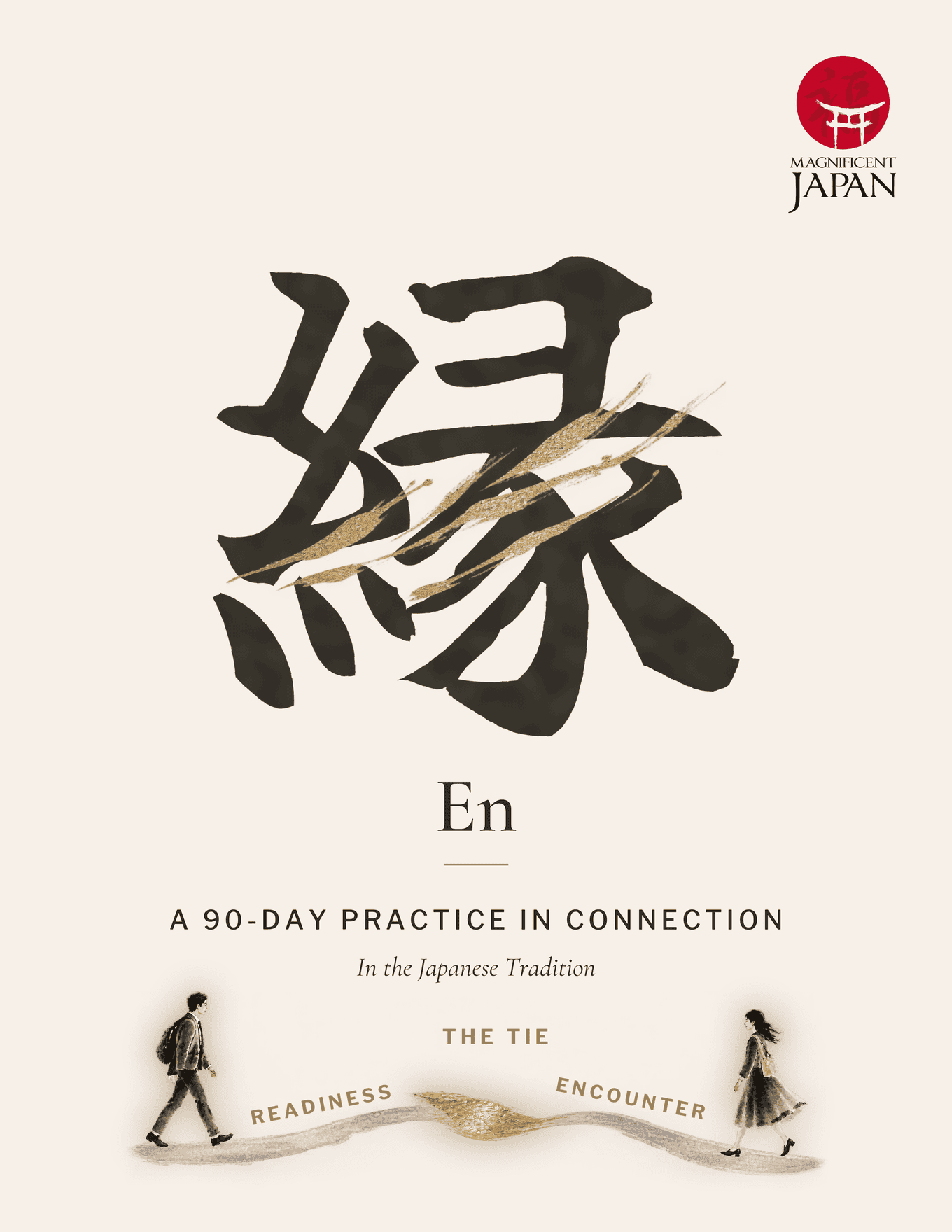
En is the Japanese word for the bonds that bring people together, the kind an izakaya table makes visible. This 90-day guided practice in connection gives one short prompt a day for noticing who matters and why. Write in the digital edition on a tablet, or choose the paperback. It is one of eight journals in the Cultural Reflection Collection.
View The CollectionWhy the Izakaya Stays With You
Ask travelers what they remember from Japan, and the answer often surprises them. It is not always the famous sights. Instead, it is a narrow counter on a weeknight, a cook who nodded at their order, and a stranger who pointed at the right dish. An izakaya in Japan turns a meal into a small piece of local life.
That is why the format travels so well. You do not need fluent Japanese or a reservation weeks ahead. You need curiosity, a few phrases and the patience to order in rounds. The room does the rest, because it was built for people to linger together.

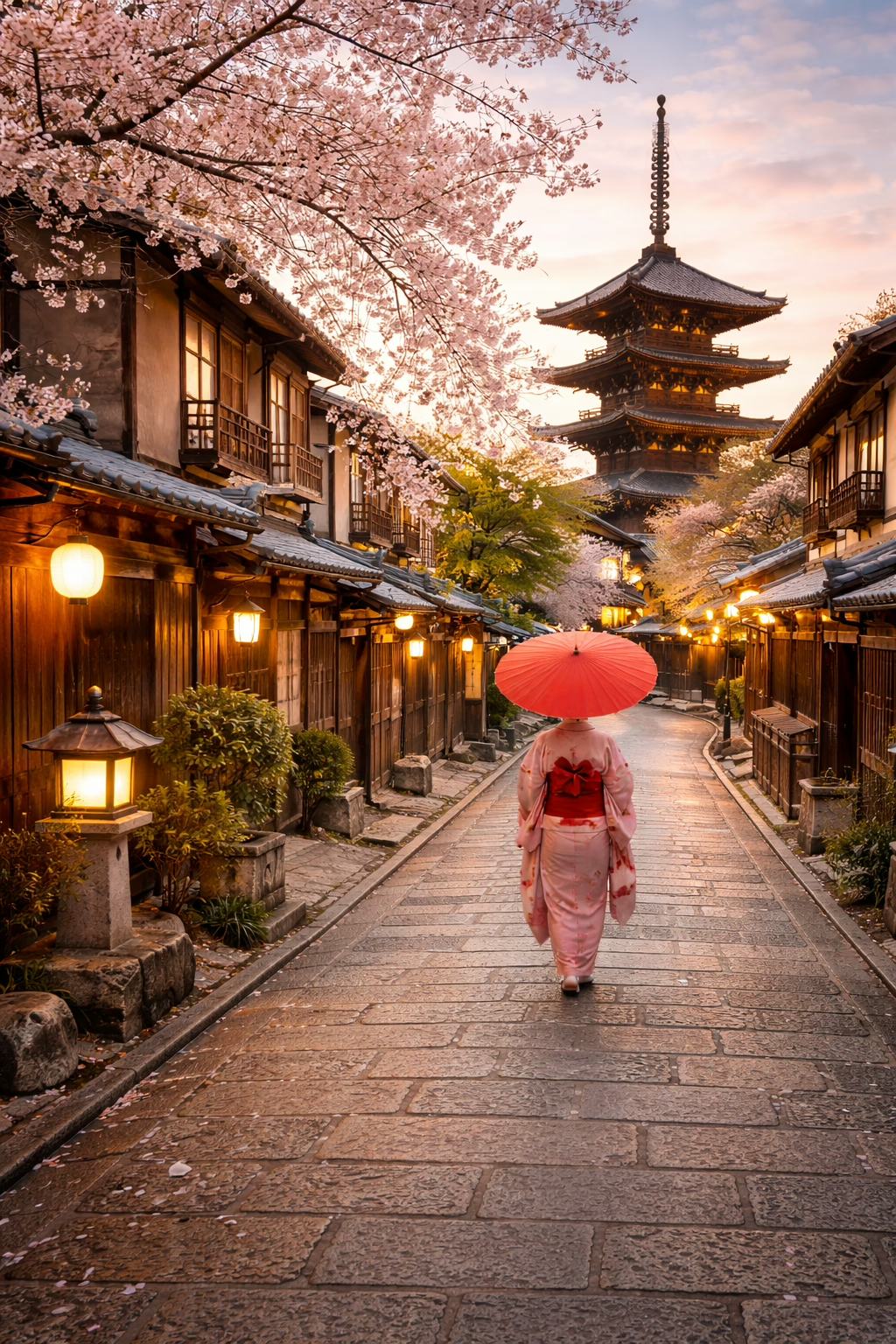
So on your first night in Japan, skip the long dinner reservation. Walk toward the station after dark and look for a red lantern. Take a seat at the counter, order a beer for now, and point at what the next table is eating. When the first plates arrive, you will understand why the izakaya sits at the center of Japanese evenings. Then plan a second night, and a third, because each room has its own character and its own regulars.
For the traveler who eats to understand a place: a custom itinerary that sets aside your evenings for yokocho lanes in Tokyo, standing bars in Osaka and a hot-pot night in winter, with the hard-to-book counters reserved and the rail legs between cities handled for you.
Plan Your Custom Japan ItineraryThe Editors, Magnificent Japan