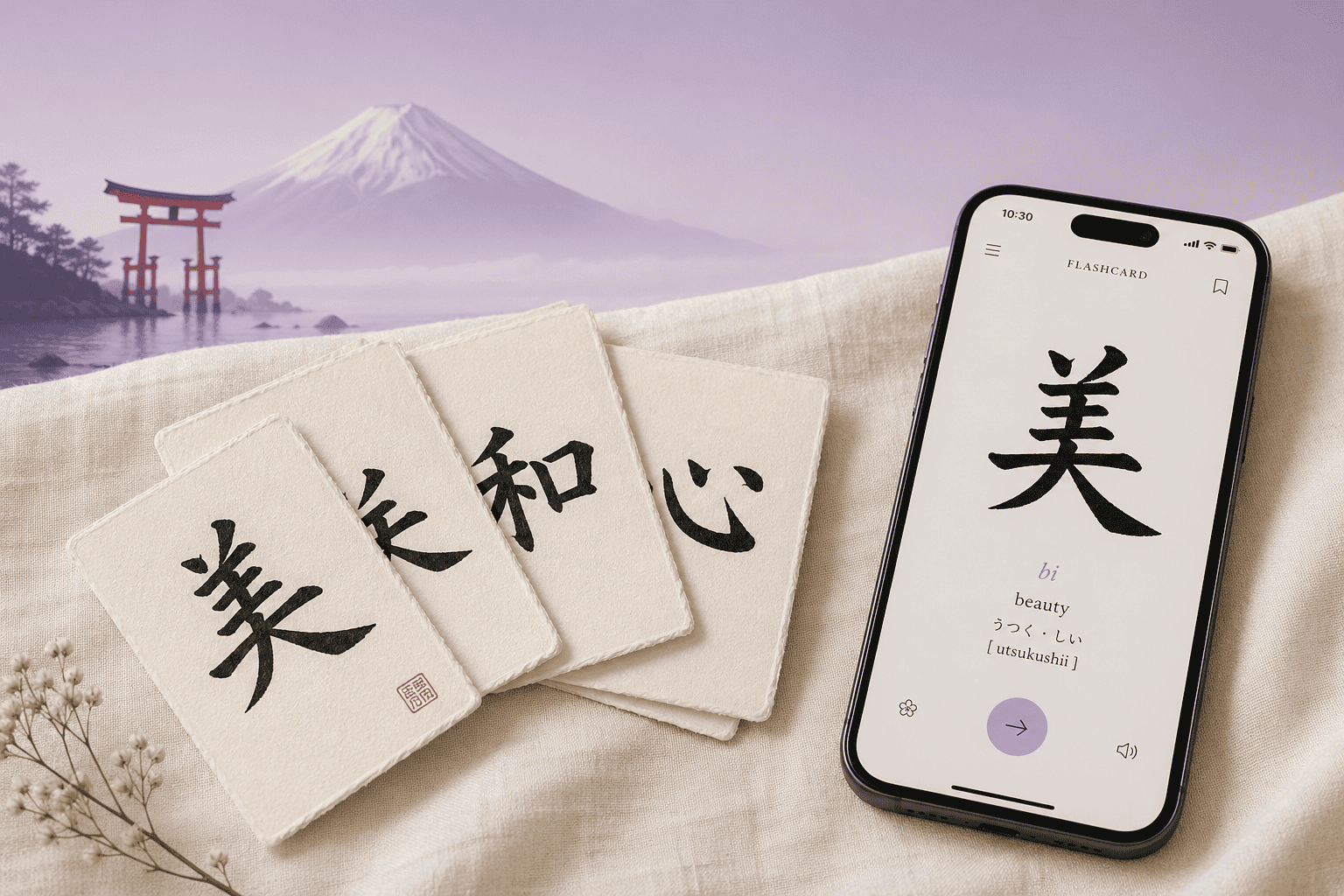
Reading a character once is the easy part. Keeping it is the work, and the question most learners reach by the third week is how to review kanji without handing the job to an app. The answer fits on paper. It takes three piles of cards, one page for a tracker and a short check at the end of each week.
This guide builds that system step by step. First comes a card cycle, then a tracker, then a weekly checkpoint. Along the way, two characters, 品 and 住, show what a careful review looks like. It is written for anyone heading toward Volume 2 of the Kanji Workbook series, the 100 kanji at JLPT N4 (unofficial) now in production.
Japan treats the written character as a craft, and craft rewards repetition with a pause built in. So let us start with the short answer.
How to Review Kanji Without an App: The Short Answer
Review in short rounds on paper, with days between them. Write each kanji from memory on scrap paper, then check it against a card. Sort the cards into three piles by how well you knew them, and revisit the shaky pile first. Log each round on one page, and run a checkpoint once a week. The gap does the work, so the rhythm matters more than the tool.
An app promises to schedule your reviews for you. That is convenient, but it also hides the part that makes review work, which is judging for yourself how well you knew a character. On paper, you make that call every time. Because you write the answer, you also see exactly where a stroke went wrong.
This approach to how to review kanji therefore uses only what a desk already holds. First, a stack of small cards. Next, one notebook page for a tracker. Finally, a sheet of checkpoints that you fill in weekly. Paper has a further advantage. In a University of Tokyo study, 48 volunteers aged 18 to 29 took notes on paper, a tablet or a smartphone. According to the university’s own summary, the paper group finished about 25 percent faster and showed more brain activity in areas tied to language, visualization and memory.
What Goes on a Card
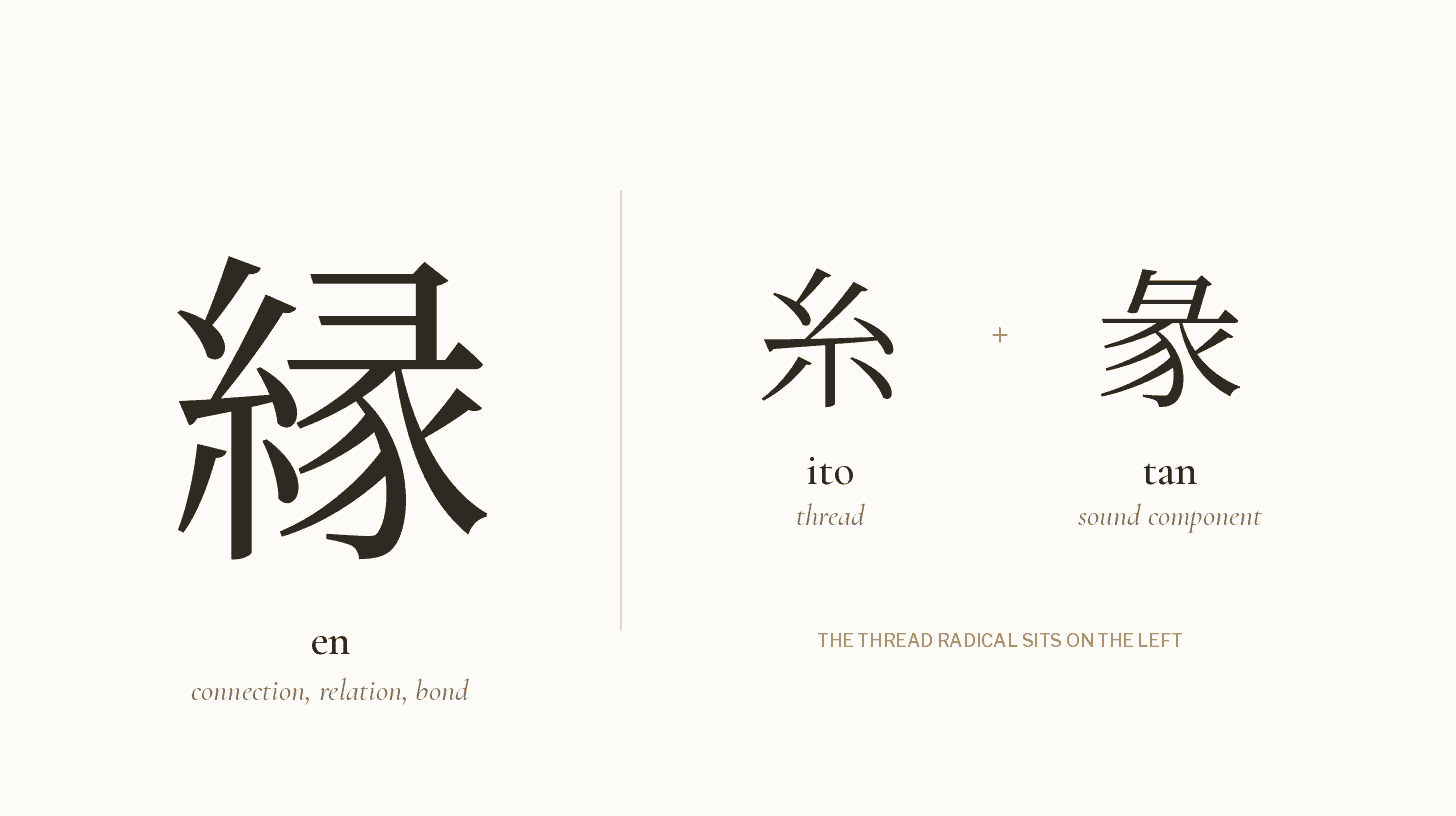
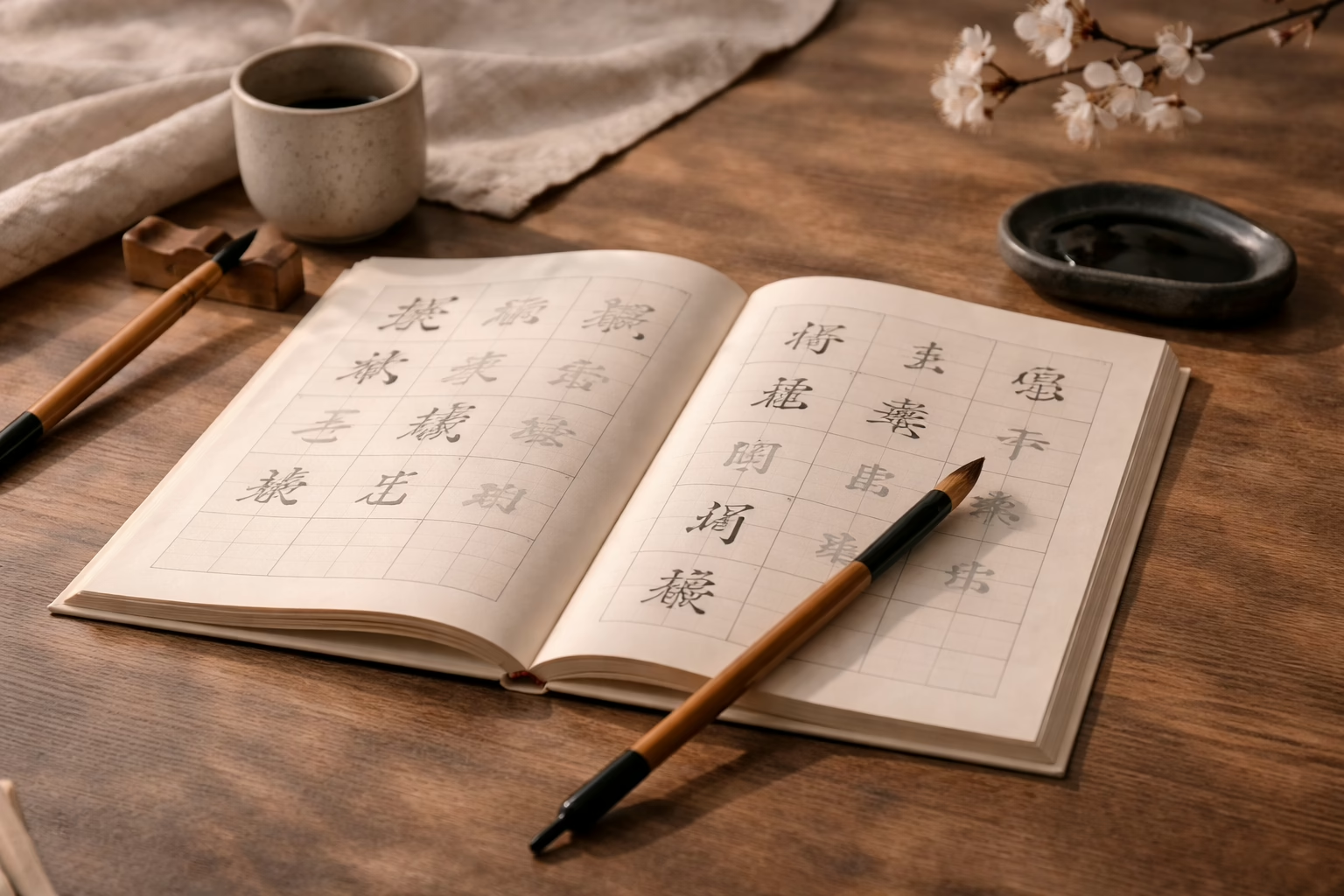
Put a prompt on the front of each card, such as a meaning in English or a word written in kana. Keep the kanji itself on the back. To review, read the prompt and write the character on scrap paper from memory. Then flip the card and check your attempt against it, stroke by stroke.
That last step matters. Checking stroke by stroke catches the small errors that recognition misses: a missing line, a box closed too early, a part on the wrong side. One wrong stroke is easy to fix today. However, it is hard to unlearn after a month of repeating it. For the reasoning behind that habit, see our piece on why stroke order changes what you remember.


Why the Gap Between Sessions Matters
Review works best with pauses, and the research on this is large. A 2006 review in Psychological Bulletin by Nicholas Cepeda and colleagues examined 839 assessments of distributed practice, drawn from 317 experiments in 184 articles. Its central finding is practical. The best gap between study sessions grows as the time until the test grows.
In plain terms, the further away the test, the wider the gaps should be. A learner aiming at an exam next month can space reviews by days. One aiming at next year can leave longer pauses. For most of us, a rhythm counted in days, not hours, is a sensible place to begin.
There is a catch, though. Spacing feels worse while you do it. In a 2008 study, Nate Kornell and Robert Bjork of UCLA asked people to learn painters’ styles, with each artist’s works shown together or mixed among others. In their published paper, 78 percent of participants did better with the mixed, spaced order. Yet 78 percent also said that blocked study was as good or better.
How to Review Kanji on Paper: The Three-Pile Cycle
Here is the cycle. After each session, sort the cards into three piles: easy, shaky and missed. Easy cards wait the longest. Shaky cards return in a couple of days. Missed cards come back the next day, and you write each one twice before you put it down.
Keep the rules short enough to follow when you are tired. A card moves one pile toward easy when you write it correctly from memory. It moves one pile back when you do not. Nothing else counts, neither how long you stared at it nor how familiar it felt.
Use rubber bands or three small envelopes for the piles. Date the envelope, not the card, so a single glance tells you which pile is due. A week might hold fifteen cards or fifty. The piles scale without any change to the rules, which is exactly why this is how to review kanji at any stage.

Take the Piles on the Road
Cards travel well. A small envelope in a coat pocket turns a train ride into a review round. On an evening in Tokyo, with the tower lit above the rooftops, try three characters from memory before you check them. A pause like that is a review session with a view. The cards ask nothing of the city, and the city asks nothing of you.
A journal can then keep the record. Write the date, the characters you attempted and the one that slipped. Next time you open the page, the slipped character is already waiting at the top of the list. In practice, that note is worth more than any amount of rereading.

Unlined pages for the characters you write from memory on a city evening, dated and checked before the night ends.
Unlined · Travel journal
Shop This Journal →How to Review Kanji Progress on One Page
A tracker answers a simple question: is this working? Without one, progress is a feeling, and feelings about study are unreliable, as the Kornell and Bjork result showed. With one, you can see the answer on a single page, and you can see it at a glance.
Rule the Page
Draw a grid. List the week’s kanji down the left side. Across the top, write the dates of your sessions. In each cell, put one mark: a tick for correct from memory, a dot for slow or hesitant, a cross for missed. After two weeks, the dots and crosses cluster on the same few characters, and those are the ones to write first.
Log three things for each round: the date, the result and the date the card is next due. Then the page tells you what to do without asking you to decide. You open it, read down the due column, and pull those cards. It takes about two minutes, and it removes the question of where to begin.
Keep the page honest. Mark a dot whenever you paused to think, even if you got it right. A correct answer that took ten seconds is not yet an easy card. Treating it as one is the most common way a tracker starts to flatter its owner.

Paper trackers have one more strength: they are visible. A page on the desk reminds you each morning that the work is waiting. A screen folds that reminder away inside another window. Put the tracker where your eyes land when you sit down, and the habit largely looks after itself. That is how to review kanji when life is busy.
Start small. Track only the kanji you are actively reviewing, not everything you have ever met. Ten to fifteen characters per page is comfortable. When a character earns three ticks in a row across separate weeks, retire it to a longer cycle and let a new one take its row.
Each tool asks something different of memory, and none of them needs a screen.
| Paper tool | What it holds | When you use it | What it asks of memory |
|---|---|---|---|
| Word cards | One prompt per card, the character on the back | Every session | Recall from a prompt |
| Three envelopes | The easy, shaky and missed piles | After each session | A judgment of how well you knew it |
| One-page tracker | Date, result and next due date for each kanji | Two minutes per round | An honest self-rating |
| Weekly checkpoint | Ten to fifteen characters written cold | Once a week | Recall after a gap of days |
How to Review Kanji With Weekly Checkpoints
A checkpoint is the honest half of how to review kanji: a short test you set yourself. Once a week, choose ten to fifteen characters you have studied. Write each one cold, with no cards in sight, and then mark the result on your tracker. Because the gap since the last look is several days, the result is honest.
Checkpoints also keep you from testing what you have not yet met. That rule shapes the Kanji Workbook series. Example sentences and checkpoints in each volume use only kanji already taught, with later characters written in kana. The same discipline works on your own sheet: test only what you have already written.
If a trip to Japan is on your mind, we can plan days around handwriting, stationery and learning, from paper shops to a calm afternoon at the desk.
Occasional letters on kanji, handwriting and Japanese culture, with new tools and workbook editions as they arrive. Email only.
Occasional letters. Unsubscribe anytime.
After a checkpoint, sort the results into the same three piles. A character missed in the checkpoint goes straight to the missed pile, however easy it felt before. A character that passes after a gap of a week goes to the easy pile and waits longer. The piles and the checkpoint therefore speak the same language.
Try to finish each checkpoint on something you know well. Write one sure character last, cleanly and from memory. As a result, the session ends on a small win, and the next one is easier to begin. For a wider set of habits around exam study, our notes on preparing for N4 kanji pair well with this page.
Two Characters, Reviewed Properly
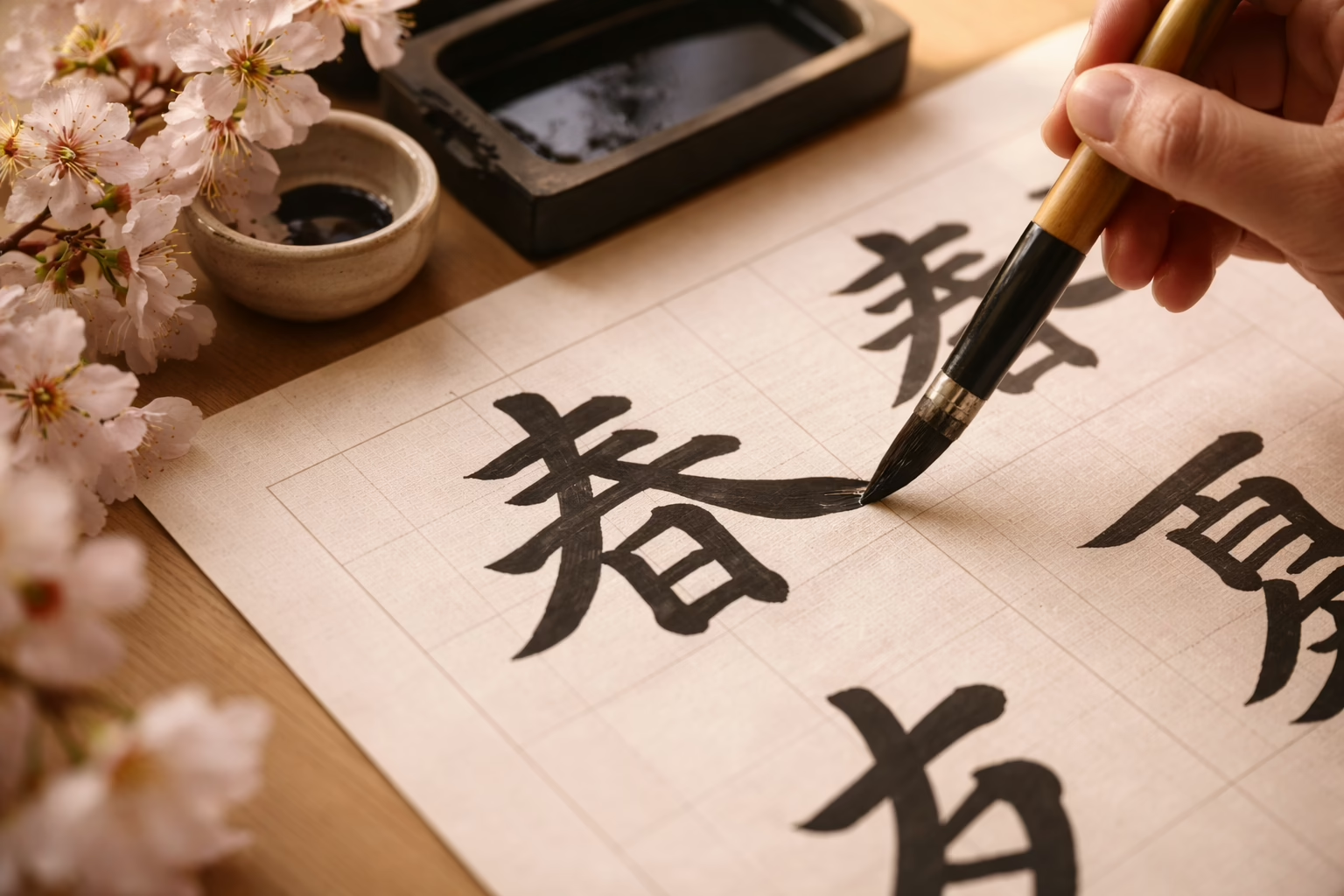
Review gets easier when you can describe a character’s structure in a sentence. Take 品, an N4 kanji (unofficial) with 9 strokes. Its shape is three identical boxes, one on top and two below. Each box takes three strokes in one order. First the left side goes down. Then one stroke runs across the top and down the right, and a last line closes the base.
The boxes follow a fixed sequence as well. Top box first, then the lower left, then the lower right. A single note on the card, “top box first,” is all a review of 品 needs. Because the three boxes repeat, your hand learns one rhythm and uses it three times.
The Second Character
Now take 住, also N4 (unofficial), with 7 strokes. It has a left part and a right part. The left part takes two strokes, a slanting stroke and then a vertical. The right part takes the other five: a dot, a long horizontal, a vertical and two more horizontals.
On the right, the vertical passes through the middle horizontal, so the order decides where the lines meet. These structural notes come from the open KanjiVG data (CC BY-SA 3.0, kanjivg.tagaini.net). If you want to see how counting strokes helps you sort similar characters, read our guide to counting kanji strokes.
Recommended
Notice what these two notes do. They are short, they describe structure and they contain no meanings or sounds. That is deliberate. A structural note gives your hand something to check against, even on a day when the prompt on the front of the card draws a blank.
Write such a note for every character that lands in the shaky pile. Keep it to one line. Over a few weeks, the notes become a private map of where your hand tends to slip. Some learners find that the same mistake repeats across several characters. In that case, one note can fix them all.
How to Review Kanji Across a Whole Week
A week gives review a natural shape, and it is the clearest answer to how to review kanji without losing your place. Write new characters on Monday. Run short card rounds on Tuesday, Thursday and Saturday. Keep Sunday for the checkpoint and for updating the tracker. The days between are the gaps, and they are doing the work, even on the days when you feel you have done nothing.
Japanese has a word for this kind of useful interval: ma. It names the space between things that gives them their shape, and it is the idea behind our essay on the Japanese art of the perfect pause. A spaced review is ma applied to memory. You step away, and the character settles before you return.
Cook Once, Eat All Week
The kitchen offers a similar rhythm. Kinpira gobo is a make-ahead side dish of burdock and carrot. Kinpira names a method, in which you stir-fry first and then simmer with sesame oil, sugar and soy sauce until the sauce reduces, according to Just One Cookbook. Cook it once on Sunday and it feeds the week.

A home-style Japanese side dish of burdock root and carrot, stir-fried and then simmered until glossy. It is cooked in a batch, served cold or warm, and keeps for several days.
- 1 medium burdock root (gobo), about 8 oz
- 1 small carrot, about 3 oz
- 1 tablespoon toasted sesame oil
- 1 tablespoon sake
- 1 tablespoon mirin
- 1 tablespoon sugar
- 2 tablespoons soy sauce
- 1 tablespoon toasted white sesame seeds
- A pinch of chili flakes (optional)
- Cold water with a splash of rice vinegar, for soaking
- Scrub the burdock and scrape off the thin skin with the back of a knife. Cut it into matchsticks about 2 inches long, then soak in the vinegar water for 10 minutes, changing the water once. Drain and pat dry.
- Cut the carrot into matchsticks of the same size.
- Warm the sesame oil in a wide pan over medium-high heat. Stir-fry the burdock for 2 to 3 minutes, until glossy and just beginning to soften.
- Add the carrot and cook for 2 minutes. Pour in the sake, mirin, sugar and soy sauce, then simmer for 5 to 6 minutes, stirring, until the pan is almost dry.
- Stir in the sesame seeds and chili flakes. Cool, then pack into an airtight container and refrigerate. Eat within 3 to 4 days.
Kinpira keeps three to four days in the refrigerator, and some cooks say up to a week. It also tastes better on the second day, once the glaze has settled into the vegetables. That suits a review week. Cook the batch at the same hour you run your checkpoint, and the two habits start to hold each other up.
Make the batch, then open the tracker while the pan cools. By the time the container is packed, the week’s results are logged and the next cycle is planned. Some learners pair the ritual with a cup of tea. The routine matters more than the dish, so choose anything that can be prepared ahead.

A Binder for the Long View
Once a few weeks have passed, loose sheets need a home. A slim binder with tab dividers works well. Give each tab a week, or use one tab for each pile. Old tracker pages then become a record you can flip through, and that record shows how far you have come.
Tabs also help you reorder. A sheet that keeps collecting crosses can move to the front, while a clean sheet can slide to the back. Nothing about the system needs to stay fixed, and a binder lets you change it without starting over. In that sense, paper is more flexible than it looks.
Whichever tools you choose, resist the urge to perfect the setup before you begin. A rubber band and a sheet of ruled paper are enough for the first week. Buy or borrow the rest only when a real need appears. The system improves by being used, and the gaps it reveals tell you what to add.
Finally, be patient with the dips. Some weeks the crosses multiply, often after a holiday or a busy stretch. That is normal, and it is exactly the information the tracker exists to show. Move the cards back a pile, shorten the gaps for a week and carry on.


The same spirit applies to the wider plan. If you are weighing how long a full N4 set takes, our sister piece on the time a full N4 set really takes sets out the arithmetic. Here the focus stays narrower: a review you can keep up every week without strain.
Keep the Rhythm Your Own
Set the rhythm by your life, not by an ideal. Four short rounds beat one long one, and a fixed hour beats a flexible one. If the evening is where your energy goes, review there. If mornings are clearer, move the whole cycle earlier, and keep the gaps the same.

When the routine is settled, raise the difficulty a little. Write two characters together from one prompt, or review a character on the day after a checkpoint to test how firmly it stuck. You can also ask someone to read prompts aloud while you write, which removes the temptation to peek at the card.
Each change should ask only slightly more of memory than the last one did. That is the habit the Kanji Workbook series builds page by page. Every stroke panel shows the new stroke in red with earlier strokes in champagne behind it. Trace-to-memory boxes then run from trace to half-trace to freehand.
Questions Worth Asking
How often should I review kanji?
Aim for short rounds every other day, with a longer checkpoint once a week. Easy cards can wait longer, while missed cards return the next day. Research on spacing suggests the best gap grows with the time until your test, so begin with days, not hours, and adjust as your results change.
Do I need flashcards to review kanji?
No. Any small piece of paper works, as long as you write the answer from memory before you check it. A sheet folded into squares does the job. Cards simply make sorting into piles easier, and they fit in a pocket for a review round on a train.
How many kanji should I review in one session?
Ten to fifteen characters is comfortable for most learners. That is enough to feel progress, and small enough to finish in about ten minutes. If a session drags, stop early and keep the remaining cards for tomorrow. A short round you repeat beats a long one you dread.
What should I do with a kanji I keep missing?
Move it to the missed pile, write it twice, and add a one-line structural note, such as how many parts it has and which comes first. Then review it the next day. If it still slips after a week, check your stroke order against a reliable chart.
Does stroke order matter when I review?
Yes. Writing in the correct order makes each check faster, because the sequence becomes a pattern your hand follows. It also shows the exact stroke where you slipped. When you compare your attempt with the card, compare the order as well as the final shape.
Can I review kanji I can read but cannot write?
Yes, and it is the best use of paper. Reading needs only recognition, while writing needs recall. Start from a prompt, write the character cold, and then check it. The gap between what you read and what you write shrinks quickly with two or three short rounds a week.
How to Review Kanji, Week After Week
The plan is simple to state and easy to follow. Write from memory, check stroke by stroke, sort the cards, log the round and test once a week. That is how to review kanji without an app, and it needs nothing you cannot buy at a stationery counter. The habit is worth more than any single tool.
When you want a structured path, Volume 1 of the series is on sale now in the Digital Letter edition at Kanji Workbook, Volume 1. Volume 2 is in production, and you can join the launch list on the Volume 2 book page. The whole series covers all 2,136 jōyō kanji on the official list, each once.
The interval is the practice: a few honest lines a day, with the pauses left in on purpose.
View the Journal →Ma asks you to notice the interval rather than rush through it. A few honest lines a day, with gaps you choose on purpose, are all a kanji needs to stay with you.
The Editors, Magnificent Japan
We can plan days around the hand: a morning among the stationery shops of Tokyo, a paper-making workshop, a handwriting lesson and time to sit with a notebook, with the rest of the route shaped around your interests.
Plan Your Custom Japan Itinerary