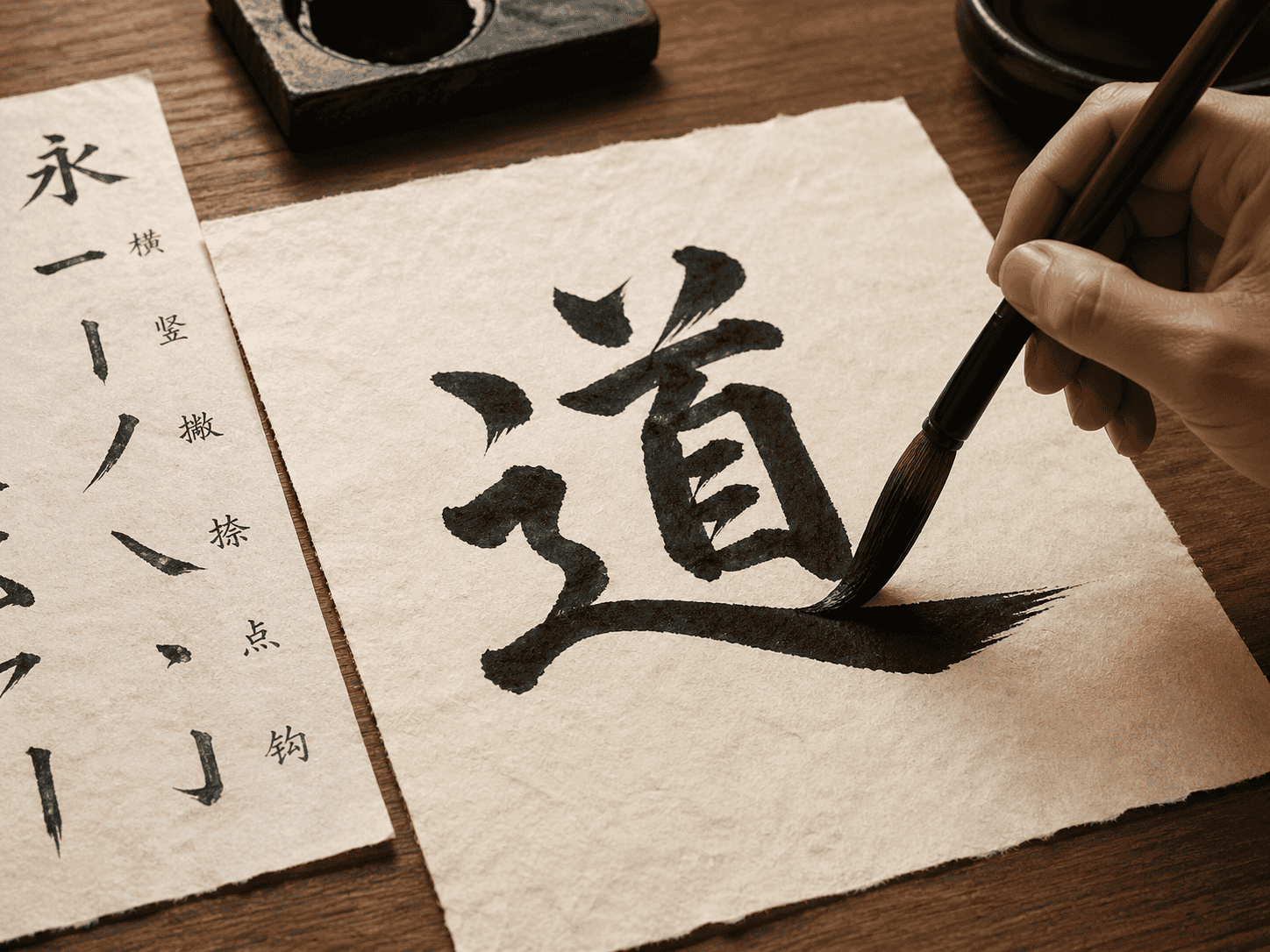
Similar looking kanji trip up almost every learner, and the cause is simple. Many characters share a part, and the eye reads the shared part first. Take 持, 待 and 特. They end in the same shape, so at a glance they blur into one. This guide shows a calmer way to tell them apart: find the part they share, then read the one part that changes.
You will meet three worked families of look alike kanji, each with two everyday words. Then comes a method for any pair, a reason to write the difference by hand and a three-step way to build your own list. A bowl of kitsune udon waits in the middle, because every good study session needs a pause.
Find the part they share, then read the one part that changes. 持, 待 and 特 all end in 寺. The hand 扌, the step 彳 or the cow 牛 on the left tells you which one you are looking at.
Why Similar Looking Kanji Share Their Parts
Kanji are not drawn from nothing. Most of them are built from smaller parts, and the same parts return again and again. One part may hint at meaning, and another may hint at sound. When two characters share a part, they form a family, and a family looks alike at first glance. That is the whole reason similar looking kanji exist. It is simply how the writing system was put together.
This changes how you can study. Instead of seeing two characters as two tangled pictures, you can see one shared part and one part that differs. The shared part is the family name. The part that changes is the first name. Once you read them in that order, the pair stops being a puzzle. You are no longer comparing a dozen strokes with a dozen strokes. You are comparing one small shape with another.
Notice what this method leaves out. It does not ask you to count strokes, and it does not ask you to invent a story for every character. Counting is a useful check for another day, and our guide to kanji stroke count covers it. Here the method is plainer.
A family needs a clear head, so start small. Pick three characters that share one part. Say the shared part aloud, and then say the changing part aloud. Do that for one minute. The next three sections do it for you, with three real families and the everyday words that make each member worth knowing.

The 寺 Family: 持, 待 and 特
Start with three characters that end in the same shape, 寺. They are 持, 待 and 特. On the right, all three look the same. On the left, each one wears something different, and that something is the whole story.
The first is 持, which means hold or have. Its left side is the hand part, written 扌. A hand holds things, so the meaning is easy to keep. You see it in motsu, 持つ, to hold, and in kimochi, a feeling. The second is 待, which means wait. Its left side is the step part, 彳, a small figure that suggests walking. Waiting is something you do along a path, so the step part fits. You see it in matsu, 待つ, to wait, and in kokoromachi, anticipation.
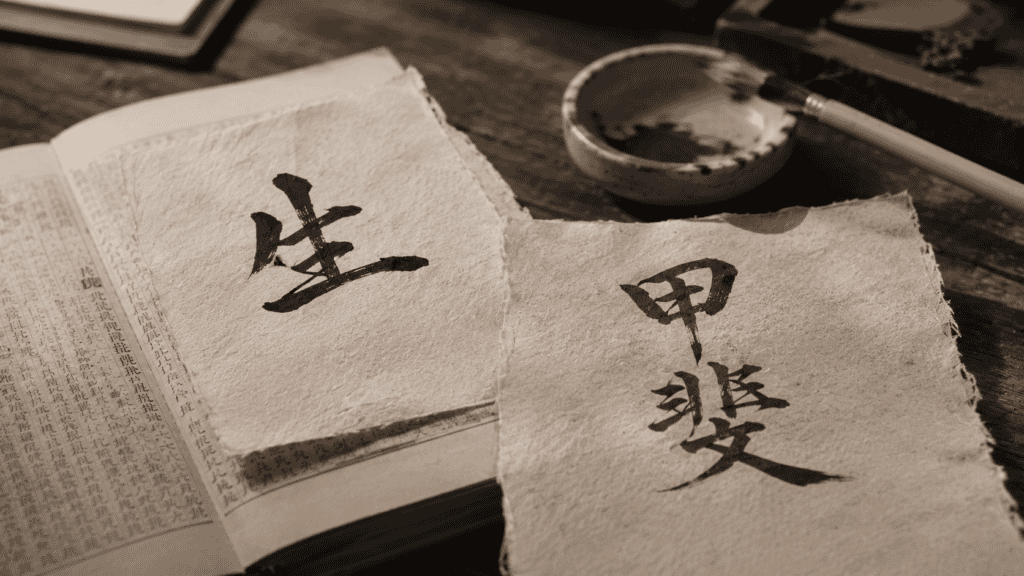
The third is 特, which means special. Its left side is the cow part, 牛. The link to the meaning is old and a little hard to see, so do not worry if no picture forms. Treat the cow as a label. You see 特 in tokubetsu, special, a word you will meet on signs and menus.

Reading the Left Side First
Here is a habit that makes this family easy. Cover the right side with a finger. What is left? A hand, a step or a cow. Say it aloud, then uncover the right side and say the family shape. The order matters. You decide the changing part first, because it carries the choice. After a few rounds, your eye does this without your finger.
Try it with two short verbs. In 持つ, the hand part tells you the word is about holding. In 待つ, the step part tells you it is about waiting. The two verbs sound alike, motsu and matsu, and they share a shape. A learner who reads the left side first rarely swaps them. A learner who reads the whole shape at once often does. Neither is a sign of a weak memory. It is only a habit of the eye, and habits can change.
Inside the Gate: 問, 開 and 間
The second family is built differently. Here the shared part is not on the right. It is a frame that wraps the others: the gate part, 門. Three characters sit inside it, and each one holds something different in the middle.

The first is 問, which means question or ask. Inside the gate sits a mouth, 口. A mouth at a gate is a person calling out a question, and the picture is easy to keep. You see it in mondai, a question or problem, and in gakumon, study. The second is 開, which means open. Inside the gate sits the part written 开, as if a bar were being lifted from the door. You see it in akeru, 開ける, to open, and in kaika, blooming.
The third is 間, which means interval or space. Inside the gate sits the sun, 日. Light passes through a gap in a door, which is a fair picture of a space between two things. You see it in jikan, time, and in ningen, human being. A short note on 間: it belongs to this family, so it appears here to complete the set. It is taught in Volume 3 of the MJ series, so treat it as the third member of the gate family, shown to finish the picture.
What Sits Inside 門
The open dictionary Wiktionary gives an entry for the gate part, which shows the shape on its own. Notice that the gate never changes. A learner who compares the three gates will find nothing, because they are the same. The useful question is what stands inside. A mouth, a barred door or the sun. Three small answers, and the whole family is sorted. Ask that question every time a gate surrounds a character, and you will rarely guess wrong.
A Bowl Behind the Door: Kitsune Udon
Here is a small moment to hold the idea. Picture sliding open the door of a noodle shop at noon. The door is the same at every shop. What you came for is inside: steam, a counter and a bowl of kitsune udon, thick wheat noodles in a clear broth under a sheet of sweet fried tofu. Kitsune means fox, and the name comes from an old tale that foxes love fried tofu. The recipe is short, and it is a good bowl to cook between study sessions.
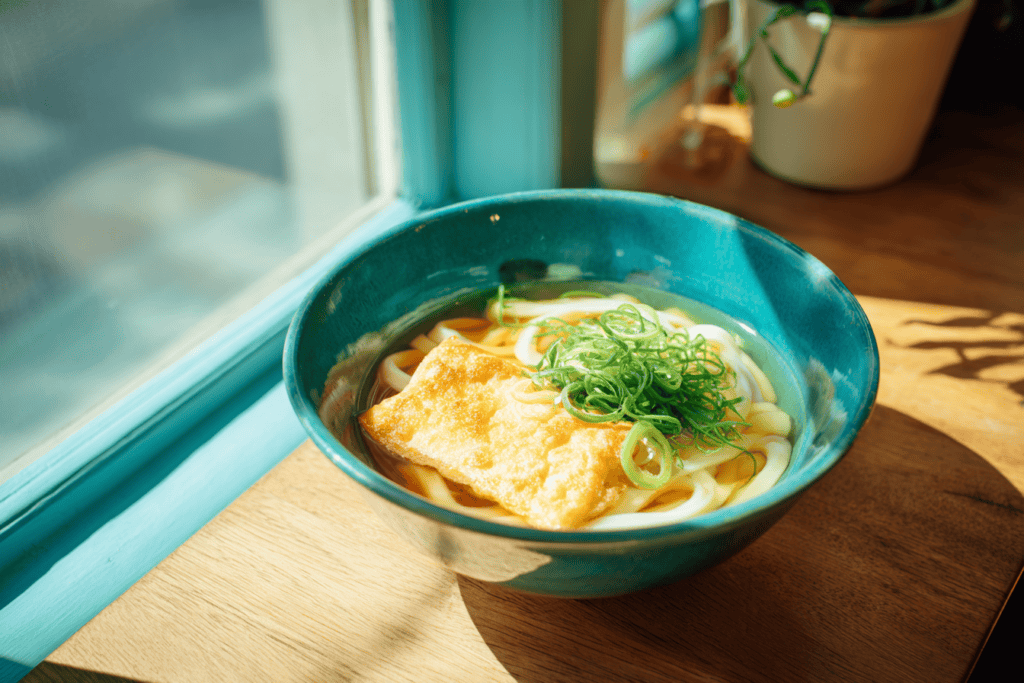
Kitsune Udon — thick noodles under sweet fried tofu
Bring two and a half cups of dashi to a gentle simmer with one tablespoon of mirin, one teaspoon of sugar, one tablespoon of light soy sauce and half a teaspoon of salt. Simmer for two minutes and taste. Cook two portions of udon noodles in a separate pot of boiling water, following the packet, then drain and divide between two bowls. Warm four seasoned fried tofu pouches in a little of the broth for two minutes. Pour the hot broth over the noodles, lay two pouches on each bowl and scatter sliced scallion on top. Serve at once.
The 央 Pair: 映 and 英
The third family has only two members. Both 映 and 英 contain the same middle shape, 央. Two characters are easier than three, yet this pair catches many learners, because the changing part moves to a new place. It sits on the left for one character and on top for the other.
The first is 映, which means reflect or project. The changing part is the sun, 日, on the left. Light on the left and an image cast onto a surface: the idea of projection is easy to hold. You see it in eiga, a film, and in utsuru, 映る, to be reflected. The second is 英, which means English or outstanding. The changing part is the grass part, 艹, on top, sitting like a small crown. You see it in eigo, English, and in eikaiwa, English conversation.
Look at the two words side by side. Eiga and eigo sound almost the same, and the characters share the shape of 央. Only the first part separates them, a sun beside it or grass above it. This is a good pair to practise, because the spoken words are neighbours too, so the eye and the ear both need a clear rule. Say it aloud: sun on the left, film. Grass on top, English.

This pair also shows a point worth keeping. The changing part does not always sit on the left. Sometimes it stands on top, sometimes it hides inside a frame, and sometimes it sits at the foot of a character. So the first move is never to look left out of habit. It is to find the shape the two characters share, and then to look at what is left. Whatever remains is the part that decides the character, wherever it sits on the page.
You may also like


A Method for Any Look Alike Pair
You now have three families. The same steps work on a pair you meet next month, in a book or on a sign. There are three moves, and they take less than a minute.
First, find the shared part. Look for the shape that both characters hold in common, and say it aloud. Second, name the part that changes. Say where it sits and what it is: a hand on the left, grass on top, a sun inside. Third, say the meaning of each character aloud, once, with the changing part in mind. That last move ties the shape to the sense, and it is the one that keeps a pair apart next week.

The method asks for no chart and no long list. It asks for a few seconds of attention. Apply it to any look alike kanji on a menu or a headline, and you will start to see families where you once saw noise. Families are not all the same size, either. Some have two members, some three and some more. The size does not matter. The steps do.

If the exam is your goal, our guide to JLPT N4 kanji study tips shows how to plan a season of study around families like these. The levels named there are unofficial, as they are here. A family you can sort in a second is one you will not stumble over, and sorting is quick work once the habit is set.
Why Writing Them Out Fixes the Difference
Reading a pair is one skill. Writing it is another, and writing is where the difference becomes yours. The hand cannot write a family shape without also writing the part that changes. You choose, stroke by stroke, a hand, a step or a cow, and the choice sticks in a way that a glance does not. This is one reason similar looking kanji feel clearer after a week of copying than after a month of reading. Our guide on whether writing kanji helps you remember goes further into why.

A printed book helps here for a plain reason. A look-alike page puts a family on one sheet, so you can write the shared part once and the changing parts in turn. Volume 2 of the MJ kanji workbook series carries a page of this kind, and it holds twelve sets, sorted the way this guide sorts three. It sits beside the guided practice pages, so a pair you stumble on in a lesson has a page waiting for it. The sets are not listed here. They belong on the page, with room to write each one.
You may also like

The aim is not speed. The aim is a hand that knows which part goes where. If you would like the page beside you, the Volume 2 look-alike sets are a place to try the method with space for every change. Take one family a day, and let the hand do the sorting, with the page open and no hurry to finish the whole list in a day.
Building Your Own Similar Looking Kanji List
A list of similar looking kanji works best when you build it yourself. A copied chart tells you what someone else found hard. Your own list tells you what you found hard, and that is the list worth keeping. Three steps are enough.

Each step takes a minute, and the page grows only when you meet a new pair. That keeps the list short and honest. A page of six families you really met is worth more than a page of sixty you copied.

Keep It Where You Study
Keep the list where you will meet new pairs: in a bag, beside a lesson or on the desk where you read. A list in a drawer is a list you forget. When a new pair catches your eye, add it at once, in two lines, and move on. Do not stop to solve it.
Solving is for the next sitting, when the page is open and the mind is fresh. That small delay keeps a reading session flowing, and a flowing session is the one you finish. When you do sit down with the list, begin with the oldest family and work forward. The old pairs are the ones most likely to have slipped, and a short pass over them keeps every family within reach of the eye. Write the date beside each page when you start it, so the list itself tells you which families are new and which are old. A glance down the margin is then enough to choose what to review next, and the choice costs no effort.
Tools for Telling Parts Apart
A few small objects make the habit easier. None of them is needed on day one. They help your eye hold a part still while you look at it, and that is half the work. Add each one only when you feel the gap it fills, and leave the rest on the shelf until you do.
A short list of good tools beats a drawer of untouched ones. Each object below has one plain job tied to the method in this guide, and the method works with a pencil and a plain sheet if you prefer to begin that way. Read the short note on each piece, pick the one that fits a gap you feel today and ignore the rest for now.
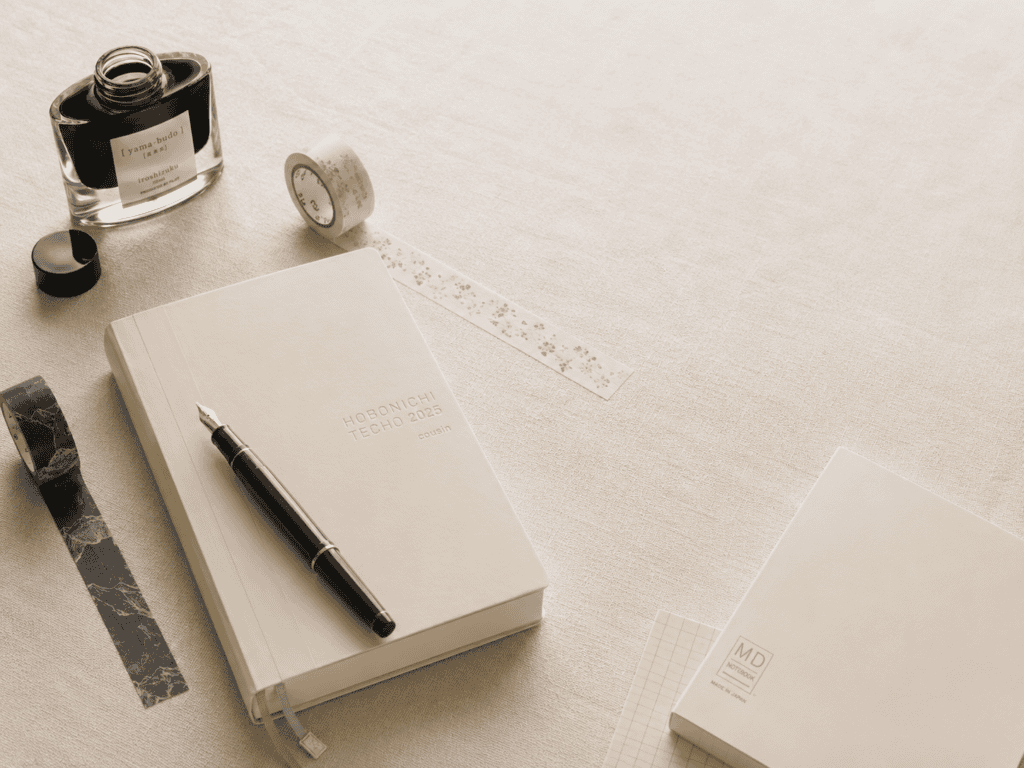
Pilot Kakuno Fountain Pen — a fine nib for small parts

A fine, steady line is the first thing a changing part needs. The Pilot Kakuno fountain pen has a fine nib and a hexagonal grip that stops it rolling off the desk. The line stays even from the first stroke to the last, which matters when the difference between two characters is a single small part. Write the shared part once, then write each changing part beside it, slowly. Many learners find that a good pen slows the hand just enough for the eye to catch up. The cap clicks on when you are done, so the pen is ready for the next family.
Posture counts too. Sit so the page is flat in front of you and the light falls from the side. A tilted page makes the shapes look tilted, and a shadow can hide a small stroke. A minute spent on the setup saves a lot of squinting later. It is a small habit, but it keeps a short session pleasant. Keep the pen and the highlighter within reach of your writing hand, and clear the rest of the desk, so the eye can settle on one small family at a time. A short, tidy session is easier to start than a long and cluttered one, and it keeps the habit light on a busy day.
Zebra Mildliner Highlighters, double-sided

Colour makes the shared part and the changing part look different on the page. The Zebra Mildliner double-sided highlighters have a broad end and a fine end, and the soft shades do not turn a printed page into a blur. Mark the shared part in one shade and the changing part in another, and the structure of the family shows at a glance. Use the fine tip for tight shapes, and keep the colours few so the page stays easy to read. A set of five covers every family you will need for a season of study, and the shades are soft enough to read through.
The last group is smaller, and each item has a plain job. An eraser takes out one stroke without smudging its neighbours. A magnifier lets you look closely at a small print where two parts blur. A bowl gives the study break a small ritual, and it pairs with the udon above. Together they make a short session feel complete. None of the three is expensive in effort, and each one has a job you can name in a single sentence. That is a good test for any object on a study desk: if you cannot say what it does for the page in front of you, it can stay in the drawer.
Three Pieces for the Study Table

A pen-style eraser with a 2.5 mm tip that lifts one stroke and leaves its neighbours clean.

A handheld lens for small print, where the left side of 待 and 持 can blur.
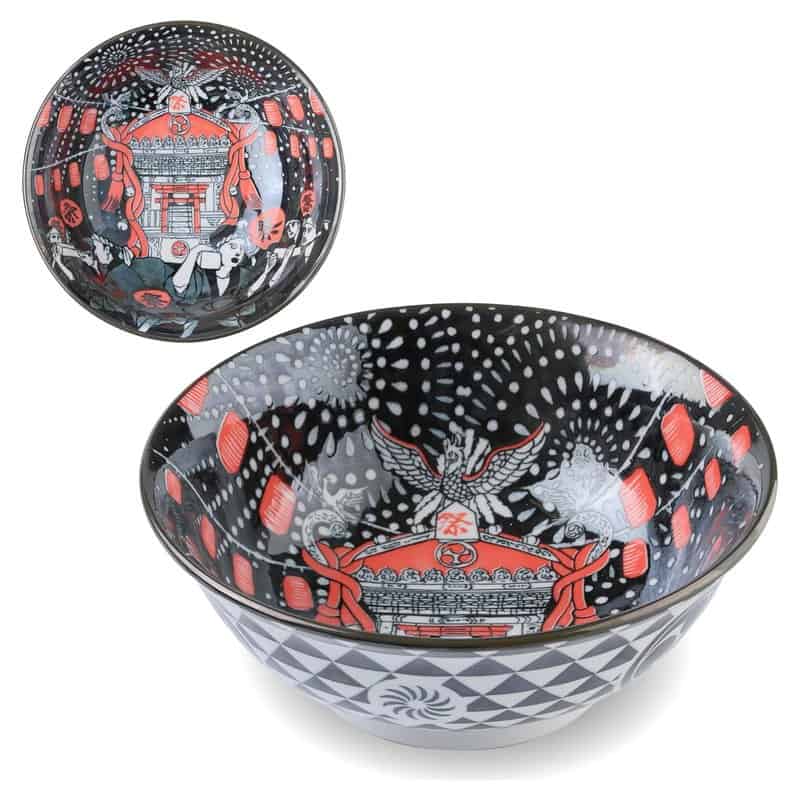
A large glazed bowl from Mino, made for noodles and a clear broth.
Read the Family First
You now have the method. Find the shared part. Name the part that changes. Say what each one means. Do this for a few minutes each day, and similar looking kanji stop being a trap and become a set of small, readable choices. Some weeks it will feel like progress and others like standing still. Over a season, the families begin to recur, and a page of near-twins turns into a page of neighbours you know by name.
It helps to remember what the method is for. You are not trying to win a contest against look alike kanji. You are learning to read as a native reader does, by shape first and then by part. The eye finds a familiar part, the mind recalls the family and the changing part settles the rest.
Where the Levels Come From
Of the eight characters in this guide, seven are N4 (unofficial) and 間 is N5 (unofficial). Their source is jlptsensei.com. No official list exists, so treat the levels as a rough guide to how common each character is, not as a promise about any exam.
What to Do This Week
Choose one family and give it a week. On the first day, write the shared part and the changing parts on a single page. Next, say each character aloud with its meaning and one word. Then cover the page and write the family from memory. If a part slips, look back at it, say it aloud, and write it again. Short, small and repeated is the whole plan.
Recommended
At the end of the week, choose a second family from something you have really met: a menu, a station sign or a page of your own study. Do not hunt for pairs to fill a quota. Pairs find you, and the ones that find you are the ones you will meet again. Two weeks of this is enough to change how a page of kanji looks to you, and that change is the point. Expect the first week to feel slow, and expect the second to feel lighter, because the shared parts you named in week one return in week two and arrive already known, which is a small reward for sticking with it.
Ten Proverbs to Carry With You
A printable folio of ten Japanese proverbs, each set in kanji with its reading and a line on where you will hear it.
Widening the Circle
When the families feel steady, widen the circle. Look at the signs on a station platform, the label on a tea tin, the name on a menu. You will not read all of it yet, but you will begin to see a hand, a gate or a sun where you once saw a blur. That change comes from practice, not talent, and it comes to anyone who keeps looking. A learner who notices one family a day will meet more than thirty in a month, and each one will arrive already half sorted. Keep the habit light, keep the page short and let the shapes come to you, one family at a time, week after week.
Reading the Signs in Japan
Some of the best moments with kanji happen in Japan itself. A station sign, a shop curtain or a menu suddenly shows its parts, and a place you could not read begins to speak. It also gives the characters you study at home a setting, which makes them easier to recall when you are back at your desk.
We build days around moments like that: a slow walk through an old quarter, a noodle shop with a hand-lettered menu, a stationery shop in Kyoto. Every itinerary follows your pace and your interests, with the practical details handled for you. The families you studied at home become streets, meals and conversations.
A Journey Planned Around What You Can Read
We can plan days around the details that make Japan legible: a walk where the signs begin to make sense, a noon bowl of noodles behind a sliding door, a slow afternoon in a stationery shop. Every itinerary is built around your pace and your interests.
Plan Your Custom Japan ItineraryQuestions Worth Asking
What makes kanji look so similar?
Most kanji are built from smaller parts, and the same parts return in many characters. When two kanji share a part, they look alike at a glance, and every look alike pair works this way. The difference lives in the one part that changes. Name the shared part and the changing part, and the pair becomes easy to read.
How do I tell 持, 待 and 特 apart?
All three end in 寺, so look at the left side. 持 has the hand part 扌 and means hold. 待 has the step part 彳 and means wait. 特 has the cow part 牛 and means special. Cover the right side with a finger, name the left part, then read the whole character.
Why do 問, 開 and 間 all sit inside 門?
The gate part 門 is a frame that wraps a smaller part, and the part inside carries the difference. 問 holds a mouth and means question. 開 holds the part 开 and means open. 間 holds the sun and means interval. Ask what stands inside the gate, and the family sorts itself.
What is the difference between 映 and 英?
Both look alike because they contain the middle shape 央. 映 has the sun 日 on the left and means reflect, as in eiga, a film. 英 has the grass part 艹 on top and means English, as in eigo. Say it aloud once: sun on the left, film. Grass on top, English.
How many look-alike sets does Volume 2 teach?
Twelve. They sit on a look-alike page in the book, each set sorted by its shared part and its changing part. This guide shows only three families as worked examples, so the full sets stay on the page, with room beside them to write each one out by hand.
Does writing kanji by hand help with look-alikes?
Yes, for most learners. The hand cannot write a family shape without choosing the part that changes, so the choice sticks. Reading lets the eye skip small details, while writing slows you down enough to notice them. A short daily session on one family beats a long weekly one.