
If you are asking how long to learn N4 kanji, the honest answer is a pace, not a date. The honest version is a steady rhythm: short blocks of new characters, each closed by a checkpoint. That rhythm outlasts any sprint. Below is the reasoning, with a plan you can bend to your own evenings.
Kanji Workbook, Volume 2 is built on the same idea. It is the second of eight volumes in our Kanji Series, and it teaches 100 kanji at JLPT N4 (unofficial), stroke by stroke. The book is still in production, so you can join the launch list on the Volume 2 page. First, though, comes the planning question, because a good plan works with any book.
Two characters will keep us company throughout: 代 and 強. Both are public samples from the volume, and both sit at N4 (unofficial). One has five strokes and the other eleven, so together they give us a light case and a heavy case against which to measure pace.
How Long Does It Take to Learn N4 Kanji?
For a set of 100 kanji, ten new characters a week reaches the end in ten weeks, and five a week takes twenty. However, the clock that matters is review, not first exposure. Plan on blocks of a few characters, a checkpoint at the end of each, and a day of rest. That rhythm, rather than raw speed, decides what stays.
Start with what the test does not tell you. The organizers of the JLPT explain that they chose not to publish lists of vocabulary, kanji and grammar items. Every “N4 kanji list” is therefore a convention, and lists differ from one source to the next. That is why we label every level here as unofficial. It also means the honest unit of planning is a set you choose, not a number the exam hands you. So any answer to how long to learn N4 kanji starts with the list, and only then with the pace.
For a set of 100, the arithmetic is simple. Five new kanji a week takes twenty weeks. Ten a week takes ten. Twenty a week takes five, though few people sustain that beside a job. Still, these figures cover first meetings only. Review runs alongside them, and therefore review is where most of the hours go.

What Decides How Long It Takes to Learn N4 Kanji
Four things move the number more than raw speed. First, your starting point. A reader who already knows the N5 set begins with shared parts and familiar sounds. Second, the minutes you can protect, because twenty minutes on six days beats two hours on one. Third, the weight of the characters themselves. 代 has five strokes, while 強 has eleven, so the second asks for more attention on every visit. Finally, whether you check your memory or only look again.
None of these is fixed. You can shorten the clock by guarding a small daily slot, while you can lengthen it by skipping the check. Put simply, your week answers the question of how long to learn N4 kanji, not the characters. The plan you write is therefore worth more than the pace you promise yourself.
Why Cramming Loses to Spacing
Cramming feels productive because familiarity is high in the moment. However, the trouble appears a week later. A large meta-analysis of 839 assessments of spaced study across 317 experiments found that the best gap between sessions grew as the delay before the final test grew. In plain terms, the longer you need to remember something, the further apart your visits should sit. For a learner, that means spreading visits out rather than stacking them in one evening.
This is also where a written plan earns its place. A plan tells you which characters return on which day, so the spacing no longer depends on willpower. Next are three planners that hold that kind of schedule, each suited to a different rhythm of week.

Spacing is half the story. The other half is retrieval, and the evidence there is just as clear. In a widely cited study, students who took a memory test on a passage retained substantially more on delayed tests than students who studied it again. The lesson for kanji is direct. Looking at a character again is study, while writing it from a blank box is a test. Both count, but only the test shows you where the gaps are.
That is why the plan below ends every block with a checkpoint. It is also why each block opens by recalling the last one. For more on the difference between knowing a shape and producing it, see our piece on recognition versus recall in kanji.
Steady Speed: What a Shinkansen Timetable Teaches
Consider a Shinkansen trip. The train does not race between stations. It keeps a steady speed, stops on schedule, and arrives when the timetable says. Nothing about the journey depends on a burst of effort at the end. Learning kanji works the same way. A pace you can hold for ten weeks reaches the terminus, while a pace that needs heroics stalls in the third week. As a result, the slower plan often arrives first.
Passengers also plan around the stops, and so should you. Each checkpoint is a station, and the day you rest is the platform. If you are planning the trip itself, our guide to the Japan Rail Pass covers the practical side of riding the line.

For the long line taken at one steady speed, station by station.
Unlined · Travel journal
Shop This Journal →How Long to Learn N4 Kanji in Blocks, Not Bursts
A block is a small group of characters you treat as one unit of work. Here is one way to size it, offered as an example and not as a description of any book. Choose ten characters. Spend four days meeting them, two or three per sitting. Give one day to a checkpoint, one to review, and one to rest. That is a block, and it fills a week. So at this pace, the answer to how long to learn N4 kanji is roughly a season: ten blocks, ten weeks, and a spare week or two for slips.
The shape matters more than the size. Smaller blocks suit a crowded life, and larger ones suit a long holiday. What stays constant is the order: meet, practice, check, rest. Because each block closes before the next begins, a slip never travels further than one week.
Inside a sitting, the work has its own rhythm. Look first at how the character is built. 代 is a good model. A two-stroke person part stands at the left, and a three-stroke part follows at the right. The right-hand part closes with a short dot. Because the left half comes first, the order reads left to right, which is how most characters of this shape are written.
Next, trace it. Then write it half-traced, with only a faint guide. Finally, try a blank box. That ladder, from traced to half-traced to freehand, is the ladder our stroke panels are built on. Each panel shows one new stroke in red, earlier strokes in champagne behind it, an arrow for direction and a number for order. Our explainer on why stroke order matters shows what that order protects.

Three Paces Compared
The same block can run at three paces. The gentle pace meets five new characters a week, the steady pace ten, and the brisk pace twenty. Nothing ranks them by virtue. The gentle pace suits a crowded week, the steady pace suits a short daily slot, and the brisk pace suits a holiday or a study leave. The table sets out what each one asks of you, and it shows how the review rhythm shifts as the pace rises.
Read it across, not down. Whichever row you choose, you still carry a checkpoint at the end of each block. Even the brisk row keeps a rest day, since a pace without rest is a sprint in disguise. Begin by choosing the row that fits the next four weeks, not the next year.
The pace changes from row to row. The rhythm of review and rest does not.
| Pace | New kanji a week | Weeks for 100 kanji | Review rhythm | Suits |
|---|---|---|---|---|
| Gentle | 5 | 20 | Check after every 5; one rest day | A crowded work week |
| Steady | 10 | 10 | Check after every block of 10; one rest day | A short daily slot |
| Brisk | 20 | 5 | Two checks a week; one rest day | A study leave or a holiday |
A table can only show arithmetic, and your week decides the rest. Notice that every row keeps its review day and its rest day. The pace changes, but the rhythm does not. Dropping the rest day tends to turn a plan into a chore, and chores get skipped. A plan you keep at a gentler pace will beat the brisk plan you abandon. Also, a gentle pace can speed up later, once the habit feels easy and a fourth sitting fits into the week without strain.
If you would like to see where these characters live, we can plan a custom Japan trip around handwriting, stationery shops and unhurried study days, with room to rest between them.
An occasional letter on steady kanji practice, pacing and the Kanji Workbook series.
Occasional letters. Unsubscribe anytime.
Checkpoints: Where Memory Gets Its Proof
A checkpoint is a small, honest test at the end of a block. Close the book. Write each character from its meaning and sound. Mark what you missed, then look only at those. Two rules keep the test fair. First, check in a different order from the one you learned in. Second, leave a night between learning and testing, because a check on the same evening mostly measures short-term memory. Then write the result where you can see it.
Beginners often resist this step, because a check can feel like a verdict. It is better read as a map. A missed character is not a failure. Instead, it is a pin on the map that says where to spend tomorrow’s ten minutes.
Reading the Result
Use the result as information, not as a grade. If you miss two of ten, carry those two into the next block as a short first task. If you miss six, the pace was too fast. The right response is to slow the next block, not to push harder. 強 shows why. Its right half holds a box drawn in three strokes, a vertical stroke through the box, and two closing strokes. A slip in any one of them changes the shape, and a checkpoint catches that slip while it is still small.
The left half of 強 has three strokes of its own, so the whole character asks you to hold eleven movements in order. That is a lot for one sitting. It is why a character of this weight often deserves its own day in the block, with the lighter characters around it.
Recommended
Review days deserve a plan too. A review day is not a second pass through the pages. It is the retrieval exercise again, with longer gaps between visits as a character settles. A character met on Monday can be checked on Tuesday, again on Friday, and again a week later. Each visit asks less of you than the one before. That tapering is what lets ten blocks fit into ten weeks.
Keep the visits short. Five minutes of honest recall beats thirty minutes of rereading. If a character resists, give it a place in tomorrow’s opening minutes, and then let it go until the next scheduled visit.

How to Learn N4 Kanji After You Miss a Week
Every plan meets a missed week. Illness, travel and work do not consult your calendar. The worst response is to restart from the first block. The better response is to test yourself on the last block you finished, see what held, and then resume from there. Some of it will have held, and the test shows which. The rest becomes a short first task, never a reason to give up the plan.
Shame is the real cost of a gap, not the lost days. Learners who treat the gap as a verdict tend to stop, whereas learners who treat it as data tend to continue. That is why, when you weigh how long to learn N4 kanji after a gap, your reply matters more than the gap itself. You can choose your reply before the gap arrives.
Mending, the Japanese Way
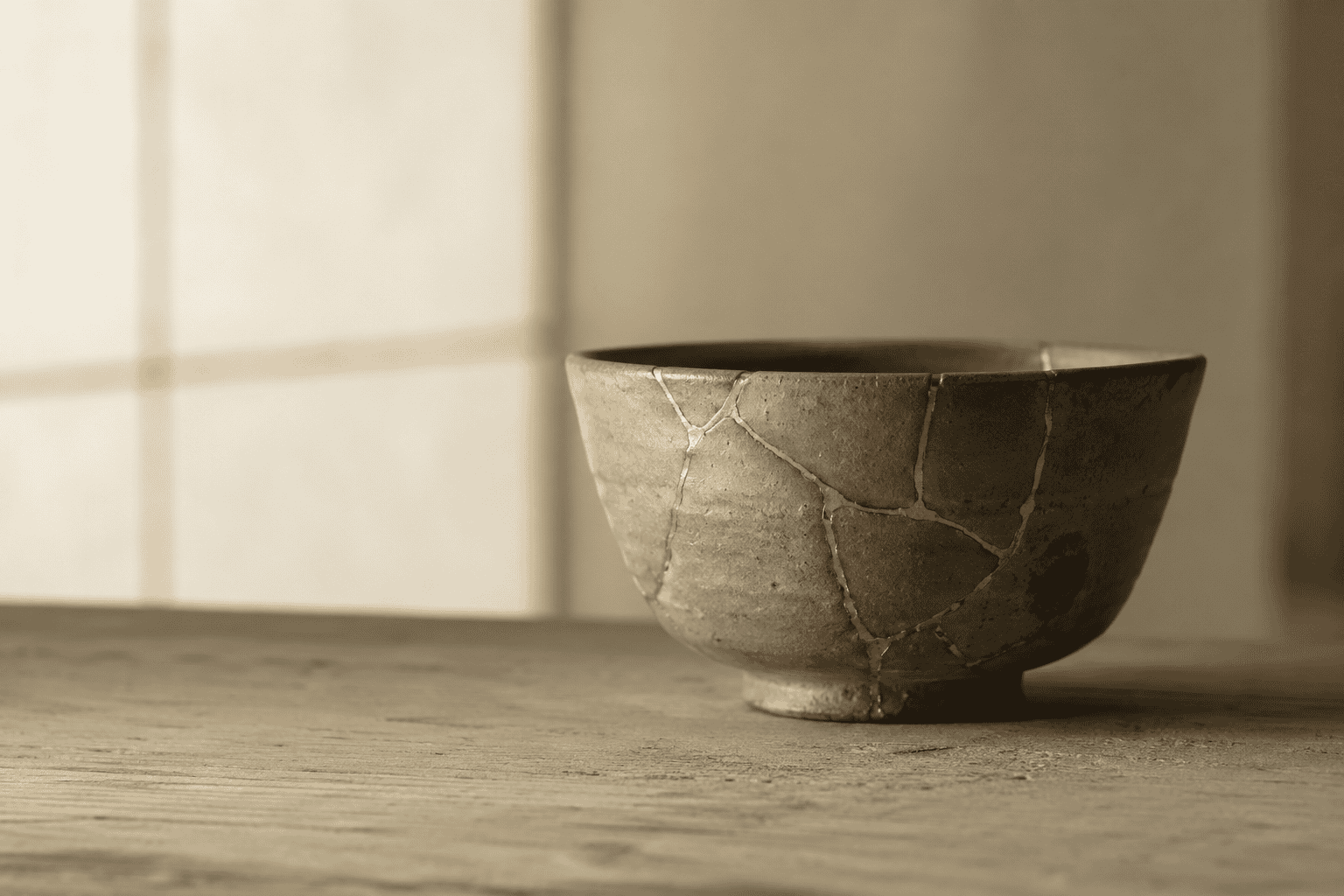
Japan has a craft built on exactly this idea. Kintsugi repairs a cracked ceramic with lacquer and gold powder. Japan’s National Crafts Museum describes it as a technique in use since the Middle Ages, rooted in preserving things and in finding beauty in imperfection. The crack is not hidden. Instead, it becomes the most visible line in the piece.
A missed week can be read the same way. The gap stays in the record, and the plan continues, now stronger at that seam. You do not need to pretend the week did not happen. You only need to decide what the next block will be, and then begin it on the very next day.
Patience, Served in a Pot
Patience has a flavor too, and few dishes teach it better than oden. It is a winter pot of daikon, eggs, konnyaku and fish cakes, simmered in a light dashi broth, and it punishes haste. A hard boil clouds the broth and breaks the fish cakes apart. Kikkoman’s version simmers the pot for about twenty minutes once the broth is seasoned, and other cooks add the items in stages, daikon first and fish cakes last. The method is the same in every version: a bare simmer, a little time and no stirring.
The link to kanji is direct. Daikon cannot be rushed by turning up the heat, and a memory cannot be rushed by stacking more hours into one evening. Both are ready when they are ready. If you would like more dishes from the same kitchen, our list of traditional Japanese dishes worth trying is a good place to browse.

A winter pot of daikon, eggs, konnyaku and fish cakes simmered slowly in a light dashi broth. It is sold by the piece from street stalls and shops through the cold months.
- 4 cups dashi
- 2 tablespoons soy sauce
- 2 tablespoons mirin
- 1 tablespoon sake
- 1 teaspoon salt
- ½ daikon radish, peeled and cut into thick rounds
- 4 eggs, hard-boiled and peeled
- 1 block konnyaku, cut into triangles
- 4 chikuwa fish cakes, halved
- 4 pieces of fried fish cake or 2 sheets of aburaage
- Karashi mustard, to serve
- Parboil the daikon rounds in water for about 10 minutes until a skewer slides in easily, then drain.
- Score the konnyaku triangles lightly and blanch them for 2 minutes to remove any smell. Drain.
- Bring the dashi, soy sauce, mirin, sake and salt to a gentle simmer in a wide, shallow pot.
- Add the daikon, konnyaku and eggs. Simmer uncovered for 20 minutes, keeping the broth just below a boil.
- Add the chikuwa and the fried fish cakes, and simmer for 10 minutes more so they soak up the broth.
- Turn off the heat and let the pot rest for 10 minutes. Serve the pieces in bowls with a little broth and a dab of karashi.
Tracking the Weeks Where You Can See Them
A plan that lives only in your head is a wish. Put the weeks on paper: one line per block, one mark per checkpoint, one note for what slipped. A planner, a timer and a few index tabs are enough. The point is visibility. When you can see six ticks in a row, the ten-week horizon stops feeling abstract, and the next sitting gets easier to begin.
A timer helps in a less obvious way. It caps the sitting. When twenty minutes end, you stop, and that small discipline protects tomorrow’s session from burnout. The tabs then mark each checkpoint in your notebook so you can find the last block at a glance.

This is where a workbook also earns its place. In Volume 2, each character gets stroke panels and trace-to-memory boxes that move from trace to half-trace to freehand. Example sentences and checkpoints use only kanji already taught, with later kanji shown in kana, so a checkpoint never tests what you have not yet met. We are not describing more than that while the book is in production.
If you are starting from zero, our guide to starting kanji without feeling lost is a gentler first step. Volume 1 of the series is also on sale now in a Digital Letter edition for readers who want to begin at the start of the series.

Beyond This Plan
Some readers are planning toward an exam date rather than a season. For them, a separate question arises: how to set up the desk and the days before the test. Our companion piece on desk habits for the weeks before an exam covers that ground.
Others wonder whether handwriting is worth the time at all, or how to build a review system on paper. Two more sister pieces take up those questions: the case for learning to write kanji by hand and a practical look at paper review systems. Each one answers a slice of the larger plan, so read whichever question is loudest for you right now.


Begin Smaller Than You Think
Whatever you choose, begin smaller than you think you need to. Two characters on a Monday, written slowly, carry more weight than ten rushed ones. The season will pass either way. The only choice is whether it leaves you with a habit or with a pile of half-learned shapes.
Return to the plan once a week. Move a tick, adjust a pace, and write one line about what you noticed. That single line, repeated for ten weeks, becomes a record of a learner who kept showing up. It is also the best evidence you will ever have of how long a set of characters really takes you.

Pace also changes how a character feels. A shape met slowly, in good light, becomes familiar the way a street does after a few walks. You stop reading it as parts and start seeing it as a whole. That shift is what a good block is designed to produce, and it cannot be hurried, only scheduled. Plan for it, then trust the schedule on the days when progress feels invisible. Seen this way, deciding how long to learn N4 kanji is less a verdict than a habit you are building, one sitting at a time. The habit, unlike the pace, is yours to keep.
Questions Worth Asking
Can I learn 100 N4 kanji in a month?
It is possible to meet 100 characters in a month, at about three or four a day. Keeping them is harder, because each needs a check and several spaced visits. A pace of ten a week gives review room, and it is the pace most routines can hold.
How many new kanji should I learn each day?
There is no single right number. Start with two or three a day, four days a week, and keep a review day and a rest day. If checkpoints show you missing more than a few, slow the next block. If you miss none, add one character.
Does the JLPT publish an official N4 kanji list?
The JLPT organizers explain that they chose not to publish lists of vocabulary, kanji and grammar items. Any N4 kanji list you see is therefore a convention, and lists differ from one source to the next. That is why we write JLPT N4 (unofficial) throughout this article.
What should I do if I miss a week of practice?
Do not restart. Test yourself on the last block, without looking, and note what held. Carry the missed characters into the next block as a short first task, then continue. The gap stays in the record, and the plan goes on.
Is it better to review before learning something new?
Yes, in most routines. Begin each sitting by writing the last few characters from memory, then move to the new ones. That order makes retrieval the first thing you practice, and it shows you early which characters need a second look.
When will Kanji Workbook, Volume 2 be available?
Volume 2 is in production, so there is no release date to share yet. It teaches 100 kanji at JLPT N4 (unofficial), stroke by stroke. The best way to hear first is to join the launch list for the second volume.
The Real Answer to How Long to Learn N4 Kanji
Every plan for how long to learn N4 kanji resolves into a pace, a block and a check. Choose the pace you can hold, keep the blocks small, and let the checkpoints tell you the truth. When the next volume is ready, the Kanji Workbook, Volume 2 launch list is where the news will arrive first.
Start this week rather than next. Give two evenings and one morning ten minutes each, and write from memory before you check. Within a month, you will have your own answer, measured in blocks closed rather than hours promised.
Stroke observations in this article draw on KanjiVG data (CC BY-SA 3.0, kanjivg.tagaini.net).
Ninety days of mending what cracked, and keeping the gold in the seam.
View the Journal →If a missed week or a stalled block leaves you feeling behind, a few unhurried minutes of reflection can help you begin again.
The Editors, Magnificent Japan
Stationery counters, handwriting workshops and a slow afternoon on the Shinkansen can all shape a learning trip. We build custom itineraries around the days you want for study, with room to rest between them.
Plan Your Custom Japan Itinerary