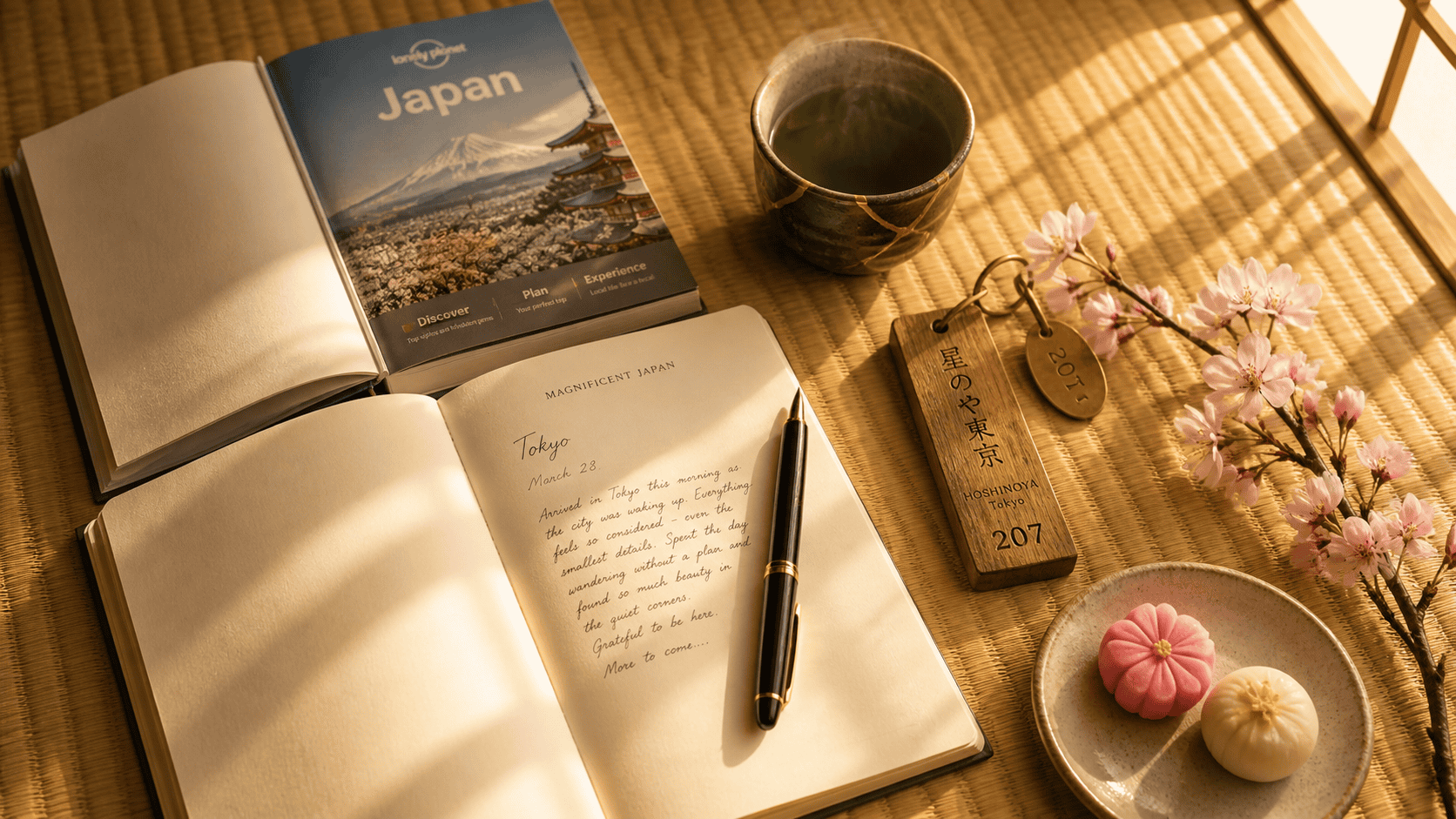
If you have wondered how to start learning kanji, you are probably standing where most beginners stand. You can read hiragana, and perhaps katakana too. Then a street sign or a menu shows you a wall of characters, and the path forward seems to vanish. The good news is that the path is shorter than it looks.
Kanji reward order more than talent. A fixed set of beginner characters, written by hand in the right stroke order, gives your memory something solid to hold. A checkpoint every few days then shows you what has stuck. That is the approach behind the Magnificent Japan kanji workbook series. It works whether you study for travel, for a test or for the pleasure of reading.
This article covers the first steps and two real characters from Kanji Workbook, Volume 1. It then sets out a daily routine and the checkpoints that keep you from feeling lost.
How Do You Start Learning Kanji?
Start with kana so you can read the sounds. Then choose a fixed set of about 100 beginner kanji and write each one by hand, in stroke order, inside real words. Keep the daily pace small, around three to five new characters. Every few days, test yourself from memory. Those checkpoints show real progress long before reading feels easy.
Why Kanji Feels Hard at First
Kanji feel hard at first because there are many of them, most have more than one reading, and beginners rarely meet them in a sensible order. The difficulty is real. However, it is mostly a problem of sequence and practice, not of memory or ability. Fix the order, and the load becomes light enough to carry.
The numbers explain the nerves. Japan’s official list of characters for everyday use, the jōyō kanji, has held 2,136 characters since its 2010 revision. That figure can feel like a mountain on day one. Yet no one meets them all at once. They arrive a few at a time, and the earliest ones do the most work.
Exam levels add a second layer of confusion. The Japanese-Language Proficiency Test describes its entry level as reading text in hiragana, katakana and basic kanji. Since 2010, however, the test’s organizers have not published official kanji lists for each level. So every N5 (unofficial) or N4 (unofficial) label on a kanji list, including ours, is a guide, not a rulebook.
The Real Problem Is the Missing Order
Most beginners do not quit because kanji are too hard. They quit because the study has no edges. An app serves one character, a video another, and a word list a third. Nothing connects, so nothing ever feels finished. As a result, effort goes in every day while confidence stays flat.
A bounded set changes that feeling. When you know the next hundred characters, and you know their order, each session closes a small loop. You can count what you have done. You can also see what comes next. That sense of a map, more than any memory trick, is what carries people past the second week.
How to Start Learning Kanji: The First Four Steps
Here is how to start learning kanji in a way that holds. There are four steps, and none of them needs special talent. Each one removes a common reason people stall. Take them in order, and you will know exactly what to do tomorrow morning.
Step One: Read Kana Before You Write Kanji
Hiragana and katakana come first. Kanji carry meaning, but kana carry the sounds, the grammar endings and the small readings printed above harder words. Without kana, a kanji page is a set of shapes with no voice. With kana, even your earliest example sentences start to read like language. Most learners need a few weeks here. Then move on while kana are still a little slow, because using them is what makes them fast.
Step Two: Choose One Fixed Set of 100
Next, pick a set and stay with it. One hundred characters is a sensible first goal. It is large enough to let you read short, real sentences. It is also small enough to finish, which matters more than it sounds. A good set is graded, so simple shapes arrive before complex ones. It also teaches each kanji inside real words, because a character alone is only half a lesson. Volume 1 follows this idea: 100 kanji at JLPT N5 and N4 (unofficial), with 63 at N5 and 37 at N4.
Step Three: Write Each Kanji by Hand
Writing is not an optional extra. In a 2021 study in Psychological Science, Johns Hopkins researchers taught people an unfamiliar alphabet through handwriting, typing or visual study. The handwriting group learned faster and generalized better to new tasks. Kanji are far more complex than letters, so the case for the pen only grows. For the fuller argument, see whether writing kanji helps you remember them.

Stroke order matters from the very first character. The order of strokes shapes balance, speed and legibility, and it only becomes automatic through repetition. Learn it wrong, and you will have to relearn it later. That is why getting stroke order right is worth doing on day one rather than day ninety.
Step Four: Keep the Daily Pace Small
Finally, set a pace you can keep on a tired day. Three to five new kanji a day is plenty for most beginners. At that rate, a hundred characters take roughly three to five weeks of new material, plus review. Slower is fine. The only pace that fails is the one you abandon. Many learners also keep a simple study log: one page per day, with the date and the characters written. It turns effort into a record you can hold in your hands.

Blank, unlined pages for a daily study log, a travel notebook, or both.
6 × 9 in · 120 unlined pages · matte softcover
Shop This Journal →Meet Your First Two Kanji: 六 and 男
Theory is easier to trust once your hand has tried it. So here are two characters from Volume 1 that show how beginner kanji behave. Both are JLPT N5 (unofficial). Both are short enough to learn in a single sitting. Together they show two kinds of kanji you will meet again and again: characters that stand alone, and characters built from smaller parts.
六: Six, in Four Strokes
六 means six, and on its own it is read roku. It takes four strokes: a short dot at the top, a long horizontal line, then two short strokes that open outward below. You will see it in dates, times and counts, so it turns up everywhere once you know it. Because it is so short, it also makes a perfect first test of stroke order. Write it ten times, and your hand will already feel the rhythm.
男: Man, in Seven Strokes
男 means man, and on its own it is read otoko. It takes seven strokes. The upper part is the shape for a rice field. The lower part is the shape for strength, a pairing often read as strength in the fields. That kind of structure helps memory. Once you notice the parts, a seven-stroke character stops looking like seven random lines.
Pairs like these also show why a graded order matters. A short character teaches the basic stroke rules. A longer one then asks you to apply them inside a bigger frame. In Volume 1, every kanji comes with stroke panels that make this visible: one frame per stroke, the new stroke in red, earlier strokes in soft champagne behind it, an arrow for direction and a number for order.
Four Starting Points, Compared
When people ask how to start learning kanji, they usually mean which of four routes to take. Some learn kana first. Some start with radicals, the recurring parts inside kanji. Others memorize word lists written in kanji. A fourth group takes a graded set of characters and writes them by hand. Each route teaches something useful. However, they differ sharply in what they give you and in where they tend to stall.
The table below sets them side by side. Read it less as a ranking and more as a sequence. Kana are the doorway in every case, radicals make structure visible, and word lists bring quick wins. A graded, handwritten set is what joins these threads into characters you can actually recall.
Only one of the four gives you a finish line you can see.
| Starting point | What you learn | What it gives you | Where it stalls |
|---|---|---|---|
| Kana first | Hiragana and katakana | The sounds and grammar endings kanji lean on | It is a doorway, not a destination |
| Radicals first | The recurring parts inside kanji | A way to see structure in new characters | Parts without words stay abstract for weeks |
| Word lists first | Vocabulary written in kanji | Quick reading wins on signs and menus | Recognition fades without writing or review |
| A graded 100, by hand | Whole characters, in stroke order, inside words | A fixed goal, steady recall and visible checkpoints | It needs a small daily habit to keep moving |
Notice where the routes stall. Word lists feel fast, yet recognition fades when you never produce the character yourself. Radicals feel logical, yet parts without words stay abstract. The handwritten set asks more of you each day. In return, it gives you the one thing the others lack, which is a clear finish line. That is also why the 100 Kanji Challenge pairs so well with a workbook, because it sets a daily rhythm around the same idea. Even ten minutes a day, repeated, carries you further than one long session a month. Small and steady is the whole secret, and it is open to anyone.
Many learners start kanji with a first trip to Japan in mind. When yours takes shape, we can design a custom itinerary that matches your pace and your reading level.
Occasional letters for beginners on learning kanji: stroke order, calm study routines, and new Magnificent Japan tools and workbooks as they arrive.
Occasional letters on learning kanji. Unsubscribe anytime.
How Checkpoints Make Progress Visible
Progress in kanji is hard to feel from the inside. You study for a week and still cannot read a newspaper, so it seems that nothing has changed. Checkpoints solve this. A checkpoint is a short test from memory: you see a meaning or a word, and you write the kanji. It takes minutes. Yet it turns vague effort into a score you can compare.
Research backs the habit. In a classic Washington University study, students who tested themselves remembered far more than students who simply reread. The gap showed after two days and again after a week. Testing felt harder in the moment. Still, it did more for memory than another pass through the notes.
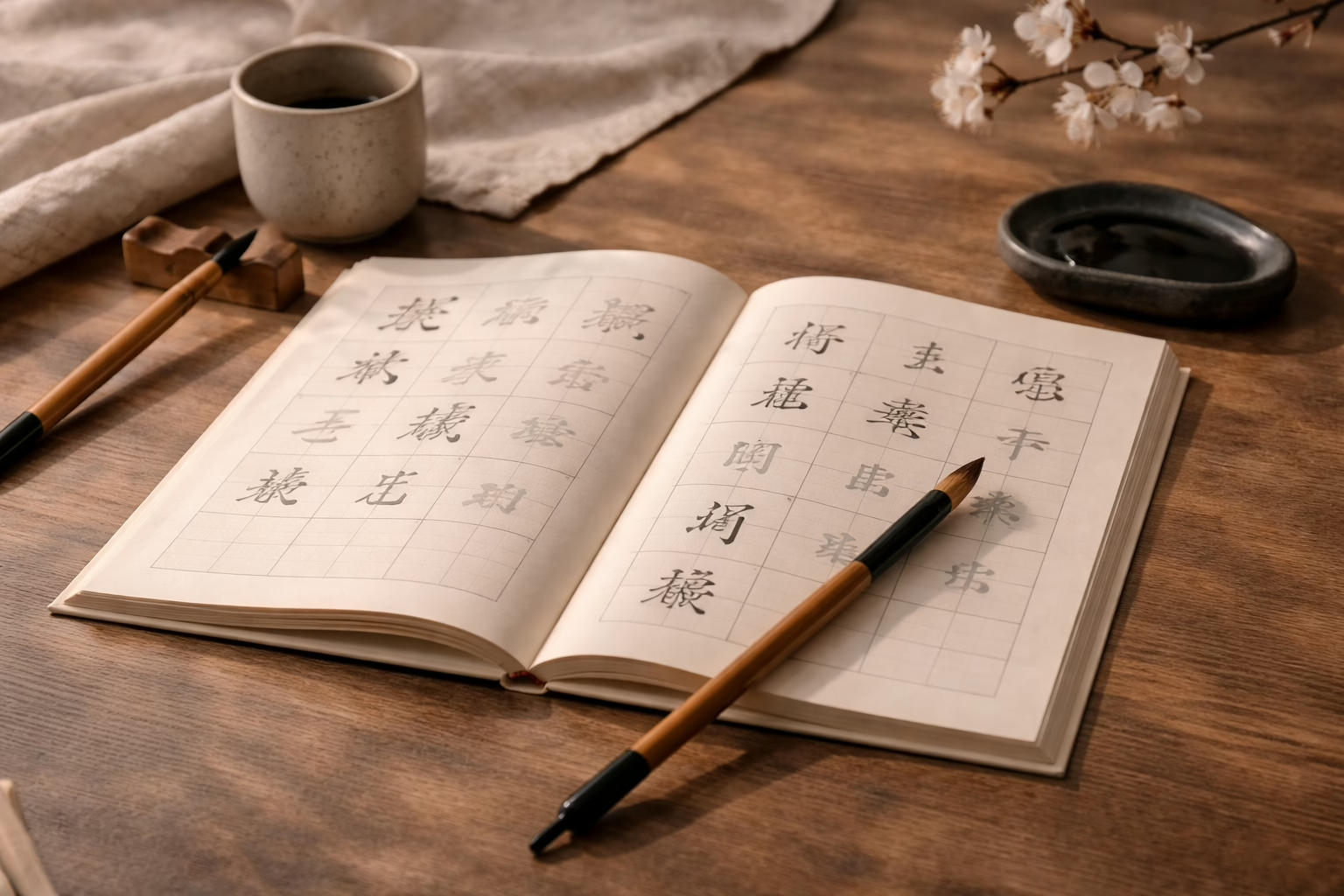
Volume 1 builds this habit in. Checkpoints and a progress tracker sit alongside the practice pages, so you record what you can recall, not only what you have seen. Over a few weeks, that record becomes plain proof that the method works. On days when motivation dips, a tracker full of marks persuades in a way no pep talk can.
You can add lighter review between checkpoints, too. Daily kanji flashcards offer one character a day with its stroke order and meaning. For longer review, a spaced flashcard method helps older characters stay fresh while new ones arrive. Use either one as a supplement, never as a substitute for writing.

What a Good Checkpoint Looks Like
A useful checkpoint is short, honest and written. First, cover the answers. Look at a meaning or a word in kana, then write the kanji from memory in the correct stroke order. Mark each one right or wrong, with no partial credit for a shape that is almost there. Afterward, rewrite each miss three times and note it for the next session. Then move on. The goal is not a perfect score. It is a clear list of what to practice next, which is exactly what a beginner who feels lost is missing. Keep every sheet, because old checkpoints make the best proof of how far you have come.
Recommended
A Daily Routine That Fits Real Life
Knowing how to start learning kanji matters less than knowing how to continue on an ordinary Tuesday. A routine works when it is small enough to survive a long day. So anchor it to something you already do, such as the first coffee or the train home. Then keep the shape identical every day. Familiar steps remove the question of what to do, and that saves willpower for the writing itself.
A simple twenty-minute session looks like this. Spend five minutes reviewing yesterday’s kanji from memory. Next, spend ten minutes on three to five new characters: trace, then half-trace, then write freehand, then write each one inside a word. Finish with five minutes of reading example sentences aloud. If you only have ten minutes, keep the review and cut the new material. Our companion piece explains why the hand remembers what the eye forgets.
Pair Study with a Small Ritual
Rituals make habits stick. Many learners pair a session with a drink or a simple meal, so the two become linked. In Japan, one of the most everyday rituals is a bowl of miso soup. It takes about fifteen minutes and rewards attention to order. It also appears beside many traditional Japanese dishes, from breakfast through dinner.
The recipe below is a basic version with tofu and wakame. Like a first kanji, it is short, and the sequence matters. You add the miso at the end, off the boil, just as a stroke goes down only after the earlier ones are in place. Make it before your session, and let it be the reward afterward.

Miso soup is part of the everyday Japanese table, served at breakfast, lunch and dinner. This is the simplest home version: dashi, miso, soft tofu and wakame.
- 2 cups (480 ml) dashi, homemade or made from dashi granules
- 2 tablespoons miso (white or awase), plus more to taste
- 3.5 oz (100 g) soft tofu
- 1 1/2 teaspoons dried wakame seaweed
- 1 green onion, thinly sliced
- Bring the dashi to a gentle simmer in a small pot over medium heat.
- Cut the tofu into half-inch cubes. Add the tofu and the dried wakame, and simmer for one to two minutes until the wakame softens.
- Turn the heat to low. Put the miso in a ladle, lower it into the pot, and stir with chopsticks until it dissolves completely.
- Taste and add a little more miso if you like. Keep the soup below a boil from here, because boiling dulls the miso’s aroma.
- Ladle into bowls, scatter the sliced green onion on top, and serve at once.
Once the soup is on the table, the session can begin. Keep the setup simple: one pen, one notebook or workbook, and the kanji for the day. Clear everything else away. A tidy desk is not about looks. It removes the small frictions that turn ten minutes into none.
Paper or Tablet: Both Work
Some learners prefer paper, with its gentle drag and grip. Others write on a tablet with a stylus, which keeps every page in one device. Both build the same hand memory, as long as you write rather than tap. The Volume 1 Digital Letter edition is made for tablets, with tappable contents and bookmarks, and it is available now. Two print editions, 6×9 and 8.5×11, are in production.
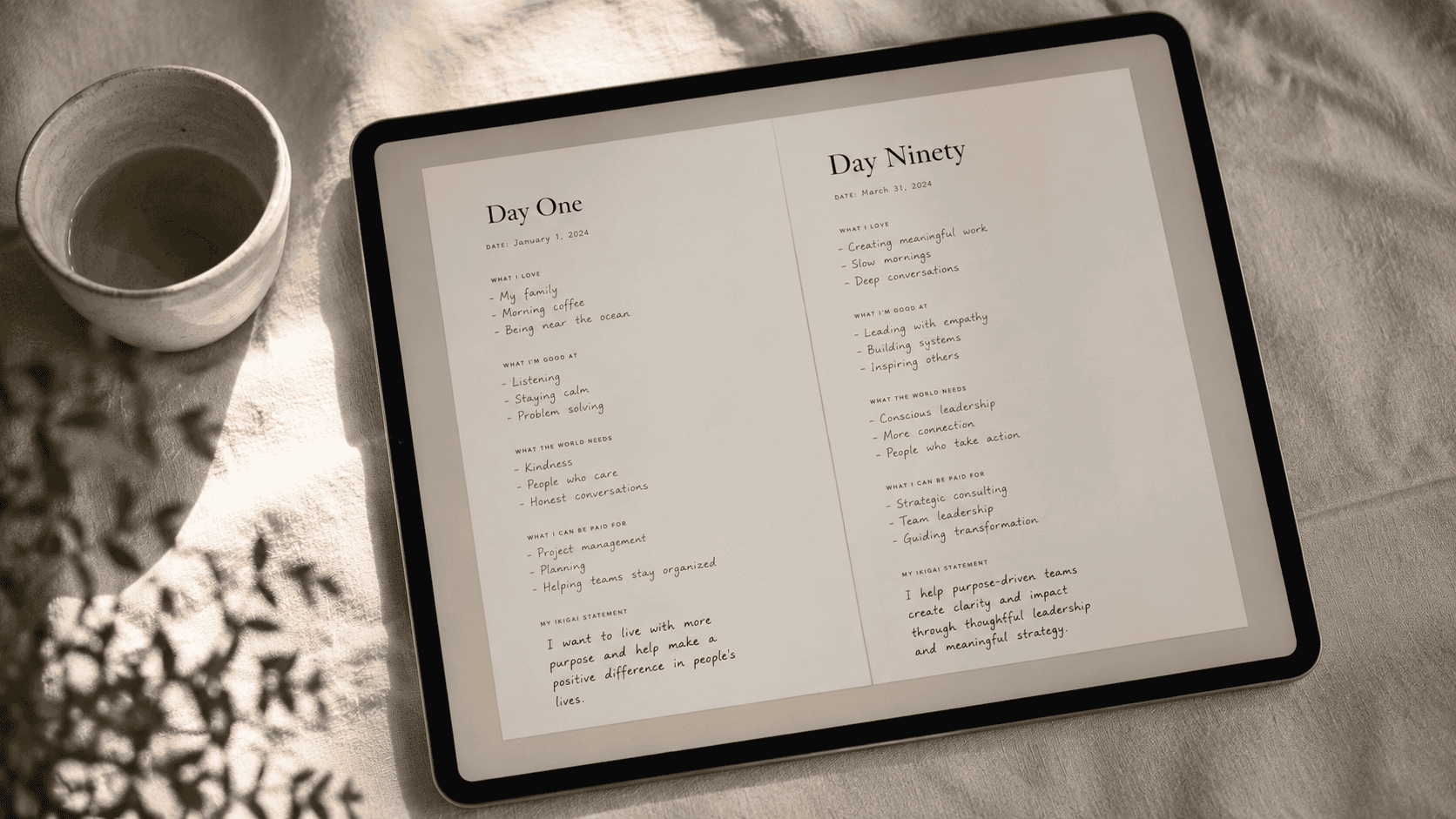
If you work on a tablet, a matte screen film and a stylus with palm rejection make long sessions more comfortable. Our guide to practicing kanji on an iPad covers that setup in detail. On paper, the needs are different. You want a notebook with a light grid or dot guide to keep proportions steady. You also want an eraser that lifts graphite cleanly without tearing the page.
Japanese stationery makers design for exactly this kind of writing. Their notebooks use guide lines that help small characters sit evenly, and their erasers are made for fine, repeated corrections. The three below suit a paper routine well.

Whatever you choose, use the same tools every day. Familiar paper and a familiar pen remove small decisions, and the hand settles faster. Over time, you will notice your characters becoming more even. That is the surest sign that stroke order has become automatic.
Names are another natural next step. Many beginners want to understand the names they see in films, novels and on business cards. That goal can carry a whole month of practice, because names draw on the same everyday characters you are already writing. It is also a lovely way to see how kanji combine in daily life.
What the First 100 Kanji Give You
A hundred characters is not fluency, and it is not meant to be. It is a foundation. With it, you can read short sentences, recognize common words, and spot familiar parts inside new kanji. Just as important, you know you can learn characters, because you already have. That confidence changes how the next hundred feel.
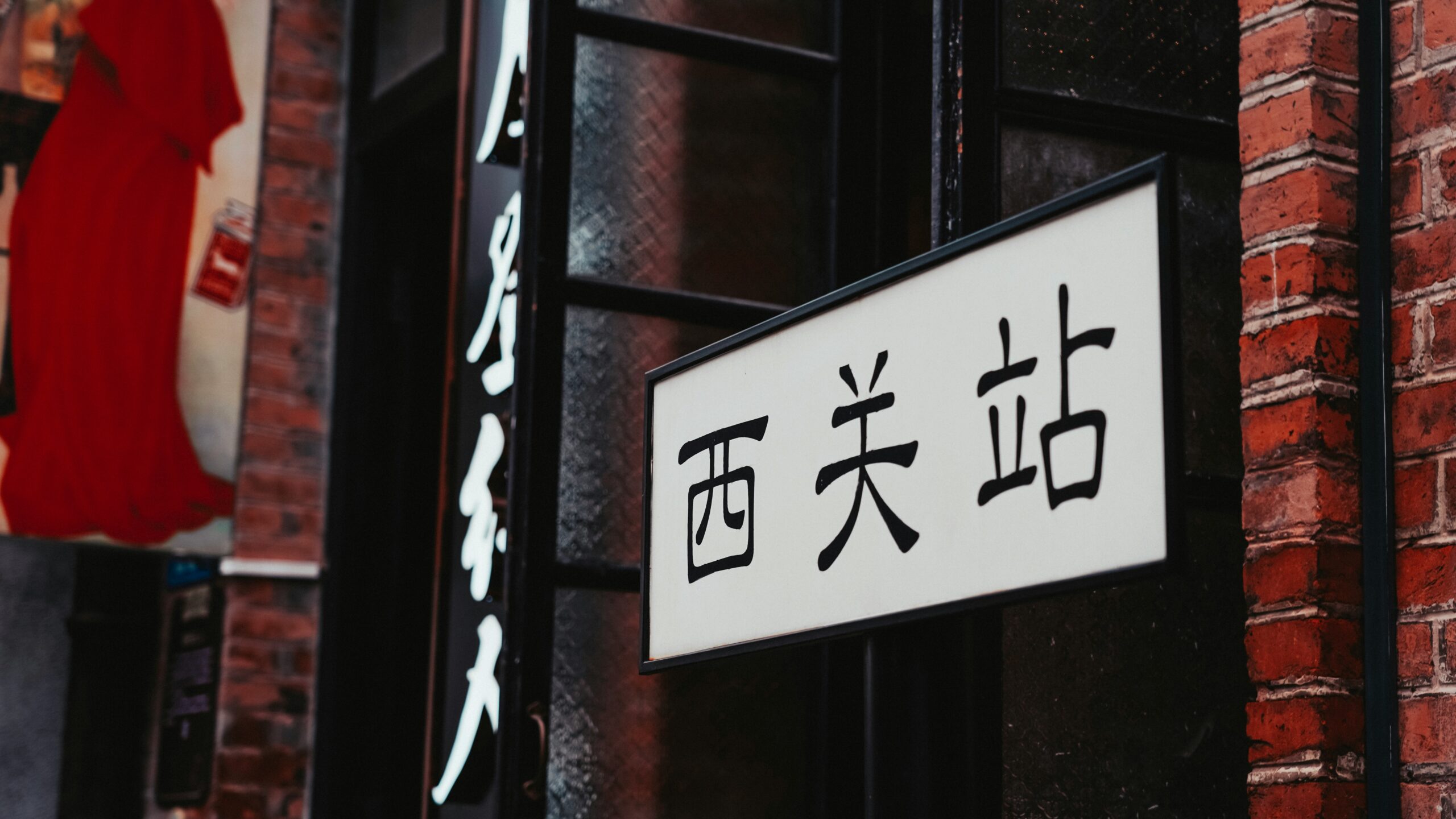
It also changes how you see Japan. Signs, menus and packaging stop being decoration, and parts of them start to speak. You will catch a 六 on a platform sign or a 男 on a restroom door. The small jolt of recognition is its own reward, and it arrives sooner than most beginners expect.

Volume 1 is the start of a longer path. The eight-volume series covers all 2,136 jōyō kanji, each one taught once. You do not need to think about the eighth volume today. Still, it helps to know the road is mapped, so each hundred builds on the last without repeats or gaps.
Every example sentence in Volume 1 uses only kanji already taught, with later characters shown in kana. As a result, you never meet a sentence you have not been prepared to read. For a beginner, that single design choice removes much of the lost feeling this article began with.
Questions Worth Asking
Should I learn hiragana before kanji?
Yes. Hiragana and katakana give you the sounds, grammar endings and reading aids that kanji rely on. Most learners spend a few weeks on kana, then begin kanji while kana are still a little slow. Using both together is what builds speed, so there is no need to wait until your kana feel perfect.
How many kanji should a beginner learn a day?
Three to five new kanji a day suits most beginners, with a few minutes of review before the new ones. At that pace, a first hundred takes roughly three to five weeks of new material. A small number learned well beats a large number half-remembered, so choose a pace you can keep on a busy day.
Should I learn radicals first?
Radicals help, but they work best alongside whole characters rather than before them. Learning parts on their own can feel abstract for weeks. Instead, notice the parts as they appear inside the kanji you are writing. Structure then becomes visible naturally, and each part arrives attached to a meaning you already know.
Is writing kanji necessary if I only want to read?
Not strictly, but it helps a great deal. A 2021 Johns Hopkins study found that people who learned new letters by handwriting learned faster than those who typed or only looked. Writing forces attention to every stroke, and that attention makes similar characters easier to tell apart when you read.
How long does it take to learn 100 kanji?
At three to five new characters a day, with regular review, many beginners work through 100 kanji in one to two months. Keeping them takes longer than meeting them once, which is why checkpoints matter. Treat the number as a milestone you revisit, not a race you finish once and forget.
What does (unofficial) mean next to a JLPT level?
Since 2010, the Japanese-Language Proficiency Test has not published official kanji lists for each level. Any N5 or N4 tag on a kanji list is therefore an informed estimate by the list’s author. Magnificent Japan marks every level (unofficial) so readers know it is a guide, not an official standard.
Your First Page Starts with One Stroke
So, how to start learning kanji without feeling lost? Learn kana, choose a fixed set, write every character by hand in stroke order, keep the pace small and check yourself often. None of it is complicated. What makes it work is doing the same small things, in the same order, for long enough to see results.
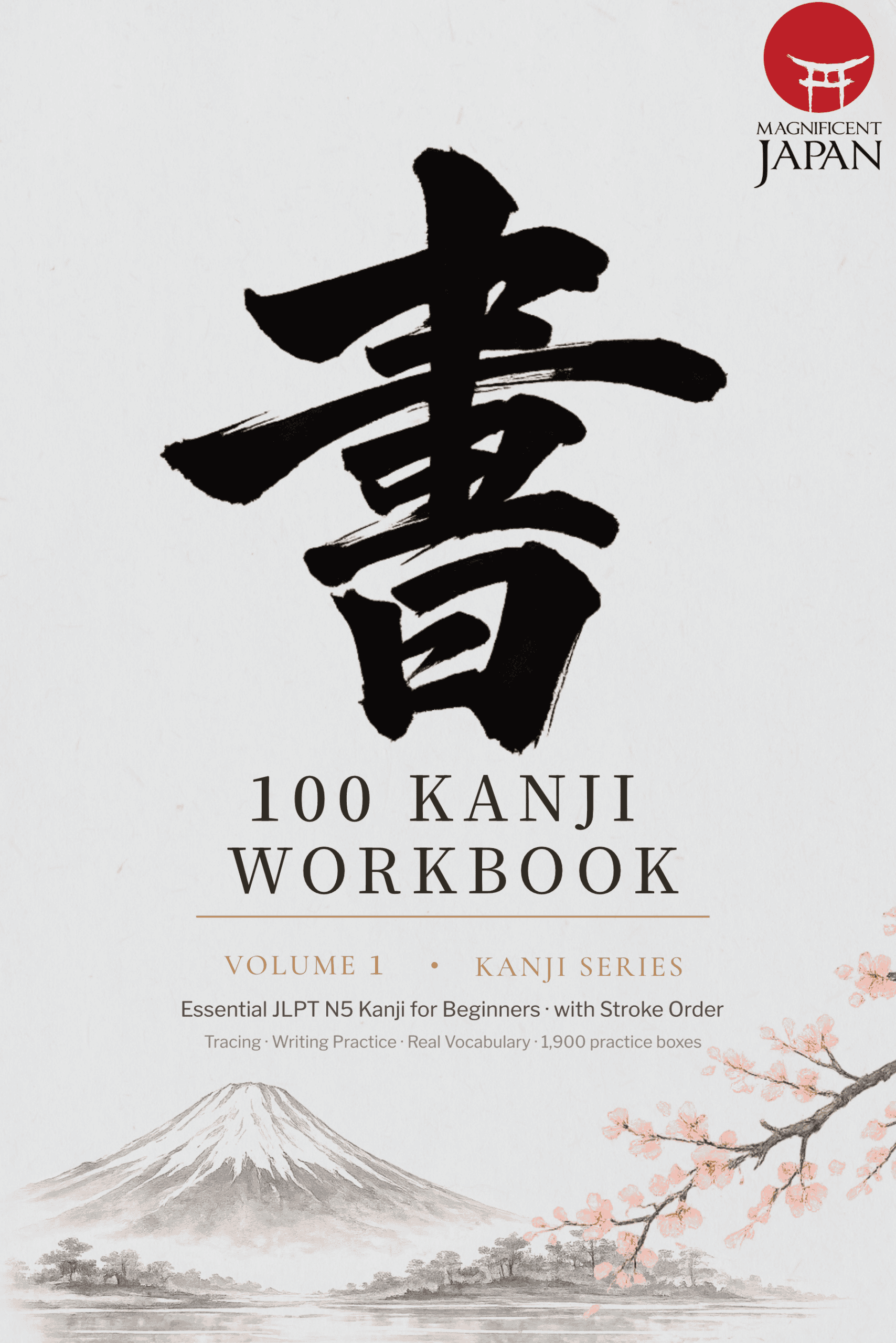
If you would like that order laid out for you, open the first volume of the workbook. It holds 100 kanji and 1,900 practice boxes, 19 for each character, plus stroke panels, checkpoints and a tracker. Start with a single page and a single stroke.
There is a Japanese idea that fits this moment well. Shoshin means beginner’s mind: meeting a subject with openness and curiosity, without the weight of what you think you should already know. Experienced learners work hard to recover it. Beginners, happily, already have it.
Hold on to that feeling as you learn. Mistakes on day three are not failures. They are information, and your next checkpoint will show how quickly they fade. If you like to reflect on how you learn, a ninety-day journal on beginner’s mind makes a thoughtful companion to daily practice. A few lines each evening are enough to notice how your thinking changes.
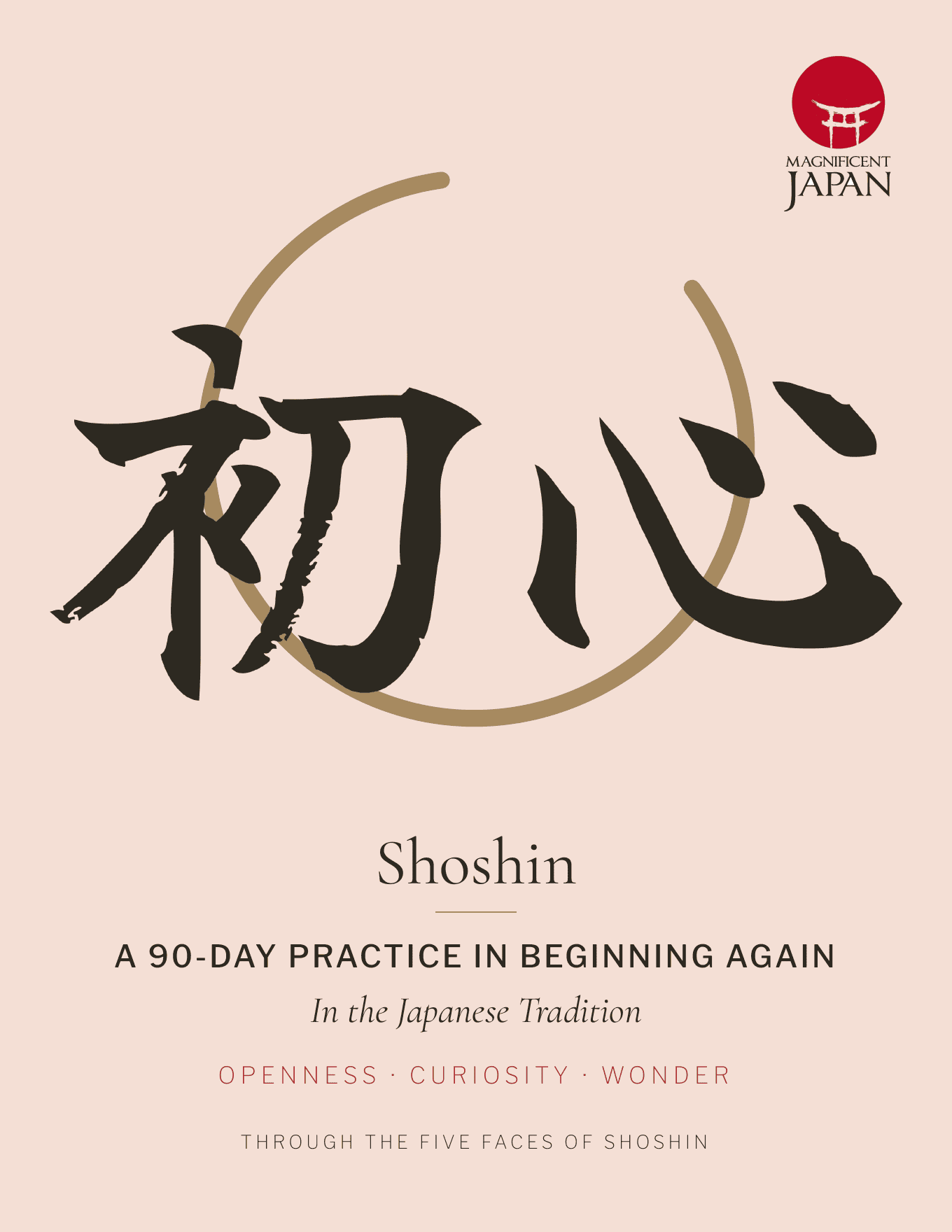
Daily prompts, weekly syntheses and monthly reviews help you meet familiar things with fresh curiosity.
View the Journal →Whichever path you take, begin today with one character and one honest attempt. Your hand will remember more than you expect, and the second week will feel lighter than the first. Keep going gently, one page at a time, and let the characters build on each other.
The Editors, Magnificent Japan
A first visit goes further when the plan is yours: gentle rail routes with easy-to-read stations, neighborhoods to walk slowly, and a calligraphy or stationery stop that puts your first kanji in context.
Plan Your Custom Japan Itinerary