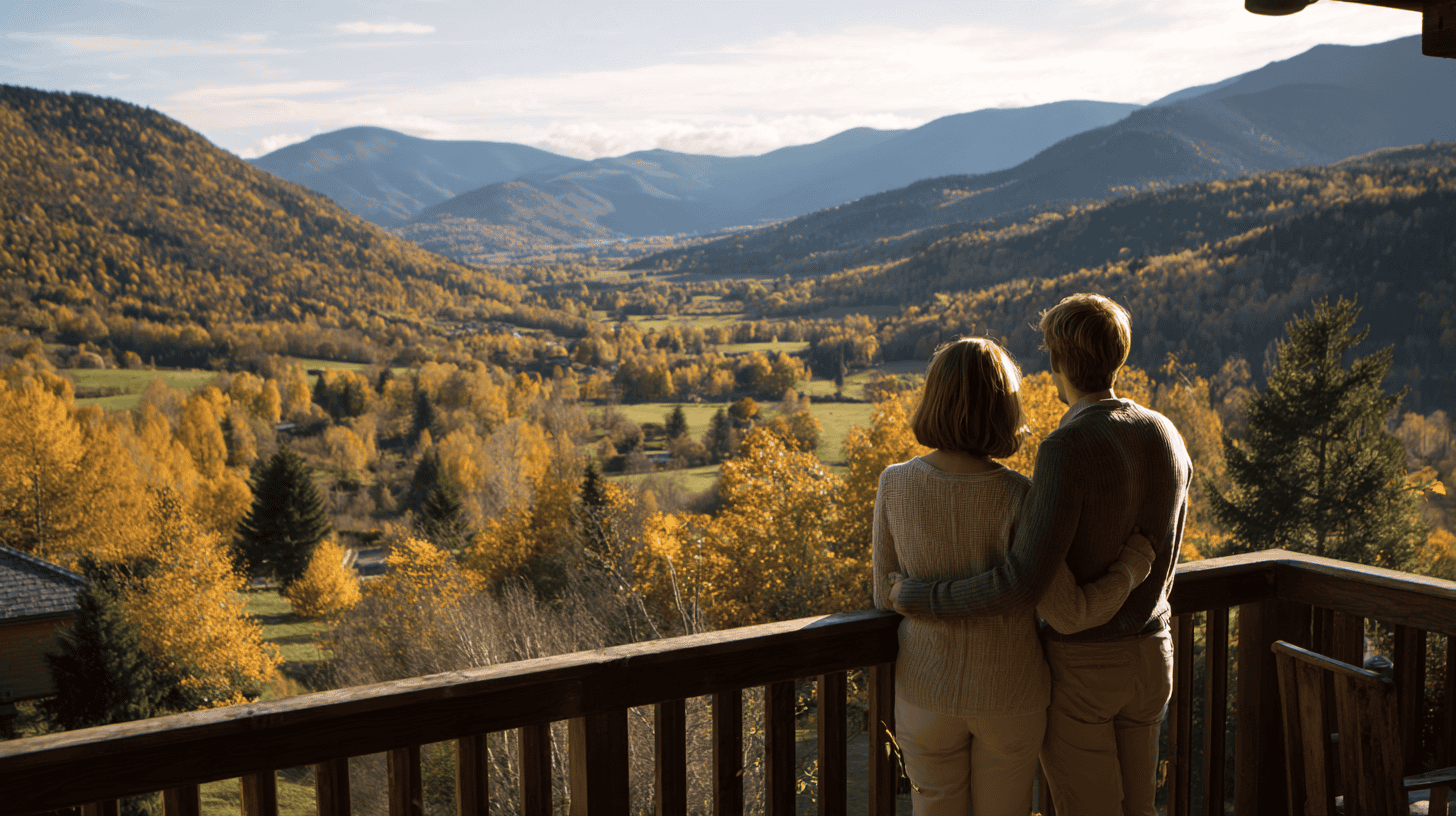
A luxury honeymoon in Japan rewards couples who plan for privacy rather than spectacle. The country does grand gestures well. Think of a private boat to your ryokan, a bath on your own terrace and dinner in your room. Yet the trips that work best move at a careful pace. They move between a city, a ryokan and a final stretch by the sea or in the mountains. Below, we cover how to shape that route, when to go and where to stay. We also answer the private onsen question, from rooms with their own baths to baths you reserve by the hour. Because trains run on time, your energy can go into the trip itself. For the wider picture, start with our guide to luxury travel in Japan.
What makes a luxury honeymoon in Japan work?
Three things. First, a route in three acts: a city, a ryokan, then the coast or the mountains. Second, privacy built into the rooms, ideally with a private onsen bath. Third, a season chosen on purpose and one slow day in every three. Ten to fourteen days suits most couples.
Why Japan Suits a Luxury Honeymoon
Japan suits couples who would rather share small rituals than chase sights. Meals arrive in many courses, baths come before dinner, and gardens invite slow walks. Hospitality is attentive without being intrusive. Trains run on time, so logistics fade into the background. That combination makes a luxury honeymoon in Japan feel both effortless and full of texture.
The country also packs real variety into short distances. Within a few hours you can move from a Tokyo skyline to a mountain inn. From there, the coast or an alpine valley is a short hop away. Each change of scene resets the rhythm of the trip. As a result, ten days can hold three distinct holidays without feeling rushed.
The Three-Act Honeymoon Route
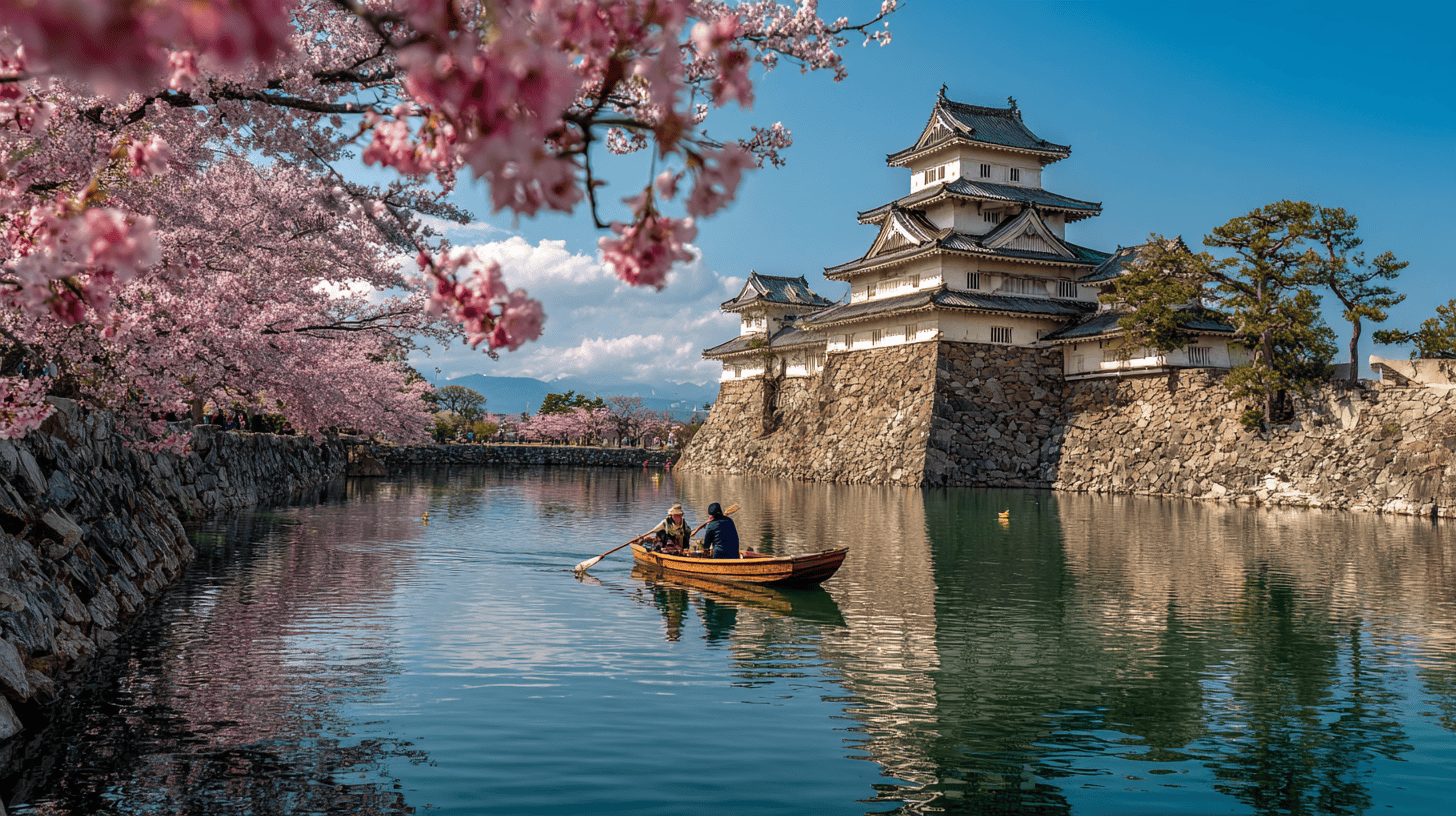
Most successful honeymoon routes follow three acts. Each act has a different pace, a different kind of room and a different reason to be there. Moving between them gives the trip a shape you will remember. Moreover, it stops the days from blurring together, which is the common failure of many long trips abroad.
Act one: the city
Start in Tokyo or Kyoto for three or four nights. Choose a hotel high above the street, with a bar worth ending the day in. The newly restored Park Hyatt Tokyo reopened after a 19-month restoration. Its New York Grill & Bar still sits on the 52nd floor. Use these first nights to recover from the flight, eat well and get your bearings.
Act two: the ryokan
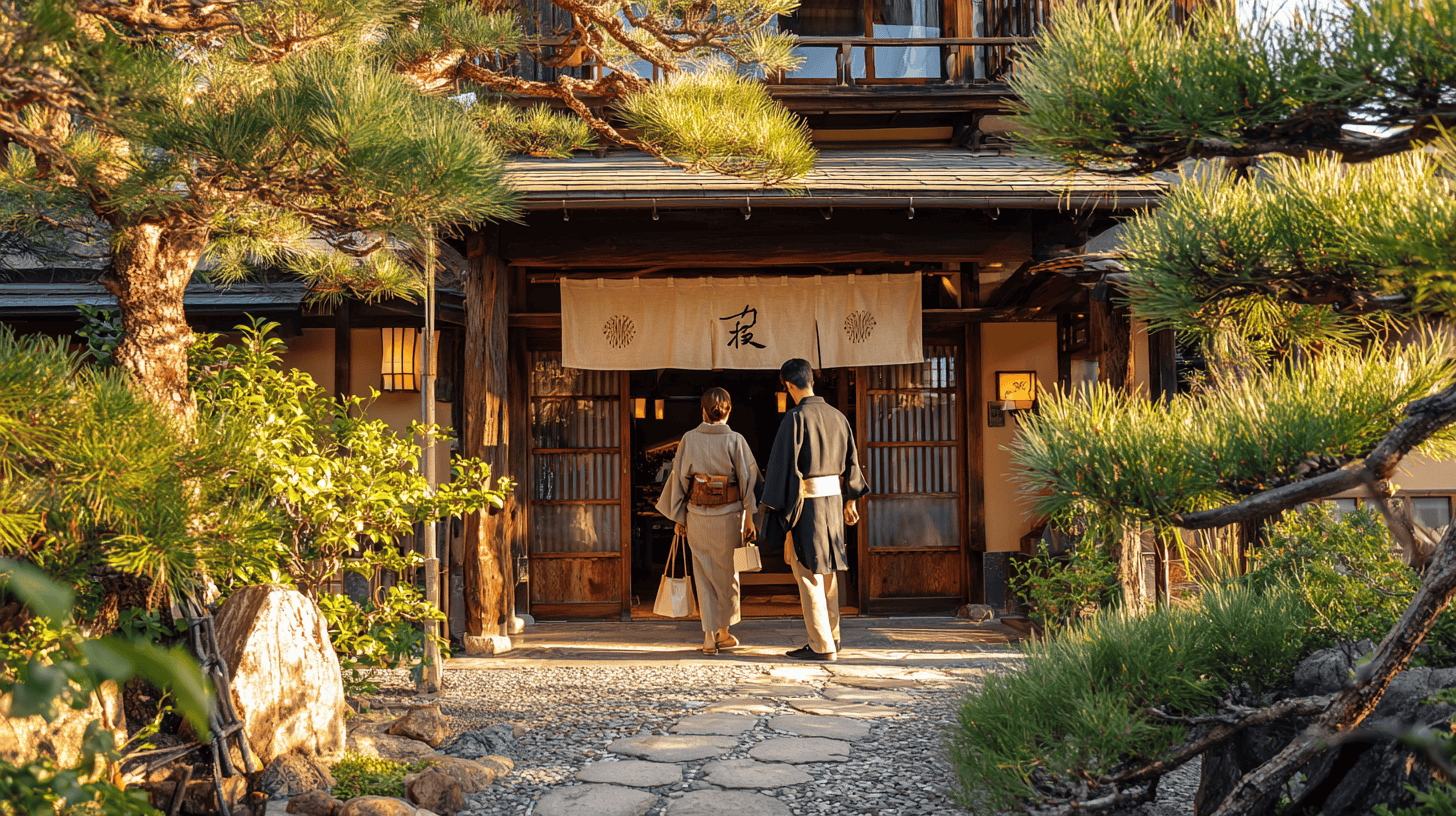
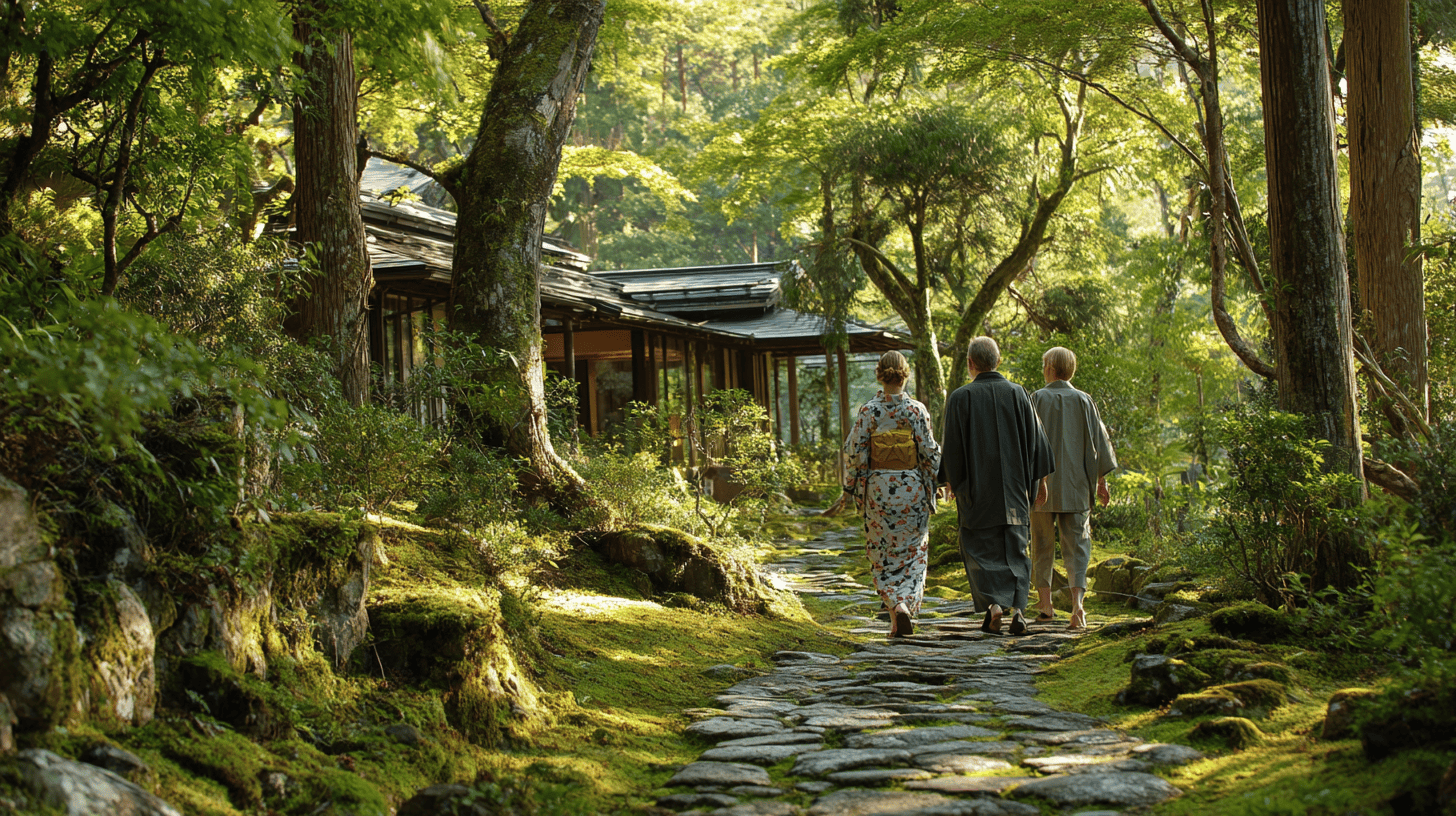
Next comes the heart of the trip: one or two nights at a ryokan. Here the day runs on the inn’s schedule. You arrive by mid-afternoon, bathe, change into a yukata and eat a long dinner. Tanizaki’s essay In Praise of Shadows explains why these rooms glow the way they do at night. Read it on the train, and the evening will make more sense.
Choose the ryokan for its bath and its kitchen, in that order. A luxury honeymoon in Japan often turns on this single night, so it deserves the most research. Look at photographs of the actual room type, not the lobby. Then ask how the inn serves dinner and whether breakfast can come late.
Tanizaki's short essay on light, shadow and lacquer. Read it on the train, and the ryokan room at night will make more sense.
View This Book →A guide to ryokan and onsen across Japan. It helps when you choose the inn for the second act.
View This Book →A photographic survey of classic inns. It lets you picture the rooms and baths before you book.
View This Book →Act three: the coast or the mountains
Finally, end somewhere with space. That might be a bay in Ise-Shima, the Hakone hills or the mountains of Hokkaido. The last act should feel slower than the first two. So choose a stay with a view, a spa and good food on site. Then let the final days run without plans, because that is the part most couples remember.
Ten days or two weeks
Ten days covers the three acts at a comfortable pace. Two weeks lets you add a second ryokan or a longer final stretch. Either way, resist the urge to add a fourth city. Each extra base takes half a day in transit and packing. Instead, spend the spare days where you already feel at home.
For the inn names, the dinners and the bath you never wanted to leave.
6 × 9 in · 120 unlined pages · matte softcover
Shop This Journal →Choosing the Season for a Honeymoon
Season shapes the whole trip, so choose it first. The JNTO seasonal honeymoon guide is a useful starting point. In spring, cherry blossom opens on the Pacific side in late March. It then moves north to Tokyo, Osaka and Kyoto in early April. However, avoid late April and early May, when Golden Week fills trains and hotels.
Autumn and winter
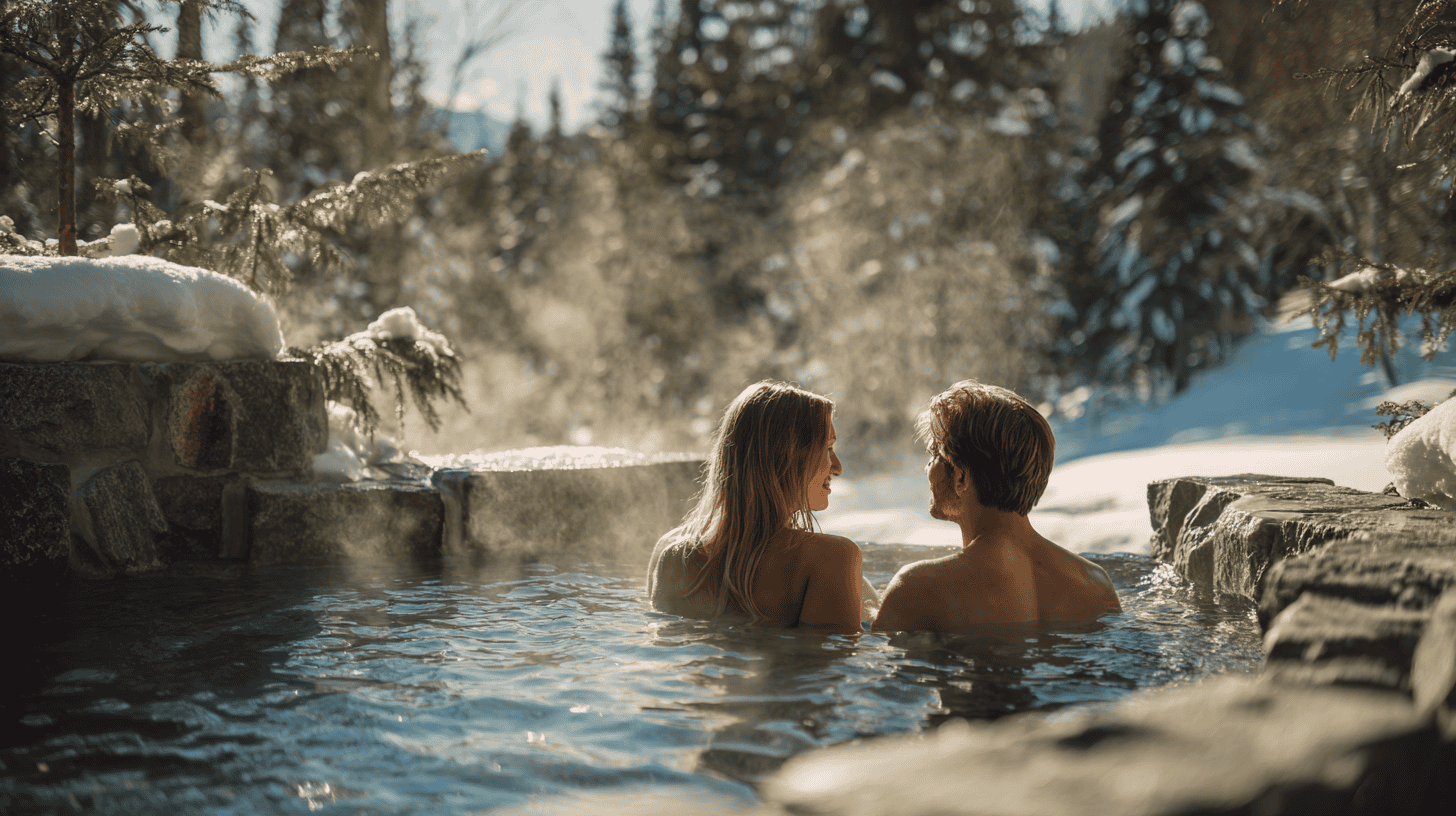
Autumn is the calmer rival to spring, and many couples prefer it. The color lasts far longer than the blossom, often around a month. Kyoto and the mountain valleys are especially beautiful. Winter, meanwhile, suits couples who want snow and hot springs. A ryokan bath with snow on the rocks outside is one of the great Japanese pleasures.
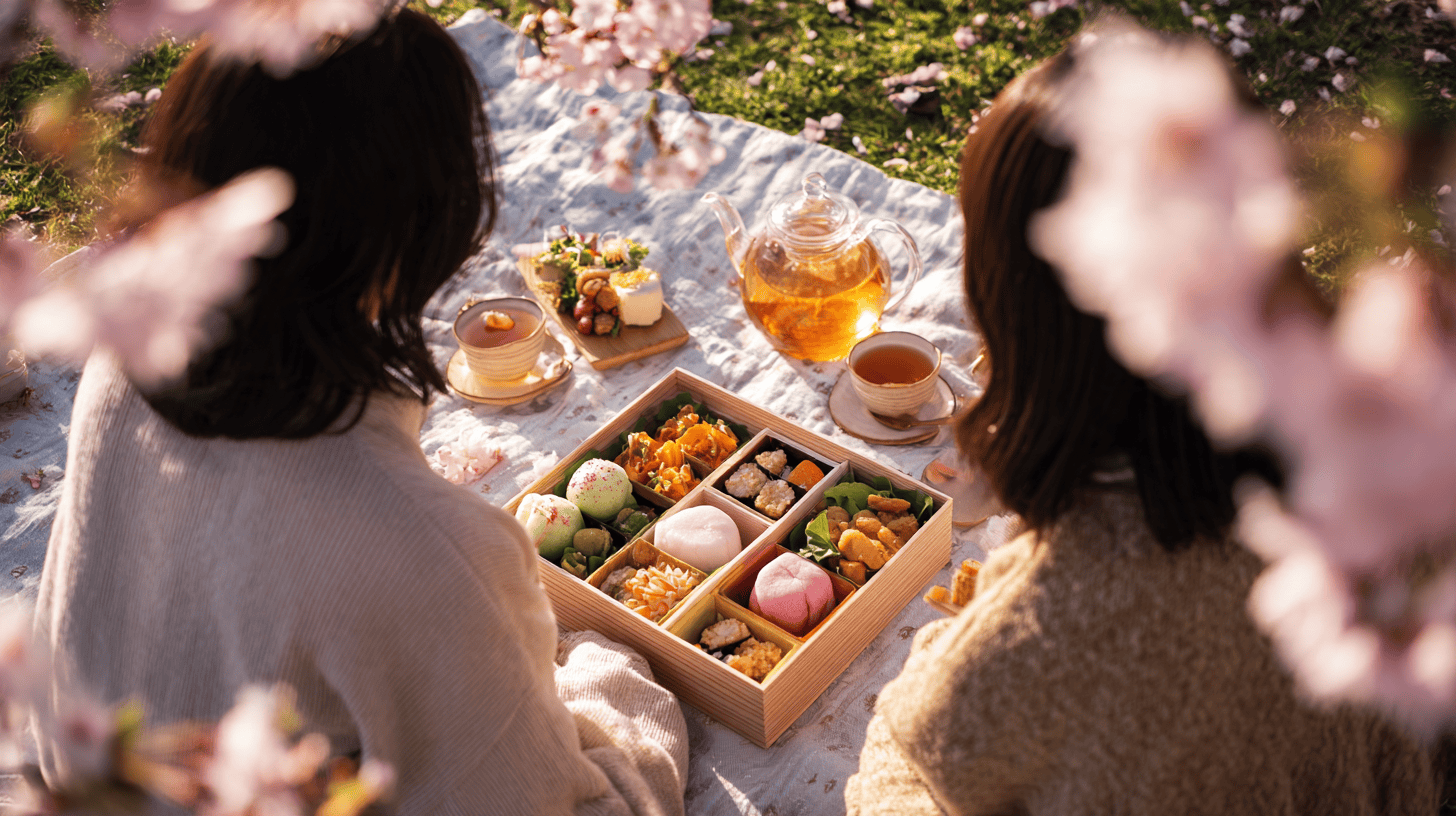
Some couples read their way into the season. Sei Shōnagon’s The Pillow Book is a thousand-year-old list of what is lovely in each month. Its spring dawns and autumn evenings still match what you see today. Pack it for the ryokan night, and read a page aloud after dinner.
Summer
Summer is the hardest season for city sightseeing. JNTO warns that major cities can be very hot and humid, with some places passing 40 degrees Celsius. Instead, head for the islands or the high country. Okinawa and the Yaeyama islands offer beaches, while the Japanese Alps stay cooler. Plan city days around early mornings and long afternoon breaks.
Early summer also brings the rainy season to much of the country. Gardens look lush, and crowds thin out, yet outdoor plans need a fallback. If your wedding date fixes the trip to June or July, lean on ryokan nights, museums and long dinners. Those hold up well in any weather.
Matching the season to the route
Let the season choose the third act. In spring and autumn, Kyoto and Hakone shine, so the route can stay compact. Winter points north instead, to Hokkaido for snow and private baths. In summer, swap the mountains for the coast or the Alps. That way, the route works with the weather rather than against it.
Ryokan and Hotel Stays That Make Privacy Structural
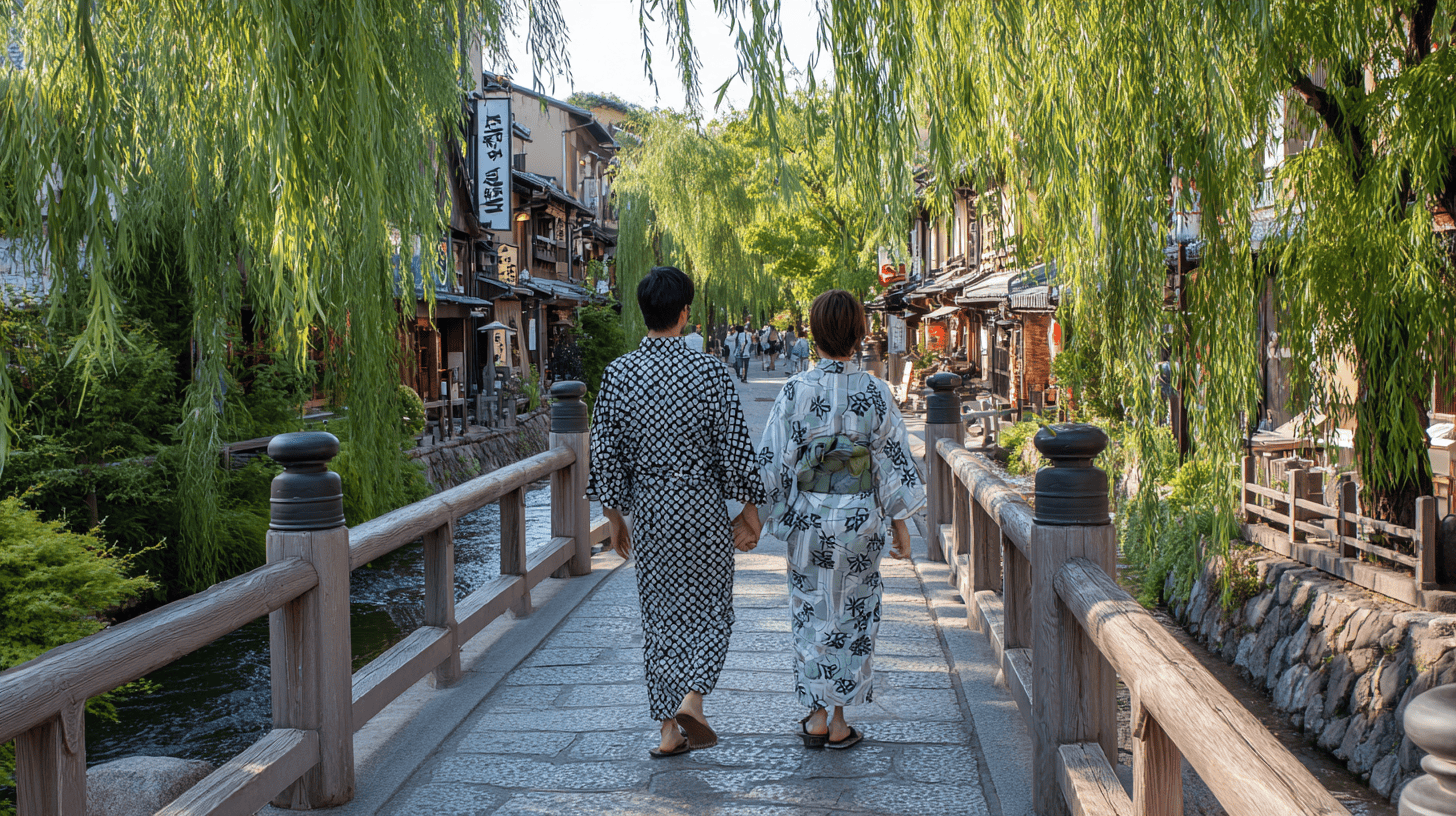
On a honeymoon, privacy should be a feature of the building, not a promise in a brochure. The best Japanese stays design it in. Rooms open onto their own gardens, baths sit on private terraces, and dinner arrives at your door. When you compare properties, ask how many rooms there are and which ones have their own bath. Those two answers tell you most of what you need.
HOSHINOYA Kyoto
HOSHINOYA Kyoto sits on the river in Arashiyama, with just 25 rooms. Guests reach it by private boat from Togetsukyo Bridge. That arrival alone sets the tone for the stay. Windows frame the gorge and its seasonal color, so autumn is a particularly fine time to go.
Match the stay to the act: a ryokan for the middle of the trip, a bay or mountain retreat for the end.
| Stay | Setting | Privacy | Where it fits |
|---|---|---|---|
| HOSHINOYA Kyoto | Arashiyama riverside, reached by private boat | 25 rooms framing the gorge | City base or act two, best in autumn |
| Gora Kadan | Hakone, on the grounds of a former imperial villa | Ryokan rituals with a modern spa | Act two on a shorter trip from Tokyo |
| Zaborin | Near Niseko, Hokkaido | 15 rooms, each with indoor and outdoor hot-spring baths | Act three in winter |
| Amanemu | Ago Bay, Ise-Shima National Park | A private onsen bath in every suite | Act three by the coast |
Gora Kadan, Hakone
Gora Kadan occupies the grounds of a former villa of the Kan’in-no-miya family. It was once a summer retreat for members of the Imperial Family. Today it combines a ryokan’s rituals with a modern spa. Hakone is close to Tokyo, so it fits neatly as the second act of a short honeymoon.
Zaborin, Hokkaido
For winter couples, Zaborin near Niseko has only 15 independent rooms. Each has its own indoor and outdoor hot-spring bath. Dinner is a northern take on kaiseki, built on seasonal Hokkaido produce. As a result, you can stay for days without sharing a bath with anyone else. It is a natural choice for the winter version of the third act.
Amanemu, Ise-Shima
Amanemu overlooks Ago Bay in Ise-Shima National Park. Every suite has a private onsen bath, and the spa covers 2,000 square meters. Stays include breakfast and dinner, plus a private experience each day. From Nagoya’s airport, the resort is about 35 minutes by helicopter or three hours by train.
Other strong choices include The Ritz-Carlton, Kyoto, Aman Tokyo and The Peninsula Tokyo. Our guide to the finest luxury hotels in Japan compares them in detail. For the ryokan act, our list of luxurious ryokans with private baths goes further.
Prefer to have the route built for you? Our custom Japan itinerary matches rooms with private baths to your dates and handles the bookings.
Magnificent Japan's Luxury Japan Edit is a curated planning edit for luxury travel in Japan, sent by email. It suits couples planning a luxury honeymoon in Japan around ryokans, seasons and pace. Letters on Japanese culture and travel follow, roughly monthly.
One email with your printable. Occasional letters after that. Unsubscribe anytime.
A good stay leaves you with habits worth keeping. Many couples come home missing the towels as much as the bath. Imabari in Ehime has a long weaving tradition. Kontex organic cotton towels from Imabari bring a little of that softness home. It is a small luxury, yet it carries the ryokan ritual into ordinary mornings.
Room choice matters as much as property choice. Ask whether the bath is indoor, outdoor or both, and whether it uses hot-spring water. Check whether dinner comes to the room or to a private dining space. Finally, confirm the bedding style, since some couples prefer beds to futons. These details decide how the evening actually feels.
The Private Onsen Question
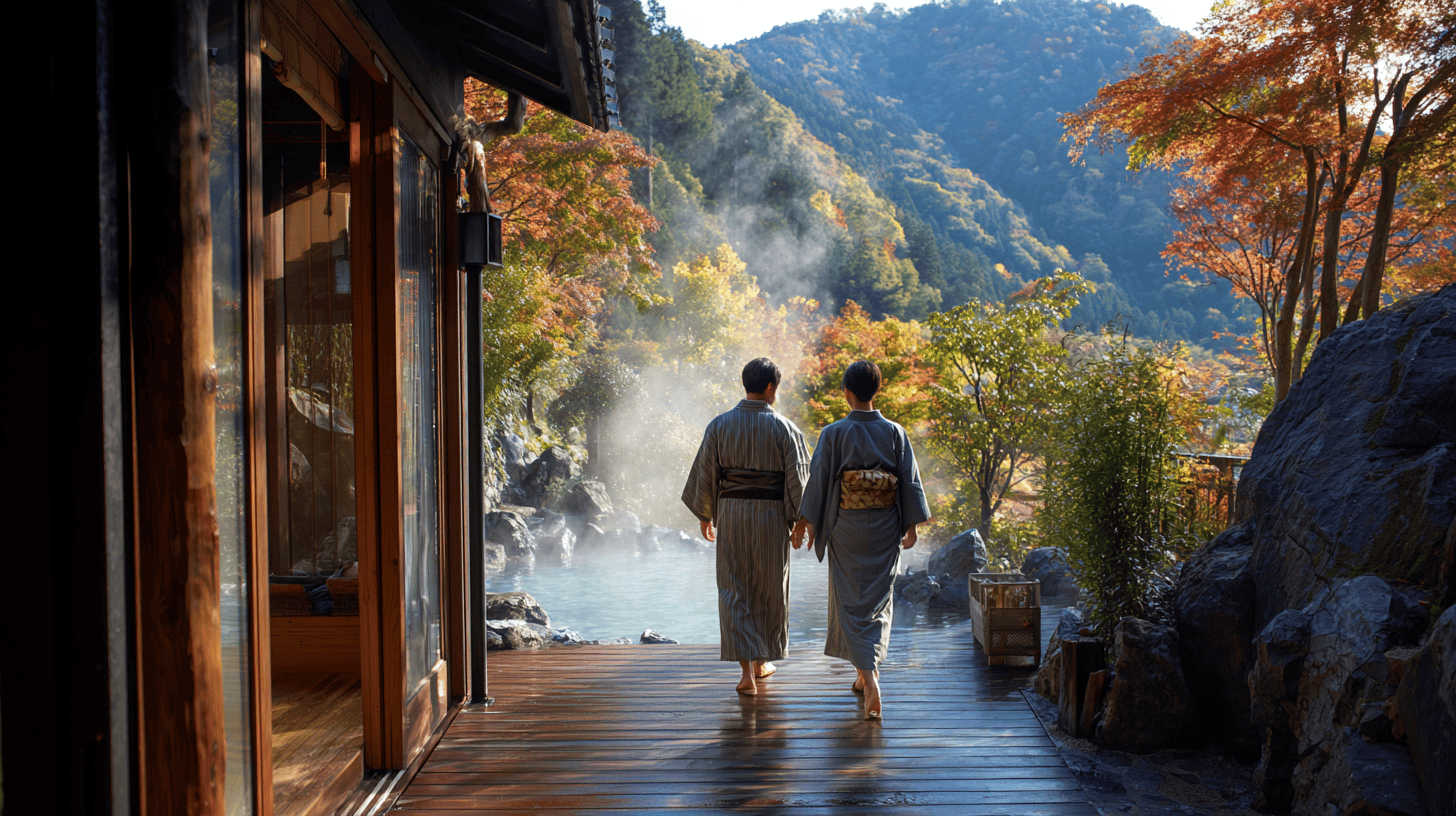
Bathing has its own etiquette, and it is simple to learn. You wash and rinse at the seated stations first, then enter the water. Towels stay out of the bath, and voices stay low. In a private bath you set your own rules, yet the ritual still feels better done properly.
Public onsen baths in Japan usually separate men and women. So couples who want to bathe together need a private option. The simplest is a room with its own open-air bath, often called a rotenburo. Many ryokans also offer private baths you can reserve for an hour, known as kashikiri baths. Either way, ask when booking, because these rooms and slots go first.
Recommended
The ritual after the bath matters too. Many couples end the evening with warm sake on the terrace. A hand-blown Kimura Glass stem tokkuri, made in Japan, turns that habit into something to repeat at home. The carafe is small, so it suits two cups and no more.
Wellness can become a theme in its own right. Some couples build a second ryokan night around a spa, a forest walk and long baths. If that appeals, our guide to Japan wellness retreats explains how the formats differ. Meanwhile, keep at least one evening entirely unscheduled, with nothing but the bath and dinner.
Things to Do Together
The best shared experiences in Japan are small and specific. A private tea session, a morning in a garden or a long kaiseki dinner will outlast a crowded sight. Choose a few anchors, then leave space around them. Below are the experiences couples most often name as highlights, grouped by mood.
Treat these as a menu rather than a checklist. Two or three shared experiences per act are plenty. The rest of the time belongs to walks, baths and meals that need no booking. In short, that balance is what makes a luxury honeymoon in Japan feel generous rather than busy.
Culture, slowly
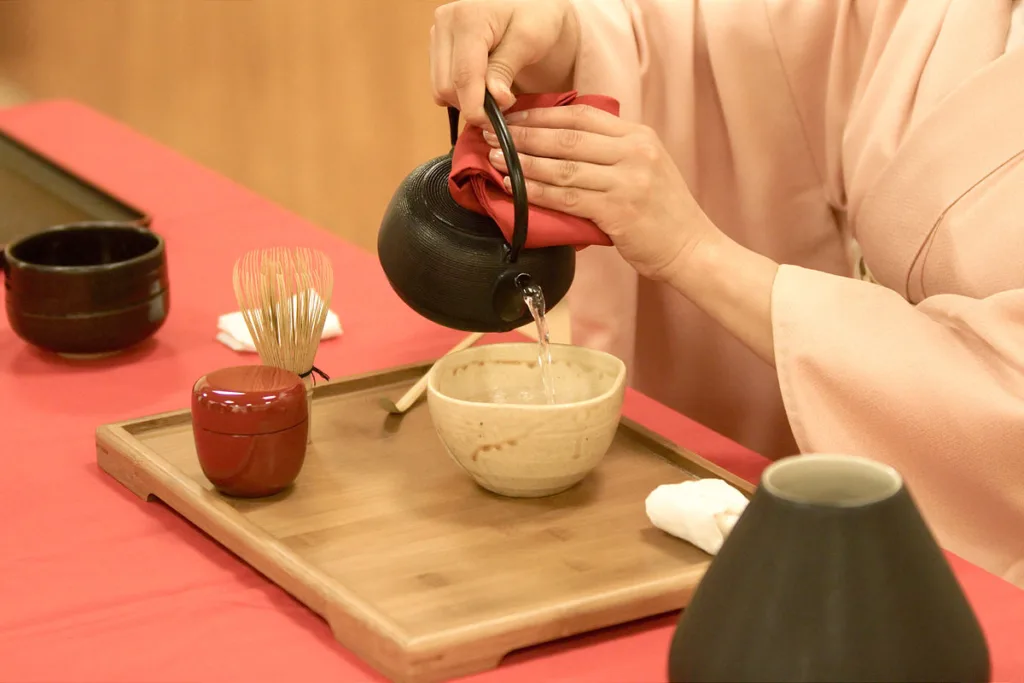
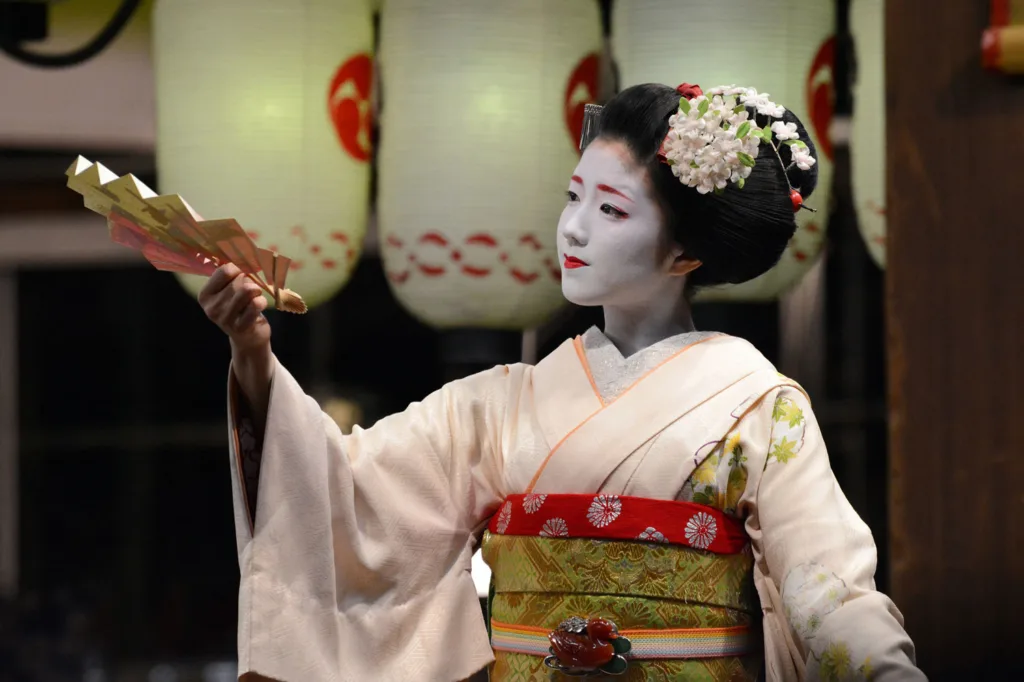
Start with a private tea session, which turns a simple bowl of matcha into an hour of attention. In Kyoto, couples often rent kimono for a day and walk the old streets. An evening of maiko dance is another highlight, best booked through your hotel. Each of these works better as a private experience than as a group tour. A local guide can arrange all three and translate the small conversations that make them memorable. Ask for a guide who knows the dance districts well, since access often depends on introductions. Gion in Kyoto is the best known of these districts.
For a keepsake with a story, look to the pearl coast of Ise-Shima. The bay at Amanemu sits among pearl farms and the ama divers' communities. MIKIMOTO Akoya pearl stud earrings come from the house whose founder created the first cultured pearls in 1893. It is a gift that ties the trip to a place.
Matcha for two
A private tea session often becomes the moment couples want to repeat at home. Happily, the everyday version takes five minutes and very little equipment. You need a wide bowl, a bamboo whisk and good matcha. The ritual lies in the rhythm: warm the bowl, sift the powder, then whisk until foam rises. Make two bowls, one after the other, and share a seasonal sweet between them. In spring, for example, sakura mochi makes a lovely partner. Above all, drink the tea at once, while the foam still holds.
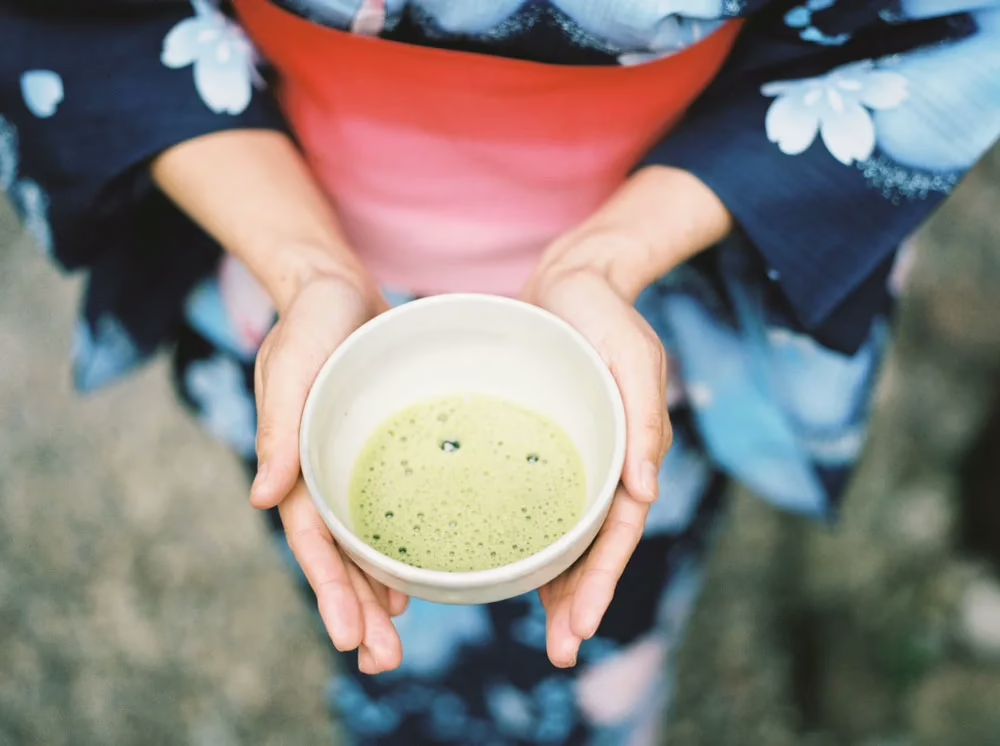
Usucha, or thin tea, is the lighter of the two styles of matcha served in the Japanese tea ceremony. It is the frothy bowl most guests receive at a tea session.
- 2 teaspoons matcha (1 teaspoon per bowl)
- 2/3 cup hot water at around 185°F (about 1/3 cup per bowl)
- Extra boiling water, to warm the bowls and the whisk
- 2 seasonal Japanese sweets, to serve (optional)
- Pour boiling water into the tea bowl and swirl the bamboo whisk in it to soften the tines.
- Discard the water and dry the bowl completely.
- Sift 1 teaspoon of matcha through a fine strainer into the bowl, then add about 1/3 cup of hot water.
- Whisk gently to combine, then switch to a brisk back-and-forth motion from the wrist for thirty to forty-five seconds, until a fine froth covers the surface.
- Finish with one slow circle, and lift the whisk from the center to leave a soft crown of foam.
- Repeat for the second bowl, and drink each one straight away, before the tea settles.
Views and journeys
Some of the best honeymoon days happen in motion. On the Hokuriku Shinkansen, the Gran Class car has just 18 leather seats with attendant service. It links Tokyo and Kanazawa, home to Kenrokuen, one of Japan's great gardens. JNTO also lists helicopter flights from Tokyo to Mount Fuji, for couples who want the view from above.
Further north, the Tateyama Kurobe Alpine Route crosses the Alps by bus, cable car and ropeway. It operates seasonally, so check its dates before planning around it. On a clear day, the views across the peaks justify a full day of travel. In some rural regions, seasonal balloon flights and glamping sites add a lighter note. Treat both as weather-dependent extras rather than fixed plans. If either matters to you, ask your planner which regions run them in your chosen month. Then hold a backup afternoon in case the wind changes. A long lunch or a gallery visit makes a graceful fallback.
A Japanese-made cabin case for traveling light while the large bags go ahead by courier.
View the Product →A self-warming eye mask for the long flight and the first nights of jet lag.
View the Product →Onsen-style bath salts modeled on eleven hot springs. They carry the evening bath ritual home.
View the Product →Food deserves its own evenings. Kaiseki dinners at the ryokan are only the start. In the cities, omakase and kappo counters put you face to face with the chef. Our guide to unique dining experiences in Japan explains each format. Book the most important dinner first, then plan the day around it. Mention the honeymoon when you reserve, since many counters will mark the occasion discreetly. Also share any dietary needs early, because kitchens plan kaiseki menus in advance. A planner can hold those tables while you settle the rest.
Pacing a Luxury Japan Honeymoon
Pacing is where most honeymoon plans go wrong. Jet lag from North America often takes two or three days to fade. So keep the first city days light, with long breakfasts and short outings. After that, follow a simple rule: one slow day in every three. On those days, plan nothing beyond a meal and a bath.
Logistics should stay invisible. Forward the large bags between hotels and travel with small cases. Book trains with reserved seats, and leave buffers around ryokan check-in times. Moreover, pre-book the dinners and experiences that matter most. Everything else can stay flexible, which keeps the trip feeling like a holiday rather than a schedule.
Some couples bring the ryokan breakfast home with them. Rice cooked in clay is the unsung star of that meal. The Nagatani-en Kamado-san donabe is made in Iga, Japan, and cooks rice the same way. It makes a fine shared wedding gift, and it turns weekend breakfasts into a reminder of the trip.
Finally, think about the order of the acts. Ending in a city can feel abrupt after a ryokan. So many couples finish at the coast or in the mountains, then take one last night near the airport. That way the final evening stays calm, and the flight home feels less like a jolt. A luxury honeymoon in Japan should end as slowly as it began.
A final checklist
A short checklist keeps the plan honest. Count the bases, and keep them to three or four. Check that each move happens before lunch, not late in the day. Make sure every ryokan has a private bath you can actually use. Last, leave one evening open in each act, because spontaneous dinners often become the best memories. Run the checklist again a month before departure, once every booking is confirmed. Small gaps are easy to fix at that stage, and far harder to fix on the road.
Questions Worth Asking
Is Japan good for a honeymoon?
Yes, especially for couples who value privacy, food and craft over nightlife. Japan pairs efficient cities with ryokan nights, private hot-spring baths and gardens. Travel is safe and punctual, so logistics rarely intrude. The main risk is overplanning, so build in slow days and keep the route to three or four bases.
How many days do you need for a Japan honeymoon?
Ten to fourteen days suits most couples. That allows three or four city nights and two ryokan nights. It also leaves a final stretch by the coast or in the mountains. Shorter trips work too, but cut a base rather than squeezing in more stops. Jet lag usually takes the first two days.
When is the best time for a honeymoon in Japan?
Spring and autumn offer the best weather. Cherry blossom arrives in late March and early April, and autumn color lasts about a month. Avoid late April to early May, when Golden Week brings domestic crowds. Winter suits couples who want snow and hot springs. Summer is hot and humid in most cities.
Can couples bathe together in an onsen in Japan?
Public onsen baths are usually separated by gender, so couples rarely bathe together there. Instead, book a room with its own open-air bath. Alternatively, reserve a private bath by the hour. Many luxury ryokans offer one or both. Ask when booking, since the best rooms with private baths sell out first.
Which ryokans have private onsen for couples?
Several luxury stays build private bathing into every room. Zaborin in Hokkaido gives each of its 15 rooms indoor and outdoor hot-spring baths. Each suite at Amanemu on Ago Bay has its own onsen bath. Elsewhere, ask for a room with an open-air bath, often called rotenburo, when you book.
How far ahead should we book a honeymoon ryokan?
For spring, autumn and New Year, book six months or more ahead, especially for rooms with private baths. Smaller luxury ryokans have very few rooms, so they fill early. For other seasons, two to three months is often enough. Book the ryokan first, then build the rest of the route around it.
Where should we go for a honeymoon in Japan?
Most couples start in Tokyo or Kyoto, then spend one or two nights at a ryokan in a place such as Hakone. They end by the coast in Ise-Shima or in the mountains of Hokkaido. Let the season choose the final stop: snow points north, while summer favors the coast or the Alps.
Planning the Honeymoon Itself
The right luxury honeymoon in Japan is less about the most famous hotel and more about fit. Decide the season, then the three acts, then the rooms that make privacy real. Once you settle those, everything else follows. Want guided days within the trip? Our guide to private tours and guides in Japan explains how to place them. For a planned journey from start to finish, Luxury Japan by Magnificent Japan shows the shape it can take.
Whatever you choose, keep the trip personal. Bring home one object, one recipe and one habit. Perhaps it is the evening bath, the morning tea or the slow breakfast. Those small rituals are what turn a honeymoon into a shared language. Years later, they are what you will both still recognize.
Ninety days of small practices in connection, for the first months of a shared life.
View the Journal →Planning a honeymoon well takes more coordination than it appears. Ryokan rooms with private baths sell out months ahead, and trains, transfers and dinners must line up. A planner who knows the properties can hold the right rooms while you decide the rest.
For couples who want the privacy without the logistics: a Tokyo or Kyoto start, a ryokan night with its own open-air bath, and a final stretch by Ago Bay or in the mountains, with trains, transfers and the dinners that matter booked in advance.
Plan Your Custom Japan Itinerary