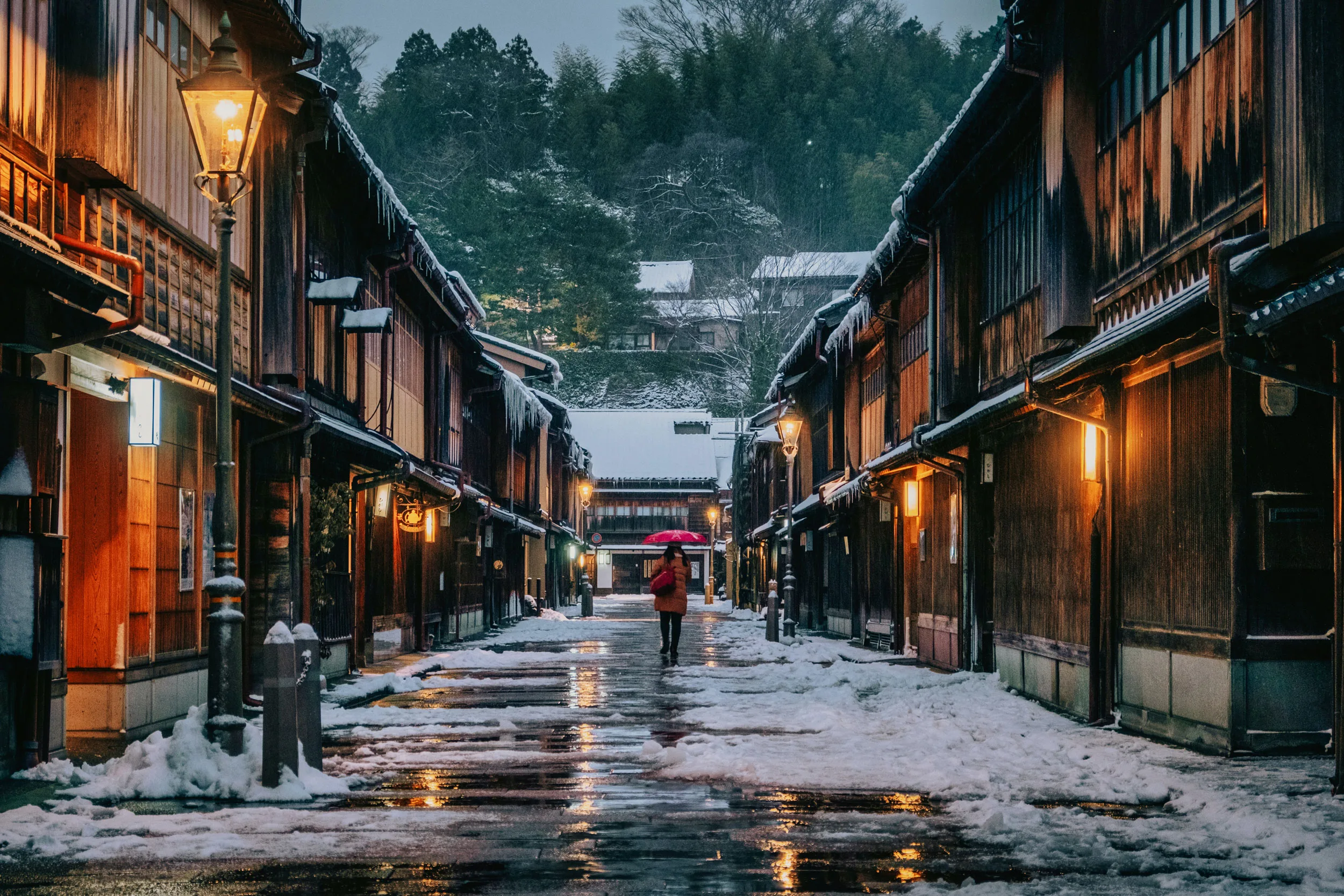
Kanazawa little Kyoto is how many Japanese travelers describe this castle town on the Sea of Japan coast. The name fits. Old teahouse streets still stand, and samurai lanes still wind between earthen walls. One of the country’s great gardens sits beside the castle. Yet Kanazawa is no copy of Kyoto. It is smaller and closer to the sea, and a single family of lords shaped it by pouring their wealth into gardens, tea and craft.
This guide gathers fifteen experiences that show why the city deserves a place on a serious Japan itinerary. It moves from the garden and castle to the geisha districts and the samurai quarter. Then come the museums, the market and the crafts. Finally, it covers how to get there, when to go and how to shape two or three days at an easy pace.
Kanazawa escaped the air raids of the Second World War. Its Edo-period teahouse districts, samurai lanes and castle garden survived, and its crafts carried on. Like Kyoto, it kept its old streets, so travelers call it Little Kyoto.
Why Kanazawa Little Kyoto Earns Its Name
Kanazawa was the seat of the Maeda clan through the Edo period, from 1603 to 1868. The Maeda ranked second only to the ruling Tokugawa in the size of their domain and its rice harvest. That wealth could not go into armies without alarming the shogun. So much of it went into culture instead. Gardens, tea, Noh theater, lacquer, porcelain and gold leaf all flourished under Maeda patronage.
Then came luck. During the Second World War, Kanazawa was the second largest city after Kyoto to escape destruction by air raids. As a result, the Nagamachi samurai district and the chaya teahouse districts survived in good condition. That survival is the real root of the Kanazawa little Kyoto nickname. Both cities kept the old fabric that most Japanese cities lost. Both also still practice the crafts that fabric once supported.
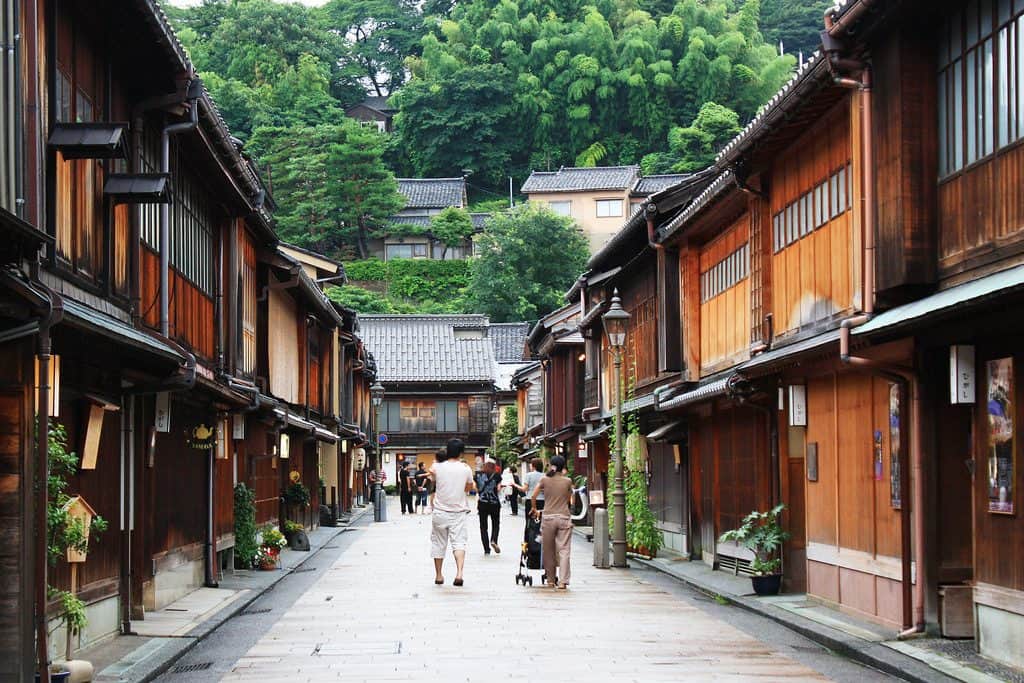
The comparison helps, but it can also mislead. Kyoto is an imperial capital of temples and courtly ritual. Kanazawa, by contrast, is a samurai castle town with a merchant’s love of beautiful things. Its scale is human and its streets are walkable. Its crowds are lighter in most seasons, too. Many travelers leave saying they found the Kyoto they had imagined, only calmer and easier to read.
Garden and Castle: Where the Maeda Story Begins
1. Kenrokuen Garden
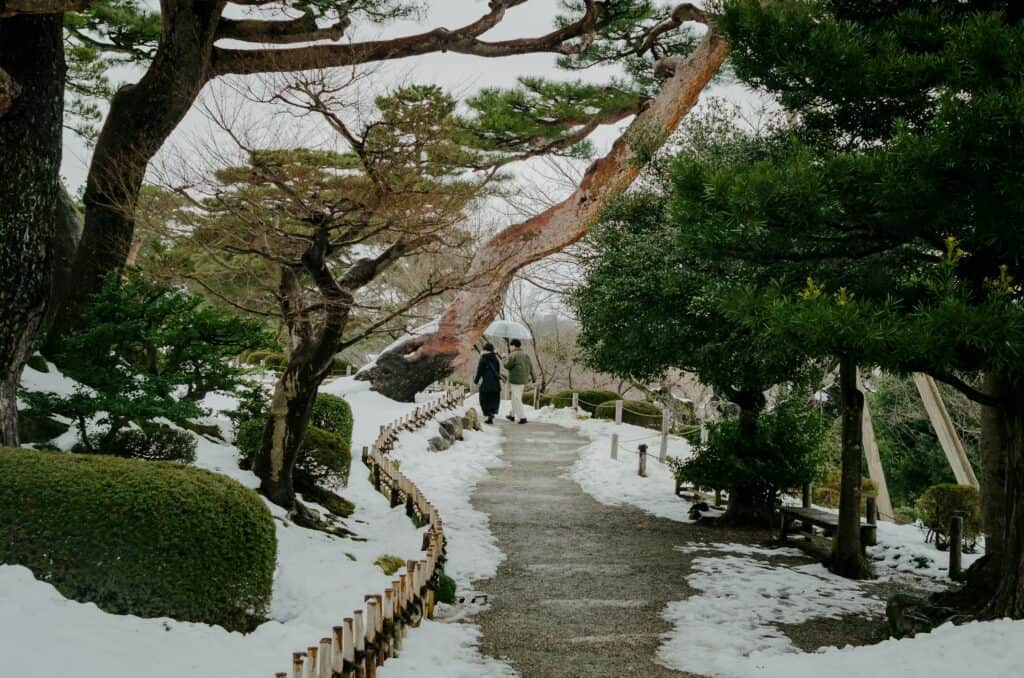
Kenrokuen is counted among Japan’s three most beautiful landscape gardens, alongside Kairakuen in Mito and Korakuen in Okayama. The Maeda family shaped it over nearly two centuries. It sits on the old outer grounds of Kanazawa Castle and opened to the public in 1871. Its name means the garden of the six sublimities, a Chinese ideal of a perfect landscape. A water system built in 1632 still feeds its ponds and streams.

Look for the two-legged Kotojitoro stone lantern beside the pond. It has become the symbol of the city. Nearby runs one of Japan’s oldest fountains, powered only by water pressure. The garden changes completely with the seasons. Plum blossom opens in late winter, and cherry blossom arrives around mid-April. Autumn color then peaks from mid-November to early December. In winter, ropes rise from the tallest pines to protect their branches from snow.
Arrive at opening time if you can. In the first hour, the paths belong to local walkers and gardeners. Meanwhile, the light falls low across the water. Later, take a seat in one of the garden’s teahouses for a bowl of matcha and a seasonal sweet. It is the simplest way to understand what the Maeda lords valued: a landscape made to be looked at slowly.
2. Kanazawa Castle Park
Across a bridge from Kenrokuen, Kanazawa Castle Park preserves the heart of Maeda power. Fires destroyed most of the original castle over the centuries. Still, massive stone walls and the Ishikawa Gate survive. Reconstructed storehouses and turrets show the timber craft of the era. Their white walls and lead-tiled roofs look silver in the rain. The open lawns also make a good pause between the garden and the old town.
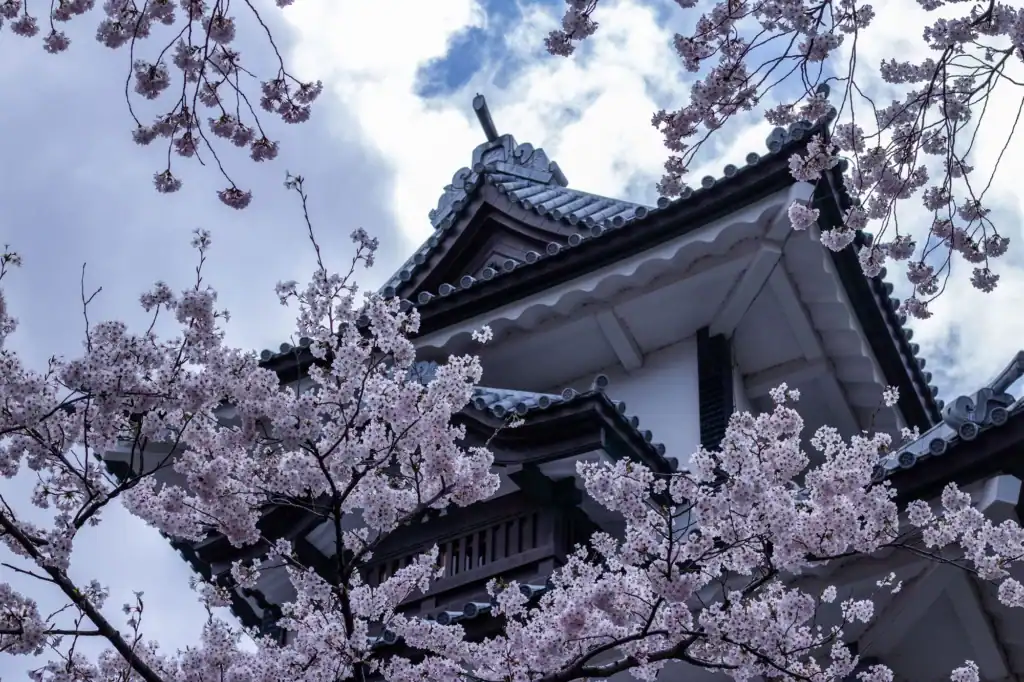
Spend time with the stonework. Different sections show different building methods, from rough stacked stones to precisely cut blocks. Together they record how techniques changed over two centuries. Then walk down toward Oyama Shrine, dedicated to Maeda Toshiie, the first lord of the clan. A Dutch architect designed its unusual gate, which mixes European and Asian elements. It once guarded the castle palace.
You may also like


The Teahouse Districts: Kanazawa’s Geisha Quarters
3. Higashi Chaya District
Higashi Chaya is the largest and best preserved of the city’s three teahouse districts. Two-story wooden houses line the main street, their fronts screened with fine lattices called kimusuko. In the Edo period, these chaya were licensed places where geisha entertained guests with music, dance and conversation. Geisha still perform here today. Most performances are private evening banquets, which a travel planner can arrange through introductions.
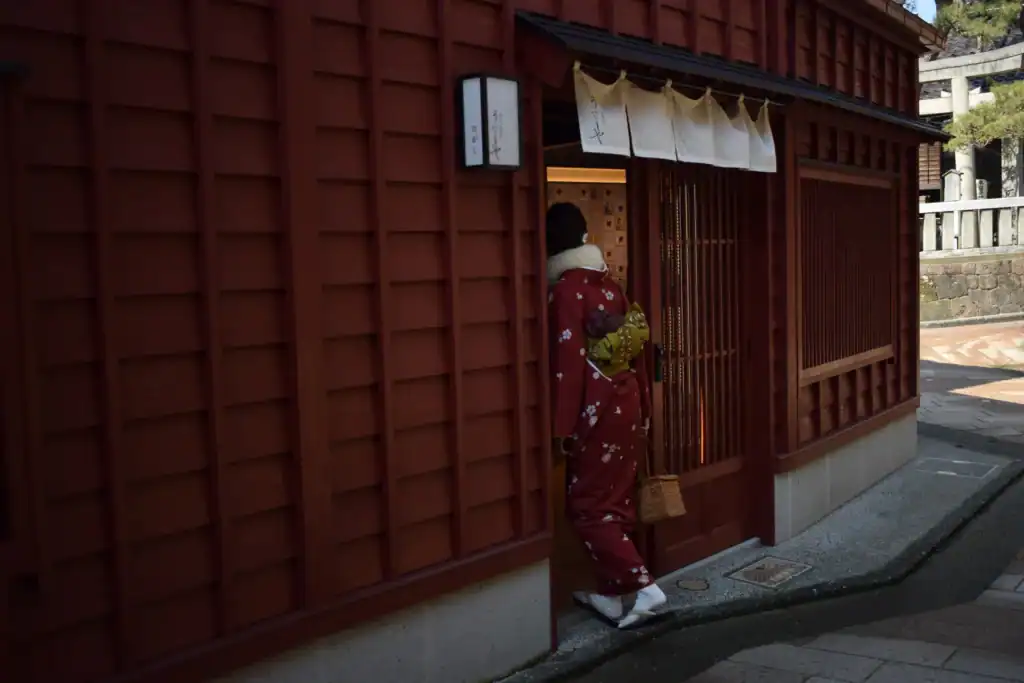
Two houses open their doors to visitors. Shima is now a museum. It shows the upstairs performance rooms, the kitchen and the instruments of the geisha who worked there. Kaikaro, by contrast, is still an operating teahouse that welcomes daytime visitors for tea. Seeing both gives you the history and the living tradition side by side. That pairing is exactly what makes the district special.
4. Gold Leaf in Higashi Chaya
Kanazawa makes about 99 percent of Japan’s gold leaf, beaten into sheets thinner than tissue. Higashi Chaya is the easiest place to see it. At the Hakuza store, a tearoom in a converted storehouse is covered in gold leaf inside and out. Even on gray days, the small building glows. Nearby workshops let you lay gold leaf onto chopsticks, boxes or trays in about an hour.
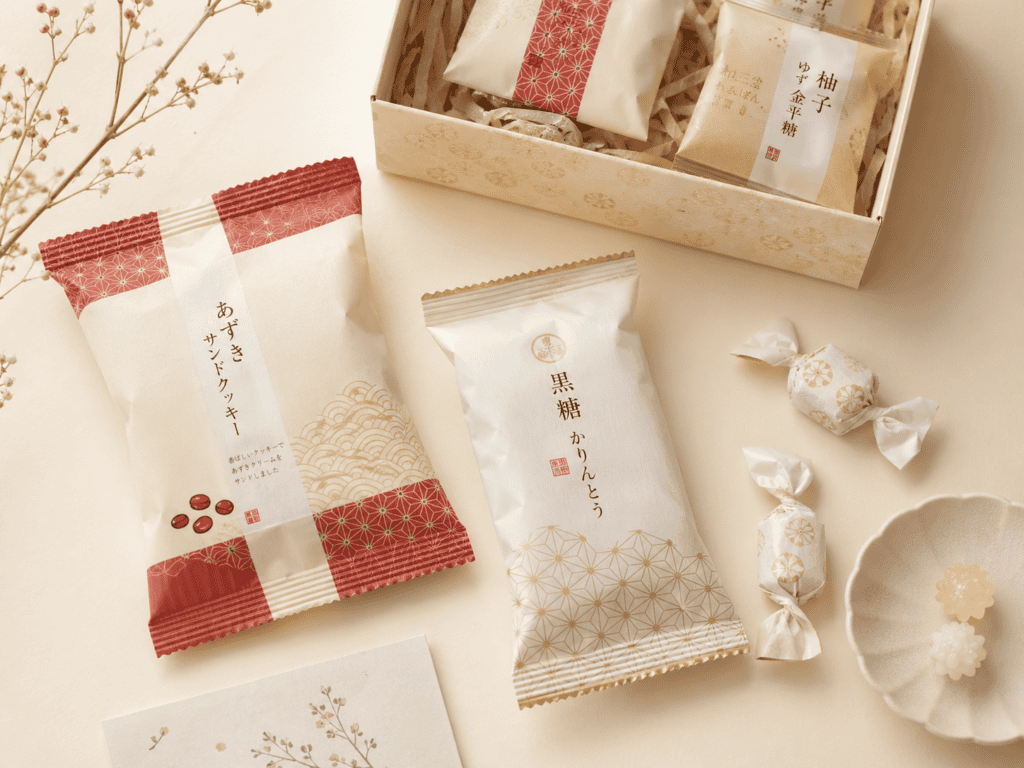
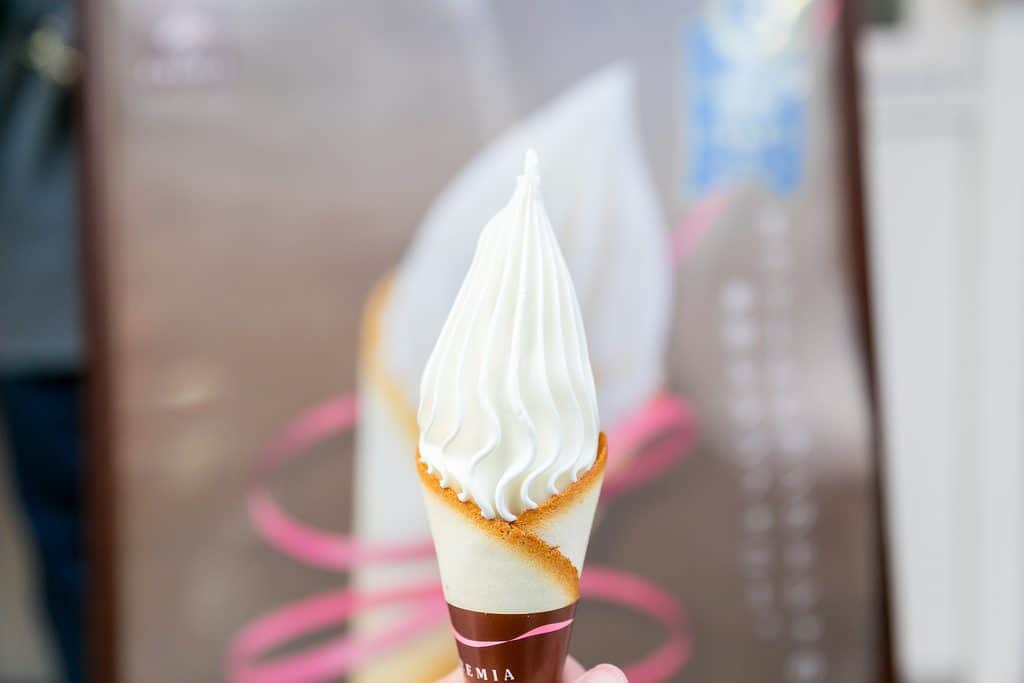
Then there is the famous cone. Several shops in the district press a whole sheet of gold leaf onto soft-serve ice cream. It tastes of nothing. Even so, it is a small lesson in how a city treats its craft as part of daily life. Gold also appears in local sweets, on lacquerware and in the bowls of tea some cafes serve. In Kanazawa, beauty is something you eat as well as admire.
5. Kazuemachi and Nishi Chaya
Kazuemachi is the smallest of the three teahouse districts. It is a single row of wooden houses along the Asano River. In the evening, lanterns light the narrow lanes behind it. Nishi Chaya, on the other side of town, is compact and often nearly empty in the morning. Together, they show the teahouse world at a more intimate scale than Higashi Chaya. Both are best seen on foot, with no fixed plan.

Walk Kazuemachi at dusk and cross the Asanogawa Ohashi bridge. Then finish with dinner nearby. It is one of the most beautiful short walks in Kanazawa little Kyoto, and it asks only for an hour and comfortable shoes. Visit Nishi Chaya on your way to Myoryuji, since the two sit close together south of the Sai River. A morning there pairs well with a late lunch at a soba counter.
Samurai Kanazawa: Lanes, Houses and Hidden Rooms
6. Nagamachi Samurai District
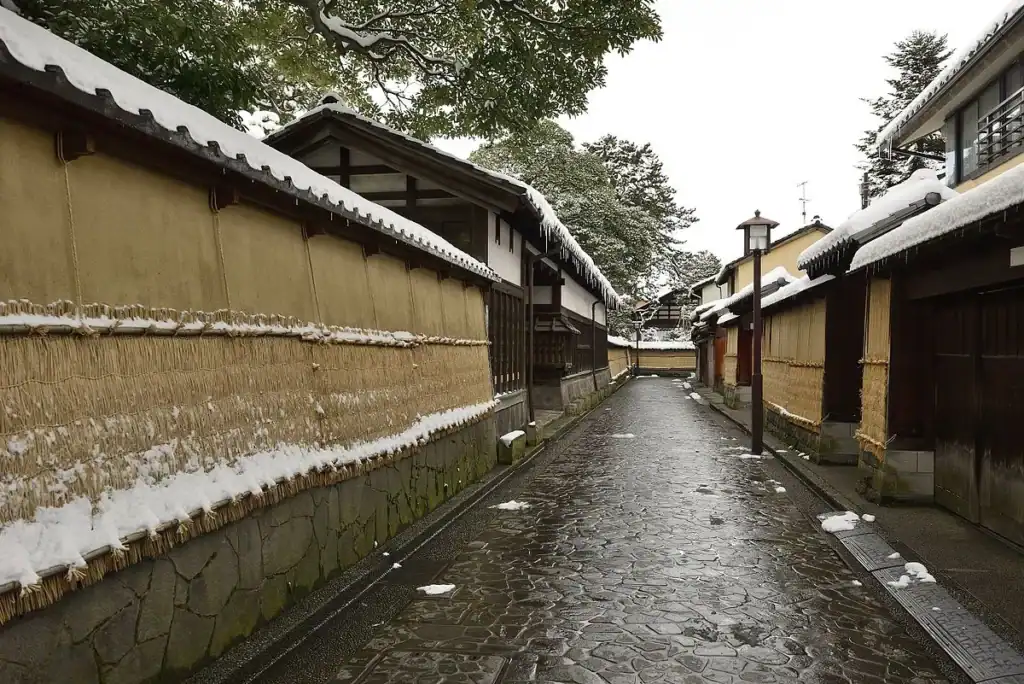
Nagamachi sits at the foot of the former castle. Samurai families once lived here behind tall earthen walls. Private gates, narrow lanes and water canals remain, and the walls glow amber in late afternoon. The Nomura-ke residence was home to a high-ranking samurai family. Today it has been restored with its painted rooms and a small garden that steps down to a pond. It rewards a slow visit.
Nearby, the Shinise Kinenkan is a restored Edo-period pharmacy. It now works as a small museum of merchant life and local crafts. Its contrast with the samurai houses is instructive. One class held rank, while the other held money, and Kanazawa’s culture grew from both. Walk the canal paths between the two. Soon the district feels like a neighborhood rather than a museum.
7. Myoryuji, the Ninja Temple
Myoryuji earned its nickname from its defenses, not from any link to ninja. At the time, the shogun limited what regional lords could build. So the Maeda built it as a disguised military outpost. Behind its modest front lie hidden tunnels, secret rooms, trap doors and a maze of corridors and staircases. From inside, defenders could watch the approaches and send warning to the castle.
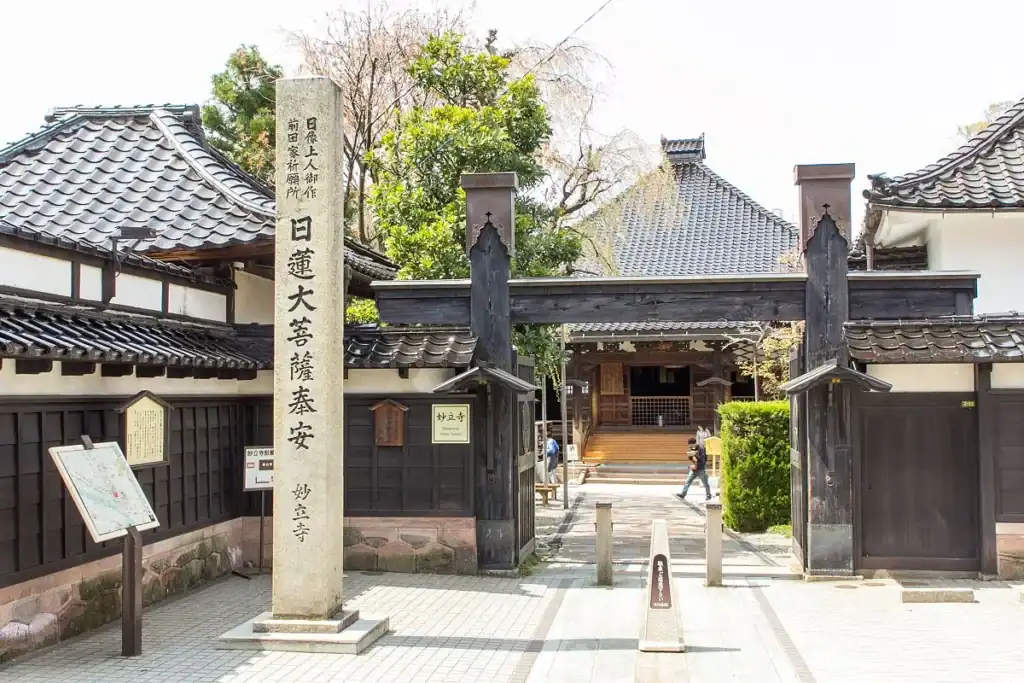
You can see it only on a guided tour. Tours run through the day in Japanese, and English guide sheets help you follow along. Booking ahead is recommended, especially in spring and autumn, when tours fill early. Allow about an hour, then walk back through Nishi Chaya for tea. Most visitors remember this one long after the gardens have blurred together.
Ten Proverbs to Carry With You
A printable folio of ten Japanese proverbs, each set in kanji with its reading and a line on where you will hear it.
Art and Ideas: Kanazawa’s Modern Side
8. 21st Century Museum of Contemporary Art
The 21st Century Museum is a low, round glass building set in a lawn in the middle of the city. It has no front or back, by design. Its exhibitions change through the year. Its best-known work is Leandro Erlich’s Swimming Pool, which seems to show visitors standing underwater. Every age enjoys the illusion, and timed tickets help manage the line.

The museum shows how the city treats craft and contemporary art as one conversation. Many exhibitions feature makers who work with lacquer, porcelain or textile in new ways. If modern art is a priority, add Naoshima, Japan’s art island, on a longer journey west. In Kanazawa, though, an afternoon here balances a morning of gardens perfectly.
9. D.T. Suzuki Museum
A short walk from Kenrokuen, the D.T. Suzuki Museum honors the Kanazawa-born writer who introduced Zen thought to readers around the world. The building is spare and calm, with gray walls and long sight lines. Its heart is the Water Mirror Garden, a shallow pool that reflects the sky. Every few minutes, a small ripple crosses the surface. Then it fades.

Few visitors stay long, which is the point. Sit on the bench facing the pool and watch the ripples come and go. Slowly, the noise of a travel day slips away. It is a small visit, yet many travelers name it their favorite in the city. It also pairs well with the teahouses, since both reward the same habit of slowing down and noticing.
You may also like
Food and the Market: Eating Well in Kanazawa
10. Omicho Market
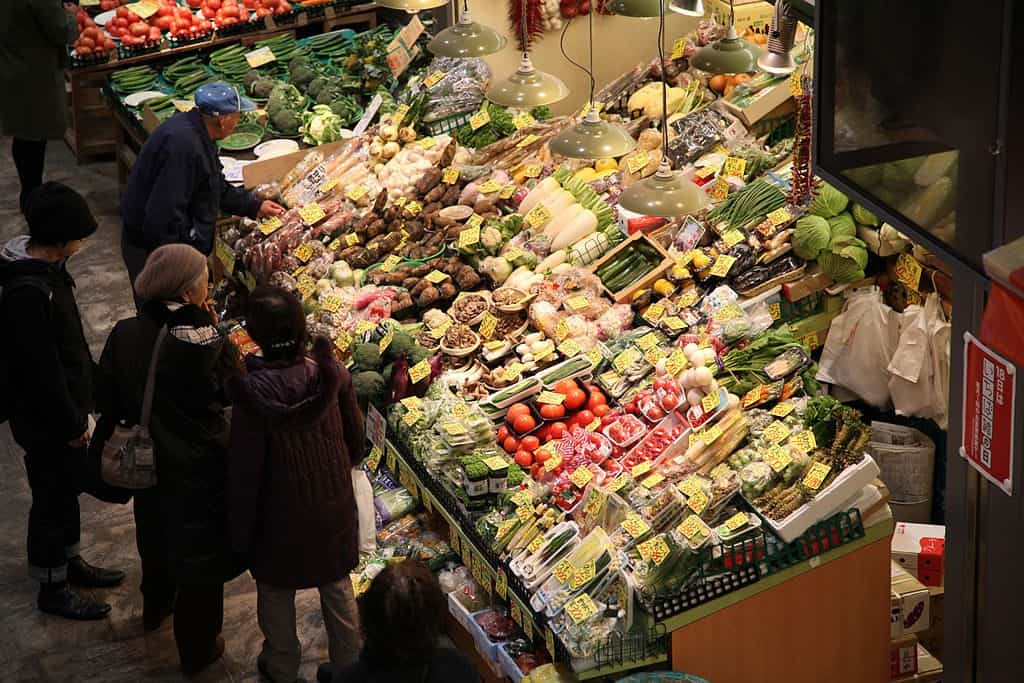
Omicho Market has been Kanazawa’s largest fresh food market since the Edo period. About 200 shops and stalls fill its covered streets. They sell seafood from the Sea of Japan, local vegetables, flowers and kitchen tools. Mornings are the liveliest time, and by noon the counters are crowded. Many shops close on Sundays and Wednesdays, so check before you plan a market breakfast.

The market’s restaurants are known for rice bowls piled with local seafood, from sweet shrimp to tuna and salmon roe. Winter adds snow crab and the rich blackthroat seaperch called nodoguro. Order at the counter and eat slowly while the stallholders work around you. Our guide to sushi and sashimi explains the cuts you will see on the ice.
If you want to bring the flavor home, a marinated tuna bowl is one of the easiest to recreate. Market cooks often dress tuna in soy sauce, mirin and sake before it goes over the rice. The marinade firms the fish slightly and deepens its color. The result tastes of a morning in Omicho. It needs no special equipment beyond a sharp knife and good tuna.

Maguro Zuke-don — soy-marinated tuna over warm rice
Warm a tablespoon each of mirin and sake for a minute, stir in three tablespoons of soy sauce and let it cool. Slice seven ounces of sashimi-grade tuna against the grain. Lay the slices in the sauce for ten to fifteen minutes, turning once. Divide two cups of warm short-grain rice between two bowls and scatter thin strips of nori over the top. Arrange the tuna in overlapping slices, then finish with sesame, a sliced scallion and a dab of wasabi. Spoon a little marinade over each bowl so it seasons the rice beneath.
Kanazawa’s food culture reaches beyond the market. The city is known for kaga ryori, the refined local cuisine served in its ryotei. It is also known for jibuni, a duck stew thickened with flour. Tea culture runs deep, so sweet shops are everywhere. A seasonal wagashi with matcha makes the ideal break between districts. Many shops will even let you watch the sweets being shaped by hand, one petal at a time.
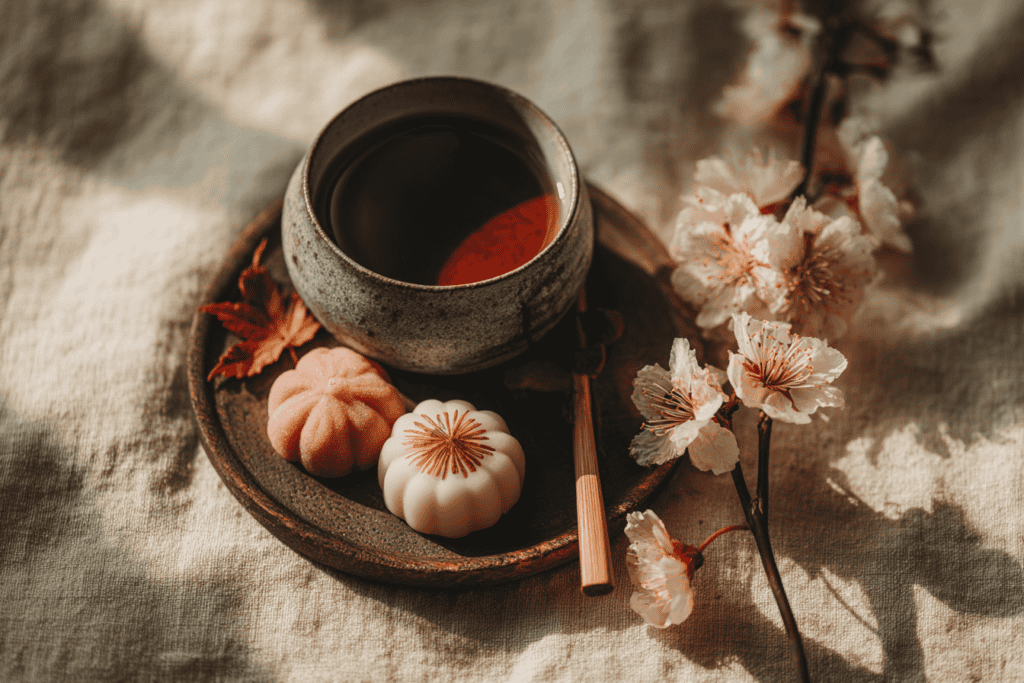
11. Gold Leaf Soft-Serve and Seasonal Sweets
It may look like a gimmick, but gold leaf soft-serve has become a Kanazawa ritual. Shops in Higashi Chaya and near Kenrokuen wrap a cone in a full square of leaf. The queue moves quickly. Try one once. Then look for subtler uses of gold, such as a dusting on a wagashi or a gilded rim on a dessert plate. Each shows the same instinct for small luxury.
Crafts to Take Home: Kutani, Lacquer and Gold
The Maeda lords invited artisans to Kanazawa and paid them well. The crafts they founded still support whole streets of workshops. Kutani porcelain, with its bold enamel colors, comes from the surrounding prefecture. Kaga yuzen silk dyeing, lacquerware and gold leaf all have showrooms in the city. A craft purchase here is not a souvenir in the usual sense. Instead, it is a piece of the living tradition that made the city. Many workshops welcome visitors who ask before they arrive, and a short visit explains more than any label.
12. Kutani Porcelain
Kutani ware is known for dense, jewel-like enamels in green, yellow, purple, deep blue and red. Galleries in Kanazawa show both antique pieces and work by living makers. A teacup is the easiest place to begin, since it is light to carry and used every day. Choose one in a gallery. Then notice how often you reach for it once you are home. Look closely at the brushwork before you buy. Fine Kutani shows crisp outlines and enamel laid on thickly enough to catch the light. Ask the gallery about the kiln and the painter, too. Many pieces carry a maker’s mark on the base, and that small detail connects the cup to a real workshop.
Ino Seimine Kutani Ware Tea Cup — enamel color for every day
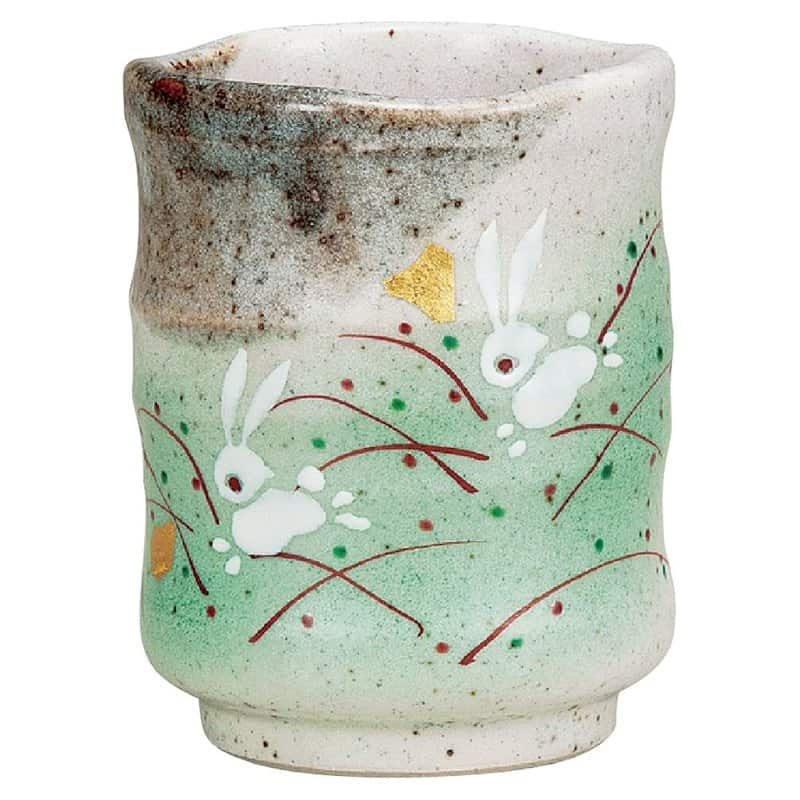
This Kutani ware tea cup comes from the Ino Seimine kiln. It carries the bold painted enamels that define the style. Kutani porcelain has been made in the Kaga region since the seventeenth century. The colors are fired onto the glaze in layers, which gives them their depth. The result feels traditional yet bright on a modern table. Use it for sencha in the morning, or keep it on a desk as a reminder of the craft streets. It is light enough to carry home with ease, and it makes a fitting first piece of Kutani for any collection or kitchen shelf.
Lacquer is the other great craft of the region. Wajima, on the Noto Peninsula north of Kanazawa, produces some of Japan’s most durable lacquerware. Each piece is built up in many coats over months. Kanazawa’s shops carry it alongside local work, and chopsticks are an easy way to own a piece. A well-made pair feels warm in the hand. With simple care, it lasts for years. That suits a craft built on patience, and it suits a traveler who wants one useful object rather than a shelf of trinkets. Use the pair every day, and the lacquer slowly takes on a soft sheen that no new piece can match.
Wajima-nuri Chopsticks — lacquer from the Noto Peninsula
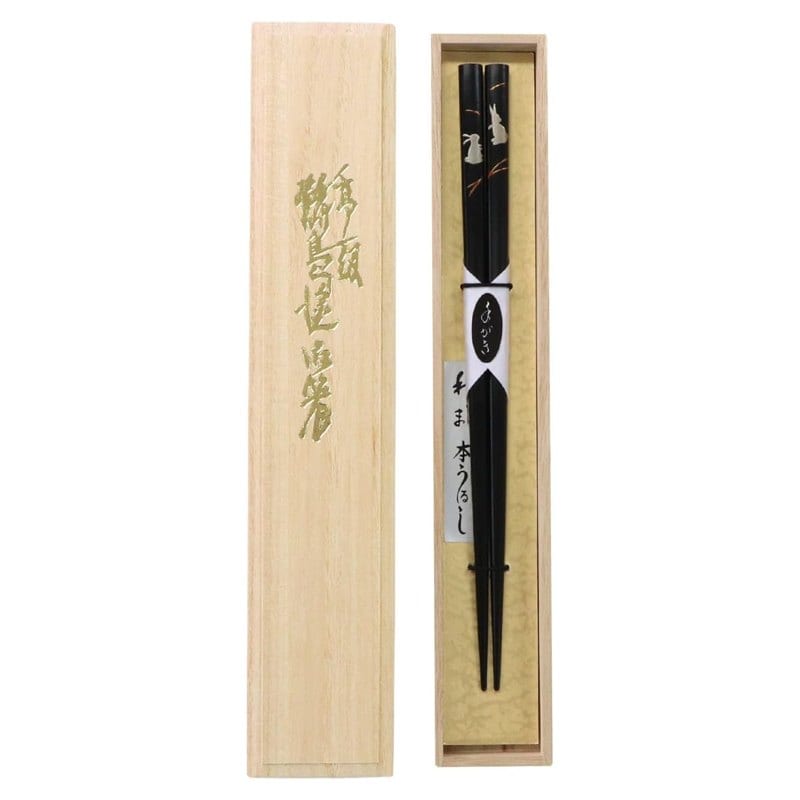
These Wajima-nuri chopsticks carry the lacquer tradition of Wajima, the Ishikawa town famous for layered, hard-wearing finishes. A silver rabbit sits against the dark lacquer, a gentle motif in Japanese art linked to the moon. They arrive in a gift box, so they travel safely. For daily use, wash them by hand and dry them at once. Over time, the surface deepens with age. Buying Wajima lacquer also supports a craft community still rebuilding on the Noto Peninsula. That gives the pair a meaning beyond the table, and a story worth telling each time you set the table.
For the last pieces, think about what keeps the city with you after the trip. A few sheets of edible gold leaf let you recreate the Kanazawa touch on a dessert at home. Meanwhile, a book on Japanese gardens deepens what you saw at Kenrokuen. Finally, a rail guide helps you plan the next journey along the Sea of Japan coast. Together, these turn a two-day visit into a longer conversation with the region. None of them takes up much room in a suitcase. Each one also points somewhere useful: back to the craft streets, out to the gardens, or forward to the next train north along the coast.
Three Ways to Keep the City Close
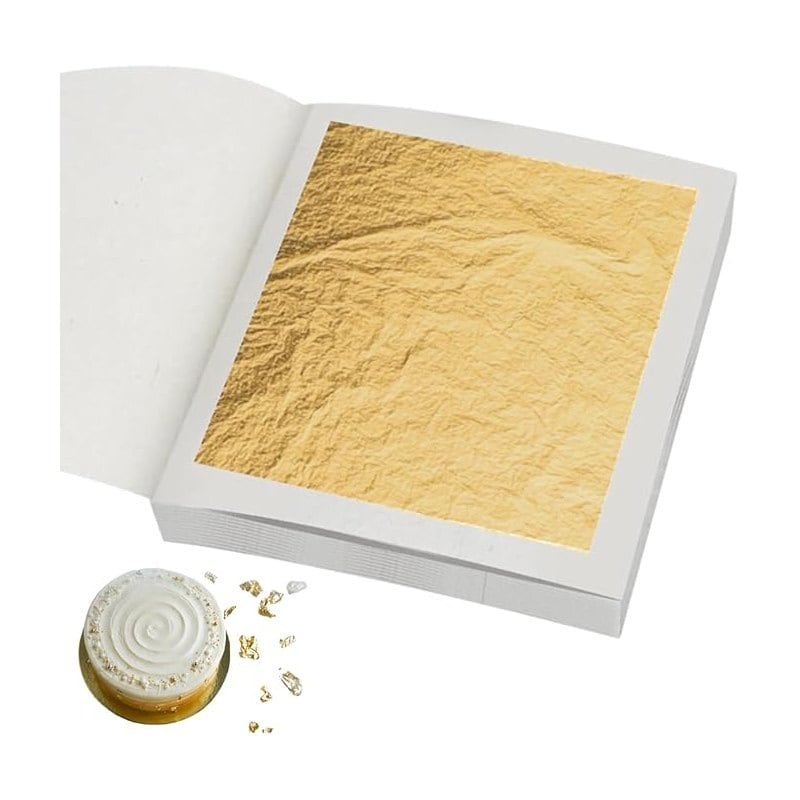
Genuine gold leaf squares for desserts and drinks, the Kanazawa finishing touch.
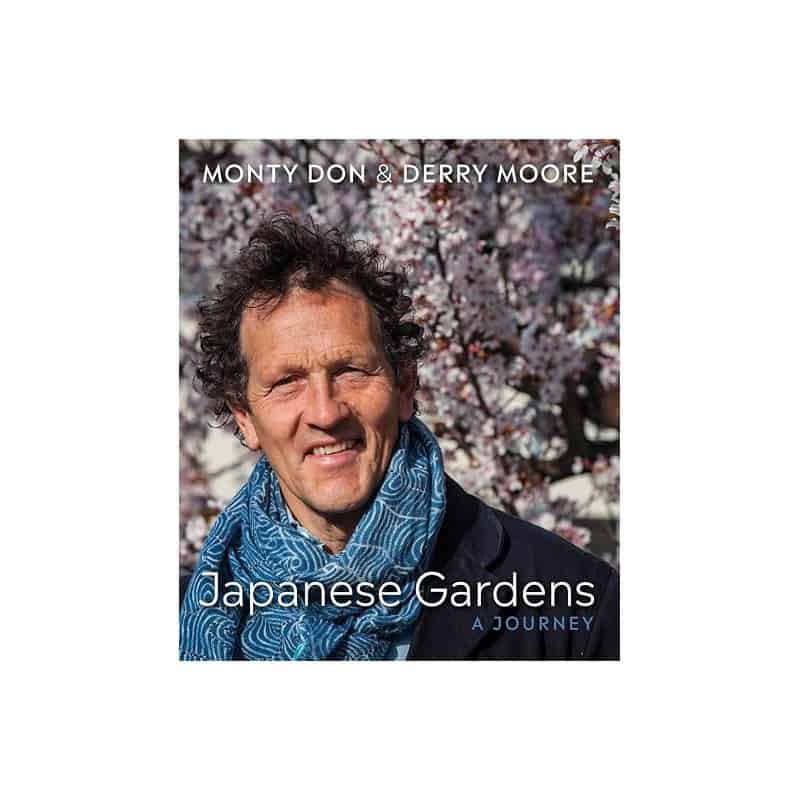
A visual journey through Japan’s great gardens, Kenrokuen’s peers among them.
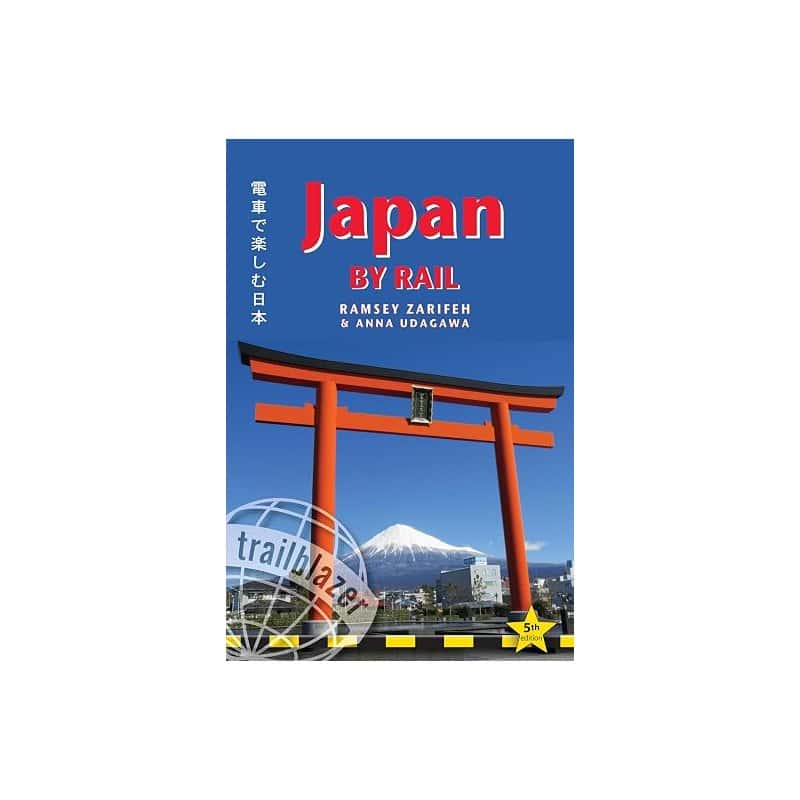
Route-by-route guide to traveling Japan by train, with thirty city guides.
Whichever pieces you choose, buy them where you can meet the maker or a shop that represents them. Kanazawa’s craft streets are small enough to explore on foot in an afternoon. Ask how a piece was made, and most shopkeepers will gladly explain. That conversation is often the part of the purchase you remember best.
A Kanazawa Guide to Getting There and Getting Around
13. The Hokuriku Shinkansen
Kanazawa is easy to reach. The Hokuriku Shinkansen runs from Tokyo Station, and the fastest trains take about two and a half hours. A one-way ticket costs around $95 (¥14,500). The route is fully covered by the Japan Rail Pass. From Kyoto and Osaka, the trip takes around two to three hours. That makes the city a natural link between the two coasts.
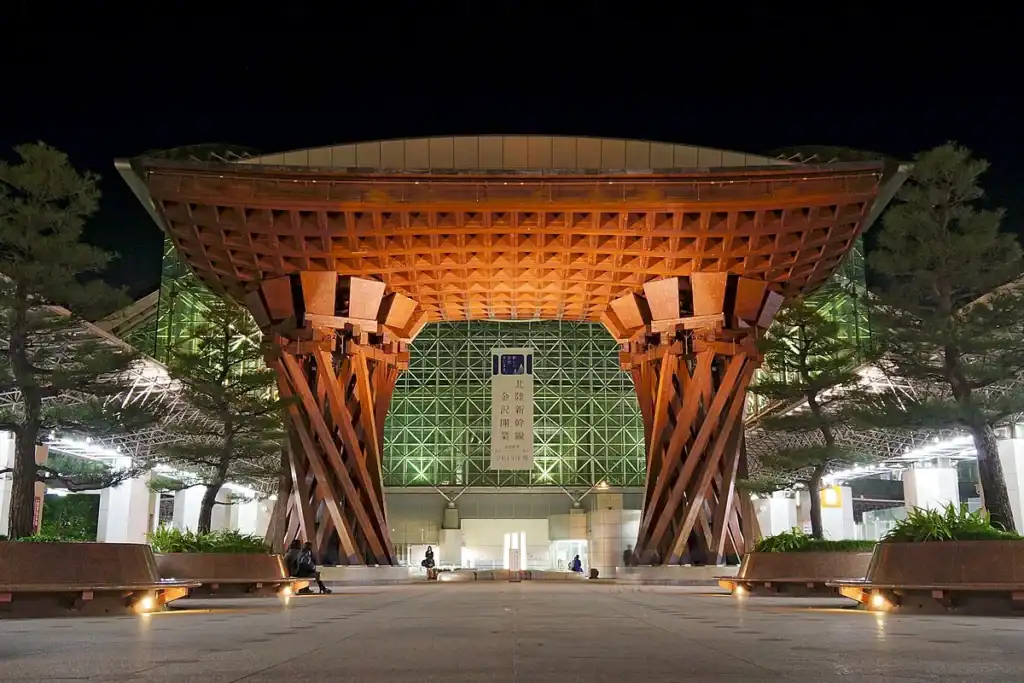
14. Kanazawa Station and the Tsuzumi Gate
Your first sight of the city is one of its best. The station’s wooden Tsuzumi Gate takes its shape from the hand drum used in Noh theater. Behind it, a vast glass dome shelters arriving travelers from rain and snow. The station also houses restaurants and craft shops. From here, loop buses reach Kenrokuen, Higashi Chaya and Omicho in about fifteen to twenty minutes.
Within the city, walking is the pleasure. Higashi Chaya, the castle, Kenrokuen and the museums sit close together. Nagamachi and Omicho are a short bus ride away. Use taxis in the evening or in heavy rain. Any good Kanazawa guide will give the same advice. Pack comfortable shoes and a light umbrella, because the weather on this coast changes quickly.
Planning Your Days in Kanazawa Little Kyoto
15. A Day Trip to Shirakawa-go
With a third day, travel into the mountains to Shirakawa-go, the village of steep thatched farmhouses. Buses from Kanazawa make it an easy day trip. In winter, the snowy roofs are lit on selected evenings. A night in a farmhouse inn turns the day into something memorable. It also pairs beautifully with Kanazawa’s refined streets, showing the rural side of the same region.
For two days, spend the first on Kenrokuen, the castle and Higashi Chaya, with a gold leaf workshop in the afternoon. Use the second for Nagamachi, Myoryuji, Nishi Chaya and the 21st Century Museum. Omicho Market makes the natural lunch stop. Stay in a refined ryokan if you can, since the best inns serve kaga ryori at dinner. Our pick of Japan’s most luxurious ryokans includes options for the region.
Recommended
Season matters more here than in many cities. Spring and autumn bring the garden at its most colorful, along with more visitors. Winter is cold and often snowy, yet the light is soft and the seafood is at its peak. The snow ropes in Kenrokuen are worth the trip alone. Summer is green and humid, so go out early in the day. Whatever the season, Kanazawa little Kyoto rewards those who give it time.
Pairing the city with Kyoto makes a satisfying route. Spend a few days in the ancient capital, then take the train north. Notice how the mood shifts from imperial to samurai, from grand to intimate. Our two days in Kyoto plan is a good starting point. Read about geisha culture before you go, too, and the teahouse districts will mean more.

Giving Kanazawa Time
Kanazawa rewards travelers who arrive curious. The garden asks you to slow down. The teahouses ask you to imagine the music behind the lattices. In the craft streets, meanwhile, you learn to look closely at how things are made, piece by piece. Give the city at least two full days, and ideally a third. Pair it with Kyoto or with the mountain villages to the south if you can. Above all, leave room for an unplanned hour. It might be a side lane in Higashi Chaya, a second bowl of tea or a talk in a gold leaf workshop. Moments like these are where Kanazawa little Kyoto reveals itself most fully.
Kanazawa, Arranged Around You
We can arrange a private evening with geisha in Higashi Chaya, a gold leaf workshop with a master artisan, early entry to Kenrokuen and a ryokan with kaga ryori at dinner. Every itinerary is built around your pace and your interests.
Plan Your Custom Japan ItineraryQuestions Worth Asking
Why is Kanazawa called Little Kyoto?
Kanazawa earned the name because its old districts survived the war in good condition, much as Kyoto’s did. Teahouse streets, samurai lanes, a great garden and living crafts give it a Kyoto-like feel. The scale is gentler, and crowds are lighter in most seasons.
How many days do you need in Kanazawa?
Two full days cover the essentials: Kenrokuen and the castle, Higashi Chaya, Nagamachi, the 21st Century Museum and Omicho Market. A third day adds a gold leaf workshop or a slower tea afternoon. It also allows a day trip to Shirakawa-go in the mountains.
How do you get from Tokyo to Kanazawa?
Take the Hokuriku Shinkansen from Tokyo Station. The fastest trains take about two and a half hours, and a one-way ticket costs around $95 (¥14,500). The route is fully covered by the Japan Rail Pass, so it fits easily into a wider rail itinerary.
When is the best time to visit Kanazawa?
Plum blossom opens in late winter, and cherry blossom arrives around mid-April. Autumn color peaks from mid-November to early December. Winter has its own appeal. Snow settles on the garden’s rope supports, and the Sea of Japan seafood is at its best.
Is Kanazawa gold leaf real gold?
Yes. Kanazawa gold leaf is real gold beaten into sheets thinner than paper. The city makes about 99 percent of Japan’s gold leaf. You will see it on lacquerware and in a gold-lined tearoom in Higashi Chaya. It even appears as a thin sheet on soft-serve ice cream.
Do you need to book the Ninja Temple in Kanazawa?
Booking ahead is recommended. Myoryuji is seen only on guided tours, which run through the day in Japanese, and English guide sheets are available. Tours fill early in busy seasons, so reserve a slot once your Kanazawa dates are fixed.