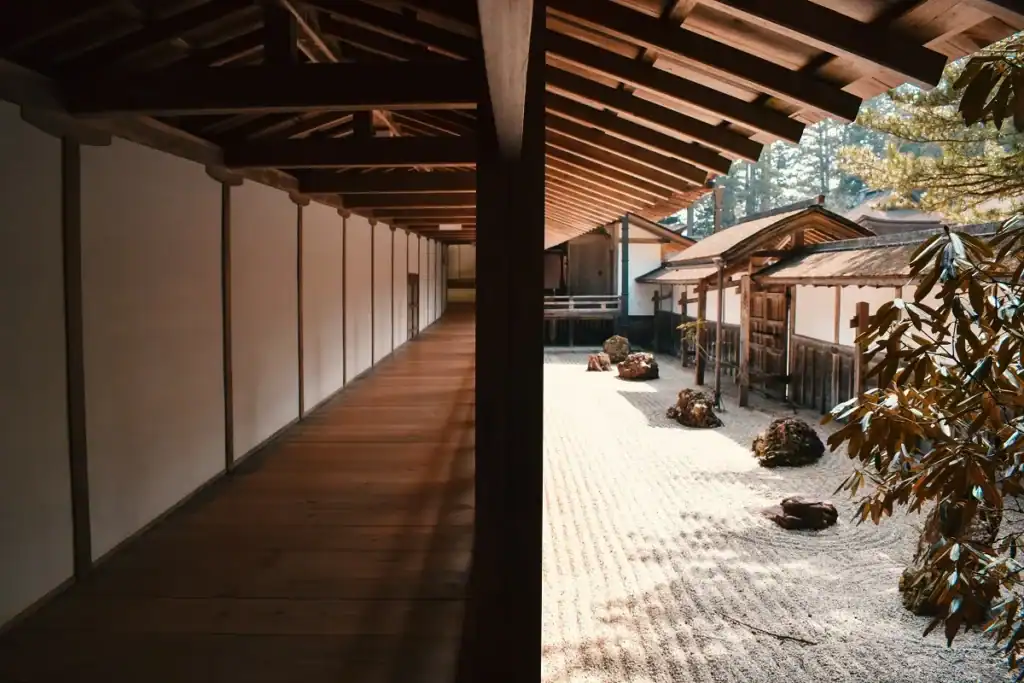
Something happens, and you respond. The space between stimulus and response is thinner than you think, and it can widen. You have almost certainly met the idea already. The line runs: between stimulus and response there is a space, and in that space lies the power to choose. It appears on a thousand coaching pages, usually credited to Viktor Frankl. It also turns up on office posters, in management courses and in wellness apps, often beside a photograph of a still lake.
The attribution is wrong. Furthermore, the idea itself is older and stranger than the version that reaches most readers. Japan, in particular, has a word for the interval, and our essay on what ma means traces it in full. Both facts are worth having before you build anything on the line.
Who said “between stimulus and response there is a space”?
The line is usually credited to Viktor Frankl. However, researchers have not found it in his published work, and the Viktor Frankl Institute lists it as an alleged quote. Stephen Covey popularized the wording. He later said he read it in a library book whose title he never recorded, so the quotation is effectively anonymous.
Who Actually Wrote It
The Viktor Frankl Institute does not confirm that Frankl wrote those words. Scholars have not located the passage in his published work. Nor does it appear in Man’s Search for Meaning, the book it is most often pinned to by quote sites. Stephen Covey gave the wording its reach. He later described meeting the idea in a library book while on sabbatical in Hawaii. Yet he never recorded the title. Consequently, the trail ends in an unnamed volume on an unnamed shelf.
Covey himself was candid about this, and he never claimed the words as his own. Some writers have corrected the record without fanfare. Others still print it as Frankl, word for word. A quick search shows both versions side by side, often on the same page.
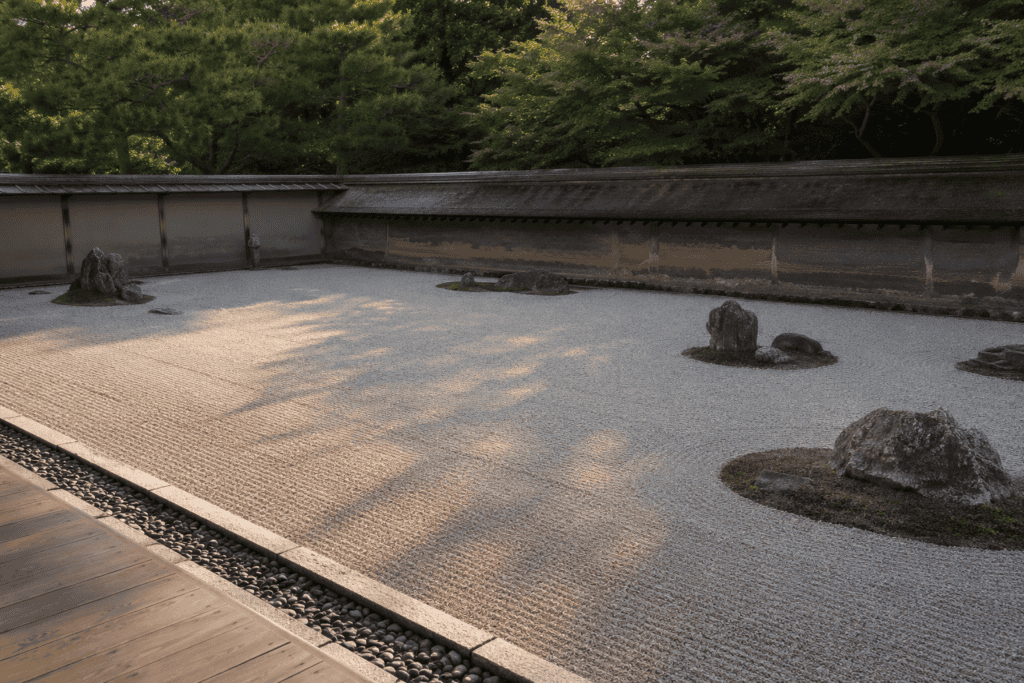
Meanwhile, the sentiment sits close to Frankl’s real argument about choosing one’s attitude. That closeness is probably how the misattribution took hold. None of this weakens the observation. Rather, it means the observation belongs to nobody. That seems fitting for a thought about the pause before we act. Still, Frankl’s own book deserves reading on its own terms. It is shorter than most people expect, and far more concrete than the quotation that borrowed his name. Few books of its kind have stayed in print so long.
His real sentence is darker and more demanding than the poster version. Frankl wrote that everything can be taken from a person but one thing: the freedom to choose one’s attitude in any set of circumstances. He wrote it after the camps, not in a seminar.
Man’s Search for Meaning by Viktor E. Frankl — the book behind the legend

Frankl first published Man’s Search for Meaning in 1946, and it has since been translated into more than 50 languages. The first half recounts his years in the Nazi camps. Its second half sets out logotherapy, his idea that the search for meaning, not pleasure, drives a human life.
The famous stimulus line is not in it, which is exactly why it is worth reading. You meet the real argument instead: that a person can choose an attitude even when nothing else is in their control. This Beacon Press paperback is short and plain. Read it once for the story, then again for the argument underneath.
Covey’s own bestseller, The 7 Habits of Highly Effective People, appeared in 1989 and discussed Frankl at length. Readers blended the two voices over time, and the misattributed line traveled with both books. By the time social media arrived, the sentence had a famous name attached and no source behind it. That is how most quotations drift. They keep the meaning that readers want and lose the details that made them true. Careful quote researchers spend years tracing lines like this one.
The lesson for anyone quoting it is simple. Use the idea in your own words, and leave Frankl’s name for the sentences he actually wrote. His real words are strong enough to stand without borrowed ones. Quoting him accurately is a small act of respect.
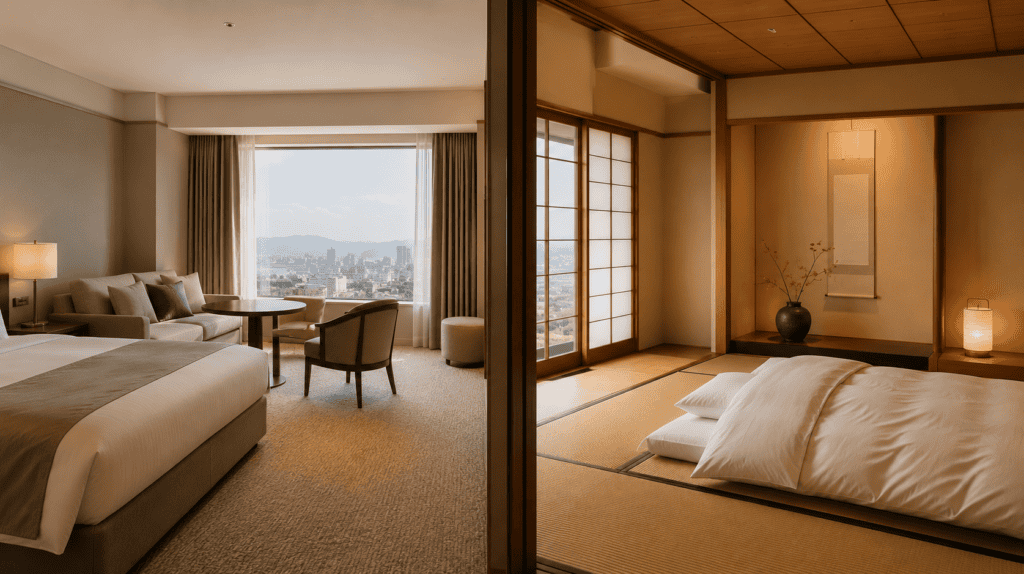
Why the Space Between Stimulus and Response Feels So Thin
Most people know the failure before they know the concept. For instance, an email lands and you have replied before you finished reading it. Similarly, someone says the wrong thing, and your face has already answered. Afterward, you replay it. Therefore, the interval was not absent altogether. It arrived late, once the response had already gone, which is the least useful moment for it to appear. Almost everyone has lived some version of this, at work or at home. The details change; the shape stays.
What varies between people is not whether the space between stimulus and response exists. Instead, it is how wide the space is, and whether you notice it while it is still open. Some people notice it at the table; others only notice it on the drive home.

The Reaction Runs Faster Than the Thought
Speed is the real problem. Because a reaction is a rehearsed habit, it runs faster than deliberation can start. So the useful question is not how to think faster in the moment. It is how to arrive at the moment already looking. Psychologists have mapped this gap between fast and slow thinking in detail. Their best-known account is a long book, but a readable one. It explains, in plain language, why good intentions so often lose the race to habit.
It is worth reading because it removes the guilt. A fast reaction is not a moral failure. It is the mind doing exactly what it was built to do, a little too early. That framing makes change feel possible. It also makes it kinder.
Thinking, Fast and Slow by Daniel Kahneman — two speeds of thought
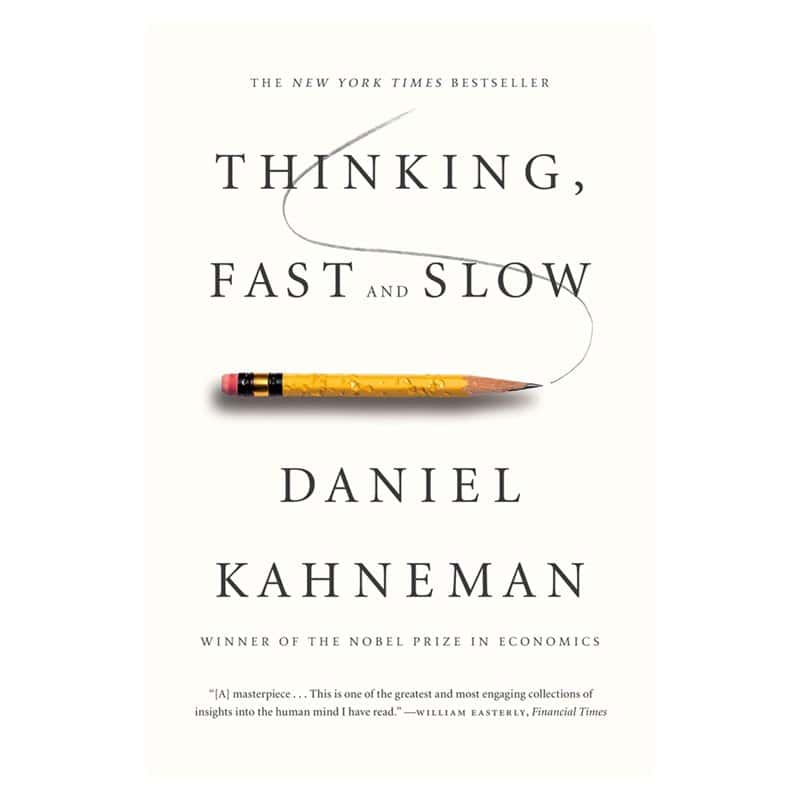
In Thinking, Fast and Slow, the Nobel-winning psychologist Daniel Kahneman describes two systems. The first is fast, intuitive and often emotional. The second is slower, more deliberate and far more logical, and it often arrives after the first has already acted.
That is the thin interval, described from the inside, with decades of experiments behind it. Kahneman offers no Japanese vocabulary, of course. Yet his chapters explain why resolve fails in the moment and why habits outrun intentions. Read a chapter at a time, slowly, and you will soon start catching your own fast system at work in ordinary moments.
So far, the problem sounds like a Western one, a matter of brains and habits. However, Japanese culture approached the same gap from a different angle entirely. It did not start with the mind at all. Instead, it started with music, rooms, gardens and timing. It gave the interval a name centuries before anyone wrote a self-help book, and it treated that interval as something to shape rather than something to survive. The result is a far gentler set of tools.
That difference in starting point changes the advice. The question becomes how to design pauses into a day, not how to summon one in a crisis. Planned pauses, it turns out, are far easier to keep than emergency ones. That is the heart of ma.
You may also like

Japan Has a Word for This
Ma (間) means gap, space, interval or pause. Write it and you draw a gate with the sun inside it. Therefore, the written form is itself a picture of a meaningful opening. Ma is not psychology. Instead, it is an aesthetic and structural idea. It governs music, theater, gardens and rooms long before anyone applies it to temperament. In gagaku, the old court music, the rests carry the phrasing. On the Noh stage, the held pause before a movement is where the audience does its work.
The character also hides inside everyday words. Jikan, time, is written with it. So is ningen, a human being, literally a person among others. Even the phrase for being on time, ma ni au, means to fit the interval. Language, in other words, carries the idea everywhere.
The timing between movements in the tea ceremony is judged as closely as the movements themselves. Meanwhile, in ikebana, the space around the stems is measured rather than incidental. Ma also shapes art, as our companion essay on negative space in Japanese art shows. Why this matters here is specific. Western advice on the space between stimulus and response treats the gap as something to create under pressure. Ma treats an interval as something composed in advance, like a rest in a score. That is a different instruction, and a more achievable one.
A composer does not improvise the rests during a concert. They are written into the score long before, so the musicians only have to honor them. A well-planned day can work in exactly the same way, with its pauses written in ahead of time.
Tea as a Score
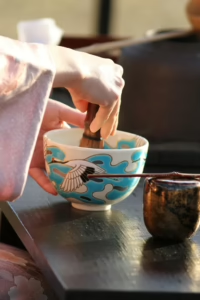
Tea is where this composed timing is easiest to see. Every gesture of the host is followed by a pause, and the guests learn to wait inside it. Nobody hurries the water, and nobody fills the silence with talk. Even the order of sweets, tea and conversation is fixed, so nobody has to decide anything in the moment. The pauses are already placed. Guests have no decisions to make, so their attention can rest on the bowl, the sweets and the season outside the window.
The clearest English account of that world is more than a century old, and it still reads well. It was written for a Boston salon, yet it speaks directly to a modern, crowded day. Few short books age this well.
The Book of Tea by Okakura Kakuzo — the classic on tea and pause

Okakura wrote The Book of Tea in 1906, to be read aloud in the Boston salon of the art patron Isabella Stewart Gardner. He wanted Western readers to see tea as a whole way of looking at life. Flowers, rooms and the art of leaving things unsaid all appear.
This Tuttle edition adds new photographs and a fresh foreword, so the old text feels current. It is short enough for a single evening. Pay attention to his chapter on the tea room, where emptiness is treated as the room’s real content. It is ma, explained before the word reached English.
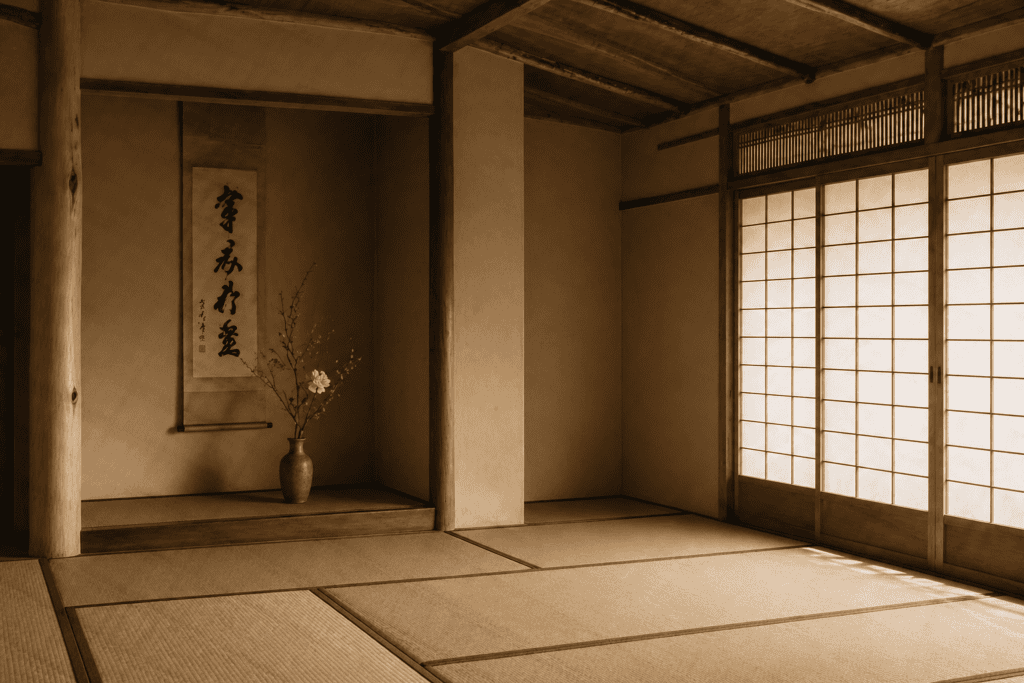
Okakura’s tea room makes a useful mental picture for the rest of this essay. It is small, nearly bare and arranged so that every movement has room. Nothing in it competes for attention, so a guest notices the one flower, the one scroll and the sound of the kettle. A day can be arranged the same way, with fewer things placed more carefully and with gaps left on purpose. Even one such gap can change how a morning feels. Try leaving the first half hour unscheduled.
That picture also explains why a missed pause feels so jarring in Japan. When everything else is placed, a mistimed word stands out at once. Japanese has a precise phrase for exactly that moment, and it is worth learning before any trip.
Timing can fail, of course, and Japanese is unusually precise about how. Most languages blame the person when a moment goes wrong. Japanese often blames the moment instead. That small shift in grammar turns an awkward pause into something you can study and improve, which is the whole hope behind widening the gap between what happens and what you do. It also makes the failure easier to talk about kindly.
When the Timing Goes Wrong, That Has a Name Too
Japanese carries a phrase for failing at this. Ma ga warui translates as bad ma, and it describes a moment mistimed. Someone speaks at the wrong point. A guest misreads the room. Another arrives at an awkward juncture, and everybody feels it. Notice what the phrase does. It locates the fault in the interval rather than the person. Consequently, the failure becomes a matter of timing rather than character. It becomes a skill problem, and skill problems are trainable. That is encouraging news.
English has no equivalent. We say tactless, or blunt, or thoughtless. Each of those describes a personality rather than a moment. That difference in vocabulary shapes what people believe they can change.
Good timing is easiest to practice somewhere small and repeatable. Brewing tea at home is one such place. Green tea punishes impatience and rewards a short, deliberate wait. Pour too soon and it is thin; wait too long and it turns bitter. Every pot becomes a small lesson in ma ga warui, and in getting it right. Better still, the lesson repeats every morning, at no extra effort. Few habits are this easy to attach to an existing routine. All it asks is a minute.
Most Japanese green teas ask for cooler water than black tea, and a wait of around a minute. That small discipline is the whole exercise: notice the urge to pour, then let it pass. It becomes easier within a week, and then it feels natural.
Tokoname Clay Kyusu — a small teapot that teaches timing
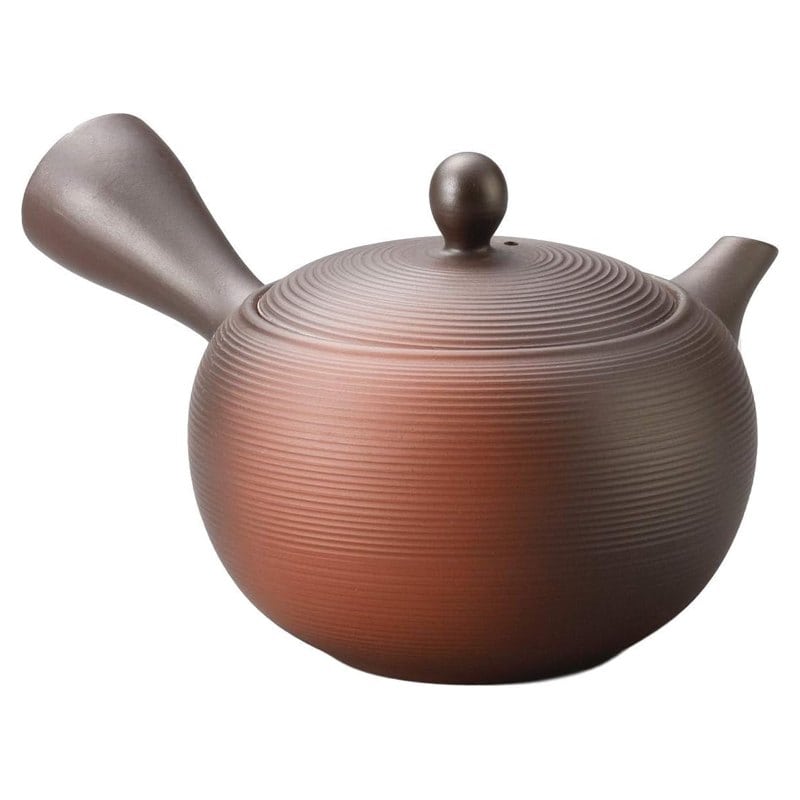
A kyusu is the side-handled teapot used for Japanese green tea, and Tokoname is one of the old clay towns famous for making them. This Tokoname clay kyusu holds about 11.8 fluid ounces, enough for two or three small cups.
The side handle lets you pour in one smooth turn of the wrist, emptying the pot so the leaves do not stew. Its youhen finish shifts in color from kiln to kiln, so no two pieces match. Use it for sencha, wait the minute the leaves ask for, then pour. That minute is the interval, held in your hands.
What Actually Widens the Space
Very little, and slowly. That is the honest position, and most writing on this subject overpromises by a wide margin. Deciding to pause does not work, because the interval is shorter than deliberation. By the time you have chosen to think, the reaction has already run. Therefore, the work cannot happen inside the moment at all. It has to happen before and after, in calmer hours, where there is time to look back and plan ahead. Think of it as training rather than willpower.
What helps is repeated noticing, somewhere calmer, over a long enough stretch that looking becomes the default. Writing suits this unusually well. Writing forces a delay between an event and your account of it. That delay is where the noticing lives.
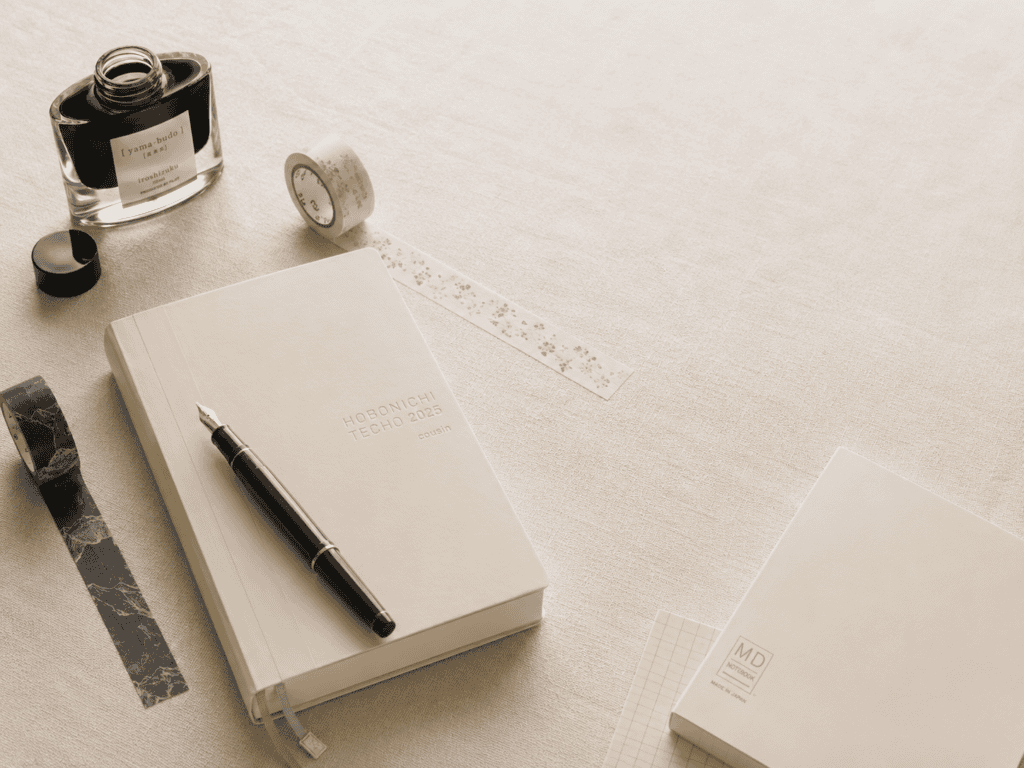
Nevertheless, the change is gradual. Most people see the interval before they can use it. Moreover, the distance between those two things runs to months rather than days. Expect the first weeks to feel like failure, because you will mostly notice the gap after it has closed. That late noticing is not wasted. It is the first stage of the skill, and it shortens with practice. Most people find the gap between event and noticing shrinks from hours to minutes.
Why Writing Works Where Resolve Does Not
There is a second reason writing works where resolve does not. A reaction leaves no record, so you cannot examine it later. Writing creates the record, and the record makes the pattern visible. After a few weeks, you stop discovering isolated incidents. Instead, you start recognizing a shape: the same trigger, the same hour, the same person.
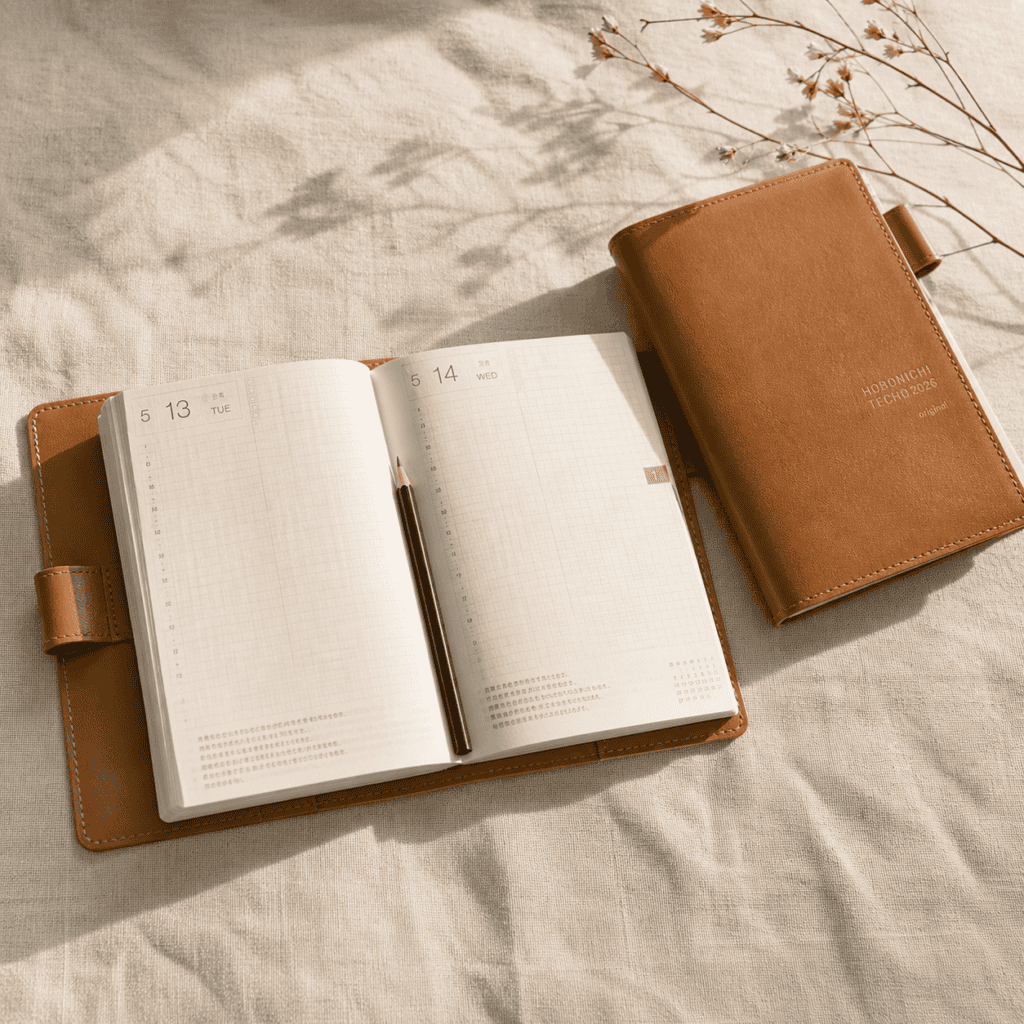
That recognition is the actual mechanism. You cannot widen an interval you have never seen clearly. Once the shape is familiar, however, the interval announces itself earlier each time, until noticing arrives before the reaction rather than after it. Keep entries short, and write at the same hour each day, so the habit attaches to something you already do. Evening works for most people, because the day’s reactions are still fresh and easy to recall. Mornings suit others, which is fine.
The tools matter less than the hour. Still, a pen you enjoy using makes the habit easier to keep, and a slower pen suits a slower practice. Japanese stationery makers know this well, and their pens show it in every detail.
Pilot Kakuno Fountain Pen — a slow pen for daily notes

Pilot designed the Kakuno fountain pen for beginners, and it does that job well. The grip is triangular, so your fingers settle in the same place each time. The fine nib suits small handwriting, and a small smile is cut into the steel, a detail that rarely fails to charm.
A fountain pen also slows you down a little, which suits this practice. Ink flows best at an unhurried pace, so the sentence forms while the hand moves. Write three lines each evening about one moment you reacted too fast. Within a few weeks, the pattern begins to show on the page.
Writing is only half of the picture, however. The other half happens below the neck, long before any sentence forms. A reaction shows up first as tension and breath, and only later as words. Paying attention to that early, physical signal is often the fastest way to catch the interval while it is still open and still useful. The body, in short, usually knows first. Learning to read its signals is the next step after the notebook. Start with the jaw and the breath.
Japanese practice has always treated the body as part of timing. Bows, entrances and the pouring of tea all set a pace for the breath as well as for the hands. The timing lives in the whole person, not only the mind.
You may also like

The Pause Before You Act, in the Body
Most writing on this subject treats the gap as a mental event. It is at least as much a physical one. A reaction begins in the body before the mind has a view on it. The jaw sets, the breath shortens, and the reply is already on its way. That is why a widened interval feels physical when it arrives. The exhale comes first. Then the shoulders drop, and only afterward does a choice appear. The sequence is reliable. Watch for it next time.
People who keep the journal describe it in plain words. They call it a nervous system reset, or the moment the day stops running them. Those are their words rather than a medical description, and we keep them that way.

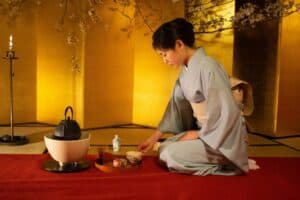
We make no clinical claim for that, and the practice does not depend on one. The body has always known what to do with a pause. What it rarely gets is the pause. Supply one, keep it regular, and the settling tends to follow on its own schedule. Japanese practice built this in long before anyone described it. The crawl entrance to a tea room forces a breath before the room. The long Noh crossing holds an audience until they stop fidgeting.
Neither is a wellness technique. Both are an interval, placed where a body can use it, and a kettle on the stove can do the same at home. The ritual matters more than the equipment. Any kettle will do, even an electric one.
Iwachu Cast Iron Tetsubin — a kettle that sets the pace
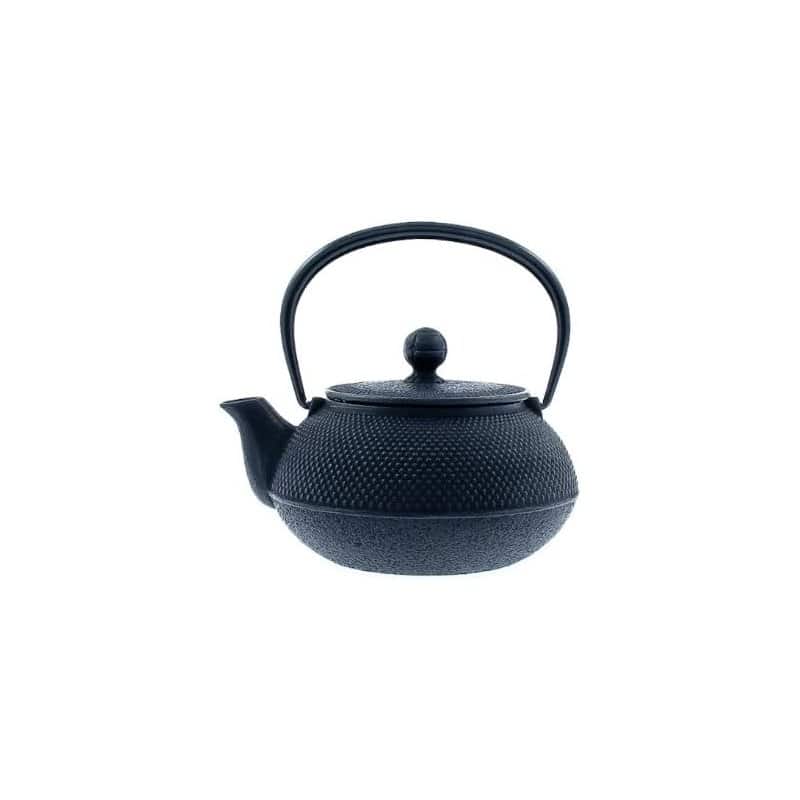
Iwachu has cast iron in Morioka for generations, and this Iwachu hobnail tetsubin is made in Japan in the classic arare pattern. It holds about 22 ounces and comes with a stainless steel mesh infuser. The interior is coated against rust.
A heavy iron pot changes the rhythm of a morning. It warms slowly and holds its heat for a long time, so tea becomes an occasion rather than a gulp. Note that this pot is for brewing, not for an open flame, so heat the water separately. Then sit with the cup for five full minutes before the day begins.
Five minutes sounds trivial, and that is precisely the point. A pause small enough to keep is worth more than an hour of good intentions. The cup gives the hands something to hold, the warmth gives the breath something to follow, and the first message of the day can wait until the tea is finished. Most mornings, nothing is lost by the delay, and the reply you send is better for it. Try it for one week. Then decide whether to keep it.
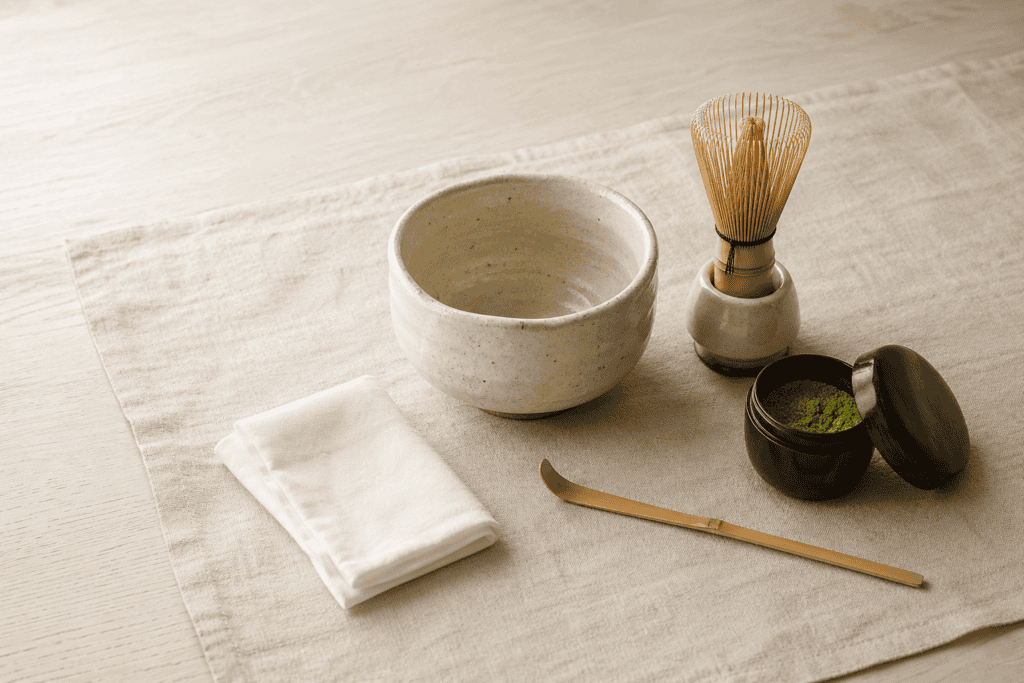
Tea needs its tools, and laying them out is part of the pause. Many people find that setting the table slowly settles them as much as drinking does. The order of the tools becomes the order of the breath. Nothing else is required.
A Slower Breakfast
Breakfast can carry the same pace. In Nara, many households still begin the day with chagayu, rice simmered in roasted hojicha tea. Families once cooked rice at night and warmed the cold rice in tea the next morning. The result is light, fragrant and slow to eat, which makes it a fine first interval of the day. A small bowl eaten slowly fills you more than a large one eaten standing up. It is breakfast as a pause. Sit down to eat it.
Hojicha is green tea roasted until it turns brown, so it tastes toasty and gentle. It is also low in caffeine, which suits an early, unhurried start. Japanese grocers sell it loose or in bags, and both work well here.

Nara Chagayu — rice porridge simmered in roasted tea
First, cook one cup of rice as usual, with its normal amount of water. Meanwhile, bring five cups of water to a boil with about one ounce of hojicha to make a strong, toasty tea. Strain out the leaves, then add the cooked rice and a teaspoon of salt. Simmer over medium heat, stirring now and then, until the porridge reaches the texture you like. Serve it plain in small bowls, or add chunks of steamed sweet potato or a grilled rice cake for a fuller morning.
The recipe follows the Nara version published by Japan’s agriculture ministry, which notes that some hotels and restaurants in Nara still serve it for breakfast. Eat it slowly. The point is not the porridge alone, but the quarter hour it gives you before anything else asks for a response. Leftover rice works perfectly, so it costs almost no effort on a weekday. Make the tea while the rice warms, and breakfast is ready in about fifteen minutes. Add a pickle on the side.
The ministry also notes that families added sweet potato, pumpkin, taro or chestnuts to make the bowl more filling. Any of these turns a plain porridge into a seasonal one. Autumn chestnuts are a lovely choice, and winter squash works well too.
Ten Proverbs to Carry With You
A printable folio of ten Japanese proverbs, each set in kanji with its reading and a line on where you will hear it.
Finding the Pauses
With the body and the page in place, the next step is practical. You do not need to invent new pauses. Most days already contain several intervals, hidden in plain sight. The trick is to find them, name them and stop filling them by reflex. The five below are the easiest places to begin, and none of them takes more than a minute. Try one a week rather than all five at once. Small steps hold better. Begin with the easiest.
Five Intervals to Start With
Begin by finding intervals you already have rather than making new ones. Each one is a place where the space between stimulus and response is easy to see. These five are the easiest to locate, and each one comes with a small habit attached.
The Handover
These are the seconds between one task and the next. Most people fill them with a screen. Therefore, this is both the simplest interval to find and the simplest to protect. Try closing one window before opening the next, and take a single breath in between. The habit takes no time at all, yet it marks the end of one thing clearly. Over a week, those small breaks add up to a calmer day. Nobody else needs to know. The breaks are yours alone.
The Beat Before Answering
In conversation, a pause before replying reads in Japan as attention. It is not read as hesitation. Our guide to Japanese etiquette for travelers covers where a visitor meets that expectation. Practice it with people who know you well first.
The Silence You Rush to Fill
Notice who ends the pauses in a conversation. If it is reliably you, that is a habit rather than a personality, and habits move. Next time, let a silence run two seconds longer than feels natural, and see what the other person adds.
The Unearned Rest
Rest treated as a reward always arrives last. Conversely, rest treated as structure arrives on time. A night at a traditional shukubo lodging makes the difference obvious inside a day. There, the schedule has pace rather than fill, and meals arrive at fixed hours whether you feel you have earned them or not. At home, try a fixed ten-minute break that happens regardless of your to-do list. Put it in the calendar like a meeting. Then keep it.
The Threshold
Japanese houses keep one more interval that Western houses lost. The genkan, the sunken entry where shoes come off, is neither outside nor in. You stop, bend and change footing before the house admits you. Consequently, the body registers the crossing before the mind does.
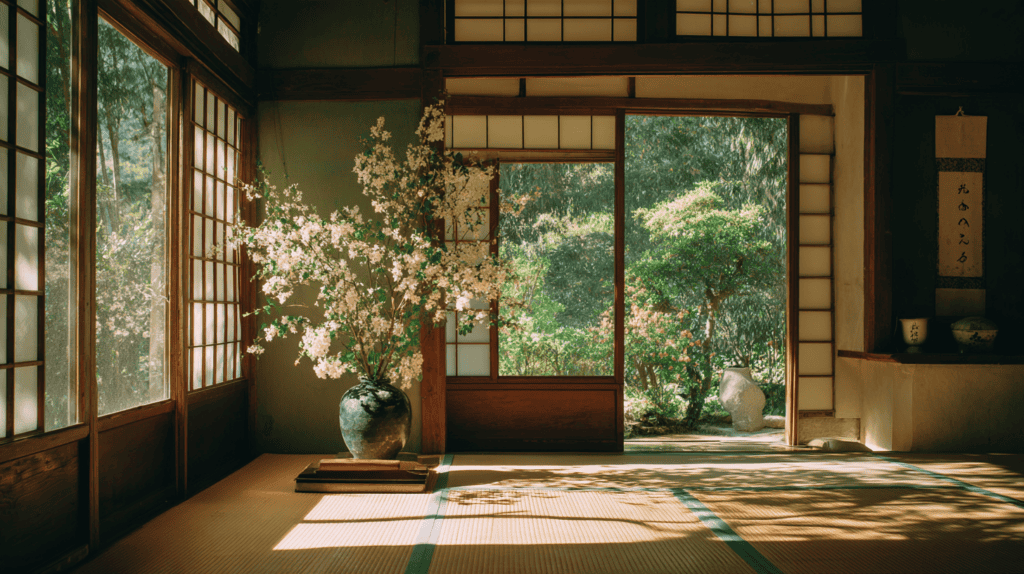
Any doorway can do the same work. Pause on the threshold of a room for one breath before entering it. Nobody will notice, and you will. The pause is easiest to find where the architecture already left a gap. Visitors to Japan feel this within a day, because every home, ryokan and many restaurants ask you to stop and change shoes. Slippers wait inside, and the pause becomes automatic after a day or two. It is one of the first habits visitors bring home, and one of the easiest to keep.
A curtain can create the same gap at home. In Japan, a simple fabric panel has marked doorways for centuries, and it still does in shops and kitchens. Restaurants hang one out when they open, and take it in when they close.
Kyoto Hana Akari Noren — a curtain that marks the threshold
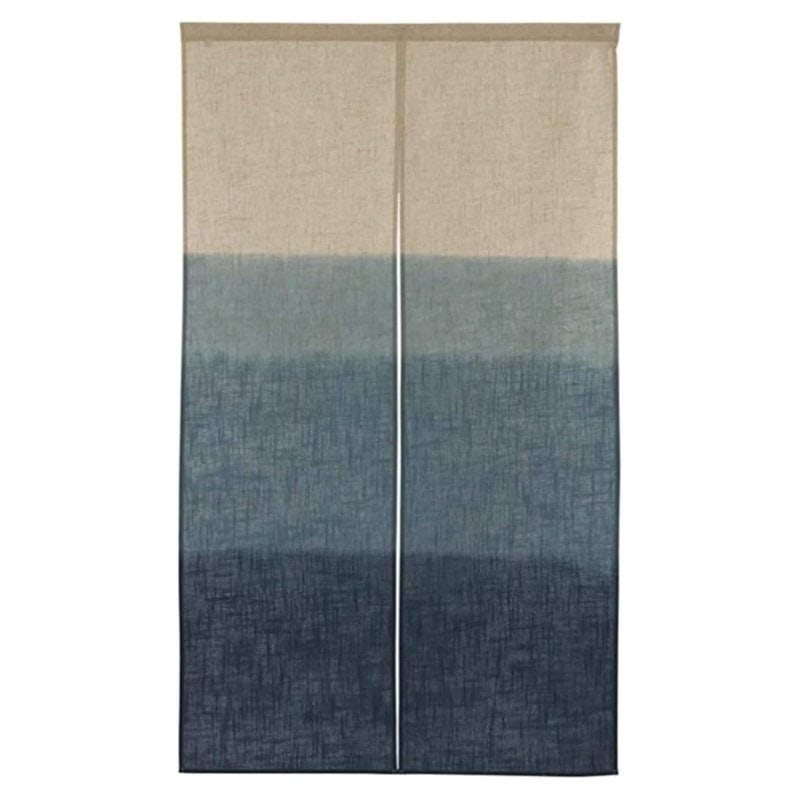
Shops and homes in Japan hang a noren, a split fabric curtain, across a doorway to mark the line between one space and the next. This Kyoto Hana Akari noren is made in Japan from an asa-blend fabric and hand screen-printed in a soft navy ombre.
It measures about 33.5 by 59 inches, so it suits a standard interior doorway. Walking through a noren is a small physical act: you part it with one hand and pass beneath. Hang it at the door of a study or bedroom, and every crossing becomes a breath. The threshold, in other words, becomes a habit.
Five intervals are enough to start, but starting is the easy part. Most people notice the gap within days and lose it within weeks. Keeping it requires a longer arc than a single good intention. That is why the practice that follows is measured in months, and why its prompts are deliberately short enough to survive a busy week. Consistency matters far more here than intensity. Ten calm minutes every day beat a long weekend retreat. Small and steady wins.
The same logic shapes Japanese training of every kind, from calligraphy to tea. Students repeat small forms for years before anyone calls them skilled. Patience is built into the method itself. Mastery is measured in years, not weeks, and nobody minds.
Why Ninety Days Rather Than Nine
A week is long enough to see the interval. It is nowhere near long enough to use it. Most people meet the gap in the second week and lose it again by the fourth. So the shape of the practice matters more than its intensity. Ninety days gives the habit three passes at the same ground. Each month returns to the same four intervals with a little more noticing in hand. Repetition is the teacher. Each pass goes a little deeper.
Weekly pages gather what surfaced, and the record starts to show a pattern rather than a list of incidents. That pattern is what a shorter run never reaches. Three months is long enough to see real change, and short enough to commit to.
The journal keeps the prompts short on purpose. One question a day, answered in a few lines, beats a long entry abandoned by Thursday. Furthermore, the question changes while the interval does not. By the end, that interval is a place you visit rather than a phrase you read. Missing a day does not break the practice; simply return the next morning. The habit survives gaps, as an interval should, and it grows sturdier each time you come back to it.
It helps to tie the practice to an object or a place. A cup of tea, a particular chair or a walk to the station can all become the trigger. Then the interval has a home in the day, and it no longer depends on remembering.
Ten Proverbs to Carry With You
A printable folio of ten Japanese proverbs, each set in kanji with its reading and a line on where you will hear it.
What the Prompts Ask
The prompts themselves are written to be answered in under five minutes. Some ask where a pause appeared that day. Others ask where one was missing, or who filled a silence first. Over time, the answers form a small map of your own timing, showing the hours and places where the interval comes easily. They also show where it never seems to appear at all, which is useful to know. Patterns like these are hard to see any other way.
That map is personal, and it changes as the practice grows. Many readers say it is the most useful page they own, more revealing than any test or app they have tried. Keep it somewhere you will see it every day.
Recommended
What This Does Not Claim
Writing about an interval is not therapy, and it treats nothing. This is a reflective practice rooted in an aesthetic idea. Therefore, it is no substitute for professional care. Readers do describe a nervous system reset, and we report that as their experience rather than our promise. What ninety days of returning to the same page builds is consistency. With it comes a wider gap between what happens and what you do about it. That gap is the whole goal.
That is a modest claim, and one we can stand behind. It is also the claim most likely to hold up when life gets busy again. Busy weeks are the real test of any habit. This one is built to pass it.
Modest claims last longer than grand ones. A practice sold as a cure tends to be dropped when the cure does not arrive. By contrast, a practice offered as a habit can survive a bad week, because nobody expected miracles from it. Keep the expectation small and the habit regular, and the interval tends to widen on its own. If you are struggling, talk to a professional first; a notebook can sit beside that care, never in place of it.
Honesty about limits is part of the same respect for intervals that runs through this essay. A pause is useful precisely because it does not pretend to be more. It simply makes room, and room is enough for most of us.
A Structure to Follow
For anyone who wants a structure to follow, a guided journal helps. It removes the question of what to write, which is often the hardest part of any writing habit, especially on a tired evening. One prompt waits each morning, and a few honest lines are enough. Over ninety days, the pages become a record of intervals noticed, missed and finally used. The journal below was built for exactly that, and its prompts stay short enough to survive a busy week.
It follows the five faces of ma in turn, so each month feels slightly different. That variety keeps the habit fresh without changing its core. It also gives each week a clear theme to notice. The themes repeat each month.
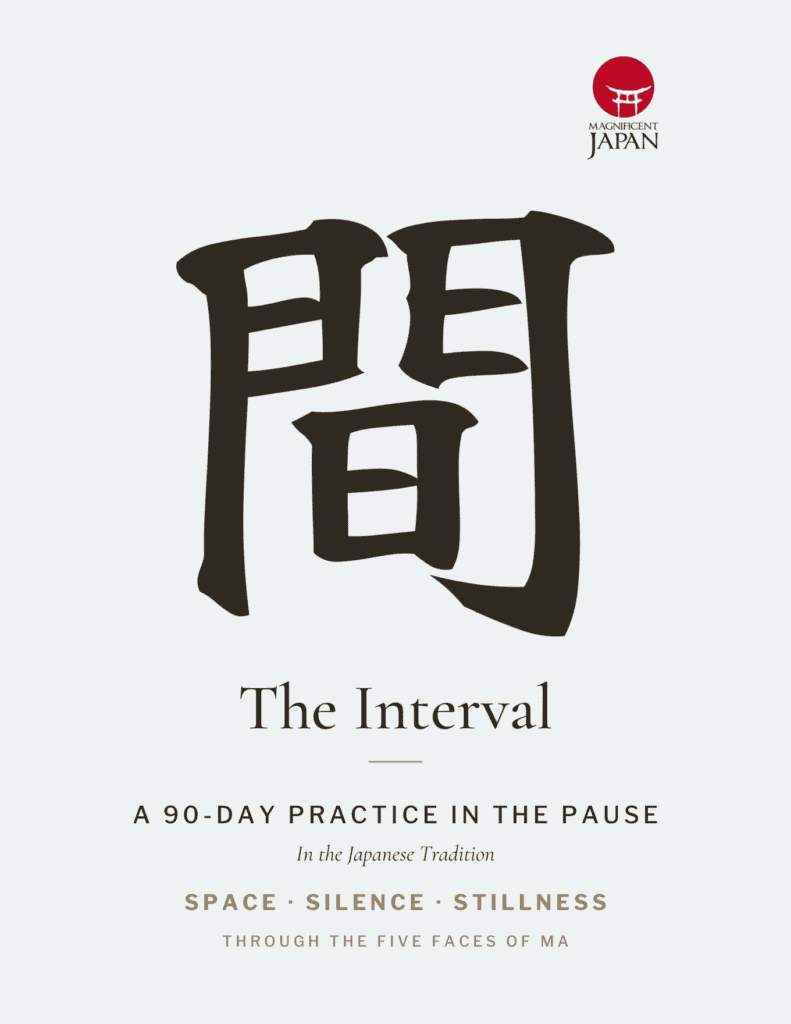
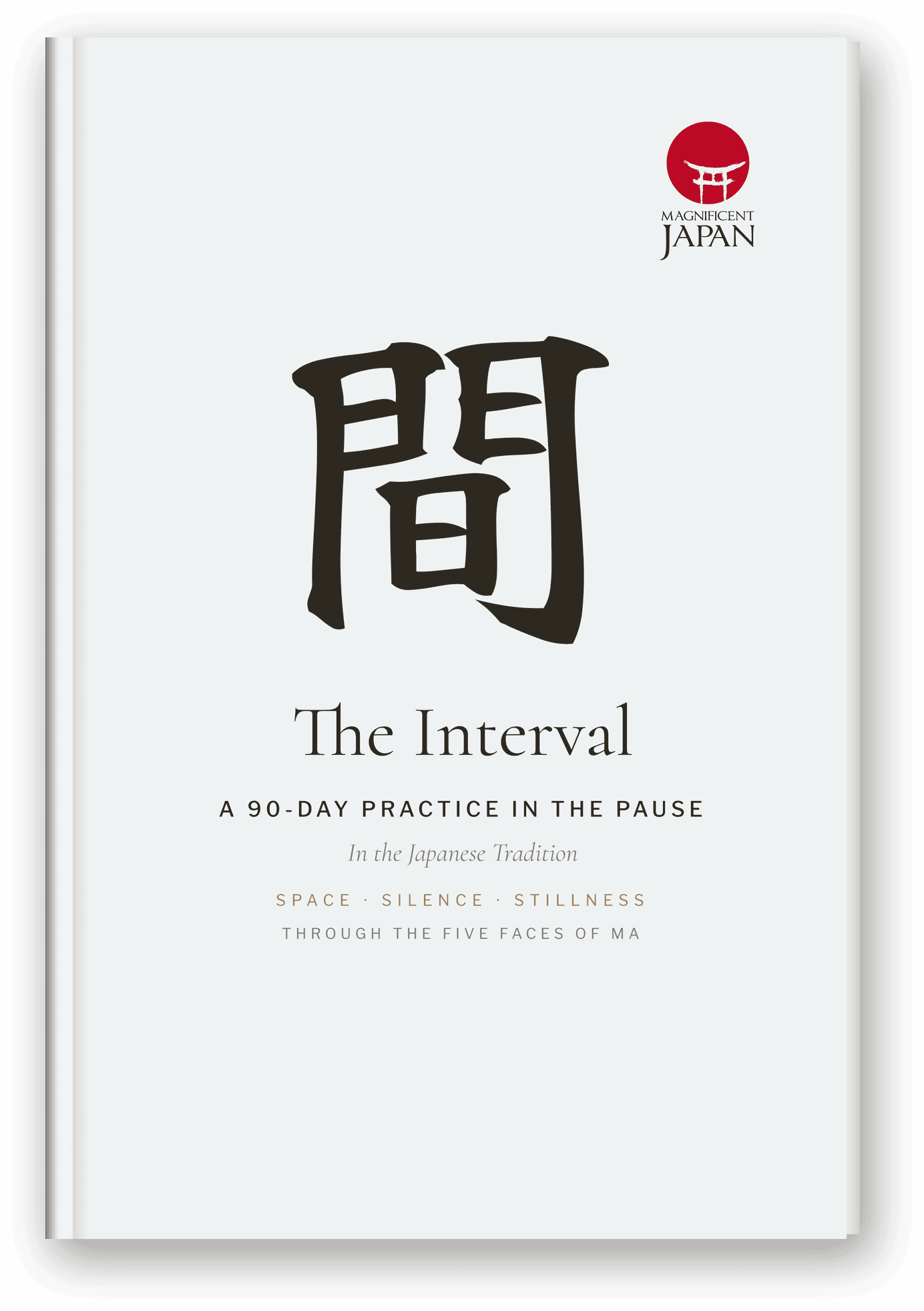
The Interval is a 90-day practice in ma, the pause, moving through its five faces: the gap, the margin, the silence, the breath and the repose. One short prompt a day turns that pause into a daily habit. Choose the write-on digital edition for a tablet or the paperback edition for ink and paper.
View The CollectionThe Interval Is Not Empty
That is the whole argument, and it is older than any of the advice built on it. A rest in music is not silence where the music stopped. It is part of the music, placed deliberately. Without it, the phrase would not work. Your days run the same way. Yet almost nothing in modern life encourages you to think so. You compose the space between stimulus and response; you do not find it. That is the shift ma offers. It is a gentle one.
So the question is not whether you have one. It is whether you have been treating it as structure or as waste. Our related essays below explore the same idea from other angles. Each one stands alone, and each one links back to ma.
If direction rather than timing is your harder problem, ikigai journal prompts ask a different question. They ask what makes a day worth living. Our full journal collection sits between the two ideas, from The Return for ikigai to The Interval for ma, with six more Japanese concepts in between. Each journal takes one idea and gives it ninety days, which is about how long a new habit needs to settle. The prompts are short, so the journals fit a busy life.
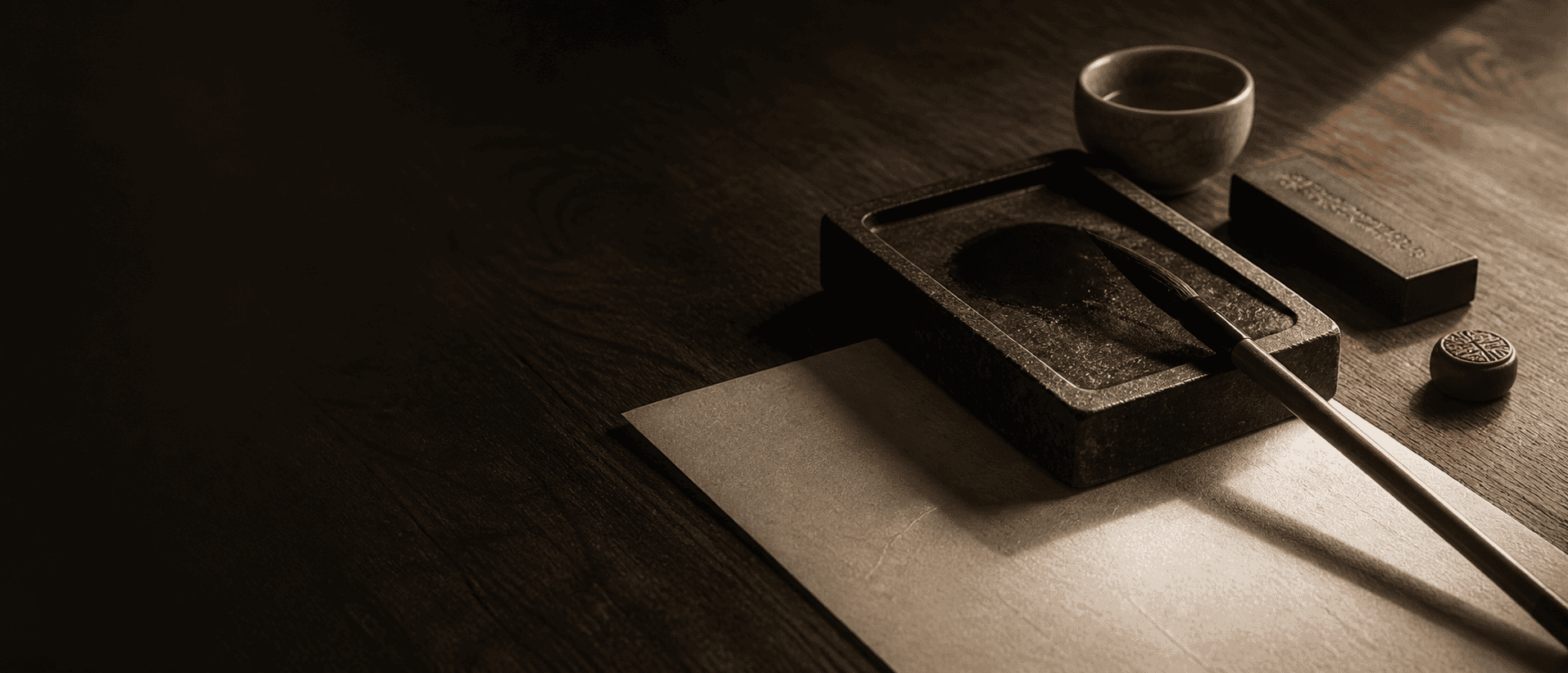
Start with the one whose question you find hardest to answer. If you would rather practice by hand, the tools below put the pause into brush and ink. Calligraphy teaches spacing like nothing else. The blank paper is part of every character.
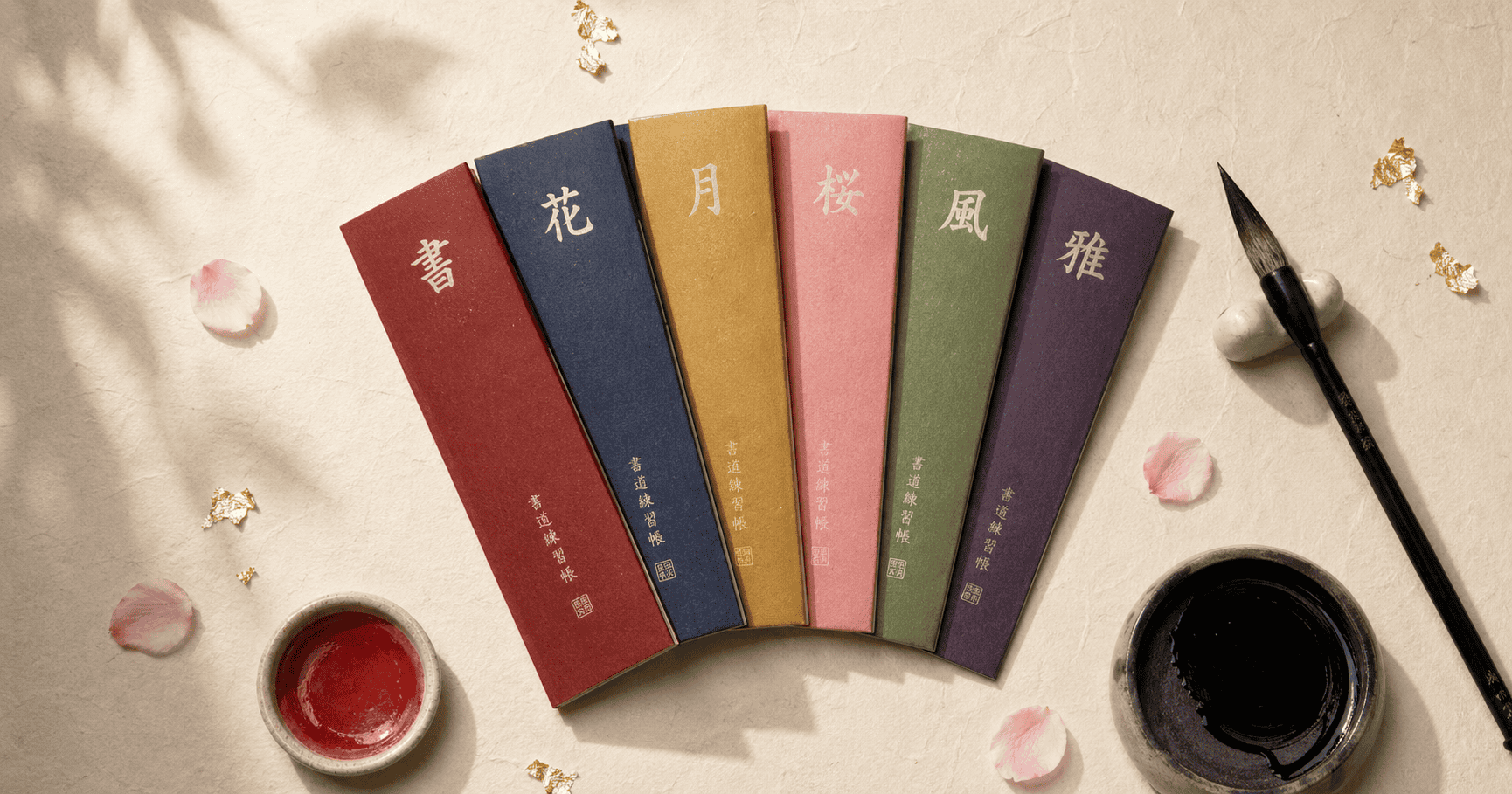
Travel at the Pace of Ma
Of course, Japan itself is the best teacher of intervals. A tea ceremony in Kyoto, a morning in a garden before the gates fill and a night in a mountain lodging can show the idea more clearly than any essay. Our travel designers build trips with that pace in mind, leaving open time on purpose and arranging private sessions with hosts who still practice the old timing. Hotels are chosen for their gardens and their calm, not only their location.
The result is a trip that moves at the speed of ma. There is time to arrive, time to look and time to let a place settle before the next one begins. Every day keeps an empty hour. Guests use it as they wish.
For the traveler who wants to feel the interval firsthand: a custom itinerary with a private tea ceremony in Kyoto, early mornings in the great gardens, a night in a mountain lodging and days built with space left open on purpose.
Plan Your Custom Japan ItineraryQuestions Worth Asking
Who really said “between stimulus and response there is a space”?
The line is usually credited to Viktor Frankl, but researchers have not found it in his published work, and the Viktor Frankl Institute does not confirm it. Stephen Covey popularized the wording and said he met it in a library book whose title he never recorded.
What does ma mean in Japanese?
Ma means gap, space, interval or pause. The character shows a gate with the sun inside its opening. It describes an interval that carries meaning rather than an absence of something.
Can you actually widen the pause before you react?
Slowly, and not by deciding to in the moment, because the interval is too short for deliberation. What changes it is repeated noticing outside the moment, until looking for the interval becomes the default.
What is ma ga warui?
Ma ga warui translates as bad ma and describes a moment that is mistimed. Japanese uses it for someone who speaks at the wrong point, misreads a room or arrives at an awkward juncture.
Is this the same as mindfulness?
No. Mindfulness is a practice of attention drawn largely from meditation. Ma is an aesthetic and structural idea about how intervals shape what sits on either side of them. The two overlap in effect and differ in origin.
How long does it take to notice a difference?
Most people notice the interval before they can use it, often within two weeks of looking for it. Using it reliably takes much longer, which is why the practice runs ninety days rather than one week.
Is this a nervous system reset?
Readers often describe it that way, and the description is theirs rather than ours. A widened interval arrives in the body first, as a longer exhale and lower shoulders. No clinical claim sits behind it.
The Editors, Magnificent Japan