
If you want to know how to practice mono no aware, start with something small. Notice the light on the kitchen wall at seven o’clock. It will look different in a month. Then let that thought make the moment sweeter, not smaller.
Mono no aware is a Japanese sensitivity to things as they pass. In daily life, it feels like tenderness. You savor a walk because the leaves are turning. You call a friend because this season of both your lives will not come twice. It is attention with warmth in it.
Below are seven small habits that build that attention, along with what research says about why they work. You will also find how long the practice takes and what to do on days when it feels heavy. Each habit also sits inside our 90-day guided journal in tenderness, which offers a daily prompt for each one.
How to Practice Mono no Aware: The Short Answer
Pay gentle attention to moments that will change, then let that awareness deepen your enjoyment of them. Take seasonal walks, note what you noticed for the last time, and eat with the season. Mark firsts and lasts, write to people you love, and revisit old photos. Finally, keep a short weekly page of what you want to remember.
What Mono no Aware Practice Really Means
Mono no aware practice is the habit of noticing that a moment is passing and loving it more because of that. So learning how to practice mono no aware means training that noticing. It is not a technique or a mood. Instead, it is a way of paying attention. You see the change, you feel moved, and then you turn that feeling toward gratitude, savoring and closeness.
Where the idea comes from
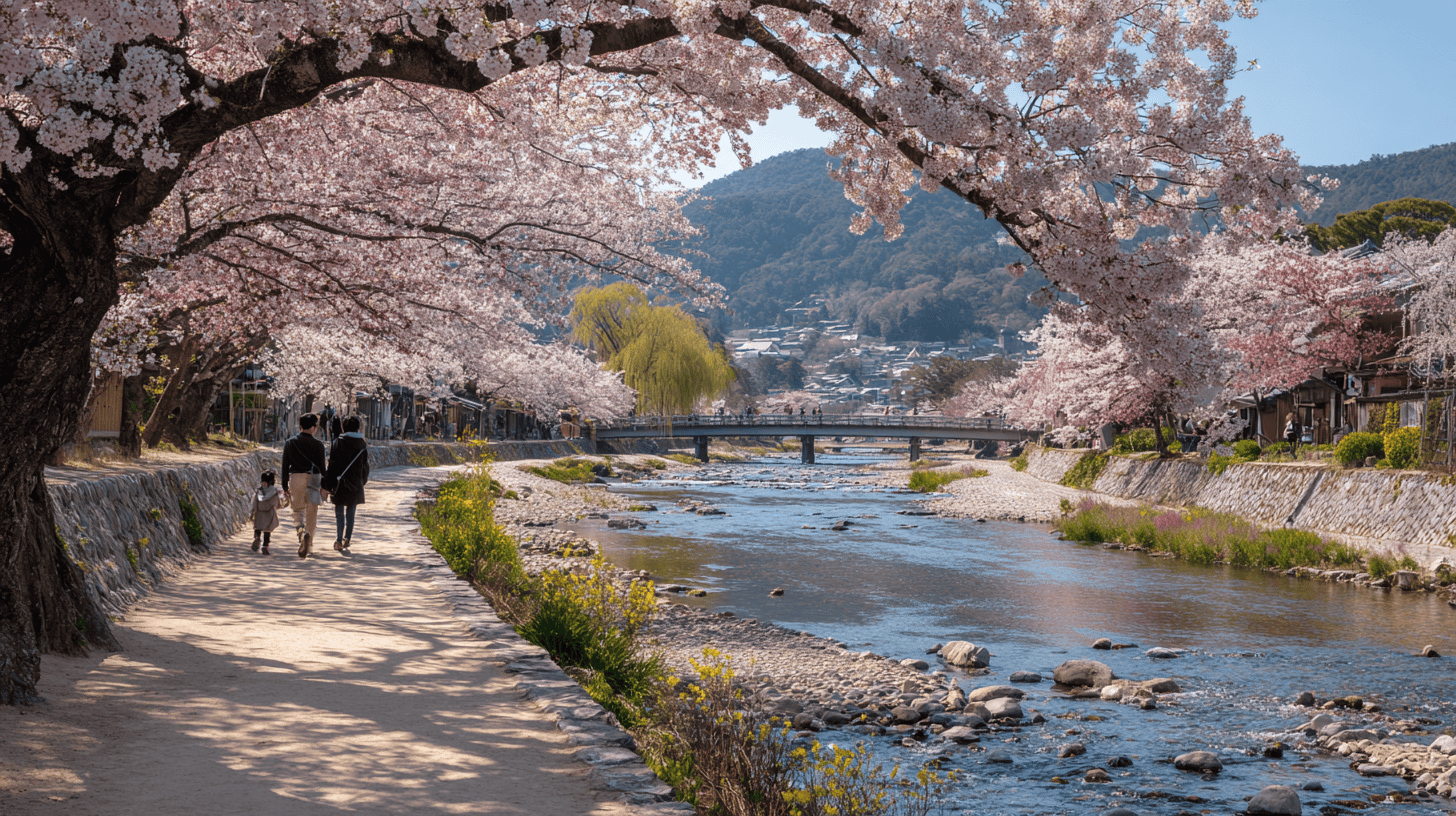
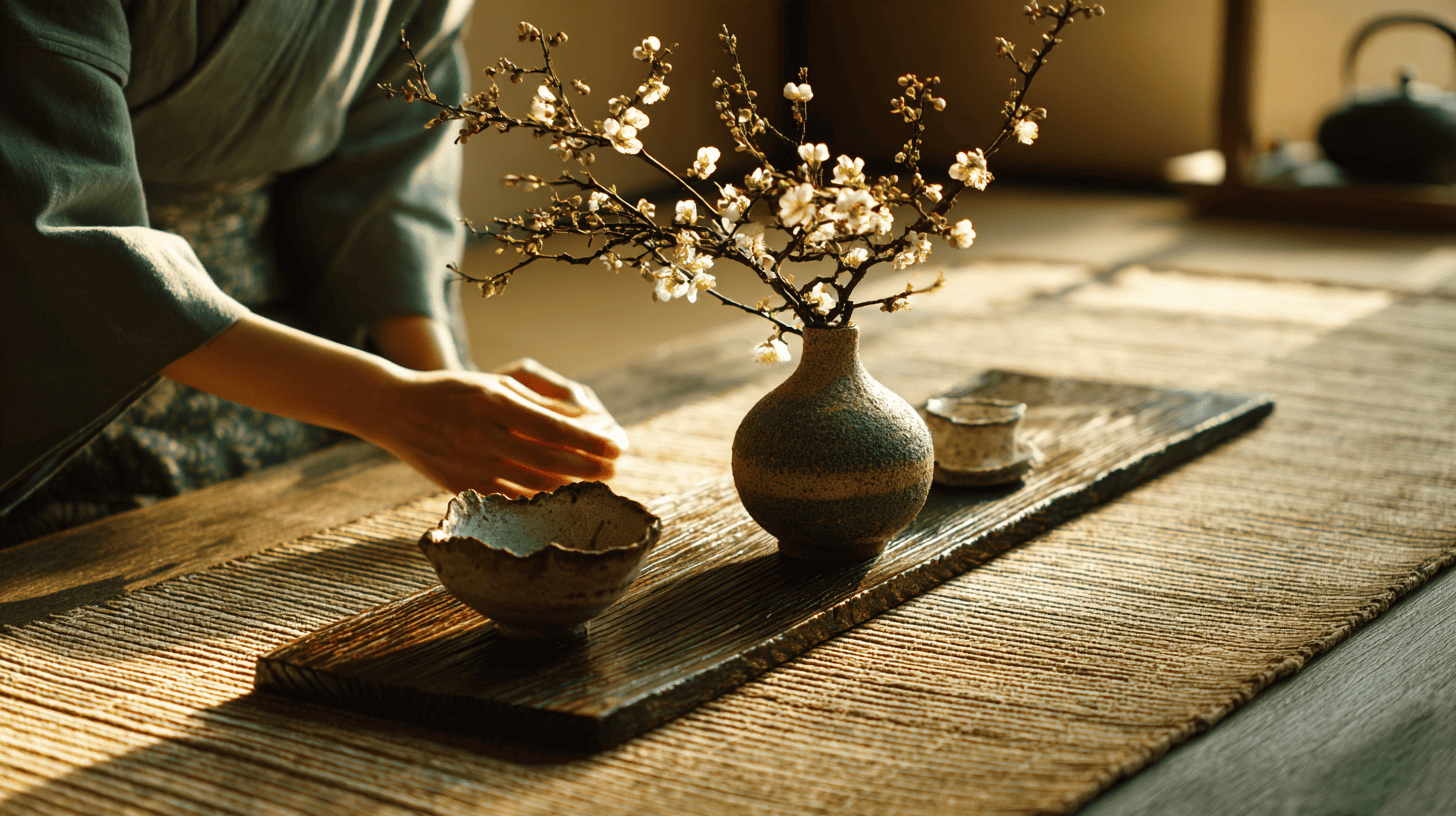
The phrase comes from Japanese literary tradition. The scholar Motoori Norinaga (1730–1801) championed it as the central concept of Japanese literature, drawing on his study of The Tale of Genji. Britannica renders his use of the term as “sensitiveness to beauty” (Britannica, Motoori Norinaga). That gloss matters for practice. It points to a capacity you can train, not a feeling you wait for. For a fuller history, our essay on the meaning of mono no aware traces the idea from court poetry to today.
How to Practice Mono no Aware Through Noticing
The first four habits train the eye. Each one asks for a few minutes and no special skill. Together, they teach you to catch small changes before they slip by. So start with whichever habit fits your week best, then add another once it feels easy.
1. Take a seasonal walk
Choose one short route and walk it every week. It might be the block around your home, a path through a park or the way to the station. Keep the route the same, because repetition is what reveals change. On each walk, look for one thing that differs from last time. Ten or fifteen minutes is plenty, and a phone left in your pocket helps.
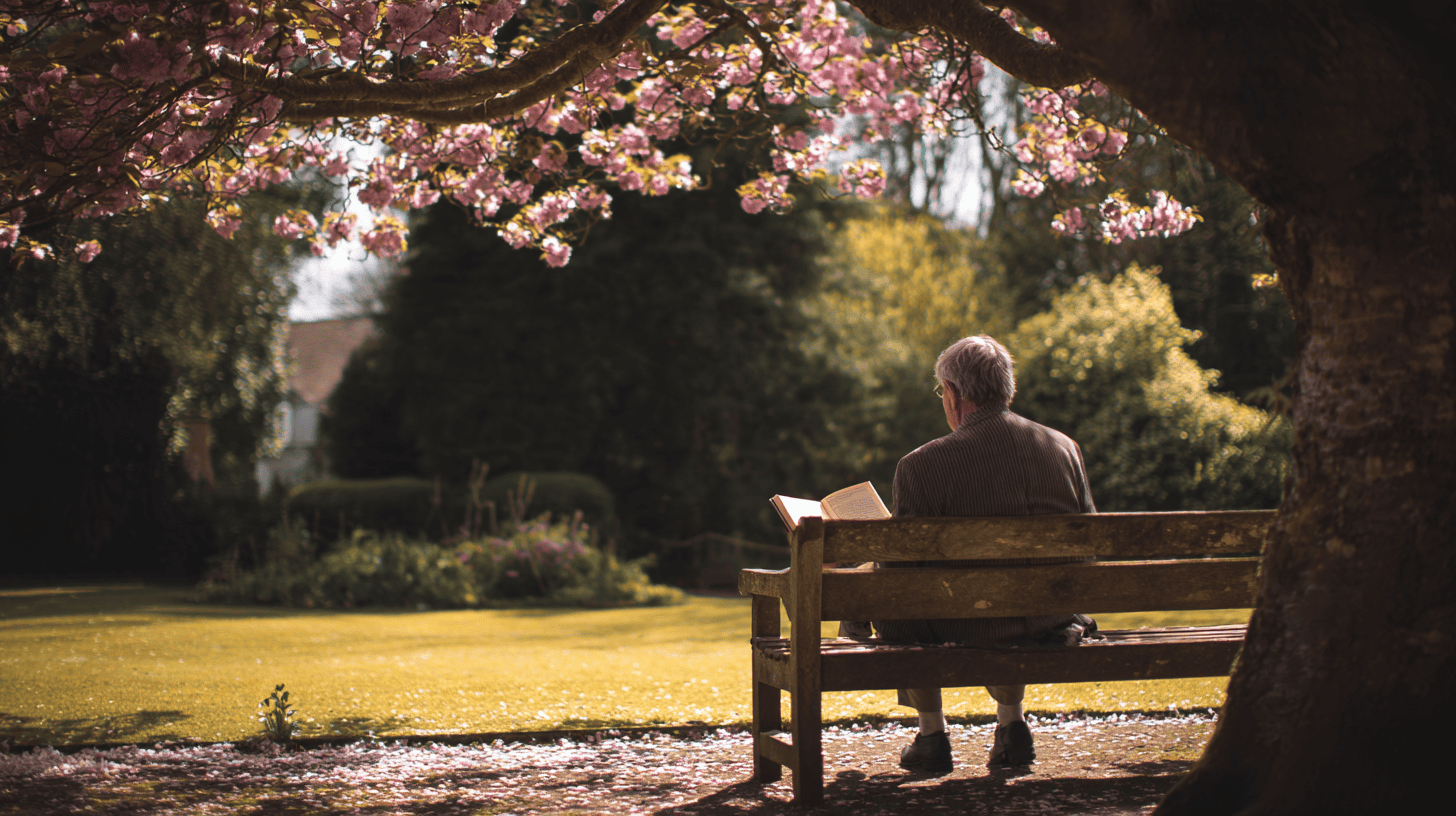
At first, you will notice the obvious. Blossoms open, leaves turn and the air cools. After a few weeks, however, your eye sharpens. You spot the first bud on a branch, the morning a café puts out its winter menu, or the hour the streetlights now switch on. Japanese culture offers a lovely model here. The spring custom of blossom viewing turns a few fleeting days into a shared celebration, as our guide to cherry blossom season in Japan describes. Your weekly walk is a smaller, everyday version of that same attention.
2. Keep a “last time I noticed” note
This habit sounds wistful, yet it works in the opposite direction. Once a day, write one line about something you enjoyed and may not meet again soon. The last warm evening on the balcony. A child’s way of saying a word. The smell of a favorite café before it changes hands.
Research supports the idea. In one study, graduating college students wrote about their college experiences twice a week. Some wrote as though graduation was very close, while others wrote as though it was far off. Students who saw the ending as near reported greater well-being and took part in more college activities (Kurtz, Psychological Science, 2008). In short, a sense of time running short sent them back into their lives, not away from them. A note like this also needs very little gear. Still, a pen that glides and an ink color you love turn one line into a small daily pleasure.
Keep the note short. One sentence is enough, and a date helps. After a month, read the lines back. You will find a record of what you loved, written while you still had it. Then act on one line. If you noted the last warm evening, you might take your dinner outside tomorrow. That step turns noticing into living, and it keeps the habit warm rather than wistful.
The note also travels well. On a trip, everything feels new, so there is more to catch and less time to catch it. A blank journal kept for one journey lets you gather those lines in one place. Write the first bowl of noodles, the view from the train and the last evening walk before your flight. Years later, those pages carry a trip back to you more vividly than any photo roll.
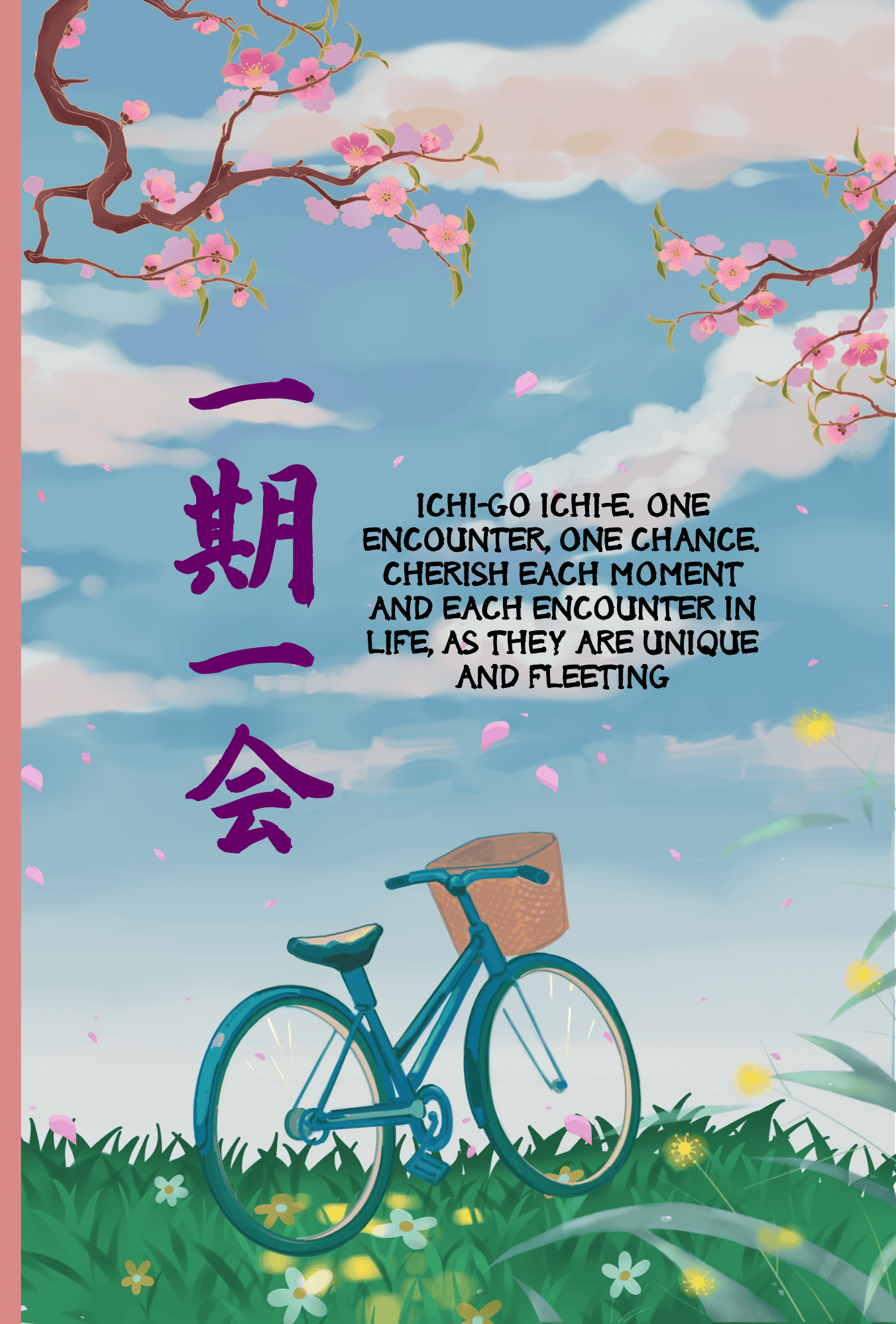
One encounter, one chance: pages for the moments worth keeping.
Unlined · 120 pages · Original cover art
Shop This Journal →3. Eat with the season
Japanese cooking prizes shun, the moment when an ingredient is at its peak. Early bamboo shoots in spring, sweet corn in summer and persimmons in autumn each have their brief window. Eating with the season is one of the easiest ways to practice mono no aware in daily life, because every meal marks the calendar.
Start at your local market. Buy one thing that has just come into season, and cook it simply. Then say so at the table. Naming the season aloud turns an ordinary dinner into a small occasion. Think of it as a conversation with the calendar. Each week, ask what is arriving, and let that answer shape one meal.
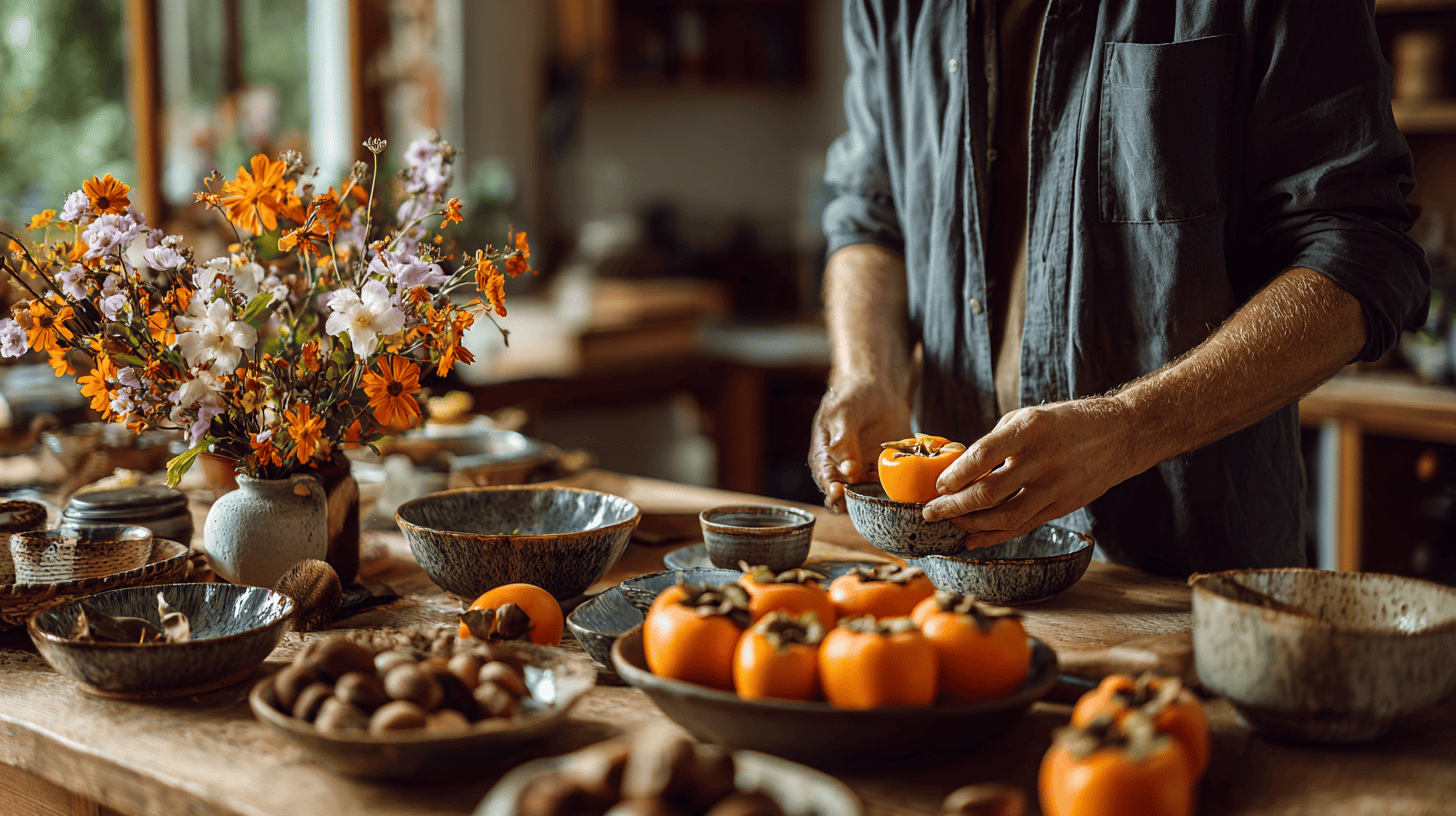
The pleasure grows when you also notice the end of a season. The last peaches of summer taste different once you know they are the last. So make a small ritual of the final purchase. Buy the best ones you can find, and share them with someone. Next year, you will look forward to their return. That cycle of waiting, savoring and letting go is the whole practice in miniature. Moreover, it asks nothing of you but a trip to the shops and an open mind at the table.
4. Mark firsts and lasts
Life is full of beginnings and endings that pass without comment. The first day at a new job. The last morning in an old apartment. A child’s first bike ride, or the final week before a friend moves abroad. This habit asks you to pause at each one.
Marking a moment can be very simple. Take one photo with care rather than twenty in a hurry. Write two lines in your journal. Or share a meal and say out loud what the day means. Firsts carry excitement, while lasts carry tenderness. Both deserve a small ceremony. Over time, these markers become the chapters of your year. They also teach you something gentle: that endings and beginnings usually arrive together. For many readers, it helps to see all seven habits laid out against an ordinary week. The table below matches each habit to a natural moment in the day.
Each habit attaches to a moment you already have, so none of them needs extra time.
| Moment | Habit | Try this |
|---|---|---|
| Morning coffee | "Last time I noticed" note | Write one line about something you enjoyed yesterday |
| Weekly walk | Seasonal walk | Look for one change along the same route |
| Market day | Eat with the season | Buy one ingredient that has just arrived |
| Milestone days | Firsts and lasts | Take one careful photo and write two lines |
| Sunday evening | Weekly remembrance page | List three moments from the week to keep |
| Once a month | Letter or photo evening | Write to someone, or open an old album together |
Notice how little extra time the plan needs. Each habit hooks onto something you already do, which is why it lasts. Next comes the habit that holds all the others together.
Mono no Aware Journaling: A Weekly Remembrance Page
5. Keep a weekly remembrance page
Once a week, give one page to the moments you want to keep. List three, with a sentence on why each one mattered. Sunday evening works well, because the week is complete but still fresh. Unlike the daily note, this page looks back across seven days and gathers them together. Don’t polish the sentences. Plain words written honestly carry more than careful ones. A guided journal makes the habit easier to keep, since a prompt waits on the page each day.
Twenty seconds inside the journal
The digital edition in use — a morning prompt, answered by hand while the coffee is still warm. Tap to play, with sound.
One page, one intention, one single quiet moment.
The film above shows The Return, the first journal in our Cultural Reflection Collection, with a morning prompt answered by hand on a tablet. The Mono no Aware Journal uses the same daily format. One prompt, a few lines and a moment of reflection make the entire routine.
Why writing helps
Writing slows a feeling down long enough to see it. Researchers have studied this for decades under the name expressive writing. In the standard method, people write for 15 to 20 minutes on three to five occasions, often on consecutive days. A clinical review found benefits for both physical and psychological health (Baikie and Wilhelm, Advances in Psychiatric Treatment, 2005).

Mono no aware journaling is gentler than that research method. You are not writing about hard events. Instead, you are writing about moments of warmth, so the page stays light. Keep it short, too. Ten minutes is plenty, and three lines count as a full entry. Then close the book and get on with your evening. Over a season, those short entries add up to a record of what made your days feel full. Reading them back on a gray afternoon is a real pleasure.
If you would like to see Japan’s seasons for yourself, we can plan a journey timed to blossom or autumn color around what you most want to notice.
Occasional letters on mono no aware, the Japanese calendar and the moments worth savoring, with news of the Cultural Reflection Collection.
Occasional letters. Unsubscribe anytime.
Mono no Aware in Daily Life: Habits of Closeness
The last two habits turn attention toward people. After all, the moments we treasure most usually have someone else in them. A shared joke, a long dinner or a phone call on a birthday stays with us because of who was there. These habits ask you to say so while you can, and to say it in a form the other person can keep.
6. Write a letter to someone
Think of a person who shaped your life and never quite heard your thanks. Then write them a letter. Be specific about what they did and what it meant to you. A teacher, a grandparent or an old colleague all make fine first choices.
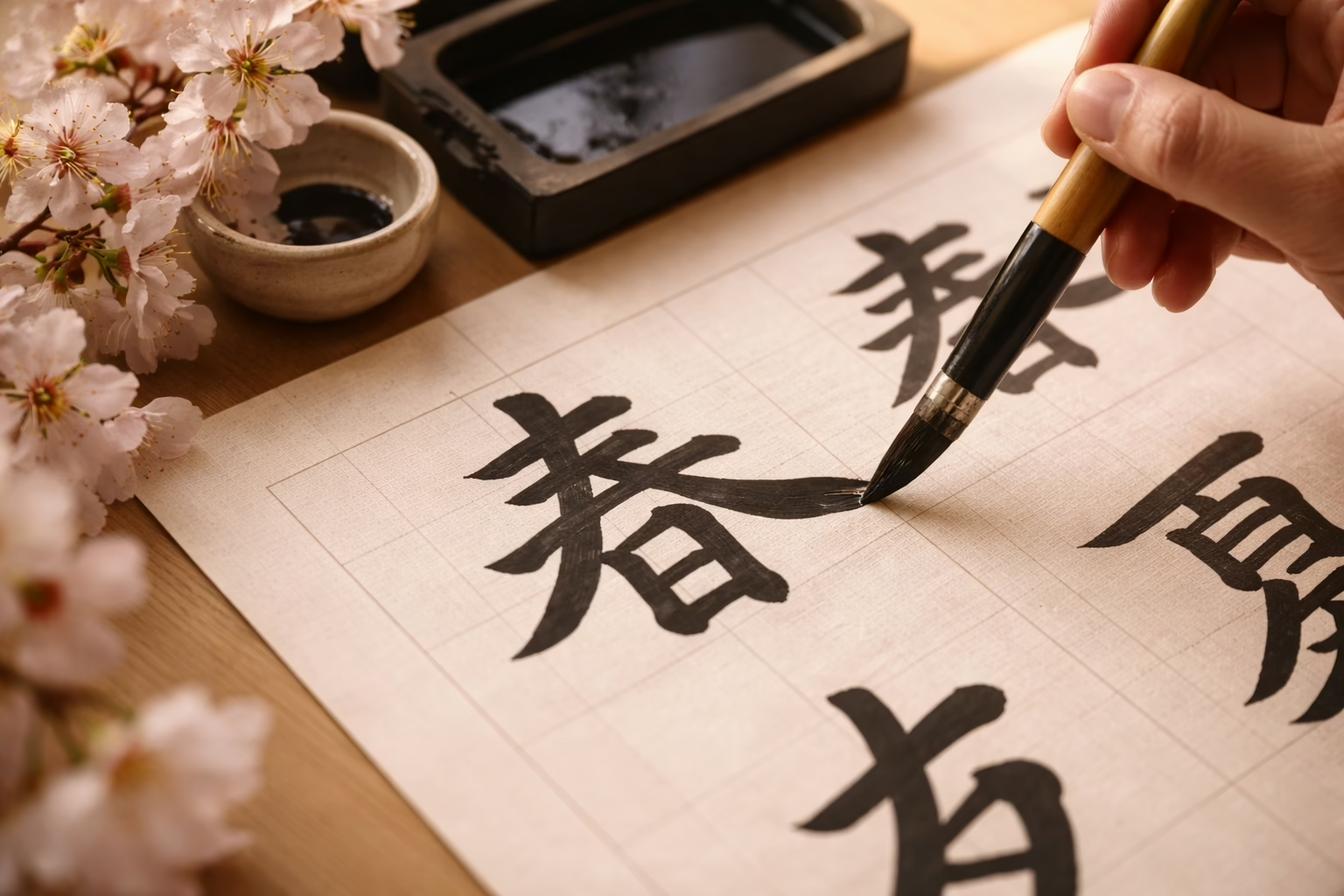
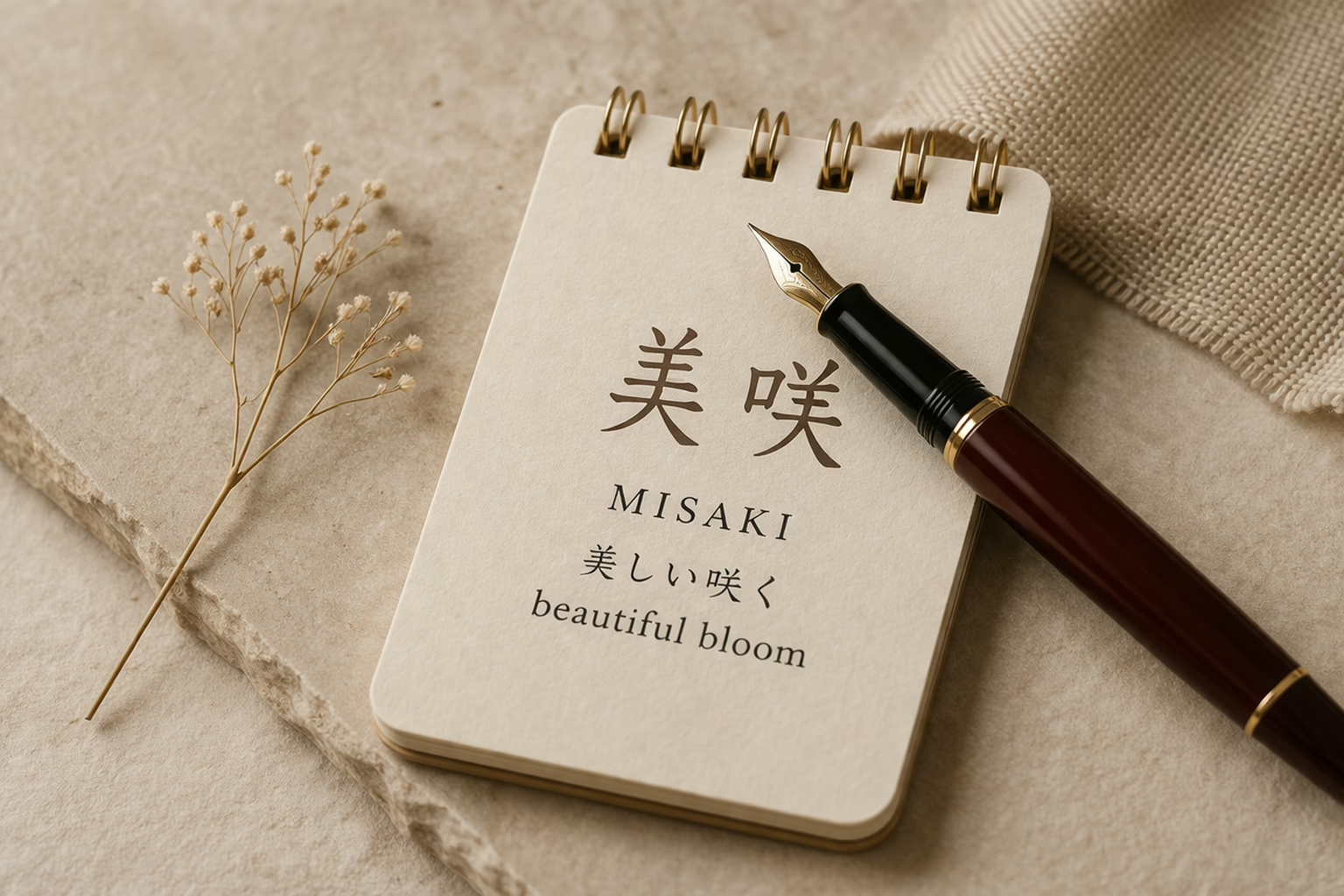
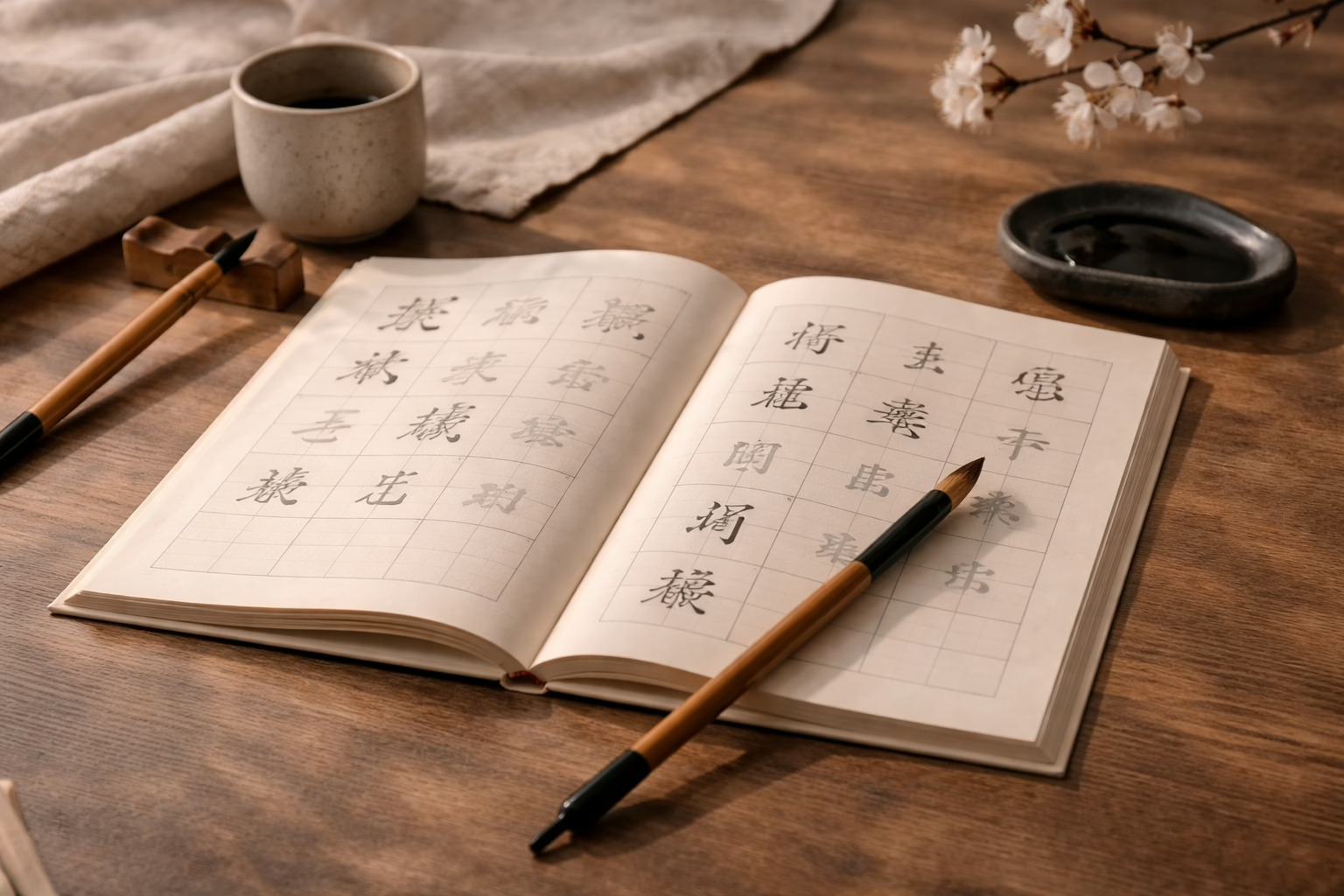
This habit has strong evidence behind it. In a well-known trial, people wrote a letter of gratitude to someone who had been especially kind to them, then delivered it in person. They showed the largest positive changes of any exercise in the study. Their boost in happiness held at one week and at one month (Seligman and colleagues, American Psychologist, 2005). By three months, the effect had faded, which is a good reason to make the letter a regular habit rather than a single event. Delivery matters, too. If you can, read the letter aloud or hand it over in person.
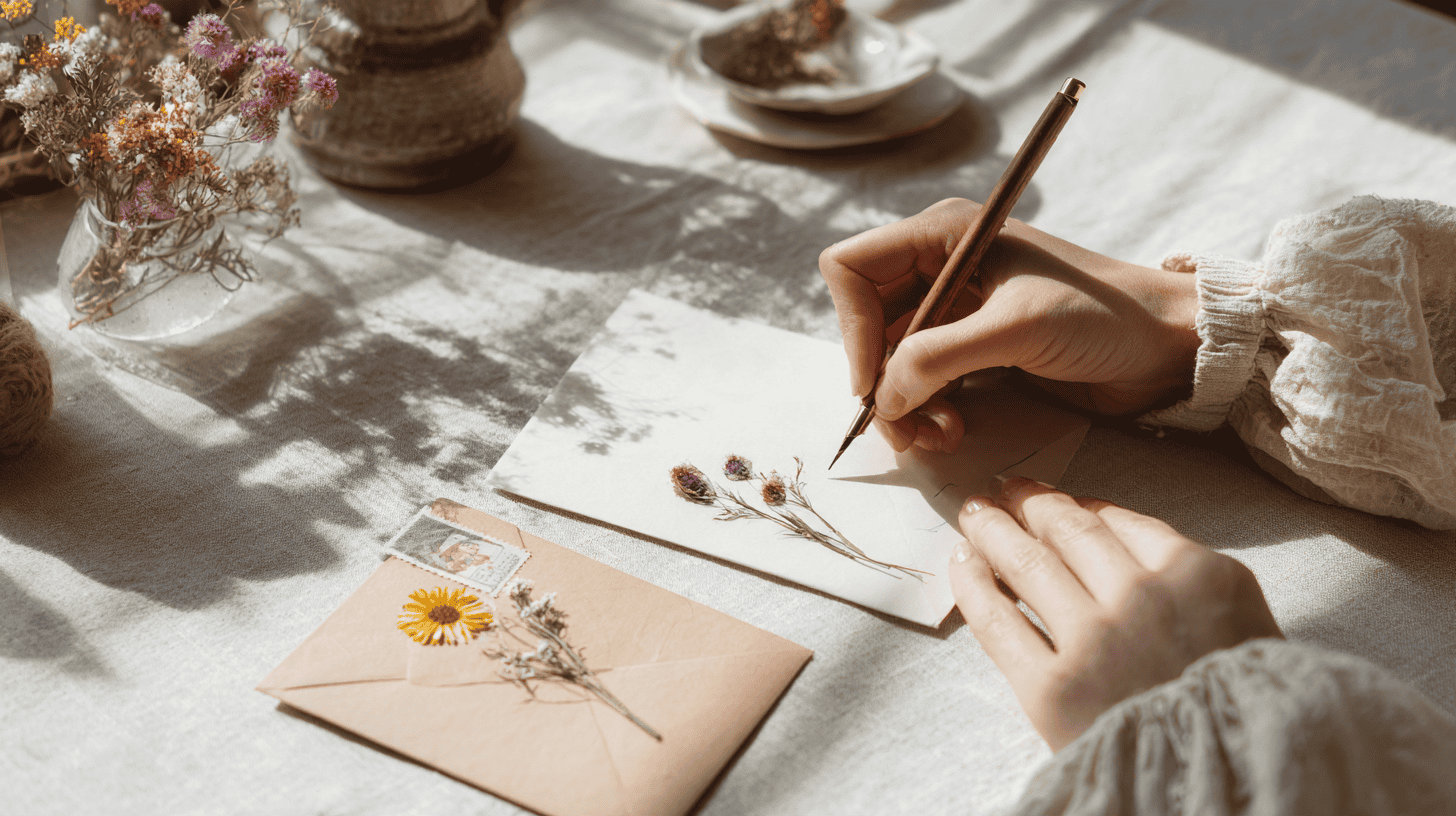
A handwritten letter fits mono no aware especially well. It captures one moment in a relationship, in your own hand, on paper that will age with it. Add a seasonal touch if you like. A pressed flower, a line about the weather or a note on what is blooming outside all place the letter in time. The reader will know exactly when it was written.
If a whole letter feels like too much, start with a card. Three sentences are enough: what you remember, why it mattered and what you hope for them. Keep a small stack of stationery within reach, so the impulse never meets a search for paper. Once a month is a lovely rhythm. Over a year, that adds up to twelve people who know how much they mean to you.
Recommended
7. Host a photo album evening
Choose an evening, pour something warm and open an old album with family or friends. Printed albums work beautifully, although a shared screen works too. Let each person choose one photo and tell the story behind it. Keep the group small, so everyone has time to talk. Two or three people around one album is ideal.
Looking back like this has real benefits. Researchers found that nostalgia bolsters social bonds, increases positive self-regard and generates positive feelings. The memories people recalled most often featured close others or momentous events, such as weddings (Wildschut and colleagues, Journal of Personality and Social Psychology, 2006).

The evening works best when it stays light. Skip the pressure to sort or organize anything. Instead, follow the stories wherever they lead. Laughter is the right sign. So is the moment someone says, “I had forgotten that.” Before everyone leaves, take one new photo of the group. It becomes the first page of the next album, and it closes the circle with a smile. For more everyday moments that carry this feeling, our collection of mono no aware examples from film, food and home offers plenty of inspiration. Then schedule the next evening before this one ends, and let someone else choose the album.
How to Appreciate Impermanence Without Feeling Heavy
How long before it feels natural
Most people who learn how to practice mono no aware notice a shift within a few weeks. The first signs are small. You pause on a walk without deciding to. You taste a peach and think of summer ending, then smile instead of sigh. That is the practice settling in. Later, the habits start to link up. A walk suggests a line for your note, and the note suggests a letter. Meanwhile, the weekly page shows you how full an ordinary week really was. At that point, the practice no longer feels like a task. Instead, it feels like the way you see.

A season is a natural unit for this work. Ninety days carries you from one season well into the next, so you watch one full change unfold. That is why we built our journal in tenderness around ninety days of prompts. Whatever pace you choose, keep it steady rather than intense, and forgive the missed days. Five minutes a day beats an hour once a month. A warm drink can anchor the routine, too. Amazake, a sweet rice drink made with koji, suits a journaling hour well. The koji version contains no alcohol, so it fits any time of day.
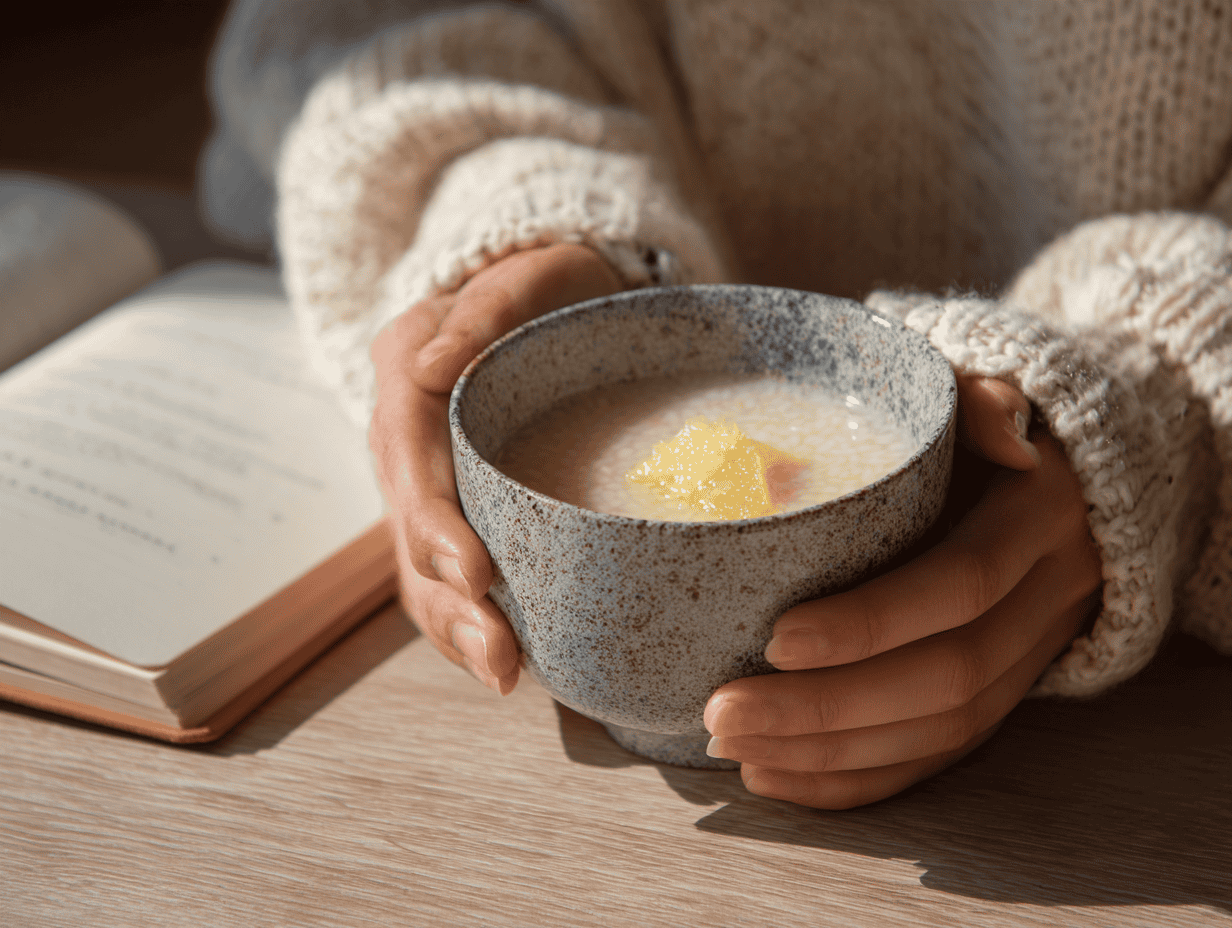
Amazake has been enjoyed in Japan for over a thousand years, made from rice and koji. It is a New Year favorite, and in haiku its name is a seasonal word for summer.
- 150 g cooked Japanese short-grain rice
- 100 g rice koji
- 200 ml water, heated to 65–70°C (149–158°F)
- Hot water, for serving
- Fresh ginger, finely grated, for serving
- Let the cooked rice cool to about 60°C (140°F), then stir in the warm water.
- Crumble the rice koji into the rice and mix well so no clumps remain.
- Keep the mixture at 55–60°C (130–140°F) for 6–8 hours in a rice cooker on keep-warm, a yogurt maker or a well-insulated flask. Check the temperature with a thermometer and stir occasionally.
- It is ready when it tastes naturally sweet and smells gently fruity. For a longer keeping time, heat it to 80°C (176°F) for 5 minutes to stop fermentation.
- To serve, dilute each portion with hot water to taste and top with a little grated ginger. Refrigerate the rest for up to 2 weeks.
Making amazake is itself a small lesson in patience. The rice turns sweet slowly, over hours, and you cannot rush it. So start a batch in the morning, and it will be ready for your evening page.
When it feels heavy, turn toward closeness
Some days, noticing that things pass can tip into wistfulness. That is normal, and it has an easy answer. Turn the feeling toward a person. Write a short note of thanks, send a photo to an old friend or plan a meal together. The feeling of change then becomes a reason to reach out. Good paper makes that note a pleasure to write, and Japanese washi, with its soft fibers and gentle color, carries a message beautifully.
Gratitude works the same way. When a moment feels fleeting, name one thing about it you are thankful for. The research on expressive writing also notes that writing about hard events can raise distress in the short term. That is one more reason to keep this practice focused on warmth. You are collecting good moments, not reopening difficult ones. If a prompt ever stirs something heavy, simply choose a lighter one that day. There is no wrong way to begin again tomorrow. Also remember that joy and wistfulness often sit side by side. Feeling both at once simply means a moment mattered to you.
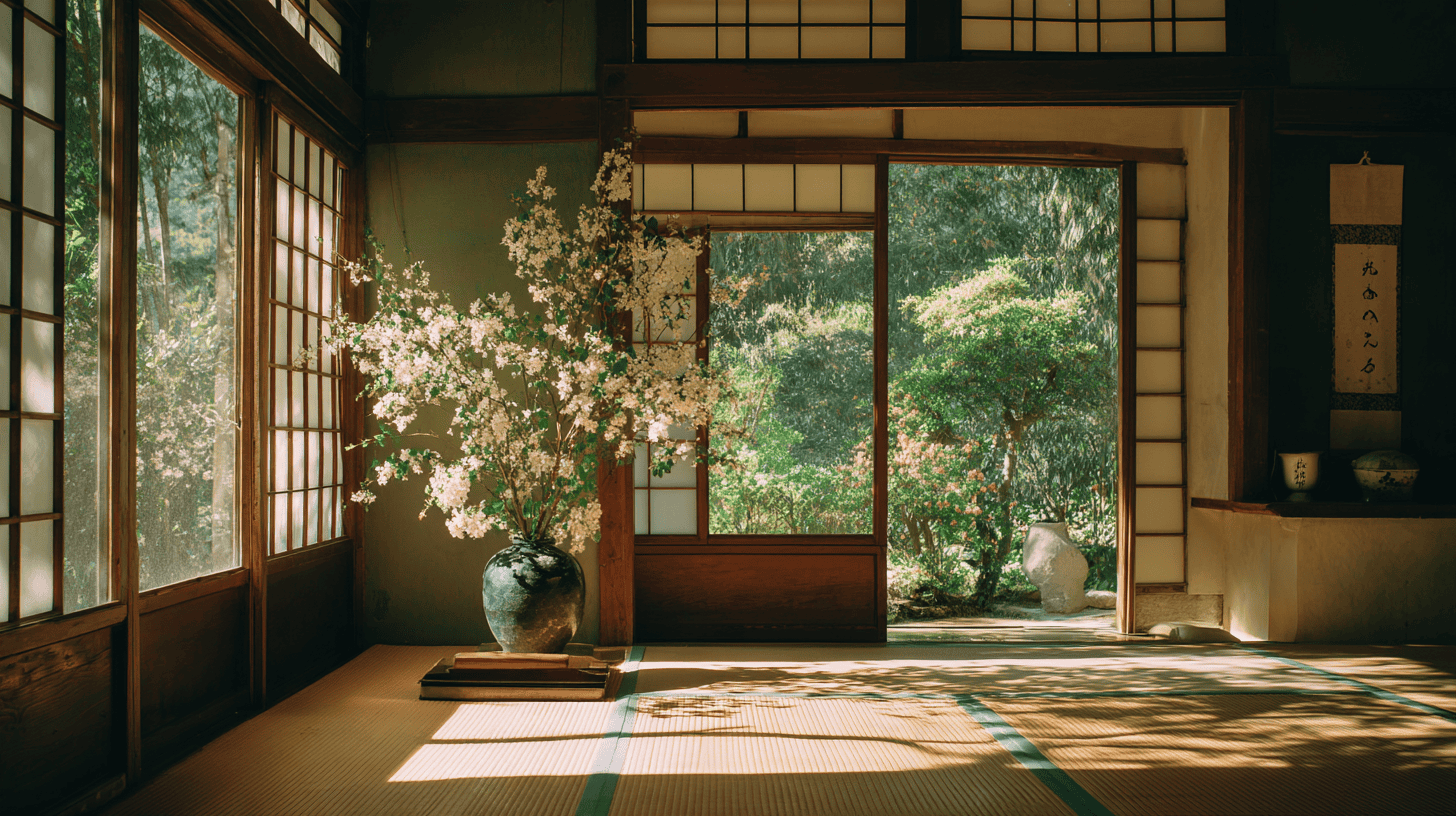

Sharing the practice with others
Mono no aware grows easier in company. In fact, how to practice mono no aware with others is a question many families ask. Invite a partner, a child or a friend to join one habit. Families might share a weekly walk and let each person name one change. Friends can swap seasonal photos on the first day of every month. Couples might keep a shared note of firsts and lasts. These small rituals create memories while you are still living them. Moreover, they give everyone the same gentle language for a passing moment. For a wider view of how Japanese ideas can shape a whole life, our overview of Japanese concepts for everyday living pairs well with this practice.
Questions Worth Asking
Is mono no aware a sad feeling?
Not at heart. Norinaga linked the term to a sensitivity to beauty, and many people experience it as warmth. The awareness that a moment will pass tends to make it richer. Practiced with care, it leans toward gratitude and closeness, and toward enjoying ordinary days while they are here.
How is mono no aware different from wabi-sabi?
Wabi-sabi finds beauty in things that are simple, weathered or imperfect, such as a cracked tea bowl. Mono no aware is the feeling of being moved as something passes, like a season turning. One describes a quality in objects. The other describes a response in the person who notices.
Can I practice mono no aware without visiting Japan?
Yes. Every habit here works wherever you live, because every place has seasons, meals, milestones and people you love. A park near home, a market stall or an old family album offers all the material you need. Travel to Japan adds richness but is never required.
What should I write in a mono no aware journal?
Write short, specific entries about moments you enjoyed and want to keep. Note what changed, who was there and why it mattered. Three lines are enough. A weekly look back across seven days helps, and a guided prompt removes the question of where to start.
What is an English word for mono no aware?
No single English word matches it. A common rendering is "the pathos of things." Britannica glosses Norinaga's use as sensitiveness to beauty. Many readers find a phrase such as "tender attention to passing moments" closest to how it feels in daily life.
Begin Your Mono no Aware Practice This Week
You do not need a new life to begin, only a new kind of attention. Choose one habit from this guide and try it for seven days. Walk the same route, write one line each morning or send one letter. Then notice how the week feels different. That is how to practice mono no aware: gently, often and with the people you love close by. If you would like a companion for the next ninety days, the Mono no Aware Journal offers a daily prompt across three movements of longing, parting and remembrance. For readers curious about its neighbor, our comparison of mono no aware and wabi-sabi explains how the two ideas differ.
A ninety-day guided practice in repair, drawn from the gold-seamed craft that shares ikigai’s respect for patient, handmade work.
View the Journal →The same tenderness runs through the art of kintsugi, which repairs broken pottery with gold. Both ideas ask you to honor what time touches. Start with one small moment today, and write it down tonight. Then tomorrow, look for another. Those small moments, gathered week by week, become a life you have truly noticed.
The Editors, Magnificent Japan
We design routes with room to notice: a morning market, a riverside bench under the trees, a ryokan dinner built around what is in season this week.
Plan Your Custom Japan Itinerary