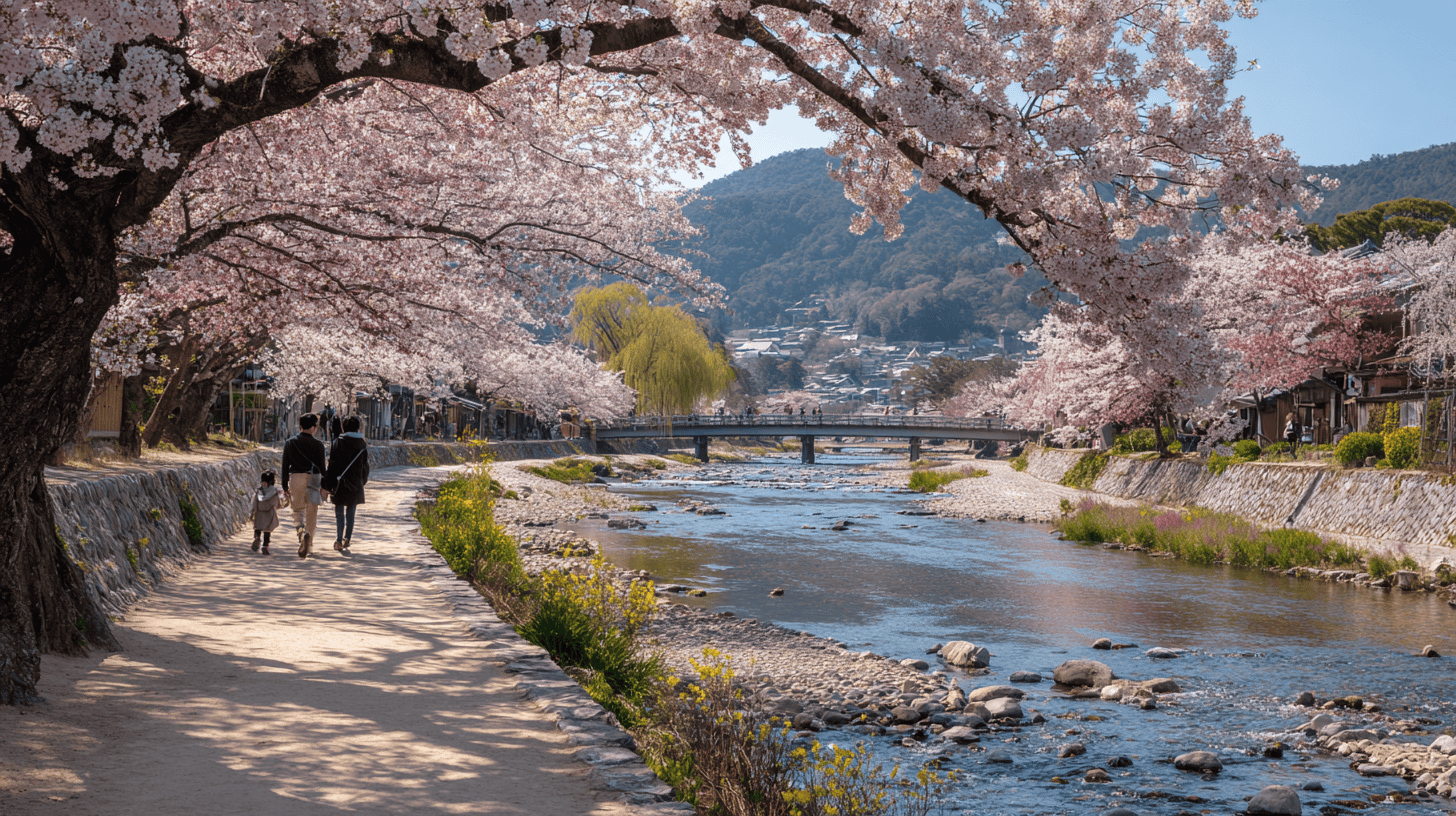
The best mono no aware examples are small. Picture a child who wants to shield a cherry tree from the wind. A father and daughter share one last trip before her wedding. A family stacks white dumplings by the window for the autumn moon. Each moment is ordinary, and each one glows because it will not come again.
Mono no aware is often translated as the pathos of things. We prefer a warmer reading: a gentle attentiveness that makes passing moments feel precious. It is the reason a last evening together can feel richer than a first one. It also explains why Japan builds whole festivals around blossoms, fireflies and the moon.
Below, you will find real examples from literature, haiku, film, the seasons and daily life, each with a note on why it counts. If you would like to practice this attention each morning, The Mono no Aware Journal, our 90-day guided journal in tenderness, offers a daily prompt for exactly that.
What Are Some Mono no Aware Examples?
Classic mono no aware examples include cherry blossom viewing, the moon-viewing festival of tsukimi, firefly evenings in early summer and autumn leaf walks. In literature, The Tale of Genji and the haiku of Bashō and Issa are full of it. In film, Ozu’s Late Spring and Tokyo Story show it in family life. Each one savors a moment because it passes.
What Makes Something a Mono no Aware Example
The phrase joins two words. Mono means things, and aware is a sigh of feeling, close to “ah.” So the phrase names the feeling that rises when something touches you. The Stanford Encyclopedia of Philosophy traces the pathos to one source: the transience of things. However, the feeling itself is not gloom. It is closer to tenderness.
Three signs help you spot a true example. First, the moment is beautiful or dear. Second, it is clearly brief, and everyone present knows it. Third, that brevity sharpens attention instead of spoiling it. A picnic under full blossoms meets all three. A crowded commute does not.
The test also works in reverse. When you catch yourself thinking, “I want to remember this,” you are usually inside a mono no aware moment. For a fuller definition and history, our guide to what mono no aware means covers the word in depth. Here, we stay with examples.
Mono no Aware Examples in The Tale of Genji and Classical Poetry
Japanese literature is where the idea took its modern shape, through a novel and a later reading of it.
A boy who wants to keep the cherry blossoms
The Tale of Genji was written by Murasaki Shikibu, a lady of the Heian court, in the early eleventh century. Its translator Royall Tyler points to one scene that captures the whole mood. A small boy decides that he will not let the cherry blossoms fall. His plan is simple: put up a curtain all round the tree so the wind cannot reach them.
Why does it count? Because the boy already knows, in his childish way, that blossoms cannot last. His answer is devotion, not sadness. He wants to protect something lovely for as long as he can. That instinct sits at the center of mono no aware.
How a scholar gave the idea its name
In the eighteenth century, the scholar Motoori Norinaga argued that mono no aware was the central theme of Genji. Tyler adds a lovely twist. The exact phrase never appears in the tale itself. Norinaga, in other words, named something readers had felt for centuries.
So you do not need the word on the page. You need the moment, the sense that it is passing, and a heart that leans toward it.
Plum blossoms and a new era
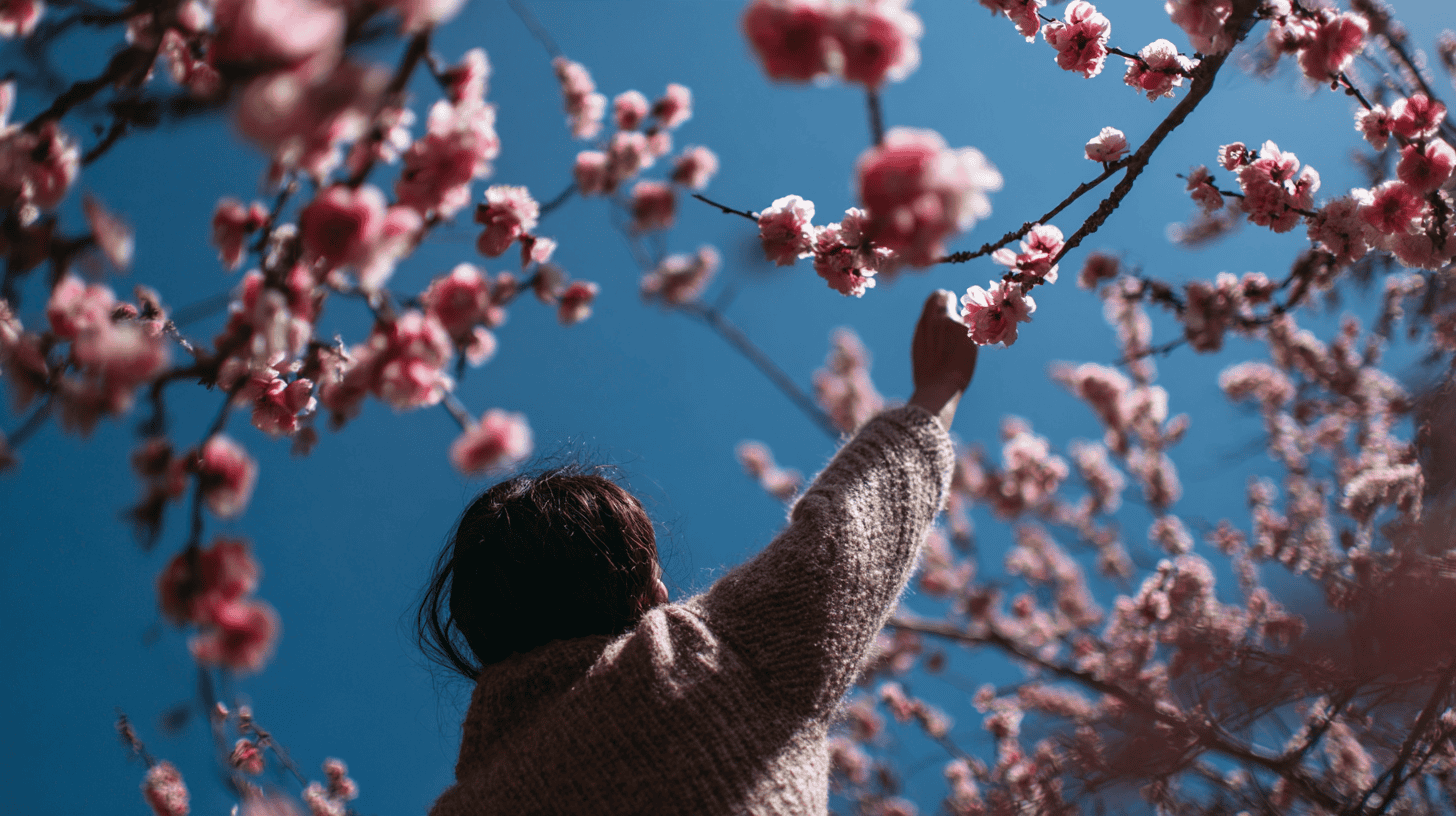
Classical poetry offers a bright example that still feels current. In 2019, Japan named its new imperial era Reiwa. Its name came from the preface to a group of plum blossom poems in the Man’yōshū, an eighth-century anthology. The Prime Minister’s statement quoted it directly: the plum blossoms open like powder before a mirror.
That statement also described plum flowers announcing spring after a hard winter. That is mono no aware at its most hopeful. The blossoms are brief, yet they arrive right on time, and people gather to greet them. Therefore, a modern nation reached for a very old moment of noticing to name its future.
Those poets wrote down what they saw, and you can borrow the habit. A slim notebook and a smooth pen make it easy to catch a scene before it fades. Here are a few Japanese stationery pieces suited to the task.
Mono no Aware Haiku: Bashō and Issa
Haiku may be the clearest home for mono no aware. A haiku holds one moment in seventeen sounds, so it cannot help but notice time. Two poets show two sides of the feeling.
Bashō and the blossoms that bring back a life
Matsuo Bashō wrote one of the gentlest cherry haiku in Japanese: samazama no / koto omoidasu / sakura kana. Put plainly, it says the cherry blossoms call so many things to mind. According to Engaku-ji, the Kamakura Zen temple, Bashō wrote it after returning home following a long absence. The trees in full bloom reminded him of a master he had served more than twenty years before.
Why is this an example? Because the blossoms return every spring, while the years between them do not. The poem holds both at once. Yet its tone is warm. He is not sighing over lost years. Instead, he is grateful that one sight can bring back so much.

Issa and the strangers under the trees
Kobayashi Issa, writing about a century later, found a different angle. One of his verses reads hana no kage / aka no tanin wa / nakari keri. In the shade of the blossoms, it says, no one is really a stranger. The poem turns a passing season into a moment of closeness.
This is mono no aware as warmth. Because everyone under the trees knows the petals will soon fall, the usual distance between people softens. Strangers share a view and a smile. So Issa’s verse is a good answer for anyone who finds the idea too somber: brief beauty draws people together.
Bashō also kept travel diaries in which prose and haiku sit side by side. His famous journey north became a book of small, dated moments. A blank travel journal lets you do the same on your own road. Ours carries Mount Fuji on the cover and leaves every page open for the scenes you want to keep.
A blank book for the views, the meals and the moments worth keeping.
Unlined · 120 pages · Original cover art
Shop This Journal →Mono no Aware in Film: Late Spring and Tokyo Story
Yasujirō Ozu is the filmmaker most often linked with mono no aware. The Stanford Encyclopedia even calls his films a series of exercises in conveying it. His stories follow families through the ordinary changes every household knows.
Late Spring (1949)
In Late Spring, Setsuko Hara plays Noriko, a daughter content to keep house for her father. He gently encourages her to marry. She is reluctant to leave the home they share. The film follows the weeks before her wedding, including one last trip the two take together.
Why does it count? Because both father and daughter know this chapter of their lives is closing. Neither makes a speech about it. They simply enjoy each other’s company a little more carefully. The tenderness lives in small gestures, and the result is a portrait of love at the moment of change.
Late Spring also shows why mono no aware suits cinema so well. A camera can hold a scene longer than we would in life. As a result, it lets viewers feel the weight of an afternoon that the characters are only half aware of.
Tokyo Story (1953)
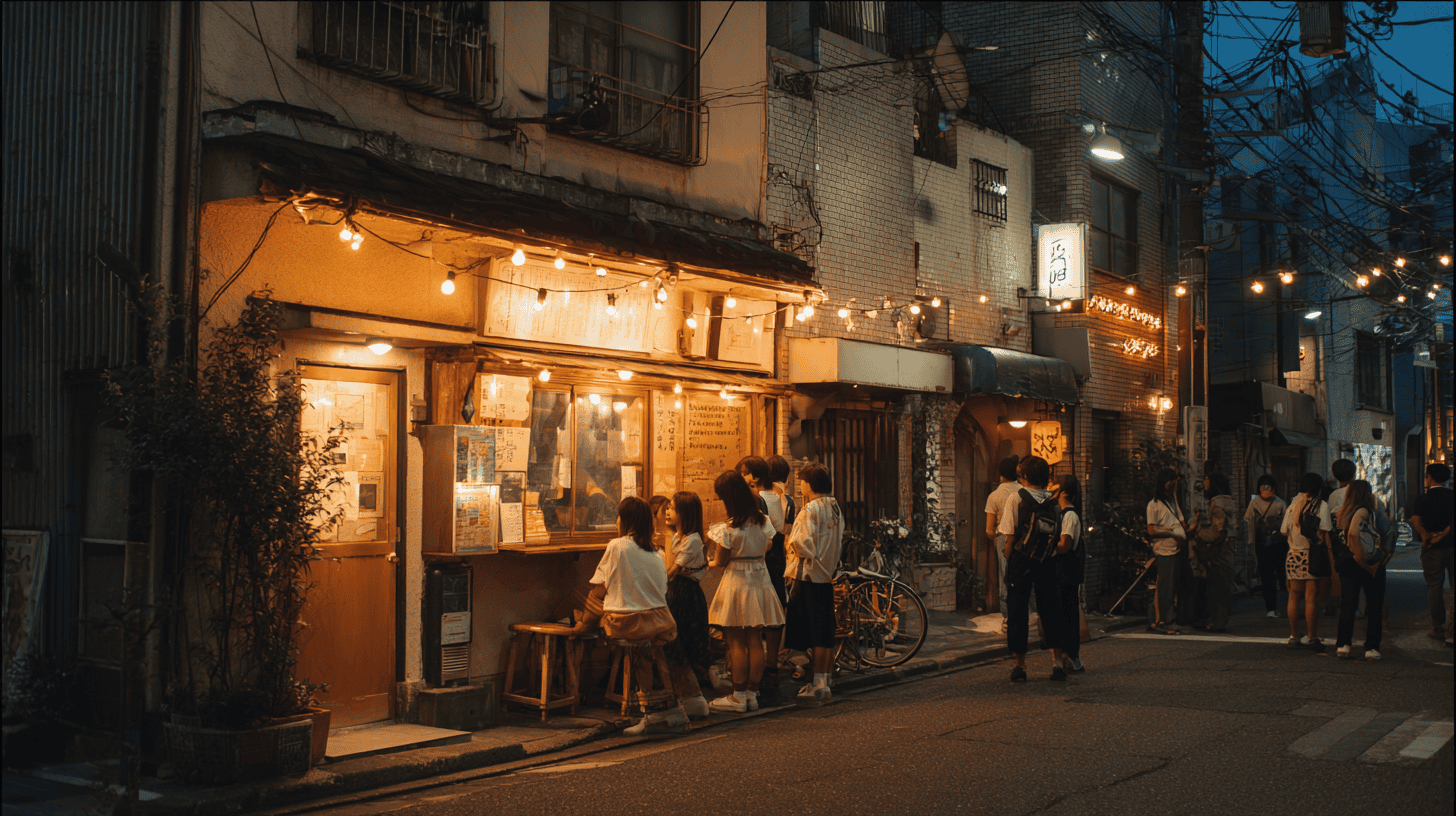
Tokyo Story follows an older couple from the port town of Onomichi as they visit their grown children in Tokyo. The son and daughter are busy with their work. Only their daughter-in-law Noriko, again played by Setsuko Hara, truly makes time for them. According to the BFI, the film placed third in the 2012 Sight and Sound poll, behind Vertigo and Citizen Kane.
The visit is short, and everyone half knows it may not be repeated soon. That is the source of its power. Noriko’s kindness stands out because she offers it gladly, in a brief window. Watching it, most viewers think of their own parents and of the visits they still have ahead.
What to watch for
When you watch Ozu, notice the pauses between scenes. The camera often rests on a street, a hallway or a line of washing before the story moves on. Those still moments give you time to feel what just happened. Watch the family meals, too.
You can use the same lens on your own life, even at home. A family dinner before someone moves away is a scene Ozu would have filmed. So is the last cup of tea before a long trip. The table below gathers the examples so far, with a note on what each one asks you to notice.
Every example pairs something dear with the knowledge that it will pass.
| Example | Where it appears | What it asks you to notice |
|---|---|---|
| The curtain around the cherry tree | The Tale of Genji, early 11th century | The wish to protect something lovely |
| Blossoms that bring back a life | Bashō's cherry haiku | How one sight holds many years |
| No strangers under the trees | Issa's cherry haiku | Closeness that brief beauty creates |
| A last trip before a wedding | Late Spring, 1949 | Love at the moment of change |
| Dumplings for the harvest moon | Tsukimi, September or October | Gratitude for one bright night |
Seasonal Examples of Mono no Aware Through the Year
Japan’s calendar is a string of mono no aware examples. Each season has an event built around something that will not stay. Rather than grieve that fact, people make an outing of it.
Hanami: cherry blossom viewing
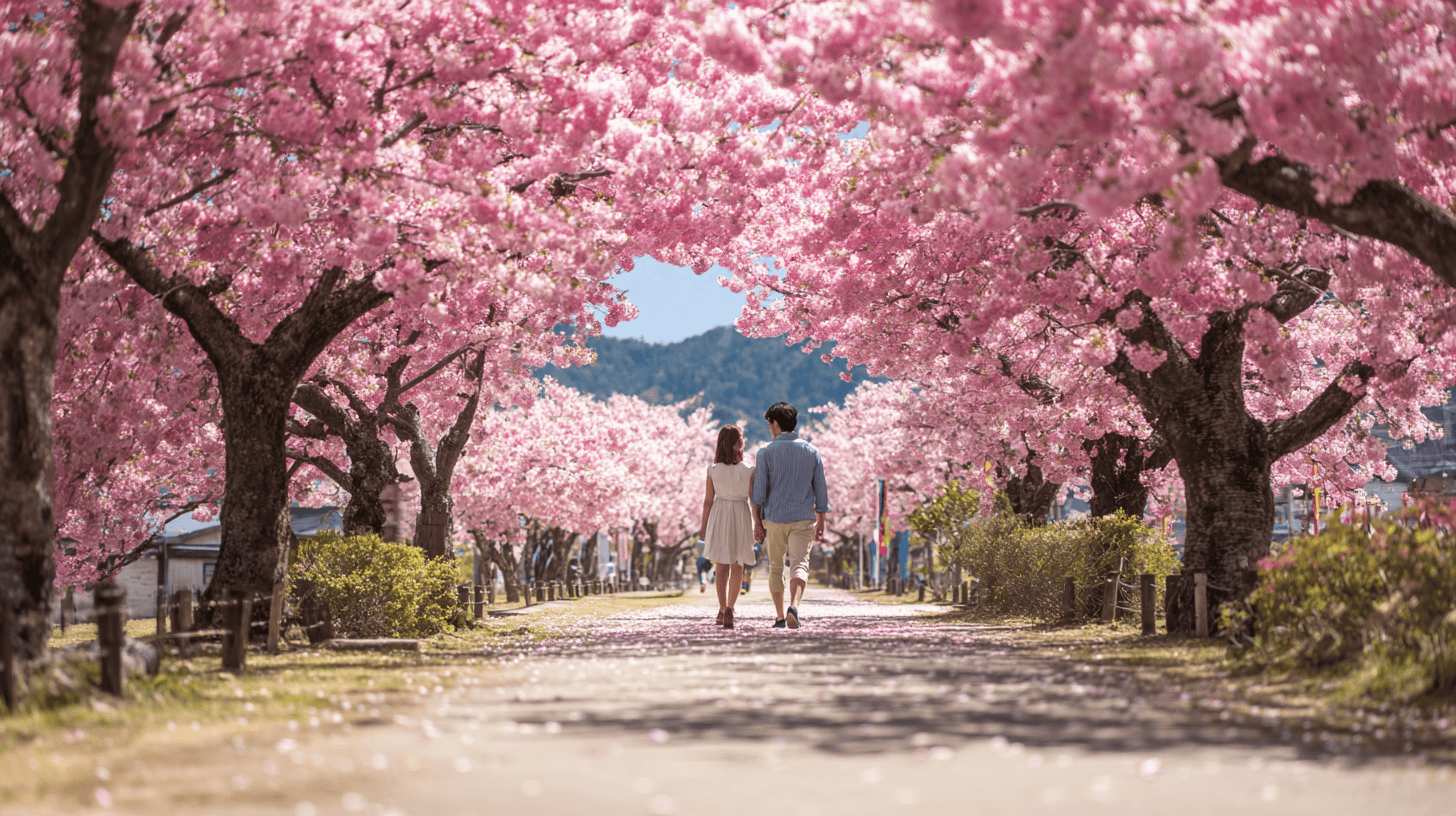
Cherry blossom viewing is the example everyone knows, and for good reason. The Stanford Encyclopedia calls the love of cherry blossoms the most cited case in modern Japan. Its reason is simple: the flowers usually begin to fall within a week of opening. So friends and coworkers claim a patch of ground and picnic under the branches.
The short season is the point, because people drop their plans to be there. Our essay on why cherry blossoms carry mono no aware explores this in more detail. Notice how hanami turns a fleeting sight into a party.
Some keep the habit alive all year with a few lines each morning. The short film below shows The Return, the first journal in our Cultural Reflection Collection, with a morning prompt answered by hand on a tablet. Our Mono no Aware Journal uses the same daily format.
Twenty seconds inside the journal
The digital edition in use — a morning prompt, answered by hand while the coffee is still warm. Tap to play, with sound.
One page, one intention, one single quiet moment.
Firefly evenings and summer fireworks
In early summer, families walk to streams at dusk to watch fireflies. The lights rise from the grass, drift over the water and go dark again. The season lasts only a few weeks, which is exactly why children remember it for decades.
Later in summer come the fireworks. Large displays light up rivers and bays, and crowds in cotton yukata sigh together at each burst. At home, families light senkō hanabi, the small sparklers held by hand. The glowing bead at the tip crackles, then drops. Children watch in silence, each one trying to make theirs last the longest, and cheer softly when one finally wins.
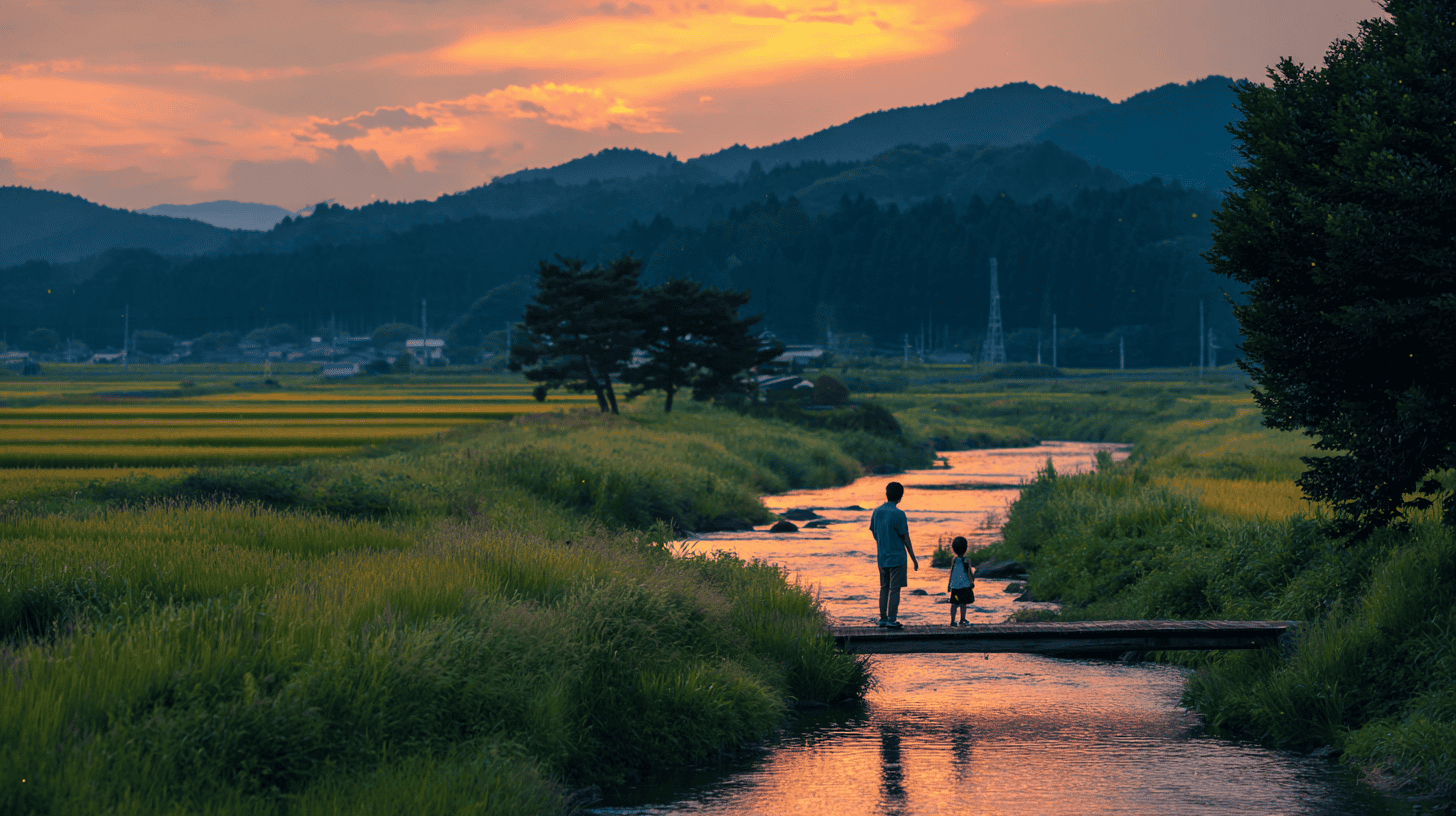
Both customs share the same shape. The beauty is bright, brief and best enjoyed with others. Nobody expects a firework to hang in the sky. Instead, the pleasure comes from watching together and saying “ah” at the same moment. That shared sigh is very close to the original sense of aware.
These evenings are also among the easiest customs to join as a traveler. They need no ticket and no special knowledge, only good timing. If you would like help with that timing, we can plan the dates around them.
If you would like to stand under the blossoms or beside a firefly stream yourself, we can shape a Japan itinerary timed to the seasons you love around your dates.
Occasional letters on mono no aware, the Japanese calendar and the moments worth savoring, with news of the Cultural Reflection Collection.
Occasional letters. Unsubscribe anytime.
Momijigari: autumn leaf viewing
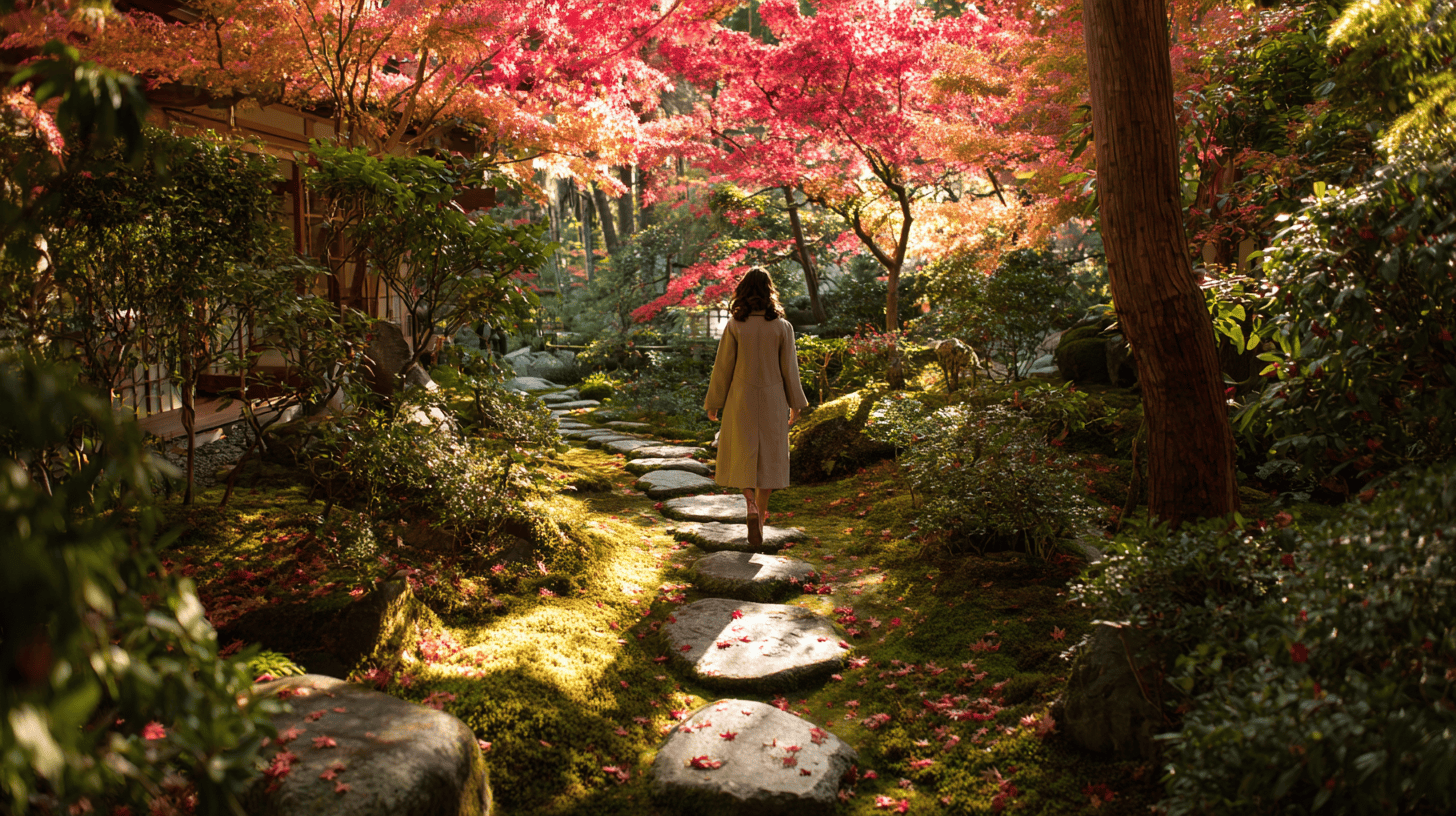
Autumn brings momijigari, literally “hunting red leaves.” In Kyoto, people visit temple gardens to see maples turn scarlet around the halls. The color peaks for a short spell, then the leaves carpet the moss. Many visitors return to the same garden year after year, simply to compare this autumn with the last.
Autumn leaves also make a useful contrast with blossoms. Cherry petals fall at their freshest, while maple leaves glow brightest just before they drop. Both remind us to look now. If you enjoy comparing these ideas, our piece on how mono no aware differs from wabi-sabi sets the two side by side.
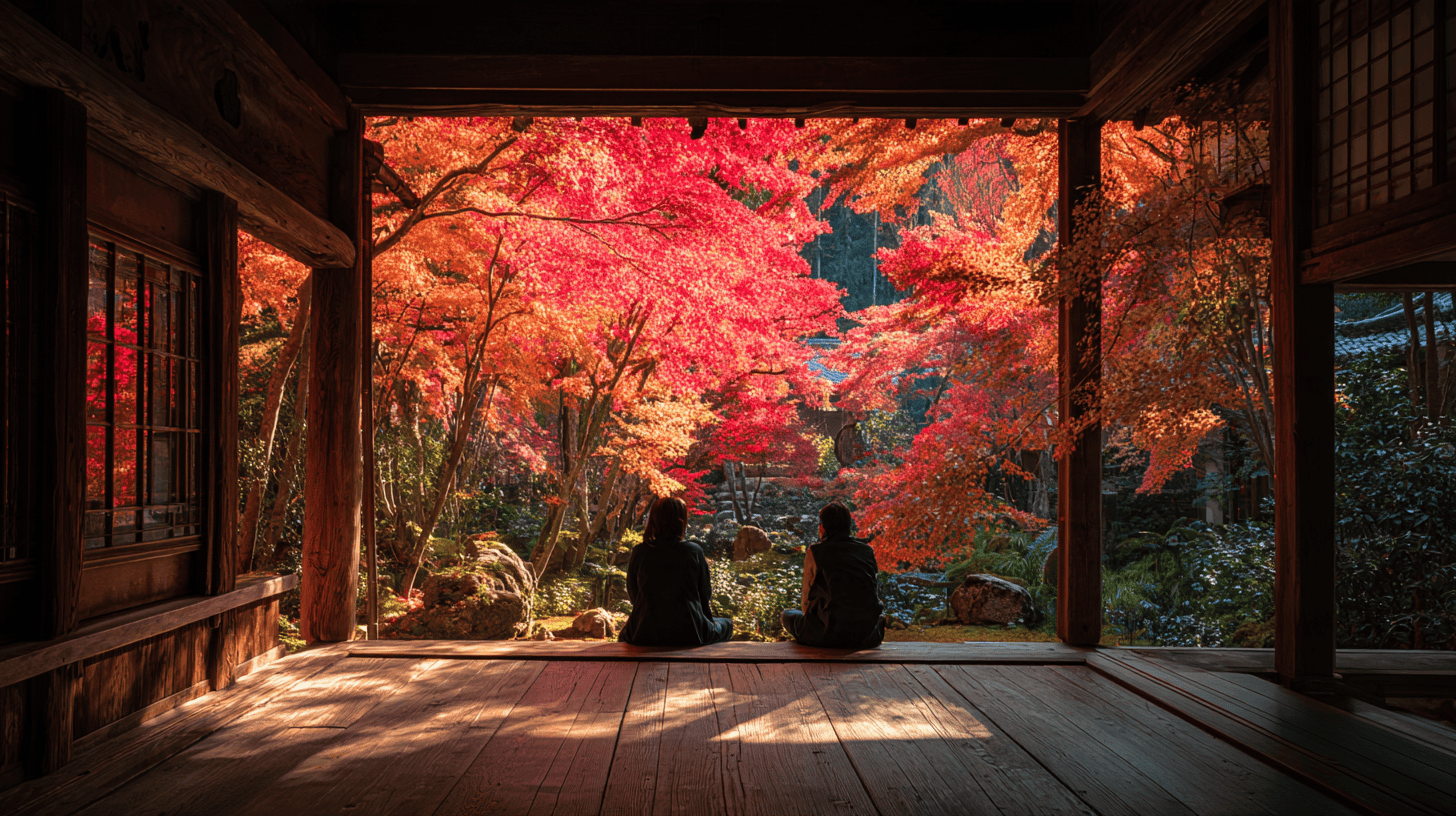
Autumn walks also reward patience. Arrive early, before the crowds, and the garden feels like your own. Sit on the veranda for a while. Watch how the light shifts across the leaves as the sun climbs. Then notice how your attention changes once you know the color will be gone in a week. That shift, from looking to truly seeing, is the whole practice in miniature. Take a photo if you like, but also try one minute without the camera. Describe the color to yourself in plain words. Later, that sentence will bring the garden back more vividly than any picture, because you chose it.
Everyday Examples of Mono no Aware You Already Know
You do not need a festival to feel mono no aware. In fact, some of the richest examples happen in ordinary weeks. Japan simply gives them names and rituals that make them easier to see.
The last day of school
The Japanese school year ends in March and begins in April. As a result, graduation ceremonies often fall close to the first cherry blossoms. Students take photos at the school gate, sign each other’s notebooks and linger in classrooms they have used for years.
Why does it count? Because everyone knows this group will never be together in quite this way again. That knowledge makes the day brighter, not darker. Friends laugh harder, teachers speak more warmly, and parents notice how tall their children have grown. You have likely felt the same on a final day at a job, a camp or a shared home.
The final train of the season
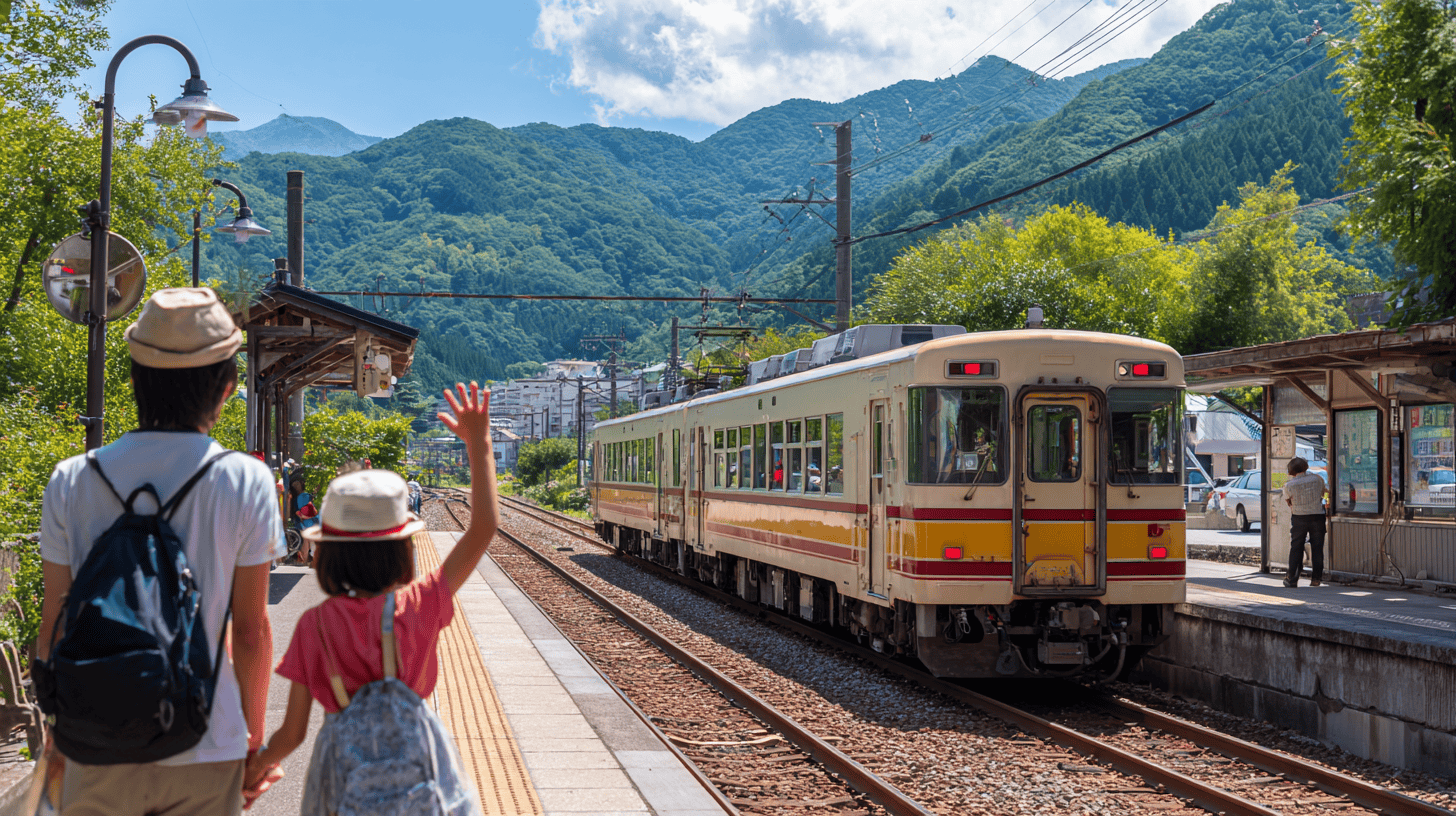
Picture a small scenic line that runs only in certain months. On its final run of the season, neighbors gather along the platform to wave. The driver waves back, and passengers lean to the windows. Nothing dramatic happens, yet the moment feels full.
The same feeling appears on any platform where someone is seeing a loved one off. A grandparent waves until the train is out of sight. The traveler watches the platform shrink. Both know they will meet again, but not tomorrow. That small ache sits right beside gratitude. Together, they make the goodbye worth remembering.
These are the moments a daily practice helps you catch. Our guide to a simple daily practice of mono no aware shows how to notice them without making life feel heavy.
Recommended
Small moments at home
Home life is full of examples, too. Think of the last slice of summer watermelon, eaten slowly on the veranda. Think of a child’s handwriting in a card you have kept, or the first cup of tea on a cold morning. Each is simple. Each also carries a flicker of awareness that this exact moment will not return.
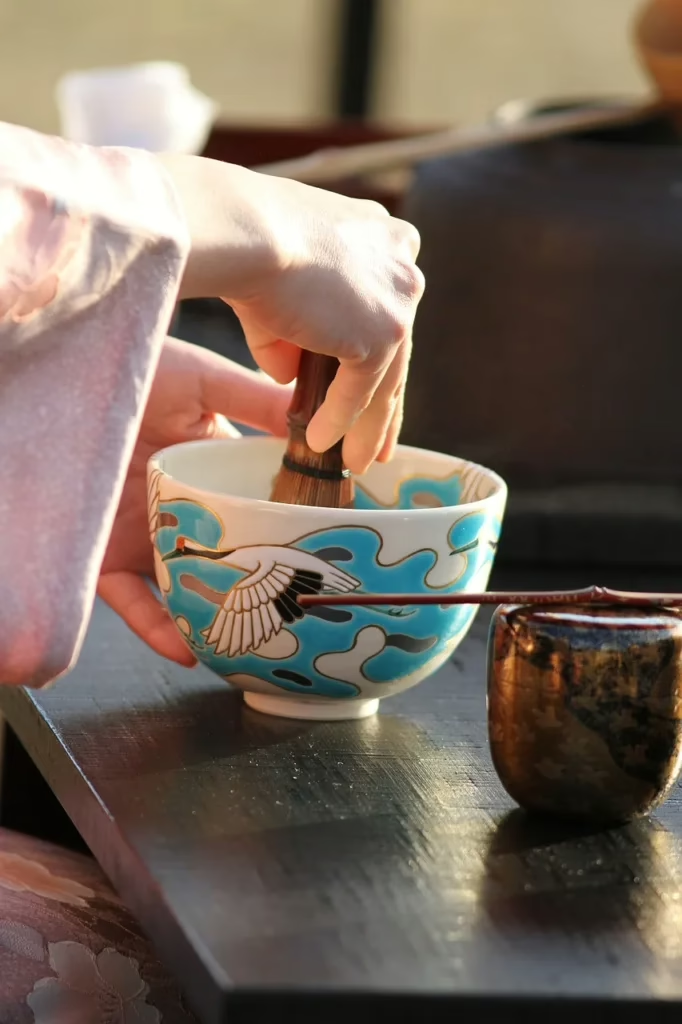
The Japanese language even offers a phrase for this spirit: ichigo ichie, one time, one meeting. It comes from the world of the Japanese tea ceremony, where each gathering is treated as unrepeatable. Mono no aware is the feeling. Ichigo ichie is the courtesy that follows from it.
Moon viewing at your own window
Tsukimi, the autumn moon-viewing festival, may be the loveliest example you can host at home. According to JNTO, it falls on the fifteenth night of the eighth lunar month, which lands around September or October. Families display pampas grass for a good harvest and stack round tsukimi dango to stand for the full moon.
Why does it count? Because the full moon is perfect for only one night, and clouds may hide it. So people set a small table by the window, turn off a lamp and wait. When the moon appears, the room falls still. It is gratitude made visible. Here is a simple way to make the dumplings yourself.
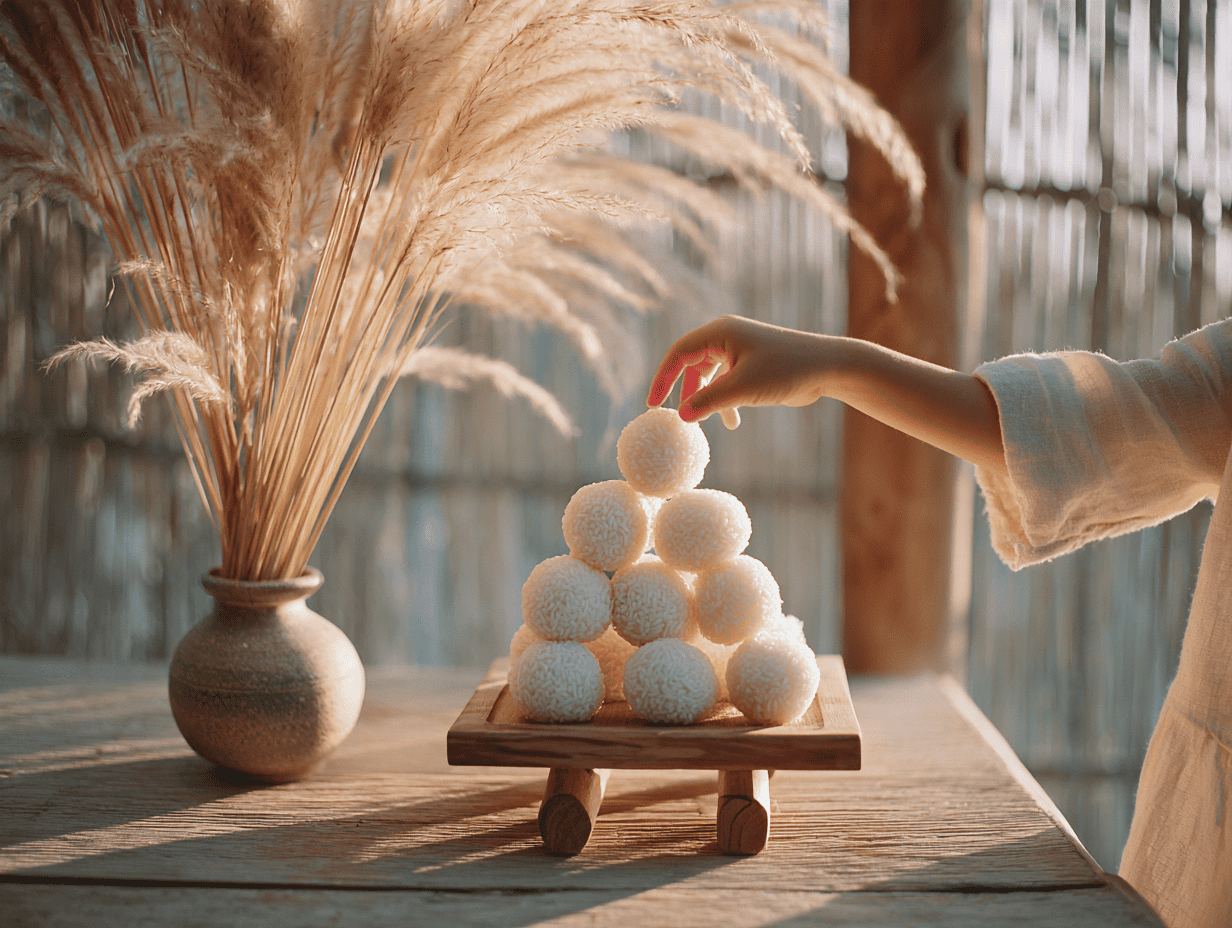
Made for tsukimi on jugoya, the fifteenth night of the eighth lunar month. The round white shape stands for the full moon; in Kansai, some families shape them like taro.
- 150 g dangoko (Japanese dumpling flour), or 100 g shiratamako plus 50 g joshinko
- 1 tbsp sugar
- About 120 ml water, added a little at a time
- A bowl of ice water for cooling
- Kinako or sweet red bean paste, to serve (optional)
- Mix the flour and sugar in a bowl. Add the water a little at a time and knead until the dough feels as soft as an earlobe.
- Divide the dough into 15 equal pieces and roll each into a smooth ball about 2 cm across.
- Bring a pot of water to a boil. Drop in the dumplings and cook until they float, then cook 2 to 3 minutes more.
- Lift them into the ice water to cool, then drain well on a clean cloth.
- Stack 9 dumplings in a 3 by 3 square, 4 on top in a 2 by 2 square, and 2 at the peak. Set them by a window facing the moon and serve with kinako or red bean paste.
The pyramid of fifteen dumplings is lovely on a plain tray, but the moment matters more than the plating. Set out a few stems of pampas grass if you can find them. Then call everyone to the window at the same time. The point is to look up together, not to perfect the stack.
Tea for a moon-viewing table
Tea completes the scene. A warm roasted tea suits a cool autumn night, and small cups keep everyone lingering. A teapot and matching cups kept for the occasion make the evening feel set apart. Below are a few Japanese tea sets that suit a moon-viewing table.
Whichever set you choose, keep the ritual simple. Pour for others before yourself. Let the tea cool a little while you wait for the clouds to part. If the moon never shows, enjoy the dumplings anyway. The evening still counts, because you gathered to notice.
That may be the most useful lesson in all these mono no aware examples, from court poetry to a backyard. The feeling does not depend on perfect conditions. It depends on attention. A cloudy moon, a rained-out picnic or a delayed train can still hold a moment worth keeping, if you are present for it.
What every example shares
Looking back across these examples, a pattern appears. Genji’s boy, Bashō’s blossoms, Noriko’s last trip and the family by the window all share one gesture. Each person pauses, sees clearly and chooses to cherish what is in front of them. None of them tries to stop time. Instead, they make room for it.
That gesture can be learned. It grows with repetition, the same way a musician’s ear does. The more examples you notice, the more you find. Soon, an ordinary Tuesday holds three or four small moments that once would have slipped by. Keep a note of them, and the list becomes a record of a well-loved life.
Questions Worth Asking
What is a simple example of mono no aware?
Watching the last sparkler of a summer evening burn down with friends is a simple case. The light is lovely, it is clearly brief, and everyone watching feels a soft pang that sharpens their pleasure. That mix of delight and gentle awareness of change is the heart of the idea.
Is mono no aware a sad feeling?
Not really. It includes a trace of wistfulness, yet the main note is appreciation. People feel it at weddings, graduations and festivals as much as at farewells. The word aware began as a sigh of feeling, and that sigh can carry joy just as easily as sorrow.
How do you pronounce mono no aware?
Say it as moh-noh noh ah-wah-reh, with even stress on each syllable. The final e sounds like the e in "red," not silent. In Japanese it is written 物の哀れ, or often もののあはれ in older texts, and the middle "no" simply links the two main words.
What is the difference between mono no aware and wabi-sabi?
Mono no aware is a feeling, the heart's response to a passing moment. Wabi-sabi is an aesthetic, a taste for simple, weathered and imperfect things. A chipped tea bowl expresses wabi-sabi. Pausing to watch petals fall expresses mono no aware. The two often meet in the same scene.
Can you feel mono no aware outside Japan?
Yes. The term is Japanese, but the experience is universal. A last evening before moving house, autumn light on a familiar street or a child outgrowing a favorite coat can all prompt it. Japan's gift is a name and a set of customs that make the feeling easier to notice and share.
How can I start noticing mono no aware in daily life?
Choose one small moment each day and describe it in a sentence or two. Note what made it dear and why it cannot repeat. Over a few weeks, the habit trains your attention, and you begin to catch these moments as they happen rather than only in hindsight.
Collecting Your Own Examples of Mono no Aware
Every example here began as a moment someone chose to notice. Murasaki Shikibu noticed a boy guarding a tree. A poet noticed blossoms bringing back his youth. A filmmaker noticed a father and daughter on a last trip. You can add your own mono no aware examples to theirs, one day at a time.
If you would like a gentle structure for that, a 90-day practice in tenderness with daily prompts moves through longing, parting and remembrance. Each page asks you to catch one moment and hold it with care. Over three months, the habit becomes a way of seeing.
Other Japanese ideas wait behind this one. Ikigai, the sense of a life worth living, pairs well with it. One helps you notice what matters, while the other helps you build a life around it.
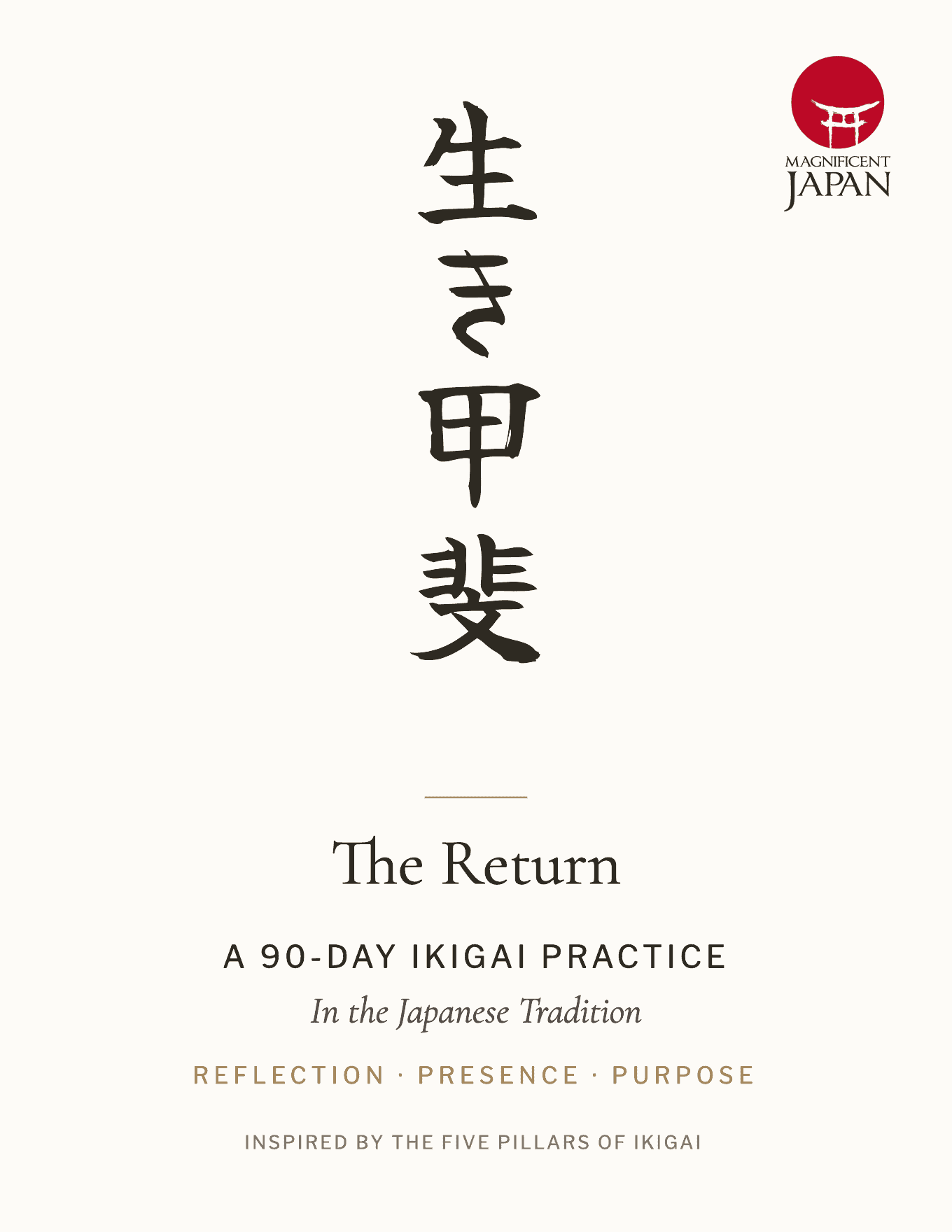
A ninety-day guided practice in the Japanese meaning of ikigai, for noticing the small moments that make an ordinary day worth having.
View the Journal →Both practices ask the same thing in the end: pay attention to the life you already have. Start with tonight. Look out the window, pour a cup of tea and name one moment from today that you would like to keep. That is where every collection begins.
The Editors, Magnificent Japan
We design routes around moments worth keeping: a moon-viewing evening, a local train through summer rice fields, a temple veranda in autumn color.
Plan Your Custom Japan Itinerary