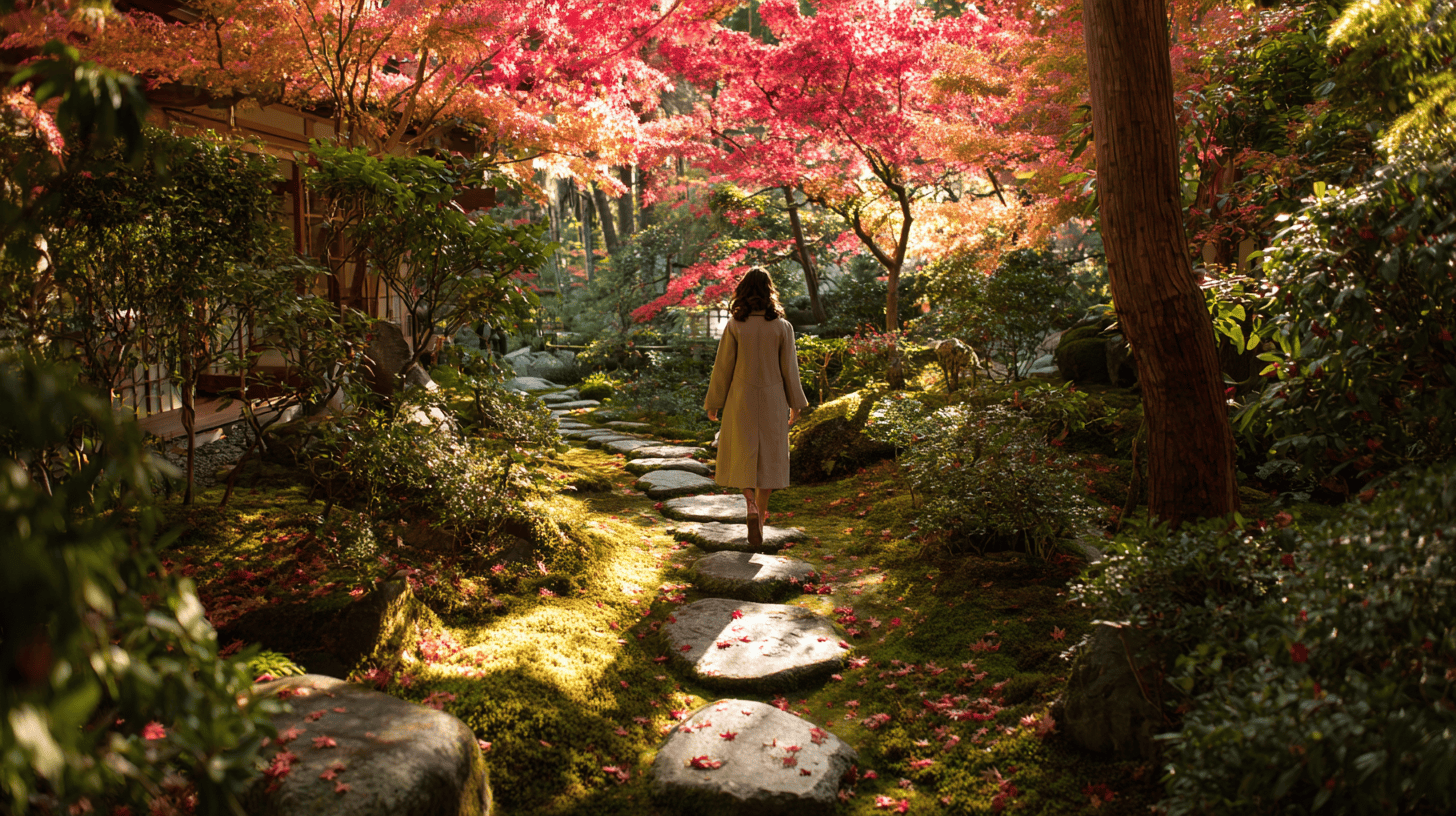
Mono no aware is the Japanese feeling of being gently moved by things because they pass. A maple leaf turns red. A friend laughs over tea. You notice the moment, and it glows a little brighter because it will not stay.
English has no single word for it, so the phrase is often left untranslated. Yet most of us already know the feeling. It arrives on the last warm evening of summer, or when a child grows out of a favorite coat. Japan simply gave it a name, a literature and a calendar of seasonal rituals.
Below you will find the words behind the phrase, the scholar who made it famous, and the seasons that keep it alive. After that come the small places it lives in modern Japan, and a way to feel it this week. For a daily practice, The Mono no Aware Journal offers 90 days of guided prompts in tenderness.
What Does Mono no Aware Mean? The Short Answer
Mono no aware means “the pathos of things.” It names a tender, heartfelt response to beauty that is made sharper by change. Cherry blossoms, a full moon and a family meal all move us partly because they pass. Rather than gloom, it is a warm attentiveness that makes ordinary moments feel precious.
The Words Behind Mono no Aware
The phrase is written 物の哀れ, and it has three working parts. Mono (物) means “things,” in the widest sense. That covers objects, seasons, people, places and events. No (の) is the small particle that links the two halves, much like “of.” Aware (哀れ) is the heart of it, and it carries the most history.
Aware: a deep “ah” of feeling
Long before it became a literary term, aware was close to a sigh. The eighteenth-century scholar Motoori Norinaga traced the word to aa hare, the sound a person makes when deeply moved. One study of his poetics also glosses aware as “to be stirred deeply” (Flowers, Spectra, 2020). So the phrase is less an idea than a response. First you see something, then something in you answers.
That is why translations wobble. Scholars write “the pathos of things,” “sensitivity to things” or “the ahness of things.” Each version catches one side of it. Meanwhile, the original keeps both halves together: the world outside, and the small “ah” it draws from you.
How to pronounce it
Japanese syllables are short and even, so there is no heavy stress. Say it as six light beats: mo-no no a-wa-re, roughly “moh-noh noh ah-wah-reh.” The final “re” is a soft tap, halfway between an English r and d. Also note that aware has nothing to do with the English word “aware.” The shared spelling is pure coincidence, although the two meanings sit happily side by side.
Motoori Norinaga and The Tale of Genji
The feeling is old, but its fame as an idea is more recent. Motoori Norinaga lived from 1730 to 1801 in the merchant town of Matsusaka. He belonged to the National Learning movement, which studied Japan’s own early literature (Encyclopaedia Britannica). Yet one of his great subjects was a romance written seven centuries before his birth. His question was a simple one: why did this old court story still move readers so much? The answer he found gave the feeling its lasting name. It also turned a private sigh into one of the best-known ideas in Japanese culture. Here is how he made that case, and why it still rings true.
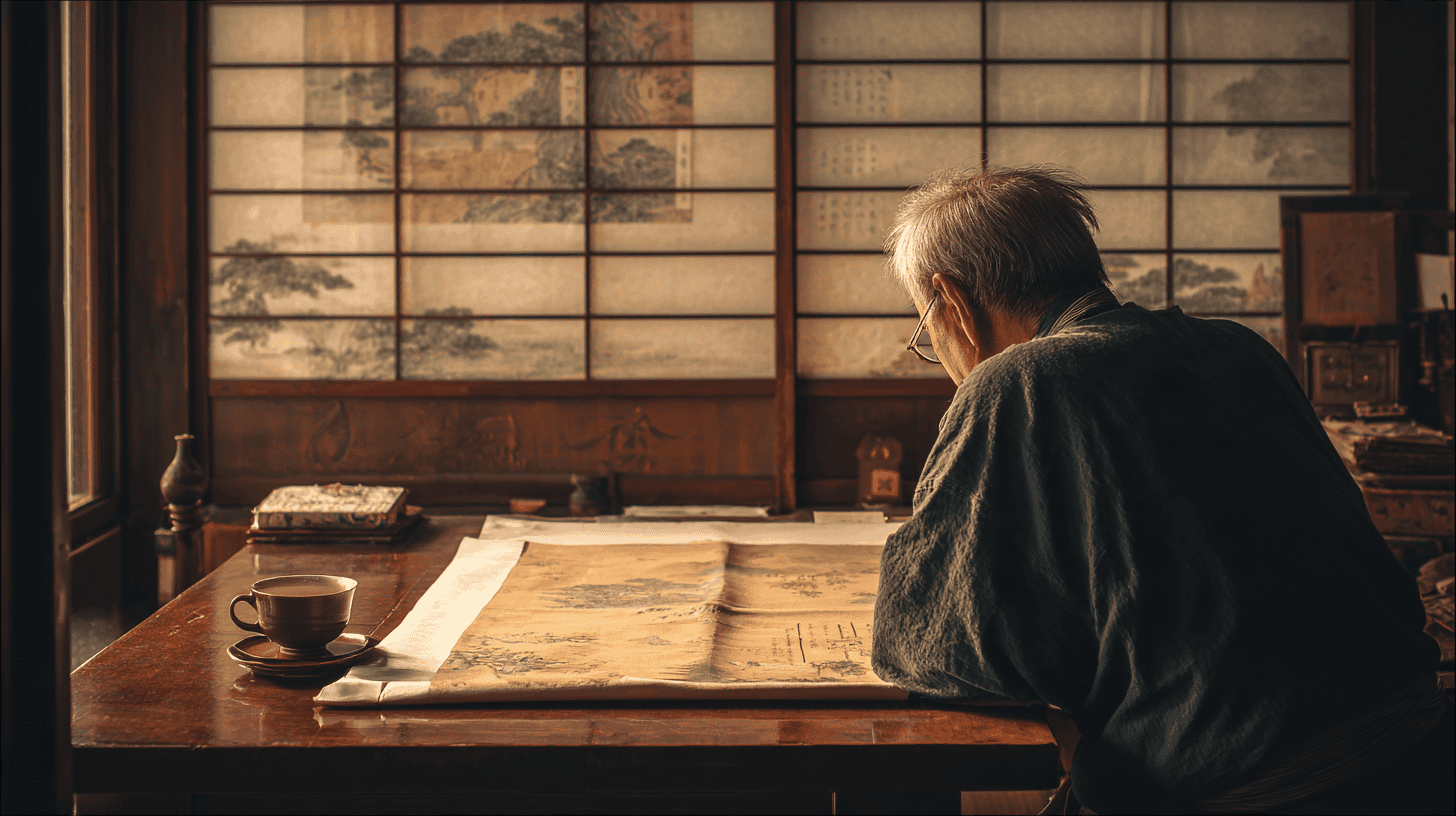
That romance was The Tale of Genji, written by the court lady Murasaki Shikibu in the early eleventh century. It is often called the world’s first novel. Norinaga read it closely and argued that its central theme was mono no aware. He also widened the idea. For him, it meant a deep sensitivity to the emotional side of life in general (Stanford Encyclopedia of Philosophy).
Why Genji still feels close
Genji is full of small, bright moments. There are letters folded with a sprig of blossom, and music drifting over water at night. Courtiers compare the colors of their layered robes. Because nothing in that world is fixed, every scene is savored. In fact, Norinaga praised Murasaki for letting readers feel what her characters felt. The skill lies in the reader sharing the “ah,” not in being told about it.
You can test this at home. Read one chapter slowly, over a single cup of tea, then stop. Leave the next chapter for tomorrow. The pause is part of the pleasure. Many readers find that a warm, roasted hojicha suits these evenings, since it is gentle and low in caffeine. Moreover, a few well-made tea things turn the habit into a small seasonal ritual.
Mono no Aware Is Not Sadness
The phrase is often translated with words like “wistful,” which can make it sound gloomy. Yet the Japanese tradition leans the other way. The essayist Kenkō, whose Essays in Idleness are still read today, put it simply: “The most precious thing in life is its uncertainty.” He also asked how anyone could fail “to rejoice each day over the pleasure of being alive.” The Stanford entry on Japanese aesthetics sums up his view well. Accepting change, it says, “enables full enjoyment of life.”
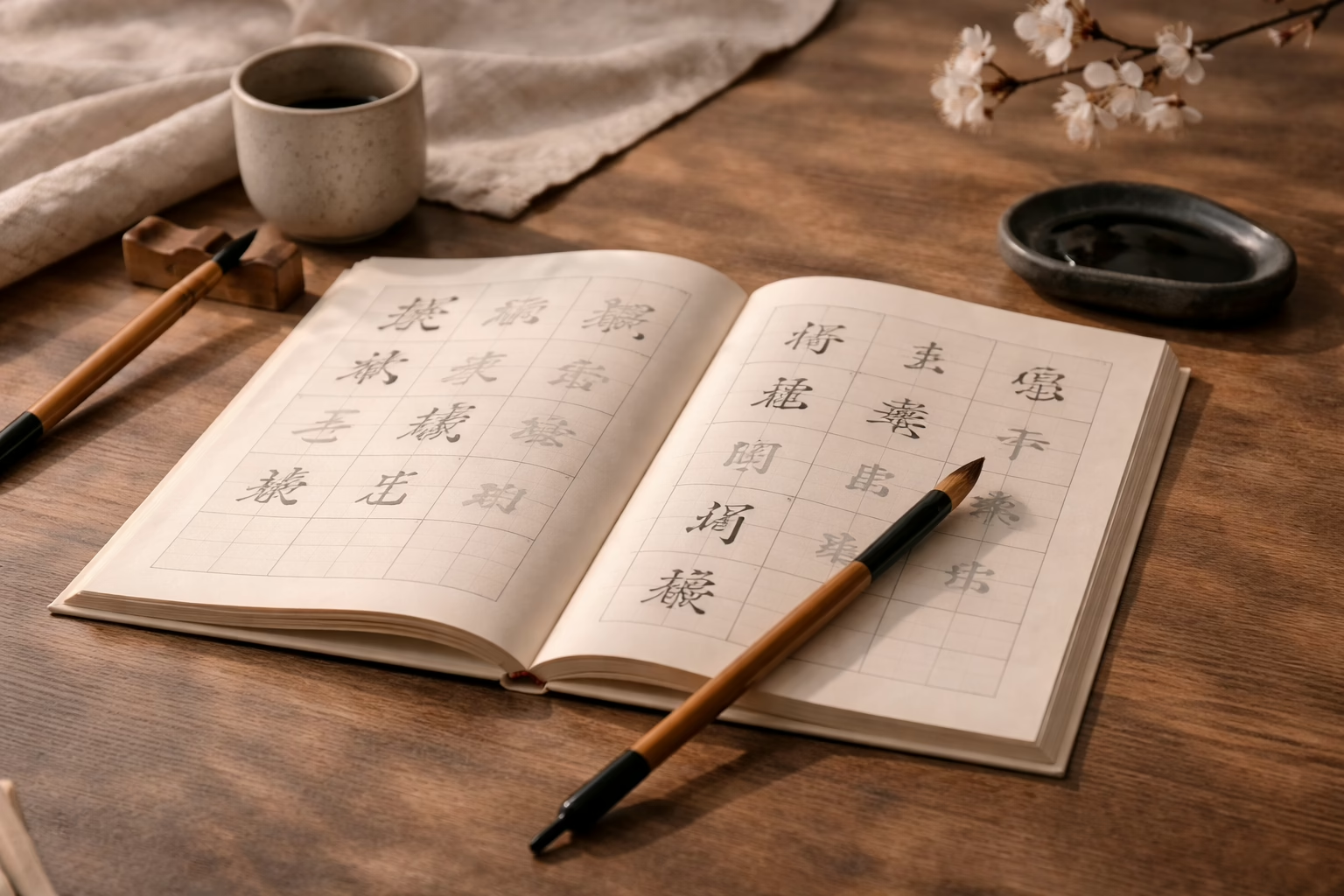
Kenkō wrote in loose fragments, jotting whatever caught his eye. That habit still works. When you travel, the moments worth keeping are rarely the famous sights. Instead, they are the steam over an evening bath, or the scent of cedar in a country inn. A plain notebook catches them before they blur together.
Open pages for ryokan evenings and the seasons seen from the bath.
Unlined · 120 pages · Original cover art
Shop This Journal →Appreciation made sharper by change
Think of the difference this way. Sadness looks at what is gone. Mono no aware looks at what is here, while knowing it will change. Therefore, the feeling is closer to gratitude than to loss. It says, “How lovely this is, right now,” and means it fully. You can even feel the difference in your body: sadness sinks, while this feeling lifts.
Early Japanese poets heard it in birdsong. In the eighth-century anthology Man’yōshū, the feeling is often stirred by the calls of birds and animals. The world moved them, so they wrote. That openness to being moved is the root of the idea, and it is a joyful one.
Its neighbors: nostalgia and wabi-sabi
It also helps to place the idea beside its neighbors. Nostalgia wishes you could go back. This feeling asks you to stay where you are and look more closely. Similarly, it differs from wabi-sabi, which finds beauty in things that are worn, simple and imperfect. The two often meet in the same teacup or garden, but they point in different directions. Picture an old tea bowl with a small chip. Wabi-sabi admires the chip itself. The feeling we are exploring here admires this afternoon, and the friend drinking from it. For the full comparison, see our piece on how it differs from wabi-sabi. The table below sets the four feelings side by side.
Mono no aware keeps its eyes on the present, which is why it feels warm rather than heavy.
| Feeling | Where attention rests | What it leaves you with |
|---|---|---|
| Sadness | On what has gone | A sense of absence |
| Nostalgia | On a remembered past | A wish to return |
| Wabi-sabi | On the worn and imperfect | Contentment with what is |
| Mono no aware | On what is here now, and passing | Tenderness and gratitude |
So how do you move from reading about the feeling to having it? The answer is attention, practiced in small doses. Many people find that a few lines written each morning do more than any theory. Writing slows the eye. It also asks you to name one thing you noticed and why it mattered. Over weeks, that habit trains the “ah” to arrive more often.
The short film below shows The Return, the first journal in our Cultural Reflection Collection. In it, a morning prompt is answered by hand on a tablet. Our 90-day journal in tenderness uses the same daily format.
Twenty seconds inside the journal
The digital edition in use — a morning prompt, answered by hand while the coffee is still warm. Tap to play, with sound.
One page, one intention, one single quiet moment.
Mono no Aware Through Japan’s Seasons
Nowhere is the feeling clearer than in the Japanese year. Each season arrives with its own short-lived pleasures, and people go out to meet them. Blossoms, fireflies, a harvest moon and the first snow all come and go on a known rhythm. As a result, the calendar itself becomes a practice. Families plan outings around it, shops change their window displays for it, and friends mark it together. For travelers, this is the easiest way in. Visit in any season and something is always briefly at its best.
If you would like to time a journey around one of these moments, our editors can shape a Japan itinerary built around the seasons for you.
Occasional letters on mono no aware, the Japanese calendar and the moments worth savoring, with news of the Cultural Reflection Collection.
Occasional letters. Unsubscribe anytime.
Spring: cherry blossoms
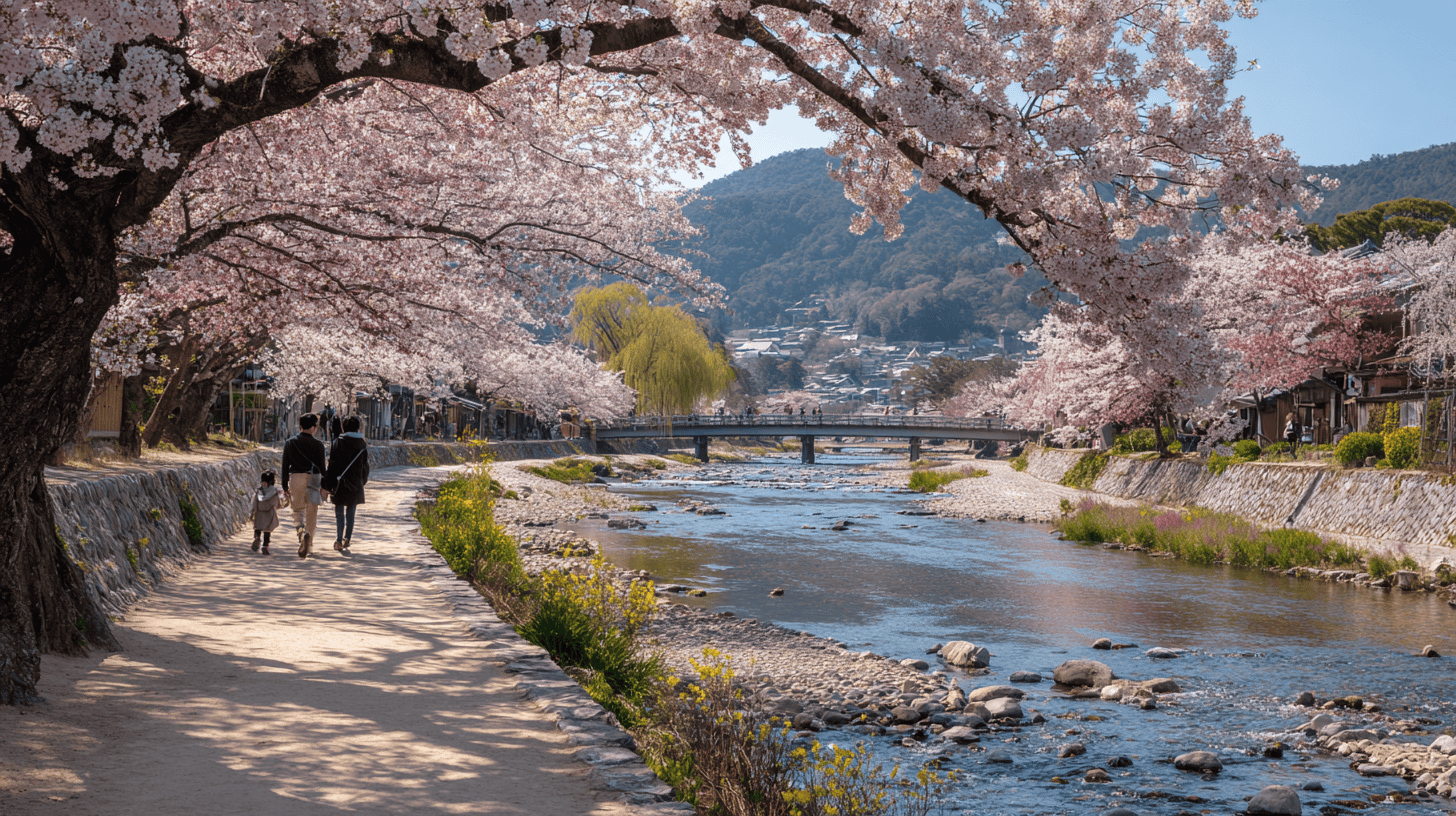
Cherry blossoms are the classic example. Each spring, huge crowds gather to view the trees and picnic beneath them. Yet the blossoms are not more beautiful than pear or apple flowers. Instead, they are loved because they usually begin to fall within a week of opening. That brief window is exactly what makes people stop and look. Friends share food under the branches, and petals land in their cups. Nobody treats the falling as a loss. It is part of the show, and often the part people remember most. Our guide to Japan’s cherry blossom season covers where and when to see them.
Summer: fireworks by the river
Summer brings hanabi, which means “fire flowers.” Many towns hold their own displays through July and August. On warm evenings, people put on light cotton yukata and walk to the riverbanks. They spread mats, share cold drinks and wait for dark. Then the first shell opens overhead, and the whole crowd sighs together. Each burst lasts a second or two. Still, nobody wishes it would hang in the sky forever. The pleasure lies in the brightness and then the fade. Children wave glow sticks, and older couples bring folding chairs. Vendors sell shaved ice in bright syrups, and the smell of grilled corn drifts along the bank.

Afterward, the walk home is part of the evening. Streets are full of families, and small children are carried half asleep on shoulders. Someone always says it was the best display yet. That shared delight is a gentle form of the same feeling. It is not about the fireworks ending. Rather, it is about having been there, together, while they lasted. Many people keep the evening going with a late snack from a street stall and the slow train home. Summer has other brief pleasures, too, from fireflies along rural streams to the chime of a glass wind bell on a veranda. Each one asks you to stop for a second.
Recommended
Autumn: moon viewing
In autumn, attention turns upward. The moon returns every month, of course. Still, many people feel the autumn moon looks especially bright in the clear, cool air. Dango, tea and a clear sky are all it takes. The fifteenth night of the eighth lunar month is called jūgoya, and it falls between September and October. Moon viewing, or tsukimi, is said to have arrived from China during the Heian period. Back then, nobles held poetry gatherings under the full moon. Today, households set out round dango dumplings and plumes of susuki grass, which evoke ears of rice. Together, they give thanks for the harvest (Nippon.com).
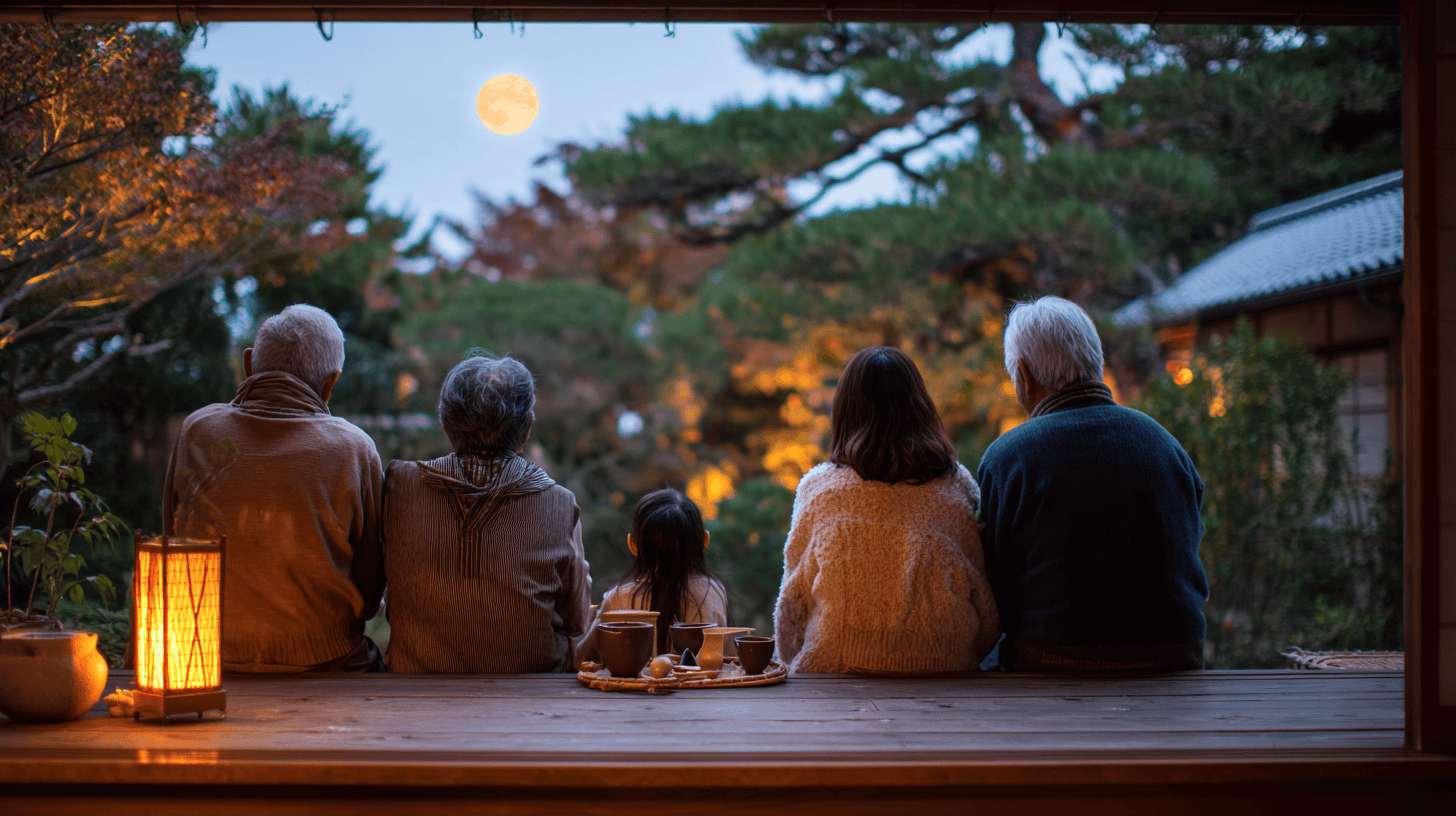
The custom has also found its way into everyday food. Restaurants offer “tsukimi” dishes topped with an egg yolk, like a small moon on the plate. Even fast-food chains join in each year. It sounds playful, and it is. However, the impulse is the same one the Heian poets had. The moon is full for one night, so people make a small occasion of it. You can do the same with a veranda, a pot of tea and a friend. Moon viewing needs no special place, since a balcony or an open window works just as well as a temple garden. Switch off the lamps for a few minutes and let your eyes adjust.
Autumn: maple leaves
Autumn also brings momijigari, the custom of going out to view red leaves. The word literally means “maple hunting,” although nobody takes anything home but photographs. Temples and gardens fill with visitors for a few weeks. Then the color moves down from the mountains into the cities. Because the peak is brief, people check the forecasts and make time. Some temple gardens even light the trees after dark for evening visitors. In Kyoto especially, a single garden path can feel like a gift. Japanese maples turn a deep red, while ginkgo trees along city avenues turn bright gold. Walking beneath them feels like walking through the season itself.
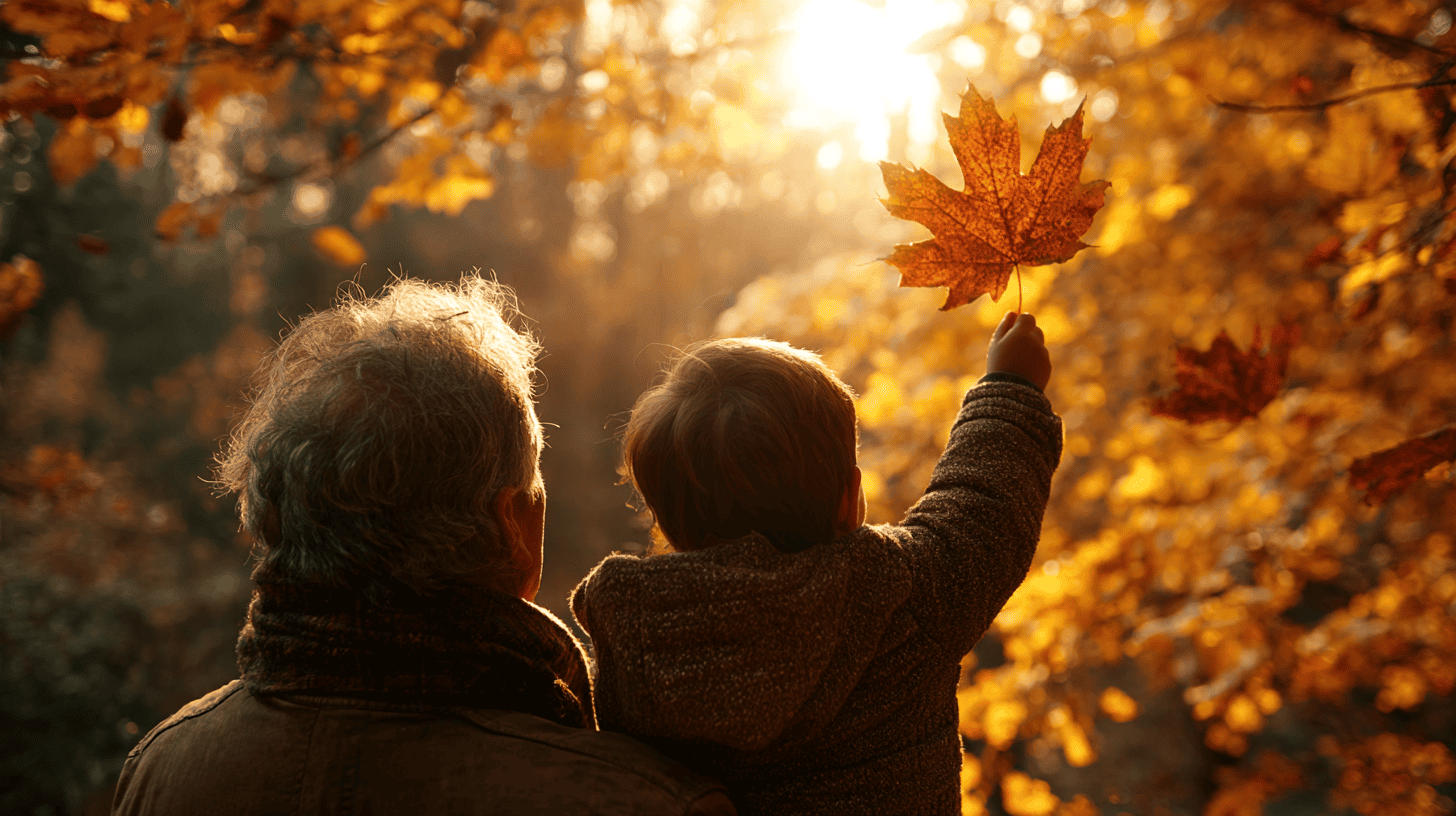
A red leaf is small enough to hold, and that matters. A grandparent picks one up and hands it to a child. The child turns it over, then tucks it into a book to press. Years later, it falls out between the pages and brings the whole afternoon back. That is the feeling at its warmest. The leaf was always going to change. Because of that, it became a keepsake instead of just a leaf. Many families in Japan still press leaves this way.
Winter: the first snow
The first snow of the year, hatsuyuki, is greeted almost like a guest. People open the curtains, take photos and message friends. In a garden, fresh snow rests on pine needles and stone lanterns. Red camellias bloom through it, bright against the white. By noon, the sun may have melted half of it. Yet that is exactly why people rush out early to see it.
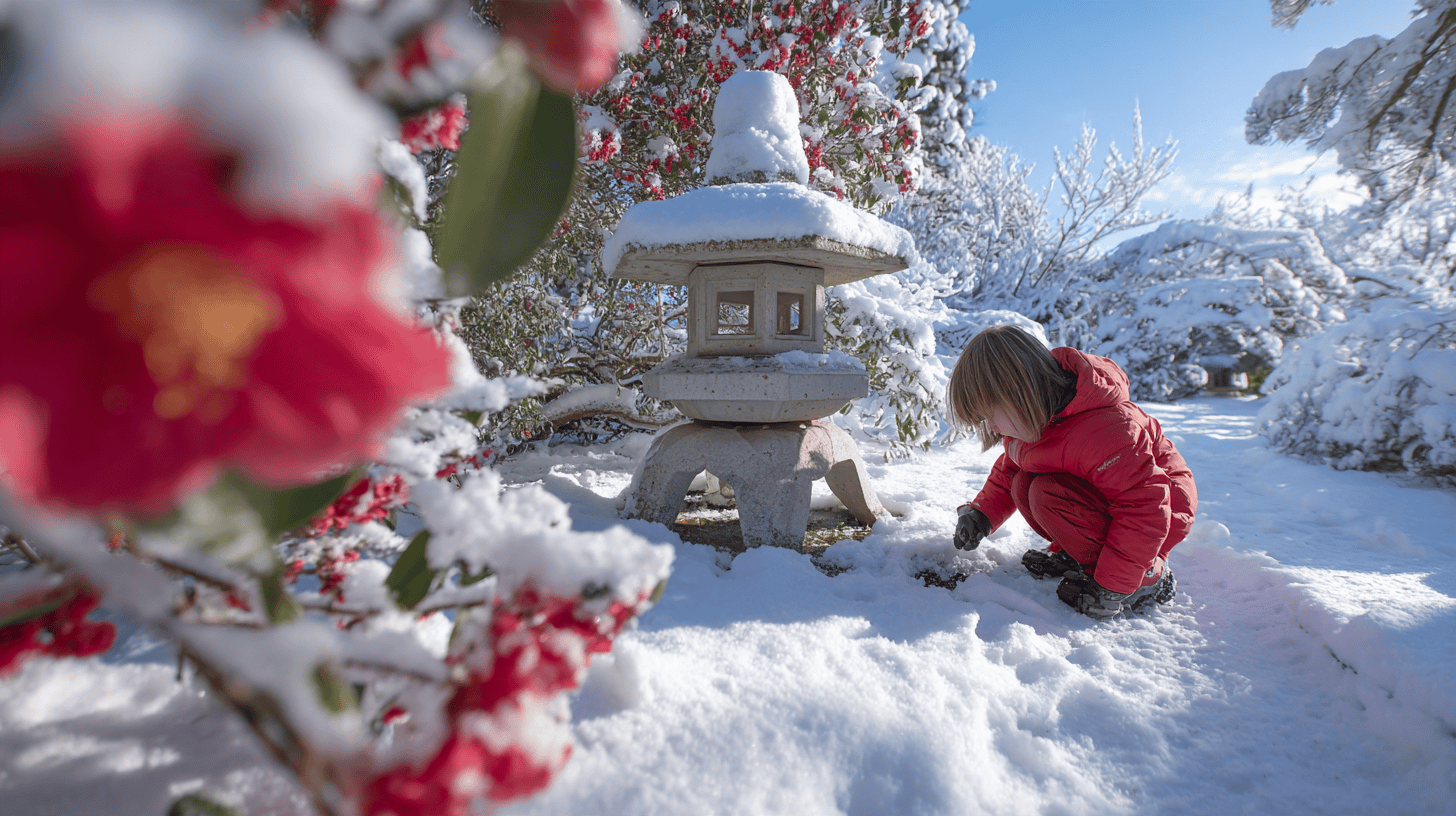
Winter also offers the pleasure of contrast. A cold walk makes a warm room feel generous. A bowl of hot soup tastes better after snow. In the same way, every season in Japan comes with its own comforts. Seasonal foods, flowers and festivals come and go, so there is always something new to welcome. Seen this way, change is not a thief. It is the reason the year never grows dull.
The Pathos of Things in Everyday Japan
You do not need a festival to meet the feeling. In Japan, it hides in plain view. Sweet shops change their wagashi with the seasons. Menus print “limited” dishes that disappear within weeks. Television news follows the blossom front north, day by day. Even the films of director Ozu Yasujirō are read as studies in it. A vase in a tatami room, a mirror, a rock garden: he lets objects carry the emotion.
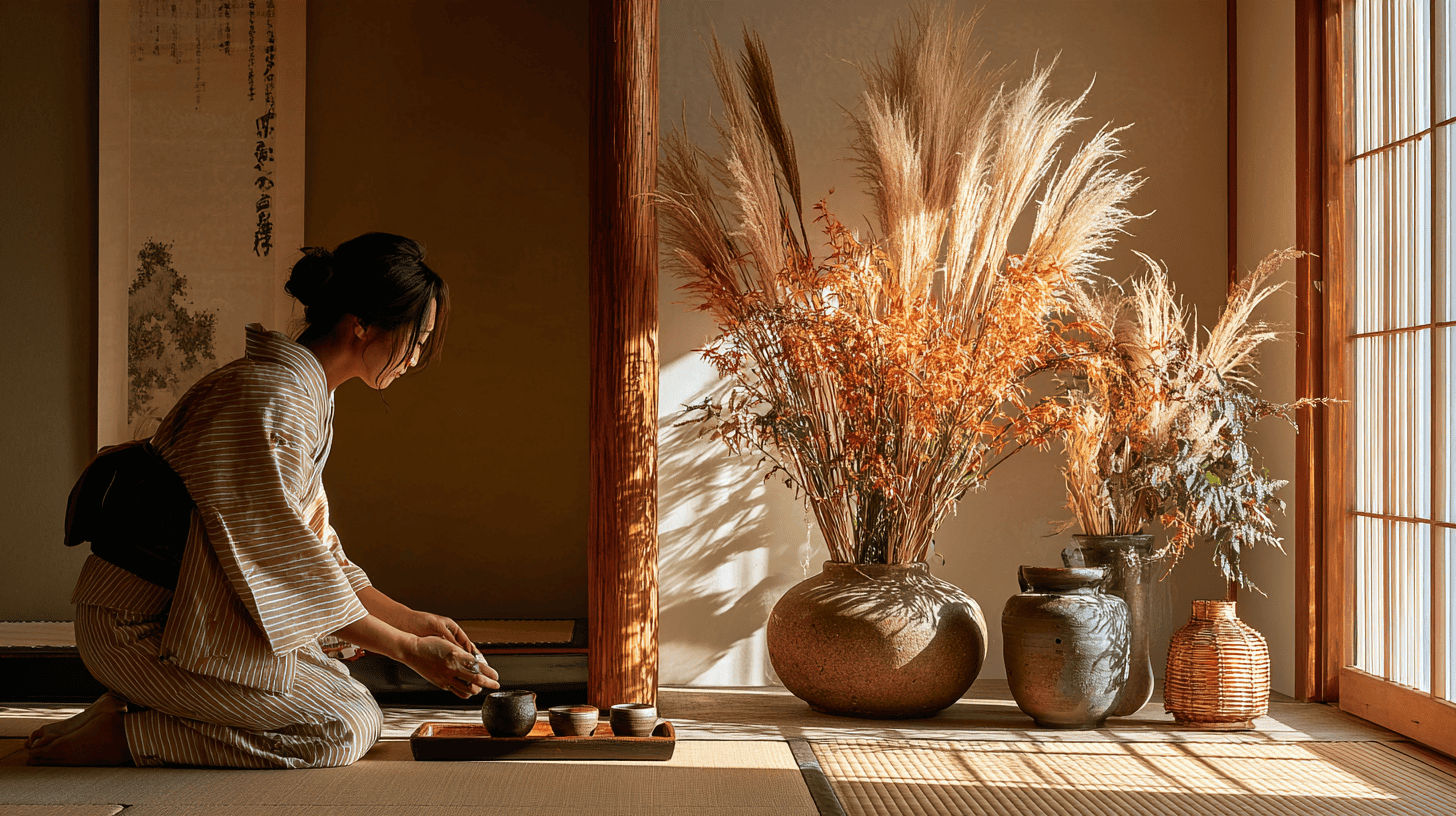
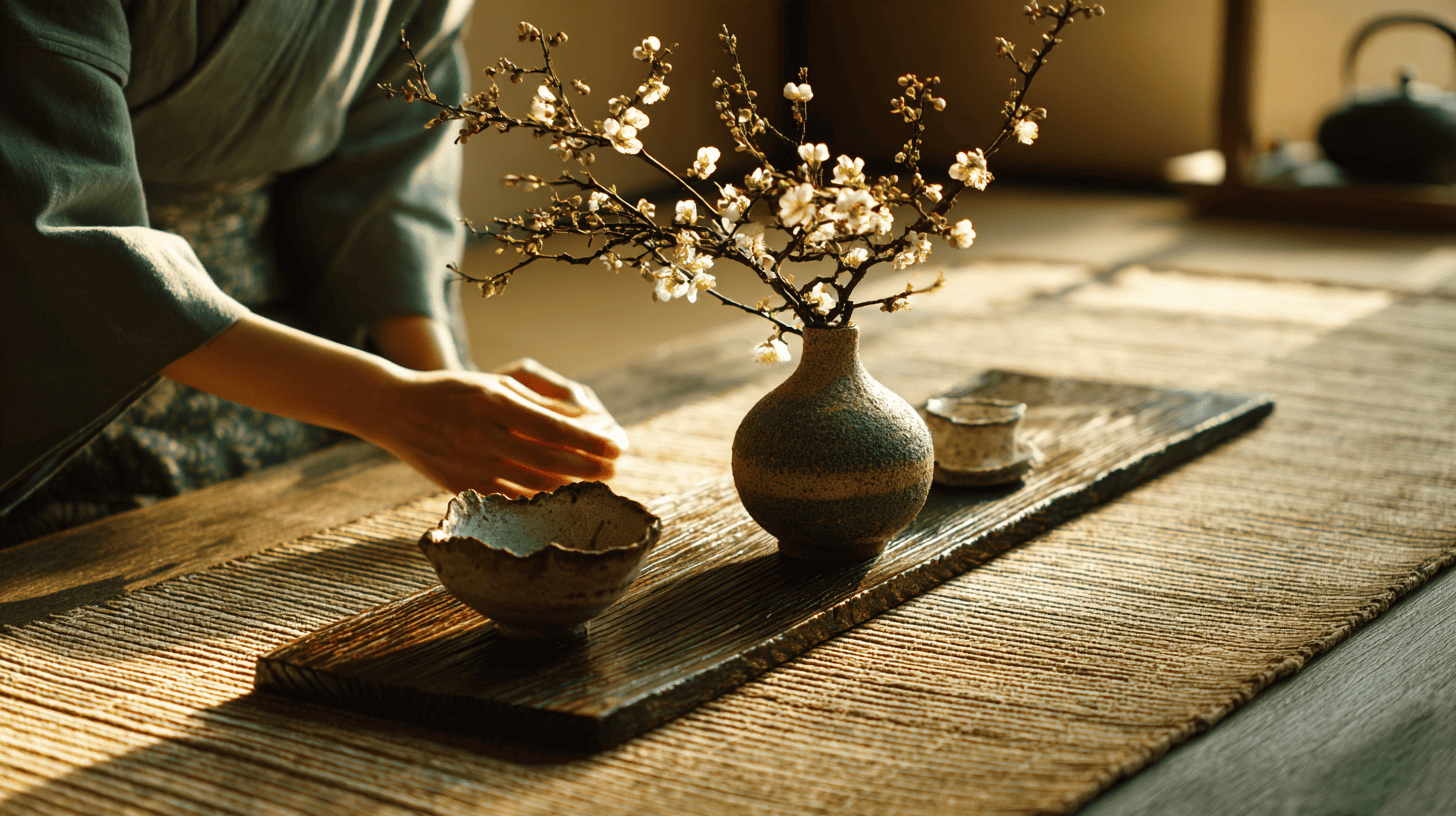
The tea room may be the purest example. The host chooses a scroll and a flower for the alcove that suit this week, not this year. Guests notice, and the choice opens a gentle conversation. The sweets echo the season too, and so does the bowl. Tea people often speak of ichigo ichie, “one time, one meeting.” This gathering will never happen in quite the same way again, so everyone gives it full attention. Our guide to the Japanese tea ceremony explains the ritual step by step.
Seasonal food at home
Home cooking follows the same rhythm. In autumn, new chestnuts and new-harvest rice arrive at the same time. Autumn menus typically feature kuri gohan, rice cooked with chestnuts, and chestnuts have fed people in Japan for thousands of years (Kikkoman Food Forum). The dish is simple, golden and fragrant. Better still, it tastes of one particular month. Make it once in October and it becomes a small family marker of the year.
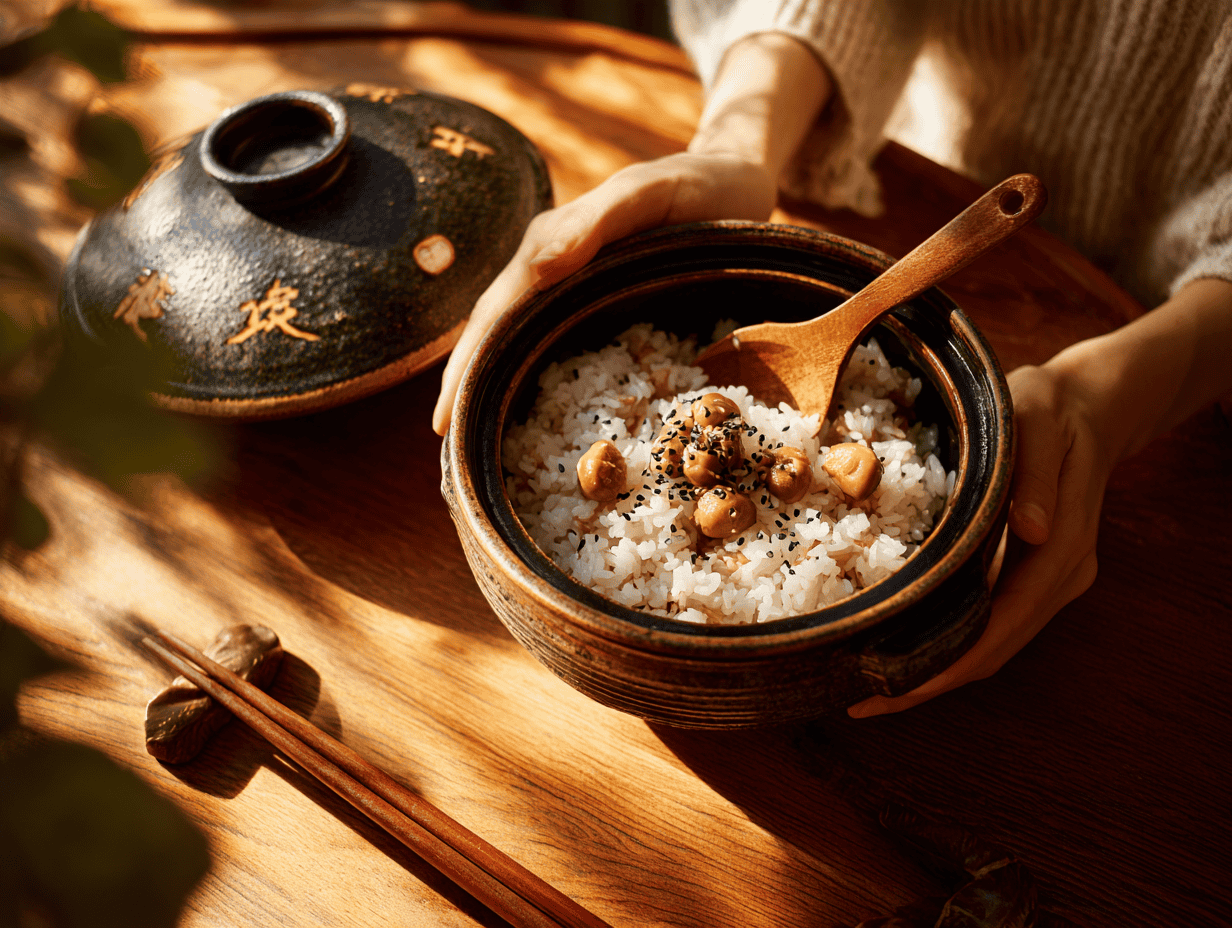
A classic Japanese autumn dish, cooked when fresh chestnuts and new-harvest rice (shinmai) arrive together. Chestnuts have been a food in Japan for thousands of years, long before rice farming.
- 600 g fresh chestnuts in their shells
- 2½ rice-cooker cups (450 ml) Japanese short-grain rice, preferably new-harvest
- ½ rice-cooker cup (90 ml) mochi (sweet) rice
- 2 tbsp dark sesame oil
- 3 tbsp sake
- 1 tsp salt
- 3½ rice-cooker cups water
- Cover the chestnuts with just-boiled water and leave them for at least 20 minutes, until cool enough to handle. Drain.
- Rinse both rices in several changes of water, then leave them to soak while you peel.
- Cut into the base of each chestnut and peel away the hard shell. Chip off the inner skin until at least half of the pale nut shows.
- Heat the sesame oil in a frying pan over medium-high heat and sauté the chestnuts until lightly browned on all sides, 6 to 8 minutes.
- Drain the rice into a pot or rice cooker. Add the water, sake, salt, and the chestnuts with their oil. Cook until tender (about 13 to 14 minutes on the stove after it boils, or on the white-rice setting).
- Rest the rice for 15 minutes, then fold it gently and serve.
Scent works the same way. In many Japanese homes, a stick of incense is lit to mark a moment, such as a guest arriving or a season turning. The fragrance fills the room for half an hour, then fades. Because it cannot be kept, it asks you to notice it while it lasts. Japan’s incense makers have refined this for centuries, blending woods, resins and spices into scents named for seasons, flowers and poems. Choose one for autumn, and light it on an evening when the air first turns cool. A single stick, lit and left alone, is also an easy daily ritual for anyone new to incense.
How to Feel It This Week: A Seven-Day Practice
The feeling cannot be forced, but it can be invited. Try these three habits for seven days. First, choose one small thing each morning that is at its best today. It might be a ripe pear, a friend’s new haircut or the light on a wall. Next, pause for ten seconds and let the “ah” arrive. Finally, write one line about it before bed. Keep the line short and specific.
By the end of the week, you will likely notice more without trying. That is the point. The practice is not about loss. Instead, it trains the eye to find the precious in the ordinary. For more ideas, read our guide on building a daily practice of tenderness.

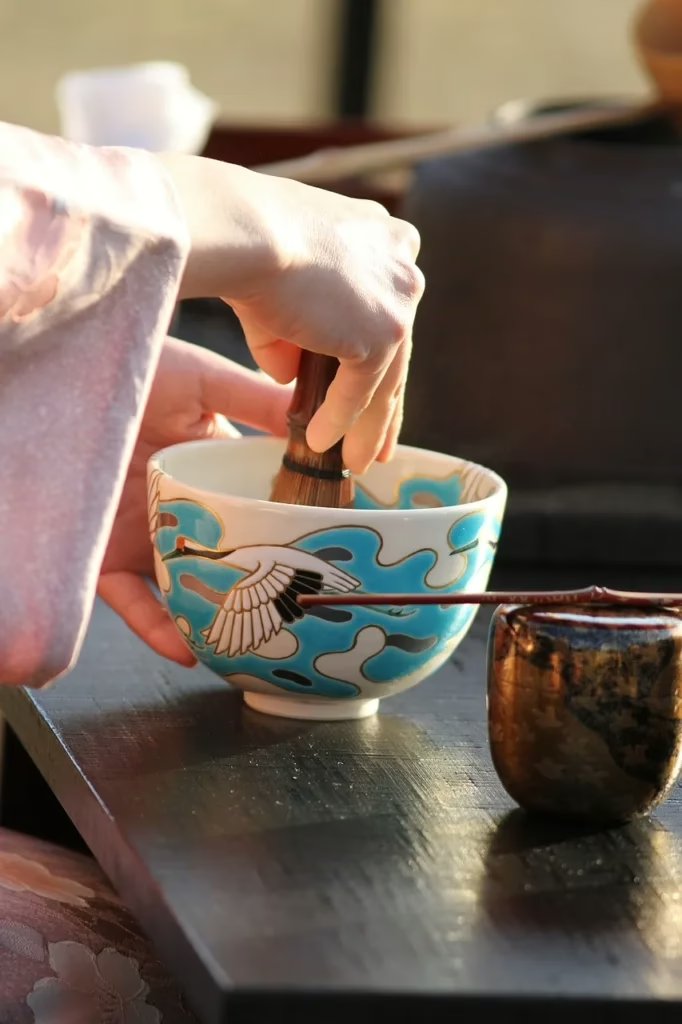
Share it with someone
The feeling grows when it is shared. Heian courtiers sent poems about the moon to one another. Families still gather under the blossoms and walk home from the fireworks together. So this week, tell one person what you noticed. Send a photo of the sky, or simply say, “Look at that.” Then watch their face change. You will both remember the moment longer because you shared it. After all, a shared moment lives on in two memories, and each version is slightly different. For a wider view of how the idea shows up in daily life, our collection of everyday examples from Japan offers dozens more.
Questions Worth Asking
How do you pronounce mono no aware?
Say it in six even syllables: moh-noh noh ah-wah-reh. Japanese gives each syllable roughly equal weight, so avoid stressing any one part. The final "re" uses a light tapped r, similar to the quick d sound in the American pronunciation of "ladder." It does not rhyme with the English word "aware."
Is mono no aware a sad feeling?
Not mainly. It includes a soft awareness that things change, yet the emphasis falls on appreciation. Classical writers such as Kenkō tied the passing of things to delight in being alive. Most people describe it as tender or heartfelt, closer to gratitude for the present than to longing for the past.
Is there an English word that means the same thing?
No single English word covers it. Translators use phrases such as "the pathos of things" or "sensitivity to things." Keeping the Japanese phrase is common, because the English options each capture only one side of it. Many readers simply learn the original and let it settle into their own vocabulary.
What is a simple everyday example?
Watching the last light of a long summer evening is a good one. So is noticing a parent's handwriting on an old birthday card, or tasting the first strawberries of the season. In each case, the moment feels richer because you sense it will not last forever, and you pay closer attention.
Who first used the phrase?
The word "aware" appears in Japanese poetry from the eighth century onward. The eighteenth-century scholar Motoori Norinaga made the full phrase famous by arguing that it was the central theme of The Tale of Genji. His readings shaped how the idea is taught in Japan and discussed abroad today.
Can you practice it deliberately?
Yes. Many people build it through small daily rituals: noticing one seasonal detail, pausing before rushing on, and writing a line in a journal. Travel in Japan helps too, because the calendar of festivals and foods constantly points attention toward what is briefly at its best.
Keeping the Feeling Close
Mono no aware is, in the end, a way of loving the world while it is here. It began as a sigh, became a theory of literature and settled into the Japanese year. Today it lives in blossom picnics, moon dumplings, fireworks and a single leaf pressed in a book. None of these asks for sadness. Instead, each one asks for attention.
If you would like a gentle structure for that attention, our 90-day guided journal in tenderness moves through three movements: longing, parting and remembrance. Each day brings a short prompt to answer by hand. It sits alongside the other titles in our collection of Japanese philosophy journals.
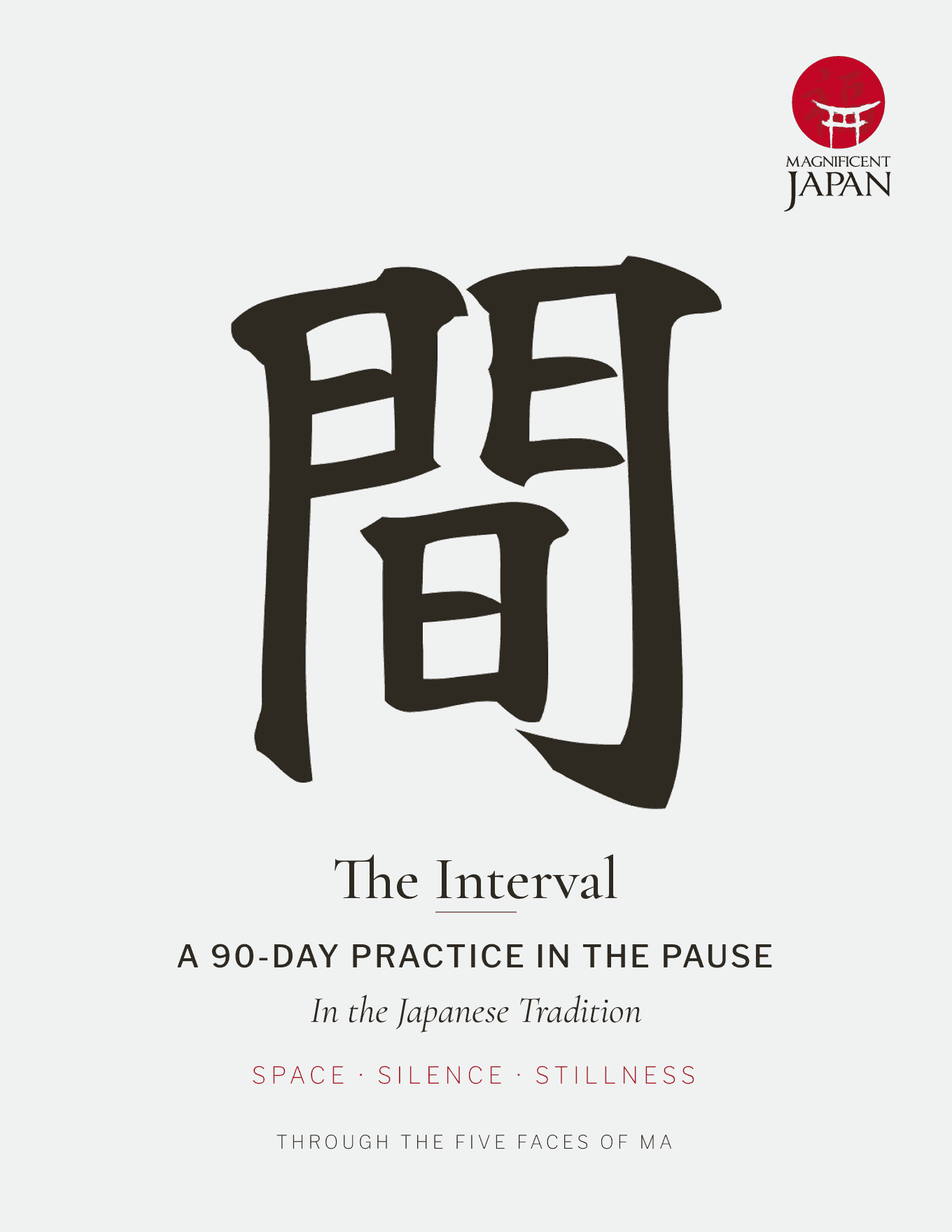
A ninety-day guided practice in the pause, for making room in the day so its small sources of worth have space to be noticed.
View the Journal →If the pause between moments interests you as much as the moments themselves, you may enjoy the Japanese idea of ma, the meaningful space between things. It pairs naturally with everything above, because both ideas ask you to slow down and notice what is already in front of you.
The Editors, Magnificent Japan
We design routes around the season you will meet: autumn maples in Kyoto, moon viewing on a temple veranda, the first snow at a mountain onsen.
Plan Your Custom Japan Itinerary