
Most people who search for how to remember kanji have already met the problem. You learn a character on Monday. You nod at it on Wednesday. Then on Friday, pen in hand, you cannot bring it back.
That gap has a name. Reading a kanji is recognition, while writing one from nothing is recall. They are different skills, and recall is the one that lasts. Below is why, with a simple ladder that moves each character from eye to hand. It sits within our wider series of kanji workbooks.
You will also meet two real characters on the way: 夏, summer, and 語, language. Both appear in Kanji Workbook, Volume 1, our handwriting workbook of 100 beginner kanji at JLPT N5 and N4 (unofficial). By the end, you will have a routine to start tonight.
How to Remember Kanji: The Short Answer
Write each kanji from memory, not just from sight. First trace it over a model, then trace half of it, then write it freehand with the model hidden. Test yourself before you look. Space your reviews across days, not minutes. Recall, practiced by hand and spread out over time, turns a familiar shape into one you own.
Why You Forget Kanji You Already Recognize
Picture the kanji for summer. Now write it in the air with one finger, stroke by stroke. Most learners who can read 夏 on a page stall halfway through. That stall reveals two different kinds of memory.
Recognition works with the answer in front of you. You only have to say yes, I know that. Recall works with nothing in front of you. You rebuild the shape from nothing, in order. Because recognition feels easy, it also feels like knowing. That feeling is the trap.
Recognition and recall are separate skills
This is more than a learner’s hunch. A study of more than 50,000 people who took the Japan Kanji Aptitude Test found that reading, writing and meaning form separable abilities (Otsuka and Murai, Scientific Reports, 2020). In other words, someone can read kanji well and still write them poorly. The same study found that writing scores fell between its 2006 and 2016 samples. Its authors point to more typing and less handwriting as a likely cause.
The lesson is plain. If you only ever look at kanji, you train looking. To write them, you have to train recall directly.
Flash cards show both sides of this. Read the kanji and guess the meaning, and you practice recognition. Turn the card around, read the meaning, and write the kanji from memory, and you practice recall. It is the same card. Only the direction changes, yet the second direction does far more for long-term memory. Our daily kanji flashcards suit the first direction well. Paper, a pencil and a covered answer handle the second. Try both directions with any card this week, and notice which one makes you work. Recall feels slower at first, and that slowness is exactly the point.
What Memory Research Says About Remembering Kanji
Three findings from memory research matter most for anyone learning to write Japanese characters. Each points to the same habits: write, test, and wait a little before you review.
Testing yourself beats rereading
In a classic experiment, students read short prose passages. Then they either restudied them or took a recall test. On a test five minutes later, restudying did slightly better. But after two days, and again after one week, the students who had tested themselves remembered much more (Roediger and Karpicke, Psychological Science, 2006). The restudy group also felt more confident, which is the same trap in another form.
For kanji, writing a covered character from memory is the test. Rereading a list is restudy. The test feels harder, and that difficulty is part of why it works.
Spacing beats cramming
A review of 317 experiments found that study spread across separate sessions beats the same amount of study packed into one (Cepeda and colleagues, Psychological Bulletin, 2006). It also found that the best gap between reviews grows with how long you need to remember. So a kanji you want for life deserves reviews that stretch over days and weeks. A few simple tools make both habits easier to keep.
The hand adds something the eye cannot
The third finding concerns the hand itself. In a high-density EEG study, 36 university students wrote words by hand with a digital pen, and they also typed them. Handwriting produced far more widespread connectivity between brain regions than typing did (Van der Weel and Van der Meer, Frontiers in Psychology, 2024). The authors note that these patterns support memory formation and the encoding of new information.
Kanji make this especially relevant. Each character is a sequence of movements, not just a picture. When you write 語, your hand learns fourteen strokes in a fixed order. That sequence becomes a second route back to the shape, and looking alone never builds it. Our sister piece on whether writing kanji helps you remember them goes deeper into this research.
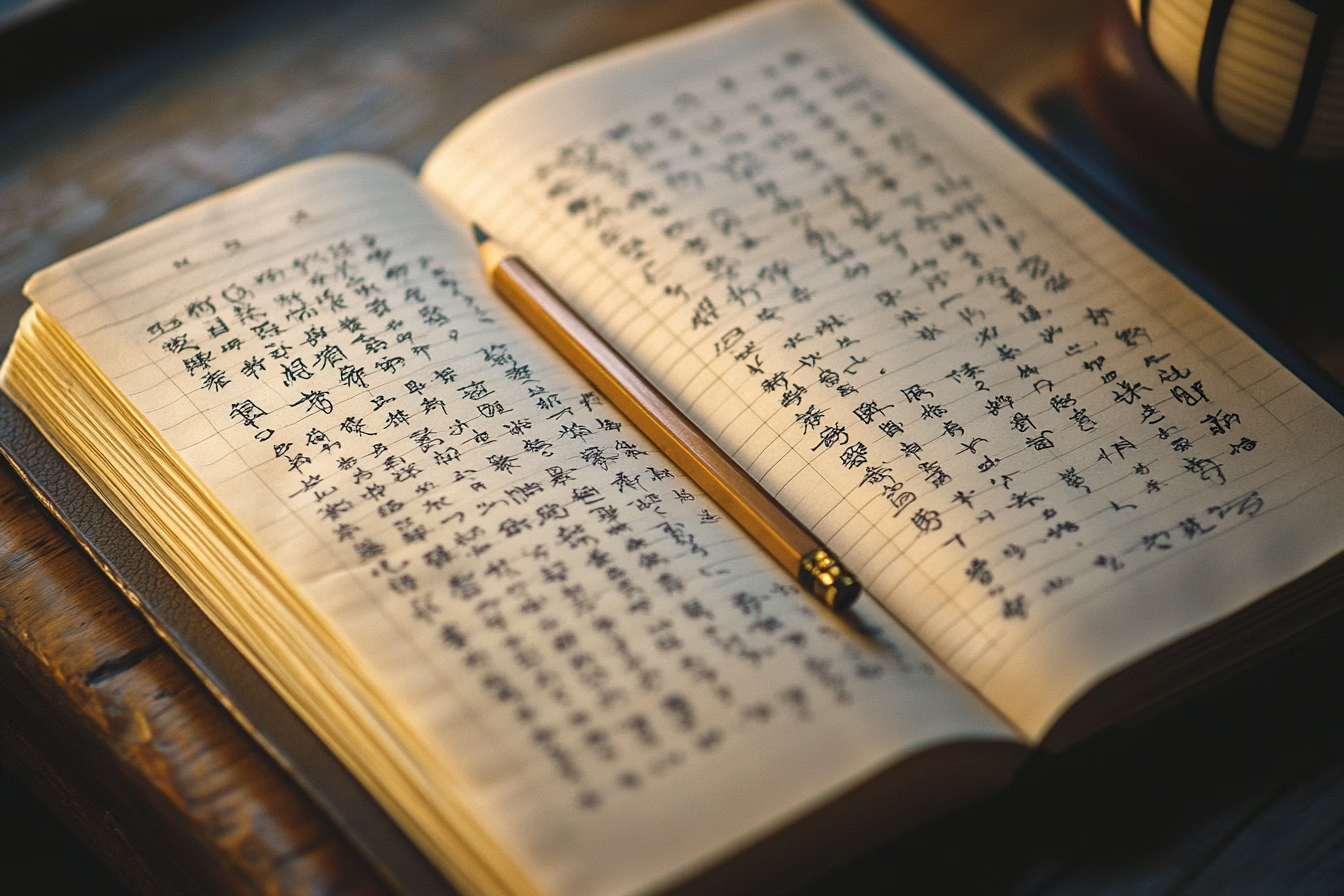
None of this means endless copies. Blind repetition is the other trap. If you write a character twenty times while looking at the model, you mostly practice copying. The better approach removes support in stages, so each pass asks a little more of memory. That is the idea behind the memory ladder below. It keeps the hand busy, and it keeps the mind honest too.
A habit borrowed from travelers
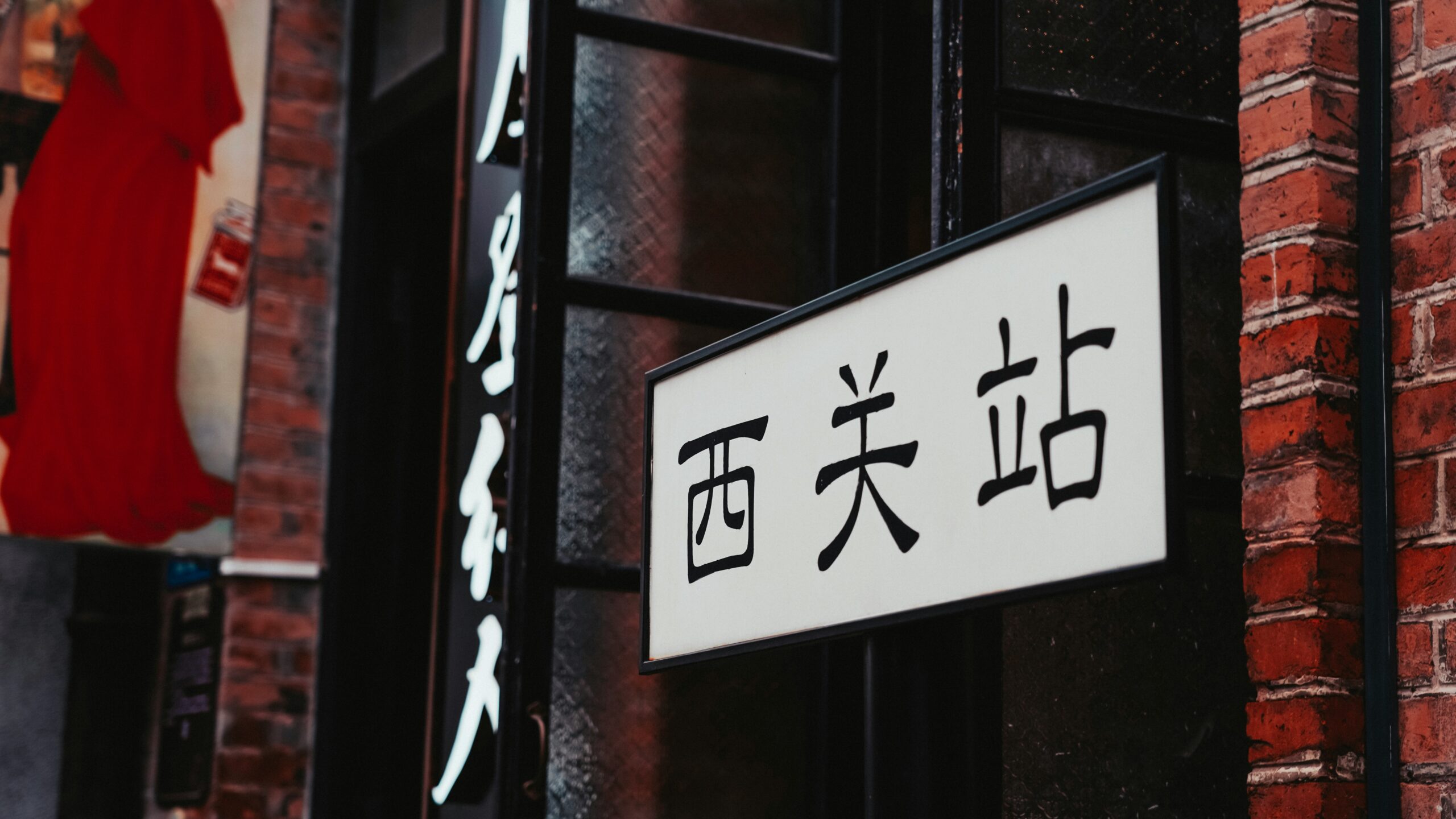
Before the ladder, one habit is worth borrowing from travelers. Some people who keep a journal in Japan copy the kanji they see on signs, menus and station boards. They write the shape, then look up the meaning that night. Rereading the page the next morning then becomes a recall test.

Blank pages for the kanji you meet on the road, and the places you met them.
Unlined · 120 pages · Original cover art
Shop This Journal →A blank, unlined page suits kanji well. Grid lines help at first, but a character should also hold its shape without them. So try writing a kanji you saw that day with no guide at all. If it comes out balanced, it is yours. If it falls apart, you have found tomorrow’s practice.
The Memory Ladder: Trace, Half-Trace, Freehand
The memory ladder is our answer to how to remember kanji without mindless copying. It has three rungs, plus a fourth for words. Each rung takes away some support. As a result, each one asks memory to carry a little more of the load.
The ladder mirrors how people learn any skilled movement. First you follow a guide. Next you follow part of a guide. Finally you work alone, and then you check the result against the model. Kanji are no different, because each one is a small, precise movement of the hand.
Rung one: trace
Tracing means writing directly over a printed model in faint gray. It teaches the order and direction of each stroke, along with the proportions of the whole. Once your hand knows the right direction, a stroke drawn the wrong way feels wrong. For more on why order matters, read our companion piece, Is Stroke Order Important?
Trace slowly, counting the strokes. For 夏, that means ten. Speed comes later.
Rung two: half-trace
Half-tracing gives you only part of the model. Perhaps the first strokes appear in gray while the rest are missing. Or perhaps every stroke shows as a thin, broken outline. Either way, your memory has to fill the gaps. This is the first real recall test, and it is a gentle one. Each mistake shows exactly which part of the character has not settled yet.
Rung three: freehand
Freehand means an empty box and no model in sight. Write the kanji from memory, then uncover the model and compare. Check the stroke order, the balance of the parts, and where each stroke ends. If something is off, go back one rung for that character only. Then climb again.
The fourth rung: words
A kanji rarely lives alone. Most of the time it sits inside a word, next to other characters. So the last rung is to write the kanji inside a word you can read aloud. That gives memory three hooks at once: shape, sound and meaning.
Each rung removes support, so each pass asks memory to carry more.
| Rung | Your hand | Your memory | Move on when |
|---|---|---|---|
| Trace | Writes over a full gray model | Learns order, direction and proportion | The strokes feel smooth and unhurried |
| Half-trace | Completes a partial model | Fills the gaps from memory | You finish without pausing to guess |
| Freehand | Writes in an empty box | Rebuilds the whole character | Your version matches the model |
| Word | Writes the kanji inside a word | Links shape, sound and meaning | You can write the word and say it aloud |
This is the order Volume 1 follows for every character. Each of its 100 kanji gets 19 practice boxes, moving through traced, half-traced, freehand and word boxes. Still, the ladder is not a trick of the book. You can build it yourself on squared paper tonight, with any character you like. Draw a row of boxes. Add light models to the first few, partial models to the next two, and leave the rest empty. Then climb, one box at a time, and stop when the empty boxes come out right. Ten minutes with a ruler gives you a week of practice pages.
Where you practice matters less than when. Short sessions work better than long ones, because attention fades and copying creeps back in. Twenty minutes is plenty for three to five new characters and a round of reviews. A regular time helps too. Many learners like mornings, before the day fills with other words. For the rest of the day, let the characters rest. Forgetting a little between sessions is not a problem. In fact, it is what makes the next recall test worth taking. If you would like more notes like these, the letters below arrive now and then.
If you are learning kanji ahead of a visit, we can plan a custom Japan trip that puts your reading to use, one station sign and menu at a time.
Occasional letters on learning kanji by hand: memory, practice routines and news of the Kanji Series.
Occasional letters. Unsubscribe anytime.
Two Kanji, Worked Through: 夏 and 語
Theory is easier to trust once you see it on real characters. So here are two from Volume 1, both from its public page samples. One is simple to picture. The other is dense, with fourteen strokes. Together they show how to remember kanji of very different weights with one method.
夏, summer: ten strokes and a picture
夏 means summer. It is a JLPT N4 kanji (unofficial), written in ten strokes. Its usual readings are natsu on its own and ka in some compound words. Say natsu as you write it, and the sound starts to travel with the shape.
Visually, 夏 stacks into two parts. The top is tall and narrow, like a face above a collar. The bottom is a sweeping component with long, crossing strokes. Learners often lose the bottom half first, because those crossing strokes need care. That makes 夏 a good candidate for half-tracing: give yourself the top, then recall the bottom.
A mental picture helps here. Tie 夏 to one clear summer scene of your own: a sparkler at dusk, a festival street, a hot train platform. When you practice freehand, call up the scene first and then write. The picture does not replace recall. It simply gives recall somewhere to start. Later, you will meet 夏 inside longer words. Spotting it there is a small, satisfying sign that it has stuck.
語, language: fourteen strokes in two parts
語 means language, or word. It is a JLPT N5 kanji (unofficial), with fourteen strokes. Its common reading in compounds is go, and it also appears in the verb kataru, to tell or narrate. It closes the name of almost every language in Japanese.
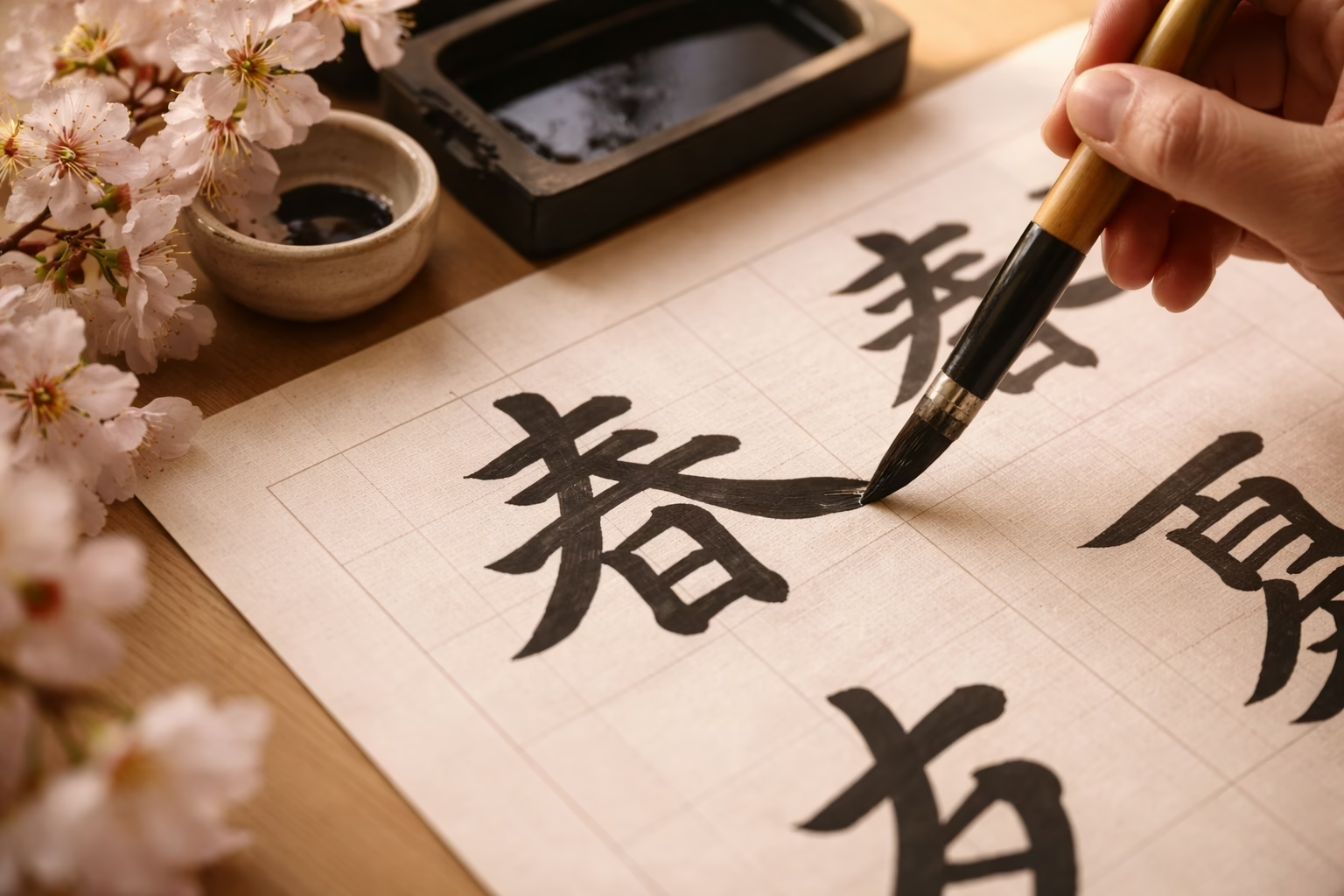
Fourteen strokes sound like a lot, but 語 splits cleanly into a left side and a right side. The left side is a component linked to speech, which fits the meaning of language well. The right side works as a second, compact unit. So you can learn 語 as two parts rather than one dense block. Once the parts feel familiar, fourteen strokes become two short chunks.
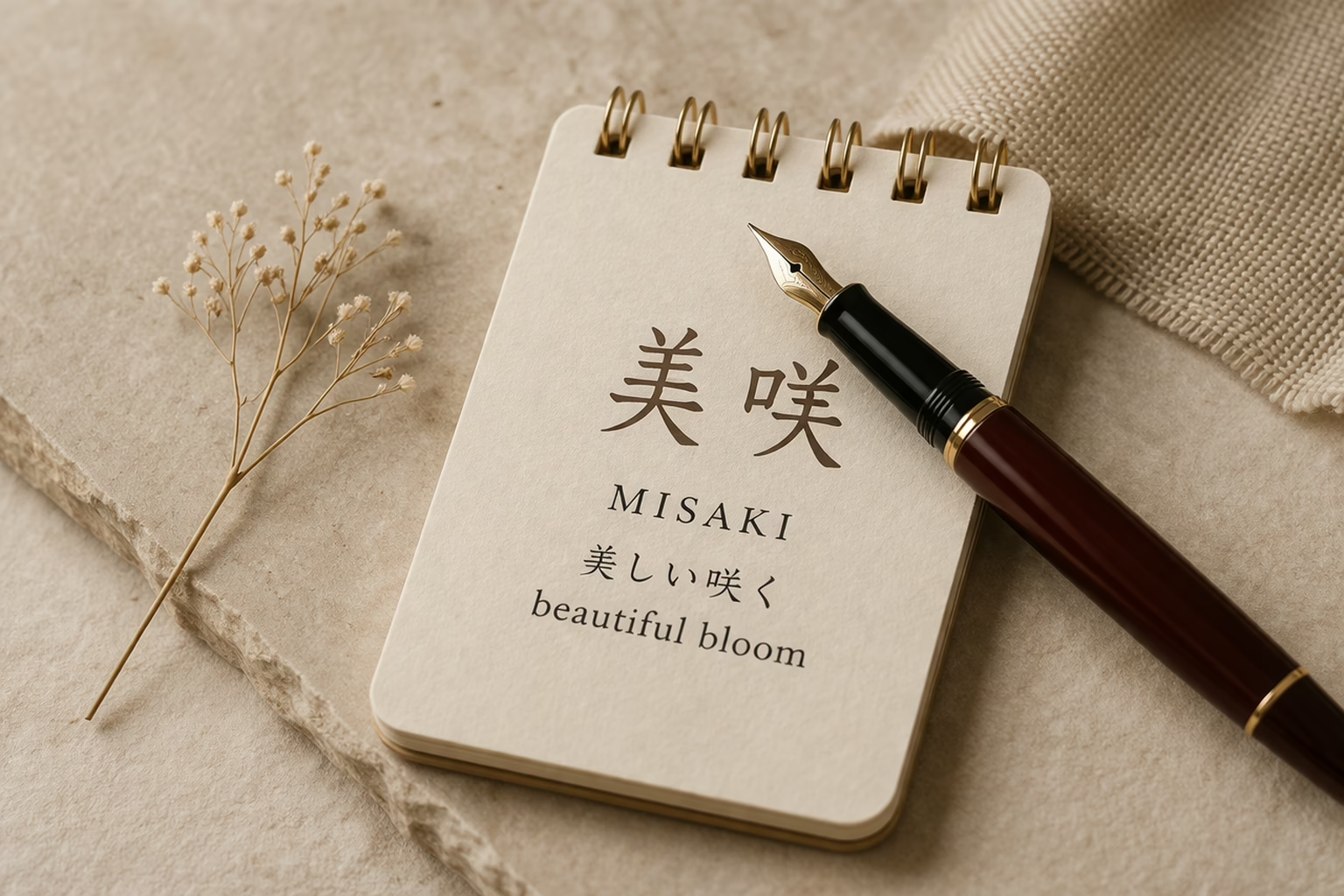
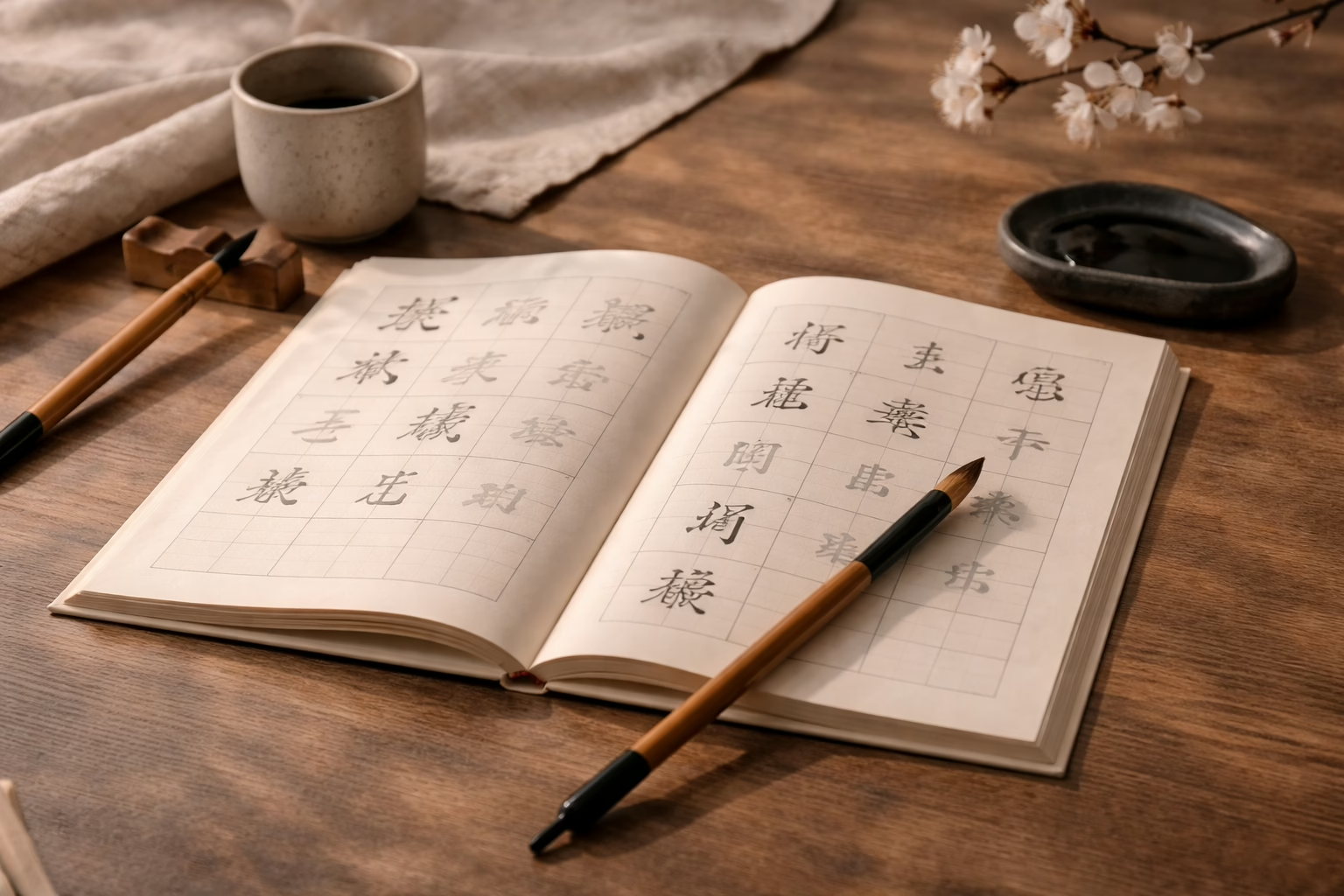
Chunking dense characters
Chunking is the main tool for dense characters. Practice the left part until it flows, then the right part, then the whole. On the ladder, that means you might half-trace 語 with the left side printed and the right side blank. A week later, flip it. Recall the left, and let the right side guide you. Our earlier piece on the flashcard method for kanji covers review decks, and chunking works inside that system too.
語 also opens a door to Japanese culture. It turns up in the names of languages, in titles and on the spines of books. Moreover, it appears in the name of one of the great works of world literature, The Tale of Genji. Knowing one character lets you spot it wherever you go.

A bookstore is a good place to test yourself. Scan a shelf and count how many times 語 appears. Then pick one title and try to write it from memory later that day. It is a small game, but it turns a trip, or even a browse online, into recall practice. The same works for 夏 in summer, when the character shows up on posters for fireworks, festivals and seasonal food. Keep a short list of the kanji you spot, with the place you saw each one. Place and memory bond well, and over time the list becomes a map of your progress.
Recommended
How to Remember Kanji Over Weeks, Not Hours
Learning a kanji once is only the start. To keep it, review on a widening schedule, and test yourself each time rather than rereading.
A simple spacing schedule
Try this rhythm for each new character. Review it the next day, then three days later, then a week later, then two weeks after that. At every review, write it freehand first, before you look. If it comes back cleanly, stretch the next gap. If it slips, shorten the gap and return to half-tracing for that one character.
The exact days matter less than the pattern. What matters is that each review arrives just as the memory starts to fade. Recall at that point takes effort, and that effort is what strengthens it. By contrast, a review the same evening feels easy and teaches little. If you like a set pace, the 100 Kanji Challenge spreads the first 100 kanji across 100 days.
Why checkpoints help
Spacing works best when you can see it working. That is why Volume 1 builds in checkpoints and a progress tracker. Every so often, you pause new characters and test older ones from memory. The score shows which kanji are secure and which need another climb.
A Daily Routine That Makes Kanji Stick
Knowing how to remember kanji is one thing. Doing it most days is another. Here is a routine that fits into about twenty minutes, with room for a proper breakfast.
Twenty minutes, four parts
Start with five minutes of reviews. Write yesterday’s and last week’s kanji freehand, from their meanings only. Next, spend ten minutes on new characters, taking each one up the ladder from trace to freehand. Then write each new kanji inside one word. Finally, take two minutes to mark your misses, so tomorrow’s review list writes itself.
Keep new characters few. At three to five a day, 100 kanji take about a month of steady mornings, with reviews woven in.
Breakfast earns a place in this routine, too. A warm plate and a cleared table make it easier to sit down with a pencil. Tamagoyaki, the Japanese rolled omelet, suits the mood. You build it in thin layers, one rolled over the next, much like a memory built from spaced reviews.
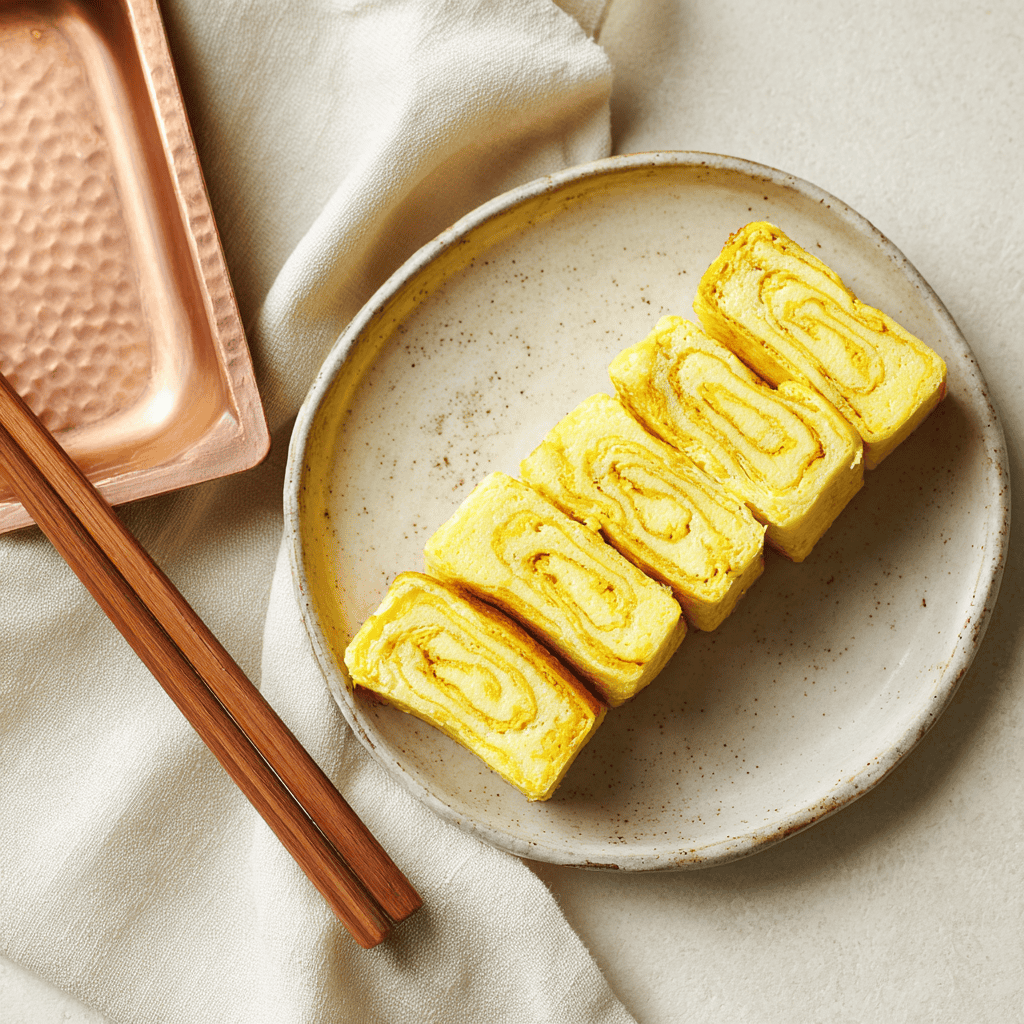
A fixture of Japanese breakfasts and bento boxes, rolled in thin layers in a rectangular pan. Tokyo-style versions run sweeter, while the Kansai dashimaki style, followed here, adds more dashi for a softer bite.
- 3 large eggs
- 3 tablespoons dashi (Japanese soup stock)
- 2 teaspoons sugar
- 1 teaspoon soy sauce
- 1 teaspoon mirin
- 2 pinches of salt
- Neutral oil, for the pan
- Grated daikon, to serve (optional)
- Whisk the eggs gently, without whipping in air. In a second bowl, stir the dashi, sugar, soy sauce, mirin and salt until the sugar dissolves, then combine the two.
- Heat a rectangular tamagoyaki pan over medium heat and wipe it with a thin film of oil. A drop of egg should sizzle on contact.
- Pour in a thin layer and tilt the pan to cover it. When the bottom has set but the top is still soft, roll the egg toward you with chopsticks.
- Push the roll to the far end and oil the pan again. Pour in another thin layer, lift the roll so the egg runs underneath, and roll again once it sets.
- Repeat until the mixture is gone. Wrap the hot roll in a bamboo mat for five minutes to set its shape.
- Slice across into bite-size pieces and serve warm, with grated daikon and a little soy sauce if you like.
Like the ladder, tamagoyaki rewards patience over force. Each layer needs to set before the next goes on, and rushing tears the roll. Kanji work the same way. Give each review time to settle, and the result holds together. Rush it, and the shape unravels by the weekend.
The right paper helps as well. A grid gives each kanji a fixed box, so you can judge its proportions at a glance. Squared paper with 5mm cells suits small practice characters, while larger grids suit slow, careful tracing. These notebooks from Japanese makers make good homes for a daily practice log that you keep for months.

When a kanji will not stick
Some characters resist. Usually the cause is one of three things. The shape may resemble another kanji, the stroke order may be unclear, or the character has no picture attached yet. Treat each cause differently. Compare look-alikes side by side. Go back to tracing to fix the order. And give a stubborn kanji a small scene or story of your own.
Above all, do not write a stubborn kanji twenty times in one sitting. Write it three times up the ladder, then leave it. Tomorrow’s recall test will do more than tonight’s extra copies. Spacing, not repetition, is what moves a character into long-term memory.
Japanese schools still teach handwriting with care, and children practice the jōyō kanji over many years. The official jōyō list holds 2,136 characters, a total set by the 2010 revision, as the Agency for Cultural Affairs explains. Our eight-volume series covers all of them, each once. You do not need them all to begin, though. You need a first handful, learned well. Confidence grows from exactly that. Each character you can write from memory is proof that the method works, and proof keeps you coming back to the desk. Start small, and let the list grow on its own.

Where Mnemonics Fit In
Much of the advice online about how to remember kanji centers on mnemonics. These are small stories that link a character’s parts to its meaning. They help, especially with meaning, and they make study more playful. A story about speech and a speaker, for example, makes 語 easier to recognize.
But a story alone rarely produces a written character. It tells you what the parts are, not how the hand moves through them. So use mnemonics as the first step toward meaning, and the ladder as the path to writing. Recall, by hand and on a schedule, keeps the kanji for good.
Questions Worth Asking
What is the fastest way to remember kanji?
Write each kanji from memory as early as you can, instead of rereading it. Use a short ladder: trace, half-trace, then freehand with the model hidden. Review on a widening schedule, such as one day, three days and a week later. Recall by hand, spaced over days, beats one long session.
Should I learn to write kanji or just recognize them?
Recognition is enough for reading, but writing builds a deeper memory. A large study of Japan Kanji Aptitude Test results found reading and writing to be separable abilities. Writing trains recall, and it makes recognition faster and steadier. Even learners who mostly read gain from writing new characters by hand.
How many kanji should I learn per day?
Three to five new kanji a day suits most beginners, with reviews of older ones in every session. At that pace, 100 kanji take about a month. Learning many more per day often backfires, because the review load grows faster than memory can keep up.
Why do I keep forgetting kanji I studied?
Usually because you only ever recognized the kanji and never recalled it. Rereading feels productive but builds weak memories. Test yourself by writing from the meaning alone, then check. Also space your reviews, since recalling a character just as it starts to fade is what strengthens it.
Do mnemonics work for remembering kanji?
Yes, for meaning. A short story that links a kanji’s parts to its meaning makes the character easier to recognize. Mnemonics do less for writing, because they do not train the hand. Pair a story with tracing and freehand recall to learn both the meaning and the shape.
Does stroke order help you remember kanji?
Yes. A fixed stroke order turns each kanji into a repeatable movement, which gives memory a second route back to the shape. It also improves balance and speed. Learn the order while tracing, and it will carry into freehand writing without extra effort.
From the Eye to the Hand
The eye is quick and easy to fool. The hand is slower and more honest. Ask it to write a character from nothing, and it tells you the truth at once. That honesty is the real answer to how to remember kanji: let the hand do the remembering.
If you would like the ladder laid out for you, the first volume of our kanji workbook holds 100 beginner kanji with frame-by-frame stroke panels. Each panel shows the new stroke in red, with earlier strokes in soft champagne behind it. An arrow marks direction, and a number marks order. Its example sentences use only kanji already taught, with later ones in kana. The Digital Letter edition is available now, and the two print editions are in production.
New to kanji? Our guide on how to start learning kanji makes a good companion, and tablet learners can follow our routine for practicing kanji on an iPad.
The Ma Journal is a ninety-day guided practice in the pause, and it sits well beside spaced kanji review, where the interval is part of the work.
View the Journal →Pick one kanji tonight. Trace it, half-trace it, then write it with the model hidden. Test it again tomorrow before you look. That is the whole method, and it starts with a single character.
The Editors, Magnificent Japan
We design routes around what you want to read and do: station names on a rail journey, menus in small local restaurants, and a calligraphy session where you write the characters you have been practicing.
Plan Your Custom Japan Itinerary