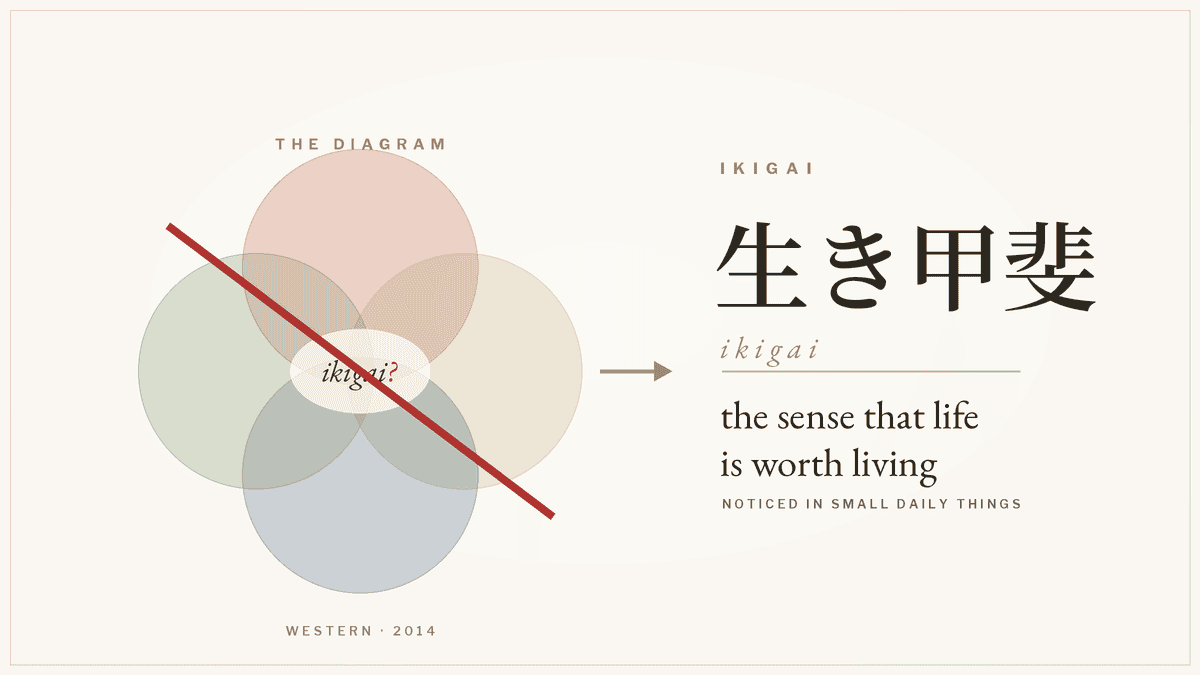
You have almost certainly seen the ikigai Venn diagram. Four circles overlap: what you love, what you are good at, what the world needs, and what you can be paid for. The word ikigai sits in the small shape where all four meet. It turns up in career talks, on office whiteboards and in countless slide decks.
Yet the picture is not Japanese. It was made in 2014 from a Spanish chart about purpose. As a result, it asks a different question from the word. In Japan, ikigai is the sense that life is worth living. People find it in a grandchild, a garden or a morning routine, as well as in work.
Below, we trace the diagram to its real makers, list its four prompts, and set it beside Japanese research. We also show how that everyday reading shaped The Return, our 90-day ikigai journal.
Is the Ikigai Venn Diagram Japanese?
No. Andrés Zuzunaga drew the four-circle chart in Spanish in 2011, with purpose, not ikigai, at its center. In May 2014, the blogger Marc Winn swapped in the word ikigai and posted it. In Japan, ikigai simply means what makes life feel worth living. It can be small, plural and unpaid.
Where the Ikigai Venn Diagram Came From
The four-circle picture has a short and well documented history. It runs through three people, and none of them was trying to define a Japanese word. First, a longevity writer mentioned ikigai in a talk. Then a chart about purpose appeared in Spanish. Finally, a blogger joined the two ideas into one image.
That first step came in 2009, when Dan Buettner gave a TED talk called How to Live to Be 100+. He described places where people live unusually long lives, Okinawa among them, and ikigai came up along the way. The talk was about health and aging, not about careers. Still, it is where Winn later said he met the word, and the word soon went looking for a picture.
2011: a Spanish chart about purpose
The picture came from a Spanish-language chart. According to his own site, Andrés Zuzunaga created his Venn diagram of purpose in 2011. It then appeared in 2012 in Borja Vilaseca’s Spanish book ¿Qué harías si no tuvieras miedo?, and in later editions until 2019.
His chart used four overlapping circles, and the word at its center was propósito, or purpose. The circles were the ones you now know. However, nothing in the chart referred to Japan. It was a tool for thinking about vocation, written in Spanish for Spanish readers. As a career exercise, it is sensible and even useful. Yet it had no link to the Japanese language at first.

May 2014: one word changes
On 14 May 2014, the entrepreneur Marc Winn published a short post titled What’s Your Ikigai? on his blog. He had watched Buettner’s talk. He had also seen Zuzunaga’s purpose chart. So he put the two ideas in one picture and wrote “ikigai” where “purpose” had been.
Winn has been open about this ever since. His original post now credits the chart to Zuzunaga. In a later account, he wrote that he replaced “Purpose” with “Ikigai”, and that the visual structure belongs to Zuzunaga. In other words, the most famous ikigai Venn diagram is a relabeled Spanish chart. Its Japanese content is one word, added in a single edit.

Why the four circles traveled so far
The post spread quickly. Winn says he has no reliable measure of its reach. Even so, he notes that it traveled into coaching sessions, workplaces, classrooms, books and presentations around the world. The reason is easy to see. After all, four questions fit on one slide, and the overlap feels like an answer waiting to be found.
Because the word was foreign, it also lent the chart an air of depth. A career worksheet looked like a cultural teaching. That is the core of the problem. Many readers came to believe the four circles were how Japanese people think about ikigai. They are not, and the next section shows what the chart actually asks of you.
The Ikigai Diagram Explained: Four Circles, Four Prompts
Here are the four prompts, in the plain wording most versions use:
- What you love
- What you are good at
- What the world needs
- What you can be paid for
Winn’s post put it plainly: your ikigai lies at the center of those circles, and if you lack one area, you miss part of your potential. The center is meant to hold all four at once. So the chart assumes that your deepest reason for living is also a job that pays.
That assumption leaves a great deal out. A retired teacher who tends tomatoes is not paid for them. A parent walking a child to school earns nothing for the walk. Yet in Japanese usage, both can be ikigai. The same is true of a pot of tea made slowly at home each morning. It asks nothing of the four circles, and still it can be the best part of a day.
What Ikigai Means in Japanese
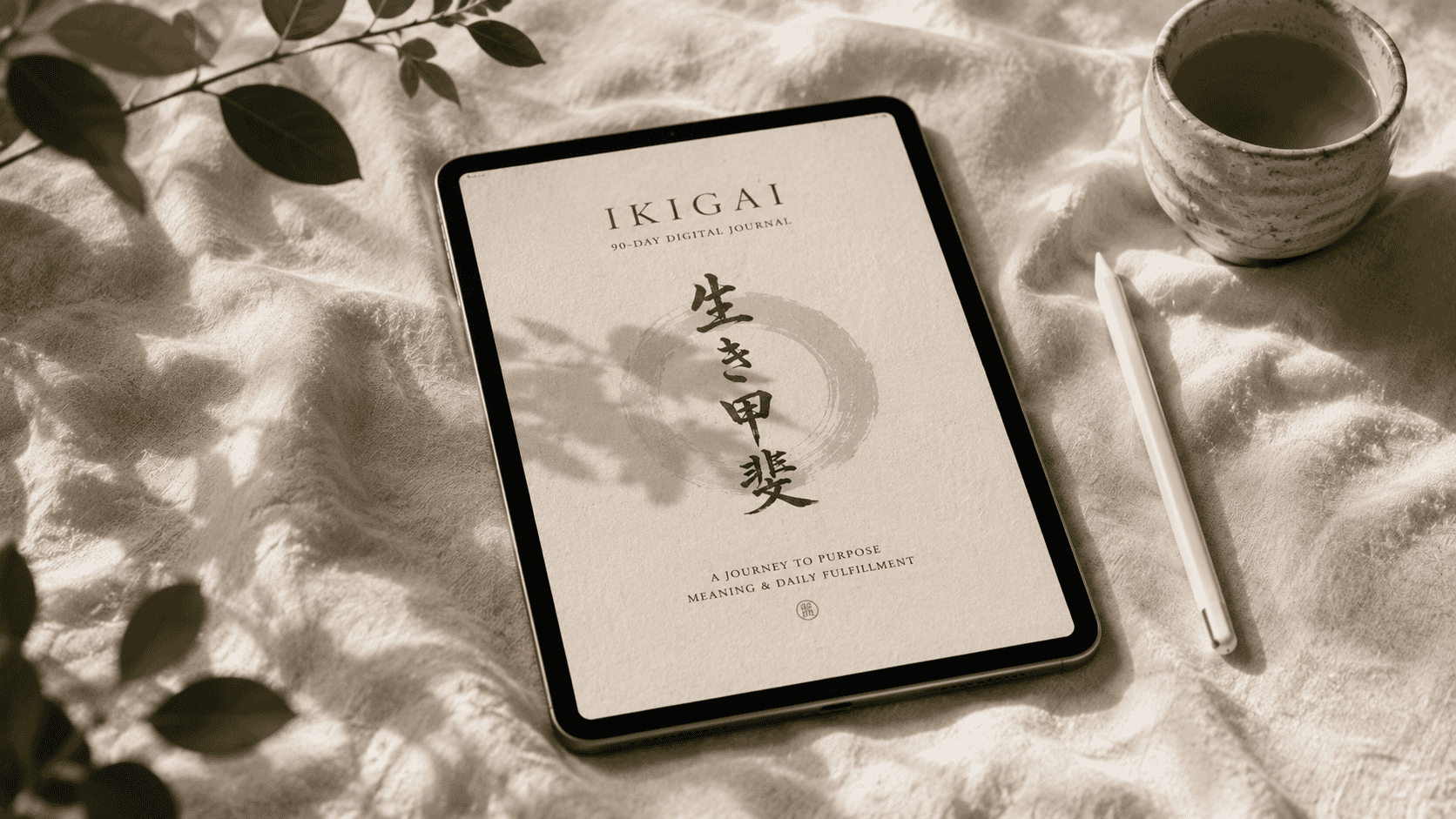
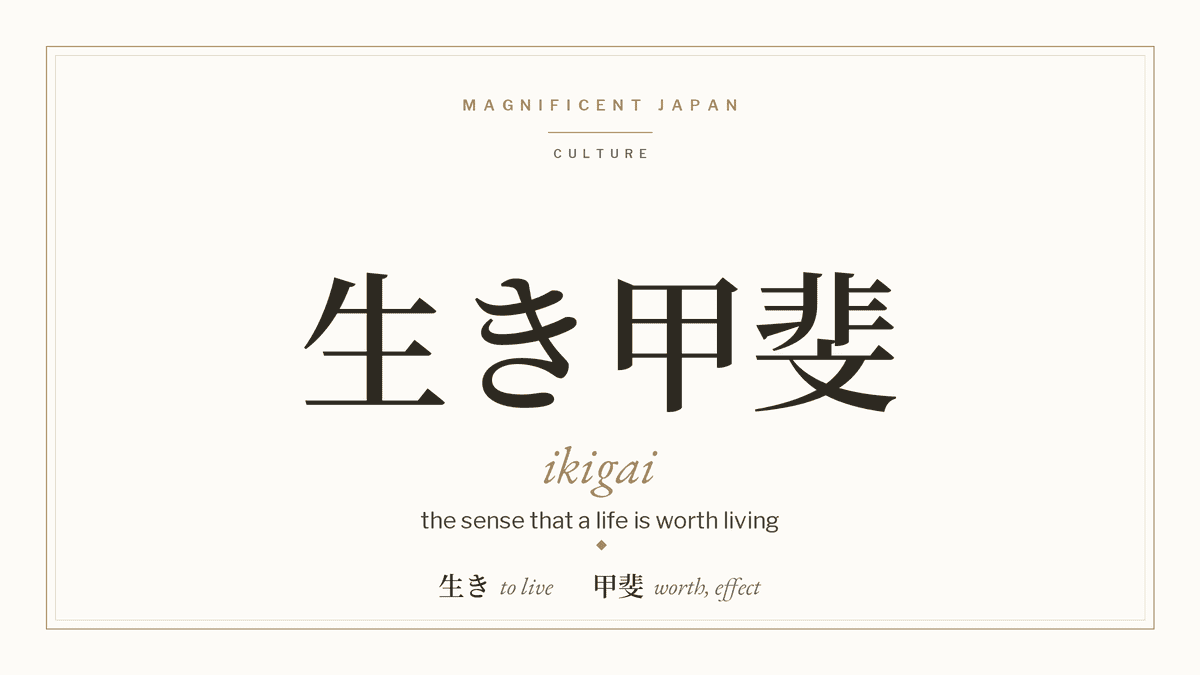
The word has two parts. 生き (iki) means life, or being alive. 甲斐 (gai) means worth, the kind of reward that makes an effort worthwhile. Together, ikigai means something close to “what makes life worth living.” It is a common, everyday word in Japan, not a technical term.
Most importantly, you feel ikigai rather than solve it. People speak of having ikigai, or of losing it, much as they might speak of having energy. It can be large, like raising a family. It can also be small, like a weekly walk with a friend. Many people hold several at once. That is also why travel suits the idea so well. A trip is a run of small moments you may never repeat, which is what the Japanese phrase ichi-go ichi-e, one time, one meeting, describes. A blank journal on the road keeps them.
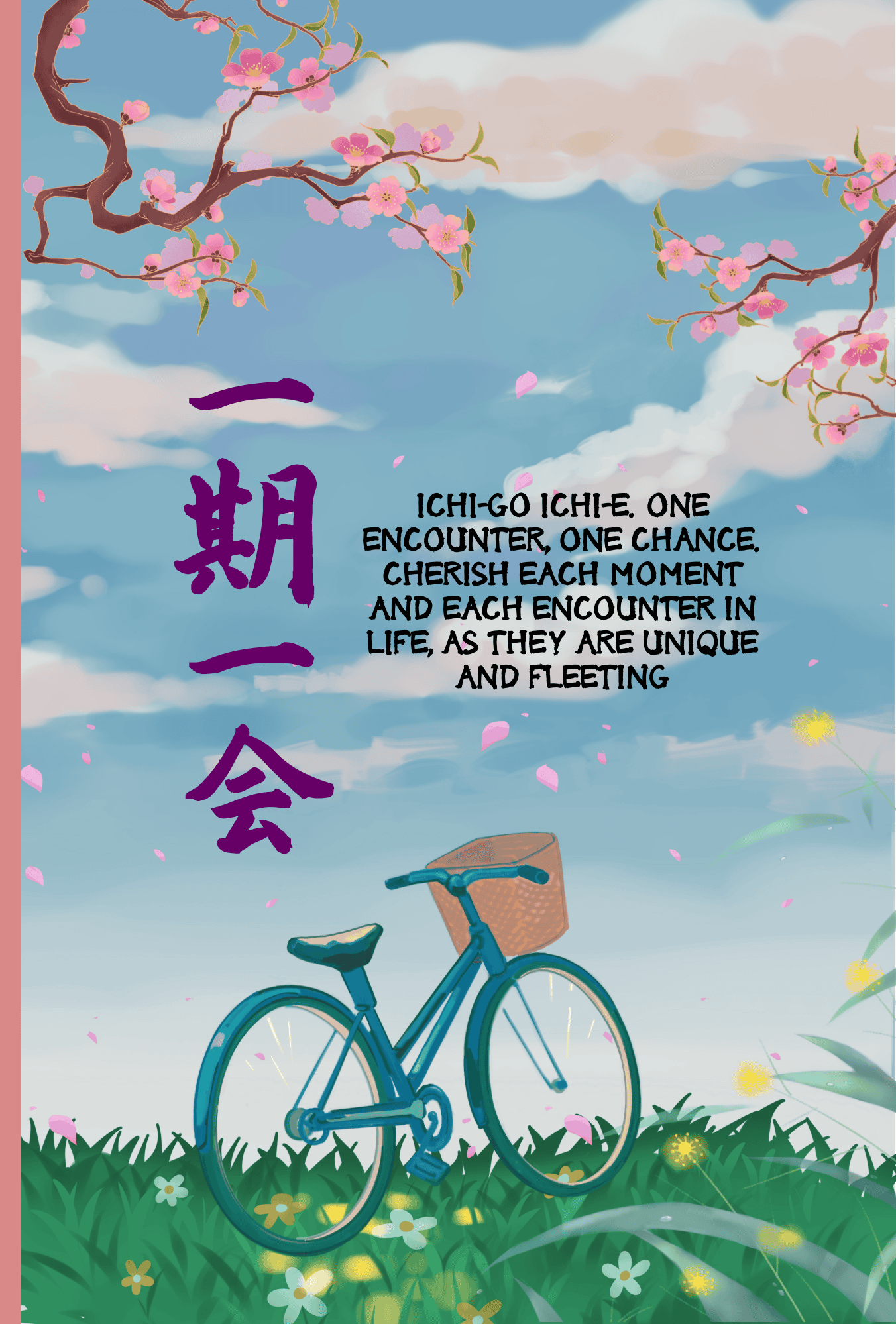
One encounter, one chance: pages for the moments worth keeping.
Unlined · 120 pages · Original cover art
Shop This Journal →A word about ordinary days
Notice how different this is from the chart. The diagram asks one large question and expects one answer. The word, in contrast, points to many small answers across many days. You do not reach ikigai once and file it away. Instead, you notice it again and again, in ordinary hours.
That is why income is optional in the Japanese sense. A job can be ikigai, and for many people it is, since work fills much of the day. However, so can a hobby, a friendship, a pet or a place. Our longer guide to what ikigai means in everyday Japanese goes further into the word and its uses. For now, the key point is simple. The word describes a feeling, and the diagram describes a career.
What Japanese Research Says, Beyond the Four Circles
Long before the diagram, ikigai had a serious research root in Japan. It belongs to the psychiatrist Mieko Kamiya. From the 1950s she carried out psychiatric research among leprosy patients at Nagashima Aiseien, a sanatorium, and she worked there until 1972. Her subject was meaning under the hardest conditions.
In 1966 she published Ikigai ni Tsuite, or On the Meaning of Life. Her Japanese publisher, Misuzu Shobo, still frames the book around two questions. What makes our daily life feel worth living? And once we lose our ikigai, how do we find a new one? Neither question mentions pay, skill or a career. So the contrast with the ikigai Venn diagram is plain.
The chart asks for one paid answer, while the word allows many small ones.
| Question | Four-circle diagram | Ikigai in Japanese usage |
|---|---|---|
| Origin | Spanish purpose chart (2011), relabeled in 2014 | Everyday Japanese word; studied by Kamiya in 1966 |
| What sits at the center | One pursuit that meets four tests | A felt sense that life is worth living |
| Is income required | Yes, one of the four circles | No; hobbies, family and routines all count |
| How many at once | One, at the overlap | Often several, and they change with life |
| How it is found | Solved once, on paper | Noticed again and again, in daily life |
Two sides of one word
Researchers often split ikigai into two parts. One is ikigai-kan, the feeling that life is worth living. The other is the source of that feeling, such as a person, a role or an activity. A 2022 paper in Frontiers in Robotics and AI traces this distinction back to Kamiya’s 1966 work.
The split matters, because the diagram blends the two. It treats the sources as a formula for the feeling. If you find the right pursuit, the chart implies, the feeling will follow. Kamiya’s second question points the other way. If ikigai can be lost and found again, its sources are not fixed. They shift as a life changes, and the feeling has to be tended rather than solved.
A question with a measurable answer
The feeling is not merely poetic. In the Ohsaki Study, researchers asked 43,391 Japanese men and women one question: do you have ikigai in your life? They then followed the group for seven years. Those without a sense of ikigai had about 1.5 times the risk of death over that period.
Notice what the study asked. It did not ask about salary, talent or global need. It asked a single plain question about a person’s own life. You can answer that question on any given morning, and the answer may change from one season to the next. It also works well in writing. A daily prompt, answered by hand in a few lines, is simply this question asked again, which is what the short film below shows.
Twenty seconds inside the journal
The digital edition in use — a morning prompt, answered by hand while the coffee is still warm. Tap to play, with sound.
One page, one intention, one single quiet moment.
Living Ikigai Without the Four Circles
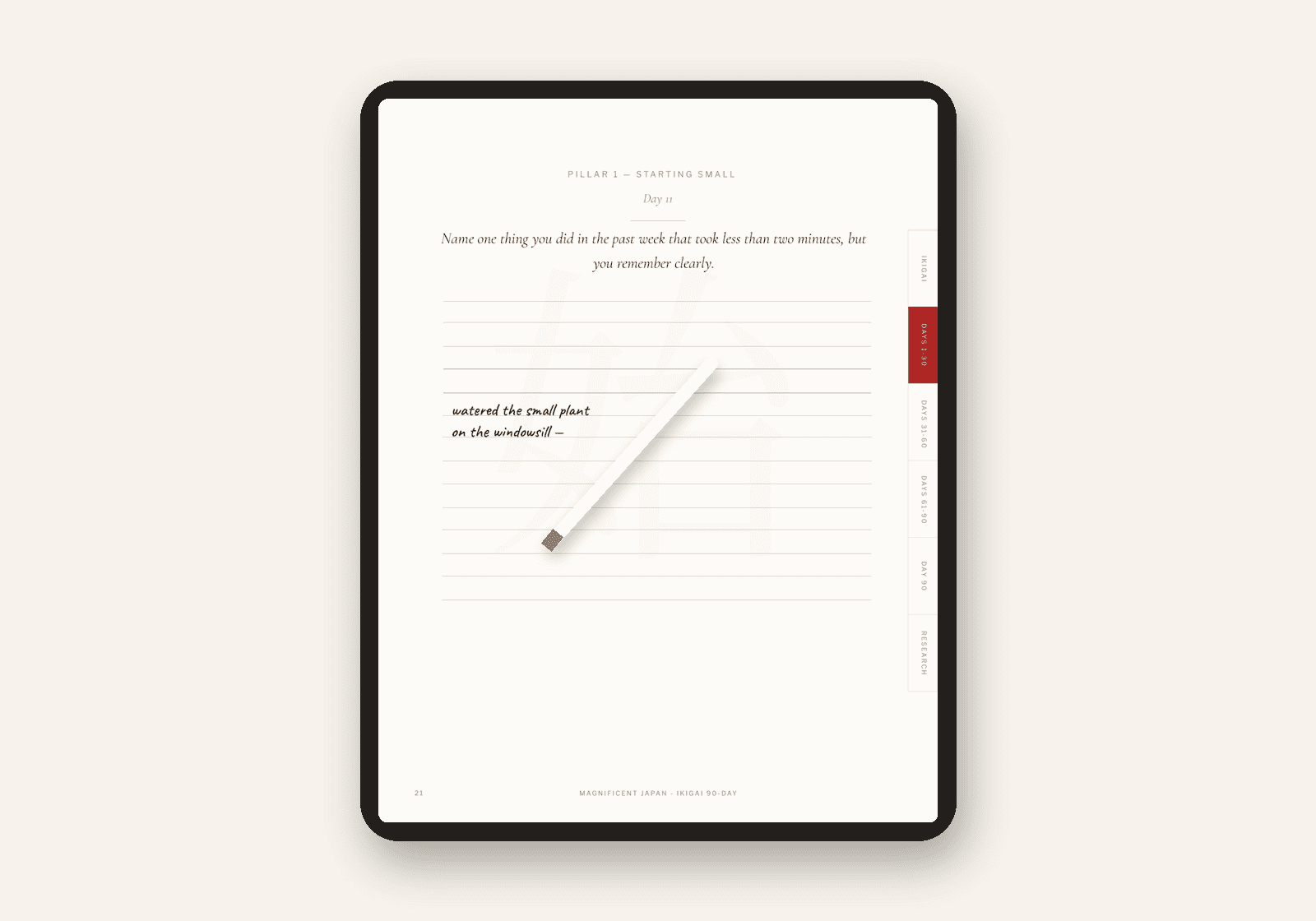
If the chart asks once, the word asks daily. The practice that follows is modest. Each day, notice one thing that made the day feel worth living. Write it down in a line or two. Then, once a week, look back at what you wrote and see which sources return.
Over a month, a pattern usually appears. It might be a certain friend, a type of task or an hour of the day. Those are your sources of ikigai, and they are rarely what the four circles predicted. Our step-by-step guide on how to find your ikigai through daily noticing sets out the full method.
Japan itself is a good place to watch this idea at work, in shop fronts, morning markets and neighborhood rituals. When you would like to see it in person, we can shape a Japan itinerary built around everyday life for you.
Three mornings with The Return, our ninety-day ikigai journal: two prompts, two days apart, and a look back on day seven.
What comparison with the United States shows
The anthropologist Gordon Mathews has studied this question closely. His book What Makes Life Worth Living? How Japanese and Americans Make Sense of Their Worlds compared how people in both countries talk about meaning. The paper cited above notes his view that Americans share a sense close to ikigai. English simply lacks an exact everyday word for it.
That is a helpful reminder. Ikigai is not an exotic idea that only Japan can hold. It is a common human experience that Japanese happens to name clearly. Small, repeated practices tend to feed it best, whether that is cooking, a walk or tracing a character by hand. For that reason, several of our own tools suit exactly that kind of short daily session.

Where ikigai shows up in a Tokyo morning
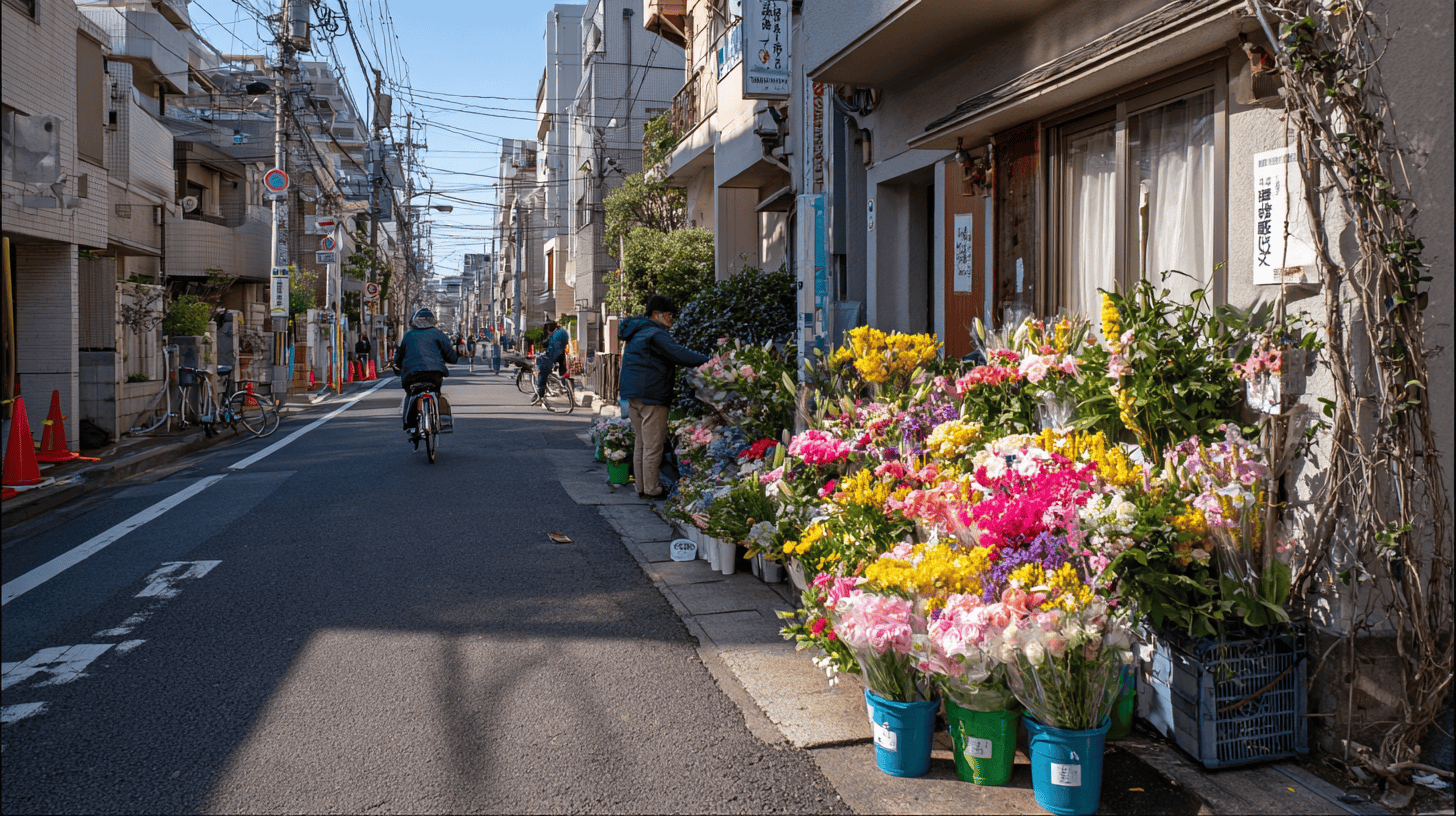
Walk through a residential Tokyo neighborhood at eight in the morning. A florist sets out buckets of stems. An older man sweeps the pavement in front of his shop, as he has done for decades. Commuters cycle past with bags in their baskets, and a child waves from the back seat.
Still, none of them would place their morning inside a chart. Yet each moment could be someone’s ikigai. The florist may love the first hour, before customers arrive. The man with the broom may care most about a clean street. Neither answer is a career plan, and both are complete in themselves. That is the texture the word describes.
This is also where the chart and the word can meet again. The four circles are not useless. As a way to think about work, they ask fair questions. The error lies only in the label. Once you stop treating the overlap as ikigai itself, the chart becomes one tool among several.
For example, you might use the four prompts to review a career every few years. Meanwhile, the daily question does the slower work. It shows you what already makes your days feel worth living, before you change anything. That way, a career decision starts from what you know about your own life, not from a blank page.
Recommended
Small pillars, not four circles
Other writers have offered frameworks too. The best known is a five-part framing popularized in English by the neuroscientist Ken Mogi. It is one reading among several, and it came decades after Kamiya’s research. Like hers, it gives most of its weight to small, daily things.
What these accounts share is scale. They lean toward the small and the daily. They do not ask you to align four areas of life before you may feel that life is worth living. Instead, they ask you to look at what is already here. That shift in scale is the most useful thing to take from this whole story.
The plain daily thing
If you want an image of ikigai at its most modest, look at a Japanese breakfast. Tamago kake gohan is hot rice with an egg stirred through it and a few drops of soy sauce. It takes about five minutes. There is nothing to optimize, and nothing to diagram.
Yet many people in Japan would happily name a bowl like this as one of their small pleasures. It is warm, quick and the same each time, and that is the point. Therefore it makes a fitting recipe for this piece. Cook it once this week, slowly, and notice how it feels to eat something plain with full attention.
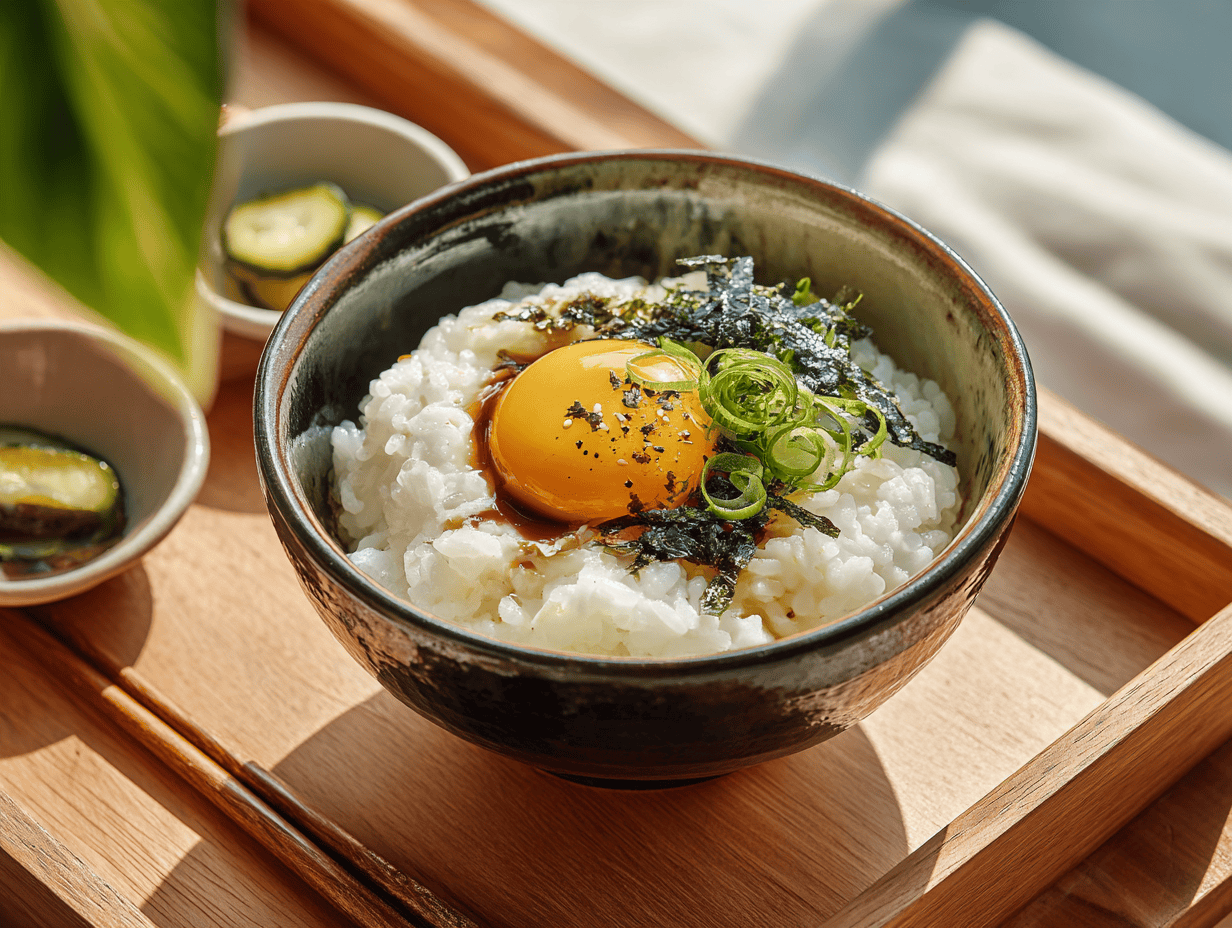
A home breakfast across Japan, often shortened to TKG. October 30 has been marked as Tamago Kake Gohan Day since 2005.
- 1 cup hot cooked Japanese short-grain rice
- 1 very fresh pasteurized egg
- 1/2 teaspoon soy sauce, or to taste
- Optional: a pinch of katsuobushi (bonito flakes)
- Optional: a little shredded nori or furikake
- Optional: thinly sliced green onion
- Place the hot rice in a bowl and press a shallow well into the center.
- Crack the egg into the well and add the soy sauce.
- Stir briskly with chopsticks until the egg coats the rice and turns pale yellow and creamy.
- Taste, and add a few more drops of soy sauce if needed.
- Top with bonito flakes, nori or green onion, and eat at once while hot.
A note on eggs: outside Japan, use pasteurized eggs for any dish served raw. That small change keeps the bowl simple and safe. Otherwise, the recipe needs nothing but good rice, a fresh egg and a steady hand with the chopsticks.
Once the bowl is empty, the morning is still young. This is where a short writing habit fits best. The mind is clear, and yesterday is still close enough to recall. A line or two about what felt worth living is enough. Over time, those lines become the most honest record of your ikigai you will ever hold, and they cost nothing but a minute.

Tools for a daily page
The habit asks very little equipment. Any notebook and any pen will do the job. Still, a good page and a pen that glides can make the habit easier to keep. Japanese stationery makers have long cared about these details, from paper that takes ink without bleeding to pens that write smoothly in small hands.
If you already enjoy reading and taking notes, you may like to give the practice its own objects. A notebook kept only for this purpose becomes a small signal to the mind. When you open it, you are asking the ikigai question, not planning the day. A few pieces that suit this kind of writing appear below.
Some people prefer a screen to paper, and that also works. What matters is the rhythm, not the medium. A daily entry of two or three lines is enough to show a pattern within a month. For ideas on what to write, our set of ikigai journaling prompts for every season offers a place to begin.
First, keep the entries short and concrete. Next, name the moment, the person or the task, rather than a mood. Then, after a few weeks, read them back in one sitting. The same names will return, and that return is your answer. It will rarely look like the center of a chart.
Keeping the chart in its place
This is the real difference between the two versions of ikigai. The diagram gives you a destination and asks you to reach it. The word gives you a habit and asks you to keep it. One can leave you anxious about a career you have not yet found. The other, by contrast, can show you a life you are already living, in all its ordinary detail.
So there is no need to throw the chart away. Just keep it in its proper place, as a career tool with a borrowed name. Then let the Japanese word do its own slower work, one morning at a time.

Checking the sources yourself
Before the questions below, one more point on sources. Fortunately, you can check every step of the origin story. Zuzunaga’s own site dates his chart. Winn’s 2014 post is still online, with its credit to Zuzunaga. Kamiya’s book is still in print in Japan, more than half a century after it first appeared.
That matters, because the claim that the ikigai Venn diagram is not Japanese often travels without a source. When you share it, share the paper trail as well. The story is more interesting with names and dates attached, and it is far harder to dismiss. It also points readers toward the richer idea underneath.
Questions Worth Asking
Which of the following is not a prompt within the ikigai Venn diagram: what they are good at, what their parents do, or what they love?
"What their parents do" is not a prompt in the chart. The four prompts are what you love, what you are good at, what the world needs, and what you can be paid for. Family background plays no part in the diagram, although family can certainly be a source of ikigai in Japanese usage.
Is the four-circle ikigai chart a traditional Japanese model?
No. It began as a Spanish chart about purpose, drawn by Andrés Zuzunaga in 2011, and was relabeled with the word ikigai by Marc Winn in 2014. Japanese writing on ikigai, including Mieko Kamiya's 1966 book, does not use four overlapping circles to explain the word.
Does ikigai have to involve paid work?
No. Income is one of the four circles in the Western chart, but not part of the Japanese word. People in Japan often name family, hobbies, friendships or a daily routine as their ikigai. Work can be one source among several, and many people with no job at all still have strong ikigai.
Where can I check the origin of the four circles for myself?
Start with Marc Winn's blog post "What's Your Ikigai?", dated 14 May 2014, which credits the chart to Andrés Zuzunaga. Then see Zuzunaga's own site, which dates his purpose diagram to 2011. For the Japanese side, Mieko Kamiya's book remains in print with Misuzu Shobo.
What is the difference between ikigai and purpose?
Purpose in English usually means a single direction or goal to pursue. Ikigai is closer to a feeling that each day is worth living, drawn from many sources at once. It can be small, it can change with age, and it does not need to be solved before you can enjoy it.
Can the four-circle chart still be useful?
Yes, as a career tool. Its four questions can help when you review work or weigh a change of role. The trouble begins only when the overlap is called ikigai. Keep the chart for career planning, and use a daily reflection habit for the wider sense that life is worth living.
Keeping the Circles in Their Place
The ikigai Venn diagram is a useful career chart with a borrowed name. It was drawn in Spanish in 2011, and then relabeled in 2014. The Japanese word is older and gentler. It asks what makes today worth living, and it accepts many small answers. Those answers are already in your week, waiting for your attention. A few lines each morning are enough to find them.
For a structure that asks that question each morning, turn to the 90 guided mornings of The Return. For a fresh start of another kind, the Shoshin journal below turns the same attention to beginner’s mind.
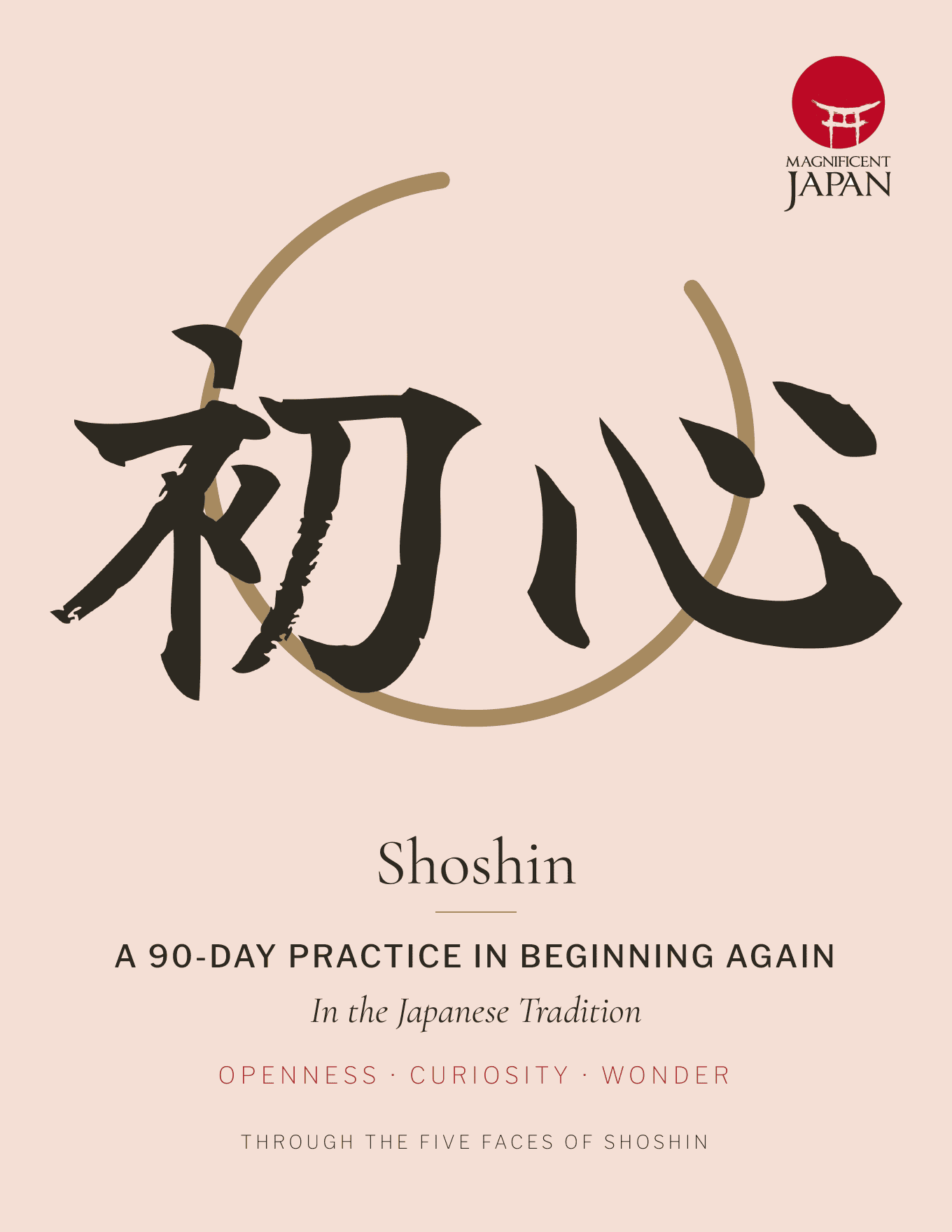
A ninety-day guided practice in beginner's mind, for meeting familiar ideas, ikigai included, as if for the first time.
View the Journal →Beginner’s mind and ikigai share one habit: both ask you to look at an ordinary day as if for the first time. And if you would like to see those ordinary days in Japan itself, from morning markets to tea rooms, we plan journeys around them.
The Editors, Magnificent Japan
We design routes that show the everyday Japan the word describes: neighborhood craftspeople, morning tea, and the small routines that make a life feel worth living.
Plan Your Custom Japan Itinerary