
Somewhere between the third episode and the thirtieth, the subtitles start to feel like a screen between you and the show. A phrase lands before the translation does. You catch a word you already knew. That moment, hearing Japanese as language rather than sound, is the door this guide opens. Most advice on how to learn Japanese for beginners fails in the same way. It hands over a pile of apps and no sequence, and sequence is nearly everything.
Japanese rewards learners who front-load the writing system, install a small grammar skeleton early and then spend most of their hours inside real Japanese. That means anime, manga, food packaging and conversation. This guide lays out that path in eight steps, with a realistic timeline and the tools that have earned their place. Before any of it, try one small ritual. If you have not yet found your Japanese name, our Japanese name generator gives you one with its kanji, pronunciation and meaning. Those two or three characters become the first kanji you ever own. Owning a character, after all, is very different from memorizing one.
How do you start learning Japanese?
To learn Japanese for beginners, start with hiragana, with one to two weeks of daily practice, then katakana. Build vocabulary with spaced repetition, begin kanji early alongside a structured grammar course, and immerse daily through anime, simple news and conversation. Fifteen to thirty minutes every day matters more than long, occasional sessions.
Why Sequence Decides Everything
Japanese uses three writing systems at once. Hiragana carries native words and grammar. Katakana carries loanwords and names. Kanji, characters borrowed from Chinese centuries ago, carry meaning itself. The count sounds alarming, and it is the reason so many people stall in their first month. Yet the difficulty is badly distributed. Two of the three systems are small, phonetic and learnable in weeks, and the third only needs a steady daily pace. Once you see how the pieces fit, the language looks far less intimidating.
The learners who quit usually made a sequencing error, not an effort error. They drilled romanized phrases from an app, skipped the scripts and hit a wall the moment real Japanese appeared. The learners who make it treat the first month as infrastructure. Scripts first. Then a vocabulary engine. Then grammar and kanji in parallel, feeding a daily immersion habit.
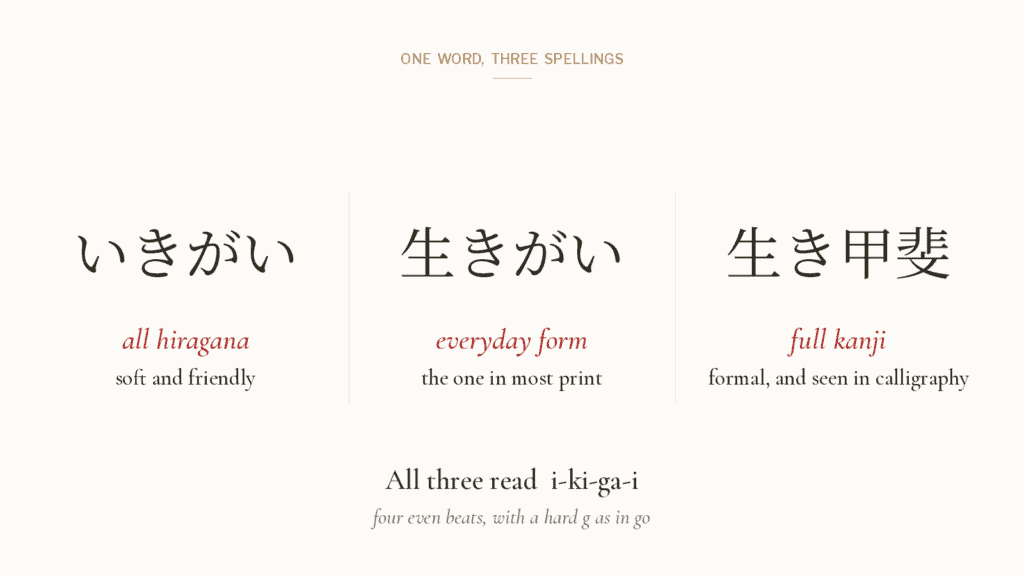
That is the whole plan to learn Japanese for beginners, and the rest of this guide simply fills in each stage. The Japanese language basics, from kana and core words to particles and the first hundred kanji, arrive faster than their reputation suggests. They simply need to arrive in this order. Think of the scripts as the alphabet, the kanji as the vocabulary of meaning and grammar as the joints that hold sentences together. Each step below builds on the one before it. You can move faster or slower, but try not to skip ahead. The order is what makes the effort pay off.
Step 1 — Hiragana Before Anything Else
Hiragana is the foundational syllabary: forty-six characters, each one a sound. Every Japanese word can be written in it. Every beginner resource assumes you can read it. With twenty to thirty minutes of daily practice, most people read all forty-six comfortably inside two weeks. Some manage it in one. Learn each character by writing it, from the first session, rather than only recognizing it on a screen.
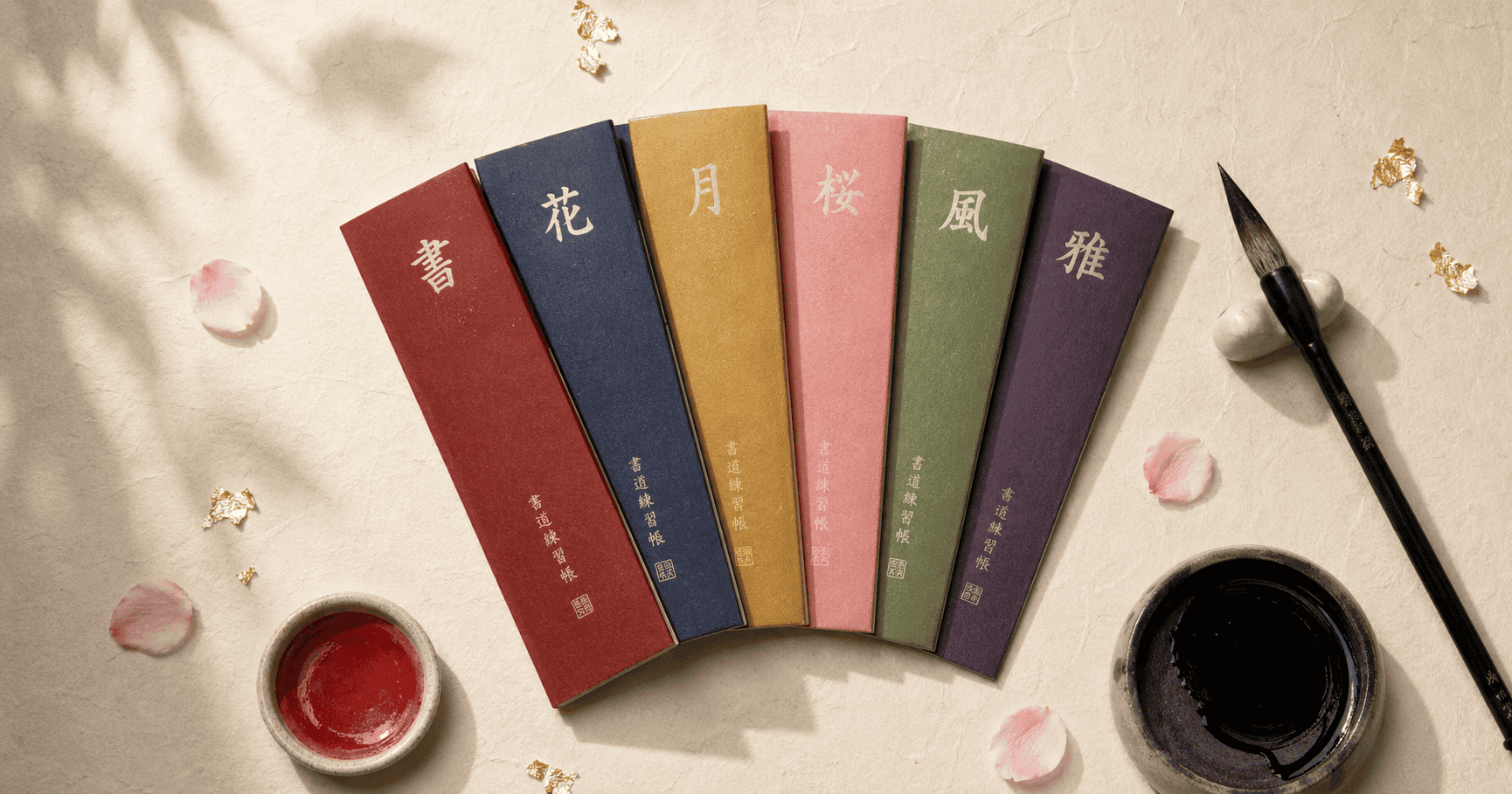
Our calligraphy workbook series teaches kana and kanji by hand, with progressive stroke teaching. Each stroke appears in color over the grayed strokes before it, so the character builds under your pen in the right order.

Twenty minutes a day on guided paper carries most beginners through all forty-six hiragana inside two weeks. Reading a character and producing it are two different skills, and the second locks in the first. That is why the hand matters so much at this stage. Say each sound aloud as you write it, too, so the eye, the hand and the ear learn together.
One warning earns its own paragraph. Romaji, Japanese spelled in Latin letters, feels helpful for about a week and then becomes a crutch that slows every later stage. Learners who lean on it develop pronunciation habits that take months to undo. Hiragana first, always, and let the training wheels go early.
Step 2 — Katakana, the Second Script
Katakana covers the same forty-six sounds with a different, sharper set of characters. Japanese uses it for foreign words, brand names, menus and emphasis. That means it is everywhere a visitor looks. Your own name, rendered in Japanese, is written in katakana. So are the credits of nearly every anime you have watched, and most of the coffee menus in Tokyo. Because the sounds are already familiar from hiragana, katakana usually takes another one to two weeks. The same method applies. Retention lives in the hand, so the workbook series carries katakana on the same guided paper, and the habit you built in week one simply continues.
By the end of the first month, the Japanese writing around you stops being decoration and starts being text. Station signs, snack wrappers and shop windows suddenly hold words you can sound out. That shift is the first real reward of the method, and it tends to arrive sooner than learners expect. Celebrate it, because it is proof that the sequence is working. Katakana also makes a first trip easier. Menus, station names and brand signs all lean on it. For conversations, though, you need phrases too, and a pocket phrasebook bridges the gap.
Travel adds a reason to learn katakana quickly. Menus at cafés, ramen shops and convenience stores spell foreign foods in it, and station signs use it for many place names. Reading those words on a first trip gives quick wins, and quick wins keep motivation high through the harder months ahead.
Lonely Planet Japanese Phrasebook — the first words for your first trip

Kana teach you to read, and the Lonely Planet Japanese Phrasebook and Dictionary gives you something to say. It covers greetings, directions, transport and shopping, with simple pronunciation guides throughout. A menu decoder turns katakana menus into dishes you can order with real, easy confidence.
The two-way dictionary holds about 3,500 words, and short notes explain manners and customs. Most entries show the Japanese script beside the romanization, so you can practice reading as you go. It is pocket sized and works without a signal. As a result, it suits both study at home and a first trip.
With both kana in place, you have finished the infrastructure stage. Most learners reach this point in four to six weeks, and it is a genuine milestone worth marking. You can now sound out any word written in hiragana or katakana, look up unfamiliar words in a dictionary and follow the furigana printed above kanji in children’s books and manga. The next stage is where the meaning of the language lives. Before moving on, take a week to read anything written in kana: snack labels, simple picture books or song lyrics. Fluency in reading the scripts makes every later step lighter.
If you enjoy the look of the scripts, the calligraphy guides below explore them as art. They show why the brush matters, and how centuries of practice shaped the characters you are now learning to read and write every day.
You may also like
Why Kanji Come Next
Kanji carry the meaning of Japanese, and they are where most learners either fall in love with the language or give up on it. The difference, as the next two steps explain, is pace. A small daily habit outlasts any burst of enthusiasm, and it compounds faster than most beginners expect. One character a day adds up to more than three hundred and sixty in a year. That number covers a large share of the characters in everyday signs and menus. It also makes the next stage of reading possible.
Step 3 — The Daily Kanji Habit
With both kana in place, characters begin, and they begin small. Our daily kanji flashcards deliver one JLPT N5 kanji each day, with its stroke order, meaning and example sentences. The deck is ordered so the most useful characters come first. One character a day sounds modest. It is the pace that survives contact with real life, and retention is built on spaced daily returns, not weekend marathons.
Start each session by reviewing yesterday’s character, then meet the new one. Write it three times, say its readings aloud and read its example sentence. The whole routine takes about ten minutes.

Each day’s character also carries its vocabulary, the words the kanji lives inside. The flashcard habit builds a word list as a side effect. If anime brought you here, you hold an advantage most beginners lack. Words like nakama (仲間, companions), senpai (先輩, one’s senior) and sugoi (すごい, remarkable) are already half-installed in your memory, waiting for the characters to attach to them. And if you generated a name in the opening step, its kanji belong at the top of your deck. As your list grows, a proper kanji dictionary becomes the most useful book on your desk.
Anime fans can turn this into a game. Each time a familiar word appears in a show, pause and ask which kanji might spell it, then check a dictionary. The habit links sound to character and turns every episode into a gentle review session.

Stroke Order, the Logic of a Character
Stroke order is not a fussy rule. It is the logic of the character, and following it makes kanji easier to write quickly, easier to read in handwriting and easier to look up. Most characters follow a few simple principles: top before bottom, left before right and horizontal before vertical when they cross. Learn those early, and new kanji start to feel predictable rather than random. A good dictionary shows the stroke order for every character, along with its readings and the words it forms. That makes it the natural partner to your daily deck.
Many learners also keep a small list of radicals, the recurring parts inside kanji. The water radical, the person radical and the tree radical appear in hundreds of characters. Recognizing them turns a tangle of strokes into familiar pieces, and it makes dictionary searches much faster.
The Kodansha Kanji Learner’s Dictionary — the reference that grows with you
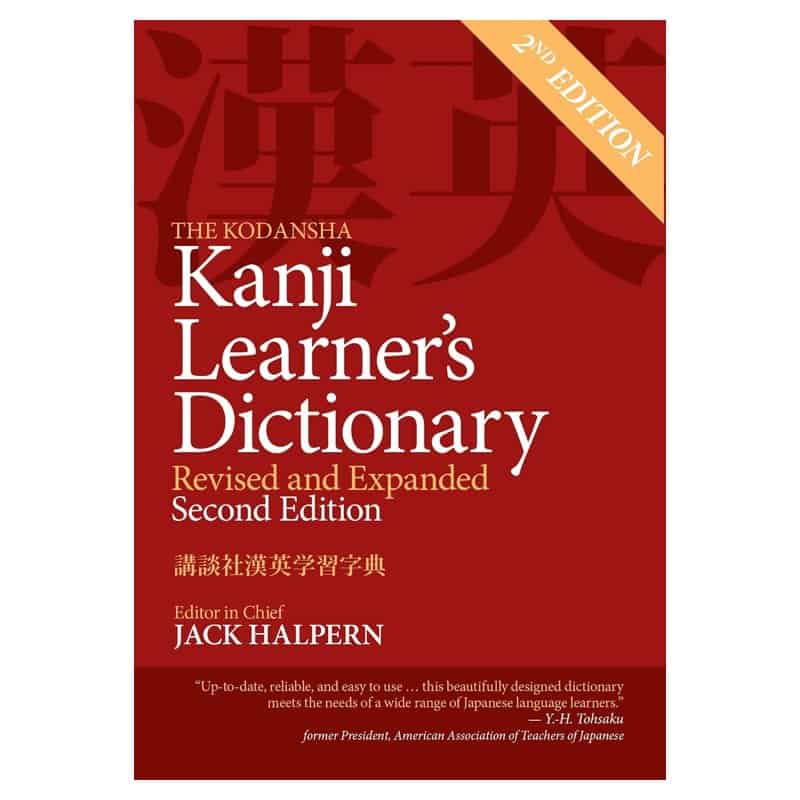
Edited by Jack Halpern, The Kodansha Kanji Learner’s Dictionary is the standard character dictionary for English speakers. The revised second edition holds 3,002 kanji entries, each with meanings, readings, stroke order and common compounds. Its SKIP system lets you find a character by its shape alone, even when you cannot yet read it.
That matters for beginners, because you will meet unknown kanji long before you can look them up by reading. Look up each day’s character, then read its compounds aloud twice. It is a dictionary, not a workbook, so it pairs neatly with your own handwriting practice.
Step 4 — The 100 Kanji Challenge
Kanji is where learners stall, and where those who persist find the deepest satisfaction. The official jōyō list of everyday kanji runs to 2,136 characters, a horizon rather than a wall. Nobody learns them in a season, and nobody needs to. What a beginner needs is the first hundred, learned properly, because those hundred unlock a surprising share of signs, menus and simple manga. That first hundred is exactly what our 100 Kanji Challenge delivers. The structure could not be simpler: one kanji a day, written by hand, for one hundred days. By day one hundred, you read every JLPT N5 kanji on sight, because you have written each one yourself.
For learners who prefer a goal with an end date, a hundred-day challenge works better than an open-ended habit. It turns kanji study into a project with a finish line, which keeps motivation steady through the long middle weeks.
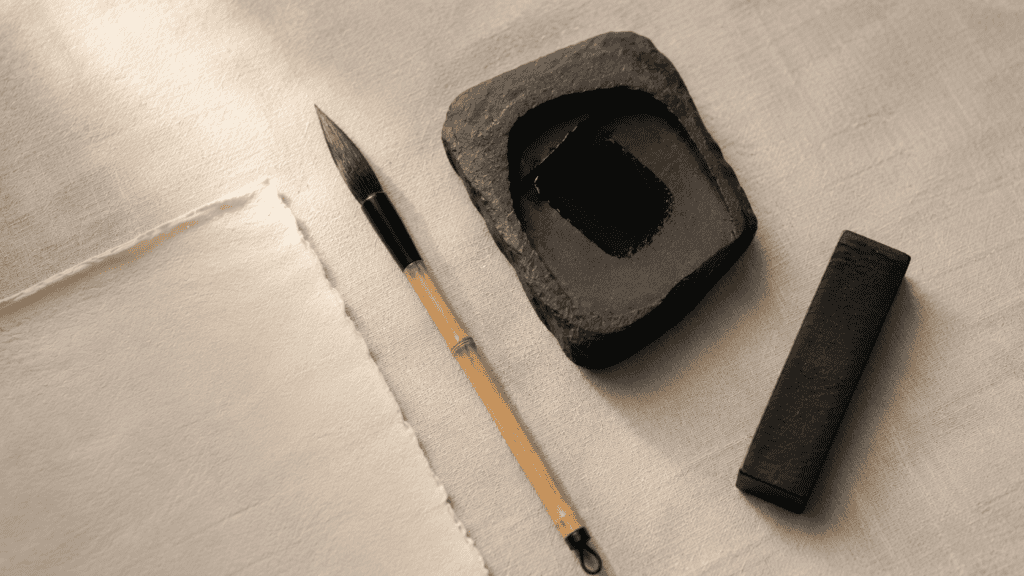
The calligraphy practice tool is the writing surface. Pick the day’s character, watch the animated stroke order, trace the faint guide, then write it from memory on the brush canvas. Ten focused minutes beats an occasional hour. For paper practice, the kanji workbooks carry the same characters, starting with Volume 1 for JLPT N5 and N4. The mistake, always, is waiting. Learners who postpone kanji until they feel ready arrive, months later, at a mountain. Those who start the challenge in month two arrive at the same point already halfway up, with a hundred characters that came one calm morning at a time.
Track your streak on a calendar or in a notebook. Crossing off each day is a small pleasure, and after a few weeks the chain of marks becomes a reason to keep going on the busy days when motivation dips.
From Words to Sentences
Characters give you words, but grammar gives you sentences. Many beginners fear this part most, because textbooks make it look like a maze of rules. In practice, Japanese grammar rests on a few patterns that repeat everywhere. Once you see the shape of a Japanese sentence, the rest becomes detail, and you can start building your own lines within weeks rather than months. The good news is that the kanji habit and grammar study support each other. Each new character gives you words to drop into the patterns you learn next.
Step 5 — Grammar, the Shape of the Sentence
Japanese grammar is not hard so much as differently shaped, and its basic shape can be understood in an afternoon. The verb comes last: “I sushi eat” rather than “I eat sushi.” Once the ear expects the verb at the end, sentences stop feeling backwards. They start feeling architectural, with everything building toward the final word. Listen for that final verb in every line of dialogue you hear.
Small particles do the work English does with word order. は (wa) marks the topic. を (o) marks what the verb acts on. に (ni) marks direction and time, and で (de) marks where something happens. Master those four, and the skeleton of most beginner sentences is readable.

私はお茶を飲みます, roughly “I, as for tea, drink,” sounds strange translated and perfectly natural lived with. The particles never change spelling or hide, which makes Japanese grammar unusually consistent once the pattern lands. A third pillar, politeness, is built into the verbs themselves. The -masu form dresses a sentence for strangers and shops, while the plain form is for friends and anime dialogue. In time, switching between the two forms feels as natural as choosing formal or casual English with different people.
Beginners start with -masu, meet the plain form through immersion and grow comfortable moving between the two. Work these patterns in writing. A grammar point copied by hand into a notebook, then rebuilt into your own sentence, sticks in a way review alone never matches. Your writing habit from the earlier steps is the same habit here. A good textbook gives that habit structure.
Genki Textbook Volume 1 — the classroom standard for self-study
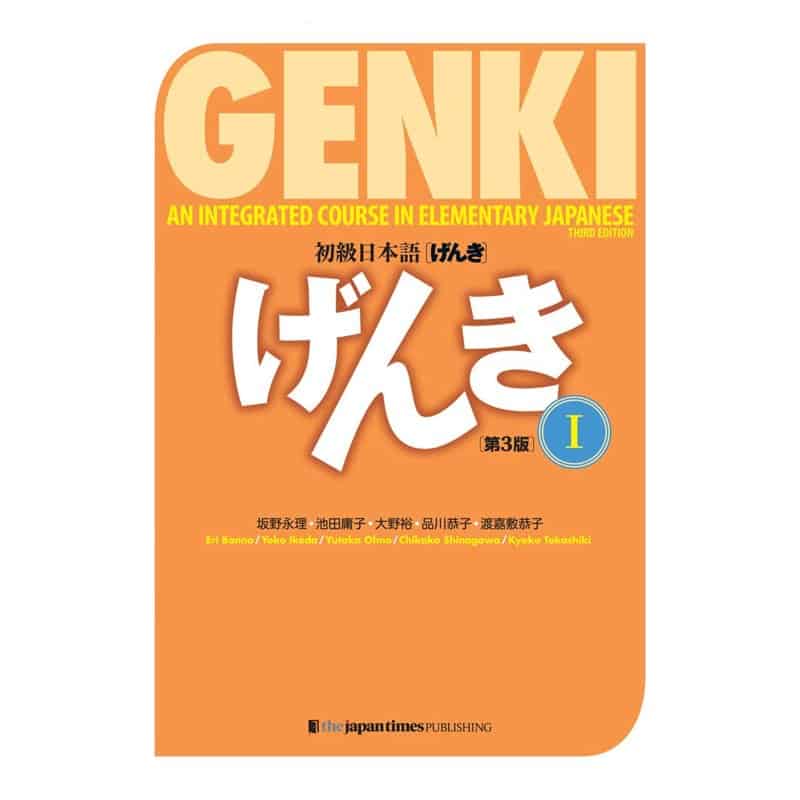
Most university courses in the United States use it, and the Genki Textbook Volume 1 works just as well at home. The third edition covers Lessons 1 to 12 of a 23-lesson course. It builds listening, speaking, reading and writing together, so grammar always arrives with real dialogue.
Audio for every lesson plays through the OTO Navi app on a phone. Work one lesson every two weeks, copying the key sentences by hand. Then rebuild each one with your own new words. By the end of Volume 1, the grammar of everyday Japanese will feel familiar rather than foreign.
A steady rhythm helps grammar settle. Many self-taught learners study one grammar point on Monday, practice it in short written sentences through the week and review it on Sunday. Over a month, that adds up to four solid patterns, and over a year to most of the grammar a beginner course covers. Pair each new pattern with that week’s kanji, and the two strands start to weave together. Keep your sentences short at first. Three or four words, correctly built, teach more than a long sentence full of guesses.
Grammar also becomes easier when you hear it. Read each new example sentence aloud several times, and listen for it in the shows you watch. Hearing a pattern used naturally, in a real voice, fixes it in memory better than any table of rules.
Ten Proverbs to Carry With You
A printable folio of ten Japanese proverbs, each with a short note on where it shows up in daily life. They make good early reading practice too. Leave your email and the printable arrives in your inbox, followed by an occasional letter on Japan.
Taking Japanese Into the Wild
Grammar and kanji only come alive when you meet them in the wild. That is where immersion comes in. The goal is not to understand everything, but to spend time inside Japanese you can mostly follow. Done well, it feels less like study and more like entertainment, which is exactly why it works so well over months and years. Start small, and let the habit grow naturally.
Step 6 — Immersion, Built Into the Day
Research on language acquisition keeps arriving at the same conclusion. Comprehensible input, real Japanese you can mostly follow, does more than any drill. The craft is in choosing input at the right level and making it a fixture of ordinary life rather than a separate chore. Anime is the obvious engine, used deliberately. Rewatch a gentle slice-of-life series you already love, with the Japanese audio on and subtitles doing the scaffolding. As vocabulary grows, individual words begin to arrive before the translation does, and that gap is the learning happening.

Our reader’s guide to manga and anime in Japan maps the wider culture these shows come from. It covers the genres worth understanding, the creators who shape the medium and the stories most learners are working toward. Reading has its own ladder, and manga in the original is its most enjoyable rung. The pictures carry the story while the text stretches you, and every unknown character goes straight into your daily rotation. Our collector’s guide to manga shopping in Japan covers the sources in full, from the Tokyo circuit to Japanese-language volumes delivered to your door.
Nakano Broadway, Jimbocho and Akihabara all have used bookshops with deep stacks of single volumes. Browsing them on a trip is a pleasant way to find your next reading project, and the shopkeepers rarely mind slow, curious customers who browse for an hour.

Japanese in the Small Corners of the Day
Then let the language into the small corners of the day, where play does its own work. Two minutes with Catch the Sakura resets a study session. Our anime in Japan quiz turns fandom knowledge into a vocabulary check. Switching a phone’s system language to Japanese does the same job on every menu you already know by heart. The labels become comprehensible input the moment you stop noticing them. For a first real manga, choose one with everyday dialogue and simple scenes. One series appears on almost every teacher’s list.
Manga for younger readers is a smart starting point, because publishers often add furigana, small kana readings, beside the kanji. That support lets you read on your own long before you know every character, and each page reinforces the vocabulary from your flashcards.
Yotsuba& Volume 1 — a gentle first manga in Japanese
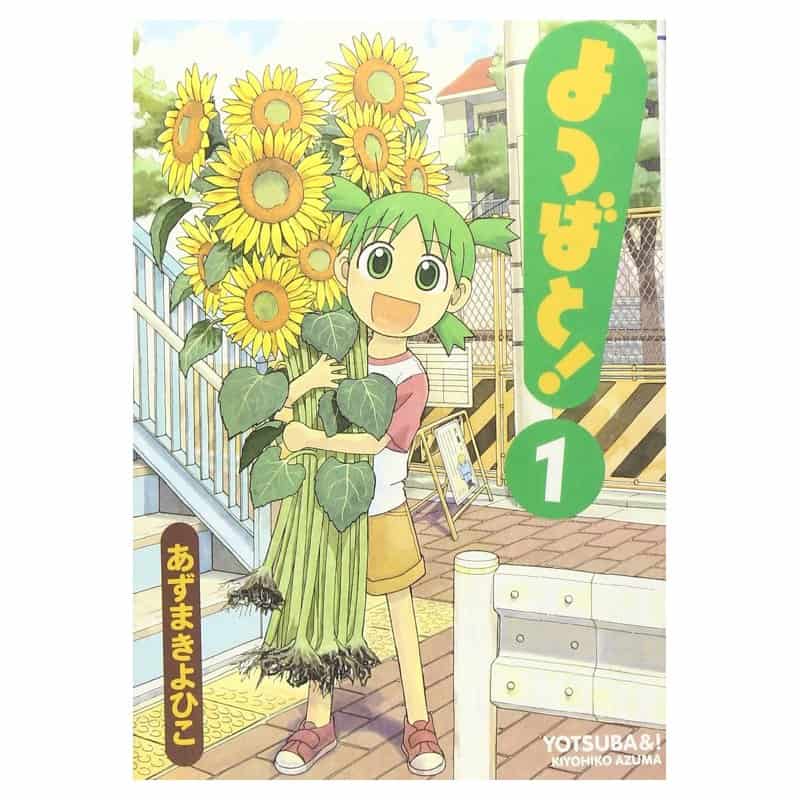
Kiyohiko Azuma’s Yotsuba& Volume 1 follows a curious five-year-old girl through ordinary days with her father and neighbors. This is the original Japanese edition from KADOKAWA, 224 pages long. The dialogue is short, everyday and full of the simple words you already know from your daily flashcards.
Because the art carries each scene, you can follow the story even when a line escapes you. Read one chapter a week, looking up only the words that repeat. Then reread the same chapter a month later and notice how much more of it lands. That moment is immersion paying off.
Listening deserves the same daily place as reading. Slow news programs for learners, children’s shows and podcasts made for beginners all offer clear, simple speech. Play them while cooking or commuting, and do not worry about catching every word. The aim is to tune your ear to the rhythm of Japanese, so that real conversations feel familiar when you finally have them. Speaking comes last but matters just as much. Read dialogue aloud, shadow short lines from a show and record yourself once a week.
Choose stories you would enjoy in English, too. Interest carries you through the difficult pages, and a series you love gives you a reason to return. The guides below suggest where to look, from classic manga to the shops that sell them.
You may also like


Why the Hand Matters
Screens and books train your eyes and ears. Your hand, however, has a part to play that most modern study plans forget. Writing Japanese by hand is slower than typing, and that slowness is the point. It forces attention onto each stroke and proportion, and the memory it builds lasts longer than anything a tap can create. Teachers in Japan still start every child on paper for exactly this reason. Even ten minutes of writing turns a study session into a small daily ritual. Rituals, unlike willpower, keep going on tired evenings.
Step 7 — Writing by Hand, the Underrated Accelerator
Most modern study stacks are screens end to end, and something measurable goes missing. Producing a character by hand, with its stroke order, proportions and rhythm, engages memory in a way recognition alone cannot. Learners who write recognize faster and retain longer. They also read messier real-world print with less friction. Ten to fifteen minutes a day is enough.
This is where the practice loop closes. The challenge supplies the day’s character, the practice tool animates its strokes and the workbook puts it on paper. These are the same hundred characters the flashcards teach, so recognition and writing reinforce each other daily.

When the brush itself starts to call, the practice tool’s page carries a curated shodō starter shelf of brush pens, Nara-made sumi ink and practice paper. From there, our guide to shodō as fine art follows the hand further. Writing that began as study has a habit of becoming a practice kept for its own sake, and many learners keep it long after the exams are done. Copying real text is a good next step. Choose a short line from a manga, a proverb or a song, and write it out slowly each day.
Start with the characters from your daily deck, written slowly and evenly. Speed comes later on its own. Good proportions matter more than perfect strokes, so compare each attempt with the model and adjust one small thing at a time.

Copying Real Text
Copying works because it combines reading, grammar and handwriting in a single act. You notice particles you would have skimmed, and you feel how kanji and kana share a line. Over a few weeks, your own handwriting begins to look more natural and balanced. For daily practice away from your desk, a brush pen is the most useful tool you can carry. It gives real thick-and-thin strokes without ink stones or water, so practice fits into a lunch break.
Keep your copied lines in the same notebook as your journal, so progress stays visible in one place. Looking back after a month, you will see how much steadier and more confident your hand has become with every single stroke.
Pentel Pocket Brush Pen — a real brush tip without the ink stone
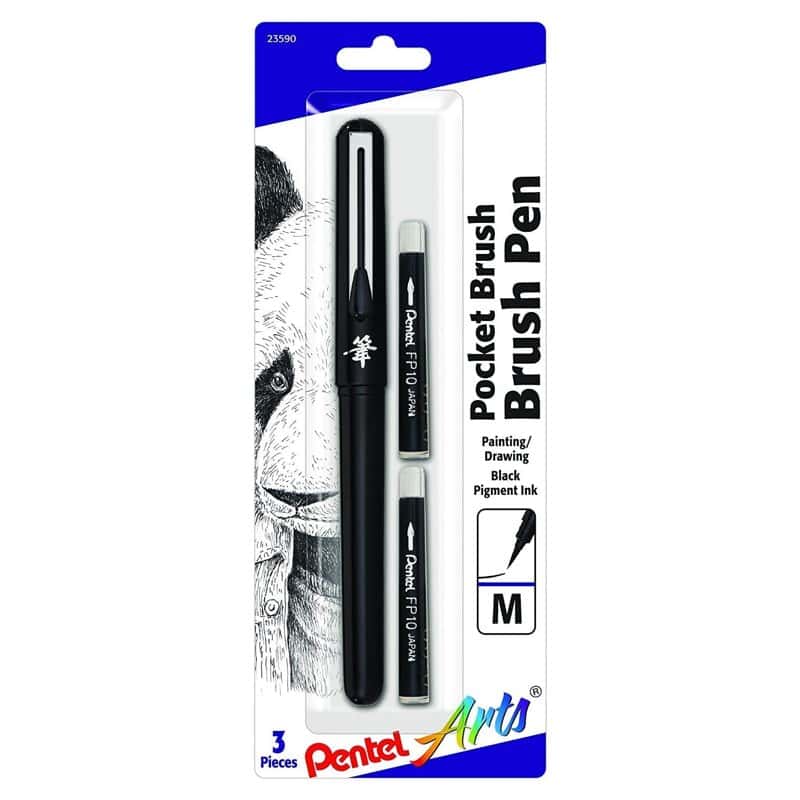
Calligraphers and illustrators love the Pentel Pocket Brush Pen, and beginners should too. Its synthetic bristles flex like a real brush, so each kanji shows thick and thin strokes. The black pigment ink is permanent and water resistant, and two refill cartridges come in the pack.
It fits in a pencil case, so you can practice anywhere: on the train, at lunch or in a café. Use it with the practice tool or the workbooks, writing each day’s character five times. Over weeks, your strokes gain rhythm and balance. The pen turns handwriting from a chore into something you look forward to.
Step 8 — Journal the Practice
Every long practice benefits from a witness, and for a language that witness is a journal. A page a day turns scattered efforts into a visible record: today’s kanji written large, one sentence attempted with it and a word caught from an evening’s episode. On the flat weeks, and every learner has them, the record proves the climb is happening. Keep the entries short. Two or three lines are enough, and a short entry is far easier to keep than a long one.
Some learners prefer a plain notebook, while others like a guided journal with daily prompts. Either works, as long as you open it every day. The point is a record you can look back on whenever progress feels a little slow.
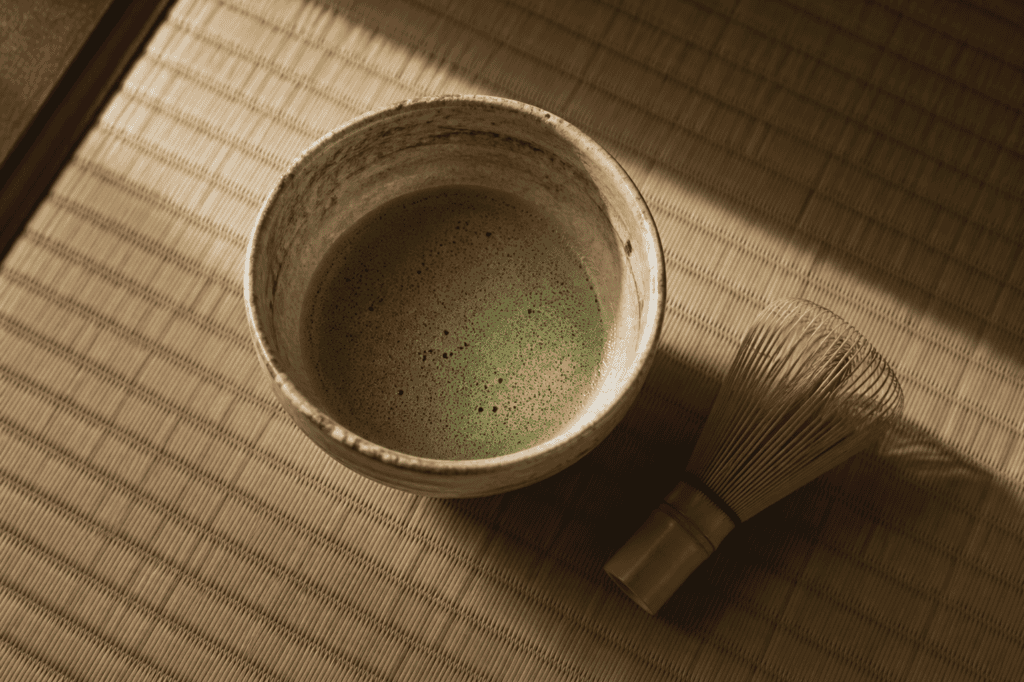
Our guided journals are built for exactly this kind of ninety-day companionship. Each one carries a Japanese idea through three months of daily prompts. The ikigai practice in particular, the question of what pulls you out of bed, pairs naturally with the early months of a language. Ninety days of journal beside one hundred days of kanji means the two practices finish within a week of each other. Both leave you with pages in your own hand. A simple dish makes a good study reward, and tamagoyaki, the rolled omelette of bento boxes and anime lunches, is a perfect first one.
Food is also one of the best ways into the language, because menus repeat the same words again and again. Learn the names of ten favorite dishes, and you can already order in many restaurants across Japan with real confidence.
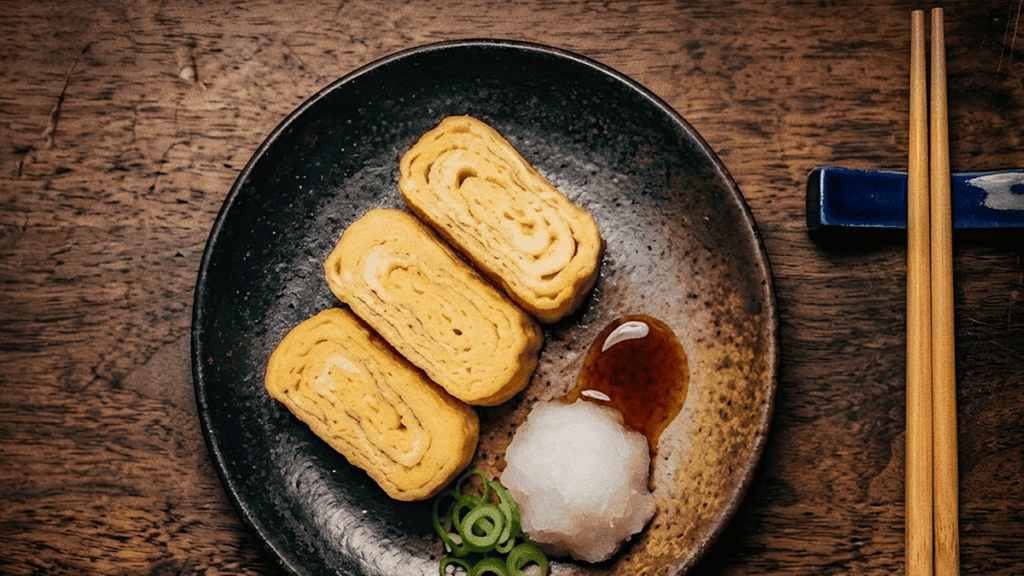
Dashimaki Tamago — the rolled omelette of bento boxes
Whisk three large eggs gently with chopsticks. Dissolve two teaspoons of sugar in three tablespoons of dashi with a teaspoon each of soy sauce and mirin and two pinches of salt, then stir it into the eggs. Heat a rectangular pan over medium heat and wipe it with oil. Pour in a thin layer, and when it sets underneath, roll it toward you. Oil the pan, push the roll back, pour another layer beneath and roll again until the egg is gone. Shape it in a bamboo mat, rest it for five minutes and slice.
Cooking as Vocabulary Practice
The recipe follows Just One Cookbook’s dashimaki tamago, made with dashi for a soft roll. As you cook, say each ingredient aloud in Japanese: tamago, dashi, satō, shōyu. Then label the photo in your journal with the same words, written in kana. Cooking from a Japanese recipe, even a translated one, turns vocabulary into something you can taste, and food words stick better than almost any other kind. Next time, try reading the ingredients list on a Japanese snack or seasoning bottle. Most of it will be in kana you can already read.
Once the omelette is in your repertoire, try onigiri or miso soup next. Each dish brings a handful of useful words, and cooking regularly turns those words into something your hands and your sense of taste both remember for years.
With all eight steps in view, the natural question is how long the journey takes. Honest answers matter here, because unrealistic promises are the main reason learners quit. The timeline below is built for people with ordinary lives, jobs and families, who study for half an hour a day rather than eight hours in a classroom. It is slower than an app’s advertising, and far more reliable.
Use it as a guide, not a deadline. Some rows will come early for you, and others will take longer.
A Realistic Timeline for Learning Japanese
Honest expectations keep people in the language. The State Department’s Foreign Service Institute places Japanese among the most demanding languages for English speakers. Its estimate runs to roughly 2,200 classroom hours for professional fluency. That number describes diplomats on a deadline, though. A plan to learn Japanese for beginners serves a different person: someone here for travel, anime, culture and curiosity. For a learner with thirty to sixty minutes a day, the milestones below are what steady practice actually delivers.
| Timeframe | Realistic milestone |
|---|---|
| Two weeks | Hiragana read comfortably; katakana under way |
| One month | Both kana read; around 200 words; greetings and introductions |
| Three months | Around 500 words and 100 kanji; simple sentences |
| Six months | Around 1,000 words and 300 kanji; basic conversation |
| One year | Daily topics handled; 500+ kanji; simple manga readable |
| Two to three years | Anime followed with far less subtitle reliance |
| Five years and beyond | Near-native comfort with continued immersion |
The single variable that separates the rows is not talent. It is whether the fifteen daily minutes happened. Thirty minutes every day outruns three hours every Saturday, because memory is built on spaced returns, and a missed week costs more than most learners expect. Build the smallest routine you will never skip, and let the timeline take care of itself. Consistency beats intensity in every row of the table, from the first two weeks right through to the fifth year and beyond.
Ten Proverbs to Carry With You
A printable folio of ten Japanese proverbs, each with a short note on where it shows up in daily life. Copying one a week is a pleasant reading and writing exercise. Leave your email and the printable arrives in your inbox, followed by an occasional letter on Japan.
The test has five levels, from N5, the easiest, to N1, which demands near-native reading. Each level checks vocabulary, grammar, reading and listening, but not speaking or handwriting, so your writing practice serves other goals. Results arrive about two months after the test, with a score breakdown that shows exactly where to focus next. Many learners find that simply booking a seat sharpens their weekly routine and gives every study session a clear, measurable purpose. Past papers and sample questions are published on the official site.
The JLPT as a Goal
If you want a formal goal, the Japanese-Language Proficiency Test offers one. It runs twice a year, in July and December, and the 2026 sittings fall on July 5 and December 6. The beginner level, N5, covers roughly the first hundred kanji and basic grammar. Many learners can attempt it after six to twelve months of steady study.

Exams are optional, of course. Plenty of learners never sit the JLPT and still read manga, order with ease and chat with friends in Japanese. A test simply gives some people a date to aim for and a clear list of what to study next. If that structure motivates you, register early, since popular test centers fill quickly in many cities. As your grammar grows, a reference that explains each pattern in depth becomes invaluable. One dictionary has served learners for decades.
Keeping a Study Log
Whatever your goal, keep a simple log of the hours you study. Seeing the total grow each month is encouraging, and it helps you compare your own pace with the timeline above in an honest, practical way without any guesswork.
A Dictionary of Basic Japanese Grammar — the reference on every teacher’s shelf
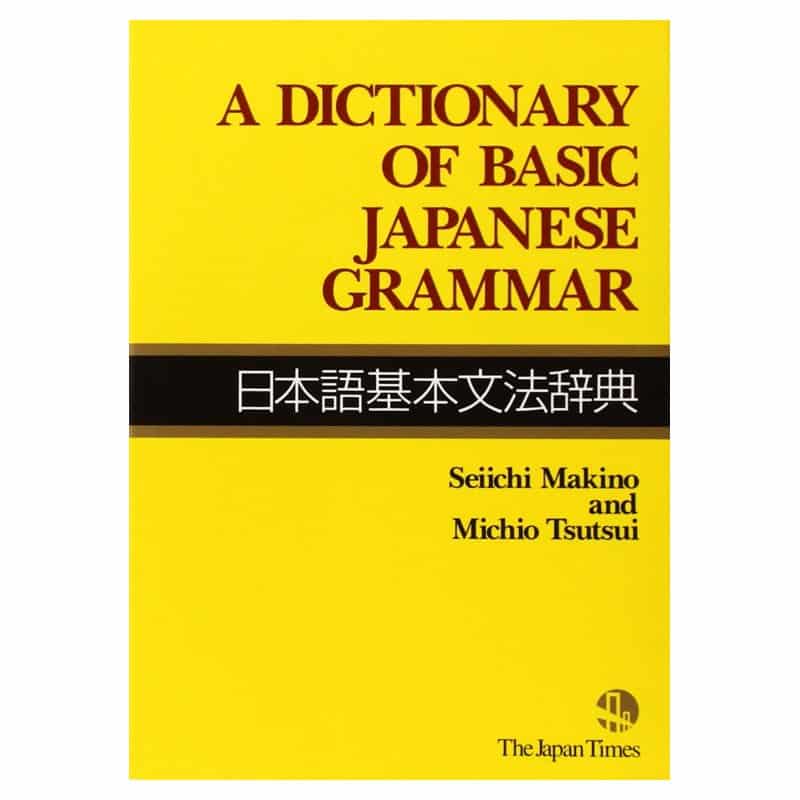
Seiichi Makino and Michio Tsutsui wrote A Dictionary of Basic Japanese Grammar, and it remains the standard reference for English speakers. Each entry explains one grammar point, with clear notes on meaning, formation and common mistakes. Example sentences appear in natural Japanese with English translations.
Use it whenever a textbook explanation leaves you unsure, or when a line in a manga puzzles you. Look up the pattern, read two examples aloud slowly and then write one of your own. It covers far more than any beginner course, so it stays useful well into your second and third years of study.
All of this can feel like a lot to take in at once. The good news is that you only need to take the first step this week, and the rest follows naturally. Small actions, repeated daily, build a language faster than big plans made on a Sunday. Here is how to begin, starting today and building toward month three, with the tools that make each step easier. Remember that every fluent speaker once stood exactly where you stand now. They learned one character, then another, and kept going on the days it felt slow.
The recommendations below include books, tools and supplies that other learners have found useful. Choose one or two that fit your routine, since a small, well-used set of tools beats a shelf of unopened ones for you every single time.
Recommended
Finding a Study Partner
The habits in this guide are simple on purpose, so they survive busy weeks and travel. Choose a start date, tell a friend and let the first small session happen. A study partner, even one met online, doubles the odds that you keep going, because someone notices when you stop. Share one new word with each other every day, and the habit becomes social as well as personal. Celebrate small milestones together, such as finishing katakana or reading a first manga chapter.
Where to Begin When You Learn Japanese for Beginners
Today, generate your Japanese name and sit with its kanji for ten minutes. These characters are your first vocabulary. This week, begin hiragana on the workbook’s guided paper, twenty minutes a day. This month, finish both kana and take one daily kanji with your morning coffee. Then mark a start date for the 100 Kanji Challenge.

By month three, the challenge is a third climbed, the particles are settling and a weekly evening of slice-of-life anime with Japanese audio has turned study into something closer to a life. Most guides on how to learn Japanese for beginners end with a certificate as the goal. The truer finish line is a set of small daily pleasures: a menu read, a line caught, a name written by hand. Together, they compound steadily into a real, living language.
For the culture these characters carry, our exploration of kanji mastery and the calligraphic mind explains why writing by hand changes how the brain holds the language. Our calligraphy workbook, meanwhile, puts the hundred foundational kanji on guided practice paper, with stroke order beside every character.
Many beginners find that a journal keeps the habit honest. Write the day’s kanji large at the top of the page, then one short sentence that uses it. On busy days, a single word is enough, and on good days a whole paragraph may flow. Over a season, the pages become proof of progress and a record of a beginner’s mind. The journal below was built on exactly that idea, with one gentle prompt for every single day of the season. It pairs naturally with the hundred-day kanji challenge, since both run for about three months.
A Journal for the Journey
Pick a notebook or journal you enjoy holding, and keep it beside your flashcards. When the two live together, the daily routine takes less effort, and the habit of opening both becomes almost automatic for most learners within a few short weeks.
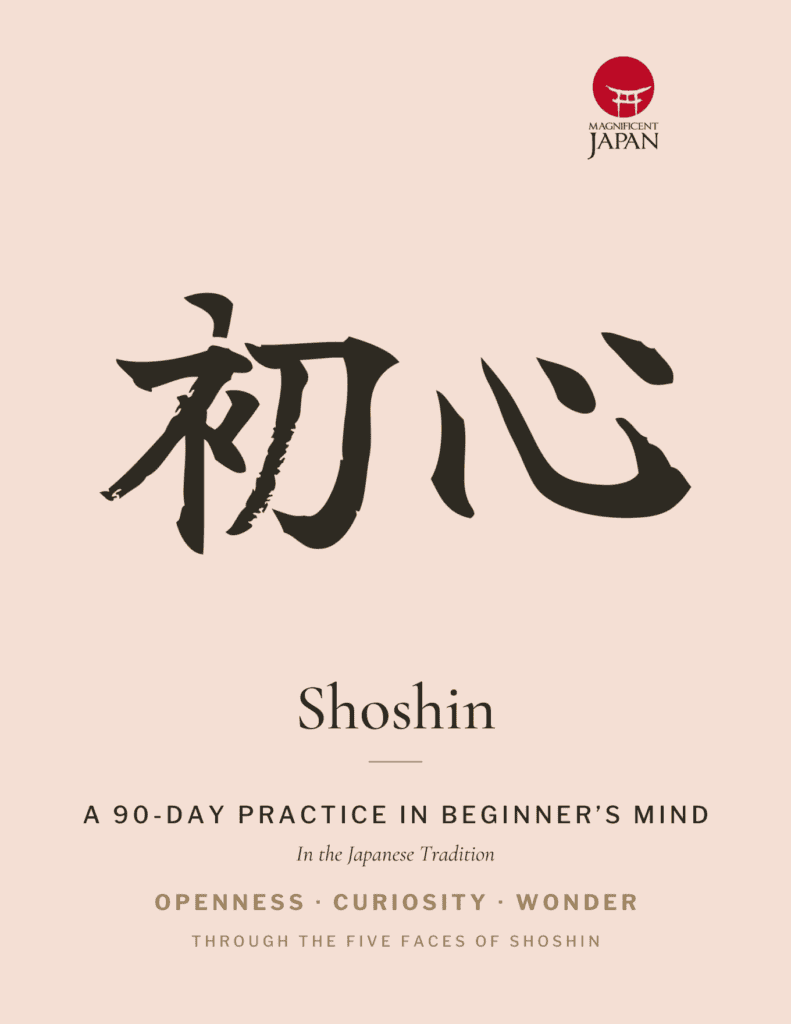
Shoshin means beginner’s mind, the openness of someone meeting a thing for the first time, the very state this guide asks you to keep. This 90-day guided journal offers one short prompt a day to help you hold on to it. It comes as a write-on digital edition for a tablet, and it is one of eight journals in the Cultural Reflection Collection.
View The CollectionShoshin is a useful idea for every learner, not only beginners. Advanced students often lose the curiosity that made the first months exciting, and progress slows when they stop noticing small things. Returning to a beginner’s attitude, asking simple questions and enjoying small wins keeps the language fresh. That attitude is also what makes travel in Japan so rewarding. Even teachers with decades of experience try to keep it, approaching each class as if meeting the language for the first time.
The guides below go deeper into each part of the journey, from kanji to calligraphy. Each one tackles a single question in depth, with practical exercises you can add to your routine straight away, whatever your current level and wherever you study.
Tools for the Daily Practice
Beyond journaling, a few more tools make the daily practice easier. Each one below is built by Magnificent Japan around the same sequence this guide describes, from your first name in kanji to the hundred characters of the challenge. Use one or two, not all four, and keep the routine small enough that you never skip it. The best tool, in the end, is the one you open every single morning without thinking twice, even on the busiest days. Most learners start with the flashcards and add the practice tool once kanji begin. The name generator makes a good first day.
All four tools work on a phone, tablet or computer, so they fit around a busy day. Many learners keep one open during a commute and use another at home in the evening, when there is more time to write by hand.
Of course, nothing tests your Japanese like a trip to Japan. Ordering a meal, reading a train sign or chatting with an innkeeper turns months of study into real moments. Our travel designers plan journeys for language learners with stays in neighborhoods where English is rare. They can also add calligraphy lessons and cooking classes taught in simple Japanese. Every booking is confirmed in advance, so your attention stays on the language rather than the logistics, from the first greeting to the last. A trip after six months of study is ideal. You will read signs, order food and understand far more than you expect.
Language learners often say their first conversation in Japan was the moment the effort felt worthwhile. A shopkeeper’s smile at a careful sentence, or a train announcement understood, stays with you long after the trip ends and keeps you studying.
For the learner ready to use the language: a custom itinerary with calligraphy and cooking lessons in simple Japanese, neighborhood stays beyond the tourist trail and time in Tokyo’s best bookstores.
Plan Your Custom Japan ItineraryQuestions Worth Asking
What is the easiest way to learn Japanese as a complete beginner?
Follow the sequence rather than the shortcut. Learn hiragana in the first two weeks and katakana in the next, then build a one-kanji-a-day habit while core grammar settles in. Daily contact of fifteen to thirty minutes is the habit that makes everything else work.
How long does it take a beginner to learn Japanese?
Reading both kana takes about a month. Simple conversation arrives around six months with daily practice. Reading simple manga and handling daily topics is a one-year milestone, while following anime without heavy subtitles usually takes two to three years.
Should I learn hiragana or katakana first?
Hiragana first, without exception. It carries native Japanese words and grammar, and every beginner resource assumes you can read it. Katakana follows naturally in the second or third week, since it maps the same sounds onto a second set of characters.
How many kanji do I need to know?
Everyday literacy rests on the 2,136 characters of the official jōyō list, but the early returns come fast. The first hundred kanji unlock a surprising share of signs, menus and simple manga, and the first five hundred make daily reading possible.
Can I learn Japanese just by watching anime?
Anime alone will not carry you, but anime plus structure speeds you up. Once kana and basic vocabulary are in place, watching with Japanese audio becomes real listening practice. Slice-of-life series with slow, everyday dialogue are the best place to begin.
Is Japanese grammar hard for English speakers?
It is different rather than chaotic. The verb ends the sentence, particles mark each word’s role, and politeness lives in the verb forms. Because the rules are unusually consistent, steady daily practice turns the strangeness into a system within a few months.
The Editors, Magnificent Japan