
A kanji quiz N5 should do more than hand you a score. It should show which characters you can read on sight, which ones you only half know, and what to practice next. Most quizzes stop at the score. This guide explains what a good kanji quiz N5 asks, how to read the result, and how to take a sixty-second level test today.
Along the way you will meet a handful of everyday characters, such as 日, 山 and 水. They show how one quiz can test three different skills. You will also see why hesitation tells you more than a wrong answer, and why a second attempt a month later is worth more than a third attempt today. It closes with the quiz itself, ready on the daily cards.
The meaning of each character first, then one reading, then a word that uses it, all inside about a minute. A good kanji quiz N5 also notes where you hesitate, because a slow answer shows a character that has not settled yet.
What a Good Kanji Quiz N5 Asks
Every kanji quiz N5 begins with the same promise: it will tell you where you stand. Some deliver on it, and many do not. A quiz that asks only for meanings tells you half the story. A quiz that asks for a reading but never a meaning tells you the other half. The best test asks several small questions about each character, and it asks them in a useful order.
Here is the order that works. First comes meaning, because it is the layer a menu or a sign needs. Next comes one reading, because speech and vocabulary need it. Finally comes a word that uses the character, because a character on its own rarely appears in real text. In other words, a good quiz moves from shape to sound to use.
It also helps to know what N5 means here. The JLPT publishes no official kanji list, so every N5 list is an unofficial one. Lists run from about eighty to about one hundred characters, depending on who draws them. That is why this guide says N5 (unofficial) and never treats one list as final. A quiz is only as good as the characters it draws from, and you should know that going in.
One more point shapes everything below. A quiz is a measurement, not a lesson. It cannot teach you a character you have never met. What it can do is show you where your attention should go tomorrow. Treat every question as a small piece of information about yourself, and a low score stops feeling like a verdict.
Meaning on Sight: The First Question
Meaning comes first because it is the fastest layer to build. You see 山 and think mountain. Seeing 水 brings water to mind. A glance at 人 gives you person. Each answer arrives in a moment, with no sentence around it and no reading to retrieve. That speed is the whole point of the first question.
So a meaning question should ask for the answer before it offers any choices. When four options sit under the character, you can often guess by elimination. Guessing feels like knowing, yet it measures the quiz design rather than your memory. Cover the options, say the meaning aloud, and only then look at them.
Pay attention to the characters that look alike. 日 and 月 both sit inside a box, and 木 and 火 both branch out from a central line. A learner who knows these only as vague shapes will confuse them under pressure. A learner who knows them as parts will not. For that reason, the first question also exposes how well you see the strokes inside each shape.

Meaning questions also reward honesty. If the answer takes more than two seconds, count it as missed, however familiar the shape felt. Familiarity is a feeling. Recall is a result. Learners who mark slow answers as misses get a smaller score today and a much larger one next month, because they spend their time on the right characters.
Readings: The Second Question
The second question asks how a character sounds. Here kanji become harder, because most characters carry more than one reading. The native Japanese reading, called the kun reading, often stands alone. The reading borrowed from Chinese, called the on reading, usually appears inside compounds. For example, 山 is read やま (yama) on its own, and さん (san) inside a word.

Take 水. On its own it reads みず (mizu), and inside a compound it reads すい (sui). The character 火 follows the same pattern, with ひ (hi) alone and か (ka) in a compound. Neither reading is the correct one. Both are correct, and the context decides. A good quiz therefore asks for the reading inside a word, not only on the character alone.
That distinction explains why many learners feel stuck at N5. They can read a character in isolation, yet they freeze when it appears inside a word. The quiz should expose this gap early. If you can name 山 but not read 火山, then the character is still half learned. Spotting that now costs you a minute. Finding it on a menu costs you far more.

Do not try to memorize every reading at once. At this level, one reading per character is enough for a first pass. Choose the one you are most likely to meet, and let the second arrive through vocabulary. A reading you have heard inside a real word will outlast a reading you memorized from a table.
You may also like

The Word Behind the Character
The third question is the one most quizzes skip. It asks for a word that uses the character. Take 火山, which reads かざん (kazan) and means volcano. It joins fire and mountain, two characters you already know, into something new. Next take 人口, read じんこう (jinko), meaning population. It joins person and mouth, and the meaning follows from the parts.
These small compounds do real work. First, they prove that you can carry a character into a new setting. Second, they show you that kanji are building blocks, not isolated pictures. Third, they give each character a second hook for memory. A learner who knows 山水, the old word for scenery, now has a reason to remember both characters together.

Words also protect you from a common trap. A character can feel known simply because you have seen it many times. A word forces a harder test. You must recognize the character, hold its sound, and connect both to a meaning. If that works, the character has truly settled.
Why Sixty Seconds Is the Point
Length changes what a quiz measures. A long quiz measures stamina, and a short one measures recall. Fatigue lowers scores in the last third of a long test, so a long quiz tends to understate what you know. A short quiz taken fresh gives a cleaner picture. That is why a sixty-second test is a better first check than an hour-long mock exam.

Speed also matters for another reason. Reading in Japan happens at speed. A sign passes in a second, a menu in a glance, a station board in a moment. If you can name a character only after long thought, you cannot yet use it. A timed check therefore measures the skill you actually want, which is quick, steady recognition.
Still, speed should never become pressure. The aim is not to beat a clock. The aim is to notice which answers come easily and which do not. Mark every character where you paused, even if you answered correctly in the end. Those pauses are your study list for tomorrow, and they are worth more than the score itself.
Take the test at a calm moment, not after a long day. Put the phone face down, sit at a table, and give yourself one minute. If you have a visual timer, set it. Watching the time shrink keeps the task small, and a small task is easy to repeat.
Reading Your Score
A score on its own means little. What matters is the pattern behind it. Imagine a twelve-question test. Ten correct answers put you in good shape. Six correct answers give you a clear map of what to practice. With three, you have found your starting line, which is a useful thing to know.
Look at the misses first. Were they meaning errors, reading errors or slow answers? A meaning error points to a shape you have not learned. A reading error points to a sound you have not heard inside a word. Slow answers point to characters that have not settled. Each of these asks for a different kind of practice, so sort them before you act.
Finally, write the result down with the date. A score you can compare is a score you can use. Next month, take the same kind of test and compare the two. The gap between those numbers is the clearest proof that a method works. It also tells you when to change the method, if the gap stays small.
You may also like


The Level Test on the Daily Cards
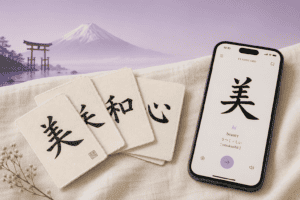
All of this is easier with a quiz built the same way. The daily cards page carries a kanji level test made for exactly this check. It asks twelve questions, and it takes about sixty seconds. Six of the characters come from N5 and six from N4, both unofficial, so the result splits cleanly across two levels.
It follows the principles above. The options appear only after the character does, so the test measures recall rather than recognition. There is no account to create and nothing to install. When you finish, it shows which half of the syllabus needs attention. Take it before you settle into a routine, and take it again in a month.
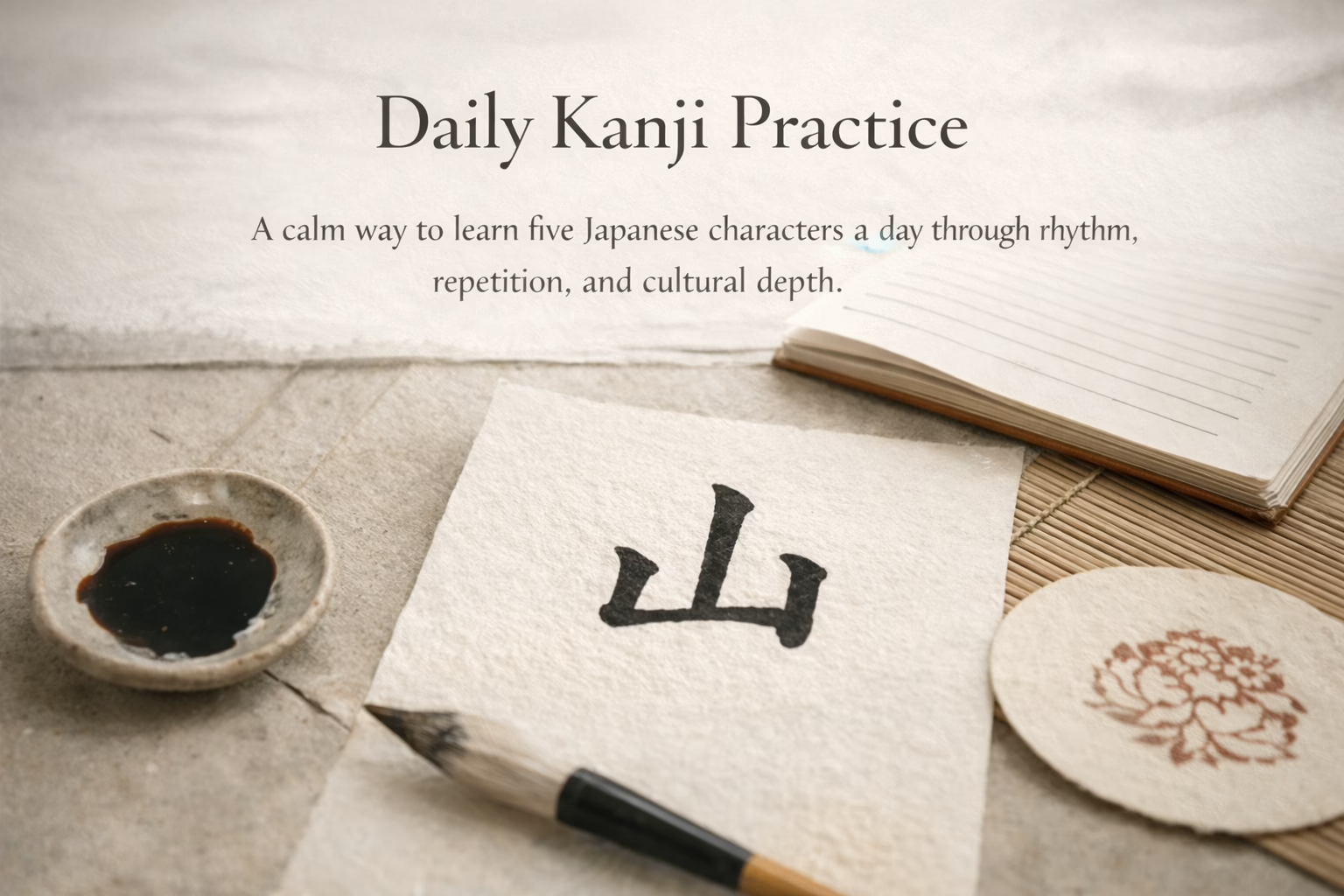
The same page opens to five new characters every morning, with a reading, a meaning and a memory cue on each. Those five cards turn the result into practice. If the quiz shows a gap, the daily cards fill it in small steps, and every step ends inside ten minutes. You can start with the daily kanji cards the same morning you take the test.

The numbers behind the cards are simple. Five cards a day, over 365 days, makes 1,095 kanji. Of those, 730 come from the workbooks and 365 are name and rare characters. Each morning’s five are three new cards and two reviews, so yesterday’s characters return before they fade. That rhythm is what turns a one-off score into steady progress.
Small Tools for the Quiz Desk
A quiz needs very little. A few well-chosen objects make the habit easier to keep, though, and they turn a minute at the desk into a small ritual. None of these teach you a character. They simply keep the desk ready, so the test happens on the days you would otherwise skip it. Think of them as a tray set out the night before. When the pen, the cards and the timer already wait in one place, starting costs nothing. That small saving of effort often separates a habit that lasts from one that fades after a week.
TIME TIMER Home MOD, a 60-Minute Visual Timer
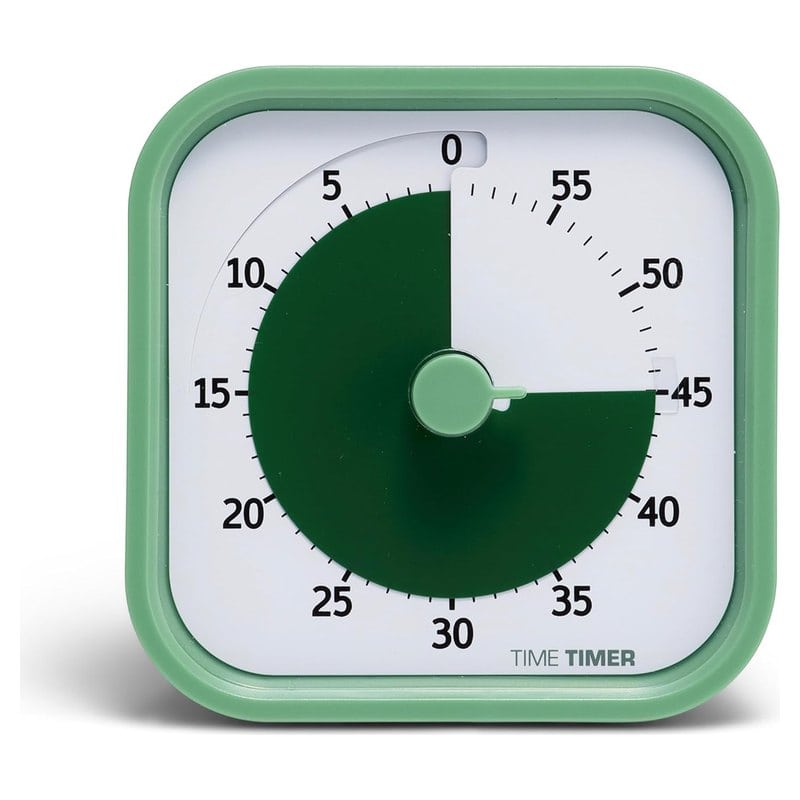
The Time Timer Home MOD shows time as a red disk that shrinks as the minutes pass. For a sixty-second test, that is exactly what you want. You see the time leave without hearing a tick, so the task stays calm. Set it for one minute, start the test, and stop when the disk disappears. The silent operation also suits a shared room or an early morning, and the large face is easy to read from across a desk, even at a glance. The red disk never ticks or beeps, so a roommate or a sleeping house is not disturbed at all. It also stands on its own, so you can place it beside the notebook and forget the clock.
A visual timer also changes how a short task feels. A number counting down invites worry, while a disk that shrinks invites patience. You glance at it once, then return to the character in front of you. Over a few weeks the minute begins to feel natural, and the test becomes part of the morning instead of a chore you have to remember. Many learners keep it on the same shelf for months, because a tool that stays in sight gets used, and a tool that gets used earns its place. The next object is even simpler, and it opens the door to your own checks, one small card at a time.
Chell Heavyweight Blank Index Cards, 200 Count
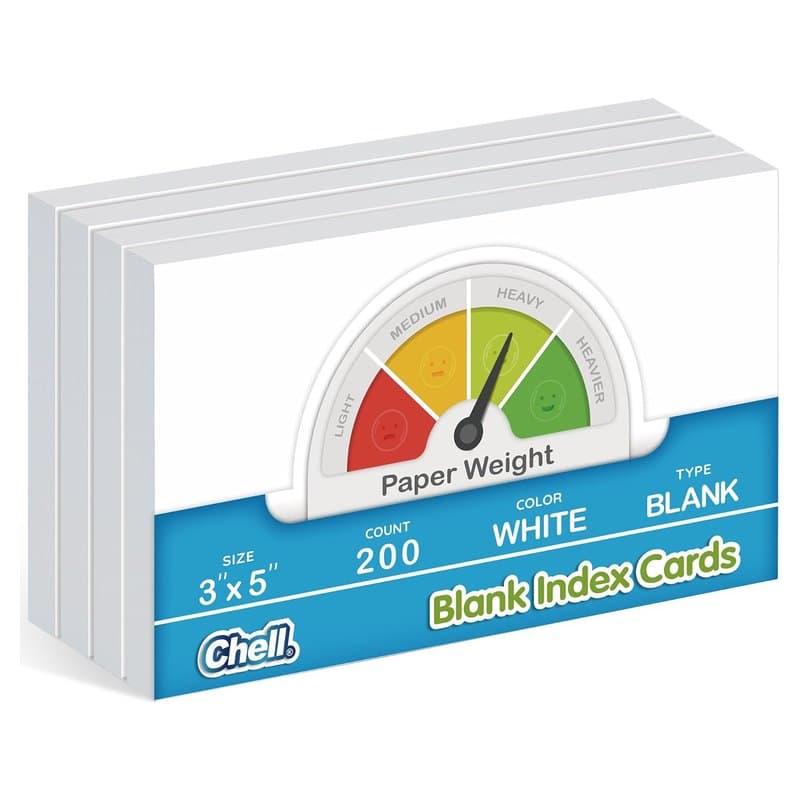
Plain Chell blank index cards are the quickest way to build a small check of your own. They come unlined and heavyweight, so ink stays on the surface and the cards survive a month in a pocket. Write one character on the front and its answer on the back. Two hundred cards go a long way, and a few spares make good bookmarks for a notebook or a travel journal, so nothing in the pack goes to waste. The matte surface takes pencil, gel ink and highlighter equally well, which matters when you mark slow answers. A pack this size also covers a full year of monthly retakes with plenty left over.
Keep the cards plain on purpose. Decoration slows the hand and tempts you to polish instead of practice. A bare card with one clear character and one short answer is all the test needs. When a card has done its job and the character has settled, set it aside. Retire cards as you go, so the stack always shows only what still needs your attention, and the pile stays small enough to finish. A short stack feels like progress, while a tall one feels like a debt. Most people stick with the first and abandon the second, so the small pile is the smarter choice for a daily check. Add new cards only when old ones leave the stack.
Three Pieces for a Tidy Test
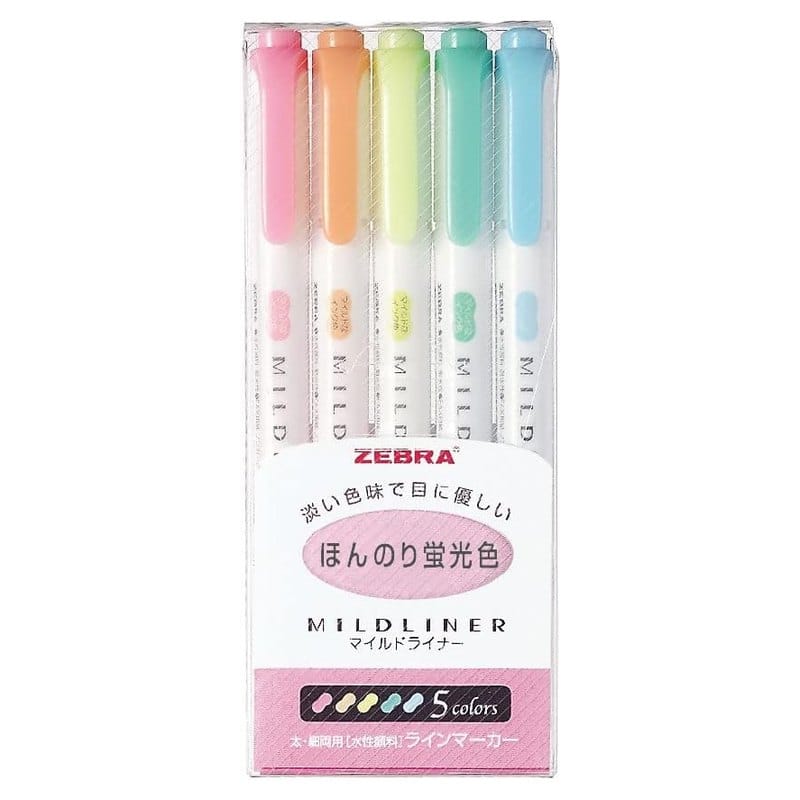
Soft colors for marking which answers came slowly.
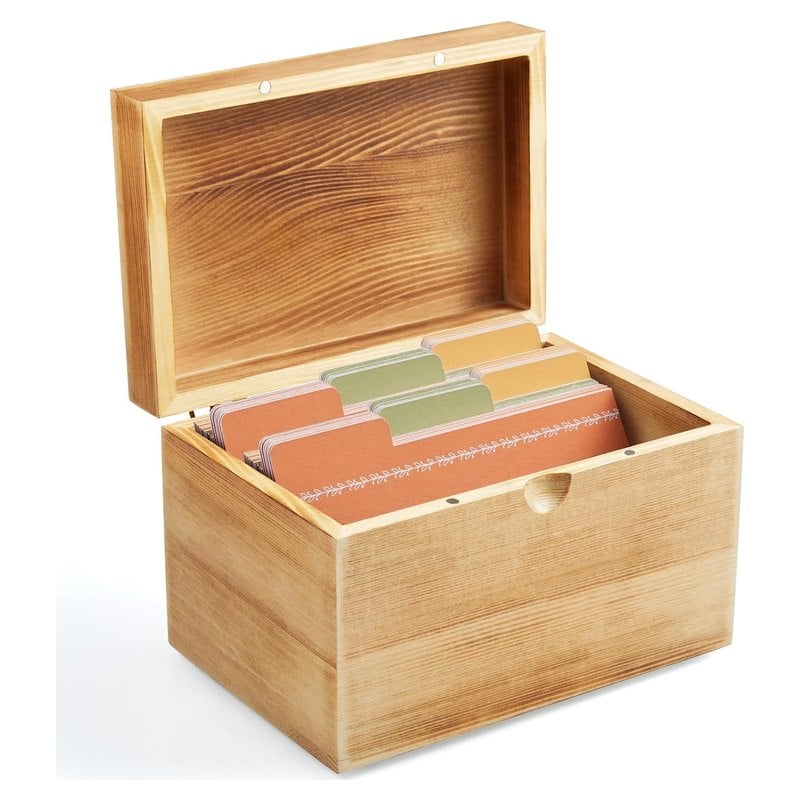
A wooden box with dividers, to keep the fast and slow stacks apart.
Remember the simple purpose behind all of it. The goal is not to own tools. The goal is to reach the minute at the desk each day with nothing in the way. If one object helps, keep it. If it becomes a distraction, put it away, and let the character do the work. The best desk for a kanji quiz N5 is the one you sit at every morning.
The Real Quiz Is the Street

Out in Japan, the quiz never stops. Every sign, label and menu line asks a small question, and nobody marks the answer. That is the real test, and the reason a short, honest check at home is worth the minute it takes. You are rehearsing for a street, a station and a table.
Making Your Own Quiz Cards
Some learners like to build their own check, and that is a fine habit. If you want to know how to make kanji flashcards for a quiz, start small. Put the kanji alone on the front of each card. On the back, write the meaning, one reading and one short word. Nothing else belongs there, because a crowded card slows the answer.
Use plain cards at first. Kanji cards work best when they are easy to shuffle and easy to carry. Write each one by hand, because the act of writing is a first review. The same idea works for anyone asking how to make Japanese flashcards on a first day. Ten cards are plenty. A small set you finish beats a large set you abandon.
Retaking your quiz is the next step. Our guide on how to review kanji explains the rhythm that keeps cards in reach. For a different angle, our piece on how to remember kanji covers the memory techniques that make a score stick. Homemade cards only test what you chose to write down, so a ready-made test gives the wider picture.
Ten Proverbs to Carry With You
A printable folio of ten Japanese proverbs, each set in kanji with its reading and a line on where you will hear it.
A Sweet Pause After the Test: Ogura Toast
After a test, a small pleasure helps the minute settle. A Nagoya cafe classic fits well here. Ogura toast is thick toast spread with butter and sweet red bean paste. It is simple, warm and quick to make, and it pairs well with tea. Think of it as a reward that asks for no effort, a gentle end to a short task. Many cafes in Nagoya serve it at breakfast, with a small pot of tea on the side.
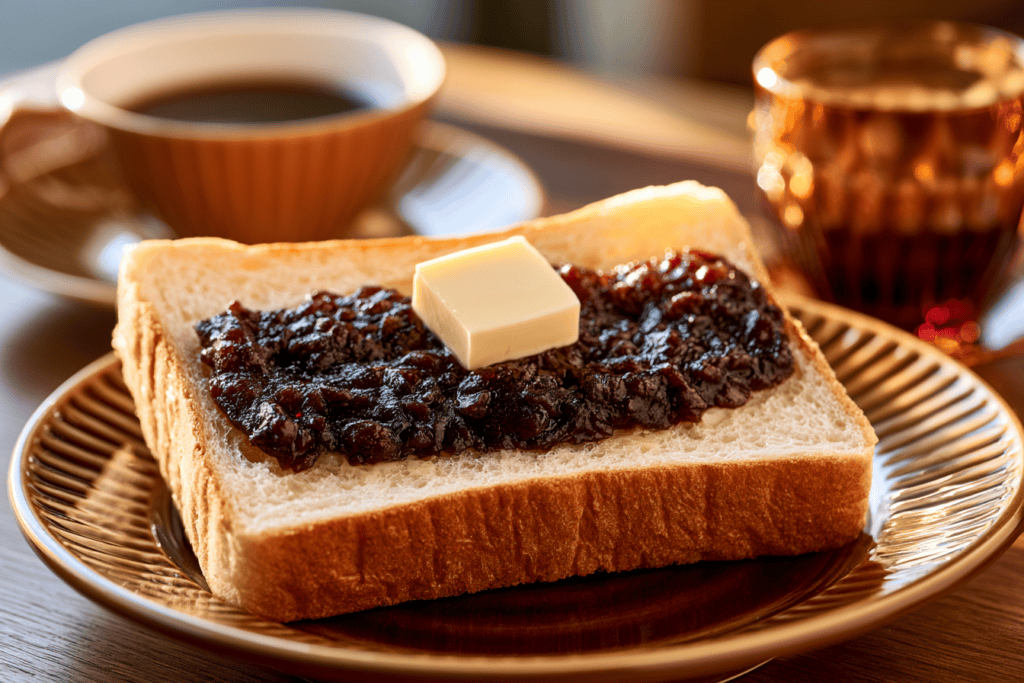
Ogura Toast — thick toast with butter and sweet red bean paste
Toast a thick slice of milk bread until the surface is crisp and golden. Spread it with softened salted butter while it is still hot, then add two generous spoonfuls of sweet red bean paste, smooth or chunky as you prefer. Cut into two or three pieces and serve at once with hot green tea.
The pairing of salty butter and sweet bean is the whole idea. Soft butter melts into the crisp surface, and the paste stays cool against the heat. Serve it on a small plate, pour the tea, and read the answers you marked as slow. That small ritual makes the next attempt something to look forward to, and it turns a score into an occasion rather than a judgment.
Take It Again in a Month
A single score is a snapshot. Two scores a month apart are a story. That is why the best use of a kanji quiz N5 is a pair of attempts, with daily practice in between. The first shows where you stand. The second shows what a month of small steps has done. Together they tell you whether your method works.
When the second score is higher, keep going and change nothing. A score that stays the same asks for a closer look at the slow answers rather than the wrong ones. They show where daily practice is not reaching. A lower score is no cause for worry. A busy month can do that, and a quick restart fixes it. In every case, the quiz has done its job by showing you a clear next step.
Recommended
Start with the level test today. It takes a minute, it needs no signup, and it gives you a number you can beat next month. Then open the daily cards, meet the five characters waiting there, and let the habit grow from that small beginning. A kanji quiz N5 is only the first door. What you do after it is the real study.

Carry It to the Street
Many learners find that a small trip changes how kanji feel. A sign you struggled with in a quiz becomes a sign you can read in a station. A menu line you guessed at becomes a meal you chose. That moment is the best reward the study can give, and it is closer than it looks. Keep the test short, keep the cards small, and let your pauses guide you.

Every character you recognize on the road started as a card on a desk. That is worth remembering on the days the minute feels small. A trip is built from hundreds of such minutes, each one adding a little to what you can read, order and understand. Keep a small notebook with you, keep the habit short, and let the street do part of the teaching. By the time you land, the signs will already feel familiar, and the first menu you read will feel like a small reward for work done at home. The effort is small, and the payoff is a street that finally reads back to you.
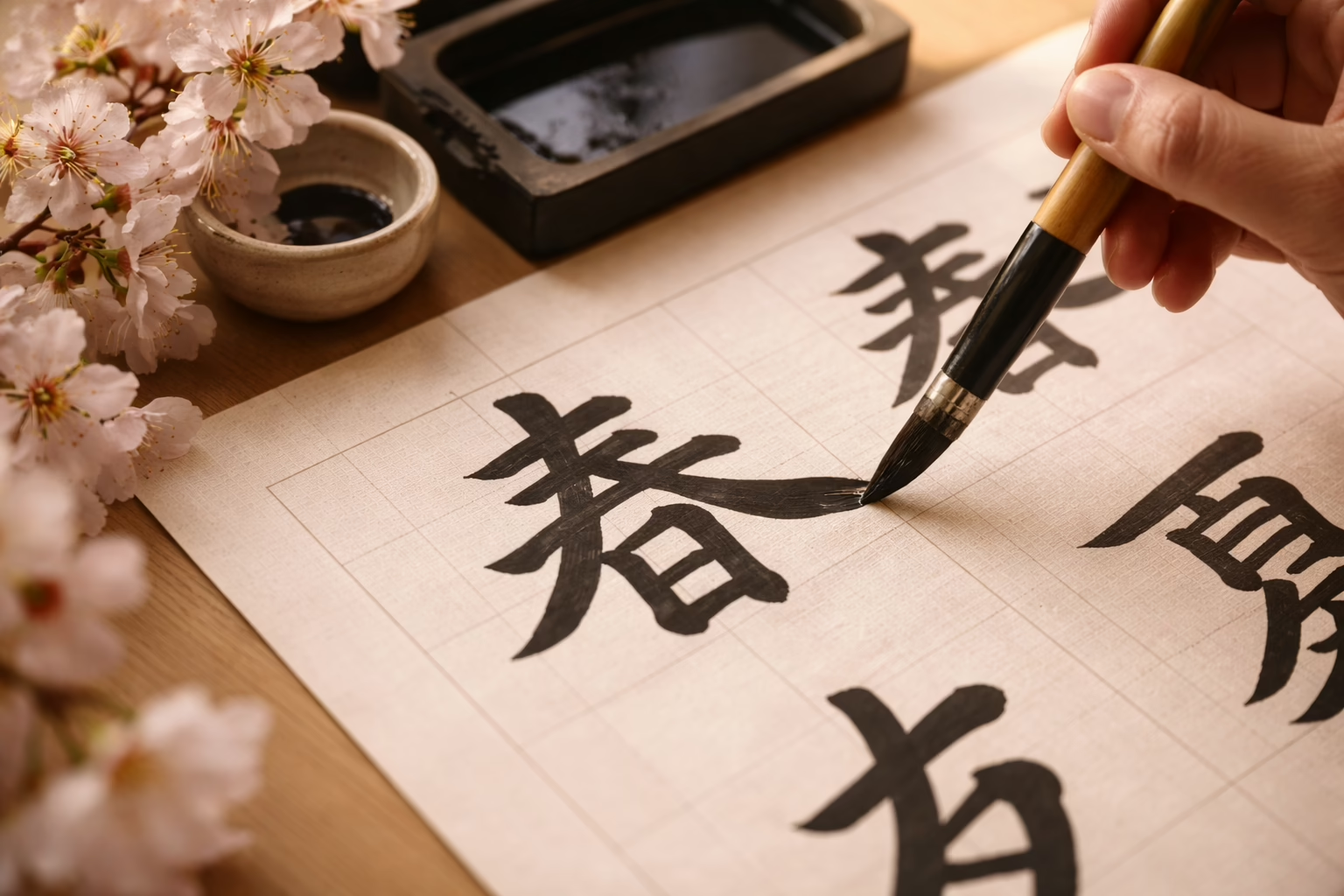
Reading Japan on the Road
We can build days around that pleasure. Picture a morning in a small neighborhood where signs are written by hand, an afternoon in a market full of labels to read, and an evening at a table where you choose the dish yourself. Each step turns study into something lived. Nothing about it needs to be rushed. A good itinerary leaves room to stop at a sign, work out a character and walk on with a small sense of victory. That pace is what makes a trip feel like a conversation rather than a tour. Tell us what you want to read, and we will plan the days around it, from the first station to the last table.
A Journey Built Around What You Can Read
We can plan days around the pleasure of reading: neighborhoods where signs are written by hand, markets full of labels, and tables where you choose the dish yourself. Every itinerary is built around your pace and your interests.
Plan Your Custom Japan ItineraryQuestions Worth Asking
What is a good score on a kanji quiz N5?
On a twelve-question test, ten or more correct answers is a strong result. Six to nine shows a solid base with clear gaps. Below six simply marks your starting line. The score matters less than the pattern, so note which answers were slow or wrong.
How many kanji are on the N5 list?
The JLPT publishes no official kanji list, so every N5 list is unofficial. Lists run from about eighty to about one hundred characters, depending on who draws them. Treat any single list as a guide, not a rule.
Should a kanji quiz test readings or meanings?
Both, in order. Meaning comes first because signs and menus need it. One reading comes next, ideally inside a short word. A good quiz also adds a word question, because characters rarely appear alone in real text.
How often should I retake a kanji test?
One month apart works well. A retake too soon measures short-term memory. Waiting a month shows what has actually settled, and the gap between the two scores tells you whether your method is working.
Is a kanji quiz on paper better than one on a screen?
Either works, if the options stay hidden until you answer. Paper makes that easy, and writing your answer adds a small review. A screen test is faster and easier to repeat. Choose the one you will actually take again.
What should I do after a low score?
Sort the misses into meaning errors, reading errors and slow answers. Then practice only those characters, a few at a time. Five new cards a day, with yesterday’s five returning first, is a gentle rhythm that most learners can keep.